AI Should Challenge Your Ideas, Not Write Them For You
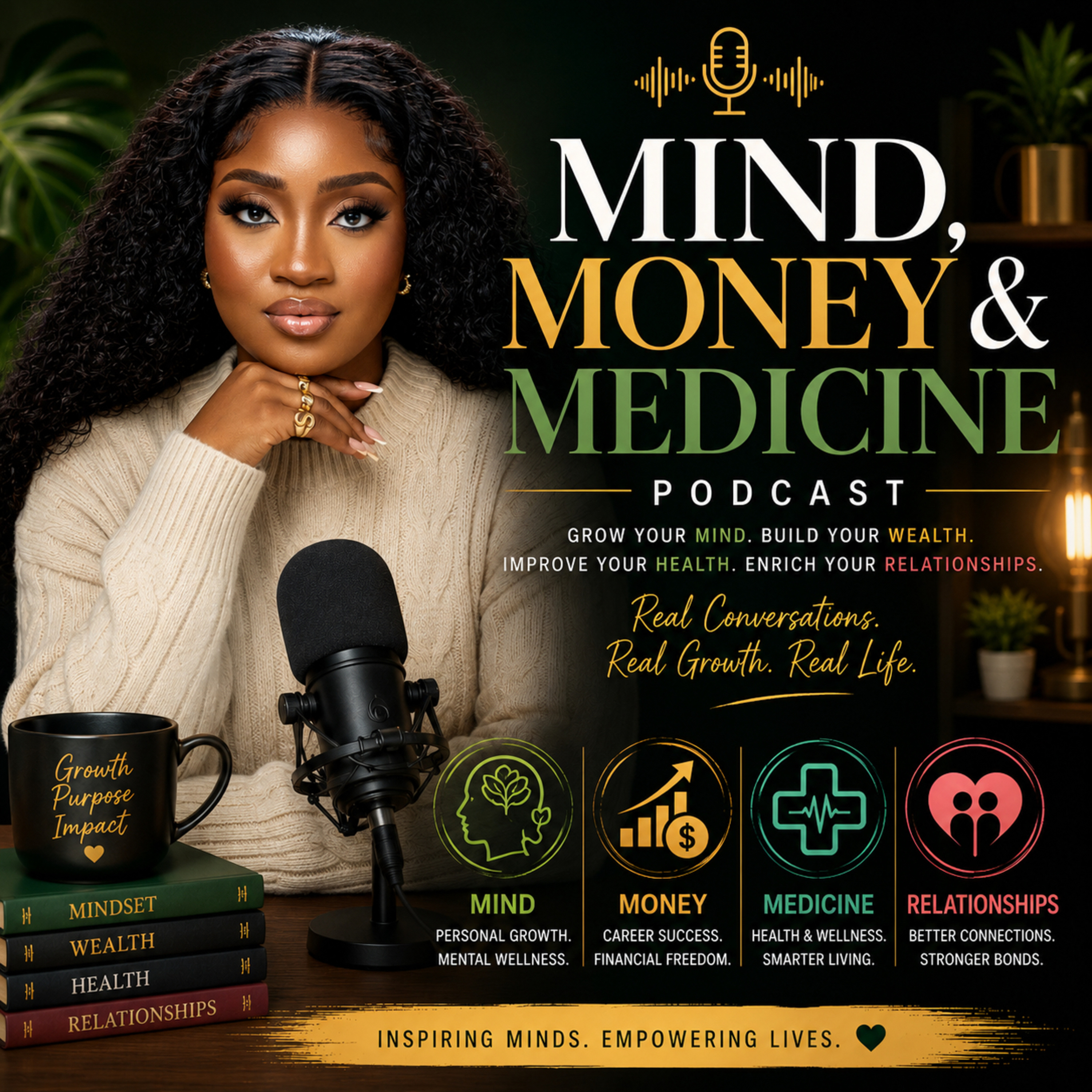
from Mind, Money and Medicine
20m 27s
Mohamed Nabiou, a guest on the Mind, Money, and Medicine podcast, discusses his philosophical work centered on AI, democracy, and critical thinking. He introduces AidOP, a tool he created to debate his own publications with AI, arguing that ideas remain alive only through open discussion. His philosophy rests on three pillars: AidOP, enlightened populism, and a global government governed by hyperlocal citizen assemblies. He critiques current representative democracies as corrupt and proposes direct democratic participation, where citizens vote on issues directly. His radical ideas include capping personal wealth at $999 million to eliminate billionaires, ending military-industrial conflicts, and guaranteeing basic human rights such as shelter, clean water, food, education, healthcare, and internet access. Nabiou emphasizes the importance of critical thinking in an age of misinformation, advising people to use multiple sources, incognito modes, and AI debates to avoid echo chambers. He distinguishes enlightened populism—listening to experts and investigating truth—from blind elitism and ignorant populism, using the Paris Agreement as an example of unexamined trust. Ultimately, he argues that truth cannot be monopolized and encourages self-reflection over reliance on authority. He invites listeners to explore his books and website for further engagement, leaving the audience with a call to stay curious and question information deeply.
Hello welcome to Mind Money and Medicine this is space for people who want to live a more
intentional life and I'm your host Favo. Our guest today is Mohamed Nabiou he's an author
a social thinker and the creator of AidOP which is AI debate on one's publications.
So through his work Mohamed explores the interception of artificial intelligence
publishing education democracy and also critical thinking. He created AidOP as a way to
encourage open debate and transparency by using AI tools to challenge
and critique his own published ideas. So today we're going to explore the ethical use of AI
the importance of questioning information the difference between blinding trust
and informed thinking and Mohamed's vision for a more connected global society. So Mohamed
welcome to Mind Money and Medicine we're so happy to have you here today.
I'm happy to join you here tonight thank you for the introduction.
All right Mohamed before we discuss your work with AI and social ideas can you share your journey
with us as an author and what inspired you to explore these topics today?
Well I've always been interested in justice my main values in life are justice freedom
truth-telling compassion and solidarity so I try to move accordingly to achieve these values and
apply them in my daily life.
So I'm an author and a dependent philosopher I created AidOP as you mentioned earlier I codified
enlightened populism as a behavioral pattern of communication on an alternative to blind elitism
and ignorant populism and I'm advocating for the establishment of a global government to be ruled
by hyperlocal citizen assemblies. These are the three main pillars to my philosophy.
All right thank you so much for that Mohamed.
So I'm an author and I'm an independent philosopher. I created AidOP as you mentioned earlier I codified enlightened populism as a behavioral pattern of communication on an alternative to blind elitism and ignorant populism and I'm advocating for the establishment of a global government to be ruled by hyperlocal citizen assemblies.
You created AidOP as you said which is AI debates on one's publication so what inspired that idea and how does the process work?
Well I at the beginning I started debating my own ideas on publications with AI tools because I thought books and ideas are dead if they are not openly discussed and debated.
So instead of waiting for long years for them to be published I started debating my own ideas on publications with AI tools because I thought books and ideas are dead if they are not openly discussed and debated.
What impact do you believe that AIDOP would have on publishing, education and the way people engage with ideas?
Uh,
around the world
learning how
to understand
not learning how to
memorize lots of
information all at once
Thank you for this
Mohamed. So this world
was filled with so much
misinformation and strong opinion
from different places
so how can people
become better at critical thinking
and evaluating the
information that comes their way
It all starts with
having the time and
energy to
analyze data and
investigate for the truth
and then it comes to the willingness
because the willingness
many people may have the
time and energy available
but lack the willingness
to investigate for the truth
I believe that
I don't have a monopoly on the truth
neither does anyone else
so I believe
people should
take evidence-based
make evidence-based decisions
while realizing that
they are moving as close as possible
to the truth
not having
100% truth
on all matters
so
it has to do with how people interact with the media especially in the age of the internet social media relies on personalization showing each person content based on their historical interactions within the platform this ultimately creates a situation in which a person's use of social media is an endless state of wise confirmation even if the person doesn't suffer from confirmation bias
Even search engines and LLMs can turn into echo chambers if not used wisely as they both rely on historical data of interactions.
Using private incognito mode occasionally while submitting queries through multiple search engines and digging deep for multiple sources is advisable.
Same goes for LLMs with the additional feature of intentionally getting into a debate with the LLM by prompting it to take a position opposing to yours.
So you inspect your own position and then inspect all of the positions opposing to yours.
This is how you become a better critical thinker.
Thank you so much, Fadam Mohamed.
So you've written about the idea of a global government and citizen assemblies.
What led you to this perspective?
The problems of today and the problems of the future are billionaire's greed,
represented in capitalism.
And the many problems such as AI taking over our jobs or wars happening all over the world through military-industrial complexes and stuff like that.
Billionaire's greed, potentially recurring pandemics and climate change.
These are the main issues of today and of the future.
And we can face them all properly by having a global structure.
One unified government ruled by hyper-local citizen assemblies replacing the current corrupt representative democracies with direct democratic participation.
Instead of voting for people to vote on our behalf on several issues, we can vote on several issues on our own.
And we can set our cap at $999 million.
Effectively taxing billionaires out of existence.
We can end wars and military-industrial conflicts around the world.
We can abolish monarchies.
And we can use the money acquired through these measures to introduce shelter, access to clean water and food, education, health care, freedom of expression, freedom of movement, and stable, speedy internet connections as basic human rights.
Thank you so much for that, Mohamed.
Thank you, Mohamed.
Okay.
You said you believe.
You said you believe in direct democracy.
Why do you believe in this?
Well, I believe in direct democracy under one condition.
I believe spreading enlightened populism is a prerequisite for the establishment of the global government along with its citizen assemblies.
So enlightened populism is the healthy alternative to the two dominant behavioral patterns of communication in today's world, which are blind elitism and ignorant populism.
If people can actually move toward enlightened populism.
Practice enlightened populism by listening to multiple experts across issues, trying to understand how they reach certain conclusions, and investigating the information to discover the truth, I believe we will be ready for practicing direct democracy.
And we will be ready to take matters into our own hands and vote directly on various issues of governance.
Without relying on corruption.
Without having to corrupt officials.
Because representative democracies have proven to have failed us all over the years.
All right.
Thank you so much for that.
And in the aspect of populism, who decides whether a person is enlightened or is ignorant?
Who decides this?
It's a self-assessment technique.
And in case of spreading enlightened populism, that shall be a research question for research agencies to work on.
Yet, it's a self-assessment matter because it's a behavioral pattern of communication.
So it's difficult to tell if someone really investigated or not, unless the matters are obvious.
So I can give you an example.
It can be around climate change.
Climate change, many people around the world celebrated Paris Agreement because a few experts told them that the Paris Agreement was a huge breakthrough in facing climate change, in facing the climate threat.
And these people, in fact, practiced blind elitism because they didn't read the actual agreement and they don't know what it entails.
And there are.
There are people who are ignorant populists, on the other hand, people who followed feelings or trends online that told them that climate change was a hoax and that nothing will happen and stuff like that.
So an enlightened populist or practicing enlightened populism would entail actually looking at the actual text of the agreement and realizing that the Paris Agreement acknowledges,
acknowledges,
acknowledges that there is a climate threat and tells us that we should do something about it, yet it does nothing about it.
It relies on individual contributions from nation states, from fragmented nation states to achieve objectives instead of reverse engineering a certain objective.
It relies on each individual nation state to determine its own contribution, which is nonsense.
all right thank you so much for this muhammad so you've written about ai also on humanity
justice and the future of society so what is what is one idea or what's one message
you just hope that people will take away from your work
well my my philosophical approach is based on the three main pillars we talked about aidp
enlightened populism and establishing a global government to be ruled by hyperlocal citizen
assemblies yet the one message at the core connecting everything together is that truth
uh cannot be monopolized by anyone not me not you not anyone else and that we should always
seek the truth while acknowledging that we live in a state of uncertainty
all right muhammad so how can listeners then get to connect with you and know more about your work
well they can my my books are published on
amazon and google play uh people can connect with me through my website muhammadnabil.world
m-o-h-a-m-e-d-n-a-p-i-l dot w-o-r-l-d it would be helpful if you can add it to the show notes
right muhammad okay what was one question you wish people would just ask you that
nobody everybody keeps getting wrong about your work
uh there is there is nothing i wish people to ask me i i i wish
i i i believe the people need to ask themselves about their own beliefs this is the crux of the
matter right muhammad i mean i appreciate you coming today and sharing your story with us
i really do appreciate this and your ideas and perspectives
with us today.
Thank you very much.
It has been a pleasure.
All right.
And you listen,
I hope this conversation
naturally encourages you
to stay curious,
question information,
and think deeply about the world
we are actually creating together.
So thank you for joining us
on another episode of Mind, Money, and Medicine.
And until next time,
keep investing in your mind,
your money, and your medicine.
And bye for now.
Thank you so much, ma'am.
Podcast Summary
Key Points:
Mohamed Nabiou is an author and independent philosopher focused on justice, freedom, truth-telling, compassion, and solidarity.
He created AidOP (AI Debate on One’s Publications) to use AI tools to challenge and critique his own published ideas, promoting open debate and transparency.
He advocates for "enlightened populism" as an alternative to blind elitism and ignorant populism, emphasizing evidence-based decision-making and critical thinking.
Nabiou proposes a global government ruled by hyperlocal citizen assemblies, replacing representative democracies with direct democratic participation.
His vision includes taxing billionaires out of existence (capping wealth at $999 million), ending wars, and establishing basic human rights like shelter, clean water, education, healthcare, and internet access.
He warns against echo chambers from social media and AI, recommending incognito browsing, multiple search engines, and intentionally debating AI to improve critical thinking.
He stresses that truth cannot be monopolized by anyone and encourages self-assessment of beliefs over relying on external authorities.
Summary:
Mohamed Nabiou, a guest on the Mind, Money, and Medicine podcast, discusses his philosophical work centered on AI, democracy, and critical thinking. He introduces AidOP, a tool he created to debate his own publications with AI, arguing that ideas remain alive only through open discussion. His philosophy rests on three pillars: AidOP, enlightened populism, and a global government governed by hyperlocal citizen assemblies.
He critiques current representative democracies as corrupt and proposes direct democratic participation, where citizens vote on issues directly. His radical ideas include capping personal wealth at $999 million to eliminate billionaires, ending military-industrial conflicts, and guaranteeing basic human rights such as shelter, clean water, food, education, healthcare, and internet access. Nabiou emphasizes the importance of critical thinking in an age of misinformation, advising people to use multiple sources, incognito modes, and AI debates to avoid echo chambers.
He distinguishes enlightened populism—listening to experts and investigating truth—from blind elitism and ignorant populism, using the Paris Agreement as an example of unexamined trust. Ultimately, he argues that truth cannot be monopolized and encourages self-reflection over reliance on authority. He invites listeners to explore his books and website for further engagement, leaving the audience with a call to stay curious and question information deeply.
FAQs
AidOP stands for AI debates on one's publications. It involves using AI tools to debate and critique one's own published ideas, encouraging open discussion and transparency instead of letting ideas remain static.
Start by having the time and energy to analyze data and investigate for the truth, along with the willingness to do so. Use private incognito mode, search through multiple engines, and intentionally debate with AI by prompting it to take an opposing position to inspect your own views.
Enlightened populism is a behavioral pattern of communication that serves as an alternative to blind elitism and ignorant populism. It involves listening to multiple experts, understanding how they reach conclusions, and investigating information to discover the truth.
He believes global problems like billionaire greed, wars, pandemics, and climate change require a unified global structure. A global government ruled by hyperlocal citizen assemblies could replace corrupt representative democracies with direct democratic participation.
The three pillars are AidOP (AI debates on one's publications), enlightened populism as a communication pattern, and establishing a global government ruled by hyperlocal citizen assemblies.
The core message is that truth cannot be monopolized by anyone. People should always seek the truth while acknowledging that they live in a state of uncertainty.
Chat with AI
Loading...
Pro features
Go deeper with this episode
Unlock creator-grade tools that turn any transcript into show notes and subtitle files.
 PodcastTranscript AI