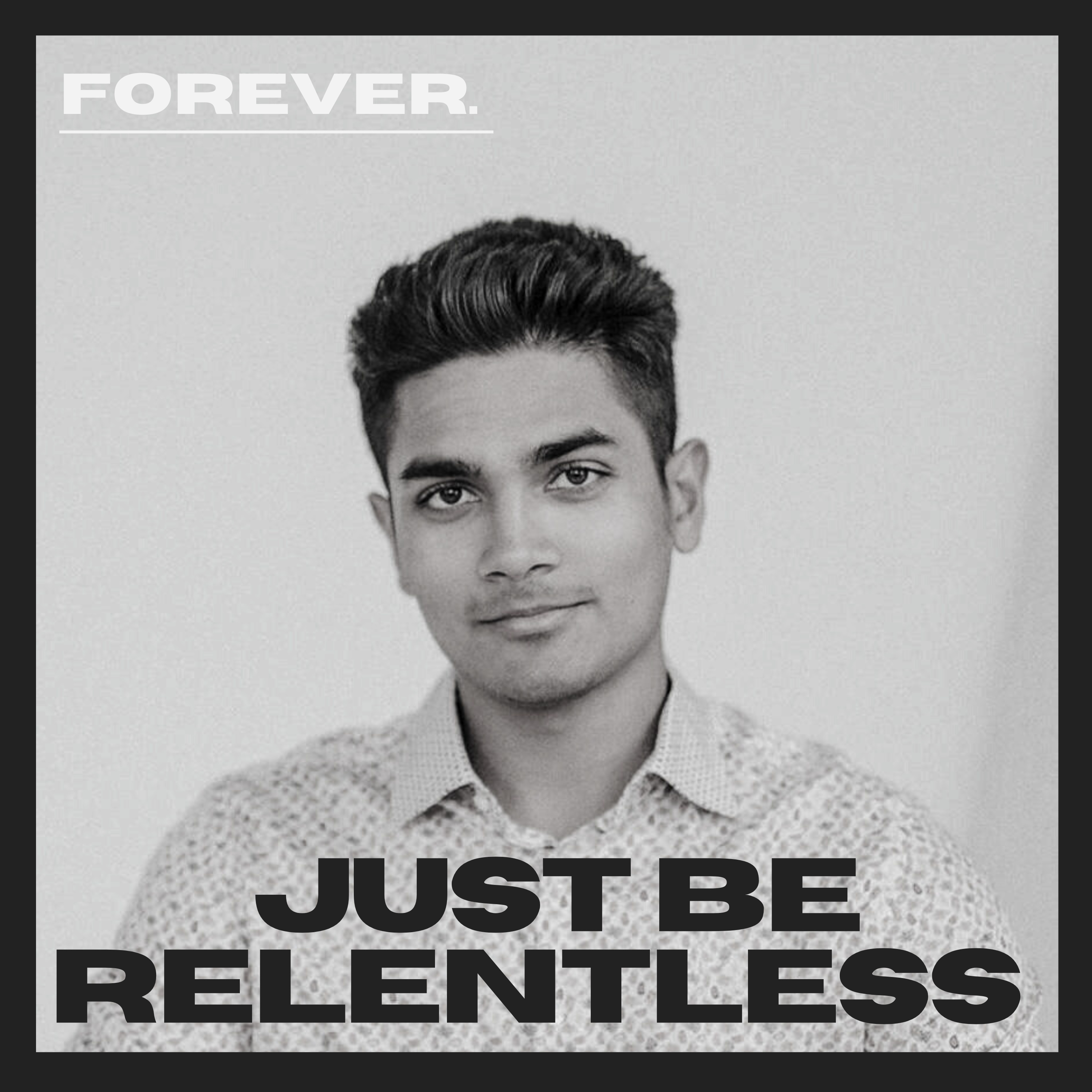
AI on the Ice: Revolutionizing Hockey Analytics with Noah Gans
from Just Be Relentless
43m 44s
Noah Guns, a recent finance graduate, discusses his journey into entrepreneurship with Stats Yuck, a sports tech startup focused on hockey analytics. He explains that the company addresses a significant gap in hockey, where data tracking lags behind other sports due to the game's fluid nature and hockey's regional popularity. Stats Yuck uses computer vision, a cost-effective video analysis technology, to track players on the ice and generate metrics like movement scores, avoiding expensive hardware such as LiDAR or wearables. The product is designed to be accessible, initially serving teams to provide aggregated insights that coaches can easily act upon, with future plans for individual player use. Noah highlights the importance of customer feedback, which reveals a universal need for clarity in performance evaluation, and stresses the value of asking open-ended questions to understand stakeholder needs. He also discusses the challenges of balancing multiple responsibilities as a founder, crediting incubator programs and a supportive Toronto community for guidance and mentorship. Looking ahead, Noah plans to shift focus from product refinement to customer success and marketing, aiming to expand the company's reach. The conversation underscores the potential of leveraging technology to democratize sports analytics and the importance of resilience and community in entrepreneurial ventures.
And there's technology called computer vision,
which is AI, video analysis, and like you mentioned,
it's being used in manufacturing.
I think probably the most well-known use case
would be in self-driving cars.
So we have been able to build a pipeline,
building off the foundational computer vision models
that can first identify hockey players on the ice
and then track them over the course of a shift
over the course of the game so that we are able to output
individual player metrics for both teams and for every player.
(upbeat music)
- Hey guys, welcome back to the Just Be Relentless podcast.
Today we got another really exciting episode for you guys.
I'm joined by Noah Guns.
He is a recent graduate from university.
He is an entrepreneur.
He's also studying for a potential career in finance.
Kind of seems like you're doing it all Noah,
but we're willing to kick things off by kind of getting
a bit of your background or POV on kind of out,
what you've been up to recently and where it's brought you today.
- Yeah sure, first of all, thanks for having me on.
I guess I'll start off in the university space.
I started at Western, studied finance,
did my undergrad and upon graduation
was really uncertain what to want to do next.
And decided to go back to school
and do a master's of science at Ivy
and dive into both business and technology.
And you wrote that program.
I still really wasn't sure what was next for me.
And that led me into continuing to dive into finance.
I decided to get a job at a small search fund
using sort of small market private equity M&A.
And at the same time,
I was studying to do the first level of the CFA.
So that was earlier this year,
totally focused on finance and exploring that career path
when one of my close friends from just growing up
approached me the opportunity to join him
in a sports tech startup.
And there was certainly a number of considerations
from me at the time in terms of what I wanted to do next.
I was actively looking for new opportunities
so it came at a pretty good time.
But candidly, the reason that I decided
to pursue entrepreneurship was because
one of my best friends asked me to
and it was pretty much as simple as that.
So after that, we go full into this journey.
It's been about nine months since then.
Building in the sports tech space
and yeah, could not be happier the choice that I made.
- That's awesome.
Honestly, one of the reasons
you're kind of story or a profile caught my eye as well
is 'cause I think like,
I have seen a trend of like kind of young people
and new graduates going straight
into entrepreneurship to begin with.
And I think it's because there's just like
so much going on and so many new technologies kind of popping up.
We'd love to kind of hear a little bit more about
like what you guys do at Stats Yuck.
But maybe before that, just to understand
a little bit more about you,
why do you think your friend reached out to you specifically
and asked you to start a company with them?
- So the answer to that verse, I think he brought
the technical side of things
and he was building some really cool technology
but really didn't understand from the business side of things
how to grow, how to go to market,
how to position ourselves in order to be successful.
And I think part of it too is there's a deep friendship
and trust in each other.
When you're going through this journey as a founder,
you really need people that you can rely on.
And I think on top of the skill set of course,
the most important thing was just our relationship
and our ability to work together.
And I think for when we were deciding what to do,
there was a few things that stood out to us.
The first is that both of us love sports.
I remember growing up, I was born in New York City
so I remember growing up and my dad taking me
to Yankee Stadium or taking me to Madison Square Garden
to watch the Rangers.
And from that point on really fell in love with sports.
So the opportunity to start a company in that space
is super appealing.
And on top of that, identifying and validating,
there was a major problem specifically in the hockey space.
A need for players, for teams to have more clarity
and more information when it came to how they're performing
and how they're developing.
Seeing how other sports were decades ahead
when it came to the data they had access to,
while hockey was still lacking behind.
So our love for sports and then seeing that problem space
sort of made a perfect storm for us
to jump right into building stats.
- Yeah, no, that's awesome.
I'd love to learn more about the problem
because I mean, growing up in Canada myself to like hockey
or different than you growing up in Canada,
but hockey was a big part of my life as well.
Even a lot of my friends, people are obsessed with hockey,
whether it's like fantasy leagues,
going to games, playing as a kid.
So it always seemed like hockey was all anyone would talk about,
which is why I'm a little surprised to hear that,
that the data and the analytics behind hockey legs,
some of the other major sports.
Well, what was the, where what is the problem
that that hockey teams or the hockey industry faces
and why do they have that problem
and not other sports leagues?
- There's a number of factors.
I think it starts from the gameplay itself.
When you look at a sport-led baseball or golf or tennis,
a lot of the movements in the plays are isolated.
So it's easier to calculate or record stats from that.
Where in hockey, everything is flowing.
There is less starts and stops.
So you might have goals and assists,
which are easier to track,
but everything else is pretty difficult to track
with the naked eye.
So that's one of the big reasons why it lagged behind,
like the early infrastructure of keeping track of stats.
And I think when it came to more advanced technology,
not a limiting factor was hockey's a very regional sport.
It's big in Canada, obviously,
but globally, it's not as big as sports like soccer
or basketball or baseball.
So I think the investment in building up resources
was not the same in hockey, and for companies similar to ours,
who are looking at market opportunity,
hockey is seen as a smaller, more niche market compared to
some like soccer, where you have the entire world
playing next for.
- Yeah, nope, that totally makes sense.
I have noticed a trend too, though,
where like a lot of the innovative hockey related companies
or hockey brands, a lot of that stuff is based out of Canada
or places like Toronto.
Have you noticed it to be a little bit easier
or a little bit more or a few more resources available
to you starting this company out of a place like,
I mean, even London, Ontario, at Western,
where you've gone to school is a huge hockey hub.
Are people more willing to just talk to you
and learn about this stuff
because you're based out of Ontario?
- I think the biggest thing is being super close
to tons of different players, teams, coaches, agents.
Like the majority of the hockey world is focused
as you said in Canada.
So, us trying to validate the problem space
and try to validate demand and made it infinitely easier
that we could just go to local arenas.
Like you said in London or in Toronto,
talk to friends who had played hockey
who were still in the hockey world today
and get their perspective on what the problems were
and that for us made it way easier
to begin to paint a picture of what the entire industry looked like.
- Right, and how do you go about having a conversation
with someone like that, whether it's like a customer
or someone you want to partner with, I'm sure you've had
to kind of like start up a lot of conversations
from scratch, starting this company over the last nine months.
If,
like I were a hockey team or someone that would potentially use your product.
Like, what's the pitch or the questions that you asked them to see if there's
someone you could work with?
Yeah, I think that's a great question, first of all.
And it's one of the biggest learning curves that we faced as founders.
I think partially, both networking, trying to figure out how to build this company
and also on the sale side.
It's really difficult to ask good questions.
I think it's one thing that we struggled with at very beginning.
You have these internal questions that you want to solve.
Like, for example, you might want to know how to create a marketing strategy.
So you go and you find some marketing experts and you ask them, like,
how do we create a marketing strategy?
And then you get a bunch of answers that don't really solve the problem you're
trying to solve.
But I think for us, it was trying to find ways to ask questions that
dug deeper than service level and try to put the person in a place of comfort.
So instead of asking someone, like, try to build a marketing strategy for us,
you might ask them, what's the gift you're looking for for Christmas?
Well, I understand out to you.
So then you get sort of an anecdote or something off the cuff that sticks out
to you instead of getting some prepackage service level answer.
And I think that works both in sales and in networking.
Instead of us trying to sell a team or a player, some advanced technology
that they don't understand, we can break it into what is one skill that you
want to get better at?
Or what is one thing that you think coaches take for granted when they see you?
Yeah, I mean, that actually relates pretty well to what I was doing right before
this call, as I mentioned, I was doing a sales force, like kind of strategy
meeting on like how we're going to like break into these accounts or how we're
going to pretty much sell and start conversations with the people that we want.
And it's pretty much the same approach is like, you got to understand
like whether there's information publicly or or you get it from asking
and opening a question, like, what do these people care about?
Like beyond the pain point, which it sounds like you've recognized.
There's a pain point hockey legs in like data driven analytics behind
other sports, like, is that a priority for hockey teams to start right now?
It's probably not for everyone.
It's probably not for every single team, but there are probably some that are
a little more open to new technologies or like innovation that would be
willing to dive deeper into this.
But then one thing that we actually touch on, I'm wondering if you've kind
of either done this approach or seen it happen by coincidence.
But when trying to connect to a lot of these decision makers, we're trying
to do with do with sales force.
The structure that my MVP was telling me is like, you want to, we're going
to email or call these prospects and tell them like, this is what we're doing
for the larger company, other companies in your industry.
Like, this is what how we help people, but you guys are really special.
So that's why we want to do something like this for you.
Do you send them that email?
They're like, okay, this guy's put a little bit of thought into it.
But still they're like, no, like, that's not actually what we're interested in.
We have other priorities.
Like, this is what we're looking to do.
But by you kind of sending out that outreach and like putting in a little
bit of thought and research, you've now got a response that is actually
like information coming from the prospect on like what is actually important to
them. So although you tried to like pitch them or give a value prop at the beginning,
the intention is never to like, or never to expect that that's going to succeed
on the first go, but do enough of it that I can like spark conversations
or spark the back and forth.
And that's what actually just gets you information on like what the prospect
or what the customer actually cares about.
And then you can go off and build your solution a little better or you can kind
of try and put together a broader map or an understanding, but everything
comes from like the back and forth.
Have you noticed that in like the people you're speaking to as well?
Or how are you trying to understand your customer best right now?
Yeah, definitely.
I've seen that.
And I think we're super lucky, particularly in Canada.
We found that the majority of people that we speak to are super supportive,
particularly of young founders and young entrepreneurs.
So even if like you said, a team is not interested in analytics or data.
They still are normally very eager to help with our journey,
provide feedback, provide connections.
I'd be interested in how Salesforce is able to manage being a big corporation.
And it's tough to sort of see past that front and get to that.
There's a real person on the other side of this phone.
It's easier for us as founders is to just mean my co-founder.
There is no big organization front of that.
But we've been super lucky so far.
I'm sure we'll have to find new ways to approach it once our team grows.
And it's not we're not able to be as hands on with each customer like we are now.
But maybe you have some insight into that.
Yeah, it's it's kind of like that that feedback loop.
I was just describing of like doing an outreach in a way that like lets you
have an understanding on what's really going on at that company.
And then obviously that doesn't work all the time.
There's a certain percentage conversion or closed rate.
But the idea is that like every year a company like Salesforce does a full reorganization
where if you you're on a company for 12 months and the following year,
there's another sales rep that takes over that company.
So they're always cycling in and out people to like different customer patches.
And that gives a new personality, a new approach, a new kind of person
that can connect with the people at that company and also understand like what's changing.
Like what happened last year?
You could sync with the rep that was on your your company last year.
And they'll be like, yeah, like we were close to having a deal.
But like these three problems existed.
And then maybe six months down the line, the problems have already changed.
So it's it's a never ending cycle of like trying to
grasp more and more of the market.
But then I guess to to see how that process has been working with you guys.
Like what's some of the customer feedback you've gotten or some of the insights
you've heard from the people that you're a little more hands on with.
And how are how is that like informing?
The decisions you're making about the company or the product.
Yeah, we're hearing a lot of different things from different stakeholders.
Obviously where you hear from a 12 year old playing it at a low level,
it's going to be vastly different from what you hear from a 65 year old coach
who is coaching an elite collegiate team.
So we hear lots of feedback about people wanting better information about
how they're how they're moving.
They're they're positioning on the ice.
We hear feedback about people wanting
more ability to track their performance over time or compare against their peers
or compare against their past self.
But a fundamental, the rather thing between all the different stakeholders we
talk to is they want more clarity.
I think a lot of the processes right now are very subjective.
So if it's a young kid, they're asking their parents, their mom and their dad how
they get or they're talking to their friends or maybe it's a volunteer coach.
But they really don't know if they're if they're improving or how much they're improving.
And I think being able to provide clarity, whether it's at the lowest level or the highest level,
it's important regardless of what the actual ultimate use case will be.
Providing that clarity will be the main grabby pull on.
So if I were like a 18 year old kid playing like rap hockey and I was convinced like,
okay, like I want to get better at the game.
I see her as a solution.
And I'm like, this is a great way to get more data on what I want.
Are you able to to serve us a customer?
Like some some kid out there who just wants to kind of that kind of information or clarity
that you're talking about, or do you go more for the whole teams or the coaches or
what kind of customary are you able to service?
And then I guess are you targeting?
Ultimately, we would love to be able to service directly to the consumer.
And like you said, be able to provide data for just an individual player.
As of right now, while we continue to test, it's logistically a lot easier to serve as an entire team.
So it comes to finding good footage and all the back end work that we have to do.
Eventually, we would love to ensure that everything is automated so that
an individual player from anywhere that upload their own footage and get information.
But the way we are attacking it right now is by servicing the teams as a whole.
And by doing that, we're also able to provide information that can help with comparison
between the players and this on the same team, which allows a coach to
create more tailored game plan to decide how they want to apply their line combinations on the ice.
There's a number of different data points that we can extract that are more useful for a team.
right now then they would be for an individual player.
Right, that makes sense.
If you don't want to ask, what are some examples
of the data points that you would deliver to a coach or someone
that you work with that help inform those decisions?
Right now, we're really focused on trying to aggregate data
points and provide things as simple as possible.
We found that if we provide a team with a complicated dashboard
with hundreds of different metrics and data points,
a lot of it gets ignored or the users don't necessarily know
what to do with this information.
So we're trying to develop waste aggregate metrics
so that we can give the user one key insight or two key insights
that they can actually act on.
So for example, instead of giving someone
a loss of even acceleration and distance traveled
and faking different movement stats,
we can give them one player movement score.
So you can, instead of looking at some granular data
point that you don't understand,
you can see how my score changed from game to game
or period to period or over the course of entire season
to better understand how you're performing.
Interest in it.
So I guess a lot of the value you deliver is like reconciling
and analyzing that data to just tell them the trend
or tell them what actually matters.
Because yeah, with anything, the data is kind of useless
unless you know how to interpret it or can actually
help it make a decision.
What goes into something like a movement score?
Yeah, you're totally right that it's not easy for someone
to be able to parse through data points
who's unfamiliar with it.
And one of the things about youth hockey
and really hockey in general below the professional level
is you don't have a team of data analysts
that can serve as the middleman between a data vendor
and the team itself.
So our job goes beyond being just a data vendor.
You have to be a data vendor and the analytics layer
so that we can provide insights that are in plain English
that people aren't actually understanding.
So what goes into individual scores,
that comes down to us playing around
with different combinations.
We work with a number of different individuals
who their passion is working with data.
They love building data models that are useful in different ways.
And we can determine which of these data points actually
resonate with the end user.
And that's the critical part of getting feedback
is you can show a player or a coach a few different examples
of data we can give them.
And we ask them which of these stands out to you,
which would you actually use?
Nice, okay.
So I guess to help understand what the data means,
I'd love to learn more about the technology.
I guess that drives your guys' product.
I remember when we were talking before,
you were telling me how it was similar or built up
from the technology that manufacturing plants use
to detect maybe which produce is the right size
or has like embellishments or not.
We could say able to get pretty granular and track moving objects.
So I guess maybe to set a foundation like how did you guys
discover this sort of technology?
And then what did you do to specialize it
for the hockey industry?
I think it all starts out with our core belief
because that we wanted to make data accessible.
And with that, we wanted to make it as cheap as possible.
So from that, it kind of ruled out building
any expensive hardware solutions.
Like for example, a wearable sensor
to put on a player's shoulder pad or on their skate
or building out some complicated LiDAR system.
We wanted to make this as easy to use as possible
and as cheap as possible so that it could be accessible
for every level of the game.
So that led us to video analytics.
And there's technology called computer vision,
which is AI, video analysis.
And like you mentioned, it's being used in manufacturing.
So we have been able to build a pipeline,
building off the foundational computer vision models
that can first identify hockey players on the ice
and then track them over the course of a shift
or over the course of the game so that we are able to output
individual player metrics for both teams and for every player.
So the way that we built this is a lot of both speaking
to experts in various industries.
What we found is that there are very few people
that understand both computer vision and sports.
So that's sort of where we come in
is trying to find the happy medium,
speaking to experts in the sports field
and experts in the computer vision field
and finding a way to make it all work seamlessly.
A lot of iteration is certainly not an easy process
to be able to track hockey.
It is one of the faster-rooting sports.
There's a lot of occlusion due to there being boards
and glass and mesh netting.
The puck is very, very small but ultimately any technical problem
that we faced, we took the mentality
that any technical problem is solvable.
So we work within business constraints
and real-world constraints, like I mentioned,
trying to make it cheap and accessible.
But any technical issue for us was just
seen as another small roadblock.
Right.
How do you, I guess, technically?
Because I was looking up this technology briefly
while you were talking.
And it turns out, yeah, with computer vision,
that's actually what Tesla is used to do there self-driving,
which is a different approach from way more Google,
like other companies may use LiDAR or may use other forms.
But computer vision, correctly, if I'm wrong,
is like, you just take the video.
We take the raw actual visualizations
of what's happening.
And then the AI on top of that is able to put things together,
identify what's going on.
And I believe this system is superior as well.
It was kind of technology.
Because the AI that's just going on top of the video
is something that's getting better and better every single day.
I was curious about, I guess, your perspective
on different technologies and how they compete with computer
vision, because one tool I was playing around with the other day
was like, notebook LM, I'm sure you've heard of it from Google.
And I was thinking of, like, if you were to upload, say,
a video file into there and ask it to pull insights,
like, is that different quite a bit
from something like computer vision,
or what are the things that you guys do with computer vision
to tweak it, like, technically?
And how does that impact, like, the end product?
Because yeah, I guess even if that's something
I've used for the podcast the other day
when I was making an episode before I'd
have to type out the whole description and put in all the notes,
now we just throw in the audio file and be like,
oh, create me like a 5 cents description of this podcast.
And it listens to the whole thing.
It's able to transcribe it.
And it does quite a bit on that just that base level.
So curious if you even see a technology like notebook LM
as a competitor, or what the ballgame is that you guys
are playing and having it's different.
Right.
Yeah.
So foundationally, computer vision is a way to recognize pixel
patterns in image or video.
So it's a lot more complicated than using some open source
technology and typing in, like, give me hockey stats.
We eat a number of different computer vision models
stack on top of each other, basically
to create a pipeline that understands
the various camera positioning that exists
or the various rank environments.
Obviously in hockey, you have different team colors
and different Jersey numbers.
There's a number of different factors
that you have to find solutions to work with.
So certainly there are other technologies
that we could be using when we initially
were exploring this.
Pretty much everyone we talk to said that a LiDAR
would be easier for our use case.
But the average hockey team doesn't have a LiDAR system
in their rank.
And they don't want to be carrying one around.
But what you'll see, do you go to any rank in Canada
and the US as well, is there's multiple parents.
Thumb in the games every rank has fixed cameras setups every pretty much every team at all levels has some sort of manual video review process
So we are just trying to fit right into that work workflow and
Provide an additional tool that coaches and players can use that does not change what they're doing today at all
Well, yeah, that's really cool because I remember a lot of my friends when they're playing hockey like
There are like pretty widespread platforms out there for like hockey analytics like elite prospects or like none of the platforms that
Never have hockey players would have their their information on
I feel like a cool idea would be like if you guys have
Access to the cameras or the leaves would kind of give you their video anyways like you could create
Beyond like going customer to customer just like a public platform or public database of like every hockey player
That participates in these leagues that are that are involved and like for free
You do all that data analytics and then maybe each individual player like that 18 year old kid who wants to get a little better
Would pay like a $5 subscription to access the the premium insights or something
But I think it's it's really cool because although platforms like elite prospects have good stats out there having something like
You could probably track how fast a player can skate like down to the speed down to their shot speed like down to like
The really granular data that like
Kids would care about when they're like oh, I can't like to be like lazy today
Like I got a before my best on the ice every single day because there's a camera watching me that broadcast my stats the whole world
Like I think that is like another level of clarity. That's like
Never been done before in any sport. So I guess curious
How you guys have thought of like different kind of solutions like have you ever thought of a platform based product like that or
Or keep for see kind of any problems with that. Yeah
Yeah, certainly I thought about various different ways that this data could be useful
or or also
Enjoyed by various stakeholders
Obviously the players and the teams are interested in data, but
Parents siblings friends find this data interesting too
um, I think our main focus was
That of course there are elite prospects right now that will give you a player's box score statistics
And and we're not looking to necessarily replace that
But there are a number of data points hundreds
If not thousands of data points that you cannot track
manually
they're
Like like you said a player's speed someone in the stands can't track that just with their pen and paper
Um, and on top of that a play or someone who's tracking the game by hand hand watch every player at once
So that that's where we come in as we want to make it so that you can capture
a lot more information
Than you currently do without
The complicated or time-consuming manual processes that that might require
And from there of course the use case of where that data goes
is endless
right
Because there is so much value that can kind of be pulled out of this
But I'm curious how much you can kind of offer up front or for free like what does it cost you to
To run the business or the analytics or the software like yeah, well
What do kind of like the the base costs look like?
Our costs are extremely low and that was designed on purpose
Um, because we have no hardware
Associated are real only our like costs are
GPU usage and
Data storage
Beyond that
You just have your normal business expenses, but
the
The variable increase
Like for one extra game for example is is very small which allows us to
Serve the widest audience possible
And like you said make it extremely accessible for those users who may not want to pay
thousands of dollars for
Professional level analytics, but might find the interesting to see a couple data points that they haven't seen before
Yeah, no, honestly this this conversation is getting me excited about your business as well because it's like when you have such a
A unique
Product or tool that has like so much information and cost almost nothing to do like I think I would focus a lot on
Marketing and like trying to go viral instead of like kind of selling individual customers
I could see how old school hockey teams wouldn't coaches would be like oh, we don't want to pay for this product
That we don't even know if we have a use yet
But like if you had like I don't know like counterpart a few years ago
And you would take the camera of his like world juniors game and be like oh like he was this is how much
How fast he was and like post a tick talk about it or like
Even down to individuals playing rap and be like oh this guy's a little slow this week and like add him on Instagram
And then people would kind of like that would blow up and go viral and just create buzz because you're like telling people
Things about them or people they know that
Is not out there at all so I think there's a lot of like short form content opportunity there
I did want you I know where we're coming up on on time shortly to talk a little bit more about like
you and kind of like how
You approach running a business like this and and the balances that it takes because even based on a conversation like this
I feel like there's so much to talk about there's so much to do but there's so little time
Um, so how are you doing Noah? How do you how do you balance the priorities of of starting your own business and being this young
Yeah, it's certainly a challenge and I think it's one that I'm going a lot better at over the course of eight months
being a founder um
I think when you first start out there is sort of an instinct to start sprinting um and
There's much to eat possibly can
I'll take over take on every project that you can think of um
And not really have much structure
But one of the benefits of having a great network and also a great community around you
um is you can talk to founders and hear from them how they were able to manage
um
the really complicated
journey of being a first-time founder and learning from them getting to
um
implement certain structures so that
Me and my co-founder are are managing our time better and are able to tackle all the projects we want to tackle
Without sort of burning out or without wasting time you're totally right that there's a million hats to wear
um one day or you're worried about
um technology and and the next sits
Like you said viral marketing and the next it's consumers and the next on one of podcasts like this
so
For me, it's really trying to
Say yes to as much as possible
well also
Carping out
Time to still focus on myself
Um and make sure that i'm not
burning out um because
We have a long road ahead of us
We know we've accomplished a lot in eight months, but um we're still at the very very beginning of our journey
That's awesome
You mentioned talking a lot of founders and kind of learning from other people have been down this path like yourself
What some of the best advice you've gotten from other people
Who have been through this before?
I've gone a ton of incredible advice and um
There's i guess two programs i want to highlight is i'm i'm part of
Two incubator programs that have been super instrumental for for us the first being
um the innovation boost zone at tm u
Um just getting in in that environment working seeing other other founders
um i think a lot of the advice is is very personal and individual
It's hearing about how founders have responded to certain challenges or how they're working through
um problems they face like on that day to day
um
So the innovation boost zone at tm u and also high tech
Which is partnered with york university
Being part of those incubator programs and part of those without your communities
You really just get um
great support from people that have
worked in all types of industries various ages various um skill sets
Whenever question a problem that you might be facing
Someone has a solution for you or someone has an idea for you and even if that doesn't
necessarily solve all your problems
It might of course you think in a different way
Or provide some reassurance that someone out there has been through what you're currently going through
And i think as a founder a lot of it can be to be lonely and you you think that you're sort of in it all by yourself
Or just with your co-founder
But being in community is like those and seeing that there's other people that are in the same spot as you
Which provides that reassurance and that
A extra push of motivation to keep you moving forward
And i love that culture is like
It seems like mentorship is so heavily encouraged in entrepreneurship
Like everybody knows like you're doing one of the type you pick one of the toughest paths out there
That like every founder who's made it or even hasn't made it and learned from their failures
Is like they make such a big effort to
Teach the next generation and that's part of what like gets me super excited about doing this podcast is because like whether
You have that mindset now where you
you have that from other people who have taught you,
like everyone's always so open to giving advice
and talking with their story and sharing things like that.
And it's something that's like,
I guess I wouldn't even say take it for granted,
but it's something that's like,
something you have to be really intentional about
if you're not an entrepreneurship.
A lot of people from IV or business schools
or anyone really starting a career like,
most people know the mentorship is like,
almost one of the most important thing
to like progressing your career,
whether you're in sales or consulting or banking,
like you need a mentor,
but it's sometimes a challenge to get really experienced people
like bought into your success and your journey
and like takes a lot of time to build relationships
and hear the best advice from them.
But I love that culture and entrepreneurship,
how it's like, whether you're in those incubators or not,
I'm sure there's people you could reach out to
that you've never met before
and would be more than happy to help you out.
So I think that's definitely a great resource.
- Yeah, we've been so unfortunate
that a lot of people have provided great support
for us along the way.
There's certainly been the tractors as well,
but for the most part,
I think the Toronto that under sort of community
is a bit underrated in its ability
to be supportive for founders.
- Yeah, that's awesome.
And before we wrap things up,
I had one last question for you
just 'cause I know I've kind of cultured a time
that's like pretty early in the journey of Statsjuk
and who knows what's gonna happen after this.
But I love to kind of get a sense of like
from the things that you're working on
or the goals that you have for the business,
like what's the like top priority for you right now
in a business?
'Cause as we talked about,
there's a million things to do,
there's a million directions that you're being pulled in.
What is like your number one priority look like?
Like when you're setting up where to spend your time,
like what would what moves the needle for you
in the business at this stage of the company?
- I think the biggest thing that's online right now,
as we sort of go towards the end of the year,
is that we've done a really good job this year
of focusing on the product.
And I think as an early startup,
it's really easy to get caught up focusing
all your energy on product
because of that product you have nothing.
But as we move into the new year,
I think my main focus is trying to move beyond that
into other areas and putting more time
into areas like customer success,
like marketing areas that can be brushed aside
when you're so focused on product.
As we move into the new year,
I'd love to be able to spend more energy on those things.
- That's awesome.
I'm sure the time will fly faster
than you can even see it going.
But thanks again for taking the time to talk to me today Noah.
Loved hearing about your business,
what you guys are up to,
how the technology's moving.
Excited to maybe have a follow up conversation down the line.
I'm sure the companies moving at such a fast pace,
there's always new things going on.
But yeah, appreciate you taking the time
and stay relentless, man.
- Yeah, definitely thanks for having me.
It's been great to try it and also reflect a bit on
the first nine months of the journey.
Definitely excited to see you with the next nine months
having a story.
(upbeat music)
Podcast Summary
Key Points:
Noah Guns, a finance graduate, joined a sports tech startup (Stats Yuck) with a close friend, focusing on hockey analytics.
The company uses computer vision technology to track player movements and provide data insights, addressing hockey's lag in analytics compared to sports like baseball or soccer.
They aim to make data accessible and affordable by using video analysis rather than expensive hardware, targeting teams initially with aggregated metrics like a "player movement score."
Customer feedback highlights a demand for clarity and objective performance tracking, with solutions designed to be simple and actionable for coaches and players.
Noah emphasizes the importance of networking, asking open-ended questions, and leveraging incubator programs (e.g., TMU's Innovation Boost Zone) for support and mentorship.
Current priorities include shifting focus from product development to customer success and marketing as they enter the next phase.
Summary:
Noah Guns, a recent finance graduate, discusses his journey into entrepreneurship with Stats Yuck, a sports tech startup focused on hockey analytics. He explains that the company addresses a significant gap in hockey, where data tracking lags behind other sports due to the game's fluid nature and hockey's regional popularity. Stats Yuck uses computer vision, a cost-effective video analysis technology, to track players on the ice and generate metrics like movement scores, avoiding expensive hardware such as LiDAR or wearables.
The product is designed to be accessible, initially serving teams to provide aggregated insights that coaches can easily act upon, with future plans for individual player use. Noah highlights the importance of customer feedback, which reveals a universal need for clarity in performance evaluation, and stresses the value of asking open-ended questions to understand stakeholder needs. He also discusses the challenges of balancing multiple responsibilities as a founder, crediting incubator programs and a supportive Toronto community for guidance and mentorship.
Looking ahead, Noah plans to shift focus from product refinement to customer success and marketing, aiming to expand the company's reach. The conversation underscores the potential of leveraging technology to democratize sports analytics and the importance of resilience and community in entrepreneurial ventures.
FAQs
StatsYuck is a sports tech startup that uses computer vision to provide hockey analytics. It addresses the lack of data in hockey by tracking player performance, offering clarity for teams and players.
Hockey's flowing gameplay makes stats harder to track manually, and it's a more regional sport with less global investment compared to soccer or basketball.
It uses computer vision, a type of AI video analysis, to identify and track hockey players on the ice, building on foundational models used in manufacturing and self-driving cars.
By avoiding expensive hardware like LiDAR or wearables, it uses existing video footage from rinks, keeping costs low and allowing for affordable analytics.
It provides aggregated metrics like a player movement score, simplifying complex data into actionable insights for game plans and line combinations.
Currently, it services entire teams rather than individual players, allowing for comparisons and tailored coaching, with plans to automate for individual use in the future.
Chat with AI
Loading...
Pro features
Go deeper with this episode
Unlock creator-grade tools that turn any transcript into show notes and subtitle files.
 PodcastTranscript AI