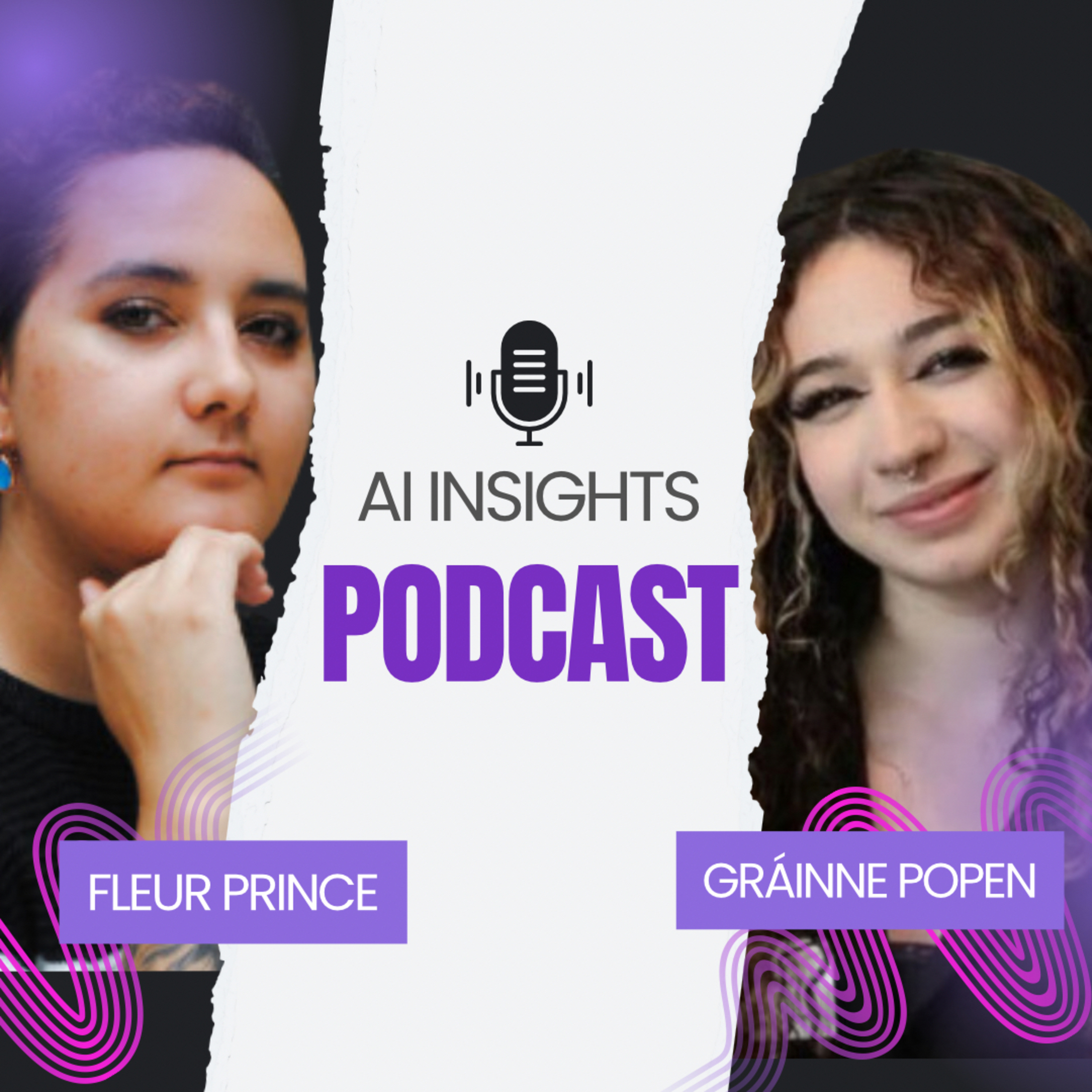
In this interview, Cosmo and Omar, co-founders of Mindstash, discuss their mission to address the modern problem of information overload. Cosmo, who studied theoretical mathematics, philosophy, and later neuroscience and AI, describes his lifelong drive as an inventor, which led to the creation of Mindstash. Omar, with a background in MIT's entrepreneurship program and neuroscience, shares a similar frustration with losing valuable information from podcasts, books, and conversations. Mindstash solves this by allowing users to capture content from any digital source—via email, WhatsApp, or screenshots—into a centralized, AI-powered "curiosity companion." This system not only stores information but also re-engages users by connecting related ideas over time, adapting to individual needs. The founders emphasize that Mindstash is both a practical tool and a philosophical movement, fostering curiosity as a core human trait. Their team, rich in neuroscience and technical expertise, designs the product to be organic and evolving, ensuring no two user experiences are alike. Cosmo and Omar highlight that Mindstash helps both personal exploration and professional organization, turning scattered interests into a coherent, accessible system. The app is set to launch soon, with a growing community around its vision of changing how people interact with their digital and mental landscapes.
Hey everyone, welcome back to AI Insights. My name is Flore Prince. I'm the founder of the podcast AI Insights and today we're doing another interview. I'm here together with Gozimo and Omar who are the founders of Mindstash. Um, yeah, can you guys tell us a bit more who you are? So my name is Cosmo, co-founder and CEO of Mindstash and maybe to to briefly start off, I've always seen myself as an inventor. So looking back as a child when I was like 10, 11 or so and somebody asked me what I wanted to be. I was always saying I want to be in a film that was just a German word for inventor. And really that kind of theme has dragged me through, has dragged through my life and the meandering path I followed my curiosities. And I started off studying theoretical mathematics and philosophy where I then laid the transition into the tech, since tech ecosystem working in sales and optimization consultancy for enterprise clients within Europe. And then after a while I got kind of bored of the corporate life and I decided to go back and study and study the human brain and AI at our artificial counterpart and where that intersection between the two world's lies. And this is an also where kind of Mindstash came in. And it's exploring the intersection between the human brain and the artificial brain and how we can change that relationship we have with our digital landscape and our mental landscape. Yeah, and for myself, my name is Omar. From everything started in mid, which is a three year MIT program that teaches excellent young students entrepreneurship leadership studies and computer science. There I was open up to the world of entrepreneurship. And after winning some competition in front of Facebook executives, I understood that one can really change the world through innovation. And since then, that was my mission. In the last seven years, I've been building the toolbox to one day create something of my own with and dear friend. Then I moved to Amsterdam, to Saudi biology and neuroscience while also working in the real estate sector, leading project in property tech and sustainability. And now together with my good friend, now I come from the Cosimo, we're building Mindstash where our mission is to unlock people's potential intellectual potential by giving them a tool that enhances their curiosity and let them capture whatever they want across any medium and the piece of information that they're interested in instantly and to explore it and indulge in it, which is a solution for the modern problem of information overload, having so many things bombarded at us at our attention, but no really tools of capturing what matters. And people have all this kind of suboptional coping mechanisms that are trying to remind themselves for later on the things that they want to remember, the things that they care about. And they send us a lot of message screenshots and so on. So I started to capture the information, book recommendations, the business that they want to look into. And now with Mindstash, there's a new way of doing all of that and so much more. Okay, when I moved to Amsterdam and I met the Omer and we became really good friends and had many, many conversations about the brain and our existence and consciousness and etc, which we're both very fascinated by. And then eventually the idea also of Mindstash came out of this entire evolution of following curiosities of being always interested in figuring out what is behind something, trying to understand it. And eventually I hit a frustration point of finding so many different things that are of value to me, a podcast recommendation, a book recommendation, article that somebody talked about in a conversation and I'm just like, oh wait, let me quickly like type this into Google make a screenshot. And then all of these things always just disappeared because there was no way of capturing it. And I love photography. So capturing the word, we use it a lot at Mindstash. And it's I think what Mindstash is in a way is enabling people to capture information and capture information where normally we don't have the ability to do so. And all of these, all of these frustrations kind of built up and eventually I was at the point of like, okay, crap it. I'm just going to build it myself. I'm going to build a tool which lets me capture all of these information wherever I am in the digital space and kind of feed into one centralized location, which is my curiosity companion. And then I built the initial MVP to kind of kick it off and the Omni then joined forces. And since then it has evolved into a very different caliber of an idea. And I think Omni can go a little bit deeper into where we are currently in the stage of what we're building and what exactly Mindstash really is. Yeah, so from what started with a side project to really solve a personal program problem. More and more people asked including me about if we can get our hands on it because we shared the same frustration and the same problem. And very quickly, both me and Cosymonders, too, that there is a true potential here, not only for a product, but for a business and a vision of creating the operating system for human curiosity. What we started doing is building a whole business around that notion of taking piece of information, capturing it wherever you are, feeding into one space and letting people explore it later on in their own terms, make the connections where they might be hitting otherwise. And people's enthusiasm around it has been tremendous. And beyond just the two of us, we started adding more people into the development into the business side of things. Now we're just on board a new head of growth and we are getting in a new CEO, S-C-D-O rather. It's really kind of like a builder team and expand the product into the greater market. And I think what's also important to say is obviously we're an AI company and a tech company and we produce a product and an app and a web app and it's like wherever you're in the digital space you can use mindset. But internally as well, we're saying a lot and we're now starting to execute really is as well, we're not just a company of both a product but a movement and a philosophy and a community of people around that. And we also want to encourage people with this. The entire thing about curiosity is like, curiosity is so much a value that is so undervalued and though it is the driver of so many of really human traits and is part of the human evolution and is a driver to innovation, understanding, curiosity is a thing that connects people and we want to facilitate that connection as well in the real world, not just in the digital world. So that is a big part of our company as well, it's not just building a product but building a community, a movement and a philosophy. To me this sounds really cool. I remember when Omar and I met each other at the team W, you already told me a little bit short about your idea and that's actually when I started looking through my phone actually of screenshots. I took in the past that I'd ever looked at it again because at the time I thought this is great and then I was like, wait, didn't I take a screenshot of this once upon a time? But this sounds like a real solution to the, I want to say the mess of my phone library at this point. But yeah, but it's also interesting the background that you guys have and that this actually started with, I want to say, a philosophy of, okay, this is a very hard word, philosophical discussions and that you guys got into actually building an app around it, the idea. Yeah, I mean, like I think this is also the nature of how both of us operate and would we see more and more of the talent and the people that we attract to work within MindSash. It's a lot of people who are curious about a lot of different areas and if that's philosophy, mathematics, engineering, biology, evolution, art, marketing, music, there's so many different, everybody who is at MindSash and is kind of attracted into that field has such a wide array of interests. And I think that that speaks kind of for the brand and what we're building is we all about curiosity and I can tell you most people at MindSash are extremely curious. But as well as like what would we embody, what we embody in our, in our part of it and our idea and where it came from, it is not a tool for just one discipline and it's not a tool for just solving one problem, but it is an operating system and it's a way, it is changing the relationship we have with technology and the relationship we have with our mental landscape and our digital landscape. And I think also in our thinking both of us are quite philosophical on the one hand and extremely practical on the other because we both have technical background as well and I think it's it's fascinating to see us in the world of technology nowadays. There's so much possible just from a technical perspective but often it takes as well thinking from a psychological, from a neuroscientific, from a philosophical perspective. Okay, how do you want to shape a product? How do you want to shape a company and everything that is evolved around it in order than to actually create the deliverable which is the product and I'm very happy to have like so many people in the company that come from these various arrays of backgrounds and bringing different schools of thoughts into that as well. Oh, I think it definitely starts like a great addition, the diversity of your team, but I would also say the what you're developing actually is solving a, I want to call it a daily problem for a lot of people since we moved into the digital age and the huge amounts of libraries and stuff we're paying cloud, yeah, cloud space for but we actually never look back at it. You guys are actually making it possible to actually find to, I was I get curious later on when you actually look, assume when you open the app that you actually get options. Yeah, so it re-engages with you and it kind of connects the dots for you to be like, hey, now you're suddenly interested in, I don't know, podcasts about XYZ but then this relates back to something that a couple months ago you captured and it brings this back by relating it back to what's currently there. So all of the things that you often never look into now they're in kind of a safe space. They exist, they've been researched for you, they've been giving you the first inch of insight and now whenever you interact with the system, the things that are most relevant to your interaction suddenly come back and come back into your consciousness. So we already talked about [BLANK_AUDIO]
about why you guys created MindStash, but what inspired the creation of MindStash? - Well, it was a personal frustration of constantly having. - This is usually how these things start. - Exactly, of constantly having the issue and the problem of like, I find super cool information that people tell me about, I somehow tried to record it, but I'd never be able to engage with it or come back to it, nor does it come back to me. And then eventually like, one morning I woke up and I was like, "Yeah, what?" Well, you know what'd be cool? If I just send myself an email, then that goes to some magical AI service, there's some magic and puts it into my database. And then once a week it sends me like a newsletter of coming back with all of the information I found that we pre-researched. And that was kind of the first initial, really super scrappy prototype of MindStash. At that time, it was still called Find Assist, I think. So horrible, no. But yeah, so I shared it with a couple of friends of mine upon which Omar and people were super passionate about it. People were like, "I wanna have this, where can I get it? Can I give it to my friend?" And I'm like, nope, it's just running on my local machine. I can't actually share it with you. So in March, I decided to like, double down on that a bit and programmed out the first kind of web app of MindStash and kind of improving it from this initial script that I was running and building out kind of a pilot. And then we kind of started from there and we saw more and more traction and people are being really interested and then passionate about it. And then Omar and I joined forces. The stars aligned, some commitments lifted off us. And since then, we just went all in and yeah, now we're launching the app product on the app store in a couple of weeks and they're doing the final rounds of beta testing and so on and the team has grown since then pretty rapidly. So yeah, this is kind of where the originally started is really this personal frustration that I saw for myself and I wanted to solve, but that I saw, as well in so many other people, I saw constantly people making screenshots, opening another tab, sending themselves WhatsApp or emails and that behavior is already there and then it was the second thought of like, "Okay, let's simply tap into that behavior." If people still want to keep sending themselves email and WhatsApp, no problem, you do you. It's just send it to your MindStash address and it just goes directly into you and kind of single source of truth for everything that you're curious about and it's creating this ever-volving context to where personal curiosity companion. So yeah, this is where it kind of came from. - Yeah, so you can even actually, so you just see your MindStash account and it will add it to the podcast. - Yeah, essentially you see your send it directly to save that MindStash.app and it will automatically recognize email address and link it to your account. So it's like we were trying to, like with all of the behaviors that are already there, just linking into that and if people like working that work great, but there's a more optimal solution there and we just tap into the same behavior. - I feel very much next to AI, it is also very much neuroscience tapping in here as well. - Yes, definitely. I mean both of us have studied the brain throughout and are extremely passionate about it. So a lot of the architectural design behind MindStash is very inspired by the functioning of the human brain and also looking into the future, there's gonna be more and more neuroscience being incorporated into how the system evolves and connects things for you. And again, really stressing the intersection between artificial intelligence and biological intelligence and seeing where that intersection really lies. - And over, when you heard this idea, you were like, "I'm in." - Yeah, absolutely. Like from the very first moment I was, I wanted in my phone now yesterday and I was so enthusiastic about that being out there in the world that I started to talk with, like all of my friends, my family, my colleagues and I saw the passion and the enthusiasm in their eyes and that's where I was like, okay, this is not just Kozymo's side project. This is not something that is only fit for him and me and some other people who are curious about me and things, this is stuff. This is something that so many different people can incorporate in their own life and are passionate about. And it's heating and nerve and real pain point that so many people have the amount of people that we spoke to that are like, yeah, I do send myself like in a me myself and I, what's up group, reminders or the things that I wanna look into. Yeah, I have a million screenshots in my phone never to be looked again. Yeah, I have like 500 open tabs, no idea where the music is coming from. And it's almost like this personal and intimate pain point that people have themselves and they don't share it with others because often the things I wanna capture are for myself. And now there's a new way of doing that with my stash. People can capture it for themselves, create their own kind of like Pinterest of their own curiosities. One system that is beautifully designed and can really incorporate and combine all of the different things people want to look into. And the thing is now it's also easy to shareable. So I think it's gonna unlock even more enthusiasm because curiosity, if you really look at it, it's like that each intuition or from what people want to discover that they don't yet know the things that they wanna capture. And after when they do find out they wanna share it for it. So I'm really looking forward to where this thing will develop and seeing also how people will use it because the way Kozimoya is using it and myself is totally different than you will. So I guess. And I think that touch is also an important point in regard to how they design and system which comes back to the neuroscience aspect of it. Quick anecdote to that yesterday. I looked at our org chart and I looked at all the people that we just like kind of onboarded and building the team and refining the structures at the moment. And I think it was something about 60% of the people at mindset currently have some sort of relationship to neuroscience psychology. And around 60, 70% as well have a technical background. And I just saw them being like, "Hmm, I did not realize that there's so many neuroscientists here." But yeah, that's an anecdote on the side. But what comes back to the neuroscience of the system as well, which Omar just said is, "I'm going to use it differently." Well, you're going to use it differently. Omar is going to use it. Everybody's going to use it differently for their own different things. And the system needs to be built in a way that accommodate all of that. It is not static. It is an organic architecture which is constantly evolving. So with every interaction you make, it is more adapting to your needs to what the inside is that you want to get and what is most relevant to you. And there's different use cases. And all of the use cases are kind of organically ever evolving and developed before the user to give the best possible experience they have. So no two curiosity companions of MindStash are the same. They're all kind of individualized and adaptive. - No, but this also makes me, to me, like also they're saying that everyone is using it. Also, what you guys are actually building as MindStash, makes me even more interested like, "Oh, if that you guys are also actually really using it, that tells me something as well, that it's something that's very helpful in daily life." - Yeah, in daily life and also just for the company as well. I mean, every time it comes up in conversations where I'm like, "That's important for that marketing "compane-witting." That could be important for the product team. It's like, I just mind stash it. And I know it's secure. I know it will be taking care of. So it has both personal indulging into curiosity and following these passions and which ultimately brought us here as well. But then as well from a work side of perspective, it has a similar utility. And also if you think about, okay, what really is curiosity? And how does it play into our lives? It's like, well, what I realize kind of, if I look at the last few years in the meandering path from like mathematics philosophy to working in tech, to studying neuroscience and AI, to now building an AI company, looking back at all makes sense. But the journey to that point is just connecting the dots with different curiosities and following them and creating passion and understanding more and more things and following that the scent of curiosity being like, "Oh, okay, why does this work this way? "How is this related to that?" And I think there is an inherent value in what curiosity is and how it makes us human and how we move through the world and for our lives and both the professional and personal sense. No, I think it actually makes me feel like, so I know when you do interviews, for example, when you apply for a company, they always ask you, "Are you organized?" This feels like my stay is, it might be a solution to that question of like, "Am I organized?" Yes, I am. You can show like, "Look, I have an AI that doesn't for me." Minds that. - Exactly, it's self-organizing. - Exactly. - And for our interviews, we also ask what are you curious about, which is for us is almost more important than how organize our people. - And honestly, this is an interview question that I think more companies should be using because the inside of you get into people of what they answer when they say, when you ask what are you curious about? Is it a very general broad thing? - Okay. - It gives you a real sense of who that person is from a character, from a drive, not just in a professional setting, but from a personal side point as well. And so I've been really enjoying reading the responses from all the people that I've applied into the, what are you curious about? - What was the, I want to say, what's the craziest thing that you actually heard that people are curious about? As you are asked that question, I'd like for you. - I'm curious. - Yeah, I think some really young answer regarding the Javu that incorporated the newer science of it, the philosophy of it, the way that we perceive memories and information in general, like the wrote a small essay just talking about their curiosity about the Javu and after reading it, we had to interview them because I was curious myself a lot, like where all these questions
I lead them, they have answers. And so. Did they end it up? Did they end it up? Did they end it up? Only more questions, which is good. And I think that's one of the interesting things about the pursuit of knowledge generally. It's, answer brings even more questions. And I think in today's world also, when there are so many different tools in AI, the best behavior and character that people can have is being able to learn. To be live-long learners. The best way to learn is to be curious about the new things. It's to be curious about where can my own mind can take me. And how can I use a certain tool in a certain way? And this is where creativity and also productivity and progress is coming from. So I think generally in the next decade, we're going to hear the word curiosity so much more. And also kind of going a bit off the whole productivity and curiosity side of things. What I think is, if people are curious about something and then I realize that in my own working as well, if I'm curious about what I'm doing, curious and passionate, my productivity goes through the roof, because curiosity is an internal motivational drive. Without going too deeply into the psychology of things. But it's what drives us internally to reach something. And that leads to productivity that leads to innovation, that leads to scientific discoveries, etc. And leads to understanding. But following curiosity and indulging in it and really going with that flow and the flow state has an enormous effect on productivity and work output. And that is something that only like over the last few months, I was able to conceptualize of how interrelated these two concepts are and how little they have been talked about. There's a lot of literature on neuroscience of curiosity and productivity. But there are some links, but it's something that has been yet under explored. Yet to all the professors and neuroscientists that I'm talking, they're like, "Yeah, there is this enormous link and we need to investigate this." And dive deeper into researching. Okay. Well, I think this is definitely, I don't know, to me, it sounds very, I'm very much curious of trying out my research myself now. For the way you guys talked about it, I love the enthusiasm, but also that you guys talked about your entire team is actually using it, which you guys are building. And to actually get more productive, but also to get innovative as well. Since I know how I've met many founders that are actually now absorbed in LinkedIn, but don't want to be because I actually want to focus on innovating. And I think with this, with the screenshots, and you can actually focus on innovation, that would be even greater, especially as inventors. It's a lovely loop that you always end up in. Very much so. I think the big question would be, since you guys are saying you're launching and within a few weeks, by the way, I love that you guys also are doing the first public appearance on my podcast, besides that. Of course, we didn't have it any other way. Yeah, awesome. I was curious also, I think maybe the world is also curious. Where do you guys see my session going, actually, the next like six to 12 months? Yeah, so what we're building is the operating system for human curiosity. Minds such the consumer app is the first phase of that. And we want really people to use it and to indulge in it and give us the feedback. So we can iterate and make it better, expand more ways of capturing different types of information. And the next phase will be as well to once people have their own curiosity companion, their own Pinterest of all the things that they found interesting in one place, how it connects to the rest of their digital ecosystem, and how it connects to their own personal ecosystem, because there are so many things that I'm curious about that I want to capture into my own knowledge base, that I wasn't going to share with Cosimo with. And now as our team is expanding, I want to share it like the rest of team mindstash. The thing I found that article that event and just sending a million links around those screenshots is really not a good way of doing that. And we are probably will move forward into from a personal companion, into a personal companion that people have the agency to also share parts of and creating collaborative spaces to indulge in creativity, curiosity, and either work or setting. And the thing kind of going off that as well, a long term aim, and I think if you're talking about 12 months, that's for start of the second. And especially in the AI space, what wasn't possible two weeks ago and what's possible now, it's a completely different story. And that's so fascinating about this space we're operating in as well as. But if you're looking at kind of like 12 months ahead, from the way we are designing the user interaction, the UI UX, the whole experience that we are creating for people to operate within that operating system, is going to change dramatically to what we're used to in terms of normal technology. And that also goes into the paradigm shifts that we are in. And user interfaces, interfaces and genitive user interfaces that are now more and more coming. This is we are on the edge of innovation in these paradigm shifts, both what's possible in the API, in the AI qualities and how we are designing the architecture around that, creating new types of databases to evaluate knowledge in a different way, to pushing the boundaries of large language models. But at the same time, pushing the boundaries of what's possible from the interface point of view. And that's where I think some of the largest shifts, and also globally in technology will happen over the next year or two. And this is where we want to be at the forefront as well. And this is something which is very deeply ingrained with my instructions, really pushing the boundaries of what's possible and preparing for what we assume is going to be possible in 12 months. So these things we can't talk about right now, but there is many things that have been laid out and planned to build off of what we're doing now, where we're building the foundation, the piece and one. And piece by piece, we're putting that puzzle together, which is the operating system for human curiosity. And that's the direction we're heading for the next 12 months and beyond. And really getting that to as many people as possible around the entire world, for as many different use cases and all languages. For everyone, my session will be available. Essentially. Love this. And if you're going back to the neuroscience of this as well, so keep bringing it back. But the architecture is designed in a way like human brain is designed. And that's what we're going into the universality is because the behavior that, and the experience we're giving for the user and are going to give, is designed for the human brain. And that's where we can even create this universality in the future. Yeah, I think this is a great summary of what you guys are creating and also where you're going for the next 12 months. I want to thank you guys so much for being on this podcast. Also for this making your first official appearance. You're very honored. Yeah. So everyone who's listening, definitely check out Minds Dash. When it comes out, it will be available in the app stores. I assume I'm going to say Google and app. So Google, Google coming soon, Apple coming first. And obviously the web app as well. If you just go to Mindstash.app, you will come to our website and you can log in directly from there as well. Awesome. Well, when it comes out, I will link it in the summary and the description in the podcast. So anyone who's curious, please do click it, check it out. I always say any I that comes out, check it out. And yeah, thank you so much for being on the podcast. That's everyone else like and subscribe. And see you all at the next podcast episode. Well, it was a pleasure. Thank you so much. Yeah, thank you so much. And we will send you first an early invitation for being a beta tester. So, all right. All right. Everyone, see you next time.
Podcast Summary
Key Points:
Mindstash was founded by Cosmo and Omar to solve the problem of information overload, enabling users to capture, organize, and revisit valuable information from various digital sources.
The tool acts as a "curiosity companion," using AI to centralize captured content and re-engage users by connecting related ideas over time.
The founders' backgrounds in theoretical mathematics, philosophy, neuroscience, and AI heavily influence the product's design, emphasizing the intersection of human and artificial intelligence.
Mindstash integrates with existing user behaviors (e.g., sending emails or screenshots) to simplify capturing information, with a focus on personalization and adaptability.
The company aims to build not just a product, but a community and philosophy around curiosity, with a diverse team including many with neuroscience and technical backgrounds.
Summary:
In this interview, Cosmo and Omar, co-founders of Mindstash, discuss their mission to address the modern problem of information overload. Cosmo, who studied theoretical mathematics, philosophy, and later neuroscience and AI, describes his lifelong drive as an inventor, which led to the creation of Mindstash. Omar, with a background in MIT's entrepreneurship program and neuroscience, shares a similar frustration with losing valuable information from podcasts, books, and conversations.
" This system not only stores information but also re-engages users by connecting related ideas over time, adapting to individual needs. The founders emphasize that Mindstash is both a practical tool and a philosophical movement, fostering curiosity as a core human trait. Their team, rich in neuroscience and technical expertise, designs the product to be organic and evolving, ensuring no two user experiences are alike.
Cosmo and Omar highlight that Mindstash helps both personal exploration and professional organization, turning scattered interests into a coherent, accessible system. The app is set to launch soon, with a growing community around its vision of changing how people interact with their digital and mental landscapes.
FAQs
Mindstash is an AI-powered tool that lets users capture and organize information from any digital source, creating a personalized curiosity companion to explore and connect ideas.
The founders are Cosimo (CEO) and Omar, who met in Amsterdam and combined their backgrounds in neuroscience, AI, and entrepreneurship to build the platform.
It solves information overload by providing a central place to capture valuable content like book recommendations or articles, preventing it from being lost in screenshots or forgotten tabs.
Users can send information to their Mindstash account via email or other methods, and the system uses AI to organize and resurface relevant content based on their current interests.
It started from Cosimo's personal frustration with losing valuable information, leading to a scrappy prototype that evolved into a full product after positive feedback from friends like Omar.
Yes, the design is inspired by the human brain's functioning, with plans to incorporate more neuroscience to help the system adapt and connect information for each user.
Chat with AI
Loading...
Pro features
Go deeper with this episode
Unlock creator-grade tools that turn any transcript into show notes and subtitle files.
 PodcastTranscript AI