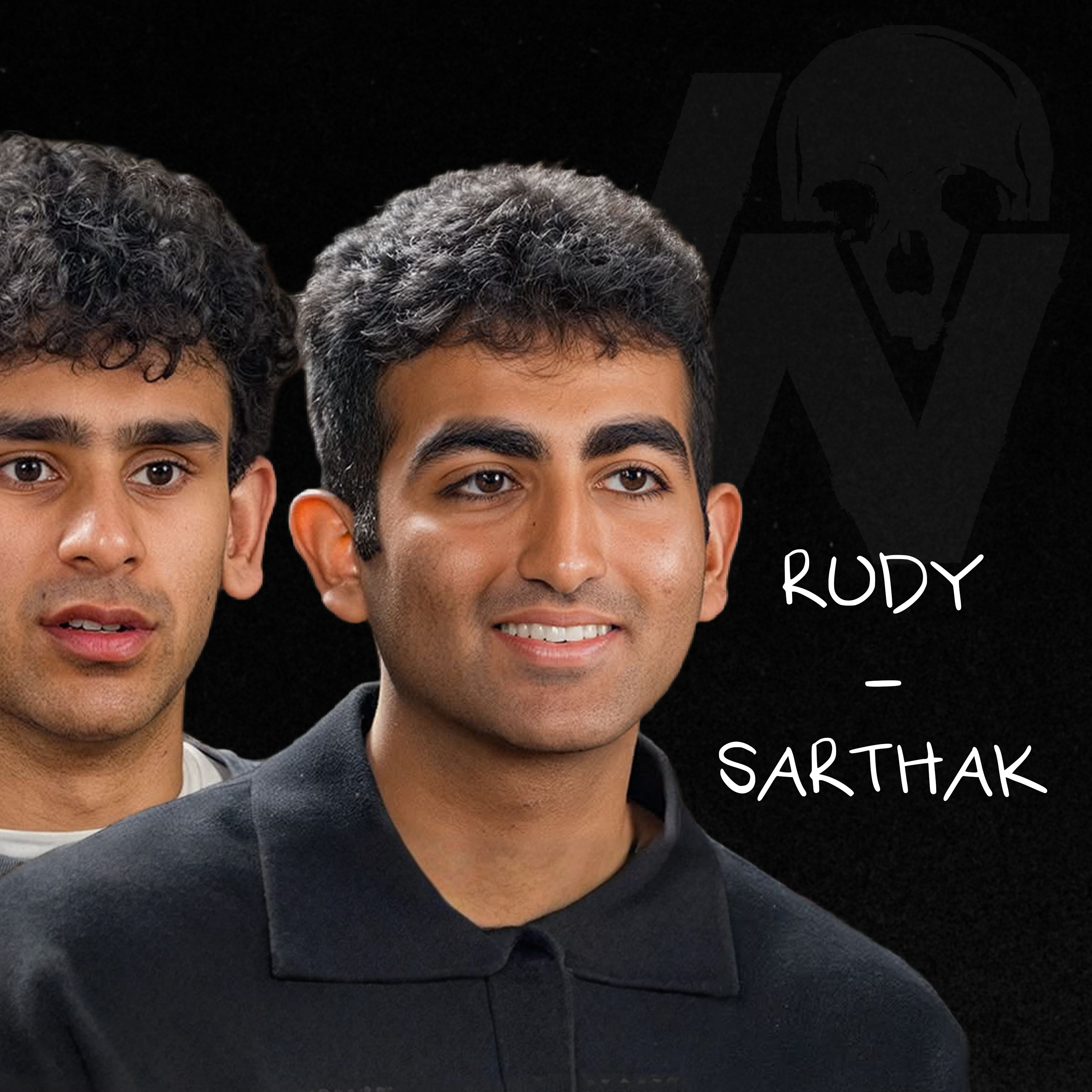
"AI Killed College!" How This Dropout Makes $1M/Month With His AI Study App | Turbo AI Founders
144m 15s
In this podcast interview, founders Rudy and Aurora discuss their journey from building early apps like Gradify and a Christmas lights marketplace in high school to creating Turbo AI, a successful educational app generating over $1 million monthly. They highlight the importance of solving real problems and achieving product-market fit, noting that viral marketing—driven by a clear "aha moment"—was key to acquiring millions of users. The founders caution that high revenue growth in AI businesses often comes with substantial costs, such as expensive LLM inference, which can impact true profitability. For entrepreneurs starting from scratch, they advise validating ideas by testing virality and payment intent before full development, and suggest that non-technical individuals can build MVPs using AI coding tools by learning iteratively and maintaining a focused vision. Their insights blend practical startup strategies with reflections on the evolving economics of AI-driven software.
Even in very, very bad case outcomes and valuation methods, we are worth over 100 bucks. Today's guests built one of the fastest growing apps in the world at 21 years old. To get our first users, like, instead of the natural step that now people should take of make TikToks, I would go to the dining halls, I would like steel cookies, and then I would set up a booth, and basically I would say sign up for Turbo and I'll give you cookie. Two childhood best friends with the Mutual Lover software, they dropped out of college after a groundbreaking realization. It's not enough to just solve a problem. That company needs to generate enough money to sustain itself independently. But whenever someone else puts money into your company, they get equity. You don't actually make the decisions anymore. Today they built Turbo AI, an education told changing how millions of college students learn while earning the millions of dollars a year. If you look at some of the most viral influencers who tell story time content, they're always doing something in the video. So instead of just the creators sitting there and saying, "Use Turbo, can we take a creator and make her cut fruit in all of our videos?" People would see these creators on their 4U page and be like, "Oh my god, they just feel like an influencer." In this episode, we'll investigate how they disrupted modern education, explore how the most successful kids are using AI to succeed, and see exactly what it takes to make you and your best friend billionaires. Rudy, Aurora, and Sartik, Dolan. Welcome to the Jaguar Podcast. Thank you for having us. Yeah, excited. Good place to start here. You guys built one of the top education apps in the world. How much money did you make last month? A little over a million dollars. And how old are you guys? 21, only one. So you guys are 21. Most people your age are, broke college kids in a dorm room, a million dollars last month. How? We started the company around two years ago, and since then, I've just been chipping away at it. Right now, we're at around 8 million users. And a lot of our users pay us a subscription. So we just have a lot of recurring revenue built up, and then we're also growing pretty fast, adding a lot of users every day. But the real answer is like the question behind the question, it hasn't just been two years. We're all like the learnings have come from. Rudy and I are actually like childhood best friends from Texas. We met in middle school, and we've been tinkering on projects, ideating on different startups. So it's been a long journey to get here. It hasn't just been two years. What was the first thing you guys built together? I can go back a little bit more than the first thing we built together. My side of the background is on the technical side. I've been coding since like third grade. My brother got me into it like insanely young. And when I was in middle school going into high school, or around my Met Rudy, our district had this grade portal. That was absolutely terrible. It was incredibly shitty to use. It long load times. It looked ugly. I was learning coding. So I was like, you know what? Why don't I just try to build an app that looks pretty? It's aesthetic. You can do cool things like calculating future grades. And let me release it and let's see what happens. And within the next year, it ended up getting 40,000 daily active users just from word of mouth growth. And I sort of remember going to school and seeing other people like classmates, other people in district using my app, not knowing that it was me. And I was just in love with building things in startups because I was like, wow, I just, they're finding value in something that I built. I want to keep doing this. What was that called? It was called Gradify. Gradify? So you got 40,000 users in how long? It was like year, year and a half. And how old were you? 9th grade. So about 14, 13. So I like that. Yeah. So that was the first thing you built. That was the first real thing that I'd built. I got like real traction. Yeah. And was the first thing you built with him? Or did you build something on your own? We built together. So around same time, ninth grade, I realized like a problem that my family face was that it was really hard to get in touch with contractors to put up crystal slides. Like, my parents would call dozens and dozens of people. And they were either fully booked out, super expensive, or just did not have availability. So I was like, can I start a company around the problem that it's hard to find Christmas slides and dollars? So at that point, I thought of the idea. I made like a Google form, gone around my neighborhood, knocking on doors collecting orders. And then I was like, wait, this would be so much better through an app. And at the same time, start like and Gradify. And I was like, we're great friends. And I know that he's incredibly technical. Let's partner work together. And then together, we worked on a company called WorkBee, which is basically a marketplace for putting up crystal slides. And we made like $60,000. And this was the main thing that we worked throughout high school. That was the first thing that any of us monetized. You made 60K revenue over what time from two and a half years? So how much profit was that? It was last. It was like our margins were like 10, 10 percent. So it was like less $10,000. So you guys saved the money or did you find anything with it? No. She saved the money. Boring answer. So we'll get more into your backstory in a bit. But how long did it take you guys to build an app that makes a million dollars a month? The initial app, we were going into our both of our freshman year at college. I was going to do a queue. It was going to Northwestern. And the initial app took around two to three months. But this is also when we were building it. This is a time where AI coding tools weren't really a thing. Vibes coding is not. I was barely even using AI to code it all. Because GPT 3.5 is out and it's borderline useless when it comes to anything technical. So obviously those timelines are like, "Wait, wait, wait, wait, shorter now." To have months. Okay. And how long would that take today for reference? Oh, building that MVP would be like days, days probably. I mean, if I took that same thing that I built, you know, whatever, two years ago, but now did it today, I think I'd get to the same spot in like two days, a day probably. Just to kind of give the blueprint. If you had to grow an app from zero to a million users in six months, how would you do it? I would say the first thing is to figure out what is your goal with this app, right? Is this something that you want to be a venture scalable startup? Or do you want to make a lifestyle cash flow business where you extract quick cash out of it? Because my answer and advice I would give would be slightly different for both situations. Yeah, whichever one you want to talk about, we can dive into. That's funny. You say that. That's what I've come to realize as well. It's like you're either building to sell or you're building to make money and have money in your life. So, well, you guys started as a cash flow cow originally, right? We never started as a cash cow, but when we first made turbo, we were not sure where the future lies. So, we haven't paid ourselves a lot from turbo. We just have only a year and a half ago, six months into the company come to the conviction and conclusion that this is the thing we want to work on for the next 10 years, and that we want to build a multi-billion dollar company rather than paying ourselves a big salary and cash flowing it. Like a lot of consumer apps. So, if I wanted to build something that made me a million dollars and I keep the profit, yeah, give me that process. Okay, let's get the things straight. So, you want to get a million dollars in profit, in profit, in some sense. Yeah. As fast as possible. And monthly profit in six months. Awesome. So, one thing that I will say with a lot of revenue. Revenue. Yeah. Okay, very different. Very, very different. One thing that I will say, we see a lot of sensational headlines around founders of consumer apps, making a shit ton of money monthly. The asterisk behind those numbers that a lot of people don't talk about is when you get such ridiculous growth, the marketing spend behind that is also really, really high. So, the actual cash flow on a monthly basis, like how much is the bank account increasing per month is a vastly, vastly different story. And the reason that people don't talk about it is because it's almost always not like rainbows and sunshows. The thing that's flashy is a teen year old making 30 million a year. But, are you making, is your bank account going up 30 million dollars a year? Absolutely not. And the one thing that differentiates your bank account going up over a long time horizon is usually your retention in like your chart rate. I'm guessing. Yeah, exactly. That's the thing that builds stable recurring revenue. But there's a big asterisk around that because the reality is software businesses, it used to be that retention is all that matters because the gross margins on like a premium user are pretty good for software, historically speaking. And the reason that the gross margins were good historically speaking is because software to actually maintain on a monthly basis is not super expensive. For example, if you bought a discord subscription, discord isn't that expensive to maintain. So if you're paying discord five bucks a month, those five dollars are pretty much all profit. The problem with AI businesses is LLM inference, like talking to those actual AI models is quite expensive. So we're sort of in this flipped environment now where even if you do have great retention, if the cost of the models per month is like a lot of money, then that's actually not a great business model. Now let me give you a super good example. Curcer. Curcer, because of the nature of being an AI coding agent, they have to use the best models. Otherwise developers are
just going to go somewhere else. And because they have to use the best models, the best models also happen to be very expensive. So their gross margins, even on paying subscribers, are not very fantastic because they, a subscriber might be paying cursor $20 per month. But the cost to actually use those AI tools might even be more than, you know, $20 per month. Our team alone of like 10 engineers, we spend like 20 to 30 grand on cloud code every month. So a lot of these numbers are just not, they're misleading, might be, especially with AI because a lot of the unit economics have been fundamentally changed for software. I think a better question to ask might be if I wanted to take an app from zero to $10,000 a month. What are the exact steps if you had to break it down into five steps? If you're starting with zero cash, right? And you don't have venture funding, I would when thinking of app ideas work backwards from what would go viral on social media. So with turbo, for example, there's sort of an aha moment when making content about turbo. It's like you put in a lecture recording or you put in a PDF and as an output, you get notes and quiz questions. There's absolutely Cali eye where it's like you take a picture of your food and as the output, you get how many calories it has with you max. You take a picture of yourself and it tells you how attractive you are. So I would say that if you're starting from zero dollars in the bank account, something that you need to optimize for is being able to go viral on social media with your product. And something that correlates a lot with virality in my opinion is whether or not your product has an aha moment that paints a picture of what the product does. So if we look at calm, right? The meditation app. Even though it's a great app, I think that calm may not be able to do viral marketing very well. There's no fault of their own other than the fact that there's not a singular aha moment in the product. There's like a bunch of workflows built out to help you meditate, but there's not a singular like you put this in, you get this out. So I would say work backwards by trying to think about here's a viral moment that I want to have where it goes from input to output and then start to actually design what the app would look like on your end. So I would say if we had to break it down to two super duper simple steps, the first one is like Rudy said, can this even go viral? That's how you're going to get a lot of attention. Now the second problem, which is where a lot of apps fail, is would someone actually pay for this? There's a lot of ideas that I've heard about like mainly consumer social apps where it's like connect with your friends like Instagram for plumbers. I don't know, I don't know, whatever it is. No one's going to pay for that. It doesn't make sense. So get a viral video, step A, prove that you can get attention. The second step is prove that someone would actually pay for it. And the best way to do this is if you're coming from an engineering background, you think, oh, let me go build out this amazing app. Fade that. Don't even worry about building the app. The first most important thing is let's get a pay wall up and let's put the pay wall super early, free trial, three days, seven days. And when someone hits the app, hit in with that pay wall and see if anyone bites. If a zero people bite, that means A, you might be able to get attention, but no one actually cares about the problem enough, meaning that that app is not your winner. But if you get both of those two things, both attention and the ability to get someone to pay for it, then that means your idea has real legs. And then you can focus on building the actual app, you know, getting engineers, designers, figuring out how the actual execution phase is going to go. But if you can't do those two things, there's no point even trying to build it. You're wasting your time. That's really good advice. The advice I'd come to the conclusion after speaking with Zach Yada Garry about this founder, Kelly, I was make a video and see if it even goes viral first, which is also good. But after speaking with, I'm just now in him telling me how quick it is to build and deploy an app. I was like, oh, you can just like actually build it. But what you're saying is a good middle ground of build a pay wall for it. So what does that pay wall lead to? Like when you're testing something? This is a little bit of a great area because it's like, okay, you're just getting like one person. Yeah, you can't want person. Yeah. But basically you get a free trial going, let's say seven days and see if any way you can buy it. It's honestly a very good strategy because as soon as you get your first pay wall, you get your first conversion from free to paid. Now you know that your idea has legs and you also happen to not have a product. So the clock is ticking. You got seven days. You got a week. So make sure that now you're funneling real users, real people into your app that doesn't work. So you need to make sure you're working 24/7 to make that app work. And I tend to find that artificial deadlines are a super effective way at getting shit done because it's good to have your back against the wall. Right. Because that one person you scammed, I feel vengeful. Exactly. I think they're going to build this out myself. Yeah. That up. No, it's our first user ask for a refund. I actually tried this myself with, I think I was just testing an info product. I was like, what did anyone pay for some form of like grow your podcast course? I just sold it for like $300 and had one person that had to send him up and go, I was like, okay, maybe, but not as much attention as I thought it would. But it was really a play for me as well to collect data like I sent them through this whole funnel of like, what do you want? What do you want inside of it? Okay, here it is. And then it was like nothing. Check out page. But imagine that I'm someone with zero coding experience and I need to build that like MVP or even that checkout page, like what tools are using what software like really break it down as though like I'm a five-roll kid. Okay. Yeah. And you have no coding experience. Zero. Are you willing to learn how to code a little bit? Maybe you know, use something like a lovable or a replica. Yeah. Cool. And then you're trying to get like an initial MVP gone. So I'll give two answers. My first answer is that day zero, no resources. Don't know how to code. Well, say you have a hundred bucks. You have a hundred bucks. Okay. So basically no resources. No resources. And you don't know how to code. And you don't know. You can't find someone that is going to be able to help you. You should. You just know. No, don't. Because of the first people to say this. No, no, no. So the perspective that I'm coming from is just seeing the problem here is you don't know what you don't know. So you can't fix it. You can't fix it. You also don't know why things are bad because effectively when you vibe code, like truly vibe code, just let AI do the work and you're not even looking at what's going on. And you, you can't even the thing with experience and any discipline is the reason it's valuable. Is it gives you the knowledge to be able to say how something is going to go wrong or right before it happens. And in the same way that that's valuable in, I don't know, finance. It's valuable and engineering. But let's go back to the situation. Your best bet for coding tools is not a low code platform like lovable. Because you might get locked in at some point. Your best bet is A get views and then B, I would hop on cloud code and I would just start asking questions, a crazy amount of questions. So you're going to start. You need to build an app. What is the first question? How are apps built? Really dumb question. And it'll tell you, hey man, you can code an app with Swift or React Native. Your next question is what is Swift? What is React Native? And the great part about cloud is it'll tell you. And it's going to say Swift has these pros React Native has these pros every single time. You see a word that you don't know, which will probably be 90% of the words. You got to make sure to ask it, what does that mean? And then you can make progress. Eventually you'll have a basic enough understanding relatively quickly actually with, okay, I understand which frameworks I want to use. Which ones are most popular for these reasons? These are non-technical things. And now you can just tell the AI, cool, let's start with building a fitness app. And the really important thing about using AI coding tools is that they're like, they're like a friend who wants to jump into things too quickly. You tell them that you want to build a fitness app. And the AI coding tool is going to be like fantastic. I'll build it right now. Your job as the person prompting the LLM is to slow the AI down. You're supposed to say wait before we jump into coding, let's make a plan. So as a non-technical individual, your job is to collect as much information about what the app is going to look like. What is the most minimum viable product that someone would pay for? Try to do as less as possible and make sure that your vision for what the app is going to look like on V0 is incredibly clear. Because the less clear it is, the more the AI is going to be.
be confused. And once you have a clear vision for what this super duper simple V zero application that people will pay for is is just put it on the app store. Easier said than done, but that's like a pretty general formula for how someone could go about learning coding. The only asterisk is how long would that take? It depends on the person. I don't know. It within a month. You could. Yeah. Within a couple of weeks, you can get something on the app foundation of understanding to get something in the app store and it like somewhat makes sense. Hmm. God. So you think a lot of these build an app in five minutes is like a little bit sensational. You you can, but it's just like you're going to have to start over the entire code base, the minute you validate the idea. And then the question is, okay, I want to start over the code base. Who is going to do the coding and take it forward? Maybe the more interesting question is let's think about let's think backwards for a second. How do these AI models actually work? The way they work is you take basically the entire internet and you just shove it into a model. And it learns based on patterns because fundamentally with an LLM is it's just predicting the next token. So if you're trying to build something that has been built 19,000 times before, then yeah, the LLM is going to be amazing at it. You can tell it, build me a tick-tax to app. And because there's so many coding tutorials on the internet on building tick tech toe apps, it'll be able to just one shot the entire thing. You won't have to even prompt it at all. But the nature of businesses is the reason that they make money a lot of times. Is it something new? If you're just going to build a tick-tax toe app, obviously no one is going to pay for it. So they're sort of fundamentally a little bit incompatible, which is the reason I say that if you want to build an app that makes 10k a month, then you can't be building apps that LLM's have seen a million times because if they've seen it a million times, that means it's easy. And if it's easy, you know, it would have already been like, there's no argument there. I think that's all super useful and really fascinating and humbling a little bit. But a few weeks is still sexy, I think, to people. How'd you guys come up with that by do? So we were sitting in a cafe brainstorming ideas for things to work on because we decided to shut down the old Christmas lights business. And this happened to be our favorite idea. As for like the actual ideation, more of the other ideas you were thinking about. We were trying to make a talking teddy bear. Yeah. Shut that down though. It wasn't a talking teddy bear. Talking teddy bear. We were trying to put a lot of people were trying to do this. We're basically like, we're like, what if we put a LLM with voice and we threw that in like in like a teddy bear because LLM's have like just come out like tragedy, but he has just a thing and we sold that to like kids. Yeah. But we bought teddy bears off of Amazon and we would like stab him with knives and try to put harder and like a little control chip. Oh, you mean like a physical product? Yeah. Yeah. Physical product. Okay. I thought it was like one of those like talking Tom. Yeah. Actually, we were selling like we're really kind of selling. This is like 23 pre like you being able to talk to GPT. So you guys were thinking big because if you did one of those talking Tom apps AI like, I mean, I know people who make tons of money off like AI avatar apps, you know what I mean? Exactly. It was a big one. But physical product. I've seen some people doing that. I think it will be pretty big. Honestly, I think there's a huge like company to be made here. Why'd you guys kill that out? Do one of the reasons that we wanted to shut down work, which was the holiday lighting app is just the ratio for the amount of effort you put in for the amount of money you get out of it is honestly a huge spectrum for businesses. So with our holiday decorating light business, we would get one order, which was $400. Let's say and we get 10% off of it. So we make 40 bucks. The amount of effort to get those 40 bucks was absolutely insane. Forable logistics of man. Like we would go to people's houses with lights and like be like, we'll help you. We'll help the contractor put this up. Very early stages, right? At the time we made work, we we didn't actually have infrastructure made for order management. So what would happen is we had this beautiful app where people would place orders and then we would I'd like look at the picture of someone's house and then I would have a picture of their house highlighted where they want their Christmas lights and their phone number. And I would literally like put a quote into their app and then manually like do sales over text. Like I would say, hey, check work, but you got a quote Mrs. Quote, okay. And a lot of times like I'd hop on a phone call with them to like negotiate the pricing and then over text like no systems whatsoever. We would like find a date or someone would go to your house and put up Christmas lights. She goes built task rabbit for Christmas lights pretty much. Yeah, they say exactly. Yeah. But instead of task rabbit being where they like they just handed off to a contractor and it's like, there are problem now. We were like vertically integrated. So it was our contractors. How many Christmas lights have you guys put up yourselves? We didn't put them up, but we would go to houses. This is all going to be an anecdote, right? There's one house in which our contractor put up Christmas lights and the lights didn't work properly. And then the lady like really wanted an additional strip of lighting for one session of the house because it fell off. And this contractor was very unreliable. So he was ghosting both me and the lady at the time. And this lady was freaking out. She was like, I'm going to file a dispute. I want to post negatively about you guys and all the mom groups. And we were like, but the poor contractor left. So I literally like bought a string of Christmas lights off of Amazon and I like went over to our house and like I gave her the lights and I was looking at like why the lights weren't working. So it was like small things like this when our contractors messed up or something went wrong. But it was because we were trying to be like this vertical platform where we had ownership over everything rather than a task rabbit type of thing. Because our whole selling point to these contractors was that they shouldn't have to deal with a lot of the customer support, planning, logistics. They should do what they're best at, which is putting up that lighting. Going back to our ideation process, we were like, well, we have to do all this crazy amount of effort just to get $40. And that's not even recurring. There's no guarantee that we're going to get $40 from them next year. We're going to have to go through the exact same process. And I was like, well, let me think about software, for example, you get someone they sign up online. You don't have to do any work. They pay by themselves and then you get money on a recurring basis forever with high margins. It just sounded amazing. And around the same time, AI is also taking off. So we were like, well, you can just sell AI tools to people on a recurring subscription basis, which has been becoming popular over the last like 10 years. And that sounds a million times better than trying to sell in person. It was honestly no brainer. I was like, well, this just is miles, miles more scalable. It's easier. You make more money. It's more fun. It's just like every single pro possible. And this is when AI consumer apps aren't really a thing yet. The marketing isn't there. There's no craze about it. No one's really doing it. So we're very early. There's no AI study tools even when we were ideating it. Really? So this was the first AI study tool to market or like one of the first? Yeah, probably for one of the first three for sure. And then I guess just generally how did you come up with the name? How did you come up with the MVP? What was kind of the process of launching it? Like tell me the story there. So name is incredibly stupid. I remember we were thinking we were ideating for a while. Yeah, we had a list of like 100 names and we'd ask the GPT for help. And I went on like the like rhyme zone. And I like looked at synonyms and I saw turbo and I saw learn and we put it together and we got turbo learn. So very silly. But in terms of ideation, it was actually a problem that I had personally. Right when GPT came out, I was using it a lot to study tools. Let's take an example. I needed a study. I remember I need to study for APU, like APU, US history. And the way you study for APU, and AP government was making a ton of flashcards. And I really, really wanted to use the flashcards, but I didn't want to make the flashcards myself. So I would do this thing where I just like put it in GPT and then I like export it as like a certain file and then I should make the flashcards myself with like some AI tools. And then the other thing was both of us hated listening to teachers or professors talk. Right. Absolutely. I for the life I can't I can't take notes and also pay attention to someone at the same time. I can't do it. So I was like, what if you know AI did all these things for you take notes, make your flashcards, make your quiz questions. And that's sort of how the idea of turbo learn was born. It was actually just a personal problem where regardless of whether it became a big, big business, we were going to use it in our personal life. Got it. So that was the initial idea came to you in what year freshman year of college or senior college summer before summer before. So as after you done all the AP exams. Yeah. And then you guys had studied for all those. Okay. That makes sense to me. So we are we were able to go through high school without LMS, which I think was a huge blessing. Something that I found is that a lot of the a lot of really, really good ideas for consumer apps are ones where there's a certain niche of people that are doing that process, but it's early on the adoption curve. So another so for us it was we were already using AI to study. So naturally, it would be true that other students would also want to use AI to study. So it's a great consumer app. But the same pattern follows across like many, many different.
disciplines and categories. If you think about like like Spotify, for example, right, the origins to the best of my memory were people were already trying to find ways to listen to music everywhere and just have one platform for everything. The answer was actually just piracy. So there was a small niche group, a group of people early on the adoption curve that were already doing this. So it is low key a very natural conclusion to be able to take that and be like, oh my god, a huge company is there. So for people who are trying to find new ideas and actually be early to them, which is what's important, right? Like first mover's advantage. I think trying to find these niche groups of people where it's still early on the adoption curve is where the best ideas are because once you get to the middle, you know, by that point, it's already saturated and it's not too late to enter but your life is going to be significantly harder. So the niche in your guys case was college students using AI to study for tests and exams faster. And the reason that it was it was so interesting is because AI has just become a thing. Basically, chat GBT has just been launched. So by nature of the fact that it's just been launched, anyone even using AI tools a lot is already early to the adoption curve. Whereas now it's like everybody's using them. So it's not in a lot of the case. Yeah, what the MVP look like and what did the launch of it look like? How'd you guys test it? Yeah, absolutely. So MVP, it was honestly a similar version to what we have right now, but just it just didn't work as well. So the MVP was not perfect at all. And there are a lot of bugs. In fact, I don't know. It didn't work very well. So you would put in a PDF and we used the GPT API to convert that into notes, flashcards and quizzes. It was just the quality of them was pretty abysmal. But even getting to that point without AI tools just took a decent amount of time. And then originally when we started marketing it, Rudy can talk about it, but we didn't know what worked. So it was a lot of experimentation on areas that were just like we were doing dumb stuff. Yeah, it was incredibly inefficient and we learned a lot, but this was before there was a lot of apps doing short form marketing. So right now if you're starting an app, there's pretty clear blueprint on, you know, there are these hundreds of apps and here's how they market. Here's how they get users. We were pretty early to it. So there were not a lot of consumer apps that were repeatedly going viral. So us coming to the conclusion that like this viral marketing is going to be our thing took a lot of iterations. So had you guys gone viral before? No, no, no. So to get our first users, like instead of the natural step that now people should take of make tick talks, I was like stealing cookies from the dining hall and giving them out to people at my college campus. And then I was trying to do the strategy where we would have people at their college campus start like an Instagram account and follow people and then unfollow them and then try to like get product awareness in that way. So we were, we just tried and experimented. You were still in cookies, I'm confused. I would go to the dining halls. I would like steal cookies and then I would set up a booth and basically I would say sign up for turbo and I'll give you a cookie. So I did like, is that how you got your first user? Yeah, yeah, yeah. So I gave out like a thousand cookies, I think. And sorry, I think did the same thing at Duke. People got so annoyed. Yeah, they're like not like not. Yeah, not a whole. Turbon campus. We were blowing up on like Fizz, which is like the inter college social network, not in a good way. I remember this is like a meme of me holding like like a bunch of cookies or something. One thing that we did, which was like kind of funny, not in the fact of marketing strategy at all, is we got posters of like an advertisement. I won't say what, but we put them on every single bathroom stall in like all of Duke, for example. And I went with my friends. So every single time someone would go to take a shit, they'd sit down and then they'd see a turbo add because there'd be a poster inside the bathroom stall. Dude, I remember that. So it was started this my freshman year of college. End of sophomore year. So throughout this time, they'd taken down most of the posters, but I remember going to a bathroom end of sophomore year, taking a shit and there's a poster. Do you guys have the posters? Yeah, yeah. So you can pull that out. They basically said, have a poop emoji professor. Should he, should he professor who talks too fast, you start about a take. And then people thought it was really funny. Yeah. But I don't think we got very many users. So that's the scrappiest thing. You guys did to more kid. You're up. It's up there. It's up there. We've been a lot. The scrappiest thing. This is the scrappiest thing. Like we've done things that are more effective, but in terms of like actual scrappiness, I would say it says, yeah, putting flowers up in the bathroom. Yeah, exactly. What's really funny is that like it was not an effective marketing strategy, but like at least that duke, there's like, I think I've seen 20 other startups that thought that was the way that we grew. Because they see that we have a million users now. And they thought we got a million users by putting the posters. So there's like 20 random startups started by students where they just put up flyers and they don't get any growth. And they're like, what happened? So we started at like a bad trend. Right. Where they thought that was linked to success, but it wasn't like to success at all. It was actually just a failed. It's so funny. Some people like intentionally do that. I feel like I intentionally do that for podcasting. People are like, oh my god, you have all these viral clips. Like does it grow the podcast? So I'm like, yeah, bro, like you should spend a lot of times on clips. That's why we're so. Like the algorithms are completely different. A long form content. And so we're from content. And a lot of people watch clips. Just watch clips. Just watch long form. Something people don't really think about. I probably have to cut that. No, I'm joking. You guys make your viral clips if you're polycasters. We'll get into like the most effective marketing techniques. But I'm confused. Where does UMACS fit into all this? Yeah, absolutely. So we're sort of having the initial ideas for Turbo as we're both getting into starting at Duke, starting with Western. After our first freshman fall, I meet Blake Anderson, founder of UMACS and Cali. Now through a friend. And Riz Gbt. So at this time, at point in time, Blake has only done Riz Gbt. And he's sort of ID. He has the idea for UMACS. And he's sort of built like, he's like vibe coated an initial entry, entry version of the app. And he's starting to get a couple of users. And he's looking for like a technical co-founder. And one of my friends who is a senior at Duke, who's also, I don't know if you've heard of like style, the app, tender for clothes, he got like a couple hundred thousand users or something like that. But he's my friend. He's at Duke. And he entrows me to Blake. And Blake's looking for a technical founder. So we start talking. And that very next semester, I hear Gap semester from Duke moved to San Francisco because we get into this like crazy accelerator. And me and Blake were growing UMACS, took it from whatever when I joined 4000 users to now we're at like, I think 20 million or something. But it has 20 million users total downloads. Yeah. 20 million downloads. How much did that do monthly or can you not share that? Our best, our best month was a little bit over a million, I think, a little around there. But it's very volatile. And how much like, I just give people a rundown of what that app does. Yeah, absolutely. So UMACS is an app where you take a picture of your face. And an AI tells you how hot you are using quantifiable numbers. So it tells you you are a 87 out of 100. And your potential is a 96 out of 100. And the reason it was so amazing is because looks maxing as a niche was not monetized at all. So we went to influencers, you know, Kaisha, me, Dylan, Latham, all the looks maxing crew. And we said, Hey, you plug this app into your videos. We'll pay you with influencer marketing. And it went super duper viral. And people paid. And then how did that turn into you guys working on turbo? So we had the idea for turbo before UMACS. And we we we done a little bit of the foundational work of building an MVP. And we had at this point, like, less than a thousand users. So when Sartick got the opportunity for UMACS, we were treating turbos more of like a fun project. We were not sure that this is like the company of our lives. So Sartick was like, should I go to UMACS? And I was like, like, as your co-founder, yes, please go to UMACS. This is a huge opportunity. You get to live in this hacker house. And you get to learn a lot. Because we weren't sure that turbo would be like the company. While Sartick was at UMACS and working on that, I was like simultaneously exploring other ideas. Well, also just putting in 20, 30 hours a week into turbo to see if like there's something we can do. So when Sartick was in San Francisco doing UMACS, I was just making TikToks and trying to figure out how to market it. And then at that point, we started to pick up a little bit of traction. So during that semester, a span of like four or five months, I got it to the point where we were doing like 30 K a month. And that's when UMACS and their residency wrapped up. And then Sartick, seeing that, cool, now we've gotten to the point where there's traction. There's a real business here. We then both went, you know, fully all in on turbo. So you'd already made a million a month with UMACS. Before that point. Technically, yeah. And then you basically were like, oh shit, this thing's working. Like you built it while he was gone. And then you guys came back together. And now you guys are a million a month. I'm rather. Yeah. And then the biggest thing about UMACS is
The retention wasn't there. People would scan ones and then they'd leave. So the problem is, can't build a long-term business if every single person you funneled the app is leaving the next week. It's just a leaky bucket. - I suspected that was the issue with that app. Was the chart rate. Did you guys ever do anything where you linked affiliate products? - We did. We would put like base body works. We'd put like the sprays and like, plastic gum and like all sorts of that stuff. And it was actually like decently successful, but that being said, the affiliates would only work if you actually paid for your scan. UMax, how the user breakdown would work is you come into the app, you take your pictures and you have to pay for a scan. If you don't pay for a scan, there's basically no way you can use the app. So I think we had like about a five to eight percent conversion rate on most people. So that 92% of people who are coming to the app they'd get it and then they'd effectively just leave and never come back. So even though we're technically paying for those users from like a marketing perspective, we're not doing anything with them. And this is something that it was crazy. The person that told us this was HFZero, the accelerator that I was in, they would have like really cool founders come by. So I remember one day, the founder of Instacart, Max Mullin came by the house, like he just dropped by. And it was, I was having dinner with him, me, Max, Blake, and then like the founder of HFZero, the accelerator. And he was like, well guys, I think I know what your problem is. Your problem is this and he articulated. It was just cool to meet people that were just founding and setting companies. - It seems as though the problem with that app is like so foundational that it would make sense for you to shift focus to this one. - Right. - Because this one seems like, that one's a big tam but low high turn. And then this one is like really high tam and I'm guessing low return. - Yes, yeah, right. - So when you came back, the app was doing about 30,000 in revenue. What took it to, like the major growth faces where you guys were at 100 for a while, right? And then it-- - 100 what? - Like 100K revenue and then it kind of scaled up to a million or was it very gradual from the 30 cut? - I would say going from zero to a hundred and 150 took a good year. - No, it would have been zero till the end of the year was like, we finished that first year at like 40 MRR I think. - There's difference between MRR and like actual revenue you did that month just because we collect annual subscriptions. So you're collecting like $120 up front. So that account store's revenue but it's not counting towards your actual monthly recurring revenue because if you're paying $120 it's still 10 per month technically. - But anyways, like the short answer it took us, the growth from 100K a month to a million a month plus is like pretty condensed, like it's sort of been a lot quicker. Took us a while to go from zero to a hundred. - How long did it take you to go from 100K a month to a million a month? - See, what was it, must have been like eight months? - Eight months, probably. - Seven eight months. - Yeah. - And what was the key unlock for you guys? - I think there was a key unlock. Honestly, what took you from Tendo, I think there's two phases that we've experienced thus far as a company. The first is just zero to one. How do you consistently get your first stream of customers? And then the next phase, which was honestly, I'd say the next phase was 10 to where we are now. You just do the same thing that took you, from 10 to 20, you just do it, but you just do more of it. When you do more of it. - I think it's gonna stay in that phase. You just have to be more and more disciplined as you keep going. - There's sort of a myth in company growth around exponential growth. Like everyone's throwing around the word exponential hyper-growth companies. Like they're growing like this. Their rate is actually increasing at which they grow. - J-curve. - Yeah, there's this curve. It's not true. It's not a thing at all, really. If you look at the best companies, even like social networks, like Facebook, for example, they don't grow like this. They just happen to have a linear growth rate, which is just really, really high. So even, I feel like there's at least when I'm looking at our data internally, I was saying like, huh, we don't have exponential growth to be honest. It's really a great, it's amazing growth and people would consider like hyper-growth, but it's not exponential. So the best companies, if you look at it from like a numbers perspective, are really just doing the same thing, but just more and more and more. And they're just increasing their rate of linear, which is kind of odd. - So exponential is not really a thing. - Yeah, it's like volume feedback loops. Yeah, that's pretty much the equation for success. I guess what were the three main unlocks from 100K to a million? Like was it more influencers? Was it Facebook ads? Like what were the channels that you guys tapped into? - So we've tried absolutely everything. We've tried influencer marketing, paid ads, organic content creators, clippers. And we've spent hundreds of thousands and basically all of these. The main unlock for us was UGC creators where you basically take a college kid and you have them start a new social media page and then every single post on their page is promoting your product. But the reason this works that scale is because to the average viewer, if you've seen a count called Turbo Learn AI4 that's posting a Turbo Learn AI video, you know it's an ad because it's an account by the company. But if you see a video that's like Sarah, spam account, posting a video promoting Turbo Learn, then you think that it's an actual influencer promoting that product. So we basically just take this system where you have college students running company accounts that seem organic and we scaled that out to hundreds of creators. That's really fascinating because if you theme an entire page around an individual and the company at the same time, let's say they post a hundred videos and you have one that goes viral, people are going to be served multiple pieces of content from that one person because the way these algorithms work, it's kind of like TikTok shops, a good example of this that if you watch one video about, let's say this iPad stand, you're gonna be served multiple videos from different creators about iPad stands and eventually they're just gonna keep everything until you tell you buy. Until you buy. And this is kind of a similar concept, which I really like. So how many creators do you guys have, you GC? We have hundreds of hundreds and hundreds over 500. And those are creators who we manage and are like actually posting every single day. Yeah. And we manage them very, very closely. Interesting. And did they get affiliate or just like flat rate month? No, they just get flat rate. Flat rate per video. Flat rate per video. Per video, sorry. Plus like incentives. And incentives. God. What's the most amount of money you guys have paid out a college kid? Then like a single month. Just like total, in a single month. Total in a single month. It was like $30,000. $30,000. Our best creator earned almost $30,000 in a single month. Just someone in college. She's now actually a full time employee at our company. Wow. Yeah. What's the most amount of money you guys have made from one TikTok video? Attributions are possible. You can't, you can't because you have thousands of videos going out, going out, right? There's no way to tell where the actual money is coming from. I would say over 100,000 though. For sure. 100,000. And then you have to consider long term, like customer retention as well. Did you guys run as like ad as well? We have run our viral videos as ads. Yeah. We have experimented at that. But I remember one of our, not our first viral video, but our first video from a creator that was really a needle mover for the company was actually an influencer marketing post. A creator named Tyler Vittelli actually had a singular post that got like 12 million views across all socials. I was super high converting. And that was one of the things that got us from, I believe it was like 30 K a month to like 50 K a month, like that in a singular month. And that actually led to us pumping a lot into influencer marketing because we just had one singular lucky moment with a creator. And then I guess for people wanting to do a similar thing with UGC, like do you have any advice for managing a bunch of creators promoting your product, anything like that? Yeah. I would say that-- And I can go into the specific slater, but I would say it all boils down to being friends with the creator. Just are you as the person managing the creator able to develop a relationship with them so that when competitors and the hundreds of copycats that come after you, if you build a successful company, offer them twice the rate. They still want to stay at your company. We've had-- That's great advice. We've had creators get offered over like 15 K a month on a monthly retainer from other companies who've chosen to stay with Turbo just because they enjoy the relationship they have with our creator managers. Oh, so you have a bunch of creator managers? God. How many of those do you have? Seven. Seven? It's a great piece of advice because there's a guy Hudson Lee of Grande we had on the podcast. He is the number one company on TikTok shop. Comfort clothing. And I met this guy back in 2020. He called me. And he was like-- I was getting like big brand new offers at the time, but he was like the founder of the company and called me. And I was like, maybe he'll--
I don't know, maybe it's worth the conversation. Like he already told me he was just wanting to do commission first. And I was like, maybe it's so worth the conversation. And just like he was so nice on the call. And he was like so good to me that I was like, shit, I'm tempted to do like my first commission brand deal. And then five years later, like he was like, oh yeah, I did that with a thousand people. And now they're all my affiliates and we're all good friends and you take care of them, you know, and like ask them how their day is doing all that stuff. So that part is super underrated in this business. But what's the key to making something viral while you're selling something? Yeah, hardest question. This is the hardest question of all time. And here's the thing that inexperienced companies miss. We had this era where over a span of two months, we racked up six or 700 million views on social media. And our user growth from the previous month where we did not add that many users was basically the same. And the main insight we had was a video that actually convinces people to use the product versus a video that is just viral for going viral. The extent to which the video that does a good job of promoting the product converts is way more than I initially thought. So there are certain videos that are incredibly high converting. And most videos are not. You have to optimize for the ones that are high converting. So what I see right now in this space, especially with companies that are new and inexperienced to viral marketing, is that they're giving creators a lot of creative freedom and they're basically making videos that talk about random stuff and just happen to plug the product. The reason that your video goes viral has to be because of the product, not despite the product. Your product has to be the solution to a problem that the video builds up. You can think of it like a spectrum where the more viral the video is, the more like usually silly and nature it is. And those types of videos while they go super viral, as you get more on this side of the spectrum, you also lose conversion, which kind of sucks. So you might get a 10 million view video that doesn't really get very many users. Now the other side, you can make a super boring video that's really high converting, but the no one's going to see it. So finding that balance is honestly the biggest ongoing question I think in all of marketing. So would you guys guess just as an example that let's say Ash in hall, like Morning routine guy, he did a video of his daily routine or like his morning routine. And he just took a photo on an app with Cali eye and that was just a part of the video. Do you think and that gets a million views versus a video of like what would be the video that would convert way better than that? I actually think that example is fine because and that's actually decently high converting because the reason you're watching, you know, Ash in hall is you know what he's going to do. I mean a lot of his videos are whatever the morning routine. So the fact that they use Cali eyes is honestly good. It makes sense. Let me give an example from from UMACS just because it was pretty interesting. K. Xiaomi his signature video that he would always make prior to UMACS was mogworts. For those of you that don't know what mogworts is, he was effectively teaching you how to look Max in the style of like Harry Potter. And the way he would do it is he would start with some guy who's like chopped and then show what exactly we can do to make him looks Max. Right. And the way that we actually plug UMACS was incredibly simple. He did the exact same format that was already going viral and getting millions of views. But we just plugged a screenshot of the app that this guy used to go viral. So it's an example of something that was already going viral. We plugged the product in a way that you know, it didn't even feel like an ad. So it was incredibly successful. And the key there is that the product was directly a solution to the problem in the video. And it was also like it didn't feel like an ad. It was like, wow, this is the solution to this guy's looks, Maxing problems. I need to use this app to become hotter. So it worked really well. It's also like secret effect. It's like, oh, like, say theoretically, he didn't say go check out UMACS and it was just the screenshot. And people were going to be like, oh, this is what KShami uses for that. Exactly. And then the top comments got to say what is the app? Yeah. And then you like ragebait a little bit in the comments. What's an example of a bad one? So one of the features on Turbo is you can convert recordings into notes, right? So if you post a video in which you record your mom yelling at your dad for cheating on her. And then you just happen to turn that into notes just so you can look at the notes. That's a terrible video. Because no one is actually number one using Turbo to record their mom yelling at their dad. But more importantly, the reason that video goes viral is because of the cool story of your mom cheating on your dad. Oh, cool. Unfortunate. Cool for like the viewer. I guess. But the reason the video goes viral is because of the fact that like the part leading up to your product is cool. The product just happens to be a part of the video. There's a couple of scripts that I've seen that we've tried that I think are absolutely hilarious because they're like honestly prime examples of like what not to do. I saw this one. It was like some guy. He starts off. It's like a personal talking head video where they're talking about how they love playing basketball or something. They talk for 30 seconds just about basketball. And then at some point in the video, he just mentions that, oh, by the way, I'm also a college student and then you plug turbo. If I'm the user and I watch 30 seconds about basketball and then randomly a study ad comes up, I feel I'm I'm I'm going to be mad. Honestly, because like the how does this even relate at all? And that's an example of something that's not effective because if anything, you're like almost like tricking the user into watching the video for this unrelated premise and then like just dropping the ad and then you're like, yo, what the hell? I didn't totally make sense. Like if I'm using turbo, like if I have some full of video, it's like bros using turbo to interview people right now. And it's like me and Kim Kardashian. And like I'm like read a question off it. Like sure, that might be viral. It's like, oh, bros using AI to do a podcast. But it's like how many people do podcasts like is this viral because it's Kim Kardashian? You know, is it viral? Because it's a non general, not the use case of turbo. That makes a lot of sense to me. How do you know if a creator is worth paying to promote it out? I would say that if you look at the creator market and how it used to be, what initially company started off doing is they would take influencers who are already established and then asked them to run a company account. So imagine I came up to you and I said, Jack, you're great at talking. Will you want to run a turbo account? You would come to me and say, I want a thousand dollars of video. You might say a little bit more. I don't know. And as a company, this is just like not a sustainable business model. The insight we came to is that we can take someone who is charismatic and I don't care if they have any other trait or skill and we can train them. So for us, the only benchmark whether they're worth paying or not is if they're charismatic and whether they have like the intention of working hard and being receptive to feedback. So charismatic and coachable. So you guys put a lot of effort into making creators perform well. Exactly. Who didn't really know much about creation. Maybe they were charismatic. So I think a great use case here and we spoke about this before the interview was what was your secret for making an ad look organic? For making an ad look organic. So one of the insights we had early onwards was that if you look at some of the most viral influencers who tell story time content, they're always doing something in the video. A lot of influencers are shaving while they're talking or they're making a smoothie or they're cooking. So what are CMO Nick who's also an influencer himself with experience making talking content? And he realized was can we take a creator and make her cut fruit in all of our videos. So instead of just a creator sitting there and saying, use turbo, she would almost do an entire story time in which she'd get like a watermelon and she's start cutting the watermelon and it would almost be like a get ready would be story time, but she's cutting fruit in the kitchen. And then the views and virality picked up a lot because people would see these creators on their for you page and be like, oh my god, they just feel like an influencer. They're doing the thing that all the influencers do. And at one point, we were literally taking our creators and we would Venmo them like 20 bucks a week to buy fruit or to like buy different props to put in their videos. And that helped a lot. So we had like a two or three month time span where all the turbo creators were cutting fruit and it was like the thing that defined our brand. How many creators were cutting fruit? Basically all of them. At this point, we were a little bit smaller, so a hundred and 150. And now we're at the point where if you were to look at companies doing the strategy where they hire creators at their run accounts, I would say that one out of three or roughly half of them do this now. What are you guys doing now? We're experimenting with different types of props, but the fundamental concept of
make them feel like a real influencer if he's doing a story. Time that it remains the same. So we're actually on the other end of the spectrum now where people see fruit, and sometimes they comment, "Damn, not another turbo ad." Or, "I can't wait for the turbo." It's totally no. So now, fruits, low-key, a bad thing because the sign that's an ad, just because we've made so much content, gotten hundreds of millions of views in which people cut fruit. So now we're having people pour coolade into a cup of water and stirring the coolade. We're experimenting a little bit, but again, the fundamental principle of do something in the video to be engaging still applies. Because other than the fact that it feels influencer-y, if you think about short-form content and what it feels like from the viewers' perspective, they are scrolling very fast on the 4U page, and for most videos, they're spending less than one second. So if there's any element in your video that captures the viewers' attention, that's going to make them want to stay for longer. So if you've ever seen a video in which there's an influencer, and the first one second of the video, is them placing the camera here? It's like that influencer camera set down. The reason they do that is on purpose to have that little visual motion so that it makes you think while you're scrolling, "Whoa, what did I just see?" So part of it is make them feel like an actual influencer so there's more credibility. The second part is how do you just make the video more engaging? What's funny about the food and the activity of doing something is it's like this dual effect of to the viewer. It feels like something that's not an ad, and then also it puts the influencer themselves in a state where they don't feel like they're doing an ad. Something when I've worked with critters in the past, I was like, "You know, just eat something while you do your video." And it goes from like presenting to like, "Yo, I'm just eating something talking." Exactly. So that's something for companies to think about for sure. What would you say is the key to a viral hook? We step a little bit backwards into, I think there's two types of ways you can come up with viral ideas. The first that we do quite a bit is just something's trending. Let's try to take something that's trending and write our own script on how that connects to the product. And so I think that more like really, really sure fire away to know if something a topic or an idea is going to go viral is if you've seen it go viral before. So I think a big secret to writing viral things is kind of ironically scrolling on TikTok to see other talking had, you know, people just talking to the camera, those videos. And if something has gone viral, there's those first five seconds for another person. The odds that it will go viral again if you do the exact same thing are incredibly high. So you can just, you can almost reverse engineer a virality a little bit. There's actually this one format where there is a manifestation trend on TikTok where people would take candles, they put a candle in front of them and they'd basically say something like, like, "Diva, you're going to have a great 2026. This is going to be your year. This is going to be the year that you're going to lock in." And this is like a niche inside of TikTok that has had videos get tens, maybe hundreds of millions of views and it repeatedly goes viral. So something that we did is we looked at one of these videos and we thought, "How can we turn that into a at least medium converting turbo ad?" So we flipped it from the person manifesting you having a good 2026. This is back in 2025 to saying like, "Diva, I'm going to manifest really, really good grades for you this semester. You're going to crush it." The advice I have for you is to use turbo adiva. It's going to turn your notes into flashcards and quizzes and podcast Diva. You got to use turbo ad. And we basically had this era where creators would go into their room and turn their LED lights like super purple and be very like almost like psychic vibe and they would like manifest them good grades with turbo being the solution. So the way we got the idea again was by just looking and seeing that this is going viral and another niche. How can we take it? And I think that honestly-- That's genius by the way I haven't seen another company. Yeah. So yeah. I think that this is honestly where most companies go wrong. We're at the point where we have, I see a new turbo-dupe like every other day, but a lot of these turbo-dupes don't innovate at all on content. And when they do like try to take ideas, they take ideas from the ed tech space, right? And I feel like most people when they're starting a new app or building a new product, they ask themselves, what's going viral in my niche? How can I iterate upon that? So even forgetting stealing ideas from other companies. Like, most people, if they were to start an education company, they would look at what content education tech talkers are making and think about how to plug their product. The thing that I-- and I've been doing a lot more of this recently and it took me a while to realize this insight is that the ideas that usually go more viral come from a different space other than your own. For example, the candle idea came from the manifestation niche, which if I had to restrain myself to a tech just wouldn't be a thing. So I have like a like five for you pages now on my phone and each one is just from a different perspective like depressed white girl crying over X for you pages, one of mine. And then yeah, I have like five different for you pages, each of them radically different niche and that's been a pretty good source of ideas. Yeah, I was something. I realized after my chat with Hormosi that it really does just come down to what are the variables and how can we manipulate them. So like in the case of getting ideas, it's like, okay, we can get ideas from tech talk for you page. That is my for you page. Okay, great. We can get ideas from someone else's for you page. Five for you pages. We get ideas from Instagram. We can do the same thing on Instagram. We can do it on YouTube, Reddit. You know, it's like you got to think about all the platforms, all the places that content are being posted. And I mean, you guys are the people being interviewed, but my prescription would just be make sure you have people on your team that are diverse, whether in age, they got content, they're consuming like as far as marketing goes. Like I used to have a 50 year old researcher and she worked at like, where does she work? She used to work at like the traditional new stations for like true crime. And like she would always give me ideas and like true crime cases that I'd never even heard of because I was looking at like tech talk YouTube Reddit and she was looking at like fucking documentary shows that people used to watch like in the 90s. You know what I mean? So there's a lot of places to find inspiration. You just have to think about all the variables. How many creators do you guys have hired on your team? Like you're see sweet like you're marketing team. Yeah. Our marketing team right now is seven full time people. Every single person on there is an influencer with a couple hundred thousand followers. The two people who are not big influencers are creators who started an R creator program, grew their turbo AI account to over 40,000 followers and then we hired them full time. But everyone else comes from a content background. Do you think it's a mistake to hire CMOs that don't have followers? No. I think it would be hard and fast-rural. I would not call it hard and fast-rural. And the reason I say this is because we got, I would say part of its lock and part of it is we've turned through a lot of like part time contractors. And I've interviewed and worked with a lot of creators and that the team that we have right now is really, really amazing. But it's been after a lot of like working with a lot of people seeing who's the best fit and nailing down the core team. So I would say that my advice for, you know, if you're a company thinking about hiring influencers is to make sure that they're able to prioritize the work that you've got. You want them to do because if you're an influencer who can make $5,000 from a brand deal, right? You can basically post once a day and you know, earn 20, 30k a month. What motivates you to actually want to put in 80 hours a week at a startup? So I would say you need to make sure that, you know, the creators and influencers that you hire that they want to be bought in on the company. I think it's the same as like any other profession. Like it's like basketball, for example, right? If you're really, really great at playing basketball, you're LeBron James. Does that mean that, you know, LeBron James is going to be a fantastic coach, head coach? Maybe, maybe not. And there's lots of great coaches who aren't great at actually playing the game. So I don't think they're mutually exclusive. For example, like when I think about hiring, hiring like a lot of engineers, it's nice to be able to know how to manage someone if you can do their job really, really well, but not hard fast rule. But you would say that most companies like top Fortune 500 companies in the US should likely look into influencers to help with their marketing department. I would say yes. I think the person, because they're just missing that perspective right now. Right. If you hire out of like, if you're a
hiring people with MBAs in marketing from MIT or something like telebiography. It's not that it's not going to work. It might work. But you need-- I would say they don't necessarily have to be influencers, but they need to have viral sense. And the way to test if they have viral sense is to see if they're either-- they've either gone viral themselves, or they were the head of content at another program. Like I myself am not an influencer. And I don't know. I would just create a thought of ideas. But yeah, either there's evidence that they themselves have gone viral, or there's a strong case for otherwise. My editors that I hire, I usually make sure that they've got viral videos before. Which makes sense. I would expect them to be a cheaper price, because I could teach them how to do it. Exactly. But the person managing the editing team are the really good editors. Those people might come from Netflix, but they might not understand social media super well. So you kind of have to-- it's like trade-offs. It's trade-offs. I think that every skill is trainable, and you can train people who don't have a background in going viral on how to be viral. And they may just be a quick learner. But I think if you're hiring and you're a big company, like the person managing and writing the training curriculum needs to be someone who's done it before. You guys make $1 million a month. Yeah. You're 21. How much is your company worth at 21 years old? I would say over $200 million. Disass that. And then, and then, modestly, like what would you say is like-- Yeah, so that's-- Bare minimum. If you had to sell it tomorrow. Valuation is hard, but like even in very, very bad case outcomes and valuation methods, we are worth over $100 million. Yeah, I think you guys might be the most successful, youngest people I've met. There's one other person that I think you guys know that they're not willing to come on podcast because they're doing so well. But you guys are definitely number two, if not number one. I don't know their exact numbers. There's some like faceless kids inside press making some money in some interesting ways with AI apps. But-- There's a big difference between venture VC valuations and how private equity firm or something. This whole thing is very subjective. Valuations. Would you guys sell your company? No. I think it can be a lot, lot, lot bigger than it is right now. So it would be a shame to sell. What's your goal next five years? In terms of finances, in terms of product. Finance, I guess. Yeah. Next five years, we better be worth more than a billion. Right. Earlier than that. Early five. Too long. When do you expect you guys will be able to call yourself billionaires? Oh, billionaires. So that means we would have to be worth more than what, two and a half billion as a company. That might be-- Five years? I think it's a fair goal for that. Five years would be awesome. For both of us to be billionaires. Five years at. So you guys would be 26 at that time. Okay. For both of you to be billionaires, I guess one of you could acquire all that equity to be Zuckerberg and scale it really fast. When I think he became a billionaire, 22? Yeah. Super young. It was very young. So how does it feel to be worth tens of millions of dollars at 21 years old? You think that it would feel different than we weren't, but it does. There's-- I don't know. I don't think there's much to say. It feels the exact same because we haven't bought anything yet. So like, I feel like my life is the exact same as it was. I know. If anything, there's more work to do. Yeah. It was more fun before. My producer-camera guy was asking me before this podcast. He's like, "Yeah, Jack, podcast is growing a lot." He's like, "Do you feel better about it?" No, I'm like, "Oh my God, no, there's so much more to do." Yeah. I'm like-- I mean, the problem of making money and getting views is like, kind of solved, but like, more money problems. That's true. Have you guys bought anything? Not really. Yeah, it's by each other. Christmas gifts. Okay, there's one weekend. A bottom socks. Yeah, one day. There's one weekend we were like, you know, let's see what it feels like to get a taste. So we went on a trip to New York and we spent like $800 on a dinner and we were like, we're never doing this again. It's not good. But yeah, I think that was about it. Honestly, this sounds like super cliche to say, but the most fun and like happy, I feel, I mean, I remember this a couple of weeks ago. Like, we-- all the people in our company were friends with everyone. Everyone's like also 21, 22. We went out and we played like-- we decided this random game where we were going to play a 3v4v4 game where you play basketball first and then volleyball and then football and then the losing team has to do like a ton of dares and play like shot-reletters. And it was probably the most fun I've had in a while and we spend a grand total of like $0. Kind of cliche, but that was awesome. To go off cliche seated more, like, do you guys drink, smoke, party, anything like that? We drink sometimes. That's a little better. Recently for me, I've been-- yeah, recently it's been super locked in, but yeah. That's a typical archetype of successful young guys. Like, I don't do anything. I just like work at my computer all day, but you guys seem fairly sociable. I mean, that's a benefit of having co-founders in general. Yeah. And everyone are-- We're friends with everyone in our company and sort of the dynamic we have is we all live and work out of a giant company house. So it's like a giant friend group or like a frat together, but you just happen to be, well, I wouldn't call it a frat, but like a giant friend group working together, working on a project. Our friend group who is just happened to be aligned on like the same course, so it's awesome. So I think it might be a good time to interview you two. Guys, I've been recording the entire conversation thus far, and I'm going to try to use Turbo to upload the audio. So I do not close or leave that. What happens if I do that? You lose everything. And then you'll be fine. It'll be saved, but let's check what Turbo has come up with. Let's do it. Damn, this actually looks-- I feel like I'm grifting for your app right now, but it looks really like one organist. Awesome. It's surprising. I can do flashcards from this interview. Yeah, you can do flashcards. I don't want to generate them. Okay, so how do I-- You need quiz questions. So I do a chat quicker. Okay. You need a quiz question. See if you can get them right. See if you've been paying attention. Oh, I'm being tested now. Let's test you guys first. Okay. What's the most viral next question I could ask the two co-founders that I haven't discussed yet in the interview? Or what is the most viral next question to ask about a point that they didn't expand upon fully? See what happens. Yeah, you mentioned the importance of a single aha moment for vibrality, like turning lectures into notes and quizzes and like the text on screen while you're recording the audio. Can you share an example of a product that you initially thought hadn't aha moment but failed to go viral? Yeah, I can give a couple. So we had a feature on Turbo where it would edit your existing document, sort of like Google Docs with AI, where you ask it like, hey, can you add analogies into my notes? And it would go through and do it. And that was sort of the aha moment. Oh my God, you can do that. And I think part of the reason it just, it didn't go viral is even though it was like pretty cool. No one else can do that. Being able to convey why adding analogies into your document through a short form video and also is just pretty difficult. And even though it wasn't aha moment, it wasn't like compelling enough to be a great aha moment. Because even when you were expended to me just now, I was like, I was like, was that an aha moment? I was like, wait, so I could get analogies. But you thought that that would be interesting, the visual of what happening exactly? An AI like going on your document like with its live cursor and making changes to your notes. So the better example would be like, if you need to write an essay or your brain storming instead of copying and pasting from GPT, it sort of does it on your document. But even as I'm describing it right now, it's not that compelling, which was the problem. And that's really interesting. Yeah, I guess that would be kind of hard to convey. And what'd you learn from that? The things that we need to be showing need to be super duper clear. Because if you want to show it in short form, the nature of short form is that you have to grab their attention quickly. So if it's a problem, there requires a lot of setup and a lot of context, you're just going to lose the user before it's even able to find a way to condense it. So yeah, I would say that building features around this whole principle of building for rarity, even in like more established products is actually something I would highly recommend. So for example, one thing we did is we had a podcast feature in which you can basically turn your notes into a podcast and we built out a tool for creators where instead of it being a normal podcast, the podcast would cough.
So the first 10 seconds the podcast was saying something normal and it was just like cough or sneeze and Then we launched as a feature just for our creators and we got like Over 200 million views in the span of a month just from that singular feature people are like was they So people would make edits of our ads Because we not only manipulated the cough we wouldn't When it be related to the actual voice so the AI would cough you'd ask the AI a question and the AI would be like mad at you Like why do you keep interrupting me and the feature that we're trying to show off here is that you can turn your notes into a podcast and you can actually like chat with Chat with it in real time and interrupt it sort of like a live tutor, but Yeah, we just turned it into a viral simply like people thought it was so awesome Then I think like news agencies were like this is crazy. Oh my god like AI is like sentience. It's coughing and stuff So it was pretty so yeah, I see like a new clip every day with like like I actually the list of like 20 edits The people have made of it that have gotten over half a million likes on each edit Hmm and did those convert well or was it to like lack of Doesn't seem great. Yeah, it doesn't seem great But it's good awareness And it wasn't horrible on a spectrum of like Zero to one, but it was on the on the worst side. Yeah And you know going back earlier to her point about your product your video should go viral because of your product I think that This did a great job of integrating our product like the whole video was a user talking to turbo But the reason it went viral was because oh look AI is growing sentient Not that oh look the AI that turns your notes into podcasts is going sentient go use turbo AI A lot of the comments even you could sort of tell that it was reaching people who had no nothing to do with studying or students They just thought it was crazy that an AI was coughing So I think a lot of the views were just not super effective because they weren't hitting our demo That's fascinating. Do you think there's any Like I mean it I'm sure there's like marginal utility to it, but like Do you guys ever think about like what's our big viral moment that's not super congruent or is it just like let's just get congruent Content that actually converts. Yeah, the core problem is it's really really hard to justify marketing spend that Is not directly producing new users just because you can't quantify the ROI at all It could be amazing. It could activate someone that you know it could help in some spontaneous new way But you don't know what it's gonna be which is why things like I don't know billboards I have always like baffled me personally because you're like well, how do you even calculate the ROI on a billboard? It's just like you just do it and it's sort of just pray that it's gonna It's gonna do something but that being said I was reading something about Coke for example and the bulk of their revenue is actually just brought in purely by a couple of like one subset of coke drinkers that Really buy it a lot and that's actually the bulk of their revenue But if you look at like the nature of their advertising, they just do everything They just like throw coke in random places and it's pretty interesting There's there's something to think about there. I don't know it's like retention metrics for long-standing companies It's like oh you see like a coke billboard. It's like oh, yeah like coke, but it's like you've already had it But if you saw one for a company you've never heard of it's like Okay, that's something there's always something there, but I think it's in the age of social media It's not nearly as Effect it's not a super effective use of my well I wouldn't even say that it's not effective the problem is you can't confidently determine how effective it is because Attribution is completely cooked so I do think that there's bets outside of short form content that might actually be amazing but the the fundamental problem is How confident are you in that thesis and how do you attribute how much User growth it led to which is why it's the problem with social media you can at least attribute here's how many dollars I put in here's how many views I got and work backwards from there to have some semblance of whether it was profitable It's fascinating tracking in general. It's just super. I don't think companies are very good at it It's kind of an like an impossible task like early on I used to think that like we were just personally as a company doing a bad job of tracking and Attributing users, but then as we've really really tried to solve that problem I realized that it's just not really a solvable problem. I mean imagine you you show someone a tick-tock video and there's a link to turbo Right the likelihood they actually click on that link and go right then and there is very low Most likely, you know, maybe they're in class the next day or maybe a friend tells them about it as well And then they just end up searching it up you it's quite impossible to actually link The user signing up to where they actually came from. It's pretty much impossible. I was talking to someone who was running a fund that was responsible for funding a lot of grammar leaves current spend they'd raise like over over a billion dollars in debt and He was telling me that a lot of it is actually just vibes based even for companies spending over 50 million dollars on advertising It's surprisingly not data-driven which is kind of crazy, but I guess it should give us all a little bit of A little bit of reassurance that you know everyone sort of doesn't know what they're doing That's super true. Yeah, I think the prime example of this is all the kids making money on tick-tock shop And I'm like wow, this is such a gold rush and then Like you realize like 50% of people who watch the video just go on Amazon and buy the product Just kind of like an arbitrage in of itself, but one thing I would add on to that is Regarding attribution the biggest advice that honestly have for someone if they're starting a new company is At the very early stages when you don't have a lot of users you can figure out Attribution all I mean by that is if you're getting 50 users a day and you have a viral tick-tock with 5 million views And the next day you wake up to 10,000 users 20,000 users you're like okay, wow this is a good, you know 5 million users equals to This 5 million views equals to this amount of users. It's a good form of content But I would recommend that you know if you are starting a new app or a new website or really on experiment a lot and To the best of your abilities try to track This type of video format leads to this type of user growth versus this type of video format leads to this type of user growth Because you just can't do it at scale or you can't do it when you're adding So so many users the longer you've been accompanied the more annoying it becomes because then you have so much content that's Like act like actively right now we probably have tens of thousands of videos that could be getting views Can you pinpoint which out of 20,000 videos where a user came from now it's pointless effort. There's no point doing it What's the number one use case of your app when you guys are looking at the I forget what these metrics are called It's like this the usage data on the app store activation stuff like that Number one right now is that a big learning was that let's say you're a college student and you have a hundred page PDF We would have thought originally that if you take it you put into turbo and turbo spits out three pages of notes Let's say that they would read those notes But it turns out that even when it goes from a hundred pages to three pages Students still don't want to read it because it's still too long and their attention spans are very very very cooked So the bulk of our usage right now is actually in the interactive study tools So quiz questions and podcast and flashcards mainly quiz questions because people really really like Assessing themselves on knowledge and like instantly getting feedback on why they're good why it's bad So we've been leading into that a little more. I want to try one of the quiz questions. Let's see if you've been paying attention. Yeah, well Let me go out here if you get it wrong. We're gonna be mad at you Okay, so question for the audience No, should this might take a second which two-step framework should a founder use to validate both virality and monetization of a new AI study app before building the MVP one create a short viral demo video then test monetization with the paywall and brief free trial To launch the full app then measure user growth and adjust pricing later Three run a paid ad campaign first then collect user feedback after purchase or For build a detailed technical prototype then seek seed funding before any user testing Do you know the answer to it? I know the answer to you Yes, seed funding now I played a short viral demo video then test monetization with the paywall and brief free trial, right? There you go awesome damn that's actually Glad it worked you guys might have to partner with this podcast people can quiz themselves to make sure they're actually learning and not just Being entertained two kids who are worth hundreds of millions of dollars But this leads into what you were talking about before is you went to Duke you went to Northwestern these are Practically Ivy League schools some people call them sub Ivy. They're very hard to get into I do not get into Northwestern I don't think I plot to Duke but You guys think college is a scam it's a hard question. How do you define scam? I didn't get an ROI on my money you didn't get a lot of why on your money Okay, if you define it like that I would yeah if you divide like that you scam for a lot of people yeah, but I would say You okay as someone who's considering do I go to college or not?
I'd say the main thing is you have to ask yourself, what is your goal? Do you want to pursue knowledge, find something you're curious in and go deep into that, plus the social aspect? Or are you treating it as a financial investment in which the world tells you that if you get a college degree, you're going to be more employable and be able to land a slightly higher paying job. If your reason for going to college is option A, make lots of friends, have lots of fun, and pick a subject that you're interested in and dive deep to it, deep into it, without really worrying about the financial ROI, I would say the college is worth it, if you think that you can afford it. If it's the second option of, do I go to make myself more employable? I would say it's worth it only if you're going to, you know, you're going on scholarship or to a state school that isn't super expensive, but I don't think that the cost and time commitment you're putting in both monetarily and like how you're spending your time is worth the return when you could go to trade school and make the same salary. - I actually disagree. I think that college, so given this new AI world, where it's really, really easy to basically learn anything, okay, you could have all sorts of skills and you could probably use chat GBT to teach yourself virtually anything. The current LLMs are breaking like, basically PhD level achievements in every single discipline. At first glance, I thought originally that this is an argument against college, because if it's easy to learn anything, why would you pay for someone teaching to you? It doesn't really make a lot of sense, but then I thought about it more and because AI makes it so easy to learn stuff, if you're thinking about it from the employer's perspective, wow, this is pessimistic. There is the amount of noise that exists in the application pool for applying for jobs becomes insanely hard. How do they differentiate between people if everyone has the ability to have skills? - They use AI. (laughing) - Well, option A is they use AI, right? And if AI is also causing a problem of less jobs, which is true, that is something that we have to accept, they need to be able to use certain filters to not talk to a thousand people, 'cause they can't talk to a thousand people. It's just not possible. And the first filter that any company will use is which college you attended. - Right. - So in that regard, like something that we're doing right now, and it's, I'm not saying that I'm not willing to talk to someone who came from a worse college, but if I only have the time to talk to 10 people, and I have 10,000 options, I'm like quite frankly, I'm gonna filter by people who went to Ivy Leagues just because it's easier, and they tend to have higher, not higher, but like majority of the conversations I have tend to be good, so I'm like, why not? And it works. - Would you guys be more apt to hire someone who dropped out of an Ivy League, or that-- - Yes, I would love to hire a hundred who dropped out of Ivy. That's the best person to do the action. The fact that they graduated from Harvard, I don't care about that at all. Harvard has great inflation. Like so many people get A's, as people who went to Northwestern and Duke, like it just was not very hard, especially with AI. The thing that matters though, is that they were able to get into the school, and that serves as a filtering mechanism, which I can get by. - And then I just look at like, you know, I'm thinking about like my own college application journey, and you know, it wasn't hard. It wasn't easy to get into, to get into these schools, and I'm thinking like, you know, the types of people that are getting these schools, the likelihood that they're intelligent, is recently high. - Yeah, so if you're gonna be hiring less people, just because AI warrants hiring less people, just because there's less work to be done, then the initial filters become even more important. And that is why I think maybe college is arguably less of a scam, but with an AI. - Where I think you draw the distinction though, is a lot of colleges market themselves, is you're gonna come to the school, you're gonna network, you're gonna learn all of these things at this college, which you will apply in your job. I don't think a lot of like what you actually learn in college is applicable in a real job. And I think like the networking that you do in a college is largely not that useful. - That's how you guys met, is networking in college. - Yeah, that's why my Blake as well. - Well, I mean, we, we, we, but because we go out there. - But it's more about the person that you are and what you're willing to do with the opportunity. And it's a scam and that maybe the going to the classes itself won't get you a job guaranteed, but you can finesse it in a way where you get value. - Yeah, I know that. - It's up to the person. - Outer company right now, we have two full time employees who are Northwestern, dropouts and we have three, three, three, three, three that are, so I met a lot of people that are, you know, we're gonna work with in some professional classes. - Yeah, there's value for us. - How do you use AI to get into an Ivy League school? - I think that's an interesting question. - Right now, actually, the college admissions process is probably so different from what was like for us grown up because colleges placed a big emphasis, especially like top 20 colleges on the extra curriculars you do outside of school. So if you're a kid, I'm talking pre-GPC, who wrote a 20 page research paper and got it published, or if you're a kid who built an app, then you look incredibly impressive because doing those things was very, very difficult and it took a long time. Same with writing a book, right? If you pre-AI write a 300 page book about a scientific topic, wow, incredibly impressive. I think that now, because of the fact that you can, you know, five code an app with AI, you can, one shot a 20 page research paper and use deep research, I think right now, the filter for colleges as to who to let in, become sort of cooked. And going to the-- - So it's like a job, so yeah, the signal to noise, you just can't differentiate, there's no way, unless you really, like, an anecdote that I have personally developed with hiring is that there's so many people that sound absolutely fantastic on paper, but the only way to really tell if someone's gonna be great is you actually have to work with them for like at least a month, which colleges, companies, they just can't do that for 40,000 different people. So I'm a bit pessimistic, I don't know how you do it. - I think to answer your question, how do you use AI to get into college? You have to use AI to get traction on something, 'cause I think the only filtering mechanism right now is the colleges' traction. - But colleges don't care about them. - You guys are probably under the assumption too, that you likely had perfect SAT scores and perfect GPAs, is that fairly true? - Yeah, yeah. - I was one of those kids who had those metrics as well, but what I didn't have was like the differentiator, and I was like, okay, I'm gonna start this charity and I'm gonna go viral on TikTok, and I thought that'd be enough, but it wasn't. And I guess for the people who want, like how do you use AI to get a 4.0 GPA and get perfect ACT SAT scores? Like how would you do it if you guys were about-- - Use Turbo-Lose Turbo Learn. (laughing) - Yeah, and in all seriousness, I think the fundamental thing about being good at a lot of academic subjects, is it just a dust art with curiosity. Being willing to ask questions a lot and the great thing about AI is AI has all your answers. So the starting place is just becoming really, really curious about everything academic subjects included, and if you do that, I think the knowledge will sort of come. The great thing about AI is that, pre, let's say a couple of years ago, a lot of knowledge was restricted. As in if you wanted to learn math, you might have to actually go in person and ask your teacher, and they might not be available because they're helping another student, and then your access to that information is not there, but that's no longer the case. - Yeah, it really is like a, there's no reason to not get a perfect test score anymore. - No. - Like my excuse of the time was like, I only have 10 practice booklets, but now I can have a thousand. - Right, right. - So like, you can practically generate any question that they could possibly think of on the ACT, SAT, and like any category of question. That's interesting. Are those metrics still important for getting into school? - I think they largely are. Just in the same way that college is important to job application, just 'cause it's initial filter, I think colleges use SAT and ACT as like a filter of intelligence. - I would argue that they're becoming more important. There's a trend during COVID, and a little bit after COVID, where all these schools became test optional, and latest I've heard, a lot of schools are making it a requirement again to submit your test scores. And I would argue that like an SAT score or an ACT score is a really, really good indicator of how you're gonna perform college. And the reason is simple. Like, okay, if you're rich, you can like pay for your parents to fund your nonprofit, or if you're rich, you can go join the sailing team or fencing team and develop sort of a wedge. But my thing of the day, especially because of AI, rich people no longer have an advantage when it comes to just test prep. It's like the least biased filter there is, I would say. - There's a bit of an event I didn't different ways, but as far as like access to resources. - Well, I'd say access to tutors, but not even tutors. - Like not having to work a second job. - Yeah, of course, of course. But at the end of the day, it's all skewed in favor of people who are rich or all this. - There are certain factors of the college,
admissions process like extracurriculars that are skewed more in their favor than SAT ACT which is probably like the like the least skewed in which people's favor is all I'm saying. How'd you do me? Middle school. We were just friends. We were in the same foreign group. Do you guys like do any activities together? Yeah, we would um, what let's see. It's like random stuff. I just like basketball. In our friend group we would always have this thing like every single time someone had a birthday we were like a sleepover just like normal like middle school kids stuff. Did you guys want to go to the same college? Um we did and then we didn't get into a single school that was this end. Really? Yeah. No, no, no, no, no single. Yeah, we just yeah. Huh. I thought I had very amazing. Are you guys from a good school in Texas? Yeah. Um good public school, yeah. Interesting. Yeah, I feel like they base it off of like people from this geo location. So it's actually super hyper competitive. If you're from Texas like a good school like I was from a school where I think one girl got into an ivy ever and like if you had these stats there it'd be much easier because they're looking at comparatively. Yeah. No, I remember on ivy day um we both like all the results came out and then I called Rudy instantly like like the minute after and then I was like I got rejected everywhere and he was like me too. I got deferred from every single ivy. Wait list it. Wait list it. Every single ivy. Sorry. Yeah, not. Yeah. I don't know how that happens. Wait list if that's a single place. It's crazy. Like Zach K out of Gauri. He's oh yeah, yeah. Well, we're good. We we read his essays and we're like so funny. Yeah. Wow. Hey, there. I was like I was like, I think he was going to the same call I went to. Um I think he maybe switch to you. I don't know. Yeah, he's just saying, how do you mind? You're not? Yeah. You went to you to your right? Yeah, I went to you to your feet. Yeah, we we love Austin. Yeah, I'm awesome. But yeah, I read his essay and I was just like, yeah, dude, if I were an admissions officer, I just think you're going to drop out. Exactly. Exactly. We were like this. This is not great. He's like, I've been thinking a lot of why should I go to college. I'm like bro, you make so much fun. Like you're going to drop out like I love Zach. He's a homie. I gave like he asked me over his essay. I told him this is like this is not what you do. And we know this as people who did. The only reason I know is I think I said like a similar thing on my essay. Um, and I was like that was probably a mistake. Yeah. Like the struggle of should I go or not because I'm winning at something. Uh, but hilarious. Yes. You guys met middle school. You guys didn't go to the same college. Uh, do you think you should start companies with your friends? I actually think it's a great idea just because you find it. Honestly, finding a co-founder is incredibly difficult because it's sort of like I think it's the same as like finding someone to like date because you got to know that you work really well with them. And the likelihood that if you found a company, it's going to last really a long time is you're entering a partnership that's going to be probably like five, 10 years longer. So it's not even just like, you know, do you or do well? Something that I think we do really well is because we're friends before like actually doing work stuff is that we like fight all the time. And I think that's amazing. Like you should be able to fight a lot because we fight a lot and we yell, but we both know at the end of the day that, you know, like we're here for each other. So it's fine. Like those questions. You guys have probably like yesterday. Yeah. You know what it was about. Oh, so do you remember? I don't remember. It's always a bit random. There's always stuff going on. So I don't want to go to the podcast. Yeah. I think finding is super healthy. I think if you find founders, earth co-founders that are like always just on the same page. It's like how are you always on the same page? And then you're under scary bending so much time with this person that you're actually just going to get annoyed. You better like if you're not friends. You're like, yeah, it's just it's like getting married. I think fighting is super important among co-founders, but the important part is can we reach a resolution at the end of it that someone doesn't feel like they like they got steamrolled. The thing I like to really say is like, can you fight productively? Right. What's the key to that? Um, liking the other person and not like, I don't know. I feel like when fights aren't productive, um, they come from like, I would have a non productive fight with someone if I like just thought they were done to be honest. Because then I think no matter what they say, I just think they're going to be wrong. So fighting productively, I think stems from respect for the other persons. 100%. You have to think that they're smarter than you add a specific thing, right? And you have to see them building skills in it that you don't have time because you're over here and they're over here. And it's like, dude, you probably know better. Yeah. Different. Do you guys ever feel like you're missing out on being young? We had a huge decision before we actually dropped out of college. I loved it. That Duke. I thought it was fantastic. I mean, all my friends would go like, watch a Duke basketball game. So I was like, I really, really don't want to leave. Um, even though the company was growing really, really well and it felt like the right decision, I think Rudy felt the same way. Um, so what we ended up deciding on to sort of get like the best of both worlds is that everyone we work with in our house were also really, really close friends with. So I mean, I think like a lot of the guys went out yesterday night together. Um, they had an absolute blast. We went out and tell them what do you see? Like you see like, so like, Rocco's so nice. Um, I don't feel like we're missing out on being young because we're kind of doing both. You know, I think they're two like, sort of stereotypical ways you imagine a company. It's like, you know, the age disparity between people is a lot and your coworkers, but after work, you're not hanging out. So for us, it's like, we live in a house together, we eat meals together, we go out together on weekends. So it just feels like living with a large friend group. And I think if I think about the parts of college that I valued, they were the time I spent with my friends. So we did, we just got some of our friends to drop out. Yeah. If you can't, if you can't have your friends, non-college, just take your friends with you. Something that I tell some people that baffles them is we work six days a week with like a company and Saturdays we have off. But on Saturdays, the entire company is still hanging out together because when we go do fun stuff, we just we're still friends with each other and we choose to, we choose to hang out. So that's super crucial. Yeah. A lot of my team is remote, but if they're all here, I would, I would make an account to like hang out with them and stuff because super important to make sure everyone is aligned logically and emotionally, you know. I want to hear your answer on this because you also, I feel like I'm missing out. I'm being young. Yeah, because didn't you also say do you dropped out of college? It's not something that I really consider. I kind of just go with the flow of, I don't know, I feel like you're either seeking, what is it? Like certainty or uncertainty? Like the reason that people drink is because they feel like they have too much certainty in their life and they want to like create a space for uncertainty. So if I'm feeling like, oh, everything is very routine, everything is very repetitive. I'll kind of like, I won't drink necessarily, but I'll go walk outside and like do something interesting. And like I know that it's important to at least talk to one or two people every day, like have a good genuine conversation with them. So it's just one of those kind of like, feel things. But I mean, I went to college like I've partied in LA. I've done a lot of different things. I've traveled a lot of places. And big part of having a podcast is I thought it was something super sustainable, which is why everyone and their mother historically starts one. Because it's like, oh, bro, like we're just going to like hang out with the boys and like have conversations that people is super interesting. And like, yeah, that's true not at the beginning. It's true once you're like Joe Rogan, you know, but yeah, I don't really know if I'm missing out on anything. Yeah, I just feel like I had to grow up quickly and you have responsibilities and if family to take off. I don't really have a good answer at that point. I would say yes probably, but I'm not sure what I missed out on. What did your guys parents say when you dropped out of school? It was sort of like a very gradual thing because I mean, turbo had been succeeding for a minute. So the question had been floated multiple times. If we'd asked them like day zero when things weren't going super well, they were like, no, you're not doing that. But as soon as they saw the money per month and they're like, oh, that'll be fine. Yeah, that'll be okay. Yeah. So they came around. They're very supportive now. It was primarily just seeing what was the number that they saw that they were like, you're good. I think, I mean, we dropped out pretty late. We just dropped out like seven months ago. Yeah, we had a month where we did like 600,000, I think. And in a month and they were like, okay, while we were in college. Yeah, while we were in college. And they were like, you're fine. I'm sure it will be okay. I remember having a conversation with my mom. I was like, yeah, I'd like to drop out of school and I showed her my bank account. It was like 50K and she was like, no, and then I was in school after my first semester and I showed her like 50K in a day and she was like, okay, okay, make that. That's fine. And then yeah, I'm still technically on my gap semester right now. I can just do a gap semester. Like this is really big money. You guys are on your gap semester. 50 years old on my gap semester. Yeah, you can't technically drop out of Duke. You can only just be on an indefinite gap semester. So I remember calling my college. I was like, you know, how long could I still be accepted into this school if I like drop out? And they're like, yeah, you're good for like seven years. I was like, nice. Okay. I think I'm
approaching year seven at this point. No really. Um, so it might have to go back to school boys. See in Texas. This could be for each of you. What's the most important moment in your childhood to understand who you are? That's a crazy hard question. You think you can go for a study? No, but I want you to go for a time. We talked about this before, like tell in each other to go first. Whenever we didn't know the answer to a question. No. Can I turn it back on you first? Do you have an answer? You want to talk to your friends? Do you feel crazy today? Oh my gosh. I should. I should. I might have to start prepping my own answers to questions. It's a hard question. It is a hard one. You know, a lot of the questions I ask in my interviews are ones that I don't have answers to myself and I think they're really hard. Um, so I just add them in there, which is for it. Like I have a whole document of questions I struggle with. And people people have to start. Who know reversing you more often? Less important moment. Tell them to understand me. Maybe not a moment, but a theme. I say two themes. I was always addicted to stuff. I used to really love Buzz Lightyear for like six months. And then I used to really love dinosaurs for like a year. And then it was computers and it was video games. Like I wanted to like build video games one day. And just like this obsessive personality. And then another characteristic of me was I was really successful in things, but I usually sucked at them at first. Like sucked way worse than other people. Like ACT, I think my sister got like a 30. Her first try like her sophomore year. And when I took it, I got like a 20 and I was like, fuck, and like it was like always trying to keep up with her. She was super smart. And then like eventually worked my way up to the same score. And it's like one point of what she got. And like I did competitive acting on my life, speech and debate. I think you did that as well. Did you do that too? I did speech and debate. Yeah, I was a national champion speech and debate. But like when I started, I was 12. And for context, like I did like all the acting stuff. And it and I never got like accepted for school play. Like I never got a part of the school play. And dude, I'm from a small town in Kentucky. Like that's how bad of an actor I was. And I was just like, okay, I guess I have to like figure this thing out. Or like any video game. I just, I don't know what it is. Man, I feel like I just learn very slow. But then I become addicted to it. So it makes me learn better than other people. Let's say those are like a video game character. Just like level up and doing. Right. I think it's kind of a curse sometimes for people to be naturally gifted at things. They have to suck it like something to build some resilience. But I don't know. Do you guys have any moments that? I'm trying to think. This one's going to sound really silly. But I had been building like you know, apps coding. I was like a sort of math physics kid in high school. And then going into my junior year of high school, like senior-ish, me and this one other friend, what I thought was really, really, really smart. We thought just like, what are cool subjects within like computer science and stuff that we could learn. So we picked up this book, like this textbook, on like theoretical quantum algorithms in quantum computing. Not having any of the prerequisites to be able to read. This was like primarily like a, it was like the standard textbook for like PhDs who were trying to go into like quantum information science. And I was like, let's read it. And let's see how far we can go. And we were able to do it. We've got through like a lot of it. And then on top of that, we ended up building like this like sort of invented. The best way for me to explain is like, invented this like new math to be able to build like a quantum circuit in virtual reality. When we were in high school, it was like, it was new research. And then we went and we like showed it to some like elementary schools and we like partnered with some people. But like the reason it's such a pivotal moment was took something that sounded so absolutely ridiculous for a high school to be able to do. And at first it was like, yeah, no, there's no shot that we could do it. And then learned it. And it like, I honestly didn't, it wasn't like that terrible. And like from that point on, like my sort of there was a little bit of a switch. Because I started thinking like, oh listen, if I can go do theoretical quantum algorithms in high school, then everything else should be like, it's possible. You know, it was like, you created a winners effect early. Yeah, exactly. It's sort of like instilled subconsciously within me. This mentality of like, you can just do things. Even though you're not supposed to be able to do them. You can just do them anyways. It's so crazy how that works, man. When I was in preschool, I remember my sister teaching me multiplication. And like, I wasn't like a genius at it. Like it didn't come natural to me. But I knew like a couple like three times three three times eight. So I'm shit. And I told my preschool teacher, like I did all the edition really easy. I was like, hey, can you give me some like multiplication problems? And just like that little small thing, like led to me thinking, oh, I'm a smart kid. I want to be smarter than everyone else. So for film prophecy. Right. And then you don't really want to lose that. So it's like, maybe you get 100 on your first test ever. You don't want to go below that 100 number. You ever meet kids like that that got hundreds on everything? Yeah. That's a great story. How about you, Rudy? I would say that when we had our old company, I worked with a Christmas lights company. We would go to all these business competitions. And we'd always went first place because we were like one of the only, you know, 13, 14 year olds of the company that made money. And then we once were talking to, and this was like when we were 16, talking to, you can call him an investor about our company. And he basically looked at us and was like, this is not scalable at all. It is not a good idea at all. The presentation I just saw you guys do is full of fluff. If I was a real VC and I saw this, I would probably not even take a meeting with you guys. And this was following basically like two or three years of everyone around us telling us that like we're so great at what we do. And us in retrospective to like everyone our age, you know, doing good. And that was sort of a, I think a big unlock where it's like, you need to stop comparing yourself to like the status quo of what's around you. The race that you're fighting isn't with people in your neighborhood that are your age. You're technically competing with like everyone. Like just because you did something slightly better than someone in your hometown doesn't mean that you're talented at all. There are people like Elon who are absolutely magey with every way. Wow. So yeah, I would say like the main honestly like thing that I, that it took me while to realize that I've been thinking about is just because you're doing okay for your age doesn't mean anything. Tragic realization. Yeah. Damn. It always be sad. Always be sad. There's always something better than you. Did you get inspired by? Tragic when you were younger that, I mean, this whole conversation is about to sound self-aggrandizing. But did you like always want to be like the smartest kid for your age? Yeah. Did you have that as well? I would say so. I also was kind of toxic to be honest. Like not for me personally, but like in the area in like Texas, but from like everyone just literally cares about like, I don't know if you guys had like class ranks. Yeah, yeah. Like class ranks are the most important thing, especially for Texas because you know, you top 6% get into beauty and everybody wants to go. You tee and if you want to go into like, you tee computer science, you got to be in like the top 10 people. So at least for me, like at least a part of my identity in high school was literally the fact that I was like whatever like rank one or two. I was one or two. I was one when I applied to college. I was one when I applied to college and I was two at the end of it. Because I wanted to gain the system perfectly. I was like colleges all that matters. I don't care about giving a god towards speech. The guy, the guy that got number two is so sad for college. That's really funny. Those are both really fascinating moments. And it kind of, I really like yours. I really like both yours. It seems like yours was about creating a winner's effect early in dreaming bigger than yours was about a humbling moment early to make you dream bigger. And it's funny to hear that from two of the most successful 21 year olds in the world, quite literally, if not number one or number two. What are the weirdest ways people use your AI tool? I saw a hilarious one where some dude uploaded like a PDF of his suspension from his school repunching a kid and asked a question about how to like, like what emojis to respond. So there's some comical ways. I saw someone upload their social security documents and I was like, that's why are we doing this? It just doesn't make sense. Like this cat, that was his first PDF he ever uploaded. I was like, you're trying out a new AI tool that you saw on TikTok. Wait, that's Loki Vow. And this is the first thing that you upload? No, it was Loki Vow, right? Because a lot of times when I'm trying out a new piece of software and you have to input some material, you click on input and then it shows
those are your most recent files. So he was probably just like paying his taxes for-- - No justification, no justification. (laughing) - Do you both wanna be billionaires? - I wouldn't say it's like a want. I'd say it's like being a billionaire is a side effect of having a company that's super large. So the actual want just happens to be, I like what I'm doing and I wanna go as far as I can. The side effect is might become a billionaire, but I personally like, if you get me billion dollars right now, probably wouldn't do anything with it. So it's not like a desire. - How about you? - I hold the same perspective. I don't wanna come across as, oh, I'm so humble, I don't care about money. I do care about having nice things, but I think the difference between having $10 million and a billion dollars is not gonna be radically different. As long as you can have the ability to travel anytime you want and maybe a nice house and a nice car, I think after that it's loft diminishing or turn so it comes to happiness. - I don't really know, like after like, let's say $10 million, I don't understand why you or what you would want more with. Like it doesn't make sense to me. - I think the only argument you can make is you can use the billion dollars to build something else that maybe you can rule before. - Yeah, sure. - I mean, right now when we're doing turbo, we do care that it's a revenue generating business. - Yeah, but any, I don't like that perspective, because anything that can sustain itself in the long term has to be-- - Has to be. - It has to be, you know, it has to work by itself. Otherwise you're always just gonna be the cycle of raising money and then let's say you start with, I don't know, the example I saw, let's say you start with a company that you're trying to cure cancer and it doesn't generate money. So that means you have to get external funding. And by the time you're on round three of generating funding, you can't even make the decisions anymore because it is now the shareholders and the investors. So now they are actually deciding the fate of this company that's Cure and Cancer. And what God knows about there are gonna do with it. So anything that actually solves the side of the problem in the long run, it has to be like profitable on, like it's unit economics. So. - This is a super important concept for people to understand. Can you explain that to me like I'm five because I want people to understand this? - So the central problem is if you're approaching, building a company for the reason that you wanna help the world, which is like a very, very noble cause that's fantastic. We think that way as well. And if it doesn't, you have to find external sources of funding to be able to keep the company alive. Now the biggest problem with looking at external funding is whenever someone else puts money into your company, they get equity, which is a say in how you actually run that business. And if you give away enough equity in your company in your own company, you don't actually make the decisions anymore. The people that you've given the equity to make those decisions. So even in a situation where you started off with a noble cause, if you take enough external funding because the business itself didn't generate enough money to sustain itself, you're now in a situation where your baby, your company that you've built and you've spent so many years on is now potentially going for a cause that actually might be hurting, exploiting the people just because increasing prices or making certain business decisions is in the interest of the shareholders, the people who have given you the money, but not in the interest of the people, which is why you started the company to begin with. And it's a really, really slippery slope. - Did you guys raise any money? - We raised a little bit about a year and a half ago, less than a million dollars, but right now we have like full control. - What was the decision to raise money given that you guys had already had some capital success? - It would allow us to take bigger risks without having to worry about, is this company gonna go bankrupt? - Yeah, and honestly back then, we were a lot less knowledgeable. The reason we took money is because our investor, it was like, she was like a nice lady. She was like, literally friendly to us. She was like, "I really like you guys," and she was like, "Send it like a mom," and she was like, "I can help you." And we were like, "Okay, cool, sounds good." We'll take it. - It was a 15-minute phone call, and at the end, she just wanted to invest, and she sent the wire in like two days after that. - Yeah. - And we were just like, "Cool, sure, why not?" - So we weren't thinking, "Let's run a process. Let's go out there and talk to 30 investors." We just took the phone call with her. We actually at the time, we weren't even taking investor phone calls. We would just tell them all that, we'll talk later when we want to raise around, but we just took the call because a friend recommended her as a nice mentor, and we liked her, and the terms were fair, so. - How much money have you guys turned down in the past? - Well, we don't even take the calls, so the answer is, I don't know. A lot. Now, I remember having a lot of calls, maybe like a year ago, where we were considering raising some money, and the calls would be very, very flipped. It wasn't us trying to say, "Please give us your money." It was us, them saying, "Take my money," and we were just like, "How do we use this money?" And then they were at like a loss of worth, and we were like, "Oh, sorry." - I wrote the part where I was like, I mean, number one, great investor, so glad he did this. Number two, it made me feel like, "Wow, we've actually built something cool, is we were in New York, and this investor really wanted to invest in us, and we didn't have time for meeting." So he was like, "Can I join you guys in the Uber to the airport, book a flight, and then talk to you guys at the terminal?" - Just waiting. - Just so we can talk to you. So, I'm just going to be crazy. - Gosh, we'll have to do a follow-up and see, if you guys get any interesting deals from this podcast. But what's a belief you hold about business or startups that most people would strongly disagree with? - Strongly disagree with. - And I'm not going to answer this one. - I was about to turn it back to that. - I was about to turn it back. That's most people would strongly disagree with. That's quite hard. - That's a hard one. - I hold a lot of startup or business takes, but I don't know if people would really disagree with that. - I think that if you're a consumer company, founder led brands are bullshit. Like I think that there's not much of a reason for you to put your face out there and build in public other than to build up your own personal brand and get the personal benefits that come from it. Like I think if your main motivation is, I like having influence and I just think it's cold out a lot of followers, then totally makes sense. But I think the justification of I'm going to build in public as a consumer company in order to attract more users or make the company better, I don't think it matters that much. Because if you're a company at scale, at the end of the day, your source of distribution is going to be all of the social media channels you have rather than you being the face of the brand. - I'm gonna go off that. This is my take and a version of this as well. Your competitive advantage is the thing that keeps you from scaling. I think Hormoz said that and that was really crazy for me to hear how I was like, oh my gosh, we're doing this and this, right? And none of these other guys are doing it. I'm like, they don't have to do it. We just spoke with Al-Mjab Mesa before you guys. And he's like, oh yeah, I've been really thought about marketing. I'm like, what do you mean you haven't thought about marketing? The company makes tens of billions, hundreds of millions of dollars. He's just like, oh, you're just kind of like word of mouth. I kind of want to onto podcasts and I was like, okay, people play these games differently. But what's yours? - Yeah, I was gonna say, it was gonna sound silly. I don't think it's super important to hire people with concrete skills. And the reason I say that is something that I found about people, even founders, people in general that make the best, most valuable assets to a business. If you have to talk to someone for 10 minutes and guess how important or valuable they're gonna be, there's one metric that I've seen time over time that is the most valuable thing. And whether it's I'm hiring for like an engineer and an operations person, it doesn't matter what it is. They don't need to, if I'm hired from an engineer, I don't even ask them like what programming language is their profession. Quite frankly, I don't care. I don't care which courses they took, nothing. It's, do they have a history of excellence in anything? 'Cause I'm a big fan of how you do anything, is how you do everything. So if they are, we're a, I was just talking with this girl, a competitive rower, who is like a national champion, I think the skills that it takes to be good in any discipline like really, really good, like top 0.1%, are actually super duper similar across the board. It takes being able to wake up day over day, put a lot of time into one thing and continuously get better for eight. And then the hard part is being able to do it over a really, really long period of time. And if you're top 0.1% in something and you're able to be super excellent at one discipline, the likelihood that those skills transfer over is likely. So the number one thing that I look for in new people instantly is.
I don't care what it is, but what is this person like the best at and if they don't have that which a lot of people don't have, I'm instantly an active signal, but I don't care what that thing is. They're a top 100 league player. That's very interesting to me. To go off that concept, something I think about two is maybe not the fastest or maybe not the person who's number one, but the person who's the fastest growing anything. So if we looked at all the AI apps right now and it's like, okay, who had the best week on the dollar in terms of user growth? Was there some small startup that had a bunch of new users to their app? This is the person that's best at marketing this week. This is the person we look at. We don't look at open AI for marketing inspiration. We look at the 18 year old kid that was scrappy and figured out some algorithm trick on TikTok because it was acquired by Oracle. So there's probably something there right now. And yeah, I think that's a big reason people love these conversations with young guys that did it differently. What predictions do you guys have for AI in 2026? It's hard one. I think that this is the year we're going to start to see a lot more jobs become automatable. I think up until recently pessimistic take. Yeah, it is a pessimistic tape. But I think up until recently, AI has been smarter to do a lot of jobs. There's not been connected to the right tools, whereas now, AI is actually able to do stuff. Agents. Yeah, exactly. What do you think is the most valuable skill right now in the age of AI? I'm going to give a boring answer. I think because of AI, a lot of people, what I like to call like shiny object syndrome, where you just jump from thing to thing every single week. And the difficult part about becoming really, really good at any skill is just doing it over a long period of time. And so the skill that is actually most important in an age where information is so accessible, you could be learning a million different things is actually learning to not learn a million things and focus down on one thing and double down on it. Any skill, if it's coding, how do you become better at coding? You code more. How do you become better at running? You run more. How do you become better at lifting? You lift more, right? It's actually like the frameworks for success are surprisingly simple, but just because it's simple, it doesn't make it easy. So we have more information, AI is capable of doing more. I think the hardest challenge is preventing yourself from doing so many things, which is kind of ironic. I started the podcast. I think the reason was the goal of finding the opportunity that was making the most money at the moment, or just which businesses were most lucrative in general. And after like months and months and months of me trying different things on the side and me seeing all these great opportunities. I was like, oh, shit, I got good at podcasting while I was doing this. I was like, it got to the point. I was like, yeah, all these opportunities are super sexy. But I think by the time I killed this thing and started that, I would probably end up in the same place a few months from now. I was at the point where it's like I would end up behind myself and the trajectory I was going on the topic of shiny object syndrome. What AI apps have you guys wanted to build in the past few months that you haven't built out? Interesting question actually. I've done it like a couple of times now with you know, you max turbo and there's some other stuff. It's the actual process for building a company is somewhat formulaic. You know, we we we boarded down to virality paywalls retention. So anything but it's actually quite simple. Sort of the reason in because it's relatively simple and you know, we have shiny objects syndrome. My mind recently has been just gravitating towards different problems that I have a lot less knowledge about just because they would be more fun and harder challenges. So my mind's really just been in the okay if everybody is doing AI consumer apps and software and coding tools are becoming so amazing. So it's the barrier to entry is is dropped. My mind is thinking okay, what is the next challenge where the barrier to entry actually is still pretty high. And how can we jump on that early and my mind instantly goes to hardware biotech startups actually integrating AI more into the physical world. That's where I think still has a large barrier to entry. You don't see 12 year olds making robotic startups right now. And maybe maybe one day we will I wouldn't be that surprised if you're 14 year old can whip up biotech company. But right now that's not the case. So I think that tying back to our conversation earlier on which problems are early on that adoption curve. I think it's the the ones concerned with like the physical sciences physical goods integrating AI and tick tock shop is bigger than ever. Just has new management. So if you can build something in that. That's very interesting. That would be awesome. This isn't an app idea. But I think something that's a really interesting opportunity is if we were to look at the viral marketing that turbo is doing with you G.C. And we're going to be content applying that towards an industry that isn't in the app space. So a very concrete example. If you were to think about an up and coming songwriter who you know the music industry like the record label was a deal with them decides that we really want to put them in the spotlight. And it's really interesting if you get dozens of kids who play the guitar to sing their songs and put like credits to them and there to blow it up before a viral release. So I think it's like I don't know what the industries are because I honestly haven't given it much thought because I've just been so focused on turbo but I think taking this form of viral marketing that we do and applying it to industry is outside of the consumer app space is really really interesting because like every app is doing it but not a lot of products that aren't software or trying to do this. Taking like the TikTok shop or turbo approach to an industry that's traditionally not used to that form of marketing. And like I could have five influencers cut up fruit and be like yeah I was watching the Jaguar podcast today and he said this really interesting thing about this people would never know that's an app exactly like OK this is probably illegal so don't do this but I'll give you an example right there is a meme coin that launch. OK so I did it was a meme coin that was launched a couple months ago by a group of people and what they did is they launched a meme coin and they gave Trump 10% of the supply like they just sent Trump script a wall at 10% of the supply and then they hired a bunch of creators to make content about oh my God Trump owns 10% of this coin it is going to go up and I think it hit like a market cap of like $80 million. So pump and dump guys do not pump and dump but you know there's inspiration and ideas everywhere right so for what you can do I guess that yeah crypto is a good like the places where money is the easiest to make you can learn a lot about marketing you know yeah it tends to be where a lot of talent concentrates and so I also think that content targeting older people has not really been cracked it I mean it's nothing we're working on at turbo but if you think about it all of the content creators right now are younger and a lot of the short form content that goes viral is on TikTok where you know it's typically people under 30 there's not that much viral marketing being done to 60 70 year olds so I think there's a huge opportunity there if you can create a factory of grandmas who are good at talking to the camera sounds terrible it sounds terrible but if you can crack it there's so much money because this group in this demographic has a lot of money to spend on the problems that there's not a short forms that well they're on Facebook yeah and then and Facebook reals is saying we haven't explored it much but we're going to I think that's genius yeah I mean it's super interesting how people use their places often reflective of the UGC creators they're using you know it's like exactly like I try to get my mom on TikTok shop I was like you can sell to moms better that I can sell to moms you know what I mean the moms buy shit more so it's like in your guys is case though it does makes sense to you less more college students unless they're different use cases that come out in the future like learn about X thing learn about why thing but yeah so you guys are 21 years old you make a million dollars a month your app gets 30,000 new users every single day what's the best piece of advice you've ever received working on myself now that I wish I had done earlier is having a much much much quicker turnaround time between thought and action so if I think of an idea it's really really easy to be able to just keep thinking about it because thinking is actually the easiest type you don't have to do anything just making yourself habits where you buy us towards action in all areas of your life not just company building
is I think like a fantastic habit that'll just make you move a lot faster and just like sort of compound yourself quicker. There's a lot of buzzwords there, I apologize, but just biasing towards action quicker is just I feel like it's the compounding effects are ridiculous. Not like saying like you know something that's simple like I'm going to go for a run all do it tomorrow just like putting stuff off. No, just go right now. The time the time's gonna pass anyways right? Bicing towards action more. What happens if you don't do that? I think the effects only manifest over a long period of time because you'll just be sitting there and you're gonna think wow all this time has passed and I feel like I could have been more productive so it's a little it's a little insidious because there's a lot of tasks that feel productive but aren't. For example if I'm thinking about turbo and I'm planning I did this I went I was like pacing around for a little bit and I thought like wow you know that was a super productive 30 minutes. I didn't actually accomplish anything so honestly it comes back to another thing which is lying to yourself is actually strangely common and I think it was someone that told me this a while ago and I just like brushed them off I was like I don't lie to myself what that's crazy but then as I really thought about it and I've been like journaling over the past month like really writing down every single thing that I do and then looking at it at the end of the day and looking back at it like every single day and I'm like wow I lied to myself a lot and I didn't even know and I that was just a crazy revelation. If you're listening to this podcast right now and you came to it with the frame of I'm being productive right now and you don't take action on anything said like you are lying to yourself. If you came with it the frame of this is for entertainment and I'm interested in these got stories then good like you're being honest with yourself but I'm guessing those people who are two and a half hours into a podcast are taking action so good job to you guys. What's yours? I would say that a mentor of mine told me that once you get your company from zero to one you really have to reflect on what your job at the company is and what are the steps you're taking to the girl or the company because the skills that are required to scale a company from one to 10 versus zero to one are radically different and at first when I heard that advice I sort of brushed it off because I was like wait we sort of figured it out we know how to get views we know that the most important thing is getting views and building a product that people want we're good engineering we're good at marketing we'll be fine we'll figure it out but at first when I hired a lot of these people I was like really bad at managing people it took me a long time to actually figure out like your effective ways to empower people and get them to lean into their strengths and to keep them motivated and to be organized so I would say it's honestly like if you're someone who's running a company just to recognize that the things that you're doing at the very start and the skills you develop from that are truly radically different when it comes time to growing a company and I think if I would have thought more deeply about that and really let that advice resonate in a year and a half ago and I was told it and reflect probably would have been for the better. That's also great advice I'm glad that you guys on your first ever podcast are such good speakers and have such great thoughts I can't wait to do another one and see where this company goes. Well everyone this has been your guest Rudy and Sarthak founders of Turbo Learn. This is the Jack Nell podcast. I appreciate you boys coming on. Thank you. Thank you brother.
Podcast Summary
Key Points:
The founders of Turbo AI, childhood friends Rudy and Aurora, started building apps in middle school, with early projects like Gradify and WorkBee providing foundational experience.
Turbo AI, an educational app for college students, now earns over $1 million monthly from subscriptions, leveraging viral marketing and a clear product "aha moment" for growth.
The founders emphasize that rapid user growth often involves high marketing costs, and AI businesses face unique challenges with expensive model inference affecting profitability.
For aspiring entrepreneurs, they recommend validating an idea by first testing its potential to go viral on social media and then confirming willingness to pay through early paywall experiments.
Non-technical founders can use AI coding tools like Cursor by methodically learning through questioning and maintaining a clear, minimal vision for the MVP to build an app quickly.
Summary:
In this podcast interview, founders Rudy and Aurora discuss their journey from building early apps like Gradify and a Christmas lights marketplace in high school to creating Turbo AI, a successful educational app generating over $1 million monthly. They highlight the importance of solving real problems and achieving product-market fit, noting that viral marketing—driven by a clear "aha moment"—was key to acquiring millions of users. The founders caution that high revenue growth in AI businesses often comes with substantial costs, such as expensive LLM inference, which can impact true profitability.
For entrepreneurs starting from scratch, they advise validating ideas by testing virality and payment intent before full development, and suggest that non-technical individuals can build MVPs using AI coding tools by learning iteratively and maintaining a focused vision. Their insights blend practical startup strategies with reflections on the evolving economics of AI-driven software.
FAQs
Turbo AI is an education tool that helps millions of college students learn by converting lecture recordings or PDFs into notes and quiz questions, earning millions of dollars annually.
They attracted initial users by setting up booths in dining halls, offering cookies to students who signed up for Turbo, instead of relying on social media like TikTok.
Their first app was Gradify, a grade portal alternative built in 9th grade, which gained 40,000 daily active users through word-of-mouth within a year and a half.
The initial app took two to three months to build without advanced AI coding tools; today, with AI assistance, a similar MVP could be built in just a day or two.
Focus on creating a product with a viral 'aha moment' that can attract attention on social media, and validate demand by testing a paywall early to see if users will pay.
Use AI coding tools like Cursor, ask detailed questions to understand basics, create a clear plan for a simple MVP, and let the AI assist in building it step by step.
Chat with AI
Loading...
Pro features
Go deeper with this episode
Unlock creator-grade tools that turn any transcript into show notes and subtitle files.
 PodcastTranscript AI