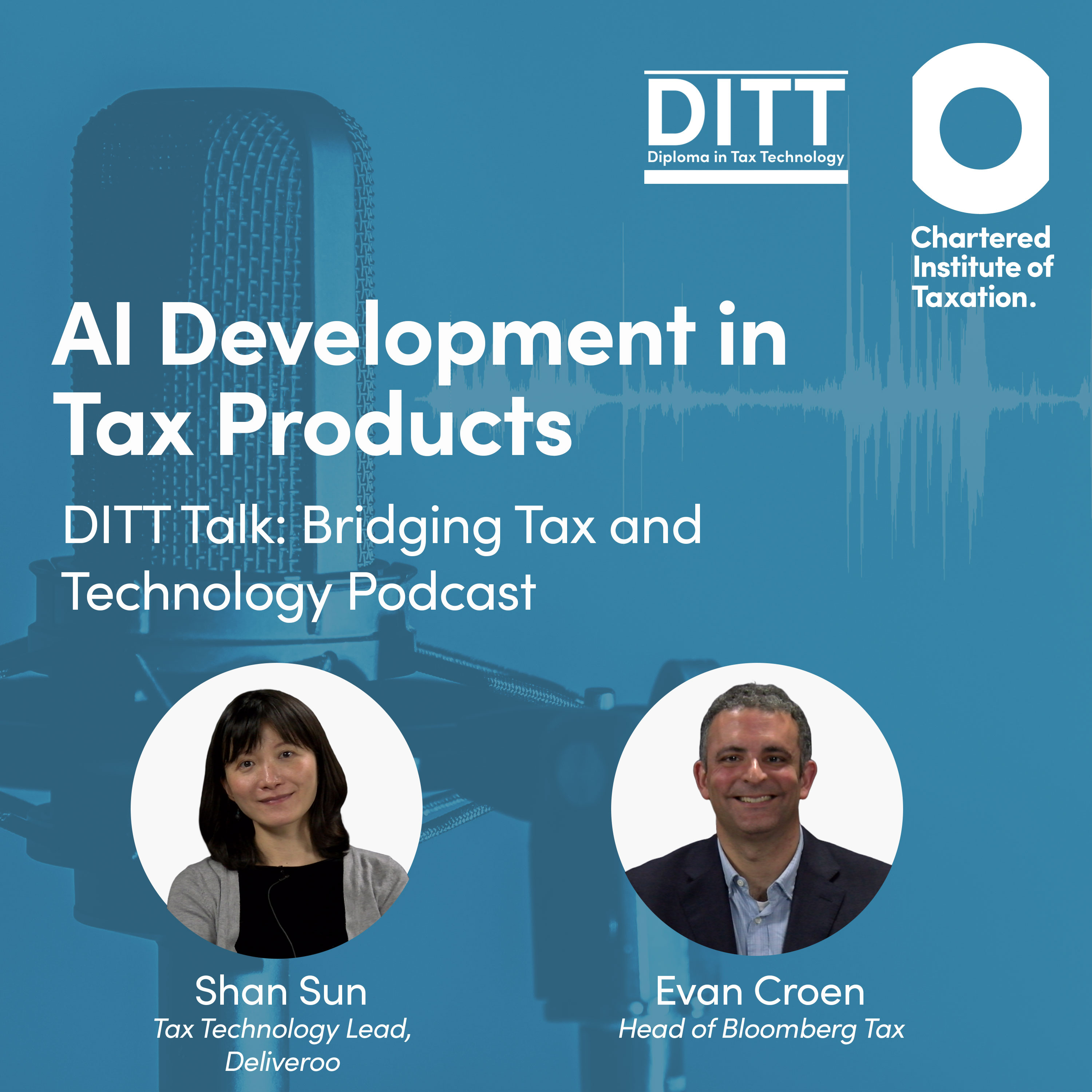
Evan Cron, head of Bloomberg Tax, discusses the evolution of AI in tax technology, emphasizing agentic AI as the next phase that merges automation with reasoning. Unlike generative AI that simply produces outputs, agentic AI can autonomously pursue goals using provided tools, making it highly suitable for complex tax workflows involving research, calculations, and data handling. Bloomberg Tax has developed AI tools like Tax Answers and an AI assistant to streamline research by providing cited, natural language responses, reducing the traditional search-and-verify process. Key challenges include ensuring accuracy and recency of tax materials, avoiding hallucinations, and maintaining data security when using client data. To build trust, the company implements guardrails such as declining to answer when justification is lacking, citing all sources, and using human subject matter experts to evaluate outputs before release. User feedback mechanisms, including thumbs up/down and inline comments, help refine models. Future innovations aim to leverage context from other Bloomberg Tax software (e.g., entity structure, calculations) to provide more personalized and accurate answers, breaking down silos in tax workflows. Cron highlights that trust is paramount, and the company prioritizes reliability over speed to market, ensuring users can rely on AI outputs for compliance-sensitive tax tasks.
[Music] Welcome to the Tax Technology Podcast, where we explore the intersection of taxation and technology. I'm your host Shansan. This podcast is powered by the Diploma in Tax Technology from CIOT, the Chartered Institute of Taxation. In each episode of this season, we invite an expert guest and deep dive on a specific topic related to a technology that impacts our profession. So sit back and enjoy the show. [Music] Evan Cron is the head of Bloomberg Tax, where he plays a pivotal role in shaping the future of tax technology for organisations worldwide. In his position, Evan leads the development and innovation of Bloomberg Tax on Accountings, Software and Research Solutions, ensuring they address the involving needs of tax professionals. Evan's expertise extends beyond product development. He's recognised for his thought leadership on how artificial intelligence and advanced automation are transforming tax workflows in a corporate world. Prior to joining Bloomberg Tax, Evan held various roles in strategy and operations within Bloomberg Industry Group, and was a consultant with a Boston Consulting Group. Welcome, Evan. Thank you for having me. Let's start from your backgrounds. So how did you end up in Bloomberg Tax and doing the AI product development from a BCG consulting background? It was really total chance. I mean, my career has been sort of secutious, not by design, but just by chance. I actually started wanting to be a physicist in college. That did not happen. Then I moved into more public policy. I actually went to grad school to get into clean energy technology, all the time. But I was in school in the middle of the 2008 crash, so jobs were scarce. But thankfully, BCG and the consulting firms were still hiring through the downturn and ended up getting opportunity with them. I mean, there I had a lot of different types of experiences. And it's a great place to learn how to do business and how to operate in the business world. I ended up really wanting to get back into things that were more public policy oriented. So I ended up having a connection from BCG with a new company that had just started in DC called Bloomberg Government. Which was Bloomberg's attempt to sort of get into the public policy space to create sort of the terminal experience for the public policy arena. So I was down there in 2013, spent a lot of time in that organization by five years, and found ultimately that we were merged into what was legacy BNA, which is the Bureau of National Affairs. It was moved over there for a variety of different reasons, and just kind of found my way into tech software. It was a smaller area within the company. It was not what we were ultimately known for. We were known for more of the legal publishing, the tech portfolios, and the newsletter, things like that. But it was an area that I was really excited to learn more about. And over time, I got a role to run that group and then eventually led product for the entire tax business. And really our thesis about 2019 when I came over to do that was that research and software had, which had been managed separately, really had a lot of synergies together and could be sort of brought together into a broader experience. And they saw that my business experience back from BCG and from business school and all that stuff would help me succeed with that, even though I don't have a tax background. You never know, we're a fake lazy. Exactly. Well, let's focus on what we're going to talk about today about AI. I think there's a lot of buzzwords around. Yes. So I think I'll start by aligning like, what do you think agente AI is? And then how do you think they could be applied to tax? It's a very good question. The agente AI is really the next phase in AI. And I think it's even more exciting than what's going on in general today. I mean, generative today is about creating outputs with a series of instructions. And so we have tools like that and we'll talk about it later in our suite that leveraged generative AI. And it's really transformative in terms of drafting and creating outputs. But what's really exciting about agente to me is that it pairs two sort of longstanding strategies of technology. One is automation and one is reasoning. And so what's unique about it? And in Blumbertax, we've been doing automation for a very long time. Rules-based primarily of some machine learning. But these LLM models now give the ability to reason and add reasoning on top of tools. And also the generative AI models can also interface with tools and sort of guide work clothes. So what you can do, what the genetic is, is give it a goal and a series of tools and rules by which to follow them. But it will then act on your behalf in various ways. There are different levels of autonomy. But it will act on your behalf to achieve a goal leveraging the tools you give it. So it's a game changer in the ability to really streamline work clothes that are complicated and involve multiple tools. Which really tax is that. I mean, tax is a domain that has a series of different types of workflows. They involve research tools, calculation tools, data transformation, all that kind of stuff. And that is very well suited for this new world of agenda AI. So it's an exciting area within tax. Well, that's nicely let me to the next question about what kind of problems are you trying to solve by creating AI tools? We talked briefly about this before that you have, as a product lead, you have four different areas of products in this area, including research, fix assets, working papers and data. So what are the kind of the problems that you're solving that you're seeing in the market? That's due to make this decisions and creating these categories. Sure. So we within Bloomberg tax have since about 2019 been very, very focused on creating solutions for direct tax corporate workflows. So we originally had just a research project and a fixed assets product in this space. We subsequently invested, built out a work papers tool in a quieter day provision solution, focused on US provision, AAC 740 calculations. And really the idea there is that we wanted to support the major steps in direct corporate taxation within the United States, but also internationally over time. And really that has been the focus is building out those point solutions and integrating them. And a lot of the work that we're doing with AI now is sort of starting in our research product with an attempt to broaden its usefulness across the entire suite. So the initial tools that we've been rolling out in research have really been around tax answers, as you said, and the AI system. And there what we're trying to solve for ultimately is, is the traditional research problems where the prior experience before these technologies research was search, browse, look, read, figure out that you got the wrong search, do it again, and, you know, rinse and repeat. And ultimately that has been the historic experience, but is also one that AI has particularly suited well to help you get around. So we really have focused on providing answers to questions that are in natural language. And what's really nice about it is it pulls together the materials that we've, you know, that are search tools find, but then they also use LMS to determine how relevant it is to your query. And then summarize that into a natural language response that is then cited to. So you can say, what's my, here's a question. Here's an answer based on much materials that we have within our site and we'll take you to it. And we found that that actually streamlines the research process pretty dramatically. Not just because people take the outputs, then use them in that exact form, but rather it helps people really understand that the materials they're going to look at that they're going to click through to are the right ones and they're going to give them the answer. So give a logical framework. Right. Exactly. And then really the next thing the AI assistant piece is taking that to the next level, which the initial version of our AI tax answers product was a one shot. So you would ask it a question. It would give you an answer and then that was it. But the assistant now allows you to move into more of a chat experience. You can ask follow ups. You can clarify things. You can you can redirect the responses. And all of this is really pointing towards pulling out insights from our research content, our best in class content around like the portfolios and charts and navigators so that we can just still a down and and provide it to people in the way that they needed to do whatever they're doing. I was thinking about this around the data and the materials, not just your organization, there's many organizations have it with the rise of a gentica or like even all of us are chatbot if you like the chat and to put these. The fact that answers and the questions and the feedback from the users are also becoming part of your data that you can use for further development. So on that note, what kind of technical and data challenges do you think you often encounter when you try to build the generative AI into like tax workflows or other product that you have? Yeah, I mean, there are there are many on the research side, for example, it's hard to ensure accuracy, recency and sourcing. I mean, we talked about this a little bit yesterday, you can have a series of documents or news stories or materials or releases that say there is a certain position that will occur. And then there will be a final document or release or notice or whatever that that pivots and does something else. And these models are obviously not obviously, but they are probabilistic. So if you have a lot of context that says that this is going to happen and you have one outlier that says it isn't, you have to direct the model to understand that that most recent governing document is the one that you should follow and not rely on the others. And that is a challenge within legal frameworks and in tax in particular because that really does matter. So they don't really understand this.
It's kind of tax nuance, you have to teach it to it and prompt it to be able to do it. We also need to, you know, this continues to be issues with hallucinations and things like that that we need to continue to deal with, although there are more and more techniques to deal with that, including retrieval, augmented generation, all that stuff that we do. So there is a lot of challenge there. The other thing that comes out of it is when you're starting to use not just our data, but client data in AI models, there's also a lot of issues around data security, data integrity. Absolutely. We certify that we don't train, for example, our models on any inputs from clients. That kind of stuff is also very important because in order for people to feel comfortable using it, they have to feel like it's secure and then we have right controls around it. So that's also another sort of, it's a technical challenge, but it's also a policy challenge. Especially when we have lots of consultation dogs. Yes. This is complex. And the answers to consultations as well. So in that sense, how do you balance the effect or accuracy and the user experience, I think, when you're deploying this kind of solutions in compliance, sensitive tax products, I guess? Yes. We have a series of guardrails, for example, that make it so that we, in the answers product, we do not respond with an answer if we cannot justify it with materials that we provide. Obviously, if you go to CHI-CBT, just on the open web or in your own subscription, you can ask it anything, it will respond with anything. But we find that you can't necessarily trust it because it's unclear where that is coming from or if it's accurate and the reason why people buy, for example, research products is so that they don't have to have those fears, that they can cite back to the materials that are relevant and the governing materials. So we often will decline to answer things we can't answer. And then when we do answer, we always cite to those materials, as I said before. We try to give complete traceability to users as to why certain statements are in there and then let them do their own research and look at that. So that's the big way we do. I mean, it does create some frictions because we can decline to answer things that people might expect us to be able to answer because of the other secreties of the models or the guardrail triggers because it's a little bit more sensitive than some people might like. But we tend to err on the side of, we want you to be able to rely on our answers. And so we take that. And ultimately, I think this is going to continue to get better as the models get better at deciphering our materials and responding and understanding the intent of queries. The amount of declines will reduce, but it is something that we definitely have focused on from the beginning. Others went to market earlier than us with these AI tools, but we found that the gap is really around trustworthy. Yeah, I was going to say trust is a funny thing once you lose it. It's very hard to get it back, isn't it? Exactly. The other issue that we mentioned yesterday was you don't know what you don't know, especially when it comes to a use some research product myself. And I was looking at it, decided about 15, 20 citations there, but they were all summarised into one very high level sentence and conclusions. But then it's only until I start looking into the actual language of the legislation and realise that actually all the summaries are not quite accurate, which actually has a result of being very different consequence afterwards. Right. And by the sound of it, you do have human delup how do you implement it and how do you design your feedback loop? So every tool that we release in AI, whether it's research or otherwise, because we do have AI tools in some of our software as well, we have a series of dozens of subject matter experts with varying backgrounds who evaluate the outputs based on a set of sample questions that they draft to evaluate variety of different features, including accuracy, value, ground in this, so how close it is to the materials or the inputs than it has. And the idea is that before we release anything, we do a full evaluation of those things. And we look at the results and we determine whether that is something that we want to release or we want to tweak things, etc. We also then on the client side offer the ability for people to provide real-time feedback as to whether what they're getting matches, what they expected or creates value for them, things like that. We initially started with just a thumbs up thumbs down, which was actually, well, people may laugh at that, it does provide very interesting feedback because as we change the models, we can see varying levels of thumbs up and thumbs down. But we also added the ability to provide inline feedback as to exactly what the issue was. And so we can tie back to, for example, the answer's product, that's a specific question. They got a specific type of result and they said it was no good. We could also then look and see, well, like what did they say? Why was it no good? When we take those responses then provide them back to the subject winner expert group and they can modify the prompts or we can choose a different model or we can do a variety of things to adjust in. So I had an interesting thought recently. I feel like right now all of the AI product or research or the GPTs, they're very linear on that. They basically, you give a question, they give you answer, you give a question, they give an answer. But sometimes I think my problem is that the answer, maybe the answer is three paragraphs. But on paragraph one, I already have a different question. There's nowhere I can branch it out. So that was something like I would like to have some kind of non-linear feedback loop that can give a back. Well, that's actually one of the reasons why we have gone on this path of making it more of a chat experience. So, for example, if you're using the tool, you can ask a question and it'll give you the answer, but then you can pop it out into a chat and then you can probe on different parts of it. So if you're like, I actually want to probe deeper on this first paragraph, you can ask it a question then having to go for it. But yeah, I mean, you're right, it's kind of baby steps, right? The first step was, wow, we can actually use this tool to, instead of having people have to dig into every single result that we give them from a search, we can just literally summarize like the top five and the key elements of it. And we could give you a summary. And that was kind of the first iteration of these things. But since then, there have been so many more innovations on using LLMs, not just as a summarization tool, but as a way to, for example, understand the semantic meaning of a question and making sure that the results are matching or sort of re-ranking results based on the, based on the queries that are given. And so that what we found is that, and it kind of gets into the agent piece, if the models have different roles in that process and you have multiple layers of those models doing it, you can actually get much tighter results to what the actual question is. And it does take a little bit longer than sort of this one shot move, but it's changing. And then the idea is to be able to give you more of that, more of those answers like you're talking about. There will be different variations, I think, for people in which I can see how it goes. I mean, it's not dissimilar to having a human conversation and halfway you have a chat and I was like, "Oh, I should do something else I want to talk about." You lose track. Absolutely. Actually, the other thing that's really exciting about all this and gets back to the agent piece too is a lot of the work that we're trying to do now is think about ways to pull out the context from your entity structure, your calculations that you currently do in the other software to also guide the results of these things. So it's not just you asking a question, then it gives you an answer based on nothing besides your question. One of the benefits of these models and LMs is that it can use context to give you better answers. And so that's the other route we're trying to go is not just have it be entirely user-input base, but have it a little bit more about the context of your organization that we already know because you're in the rest of the suite. Oh, it's a context from the other-- Right. --from like work papers or some exact-- Oh, I see, I see. But you're in x-waysy countries so we can tell you, like, you're probably not interested in this other country that you're not in. That kind of thing, which is-- Yeah. --to date, you know, you can't-- well, from the original inception of this stuff, we wouldn't know because it's just based on your input. But the more we can add context to round the results, the better it would say. Yes, fair. Well, that touches on, like, you had a very interesting interview with Tax Executive. One thing I picked up from that interview is you spoke about not building tools in silos and then you want to treat the tax calculations essential. So how do you think AI could help with that vision? Right. So that vision really was going back to the point I said before around us being focused on the corporate direct tax workflow and sort of seeing where the gaps were. And one of the reasons why we've talked about tax calculations is central and key. And for thinking about breaking down the silos is that that was the area of that workflow in particular that we felt was completely underserved by vendors. You know, there are research tools we add one. There are provision and compliance tools, but they tend to be the end of the process. They're not the actual sort of hard tax work. And instead, what we were finding is that people were left to their own devices to create tax calculations often by themselves leveraging research tools and then do these things and sort of these very uncontrolled environments and cell files that get hosted on sharepoints and things like that, which obviously the last couple of days that has been a challenge with the hacking incident. So we've seen that as sort of the main area for us to focus on. That's why we built out this workpapers product, which is a pretty new product in the area where we're focused specifically on that part of the workflow, the actual tax counts. And what we're finding is that AI is helping us really bring together all of these different products. Our goal was always to interconnect them and to embed our research content and intelligence at the point of need in the workflow. So we were finding different ways to do that prior to generative AI and a genetic AI. And now I think the real opportunity is both to streamline the workflow. So use it, agent to AI, to make it much more automated to go from step to step and pull information from different parts of that flow and combine it into the outputs you need. But also to pull out relevant content from research, for example, to be deployed in these solutions. So kind of like we were talking about before, having AI understand that you're doing a calculation on XYZ and you have this kind of entity structure and these are your kind of issues. And that can then go into our research product, find the materials that are relevant to you, tell you the things that have changed, set up alerts for you that might warn you to issues that you need to deal with. And that's really the opportunity.
of AI in this kind of suite. And those are things that were very, very hard to achieve prior to this technology. And that's really excited about really, again, bringing the suite of our products together and making it work much more seamlessly using AI. Well, we talked a lot about the AI capabilities and in fact, we touched on briefly about how we need to have a human in the loop. So I think there is a delicate balance, I guess, between trust, auditability, and AI in the tech software industry in general, if you like any views on how do you achieve that balance or try to manage that balance. I think it's a managing situation. I definitely think that, I mean, Bloomberg industry group is involved in a lot of legalistic regulatory-based businesses. And so we all kind of face the same issue, which is that trust, auditability, are essential and are really non-negotiable items. If you lose that here to the point you said before, if you lose that in our markets, it's very hard to regain it. So we have been very focused on using AI in ways that is auditable, that you do not, we're not asking you to sort of fully trust any sort of output, we give you the ability to look in to see both, have it be auditable so you understand where it's coming from traceable so you can go back to the actual sources and see it yourself. But there are some additional enhancements and technological enhancements in general that were excited to leverage in that way. One of them is as we move into agentic, there is the potential that you get more into this one shot result where you say, "Hey, start my process and then pops out a report at the end when you have no idea what happened." I think this kind of chain of thought logging or like having models that are very focused on sort of creating the discrete steps that it took and explaining to you is a way around that and a way to get people to trust a little bit more as to what the most are going. Is that the thinking process? Yeah. You're trying to share it, okay? Yeah, I mean, it's, it is interesting because if you've ever done deep research in OpenAI or any of these things, it will describe to you the steps that it's taking and the reasoning that it's taking. So you can actually go back and see, okay, well, why did it do this? And that really is essential for us to think about. The other thing too is one of the interesting things about agentic is that you could give, for example, an agent the role to make sure that things are traceable and auditable and that they've created the right documentation that you need. So one of the things we're thinking about for the suite as we move into agentic is, is what are the agents not that are doing the actual work but that do the work around the work? So like how do you pull out the right kind of logging or the right kind of chain reasoning, for example, into a form that that could be provided to auditors or just for internal review of things like that? That'll be quite interesting. I'm not even sure if, say, Texas authorities are thinking about that. So I think all the questions that I ever get chance to ask them, you said, you, you, need to keep record. What exactly are the records are you talking about? Is that the log? Is that the factor we actually have done validation? Or is that the results of the validation? Like the, I find people are still thinking about a struggling thing to think about what kind of things we can take as evidence that you did what we asked you to do. Well, it's an evolving, it's an evolving space for sure. I mean, like what models can do and what we can do with them, you know, it really is only bounded by like current imaginations. So as we think about it, like what, you know, we can, we can find different ways to apply them to achieve different goals. And then the potential outcomes of those can vary. And then, you know, people just have to keep up, basically. What are you using to say? Anyway, so I guess as a product person, as I am as well, there's always going to be a alignment when you are in the building kind of side of this industry. How do you maintain that kind of alignment on the technical team? What is an engineering team in tax and then the product and business strategy? It's a difficult thing and it really is an art, you know, in the product space where we're building things from mass market or in the corporate tax departments, for example, you do really need to think about customer problems. And really that is the fundamental basis of how we think about what we should do. Is that your ultimate goal? Yeah, there's a lot of ways to solve their problems. And especially with AI right now, it's very easy to fall into, you know, we call it falling in love with the solution versus the problems you should always fall in love with the problems. It's very easy to get absorbed into this like shiny object that you should focus on and you're just looking for ways to deploy the technology without really thinking about like what are problems I'm actually going to be solving with this. And so that's why I think a lot of these, there's a lot of startups right now in a lot of different spaces leveraging AI and a lot of them will ultimately fail mainly because they didn't actually solve any customer problems. They were just looking for different ways to apply this technology and it will get sorted out, but that is the biggest issue. So, so we, you know, within our organization, we have a pretty large product team and a larger engineering team and we tend to think about it in terms of strategic lanes that a product manager and an engineering team will focus on that is usually associated with a customer problem or a set of related customer problems within a product domain. So we have different teams, for example, in our fixed assets product that focus on different areas of the product solving different problems. And so we tend to use that as a way to give them a purpose and then we give them autonomy to solve those problems in any way that they kind of see fit within the framework of the product and the technologies that are available. But we kind of, we give them that idea of like what is the outcome you're trying to achieve and then and so what's been interesting is really getting the engineers who may not have had a deep ml or AI background to think about AI and these technologies as part of the solution set they could apply. So we are one of the models we're taking is we have sort of full stack engineers that build our products, but then we have a separate sort of center of excellence group which is focused on AI and ML and we've been sort of embedding them within the different teams so they could think more broadly about like well these are not. So the AI team is embedded in the engineering team. Yeah, in the engineering team. So they can actually go and work to think about okay well before we would have solved problems this way but now the solution set is bigger and so how do you you know how do you use that? So it's been very exciting but that's how we we've tried to keep. What about product person doing embed them into the engineering team or is that separate? Yes we use agile scrum methodology where they write the user stories and define the roadmap and then work with the engineering team and designers to both do customer discovery and validation but then also definition of what we're building. So you're more like a scored kind of style? Yeah right yes we have these little scrum teams usually that two pizza team approach I'm not sure if you heard that you should never have a team that's bigger than two pizzas. Confed so that's how we tend to do it. So many ways to talking about this. I guess as a product person you are closer to the tax department or the tax teams compared to the engineering team. What are the sentiment you see from the tax team or the market? Are they eager or cautious? We're worried about the AI product in tax. Well unsurprisingly I think we're seeing tax departments display a variety of different behaviors tended towards the cautious. I've been in now a number of conferences where I'll be in an AI talk and they'll ask everybody to raise their hand if you've used AI and so a couple of years ago a few people raised their hands and more recently it's been way more I would say even the majority but then you ask them what they do and they're like well I use co-pilot to summarize my emails and that's fine but we're still seeing it's still the minority side that are fully trusting or even really like engaging pretty heavily with AI although I think things are changing in terms of pressure on them both from the vendor perspective like where everybody is releasing AI features and there's a need to sort of take a look at them but then also we've even seen instances of for example finance or broader C-suite pressure on their organizations to make sure that they are investing in AI because everybody knows that AI will create efficiency in streamline workflows etc and so even if that's what I exactly so even if the tax department does not have the initial inclination to do it they may get pressure top down and so yeah I mean we if you think about the typical technological adoption curve I mean there's the people who the the early stage ones are tinkerers who will do kind of play with them whatever you know we've gotten to the early adopters I would say who are using it the real questions can we get to and I think it will happen soon but like the that early majority like the getting like 50% of the market really heavily using I think we're on the way to that but we're not we're not there yet and that's it. No I was going to ask like what do you think in what's going to happen the next five, 10 years which I think is a bit too long. Let's look at once two years. How do you think the AI would shape our industry like tech technology? Oh then that time frame is definitely right I think the one to two to three years is the right time frame. I have no idea what will happen in 10 years I mean Lord knows but in next two, three years I really do think that where you're going to be moving from a world where there has been some application of generative AI in workflows to a much broader deployment of agent AI throughout. Again because it meets a consistent and ongoing need of coordinating activities across tools and between people. For example one use of generative AI is to try to figure out you know does this tax law apply to me or does this regulation apply to me or how many determine based on the set effects and that is that eventually will be doable and on at scale there are elements of that can that can be done now but that is a that is a difficult problem. The agentic stuff is really saying okay well can you just take this and move it to here and move it to here and then what this person used to do manually could you just do it automatically and without me having to define every part of the process that is very real and very possible and because we've we've basically taken the skills that LLMs can do and applied it to existing frameworks to do automation. That is going to revolutionize what happens in business in general but also in tax. I think that that is
going to be a massive, there's going to be a lot of deployments of that kind of stuff up the next two, three years. And that's what we'll probably see. But in that kind of deployment, I know we had a quick chat about this, which is to see that's a broad application to all the tax teams that here is about 50 agente AI you can use. Or is that more like each tax manager will have their own defined agente AI. Was that more vertical in your mind and the more horizontal development? It's interesting. I think what will happen will be, there'll be a series of platforms that can be deployed and individual tasks over time will get agenteified, I would say. And I think those things will consolidate because really it isn't about building these macro agents that can do everything. It's about taking these individual agents that can do individual things and then over time orchestrating them. I think it's very possible that individuals will have their own agents that they define and sort of frame and then interact with all these other agents that do things. My hope, because I'm aware of a technological optimist, is that this will not displace people or displace work as much as get rid of grunt work that nobody really wants to do anyway and leaves more thought work and strategic planning to people who are working in tax departments. Already, I'm sure you're aware of major talent, crunch and resource crunch. I think the low hanging fruit is dealing with that. I don't think it is getting rid of all strategic thought in humans. I just don't think that that is the first thing to do. What else do we have left? Exactly. I'm not convinced that it's going to go all the way there. Nobody knows. Nobody has any idea. But I always think there will be a role for humans in all this work. But I do think a lot of the work that people don't want to do anyway will go away pretty soon because these agents will be able to do this kind of root in this work very efficiently. Fair enough. I guess as our concluding remarks are what kind of like key takeaways or thoughts that you might have for people who are either engineers or product in tax technology, you can give to them, I guess. I think the number one thing to do is to start and to buy down the learning curve. That is the biggest problem is you can read as much as you want. You can watch my videos. You can take classes. But until you actually take the technology and try to apply it to whatever you're trying to do, you just don't learn it. What I've seen is that the organizations, product organizations, but also in functional units like the tax department and companies, the people who have started have already bought down a lot of the learning curve and are just ahead of everybody else already. So I would go, I would just start trying to find opportunities to build these things out or apply their technologies just to get the experience. But really the other thing I mentioned this before is within product organizations, but even in, again, functional units within companies, making sure you stay focused on problems and then you're trying to solve problems is essential because shiny object syndrome is a real problem and you can get wrapped up in the excitement of the technologies and not have a clear purpose for it. And then you don't get the adoption and you get the ROI from the investment. And I mean, this is not a new thing. This has been happening forever with technologies. >> That's a true product talk. >> Yeah, exactly. I mean, that's why I like product because it's that. >> Focus on the problem. >> Yeah, exactly. Focus on the problem. I mean, that's been the case forever. Every time there's a massive technological change and this is really big one obviously, there's the opportunity to sort of fall back and go back to the worst impulses. And I think it's important to make sure you focus on that on the problems. >> Well, to finish off, is this going to be what I'm going to ask to all my guests, any resource recommendations for people in the field that you think they can check out, especially from the other side of the pound. I'm going to have a bit more. >> Exactly. >> Well, so I just finished a book that I really liked and I thought was a good preface on or a good treatise on Agente AI, but not in a hypothetical way. It's also not aligned to tax. It's more of like general, what is Agente AI? How is it going to apply to business, things like that? It's called Agente Artificial Intelligence by Pascal Borne and a number of other authors. I listened to it on tape, but you can also buy the book. >> On tape. >> He'll not on tape. >> On IP3 or whatever it is, at 2.0 speed. But it's a really good primer on what Agente AI is, what the technologies have enabled and puts, especially I find it's hard to keep up the lexicon of this stuff. So it actually puts it in a good framework so you can talk about what these things are, really helps you define what's the difference between gendered AI and agente AI and one of the opportunities with an agenteic. So I really enjoyed that. I thought that was a good book. A good primer, especially if you're not super technologically focused, it tells you what's going on in a way that you can understand. >> Thank you. We'll make sure to put that in the notes somewhere. >> Mm-hm. >> And our notes. So thank you very much for coming. >> Thank you, it's going great. >> Thanks. >> Thank you for tuning into today's discussion on text technology. A special thanks to the Studio and CIOT for making this episode possible. The text technology podcast is available on Spotify, Apple Podcast and the CIOT website. Please like and subscribe for more insights and we'll look forward to your feedback and future topics you may be interested in. Until next time, stay informed and get ahead. [MUSIC]
Podcast Summary
Key Points:
Evan Cron leads Bloomberg Tax, focusing on integrating AI into tax technology solutions for corporate direct tax workflows, including research, fixed assets, working papers, and data.
Agentic AI combines automation and reasoning, enabling autonomous goal achievement using tools, which is ideal for complex tax workflows involving research, calculation, and data transformation.
Bloomberg Tax's AI tools prioritize trustworthiness by citing sources, declining to answer when justification is lacking, and using retrieval-augmented generation to reduce hallucinations.
Key challenges include ensuring accuracy and recency of tax materials, managing probabilistic model outputs, and addressing data security when using client data.
The company uses human subject matter experts to evaluate AI outputs before release and incorporates user feedback loops (thumbs up/down, inline comments) to refine models.
Future AI developments aim to use organizational context from software suites (e.g., entity structure, calculations) to provide more tailored and accurate answers.
Summary:
Evan Cron, head of Bloomberg Tax, discusses the evolution of AI in tax technology, emphasizing agentic AI as the next phase that merges automation with reasoning. Unlike generative AI that simply produces outputs, agentic AI can autonomously pursue goals using provided tools, making it highly suitable for complex tax workflows involving research, calculations, and data handling. Bloomberg Tax has developed AI tools like Tax Answers and an AI assistant to streamline research by providing cited, natural language responses, reducing the traditional search-and-verify process.
Key challenges include ensuring accuracy and recency of tax materials, avoiding hallucinations, and maintaining data security when using client data. To build trust, the company implements guardrails such as declining to answer when justification is lacking, citing all sources, and using human subject matter experts to evaluate outputs before release. User feedback mechanisms, including thumbs up/down and inline comments, help refine models.
, entity structure, calculations) to provide more personalized and accurate answers, breaking down silos in tax workflows. Cron highlights that trust is paramount, and the company prioritizes reliability over speed to market, ensuring users can rely on AI outputs for compliance-sensitive tax tasks.
FAQs
The podcast explores the intersection of taxation and technology, hosted by Shansan and powered by the Diploma in Tax Technology from CIOT.
Evan Cron is the head of Bloomberg Tax, leading development and innovation of tax technology software and research solutions for corporate tax professionals.
Agentic AI is the next phase of AI that combines automation with reasoning, allowing it to act on your behalf to achieve goals using a set of tools and rules, which is well-suited for complex tax workflows.
They aim to streamline tax research by providing natural language answers with citations, reducing the need for repetitive search and browse cycles, and later enabling chat-based follow-ups for deeper insights.
Challenges include ensuring accuracy, recency, and sourcing of information, preventing hallucinations, and maintaining data security and integrity by not training models on client inputs.
They use guardrails like declining to answer if materials can't justify it, always citing sources for traceability, and prioritizing trust over speed, which may cause some friction but ensures reliability.
Chat with AI
Loading...
Pro features
Go deeper with this episode
Unlock creator-grade tools that turn any transcript into show notes and subtitle files.
 PodcastTranscript AI