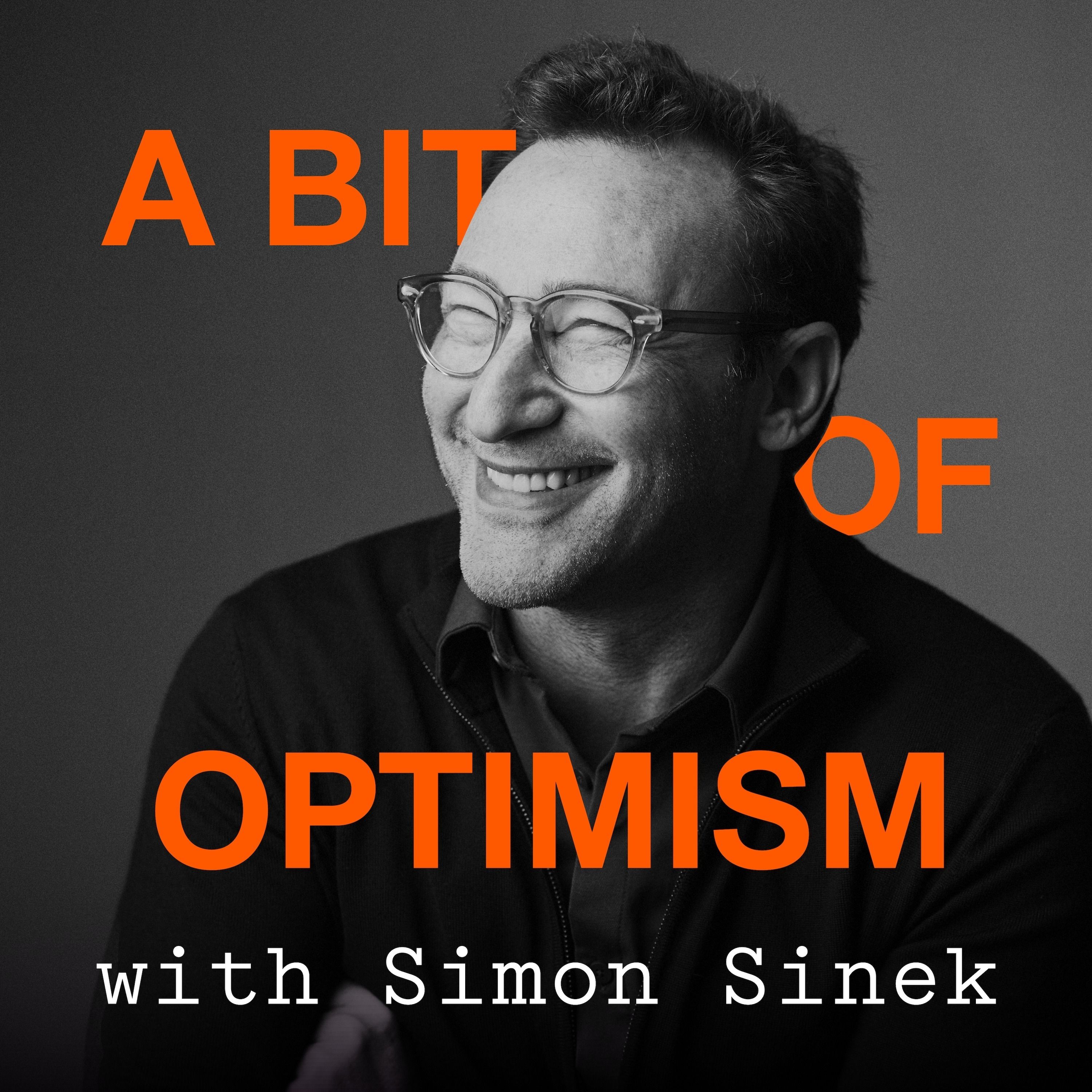
AI Can Do Everything… Except This (Why Humans Still Win) With Restaurateur Will Guidara
from A Bit of Optimism
65m 59s
The conversation begins by humorously noting the authentic, interruptive nature of real human dialogue. It then argues that in an age of AI and automation, human qualities like kindness and attentiveness are becoming increasingly valuable. This is illustrated through a personal anecdote where a hotel, having heard a story on a podcast, surprised a guest with a specific, highly sought-after Basque cheesecake from a restaurant, demonstrating exceptional, personalized service. The core philosophy presented is that in business, especially in service industries, technical excellence is merely the baseline or "table stakes." The real, sustainable competitive advantage is "unreasonable hospitality"—going far beyond expectations to creatively invest in human relationships and make people feel genuinely cared for. The discussion concludes that the rise of AI presents an opportunity not to eliminate human interaction, but to double down on it, transforming and elevating service roles to provide the meaningful human connections that technology cannot replicate.
I just need to share it with people. - Yes. - That this is how we actually have conversations. (laughing) - Whether we're being recorded or not. - Whether we're recorded or not, this is the way we actually talk. We interrupt each other more. - We're being polite. - We're trying to interrupt a little bit less. - We're not doing a great job at it. - We interrupt each other less, but we actually would have this conversation with our cameras. (laughing) - AI is the hot topic right now. There are so many people talking about all the tools that can help us do things faster, cheaper, more efficiently than ever before. All of this is true, but it's also revealing something interesting that the more automated our world becomes, the more valuable the human being is becoming. Being thoughtful, paying attention, being genuinely nice to people, making people feel seen and heard. It turns out things like kindness are pretty much AI proof, which is why I was so excited to welcome my dear friend, Wilga Dara, back to the podcast. Fair warning that if you listen to this podcast, when Will and I get together, it always turns into what somebody wants described as a Google Fest. (laughing) Will is pretty incredible. He is the former co-owner of 11 Madison Park, which was the number one restaurant in the world. He is the executive producer of the TV show The Bear, and he is the best-selling author of the New York Times best-seller Unreasonable Hospitality, of which I am the proud publisher, and I'm also the proud publisher of Will's new book, Unreasonable Hospitality, The Field Guide, which is remarkable. Will has accomplished all those things and built his entire career around one simple philosophy that if we go further than anyone expects, that's when we can make people feel truly cared for. Though usually Will is the one going above and beyond, he recently found himself on the receiving end of his own philosophy. In a hotel room, in Los Angeles, involving a piece of basque cheesecake, and somehow me, this is a bit of optimism. (upbeat music) - Okay, I gotta tell you something. So I got to LA two nights ago, and then I had a good anhyme, and then I came back. And the night I stayed here, I stayed at the Waldorf in Beverly Hills. Now, you know what the story is going to be about, but other people don't. When I say, "Basque cheesecake," what does that mean to you? - Okay, so a while ago, you came to visit LA, and you and I went out for something that I'd never done before. You said, "We're gonna go out for dinner, and you said, do you wanna do bang bang?" And I said, "What's bang bang?" (laughing) And what bang bang is, is you go to a different restaurant for each course. So you and I went to one restaurant for appetizer. We went to a different restaurant for the main course. And while we're sitting in the restaurant having our main course, we were planning where we should go for dessert. And you said, "I know where we're going." You said, "There's this restaurant called Pajoli in Santa Monica, and they have what you described as one of the top five desserts you've ever had in your life." Now, coming from the top restaurant turn the world, that's a bold statement right there. - In me, I saw it. - It means something. And you said, "Here's the problem. You can't order it. It's off the menu." They give you a slice if they like you. If you see somebody else getting one, and you say, "Hey, can I have one?" They say, "No." You can't pay for it. You can't order it. And they make one a night. That's it. Let me text to see if they've got a slice. I know the chef. So you text the owner, and he says, "We have one slice left. Get over here." And you're like, "We're going to Pajoli." We went to Pajoli. They spoiled us. We had our slice of vast cheesecake. And it was easily one of the top five desserts I've ever had in my life. - One of the greatest things ever. - Okay. So I've never told that story before. I get to the hotel. I go up to the room, and there's a really awesome note from the guest relations manager. Her name is Abby. She says, "Will, welcome, congrats on the field guide. Since you probably aren't going to make it to Santa Monica, we decided to bring a piece of Santa Monica to you. Check the fridge. I open the fridge, and it's a piece of the Bask cheesecake from Pajoli." - No. - So I don't like freaking out. - But how did they even know? - Well, so I crush it. I get a bed. The next morning, I have a breakfast. I'm a way out. I'm about to leave, and I said, "I need to see Abby." And she comes out. I was like, "How?" And she starts saying all this nice stuff, and I said, "No, no, no. I don't care about any of that." How? You apparently told this story somewhere else. - I think I did it with Phil Rosenthal when he came on the podcast. - Holy crap. This is a Bask cheesecake. This is the Bask cheesecake from Pajoli and Santa Monica. - Oh boy. - Yes, I've been there, but I haven't had their best. - Okay, so now I'm going to tell you the story. - God, that's beautiful. - Okay, so my friend, Wilgadera, who I think you know, he was the former owner of 11 Madison Park. - Oh, absolutely. So, Wilgadera is a foodie, right? - Yeah. - To say the least. So she did a deep dive on me, somehow ended up listening with something you did that I wasn't even on. It's not even about you. - And it was one of the coolest things ever. And by the way, that cheesecake continues to be so unbelievably good. And it's really cool when you write a book about an idea. - It's almost like a magician having someone else do their own magic trick on them. And it's still-- - Right, still. - Because you do that. - You are so good at giving gifts to people and like freaking them out to have you get freaked because nobody can freak you out. I did it once kind of a little bit. Anyway, did I tell you the follow-on story to the Bask cheesecake at Pajoli? - Oh, yes, but you need to tell it. (laughing) - I might need to tell it. - I want a date. - Wait, wait, wait, wait, wait, for context, the bang bang dinner we had was probably two or three years ago. It was a while ago now. - A while ago, yeah, yeah. - Three or four years ago. - It was a while ago, yeah. So here's the follow-on story to the Bask cheesecake. So I'm on a date and I'm telling the story of our bang bang night and this amazing cheesecake that's off the menu, you can't order it. It's a French restaurant. That's why they can't serve Bask cheesecake on the menu. And I said to the girl, like, "I met the owner, I bet we could get a slice." (laughing) So we go to the restaurant. It's later, it's later, it's like 9/30 or something. So dinner surface is winding down. We get a great spot at the bar right on the edge of the bar. I've told her the bartender and I bring up the owner's name and he's like, "Hey, is he in? Dropping the hint." And he's like, "Nice night in tonight." I'm like, "Oh, okay, well, sorry, I missed him." And then I sort of like sort of served. - I'm in the side of your mouth. - I'm in the side of my mouth. I think we could get a slice of cheesecake. (laughing) And the bartender looks at me and sort of like, he's like, "Yeah, I think we could arrange that." And I am like, - You're just the man. - I'm just the man. - You're the man. - And they look so good. - So they bring out the cheesecake. The girl is like, "Oh my God, this is one of the top five desserts I've had in my life." I'm like, "I told you, right? This is amazing." And then we got a slice and it was amazing. - Because I am known, I seem. - Yeah, exactly. - You are on a date with an important man. - Exactly. I got cheesecake pulled. (laughing) And we had a nice time where like, let's get another dessert. So we're like, "Excuse me, can we have the menu?" And he gives me the menu. And right there on the menu, it says, "Bask cheesecake." - That's one of the menus. - You know, they put it on the menu. Those bastards. So all I did was serabitiously order something off the menu. - 'Cause she sees that it was on the video. - And the bartenders are like, "What is wrong with the skirt?" (laughing) - I'm like pulling it beside or it looks something off the menu. (laughing) (laughing) - So anyway, if you wanna go and have one of the top five desserts you've added, you're like, "Just go to Pajolina, "and we're gonna have it, whatever." - And the cool one. - You know, now everyone can have his legs a bass cheesecake and Pajolina, but it's still one of the top five desserts, but yeah, anyone can get it. (laughing) - It's not so special. This is a treat for me because you've come in the podcast a few times before, but this is the first time we've ever done it in person. - I know, I love this. - And this is what, you know, I'm a people to appreciate, which is you and I are actually very, very close friends. And so anytime I get with you is a treat. - For the many, many reasons I love you. One is how your brain works. And it doesn't work like mine. Opposites to try. - I don't know if it's opposite, but it's, and your brain doesn't work like a lot of people, you know, for somebody who's extremely good at business. I mean, you're a good, true business person who understands that the lever is a business. You're one that was creative people I've ever met. And I love bragging about our musical hospitality. And I love telling people, you know, where most restaurants find cells number one in the world because they reinvented food to come up with the idea that you couldn't become the number one restaurant in the world by reinventing hospitality. The thing that I found amazing about that is for the hundred years of, you know, we've been rating restaurants that it was always about the food, yeah. - Anybody could have come up with, wait, what about the hospitality? - You know, like, it's not like, it's not like you're the only person who could have brought up with that. And it's both exciting and depressing at the same time. Like, amazing, you came up with that kind of depressing nobody came up with. - When in your restaurant career? 'Cause you're a front-to-house guy. When at your restaurant career did you start to recognize that treating people was the thing that everybody else wasn't focusing? - I mean, I think where we did something different was thinking about this approach at the very high end. Like Danny Meyer, who was my boss and mentor, was focused on hospitality. And I mean, he gave me the foundation upon which I built all this stuff. Where we took it in a different direction was there.
it at the three Michelin star level. And we doubled down on hospitality at that level. I think for the following reason, it's easy to have a hospitable restaurant when you are less concerned with the details, right? Excellence in hospitality don't necessarily go hand in hand. But when you're so maniacally focused on perfection, hospitality wouldn't normally take a back seat. Because you care more about serving a perfect lid of food and having every detail of the service be executed at a certain level. And that always took precedent over how you made people feel. I think our thing where we challenge that was to say, hey, yeah, we want to be excellent. We want to have food that is extraordinary and service that is as close to technically perfect as possible in an amazing dining room. And yet those are table six. Like that's just fulfilling the base level obligation you have. The promise you are making when you choose to operate a restaurant like that. We believe that can our hospitality. That's where we can really make it. So, so here's where my mind is going, right? Here's where my mind is going. And this is where I think from a brand standpoint, from a marketing standpoint, from a product standpoint, where so many businesses get it wrong is they confuse excellence and unreasonable. And here's where my mind is going. Right? The number of companies that offer usually some sort of back office service with there's accounting or some sort of organizational software, whatever it is, their value proposition in their marketing is always the same. We do all the dot, dot, dot so that you can go focus on dot, dot, dot, dot, dot. Yes. Right. Yes. Like we'll do the accounting so you can focus on building the business. And they all kind of have the same, you know, the value proposition. And in reality, like that's what your product is supposed to do. Like the reason I'm paying you money is for you to do this stuff that I don't want to do. That is why I hired you. Yes. Yeah. Right. Like and the way you're talking about excellence and service, like you have to do that. Minimally, exactly. And now you could argue you do better than others. Fine. That's a different conversation. But if you accept that that's the minimal standard to do that. Excellent. Now what? It's something like opens up an entirely new door. If I had to build a brand, how to understand marketing, how to understand customer service. If you accept that doing that brilliantly is the table sticks. That's how you should describe the product. Not how you should sell it. Like this is the product. We're going to do all this. Right. The reason you should work with us though is this. As I've traveled around except then all of the the country around the world, the last few years, studying time with companies across pretty much every industry. Everyone is trying to identify their competitive advantage. Right. What is it about their business that will prevent someone else from coming in and taking it away? And yet, those conversations to that point almost always center around the quality of the product, sometimes the strength of the brand. But here's the thing. It does not just matter how good the product is or how strong the brand is because eventually this is now my opinion. It's a fact time is proven. It's true. Someone will build a better product or they will create a stronger brand. They may be better capitalized. They may be newer and shinier, younger and more innovative. They may just be more talented than you are. The only competitive advantage that exists in the long term in my view is hospitality. Insistently, generously, creatively investing in relationships because those take a long time to build. I think your message is more timely. Then I think people realize which is the rise of AI. The technologists all forget is people. They always leave the people at. Yes. Right. They have these visions of the world that will exist. And they always forget that people fundamentally are legacy machines. We're tens of thousands of years old, older than that, hundreds of thousands of years old. Our software has not been updated at all. Ever. And you look at the world where technology has attempted to take over. Amazon is removing all the palm scanners from whole foods because of unbelievably low adorning. The economics no longer makes sense. Amazon had those stores where you could just walk in and take stuff off the shelf and walk out. It sounds like a dream. They're closing the wall because they're not working. Because one's the airport. It's the worst. And what they're forgetting is I don't want to look on an app to find out where the thing is. The reason I like having a guy stacking the shelf is not because I want a person stacking a shelf. It's because I want a person randomly in an aisle that's nearby that I can say where's the peanut butter? And they either point or take me either one. I don't care. But the point is that tiny little interaction makes me feel seen and heard as a human being. And even if it's a basic thing, talking to another person, even though the AI could do it, is the life. And the airlines know this and hotels know this and anybody in the service industry knows this. But the problem is that a person has become a luxury that you have to earn a person. You have to earn access to it to earn access to human being and and all the technologists and the sort of the AI is like we're taking all the people away. And this is why your work is more prescient and more important than simply being competitive and devout. It reinforces the importance of the human being in any commercial transaction. Well, and yeah, gosh, I love that. And I think it's only going to grow. And it's important. Which is a good thing. Your book is selling gangbusters and you're you're stuck to spreading like crazy. And I think that is a good sign that as as AI and automation grows that at least a class of of of people are recognizing that we cannot do it at the sacrifice of people. Yeah, it has to be done in parallel with people. Well, and by the way, if everything we're saying is true, humans are form of luxury. No, that will only become increasingly so like even you pick up the phone and you call someone and whether it's one year or two years, five years, who knows how long it's going to be, we're not going to know whatever talking to human being. That technology is getting so good that we won't be able to trust. I'll get off the phone. I'll be like, I think I was talking to a human and I really don't know which means I really do believe that I've seen enough of it now to feel pretty convicted that we're going to get close to that which means yes, and but go on. I think the moments like this, you know, the truly human moments, they're going to need to be as human as humanly possible. Yeah. And I think we're at a crossroads in how companies are beginning to adopt the technology. Let me find out where there are plenty of companies. Listen, with a lot of the financial pressure, people are facing right now, AI represents like a pretty elaborate that you can pull to get your profitability. You can adopt some of this technology. You can throw out a bunch of people, you can put some more money to the bottom line. You can get you can save the day and many people will do that. I think the ones that are very, very smart though are going to be those that recognize that yeah, maybe you need to save a little bit of money. But if you reinvest some of the money you say it into making those human moments even more human, you'll make a little bit less today, but you will make so much more down the road because those are going to be the people we turn to when we are feeling that way. And when things go wrong, yeah, you're like enough with the computer, I need a person and you'll know who you can go to and you don't know, go to interest. I think that's right. This is an amazing opportunity for something like unreasonable hospitality as a concept, not as a book, because if people are concerned about job losses, well, why not expand hospitality jobs? Why not make more jobs, service jobs? And you've talked about the nobility of service. And it's not like we're trading in, you know, I used to be a knowledge worker, you know, computer programmer or whatever I was doing. And now, you know, I'm digging ditches, you know, to build roads. You thought that's not what we're talking about here, which is the sophisticated problem solving highly engaged, emotional intelligence required to be good at service. And the joy that is derived from helping another human being could be way more fulfilling with these equalist fulfilling as any job you loved. And so why not reinvest some of those savings as you said and convert some of those jobs into service jobs. Let's double down on Pete. So listen to this. I want to tell you a story for the restaurant back to the day, which is pre AI, but analogous to what we're going through now. For a long time, I believed strongly that you should make reservations over the phone. I wanted every experience with us to begin with a human voice. And so even when open table came around, you could book reservations online. We had open table because an interview, you have to, yeah, but we blocked every reservation online. You had to call the restaurant to make a make it because I had awesome reservationists. I wanted to start with the human voice. And then thankfully, you know, Laura, who was like the person on my team that I trusted so much and she trusted me enough to be able to call me out when I was doing something done. She said, hey, have you ever been tried to make a reservation here? And I said, well, no, she goes, why don't you try? Because the team was getting upset at me for this decision. So next day at 9 am, 28 days before we open to the books, I called only to be put on hold to wait on hold for 30 minutes to be taken off hold.
I'm so sorry, we're fully reserved. Can we add your name a little bit? I was like, oh. (laughing) And so she was right. I in pursuit of human connection, I was doing something that was definitely less hospitable. So instead of when the opposite direction, now you couldn't book reservations on the phone anymore. They were only available online. Yeah, which meant you going on at 9 a.m. and it was very clear when we had reservations, what we didn't, no one had a wish their time. But here's what I did. And I think, I didn't write about this in unreasonable hospitality. And that was a mistake because I think it's one of the most important decisions I ever made. We did not fire a single person from our reservations to him. Now we had no one answering phones all day. They didn't have to do that. Rather, we redeployed them to spend all the same time, they were telling people no and adding people to the wait list to spend proper time with people who had gotten a reservation on the phone, getting to know them and understanding how we could make their meal more special. That's when talking about right now. Like as we shift and now I'm not going to blame anyone for saying, all right, if we have 10 people, I'm going to get rid of a couple people because we're really over budget and all labor perspective. I need a little bit of that back. But keep the eight people. And through a bit of creativity and a lot of intention, figure out how you can deploy them. Yeah. So that the experience feels more connective, more memorable, that you can build that loyalty. Yeah. Listen, the greatest capital we have is loyalty from the people we serve. So it takes a long time to erode. And I'm sure you had relationships with companies where they drop the ball big time. And if they've done enough to earn your loyalty, you're going to give them one, two, three, more chances. I've had people come in who maybe do a little bit better job for less money because this person has been good to me for a central line time of the loyal. I don't want to stick with them. And I don't think that's a unique trait to me. Well, this is exactly the conversation we're having, which is the technologist, but forget about the people. And there's one thing that every human being on the planet needs, it's other human beings. Yeah. And we know this. We know that solitary confinement is form torture. And we know that solitary confinement literally makes people lose their minds. At one point, once upon a time, an economist said the words, what gets measured gets managed. And I understand, obviously, there's a lot of benefit to thinking that way. And yet, I think that one idea has been so destructive to so many companies because the reality is some of the things that are the most important to do, you cannot measure the return in as easily or immediate away as these companies have been trained to think. Yeah. If you start investing in hospitality, if you start really putting resource to making the people you work with and those that you serve feel truly seen and valued and cared for, will it benefit you over the long term? Yes. Is it easy to measure in three, six, nine-month increments? No. But just because it's harder to measure doesn't mean it matters less. In fact, it means it matters more. And I think that those who don't invest in it because they can't clearly calculate it in the short term are being reckless in the long term. Let's reveal it here. You're operating at a level that's beyond. Like the amount that you invested in unreasonable hospitality is more than you're even expecting others to. Yes. And yes, you became the number one restaurant in the world. Right here, on camera, did your company lose money? No. Exactly. The company didn't lose money. No, we made more than money. You made more money. I think we're one of the most profitable find-and-restaurants in America. There you go. One of the most profitable-- that's an important detail. For the people who question your work, which is, you may not have seen it in month one or month two. No. But you are one of the most profitable find-and-restaurants in the world, not just number one, because of unreasonable hospitality. Right? For sure. And when we say what gets measured, gets managed, or what gets measured, gets done, that's 100% true when we're talking about systems and processes and things like that. But you cannot apply mechanical thinking to a human being. It's the same reason you can level load a factory, but you can't level load people. You're like, well, if they're working a 50-hour work week, how do we get them to work? 50 hours. You know, can we restrict bathroom breaks? Can we intravenously feed them? You know, in no more water cooler chat-- By the way, there might be some people who listen to your podcast that will actually be inspired by what you just said. This is a PSA. That was a joke. It was sarcasm. [LAUGHTER] But that's my point, which is technologists always forget that people will always be people. I remember in the days and the rising days of internet and e-commerce, they're like, this is the death of bricks and mortar. Now, I understand the economic challenges of a bricks and mortar trying to compete with an online pricing and online delivery. I get that. But that's a different conversation. That's an economic and supply chain challenge, right? But people still like going shopping. Because at the end of the day, we're hunter-gatherers. And we like going to stores, not for everything, but for a lot of things. And retail isn't going away. They're just finding new ways to remain profitable in this changing world. But I will say that if you look at the brick and mortar, it's really struggling. They were the ones that never cared about actually delivering the kind of experience that sparked joy for those that walked in. Because the reality is, if going to a physical store is just a utility-- Yeah, then yeah, do not use it. Then they use the internet. It's the ones that were like, hey, no, I don't want to go online, because I really enjoy going there. And you can tell who trains their employees that way. Because when you feel like they basically are bots, then the places where you literally feel like you're annoying someone by trying to shop at the store. Oh, I'm thinking of a store right now where I went and like, do you have these in whatever it was? And they went, yeah, over there. And then went back to their work. And I'm like, I don't know where there is. There's like four places that could be. And the stuff wasn't there. I went to a store recently. The same exact thing happened. And I just went on Amazon while I was in the store and bought it instead of walked out. And walked out. I had experiences where I'm so enjoying the person who's helping me that I literally look online and it's cheaper. And I'm like, and I buy it there because I like-- I want to reward the show. And I want to reward the show. Yeah. This maybe you and I are unusual. I think there's more-- Yeah, I mean, I don't want to presume everyone's like us. But I just need to share it with people. This is how we actually have conversations. Whether we're being recorded or not. Like, this is the way we actually talk. We're being polite. We're trying to interrupt a little bit. We're not doing a great job. We interrupt each other. We interrupt each other less. But we actually would have this conversation without cameras. [LAUGHTER] The other area of the supply suit is marketing. And I see this all the time. You can see that-- I remember back in the day, we did a lot of brand partnerships. And the question that drives me crazy whenever I'd go to someone with an idea was, OK, how many social media impressions are we going to get out of this? And that is how still to this day, a lot of brands are deciding where to invest their money is based on how many social media impressions they're going to get. Now, why? Because that is the easiest thing to measure. What will the impact be on how much people love their brand for having done that thing? It's much, much harder to measure. So they take the easy way out, which is also the thing that is the most meaningless in terms of people's love for that brand. Like, even example, when we did EMP Summer House in the Hamptons, we closed the Levin Madison Park to renovate, and we moved to the restaurant for three months to the Hamptons. We needed a sponsor to do that. Because the whole point of it was, 11 Madison was what it was because of my team. I could not lose them. So I had to move 120 people to the Hamptons for the summer, which meant housing for 130 people in one of the most expensive places on Earth. So I had the idea to go to American Express and say, hey, will you sponsor this? This is how much money I need from you. And what I'll do is I will only accept American Express cards and cash, but no other credit cards. And I had to go through meeting after meeting after meeting with all these people, more junior in the company. And they were ready to say no, because they didn't think they were getting enough clicks. They couldn't figure out a way to measure it. Thankfully, I had a relationship with someone at the top. I ended up just going to him. Instead, he greenlit it. They had more people in the Hamptons sign up for an American Express card that summer than ever before. It was one of their best investments ever. And now they're doing stuff like that all the time. But it takes someone with creative vision who's able to look at things over the long term who's less concerned with the short term. The short term. Which, by the way, is not necessarily even a testament to the people I was talking before. It's a testament to how their compensation was structured. 100%. Like they can only operate with them to come. I see it with advertisers who want to come in for this show. They only go through some agency, because nobody does it themselves. They all use agencies. The agencies are all compensated based on just clicks. And they'll compare me to some other podcast that does more clicky-bady stuff that maybe has more listeners. And they're just not interested. They don't think about the brand halo. They don't think about creating things together. Or if they were the people that are actually listening.
So yeah, I mean, it's it's I see them publishing, you know, where you like to get a book deal these days The first thing they're gonna do is look at your social media following and in the words They're looking at your the quality of your idea after yes after the looking at your so many followers You're I mean it's embarrassing. Yeah, right? You're working my work You know, I'm very open about the fact that most companies Will do not use my work most companies even if they know about it Don't care about starting with why they don't care about the infinite game like Most companies do not use my work. I and I know the reason why it's because my work like your work is much more Kind to exercise right if you work out every single day for 20 minutes 100% of people will get into shape. Yes, 100% yeah, every can I take it off? Yes, you can how many days can I take off? I don't know not too many right but if you work out every day for 20 minutes 100% of people will get into shape But here's the problem when I don't know and neither does any doctor. Yes But if you trust in the process if you have faith and the data proves it out Then just stick with it and it will work. Yeah, your work is the same my work is the same and the reason most companies are not interested in my work Is I cannot guarantee that the result that you want to happen will happen on the day of your financial year Yeah, we'll happen this quickly as you Want it to or need it to based on whatever it may But because I can't promise I and I'm going to tell you going to have to stick with it regardless They're in center structure disincentivizes them to do what is the right thing for their business and and I know this because my entire career Your entire career we are both guinea pigs and experiments we did on ourselves for our own ideas And we were disciplined and we did that that believed in the process in the 20 minutes every day We didn't know when it would work or when it would pop But for both of us we believed in it enough that it we've made guinea pigs out of ourselves Like if you want proof here you go. I built my brand with a zero marketing budget To prove That if you learn to start with why and you obey the law of diffusion of innovations and you focus on the early adopters And the way you talk to early adopters is by starting with why yeah, that is That is the way you talk to an early adopter that at some point a tipping point will happen And I literally when I started in the early days I restarted my business I reset I closed my office the whole thing I started from scratch because I wanted to prove the idea could work and I did it without any marketing budget And it worked not because I'm smarter not because the timing was lucky It's because I did the thing you've done with it I stuck with it and there were days that were hard but I the discipline to turn down The wrong customers the wrong clients who weren't early adopters and say yes to lower paying clients who were the right I did those things You know I did those things and people say to me now, oh, but you can afford to turn down business And no, no, no, I was turning down business when I couldn't afford to turn down business now Yeah, but I was turning down business when I couldn't afford to because I needed to prove the point Yeah, I mean by the way with marketing that's why I think that overlap between our stuff is It's very different and it's very similar I've never spent any money on marketing ever Because I just think if you spend all that money on just being relentlessly gracious with the people you serve Creating memories and giving them stories to share one day you're gonna wake up And you have legions of ambassadors out there in the world doing your marketing on your behalf far better than you could ever do it yourself But I mean, I'm not anti-marketing But I also know that Companies that are built solely with sales sales sale promotion promotion promotion the minute you stop that You turn that off the business disappears the good part of my marketing is you do something a lot of people see it right away Yeah, well, we're talking about it just takes a lot more time to trickle out into the world And I think you can I think smart companies know that you can do both yeah, the dumb companies Ignore the one because they you know they get the the hit from the ad. Yeah, let me change tax on you entirely Okay, I wanted to share Just a funny theory Okay, that I was telling your wife yesterday and she said you have to tell will okay I firmly believe That grades should be given as a ratio not as an absolute okay, so it should be the level of accomplishment ABCD Over the number of hours you studied Okay, so As I'm listed to this I'm trying to figure out why my well as before I even hear what you say I'm like you're my wife told you to tell this to me and that's either a display of praise or insult from her I know which one it is because we talked about it and we'll get there I'm just doing it on camera This is a private conversation I'm gonna do on camera okay Anyway, so the grades to be giving as a ratio right and and that way You know much more about the kind of person right So if you need somebody who does a work and you're willing to give them 50 hours to do it hire that person If you need somebody who can work well under pressure, but you're not gonna get a work You you know, you know you'll get b+ work, you know, then hire the other person So like my friends in college, you know one one friend I'm thinking of he was an a over 50 Right he's a straight-a student. He works his brains out. I was a b+ over 3 Right occasionally in a minus yes, but a solid b+ over 3 is was made Less investment pretty good results. Okay, but so now that's just from a hiring standpoint now Let's think of it as a lifestyle right now. Let's leave college alone and let's come into the real world right which is Because I've stressed out about like is my work good enough? Am I doing all that enough and then I realized hold on I'm actually very comfortable with a b+ you know why because I work three hours And and like this I've accepted that there's always gonna be people who're gonna make more money than me Sell more books than me like I know a guy he sells an insane number of books I also know he works his fricking brains out. I do well like my books are are good, you know solid a minus work. Yes, you know I didn't do 50 You know and so the reason I bring this up is because I think because there's no ratio the only thing we have to judge each other or worse judge ourselves Is the first number? We compare how much money we make how many followers we've got all of the very simple to measure metrics easier to measure The easier to measure and so what ends up happening is people either work extremely hard to chase those metrics followers clicks likes Revenue whatever it is right or worse They're comparing their actual worth their own self worth to somebody whose numbers are higher. Yeah Until you add the ratio. Yes. I was always very stressed out with people who were my peers. Yes, who Like they're making bigger deals. They're making more money. They're Their social media following is bigger than mine. I was always intimidated by it and And I beat myself up. I'm not good enough. I'm not smart enough. I don't have the work ethic they have And that's when it occurred to me hold on that their a's over 50 and I'm a b+ over 3 I'm very happy with my b+ in the world. Yeah, and the differences is I really like my life I really like my lifestyle and if I wanted to change had again There's no judgment. That's really important. He said I do not judge the a over 50's if that's the life you choose So long as you're happy with it go forth But my point is is without the ratio We only judge our value and our worth by the level of accomplishment But not the lifestyle we're living to get there So if you want to have an amazing relationship with your kids an amazing relationship with your spouse If you want to go on vacations if you want to have hobbies Odds are you you're gonna have to do b+ a minus work for the rest of your life and if you're okay with that That sounds like a bang and good life to me. I mean, I was talking by the way I'm still not sure Does my wife think I work too much or not enough? You're gonna answer the question. Yeah, yeah You set a goal for yourself and aggressive goal. Let's call it an a yes, you know, and I know what your goals are and you know what your goals are yes And you worked 50 hours to get your a And you got your a yeah, and now the question is is why you still working 50 hours if you got your a That's where that came from. I was really hoping it was gonna be that I was a slacker I'm an a over 50 you're an a over 50 and there's nothing wrong with being an a over 50 But if you keep moving the goalposts And it's the same it's the equivalent of I'm gonna make a million dollars. I'm gonna make two million dollars I will only be happy if And then you keep moving the goalposts then you're gonna spend your life Chasing a's and always working 50s. I mean, at some point you have to be like I did that and now A b+ over 3 is the life I want to look again. These are lifestyle choices. Yeah, there's no judgment There's no right or wrong. These are lifestyle choices And the only reason I wanted to bring it up is because I myself has suffered the extreme stress of Let's call it chasing the grade or not even chasing it being to intimidated that I was incapable Of getting the grade when I could compared myself to people who were outperforming me on every metric Until I recognized that my life was different and I was okay with that. Yeah I think the listen there's a couple things That this is I'll add one more thing which makes it even worse for me. No Oh she also told me that she wants to divorce. I'm sorry. Sorry. I forgot that bit. Sorry. Sorry. Sorry. I forgot My bad Very the lead sorry
(laughing) - You wanna do that on your podcast? - Yeah, I just wanted me to tell you. - On the podcast, that's cool. - Yeah, yeah, yeah. - The other thing is, which is the worst part and the most insidious part about the A/50 mentality, is we pick our own metrics. Let's just compare you and me, right? Just for fun. If metrics is book sales, right? You blow me out of the water. Like the speed at which your book has achieved book sales, I mean, if I only look at my momentum in books and I look at your momentum in books, at any time in my own career, I will feel nothing but dejected and lesser than, and incapable if that's the metric I compare with you. But if I look at my social media following, (laughing) and compare it to yours. - Yeah, yeah. I'm a frickin' rockster. - Then you're the winner. - And then I'm the winner. So the problem is, is we pick our own metrics. So you can be a hero or zero, no matter which metric you wanna choose compared to somebody else. And that's the problem. The A that you're chasing is sometimes arbitrary. And by the way, this is true for companies as well. Are you chasing revenues or profit or market share or price of your stock? - Yeah. - You're in a equity price or longevity over what time period? Those A's are very largely arbitrary, and so you either have a hero complex, which is also stupid, or you have a zero complex, the ratio solves, all of those things. - Yeah. - I think everything that you're saying, there's a couple of things that it's making me think. One, it's funny how we've talked about like three different things and they all boil down to one idea, which is how the things that are harder to measure seem to matter more. - Yes. - Which is just interesting, right? Like everything that goes into the grade is easy to measure. B plus over three, the thing that's not implicitly stated, or not explicitly stated is what's happening with the other 47. And that's time that's being invested into things that are harder to measure. - Yes. - But if we actually look through what is on that list, those are the things that matter the most. - Yes. - And it helps reconfigure, right? 'Cause if you're doing C minus over 50, yeah. Okay, if you're doing C minus over 50, then either you're in the wrong job, like your talent's not being leveraged, or you have to change the way in which you're working, right? So again, if you're doing C plus work and you're working your brain's out, and you can understand, you're not dumb. The ratio helps you understand where the configuration needs to be. 'Cause if you have that level of work ethic, you should be doing good work, be and above. That's why both bent tricks matter. Level of accomplishment still matters. It's still an indicator, right? But I think you're right. I think the very interesting thing that we're talking about here is the stuff that doesn't get measured seems more important for the long term, for the long term. - By the way, in work and in life. - In work and in life. A reasonable hospitality and what I'm talking about are, yeah, they're the same thing. - It almost makes me a like, it's almost like everyone should be doing an audit of themselves. - Yeah. - Are you investing too much of your time into things that are too easy to measure? And if you are, you might be missing out on some of the best things that life has to offer. - Beautifully put. - And by the way, you can change. Like if you wanna start your career, 'cause I definitely started. Like when I was trying to prove my point that the Golden Circle worked out on the road, doing all my speaking engagements, I joke that one year I was in my apartment for one full week once the entire year was that the best year of my career, the worst year of my career. - Yeah. - You know? - I knew that I was working, I had the 50. But then I chose to change. Neither of them are absolute. They're choices that you can adapt over the course of a life. Like if you have a family that maybe it's okay to make less money, maybe it's okay to get the promotion slower. Like maybe that's okay. - And it's also okay to work nonstop for measures as well. Like it's the one thing when you see some of these people on Instagram and they're very successful, wealthy people later in life. And they're like, you gotta take more time to relax. And it's like, okay, hold on, what were you doing in your 20s? - Yeah, exactly. - And when you actually get to know them a little bit, they were A over 150, right? Like every single week working nonstop and they earned the right to have that kind of privilege. - Yeah. - And so the point I think is there's not a wrong way so long as you're aware of what's happening. - It's not a wrong way, it's information. - Yeah. - You know, if we say what gets measured gets done, what gets measured gets managed. Then if you only have half a metric, if you only have, - You need a little more information. - A little of accomplishment, but you don't have the ratio, it's an incomplete metric. And so if we say what gets measured gets done and what do I do those other 47 hours? Oh my goodness, I went to movies, I traveled, I have a hobby that I love. - I pursued friendship. And the irony is, if you take that mentality and now you sort of like, we are in a world right now that's obsessed with like longevity and supplements and all these other things. And the thing is people are applying that A over 50 mentality to their longevity. - Yeah. - And what they're missing, it's the 47 hours of time to just relax and enjoy your friends. That is actually what makes you live long. - Yeah, that's a great irony in this. - No, I mean, Bob Waldenker stuff. Like I'm like, all right, so hold on, I don't need to work out for 20 minutes a day as long as I'm a really good friend. - No, you need to work out some. - No, I'm just kidding. - But this is what I think is interesting. You need to work out some. I mean, I was talking to somebody who measures the inflammation of ourselves. - Hmm. - And because inflammation, you know, it's the root of a lot of problems in our bodies, our disease, cancer and all the rest of it. So you want inflammation down, right? You don't need to overdose some blueberries to keep inflammation down, you know? Just reduce stress. That's what keeps inflammation down. And what they were telling me in their work and studying this stuff is that elite athletes don't live longer than the rest of us. - Hmm. - And the people who are obsessed with their health like their longevity nuts, who are doing intermittent fasting and an extreme workout, then a sauna and then a cold plunge, what they're doing, it's okay, all of those things are healthy, but not when you do them all every day. - No, when you do so much. - And so it's called stress stacking. So yes, a certain level of stress in the body does make you healthier, right? But stress stacking, which is what it's called, actually makes you unhealthy. So they're obsessed with the metrics that they actually cause themselves more stress when they don't hit the number of steps that they promised they would hit. The increase of stress actually outweighs, there's a great one that I read a bunch of years ago that when we stress, like real stress about eating the chocolate cake, the cortisol that's released in our bodies from the stress is worse for us than the chocolate cake. Have a piece of chocolate cake, enjoy it. You're fine. - Yes. - And if you do it every now and then, it's like, if it's not like you're eating McDonald's or every meal, if you had a McDonald's once a year, it'll do a total of zero to your body. - Yeah. - You know? And that's the point, which is exercise in a reasonable amount. Stress your body, a reasonable amount. Some stress is good. Stress stacking bad. But all of these things come to light when you start to play with ratios. - So I wanna go back because the other thing that was going through my mind as we were talking about this, and I say, all the good stuff is hard to do in a measure. But I mean, the last week, I've hung out with three different people, all very successful. And there's been one conversation that's come up, which is even the most successful people I know. There's a little piece of them that no matter how well things have gone or are going, that's scared, it's all gonna go away. And I know I feel that. - I feel that sometimes. - Yeah, yeah. - And so when you say, you worked 50 hours, you got the A, why are you still doing it? Well, because what if you wake up one day and it's all gone? And by the way, intellectually. - I know, intellectually it's madness. - It's insane, obviously I know. But people have a hard time talking about it because they feel weak for acknowledging either the fear around it or the insecurity around it. But that is what keeps people working 50 because they fear they will wake up one day and there's no opportunity left. - I think it's more insidious. - Okay. - Yes, the fear is absolutely there, but I think it's actually more insidious. I knew this billionaire who, when the economy went into recession, he lost an unbelievable amount of money and went into serious depression, right? So his wife was like, can you do me a favor, you can just talk to him, right? And he's an arrogant guy, you know? He's whatever stereotype you have in your mind of, yeah, it's true, right? And I walk into the room and he's sitting on the table in the dining room with his head in his hands on the dining room table. I've never seen anything like this. And I sit down and I talk to him. And he's telling me he's going through how awful he feels and the depression and I'm just listening. And I can't help it, I'm so curious. I say, I have to ask, like, how much did you lose? You know? And he said 80%. So I'm doing some quick math in my head. Okay, you got a billion, you've lost 80%. You still have 200 million. (laughing)
(laughing) It's not like you have to start eating like ramen noodles or sell a house. - You're gonna be fine. - Like it changes your lifestyle zero, right? Zero. So I had said something that I thought would help, right? I said, oh, you're not upset because you lost the money. You're upset because of the score. I wanted him to see it was an abstract score and the score was down, which is why he was depressed, and it made him feel worse. And that's why I say it's more insidious, which is there are some people who are so driven by the score that the money ceases to be money. It's a score that they compare themselves to each other and the humiliation of having a low score compared to other people with a high score. You know, bezos and musk are obsessed with each other. Why? You know? Why? Who cares, right? And that's the point, which is when you reach a certain level, money ceases to be the thing because you have more than you could possibly, you have more than countries, right? It's the score. And I think people who are raised, and this now goes into sort of like parenting, I guess, that people who are raised, the grade is everything. The A is everything you better get an A. I think confuse worth with the score and self-worth become somehow molded together. Because again, the score is easier to measure. When you start to combine your self-worth with the score, it's a level of accomplishment. It's not the value of the person. But it is a part of it. It is a part of it. Like you work really hard. Like you invest a lot, like you have ideas, people react to them, you're pretty good. You want to see fruit to your labor. And like that, that is a part of your self-worth. And every human being, but it's not every human being. Because we're talking about people with wealth, and that's nothing to do with it, right? They're just examples and they're extreme examples, which is why they're easy to point to, because the metrics are easy. Yeah, exactly. But every human being on the planet, when you're working with the most junior person, to the most senior person, everybody wants to see that the hard work that they invest pays off in some way, that the product gets shipped, that the person gets helped, that we save a life, that the blood-swickened tears was worth something. So yes, that's 100% true. We want to know that our work matters. And it's harder to calculate the score of being the person that always shows up for your friends. It's hard to calculate the person who calls, and the somebody who's already got a reservation and just to, because then they hang up, and you don't hear the, oh, oh, that was a great phone call. But if you don't hear that, it's one of the things that's hard about our work, which is intellectually, I know, but I don't know. I don't have an instant gratification. It's kind of a kind of faith that you have to just believe in the miracle of it all, that and keep the faith, stay true to the belief set. You know, there is an element of that. That's wild. It's actually one of the really funny differences between restaurant, my world, when I ran restaurants in my world now, like restaurants, you serve people in meal, but you're right there. You can see whether they like it or not. They'll tell you. You put out a book, you're like, I think, I mean, like sometimes I wish I could just like sit next to a stranger and watch the read my book. And give me like, hey, are you enjoying the book so far? Like how's your, how's your entree? That's really interesting that you've grown up with instant gratification. Yeah. Or not even instant gratification. Instant feedback. We're also if they don't like the meal, they'll tell you. And it's totally normal and expected for someone to come over and ask you while you're eating your meal. Yeah. How's your meal? How's your meal? Yeah. How's your meal? Are you enjoying the meal? Right. Which is not really normal in almost any other industry. It's not like the person from, remember I got this, Buck Mason is gonna be like, are you enjoying the sweater? You know, or like, do you like the book? But in restaurants, you always end the reason is because you can make changes on the fly. Okay, okay. So what we're talking about, okay, now this gets interesting, right? Which is the reason I pursue the A. Yes. The A over 50. It's not simply because it's easier to measure. It's because there's no other feedback mechanism for me to know that my work is valuable, other than the A. Hmm. So I don't know if people like wearing my sweaters, but I can count how many sweaters I've sold. Yeah. I draw some loose conclusion that if they're selling a lot, I'm guessing they're liking them, right? And so what we're talking about, which is totally fair, which is, and maybe they do desire everything we're talking about, and they are frustrated with the metrics system, but without an immediate feedback loop, and sure I can send out surveys that, you know, 5% fill out, or only the angry people, you know, respond, you know, all of this stuff, that the best I can do to know that I'm doing okay is the business is growing. And so maybe just maybe, like my A over 50, which is, it's fine to count the revenues, totally fine, but maybe there's another metric that should serve as the ratio. Yeah. This is gonna end up being like a 17 different thing going on. I don't think it's, I think things like repeat sales. Yeah. Like I know a company, the true story, this is hilarious to me, and this is how misguided, this is a funded company, spending millions of dollars, blah, blah, blah, I think they're in the financial world, and their sales team is knocking it out of the park, but the product isn't so great, and so customers aren't renewing, right? So did you know what the CEO did? Okay. He yelled at the sales team. Huh. And the sales team was like, talk to the engineers, the clients or colleagues and say, "We love you, but it's not working." It's just like that. We can't do this. So the CEO is yelling at the sales team, right? And I'm listening to this going, "No." So like in our business, right? I am fully aware that first time sales, that's a marketer. Yes. Like marketers should I first time sales. Second sales, that's my product guy. If the product's good, I can only measure that on a resubscription. A first time subscription marketing. For sure. A second time subscription product, right? But I know that. And my point is in this modern sophisticated world, this is a modern company that's yelling at their sales team because resubscriptions are down, which isn't saying. Which isn't saying. So this is what I'm saying. Like the, I think all metrics that we should be looking at, stock prices, revenues, all of these things need a ratio that gives us some indication of value or quality. So if A over 50 is quantity over quality, I mean, that's kind of what it is. The A is the quantity that I achieved. And the 50 is the quality of the life that it took me to get there. That there should be a quantity over quality metric for everything. So if the quantity is revenues, then what's the quality metric? Maybe it's second time purchases. Or in the case, let's play the game, EMP, right? If quantity was revenues, you had a business to run. What was the, what would be the quality metric? Because it's insufficient for us to say, you know, you just have to trust. - Resurring restaurants are a little weird because if four stars, this accolade this, all those things, which you could. - Yeah, but sometimes four star restaurants go to business. - What I was thinking, as you started saying that, was during the recession, the great recession, '09, we were working our butts off. We were losing money. And the people that came into the restaurant were leaving so unbelievably happy. And that's like I could measure because I was in the room with them every single night. And it was the thing that actually kept us going, which is, so could you have, and for the sake of this little hypothetical, how many tables does one server work? Five tables, 10 tables, like, depends, yeah, somewhere in between those. - Somewhere between five and 10, yeah. So at the end of the night, you could go to each server and they're not judged by it, right? They could fill out a form and say, table one, on a scale of one to five, how happy were they? Or just thumbs up, thumbs down. Table two, how happy were they? Table three, how happy were they? You could keep a satisfied customer metric. - For sure. - And that would be an indication though, even though revenues are down, we're doing good work guys. - We're, we're, we're, we're good. - Because otherwise, we're making people happy if we stay the part. - Right, because otherwise, you only have revenues down and everybody's like, we gotta work harder. - Yeah. - But we're working our brains out. - Or revenues are down and we have to change the product. One, no, you maybe need to change the sales strategy. - Yeah. - But don't change the product because it's working, people are enjoying it. - So this is what's helping me understand this, right? Which is the level of achievement over the hours it took to achieve that is a quantity versus quality ratio. And, and I've always, like, I've always wanted to do something called a Y index, which is to measure the Y of a company or measure the Y of an economy. And so when you look at the Dow Jones, it says the Dow Jones is up X percent. Okay, at what cost? Or for a single equity, like, look at their stock price going up, I'm like, but what's their Y index, right? And so the whole idea is that if the stock price is going up, but the Y index, which is, which would be a combination of like, you know, employee, happiness, engagement, all those things, is going down, that's a short-term investment. - Yes, yeah, for sure. - If the Y index is way up, but the stock price is down. - By. - Good long-term investment. - Yes. - And ideally, you want them both in parallel. - Yes. - And again, because even looking at stock price, it's only half a metric. That stock price is going up, doesn't tell me that the company's healthy. It just tell me that the stock price is up. - Same thing with the stock market in the economy. - Because you know this, when you announce lay-offs, stock prices go up and when you announce R&D, stock prices go down. (laughing)
That makes sense. It is one of the cool things about the restaurant industry. And it also, I mean, we're talking about how much you give of yourself to others and at what cost. I mean, in hospitality, like, I really like making other people happy. And if I'm not careful, I end up being an A50 for the rest of my life because I don't like letting other people down. And at the end of the day, I end up letting some of the people that are most important to me down. And that's the problem, which is there's nothing wrong with the 50. You just have to weigh the cost of that 50. And there is an entire group of people. And again, it's not a good thing or a bad thing. Let's be honest with ourselves, who spends. I'll give you the real life example. Yeah. I'll use myself as the guinea pig, right? [laughs] So, for years, I had close friends accuse me of being a bad listener. That was my answer. That's exactly. I mean, I don't see. Never in a million people. And I would say things like, "You know what I do for a living, right?" Like, "You know you're wrong." And a really good listener. Right? I mean, that's pretty much how those conversations went. You're like, "I'm sorry, what did you just say?" Yeah, exactly. [laughs] So, I took this listening class, and that's when I discovered that I am an unbelievably good listener with people I will never see again for the rest of my life. But for the people closest to me, terrible. Wow. So, all of the skills I had learned about listening and being focused and reflective, you know, reflective listening and being present all of that, I was doing it with strangers. I was doing it with clients. I was doing it with, you know, one-time interactions. But the people who had regular, ongoing relationships with, I applied none of those skills. I think I'm guilty of this sometimes. Right? Yeah. And I simply assumed that I was good at it because I had the capacity and knew that I could do it. And, you know, in the public world, people are like, "You're such a good listener." And the random people that are more prone to praise you are saying, "You're really good at it because you're good at it with them." Exactly. And I ended up taking the people around me for granted. So, that is a kin too. I appreciate the 50. But who's paying for that 50? Yeah. Are you paying for that 50? Like, if you're unmarried, no friends making the investment in you and you're the only one paying the price for that 50? Great. Yes. Go, go. Go invest in you, you 22-year-old. Like, I love it. Right? But if you start having relationships and family and close friends or family in need, I'm sorry I can't come to your funeral. I have a meeting. Yeah. You know, I don't think you'd say sorry to the person who died. I can't come to your funeral. You get the idea. You say it. I'm sorry I can't come to the funeral. Yes. Like, now who's paying the price of that 50? Who's bearing the load of that 50? It's no longer just you. I'd also dial that back just to make sure the idea is clear. The funeral is almost too big. I'm sorry, I didn't answer the phone the last couple of times you called. I've been busy at work. And you and I have done this with each other, right? Because I'm guilty of not calling my friends because you and I can't talk for less than many hours. Yeah. Right? Like, the conversation we're having now, this is what people don't understand. This is like a normal conversation, you know, with fewer interruptions. But this is pretty much how it goes. Where we start feeding off of each other. And so, and because I crave it and love it, and I laugh more with you than any other friend. And I enjoy it so much that I put it off and put it off and it's like, oh, I don't have an hour. I don't have an hour. And so, and then before I know it, three months go by and I haven't talked to Will. Yeah. And I've made a very conscientious change in my life, which is as much as I crave the hour, I would rather have an imperfect 10 minutes. In a perfect five minutes. So I, and you know this because I've done it with you. I'll call you up and be like, I'm in the car. I only have 10 minutes. I wanted to just call and say, or you've answered the phone when I've called you and you've said, I'm on a call in two minutes. But, and which by the way, it's cool. Yeah. Because normally if it's 928, you're meeting at 930, someone calls, you're not answering. You hit, yeah, yeah, yeah, yeah, turn it down. But just to be like, hey, I only have two minutes, but just nice to your voice. Yeah. I love you. And it's amazing how little it takes for the other person to feel mattered. Yeah. And it's nice when you call someone and they answer the phone. And now this goes all the way back to the beginning of our conversation about AI, which is it took two minutes of an consequential, useless conversation that accomplished nothing for a friend to feel like a friend. Yes. And think about the incredibly light lift. Like, sometimes unreasonable is simply, thank you. Please, nice to see you. Come back again. The usual. Yeah. For a barista to say to you, the usual. Hey, Will, the usual. I mean, that means they know who you are. It's not even a little bit hard. It just requires trying a little bit harder. I mean, that's some, that's why don't we end right there? I really love you. I love you too. You're so smart. Now you better call your wife. I'm so sorry. I thought it was bearing the cost of the 50. And when she starts telling you, don't say, but look what we get for that 50. Look how good the A is. Don't say that. A bit of optimism is a production of the optimism company, lovingly produced by our team, Lindsay Garbenius, Phoebe Bradford and Devon Johnson. Subscribe wherever you enjoy listening to podcasts. And if you want even more cool stuff, visit SimonCenegg.com. Thanks for listening. Take care of yourself. Take care of each other.
Podcast Summary
Key Points:
The conversation highlights that genuine human interaction, with its interruptions and spontaneity, remains irreplaceable even in a professional recording context.
As AI and automation advance, uniquely human qualities like thoughtfulness, kindness, and making people feel seen are becoming more valuable and "AI-proof."
A personal story illustrates "unreasonable hospitality"
The philosophy argues that in business, operational excellence is the minimum standard; true competitive advantage lies in going beyond expectations to build genuine, generous human relationships.
The discussion concludes that while AI may replace some tasks, it creates an opportunity to reinvest in and elevate human-centric service jobs, making meaningful human connection a future luxury.
Summary:
The conversation begins by humorously noting the authentic, interruptive nature of real human dialogue. It then argues that in an age of AI and automation, human qualities like kindness and attentiveness are becoming increasingly valuable. This is illustrated through a personal anecdote where a hotel, having heard a story on a podcast, surprised a guest with a specific, highly sought-after Basque cheesecake from a restaurant, demonstrating exceptional, personalized service.
" The real, sustainable competitive advantage is "unreasonable hospitality"—going far beyond expectations to creatively invest in human relationships and make people feel genuinely cared for. The discussion concludes that the rise of AI presents an opportunity not to eliminate human interaction, but to double down on it, transforming and elevating service roles to provide the meaningful human connections that technology cannot replicate.
FAQs
It's about going further than anyone expects to make people feel truly cared for, emphasizing that exceptional hospitality can be a key competitive advantage.
It shows how personalized, thoughtful gestures—like a hotel surprising a guest with a rare dessert based on a past story—can create memorable, human-centered experiences.
As AI and automation increase, qualities like kindness, attention, and genuine human connection become unique and irreplaceable, making personal interactions a luxury.
Excellence is meeting the expected standard (like perfect service or product quality), while unreasonable hospitality involves going beyond that to creatively and generously invest in relationships.
They can use AI for efficiency but reinvest savings into enhancing human interactions, making service roles more meaningful and fostering deeper customer connections.
Hospitality builds lasting relationships that are hard to replicate, unlike products or brands which can be surpassed, making it a sustainable edge in any industry.
Chat with AI
Loading...
Pro features
Go deeper with this episode
Unlock creator-grade tools that turn any transcript into show notes and subtitle files.
 PodcastTranscript AI