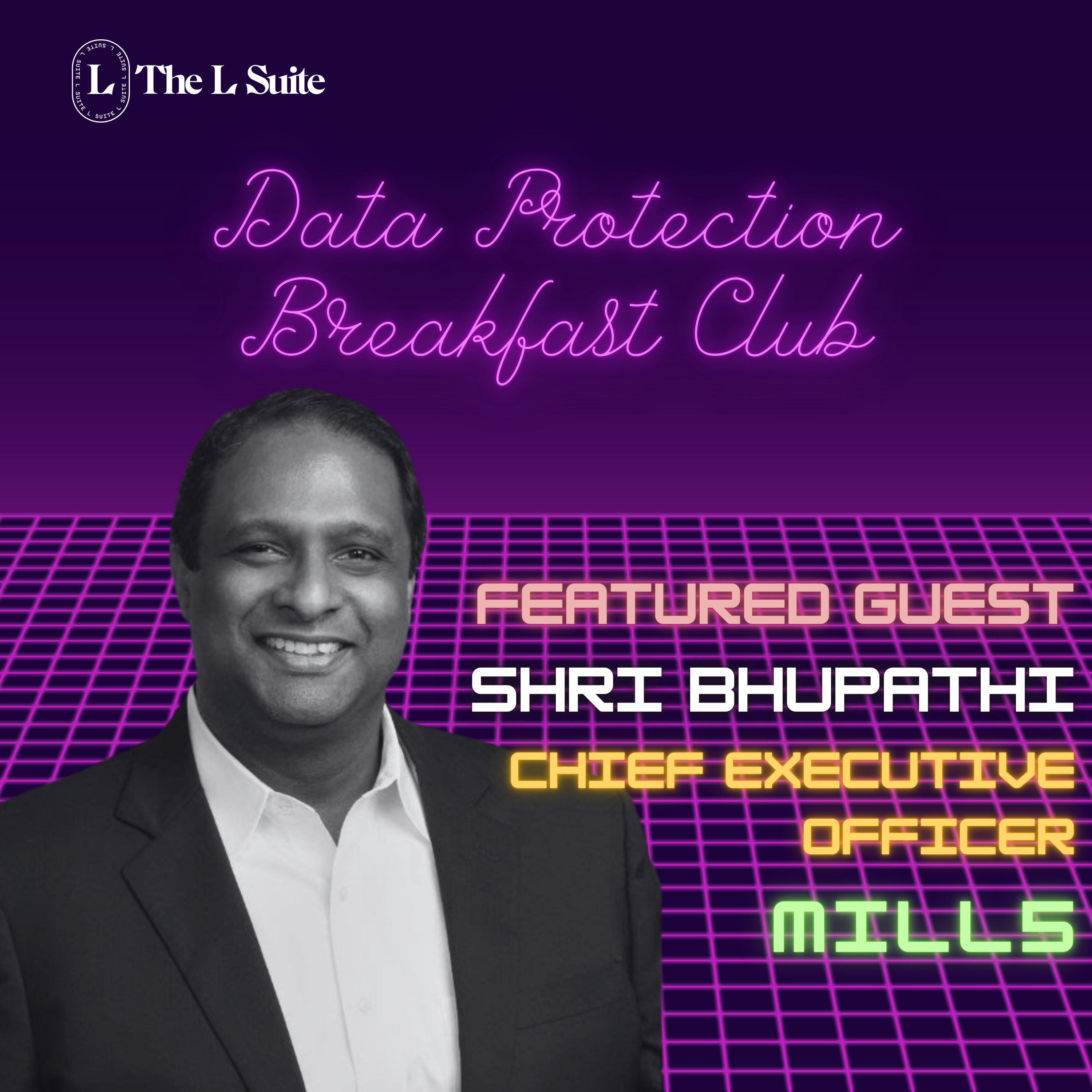
from The Data Protection Breakfast Club with Andy & Pedro
57m 37s
The transcription begins with a personal reflection on finding joy in everyday tasks, such as purchasing a couch through a hands-on experience or embracing the ritual of making coffee, contrasting with a culture overly focused on optimization. It then transitions into a conversation with Shree, CEO of Milfive, who shares his career journey from high-frequency trading, where latency and infrastructure were critical, to founding a company that helps businesses with cloud transformation, AI, and IoT integration. Shree emphasizes practical, scalable approaches to data and decision-making. The discussion also touches on the broader impact of AI, including market reactions to speculative narratives, like a fictional research article that sparked economic unease. Throughout, themes of human agency, the value of tradition, and the balance between technological advancement and pragmatic business needs are explored.
[Music] Here we are. What's up? I hate you. I can't complain, man. Just out here living these times. I got a new couch, and I'm really happy about it. That's the little things, man. I feel like you got a new couch relatively recently. Is this another-- You mean two days ago? Yes. No, no. Oh, you mean the little couch, yes. The little couch, yes. In your last place, your dog was on it. Yeah, yeah, yeah, yeah. That couch didn't transfer over to this place. So that I sold that, and then I had to order a new couch. I ordered this couch in September, and it arrived two days ago. [Laughter] So I've been-- My intermediate couch, or what is it? Like my-- My temporary couch was an air mattress for the last four months or whatever. That's not my favorite. But got a nice couch, man. And you know what? It was made by hand by humans. Would you-- yeah, would you have asked an agent to organize your couch purchase? Or you still wanted to do that hands-on, man. There's a thing about the couch purchase. The most important thing about the couch is how it feels on my ass. I know. And so I had to go to a showroom and sit on one. And the friction of that was actually very enjoyable because it guaranteed that-- You know, a couch is an investment. These things are expensive. That the investment I made was going to be satisfying. And then when they delivered this thing a couple days ago, I sat on it and it felt fantastic. And the agent is ever going to be able to do what-- I love it. --tests for me. There's a lot of agentic conversation that we had with Shree who was our guest. But like, one of the cool things we didn't really totally touch on was like what you just alluded to, which I think is super interesting, which is like the necessary is not the right word. But like, enjoyable is not the right word either. But like the friction that we are going to continue to want forever. For call it friction. But it's almost like borderline like what do I need and enjoy in my life? Like is it friction to go on a hike? Some person might view like time in nature as like friction to my ability to get shit done. Like well, what's wrong with you? You know, like that's a place I don't want to live. Look, man, in a world where each of us has our own thoughts and agency, you know, the definition of tedium is going to vary from person to person. And that's what makes society interesting. And it gives green granularity to existence. You know, we have-- you know, the optimization culture of the last five or six years has basically designed to reduce all friction. And what we're-- I think a lot of people are realizing is that there's a lot to enjoy by the mundane sort of tedious tasks of life. Like for example, I drink coffee every morning. And for years, I've used an espresso machine. It was just great. Coffee in 10 seconds on demand. I'm in a rush. I got to get a pat of here. But you know, as I've gotten a little older, I wake up a little earlier. Just because not nobody's forcing me to, so I wake up a little earlier. And the ritual of making coffee the way my grandparents made coffee is on a bad day, the best thing I did all day. Okay. The absolute best thing I've done all day. And on a good day, a great thing I did that day. A cool thing I did that day. So no matter what, however my day plays out from after coffee, I had this little ritual where I filled the pot and I boiled the water and turned on the percolator and I poured my coffee and I measured my sugar. I guess my, I guess, but you know, whatever. And, um, and I, and I, and I connect with my ancestors. I connect with my parents. We were passed away. So they're also my ancestors. I connect with my heritage. That's a beautiful thing. And I love doing that. And it's not the most efficient, best tasting coffee. I promise you. But I don't give a shit. Yeah. There's better bakers in the world than me. To for sure. But like I, I definitely enjoy, you know, recently, a few weeks ago, I pulled out my great grandmother's brownie recipe and I made it with my daughter. Nothing, nothing, nothing replaces that. No. Nothing replaces that. We all the things human, no matter what Sam Altman says, there is merit in raising a child and consuming the resources necessary to do so. Because human life in and of itself is valuable and more valuable than your data centers, sir. All right. Perfect. What a segue. All right. I think people are going to enjoy this conversation. Trees and expert in AI ML built his own company. You know what I like about the conversation with you quite. Yeah. He's very practical. He's very businessman. You know, I mean, he runs a company. He's a CEO. He's been a businessman in the like sort of true sense for a long time. And so his a lot, you know, I can get philosophical real fast and he spent, you know, a lot of his time like bring it down a real okay, maybe, but maybe not. Yeah. And like, here's how people are actually operating in the real world. And I think that that sort of very pragmatic, you know, nuts and bolts business lens is very useful because, you know, I can get his wonky as I want to and Sam Altman can too in his own way. But like at the end of the day, like, you know, a business operation is just a bunch of people and AI agents now, I guess coming together to fulfill some unified purpose and like how we do that seems to be changing. But I think trees sort of worldview is at least in about this topic is very much like wait and see and the investments are worth it just to see if we pull something great out of this. And that's not unreasonable to me. Yeah. I think people are going to like it. So here it is. Here we are. We're here. What's up? All right. We did it. All right. We're joined by my good friend, Shree Buppethy CEO of founder CEO of Milfive, which is a really cool company. And they do a ton in AI cloud, ML, all sorts of crazy shit. And so here's where I want to start. We also met, Pedro Shree and I met on the tennis court. So that's how we know each other. And now Milfive does a lot of work for multiple companies that I've been at. So that's awesome. So I will say before we get into the substance, this is one of the great and most folks are going to listen to this and not see it. But you've got one of the great office setups. And you got the power glass table as a desk. I can see like dark screens with the matrix like text back there. This is the whole. This is the whole thing. And this is the big. This is the big. Big Shabang. All right. That's great. Well, so one of the things we bonded about, speaking of that is like in addition to the software engineering aspect of the business, Shree and I talk finance a lot. And the reason we talk finance a lot, he's on Bloomberg looking at finance all the time because that's a that's a personal passion as well. But I'm passing is looking at finance. Well, so talk to us a little bit, Shree about where you where you started and where you started your career because Pedro like one of the first things Shree and I bonded over was high frequency trading, which was a big top. You guys are weird. You bonded over high frequency trading. Yeah, well, I used to work at a merit trade. It was a big it was a big deal. All right. Well, it was over high frequency trading at I want to say like 6 am on the tennis court. Yeah. You know, Andy and I just you know, we just had kids around the same time, right? You know, and you know, early morning tennis was one of those things that kind of worked out from a scheduled perspective. So I'm going at it with another friend of ours and you know, we started chatting and tennis and trading and you know, Andy brought up his TD Ameritrade experience and it was pretty good. So I started in college, you know, UCSD, you know, I worked for a part time not even in turn, it was part time for this gentleman who was doing effects trading. You know, he was trading out of San Diego and you know, his son was in England and they were they were basically doing pairs of USD and you know, the British pound, right? You know, so learned a little bit about what that kind of entailed and then did some work for some by side firms, you know, in the area and then when I moved up to the East Coast, you know, worked at SGA, States of Global Advisors Wellington and then finally at back New York on their financial engineering and advanced trading solutions to ask, you know, and since, you know, we've been doing a lot of trading algorithms, you know, machine learning and, you know, a lot of traditional programming, you know, CC plus bus, C sharp, you know, the whole stack there. You know, obviously there was, you know, some, you know, HFT experience there as well that folded in and yeah, it was a while right, right? You know, you know, just understanding data, the need of reacting to data and the different kind of infrastructure is both hardware as well as software, you know, and how this kind of fold into decision making, you know, and Millie second latency is was something that was just astonishing. Yeah, that's like right. That's like one of the one of the fascinating parts about the book flash boys and such when they start to describe how the book starts with like them laying this fiber under the ocean so that traders can trade so fast that they can gain, I don't know, you know better than me, like some millisecond advantage on another. So can you talk about like the genesis of that and how someone explained that to you from like a business perspective, here's what we need to do and then like you obviously translated that into build.
building it, which is interesting to me. But I don't think people are aware, unless they're aware of this, what this world entails. - Yeah, 100%. So you used to be able to, and it's kind of filled up right now, I believe. But you used to be able to actually rent Rackspace right in the Nizie, the New York Stock Exchange, right? Where you're co-hosting or collocating something if you're an infrastructure there. And the idea of, you know, decision making a speed, right? Accuracy and speed. So to be able to, you know, host your computers right under the Stock Exchange, where you're getting all of this data, even a few nanoseconds or milliseconds, sooner than anyone else outside of that perimeter is a huge advantage, right? You know, you're able to make decisions faster, you're able to see, you know, market changes and, you know, the price action much faster and react to it, right? You know, so, you know, fiber is, you know, a big player of that, but, you know, it wasn't fast enough. So when you did have data centers when Nizie had capacity or, you know, firm was not able to host multiple, you know, kind of servers with Nizie, they went across, you know, Manhattan to basically host us in another building and there were microwave, right? You know, towers that basically send this information through the microwave technology across the, across the skyline, which was much faster, you know, and I'm talking nanoseconds, microseconds much faster, you know, than traditional fiber, you know, and it opened up a whole lot of business because now you actually democratized firms and trying to get the same advantage without having to pay the cost of residing under the Nizie building or the trading floor, you know? It's a big, big thing and, you know, out of that came a lot of the things that we use right now are actually, you know, tens of years after, you know, kind of, you know, this thing called FPGA, right? You know, field program of gateway arrays where you're able to take certain machine learning models and, you know, kind of frame them, you know, in this hardware, which you could actually go to Amazon and buy for like $35, but it takes a lot more to tape that and kind of, you know, paste it onto your motherboard and have, you know, software capabilities on top of it, but you're able to take a lot of these FPGA's and then bake in these machine learning models for extremely fast and extremely cheap inference, you know? So NLP, news, market data, signaling and all of that stuff, you know, just used to happen on all of them used to happen on the FPGA's, rather, sorry. - So when you build all this, this infrastructure and then started thinking about, you know, all right, time for me to think about my own business and what am I gonna build? How did that like translate for you into, all right, I'm gonna build, you know, my firm to focus on, the time we met, it was cloud transformation. So essentially, like people go, big companies going from having all their engineering capacity in the data center in their building, you know, yourself on premise to the cloud, but then that's evolved into AI, obviously now. So how do you think about the company? - That's a great segue actually, you know, 'cause when we started thinking about starting a Mil5, you know, it was me and a buddy of mine Rich, you know, used to work at Microsoft for 10 plus years, the idea of taking decision support and decision making and machine learning and bringing it to bear at scale in the cloud, you know, it was a very big portion of why we started Mil5. 'Cause we saw, you know, at the time there was no AI, there was no, you know, the term machine learning was in its infancy, you know, it was so called modeling data, you know, and we had a lot of contacts in the industry and some of them happened to be, you know, very big IoT players and they had streaming data from different sensors either on the manufacturing floor, oil wells, pipelines and so on and so forth, you know, that just, you know, it was a fire hose of information that was coming in just like market data, you know, accumulating that, you know, and making split second decisions was something that was super important to them and they were struggling on how you scaled this thing and how do you make it dependable and, you know, getting all of that data into a central place and like I said, you know, and it was, you know, mostly on-prem infrastructure and they were thinking about the cloud and even if they were trying to make that move to the cloud, they were doing it incorrectly in the sense that they were renting someone else's computer which is always more expensive than using past services and how do you do it efficiently, right? So, you know, Rich and I figured we had a good solid technology math and a scientific way of approaching the problem and solving it to, you know, for hedge funds, for industrial IoT, you know, for traditional IoT, for healthcare IoT, you know, so that kind of became our premise, you know, and our first few customers were, you know, in the finance space and, you know, some of the largest banks of the world are still our clients, you know, in that space, but we also service, you know, medical and industrial IoT is a very, very big segment of our business as well, you know. So that transformation just thinking about, hey, how do you stream data? How do you bring that intelligence, you know, to, you know, what they call the edge in IoT, right? You know, making those decisions there and then having, you know, an homogeneous kind of, sharing of that information and those decisions across the board was super huge. And, you know, today it's still something that, you know, companies are reinventing, you know, on top of with, you know, a lot of LLMs, you know, now in play and, you know, some of the disconnected LLMs too, right? You know, so you're able to bring some, some things like the Lama, the Phi models, or deep seek down to the edge and able to run these in an efficient manner, you know, is super important, but, you know, what has changed really is, you know, the evolution of the cloud, you know, especially the investment by the hyperscalers and building, you know, these large data lakes and so on, you know, it's brought on an interesting element of, you know, the separation of IT and OT data, IT data being, you know, like acid information or customer information and the OT data as your operational information that's always streaming and, you know, kind of making sure that these two things, you know, coexist at the edge to give, you know, plant managers or service tax or doctors and nurses and service technicians in the hospital, you know, that kind of full picture is now the growing trend really in that streaming data space. - Andrew, you look like you were gonna say something, maybe I'm listening to this conversation through the lens of the, I don't know, how familiar you guys are with the art, but the, I guess, Satrini research, yeah. - Substacks from Sunday. - Yeah, so a lot of the AI that conversation is very vibes oriented and I've talked about this on the podcast a few times, but like what I just saw happen this week is interesting. The Satrini research article, which is science fiction, I mean, I'm not saying it's not based in some interesting potential realities, but like, it's like, you know, like a nostradamus sort of exercise. For those who don't know what it is, it's a memo that is written, it's a fake memo, that's written in 2028, I suppose, about the conditions of the economy and AI's impact on those conditions and it's all pretty dark and gloomy. One of the things it talks about is like stock market collapse based on like these like feedback loops of like AI, which is like AI creates layoffs. The money company say from those layoffs results in more investment in AI, which results in more layoffs, which results in more investment in AI. And then you get into this weird circle where like what's the effect of that is like more and more people are being displaced from like white collar high paying jobs and then they're entering parts of the economy that they used to not be in like, you know, driving oobers and door dashes so they displaced the workers that did that stuff and then there's just this massive movement of labor that is not good for the economy and things sort of collapse and crash from there. This is what this adrenal research, we quote research article is about. Again, just if you haven't read it, it's not real but like it's an interesting hypothetical and the market opens on Monday and it drops 800 points. You know, on like the bad vibes from somebody's like subsist, subsdack, you know, what's your reaction to that? Actually, just curious, like not the article itself or the subsist because there is no substance, more of a story than it is anything real. But the entire economic system could react to somebody's blog post in this way. It doesn't feel very settling to me. - Yeah, that is interesting, right? I did read it, and you're absolutely right. If there's so much fiction in there and it's all in. - Yeah, it's great. - Yeah, and what's interesting is the toxin economics or portray some economic, economic kind of chatter in there, but they don't directly correlate it to how GDP is working and so on and so forth, right? Because I think we're tracking it like, you know, to percent GDP. And if AI productivity is supposed to be as high, that should have been a lot higher. And the economy, as far as age-based employment is concerned, I think it was looking at the market. I'm sorry, some of the reports over the weekend too. I think we're all.
almost at peak right now for age-based employment in the country. So there's definitely something happening, and also as far as productivity and AI is concerned, you know, I'm a strong believer, and it's always been the case so far, is if you've got a more productive employee in the company, they get raises, right? They move up that ladder, right? But there is definitely something interesting happening in AI, and the whole SaaS McGatten, I think, has been happening for a few weeks now, right? And I think this report really kind of tip the scale a little bit, and I think what Salesforce is down like 30%, right? Exactly. It's just crazy, you know, even when you look at these numbers, but I also think that as much as companies, like for no fall to anyone, we moved from Salesforce to HubSpot recently, right? Someone actually said, "Oh yeah, we just rewrite Salesforce using Flod, or the point is not about rewriting it." Yes, there is going to be a contraction of some sort, if you're a SaaS provider that's providing very minimal service or very minimal value. A company is going to say, "Listen, "it's repaying you hundreds of thousands of dollars a year, "I'm just going to rewrite the small utility, "and I'm going to throw it to an agent "that's going to manage, maintain it, "and I don't have that cost." But at some point that becomes into, "Well, do I really want to manage that? "Do I really want to maintain that long term?" If you're a financial firm, or if you're a healthcare company or a tool provider, do you really want to have Salesforce code base in your background that's managing your customers? At some point, it just doesn't become viable, right? Because if you're not paying Salesforce to manage, maintaining that you're paying something or someone to manage it, right? And then you have the whole ecosystem problems are wrong with that, right? You know where, okay Salesforce brings 300 different integrations to your product line. Are you going to sit and write all of that code? And who's going to, so it just becomes, also if something goes wrong, I work with Salesforce for a long time. If something goes wrong or breaks, Salesforce has an army of experts to help you navigate that. And also there is a contract that says, "If something breaks on their end, "like they're responsible." That's it. This is directly where I was going was the maintained aspect of it, right? You can, this is very correlated to me with the kind of analysis that folks often do when they're looking at early stage startups and they're questioning a startup by saying, "Well, you hear this so frequently, "Google could just decide to do it "and end your company or where a medic "and just decide to do this and end you." Like, okay, but they don't. And there's a reason they frequently don't, right? And it's the same, the corollary to me is like, so and so could vibe code this or so and so could just go and build Salesforce in loveable. Okay, yes, that's possible. But then you've got, or you could build it yourself. Yes, I could deploy engineers myself and I could build a CRM myself if I wanted. But then I have to maintain it. And then I have to fix it and then I have to make sure the regulatory issues are all set. Like, it's too much. So I think like what you're more likely to see and I admit I didn't read the memo. And now I want to go read this memo. Everyone should read this thing. I think it's interesting. The fact that some random essay can shift the entire system overnight. To me is the actual scary thing. I like this bit more talking on, but yeah. It's just more likely scenario and more likely outcome. Is it everybody who's smart? Already really smart people in these SaaS companies, particularly the big-scaled ones, are gonna harness AI themselves. Right, and they're gonna build a million things that people love and need. And they may have Shriya, I think you may be alluded to this. They may have like a dip at some point in their stock price, but long-term, I don't like, I don't see how like SaaS itself gets eaten for lunch just by the fact that there's a more scalable and faster way to start developing products. The idea that every one, what's interesting is if I was a agentic bro, I would be arguing back at both of you saying, that's the agents which just handle all the maintenance and handle all the compliance and handle all of them in the day, Twiki. There will be an army of bots of agentic AI's just doing the work that hundreds of people do now, and they'll do it 24/7 without a salary and without me having to pay for a health insurance. So the other side of this argument, right? Which honestly is all over the internet to the point of exhaustion, right? Yeah, but like, there are other constraints besides, I get rid of employees and have 24/7 agentic AI's. Like the other constraints are, okay, cool. Well, like if you're not gonna use Salesforce compute, then you gotta pay for the compute. Yeah, these things don't run on pixie dust and air. They run on, so if you're gonna create AWS masks at that scale, then like the money you were paying Salesforce eventually becomes the money you pay Amazon. And then you don't get any other bells and whistles or assurances you got from Salesforce. So like you're just building AWS masks like for as part of your business operation instead of hiring others to build their own things and quality control them for you, whether it's their agents or not, is actually neither here nor there. What business wants to be in the business of doing everything? Name one business. Shri, are you having those types of, like are you getting that sort of feedback in that dialogue with customers? Yeah. Thankfully, we don't have customers that want to rewrite Salesforce. So that's a good thing. Right. I'm gonna knock on the glass table. But you're absolutely right. Especially with customers, and you've got data for clients and patients and sensitive location data and all of that stuff for highly sensitive targets that are servicing IoT and all of that. You need things like clean rooms where you're actually taking all this data, masking it and kind of control environment doing your analytics and so on and so forth. And well, how are you gonna do all of that if you don't write the code? And if someone's already got those capabilities, it's like saying, I can rewrite AWS, I can rewrite Azure, I can rewrite GCP, it's ain't cluttered. Great, but who's gonna maintain it? And regulation change all the time. How are you gonna be? It's because I think there's this illusion that every company is gonna become an AI wrapper expert. Absolutely. AWS RAP expert. Yeah, yeah, yeah. I'm gonna build a business and I'm gonna build 1000 AWS wrappers, one for each functionality, CRM, EDP, whatever, whatever. And then I'm gonna do that all in-house and it's all gonna run on AWS or Azure, or Google, GCP or whatever. And like my GCP bill is gonna be $900 million. But everything's gonna be curated and contained. If you read, that's a training article. It's like, oh, DoorDash collapsed because everybody was able to do a delivery service and move 95% of the money towards the drivers, which drivers over. And so now the drivers abandon DoorDash. But the reality is what driver is going to set up an account with 9,000 delivery services? Like, who's gonna do that? Right. This is not a realistic scenario. And like, you know, I keep hearing the evangelists talk about the power of a gentick AI and I do think there's something there, but what I don't think is there is the absolute displacement of human judgment, of humanity, which is what some of the folks are suggesting is next. I just think it's that's too extreme. I also don't think people will let go, which is good, fine by me. Yeah, I think we're, you know, I think, you know, honestly, I feel like this will happen, but it's just not here. Yeah, right. You know, you heard even Elon, I think, was it last week of the week before, said, hey, you know, if you're, you know, use open client, you're opening your doors up to all of your information, then you're definitely a brave person, right? You know, is, you know, it's one of those things where, you know, I don't think we are there yet because, you know, number one, the Asians are not, you know, secure enough to not be able to hallucinate or give you the right information, right? And that's number one, number two, is data from the ground up is not built in the premise of having privacy and certain guard rails around it, right? You know, so, and, and, you know, if you take even Salesforce, they, you know, these things were not of concern to them when they started building their database on day one, right? You know, and they started putting layers on top of it, you know, so which has its own problems and implications as, you know, data grows, as the organization grows and so on and so forth. You know, so there's a few iterations that feel like, a few generations of, you know, these, these innovations and companies that need to, kind of handle that problem before you get to a point where you're able to just click a button or just, or just, agenda systems take over, you know, and do a lot of these things, but, but I think we're, a ways from it, just because of the way data is structured and, you know, I don't know if you read about this, I think it was on Saturday or Friday, can't remember, there was someone from HubSpot that that came out and said, hey, you know, we probably need tole ways for, uh, agentic systems to access certain data, right? You know, which makes sense because I mean, that's one way for SaaS companies to kind of generate revenue and it's a, it's a fairly interesting way, but, you know, but they're also doing a lot of research in terms of, well, how do you prevent some of those agents from asking for information that you're not really something they need or have been gamified?
do that, right? And you have the likes of Anthropic that came out either on Sunday or actually Monday or Tuesday. Today's Wednesday. Yeah, so Monday or Tuesday that said, you know, they enlisted 49 projects that they won their AI Fellows to basically try out all around security and agentic workflows and agentic security and manipulations and so on. So for this, it's an evolving thing. I don't think we're going to hit, you know, anywhere close to an auto agent by the end of 2026, but it's going to happen. You know, it's just telling me that's going to happen. Can I double click on that? Like when you think about the future and you think about the projects that come across your desk, now versus like five years from now, like the prospect of having agents, I think Pedro, you're like, you know, your example of the like 9,000 agents working 24/7. Like that's obviously like sort of an interesting thought experiment. But like, what do you guys think like two years from now? Is it a thought experiment? I mean, you can go. I don't know. But like agentic, let me show you what I saw on thread yesterday. I saw a company with two employees and a room full of macminis. Literally, it was like, this is on threads. Like I saw it. So just picture of where I like a storage room looking space with a bunch of racks. I can't tell you how many macminis are in there. Let's say 400. All of them were doing the work of what a labor force would do. Like I'm building out whatever they haven't sold the product. They haven't made a dollar. So that experiment about whether this is profitable and feasible is still underway. But people implementing and trying this, I'm watching you on my own. Yeah, definitely trying. I just wonder what does it look like to you know, like you build an agent now, you build an agent two years. When do we get to a point where I guess I wanted Shree's opinion on like, what will be a good agentic outcome and what will that actually look like? A few things actually. So from the ground up, agents are working with data. So I think data governance is a huge portion of it. If you have customer data sitting somewhere or if you have your company data sitting somewhere or your employee data and so on and so forth, you want to make sure that the agents know what they can surface and what they can't surface. So there's a process of how you gate that information. It starts from there because the idea of AI as you throw as much information as possible, it finds these correlations and mathematical models to kind of surface the right or at least meaningful information. In most cases, they do. There are obviously several cases you can game the system and they hallucinate and all of that stuff. So it's barring that. That's the goal. So when you start from there and now you start to think about, well, what kind of agents do I need? If you think of a large enterprise, if it's a two-man shop, you might have a good grasp on how you're orchestrating all of your agents. But if you're a large organization enterprise and you've got different business units and different services and products that you're delivering, you're going to have people thinking different ways and building different agents. Some of them might come back and ask the same information over and over again. How do you optimize that? So there's an operational or architectural cost that's required there. When you're talking about these agents and you're talking about mostly LLMs or workflows or cloud work and all these things, but there is other aspect to AI as well, like vision systems. So are you synthesizing that information as well? Some of them could be a little more fine-tuned or customized to your knees. A factory floor for scrap, living for safety and all of that stuff. So if you start to look at how these agents propagate around an enterprise, they're going to look very different than a couple of coding agents or a couple of agencies responding to emails like an open-cloth email. So I think there's two different worlds. Third thing is monitoring, not just for cost, but also, hey, are these things actually doing the right thing? Are they saying the right stuff? Are they all up and running? Because at the end of the day, they're all computing based models. So there's a lot of innovation that needs to be done from top to bottom that some companies have started doing. Some companies have some solutions out there, but they're not enterprise-grade. You can't just take them and say, okay, this is how I'm going to run everything and get going. So in two years, I feel like it's going to be an evolutionary step. You're going to have more agentech workflows, but they're very tight in nature and not, hey, just go do whatever you feel like to get this answer done, right? I feel like you just gave me a business idea. There's a business idea in there. At some point, you're going to need software to QA your agent activity. The theory goes no. The agent does it itself. There's another agency, there's another agency, there's another agency. There's a new agency, there's a new agency, there's a new agency. So there's a company that's going to be running the agency. So it's going to be a business idea in the next moment. So it's going to be an agentech. So there's a company, and there's a company that's going to run the agency. So there's a company that's going to run the agency. So there's a lot of here for a second. But let's look at it from the from the perspective of the individual consumer. Okay, like in the US, let's just let's narrow it all down to the US. The US has transitioned over the last 50 years from a manufacturing based economy to a service based economy. What is a service economy? A service economy is an economy where the majority of the economic development and growth is coming from services designed to reduce friction for people. That's what they do. Like help you skip medical care, help you get your food delivered, help you get your HFAC fixed, whatever, whatever. Like the friction economy is really what service economy is. And there are all these services out there from Uber, the door dash to SAS, to AWS, to whatever designed to like reduce economic friction for you. In a world where all of those companies start deploying AI agents, you use, you mentioned like an AI agent that is like email responder or whatever. In that world, consumers are going to respond to that behavior. So if I realize as an individual person, as a single like consumer that every time I send an email out to customer service, I'm talking to a robot. The first chance I get to stop doing that, I will. And so I'm going to hire my own little agent or I'm going to, I'm going to build my own little agent. And my little agent is going to reduce that friction from me. And so now in a world where emails are bouncing back and forth between agents representing other people, I am completely the tax from the economic activity. But here's what happens in the, in the scenario of the AI agentech bro squads, those same corporations that went and automated everything in a world where consumers have their awakening that I could just have my own agent. I don't need to deal with these robots. My robots can deal with those robots. Well, then what my robots will do is deal with the problem so they don't have to talk to the other robot. So for example, if I'm planning a trip to Japan, right now I have to deal with a bunch of companies to like ease that for me. I have to like go to travel velocity and I have to deal with the hospitality hotels and airlines and all the shit. I'll just remove all of that for example myself. Get up out of here. Like I don't need travel velocity anymore. I just have a little agent that will build my whole thing for me. Travel velocity goes out of business. You know what? I want my food delivered. I'm just going to set up an agent that talks to my neighbors and whoever's swinging to that restaurant today, they can just deliver food for everybody to get paid. Like we'll find ways to cut the corporations out of the thing. This is like the human ingenuity side of things. So like what happens in that scenario where there is a consumer or citizen based agentic awakening? Like I feel like there's corporate economic collapse. This is the Citerini thesis, right? This is the thesis. Yeah. And so like as science fictiony as it is, I think there's some arrogance in the idea that companies are going to be the ones that get efficient and that consumers are continue to operate the way they do now. That's just not what's going to happen. That's right. And I think I don't know if. So the Citerini thesis definitely holds some water. I think they take it to an extreme. That's where they're going. Oh my God. So just because I like eating organic vegetables doesn't mean I'm going to buy a farmland and start farming or have bots or robots trying to grow my vegetables and then farm them for me. But at some point you're saying, "Okay, there is a cost that I'm willing to pay so I don't have to undergo certain things." But I'm still enjoying the likes of the lifestyle that you want to. Same thing goes for beef. I like organic beef. I'm not going to grow. I'm definitely not going to grow cows or anything like that. So there are certain companies like I was mentioning earlier, there are certain SaaS companies that have no business of being in business. There's no question about it. They're very niche. They're fulfilling a certain market and those will go away. The likes of the travelosity and stuff like that, right? Expedia and so on. Their values will come down a little bit because they have right now the edge of going directly against Alexa Saber and doing all of that.
that stuff and doing a market price or at least a perceived market price of your travel costs and so on. Those values will go down a little bit and will become, it'll get to a point where they'll become the brokers of this information to either MCP or something like that to expose it to your model to be able to automatically do it. Kind of what ChatGPT did with, I'm sorry, OpenAI did with their Gosh and forget the product where you go and you type in what you want to do it, it actually brings up a browser within a browser and it's doing this automated thing, age, agentic thing on your behalf and it gets to a point where you're able to just put your credit cards by and boom, you're done. You got your trip booked. Those things are definitely not just plausible, but they are happening. There are a lot of companies that put this technology called MCP on their endpoints where you've got and HubSpot's one of them, which is one of the main reasons why we moved away from Salesforce because we didn't want to use their Salesforce AI agents and then used our ChatGPT version and say, well, I want to do X, Y and Z kind of orchestrate certain workflows with the data that we own within HubSpot. There's definitely going to be companies that are going to look at this as an opportunity and say, how can they capture that market right now? Those are the ones that are going to flourish because you don't want to go against Saber and all of a sudden if you're going to Japan, it's like, oh, well, it's not Saber. Saber is for travel. Let me now go to another endpoint that gives me the hospitality or a certain class of hotels and then, well, actually you're the role in bed now. All of that stuff should be handled by something or someone else. You go ahead to UI, but it's easy enough to basically say, well, just go get this done. This is where I need to go. I've stayed at for the past three, four, five years. This is what I need. Just go do it. It's like getting it to your sister once upon a time. It's an interesting discussion point, Pedro, that you bring up around. People will go do it themselves and Shree was comparing to organic farming and whatnot. I think it's like I definitely see a world is inevitable world in which consumers engage in the creation of agents to do things for them. The question to me is temporarily how long is that going to take and how long will it take for behavior to change and what tools will be available to the consumer to be able to do that? Right now, the average consumer is not going to be able to do it, but I do think your right, Pedro, that they're going to be empowered bit by bit with things with agents they can create. You can see it already. Some agent needs to be able to read and process my email and my calendar. That feels very nervous. I think we're having amnesia. So 15 years ago, the cloud comes. Right? The cloud. Everybody on this call knows what cloud is. I can tell you right now, my dad has no idea what the cloud is. I'm positive. If I say, hey, dad, what's the cloud? He's like, what do you, I don't even know what that is? And he starts talking about baseball. My dad uses the cloud every day though. Every day, every day, my dad has a smartphone. My dad has Apple music. My dad has a Gmail. What is it? Gmail? He has iPhone. He's on the cloud. He's cloud-nated. That's where agentic AI presumes to be headed, which right now you have to have some technical know how to do, set up a warehouse full of Apple Mac minis. The whole point that the bros are making is that's all going away. People will just be able to do this with vibes, just like you can do cloud with vibes right now. When I was an early implementer of cloud, there's a lot of friction, right? You had these weird, like, FTP sites that you had to upload files to. That's where we are now on agentic. 15 years from now, it's vibes. To stick with the organic beef example, which I love, because I buy organic beef too. I like good ranchers. I do snake river. There's a million of these out there. What is good ranchers and what is snake river? They are a AWS SaaS wrapper. Right. Riction-reducing middleman. I don't have the time to go find every good rancher out in the country. So good ranchers goes out and does that for me. They sell me beef that meets whatever threshold of qualities that they've told me is what the beef meets. You don't even know the farmer who sells me my beef, nor what farm a particular, well, snake river I do, a common snake river. But like on good ranchers, I don't know what specific farm my beef is coming from. But I know it's meeting some quality benchmarks that good ranchers has given me a share in time. Okay. Cool. Well, in an agentic world 15 years from now, screw good ranchers and screws. I find like the agent from the farmers will talk to the agents from the consumers and I'll get my beef from the agent from the from the farm in Vermont or whatever in Florida like meets all exactly to the tea, every quality control that I want. Right. This is the future that's being proposed. In that future, the service-based economy collapses. This is the theory of that article. Right. Like you don't need it. You don't need it. That's what I know. Whether that comes to be true or not, I think she makes some points about how maybe that's too extreme. But if we just take the past and learn what has happened, I think cloud is really analogous. Because Andy, everybody, you know, uses the cloud natively, everybody and they don't even know they're doing it. This is the future that is possible. And if that does happen, the service economies and trouble. Yeah. You know, the maybe, you know, I'm still in the maybe, maybe, maybe, because you know, you do need those brokers because you know, those brokers are the ones that set market prices, right? You know, if you do have multiple farms, for instance, that provide the same value of beef, the ability of actually comparing and getting you the right price is something that, you know, a broker does, you know, I mean, a broker could be, you know, a piece of software, agent, take piece of software that's actually, you know, controlling a lot of those things. But I still see that as an intermediary that's providing that service to a large market of customers and not each customer bargaining that, right? And as it's, it's like going to a farmer's market. The reason why, you know, a lot of us walk into Whole Foods or Trader Joe's and buy these things is because that distribution and, you know, the negotiation of the prices that you buy at the store has already been done by the store. And now you're going to the value of paying that extra little bit for Trader Joe's to go buy your goods from there, you know, after they've made all of those negotiations. If you had to sit there or your agents had to sit there and start to make negotiations, you know, against thousands of other agents and thousands of other agents are also doing the same thing. It victims of very convoluted marketplace, right? Now, if you're not involved, though, the theory is that that's just happening in the background. What do I care? But that's the theory, right? That's the theory. That's the theory. But it does beat the whole marketplace kind of conversation, right? You know, I mean, you know, we used to do business this way, right? Before industry of scale. Yeah. This is the way things used to work. It's just, it was inefficient. That's why we came to where we were, right? You know, you know, you know, the market, I mean, the private marketplaces are the same way right now, right? You know, you've got a lot of private marketplaces that, you know, like companies invested in all of these and then you have, you know, the likes of, you know, ETFs that are popping up or funds, the closed-end funds, like in Robin Hood had just announced last week, right? You know, that it's actually saying, well, I'm going to go invest in a bunch of private, you know, kind of investments, but I'm going to expose this as a fund, you know, for investors to actually start investing, right? You know, there is no doubt that there is a place for that kind of an agentic workflow, but I don't think it's going to be so large scale that it's going to replace certain industries and mass the way, you know, the, the Citriner report, you know, kind of fun. Yeah. It remains to be seen. I do think about a world in a future where I don't have to interact with corporations. 100%. I personally don't. Yeah. And I love that future. Yeah. Like yesterday, I had to be on the phone with the gas company for an hour and a half because they made a billing error that I took me five human beings to talk to. It was incredibly inefficient process or eight up my whole morning and date over charge. I mean, I got a $800 gas bill. I live in a 3500 square foot house. That's ridiculous. So like, something was wrong. It's funny while we've been on this call. I got a text that the gas guy came to check my gauge. Like all of this stuff, it took me two and a half hours. Man, I would love to have like a machine handle that friction for me. And like, I think we might be underestimating not this, not just us, the world might be underestimating how much people hate dealing with bureaucracy, even though we know we people hate it. How much people hate dealing with corporate, like non dynamic interactions calling your credit card company calling your bank and in a world where I don't want to do that anymore and it's my agent talking to their agent. That's a quieter world for me. The thing I'm optimizing for there is my peace and my peace of mind, not their corporate profit. So what do I care if it's inefficient? It's like philosophical question, right? Like the efficiency is a different one because I'm optimizing for something different than your profit or the cheapest price. I'm optimizing for like zero engagement, right? which lets me go walk the, you know, go.
on a meditation, have a meditation day instead of talk to the gas company day. You know, like, uh, and this is my morning run. This is great. I don't think we've solved anything here today, but I think, uh, we're not gonna solve it. We have to let it play out, but, you know, but that's the answer. And I do one thing, Andy, can I go back to stocks where we started? Because I thought that was a great starting point. I want to end there if we can. Because I'm really interested in trees view here because it's, it's another area where I personally have like removed humans and gone automated. You know, with the rise of like, uh, like, electronically traded funds, ETS index funds, etc. Right? Like, when I think about my own like 401k and my like personal finances, I, there used to be human intermediaries from like, you got a finance gal or a finance guy and you're paying them a percentage or a dollar amount. And it's usually a lot of money, um, to help you like build your portfolio and do all these things. You know, eight, nine, 10 years ago, I turned all that off. I, I, I've sort of followed the Vanguard model. I've got my three or four ETFs. They do a heavy lifting for me. Everything's automated. Certain amount of money shows up every. I haven't touched or thought about that thing in 10 years. I look at it once a quarter to make sure that like, I'm on track for retirement or if I need to make changes. But that's the, yeah, really automated. There's no person. I get salespeople and finance people, picking me every day telling me they want to help me, whatever. But when I look at my gains and my markets and my things, the only thing I would be doing potentially is eroding my returns by paying somebody to do what these computers are just doing for me every day. I know you're familiar with that type of automation. Is that instructive to what the future might look like? Or is that an anomaly because that sector lends itself to that type of automation? That's the question I have. Is that something unique to finance or can we just expect this to happen across the board? I think it's definitely more than just finance. The robot advisor kind of role in finance has been around for a little bit. 12-B1 fees and all of that stuff when you're funds. Those kind of, you see the drop in a lot of different places. There are still the hedge funds and if you're a wealthy and originally going to hedge funds are a family office and you're investing in a lot of that, you do need some human element there. Because a lot of that is also relationships and also trying to understand geopolitically what's going to happen and so on and so forth. So there's a very different business model there. But if you expand that beyond finance, it happens a lot. You actually see AI agents monitor and manage projects. Are we going to slip on these dates? Are we not? What's a likelihood? What's a risk of doing certain things and so on and so forth? So there's that behavior and that automation. So a lot of the business analysis or the BA's in our traditional world who used to do that work is now controlled and kind of done by these agents. Which is also very good because it's actually looking into your point. It does a lot of this back and forth with technologies and doing this discovery across different domains and comes back with the answers. So I truly believe the more democratized these agents get and the technology gets and embedded into your daily workflows, the series of the world. The easier it gets for adoption across different industries. But finance is kind of an interesting one because there's a lot to gain and there's a lot to lose. You can go back only the past 15 years and you'll see the flash crash was a mistake. Then you had the nightmare, the night trader who redirect a traffic to production. There's a lot of instances where this can go south as well and having those guardrails in place. I think what the industry is investing in is very good right now. It's like, hey, how do I secure this? How do I make sure it doesn't go rogue? How do I do that? So there's a lot of thought that's going into it because again, the more you use it, it's better for them because look at the CAPEX on these companies. It's ridiculous. Meta came out and invested heavily in AMD and opened the eye, did the same thing in another firm that's purely focused on inference to bring that CAPEX down a little bit. The amount of money going in there is so high and the depreciation is not more than five to six years on all that CAPEX. Democritizing that technology is in the best interest for that industry. You're absolutely right. From a broad perspective, I think it's going to help everyone. Finance happened to be one of those things where speed mattered and the human capital of people who can manage those funds and those ETFs and so on and so forth just didn't exist. So it was their best interest to go invest in technology to be able to do that. One of the first industries that kind of did it, you're going to see that a lock-bore in science. You're going to see that a lock-bore in technology. We haven't even touched on quantum computing, which is probably another three-hour conversation. What that's going to bring to the fold is going to be so different as well. It's an interesting time for sure. The agent bros love quantum. Yeah, love quantum. The next couple years, all we're going to talk about is robots and quantum. With quantum and agents, people just don't even really need to do anything anymore. Can I just sit around and read books? Who's going to write those books? It's an agent. The agent swell. There was an interesting-- It was an interesting-- That would be, man. There was an interesting podcast actually by Vino Kosovo. I don't remember. I think it was in Kosovo Venture's podcast. This was probably early last year where he was making the case for the minimum living wage. How in a capitalist economy like ours, we still have to start thinking about it because it's just going to happen. It's not going to happen the next two years, three years, five years. Maybe not even 10 years, but it's going to happen where, you know, like, listen, given all the data points, I can't not fathom a computer or a machine doing a more risk-averse decision than a human being. You know, there might be a few exceptions, you know, but it's just going to happen. You know, I think thinking about those kinds of things is definitely more visionary and, you know, you have to do it, you know? Vino Kosovo is a multi-billionaire. Maybe just give everyone in the country a million dollars and start there. There you go. Put it into a retirement fund and start there. That's right. And I treat-- I treat-- I treat-- Halfland Bay. All right, Shree. Thanks for being with us, buddy. This is interesting conversation for sure. People will make it happen. We're just going to have to-- We'll just let our Asians do it. We'll let our-- Oh, there you go. The Albatars are the Asians. The Albatars.
Podcast Summary
Key Points:
The speaker discusses the value of personal engagement in tasks like buying a couch or making coffee, finding meaning in the "friction" or ritual rather than pure efficiency.
A conversation with Shree, CEO of Milfive, covers his background in high-frequency trading, emphasizing the importance of speed and infrastructure in financial markets.
The discussion shifts to AI and business, with Shree explaining how his company evolved from cloud transformation to integrating AI and IoT, focusing on practical, scalable solutions.
Concerns are raised about speculative AI narratives impacting markets, as seen in reactions to a fictional research article, highlighting the intersection of technology, economics, and human behavior.
Summary:
The transcription begins with a personal reflection on finding joy in everyday tasks, such as purchasing a couch through a hands-on experience or embracing the ritual of making coffee, contrasting with a culture overly focused on optimization. It then transitions into a conversation with Shree, CEO of Milfive, who shares his career journey from high-frequency trading, where latency and infrastructure were critical, to founding a company that helps businesses with cloud transformation, AI, and IoT integration. Shree emphasizes practical, scalable approaches to data and decision-making.
The discussion also touches on the broader impact of AI, including market reactions to speculative narratives, like a fictional research article that sparked economic unease. Throughout, themes of human agency, the value of tradition, and the balance between technological advancement and pragmatic business needs are explored.
FAQs
The speaker emphasizes that the most important aspect of a couch is how it feels, so they needed to visit a showroom to sit on it. This hands-on experience ensures the investment is satisfying and guarantees comfort.
The speaker finds meaning in mundane tasks, like making coffee traditionally, as they provide a connection to heritage and ancestors. These rituals can be the best part of the day, offering personal fulfillment beyond efficiency.
HFT firms gained advantages by co-locating servers near stock exchanges or using microwave towers to reduce latency by nanoseconds. This allowed faster access to market data and quicker trading decisions than competitors.
FPGAs (Field-Programmable Gate Arrays) are used to embed machine learning models for extremely fast and cheap inference. They process data like NLP and market signals efficiently, building on infrastructure from high-frequency trading.
Mil5 started by helping companies move from on-premise infrastructure to the cloud, focusing on streaming data and decision-making at scale. It expanded into AI and IoT, serving finance, healthcare, and industrial sectors with edge computing and LLMs.
The market dropped 800 points in response to the speculative article about AI-induced economic collapse, highlighting how sentiment and narratives can influence financial systems. This shows the economy's sensitivity to non-substantive, vibes-based information.
Chat with AI
Loading...
Pro features
Go deeper with this episode
Unlock creator-grade tools that turn any transcript into show notes and subtitle files.
 PodcastTranscript AI