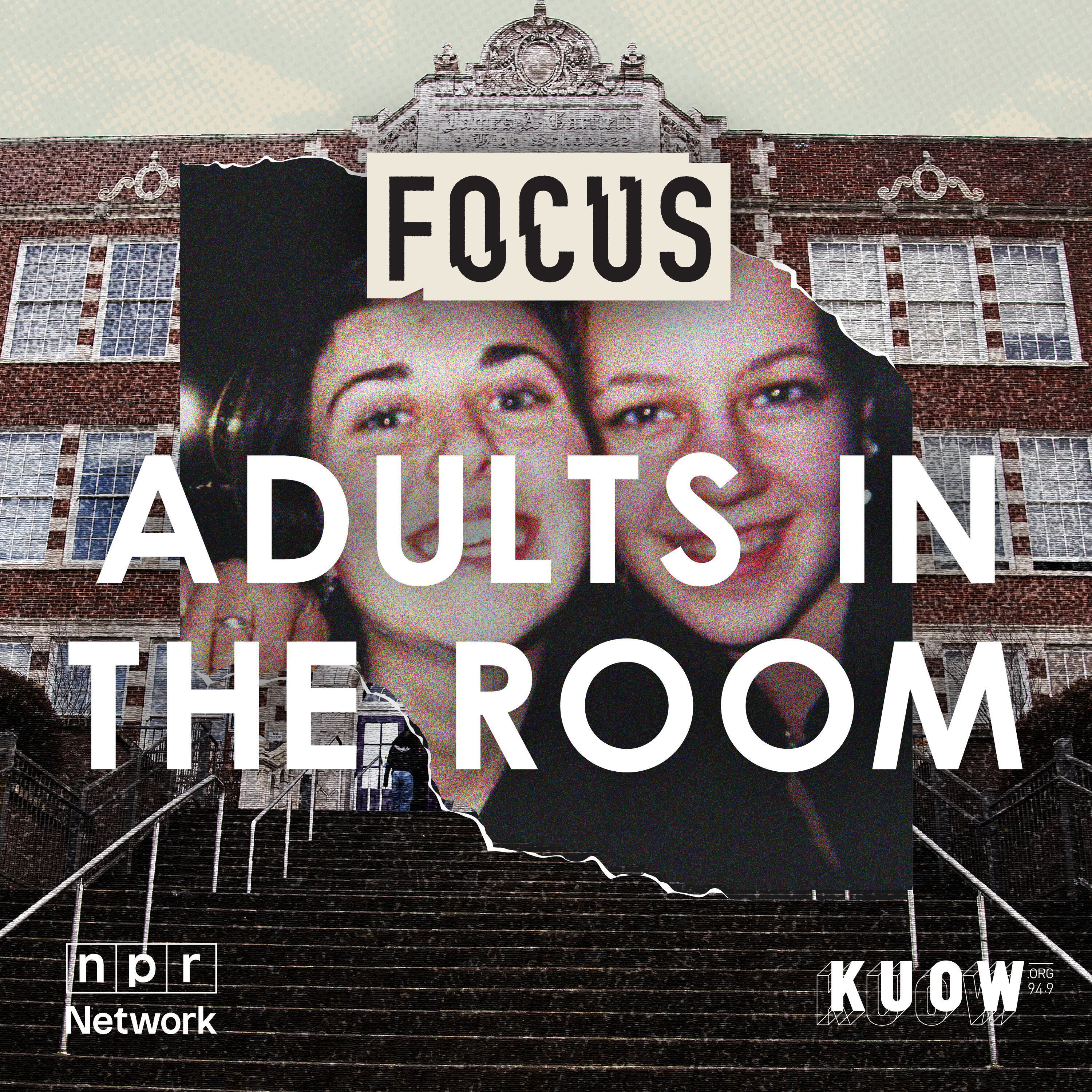
This episode of "Adults in the Room" examines the systemic protection of predatory teachers in Seattle Public Schools, using the Tom Hudson scandal at Garfield High School as a case study. Host Azul Daraftorate, a former Garfield student, recounts how Hudson, a beloved science teacher, was investigated for sexually abusing boys in 1999, then died by suicide in 2000. The investigation revealed that the district had previously investigated Hudson in 1994 but kept this from new principal Cheryl Chow, allowing him to continue abusing students. The podcast also exposes journalism teacher David Erich, who sexually harassed female students, including the host, and was promoted after complaints, only receiving a 20-day suspension in 2008 for violating policy. Despite the Me Too movement, institutions like the school district and Post 84 (Hudson’s outdoors club) prioritize protecting their reputations over student safety, with slow investigations and minimal accountability. New superintendent Ben Shuldonar acknowledges delays in handling cases, with teachers on leave for years, but systemic change remains elusive. The episode concludes that the system is designed to protect abusers, not children, and that survivors’ voices are often suppressed.
The midterm elections are drawing near, meaning fact-based reporting is more important than ever. I'm Libby Dankman, host of SoundSide, where we bring you news and conversation rooted in the Pacific Northwest. We delve beyond the headlines to bring you different perspectives on stories that impact your life right here in Washington State, and we're easy to find. Monday through Thursday at noon and 8 p.m. on KUOW-949 FM, or you can listen anytime on the KUOW app or wherever you get your podcasts. Focus from KUOW in Seattle. This episode includes an explicit description of a sexual act and discussion of sexual harassment. Please take care while listening. This school when I first came to it, man, you asked me to get poked out with everybody pointing the finger to everybody else whose fault it was. I never got to interview Cheryl Chow, my former principal at Garfield High School in Seattle. She died more than a decade ago. So it was surreal listening to Miss Chow's voice through my headphones as she described the Tom Hudson scandal, which took place during my senior year. Mr. Hudson, a beloved science teacher, had been put on leave during the fall of 1999 after I reported rumors about him sexually abusing boys. Then in February 2000, two and a half months into the district investigation of his alleged misconduct, Mr. Hudson died by suicide, leaving many of us shocked, some of us devastated, and all of us wondering, was he even guilty? In the aftermath, a local rock climber and budding documentarian named Tim Matzui pitched in to help with post-84, the outdoors club that Mr. Hudson ran for years at Garfield. Tim realized that many of the kids in post-84 were still traumatized by the death of their teacher, so he decided to interview them for a story that ultimately never materialized. Tim held on to the tapes for decades, and when he heard about the work I was doing, he shared them with me, including this conversation he had with Miss Chow. I think there were a lot of good teachers, but to survive a number of teachers just close their doors and basically said, it's not my problem. Miss Chow was talking about how Tom Hudson's colleagues kept their heads down when they heard whispers of abuse, but she knew he wasn't the only teacher crossing boundaries at Garfield. There has been a history in this building, a secret public history of other male teachers taking advantage of girls. Miss Chow saw teacher abuse at Garfield as permeating the school's culture, and that parents were complicit. I had parent, and this one parent in particular, I won't say any names, and he said, "Oh, my daughter's already graduated, but when she was here I came up and I told bunch of men that they better not lay a hand on my daughter, otherwise they'd have to answer to me." My daughter was okay. I was just amazed that he didn't understand what he was saying, that, "Okay, I took care of my daughter, and as long as it's not my daughter, if it's somebody else's daughter, that's their problem." So that told me very clearly what was going on here. This parent knew that certain teachers heard Garfield kids and felt he had to confront them directly to protect his daughter. Miss Chow was disturbed that this parent's actions, while keeping his daughter safe, left predatory teachers in place, and made kids vulnerable. It was just one example of how abuse perpetuated at our school year after year. It's tempting to dismiss Garfield's culture at the time as an aberration, but this goes beyond Garfield. During our research, we found recent stories of teacher abuse throughout the Seattle area, and since we began releasing episodes of this podcast, dozens of listeners have told us about others they're aware of too. In many of the cases, these teachers left paper trails documenting previous misconduct but kept their jobs. This isn't a story about a few bad apples. It's about something more pervasive and pernicious. My best friend from Garfield, Ella Hussaggan, started adults in the room with me to solve one question where the allegations against Tom Hudson true. We've been able to answer with a definitive "yes," but now as that investigation concludes, I realize we're not done, at least until we explore two new questions. Why has Seattle Public Schools protected predators for so long? And does it still? From KOW Public Radio in Seattle, I'm Azul Daraftorate. This is Adults in the Room, episode 7, Bad Apples. Seattle is a city that never stops moving. Seattle now helps you stay up to date, twice a day, every weekday. A deep dive into a big story in the morning and a roundup of the day's top stories for your commute home, plus some laughs every Friday, hosted by me Patricia Murphy and Paige Browning. Listen to Seattle now on the KUOW app or wherever you get your podcasts. After Mr. Hudson died in February 2000, Seattle's two daily newspapers published glowing pieces about him. The stories amplified Mr. Hudson's best qualities, his mentorship of students, his dedication to teaching, his passion for the outdoors. In the Seattle Post-Intelligencer, known as the PI, a reporter quoted students and parents who questioned the allegations and were angry about how the school district handled the case. The reporter's name was Rebecca Den, and in 2000 she was in her late 20s and a staffer at the PI covering education. In the beginning, it didn't strike me as that notable because there were teachers being put on leave all the time. There were teachers being charged with abuse or more often forced to resign without charges. But you knew there was a lot of stuff going on. In one article, Rebecca quoted an anonymous male teacher who said, "The question that's going to be looming is, is someone being falsely accused of something that can drive them to their death and ruin their career? And can this happen to someone else?" After I read that, I called Rebecca. I yelled and cried. She still remembers getting my call. I just had like ice in my blood and I remember being afraid that you were going to hang up on me. It's like God the person who knows the truth is talking to me and what do I do? I told Rebecca she couldn't quote me. I was afraid I'd get even more blowback for going against the dominant narrative of what a great guy Mr. Hudson was. I think you were right to worry because as a reporter, you're kind of stuck with what people are willing to tell you. And if the only person who will talk to you, the only people are the ones who revered this person and think the miscarriage of justice has been done, that's how your story veers, which is wrong. The first draft of history that journalists write is often limited by who we can find to interview on short notice and what they'll tell us. I noticed a shift in Rebecca's reporting after that call. She asked the district for their files from Mr. Hudson's investigation, but the district didn't turn them over. They were holding the records back because Mr. Hudson's widow and the Seattle Teachers Union had filed an injunction in court to keep them sealed. The PI and the Seattle Times bought back and in spring 2000, after spending $60,000 in legal fees, the newspapers won. The records don't say that Mr. Hudson sexually abused boys, but they included the district's first investigation into Mr. Hudson, which happened in 1994. That revelation eventually led me to Jason Fox, who we heard from last episode. He told us about a skinny dipping photo Mr. Hudson took with him. Without Rebecca's groundwork, I never would have known.
about Jason Fox and the 1994 investigation. As this series has unfolded, I've told you the stories of several boys, now men, who were abused by Tom Hudson. Each of those men expressed their anger that the school district ignored red flags about Mr. Hudson, allowing him to stay in the classroom and further abuse boys for years. Even about their trauma has helped them find healing and community, but they have also asked us to find out where things went wrong. Ironically, that was supposed to be Miss Chow's job, starting in 1999. The district tired her to fix things at Garfield my senior year. After our previous principal, Dr. Al Jones was fired for having a sexual relationship with a female student. The district kept Miss Chow in the dark about Mr. Hudson's prior investigation. The science teacher had been pulled in before. The district did not let me know that. I was totally unaware of it. And the adults there, Scott free. Miss Chow was outraged that this teacher, who had unfettered access to students, had been investigated five years earlier and no one told her. This makes me wonder why document misconduct if it's only going to be ignored. Miss Chow was also frustrated that a different teacher in the building knew about the allegations against Mr. Hudson, but didn't tell her. The law for public teachers is that if there's any kind of reporting or possibility of child abuse, you report it. And in a school building, you report it to the principal. That's very clear. Unfortunately, the teacher chose not to come to me as the principal. Miss Chow was talking about David Erich, my journalism teacher. Mr. Erich was a thorn in Cheryl Chow's side. This became clear in documents I've requested from the district. They included handwritten notes from Miss Chow detailing complaints made against Mr. Erich, including from Ella and me. Even though our names were redacted, I could see Miss Chow had documented Mr. Erich asking me about the size of my underwear and the crass things he said to Ella. Recall, Mr. Erich was mad. We wrote a story that alluded to Mr. Hudson, making a boy feel ill at ease. I started collecting these records shortly after college in my first year as a reporter. I knew that the teacher's union contract allowed their members to remove disciplinary records, and I worried Mr. Erich's personnel file would be expunged. But I also requested these documents out of curiosity. I wanted to see if Ella and I showed up in them and if other female students had complained about Mr. Erich. There was a reference in the files to a comment. Mr. Erich made to a different class meet-of-ars, and I was pretty sure I knew who that was. Sometimes I would wear cropped tops that would show my mid-drift, and he, I remember coming up to me once and saying, "Girls just don't realize how sexy it is when they show their mid-drift." I should back was the editor-in-chief of the messenger my senior year. And like me, I should want to Mr. Erich's approval. I think there was a fit, a disturbing fit, but a fit that I had with Dave Erich because he was kind of tyrannical in his expectations. And anything that I did, I just like blood myself dry doing. I should knew running the paper would look good to colleges, so she stayed on Mr. Erich's good side, which meant putting up with his commentary. Like the time they were alone in the messenger classroom, and he asked her if it was true that Persian women like anal sex. I'm Persian. I should disclose this incident to a small group of us at the time. I even wrote about it in an email to Ella. In my memory, Mr. Erich asked her if, quote, "All Persian women like it up the ass." What does that even mean, I wondered? A friend had to explain it to me. Today Aisha is a psychologist who has clinical expertise with child sexual abuse. She thinks Mr. Erich took pleasure in walking a razor's edge with his female students. He felt like the way he got off was in pushing the line just in a chair and in there and making you squirm. He would get like flush in the face. He would get this titillated smile. I remember the expression so vividly. It's like possessed looking his eyes. Like this pleasure at like transgression would just overcome him. I'm familiar with that look. He was the expression on Mr. Erich's face when he saw me wearing a tuxedo my junior year. I was an usher at graduation. He looked me up and down and said, "I knew you would look hot in the tux." Our producing team sent Dave Erich a letter detailing how he shows up throughout this podcast. We've also reached out to him several times for an interview to provide his point of view about these incidents. Mr. Erich declined to comment and then stopped responding to our inquiries altogether. Although Aisha was never in Mr. Hudson's orbit at Garfield, much of her experience with Mr. Erich mirrors what happened with Mr. Hudson and the boys in his club. It's a familiar pattern. A charismatic teacher leads an exceptional school program and grooms, kids and parents making them nervous to speak up. Aisha could have stayed quiet and graduated, but in the last few months of our senior year, she stood up to Mr. Erich to defend Ella and me. He asked her to resign. Aisha refused and felt empowered by it. That gave me permission to speak in a sense and I shared everything with Cheryl Cho. Who I to the stand so like beyond grateful for. It's almost certain Aisha's complaints made it to the district, but there is no evidence the district took action. Instead, Mr. Erich got a promotion. He left Garfield in 2000 at the end of our senior year to lead the English department at Roosevelt High School across town. There, the paper trail of complaints only got longer. Hello colleagues complained about Mr. Erich's temper and in 2008, a 16 year old girl made an official complaint about him. After an investigation, the school superintendent wrote to the girl's mother, saying the district determined he violated policy. Mr. Erich was placed on unpaid leave for 20 days and sent to training for sexual misconduct. The comments show that as part of his discipline, he was reassigned to Franklin High School in South Seattle. At Franklin, he was reprimanded for yelling at and shaming a French exchange student and swearing at a female teacher. Dave Erich retired in 2019, 20 years after he first asked me what my underwear size was. Mr. Erich is a recent example of the district allowing teachers to stay in the classroom, despite credible student allegations, including Ella, Aisha, me, and the 16 year old girl from 2008. A few teachers spoke up about his behavior too. The district investigated and records show they believed us, but Mr. Erich never lost his job. He isn't the only teacher who stayed in the classroom after being found guilty of misconduct. Bad teachers are still protected, because that's how the system is designed. I'm Chris Morgan, host of The Wild. For the last 35 years I've worked in the wildest places on earth, track in tigers in Siberia, filming orangutans in Borneo, following humpback whales, migrating jaguars, iridescent hummingbirds, and learning from the people devoted to protecting them. These stories changed how I see the world. I think they'll do the same for you. The Wild with Chris Morgan, available wherever you get your podcasts. It just feels too grim to be like nothing has changed. That's Ella Hussagan, my best friend. She's a lawyer today. I think things have gotten better since the 90s when literally structural harassment was a joke. Like sexual harassment is a punchline. In January I talked with Ella and our former Garfield classmate, Rosie Bancroft. I wanted to hear how they were processing what they'd learned from adults in the room.
Rosie is a social worker by training and is currently a mental health counselor at a middle school near Seattle. She agreed with Ella that things aren't as bad as they were in the '90s. - I see that was kids that I work with that they just are much more fluent in the language of it. They are aware of these terms and ideas and able to talk about it. And they're better received in it, I think. I hope to some extent when they do bring things up that it's taken more seriously. - It's true, we've seen significant social change since the 1990s. The Me Too movement forced many of us to rethink sexual abuse and why there's such pressure for survivors to stay quiet while perpetrators maintain their power and granted some predators lost their jobs or even got arrested in the wake of that movement. But Me Too has largely been about individuals. The systems that are meant to hold teachers accountable, they've mostly been the same since we went to high school. - Institutions are extremely slow to change and they play CYA, that's what they do. - CYA, cover your ass. - We're still doing the like fundamental thing where it is much more important to us to protect the abuser from a possible false allegation than to protect the kid from nearly certain abuse. We are so focused on protecting the people in power, the men in power. - Take Post 84, the outdoors club that Tom Hudson once ran. Post 84 still sends Seattle high school kids on excursions into the wilderness, although it's no longer part of Seattle public schools. We were in touch with Post 84 for weeks during this investigation, hoping to interview leaders or current members about what they've learned from the Hudson saga. Eventually, the club declined to speak with us and sent a statement from their board of directors instead. We had someone on our team read a piece of it. - Our organization acknowledges the impact that Tom Hudson had on students and their families when he led the program in the 1990s. We know that his actions caused immense harm and we stand in solidarity with those affected. - The Post 84 statement also included some of the changes they've made to ensure student safety, like background checks for adult shaperones, sexual abuse prevention training for its leaders, and mandating a minimum of two adult shaperones per trip who are required to sleep in different areas from kids. But in our correspondence with them, it was clear the organization was very concerned about Tom Hudson's legacy splashing on them. In a meeting with our producer, Will James, they requested that we not name Post 84 when referring to Tom Hudson's program. They worried it would create bad and unfair associations with the modern day Post 84 that the reputation of the current organization would be threatened by Hudson's actions more than 25 years ago. In an email, they made specific requests about how we referenced Post 84 throughout the podcast. - We are still hoping that this statement can be used in its entirety. We are also still requesting that in every episode, there is some way to acknowledge current day post. - At first, the Seattle School District responded similarly. For months, it ignored our request to talk about predatory teachers. Then, just two weeks ago, as we were wrapping up this series, the new superintendent of Seattle Schools agreed to speak with us. - Hi. - Hi. - I met Ben Shuldonar at the District Headquarters in South Seattle. He'd been on the job for just a couple of months after working in districts in Michigan and New York. We got right into it. Do you feel like your HR department is doing an adequate job of holding teachers accountable when it comes to sexual abuse? - I mean, I think that in the one month and 20 something days, I've seen a renewed vigor within the HR department. - Shuldonar said that since he's been in Seattle, the Human Resources Department has been looking into old cases. - If you came up to my office, you would actually see stacks of data around investigations that have happened over the last couple of years and me really pushing to say, where are we with this? You know, some people are still on leave for two years. Like, where's the action? Like either find something or don't, you've got to move forward, right? And I think that that's indicative of what you're seeing from your lens is a slowness in an action, maybe an obfuscation. - I thought back to when Mr. Hudson was suspended during my senior year. At the time, his defenders blasted the district for taking two and a half months to investigate him. Now, Shuldonar was telling me that some teachers are on leave for years. The superintendent explained that it's a tricky balance. That length of time isn't good for anyone involved. But the district also has an obligation to be fair to teachers facing career, threatening accusations. - Everybody is given the right to plead their case. And I think that each case is different. If we believe that people are innocent until proven guilty, we need to make sure that we're going in with positive intent to see that. - I wanted specifics about how the district handles allegations of abuse. So I brought up an example. Say an investigation finds that a teacher sexually harassed multiple girls and commented on their bodies. What then? - So then the question is, what is our metric of discipline, right? So if somebody in a classroom says one inappropriate thing, what do you think the repercussion should be? Should it be a week of losing salary and going to professional development? I mean, I like to believe that people can learn. I'm in education, right? Now, if it's a second, then you go down the matrix and you say, maybe it's a month and maybe it's serious repercussions. And then a third, maybe it is to this point, somebody retired, right? So you've got to make sure that each individual person is given the support because hopefully it's something that they can change. And if it's not, then you've got to find a way within the legal construct of the contract, how do you make sure that kids aren't being harmed? - I could understand this matrix of discipline, Sheldon or is describing. Being a teacher is a hard job. Everyone has an off day. But I couldn't understand why the district seemed to lose track of teachers with repeated credible allegations. So I asked Sheldon or about teachers being allowed to expunge their personnel files. The current teachers union contract allows them to do that every four years, and it leaves a lot of room for interpretation of what can be removed. Sheldon or said he believes teachers should be allowed to petition to remove complaints in their files. When I asked why, he re-emphasized that teachers should be able to learn from their mistakes and said this provision is common in teachers union contracts across the country. He also said that if it comes to an incident where a teacher has harmed a child, the petition typically fails. But something bothered me about this discipline matrix he mentioned. It sounded like he was saying the district can remove a teacher from the classroom, but only after multiple incidents have come to light or multiple kids have come forward. Sheldon or is right to want to make sure this process is fair to teachers. But what about the kids? Teachers have representation through a union, people separate from the district who are paid to protect them. Kids don't have that, and this imbalance, which listening to Sheldon or sounded impossible to solve, is one reason teacher misconduct still happens all too often. Is it possible to design a system where we can protect both teachers and students or does one have to come at the expense of exposing the other to potential harm? There are lots of issues that I, as a superintendent, find appalling. Sadly, it's not my ethics that matter in these kinds of things. You fire a teacher and you don't follow the contracts and you don't follow the discipline matrix and there's not progressive discipline. Not only are you gonna lose, you have to pay all the fees, all the things. And again, this is why you have lawyers. If a lawyer says to me, Ben, you are not gonna win this. You have zero leverage here. This is just a fool's errand. Why would I want to hurt the district? I don't do things for show. I don't do virtue signaling. I wonder if there's a way to frame it. Less virtue signaling and more. You wanna make sure that guy is not in a classroom with kids, right? Sure, but if I fired that person and that person goes to an arbitrator and the arbitrator overturns it, that person is put right back in the classroom, given a ton of money and would also probably be protected over retaliatory issues because then it's gonna look like you're out to get that person. So like it sucks, right? I mean, and that's the way.
that these systems work. So I agree. I wish that it would be framed that way, but the way that the courts work and the way that these investigations work, it rarely happens that way. In fact, it usually goes the other way, which is if you are seen as going above and beyond what your leverage is, you end up then not only having to take that person back, paying them a ton of money, giving them their job back, giving them all their protection back, it also then makes it even harder to go after them a second time. And I don't think anybody would want that either. This sounds very frustrating. It is. I mean, look, I love being a superintendent, but there are things that the job, I wish it was easier to help children. That's for sure. Sheldonner was surprisingly candid about the reality of ending teacher abuse in schools. He said firing a suspect teacher without following complex protocols could result in the district having to compensate that teacher to the tune of half a million dollars. I was hearing Sheldonner say, "Damn if you do, damn if you don't." Which sounds less like an issue of a few bad apples and more like an orchard with a pest infestation. Some victims are holding the school district accountable by suing. In the last five years alone, Seattle Public Schools has had to pay out tens of millions of dollars to compensate kids for their suffering. In each case, the abusers had records of prior misconduct in their files. In 2022, a girl who had been sexually abused for two years by a soccer coach at Ballard High School was rewarded $3 million. Attorneys for the girl argued that the district should have known this coach had a problematic history. A previous supervisor at another Seattle High School called the coach predatory. In 2024, the district was ordered to pay $16 million to another girl who had been sexually abused by two Garfield coaches. One of those coaches had previously been forced to resign from a different Seattle High School. In 2025, a jury awarded $8 million to a boy whose Seattle Middle School teacher punched him in the face. The teacher was also accused of sexually harassing girls. The teacher was suspended for five days and later got hired at another Seattle Middle School down the street. The Seattle School District originally turned down my interview request, saying that the Tom Hudson story was an old one. But the men who were abused by Mr. Hudson often think about what happened back then. For them, there is nothing old about it. I asked one of the survivors what he would want to say to you. And he asked, "Are you willing to issue a public apology to those hurt at Garfield in the 1990s?" I mean, am I personally willing? Absolutely. I would apologize for anything that a district has done. I think the concern, of course, is what does that mean? Legally, I would have to make sure that our lawyers would allow me. But I personally, as a superintendent, if harm has been done to students, to anybody, parents, and the school district had something to do with it, of course I would apologize. The problem is that's not good enough, right? I mean, having the superintendent who just got here apologized for something that happened 20, 30 years ago, what I would hope I am asked is, what are you going to do to help stuff like this not happen as frequently as it does? That, of course, is the biggest question any of us should be asking right now. What is the new superintendent doing to stop predators from repeatedly hurting kids at Seattle public schools? I think that what we need to do, and one of the things I'm hoping to do actually is to create an entire department reorganizing it so that there's actually a department of student and family support. And this is where one of the reasons why I think the district hasn't done as good a job as it should around stuff like this is, where would you go? Who are you going to talk to? Who are the people that you trust if something bad is happening? And I'm not sure that even as the superintendent, I know who I would call. Now can we make everything perfect? No. But can we do a lot better? Absolutely. On its face, this department sounds like a good idea. Times need to know who to tell so the harm will stop, but that very premise bothers me, because the problem isn't that kids aren't reporting the abuses they've suffered. From what I've experienced and from what I've found in my research and shared throughout this podcast, they've been doing so for decades. It's just that the adults rarely take action until it's too late. People say to me sometimes, "It must be hard talking to survivors of sexual abuse, to carry their trauma with you." And it is hard. But in the grand scheme of things, I have it easy. I just need to listen and give people space to tell their stories. Throughout these seven episodes, I presented how adults failed, Jonathan Hill, Ocean Mason and Jason Fox. These men still grapple with the harm they endured decades ago, even if the school district may want to forget about it. Abusers may get reassigned or fired or even die, but trauma is a profound grief that never goes away. Our investigation showed how Seattle Public Schools neglected to stop Tom Hudson when administrators became aware of his predation. That parents and teachers alike dismissed the allegations as false, and that abuse in the system still occurs all too regularly. But showing you the evidence is all I know how to do. It's where my job ends. A former mentor of mine, the wonderful journalist Anna Quinlan, said to me when I was just out of college that what happens after we tell the stories, well, that's not on us. It's on you, the other adults in the room. Adulks in the room is part of Focus, a dedicated documentary channel from KUOW Public Radio in Seattle, a proud member of the NPR network. KUOW podcasts are made possible because of listener support. If you enjoyed this podcast, please make a donation or become a monthly member at kuow.org. Original reporting for this project was done by me, Isolda Raftry, Ella Hussagan, Jeannie Andal, and Will James. Our producers are Will James and Alette Cowan. Our editor is Jeannie Andal, Music by BC Campbell. Logo designed by Alicia Biaf, Amelia Peacock manages our marketing and promotions. KUOW's director of new content is Brendan Sweeney. Our director of marketing is Michaela Gianari Boyle. Our director of community engagement is Zeki Hamid. KUOW's chief content officer is Marshall Eisen. We have many people to thank. Ella Hussagan, Rosie Bancrock, Maria Coria Martin, Shane Melling, Phyllis Fletcher, Jim Gates, Tio Papescu, Claire McGrayne, Levi Oscar and Xavier Polkinen, Aaron and Stella Starkey, Bob and Maureen and Uncle Bernie, Jasmine Palito, Ula Scott-Bina, Erica Gordon, Mary Kate Goulick, someone who says we may not thank him by name. He knows who he is. So thank you. Beezou Gowri, Tim Metzui, extra special thanks to Marshall Eisen for all the care and support, not just of this project, but for the survivors. Thank you to Garfield Bulldogs everywhere. For your support, your interest, I know it's been tough. You are true dogs. After we take a little break, we'll be back with an epilogue. As they say in radio, stay tuned. I'm Azul Daraftry. Thank you so much for listening. I'm so glad I go to Garfield High. Singing glory hallelujah, I go to Garfield High. We delve beyond the headlines to bring you different perspectives on stories that impact your life right here in Washington State. And we're easy to find Monday through Thursday at noon and 8 p.m. on KUOW-949 FM, or you can listen anytime on the KUOW app or wherever you get your podcasts.
Podcast Summary
Key Points:
The podcast "Adults in the Room" investigates the Tom Hudson scandal at Garfield High School, where a teacher sexually abused boys and later died by suicide, revealing systemic failures in Seattle Public Schools.
Former principal Cheryl Chow and journalist Rebecca Den uncovered that the district ignored prior misconduct, including a 1994 investigation into Hudson, and failed to share information with new principals.
Journalism teacher David Erich engaged in sexual harassment of female students, including the host, and was promoted despite multiple complaints and a 2008 finding of policy violation.
The school district and organizations like Post 84 prioritize protecting their reputations and abusers over student safety, with slow investigations and minimal accountability.
New superintendent Ben Shuldonar acknowledges systemic issues, such as teachers on leave for years, but change remains slow, and institutions continue to "cover their ass."
Summary:
This episode of "Adults in the Room" examines the systemic protection of predatory teachers in Seattle Public Schools, using the Tom Hudson scandal at Garfield High School as a case study. Host Azul Daraftorate, a former Garfield student, recounts how Hudson, a beloved science teacher, was investigated for sexually abusing boys in 1999, then died by suicide in 2000. The investigation revealed that the district had previously investigated Hudson in 1994 but kept this from new principal Cheryl Chow, allowing him to continue abusing students.
The podcast also exposes journalism teacher David Erich, who sexually harassed female students, including the host, and was promoted after complaints, only receiving a 20-day suspension in 2008 for violating policy. Despite the Me Too movement, institutions like the school district and Post 84 (Hudson’s outdoors club) prioritize protecting their reputations over student safety, with slow investigations and minimal accountability. New superintendent Ben Shuldonar acknowledges delays in handling cases, with teachers on leave for years, but systemic change remains elusive.
The episode concludes that the system is designed to protect abusers, not children, and that survivors’ voices are often suppressed.
FAQs
It's a KUOW podcast investigating teacher sexual abuse at Garfield High School in Seattle, focusing on the Tom Hudson scandal and systemic failures by Seattle Public Schools to protect students.
Tom Hudson was a beloved science teacher at Garfield High School who was put on leave in fall 1999 after rumors of sexually abusing boys. He died by suicide in February 2000 during the district investigation.
Cheryl Chow was Garfield's principal who was brought in to fix things after the previous principal was fired. She was kept in the dark about Hudson's prior 1994 investigation and was frustrated that a teacher didn't report abuse allegations to her.
Dave Erich, a journalism teacher, made inappropriate comments to female students. Despite credible complaints and a district finding that he violated policy, he received only a 20-day unpaid leave and training, then continued teaching until retirement in 2019.
Post 84 now requires background checks for adult chaperones, sexual abuse prevention training, and mandates at least two adult chaperones per trip who sleep separately from students.
Superintendent Ben Shuldonar acknowledged a 'renewed vigor' in HR to investigate old cases, but noted that some teachers remain on leave for years, indicating a slow process that needs faster action.
Chat with AI
Loading...
Pro features
Go deeper with this episode
Unlock creator-grade tools that turn any transcript into show notes and subtitle files.
 PodcastTranscript AI