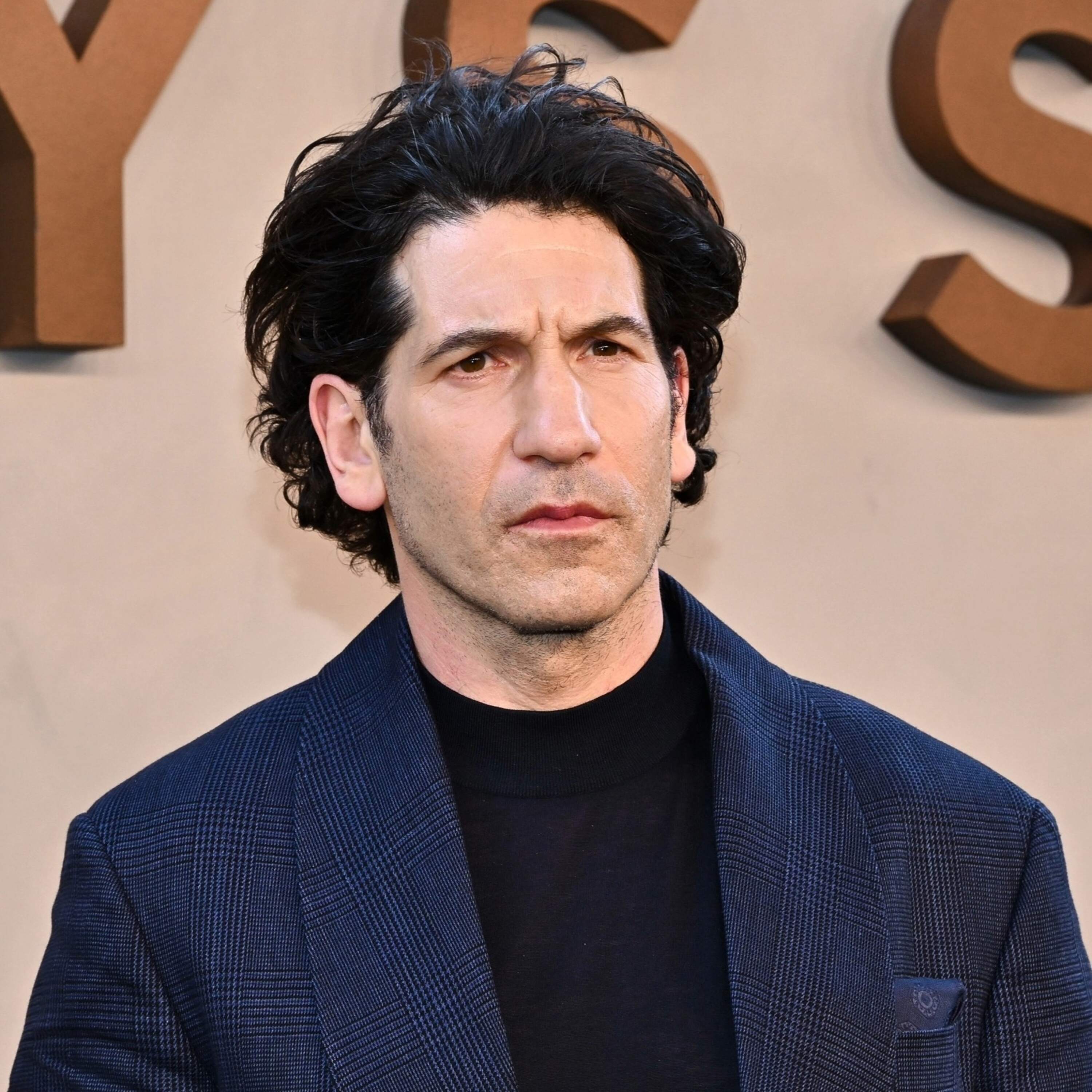
Actor Jon Bernthal on grit, dedication & the teacher who saved him
45m 50s
John Bernthal, actor known for roles in *The Walking Dead*, *The Bear*, and the Punisher, discusses his career and personal journey on *Fresh Air*. He recounts filming Christopher Nolan's *The Odyssey*, where he voluntarily endured freezing water inside the Trojan Horse, driven by a belief in dedication and a desire to lead by example. He also talks about reprising the Punisher in the new *Spider-Man* film, emphasizing the character's depth around PTSD and loss, and his initial hesitation toward superhero roles. Bernthal reflects on his youth in Washington, D.C., as a troubled middle child at a Quaker school, where he engaged in fights and reckless behavior, later finding meaning in a rare moment of speaking during a silent worship meeting. His family, including successful brothers, saw him as the black sheep, but his parents' open-door policy fostered closeness. Acting emerged accidentally when he delivered a fabricated monologue in a college class, impressing his teacher, who sent him to Russia's Moscow Art Theatre School. That experience transformed him, channeling his wild energy into disciplined craft. Throughout, Bernthal connects his past fear and shame to his portrayals of violent, conflicted men, striving to bring humanity to such roles while maintaining curiosity and openness in his current life.
This is Fresh Air, I'm Tonya Mosley. My guest today, John Bernthal, has spent two decades playing the kind of men you'd want to avoid, and somehow he makes you root for them anyway. This summer, he's in two major films, reprising his role as the Punisher and the upcoming Spider-Man movie, and starring in Christopher Nolan's The Odyssey. His breakout role in 2010 was a shame on the Walking Dead, a share of StepuDee, protecting a band of survivors from zombies until he becomes the greater threat. He won an Emmy as Mikey, the brother whose ghost haunts every episode of the bear, and this year he starred in the Netflix hit series, His and Hers, and appeared on Broadway and Dog Day afternoon. Bernthal says he couldn't have predicted any of this. He grew up in Washington, D.C., a baseball player, better known for fighting the acting, and by his own telling, he was a kid headed in the wrong direction, an acting teacher saw something in him, and sent him of all places to one of the world's toughest classical theater conservatories in Russia. He returned transformed, co-founded a theater company, performed in dozens of stage productions, and spent years grinding through sitcom guest spots in small film roles before his break finally came. In The Odyssey, Bernthal makes his Christopher Nolan film debut, playing Minneleus, King of Sparta, a few weeks into production. In The Moroccan Desert, the cast shot the Trojan Horse sequence, one of the film's most iconic scenes. Matt Damon's character, and more than a dozen warriors, cram inside the belly of the horse, waiting to invade Troy. The horse sits partially submerged, and Bernthal draws the short straw, neck deep, treading, and freezing water that was supposed to be heated. And word has it, as Bernthal stood there shivering, Nolan offered to pull him out, but he refused. John Bernthal, welcome to Fresh Air. Thank you so much for having me. It's a real honor. Why did you refuse to get out of that cold, freezing water? Boy, I don't feel like I drew the short straw at all. I think anytime that you really care about something, or you believe in something, if you have the opportunity to be the one to say, "Send me first." Let me show you what I can do. I feel like our grit and our dedication is the one thing that we have control of in this world. And I love doing this. I love that I got to work for Chris and with Chris. And if he wanted to send somebody, I wanted to be that first one, for sure. I think that's, you know, I would jump at that again. It's interesting, Matt Damon said, you pushing through that uncomfortable moment. I mean, like really, 'cause it was the hardest role he said he's ever played just physically. And so to see you sit in that uncomfortable situation actually pushed him to push through his discomfort. Tell us a little bit about that character. And the significance of you being merged in that water for all of that time. Look, I, you know, so kind of Matt to say that, but like I said, I really wouldn't have had it any other way. You know, when you look at that film and the experience for the folks that made it, I remember my first day arriving there. Just seeing the look in his eyes. He's a guy I know, he's a guy that I respect deeply. Yeah, for sure. And just, you know, the first words he said to me when I saw him on this beach with thousands of extras in Morocco right after traveling across the world. He just said, "John, I've never seen anything like this before." And I said to me, "Two man, but if you haven't seen it, well, no one has." And I thought that on this film specifically, you know, there was a group of men that were Odysseus's men that were in this journey throughout the whole piece. And a lot of them, you know, were in the background, a lot of them didn't take their helmets off for the majority of the picture. But I feel that that group of people really was the backbone of the film performance-wise. They add so much, they bring so much. And every day, they are grinding and grinding and grinding. And what I was so grateful for is that I really got to be a part of that group for the first month and a half. And I've been in that group in a few other films, and I know what that's like. And a lot of times, you're sort of in that group or you're not in that group. And if you come in sort of like I did where you have a few scenes, you're usually not a part of that group. But I was so inspired by them. And to be sort of a soldier of the story and to be a grunt of the story is such an honor. Well, you have had quite a busy few years. And the other film that's coming out this summer is Spider-Man. I have yet to see it. I'm going to see it tonight. So it's crazy. But wait, you said you too. Yeah, I'm seeing it tonight too. Yeah. So you haven't seen it fully yet. OK, so you've played Frank Castle for 10 years. And you've been pretty protective of this particular role. Like you take up for him and all of his shortcomings as well. And you're bringing him to this Spider-Man movie, rated for kids. What did you, or did you, negotiate or refuse to let them soften when it comes to the Punisher in particular for this movie? Yeah, look, I think historically this is a character for the folks that don't know. It's a character whose family was killed and sort of a shootout between a bunch of different criminal figures from the underworld that-- and his family and children were taken from him right when he got back from fighting overseas. He's a force-recon Marine in our version, a Marine Rader. And it brings up so many issues. But I think beyond just the spiraling, reeling loss of his family and how he's reacting to that, we've really delved into issues of PTSD and traumatic brain injury and the feeling with so many vets who come home, guys who are the tip of the spear vets who really feel lost and wayward and don't know what to do next. And look, I think I've said before, I was quite trepidacious and hesitant about sort of getting into the superhero world. It wasn't something that I was looking to do. It wasn't something that I sought out. For a few reasons, I think the guys, the folks that I've respected the most in acting, some of my heroes-- not that I respect the most, but a lot of my heroes sort of never went that way. And I think times have definitely changed, but to have superpowers or to fly through the air, that's just never-- I think the characters that I'm really interested in are enormously grounded are-- I try to make them-- and I try to find things about them that I can deeply relate to, or they take me down a path that scares me intensely. And so I have to go sort of explore that path. And with the punisher in particular. Yeah, look, I've said before, there's no way that I could begin to take on that character if I wasn't a husband and a father first, first and foremost, and to fully and probably understand what the feeling of loving people on this earth and happily give my life for these people on this earth, how would it feel if these people were taken from me? So I always want Frank to live there. And he's not a character looking for the light. He's not a character looking for things to get easier or for things to get better. Yet he's a human being. And I think all the time with my-- the roles that I play, I love opportunities to turn my back on the audience. And I love to sort of take it too far to try to push myself to a place or push the audience to a place where they can no longer be with this character, but then try to win them back through showing the fragility of their heart, showing how broken-hearted they are, showing how much pain they have. Because I do think pain is a real adhesive. And I think it's the thing that really connects all of us. And-- So fascinating, John, because it's true that pain is the thing. But most human beings don't want to face that. We kind of live our lives avoiding it and then dealing it with it when we have to. But you, in particular, seem to run towards it in every way, both physically and mentally. And your toughness has a history. You grew up in Washington, D.C., one of three brothers. You went to Sid Will Friends, the Quaker School, where presidents have sent their children. It's kind of a place known for nonviolence and peace. Absolutely. Yeah. And by your own telling, here you were in this school in fights and always chasing the most dangerous thing in the room, it seems. What did that look like? Yeah, I think never fighting in school ever. And I really think that sort of the values of that school were really ingrained in me, even if it took me years and years for them to sort of come out and really come to fruition and to really understand and believe in them. But there's no question that when I was a young, scared, confused man, that I did. I would run towards the most wild, the most dangerous, the craziest situation. I think you were attracted to about it. I think what it looked like. I think for so many young men, it's about fear. It's about fear and it's about shame. There's a wonderful book that has meant so much to me. And I really suggest everybody read it. But especially, I think, Young Men. There's a book named Towney by Andre Dubu III. It's incredible memoir. But it really tells the story about how fear and shame can lead to violence.
and how we sometimes become the very thing that we're scared of. And I do have a real relationship, I think, with danger, that I have been in some situations that could have gone many ways. And I think to a certain point, I think that that's really important. I also am so grateful that I'm so far past that now, and so far beyond that now, and that mostly that I found this work, that all of the reckless abandon and wild things that I got into as a young man, I can bring that same energy into my work. And hopefully, I can bring these kinds of folks, I can bring a real humanity to these kinds of folks, and through that same reckless abandonment and wildness. And I think that that's my favorite way of working. So you're a young man, and you are in this school, where you're learning all these wonderful things about conflict resolution. I heard you talk about there's this Quaker ritual, where you all would sit in silence. And then when you had something that you needed to say, you could say it. Can you describe that? Sure, I mean, it's the way that Quaker's worship is so beautiful. And there's no hierarchy in that religion. There's no priests, there's no rabbis, there's no ministers. There's just this fundamental belief that there's that of God in everyone. And that's something, again, that at the time, I looked at those meeting for worships as just a time to either sleep or look at girls or try to not laugh. 'Cause you all sit in a room and it just be quiet. Everybody is silence. Every coach, every security guard, everybody from buildings and grounds, every teacher, every administrator, every student, you would just sit in silence together. And the idea is if that of God moves you, you get up and you address the congregation, whatever comes from your heart. And fundamentally believe in that. Did you ever do that? I did, I only did it once. I only did it once. And it was actually strangely after I had gotten into an altercation outside of school. And I talked about, I've never spoke about this before, but there was a man who came after my little brother on a basketball court in DC. And I ended up getting into an altercation with this man. And I spoke about it because I was so scared. But I ended up having this just unbelievably profound sense of sorrow for this man. And I really empathized with this man. And I really saw a lot of myself in this man at that time. That was the only time I spoke. And it was a profound experience because I didn't plan to speak. I didn't go in saying today, it was my day to speak and meeting for worship. It really did just hit me in the moment, which was strange for that point in my life. Your father was a corporate lawyer, and is that right? He became that, yeah, at first. Yeah. Your grandfather, a musician, and a producer. And your mom and brothers are also powerhouses. I mean, you come from a really impressive family. It sounds like discipline and accomplishment were a big part of the foundation of you guys. And how would they describe your place in the family? Oh boy. I was definitely the black sheep. You know, I was definitely the one who got in trouble. I was definitely the one who-- You're the middle boy. I was the middle boy. Both of my brothers are enormously quote unquote successful. So my eldest brother, right out of college, got into the news. He was a producer. I think he won four Emmys by the time he was 22. He was the youngest producer on TV. And then he started this small firm, which it was enormously successful. And then my little brother, who just kind of was always that way. He was an all-American football player and played basketball at Princeton. And you know, went to medical school. My wife is a ICU trauma nurse. I was living with my wife and my little brother when he was in medical school. And I was a starting struggling actor, just taking odd jobs to get by. But my brother now is-- he's the head of oncology and orthopedics here at UCLA. How proud your parents must be of you guys. Yeah, but again, I got to tell you, my dad grew up in a split family home. My parents didn't come from much. There was never a huge onus in my house for achievement. They weren't pushing us. We lived in DC. We had an open door policy. My house was the house that, you know, if you were in trouble, you came to talk to my dad. If you needed a bed, he came to my mom. You know, there were foster parents. They took in foster kids. The alchemy of how they did it was so extraordinary. And I have to tell you, without a doubt, I am the failure of the family. I've done the least by far. And what they are most proud of is how close we are. And you know, my parents really put up with a lot with me. They really did. What do you think it was that had you driving towards that danger? For you, for you as a young person. Because I do think it plays into the way you're able to give such a real performance of these conflicted and violent people that you often portray. I don't know. I mean, honestly, it's a good question, you know, as a young man, I know I saw my older brother get picked on a good bit. And I know that I sort of made a choice that that was never going to happen to me. And I know that I was really sort of fell into sort of a natural protector role for my little brother. And then I think it just kind of got carried away. And I think that again, you know, I think never underestimate the power of fear and shame, you know. And I think you can go from somebody who's very scared into somebody who is very scary. And I think that that is just the sort of the natural progression of things, unfortunately, so much at the time. And then I think it's, you also then have a potential to go to the next place, which is, you know, you can start using that. You can come to a place where you're comfortable and you're confident in your open to all kinds of thoughts. And there's, you're not led by fear. You're not led by shame. You're really, you become curious. And I do genuinely believe that's where I am now. I'm really hungry and open and curious. And I don't really try not to judge folks. And I really do see that, you know, I've found wisdom and grace and beauty in folks that a lot of people would label as some of the scariest people out there. Acting finds you though in a very interesting way, almost by accident. So you're this, this, um, Hylian in Washington DC, as you put it, um, you go to Skidmore College to play baseball. You walk into an intro acting class as a freshman thinking that you can kind of sleep through it. And the first assignment is for you to bring something you care about and talk about it in this acting class. And you forgot, so you grab your catchers glove and you spend this story that, um, your mother had given it to you on her deathbed, but she's alive and well. And, um, do you remember how you felt after you gave this monologue and you looked around the room and you saw the responses of everybody? I was blown away. I, it was an out of body experience. Uh, I had told this story and I knew that it took that leap to sort of jump into something. It never dawned on me that it even mattered whether it was true or not. In that room, I knew my back was against the wall. I know I hadn't brought anything. I knew it was an enormously emotive room and, and, and, and, and a, and a level of sort of openness with these young artists, these serious young theater artists that I was completely unfamiliar with. And I knew that I had to jump and it was no different, honestly, then, then jumping into a street fight or jumping into a football game or jumping into a situation that, okay, there's only one thing to do here if you're sparring and boxing. Okay, let's go. You just take that step and you go and, and I, I have from a young age been, been quite addicted to that step. And, and I knew that that step was necessary there, even though I had no idea what I was doing. And I always come back to this word reckless abandonment. You, you, you stop thinking. You, you, you get out of your own head and you just go forward and you try to connect with something bigger. And, you know, I do remember kind of coming back to myself with, you know, I do remember kind of coming back to myself with tears down my eyes, you know, with the story that I completely made up. But then also, you know, noticing while I was telling the story, the sort of grip that the, the real palpable grip that I had over the other folks in the room and I saw the emotion from them. And I knew that it was something special and I knew that it was something, something very powerful and your teacher, your teacher though. Yeah, she saw the talent in you, but she called Bull. She knew that this was, you know, a lot of the beckers are home. Home of beckers. Yeah, her name's right here on my, on my, on my wrist. I'm not. I do. It's of the Moscow art theater and almost, almost name and, and, and, uh, yes, she saved my life. You know, I mean, she, she was as, you know, what I found that day with her was a level of vitality and, and a level of, you know, I always sort of thought of the arts in, in, in my own sort of naive way that, that, that it was a, it was a soft place. It was, it was a place of just complete acceptance and, and, and not one of rigor and, and, and discipline and, and, and, and, and, uh, real vitality. Um, and boy did she, what does she give it to me and, and, and, and sort of ripped me apart and, and, um, she saw the talent.
something in you. She did. She said, yeah, her punishment was that I had audition for the play for the college production. Our guest today is actor John Bernthal. We'll be right back after a short break. I'm Tony Mosley and this is Fresh Air. This is Fresh Air. I'm Tony Mosley and my guest today is actor John Bernthal. He returns as the Punisher in the new Spider-Man film, Brand New Day. He also stars in Christopher Nolan's epic The Odyssey. He's also the host of the podcast Real Ones, where he sits down with the kinds of people he spent his career playing. Police officers, veterans, former gang members, when we left off, we were talking about how he discovered and fell in love with acting in college. So you did that and you did that for a while. You started to really get into it. You started to really feel it and your teacher, her answer to you as she saw your talent blossom was that you needed to go to Russia to the Moscow Art Theatre School, one of the most demanding classical conservatories in the world. It is 1999. You don't speak a lick of of a Russian and you go, why, why Russia of all places? I think just like what you were talking about with you know, Mr. Nolan in the beginning, I would have done anything Alma told me to do. I wanted this. It didn't take long. I auditioned for that play and I remember telling my best friend, Greg Zoomis, that summer, I remember sitting down with him when we were delivering pizzas at the beach and I remember telling him, man, this is what I have to do. This is what I'm going to do. Like, there's no question. And I think number one, you know, this sort of private school kid from DC who thought he was all big and bad, you know, getting out and really seeing the world and seeing Moscow I think would be enormously humbling and just be a reality check that I needed. I think she also knew that I needed to kind of get away from all the people that I was with and that it was, you know, a group of young men that sort of craved danger is much different than one man on his own. But mostly, you know, Russia is and was a place with such a rich theatrical history where being an actor is such a serious profession. You can't do it without real rigorous training. There's statues of actors, you know, in the city. It's much more akin to being a soldier. And it's that way because it's not taken for granted there. Absolutely. Because it's been it's police. It's been censored. Of course. I mean, actors have been, actors have been assassinated. Directors have been assassinated in their homes. The opportunity to get a group of people to gather publicly and to put on a show, was something that for so long was controlled by the state. It was controlled by the state for all of my teachers. So, you know, for them, you know, this was not a hobby. This was not something that you just got to do. It was such a privilege. It was such an honor. An honor that's that that they performed in plays where had they been caught, they risked imprisonment, they risked assassination. Putting on theatrical productions that Warren State sponsored was absolutely risking their life. And they did it anyway. All of them. It changed everything for me. It's really interesting that she saw in you that a place like Russia. Because when we think about Russia, I mean, conditions are tough. It is rough. You went to Russia and you're like, wait, I thought I was a tough guy. Oh yeah. The brutality there was unlike anything I had ever seen. But so was the beauty. And there were equal parts. Look, I don't want to overdo the brutality. I mean, you know, I had guns multiple guns pulled on me, you know, within my first week there. You know, I had I saw, you know, people that were left dead in the street. I saw a level of desperation, of wildness, of unbelievable disparity between those that have and those that do not. You know, people called it the wow, wow, west. But what I mean, it was run by criminals. I mean, that's just what was going on there then. And you were yet going to school every day, going to class every day. Yeah, you know, living in this tiny little place with with four other people I slept on the floor. We turned the lights on. You know, the cockroaches would go everywhere. You'd feel them climbing over you all at night. The buildings had curfews. So you, you know, you could only get in and out at certain times. And then if you needed to get out, you know, you'd throw the fire hose down and you'd repel down out of the windows. I mean, it was it was a wild place in a wild time. But the most alive, the most impactful time of my life without a doubt. If you're just joining us, my guest today is actor John Bernthal. He stars in the new Christopher Nolan epic The Odyssey and theaters now. And he reprises the role as Frank Castle, the Punisher, and the new Spider-Man film in theaters this week. We'll continue our conversation after a short break. This is Fresh Air. This is Fresh Air. And today I am talking with actor John Bernthal. He returns as the Punisher and the new Spider-Man film and stars in Christopher Nolan's epic The Odyssey. His breakout role was a Shane and the Walking Dead. And he won an Emmy for his role as Mikey in the Bear. 2010 finally comes. You're in Los Angeles. The Walking Dead playing Shane, a sheriff deputy, trying to hold a group of survivors together at the end of the world. And this role is considered your your breakout role. But you've been you've been open like a year before, almost to the day your life had nearly ended because of a conflict that it happened in Venice. Yeah, what happened? Yeah, I mean, I've spoken about it before. You know, I think that that was sort of the tail end of all of the walls that I had walked into. There are so many times that, you know, I should have learned my lesson. And I think for a while there, I believe that kind of my my wildness, I think I suffered from something that a lot of young artists suffer from, where I thought that sort of my wildness and that reckless abandon that I talked to you about before, that I thought that I needed to hang on to that in order now to be a good artist that the two things came hand in hand. Like in your age, like it was your age or a little bit. And I knew that I was capable. I've been a place that a lot of actors hadn't been. I'd been in situations that a lot of them had been and I'd been capable of things that a lot of them were capable of. And I felt that that was something that I kind of needed. And yes, July 3rd 2009, I was in a situation where, you know, I was confronted by a group of men, you know, one of them, you know, came out my dog and and they started to follow me and I fought them. And, you know, one one of them got enormously hurt. Seriously hurt. And we weren't sure whether he was going to wake up. And that led to one of the most profound moments of my life where, you know, I was at the LA County Jail, you know, handcuffed to a bench, not knowing which way this was going to go. And, you know, I've spoken about it before. But, you know, I was in a place where I was quite aware that we were now being led to a place where all of these things that all of these gifts that I had been given, all of this protection that I had because of my father, all of this unbelievable opportunity of being intro, this was in the first time. I mean, I've been in trouble a lot and I'd gotten to go to Russia. I got to be in movies at this point, be on TV shows. And here I was handcuffed to a damn bench, not knowing if this guy was going to wake up and, uh, and made a promise to yourself. I did. I think what happened there, you know, honestly was, I knew and it wasn't, it wasn't a shameful thought and it wasn't a scary thought. I just knew that, that this man wasn't going to wake up and that this was going to be my life. I mean, I don't want to say it this way, but it's just the truth. So I, well, I heard a voice and the voice said, "Look, this is going to be your life now." And so it's time to let all that other stuff go. It's time to go in there. And I knew enough about what it would mean to have a serious charge, you know, in LA, and what that would mean for my life going forward. And I understood it and I wasn't scared of it. I accepted it and I even welcomed it and I said, "Okay, well, that's that dense time to say goodbye." But then this other voice came and it just said, "Oh man, it pled." And it just said, "If you just give me this shot, if you just one more time, even though my butt has been saved so many times, I am not a kid who didn't come from opportunities I did." And I never learned this damn lesson. But, oh man, if you just, if you can just get me out of this one and it's palpable, how many folks don't get that. And, you know, right at that moment, an officer came in and said that he had woken up. And I said that if that happens, I'm done. I'm going to devote myself to this work. I'm going to get married. I'm going to have a family. I'm going to devote myself to service. I'm going to be the best version of myself that I possibly can be. And look, that situation didn't, surely didn't end right then. There were still consequences. There were still. But he survived. And like that, that means that's significant. I mean, beyond what's obvious for him and for you. For sure. And look, as you were looting to one year later, engaged to my wife, free from alcohol, on the set of this TV show, that I just knew. I just knew I had to do. I had to do it. You know, I was there with my friend, Sarah Wayne Calais on July 3rd, just beginning this process. I was there next year. Right. Next year. And I went home and I wrote that
guy letter and I knew that what I saw in that man that night was I saw myself. I knew that this sort of vile, rambunctious, aggressive, bad man, child was something that I had seen in myself and I knew that I had to be done with that and I have been done with it. The thing that is not lost in me and I think really does pertain to so many of the roles that I play is as I'm sure you know so many people are in that exact same situation that I'm in and they don't get saved and it doesn't turn out well and that's why I fundamentally believe that that hope and love and yearning and the things that make us human are prevalent in everyone, even in the most violent, even in the most secluded, even in the most desperate and so I always try to find those things in the people that I play. This role in the Walking Dead, it's one year later July 3rd, 2010, you're walking on the set in Atlanta, a year sober as you said and this character Shane, he's a sheriff's deputy trying to hold a group of survivors together and I actually want to play a clip. So this is a scene from season 2, episode 6, "Secrets" and Dale, played by Jeffrey Demen, who is often seen as the voice of reason among the group, kind of senses your character. Shane is trouble because of his aggressive attitude and short fuse and he also believes you might have killed spot. So and he urges your character to leave the group and your character Shane pushes back and threatens him, let's listen. You think I should break? That is my best friend. That's the man that I love, I love him like he's my brother. You think that's the kind of man I am? That's right. Well maybe we ought to just think that through. See I'm the kind of man who gunned down his own best friend. What you think I do to some guy that I don't even like when he starts throwing accusations in my way, what you think? That was my guest today John Bernthalin in the walking dead and it's all in the eyes between the two of you in that scene. You know this is a chilling piece of acting and knowing what you were going through in your own life in this promise that you made to yourself. In a way it's like you're channeling that kind of rage and anger into this character. What is it like to visit a character like this the thing you promised to kind of leave behind in your own life? Such a blessing, such a blessing it's profound. The thing that I thought I needed to cling to in order to be the guy that I was in order to have the relationships that I had in order to sort of keep my reputation among my friends or to deal with my shame when I was around all these sort of toxic things that I think played so many young men. Here I found this thing that I could tap into those same exact things, take them enormously seriously and find the truth and I know the truth in that stuff. Here I was I could use it one level to have a job but two and much more importantly to hopefully reach folks and I think to tap into things that I feel is the thing that I love most about art is when you tap into a color or to a sound or to an emotion that we know that we felt that we know that we've seen we know as part of the experience but we can't really label it and say oh yeah I felt that I know that I know that guy I've seen that guy I see that kind of pain and that was the blessing in my career without a doubt. Let's take a short break. If you're just joining us my guest is actor John Bernthal. We'll be right back after a break. This is Fresh Air. This is Fresh Air and today my guest is Emmy winning actor John Bernthal. He's in two major films this summer Christopher Nolan's The Odyssey where he plays Menelaeus King of Sparta and the new Spider-Man film reprising his role as Frank Castle the Punisher. The character he first made famous and the Netflix series. His breakout role was a Shane and the Walking Dead and he won an Emmy for playing Mikey in the bear. He just ended his run on Broadway starring alongside his longtime friend Eben Mossback Rack in the play Dog Day Afternoon. So Evan is the one that pulled you into the bear right. So the way you've told it there is no script no pitch just Evan saying hey man do me a favor you need to come on this like you need to do this. And so you took it blind and that favor became Mikey which you won an Emmy for congratulations. The storyline is that he took his own life and everything in the show the restaurant all of it is kind of centered around the crater that is left with your absence and you appear only in flashbacks and memories. Was there a particular thought about the way that you took on this role knowing that you would kind of be like this figure that's not there but is there at the same time. For me I don't think you can go about it that way. I remember David's time in telling me that you know the second that he would tell a character on the wire that they were dying they would start eating a rich cracker like it was the last time that ever you eat a rich cracker. You can't I heard these things about you know we need we need them to be larger than life and we need him to you know be this you know you can't go in and play a role this guy's got to hang over all that you know where you see him in the first season is so unbelievably different from where you see him in the second season they they allowed him to get ugly. They allowed to see the other side in the first season you see this this smile and this warmth and this ability to tell a story and how much everybody look you know when we lose people the rose colored lens the glorification I mean you know it's it's a part of it and I love sort of that color. You and Evan as you said you wrote this episode together of the bear called Gary and in this prequel so Mikey is alive it's before everything it's on a road trip from Chicago to Gary Indiana and you're with Richie who is Evans character and on an unspecified mission and during that trip Mikey meets a woman named Sherry played by Marin Ireland at a Gary Indiana bar and they go into a bathroom stall together kind of have a little little little drugs and they share an intimate moment about how kind Mikey's mother was when she was high and what's so powerful about this is that we know Mikey had issues but they were never really laid out and here he is talking to a stranger and we're seeing him his most open intimate self with a stranger in a bathroom stall and it's a little low but we're going to listen to it it's Mikey talking to Sherry telling him about this memory let's listen when I was a kid you know my mom used to do this thing or like when she was like I'm like the perfect mixture of like all kinds of things in our system you know just perfect she should like come in my room in the middle of the night you know she like scratch my back she had like the longest nails you know she used to used to walk me through my day you know like like the most of my new details you know like like like what what we're going to eat and we're going to wake up what I was going to wear what was going to be on the radio like everything you know just like make me feel like I just make me feel so relaxed yeah yeah yeah yeah and like no matter what was going to happen that day didn't matter like tester so I had to deal with like I knew that and she had planned it for me it was great and I remember there's just one time I was like hey mom hey mom will you come in and tell me about my day tomorrow and she's like she had got angry you know she's like she was like Mike you differences make it's just a day like I did I said didn't understand how that could be like like like how that could be so scary yeah yeah yeah she shouldn't have you see there at the end she tried her best that was my guest John Bernthal he wrote that with Evan Moss-Bagrack it's a prequel episode of the bear and oh what a powerful scene you know yeah it's there's there's so much in that first of all I just think that the show too it's such a deep dive into mental health and and the fragility of people and you know look I had a dear friend of mine who who lost his father and he used to talk to me about how at certain times at like 330 in the morning his dad would be on like the perfect combination of alcohol and drugs and he would come into the room and he would just have
this sort of level of peace that, so he would just sort of set his alarm. So he would like kind of always be able to talk to his dad in that state. And my mom used to come in to my room every night, some nights and scratch my back and tell me about my day. And I love the fact that sometimes in life we can only really talk about ourselves. We can really only explain what's really going on with ourselves with complete strangers. You know, in that scene, I think sort of the thing that's going on in Mikey more than anything else is that he knows that within the same person, but he knows he's got exactly what his mom's got. And he knows that it's a hereditary thing and that it's real. And he knows that what makes him so special and so attractive and so irresistible. Just, you know, can also make him so repulsive and so dark and so impossible to be around. I love that in the opportunity of this show. We got to have this sort of reprieve where, you know, he got to sort of talk about what was exactly about to happen when he unravels with with with Ebbin. And and I think as much as the episode is funny and it's a slice in time and it's a sort of road trip and it's ala Casavetes and you know what I'm so proud of the piece. One of my favorite roles of yours is a really small one, but it's a very powerful one. It's your most gentle and it's you and Ava DuVernay's film origin. It's about writer Isabel Wilkerson and how she came to write her book cast and you play her husband Brett who he is warm. He is devoted and he's strong and his death is one of the losses that sends Isabel's character and degree and where the book cast gets written. And I read that you actually fought for this role. Yeah, tell me about that after reading cast. Yeah, I mean look, I beg everybody to read that book. How did you even get introduced to the book? You know what happened before I went to Russia, I never read. I never read and I remember I we got there's a thing called Black Tuesday where they they they basically cut half the class and and everybody has to go and front of all your teachers and you sort of they they analyze you and for me it was doubly hard because they would analyze me in Russian and then I'd have to wait for the translation and you sort of are known whether you get kicked out or not. And so some people walk out in tears, some people walk out and joy and you know, I remember my acting teachers and again, I'm hearing this through translation, but they said, you know, John, you're you're talent. Remember this so perfectly your talents like a gem. It's like a wild gem, but they said is completely unformed. You have no elegance. They said, we bet you don't read and I'm like never read a book of my life. You know, like never done it. You know, and they said from this point on, never let there be a moment. If you want to be an actor, if you want to be an artist, never let there be a moment where you're not reading. I really took that to heart and I just dove in. So, you know, Eva, I was so blown away by Eva. I'm such a big fan of hers. You know, Anjaneu Ellis, I just think Anjaneu is just a force of nature. She is the greatest we have right now. And also I felt like to be in a movie where your role is really to be in service, like you're to be in certain, you know, that's really the kind of husband Brett was. It was aspirational. Here's this unbelievable woman with this unbelievable mind who could think in a way that no one else could. And he really understood that his role was to serve her. And so I don't know what was something, especially because so much at the time, I'm sort of asked to represent these certain kind of like brands of masculinity. I think that character is every bit as masculine as the punisher or, you know, the guy I played in Shotcaller. You know, it's just. That's just so powerful about it. I mean, right. He's strong. It's sturdy. It's thoughtful. It's caring. He's a protector. He's a provider. But it has nothing to do with bombaster bluster. And again, through the lens of, you know, raising young men, that yeah, I believe in the ability to defend yourself. I believe in part of being a man is to be a provider, to be a protector. But it's also equally important to be kind and curious and sensitive and open and to be of service. Well, John Burns, I really thank you for your work. And I thank you for this conversation. I appreciate you having me. I really do. Emmy winning actor John Bernthal, currently appearing in Christopher Nolan's The Odyssey, his film Spider-Man brand new day opens in theaters tomorrow. If you'd like to catch up on interviews you've missed, like our conversation with classicist Emily Wilson, check out our podcast. You'll find lots of fresh air interviews. You can also watch some of our interviews on our YouTube page. This is Fresh Air. And to find out what's happening behind the scenes of our show and get our producers recommendations on what to watch, read and listen to, subscribe to our free newsletter at why.org/freshair. Fresh Air's executive producer is Sam Brigger. Our technical director and engineer is Audrey Bentham. Our engineer today is Adam Stanishevsky. Our interviews and reviews are produced and edited by Phyllis Myers, Roberta Shorok, Anne Marie Baldenado, Lauren Crenzel, Theresa Madden, Monique Nazareth, Susan Yacundi, Anna Bauman, Nico Gonzales Whistler, and Joel Wolfram. Our digital media producer is Molly Seabing-Essper. They are a challenger directed today's show. With Terry Gross, I'm Tanya Mosley.
Podcast Summary
Key Points:
John Bernthal discusses his refusal to leave freezing water during the filming of Christopher Nolan's *The Odyssey*, emphasizing dedication and grit in his craft.
He reflects on his role as the Punisher, highlighting the character's exploration of PTSD, trauma, and loss, and his protective approach to the role.
Bernthal recounts his troubled youth in Washington, D.C., including fights and a transformative experience speaking at a Quaker meeting for worship.
He describes his family background, noting his brothers' success and his own past as a "black sheep," while crediting his parents' supportive environment.
Acting found him accidentally in college when he improvised a monologue, leading his teacher to send him to the demanding Moscow Art Theatre School in Russia.
He connects his youthful recklessness and fear-driven behavior to his current approach to acting, focusing on humanity and curiosity in portraying complex characters.
Summary:
John Bernthal, actor known for roles in *The Walking Dead*, *The Bear*, and the Punisher, discusses his career and personal journey on *Fresh Air*. He recounts filming Christopher Nolan's *The Odyssey*, where he voluntarily endured freezing water inside the Trojan Horse, driven by a belief in dedication and a desire to lead by example. He also talks about reprising the Punisher in the new *Spider-Man* film, emphasizing the character's depth around PTSD and loss, and his initial hesitation toward superhero roles.
, as a troubled middle child at a Quaker school, where he engaged in fights and reckless behavior, later finding meaning in a rare moment of speaking during a silent worship meeting. His family, including successful brothers, saw him as the black sheep, but his parents' open-door policy fostered closeness. Acting emerged accidentally when he delivered a fabricated monologue in a college class, impressing his teacher, who sent him to Russia's Moscow Art Theatre School.
That experience transformed him, channeling his wild energy into disciplined craft. Throughout, Bernthal connects his past fear and shame to his portrayals of violent, conflicted men, striving to bring humanity to such roles while maintaining curiosity and openness in his current life.
FAQs
Bernthal refused because he wanted to be the first to show his grit and dedication to director Christopher Nolan. He believes that grit and dedication are the only things we have control over, and he was honored to be the one to push through the discomfort.
Matt Damon said that seeing Bernthal push through the uncomfortable moment inspired him to push through his own physical discomfort during the challenging role.
Bernthal was initially hesitant about entering the superhero world and was protective of the character's gritty nature. He was concerned about softening the Punisher, but he wanted to maintain the character's depth, focusing on themes like PTSD and traumatic brain injury.
Bernthal says he couldn't take on the character without being a husband and father first. He explores the pain of losing loved ones and aims to show the character's broken-heartedness and fragility, believing pain connects all people.
Bernthal attended Quaker meetings for worship where everyone sat in silence, and he only spoke once. He spoke after an altercation outside school, feeling a profound sense of sorrow and empathy for the man he fought, which was a spontaneous and moving experience.
Bernthal describes himself as the black sheep and the failure of the family, as his brothers achieved significant success. However, he notes that his parents are most proud of how close the family remains, despite his struggles as a young man.
Chat with AI
Loading...
Pro features
Go deeper with this episode
Unlock creator-grade tools that turn any transcript into show notes and subtitle files.
 PodcastTranscript AI