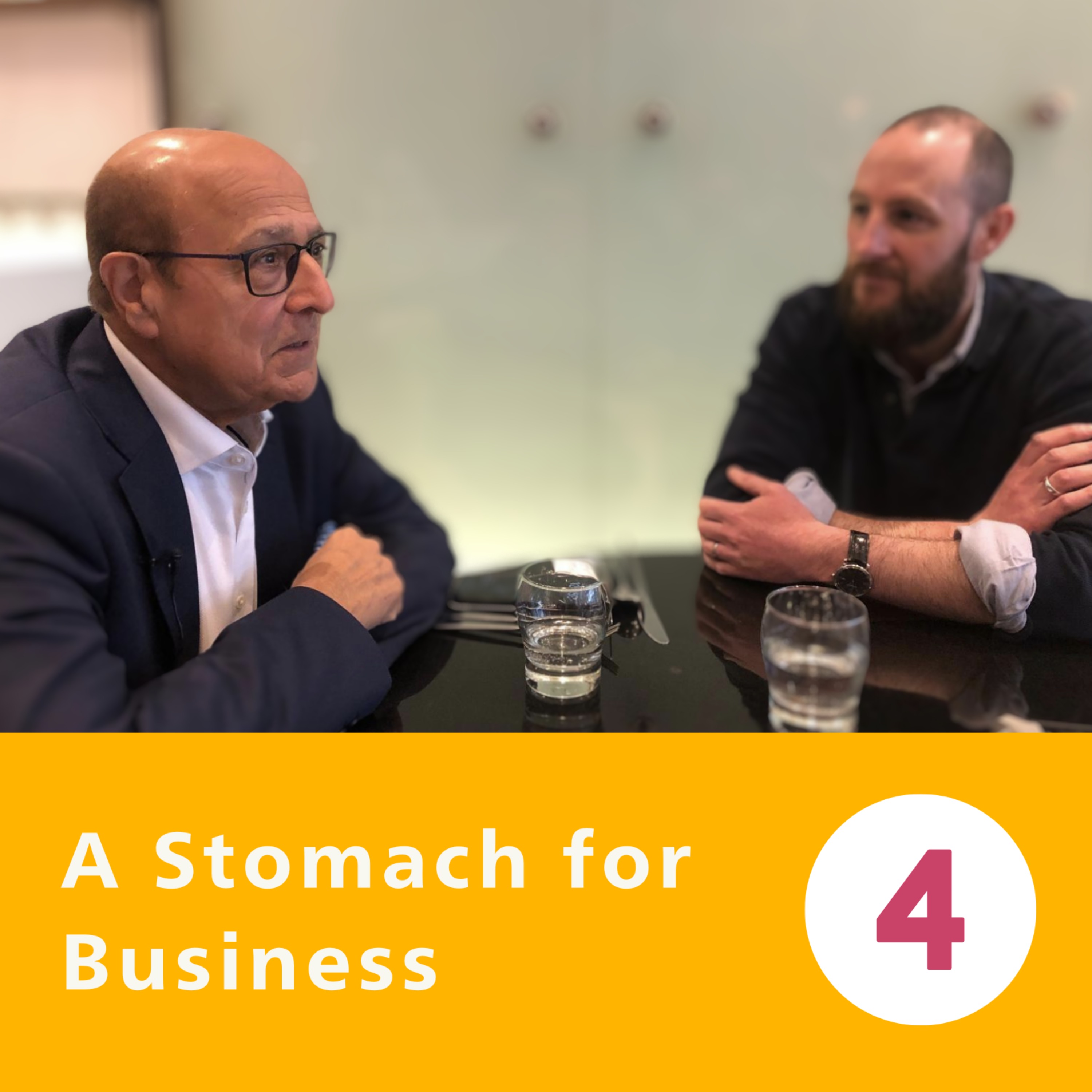
The podcast "Migration Menu" examines how South Asian migration to West London is reflected in food, challenging classic views of globalization as one-way Western influence. Hosts James Staples and Luke Heslop interview Ash Verma, who moved from India in 1958 and later helped regenerate West London while working in his father's restaurant. Ash recounts his father's journey from factory work to opening the Ashoka, a basic Punjabi restaurant serving lentils, chicken, and rotis. Over decades, the diaspora expanded regionally, and restaurant menus evolved from simple fare to diverse offerings like Hyderabadi biryani and South Indian dishes, adapting to trends such as veganism. Ash highlights how immigrant culinary knowledge provided economic opportunities, but notes that visa policies now hinder access to skilled cooks needed for authentic cuisine. His work in policy supported local food businesses, linking them to community cohesion. Despite changes, Ash's personal diet remains largely traditional. The episode underscores food as a multi-directional force of globalization, where South Asian culture actively shapes West London's identity and economy, blending personal memories with broader socio-economic narratives.
[Music] Hello and welcome to the Migration Menu, a podcast series that explores journeys from South Asia to West London through food. Each episode will be going out into West London to talk to people about what food from the homeland means to them and why. We will also explore culinary traditions that have made their way here from South Asia. So join us as we eat our way through some of the best food that West London has to offer from panseered momoes and fermented bamboo shoots to masala doza and much more. I'm James Staples and I'm a professor of Anthropology at Brunel University London and author of Sacred Cows and Chicken Manchurian. My name is Luke Heslop and I'm here to carry the equipment and occasionally check James's blood pressure and keep tabs on his BMI as we eat our way around West London. And we very much look forward to taking you on this personal and culinary journey with us. This week our journey through food and migration takes us further into discussions about the place that West London and the British South Asian diaspora who live, work and eat there. Take in this ongoing story of increasing global connectivity and the movement of people and ideas. We're going to meet Ash Verma, a business consultant and former civil servant who traveled to the UK from India with his parents when he was just eight years old and who over the last 50 years or so has played key roles in supporting the regeneration of West London and the socio-economic development of the UK's South Asian community. He also grew up in his father's Indian restaurant in Slao. So, like our other interviewees, it's acutely aware of the role that food and the knowledge of food brought from homelands plays in the migrant experience. We're joining for lunch for the first of our two visit to Madhu's in Soutall in a couple of minutes but first a bit of background on what we mean when we talk about globalization. Luke, do you want to start us off? Certainly. One of the classic takes on globalization is that it leads to the homogenization of society, that it's about recreating everywhere in the world in the image of the capitalist West. It's about, for example, Costa Coffee being the last place you see on the way out of London through Hiko Airport and the first thing that you're greeted by when you reach arrivals at say New Delhi. It's quite an old argument now. There's a line in what was probably the political theorist Benjamin Barbos' most famous book, "Jihad versus Macworld", in which he predicts that globalism will push nations into being and I quote, "one homogenous global theme park, one Macworld tied together by communications, information, entertainment and commerce." And it's easy to see where those kinds of predictions come from. If you visit a big shopping mall in Beijing or Bangalore, for example, you might well be struck by the familiarity of the global brands that jump out at you, dunking donors, Coca-Cola, McDonald's, Nicon, so on. And you might conclude as many commentators do that this is evidence of globalization obliterating non-Western culture, Western or more specifically American neo-imperialism. These are pretty well-worn arguments. But as the anthropologist James Watson's pointed out in his ethnography of McDonald's restaurants in East Asia, it's called Golden Archies East. What these observers are seeing is really only the form, or in other words, the outward appearance of globalization. If you want to get to the internal meaning or the content of those brands in those places, you'll also need to dig down into the history, the languages, and the customs of those particular places. You need to see them, in other words, in cultural context. Eating at McDonald's in New Delhi is different to eating in McDonald's in London. And I can vouch for that actually, because I've eaten in both. And although there are things that are familiar in both locations, there are also some very striking differences. Absolutely, of course, and when we turn the lens on West London, what we might mean when we talk about globalization gets even more complicated. On the one hand, the influences are coming in the other direction to those usually assumed. They're coming from East to West. Globalization suddenly becomes more multi-directional than it's classically imagined to be. Sravana Barvan, which we visited in last week's show, for instance, might be seen as a brand from India reshaping the cultures of 27 or so countries in which is already established branches. And again, in line with Watson's observation, we would also need to look at how Sravana Barvan is understood in possibly different ways in each of the places where it becomes more established. But what we're also seeing here is not only elements of South Asian businesses and culture migrating here with people and reshaping the landscape of West London, which is a narrative which somehow implies loss. But that South Asia and its diaspora is also making a very distinctive cultural, culinary and indeed economic contribution to the region. And by extension, West London making a distinctive contribution to national life in the UK. And what's also really important to this story is that it's not just or even primarily actually big brands from one place taking root in another for the shaping the changes that we see. These contributions, if we accept what the restaurant has we've interviewed tell us, come at the intersections between migrant dreams and ambitions on the one hand and the perhaps unique landing spaces of West London in which they find themselves on the other. Yes, and we'll definitely come back to that James after the interview. Let's now turn to our lunch with Ash Verma, a man born in Amrit's at the end of 1949, who traveled to Britain with his mother and siblings to join his father in the UK in February 1958, to experience one of the coldest winters ever recorded in the UK. We join him as he shares his memories of food on the ship that delivered him from India to Tilbury docks. From memory, you know, we've given them Indian food as well. Look at that, obviously a lot of the staff would have been the chefs, the cooks, the son would have been the Indian origin and a lot of the passengers would have been accustomed to Indian food as well whether they were the part of the exodus of the generals and the majors and their families as well because I think that's one of all that, you know, as well as the immigrants, you know, which is of course what we. We move off the ship and into Slau where Ash has now lived for more than six decades despite his working life being focused on West London and he explains his father's journey from the factory to the restaurant. Well he made that remarkable work in a factory for many many years but before he opened the restaurant he entered into opening a general store, you know, friend's general store, if you've got to call it, friend's general stores. I think it was partly the reflection of the sort of person that he was the very sociable sort of person, very outgoing, very caring and in a sense that's how he did business, you know, in a very friendly sort of way so there was something for all friends to come to. In the decades that followed, as Ash explains, the diaspora grew across West London. First from India and Pakistan, then during the 1970s from East Africa and in more recent times from Sri Lanka, Bangladesh and Nepal and particularly in Southall from Afghanistan. The prime purpose of our journey from India as determined by the parents was that the kids were here for and education, because of the high standard, the opportunities, all those things that they were in any form or relation. And then Daniel was not cooking, he cooked well, he could do. His mother died when he was only probably a couple of years old so he learned to fend for himself within the army in India. He said he enjoyed cooking and I think he probably said okay, I'm going to do a restaurant. Very basic in the sense that how most restaurants started in those days, vegetables, lentils, chicken, lamb, rotis, chapatis, rice and salads. So, do you think that's going to be overly sophisticated? Well, he did employ a chef, a cook and some staff and all the rest of it. We were used to help and he called it the Ashoka. He probably had some expectations of as I did I think that because I was wanted to do business really well and then work. But of course, by that time I'd already been a college, a college in West London,
my West London Association is very very old in the sense and I did business studies and personal management and I ended up doing entry exam as at the civil service to sort of junior middle manager at grades so I'd already started working but evenings and weekends I'd be in the restaurant doing the things that you do you learn with different skills and I could cook and we'd cater for two, three hundred people as well and whether Dynas, mostly South Asian Diaspora, fellow South Asian Diaspora, did you? I wouldn't say so because next door to us we had still the British Legion Club we certainly on Fridays and Saturdays would be frequenting the place and that was my first exposure to people asking for curry and chips prompted by us the conversation turned to relationships with the local community and the racial discrimination from that era while Ash remembers the skirmishes of his childhood and recognizes what he describes as the ugly side of being an immigrant in mid 20th century Britain he remains absolutely positive focusing on the resilience that he and his fellow South Asian classmates developed so if it was a sort of a camaraderie I think about South Asians in those days of course things have changed and we'll talk about some of the changes in a moment I suppose but the restaurant flourished ideally I'd like to go into it myself we did it for several years and then Dad's health was failing him and sadly he just sort of called it a day he'd stopped working and then the restaurant at the time we just then gradually sold it Ash's generation of British South Asians brought up and educated in the UK where he tells us generally encouraged into professions other than catering medicine, engineering and law being popular choices of parents for their offspring many however and Ash's certainly no exception here maintained important relationships both with the food of their homeland and the South Asian diaspora food industry but I've never been away from food and this is the interesting thing because even as a wet when I was you know dishing out of developing programs working local policies you say West London I'll be half of the government but we say how are you regenerating the area what sort of business is going to be gone and of course you take places like West London the Asian diaspora was very strong still rich and yes there being food whether it's shops, restaurants other food outlets all sorts of things you know so how do you create the employment how do you look for sustainability for those businesses because most people wouldn't have come over with business degrees we then develop a program how can we help businesses and some of the fundamental things going back 20-30 years around food hygiene, legal requirements there were easy targets for the environmental health office this way of framework and there were requirements so were there programs now so we do some of the programs is this here this one was typically can I take a moment to check it? having demolished the starters of kebabs, samosas, chops and teaky a feast of Punjabi cuisine from Madhu's set menu starts to fill up the table while our nostrils are simultaneously filled with the sense of slow cooked black lentils cooked with cream and butter, spice chickpeas, braised lamb and stir fried vegetables Luke started helping himself to the methymurg chicken served off the bone with fenugreek and spices this tantalising array of food prompted us to ask Ash about how much southeastern restaurants have changed since his days at the Ashoka in Slaal the decor and the menu when we did our restaurant the decor was typical, well-writied red wallpaper partly I think giving a feeling of nostalgia from a fork from all the way and the menu was fairly basic functional and it wouldn't have been elaborate in most places because there are only so many things you can do with chicken and lamb and lentils and some main vegetables in the salt and then you can make them dramatic which is how the menus are evolved in terms of, you know, quote, Indian restaurants because you're adding different things to it, you know, the creams and things like that and butter, different flavours, different presentations that came much, much later, you know for my experience you find that most people of diaspora, so the food cooked at home is not too dissimilar to what the original restaurants deserved both in terms of preparation and range, there's only so much you can do with a roast, I love a roast I always try and make the lamb, I make it a bit more, I currify you can dress them up and then give them fancy names, which is really part of the evolution menu generally this leads us to some fascinating reflections on how the South Asian diaspora food scene has changed over the past 10 to 15 years, beyond fusion with panere finding its way onto the pizza the region's cuisines have also been a well place to cash in or national trends towards vegetarianism and veganism as well as the growing popularity of street foods regional variation, as we ourselves have discovered as we've eaten our way around West London has also extended menus way beyond the repertoire of the standard 1960s Indian restaurant Pakistani cuisine, Hyderabadia Biryani, South Indian North Indian Bengali fish dishes, the list goes on and on now you can get all those and West London has it in abundance and that partly goes back to something else early in terms of the makeup of the diaspora communities in the past 20 years that's very much regional as well, regionally in terms of Indian subcontinent as well as origins from South Indian cuisine but I it's very interesting very exciting and it's a reflection of generations as well, you know, younger generations are more attuned to fusion and is the same happening in India for example, better bottom dollar it is our discussion turns to the role these kinds of restaurants play in the local economy and the specialist skills that South Asians bring in order to run them okay many don't succeed but many do and they are very much drivers of local economies even with the improvements and the whole technology the kitchens are in our kitchen in the restaurant and many others that I've seen over the years and I've been and I've seen many were reasonably industrial, functional and all the rest of them nowadays you've got so many gadgets and any kitchen, commercial kitchen, you know, let it, it's amazing but you still need people to operate, that's fine, that type of labour supply we can get, I think restauranters will tell you they can get that type of person from the local labour market, what you can't get and this is where it's in some senses it's sort of political is the authenticity that many of them, whether it's a Chinese group or Thai specialist or a Biryani specialist and I mean the hydrobot a couple of times you don't get a better Biryani than you do in hydrobot but there's a skill to that, you can learn certain, so having the ability to bring people as part of immigration, and the art of labour supply has been a sore point for the restaurant trade for many, many years
the inability to be able to get all the visas and stuff. And it's a shame. So that must say something. In terms of the role that food generally and food and drink, we've got co-vern and stuff here. That's especially made for cuts by the Deer Curren Bill of Mothers. Now, let's say something about the need to have people trained and scheduled and, along some, a sensible immigration. Local communities wherever they are need to be supported to be able to do things like that. That cuts right across the board. More and more people live by themselves, the living and all the rest of it. So, nuclear families and relationships as opposed to good family relationships. They're pretty demands, therefore, different types of services and so on. So I think the sense that they're wider implications. And I think the diaspora and food in particular, catering restaurants, I think they have an important play, in that evolution, into the labour market as we move forward. We've heard a lot about how South Asian restaurants over the last half a century have been run or they offer, and how they've had to change in tandem with shifting patterns of consumption. But Ashes also been closely involved, both as a civil servant and as a business consultant, in supporting restaurants and caterers, if they make some of those important changes. So, I think it's a very West London and then, you said business support, but I think for my policy perspective, in central government, as well as delivery, I think we were very fortunate, probably, 30 years ago, 40 years ago, when governments were very keen to do things in regeneration, particularly in a city. And actually, a lot was to do with the consequences of inner city riots and things like that up and down the country. So, policy makers and politicians were looking at how do we bring cohesion into communities and societies. And then you take the place like West London, where 200 different languages spoken, and probably one of the most cost-moving places around, and you've got West London business, and there's a chamber with a leaders forum, which I've been on for a number of years. For what we call the world's most connected place. As Amiel comes to a close, conversation turns back to Ashes' own diet, and what he eats at home for breakfast in the UK. I mean, I mentioned cornflakes and stuff like that, but one of the very, very early memories, dad used to make porridge, and we used to say, "Where's the sugar? It's not enough sugar in there." It wasn't long, and I think I mentioned earlier, that breads, jam, butter, toasted or not, toasted, became on a routine film. They gradually, in a sense, replaced the sort of heavy breakfast with other bratoes and stuff like that. A nice couple of mythology and a toast is what starts our day. With talk of breakfast bringing us back full circle, and our stomachs full with the best of Madu's set menu, a link to which we'll find in the show notes, we stagger back to the car to digest both our lunch and everything that Ashes told us. [Music] Very interesting guy. And really good, I think, to get a sense of what South Asian food means from a broader business perspective that goes beyond our previous discussions about personal taste memories and so on. Yeah, although I think it's also really important, actually, to see those things working together. And Ashes certainly also had plenty to say about his own culinary experiences from conflicts on the ship, from India, to the changing food in his father's Indian restaurant, and his own ponchon for a roast dinner. Interesting though, that the majority of what he eats today, 80% of it by his own estimates, is pretty much the same as the food that he grew up with. But thinking about those connections between food and business, you have people like Ashes' father, who came to the UK without very much, you know, with just a few pounds in his pocket, but who recognized the value of what he did bring with him. He could cook. He had a knowledge of a particular kind of food. He had a knowledge of spices, of recipes, all of which the wider population by and large didn't have access to back then. And it was that knowledge, that cultural capital, if you like, that offered a kind of springboard from which to launch himself and others did the same kind of thing, into this new post-war mid-century Britain, which was also fast becoming part of a much more globally connected world. Yes, and restaurants were also a particular way of doing business for people who brought with them the kind of capital that you were describing there, James. They enable people to showcase and market their skills and knowledge, but in doing so also provides space for the first generation migrants to reconnect to home and in doing so, to start feeling at home in West London. Injure, the Nepalese restaurant we interviewed for the first episode in this series, told us that nostalgia is filling, but it can also be profitable or at least create livelihood opportunities. And for all this to work for South Asian restaurants and other businesses to get established in this rather cold damp country that often seem very inhospitable to migrants, where non-South Asians were not yet used to the smells and the tastes of their cuisine, you needed a place like South Hall or Slau or Hayes, or any of the other places in London where South Asian communities came together. And what also interests me in listening to actually stories of growing up in Britain as well as hearing his own particular food memories and the ways in which his own diet has changed over time in the diaspora is the familiar structure that his narrative takes. It's a story that's tapped into ideas about precarity, innovation, entrepreneurial spirit, ambition, and ultimately, at least in the cases we've spoken to, success. You can understand why Ash got himself into business consultancy into working to realise the strength of what he'd call cultural heritage to make West London and by extension the world in his view a better place. He's a businessman, but he's also a social entrepreneur. And one of the things to come out of that interview, I think, is that he's really passionate about doing what's needed to make communities flourish. Definitely. Of course, there's always a lot more to these migratory success stories that we've heard from a lot of different people that we've interviewed. A lot of the literature on migration from South Asia shows the role that the capital that you bring with you, whether that's social, cultural, or economic, plays in whether you come to be successful in the diaspora. But I think that when precarity does collide with opportunity in the ways that it did for some of those migrating to the UK in the 1950s, '60s and '70s and who started up restaurants and shops and other enterprises, great stuff can happen, particularly if there's support there for it. Now racism certainly was there then and it certainly hasn't gone away. But what we see in a lot of the stories that we hear is a shift from fear and disgust, particularly of strange cooking smells to stories of desire. Yes, and a great example of that, as we'll see next week on our second visit to Maddoos of Southore, is the story of Sanjay Anand, who's now a major player in the UK's restaurant and catering scene and whose family migrated to the UK over three generations from Kashmir to Kenya and then to London. Certainly a story of global South Asia. But a very different story about globalization than the one we started this episode with, which was about dominant Western culture imposing itself on the rest of the world. The story we get through food is a much more nuanced one. So tune in again next week to hear Sanjay's story and how traditional recipes from Punjab and Kashmir with a few influences from China and East Africa along the way were elevated to fine dining in Southore and far beyond. See you again then on the migration menu. The migration menu has been brought to you by James Staples and Luke Heslock, with help from Esther Apoco Debra, Nina Bolton and Vimil de Lao. If you have any questions or comments, please email us on info at the migrationmenu.com and do sign up to our mailing list, which can be found on our website, the migrationmenu.com. Go well. [BLANK_AUDIO]
Podcast Summary
Key Points:
The podcast "Migration Menu" explores South Asian migration to West London through food, hosted by anthropologists James Staples and Luke Heslop.
Globalization is multi-directional, with South Asian food and culture reshaping West London, not just Western brands spreading globally.
Guest Ash Verma, a business consultant, migrated from India at age 8 and grew up in his father's restaurant, the Ashoka, in Slough.
Early South Asian restaurants offered basic Punjabi dishes; menus have since diversified with regional cuisines, fusion, and trends like vegetarianism.
Ash's father used cooking knowledge as cultural capital to start a business, highlighting food's role in migrant economic integration.
The diaspora has grown from India and Pakistan to include East Africa, Sri Lanka, Bangladesh, Nepal, and Afghanistan.
Authenticity in restaurants depends on skilled immigrants, but visa restrictions challenge the labor supply for traditional cooking.
Ash's work in regeneration supported South Asian businesses, emphasizing food's role in local economies and community cohesion.
Ash's diet remains 80% traditional South Asian, though he also enjoys British foods like porridge and toast.
Summary:
The podcast "Migration Menu" examines how South Asian migration to West London is reflected in food, challenging classic views of globalization as one-way Western influence. Hosts James Staples and Luke Heslop interview Ash Verma, who moved from India in 1958 and later helped regenerate West London while working in his father's restaurant. Ash recounts his father's journey from factory work to opening the Ashoka, a basic Punjabi restaurant serving lentils, chicken, and rotis.
Over decades, the diaspora expanded regionally, and restaurant menus evolved from simple fare to diverse offerings like Hyderabadi biryani and South Indian dishes, adapting to trends such as veganism. Ash highlights how immigrant culinary knowledge provided economic opportunities, but notes that visa policies now hinder access to skilled cooks needed for authentic cuisine. His work in policy supported local food businesses, linking them to community cohesion.
Despite changes, Ash's personal diet remains largely traditional. The episode underscores food as a multi-directional force of globalization, where South Asian culture actively shapes West London's identity and economy, blending personal memories with broader socio-economic narratives.
FAQs
It explores journeys from South Asia to West London through food, focusing on culinary traditions and what food from the homeland means to migrants.
James Staples, a professor of Anthropology at Brunel University London, and Luke Heslop, who assists with equipment and health checks.
Ash Verma is a business consultant and former civil servant who moved from India to the UK at age eight, and has supported West London's regeneration and the South Asian community.
After working in a factory and running a general store, he opened a basic Indian restaurant called the Ashoka, serving vegetables, lentils, chicken, lamb, and rotis.
It argues globalization is multi-directional, with South Asian cuisine reshaping West London, and that cultural context matters—like how McDonald's differs between New Delhi and London.
Menus have expanded from basic dishes to include regional cuisines like Hyderabadi biryani, South Indian food, and fusion items, reflecting changing demographics and trends like veganism.
Chat with AI
Loading...
Pro features
Go deeper with this episode
Unlock creator-grade tools that turn any transcript into show notes and subtitle files.
 PodcastTranscript AI