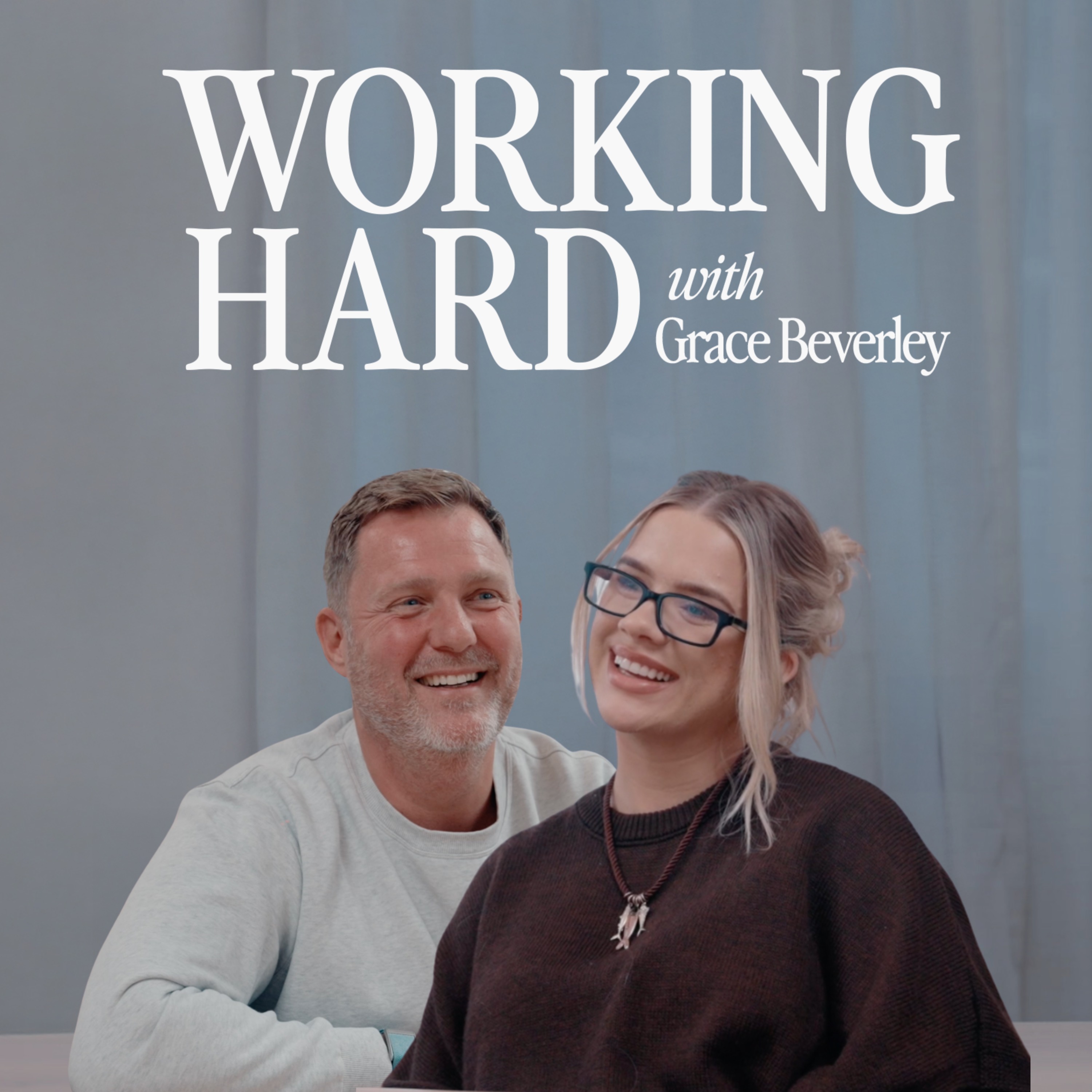
A step-by-step guide to finding your dream life and actually making it happen with Simon Squibb
from Working Hard with Grace Beverley
71m 35s
In this podcast episode, Grace Beverly interviews entrepreneur Simon Squibb about his journey from homelessness to building multiple businesses. At 15, after his father died, Squibb became homeless and unable to find a job or receive social benefits. Desperate, he started a gardening business by offering to tidy a messy garden for pay. Though that business eventually failed, it awakened his entrepreneurial drive. He later took a hotel job but quickly grew frustrated with inefficiency, leading him to create a commission-based hotel booking service. Squibb emphasizes that entrepreneurship is not about skill but about realizing you can control your own destiny. He compares starting a business to having a child—it offers unconditional love and freedom, but also comes with new "bosses" like customers and cash flow. He cautions that not everyone is suited for the risk, but encourages listeners to examine whether fear is the only thing holding them back. The conversation underscores that while entrepreneurship can be transformative, it requires a realistic understanding of its challenges and rewards.
[Music] What is up? I'm Grace Beverly and welcome back to Working Hard, the podcast shit guidebook on how to improve your own life and achieve what you actually dreamed of doing, because life's too short for boring podcasts and bad advice. What is up and welcome back to Working Hard? Guys, I'm so excited for you to listen to this episode. I want to start with something that I think a lot of people will relate to. Is that feeling of knowing that there's something you want to build or create or do, but constantly finding reasons why now isn't the right time? And the person I'm speaking to today has spent his entire career trying to prove that wrong. Simon Squibb went from sleeping rougher, 15, starting a small gardening business, and step-by-step building business by business, and eventually experiencing a life-changing business sale. Since then, he's dedicated his life to funding stranger's dreams on the street, and built a global movement around the idea that everyone deserves a shot. If you're confused about your path or you've got an idea that you just can't shake, this episode is a proper step-by-step guide to building your dream. We get into what freedom actually means, how to figure out what you actually want, how to start without quitting your whole life, and what failure really teaches you. But before we get into the episode, please make sure you're following the podcast on whatever you're listening to it on right now. It means a lot to us, but it also means that you get a new episode in your feed every single Monday, completely for free with no paywall, and means that we can keep it that way. Simon Squibb, are you currently more working hard or hardly working? I'm doing both, I think. I think it doesn't feel like work, so I feel like I'm hardly working, but I'm actually working hard. But I think that's why purpose helps you work without feeling it. Yeah, and I want to dive into that because your story is incredible, even just like going through the bullet points of where you've been and everything. I want to go right back to the beginning because I feel like that context around your relationship with work is so important. And you've spoken about being 15 and having the harrowing experience of watching your father have a heart attack and becoming homeless and unable to find a job. Can you tell me a little bit about how that shaped your relationship with what I guess was then you just being thrust into this idea of work as an essential way of keeping you alive rather than maybe leaving school and being able to do a round of it and work out what worked for you? When I think back to my early days, I would probably describe myself as having an unlucky start to life. But I think love is a strange thing, sometimes luck can be perspective, but my father died and I found myself three weeks later homeless. And I did what the system taught me to do. The system tells you go get a job. You can get a job. Well, the system tells you if you can't and I couldn't get a job by the way because I don't have a national short-summer and I didn't have an address, so no one will give me a job. And so then the system tells you go to social benefit, go get social security money and they'll give you a home and it'll be fine. So I went to the social benefit system and they just basically said no. In fact, they said I think what she's kind of worse than no, they're like no because there are six other people in front of you that all have kids and they need housing first. And in my head as a 15 year old I thought I was a fully grown man and I totally understood. I didn't get angry now you've got to give me a place to stay. I'm a kid. I didn't think that. I was like oh right, absolutely. People have kids need someone to stay. I'll be all right. I can sleep outside and so it didn't even occur to me that the fact that the social system didn't and couldn't help me. It didn't occur to me that that was wrong. And so then I just moved into this third area which is like an area that I'd never really been taught, which is why I'm so angry today. I wasn't taught that I can have an idea in my head and make it real. And the only reason I discovered this was a possible thing for humans is because I had no choice. And so I had no job. I had no social benefit, underpinning me. And one day I'm walking past a big house and for the first time in my whole life my entrepreneur and Russell woke up in my brain. And it spoke to me for the first time. We all have it. Everybody, everything one of your listeners has this entrepreneur muscle. If they don't know it, they have it. You just need to be activated and sometimes having a really difficult thing happen to you can activate it. So you don't just want it, you need it and I needed it to wake up and it did. And it told me the garden was messy in this big house. Surely they've got the money to pay me to tidy up their garden. That's it. And then through shim having no choice, I walked up to the front door of that house, I knocked on that door and I asked the person that answered it, would you let me take care of your garden and would you pay me to do it? And they said yes. And that was it. That's the first gardening company business that I ever started. And so yeah, I think that I look back at my childhood that kind of stage in my life. In a weird way, I spent a long time feeling really sad about it and often feeling like my dad was gone, my life was awful. I had such bad luck. And now later in life, I look back at that moment and think, wow, I was kind of lucky. I was lucky to break free of the system, the treadmill system and I was lucky to wake this part of my brain up that everybody has and realise that anyone can it, they want not, they should. Anyone can if they want. Be an entrepreneur. Yeah. And I think that's really powerful and I think it reflects why so many entrepreneurs came from a place where actually if you ask them, you know, what made you start it? Yeah, so many entrepreneurs have a very specific origin story and it was this idea and it led to this and they decided to quit this and whatever. I think so many entrepreneurs come from a position of need where the maybe not the same kind of existential need that you were facing at that time, but that need of kind of actually the risk of not doing this feels bigger because I don't know how I'm going to get to where I want to in my life if I don't start taking some big moves. And I think that that actually is exactly in parallel with what you've just said in that when you create a life in which taking risks is the only option, then you start making those moves at a much higher rate and with much more enthusiasm because it is your kind of one option. So I'd love to hear come from that point. How did that turn into your entrepreneurial journey because I can imagine at the same time that turning into anything else would have still been a leap. Well, I think what happened to me, you can fabricate this, by the way, you can fabricate. Most people want to be successful and even all your listeners by asking to put up their hands and say who wants to be successful, everyone's listening right now because they do. They want to make their lives better in all sorts of ways. The truth is the only way you make your life better is needing it, but you can fabricate it. So what happened to me? Next, okay, so I started this gardening company. I asked someone for help because I didn't know what I was doing and they said they would only help me if I paid them. And that was my first experience with a course selling model. And they said to me something I'll never forget. They said, if you don't pay, you don't pay attention. And I remember thinking with all my might, like, listen, I'm desperate for knowledge. I don't know what I'm doing. I will pay attention. This paid to pay attention is not true. It's pain that makes people pay attention is why I discover later. If you give people pain, then they pay attention. Sometimes money can be a little bit of pain, but the truth is I have pain. I needed that knowledge and it wouldn't help me unless I paid them. And it just stuck with me, which is why I'll never charge anyone for help. I will not charge people to get help because you can't leave people behind. I was left behind because I didn't know what I was doing. So my first business failed. So a gardening company didn't work. In the end, it didn't go as well as the way I'd like it to go. So what happened next? Well, I turned 16. I had a national insurance number. I was only homeless for eight weeks because this gardening company worked at the beginning and made money. I got myself a place to stay. I had an address. Now I had a national insurance number. I could get a job. And that's why I did. I got a job. But it was too late for me to enter the working world in that way in the system. I'd woken up. My brain would no longer accept the way the world as it was. So I got a job in a hotel. And in the first two weeks of being at that hotel, the phone would ring. And the receptionist would pick up and be like, "Hello, I'm sorry, we're falling in a hotel today and put the phone down." So they were so proud to tell the guest who was calling for a room. This is for the internet. Your listeners might or remember this. People used to ring hotels. So this is a long time ago. Put the phone down. And then so why did we just hang up on that customer? We could have got their details. Maybe next time we can tell them we've got a promotion. And the receptionist was, "Well, we haven't got time to deal with what we've got guests checking in." So I came up with an idea of something called a combination express where people could ring up the hotel that was full. And we divert them to a telephone number that would find them a hotel in the nearby vicinity. And we get 15% commission for booking that room. So otherwise the inquiry wouldn't be wasted. And I started my second business at a combination express. But basically, once that entrepreneur's had been working up in my brain, I found it very hard to accept a salary and be told what to do. And so I started a second business called a combination express. And this did work. This made me, in my mind at that time, proper money. I made 80,000 pounds, which at the time was a huge, huge sum of money for me. And I managed to make a business work. And so I actually had the early days of hotel.com. I actually sold that business too early. Another mistake. You do make Sony mistakes in the process. But I went from, okay, I can get a job now to realizing that, no, why would I get a job? Why would I. I sell time, but it doesn't make any sense. I want to build a brand, not just work for someone else's brand, I want to build something where eventually I own my time. And what were the main emotions that made you feel that? Because I totally understand the experience of, I guess, a certain element more freedom when starting your own thing or freedom to think and solve problems the way you want to. And I also think that given how you were at the time, I can imagine that there also would have been a huge call internally to security. I think that the way you say it, it feels very, oh yeah, of course, this is the case. Of course, I exercise that entrepreneurial muscle once and then I thought, well now I'm an entrepreneur, I have to do things that way. I can imagine someone in the exact same situation, thinking the opposite and going, oh, well, that didn't work after, you know, that winter because people didn't need gardeners. So I need to find something where even if the business struggles a bit more, I am still being paid. What do you think it was that made you think of entrepreneurship as the only solution for you, rather than one of two solutions where one actually maybe is a little bit more security for what had been quite an insecure situation for yourself? Yeah, I'm thinking back. It's a really interesting point. I think there was lots of factors. First of all, I think once you've experienced entrepreneurship, one you realize how hard it is, but kind of like exercise or anything, something hard makes you stronger if you complete it. So I got a bit addicted to the building concept and I enjoy it. I enjoy taking something from nothing and making it real and I got a bit addicted to that. So when I was in the job, what was security, I guess, which was the salary bit, wasn't enough to take away that I would pitch an idea to my boss and they would say, no, no, Simon, that's not what we do here. That's, you know, we're not going to take the inquiries and turn it into a business. We are hotel. We just take bookings, you know, sell the conference room, please, you know, that type of thing. So I'd woken up. I see anyway I can describe it. My ability to accept commands that didn't make sense or opportunities that were being missed. My brain just wouldn't accept it anymore. Yeah. If I hadn't started something that failed, I wouldn't have felt that feeling I'm talking about. It's so funny because when you say that, that really makes me think of what I felt originally when, because I only did 13 months in corporate before I, I guess I became an entrepreneur and the only reason that happened, I think I would have done well more had I started that corporate in that corporate world after university, but because I did that before university when I was 18 and I had the one main thing I had issues with in the corporate world. I didn't mind the hours. I didn't mind having a boss. I didn't mind or I found it very glamorous. I thought it was great. I love tossering around. I thought it was, you know, I thought it was what I wanted to do. The thing that frustrated me the most was when things were being done slowly, inefficiently or in a way that didn't make sense to the business and there was no way to change it because it was just the way things were done. I think had I not got so frustrated with that, I would have gone to university, started the businesses as I did and still gone back into corporate because I would have thought just as I haven't tried entrepreneurship, I haven't tried my corporate dream yet. So I need to also see that through to see if that's the right thing for me. It's so funny, I always wonder about whether that is something that everyone has or whether it's like I, I see it as almost a, I think it could be a negative trait in some ways, like the inability to put up with things being done badly and just want to even if it takes double the amount of time to actually fix the process, just to not see things being done in a, in a stupid way. I totally agree. Once you get that itch, it means that like any time I talk to a business owner now, any time I'm speaking about a specific problem, even if it's not one I've got a business in that area, I'm like, I could probably spend an hour talking to you extremely passionately about why something doesn't make sense and that is the essence of entrepreneurship. I completely agree. I think people listening, there's something about this, it's quite important, I think, to dig into you kind of, again, I believe they'd want to be an entrepreneur, not everyone agrees with me on this, but I think the thing that we're talking about here, it's not a skill set thing, it's a realization that you are on control of things thing. And once you have control over your life, it's very hard to give it back, right? So it's like, I've never been to prison, I don't know what it's like, being released and you have to follow the rules when you're out of prison still again. But being in prison was the reason you're not going to make a crime again, right? I think people don't understand that they can control their own destiny and that includes frustrations in your life. So for example, I only work with people I like. I don't have to work with people that I don't have fun with, right? I don't have to, whereas in corporate you have to do that. Why would you, there's little things, right? There's an opportunity in the business to make your customers happier by investing a bit more. You can just do it. Whereas a finance department was like, well, you know, cost covering will not show we want to do that. There's just, you can do things. And I think it's something everyone can do. And once you experience it, you won't want to go back. It's a bit like being a parent on paper, being a parent makes no sense. Yeah, zero. So I've got an eight year old, right? And when you look at it, like you're going to lose time, it's going to cost you money. You could argue it's stressful. That's why a lot of young people aren't having kids now. Because on paper, it doesn't make sense. But when you have a kid, you have unconditional love. You never experience it until you have a kid. Like, I don't have unconditional love for my parents or my family or my friends. You have conditional love. But when you have a kid of your own, it's unconditional love. You never, and you're having your own businesses, a similar kind of thing. You just have control and you have unconditional love for it. And that can't be had via logic. Salary makes sense logically, but the upside is capped. That's obvious. Control is the most beautiful thing that own your hours. You and I can stop this podcast right now and just go for lunch if we want, right? We have that power. Why would you not want that total freedom? That's totally out of the prison freedom, right? Oh, see, that's where we differ. I think that I completely understand that logic. And I think it makes total sense. And maybe it's because I have invested back to businesses. I mean, not all of my businesses are invested back. And maybe it's because, I don't know, maybe it's the way I see things or whatever it might be. But I don't believe there's any job in which you don't have a boss. I think that, and where you have total freedom. By the way, I agree with you. I have a boss, it's too. Because that's the thing. Is it like, what I don't want people to do is to start a business purely because they don't want a boss. I think that that is one thing that it can be a big reason and you can still make it big and you can still do incredible things. But you're always going to have a boss. My boss is the customers, it's the investors. It's the money we've put into the cash flow of ordering certain things. So yeah, we could go for lunch. But actually, if we don't do the thing that needs to be done in order to make the marketing happen to do that, then you're fucked. And you go back to having a different type of boss or whatever it might be. I so strongly believe that there are different jobs for different people in that if you're risk averse in a way that it makes you anxious to be ever in a situation where there is more risk rather than it making you hungry, then maybe it's not the right thing for you. Maybe your better version of a boss is a traditional boss versus all of these different things that, yeah, one day you might feel total freedom. The next day you might, you know, it might come slamming down on you and you realise that you're now in hundreds of thousands of death or whatever it might be. I do totally agree with you that most people assume that the way they're doing things and the way they're making money is the way that it has to be. And I think that that's far more compelling coming from you because I come from a much privileged background. And I think that if I sit here and say, like, oh, but you could all do this when actually I will have access to so many things that, you know, other people might not do. I think that it points me to the fact that actually all I want is, as you say, for people to think more about the opportunities that are actually ahead of them and what they're genuinely suited to. And if it is just the fear holding you back rather than because it's maybe not a good idea, then go for it. Like, 100% go for it. I agree with what you're saying. I think there's always nuance. So when we're having these kind of like conversations that say about freedom for a second, if I walked out of this podcast right now, it would be a good clip. The podcast would probably do better. You'll make more money. You'll literally, but I just thought, I'm leaving. This is not the interview I wanted. I'm sorry, it's rude. I'm not. This is going to help the podcast, right? So freedom comes. You underestimate my conviction in myself because I think that I would burst. No. But you know what I mean? No, no, I can't take it. You're in line with the line for now. You've got the wrong investors if they care about that. And if customers don't understand that you know what, we decide just to go for lunch, probably got wrong customers too. So for me, my personal freedom, I make content, personal brand is one of the hardest things I've ever done. I built 19 companies. Personal brand building has been the hardest thing I've ever done. Why? Because I'm actually trapped in it. I have to do it every day. I work for my team. They tell me when I have to record. I want to have breakfast with my family this morning. Dudley, my team, wanted to meet me at 7 a.m. because we're doing a documentary on university and he wanted me to record. So I kind of worked for them. But what I'm getting to is like having said all of that, I do have freedom because it's my choice to do that. Yeah, it's like choosing your heart. And this is what's important. And I'm not glamorizing it. I'm not saying it's an easier life. And I agree with you. I have a boss, the team that I work for, tell me what to do.
the dream is that I promise to help. Right? I have a boss, my wife. Right? I have plenty of bosses, but all of them are aligned with my values and today I want to day off, I will do it. And yes, that might mean the income of the business drops a bit, but we have to have freedom. And I think that's why I don't like about the present system. People at nine o'clock turn up, finish it three. Quickly, I'll say the other side of it. I love data. And I'm looking at the data at the moment of 700,000 university students that have come out of university with an on average debt 58,000 pounds. It's spent four years of their life at university. Promise the job. No job. They can't find a job. 700,000 kids. There are 9,500 graduate jobs for those kids. Okay? So there's not enough jobs. And they're sitting there, many on social benefit, very talented, probably a lot of them are your listeners ready to go. And the job doesn't exist. So my argument now, and I've been making this argument for six years, but now I've got data to back me up. We want to give people the chance to create their own job until they find one. Let's put it that way. Until they find the safe job with the perfect boss and the perfect customers. Great. But we want to give people a chance to create their own job. And my version of entrepreneurship might be a little bit different to how you and I operating. You and I operating. I've got investors in my businesses. Sure. We're operating a different type of entrepreneurship, but there's different types of entrepreneurship. I met someone yesterday who can't find a job. They've lost all their confidence. They have no confidence. I said to them, what do you love to do? I love to walk dogs. I'm like, start a dog walking business. I have a working caucus manual that needs walking all the time. I'll pay you to walk my dog. And I'm not the only one that needs that. So if you love walking dogs, why you just do that for now? Make a little bit of money, have some fun, build a little fun business that probably will fail. Right? But people need to create their own job than the original one. And that's what I'm getting to now. Entrepreneurship is the wrong word. It's a French word. It's the wrong word. I'm trying to think of a better word, but it's like, go out there and do something with your talents. The thing you love, match it with the thing that you you think that you're good at. And so don't wait for someone to give you the keys to a better life by giving you a job. And so I think that I don't want to glamourize entrepreneurship. I've never said it was easy. I think working for yourself is harder at the beginning. Does get easier over time? 100%. Working for someone else is easier at the beginning gets harder over time. That's face it. So people get a new boss coming in. I'm new. I'm doing things differently. I don't care that you work till midnight every day for the last three years. I'm the new boss. And I need to see that you're good enough. Oh, I bring my old team in and you're out. Right? I know people that work in companies 10 years, like Oracle just laid off 30,000 people. They built that company. They're gone. They're out. They are nothing. So to me, it's like why not give people this one other option, which is entrepreneurship for a one of a better word? A chance to do something you love every day. Forget the money. If you can just pay your bills. That's a win. If you're doing something you love every day. I totally agree with that. I also think that one thing that on top of that that people miss in what you're saying is the end failure of the business, for example, so say you're gardening business or a dog walking business or whatever it might be. That is no different from just leaving a job, whereas that carries so much more weight for people. Like if I start something and it doesn't go on to be this massive thing and scaling all these different ways and all of this, if it gave you a job for those few months or for that year or for those few years or for that fucking week, like you want some extra money, that was still success for the purpose that it served at the time. And I think that it's so easy, I think, particularly with social media now, where you're seeing so many people do so many incredible things and build massive companies and all of this. It's really easy to think that actually the solution you're looking for has to be this big bolt wheel reinvention type thing. When in reality, the large majority of businesses aid and start like that. Be not every business needs to be the biggest business in the world. Like if your business is aim is to keep you afloat and to mean that you can, as you say, maybe choose your hours, maybe do something you love, maybe be on your feet rather than be in a desk, whatever it might be that motivates you. That is still a version of success. And I think so many people are put off by this idea of kind of where does it go in a few years. That used to be my biggest thing when I started my first company and when I first came out of university, I was just shit scared. I was like, what do I do with this company in 10 years, 15 years, 20 years? Because I was like, oh, I don't know if the model now would work for it. Then it's like, stop thinking about that. Stop obsessing over where this is in a few years. Start obsessing with how it's serving you and the customers and the company now. And I think that if more people thought about things in the way that you've just suggested and just said, okay, what would make my year better if I didn't work for this person and if I had a bit more money and if I was on my feet more, great. There's a hundred percent something you can do even on top of your existing job that will get you to that result. It's just maybe you are being held back by thinking that that's not going to, you know, that doesn't put you squarely within entrepreneurship or that doesn't make you build the type of company that you're going to sell. It doesn't need to be all about the new AI thing and the new tech, watch your call it and that's something that's going to be sold to an ambassador. Well said by the way, I give a round of applause. I hope your audience are. You're like the cooler, younger version of me. I just want people to replay it if they could just because it doesn't sink in. If people don't understand the power of your imagination and do it, if you're sitting there with no job in particular, please don't give up because that's not your only avenue. And so I just want people to take control with agency over their life a little bit. Like I did by luck, by chance, happened to me. So I've seen the difference of having the right mindset and not being a victim. I could have been a victim and I was lucky. I don't know how I didn't end up a victim, but then I have control over my life. I realized that I can make my own luck. And along those lines, what would you say your big break was? Like when did you get that big break? Because you've gone from gardening to starting 19 companies and having some pretty whopping assets as well. Well, I think luck plays a huge part in life, but you can hack luck. It turns out. So you mentioned earlier having, you know, privilege. I've done a lot of research. I've actually done the world's largest human survey. I've been saying this. I'm getting away with it. So I'm going to keep saying it. I've done the world's largest human survey. I've asked over 10,000 people what their dream is all over the world. I've been to from Hong Kong, to LA, to of course London. I've asked people this question and I've kind of discovered something. I've discovered quite a few things, but one of the mind-blowing things is the people I find are the happiest. I often those paid the least working the longest hours. And they're not necessarily entrepreneurs, by the way, because I think a lot of entrepreneurs are also doing it wrong because they're chasing the big exit statement or they're chasing the big valuation statement. I think not enough people are doing what I've seen the most happiest people do. And the most happiest people I've met in the world that often tell me one else and what their dream is, they tell me they're living it. And that is nurses and police and folks in the fiber grade. Those that are helping other people, those that get up every day and they save a life, get up every day and make a difference in someone's life because we're actually tribal. We've kind of forgotten this and the slightly materialistic world is about the house we've got and the car we've got we've forgotten actually. It's each other we need. It's very cheesy, but the people I've seen that are the happiest are the ones that are serving other people, including entrepreneurs. The entrepreneurs that I meet that are just trying to be the next uber, not that happy actually. But the ones I see that are chasing, solving a problem in the world, like I'm trying to fix the education system. Like I am the happiest I've ever been in my life because I have a mission beyond me, beyond making money. We make money, we make a lot of money, but that's not my aim. I want it, I think you make more money when your aim is to bring value to the world, right? No, it's so true because I 100% agree I meet a lot of entrepreneurs who don't get me wrong, far better at entrepreneurship than I am because they are looking at this big problems needed for a really niche tech space, be to be like all of this and they think of an incredible solution and they build it and they are bringing it to market and they're going for that big exit. I honestly do not forget a thing would make me more miserable. Like that's not where I get fulfillment because if the end goal is where the fulfillment comes from then I've never been fulfilled the day in my life because I've not exited a single business, other than investments, like I've not, you know, all of that. I think that even what you say, I think that some people might listen to that and be like, okay, well I don't have an amazing not-for-profit idea or an incredible social enterprise or whatever it might be, but even on a micro level, like even none of my businesses are saving lives, right? When I talk to a taller customer who's told me that they have never felt confident in their body until they've put our clothes on and walked out of that store feeding like a million bucks, like that or someone who's been able to actually get their career on track through using the productivity method things like or actually being able to work as a creator full time for the first time through retrograde, like whatever it might be. None of that is saving lives, but it's still fulfillment because as you say, being able to solve problems for other people whilst also not entirely selfishly solving a problem for yourself in terms of the type of life you want to have, the type of work you want to have, the type of company you want to build, like there is so much joy in that and I think that in a world where we've tried to get rid of as much friction as possible from literally every area of our lives, you have to get fulfillment from somewhere and usually that comes with a little bit of friction, usually that comes with a bit of hard work and actually out, like out the other end, that is when you feel great about things. I don't like listening to you talk. Thanks so much. There's a podcast going on. I'll tune in. Oh, you have a new fan. I, um, there's There's something about the way you describe things that it's so. important. First of all, I think you are saving lives. I've actually met people that will inspire by your content that decided to carry on with their dream, with their life, with their hopes and wishes, right? So I wouldn't undervalue yourself for a second, all right? You have saved lives. Katie on my team, for example, is what's your content when she was going through a hard time and you helped her. Now, I'm telling you right now that what you're doing is more profound than you perhaps give it credit for. Now, however, I totally agree with you that people listening, you don't have to start there. I actually think charity related businesses were a bit broken. So when I started out six years ago, my original thinking is maybe I'll get into politics. I'll go and fix the education system from inside the system and then I realize something I know to be true. You can't put a fire out on a house, an issue outside the house. So I decided to fix the education system from outside it. When I first started making content, what I quickly realized was the first bucket I needed to fill was my own. So I wanted to help people. I wanted to feel useful and I wanted to be seen. My whole journey is a selfish one. I wasn't doing it to be philanthropic. I wasn't doing it to give back. I wanted to be useful. I'd sold my company and I fell into a kind of depression. Like, what am I here for? What's the point? I've done it now. I'm not poor anymore. I've got, it's not money I need. But I felt totally lost. And what's the point of being here? So I started my content series from a very selfish point of view. People were struggling online, being sold courses that were bullshit, that were just promising to get rich quick. So I jumped into TikTok where they were hearing this bullshit and said, "That's bullshit. This is how you build a business." And so it was very, very selfish. It wasn't, I wanted to solve a big problem necessarily at the beginning. I built into my mission. But initially, I just wanted to solve a problem I had, which was, I felt useless. I didn't feel like I was doing any good in the world. Just sitting around playing golf, driving a fan's club, which I know that this is going to be a poor side. And that must have been hard. It was not fun. I had no point to my life. So I think for profit for good, by the way, is a really healthy way to look at a business now, going forward. Fill your own bucket, make money for yourself. But there may be, like we do, we take a large proportion of our profits and we give it to fund people's dreams. So we've given 426,000 pounds away this year, two people, to help them with their dreams. We're not dragons then. We haven't taken equity. We don't want anything back. And I'm so, like, I feel so happy about that. But it's filled my bucket first. I get to do something where I get, I'm useful and I get to be seen. And then my second priority is like to bring value to those people and actually deliver on what I promise which is to help people with their dreams. You see what I mean? Like, I think 20 people think it has to be this brilliant idea. No, just start gardening companies, start car cleaning. Whatever it is to get you going, it doesn't have to be this big meaningful thing. You've built into your big meaningful thing, right? It's a step by small little steps each day. And part of it is just trying things, seeing what you like to do, right? Yeah, no, I totally agree with that. And I want to dive into that a little bit because I think that lots of people listening to this will go, okay, great, I want to follow my dreams. I've got not a fucking clue what my dream is. I've always been that to be person. I've never once known what I want to do with my life. I've never had a career I wanted to follow. I've never had a subject I particularly wanted to do. I've never had like any inkling around like what my life looks like. And I think that that can be paralyzing at points. I think that that can keep you stuck. So how does someone listening to this who has no idea what their dream is, even find that out and start setting on that right path? Yeah, it's an important question because I ask people what their dream is. And if you don't know the answer, my eight year old doesn't know the answer. I ask him every week, right? The 29 year old person sitting across the street. Yeah, that's what I mean. And you know what, there's nothing wrong with not knowing. But I think there is something wrong with not asking the question because in the school system and the one of the reasons I'm really upset with the school system, the first question they ask you, my son was four when they asked in this question, they asked him, what will you do when you grow up? I think that's very trapping. He looked at me at four years old. The teacher was asking him, suddenly he has to make me happy. A doctor, a lawyer, what's going to make the teacher happy, the parent happy, their brain is getting trapped into like a thing that's going to make us happy, not what's going to make them happy. It's the wrong question. I think the question we should be asking ourselves when we're young is what problem we'd like to solve. If we ask ourselves what problem we'd like to solve, the brain opens up a bit. And so it's opening up the brain is partly why ask people what their dream is. Most people don't know what the answer is unless they're American, everybody in America needs the answer. I know what they put in the water. I don't know. But everybody in America has a dream. Every single person. You know why? Because they wake up into the world of America. And the first thing is the American dream. What's yours? And it's so, America in fairness, all its flaws is one of the most forward thinking entrepreneurial places in the world. And you know, we, as a British people, I think we do admire America. But we don't get asked that question in Britain. We don't, we are literally what job will you do when you grow up? We're not asking what your dream is. I think I've begun to change the narrative in this country because I think people are asking, oh God, I might bump into Simon Scrib, I want to want my dream is. And the thing is, the irony is that, you know, just asking questions is a good first step. And there's nothing wrong, could be your whole life. You spend your whole life discovering it. And what I've seen is categories. The first category is people that absolutely know what they want. And there are a lot of your listens that will know. They know what they're meant to do. They know what they're good at. And they know that they could go out there in the world and do good with that thing they're good at. But they're not doing it. And I think that's because they need to take their, they want to do it and make it in need. Those people. The second category is people that have an inkling. But most of the time, those people are caught in fight or flight. They're so busy with their life. And what they've been told to do, went up expensive flat and London, get a fancy car. They got trapped in this materialistic treadmill that they don't have time to activate the creative part of their brain that could give them a step-by-step guide to make their vague dream in their head of reality. The third category is people that just have no idea. And I don't think, I think you're in a certain category, but let's put you in the third category. I would put me in the third category. Most of the time, your end purpose, you'll connect the dots bone backwards. But most of the time, you're just solving a pain point for yourself that you have in life. So in other words, your purpose is in your pain. My purpose is in my pain. The 15 year old me that asked for help. And the only way I could get help is with money. And I didn't have money and I desperately needed help. I'm never letting that happen again to another 15 year old. Second thing is, no one told me about entrepreneurship at school. Like, this is painful for me. Why did I have to spend five, six, seven years failing at it when I could have been taught 13 years prior in school about it a little bit how to sell, how to communicate. I can mean, I'm sure I'm extravert, you can sell, right? What? Money. How money works. No one told me. So my pain has led me to at 52 years old to go on tiptock and not dance. You know what I mean? Like, it's led me to do things. But back on the dance. But back to your point, it's been painful. I was very embarrassed going on tiptock at the beginning. And all of my peers, I'm part of a group of people that have all sold their company. Everyone's like, what are you doing? I'm buying real estate and renting it out. I'm buying buildings and converting them into what are you doing, Simon? I'm on tiptock talking about business. They're like, what? I was so embarrassed for so long doing it. But I knew it was how I was going to reach young people in particular. When school wouldn't let me go in and teach entrepreneurship, I'll go to where the kids are learning naturally on YouTube, on tiptock. Like it or not, I think social media is one of the most exciting opportunities for young people today to build a life they want. Right? Everyone's so down on social media. I think it's liberating. I think it's one of the most amazing tools. Along with AI and your phone and Wi-Fi, you can literally sit here right now after this podcast and you can start something. You can do one video that could go viral. I'm not saying it will, it could. It's not a family follow-age because it's about how good the hook is, how good the video is. You could get millions of views on a product idea you've got now today in this moment. Like there's never been a time in history like it. And you can get AI to help you organize everything on the back office. You don't need to hire a CFO anymore. I used to have to hire a CFO when I started the business. I used to have to get a proper manager of the business in. No, not anymore. You don't need those things. It's so liberating if people realize it. Everyone's too focused on the negative. Social media is addictive. Yeah, get control of addiction. Food addictive. Be careful. You don't get addicted to things. People, oh, it's, you know, it's cost of living. Yes, it's expensive. So you have to fight, don't you? You don't just want it. You need it. So yeah, go out there and make the world a better place. Like people need to take control. Instead of all the problems, they realize that you've got social media at your fingertips. You can reach millions of people today. You've got AI to help you build a business. You've got knowledge from you and me and other people that we never had so much free good knowledge available to go out there and follow your dreams. At least ask yourself the question, what is your dream? If you don't action it today, just asking it might wake up that entrepreneur muscle in your brain and give you that bit between the teeth to go into it or not. But it's worth trying. Give yourself pain is probably my end conclusion. I went and traveled the world and I saw things that were a problem. I've got friends, for example, who built businesses. They went to Thailand. They saw plastic in the water. That's not right. And they go away and they build a business where water's sold without it being in plastic. Cannell water, Josh, my friend there. So what I'm saying is like, you go see pain in the world and you come back and you'll annoy that that pain and you fix it. So anyone listening that doesn't have pain probably means they don't have a dream. They should go give themselves some pain. I really like the idea that when you were not happy in your life, a lot of people automatically think it's because their life is too hard. And I do not take that away from people. A hundred percent lots of people will be in that situation. I think a lot of the time now, modern life, reduced friction, massive convenience. I think a lot of people aren't happy because
because their life is too easy and a lot of the things that actually make them fulfilled day to day or the things that they need to overcome to get to XYZ or to make their lunch or to get wherever or whatever is taking away the actual process which is taking away the whole journey of living and it's not good for our heads like it is not good for our mental health to have that lack of friction and I love that you put that spin on your positioning of kind of like maybe you're too comfortable if you put yourself in a position where you have need you will do amazing things and what about someone who's listening and they are in let's say one example they are in the corporate world they know they don't want to be there they know they want to do something else at some point but they genuinely do not know how to get off that treadmill in a way that I'm not sure I would either in terms of security of salary in terms of a mortgage they're paying or the rent they're paying or the kids they're looking after whatever it might be how do they start to formulate a plan or start to formulate some movement that helps them start to follow their dream? So I spent two years writing a book answering this question so I wrote a book called What's Your Dream and I pid in there a step-by-step guide for exactly this demographic of people and in the nutshells you don't need to buy the book is. Buy the book guys Buy the book, let them go Buy the book guys Buy the book, let them go Buy the book, let them go Buy the book guys Buy the book guys First of all, you need to build a bit of a boat for yourself like six months maybe even a year of savings get your costs down because these things even if you don't make the leap just less pressure to have to have the job the better you don't ever want to be forced into having the job so when people get big mortgages and they get big car loans and they get big credit card debt what they're really doing is they're now working for those organizations right? On top of the job they're working in the job to then pay those organizations so just get your cost down in general I think this is a good bit of advice but then it will allow you to come out of fight or flight because a lot of people are in fight or flight you've got big bills to pay you need this job there's no questioning it because you need it second step I think the thing that I've seen work for most people is imagine you're 92 years old and you didn't try it you didn't do it you won't be able to go back to that 40 year old you it's too late you're 92 wondering what could have been you never want to live a regret you can live later in life quite poor I've just seen New Zealand amazing facilities out there if you're older and you're poor you still have a pretty nice life I was just there so you know there are ways to live without lots of money in life you've got people around you love you and all these things the point I'm making is like you can't live a regret though like everything I've ever done every idea I've ever had I've done I'm never going to sit there at 92 I'm going to say I wonder if I'd done that what would have happened right I'm about to want to drink but I'm pretty scared but I know I can help millions of people if it works and I don't want to live a regret that I didn't try now it may fail and this Simon Squibb Guru guy is going to be on the front page of the newspaper as a complete failure and that does worry me but I'm also okay with it because I don't want to live a regret even if it's a failure least I have a good story and I won't be at 92 wondering what if so anyone listening don't be that 92 year old with regret forward now in your mind imagine close your eyes imagine you're 92 you had an idea and you didn't do it or you wonder what it was like to work as an entrepreneur try it for a year you can go back to the job the good thing about people that are listening now who have that job you're talking about they're probably okay to get the job again now it's people with no experience like these university grads I'm worried about them because they don't have experience and they don't know how to start a business but frankly if you've got an okay job right now you can take a year out and try it this crazy entrepreneurship thing walking dogs for a year worst is you do 20,000 steps a day you get a little bit more into shaping and you get the job again right? my resting heart rate has never been better than when I was doing 20,000 steps that's why I mean exactly and apparently the meaning of life is getting your resting heart rate down so so that kind of makes sense to me right and so you know but I just think regret is such a big thing and people don't think about it enough and people are planning their you know retirement and they're getting their pensions but they're not thinking about their state of mind at that age and I personally want to have tried everything I've ever thought of now that does sometimes mean that I'm trying crazy things and I'll probably fail many many more times so what? but I think that is exactly the mindset that keeps you going and keeps you being at this position because I think that so many people see this view and I've absolutely come from this position originally is seeing success as we talked about like as an end goal and so it's something that you get to and I think so many people will have seen you for example when you sold the first company you sold for a hell of a lot of money being at that point and being successful however there's nothing to say that your life would have continued to be enjoyable like yes it would have continued to be frictionless and probably pretty fucking easy and probably you know you wouldn't have to worry about a lot of the things that lots of people worry about but maybe it's exactly that mindset that put you into entrepreneurship in the first place that is exactly why you are still doing this now and the reason I say that is because I always like one of my favorite traits about myself is I am clearly continuously happy to put myself out on a limb and do something that might maybe even wreck my career to a certain extent over and over like every single year since the start of my career I have started some sort of new venture or you know backed something or whatever it might be not all of them have worked out like whether this is new products within the companies themselves whether this is a new venture partnering with someone else whether this is and I'm very aware that all of these things are very specific to me as areas that I could go into but I think that had I 10, 9, 8 years ago in the first few years of starting my businesses had I been so happy with that kind of the what that had achieved that I'd just been like great okay cool must continue down this trajectory I wouldn't have half the joy I have now which I think comes from genuinely being happy to fail in public over and over and over again because sometimes I look at it 100%. How can we get that to people, isn't it? How do we bottle that up? Yeah, I mean I think first one of the main things is talking about it and showing it like when I first launched this podcast it was the lowest engagement I would get on any content ever every fucking week like over and over and over I'd be posting it and I'd be like God this is so embarrassing but I knew I wanted to do it and I knew that it made a difference to me and I knew that it made a difference to people who wanted to start their businesses and wanted to improve their lives and so like it genuinely took about two years for it to start being not embarrassing like I don't even mean like trajectory like this I mean not embarrassing and same with so many other things where it's kind of just like okay I could do this it could fail and by the way my entire personal brand is linked to having successful businesses so probably shouldn't be launching things that might fail and yet every single year I don't know what it is but there is something inside me that clearly still wants to go out on a limb and try and do the things I think the mindset is okay that might fail and that might be shit and that might really affect my personal brand because people would look at me and be like oh well that business of hers did fail and she's meant to be this kind of business person but it also could be your next massive thing that not only brings you success but also brings you that joy of genuinely still feeling alive because you're still taking those risks and I see so like I see so much of that new the fact that you were at a point where you never needed to work again and have continuously just been like great well how can I still put risk into my life I feel like that's probably where so much the joy comes from I agree to your point love the journey you know you got to enjoy the process I really want to give this to people though if people take something from this podcast it would be what you're talking about here and I wonder if people understood like my wife does keen theology it's kind of an amazing thing I never really understood it but it basically helps you understand what the body is telling you as opposed to what your mind is telling you so much like what your heart says as opposed to what your mind says and in the subconscious in our early years a lot of stuff gets pre-programmed into us our subconscious is why we don't remember anything often before the age of seven because it's building up our subconscious belief systems and one of the things in the school system that starts very early I homeschool my son because of this I take him out I've taken him out of school because in the school system they'll say "well you sit down and do an exam on your own and if you get an A you're a success if you get a D we've got a serious problem you're a failure that's a problem you're going to get into serious trouble don't get a D and so in our subconscious we know one ever wants to get a D anymore and so this is why I think this is a stat that I saw in someone else's books I don't know if it's true but 80% of A students work for D students and I think it's probably true because I think about all the talented people that are working for someone else it's just crazy and it's because they don't want to fail and two things about that really upset me one is I have never built anything on my own without help if you sit me down and get me to a doing exam I'm definitely getting a D but if you get all 48 people in my company together and we'd work something we'll all get with defa gang and A because we win in teams that's not taught in school when we think we have to do it alone you can't do it alone you need to work in teams the second thing is a D is not failure a D is a lesson I got so many D's that I got comfortable with people calling me an idiot because I knew I wasn't but fine it's like
like you can't take anything from me when I'm already have nothing. You see what I mean? I think people that get D's actually accept failure is like, oh good, now I think a lot of people listening are probably A students and they need to have a bit of failure in their life to get good at something. - I literally went back to my old school for I did the birthday assembly this year and my one take away I wanted for people to have because a lot of it I knew, I know the mentality of people in that school. It was very academic, it was very focused on, as you say, like the A above everything. And I only joined that school for two years and I came from a completely different type of school where the reason I even changed was because they'd never got the grades that I would need to get to the university I wanted to get to. And so I kind of had this completely different mindset and I was absolutely gobsmatched by how lots of people would not do things at all to avoid doing them badly where actually failure had been such a key part of everything I'd done up to that date. Like genuinely I think about the fact a lot that nothing I have that you would look at me and think is prestigious has come on the first try. I didn't get into Oxford on the first try. Literally like every single thing my second business was like completely took off and I was flailing for a good amount of time like yes, the my first business that had success at the beginning but being able to like evolve that and work out where that was even going took years and years and years. Like every single thing that like I retook a level I retook to see is like every single thing that I thought was worth having. I failed at the first time and I think that that when you give yourself permission to do that you stop looking at anything as a kind of oh shit well I've got to do this and I've got to do this well. Actually I don't know if I'm going to do it well so maybe I won't do it at all. And actually it has to be turned on this head. So when I was giving that assembly my main thing was like I think people always say that fear of failure is holding you back. I think that the most important thing is that this fear of failure is actually like stopping you from a whole life that you don't know you could have because I think particularly again with the increased convenience increased amount we see people succeed all of these different things we just are programmed now for convenience and success at the earliest opportunity. And it's just not conducive to getting to where you want to get to. I think people with a anybody listening now that has an idea just go try it if it fails so what? Okay make sure financially you're not in a serious situation but like I just think failure is so cheesy but it's just a learning experience that really could be like when I build a business to me it's like a video game and sometimes I'm figuring out wrong the way so I'm launching this drinks brand. I went to see the perfect Ted people yesterday that fear be than my competition. They're showing all their knowledge how they did it. They don't want me to make the same mistakes. You know like it's so exciting to like not know something. Like I love entrepreneurship because I never know it all. There's always one more thing to learn like AI right now. Every entrepreneur is pretty excited about AI. Everybody working for someone else is pretty scared of AI. So what side do you want to sit on? Right if you own the business, AI is a liberator. You can grow your company faster. You can do more. If you're working for something like wow that could replace me. So I think that's why now like particularly now people should follow their dream more than ever because the job isn't safe like we were promised and you don't learn as much because often in companies they pigeonhole you into a particular thing. You become a specialist at something. You don't learn broadly. Even if your job is completely safe, that social construct that if you worked hard and earned an average salary you'd be able to buy an average house or a house at all and have two and a half kids and be able to. Gone. It also doesn't exist. So it's like yeah you're so right it's like the reframing of you've been promised this one thing in this job. So if you're doing anything else you're taking a risk. Actually now both of those are risks. So it's like which one are you going to do? Why is it the best thing for you? What's best suited to you? What's going to get you there faster all of that? And I think in this whole conversation around failure which I think is incredibly important. It's easier to sit in hindsight and say fear of failure is holding you back. Failure is one of the best things that can happen to you all of this. What about in that moment? So like what about someone listening to this who has just lost their job or they didn't get their dream job that they've been working for and believe they are highly qualified for or they didn't get into the university they want to or they just failed some school exams like whatever. That is a deep feeling like being in that place and feeling that sense of failure. It's a lot harder than what we are feeling X amount of years on or whatever from whichever failure. So how do you actually in that moment feel that failure and utilise it in the right direction rather than holding you back? It is tough. I actually feel emotional when you talk about this because I meet these people who you're just described I meet them in a real world right now in the streets and there's a lot of desperate people out there that feel totally under confident. Like they went to university, they did their final told to do and no one will give them a job and they're talented people. It is so so sad. I don't know why but this it made me think of a bit of a name drop story. I'll drop a name here. I moved back from Hong Kong when I saw my company fluid Pricewaterhouse Cooper. I moved back to England. I was living in Hong Kong at the time and I moved to North London. So I bought this house in North London, moved in and I was the first time I owned a home. So it was totally in my home. It was kind of kind of excited to move in. I didn't do much due diligence on the home. I didn't know who my neighbour's were. I didn't know anything. Anyway, my team are laughing because I mentioned this all the time. There's only one celebrity in the whole world I like really. I would say like as long as I like as in I'm a big fan. There's only one celebrity in the whole of the whole of the world. And it turned out my neighbour was this celebrity. Richard your base. So he was my neighbour. And I tried not to be a fanboy but I was definitely a fanboy. I saw him every day pretty much for the next four years and tried to not ask for a photo because we were neighbours. So I was trying to play it cool. But the other side of me was a guy and his family who had become a lawyer. Now, finally enough, this guy that became a lawyer, I actually known him decades before. And when he became a lawyer, it was kind of a big thing in our social thing that he'd become a lawyer. It was a very fancy thing to become a lawyer. I was a broke entrepreneur trying to make it. I couldn't get a job with the perception of entrepreneurship back then. Entrepreneurship was those that couldn't get a job, right? So I was an entrepreneur. And we could erase at that time, or I didn't know. We were struggling trying to be a singer, guy. It was doing radio on the side, but he wanted to be a singer. People were laughing at him. People were laughing at me. In the time that I lived there, every single morning, the person who was now, we're now in our 40s. He's getting up at six o'clock in the morning. He's going home at midnight. He doesn't see his family all day. And he's moaning to me. He doesn't get to see his family on the Sunday afternoon when he's having a nap because he's so tired. Whereas me and Rick and Jaree, so walking around hamstered he for having the last lot of time of our life, the point I'm getting to is like, "Lot of people listening, what they should do, if they're in a job they don't love, or worse, they haven't got this job that they thought they wanted." You know what? Go interview the people with that job. I meet so many people that are studying something and they've never met the person who's doing the job that they're talking about. You know what you might find? It's lucky you can't get that job. It's not me telling you this. I don't want to say, "Oh, go start a business of your own." Go interview the very people you think you want to be, because I tell people all the time, only take advice from me if you want my life. If you copy my advice, you're going to get my life. You're going to get, "I've been married 25 years. I don't know how to chat up women." You won't, good luck. I'm exactly, but my point is like, I'm not, you know, I have work all the time. I just love work. I'm not allowed to say it probably legally, but the people in my team, or I work for, are my friends. You know, I work with people I actually like. You know, I'm not, I don't have any work life separation. Like my son is in my content. He's eight years old. He gave me feedback on the video we put on YouTube today. Like, everything is integrated. Now, if you want that life, listen to me. If you really want work life separation, work life balance, don't listen to me. I'm eight kilos overweight. Don't listen to me about fitness. But if you want to have a life that's fulfilling, and you're willing to work, then listen to me. What I'm getting to is like a lot of people right now who think they haven't got the job they wanted. But they didn't know what that life actually is. Yeah, I think that's really, really good practical advice on so many different levels. I think that on the side you're saying, absolutely, you may well not even want that job, and it may well just be a label that you see as the version of external validation that you need to complete your self worth or whatever it might be. You might also meet that person and realize you need to double down because that's exactly what you want. But I think that it's so right, particularly with social media now, that actually it's very easy to see all these different versions of a life that you don't have and to automatically assume that you want the life of this CEO, for example, whilst actually only wanting 40% of the things in their life and that 40% is the glitzy side you see on social media. And I think that it's very hard to show that 100%, because even I can say that. And still, if I'm having a shit day, I'm not going to be doing my job and posting on my stories. Like I'm just not because I need to do my job. And I'm having a shit day. So that's the last thing I want to do. and I think that even just practically from the point of view.
point of view, I think so many people have these ideas in their heads of like, I want to do this or I want to be this or whatever it might be. The actual execution of that, it's going to take you so long to work out whether you actually want that and being able to put yourself close to someone who is doing that and learn as much as possible about the pros and cons and whether that suits you. I think that I completely agree that both that's very important and also that there's something that the education system does not set us up well for. How would you say you know the difference and how do you find out the difference between failure that means that you should maybe try again and keep going and keep knocking down that door or failure where you should probably take the hint that that's actually not the right thing for you and go and do something differently. It's a great question. I think often that I failed so many times and every time I've had a failure I realized it had to happen. So for example, I invested in a company called Devashard as a comic book business. I lost a million US dollars and I couldn't afford it by the way. This was all the money I had. I put into a comic book business. It was a great idea. I still love it which is like what if Superman landed in China? It's funny how everyone instantly thinks he's evil. I don't know why. Or if Spiderman was born in India, what would that look like? And the whole comic book series was around cultural awareness. It was really cool and I fell in love with the whole idea and I put all the money I had into it and we built it up and then it failed. And then one of the things that happened was I don't even like saying his name but someone very well known tried to get involved in the business and it didn't work out. And it turns out that person tried to get involved in the business was a very bad person. It became out a bit later in the news that they were a very bad person. And I just thought to myself, thank God my comic book failed because otherwise I might have accidentally been in business with this person. So everything kind of happens for a reason. You're meant to experiment in life. Life is, we said it already but a journey. I don't think people realize it's really just one big experiment. You know, you can't take money with you. So all the money, I've already told my son, I'm spending all the money I've made before I die. You better make your own. Yeah, kind of. But I'm not doing my job as a parent. If I don't give him the ability to, like, I'm going to give him a fishing rod, not a fish. If I tell him he's going to get all this money, bad to what we're saying earlier, that won't give him the hardship he needs. Right. Don't get me wrong. I buy him Lego every single day right now. He's eight. So I'm doing right now. I'm spoiling him. I think this after 10. I'm spending all the money's going. I'm spending on Lego. But my point is that, like, I think for a lot of people, you should realize that it's the learning that's the fun bit, even when it's a failure. So I went to San Diego Comic-Con. I met Stanley, the creator of the Hulk and Spider-Man. I sat with NBC Universal and they said they were going to turn into a movie. I've had all these incredible fun moments in the failure. You know, like, the failure itself is the end result. Just like success, hopefully, is the end result. But all the experiences in between, I just the best thing ever. Like I did all these things. I would never have gone to San Diego Comic-Con and dressed up as a turtle if I hadn't had a comic book business. Like, it's the adventure of life that makes me want to keep trying these things too. And what would you say that kind of on the other hand, for someone who maybe doesn't yet know whether something's a success or a failure, what does self-belief look like practically when you are trying something, but it's not working out yet? Like it's not taking off. It's not providing for you. People just need to run the numbers. If you're scared of something, look at the maximum downside and can you take it? Because the maximum downside, humans we find it very difficult to imagine the upside. Because we're scared to be taught to mystic, which is a strange trait. Humans are the only animals that can think about the future. Most other animals can't prepare or plan the future, but sometimes we use it against ourselves. So we don't plan the upside enough and we plan the downside. I think as long as you can handle the worst case scenario, let's say all your savings are gone and you have to go back and get a job. Okay, that's the downside, right? You go back to where you are now, but you don't have any savings, but at least you have a story. I think run the numbers and then get comfortable with the downside. Good thing about a limited company, most business structures, there is a limited downside, right? Unless you do something illegal, which case there isn't. But you know, personal guarantees. Personal guarantees? Well, be careful of those. But I think generally like in business, my company put business didn't go bankrupt. I wound it down because it wasn't financially viable. I always think it's quite healthy. Like one of the things I'm most proud of is in 35 years I've met payroll every month. I've never not paid someone. And in part, it's because my idea of a failure is when I've only got one month's money left and there's not any money coming in and I'm not going to raise money for this business anymore because I don't believe in it and I wind it down. I've never gone bankrupt, but I've had many businesses fail. And I think that's the way to plan it out a little bit. Maybe with your personal finances, I met someone outside the front here who wanted to launch a hat business. I told him, give me the sample because I'll give it to you, but they didn't have one. And so I said, they missed an opportunity. You should always have your hat in your hand. That's what you want to do. But I'm like, I don't have any money to make the hats. I'm like, how much money have you actually got? It's like, I've got 300 quid. I'm like, how many hats can that buy you? It's like probably 40. I'm like, make 40, sell 40. Worst is you lose 300 quid. Right? And you've got the whole cycle in your hand then. You know, what marketing work, what marketing didn't, you know, what people said about the hat afterwards. Like, don't have to make a million and sell a million. You just need to make what you can afford. Downside is you've lost 300 quid, but you could probably have wasted there at the weekend going out. So that's your downside, right? And a bit of effort to make the content to try and promote the hats. I think the main thing there is that data generally makes you feel more comfortable because at least you have visibility. So, for example, as you just said, you're running the numbers, you're realizing, oh, actually, the downside is a bit more than I can take. You make that decision at a point where you still have the upper hand, there's still a future. You maybe haven't gone through all your savings or, as you said, like, you can wind it down, whatever it might be. I think that what can be really harmful is this kind of instead of that chasing your dream with a head in the sand kind of approach where you're not actually supporting yourself changing or chasing your dream because you are putting yourself constantly in a position where you don't even know what's going on. You don't even know how long the business can run for you. You don't know the economics of the business, all of this and all of this sounds very complex, but it's really not. It's just about working out how much money you have in your savings to be able to keep you going for six months, maybe if this didn't go out or didn't go right or whatever, and being able to have that visibility and then take the risk if you want to take the risk. I've had times in my business journey where at one time I clearly remember where I was trying to work out the downside because I was trying to work out if I should wind this business down. I was thinking, God, there are suppliers, we've got things from there, all of this and I was working out the downside and I was going, okay, well right now if everything stops and we stop it right now, I'm going to be two million in debt within the next few months. So whereas if I get to continue this, if I manage to, you know, we hit this number on this day and then this number on this day and this number on this day, if I put like a few thousand more in, then we could get to a point where we never hit that debt point because we never hit that cash flow issue. And at that point I was like, yeah, I believe in this enough, I'm going to do it. I'm going to take the risk, like potentially fuck everything up, but I'm going to take the risk. I'm not going to wind it down at that point. You said it's not key there, you believed in it. That is actually important because I would take the hit on the two million if I didn't believe in it. That's why I have my the coin book business. I actually didn't believe in it in the end. It wasn't actually my dream. It was someone else's idea, someone else's dream. I just took it on board. I think that's key partly. Like downside, you can get out of debt. I don't want anyone to get into debt. I hate it by the way. I've avoided debt my whole life. I don't have any debt. A house is owned out right. My cars are owned out right. I hate it. People always tell me to leverage every financial advisor I meet tells me to leverage. I hate that. But the key there is it's you can keep going because you believe in it. And you do need energy for these things. It's taking your energy. You're going to get into more debt, to be honest, and you can't. You just you just collapse. But if you believe in it, energy comes your way and you can push through. I think that is actually the key element. And I wish we could speak forever in our because we have a lot to speak about. But very sadly, we have to wrap up for recording time. So can I ask you what the best piece of advice is that you've ever been given? I asked my wife this question this morning because this is the question you sent me in advance because I always had the same answer. I wanted to give something original. So I asked my wife what was the best advice she ever had. And then she didn't give me an answer. My normal thing is my wife actually is giving me the best advice ever. She kind of she reads a lot. I don't read at all. And she was talking about like, oh, you know, she read this quote, the purpose of life is a life of purpose. And I think it's so true. But when I asked her what she felt was the most important thing advice was that she'd ever heard, she said nothing. And I realized, my wife is the best listener. You know, the whole thing we've got one mouth and two years, you know, like I do actually, and I've been working on this consciously myself the last few years is listening, like listening to people stopping in the street and hearing someone's dream, letting them completely finish it, understanding what people out there are talking about politics wise and what's really going on. Like listening is such. So my wife's advice if she'd said anything, ironically would be listen more. She listens to everybody and everything. And I was once in a meeting with her just to conclude, I was once in a meeting with her a very, very senior group of people in business. And we were trying to do a big deal. And I was pitching how brilliant my company was and how brilliant I was. And my wife who was my business partner at the time was sitting there. It was a two hour meeting where I don't think I stopped talking for two hours. The whole
time. And at the end of the meeting, I said it was CNN, we were meeting, and I was trying to win their work to do international marketing for them. And at the end of the meeting, the head of CNN marketing globally said Simon, great presentation, thanks very much. We know that Helen is the brain of this operation because she's just sat there and listened to whole time. Helen, what do you think? And then Helen, who had listened to me and listened to them, what's their body language, everything? Just said, I think the best thing for you to do is X, Y and Z, she was a campaign idea. And then it absolutely, let's do that, Helen, you're right. So basically, she listened to hours, said one sentence on one, the project. And so listening is so powerful when Helen didn't even apply to me this morning, I know that's what she would have said. I think this one of the, you know, purpose of life is a life of purpose, but sometimes just, you know, listen to yourself, listen to your heart more than your head. Don't let logic get in the way of a good idea. And listen to your family and friends, but sometimes, you know, most importantly, just kind of listen to what you feel you're meant to be doing. Not people have told you to do. I love that. Well, thank you so much. Thank you for sharing your wisdom. And yeah, I mean, we'll leave all of your info in the show notes, but show people have seen you before and I'm sure they will be seen again. Sorry about that. See you in the fall, you baby. [Music]
Podcast Summary
Key Points:
Simon Squibb became homeless at 15 after his father died, and when unable to get a job or social benefits, he started a gardening business by knocking on a door.
He believes everyone has an "entrepreneurial muscle" that can be activated by need or pain, not just skill.
After his first business failed, he worked a hotel job but couldn't accept inefficiency, so he launched a second business (a commission-based hotel booking service) and sold it early.
Squibb argues that entrepreneurship offers control and unconditional love for your work, but warns that customers and cash flow are still "bosses."
He emphasizes that people should not fear entrepreneurship if they have a genuine idea, but should also recognize that risk tolerance varies by individual.
Summary:
In this podcast episode, Grace Beverly interviews entrepreneur Simon Squibb about his journey from homelessness to building multiple businesses. At 15, after his father died, Squibb became homeless and unable to find a job or receive social benefits. Desperate, he started a gardening business by offering to tidy a messy garden for pay.
Though that business eventually failed, it awakened his entrepreneurial drive. He later took a hotel job but quickly grew frustrated with inefficiency, leading him to create a commission-based hotel booking service. Squibb emphasizes that entrepreneurship is not about skill but about realizing you can control your own destiny.
He compares starting a business to having a child—it offers unconditional love and freedom, but also comes with new "bosses" like customers and cash flow. He cautions that not everyone is suited for the risk, but encourages listeners to examine whether fear is the only thing holding them back. The conversation underscores that while entrepreneurship can be transformative, it requires a realistic understanding of its challenges and rewards.
FAQs
The episode focuses on building your dream, understanding freedom, starting without quitting your life, and learning from failure, emphasizing that everyone deserves a shot at entrepreneurship.
After his father died of a heart attack, Simon became homeless three weeks later because he couldn't get a job without a national insurance number or address, and the social benefit system couldn't help him.
His first business was a gardening company, which he started at 15 by knocking on a door and offering to tidy a garden for pay after noticing a messy garden at a big house.
He believes everyone has an 'entrepreneur muscle' that can be activated, often by need or difficult circumstances, and that you can fabricate that need to take risks and build something.
He learned that he needed knowledge and help, but when someone offered to help only if he paid, he realized pain—not payment—makes people pay attention, so he now never charges for help.
He noticed the hotel was turning away calls from customers when full, so he created a service to divert those calls to nearby hotels for a 15% commission, which became a successful business.
Chat with AI
Loading...
Pro features
Go deeper with this episode
Unlock creator-grade tools that turn any transcript into show notes and subtitle files.
 PodcastTranscript AI