support for this show comes from Macy's. Layering is an art form. All it takes is a
bit of intention, style, and of course the perfect cold weather staples. So find
the perfect look for you with the help of Macy's fall fashion guide. You're one
stop shop for fall's latest trends and must-haves curated by their experts. From
leather to denim to cozy knits, find everything you need to piece together
your new fall look. Explore the Macy's fall guide for yourself and shop in
store or online at Macy's.com. Support for this show comes from Ali. Dogs deserve
the best and that means fresh healthy food. Ali delivers clean fresh nutrition
in five unique flavors that even the pickiest eaters could love. So head to
Ali.com/box, tell them all about your dog, and use code FOX to get 60% off your
welcome kit when you subscribe today. Plus they offer a happiness guarantee on
the first box. So if you're not completely satisfied, you'll get your
money back. That's O-L-L-I-E dot com slash Vox. And enter code FOX to get 60% off
your first box.
Oh, pandemic, I feel like people like are still like, oh, human contact, how do we do this?
You treat people like they treat you. Kindness and politeness are important?
Like you're away from me, use the energy right now. I'm not even getting the pleasantries no more, it hurts.
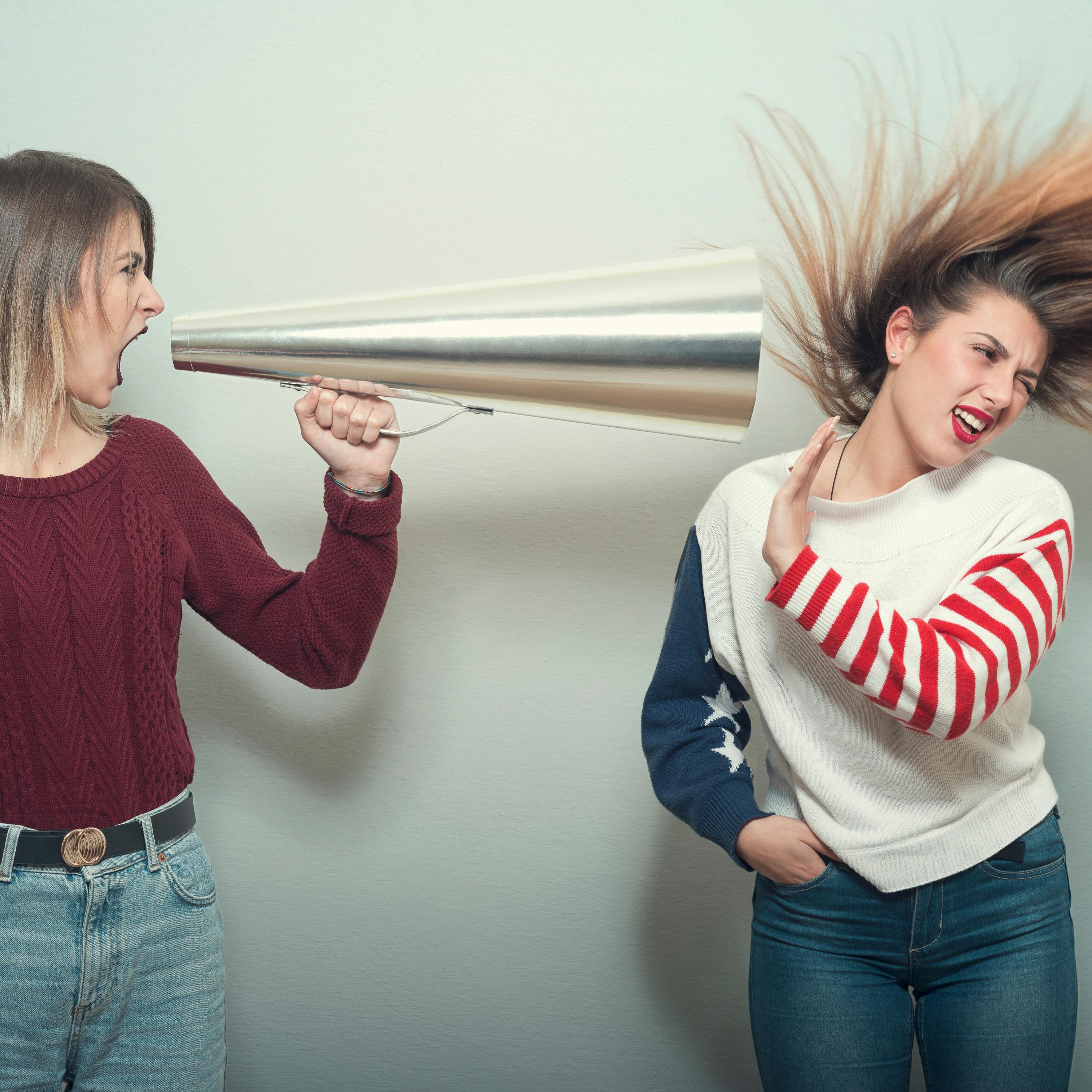
It's explain it to me from Vox. I'm John Cullen Hill and it feels like people are
way less polite than they used to be. A quick look online proves that a lot of
you feel this way. If I'm holding the door open for you, you need to say thank you.
You know, if you don't want to say hello to me, just don't look at me. That's fine.
You don't have to say hello to me, but I think it's a polite thing to do when
you walk in past people to say hello to them. Today, you guys, I've witnessed a
woman listening to a podcast on full blasts, strolling the aisles of target.
Are we kidding? Does that bother anyone else or just me?
To find out where exactly our manners have gone, I talked to Ali Volpe who writes
about relationships and social health and friendship at Vox.
Yeah, it seems like we are in a weird time for how we're treating each other.
Everywhere you go, it seems like there are people who are acting in ways that are
pretty bizarre and are signifying that they do not care about other people's comfort.
Google searches for, quote, "Is it rude?" have steadily climbed over the last 20 years.
And even Lizzie Post, who's the great, great granddaughter of the famous etiquette
Maven Emily Post, gets this question all of the time. And her predecessors have gotten it, too,
of like, are we ruder now than we were in the past? And so it's almost a comfort to know
that each generation seems to be facing the same issue of thinking the one that is following it
is more rude. Okay, have you noticed any of this rudeness yourself? Like,
are there examples you have in your day-to-day life where you're like, oh, that was crazy?
Oh, definitely. People openly scrolling on their phones in movie theaters, like,
not even trying to hide it anymore. I've seen someone, like, smoking a cigarette on the subway.
Like, that to me seems like really bizarre behavior. Yeah, I think the thing that I see the most is
people playing music on their phone out loud. And it's not like a crowd is around them and
they're trying to, like, you know, ooh, listen to this, but it's just them and their music out loud.
I know. I know. And, like, I take the bus a lot. I love the bus. And, like, it is every single time
I'm on the bus. Someone's, like, playing a TikTok full blast, having a FaceTime conversation
full out in the open without headphones. And I'm like, this is bizarre. But, like,
everyone's in your business now. Like, do you want everyone to know what's going on?
I know. As a nosy person, it's good in that way. But don't do that. Okay, so we have this
anecdotal evidence. But are people actually rude or now?
Right. It's, like, kind of hard to measure rudeness because everyone has, like, a slightly
different definition of it. One of the experts I spoke to defined rudeness as a behavior and
action or a comment that is meant to be disrespectful or violates a social norm. So
everyone has, like, a little bit of a different idea of, like, what they consider disrespectful,
you know? But there's some, like, evidence that people are feeling that we are being a little
bit rude. There was a recent Pew Research Center survey that found that nearly half of the country
believes that people's behavior is more rude than it was before the pandemic. And a UNC business
professor conducted a worldwide survey in 2022. So it's sort of, like, in the midst of pandemic
changes. And she found that 73% of respondents said it wasn't unusual for customers to be rude
compared to 61% who said the same in 2012. So, like, that's a pretty significant jump over a decade.
Why are we more rude now? Right. Like, in that study in particular, the 2022 survey,
she found the number one reason for people being rude was feeling stressed or overwhelmed. And I
think that is, you know, in part because of the pandemic. The pandemic was a really stressful,
crazy time. And it was an inflection point because because rude can be defined as, like, a behavior
that, like, violates a social norm. And when we think about the pandemic, social norms were being
created in real time because we had this, like, virus that nobody knew what to do about. So there's
a lot of new social norms cropping up and a lot of ways to defy those. We had a lot of people,
you know, not wanting to mask, not wanting to stay home. Also, like, we live in a world that's
incredibly polarized and it's only gotten worse since the pandemic. Like, inflation, tariffs,
stressful news. Like, it makes sense that people are more stressed and have shorter fuses than ever
before. Do you think any of this is from a sense of entitlement? You know, we're told to put ourselves
first a lot, which is good for a long time. People haven't been thinking of themselves. But
is that almost making us a little less empathetic? Yeah. Yeah. Like, this pendulum has really swung
from, like, like, work hard, sacrifice to now prioritize your own comfort at all costs. And
I understand it. Like, the world is crazy and it's stressful right now and everything feels
really hard. And so one way of controlling that is to, like, to make your world a little safer,
a little less chaotic, and to self-soothe. And to do that, people are sort of pushing out other
people that they see as problematic. And, you know, I think we've taken it a little too far.
It can sometimes be hard to confront people on their rudeness, but it's not always clear
whether what they're doing is actually rude. How do you know if something is rude or not?
Yeah, it is so hard because there's a lot of ambiguity. Recently, like, I was finishing up
a run. I was, like, chatting with a neighbor and she was like, "Oh, I said hi to you,
like, a couple blocks back, but, like, you didn't say hi back to me." I'm like, "Oh,
my God." Like, 'cause I had headphones on. I had my music. Like, when I run, I'm, like, very in the
zone. I'm like, "Oh, my gosh, I just totally did not see you. I'm so sorry." But, like, she kind of
called me out on it. But, like, she could have easily been like, "Oh, Ally was being rude. Like,
she totally ignored me. Like, she saw me. She just wasn't saying hi." 'Cause, like, there are a lot of
times when, like, people are just, like, not paying attention. Like, you don't know what their
intentions are. And so I think it's, like, a very, very fine line to walk of, like, telling someone
to, like, stop it. Okay. That's if you encounter something that is rude. How do you keep from
being the rude one? Yeah. My mom will probably be really happy that I'm quoting her here. But,
she always says, like, the only thing you can control is yourself and your own behavior. Like,
that was something she always tried to instill in us. And that, I think, is the easiest thing we
can do when it comes to rudeness. Like, the, like, if we just perpetuate polite, nice behavior, like,
that is number one, modeling it for the people in our life, especially kids. Like, we can remind
ourselves that not everybody is being rude. You're like, "Oh, yeah. That guy helped the door open
for me the other day. Like, that was really nice." And, like, it just helps you remember, like, this
world is not all bad. And, like, I can do those little things like that, too, to sort of, you know,
bring some positivity to the world. All right. Thanks, Ally. That was a really polite conversation.
Thank you. So, we can control our own behavior, but what about the self-help industry making
billions of dollars off of our self-control? That's up next.
Support for Explain It To Me comes from Hydro. Have you ever had one of those workouts where
you finish and wonder, "Did that actually make me stronger?" Hydro says that now you don't have to
guess. In just 20 minutes, they say you can work 86% of your muscles, and with the new Hydro arc,
you can actually see your progress measured in power, endurance, and precision every single
time you row. Hydro also says they have a huge library of Olympian-taught rowing workouts filmed
in real locations all around the world. One Hydro user even said, "Hydro isn't just an exercise,
it's a lifestyle. It's transformed my approach to fitness." Okay, y'all, it's been raining in
DC and dragging myself to the gym has been just such a task. I could totally see how having a
Hydro in your house could make going to the gym way easier. You can skip the gym, not the workout.
Stay on track with new Hydro arc, Hydro's most advanced rower yet. For a limited time,
you can go to hydro.com and use code explain to get $100 off any Hydro rower, including the arc.
That's H-Y-D-R-O-W.com. Code explain. Megan Rapinoe here. This week on "A Touch More,"
we've got WNBA champion Jackie Young, a.k.a. I.A. Jack on the show. We're so excited. We'll find out
how she's been celebrating her third championship, how the aces turn their season around, and whether
they're the greatest dynasty ever. Plus, we're handing out the most prestigious awards of the
WNBA season, the Maggie's. From best dressed to gayest moments of the season, you do not want
to miss it. Check out the latest episode of "A Touch More," wherever you get your podcast and on YouTube.
We're back. It's explain it to me. And we wanted to ask the question,
are we doing so much self-help that we've ended up actually self-helping ourselves
into being antisocial? Jessica Lam Shapiro is the author of a book called "Promise Land,"
"My Journey Through America's Self-Help Culture." She grew up around self-help,
and it left her kind of skeptical of it all. My dad was a child psychologist,
and he wrote parenting books. And I later found out that he used me as an example in his parenting
books. So I'm not going to say I was being experimented on, but I was a little bit being
experimented on because he had theories about child psychology and how to raise kids. And then
he implemented those theories as a parent, but also as a self-help writer. And so in that way,
I grew up around self-help, but we all did, because that kind of stuff percolates. Even if
you're not reading a self-help book, we all see affirmations everywhere. And if you ever shop at
Lululemon, there's a bunch of affirmations on their bag and there's posters. It's so woven
into the fabric of our experience that I kind of think everyone grew up with self-help, even if they
didn't grow up reading self-help books or having a self-help book writer for a dad.
How long have these books been around?
So the first incarnation of self-help, where they actually used the word self-help,
was in the mid-1800s. There was a writer named Samuel Smiles. He wrote for the Leeds Times,
and there was a society called the Mutual Improvement Society, and they invited him to
give a lecture. And he told these stories, these anecdotes, about working men rising from poverty
into positions of power. And it was hugely successful. People loved the stories,
so he started doing more and more lectures and then eventually made it into a book,
and the book was called Self-Help. It came out in 1859. It was immediately a bestseller.
The spirit of self-help is the root of all genuine growth in the individual,
and exhibited in the lives of many. It constitutes the true source of national vigor and strength.
Help from without is often enfeebling in its effects, but help from within invariably invigorates.
So it was popular way before I thought. And then you can also find predecessors in the Greek Stoics,
which is 160, 180 AD. There was a Roman emperor named Marcus Aurelius who wrote a book called
Meditations, and that book is actually sold as a self-help book today. If you go to your bookstore
and you look in the self-help section, you can find Marcus Aurelius' self-help.
Oh my god, every man I know reads about Stoicism, so yes, I do know the name quite well.
It is essential for you to remember that the attention you give to any action
should be in due proportion to its worth, for then you won't tire and give up if you aren't
busying yourself with lesser things beyond what should be allowed. Like when I was writing the
book, I was like, oh, you know, this is Don't Sweat the Small Stuff. Do you remember that book?
It was like a best-selling book. I don't know, when I was growing up, so 80s, 90s.
And it basically is the same thing with a different, you know, more dire message. Like
we're all going to die one day, so who cares? That's the sort of the Stoic version of Don't
Sweat the Small Stuff. But you know, repackage for like today's Happy America, it is basically
the same message. So like any self-help book you find today, there's always a predecessor
of like 100 years earlier that like somebody basically wrote the same thing. How big is the
self-help industry? I actually had to look this up. The global self-help industry is worth between
45 and 59 billion dollars. It's also called personal growth or self-improvement, not always
self-help. And this isn't just books, but it's also like courses and TikToks and affirmation
of day calendars. So you did all of this work and part of it was to find out if self-help books are
a scam. Are they a scam? This is a very difficult question. I wouldn't say that they're a scam.
And then again, there are so many self-help books. There's good ones. There's bad ones.
There's bad ones that have some good qualities. So like if you kind of don't take everything
as a gospel, you can kind of pick and choose like what's helpful and what's not helpful.
It seems like we love self-help if billions of dollars are being spent on it. I'm looking at
my bookshelf as we speak and I can see a copy of Radical Candor by Kim Scott. And that's just one
of the many self-help books I have. Why are we so drawn to these? I mean, I think it's a really
appealing idea that whatever your life is, it could be better. You could be richer. You could
be hotter. You could be smarter. You could be more popular. You could be faster. It's just an idea
that's very appealing to us as human beings that we could just be more awesome than we are right now
or have more awesome stuff than we have right now. That's like the whole manifesting thing, right?
At its base, it's actually a very appealing idea and it appeals to me. I mean, I always try to
do things better. I'm trying to learn. I'm trying to be smarter. I'm trying to be more social,
leave my house more, be a better dog owner. I have read books about dog training.
It's interesting because you started out pretty skeptical of self-help going into writing this
book. Do you still feel that way or have you found redeeming things in it? I've definitely found
redeeming things in it. I absolutely think you should always retain a bit of skepticism and a
little bit of cynicism when you're encountering self-help just to stave off the weirdest ideas
because there are some really weird ideas out there. But also, I was in my 30s when I wrote the
book. I'm in my 40s now and a lot has happened politically, socially. The pandemic happened
and those were some tough times for me and for everybody. I feel like I have a lot more sympathy
for the urge to self-help and just the idea of it, even if it doesn't get realized in the books.
What's changed about self-help in recent years, anything at all?
One thing I've noticed is that they've become better and more mainstreamed. I'm thinking of
someone like Brene Brown who is an academic researcher and actually has studies to back
up the things she's saying but also is sometimes seen as a self-help writer and certainly her books
have helped people. Vulnerability is our most accurate measurement of courage to be vulnerable,
to let ourselves be seen, to be honest. If we're going to find our way back to each other,
vulnerability is going to be that path. There's kind of an elevating of the discussion
where it's a little bit more intellectual and I think that appeals to more people. They've
brought in a whole new audience to self-help and I think in a way the books have become better
as a result and they're certainly better and more interesting reads.
Do you think we're overdoing it on self-help? Are we trying too hard to fully optimize ourselves,
to be our best selves? Yes, absolutely. Yeah, I think we're obsessed with betterment,
obsessed with productivity. I don't think that's healthy necessarily. Self-help books are appealing
because you're thinking like, "Oh, I'm going to go to therapy for years and I'm going to spend
thousands of dollars. I could just buy this book for 20 bucks and feel better immediately and maybe
get something out of it." But I think we're really losing the community aspect when you're
talking about self-help and everything is done by yourself. I think when you do that,
you lose the opportunity to have a community and to strengthen your relationships with other people
because I know that's what it's done for me. When I try to help myself on my own, I'm still
by myself. Whereas if I ask for help, I'm strengthening my relationships and I'm getting a
lot more out of it than just the help that I was looking for. I think that that sense of community
is really important and so many people are feeling lonely and alienated and behind their computer
that like to get out from that and actually make contact with another person or an organization,
I think, is really beneficial. You know, not just to society because it's definitely beneficial
to society to have people invested in the community, but also to the individual to kind
of feel like they have community support and they're not just completely isolated and alone.
Coming up, how to get that community back.
Hi, this is Kara Swisher, host of On With Kara Swisher. This week on my podcast On With Kara
Swisher, I talk with Vice President Kamala Harris about her new book, 107 Days, as well as the
Weaponization of the Department of Justice, the tech industry's rightward lurch and how she's
planning to fight against Trump's march toward autocracy. We take it live at the Warner Theater,
which is just a stone's throw away from the White House where Donald Trump now lives. Have a listen.
I don't believe that the people who are flattering Donald Trump, who are offering him
favors, necessarily believe in what he is doing or believe it is right, but they want power.
And that's part of what we are dealing with right now. They want power and they're not
willing to compromise their power or access to power for the sake of the Constitution and our
democracy. Listen to the whole conversation on On With Kara Swisher on YouTube or wherever you get
your podcasts. This week on Version History, the Verge's new chat show about old technology,
I need you to go back in your mind to a time when text messages cost 10 cents each. And remember how
big a deal it was when Blackberry came out with a way to message all of your friends in real time
for free. I refer, of course, to BBM, maybe the greatest messaging app of all time. Okay,
probably not the greatest messaging app, but a very important messaging app nonetheless.
On this episode, we talk about where it came from, where it went, and why without BBM,
the world might look really different. All that on Version History on YouTube and wherever you get
podcasts. We're back. It's explain it to me. So we're more lonely than ever these days, and that's
partly because of the ways we are and aren't interacting with each other. In other words,
our boundaries. I spoke to Nedra Glover-Tawab about this. She's a licensed therapist and
author of several books, including Set Boundaries, Fine Peace. But before we got into that,
we needed to establish some boundaries of our own, like what boundaries are in the first place.
Needs and expectations in our relationships that make us feel safe and comfortable.
The boundary can be verbal. It can be a behavior that you start to exhibit,
but it is a way for you to show up in your relationships, hopefully save them, keep them
well, be better in them. So you write a lot about boundaries. What got you interested in boundaries?
Well, when I first became a therapist, so many of my clients were talking about work-life balance,
challenges with family, challenges with their partners. And one of the very hard things to do
in relationships is to be assertive. And we started to talk about boundaries, not with
using the B word of boundaries, but about self-advocacy. What would you want them to know?
How do we manage this situation? Which, for me, translates to boundary issues.
How often does this come up in your clinical practice?
I would say all the time, but I don't use the word boundaries. We talk about their situations.
And I like to think of it as coming up with solutions. I don't think using terminology is
always the best way for us to work through our issues to say, "Okay, so you're a people pleaser.
Let's do this thing." We can just talk about whatever issue you're talking about. You allow
someone to use your time in a way that you are uncomfortable with. How do we prevent that in
the future? We don't have to use the word "you're a people pleaser." I don't have to give you a
label. We're really talking about what's presently in front of us.
Is it possible we're overdoing this therapy speak, especially, I think, among
middle-class young people these days? Are we sort of twisting these concepts at all?
We are twisting them. I liken it to us using medical terminology in our everyday conversations
with people, which you don't typically see people doing. I'm not naming bones when you told me you
hurt your knee. I don't know all of the parts of the knee, but I find that with therapy,
people are saying, "By polar, this person has a boundary issue. They have an attachment this.
It's this thing without the clinical skills to actually diagnose and help people troubleshoot
in a way that is actually helpful and not just labeling them." I think the terminology in a way
it boxes it in. It leaves us without nuance. We're not giving people enough flexibility in who they
are in saying that you're a people pleaser. Are we meant to apply these things, sort of blanket
across the board with everyone we interact with, or is this more about these really personal,
closer relationships? I think boundaries can be universal, but they should also be flexible.
There are levels to boundaries. You see a lot of people pleasing when people don't have boundaries
and I would label those as porous boundaries. Then we have rigid boundaries, which we're
starting to see a lot of, and that's what you're speaking to. Rigid boundaries is where we have
these walls, we have these hard rules, and we keep everyone out. Everybody gets the same rule.
Well, I'll tell you, because I have so many variety of relationships, everybody doesn't
even need the same rule. What's some advice you give your clients about how to set bed or boundaries?
I mean that both when the boundaries are too porous and when they're too rigid,
like how do people do better? Yeah, well with two rigid boundaries, I often find that they have a
lot of discomfort around holding the boundary. And so we explore, is this a boundary you even
want to have, or is this a boundary that you feel like you should have? Is this some sort of punishment
you're trying to issue? Is this guilt that you're feeling? So very often with folks who come to
therapy, they've been tolerating things for a very long time. And so that's why we've seen a lot of
overactive boundaries, right? Because people have been tolerating their uncle, their cousin, their
friend, their job for so long that when the boundary comes out, it's a yell, it's a scream,
it's aggressive, it's firm, because we're tired. And so we have to think about what are the boundaries
that I can implement here that I can actually live with? What are the boundaries here that
would make me feel comfortable in this relationship? If all of your boundaries end in a cutoff,
because I see that sometime, the boundary is a cutoff. There is no in between. It's either
we're in relationship or we are not. Have there been any things in between that help you all
stay in a relationship in jobs? We call that a performance review plan, right? So you give somebody
some things that they need to do or you take on some things that you need to do so the relationship
can be better. But we are going right from problem to firing. How do you encourage your clients
to connect with people if they want to and they're struggling to? We do a lot of scripting.
It's September right now. And I'll tell you, this is the time of year, particularly October,
where a lot of my clients start talking about their family stuff. And so during this time,
because a lot of my clients, I've seen them for years. So guess what? We can start right now
in September and we start talking about, okay, so when you go home for Thanksgiving and you got
to sleep on the couch and your sister gets to be a room, what are we doing different this year?
These are boundary things, right? So the different thing that they might do is they stay in a hotel.
They decide to have the conversation before the holiday that perhaps this would be a rotating
thing, right? Sometimes they get the couch, sometimes I get the couch. So it's really about
being proactive when you know situations will occur. We've spent this episode, we've talked about,
I don't know, just how so much of life is individualistic now. We've talked about
self-help and all these different things. But it does seem like at the end of the day,
the only thing you can control is yourself. So maybe it's just thinking, okay,
what are the ways that I control myself in these situations?
You know, one of the things that I think about often when I hear people lamenting about relationships
is we actually need more community than we have. And that's why we put so much pressure on the one
friend or on our parents or the one sibling or the we just need more people.
Many of us is we're hyper focused on very few relationships. So now it's leading to
depression and loneliness because we don't have enough people to be kicking people out of our lives.
That's therapist and author Nedra Glover-Tawab. We're doing an episode on how fatherhood and
our idea of a good dad is changing. So if you're a dad, give us your thoughts. Why did you decide
to become a dad? And how has fatherhood changed your friendships? We'd love to hear from you.
Give us a call at 1-800-618-8545 or send us a voice memo to
[email protected].
This episode was produced by Avashai Artsy. It was edited by Miranda Kennedy with help from
Megan Kanan, fact-checking by Melissa Hirsch and Isabel Lichtenstein. And our engineer this week
was Matthew Billy. Special thanks to Noel King, the co-host of Today Explained, who's very well read.
If you want to check out more podcasts from Vox Media, head over to podcast.voxmedia.com.
I'm your host, John Glenn Hill. Thanks for listening. Bye.
[Music]
 PodcastTranscript AI