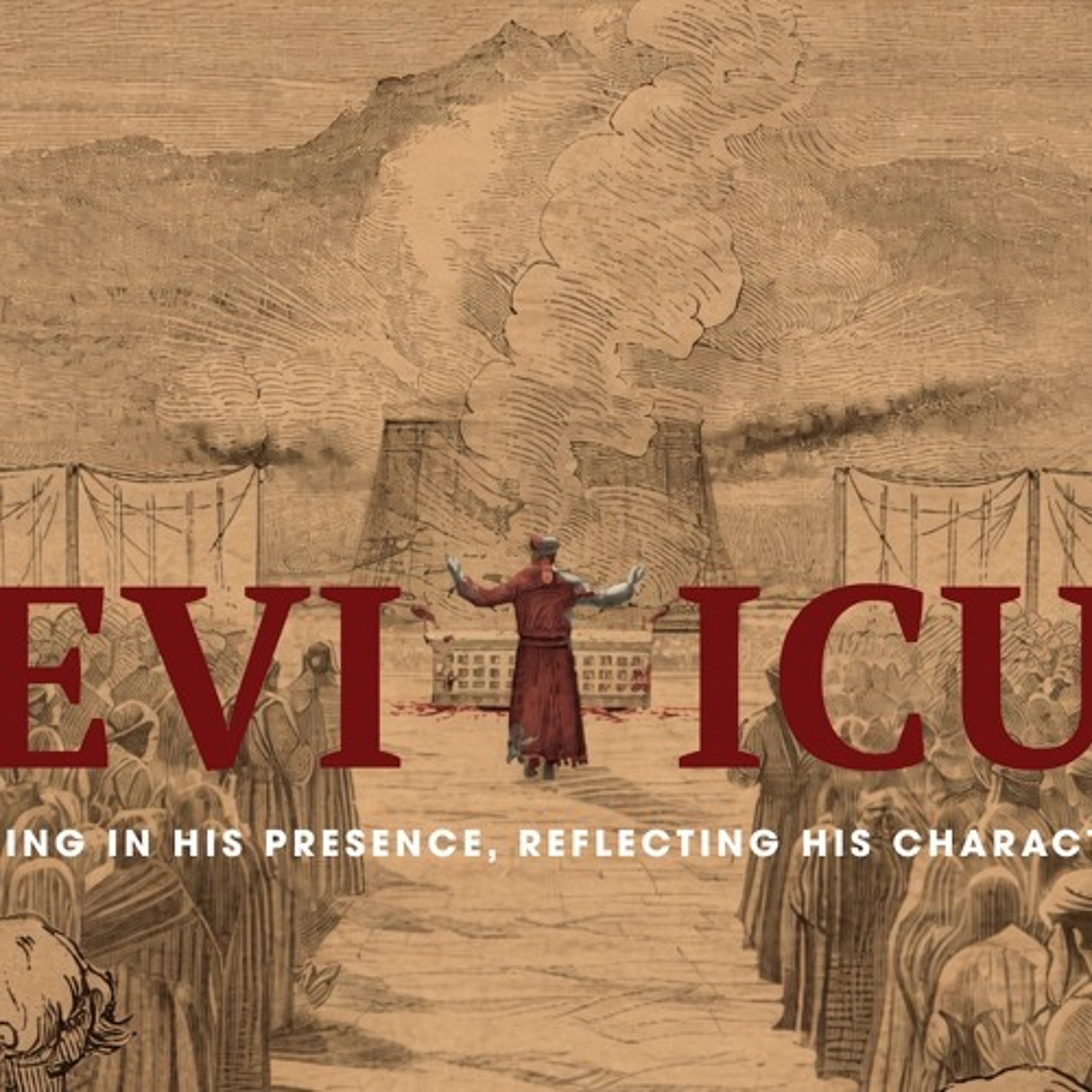
A life aligned to God | Austin Loke | Leviticus 19
from Sovereign Grace Church Sydney
46m 6s
A holy life is not a set of isolated Christian practices but a holistic alignment with God in all areas of life. The sermon interprets Leviticus 19 as a call to holiness that spills beyond the temple into family, work, relationships, and daily decisions. A holy life begins with worship—rooted in reverence for family, consistent devotion, and exclusive trust in God. This is extended into relationships, where generosity, integrity, humility, justice, and love reflect God’s character. Boundaries, both given by God and self-imposed, are essential to protect against moral collapse and to direct life’s energy toward God’s purposes. Most fundamentally, holiness is anchored in identity—remembering God’s redemption from Egypt and being transformed by Christ’s atoning blood. The sermon concludes by warning against fragmentation, where Christian living is compartmentalized, and calls believers to live in integrated, unified obedience to God in every sphere—worship, relationships, boundaries, and personal identity—so that all actions honor God’s glory.
For those of you who don't know me, my name is Austin. I am a happy pastoral candidate
here at Sovereign Grace, Rureunga. But before we start, how about we pray? Let's pray.
Oh, Father God, we are in need of you every moment of our lives. And Father, we just pray,
Lord, help me as I preach this passage, Lord. We know that it's not by might nor by strength,
but by your spirit that anything gets done. So, Spirit of God, please be at work in our midst here
today. Jesus' name we pray. Amen. Go ahead and open up your bibles to Leviticus chapter 19,
Leviticus chapter 19. And Leviticus 19 is in a section of Leviticus that we have called,
or many have called the Holiness Code. The Holiness Code runs from chapter 17 to the end of the book
in chapter 27. And what the Holiness Code covers, in effect, is what it means for the ancient Israelites
and for us by implication as well. What it means for them and for us to live holy lives, to live
holy lives. But before I dive in this morning, I just want to ask you a question. I want to ask you
a question. How would you define Holiness? How would you describe what a holy life is? You know,
we use the word Holiness so much in our Christian lingo, don't we? I mean, just imagine if we took
the transcript from every sermon that has been preached up to now, imagine the number of times we've
said the word Holiness or Holiness. And if we were to add to that all the discussions that we've had
in growth groups, we would have mentioned the word Holiness, Holiness, Holiness lives hundreds upon
hundreds of times. Therefore, in one sense, it should be easy for us to define what Holiness is.
So how would you describe Holiness? How would you define what is a holy life? In other words,
complete the sentence, a holy life is dot dot dot. You know, if you're writing notes,
perhaps give it a go. How would you define what a holy life is? You know, I was sitting there at my
desk this week and I tried this and I actually found it harder than I thought to actually articulate
what a holy life is. And I tell you why. We tend to have a reductionistic approach when we think
about big theological concepts like Holiness, right? We tend to reduce it down, reduce it down
to a concept that seems manageable. For example, we might try to stereotype stereotyp, stereotypically
define this. We might say, "Oh, you know what? The holy life is like the Prophet Elijah. It's like
his life. It's like John the Baptist. It's like going out into the wilderness, being a set apart
for the Lord. Or perhaps we might compartmentalize what a holy life looks like. Well, you know what?
Let's spoil it down to the essential items. Well, a holy life means going to church on Sundays,
rocking up to growth groups, reading my Bible, and spending time in prayer. Or we might have a
moralistic approach of defining what Holiness is. We might think, you know what? At the heart of it,
Holiness, a holy life is about a sin management strategy. It's about reducing and minimizing sin
in my life as much as possible. You might even take the traditional definition of what holy is.
You might say, "You know what? Holiness is being set apart for God. Set apart unto God."
But you know what? I don't even think that this traditional definition gets to the heart of what
Holiness is about. Because you know, if you have that definition of being set apart for God,
you might in one sense carry some connotations of, "It's just me and God." It's just me and God.
But you know what? I believe that our text teaches us today actually a holistic way to describe
and to define what a holy life is. And so if there is one concept, if there is one idea that I
trust that I hope that you will take home that you will internalize today, it is this. A holy life,
a holy life is a life, holy, W-H-O-L-L-Y, holy aligned to God. A holy life is a life,
holy aligned, or you might say, integrated with God. You know, for the first 16 chapters,
what was the setting in which we studied Leviticus in? What was the setting that we always found
ourselves in? The whole time we spent in Leviticus 1 to 16, the setting was at the bronze altar.
It was at the holy place. It was in the holy of holies on the day of torment, right?
That was the setting. But as we'll see in today's passage, right? What's the setting for Leviticus 19?
We have a dramatic scene change on our hands.
No longer are we in the tabernacle. We're in the family home now. We're in the harvest fields.
We're in the neighborhoods. We're in the marketplace. We're in the courts. Do you see what I'm trying to
get at? Holiness was never meant to just be contained in the tabernacle. No, think about the context
of Leviticus. Leviticus is preparing a people to enter into the promised land. Holiness was never
meant to be just contained within the tabernacle or the temple. It was meant to flow out. It was meant
to spill over into everyday life. Actually, let's just read just the first two verses of our passage
today. This is what it says, verses 1 and 2. And the Lord spoke to Moses saying, "Speak to all the
congregation of the people of Israel." And say to them, "You shall be holy for I, the Lord your
God, am holy." Look at this. Who does God tell Moses to speak to? You know, most of the time
in all of Leviticus, God tells Moses to speak to Aaron or to speak to the people of Israel.
Not here. This is what it says. He says, "Speak to all the congregation of the people of Israel."
This is the only time in the whole book of Leviticus this exact exhaustive phrase is used. It is
emphatic. This charge for my people to be holy is to go out to everyone, to the eldest head of the
family, to the youngest child, to the rich, to the poor, to the priest, to the layman, "You shall be
holy for I, the Lord your God, am holy." Holiness, my friends, it's like an overflowing fountain,
it's like a bubbling spring, right? It's never meant to be contained within just the tabernacle,
it's meant to spill over, it's meant to water the whole promised land, it's supposed to saturate
every person's life, and not just every person's life, every aspect, every arena of every person's
life. I'm sure you've all done this before, but if you've worked in metal work or you've had a
work bench and you've got iron filings, lots of iron filings on a work bench in this messy,
random pile, right? And then you put a magnet in the middle of those iron filings, what happens?
What happens? Every single iron filing instantly repositions itself, not just in its position,
but even in the angle and the orientation of every iron filing. And you know what, if you have
enough iron filings, right? It would actually reveal the contours of the magnet magnetic field,
likewise when a holy god enters into the camp of Israel, every person must be aligned, must be
reorientated, re-must be repositioned according to the holiness of God. But not just every person,
every aspect of a person's life, re-aligned, reorientated according to the character and the nature
of our holy god. Therefore, a holy life is a life holy aligned to God. And this text reveals that
a holy life is aligned to God in four distinct ways. A holy life is number one aligned to God
in our worship, number two aligned to God in our relationships, number three aligned to God in our
boundaries, number four aligned to God in our identity. Point number one aligned to God in our
worship. Let's read verses three to four. Every one of you shall revere his mother and his father,
and you shall keep my Sabbaths. I am the Lord your God. Do not turn to idols or make for yourselves any
gods of cast metal. You know what? If you are writing a manual for how to
live the holy life, what will be the very first principle that you write in your manual? Perhaps you
might begin your manual with some expression of great piety, of great devotion to God. Perhaps you
You start with prayer, or perhaps you start with prayer.
meditating upon the scriptures,
or perhaps you start with fasting.
Look at the very first principle that Moses mentions.
There's actually no explicit mention of God.
It says, "Revere your mother and your father."
I mean, this is incredible on multiple fronts.
It really drives home the point that the setting,
the setting of a holy life is in the everyday,
ordinary, simple, humble setting of the family home.
It's not in some grand, holy monastery,
but it's in the family home.
It's in the everyday places.
And notice this, it's not that, that quote,
"Revere your mother and the father."
It's not like how it's mentioned
in any other part of scripture, right?
All the other parts of scripture says,
honor your father and your mother.
Here it says, "Revere your mother and father."
Revere is the same word that we find.
If you look down at verse 14 as fear,
fear, be in reverence of, right?
Be in reverence of your father and mother.
On top of that, it's swapped.
It doesn't say father and mother.
It says mother and father, right?
The reality is kids, at least in our family, right?
More often than not, fear, or they revere their father.
You just wait till daddy gets home, right?
But here, reverence, reverence needs to be extended
to the mother as well.
What's this principle teaching us?
This first principle of holy life, right?
Of a holy life is knowing how to come under authority.
Not just dad's authority, right?
But mom's authority.
And so what's the application?
The first application, the first principle at play
is that in God's economy, it does not make sense to say,
I come under God's authority, but no one else is authority.
It doesn't make sense in God's economy.
Of course, if someone's authority undermines God's authority,
of course, obey God first and foremost.
But the norm is, authority structures are by God's designs.
God has given us fathers and mothers.
He's given us pastors and elders,
civil magistrates and law enforcement, teachers and managers,
directors and bosses.
We have to come under the authority structures
that God has given us.
That is the beginning of a holy life.
And so the question for us, particularly in Aussie culture,
where we lean cynical against leadership.
The question we must ask ourselves is,
is there a pattern in my life of having a problem
with authority, with having a problem with authority?
Because there is a biblical correlation.
If we have a problem with earthly authority,
the Bible tends to say,
then you will have a problem with God's heavenly authority.
Secondly, let me also add this.
Let's seize, for those of you who are parents,
particularly of younger children,
let's seize this opportunity in our family homes.
In our family, when we tell children to do something,
we normally say, we obey,
and they normally reply straight away, Dad,
or straight away, Mum.
And you know why we do this?
Ultimately, we are training them for a lifelong,
quick obedience to the Lord.
And so the question that I want to ask you is,
are you setting up your children,
particularly your young children for future success?
Are you establishing parental authority in your homes?
This is not an end in itself.
You are preparing them for a lifelong obedience to the Lord.
Verses 3B, and you shall keep my Sabbaths.
In other words, here, a holy life,
the second principle that we're looking at,
a holy life is aligned to God in worship,
but what's the adjective?
Not any type of worship,
but particularly a regular kind of worship.
The holy life is not primarily marked out
by this lavish displays of devotion every now and then.
But here, it teaches us that the holy life
is actually marked by the simple, regular commitment
to worship.
The primary characteristic that we see at play
in these verses is a commitment to worship.
It is a consistency of worship.
It's better to be someone, a person who over the course
of years and decades is simply faithful
and consistent and committed to worshiping the Lord.
Both in a corporate setting, like this,
or if you've got a family in a family setting as well,
but also in personal worship,
in personal devotion to the Lord.
You know, in the upper North Shore,
if there is one commodity that we value
as more precious than money, I've got to say, it's time.
But there is something amazing.
There is something wonderful when we say,
our most precious commodity time,
time we're going to set apart to the Lord in worship.
We're going to worship you Lord by setting apart time for you.
You know what, a holy life in this principle
teaches us that we must be willing to say no.
No at times, because we're worshiping the Lord.
We're setting apart this time to worship the Lord.
No, perhaps to Sunday sport.
No, perhaps to birthday parties.
No, perhaps to Sunday outings.
If it disrupts our commitment to gather for worship.
I mean, this is a powerful testimony, isn't it?
It's a powerful testament to the people around us,
and the people in our families, if we say no, no, my son,
no, my daughter, today, this is the Lord's day.
Let us go up to the house of the Lord.
Let us worship the Lord.
Lastly, verse four, not turning to idols,
nor making any gods of cast metal.
You know, holy life is marked by an unwavering refusal
to put our trust in any other thing,
but the Lord and the Lord alone, right?
It's an exclusivity to worship God and God himself alone.
It's an unwavering commitment to trust
and to please God and God alone.
And it's a refusal to do two things specifically.
If you look at the verses, a refusal to turn away
from the living God and it's a refusal to make other gods.
You know, a refusal to turn is a refusal
to deviate from the course.
Think about all those iron filings
that I was mentioned before.
Every one of them are lined up to face the magnet.
And likewise, that's what we're called to do.
This is a holy life.
It's aligned to God in holy worship,
not turning away from him.
And also, it's a refusal to make any other things
to feel the so-called perceived voids
or the perceived emptiness that we might feel in our lives.
It's a refusal to turn to substitute gods, right?
The reality is, my friends,
we never actually go from worshiping God to worshiping nothing.
We are always worshiping something,
but this is a refusal to turn and to fill our life.
It's filled the voids in our life
with anything apart from God.
It's saying, you know what, God, you will fill this void.
I don't know how you're going to do it,
but I'm going to turn to you.
You are my God, and I will serve you alone.
You satisfy me.
You are my joy.
This is what G.K. Bill writes in his wonderful book,
"We become what we've worshiped,
a biblical theology of idolatry."
People always reflect something,
whether it be God's character or some feature of the world.
If people are committed to God, they will become like him.
If they're committed to something other than God,
they will become like that thing,
always spiritually inanimate and empty,
like the lifeless and vain aspect of creation,
to which they have committed themselves.
And so therefore, friends, the third principle
of worshiping our God, a holy life of worship,
is to say no to fill those gaps
with anything apart from God and God himself.
A holy life is a life that is aligned to God
in our worship, worship that is expressed
by coming under authority, yes, even earthly authority.
It's expressed in regularity of worship
and it's expressed in the exclusivity of worship
to the one true and living God alone.
But a holy life is not just a life
that is aligned vertically in worship,
but it's also aligned horizontally,
point number two, in our relationships.
There is an overflow to the people around us.
Let's read verses five to 10.
When you offer a sacrifice of peace offering to the Lord,
you shall offer it so that you may be accepted.
It shall be eaten the same day you offer it
or on the day after and anything left over
until the third day shall be burned up with fire.
If it is eaten at all on the third day, it is tainted,
it will not be accepted.
And everyone who eats it shall bear his iniquity
because he has profaned what is holy to the Lord,
and that person shall be cut off from his people.
When you reap the harvest of your land,
you shall not reap your field right up to its edge,
neither shall you gather the gleanings after your harvest,
and you shall not strip your vineyard bare,
neither shall you gather the fallen grapes of your vineyard.
You shall leave them for the poor
and for the sojourner, I, and the Lord your God.
Do you guys remember the peace offering?
The peace offering was the third offering
that we covered, Dave covered it in one of his sermons,
and remember, it was a celebration offering.
It was a voluntary offering that you could bring.
It was a Thanksgiving offering for the peace
or perhaps the fellowship or the friendship
that they were given.
the people of Israel now enjoyed with God.
And this is what you had to do, just give your reminder.
You had to bring a large animal voluntarily
with a cow or sheep or goat.
And the whole point was, this is the unique thing
about the peace offering, you could invite your family,
you could invite your friends, you could invite guests,
the high priest and the priest also partake of the eating.
It was a community event, right?
Now this is the vertical component of this offering.
God commands that all of this offering must be eaten
by the third day.
If any of this is left on the third day,
it had to be burnt up.
And this teaches us that worship of God
must be conducted in God's way.
He teaches us, he gives us the regulations
for what right worship looks like.
But why?
It has a horizontal component as well.
Think about the temptation.
Bring a peace offering actually incurs
quite a large cost for you as a family,
especially if you're not a well or family.
You're slaughtering quite a large animal from your herd.
And so the temptation, right, is to say,
perhaps, perhaps I shouldn't invite too many guests.
Not too many guests, you know why?
'Cause you know what, if we don't finish it all,
we can doggy bag it, or for all my Chinese brothers
and sisters, dah-bao, right?
We can take it home, we can salt the meat,
we can keep it for ourselves.
But God says, don't do this, don't do this.
That's the vertical component, right?
What happens horizontally?
Well, if we can't do this,
let's invite more people from the community.
Can you see the result of this?
It fosters generosity, right?
The vertical and the horizontal are always connected.
Relationship with God and relationship with others
are always intrinsically linked.
Obedience to God's three-day rule, what does it do?
It bears the fruit of generosity.
And that's why it's followed by the very next case study,
the same theme.
When you harvest your fields, or your vineyards,
don't harvest it all the way up to the edge, right?
If things form the ground, leave it on the ground.
Why?
Leave it for the poor.
Leave it for the sojourner.
Do exactly what Boaz did for Ruth and Naomi, right?
Again, we can see the vertical and the horizontal,
they're intricately connected.
It fosters generosity.
And this generosity, what does it do?
It ultimately is a reflection of God's character.
These aren't rules, just for rules sake.
The vertical and the horizontal.
They're always aligned.
The horizontal effect of obedience always results
in the display of one of God's characteristics,
one of God's attributes.
And so let's apply this.
We don't have peace offerings nowadays.
We don't have none of you, maybe some of you might own a farm,
but by and large, the principle that is at play here, right,
is that we want the fruit of generosity
to be a parent in our lives.
You know, just this week I was reading CS Lewis
for many years of his life.
He gave away two thirds of his book income.
He just gave it away.
Our lives are meant to be geared towards generosity,
generosity to others, generosity to the church,
generosity to missionaries, generosity to the poor,
generosity to God through his kingdom initiatives.
And so the question that I found myself asking,
and we should all ask ourselves,
I found myself asking this this week,
if someone wants to come across my budget,
or nowadays it's not on paper,
if they found the Excel file that has my budget, right,
would they say, this man, this man serves a generous God?
You know, a holy life is a life of generosity to others
because our God is a generous God.
Let's read verses 11 to 12.
You shall not steal, you shall not deal falsely,
you shall not lie to one another,
you shall not swear by my name falsely,
and so profane the name of your God, I and the Lord.
Now this is an interesting one.
If you kind of map out, right,
all the different things that are stated
in just these two verses, God starts first
with the eighth commandment, you shall not steal.
Then he goes to the ninth commandment,
you shall not deal falsely.
In other words, lie or give false witness.
Why?
He links it back to the third commandment.
You shall not do this
because if you swear by God's name falsely, profaning it,
you'll break the third commandment.
You shall not take the name of the Lord in vain.
Again, you can see that the horizontal,
lying to one another,
has a vertical component to it as well.
Look at this, God in his wisdom.
He's teaching us the slippery slope
of just breaking one of his horizontal commandments,
which ultimately leads to the breaking of profaning
or taking his name in vain.
It has a vertical component to it as well.
And I mean, you can totally imagine this, right?
You've got some shady dealings going on,
you're confronted about it, you lie about it,
you end up back in those days before the elders
or today in a modern court,
you make a false oath and then you end up profaning God's name
as a result of that.
And you know what, the temptation's not actually
foreign to us nowadays, you know,
perhaps we think maybe we can cut a corner here,
maybe we can do a slightly dodgy dealing there.
Perhaps we can cheat our employer by being lazy
when we're at work or not giving them a full time
or a full effort.
Maybe it's just a little bit that we exclude
from our income tax.
Maybe it's just a personal, just one personal expense
that we put through as a business expense.
Maybe it's just a legal download of a movie.
I mean, seriously, what's the harm?
Let's not get a hung up over it.
Yet when it comes to the light that you do this
and you follow of Christ will not the name of God be profaned,
will not the glory of Christ be dragged through the mud?
And therefore a holy life is a life of integrity before others
because our God is a God of truth
and we have been called to walk in truth.
Verses 13 and 14.
You shall not oppress your neighbor or rob him.
The wages of a hired worker shall not remain
with you all night until the morning.
You shall not curse the death
or put a stumbling block before the blind
but you shall fear your God.
I am the Lord.
So in these verses, right, you can see
that there's a clear power differential at play, right?
There's a clear power differential.
You've got someone who's in a relative position of power
and then you've got someone who's more vulnerable,
perhaps a neighbor who's susceptible to fraud
or maybe a hired worker who's susceptible
to mistreatment by you as a manager
or perhaps it's a deaf or blind person
which really represents someone who is physically vulnerable.
But what's the underlying principle at play here?
Underline principle at play here is humility.
It's humility.
Again, the horizontal and the vertical are connected.
You know what, a holy life, a holy life
has eyes of faith to see beyond just earthly power dynamics.
They see beyond just their earthly.
Even though they might not have,
the holy person might not have a legitimate fear
of the neighbor or their weaker worker
or someone who's physically disabled.
The person who seeks to live a holy life,
they are still humbled.
They're still humbled by this reality
that they fear God.
They see beyond earthly power dynamics
and they see the one who is truly ruined.
Ivy arranged for us recently to go see the movie,
Odyssey on our anniversary and to be honest, it was epic.
I absolutely loved the movie.
But you know, one of the most memorable quotes
from the movie was when one of the characters
was disguised as a beggar.
And he was disguised as a beggar
to see how other people would treat him.
And as he explains why he does this,
this is what he says.
He says, he explained that this is the most memorable quote
for me.
The clearest view of a man is from below.
Because when you are in a position of power,
when someone underneath you sees that you are in a position
of power, how you treat that person
reveals a lot about that person's character.
But if I was to adjust this quote for our passage,
this is what I would say.
The clearest view of whether a man truly fears God
is from below.
You see, it's all connected to the Lord.
A fear of God breeds a genuine humility.
A holy life refuses to unnecessarily hold back good
from someone that you can give good to.
It refuses to overwork or underpay someone who works for them.
It refuses to exploit social situations
of power differentials, whether that's at work,
or whether that's at your school,
or whether that's even in your family.
It's a refusal to bully others.
It's a refusal to ridicule others
at other people's expense.
It's a refusal to oppress others for your own gain.
Why?
Because a holy life is a life of humility before others.
Because it reflects ultimately a God who uses his power
for the good of others, a God who humbled himself
to serve and to give his life as a ransom for many.
Versus 15 to 16, you shall do no injustice in court.
You shall not be partial to the poor
or defer to the great in righteousness.
But in righteousness shall you judge your neighbor.
You shall not go around as a slanderer among your people
and you shall not stand up against the life of your neighbour, I am the Lord."
You know, these verses describe the holy life as a life that pursues justice and righteousness.
It's not marked by favoritism, you don't favor the rich, you don't favor the poor.
What you are intent on doing is doing what is right, what is fair, and what is just in
every situation.
It doesn't say, you scratch my back, I'll scratch your back, I do your favor, you do
me a favor.
It's not like that.
I want to do what is right.
I want to do what is pleasing to the Lord, I want to do what is righteous.
You know, the biggest test for us in this arena, right, unless we're involved in some
way in the legal system, is to do right by others by how we speak about them, right?
The most likely context that we can actually affect just and right judgements is probably
not in the court of law, unless you're caught up to jury duty, but it's in the court
of opinion, right, IE, it's in context where we may affect other people's opinions of
other people, and so therefore a holy life, a life that seeks justice and righteousness
and fairness is a life that refuses to engage in gossip.
It's a life that refuses to engage in slander or to start a rumor or to speak about others
when they are not present to defend themselves.
So the question for us here is, how just are you?
How judicious are you in your speech?
Do people trust you with what you share with them in confidence?
Do you think through the implications of what you say and how that can affect others'
reputation?
Because a holy life is a life that is just towards others both in word and indeed, because
this reflects a just God.
A God who loves justice and does righteousness versus 17 to 19.
You shall not hate your brother in your heart, but you shall reason frankly with your neighbor
lest you incur sin because of him.
You shall not take vengeance or bear grudge against the sons of your own people, but you
shall love your neighbor as yourself, I am the Lord.
Now this is actually, this is the heart of the passage, but it's actually very unique.
Very rarely would you find two famous New Testament verses in one Old Testament passage,
but in this passage of day we have, you shall be holy for either Lord your God and holy
and you have loved your neighbor as yourself.
Both of these famous phrases are found, they are sourced from Lividicus 19.
And it's no accident.
Verse 19, right, of Lividicus 19 is the exact center of this passage, is the middle verse
of this passage.
It is the heart of this passage.
And therefore it points to the fact that the holy life is a life that is aligned to God,
not just in outward behaviors, but all the way down to the heart level, right?
These verses show that the heart of love, the heart of a holy life is a heart, is a life
of love.
You shall not hate your brother in your heart, rather you shall love your neighbor as yourself.
A holy life is a life that is aligned to God.
It is a life that is aligned to God and it cannot say I love God, I love my neighbor except
for him and her.
It cannot say that.
If you say that, if one says that this is indicative of a fragmented life, of an integrated,
a disintegrated life, a life that is not aligned to God.
So if you have a grudge in your heart, this is a sign of a fragmented life, but God in
this kindness and goodness provides a way out, the holy way, if you find yourself in
this situation, God's way is to speak honestly and openly and frankly with that person.
What God is saying in this passage is this.
He's saying it's better, it's better to have an awkward and inevitably difficult conversation
with someone than to harbor hatred, potentially resentment or grudge in your heart.
Don't do this, my friends.
If you want to live a holy life, don't let grudges find a place in your heart.
And so the question for us is this, is there an except for in your lives?
I love God, I love my neighbor except for, is there an except for in your heart, right?
And if there is, let me encourage you in holiness, move towards that person, speak to that person
in love because a holy life is a life that loves others as we love ourselves because this
in turn reflects our God of love.
A holy life is a life aligned to God in our relationships, a holy life is one of generosity
towards others, it's a life of integrity towards others, it's a life of humility towards
others, it's a life that is just towards others and it is a life of love towards others.
Point number three, a holy life is aligned to God also in our boundaries, in our boundaries
versus 20 to 32, I'm not going to read them all out, but basically all these statues and
that's what it's called here, all these statutes in this section basically cover the statues
that God has given to Israel as they begin, as they move towards living in the Promised
Planet, right? And these statutes, probably the best word to translate it are boundaries
that God has given his people, right? I won't read through all the verses, but let me give
you a headlines. Basically he's saying, don't cross the boundary of breeding different
kinds of cattle, don't cross the boundary of sowing different kinds of seeds, don't
cross the boundaries of wearing cloths of two different kinds of materials, don't cross
the boundary of having sexual intercourse with another man's slave, don't cross the boundary
of eating fruit from planted trees before the fifth year, don't cross the boundary of
eating meat with blood in it, don't cross the boundary of seeking fortune telling, don't
cross the boundary of defiling your body with markings for the dead, and can you believe
this one, it shows that the wickedness of the K-9 culture, don't cross the boundary
of selling your daughter into prostitution, don't cross the boundary of breaking the
Sabbath, don't cross the boundary of seeking to make contact with the dead, don't cross
the boundary of disrespecting the elderly, these are the boundaries that God gave his people
to set them apart when they entered into Canaan, it's specific to this time and context
so many of them wouldn't apply to us here today, just indulge me for a moment, indulge
me for a moment, let me describe to you the physics, this is a weird segue, let me describe
to you the physics of SpaceX's Starship rocket, right, this is the largest and most powerful
rocket ever built to date, it has 33 Raptor engines in it, the guys are going to love this,
which in turn feed upon 3,400 tons of super chilled liquid methane and oxygen, it devours
20 tons of this liquid fuel every second when it is in fourth throttle, it drains more
than a Olympic-sized swimming pool of fuel in its 150 seconds of burn, the fuel ignites
at over 3,000 degrees Celsius, instantly melting steel, copper and titanium, the gases
leave the exhaust at 3.4 kilometers per second, 10 times the speed of sound, the pressure
within the combustion chamber is 340 times the atmospheric pressure at sea level and all
this generates 74 mega-neutons of upward thrust able to lift the Eiffel Tower off the
ground and into the sky, but let's assume for a moment there was no combustion chamber,
there were no wars to the rocket nozzle, in effect there were no boundaries per se to
contain, to focus the ignition of that fuel, fuel, that liquid fuel would just combust
in an uncontrolled manner at the bottom of the rocket, it would just be a 3,000 degree
firestorm with a lot of noise, a lot of heat, but no launch and a blown up rocket.
My point is this, without boundaries in our life, without the reinforced wars of the combustion
chamber and the nozzle, not just with this rocket sea to launch, it would be destroyed,
and likewise a life lived without God's boundaries is a life that splinters and goes to destruction.
We live in an age of endless options, you know I could on the stage right now, I could
book the 845 Qatar Airways Flight to London and by Monday afternoon London time I could
be in a British pub, we live in a time of unprecedented options, let me tell you this,
the holy life is a bounded life, both boundaries given by God that we shouldn't cross which
Brenda covered so well about sexual ethics boundaries last week, but also let me add
to that self-imposed boundaries that better align our life with God's life, like the
wars of a rocket engine directing our focus, directing our time, directing our energy
to the love of God and to the love of others, and so the question I want to ask you my friends
is what boundaries have you embraced to foster holiness in your life, are there things that
you refuse to watch, are there apps that you refuse to download, are there places that
you refuse to visit, are there expenses that you refuse to spend money on, are there
thoughts that you refuse to even entertain in your mind, are there words that you refuse
to even utter or even think about to utter to other people, what boundaries should you
embrace today.
you can live a holy life.
So that your life burns hot,
even hotter in holy zeal for the love of God
and for the others, love of others.
Finally, let me finish on this.
Align to God in our worship.
Align to God in our relationships.
Align to God in our boundaries.
But most fundamentally, most fundamentally,
align to God in our identity.
Let's read verses 33 to verse 37.
When a stranger sojourns with you in your land,
you shall not do him wrong.
You shall treat the stranger who sojourns with you
as the native among you.
And you shall love him as yourself
for you were strangers in the land of Egypt.
You shall do no wrong in judgment,
in measures of weight, length or weight,
or quantity you shall have just balances,
just weights, just Eiffel and just him.
I am the Lord your God who brought you out of the land of Egypt
and you shall observe all my statutes and all my rules
and do them, I and the Lord.
Friends, this is foundational.
You know, 16 times, I think it's 16 times,
there is a constant repetition through this passage
that anchors our identity.
I am the Lord.
I am the Lord.
A holy life is holy aligned.
Holy anchored, holy integrated to this truth
that he is the Lord our God.
This is our identity.
None of this, if you do all of the rest of what I said,
but you are not anchored in this,
it will just dissipate into mere moralism.
You see here, it reminds the Israelites of their identity.
It reminds them of who they were.
They were strangers in the land of Egypt.
It reminds them of what God did.
I am the Lord your God who brought you out of the land
of Egypt.
It reminds them, therefore, of whom their lives must be,
ultimately, aligned to.
It reminds them of their past.
It reminds them of what their story was.
It reminds them of how their story changed.
It reminds them of who changed their story.
This is the foundation.
This is the cornerstone of living a holy life.
But is this not all the more true for us?
Friends, turn with me or you can follow along on the screen.
First, Peter 1, verses 14 to 23.
I'm going to read it all out because it is just rich.
You shall be holy for I am holy.
And if you call on him as father who judges imparsely,
according to each one's deeds,
conduct yourselves with fear throughout the time of your exile,
knowing that you were ransom from the futile ways
inherited from your fathers,
not with perishable things, such as silver or gold,
but with the precious blood of Christ,
like that of a lamb without blemish or spot.
He was foreknown before the foundation of the world,
but was made manifest in the last times for the sake of you,
who through him are believers in God,
who raised him from the dead and gave him glory
so that your faith and hope are in God,
having purified your souls by your obedience
to the truth for sincere brotherly love,
love one another earnestly from a pure heart
since you have been born again,
not of perishable seed, but of imperishable,
through the living and abiding word of God.
Friends, when you read to that, when I read to that,
is that not an uncanny resemblance to Lividicus 19?
It reminds us of our past that we were captive
to the futile ways inherited from our forefathers.
It reminds us of what God did for us in Christ,
that he ransored us by the precious blood of Christ.
It reminds us what this means for our horizontal relationships
that we are now to love one another earnestly from a pure heart.
It reminds us of our new identity that we were born again
to a living hope, to a living and abiding word of God.
Brothers and sisters, a holy life is a life
that is wholly aligned to God,
aligned to God, yes, in our worship,
aligned to God in our relationships, in our boundaries,
but also and ultimately and foundationally in our identity.
So this is a challenge that I have for you.
What areas of your life are not aligned,
are not integrated to the life of God, fragmented
and disjointed from the nature and the character of God?
Let me finish with this quote.
Many Christians live a life of fragmentation.
What that means is that there is a tendency
to compartmentalize their lives.
So if someone goes to church on Sunday carrying a Bible,
then that takes care of the religious aspect of life.
But many activities such as entertainment, business and sex
are seen as existing outside the realm of Christian consideration.
But the scriptures do not condone such fragmentary living.
Jesus taught that one cannot serve God and Maman and Paul
is equally clear when he says whether then you eat
or you drink or whatever you do, do or to the glory of God.
Church, whatever you do, whether in worship,
whether in relationships, whether in our boundaries of personal conduct,
in our identities, whether we eat or drink, whatever we do,
let us be aligned to God and do it all for the glory of Him.
That was pray. Father God, we thank You, Lord.
That atonement was not the end.
Leviticus 16 was not the end.
We thank You, Lord, that there is an overflow.
There's a spill over into the rest of our lives.
Not only have we been saved from the penalty of sin,
but the power of sin now to live transformed lives.
And so, Lord, like those metal filings on the workbench,
let us align ourselves, help us by your spirit to align
every aspect of our lives to be aligned to you.
So none may be facing the wrong way.
But all that we do, we do the glory of You, Lord.
In Jesus' name we pray.
Podcast Summary
Key Points:
A holy life is holistically aligned to God, not confined to religious rituals or isolated actions, but flowing into every area of daily life.
Holiness begins in worship, expressed through obedience to family authority, consistent regularity in worship, and exclusive devotion to God alone.
A holy life is lived in relationships marked by generosity, integrity, humility, justice, and love—reflecting God’s character in how we treat others.
Boundaries—both divine and self-imposed—are essential to maintain holiness, preventing lives from splintering into chaos or moral compromise.
True holiness is rooted in identity, grounded in the truth that God is the Lord who delivered Israel from Egypt, shaping our purpose and allegiance.
A holy life integrates vertical and horizontal dimensions, where obedience to God leads to ethical behavior and relational fruitfulness.
The heart of holiness is love—refusing hatred and resentment, choosing honest conversation, and loving others as oneself.
Holiness is not moralism but a lived integration of faith, where all aspects of life—worship, relationships, boundaries, and identity—are aligned with God’s nature.
Summary:
A holy life is not a set of isolated Christian practices but a holistic alignment with God in all areas of life. The sermon interprets Leviticus 19 as a call to holiness that spills beyond the temple into family, work, relationships, and daily decisions. A holy life begins with worship—rooted in reverence for family, consistent devotion, and exclusive trust in God.
This is extended into relationships, where generosity, integrity, humility, justice, and love reflect God’s character. Boundaries, both given by God and self-imposed, are essential to protect against moral collapse and to direct life’s energy toward God’s purposes. Most fundamentally, holiness is anchored in identity—remembering God’s redemption from Egypt and being transformed by Christ’s atoning blood.
The sermon concludes by warning against fragmentation, where Christian living is compartmentalized, and calls believers to live in integrated, unified obedience to God in every sphere—worship, relationships, boundaries, and personal identity—so that all actions honor God’s glory.
FAQs
A holy life is a life that is fully aligned with God—holiness is not just about being set apart, but about living in integration with God’s character in all areas of life.
Holiness is not confined to a religious or physical space like the tabernacle. It flows into everyday life, relationships, worship, and personal choices, showing a holistic alignment with God’s nature.
A holy life is aligned to God in worship, relationships, boundaries, and identity. Each area reflects God’s character and integrates every aspect of life with His will.
Worship is not just about grand displays but about consistent, regular commitment—such as setting aside time on Sundays, honoring God’s authority, and refusing to substitute worship with other things.
A holy life shows generosity, integrity, humility, justice, and love—especially in how we treat others, avoid gossip, and respond with honesty and fairness to avoid harm or resentment.
Boundaries keep life focused and ordered, like a rocket’s combustion chamber. Without them, life becomes chaotic and disconnected from God’s purpose, leading to sin and destruction.
Chat with AI
Loading...
Pro features
Go deeper with this episode
Unlock creator-grade tools that turn any transcript into show notes and subtitle files.
 PodcastTranscript AI