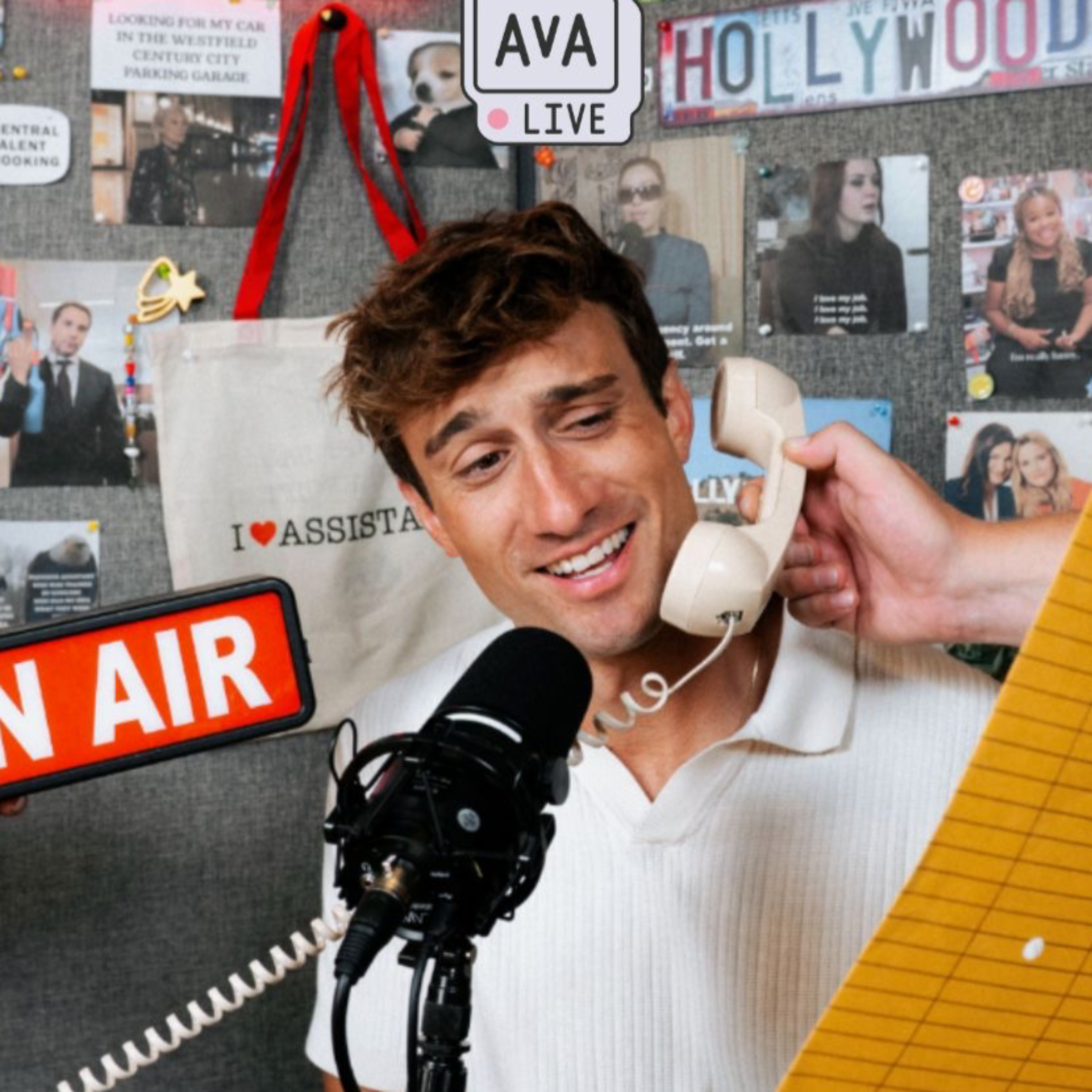
A DreamWorks Assistant Sold His Spec To HBO + Creators of FX's Adults + Daniel Lubetzky
1h 9m 30s
The AVA Live episode features a dynamic lineup of industry leaders sharing insights on failure, creativity, and innovation. Daniel Lubetsky discusses his journey through failure and success, emphasizing that setbacks are essential for growth, and introduces his new podcast "Build or Break," which explores resilience and self-reflection in high-achievers. Alex Reardon details his work in designing immersive live experiences, highlighting how deep collaboration with artists and adaptability under constraints lead to transformative outcomes, such as the massive SoundStone Music Festival in Riyadh. Amani Davis shares how film screenings—like her 1,600 annual events—foster meaningful connections between audiences and filmmakers, particularly through short films and proof-of-concept projects that validate emerging talent. The creators of *Adults* celebrate the show’s resonance with Gen Z, crediting its authenticity, relatable stories, and youth-driven humor for its success. They also reflect on the show’s short, punchy episodes as a deliberate choice to match modern viewing habits. Throughout, the episode underscores the crucial role of behind-the-scenes talent and the power of youth-driven creativity in shaping today’s entertainment landscape. From assistant-led breakthroughs to the importance of vulnerability and authenticity, the conversation highlights how failure, curiosity, and community fuel innovation across all areas of the industry.
It is Wednesday, September 2nd. Welcome to AVA Live. The big story taken over Hollywood this week is a dream works assistant, sold a spec to HBO after a 10-way bidding war. The big news out of that is he has no prior writing credits professionally to his name. It's crazy to see. I thought it was a meme when I first saw it. I immediately DMed him. I was like, "We have to have him on the show." Before we get to him, we have a stacked lineup as always presented by Central Talent Booking. We have Shark Tank and Kind Founder, Daniel Lubetsky. We have Kalos who I mentioned before. We have the creators and showrunners of adults. Amani Davis, who is program 1600 screenings in LA, and the man behind a lot of the lighting that you see with Talent, like Todd the creator of EACHY and many more. But first up, we have Daniel joining the show. You may know him from Shark Tank, you know, from Kind Snacks, but he has a new project we're going to talk about that circles around failure. Daniel, great to see you. I wonder how are you? I'm great. Thanks so much for joining the show. And talk to us about where you are. I see you might be at a museum. Maybe something about the Art of Failure. Where are you right now? We are at the Art of Failure Papa Museum, the crazy, love child of Kristen Schneider, who I'm looking at, who is one of my head of communications. And one of the things we're launching out of podcasts called Build or Break, where we interview some of the most successful people. And then we focus on why are the lessons that they drew from some of the biggest challenges in life and how they've recame them and learned from their toolkit, from advice on how to be creative, how to be resilient, how to work with others, with your best partners, when something breaks down, like really, really go deep and really understand and be introspective about what is it that we need to do when things don't work out. And Art of Failure, which we're all opening tomorrow, here in New York at 22 Wooster, like celebrate, like this is a guitar from Dukesfield, the lead guitarist and singer from Empire of the Sun. Right here is Matthew McConaughey, so many really fun examples of how setbacks of people, however, what they thought of Matthew's example is these little prize that he got from Little Mr. Texas. And all his life, he thought he was Little Mr. Texas. And then one day when he was writing green lights, he saw, and it says, run around. He didn't win. One of my favorite books of all time, that audiobook is unbelievable. What about failure, do you think is so interesting to you? And in your conversations, what have you learned about failure? Well, let me just tell you here, because for everyone, it was still different. When Matthew McConaughey got run or off, he was like at the beginning, I thought I was Little Mr. Texas since when you are, you are to me. And he started reflecting, I was like, wow, my mom's belief in me. Her self-confidence gave me the self-confidence too. What if I hadn't had that? Maybe I would have not achieved so. He talks in green lights about believing in yourself, telling you the stories that you need for you to keep going. There's Mark Cuban over there, a find that he got back there, his Kendra Scott's little hat shop. And at the very, very back are some of my failures, but there's so many gravel stories here. And some of the legends are perseverance, some of them are humility. Kevin O'Leary, Mr. Wonderful, has an ice cream scooper. And when he, his first job, he was scooping ice cream and the owner tells him, "All right, now that we're finished, I need you to clean up the gum from the floor." And he says, "I'm a scooper, not a scraper." And he says, "Oh, yeah." And you're also fired. And he learned first that he wants to be his own boss, but he also learns humility and that no job is beneath that of an entrepreneur of a builder. Yeah, and incredible stories. And as I said before, green light's amazing. You mentioned a couple other guest sharks that, or sharks that you've worked with before, but failure is so interesting because a lot of what you've had in your career success, a lot of the people that you talk to on Shark Tank obviously, some don't get deals, some do, see a lot of success, but you focus on failure with this, maybe in your own life. What does that derive from? What are things that you've had to overcome yourself that make you want to really focus on the challenges and the hurdles of others? I think one of the important things to clarify is that when those failures are happening, you feel like they say French like shit. I mean, it is not easy. And my example over there is when I scraped up some of my savings from my jobs when I was a lost student to start my first company, Peaceworks, and I ordered this line of these glaciers of Sunday tomato spread, maitreux cooperation between Israelis and Arabs, and they all arrived broken. All the glaciers were the olive oil sipping through the cardboard box into the wooden floor and missing all my savings simple way along with that and also smelling very pungent, so I didn't get any dates for a few weeks. But at that moment, it didn't feel good. Like at that moment, I remember crunching. I remember sitting down and thinking, what the hell am I doing? So it's not like every one of us has setbacks and moments where we almost want to give up. Reflecting, what can you learn from those really difficult moments? How can you absorb those lessons? What are your techniques for you to spring back and use that as fuel to turbocharge you to pursue your dreams? Yeah, amazing. And before you had, again, all the success I'm talking about this new show, I think I read somewhere that you were a magician early on in your career to make ends meet. Maybe as young as eight years old, take us back to those days doing magic. Well, to talk about failures, my first shows, I would sit down and start my magic shows and by the time I was done, everybody had left and nobody wanted to watch. And these happened to me multiple times. Like the only place where they couldn't escape me is when I would go to hospital to help kids because they didn't have anywhere else to go. But like, when I was a student, I was 19 years old, I was starting in France. And I started doing a magic show in the streets of Paris. And I developed an audience of like 50 people and then I got nervous and I lost my voice and I just started going, and before you know it, everybody left. The entire audience left and I felt like a loser. But I reflected what I was doing wrong. I observed how this people do it. And lo and behold, they developed a couple of tricks and learned from how to do it. And in your conversations through Shark Tank, through founding Kindbar, and now the new show and even early on in your career, what are some of the biggest lessons from others that you've learned and applied to your own business and your own self? One of my biggest lessons from builder break is attitude is destiny. It's not whether something's going to go wrong because always something will go wrong is what do you do? What's your concern? How do you get stronger from it? And Matthew talked a little bit about how he, when I was asking him like, because he's carries insane, right? He's had so many hits. How do you do it? And part of his secret was that he stretches himself by putting himself in uncomfortable situations. He's almost searching for that discomfort. And I started noticing that builders are comfortable getting uncomfortable, comfortable putting themselves in uncomfortable positions because those are the things that stretch us, working for places that are going to expect a lot from you, are going to stretch you, challenging yourself to be stretched, putting in those reps, trying things out. That's the other thing that I noticed. Everyone in this hallway, all the dozens of people that would talk to an interview, everyone tried things out. Just try things out. Because if you don't try things out, then for sure you're not going to be able to achieve it, but if you try things out, many of them are not going to work, but eventually you're going to develop the pattern recognition to figure some of those things out. Yeah, and uncomfortable situations. One of my favorite quotes by you is I believe that you say the best ideas usually start with that will never work. Where have you seen that applied in your life? And where have I been some of the biggest hurdles you've had to overcome that maybe look crazy on paper when you went out and tried to pursue them? But also one is because a lot of times you don't know what you don't know and that almost helps you just try it out. A lot of times is because you believe it. At the beginning when I started Peaceworks, my first company, I had no idea how hard it was going to be. I didn't even realize that it shouldn't be that hard because at 10 years, I was paying myself a $24,000 salary and had a Stanford law education. A lot of my friends were being winded and dying and taking them blockcars with us walking up and down the streets of Manhattan with my jars of Sunday tomato spread, trying to force feed everybody that could be a victim of mine to try the product, and slowly but truly, I figured it out. The best example of my stupidity is our first brand was called Mushapu Peak and Alimish Mumkin's world-famous old natural gourmet foods. And I still don't know why it didn't work out, but eventually-- I don't think anyone puts you on the trademark there. I think you had that in the bag. But eventually we grew a lesson from that and came up with kind and just a simple word. And so all of these mistakes teach you something. Yeah, and I mean, obviously the immense success with that. I wanted to bring on. We actually have someone in the chat right now named Rafi who's a recent graduate. I thought it'd be pretty fun if you're down to bring her on and ask her a bit about maybe herself and some career advice.
you're okay with it? - Absolutely, Raphael or Raphael? - Let's do it, we'll find out right now. Raphael. - Raphael, but you can call me Raphael. I'm good, thank you, how are you? - Great, take it away. - So Daniel, first of all, it's lovely to meet you and Warner, thank you so much for having me on. Daniel, you have been on both sides of the table. You've spent years trying to get people to believe in you and your ideas and now you're in a position where people are constantly trying to get you to believe in theirs. What do you think younger people misunderstand when it comes to selling or pitching themselves? - I love that question, Raphael. I think the most important thing is to be yourself and do not pretend to be something you're not and not to try to have the answers to every question. When I ask questions and somebody tells me, oh, what's a really good question? I don't have an answer to that, let me get back. Of course they need to have some answers, right? But it's okay to not have all answers. It's okay to not get everything perfect. It's okay to acknowledge self-doubt, to acknowledge things that have gone wrong. In my opinion, that's a sign of strength. For me, when I hire people, I'm looking for people that are introspective and that are comfortable growing from their mistakes, because literally you can map it out. And if people are comfortable being self-critical, they're gonna stretch themselves and they're gonna continue growing. But if somebody either is not sufficiently self-confident to ask themselves those tough questions or for whatever reason, they're arrogant and they're not willing to be introspective, then probably they're gonna have a limit to how much they can grow. - And if you believe, Rafi, you've been amazing. I don't wanna end on that because introduce yourself and tell us a lot about yourself, 'cause what you've done is amazing in school and we've gotten to meet in person. - Thank you, well, my name is Rafi El, but of course you guys can call me Rafi. I just graduated from SCAD. I was doing producing and casting over there and I was also doing a lot of production assistant freelance work on the side. I'm moving to LA in a week. Yeah. - What's your dream gig? - Dream gig, oh, dream gig. I think I kind of just worked my dream gig, honestly. I was on this new Judd Apatow movie called The Comeback King. It's coming out in a little bit over a year, but I was a PA on that and it was so much fun. - And Rafi, what I like about being a PA and I like your assistant's versus agents, concept burner, but what I like the in reality, you learn so much in your first jobs and I'm telling you, you're gonna 20, 30, 40 years later to look back at your experience with Judd Apatow and being a PA and you're gonna draw so many connections to how much you learn and just putting yourself out there, doing all of this jobs, scraping up the gum, carrying the boxes, observing, observing, and just being open to observe and observe and just putting the work and look back, they're gonna be probably the most fondest memories, your early jobs. Unbuild or break, which launches tomorrow. When I talk to some of these iconic people they ask them about their first jobs, everybody likes off. Everybody gets excited and leans in and tells you about the craziest jobs, picking up poop, Mark Cuban selling garbage bags door to door, crazy jobs, but formative influences like no other. - Absolutely, the title to me does not mean as much as what I'm learning throughout the process of it because I, if all goes well and I'm producing and I'm working on this show one day and I look back, I will remember every single little thing that maybe did not seem super memorable in the moment but helped me along the way in some way, shape or form. - Is there anything you noticed that people could have done better or different in that set? - Yeah, I mean, and probably me too, you know, I think we're all, we're all learning but everyone tries their absolute best. - 'Cause one of the things we did at a kind is on the first week that somebody joined, I would meet them personally and I would talk to them and explain, listen, you might be just out of college or just in your first job, very, very junior, starting. You are the most important person here because you're gonna observe things that all of us that have been doing it for too long may not observe. And so that's really, really important to create a culture. We talk a lot about our build or break. One of the best practices to create a culture where everybody's an owner, when everybody thinks like an owner, when everybody's given the opportunity to challenge conventional wisdom because the way you actually really create values observing things that somebody else has observed and being comfortable saying, "Hey, why are we doing it like this? Why don't we do it differently?" And very often times it's just always been that way. Well, guess what? Sometimes if you come up with a better way to do it, that's how you change the world. - Yeah, I think after a while it kind of becomes muscle memory and you kind of get entranced and doing the same actions over and over again and you maybe forget to think outside of the box or maybe that passion that you had is still deep down inside of you but it's not showing in the way that it would for younger people or newer people. And to your point about making sure that that passion stays alive, creating the environment where everybody feels like an owner and senses that responsibility. And it's also a question for life, right? It's not just for a company that you're building but for a community that you're building to think like builders that every one of us has the responsibility to be a protagonist in our own lives, to never accept being victims, to never be pigeonhole-dominant thing for all of us to change the world together and build a break is very much about equipping people with the porcies of a builder's mindset, curiosity, compassion, creativity, and courage. And on build a break, every week, we talk to some of the most extraordinary people and ask them how they make sure, what are they very proud because we talk philosophy with Martin McConaughey but we also talk practical tours for your craft, for your acting, for your entrepreneurial stuff, for your creative process. I love asking people about their creative processes because Luke's creative process for coming up new music is very different from everybody else's, but ultimately a lot of us can get a lot of really good ideas from these amazing people for how to lean into it ourselves. - This has been one of the highlights ever in this show. I could be a fly in the wall listening to you both speak the whole time. I know we have to cut to this next interview but thank you both so much for joining. I could sit here and watch that. I felt like a passive viewer for the first time and really absorbing what you're both saying. Raphael, congratulations, what you've done. Daniel, thank you so much for joining us and your wisdom, your advice, and we're so grateful to see you in this show. - I'm going to play in the corner. Thank you so much for having me. - It was a pleasure and good luck and we can't wait to see you in person when I'm in New York. - I look forward to it. - We'll see you. - Bye, thank you. - See you, bye. - Bye. - What an interview. Next up, we have someone from the music world. You've probably seen his work without knowing his name. He has worked with iconic artists, like Todd, the creator of "Each You" and many more. We're going to play a little clip here to show you a bit about his work. ♪ Someone's keeping watchin' ♪ ♪ Someone's keeping watchin' ♪ ♪ Someone's keeping watchin' ♪ ♪ I don't have them in my shadow, I don't have them in my shadow, I don't have them in my shadow, someone's keeping watchin' ♪ ♪ Someone's keeping watchin' ♪ - Yeah, so we got Alex Reardon and joining us. He's the president of "So How Are You?" - How are you? - Good to see you. - I'm very well, thank you for having me on. - Thank you for joining. Can you give a bit of info and background on who you are and the type of thing you do? - Who am I, yes. Alex Reardon, I've been living in LA since '98. I joined "Silent House" in '18. He came president quite quickly thereafter. We design live experiences, tours. As you can see from the little photographic resume behind me, we do some corporate stuff, some Tyler's and music festivals, you know. We design all the things you see at a show. - And talk to us about what goes into that process. I think a lot of people go to show, go to a festival and be entranced by the visuals and the sound, they don't only think about all the work that goes into it. So maybe pull a specific recent tour example. We showed Tyler video, but talk to us about the creative process behind it. - Well, if we're lucky, we get time. And I think everyone watching us will understand that time is the most valuable of commodities 'cause it can't be replaced. But when we have enough time, I've really tried to sit down with the artist and just discuss what the tool means to them. Before you get into the actual design stuff, because if you do that, then you can anchor everything on what they see as the most important part of the tour. Oftentimes, people that come from the technical side of what we do, we'll start with, hey, we've got this new technology, we've got this new amazing video screen, we've got new lasers, pyro, whatever. I try and start at a slightly higher level. What's the goal? What do you, the artist, or the corporation, or whatever? What do you want the audience message to be? What do you want them to feel? What are these highest level things that you need and want? And from there, we start sketching, we start mocking up ideas, we bounce them around back to the time, we get a lot of feedback. From that, we then do all the preliminary drawings.
on the schematics of lighting, video, scenery. We then send that out to get bid, find out that most of the time, most things are too expensive because that's just the nature of the beast. But knowing that that's what happens, we come up with a appropriately reduced version. But having had that conversation, the highest other conversation first, means that whenever we're at an inflection point of what to do if the budget goes down or the venues change or whatever changes, we know how to make the changes because they will still reflect the strategic goal. From there, the budget's gonna prove, stuff gets built, it all rolls into production rehearsals. And then that's when the real magic happens, that's when the idea is really coalesce around the artist because it becomes real. No longer is it just an idea or a piece of paper or a render or an animation, it's real. And then we get to that, what I still think is one of the most magical moments of my job, which is that opening night when the house lights go out and 20, 30, 40,000 people start screaming their lungs out. And it's fascinating that as animals, we pick up on a vibe and it doesn't matter what you've gone through, it doesn't matter how exhausted you are, it doesn't matter what else is growing in your life. At that moment and the screaming starts and the hairs stand up on your arm, and you think, oh, it was all worth it. - Yeah, I used to work at WME and Live Nation, put on music festivals, live music will never be replaced, but in large part, due to the sensory, the experiential nature of the experience of the fans and being connected in real life, what do you think is the most ambitious project that you've ever been a part of? - That one. It's the, it's the, it's the SoundStone Music Festival in Riyadh. I think the stage was three and a half football fields wide. When the Guinness Book of World records for scale, it was absolutely, it was 18 months in the making. Tim, the cap to our partners at Tate for just making it happen, and our partners in Middle East, the people that put on the show. In terms of logistics, that was the most extraordinary thing we've ever done. I mean, they, I was sent an all chart of just the creative department with me here and then like 10 people and then 1,000 and then more, and I just either shut the thing, it gave me anxiety, but it was the most rewarding too, because of the scale of it. And also the great, the great idea of traveling to the other side of the planet and having the best people from everywhere. We had phenomenal partners in the region, we had phenomenal partners from Europe, from all bonds from North America. And that was, yeah, that was extraordinary. - Yeah, I mean, I've seen in the Guinness Book of World Records and I've seen it behind you, but I'm gonna go into the creative process of two specific people that you worked with. One, see the name of VG that we were talking about and he's made a resurgence in terms of his music. I grew up listening to him, I was inspired by him. What was it like working with him? - That was phenomenal and I really missed him. I think he was a phenomenal talent and also an amazing, great human being. The show we did in 2012 with The Human Head was actually a design after thought. We'd already had a different design which I've been approved and I had this flash of inspiration. I suddenly remembered my hazy days going to Raves in the UK and realizing that there's a great thing about music 'cause it does appeal to everybody. It's a human experience. It's a every man. So I thought what reflects every man, the best and obviously a human head. Androgynous know our deliberately with our eyes 'cause they are the thing to the soul but I didn't want to be specific. And we just basically carved out a section of the head for the DJ booth to go inside there. It was groundbreaking on a lot of fronts. Projection mapping onto organic shapes was very complicated back then. But he really got it immediately. He just, he just went, "Yeah, that makes sense." And it was so different to what Anywells is doing that it became really exciting for us. - Yeah. - And he really enjoyed the kind of rock and roll-ness of the idea that at one point in Arenas, the top of the head would sort of lift off and fly around the Arena, which was kind of hysterical in a borderline spinal tap kind of way. - Great memories of him actually rehearsing how to get out in the event of a tech photo. We had the regas repelling out of the roof, clipping him on and then repelling down. He thought it was great, dude, go around do it again. Wonderful guy, really missed, really missed but that was a phenomenal experience. - Yeah. - Someone will never be replaced and replicated a brilliant mind, but someone else that's a brilliant mind in the last minute here, I wanted to ask you about Todd the creator. What makes him so special? - Well, where comes to Tyler? - I mean, I think it's really important that everyone watching this and listening to this maybe later on understands that I am this much a facilitator for his crazy ideas than a designer. I mean, this all originates from his brain. I am there to facilitate and to bring my experience of nearly 40 years in the business to make it work. He is also, and I think many people don't know this, one of the most wonderful human beings you'll ever meet. I mean, forget about just in the business. He kind empathetic, funny. He has an empathy that is so cool because you'll notice if there's tension in the room and say something so historically funny that it just breaks the tension and then everyone's able to work better. So no, I've been with him before album cycles now and I'm really looking forward to whatever's next in the mad, mad, wonderful world of Tyler. - Yeah, and you're such an integral part of their success in Asia, your facilitator, but none of this happens without you, the beauty and the, I guess the funnel from their brains to our eyes that you bring to each every show. Alex, I want to thank you for joining us. I guess before you leave real quick, one piece of advice to young people out there and want to bring into a world that you've system. - A couple. First of all, I think there is a inverse correlation between the perception of glamour and reality in any job. So the more glamorous and cool it sounds, it isn't. It has moments, but it is incredibly hard work and you will always be exhausted. And the other one is not your show. Don't think of this because you created the idea and it's part of your ego, it's not your show, it's the client show. And if they want to change something, put your ego to one side, fix the problem, move forward, keep the client happy. - Amazing. - Well, Alex, thanks so much for joining and congrats on your success. Can't wait to see your work live very soon as a show. - Well, somber tour is starting quite soon and that's going to be something phenomenal. - Okay, drop, don't leave without telling us what should we expect from the somber tour. - A phenomenal rock show talent is beyond his age. It's kind of weird. I was so blown away by the first show I do with him at Coachella. And we go into full production rehearsals next week and it's going to be quite something to watch. - Amazing. Well, thanks. Yeah, can't wait to see it. And I saw you now some days and days as well. But Alex, thanks so much for joining us. We'll see you soon. - My pleasure, take care, thanks. - We'll see you. - As always, each and every week we have Kira Jo, joining us to talk about the leading ladies of entertainment. Kira, take it away. - Hi, I'm Kira. I'm an ABA student ambassador and today I'm going to tell you about this week's leading ladies in the business of entertainment. First, Deli Parton's team shared a slate of projects and development before her death, including a biopic, docu-series, animated series, scripted series, musical documentary, and avatar show. So we can see that her legacy is really intentionally being carried forward. She worked until her death and had this really long road map of projects. And so her entertainment empire is going to keep expanding. Onwell is launching Onwell Summer Games on September 7th, bringing together 16 reality stars and creators to compete for $250,000, and this is following Onwell Winter Games. This also comes as who canceled love overboard after one season, but it seems like such a small setback with everything that Onwell is building. Lastly, veteran talent agent Melissa Herschenson is leaving innovative after over 20 years to launch the Herschenson Group. She's company focused on talent management, creators, entertainment consulting, and brand partnerships across traditional and new forms of entertainment. And we're seeing such a rise of these independent multi-hyphenated businesses, especially in the representation world. See you next week, AVA. - We got a special guest here. Amani, we have, we go back. We go way back. One of our first big things that we did in the movie film TV area was a couple screenings over a summer, and then we had a screening of "Entourage the Movie" with the iconic Rex Lee aka Lloyd. We've a Monty joining us here, and so thrilled to be here. Amani, how are you? - I'm good, how are you, are there? - It is great to see you. I always see you in person. I can see virtually. It's not as good, but what's behind you? Walk us through some of the things in your office. - Yes, we're at the American Central Office right now, and so we have these like the middle mini posters of our different festivals and initiatives that we have. So we have a podcast, so the American cinema tech podcast, "YanFest", our "New York City" fest that we do like every year, "Oltra Cinema Tech 70", do all of the seven of you in your prints, "Friend of the Fest", that's our podcast festival, where we have podcasts, post like here right there on screenings and such, we just had that legally, and then proof. Oh, and this is not a fiction, this is our documentary festival.
Documentary and nonfiction and festivals. So we showed things like, the most amazing documentaries you've seen and then like Jackass, because it's like really like towing a line between like nonfiction and then prove some festival, festival that I run. Yeah, which I'm sure we'll talk a little bit about. - We will, but it sounds like you're not very basic. You only do 1,600 screenings a year. That sounds like pretty easy. Talk to us about those though. That number is insane and that some of the people that you've been able and or they've been able to talk to you that you've interacted with during those screenings. - Yeah, it's really wild. It really never ends. We're opening you around and we have all kinds of screenings. We have four different theaters now. We just opened a new one in Westwood, the director's village. And yeah, you know, we're happy for more. So we show old movies, new movies, all kinds of things, retrospectives, maybe people have seen the Timothy Chalamet, live, retrospective that we did. Earlier this year, we're fresh. So we have all kinds of folks like coming in and revisit their old films, talk about their new films. And then we do what we love doing anniversaries as well. And I think we did an anniversary of American Psycho. And we had the screenwriter do a virtual Q&As. We love bringing in like guests and we're all about connecting the audience to the filmmakers, film history to the future. Like that's in our machine statements. So we have so many different guests. I don't have the number of the top of my head of guests that we have for a year, but it's up there for sure. - It's a lot. I always see you like on Instagram, like that is iconic. Who do you think the coolest interaction or some of them has been? You mentioned to me, who else? - Yeah, one of the ones that when I first came in that really stands out to me is Jordan Peel. That was great. We did the world premiere of the 70 millimeter print of note. And I feel like that was just at a really great early standpoint of the growth of the Americans in the tech and the audience is getting younger and such too. That was just like artistic director comments who don't add the time of like audiences. It's like so young here right now. And I gave Jordan Peel's water, maybe he remembers me. - He told me he remembers it. It was the best water he's ever had. - Oh God. - What are you, what makes you so optimistic? You're just like me. They're very optimistic about the film industry. But you know, AMC just announced, they're launched their own indie distribution label. You guys focus on a lot of films at all scales. What makes you optimistic about the current state of the film industry, but more specifically about theaters? - Yeah. I mean, it's clear that people want to go to the movies. That is like, like undeniable. People want to go to the movies and we're just seeing it back to back with some of these great movies that have come out this year. And it's just a matter of what kinds of movies are being made and how we actually getting the word out to people about movies, which that falls on. That falls on like all of us in the film industry to do that. You know, it's not like, oh my gosh. Audiences like we can't like beg people but like come to the movies, just come to the movies. It's like give them a reason to do that. So I'm very optimistic. It's really cool to see like new up and coming distributors, come out and we work with some of them with like, hey, I'm ranching up and starting my own label now. Or we're doing this thing over here just being really experimental with it. So it's great. And you know, we're very open to playing all kinds of things from you know, big studio films having in gas and then like the smaller, you know, I think we played a film that cost like $7,000 and it was like sold out, I don't feel this. So it's like, it's clear that people want to go to the movies. Yeah. And one of the things that you've started and now Ron is a proof. So it's the only festival dedicated to proof of concept shorts. When I talk to students in film school, a lot of them are like, I am making feature films. I'm only going to make feature films. What is so important about shorts in 2026? Yeah, I mean, with that, with thinking about, oh, you know, there's room and theatrical for more players and there's so much opportunity there. I think the concept short film has become even more important in that conversation too of like, can you prove as a new, upcoming filmmaker that you can make something theatrical that gets people engaged like on the short film festival circuit to then get that investment for the next stage. I think it's not something that everyone has to do. So, you know, there's so many ways to make a movie. People can write short stories and then they get adapted and do a screenplay, like, people can do a comic book and then they can adapt it. Or you can just write the movie and make it with like your friends. But you can also have this really cool testing around of the proof of concept, such as like, being insulted with blotch, such as easy-rated, with insecure, and now that's starting as a web series. Broad City, one of my favorite examples because the original web series of Broad City is still on YouTube. You can go back and like watch the first episodes, which like the first episode of that is so funny. It's still so funny, and they did it with like $2. And so, yeah, as we become more invested as a industry and a community and the theatrical experience and really bringing people out to the movies, for the concept short film, you can like really test that out and see how it works. - I love it. And for those young filmmakers out there, you have your eye across and you're bringing in, and you're curating a lot of the talent, and programming things. What are things that stand out with IP, with shorts, that catch your eyes a programmer? - Yeah, it's really about doing something different and being confident in that too. We talk a lot about confident, filmmaking, competent, filmmaking as well, some of the industry partners that we're bringing into proof are looking for people with theatrical sensibilities or like commercial sensibilities. That was like, these are terms that I learned were all just starting up proof of like, oh, people are looking at not only the thing that they're watching in that moment, but then also how can that style translate into other maybe like franchises or IP that they have that they could picture you being in? But you know, I'll be a part of a filmmaking career. So we're looking for competent filmmaking, something that you see a lot with short films. I don't know why I think it just comes to the bottom of the list, but people have like such beautiful cinematography, amazingly production design inside, and then like the acting really like is just not hitting. People will cast their friends and I think it's just a thing that comes to like the bottom of the priorities when they're like so in the visuals and stuff, but like pay attention to those performances because ensuring that kind of stuff to industry people, they wanna know that you are going to be able to take care of like actors that you have an short film, but also like bigger talent, you know, if a whole conversation is like attaching a list actors to scripts, to concepts, IP and stuff, can they trust you with those people to make them shine? - Yeah, amazing. And one of the best news shows on TV in one minute where we have Monov, you see adults yet? - No, not yet. - Okay, well it's your homework tonight. We're gonna have Monov, so just continue watching. We'll get a little insight into that. But Monov, thank you so much. I'm so inspired by you. We have to do another screening. The one with the entourage, the movie and Rex Lee sits as probably my career highlight of all time. And congrats to you. You've brought so many new fresh, diverse faces and voices to screens and in front of people. So thanks for what you do for the industry, especially in LA. - Thank you. - You're the best. We'll see you soon. - Bye, Warner. - Bye. As I mentioned, we have the two creators and showrunners of the new, what I would say is the best show on TV adults. We're gonna give you a little sneak preview on what we're gonna see in season two. Let's roll. - All right, bye. - The neighbors are complaining about the crop tops. - Oh, that's not what I was talking about. - Oh, she's just bored. - Three, two, one. - We are older now, but also younger than we'll ever be. - We have the two creators and showrunners of adults. If you haven't seen season two, what are you doing? You're missing out. We're gonna bring them live in one second. Hey, how are you? Ben and Rebecca's good to you. - Oh, wow. - Hey, Warner, how's it going? - Thanks for having us. - It is so great to meet you both. I see you both congrats on adult season two. It's been amazing. What's been the highlights as the show's been out? - Honestly, the fan response. I mean, it's so funny. I love hearing the positive feedback. More than that though, I really like the stuff they're making. The fan fiction, someone's been doing these really great text message conversations between the housemates. I'm like, that's funny. That's it. - Yeah, our fans are really funny. You're finding ourselves laughing a lot. - One of the things that I gotta ask you straight up, I think it just came out, I think breaking news. Fired from TV, this account that has been on set. I see those faces. We gotta get a confirmation or denial. Is that the best marketing stunt I've ever seen or the most outrageous thing? We're both. - What is the breaking news of it all? If you don't mind telling us for it. I got someone in my ear saying that there was something posted saying it was related, but I have no idea. All I wanna say, if you haven't seen it, Fired from TV, one of my favorite things on set, it got me so excited for season two. So whatever's behind that, I'm sure it's you both are brilliant. - That's very kind. It's been pretty complicated. - Yeah, you're gonna have to speak to our lawyers about that. It's been really, you feel like you have a safe set or the PA's, it's just been tremendously disappointed. - I'm sure, what makes a good PA?
outside of that. Oh my gosh. First of all, we love our PAs. We are very open about the fact that every young person that works on our set is part of the network of taste and especially on a show like this. Honestly, I mean, you know, it's a funny thing. It's sort of a two-part thing because one thing we in the cast talked about really early on when we were starting this is like, look, in another world, each one of us would be a PA on the show and be so excited to be a PA on the show. So like, aware that it's like everyone in this orbit is making this show happen and sort of how lucky we all are to be in that position. But yeah, I mean, we also often found ourselves turning to the PAs to be like, is this cringey? Like, is this, does this feel true to you or does this feel like the way that you're sort of like approximating? Like, does it feel like a carbon copy of the real thing? Well, let's expand on that. This show is hitting in such, I'm not Gen Z. I'm 33. They call me "unk" in here. But this show is hitting so close to a generation that directly needs their new sitcoms. I grew up with always sunny. I'm from Philly, but this is hitting so hard. Why do you think it's resonating with a youth audience? I mean, I think when we first pitched the show, we used real photos of our real friends and we told a lot of stories that were kind of based on real things that happened to them. You know, bad dating stories, stories about the time they went to the bank and realized in real time that they actually had no idea what a cash year's check was. It didn't realize it was different than a regular check. So I think that from the jump, we really were like, we are never going to be able to represent the generation. Like, you cannot even try. But what we can do is tell the story of these five characters. And even, you know, when the actors came on and added all of their dimensionality and sort of specificity to them, we just started being like, okay, like, we're writing that Anton, we're writing about Philly, writing about Paul Baker, that we can do. And if people feel like that is their friend group, hopefully they'll respond to that. Yeah. People want to feel seen and they want to feel like we've seen so many quizzes. For instance, like, which adults characters are you, which character are you? And I'm an Anton, oh, I'm just in here. I'm a Billy. That categorization and that social relationship with the characters, we've been really blown away until really grateful that yeah, the generation is showing up for it. It is. And it feels like a show that was created by a generation, not for a generation like many others. And they've a lot of others have been canceled because of it. And that's been the backlash. What does the creative process look like in the writing room, prepping for season two and also season one? Well, look, I have to say we, when we pitched this show, we were younger than the characters and we thought, oh my god, we can't even imagine being 25 for a brief, beautiful moment. We were the characters age. And then by the time we were shooting the scene. So they're really disgusting happen where we kept age. Yeah, right. That happens. I'm just kidding. I'm just kidding. Yeah, Nick Crowley, I could produce her at one point when we were shooting season one. He goes, you know, if you want to age the characters up a bit to be your age now, I would understand. We thought we're 25. Calm down. So look, now, one thing I do have to say, though, which is an exactly an answer to your question, but this show was championed by the assistance that art can see the assistance at effects, junior development execs. And they were the ones bringing it to their boss and saying, these are my friends. This is how they're talking. And this show got me because of the assistance in these different places. And we are so immensely grateful. And I do think also it is a testament to the power of those people where it's like, you know, people are turning to you to be like, is this cool? And we really felt so grateful that we were advocated for by those people. Yeah. I want to take two seconds, Jason Mondry, Hannah Huang, Rachel Savage, whom I'm forgetting. Well, who signed us in the first place? Georgia Colledgy, that is who I'm for. Yeah, we were signed essentially by a UTA assistant who brought us in. So Blair co-hands assistant. We met her at a party. We were talking to her about what she was up to and she set up the meeting with Blair. And so literally our whole career is because of these people. We love Blair and we love the assistance. Blair has been on the show. We love Blair. We love Blair. And our other flex, I will say, is our TV agent, Alan Holderman, who singularly put the show together, was named as ABA's nicest agent last year. Nice isn't smartest, obviously. He's probably also together. I'm just trying to get a P.A. spot on set by. Yeah, well, maybe we'll see. Does it confirm it, maybe? We'll see. But no, I want to ask about the length of the episodes and the length of the seasons. I think the biggest bone I have to pick with you both is why eight episodes. I binged it in a day and I go into red and everyone's like, I binged it and I'm sad and I've nothing to do. Is that reflective of where Hollywood's headed now and what was the decision around eight episodes shorter, 20-minute length for each? Well, I'll start with the easy part of the question, which 20-minute was important to us. We wanted to try to challenge ourselves to write a sitcom like there were commercials, even though they're often not when you're watching our show. We wanted to do something really tight that came together at the end that felt like it had the pace that we grew up with. So that was important to FX, that was important to us. And I will pass it to Rebecca for the harder question. We would love more episodes. I mean, I do think that that seems to be more and more than model, as these seasons are quite short, especially for comedies. But it doesn't mean that they have to be that way. And I think honestly, FX have been such wonderful partners to us throughout this. I think they're very receptive to feedback, to reading the room. They took a chance on us even renewing for season two. And I think they've been really happy with the response to season two. So I think it's all just to say, if anyone, they've made some of our favorite sitcoms of all time, you know, they made the league. It's always sunny. What we do in the shadow is Atlanta. Like they, Dave, they just do this so well. So I think, I think that, you know, John Lane Graph is such a genius and has a soft spot for the, the old comedy, like this sort of proper sitcom. So we'll see. We're keeping our fingers crossed. But for now, I think we're just sort of like, give us the number of episodes and we'll fill them to the best of our ability. Yeah, I love it. I mean, that's, I think, why it's working so well too. You said, I can barely pick something on my screening on the big screen. And once I do them, like an hour and a half or a three and a half hour movie, I can barely watch a real, but 20 minutes is perfect. And it's sad. It's lean back. It's lean in. It feels good. But we do have a quick, so a couple more questions. We do have a question from the chat from Nick. Hang comedies are not getting made anymore without a hook or a dead body. What do you think was the secret sauce and selling this and getting it made? So our did kind of have a secret hook, which is, like I said, we were really lucky and really young when we pitched it. We were fresh out of late night. The hook for FX was, what if we gave this show to these two idiot 23 year olds? Like, it was really daring. And we want to give FX their flowers for 25. Sure, sure. And emotionally mentally, 23. And that was bold. And, you know, I'm making a show about nothing is tail as old as time at this point, but letting the generation talk about themselves. Yeah. For me, it's, you know, our writers room. It permeates the actors we get to bring on in this sandbox that we have gotten to build. So we feel really lucky for that. Yeah. And I think on the sort of other side of that too, I mean, it spoke even to the way that they cast the show, you know, some of them, some of these actors had been in a few projects before. Oh, and feel, you know, had had these amazing sort of star turns in, you know, theater camp. And he'd done these roles in dollface. And, you know, I love, uh, he's a scene stealer. He's a scene stealer. And I think, but I think, but a lot of these actors, I mean, he was jacking in his first audition. Yeah. It was very Paul Baker, which is a very Paul Baker to just show up and be so damn charming. But, it was this cool thing where I think they were like, let's just take a chance on this. It's making us laugh. And I think at every step, a long way, there was a little bit of a like, are you still feeling like, this is good? I think we are too. Let's just see where this goes. And we also have to give really proper credits. Like they put some incredible adults in the room. I mean, Nick pulls stir of this thing, getting to do this show and that sort of like, Crowley and sense of humor, which is what if we really go there, but what if we try to make you feel something? That is such a testament to this incredible, you know, empathy, comedy empire that he's built. Stephanie Robinson was our show runner, season one. Sarah Nautalis, who is FX the secret weapon is one of our, you know, producers and writers. So we were learning a lot on this on the fly. And they've had some insurance there as well. It's amazing. You mentioned casting. You actually have a segment here and that triggers something. We have a beautiful pink paper shredder. You can't see it, but you will when you rewatch this. Yeah. The segment with many chat who powers a lot of creators behind the scenes. I think we're going to play a little game here. What do you say? Cool. We love it. Cool. So we read creator hot takes or hot takes from a creator economy in Hollywood. And you either say you believe it and talk about it or you shred it. I'm going to try to put this piece of paper in that pink shredder. Are you ready? Let's do it. I'm nervous. Here we go. These are my first lines. It's actually an audition. I fooled you guys. All right. Creators should stick to TikTok. They don't belong in TV shows. I'm tired of them trying to act. Do we agree with that? Or have there been amazing creators in Hollywood? Oh my God. Hard to agree. Okay. Let me shred it while you talk. Keep going. Let it shred it twice. shred it twice. Jack Innan in a perfect example. He got his start on TikTok. He was a creator. And what a creator is is an actor and a writer. And I mean, I'm a producer and an editor in Jack's case too. Yeah. Which is amazing. I mean, I think that to be a creator, you have to know your own voice. You have to put in those 10,000 hours of home news channels. And it's not to minimize What a creator on TikTokers.
Instagram does because I think there's plenty of people who are happy doing that full time, but I think for people who want to make the jump over, look in the same way that jumping from writing to directing is hard, not everyone happens to be good at both of those skills, but a lot of people do. And, you know, I think by the time Jack showed up on set, even though it was his first audition and it was his first time on set, he knew how to perform and he knew his voice and he knew how to improv because he'd been doing it for himself for years. Hard thread. I love it. I love it. You will see that thread. Perfect. Usually, like stuttering or shaking, trying to get in there with email. So, let quickly in the last two minutes, I want to hear about some of these guest stars and guest stars that are in the season, Jake Shane, others. Talk about who have been some of the most memorable guest appearance, you don't have to make favorites, but memorable moments and how those actually come to be. Yeah. I mean, look, Jake Shane's great example in bodies, Everton Irbeck had just mentioned. He was doing some of the funniest sketch comedy anywhere in the world on any platform a few years ago. Now he's as big of a deal as anyone as he deserves to be. The fact that we are one of the first people to put on television is crazy, and we will not be the last. On the other side, Raven Simone, I mean, who's Raven Simone? So many years. A comedy icon. We were pinching ourselves that we got to work with her. Sasha Mamma too. Someone who has lived and breathed this genre, we'd be so lucky to even be considered an lineage of her incredible work. And the fact that she came on to set and no one saw a show. We were all kind of hoping to see Shoshana. She came up. She was this Nina character that she plays in the finale. I hope you guys watch it. She was a stone cold killer. It was awesome. It was such a transform transformation. It was such a cool side of her and we would die to bring her back and see more of her in this way. She also has this amazing line on our show. Yeah, where she says, you think you guys are the first ones to be young and adorable in New York, which I was like, good, read our characters to fill a little bit of that. Love that. So who are we going to see in season three? And season three is happening, right? Eight episodes. You're telling her. I mean, from your lips, but we have a long list of guest stars that we would die to have. We want to meet more family members. We want each exes. We have all this sort of like lore that we've dropped about these characters. And I think that it's time we need some of these characters. Yeah. We've seen some people get very excited. Paul Baker mentions that he has a sister named Blair Baker. Of course, also a first name, last name character. And we've seen some band casts that have gotten us very, very excited. So hopefully she'll be someone that we meet in the future. I love it. And just to end the episode, we always ask for some advice for young people out there who have that creative energy, who have an idea, who want to be in your shoes one day. What is one piece of advice you have for them? Oh my gosh, trick your bosses. Yeah. Genuinely. You have the power of your youth and the power of having your finger on the pulse of culture. Make sure to convince them that something's a big deal when it's not. You want to write a pilot about reptiles? Tell them that they're all the fucking rage. We certainly did a lot of that coming up and we used our youth to our advantage and plan to eke out the remaining year or two of our youth to do so. And if you're lucky, you'll then find some people that are a little bit younger and a little bit more in the know as you come up. It is it's the one commodity that cannot be bought or traded is sort of the fact that you have your finger on the pulse of what your generation is interested in. And whether or not they admit it all the time, that's what people care about. So hold on to that, figure out what really makes you and your friends laugh and then run at that. I love it. Thank you both for joining adult season two, season three, season 100. We're excited for them all. You're the best one. Thank you for having us. You're the best. We'll see you. So as always, we have S.J. joining us to talk a little bit about what it's like to be an assistant in Hollywood. S.J. take it away. You're on baby sitting duty. I'm allergic. No one's allergic to dogs. Try the maximum is Jackie. Can you spell that? You should know how to spell that. Okay, try and influence them. No, don't do that. Don't do that. Don't do that. Don't you want me to be on the flight to Japan right now? Find out who somebody should always chase guy. Do you go to my son's bar mitzvah as my husband? Can you do that? Can you figure out who taught my dad my ass when he ate three? My nephew wants to meet me. My nephew wants to meet with Matt Damon. Make it happen. Okay, and appointment with Dr. Pepper. The soda? No, he's my guy. I want this off your desk in two minutes. Follow the Swedish airport. I lost my vape there. Can you get me an ayahuasca for this weekend? I don't think legally. Just put it on the corp card. Thank you, S.J. We are back. And about four feet away from me, sit someone who just made the Hollywood dream a step above. His name is Kalo's. Introduce yourself and talk to us about why you're here and who you are. Yeah. Hi, everyone. I don't know where I look at. I'm Kalo's. I'm an assistant at DreamWorks. I'm still an assistant at DreamWorks, actually. I'm here right after this. I'm going to go back to my desk in Glendale. But yeah, I had the craziest month of my life with this pilot that I rode and all the stuff that has happened since then. Yeah, ultimately selling it to HBO, but it's been the craziest month of my life, for sure. I mean, I can only imagine. So on Monday, I see a headline, a deadline, it says, and I open the show with this. A DreamWorks assistant sells a spec to HBO 10 offers, three-way bidding more. And I said, I open the show with this. I'm like, that's a meme that our team posted. That's iconic. It's amazing. I do a little research. Stalk you a little bit. I'm like, holy eff, this is real. And one of the coolest stories I've seen by far in Hollywood ever take us to the beginning of this all. I mean, I want to hear you're obviously, I believe, at Harvard as an English major. But in your own words, walk us through your journey. Yeah, I mean, it was, it has, yeah, like I said, the craziest month of my life. I feel like every day of the past month, I've woken up to the craziest piece of news that I'd ever heard before. And then the next day, it was like an even crazy business. I guess it started, I mean, I graduated in 2023. Did this fellowship thing time on, moved out to LA in 2024, got a job at DreamWorks on a development desk. Shout out to my bosses, Eric Andreessen, 70 Bang. I had interned there before, and they were like, hey, we'd love to have you back. And so I started there in August of 2024. And was doing the development thing, was also doing the writing thing on the side. And had interest in both, I think, in my heart of hearts, always wanted to be a writer. But was kind of discouraged, you know, like I feel like so much of the narrative now is like it's very hard to make it. You know, the industry is shrinking, like staff are just taking on writers and jobs, like nobody makes it anymore. Like so much of that was sort of baked into conversations I was having with friends who want to be writers, who people who were a couple years older than me. And, you know, it was like really discouraging. And honestly, sort of near the beginning of this year was kind of hitting a point of like, you know, maybe it would be better to do this development thing where I have like this stable job. I enjoy it. Like it's, you know, with people who I like working with, and, you know, maybe it is not realistic to do the writing thing. But then, you know, I had applied, I applied last October to the Cape Fellowship. They have this new writers fellowship. And I submitted an application in October, come March, you know, hadn't heard back about anything. And was sort of at the point where I was like, yeah, like, you know, maybe this is a sign that, you know, it's not the right career for me. But then, you know, I did hear back, I ultimately ended up getting the fellowship and then had a really awesome time there. And that was really the thing that made me be like, you know, maybe I could do this writing thing full time. Maybe I do have what it takes. And, you know, then my boss, my boss has found out and they were like, hey, we'd love to read your sample. I sent them my sample, you know, they sent it around. So it's a done to get you out, but that's a wild moment gotta be in your career, right? How did they find out? I think, I told them. I told them. And then I think there was like a deadline article or something, but, you know, it was also like, you know, I had been, I had been really open to them and I think, yeah, I've been very grateful to them for that because I think there are those systems who, when they tell their boss, is like what they actually want to do, like, get a bad response or get fired, maybe even. And so like, I got, you know, they were very supportive and they were like, we want to read your sample, you know, my boss is both sent around my script to a bunch of managers. I met with a bunch of managers, ultimately signed with a manager and, you know, a few weeks ago, like, here, I think at the beginning of August, my manager was like, hey, like, let's look down at your script. Let's go out with it and see what happens. And then it ended up in this crazy explosion, sort of, frenzy, but I mean, I think one thing that I, in reflecting on all this, like, I've been seeing, like, some videos of whatever, like, oh, like, this kid, you know, did it without any representation without any help, like, whatever. Which, it's untrue. I do have manager, did have manager, who made all this happen. But I do think that there's sort of this narrative of, like, oh, I just pulled myself up by my bootstraps and just, like, you know, showed up on people's front doors and, like, sold the script, you know, but I think so much of how all of this is possible was because, like, people supported me and believed in me along the way, like, to have, you know, your boss send around your assistant's script is, like, a hard act is a big ask. And, like, the fact that, you know, Eric and staff, my bosses were willing to do that was, like, in large part, the reason that any of this happened, you know, so I feel like, and so many people, you know, I had my, like, my friend who's a writer's assistant, Anushka and my other friend who's at a management company, like, Kiar, they both read my script and we're giving notes as I was, like, prepping to go out with it and, like, you know, everyone at Cape who, like, connected with me with a bunch of people, like, I remember when this first started happening, that sort of moment, I realized it was real was when I would get calls for my assistant friends at other companies who were, like, hearing, and they were, like, on the phone and whatever they'd be like, they were texting me and being like, I'm on the phone right now. Are they fucking talking about you? Like, is this your fucking script? Are you all right? Like, what's going on? And then I, like, I would hear about meetings that I'd be having before my managers even told me because I had assistant friends there. And, like, you know, that was, like, really heartwarming. And I think also, like, in meetings with execs too, like, I would have meetings with execs and they'd be like, you know, my assistant, like, registered script before, before we did and was, like, and was talking you up and, like, you know, that sort of, like, assistance helping each other out thing was super heartwarming. And I think realizing that like all those connections that I
made over the course of the past. For years, and like the friends that I made, like really, you know, supported each other and supported me and this whole thing too. - Yeah, and it was funny. We just had on Ben Urbeca, who the craters of adults had the same thing. We're influenced flows up. The assistance champion, something internally that these companies show to their boss. They're gonna be like, we're trying to reach your audience. But how much of, let's talk about the content if you can, or I guess, like, not along the lines of the content, but more along the lines of you personally, what drove you, and you don't have to go into too many specifics about the plot, but to write this. And why were you so passionate in writing something that you could have risked your career? In many eyes, a lot of other assistants could have gotten fired for doing something on the side. But what about writing, what about this time in your life, made you wanna take a bet and do something like this? - Yeah, I think, I mean, writing has always been, for me, like, my way of expression and the thing that I loved doing most in the world, you know, like, even, you know, like, part of my job as an assistant development is like, taking a first pass at notes or whatever. And I would have a really good time writing those notes, and my boss always, you know, was like, stop putting so many commas in your notes, this is not, you're not Aaron Sorkin, like, these are notes. But it was like, you know, that has always been the thing that I wanted to do, and like, I think, a large part of the reason why I like moved out here to do this in the first place was like, because I care about storytelling and writing, and like, you know, everybody moves out to Hollywood and does the assistant job and works on a double desk in order to do that. And I think I just got really lucky in that, I am able to do that now. And like, I'm, you know, really excited to be working with HBO and like, going forward and learning about how, like, a TV show is made, which honestly, I know very little about at this point. But, like, I don't know, it's like, it's a dream come true to be able to sort of do that as a career now and be able to, like, you know, write full time. - Yeah, and we have some questions left in the chat. Amy said, how did you get past any of the icky networking feelings when talking to people about your script, but also talks us about the selling process? What was that like to have to sell something that you were so passionate about? - Yeah. - What does that process look like? - Yeah, I think, honestly, I said this to my managers. I came out of every meeting, like, sort of buzzing because I think the best meetings, both like, when I was sort of, you know, going around pitching this, but also like, when I was getting drinks with like an assistant somewhere else, are meetings where it's just, you're having a conversation and you're making a new friend. Like, I feel like every, you know, networking drinks that I've had or whatever, like, I have sort of treated as like, this is an opportunity to like make a new friend who like, I can hang out with and we can vibe. And if something happens now, the line career wise, sure, that's great, but like, we're all kind of in this together and being able to make friends, you know, in the industry that you work in is the best part and like, anything else that is just like a cherry on top. - Yeah, I love it. And your network, too. So you talked about, you led this episode and you're still an assistant to go back to your serious. - Yeah, I am. Like, I'm literally, I'm going back to Dreamer's after this. - Okay, hopefully. - If your boss is listening, sorry for keeping you. - It was crazy, the week that I was sort of going around town pitching this. Like, you know, my boss were like, go do it. Like, this is your thing, you were very supportive, but I was also like, you know, we didn't have time to like find a temp, so I was like, I would drive to, you know, I'd drive to this place, I'd pitch, I'd sit in the parking lot and I'd answer a few emails and then I'd go inside and pitch and then I'd come back out, I'd drive somewhere else, I'd go to the parking lot again, answers me a mail and then go back in, it was like, it was the crazy, it was my life, like, it was very adrenaline, super fun, but it was, it was pretty crazy. - What were some of the sacrifices you made along the way? Because it's not easy, I've been on a desk, I've worked with WME as an assistant, 15 hour days, 16 hour days, 12 hour days. What were some of the sacrifices you made to focus on the side project that's now your main gig? - Hmm. - Yeah, I think I thought a lot about like my time, you know, like, I feel like, you know, like, I've been my 20s, like, you know, I feel like, everyone was always sort of talking about like, you know, you're only near 21s, like, you should seize these opportunities, like, have fun and like hang out with friends, which I did often and was like, really enjoy hanging out with all my friends, but, you know, it was the balance of time, you know, it's like every minute that you spend doing one thing, isn't a minute that you can't spend doing something else, and it was like, thinking constantly about how to prioritize my time, you know, like, should it be focusing on, you know, doing that, reading that extra script so that I can, you know, better my chances of getting promoted in development, or should it be working on my samples, so that I can, you know, get a better sample to go out with, or should it be like, hang out with my friends, so that I can, like, deepen my friendships with other human beings, like, those, that sort of, like, small mental calculus that happens, sort of every day, I feel like, is kind of, you know, I think a thing that sort of happens uniquely to people, I think, in our generation, you know, like, I think there was a time where you started working somewhere, and you would just work there for 30 years, and then you would retire, you know, but like, now, because you're constantly jumping, and having to juggle multiple things, and do multiple things, like that, you know, does take a mental toll on you. Like, every person I know who's an assistant who has dreams of doing something else is weighing those sacrifices of, like, doing well at their job, and trying to remain employed or get promoted, while also keeping their dream alive of doing something else, and I think that sort of mental gymnastics is really hard. Yeah, and who's the first, I gotta know, who's the first call you made when you found out the news? The first call I made, it was actually, it was actually to my boss, actually, my boss, Eric, like, who, he has sort of been a mentor throughout this whole process, and I've been sort of asking him questions about, like, you know, very basic questions, like, what is a production company, and the difference between a product, a production company in a studio, which I did not know prior to this whole process? But yeah, I don't know, I think it does go back to, like, I feel like I was supported along way by so many people who, like, cared and invested in my success, and like, is the reason why any of this happened. And looking forward, what's the dream out of this all, and what do you think the future holds for you? Girl, I don't know. I mean, like a month ago, I was like, I hope I get promoted to C.E. It's crazy. And logs them extra over time. So I honestly have no idea. I mean, to be able to write as a career is already like the sort of biggest dream come true that I never would have expected. So, I don't know. I mean, just enjoy every moment. I'm like soaking this all in this one of the craziest things I reached out to you 48 hours ago. I was like, I need you to come on the show because this is the craziest story, the most fitting story for what we do. But if you had to give one piece of advice for any assistant out there that has a side-gigged or passionate about, what would it be? Oh. Okay. I'm going to, I'm going to subvert the question. And my, my advice is to all of the, the people who have assistance and the people who are bosses out there, which is to, to listen to your assistance. I think this is, this is the craziest thing to me is like, you know, I think we're in this moment right now. We're sort of Gen Z, like, young stories, whatever is very important. But I think every assistant I talk to who has good ideas and pitches and things that they want to bring oftentimes feels like they cannot or like when they do, they're sort of dismissed. And I think that is like my number one piece of advice. If you have an assistant, you should listen to them and ask them their opinions on things and actually take them into consideration. I think I'm very fortunate at DreamWorks or I feel like I'm constantly in meetings where people ask me my opinion and got to share them. But I know many people who don't get to do that. And I will, I have this one quick story. My friend, I will not say where, but was working at a studio and, you know, someone very high up at the studio, like a few months ago called everyone into a room and it was like, hey, like the obsession thing that you might have heard about, like, this was pitched to us and we passed on it. And that can never happen again. So what are you guys going to do to make sure it never happens again? And that my immediate ration is like, somebody there probably did bring up obsession to them. And probably nobody listened because they were in their 20s or they were an assistant. And now they regret it. And I think that is my advice to anyone who has an assistant is like, that is where the future is. That is where the next ideas are going to be. And like, it is your responsibility to empower those voices for else you and this industry will, you know, go down. Unbelievable advice. I want to end on that because that's so special. But I also want to end on congratulations. It's so cool to see it inspiring. I hope everyone listening out there looks at your story and says, it's possible. Whatever you want to do in life is possible. If you devote your time, if you make sacrifices and you put yourself out there. So congratulations. And we're excited to track everything going on with you. Thanks. We'll see you. All right. Klaus, what a pleasure. And highlighting one assistant to highlighting many assistants. The moment you've all been waiting for besides that, which is the coolest moment maybe in the show's history, the August assistance of the month. Let's roll it from the top. Ben from the team, Natalie from Forja Head, Torin, Aaron from UTA, Gretchen from WME, Aaron from CAA, Eric from Gersh, Maya from CAA and Christian from Roth Kirchenberg films, congrats to your August assistance of the month. You guys all got invited to the CAA Young Hollywood party in NYC. If you're not NYC in your LA, hit us up. Maybe we can get you into that party. But congrats to those hardworking assistants. As he just said, empower your assistants. We love y'all. Congratulations. Klaus, it's a show. I want to thank everyone for joining us next week. We have a packed week with Laura Brown and Christina O'Neal. We have Tucker Brown as a managing partner at CAA's Massive Fund, Investing in Creators. We've had him win from Breakaway Fest and Nicholas Thompson, CEO of the Athletic. I want to thank you all for joining us. We'll see you next week, same time, same place on Avay Live.
Podcast Summary
Key Points:
Daniel Lubetsky shares insights on the power of failure, drawing from personal and industry experiences to emphasize resilience, self-reflection, and growth.
The new podcast "Build or Break" explores how successful people overcome setbacks, highlighting lessons from figures like Matthew McConaughey, Mark Cuban, and Kevin O’Leary.
Daniel stresses that authenticity, humility, and comfort with self-doubt are key traits in building personal and professional strength.
Alex Reardon, a live experience designer, discusses his creative process, emphasizing alignment with artists' vision and adaptability during budget or logistical challenges.
Amani Davis highlights the importance of film screenings in connecting audiences with filmmakers, emphasizing authenticity, fan engagement, and the growing value of short films and proof-of-concept projects.
The creators of *Adults* discuss the show’s success in resonating with youth audiences through relatable, generational storytelling and authentic casting.
The show’s short, tightly paced episodes are praised for their authenticity and emotional depth, reflecting a shift in how modern audiences engage with sitcoms.
The episode underscores the vital role of behind-the-scenes talent, including assistants and creators, in shaping successful projects and fostering inclusive, innovative creative ecosystems.
Summary:
The AVA Live episode features a dynamic lineup of industry leaders sharing insights on failure, creativity, and innovation. Daniel Lubetsky discusses his journey through failure and success, emphasizing that setbacks are essential for growth, and introduces his new podcast "Build or Break," which explores resilience and self-reflection in high-achievers. Alex Reardon details his work in designing immersive live experiences, highlighting how deep collaboration with artists and adaptability under constraints lead to transformative outcomes, such as the massive SoundStone Music Festival in Riyadh.
Amani Davis shares how film screenings—like her 1,600 annual events—foster meaningful connections between audiences and filmmakers, particularly through short films and proof-of-concept projects that validate emerging talent. The creators of *Adults* celebrate the show’s resonance with Gen Z, crediting its authenticity, relatable stories, and youth-driven humor for its success. They also reflect on the show’s short, punchy episodes as a deliberate choice to match modern viewing habits.
Throughout, the episode underscores the crucial role of behind-the-scenes talent and the power of youth-driven creativity in shaping today’s entertainment landscape. From assistant-led breakthroughs to the importance of vulnerability and authenticity, the conversation highlights how failure, curiosity, and community fuel innovation across all areas of the industry.
FAQs
The 'Art of Failure' museum celebrates stories of setbacks and resilience from successful individuals. It highlights how failures have shaped personal and professional growth, with real-life anecdotes from people like Matthew McConaughey and Mark Cuban. The museum launches in New York to promote introspection and learning from adversity.
Daniel learned that failure is a catalyst for growth. He reflects on moments like losing his voice during a magic show or losing money on a failed product launch, emphasizing that self-critique, humility, and perseverance are essential for overcoming setbacks and building resilience.
He advises being authentic, admitting self-doubt, and embracing imperfection. He believes that self-reflection and comfort with failure are signs of strength, and that young people should be willing to challenge the status quo and grow from mistakes.
Early jobs, like being a PA or doing odd jobs, are formative. They build observation skills, resilience, and real-world experience. These experiences often become foundational in later career success and are remembered as deeply impactful, even if they seem unremarkable at the time.
The initiative teaches that success comes from a builder’s mindset—curiosity, compassion, creativity, and courage. It emphasizes that every person has the responsibility to be a proactive force in their life and to challenge conventional thinking to create meaningful change.
He starts by understanding the artist’s vision and emotional goal before diving into design. This ensures the experience stays true to the core message. He then iterates, adapts to budget changes, and builds with the audience’s feeling in mind, making the final performance feel authentic and powerful.
Chat with AI
Loading...
Pro features
Go deeper with this episode
Unlock creator-grade tools that turn any transcript into show notes and subtitle files.
 PodcastTranscript AI