A Conversation With Martin St. Louis and Andrew Ladd
1h 8m 57s
The podcast features an in-depth conversation with Marta Saint-Louis, head coach of the Montreal Canadiens, and Andrew Ladd, a retired Winnipeg Jets player and Hall of Famer, ahead of the Tim Hortons Heritage Classic. Saint-Louis shares his philosophy on coaching, emphasizing emotional intelligence, player development, and team cohesion, noting that a daily routine centered on family and reflection makes the event unique. He values a processed, not emotional, approach to game analysis and stresses the importance of adapting in real time using modern data tools. He also highlights how trust in staff and consistent communication help maintain team stability. Andrew Ladd reflects on his career, underscoring how youth hockey should prioritize joy, confidence, and mental well-being over rigid schedules. He shares that research shows building confidence, character, and connection in young athletes leads to long-term success. Ladd criticizes the current trend of over-scheduling in youth sports, arguing that enjoyment and personal growth are essential. He recalls how players like himself developed over time, showing that progress is gradual and individual. The conversation also touches on the evolving dynamics between players and franchises, noting increased leverage and transparency in today’s NHL. Ladd reflects on his deep ties to Winnipeg, the community spirit, and shared experiences, such as playing in the first playoff game and celebrating milestones with teammates. Ultimately, both guests emphasize that hockey’s true value lies in connection, growth, and the enduring human bonds formed through the game.
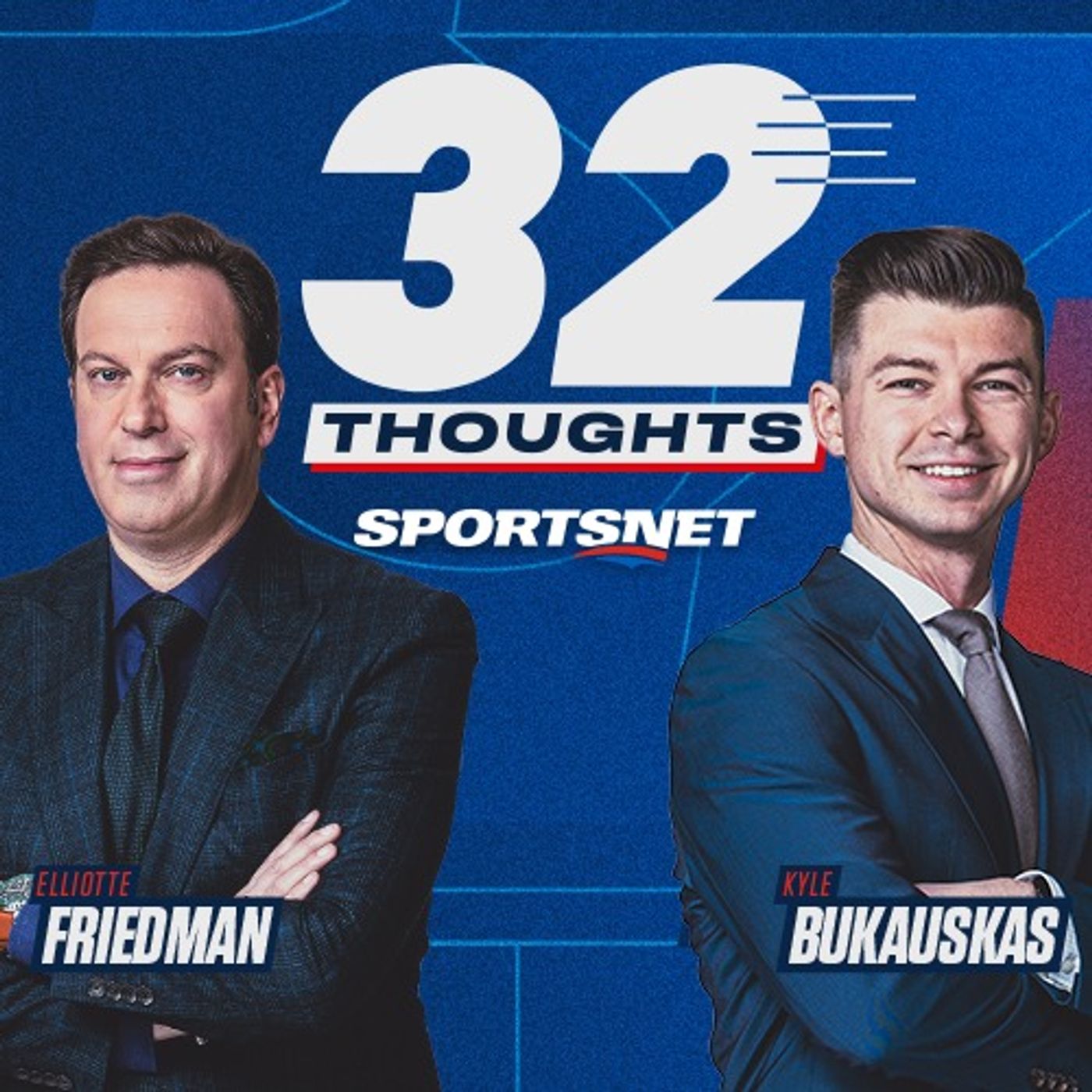
You are not seeing double welcome to 32 Thoughts the podcast another special edition interview pod and the lead up to the Tim Hortons Heritage Classic here on Sunday night in Winnipeg between the Jets and the Canadians. If you happen to catch our interview from earlier on Saturday already with Jets General Manager Kevin Shevel Dayoff. Thank you for tuning in. If you haven't yet, we highly recommend it. He was excellent and we have two more interviews for you here that we gathered this weekend in the peg. Canadians head coach Marta Saint Louis and Winnipeg Jets alumni, a retired player and BC hockey hall of fame member Andrew Ladd both were phenomenal and really appreciate the time that they gave us here over the course of the weekend. Saint Louis, as you can imagine, incredibly insightful when it came to coaching philosophy as him and this Montreal Canadians group move into the next phase of their growth and some really great story telling from Andrew Ladd to from his days in Calgary with the hip men of course, his time with the Jets and how he views coaching at the youth level. There's so much there to get to with Andrew as well. But we're going to start with Marta and the head coach of the Habitaton on 32 Thoughts the podcast. So Marta, we were talking about where you came in here or we're sitting here in kind of your temporary coaches room set up in the hotel. You guys came right from Chicago after the game last night. It's just a reminder that the machine never really stops once the season starts. So could you take us through what a day like today is like, I know it's a unique one. These are practicing so late at night at the stadium, but what do you hope to get out of a day like today? How do you plan out your attack? Yeah, I mean like, with this event tomorrow, right, this game, you know, a day like today is not typical of what it would be a normal day in between game on the road, right? But you know, in terms of what today brings, I would say 98% of the guys here, families coming in, right, and we have a seven o'clock practice. They probably start rolling in now. So you know, it's a lot of free time for them to spend some time with their family. We're going to go touch the ice tonight. It's going to be pretty light in terms of hockey, you know, well, I don't know exactly like how long we're going to be on the ice trying to fill the environment a little bit, but totally not a typical day in between game from the road. I think it's a great opportunity to, I guess, you know, celebrate the game, you know, get to play outdoor, you know, to me, it's the hockey at its purest and to share it with the loved one, the family. So I think it's kind of a weekend to celebrate what we get to do with the people that we love. So today is nowhere close to what a day would be if it was a normal day in between games on the road. How much do you sleep? Like what time, what time do you get in? So we got in at 2.30 probably, a little time to wake up. Today I woke up at 10. Nice. Yeah, I can, I need a good six hours at least. And you're a good sleeper? I am. I don't need much sleep, but like I need like a good six. So I would say I probably went to sleep around 3.30 by the time I fell asleep, you know, you come in, you get unpacked a little bit online, but I can operate on six hours. So if you don't get six hours, are you really a crabby guy? No, I'm not. I just know I'm better. Right. Right. Are you a guy that, like, the alarm goes off or do you even need one? Are you spring out of bed or does it take a bit? I would say both. I always have the alarm. Just, but like this morning, I didn't really, I mean, I think I, just in case I set up my alarm at noon, in case, you know, but I was up at 9.45, 10, you know, at home on a normal day, I definitely said the alarm and plenty of time I wake up before it, but you need that safety net. You know what I like about that, Martin, is that you can sleep until, like, I can sleep into. I really like, but sometimes when I sleep in, I feel like, oh my god, I'm going to miss something. And I wonder as a coach who's supposed to be on top of everything, do you ever worry if you sleep until 10 o'clock, but you're going to happen that you were supposed to have dealt with? Well, I don't think so. I don't know. That's so nice and peaceful. I wish I was like that. Yeah. Well, I mean, I think you're lying to work. You might miss something. I think you need to be on. I think for me, you know, before you go to bed, you're already having an idea of what the next day is going to be like, what, you know, and you don't have all your answers when you're going to bed. But, you know, by the time you wake up and you get to the rink, you probably got steered in a direction. And if it's not there yet, you know, within an hour, you're at the rink, you know, because we get there, you know, pretty early, I would say, and, you know, that first hour you get to the rink, you get steer, how are you going to attack that day? You know, so I'm not, you know, I feel when you're always thinking ahead, you know, that brings anxiety, and I feel like I just try to, you know, deal with it when it comes versus like trying to control everything ahead of time and then the wheel starts going and then harder to sleep. Right. So when you talk about getting steered when you get to the rink, what promotes that? Is that stuff you're looking at over a video as a conversation of the rest of your staff? Yeah. It's both. I don't think it's one thing. So the previous game, you know, if we played the night before, you've already had some discussion to ring the game between periods after the game, you know, so you already have an idea. What's nice to take the time, sleep on it, and then the next day, kind of reconvene and see like, hey, where we was last night emotionally driven, you know, because I feel like I'm very processed driven and so I don't want to sway from that. And it's easy to sway from that if, you know, you let everything drive from emotion based on result, you know, this league. So I try to stay processed driven. Now who's the first person at the rink every day? I would say, well, definitely the trainers, yeah, equipment guys. You know, and maybe the kitchen staff too, maybe, you know, and probably our video coaches. They're always, they always beat you there. Yes. And who's the first player? Like the adventants, it's dry side. They always joke, he's the first guy. I don't know. It's, it's usually the guys with the kids, they want to get out of the house. Yeah. Well, they're up early. Yeah. You know, so, you know, the Mathis and the Jake Evans, you know, Susie's there early. Andy, and we have more guys now that are dads, so some guys show up pretty early. I wonder, like, we were interviewed laying too, by the way. Yeah. Yeah. Yeah. Yeah. We wonder if you ever left. We interviewed Andrew Ladd earlier, and he talked about like with him and the guys that were kind of the core players of the time in Winnipeg, the bufflands and Blake Wheeler as a world, he said it was so interesting with them as they all started to have kids together and kind of moved into that next phase of their lives together, but also as teammates. Do you recall going through that as a player with certain guys that you were with like a Tampa for a long time, and it sounds like you were starting to see that next phase here with the current crop of the Canadians as everyone kind of gets older and new exciting things in their lives that they go through together? Yeah. You know, I went to Tampa in 2000, and my first born was 2003, and in 2001, I believe it was a year that we got Dave Andrew Chuck, and he had three young girls, and Dave was always the first guy at the rink, and you know, you could never beat him to the rink. And once I had a kid, I was close to beat, no. All these kids are going to get a complex if they listen to this interview. No, because you just stop early. Yeah. You're up early. Right. So this year, for the first time since you started coaching the Canadians, the Canadians have a target on their backs. No more, everybody gets, do you notice that everybody looks at you guys differently this year? I don't think we worry too much about what's the outside perception. You know, and I would say it started, you know, I don't know, this is my fifth year. You know, when I took the job officially that summer after I was interim head coach, we came in and, you know, we had a goal, you know. And it was not necessarily how much time it's going to take us, you know, we were just going to try to have a plan, have a vision, obviously there has to be some kind of deadline. This isn't forever. If you don't have any deadline on anything to me, it's just a fantasy. So, you know, I think we were strategically moving along and not worry about what people were thinking about us, you know.
You know, we, we got, we, we took some, some bad losses, you know, and we weren't embarrassed. You know, we were just working on our game, you know, and now we're, we're at a place where we've, we've found some more consistent result and we've probably gained some respect around the league, but we're not worried about where people outside are placing us or putting us. Like, it doesn't mean anything. You got to go out and play the game and, and for us, we're, we're really focusing on ourselves and, and what we, we're trying to do each and every day. And we're in a market where, you know, expectations, of course, rises, you know, but, you know, we, we have our own standard that we're chasing every day, you know, so to speak. So we're not, whether there's a higher expectation from the market from around the league about us. Like, we're, that's not, we're, we're, we're worried about, you know, stacking the days. When you first took the job, I mean, was, did you envision that you have any thought about how long you were going to do this war? Or are you, were you able to stay in the moment from the beginning? Well, again, it goes back to, you know, you feel like you're missing out something when you sleep in. Yeah. You know, I, I was going to be, I try to be where my feet are. I'm not worried. I can't control everything, but I don't know, I don't know how long I'm going to be the coach. And I'm not worried about it, you know, I'm, I'm, I'm going to try to be my best version every day, helps to this group to accomplish their goals collectively, individually. You know, and if at the end of the day, I'm not the guy, I'm not the guy. I'm not worried about that. I'm, I'm, I'm confident that, that, you know, I'm, I'm doing everything I can to, to earn everybody's respect each and every day. And it does that get us to keep moving forward? And does that keep me around longer? I don't know, but I'm not worried about it. I'm, I'm okay with the effort I'm putting in the attitude that I bring every day. You know, I'm not, I don't worry about that stuff. I really don't. I'm wondering when you go back, because John Cooper has told some good stories about how you guys, when he was coaching and you were playing like, sometimes you guys, but it heads a little bit. And he, but he, I was wondering if there was something he did as a coach that you looked at back then. He said, this is ridiculous. And now that you're a coach, you're like, now I know why he did that. And I don't remember budding heads with Cooper as a player. He said it was, he said it was, I was always playing time. Like you want, you want it to be on the ice all the time. Yeah. I mean, yeah. I think, I think every. Top players want that. But I think Cooper came at a time when he had some young guys too that he's trying to bring up, right? And, you know, but I don't remember budding heads. I don't remember like, this is crazy what he's doing. I actually think that, you know, for, it surprised me in the sense, you know, Cooper has a hockey background and played, but coach, but never played at a high level, played lacrosse of Hofstra. And I was surprised how much intellect went into, you know, the way he wanted his team to play, which it was very refreshing for me because I was, as a player, I felt like I was budding heads with my coach, my coaches to bring more intellect to the game, right? And so I'm not surprised that they, they've had the run they've had the success, the continued success because I feel they were with Cooper. They were at the, the, the forefront of bringing more intellect into the game. You know, I'm talking about the way to break the puck out, the support on the ice, really the rules of what teams, the team game should be, you know, like the, if you watch soccer and, you know, the balance on the ice and basketball, whatever, you know, hockey, there's a lot of similarity in the principle of the team game. And I felt Cooper understood that, you know, and even like just like face off the plays, face off routes, whatever it was, it was refreshing. So I don't remember budding heads strategically with Cooper, but I, I'm sure I push for more ice time. You know, you, you never get more unless you ask. Quiet mows don't get fed, that's why it mows don't good. Now are there guys on, on the team now that are ones that would do the old look over the shoulder on the bench going, I'm ready, I'm ready. Yeah, I mean, it happens. And, you know, we have the technology today, you know, I have a big iPad. I know exactly the projected ice time throughout the game. For everybody, you know, and you know the window that these guys should hit, you know, now do you, if a guy's playing really well, does you go above that? Absolutely. But also like, if a guy's playing really well, and I'm like, gosh, how is he underneath this, where is target right now, right? And you're trying to, so which, we didn't have that back then, you know, you only saw after the game, right? She, yeah. So I think as a coach, it's very helpful and to manage that. So I think there's less of those moments where guys like, what about me, that kind of stuff, right? Because I think we can track it throughout the game. So on, on the bench, it shows you projected ice time. And every coach in the league has access. Oh, yeah. Oh, I didn't know that. That's interesting. So I, you know, halfway through the game, second period, I can, I go project that ice time like, okay, I got to get this guy out more. I got, you know, how often do you check it? Pretty often. Do you have guys, you know, to say names, obviously, if you don't want, but do you have guys on your team who are like, if I put this guy over 18, I know it's not good for him. Like 18 is his max. Yeah. I would say yes. You know, but it's not like you're, you're going to not do it just because of it, you know, sometimes it's just the way he's playing, the way the game is going. And, you know, let's say you have a back-to-back, and you know that he went above, you know, he got to be careful the next day. Over a season, it adds up. So, you know, you got to be careful as much as you want, you know, to play the hot hand sometime. You also have to understand that sometimes you might need to protect the player from himself as well. So it's a bounce. But we have all the information at our fingertip and it's easy, it's easy to navigate. Is there anything else you check in game besides project at ice time, anything else you're constantly looking at? Well, I mean, between periods, for sure, you know, we'll strategically will look at stuff, you know. But in terms of that kind of data in-game, no, you know, we look at the iPad and drink TV time out and, you know, if we just had a par play, we'll take a look at it, you know, and that kind of stuff, PK, maybe some face-off things that, you know, we're trying to do and you realize that they're not doing that tonight. So what you plan is not going to work. So you can make some soul adjustments during period based with the technology that we have, which, you know, I'm assuming in the past, it probably had to wait till the between periods, you know what I mean, to take a look at it. Unless you have a really smart eye in the sky. But now the technology has been very helpful. You have to be careful how you use it too. Well, that's, I was wanted to ask you, is your philosophy still with your players? No tablets during play? Yeah, as much as, you know, as much as we can, you know, I want them to keep their eyes on the game when the play is going. Okay, what player do you have on the Canadians who reminds you the most of yourself? Hmm. I don't know if it, I mean, I feel like there's different players for different reason, you know, I feel like Susie plays such a cerebral game, you know, he can slow the game down, you know, find the shooters. I feel like that was probably something I really like to do. I think Cole brings so much enthusiasm and practice.
this. I feel like I had that like really love the game. You know, then a lane who works on his game so much, I feel I had a little bit of that too. Like so I don't know if it's one guy. Yeah. Yeah. Bobby. You know, Suzuki being out now, like that's kind of like your safety blanket. You could always he's the guy you probably trust the most. Throw them out there in any situation. How different is it coaching when you don't have them for an extended period? Well, I don't really know yet to be honest, right? I'm one game in. Yep. Right. So, you know, the one thing for sure is, is, is Suzuki will, will, will eat a lot of the matchups. Right. At home and on the road. So I'm curious to see like how, how that's going to affect us a little bit. You know, so we'll see, but it's the first I'm one game in. It's hard for me to see what's my biggest. I think I'm going to find out. So Craig Simpson who we work with was on the Euler's coaching staff for a couple of years and, and one of the terms that he uses is kind of half jokingly. So the big thing for coaching is you've got to learn to manage your hate a little bit when it comes to your players in the sense of like you've seen what they're capable of and what you believe they can do. And then when there's moments where they don't do that, you've got to somehow temporary expectations of going, well, I know you can do it. I just wonder if that does that resonate at all with you? Well, yeah, I feel it's a function of, of, you know, their, their age or experience. They're where they are in their development, you know, how many years pros they've played, you know, I, the, what I expect from a second year player versus what I expect from a five six year player is to the, it's not the same. You know, and I've compared it before to, to raising a child, you know, what you, you teach or hold accountable, your four year old versus your 12 year olds versus your 16 year, it's different. It's got to be fair, right? And, so it's constantly trying to, you know, you got to do some teaching there. And yeah, there's growing pain. And, but it's, it's constantly trying to, especially how young the league is, is, you know, come from a place that your players understand that you care about their older version versus the version now. And that's why you're teaching. And, and you can just be negative because they've had failures, you know, the failures they're learning, you know, and the, they're going to make a mistake, okay, that the mistake's a mistake. They make the same mistake that becomes a habit. And now they keep making the same mistake. Now it's really a character trait, right? So you have to, you have to explain that, right? Because it always starts with the players. We're trying to steer them in the right direction because we care about their future version more than their present version. And you got to convince them that you really care about that. And that's why you, you know, you're, you're doing some hard coaching right now. Or sometimes it's a pat on the back. Sometimes it's a, it's a conversation that has nothing to do with hockey. They got to know you care about them. And we always care about the future version way more than the present version because we're trying to build a championship team. Right. Interesting. I want to discuss about Dolvish a bit. So he has that penalty the other night. And you're already kind of smiling a little bit. And, you know, some coaches, when it comes to goalies, they're like, I don't really talk to my goalies. Or I just, what's, and also like, obviously he's a guy mentally, like he's, he does a lot of work with mental coaches. And he's, you know, he's obviously that's something he really battles us to control his emotions. How do you deal with him in the aftermath of that? Honestly, like, there's not much to be said, you know. What makes Dolvish great? Sometimes is the same thing that puts Dolvish in trouble. Our, our best characteristic is always our worst characteristic. So like, I'm, you know, those are competitors. He competes and he wants, he wants to help. Right. Like he takes a penalty. He's trying to help. He's not trying to hurt the team. But, you know, that's a learning moment for him. You know, how much was he helping versus how much was he hurting? It's a fine line. The referee decided to call it. It could have been, could have been not called. And nobody's talking about it. But, you know, when you're in the position to, you know, to win games in the third or get the extra point and over time, you know, you have to be careful in giving the right the opportunity to make that decision. Right. And I think he's still a very young player. He's learning that. But his, his biggest strength sometimes, you know, anybody can hurt them as well. You know, but I don't want him to go away from his strength. That's what makes him great. Just to understand that. And sometimes to maybe do less. Do you think, you know, he won the job last year did a great job for you guys. And now he's going to challenge this year from Fowler. Do you think that affects him at all? I've wondered watching it from outside. Well, I mean, of course, Dolbs would have much rather have a good start, right. You know, so does it affect him? I would say, you know, in the moment, probably, right, because he's a proud guy. But to me, it's, it's, it's, it's having perspective of, again, future Dolbs versus present Dolbs. It's part of his growth. What he's going through right now is part of his growth, you know, because he's had such a great year last year, good run for us. And now he's in this moment. That's, that's, that can be uncomfortable, right. And that's where you get, in my mind, especially for a young player, when you get uncomfortable, you're able to expand more. That's where the growth happens. So he's going through it now. And, and, and I'm okay with it. He's going to be fine. Seems like you've long had such a great pulse on, on your players. I mean, can you tell whether you guys did on the ice for practice, whatever it may be? Like, eye contact, something right away. Can you tell which guys are going, he's in a great spot mentally or go maybe, maybe I need to check in with this guy. Yeah, and you can tell before on the ice, you can just, you, you understand, you leave the rink, you have a good feeling of how everybody feels about themselves, their game or whatnot. And now it's to, you know, listen, I'm a big believer in stacking the days. And when you leave the rink at night, after a winter loss, you know, the most important day is the next one. Now that day's over. The most important one is the next one. So you got to be prepared for it, right? You have to have a great, you know, practice plan. You know, there's probably going to be, I would say, 70% of the time, there's probably a message. Sometimes there isn't. But you've got to know who you need to, I call it touch, you know. We keep track of who we touch in terms of touch is this, you know, it could be a video session, it could be a conversation. It could be anything. It's not a, hey, how you doing? That's not a touch. It's just walking by somebody. If you take time with someone, that's a touch. And you need to, we keep track of those because it's easy throughout an 84 game schedule, you know, six, seven months to lose, lose guys through the tracks, cracks, because not everybody, some guys don't need the way their personality are. They don't need, they come across like they don't need anything. That doesn't mean that they don't need anything. That's just how they come across, the personality. Some guys are going to come and see you. Some guys don't come and see you at all. It doesn't need that they don't need you, right? So for us, it helps us make sure that we take care of everyone. And, you know, it's one of the first things we do in the morning. Who do we need to touch today and why? You know, and we have a good feeling the night before
talking about it a little bit and helps us stay organized that way and make sure that we don't lose anyone just because their personality doesn't show us that they need us. That's what I remember one coach said that to be once it says that there's some guys and you know that they're just they're low maintenance they they're they're quiet and you kind of forget that you have to go talk to them yeah for a while yeah like which is why I like is there anybody on this team was like that kind of low maintenance quiet guy that you're maybe every week or two weeks you're like I haven't touched this guy yeah we do it we have you know we have 20 you know 20 something players great people different personalities and like every team we have those guys for sure okay one thing I wanted to ask so the first ever Canadian gold and hockey was the Winnipeg Falcons 1920 fast forward to the World Cup well now what's that first ever Olympic gold yeah Canada had in hockey with Winnipeg Falcons in 1920 okay and World Cup of hockey in 2004 the gaming guys played in Montreal against the U.S. you guys were jerseys honoring that team and you opened scoring that game you do you still have that jersey or anything you do I said that mustered yes yeah yeah yeah you still have it yeah wow they do geez what do you remember like that was I mean the the whole tournament you know unfortunately we knew that the lockout was coming on the other side of it but what do you remember both that whole oh I was in Montreal right yes and and it's there was a stretch of you know two three years that things really happened fast for me mm-hmm like you know my first game in Tampa in 2000 I played a minute 50 okay and then you go four years and I'm on team Canada now right and I three months prior I won the Stanley Cup as a heart trophy winner like it happens so fast that it's almost like I couldn't believe that where I was like I might you know it was surreal my family was there you know and I remember like I you know I went to to that 2004 camp they had picked the team but then we had a camp we had five lines and I'm I'm on a line with you know Brad Richards and Mariel Lemieux show up to camp I'm like oh my gosh I'm on line with Mariel Lemieux think this is a guy that I I idolize and watched and I when I when I came into the league he had retired because of his injuries I believe in all one he came back yeah I think it was December 2000 yeah just how so my first year in Tampa in December he came back I couldn't believe I was gonna play against Mariel right and I and I wasn't 2004 Marty at the time is 2000 they playing fault line been scratch whatever but you know you fast forward and now I'm playing with Mariel Lemieux and it's like what's going on you know and so what I remember is I couldn't believe that I was playing for team Canada right and yeah I scored the first goal I think I was first star of that game it was it was like it was crazy for you think about all the players around that team and you rewind three four years ago I'm so far from that and my parents get to to cheer for me on team Canada that was amazing in Montreal right that was pretty you know I wanted to ask you know we're in Winnipeg car hellbuck got traded yesterday and there's a big thing right now about us born players in Canada and you're in Montreal you're in the opposite of that stream right now you've got Lane Hudson signed for eight years you've got Cole Coffield signed for seven years why do you think it's different I don't know like you can only we can only control our environment I don't know how it is everywhere else and I think it goes back to when I worry everything else everywhere else we just take care of ourselves right so I don't know I feel like we've we've built a an environment where the players enjoy coming to the rank not because we going to win every game but I feel because you know the way we attack every day and I think you know not necessarily we're happy because we win we're sad because we lose we come to the rank with some truth perspective and a plan and we go and I feel the guys the guys like that outfits for tomorrow I think what he what he got for the coaches right because they are it's usually sharp on the bed I think we have a vintage jacket do you have a fedora is that what they're called chanta you know the hats yeah yeah is that a fedora yeah I think so yeah yeah you go look good and you go look good in the hats I have no idea we'll find out how often you speak to can't or or Gordon every day you got some coaches yes some coaches know so do you ever ask them like what's going on like what do you what are your conversations like with canton Jeff Gordon I mean it varies I mean there's some there's some day-to-day stuff right guys injured need to call somebody up you know there's definitely a time be lined up decisions and you know you know we'll talk about how we're playing you know but I I don't go to can't and you know we need this guy you got to get this guy out like I've never done that like I I let I trust canton go it so much you know and they've seen what we're doing and I trust they they you know they're gonna make the best decisions for the team for now in the future that I just try to to do you know what I'm supposed to do you know so I feel like once you start worrying about that thing it takes time away for what you're actually supposed to do here for mm-hmm and all your walks to the rink back in Montreal if you had a favorite interaction over the years or a fan or then a wanderin about the city I mean favorite or at least one that left the lasting I mean it's I have the couple I mean I do have a lot of interaction and the people are nice but I had a couple was funny I was on the corner and I had a couple older ladies they must have been in their 70s and and you know they said that they they they don't watch all the games but they watch all my pressers really really they love the pressers you know so it's kind of funny you know but the masochists yeah they they it was hilarious they were all like they said that they they never really watched hockey but they're starting to watch more and they love the presser you know they relate to ladies in their in their 70s and I love it like I you know we're we're trying to you know make the the the fans proud of of you know their team you know and I think we've been very transparent and what we were doing and you know and I think that helps us have respect you know from the fans and I think it's an everyday thing I think the respect you gotta earn that every day but it was I'm used to much younger male you know and of interaction so it was I didn't expect that that's great stuff so you know I think I'm good you good I'm good he's been a real good yeah thank you so much yeah no problem thanks a little more so Andrew I mean we're looking out here on the ice we've got alumni families the kids out here I mean of your X teammates you've seen here this weekend who still looks good who's still got and the Kyle false asking by that who doesn't yes yeah well I was all we were out there and I was like we almost look too good right now because that's never a good thing and more escape when you feel really good but I mean wheels and lits like they're both still look like they could play buff buff wasn't he didn't go out there he's not taking he's not going on the action and my guess is he'll he'll be he'll be his hands have never gone away so yeah like most guys it's it's been fun to watch most guys have kept themselves in pretty good condition which as you know can can be tougher for some of us yes was was there any doubt like a your minor or other guys that that buffland would would come out for this this weekend not in my mind
You know, I think we've got him Chicago and he buffed likes being around people that he cares about. I know there's a lot of people he cares about not only on the team but in Winnipeg and he enjoyed his time here. One thing I know about that guy is he just loves having fun and that's truly why he played hockey and so he'll be able to have the biggest amount on his face. I always remember whenever I come back here and I think about him, were you playing the night that Mark Stone got hit here? No, I was gone. You were gone by that? I will never forget. That's that was the loudest noise I've ever heard in a hockey arena. Yeah, yeah. I saw that. It's funny man. When he was in print storage and I was in with the Calgary Hitman, I would run around and try to just bury him, the whole game. And after a while I just stopped because I'm like this has hurt me way more than it's hurting him. So Kyle was saying when we were walking over, you do a lot of minor hockey stuff. Can you tell us a little bit about what you're involved in and what you're putting out there? Yeah, well I was playing actually so I guess to wind it back when I was in New York. And there was the year where they had the taxis quads and I was in a weird spot with the honors and they had the taxis quads. But I was making too much money to be on taxis squad and actually be called up in some weird, at least that's what I was told. So I literally went in and I would text Lou after like at 10 o'clock a night and be like, hey Lou, what time can I come in and skate and work out tomorrow? And he'd text me back and I was skated by myself or belt the whole year. Sometimes I get Dennis Aidenberg to come out and pass me some pucks. And I was working with a guy named Dan Leffler at the time who was like my performance coach. And he was like, hey man, at the end of this year, I think you'd be proud to do more than just skate and work out the whole year and stay ready. So like what else would like give you purpose and meaning this year? And so I was like, yeah, like my wife and I had been thinking a long time like, hey, how do we, how do we have a bigger impact on mental health? We've both had had, you know, our family members and ourselves to certain extents that have dealt with the mental health and so what we really kind of were thinking of is like, hey, that space can be very reactive. So they wait till, you know, someone has a problem and then, hey, how do we help them then? So can we be more reactive in the space? And that was really the start of it and used that year to really get clear on like, hey, how do we want to support mental health and maybe a different way than most had up until now? So we did like a marketplace assessment to be like, hey, what's actually out there supporting kids in the space, in sport? I wanted it to be a sport and quickly realized there wasn't anything. Really, a lot of school-based stuff, but nothing in sport. So we set out to create a program which supported kids mental well-being in a proactive way. And what we set a lot, and we found there's a lot of research that says if you can impact confidence, confidence, character and connection, that you give kids the best chance to thrive, which makes sense. So, you know, if you're, if you feel connected to a group, you know, and anyone can resonate with this, like you feel good about yourself, if you're confident about what you're doing, like you feel good about yourself. And if you act with character and, you know, a lot of times you're proud of how you were showing up and acting, which you feel good about yourself. So, it made a lot of sense to me and we ended up creating a digital program for 10 to 12 hockey players that taught them those concepts through story. So, we created these like five to seven minute fast-paced YouTube videos that kids get to watch, you know, one of our stories is the Vegas Golden Knights and how they all, you know, the Golden Missfits that first year and how they all came together. And no one wanted them and they ended up going on to the Stanley Cup finals. So, kids can connect with the connection that it took to create that group and why that's important to not only their success, but their success as a team. And so, there's a 10-week cadence of that. We had two seasons now, content for both and the programs completely free. So, that's probably a more long-witted answer than you wanted. >> No, but like, I think people, like Macau was telling me about this and credit to him, he was aware of it, but he was explaining it to me as we were walking over. I was like, you know what, like this is the kind of thing that, like that point you make about when you feel confident you feel better, it is so true. Like, I think 90% of life is between the years. I really do. >> It transcends sports. Yeah, that's the beauty of it. Like, it's beyond that. >> Yeah, exactly. And everybody can resonate with not feeling like they're part of something or not feeling confident in whatever. Like, we have, there's definitely things you were confident in as individuals and there's things that you're not confident in. Everybody can resonate that with that in some aspect. So, yeah, it makes a lot of sense to me. And even, you know, like, now I'm actually like a performance coach with a lot of guys that plan the league and they're going to the same stuff that those 10-year-old 12-year-olds, like those stories never go away and that the confidence they're always struggling with and they struggle how to fit into a group or how to connect with guys. And so, it never really goes away. So, it really makes sense to me that, hey, like, we started that age. We're giving those kids a much better chance to have success. >> Yeah. Well, when I wanted to ask about that, I mean, because you've got three kids right that are kind of all in that window now in terms of youth sports where it really starts to ramp up. And we hear the blanket statement all the time now that youth sports is completely gone out of control. Like, we kind of lost the plot of the purpose of it all. Like, when you see it up close, do you agree with that or there's still some things where you're seeing that suggest, you know, maybe there's alternative ways where the mindset is shifting a little bit about how to approach those critical years of a kid's life and how the parents are all involved in it all. Like, what do you see in from your vantage point? >> Yeah, I think the hard thing is not following the crowd. Like, because everybody is doing more, is trying to play at the highest level. They're on the ice all the time. And so everyone gets sucked into that. And, you know, you go talk to the, I always tell this to my parents, but like, like, when my year and my last year in Arizona, even like, at the end of my career, like, we never skated more than three days in a row. We played in the best league in the world, and we did not skate more than three days in a row. And you have kids that are skating twice a day or eight times a week. And I'm like, at some point, you're not helping them. And I'm a firm believer in, like, if you are enjoying what you're doing, you're having fun. You will work at it. >> Yes. >> As soon as that starts to become a job and feel like something you have to do, that's when you get disconnected to why you're actually doing what you're doing. And like I said, like, that happens at this level, right? It happens with guys where they're like, hey, like, are you having fun doing this anymore? Because if you show up and you enjoy doing what you're doing, there's a different energy. There's a different, you're showing up in a different way. And man, like, it makes me sad when we do that to kids, right? Like, when we take the joy out of the game, because ultimately parents, they want the kids to have success. And that disconnect for me is like, hey, if they're not enjoying what they're doing. And yes, I'm a big advocate of like, hey, how do you show up in your work hard? And like, we can hold them to those values. And they can have fun. Like, it doesn't have to be one or the other. So, I think it's going against the grain a little bit now and trying to, like, that's what I've noticed to be in a part of it. Like, hey, like, we're not going to do more. When my kid's going to play baseball in the spring and summer, and they don't need to be on the ice and doing everything and just have confidence. And I think I have a pretty good perspective just because of my journey. Like, when I was 16, I was playing Junior B in Poco. I didn't even think I had a sniff. And then two years later, or three years later, I'm playing an NHL and winning a Stanley Cup. So, it's such a long game in terms of development and kids develop at different times. And I think the one thing I remember from that is like, I love the game enough to compete and work at getting better. And that's what kept me progressing. Do you, as a sport, are you a good sports parent? Like, do you ever lose it in the stands or anything like that? It's funny because, like, there are moments where I'm like, yeah, like, you feel that the, like, the, like, oh, yeah, my competitive juices are coming up. That's one thing I've gotten better at is like, great. Like, and I coach a lot. I try to, I try to stay out of the stands. I'm like, I coach because, A, like, I love control. And, and then B, I don't have to listen to anybody in the crowd when I, when I, when I coach. But, but today, like, you do feel of, like, you're those competitive juices. And, and it's, you need, you need, and I talked to my coach about this. So, like, even us helping each other, like, I understand, like, what are we actually committed to as coaches? And then how do we actually hold each other accountable to that? Because we're all going to get riled up. You know, you get riled up in hand. And at the end of the day, our job is to help these kids connect with these kids, help them get better. if we're if we're getting pissed off at them for something that
that they're doing at nine years old or 10 years old. That's on us because our job is to teach them and connect with them and help them get better. And a lot of times we as adults, we have like, we miss, we think, oh, they should know how to do that. Already, you know, even if it was a parent, it's like, oh, they should know how to do that. And it's like, when you actually slow down to think about it, you're like, oh, no one's taught them how to do that yet. And it's your job to teach them how to do that. So, yeah, so it's been fun being in the research, like, there's a ton of research out there, which I always laugh 'cause I'm like, there's a shit ton of research that says, hey, this is how you help kids and everybody does the exact opposite. So we try to take that research and then and then use the leverage that we have and the influence that we have with within the sport and the relationships that we have to get that message to kids. Because I think they listen and they will follow the leaders of our game. So, Andrew, I mean, you were one of the original faces of the Jets 2.0 and they came back here in 2011. You know what this market is all about, is as good as anybody. From your vantage point, what it has been like, watch and obviously what's gone on here in the summer and you know, we're just coming a day removed from the Ella Buck situation. Finally being resolved now. What did you think of all of it as you watch from the bird's eye view? - Yeah, yeah, it's not an ideal situation for either side. I think that's obviously how he decided to make a decision and as a player, you know, as a farm player, I can understand both sides of it. I can understand, I understand the emotions of the fan base that, you know, has one of the best goalies in the world. If not the best, go in the world, say, hey, I don't wanna play here anymore. I get that, that's things. And I've also been on the other side of it as a player. We're like, you have a team that's like, hey, I don't want you hearing a more, right? So that's things too. So I think it's closure and being able to move on like is nice for a healy and the franchise. Ultimately, you want people that wanna be here. You want people that are still invested. And if you was, and still invested in Winnipeg, and great, like let's move on and get some pieces and then continue to build here. So my hope is that they can do that now. - I think one of the things the Jets were most worried about was it becoming like a title wave. Like it's interesting we're talking about youth of sports because this generation of NHLers is very different. They're more willing to use their leverage than any generation of player ever has. And just watching it as a proud Jets and watching it as a player from outside, I'm curious what you think of all this. - In regards to what? - Just like the, like I think that the Jets were worried like if one player goes and it doesn't work, then more are gonna go. And we're seeing this all around the league. - Yeah, it's an interesting dynamic for sure. I think, yeah, I think you can continue to invest. And the people and one thing that they do extremely well here is they, which I think is why it have probably hurt so much. These they invest so much in the relationship with the players. You know, I know how much Mark cares about the players and I know how much Craig Heisinger cares about the players and Chevy, so like that's things, right? But you can't change because of one, you know, a few things that are happening. And I think you continue to just invest in those people and draft, you know, I'd be interested to see it. Team start drafting a little differently. But yeah, I'm not sure. It's such a new thing with this generation. And like I said, it's, I also am of the mind that like, hey, you know, as a player you can be treated, you're treated as a commodity and it's easy to sit on the other side as a franchise and be like, hey, like you can't do that. But I've also been on the other side of things where, you know, like when I was here, my wife is eight months pregnant with two, two, or the three year old and the two year old and we got traded, I would have loved to have got, if they were going to trade me, I would have loved if they would have done it three, four months earlier. That didn't happen, right? Even as much as I wanted to, it didn't happen. So there's, I think players are using the leverage that they have, which again, that's the system we live in. So we can get, we can get mad at the system or like understand that, hey, that's, you know, that ultimately teams are going to do what's best interest in them and then players are starting to see like, okay, well, we're going to do the same thing. So I don't know if there's an answer that comes right now, but it definitely landscape shifted. - Well, I mean, it's amazing, it's already over 10 years ago since the trade from year back to Chicago for you. I mean, over that time, how do you view it? Like did it take time for the relationship between you and the organization to rebuild? Like what was the aftermath? Like as you kind of moved now into alumni and getting a position where you're embracing an opportunity like being part of a weekend like this? - Yeah, I think, I think there's always, there's always a motion attached to those moments. Anytime you spend a lot of time here, you're in a place and invest in the organization, the community and at that point, they've made attempts to reassign me and I think as a player, you have like, okay, there's a certain value that you have and then they ended up signing Buff and then I was sitting there without much communication after so I knew the writing was on the wall. I wish I would have communicated better. Maybe that's something that I've learned as a player. Yeah, I've let your agent talk for you and I was like, no, I wish I would have had those conversations myself, advocated for a higher level of communication on both parts and I think that's on me and I learned a lot. So yeah, there's, I don't, there's not repair. I think it, you know, but but anytime someone's like, yeah, I know like we're gonna move on. I think it, yeah, there's things for sure, right? Like everyone's human. Anybody that tells you that that it doesn't, it does. And it that's part of being a part of the NHL. So when you, when you actually sit back and be like, hey, like again, like I've talked about with Halley and the Jets, like each, each, each party has a prerogative and it made sense to me great. Like the Winnipeg Jax, where we were worried about their future and they decided to move on. Cool, and, and I got to choose not to accept their, their last offer. So like if there's choices that they make and I make in those situations that cool, I can, I can, I can spend my time being pissed off about that, but it's not gonna, it's not gonna change anything. So I think the longer you've been in the league, the more you understand that. And, and yeah, there's no, I don't think since then there's been no repair needed. Like I was, after very short time after there, I was like, okay, yeah, like you move on and appreciate the moments and time that you had and relationships that you have here, which wish were phenomenal. >> I remember when the Jets came back, Jets 2.0, we did a piece with you and I remember you and Brandy and in your, I think it was your condo at the time. >> Yeah. >> And you told a great story about your in line, I think at a Tim Hortons and you went to go pay and the lady said that the person in front of you had already paid your bill. >> Yeah. >> I love that story. I'm just like when you, like you sit and you look at this arena, we're sitting in the ball. What are your favorite memories about being here? >> Yeah, there's a lot. I mean, there's the first playoff game here in First White Out. There was the first exhibition game when Buff created chaos in the first eight seconds. (laughing) And then there's the deeper memories of like, hey, Buff and wheels, we all had kids at the same time and spending like, our kids first birthday together and those moments and wheels are talking the other day, like our kids, his kid was my kids first friend. And you forget about things like that and then just the people that you got to be a part of and then what makes this place special is the people. Like, you know, it's like that moment and then Tim Hortons line, that epitomizes what Winnipeg is all about and they take care of each other. So when you were here, the neighbors were, they were like, hey, how can we help out? When I was out of town, they would help my wife. So that's when we left, it was like, oh, that was the part that we missed was a community and the people that we got to connect with here. >> Did you ever go ice fishing with Bufflin? >> I don't know, actually, I didn't go with Buff. I went with Mark Stewart and it didn't go well. So maybe I should have gone with Bufflin. (laughing) >> Yeah, yeah. (laughing) Oh, another one I want to ask about, this didn't happen here, but early on in that first season back, one of the highest scoring games of the 21st century in Philly, a 98 games, crazy. Like, you guys had a 5-1 lead, a 6-2 lead and then you score the winner with just over a minute left. I mean, 17 goals into the game, we don't say often. Like, what stands out about that night? >> Oh, man, there was some choice words from some coaches in between periods. I think that stands out. >> And that we could laugh about after. (laughing) So I'm doing a lap here before the Zenboni came out. >> Yeah, I mean, those are games you can laugh about after when you're on the winning side of it.
I'm definitely probably stung Philly a little more than us, but you have those nights where just everything on one side seems to be going right and everything on the other side seems to be going wrong, but definitely when you can come away with that with three or four points in a win, you're usually feeling okay about yourself as a player. Do your kids ever wear your cup rings? They have, once. They put them on, took a picture, and then put it back in the safe, but yeah. I saw Carolinas, new ones, and they are spectacularly. They are something. Those are unbelievable. But I made me think like do your kids ever play with yours or are they interested in that kind of a thing? Yeah, when I've pulled them out to show people, they're get interested, but I don't think it's something that they actively think about the whole law. Did they ever watch highlights of you or anything like that? They will watch, I was saying this last night, I think they like watching my fights. One of my last games that they ever watched in Arizona, Clayton Keller, he's in Winnipeg now, sorry, he's in Minnesota, a big Russian guy. Oh, a Trenton, Trenton. Trenton buried Kells in the corner and was kind of like, and they were at this game. I went in and ended up fighting Trenton. Since that moment, all they've been interested in is watching my fights on YouTube. I'm sure their friends' parents enjoy that when they come over and decide to show all their buddies that their dad was fighting at some point. He's a tough guy. How'd you do? I did well. That's why I'm okay talking about it, because I did well. Otherwise, I wouldn't have brought it up, but that's a great way to go about it. Did you keep much, like obviously, the Stanley Cup brings or one thing, but did you keep much memorabilia from your career? Is there any prize possessions you still have from your playing days in the house? Yeah, I mean, it's funny, as you go on, there's so much stuff. At first, you keep everything, and then when we were Chicago, and we had the outdoor games and another hoodie, other pictures and other pictures. Yeah, I've kept all the jerseys, like any team that I've played with, jerseys. I've collected sticks from guys that I've played with. I tried to get one stick from guys that I've played with and teams that I've won with, so there's a lot of cool things. Eric Stahl used. His stick was illegal. When we were playing Edmonton and Game Seven of the Finals, I had the old, like, old, like, christary hook at that time, but I don't know how he used that thing. So he used my stick the last period. Really? So, like, I have that stick. I got him to, like, sign that stick that he used in Game 7 of that game. So there's certain moments like that. Wow. Yeah. Yeah. So, I got to ask, what was illegal about the stick? Yeah. So at that time, like, they had the old Sackic model, which was, that was before they changed the curve regulations, and it was illegal. So he wasn't going to, didn't want to take any chances in Game Seven at home. The Sackic model that, like, hundreds of thousand, well, thousands of kids would have used growing up was illegal. It was not legal in the NHL at that time. Yeah. Which is crazy. Oh, wow. No idea. Yeah. Yeah. Wow. And did you think, like, were you surprised, like, no one knew about it or no one stick measured them or anything like that? I mean, it was, it was close, like, close enough, right? But so there was some that are obvious. And it wasn't, it wasn't that obvious. So, but I mean, he was worried about it enough to put it in the, in the back of the rack. That's a great story. Yeah. Geez. Yeah. Yeah. You can't leave it. You could not leave anything in a chance at that point. No, no, no, no, you don't want to be that guy. Oh, my gosh. Yeah. The only thing I wanted to ask you to, like, you mentioned, obviously, your ties to your years in Calgary with the Hitmen. It's the last year of the Saddle Dome. Do you have any good memories of playing in that building? Yeah. Lots. Oh, man. What one stands out. I, we were playing Lathbridge in the, in the playoffs my last, last year there. And I, the fun story is actually, I think Jimmy Rutherford came to watch. So it was my, I don't know if it was my draft here. It might have been my draft here. Or it was a year after I got drafted. But he, I was, I was coming down like the left side of the rank and see stepped up on me and, and just smoked me. And I, I have the, there's a picture of me coming off the ice and like, like, just bloodied. Like, my visor caught me and I was, I was bloody. And I, I came back and I scored an overtime in that building. So I came back with big overtime win. And we had a, I think I had two overtime goals in that series. And I'm pretty sure that was during the locker when, when we were getting, you know, 17,000 people come watch a playoff game when you're, you're 18 years old playing junior. That's, that's a pretty, pretty big step up from playing in Polko junior B in front of a couple hundred people. So, yeah, there's, lots. It's, it's such a cool barn. Um, it's, it's really, like, last of its kind left. So, after this players won't have anything to bitch about. It's the last standing. Last one for me. So you got the, we're doing this hours before the alumni game against the Canadians. I've always wanted to know, like, what are the unwritten rules of alumni games? And do you guys play for anything? Like, is there anything at stake? Like a money on the board or anything like that? No, I mean, the only one that I've played in is, uh, we played in Carolina last year for a 20 year anniversary. We played, uh, we played the NC State club team. And, uh, which is a different animal. Cause they're like, you know, they're sure 18, 17, 18 year old, 19 year old kids that are flying. And they want to, you know, we know nowadays, like, like, if you watch youth hockey, every kid can skate. Yeah. Yeah. So we were like, oh, man, they had, they had lost last year a cam. Where I was telling you guys, cam ward was on defense. So they, they had lost. So wardo got punted back to goal. And, uh, and, but it was a pretty serious, serious game. Mark Recky took, took a stick in the mouth, came off bleeding. Um, and so there were, there was moments in that. So that didn't, I didn't see any unwritten rules in that camp as much as I had hoped. Um, my guess is this will be, uh, there'll be a little bit more, uh, leniency on this side, um, I'm hoping at least, but probably like no, I'm hoping no slap shots. Ron Haynes, he was like, if I see Danny Markov wind up for, uh, for a one timer, he's like, I'm gonna slash him in the back of the legs. But, uh, so we're, we're, we're hoping that it's pretty clean. And, and I just, you're trying to keep your teeth. I got, I got four new front teeth trying to keep those out of the way. Uh, so you're trying not to engage in any way that can, you can take a stick or a puck in the head. Boy, I was just watching, some of these guys could really still fire a day. Like, you never, never lose the hands, I guess. Yeah. Well, yeah, they, they, they, they stick around pretty good. It's amazing how much, how much you lose them, though. There's days where I'm like, Oh, man, I used to be able to, used to be able to do this. So it's, uh, we'll, we'll get to see that tonight. That's awesome. That would be a lot of fun. And congratulations on the B.C. hockey, all the fame and doctors. Yeah, I appreciate that. That was, that was a lot of fun to, to, to be, it's funny. I, I, I didn't realize how big of a deal it was, which is, I was kind of playing off. And then I went through the night and I was like, Oh, that was, that was really meaningful. Uh, cool. Kind of forget all the opportunity to, like, let people who helped get you where you were, um, the opportunity to, like, thank them and, and, uh, reminisce a little bit on what you've accomplished, uh, it was pretty special. It's awesome. So thanks so much for doing this. Yeah, it's my pleasure. Thank you, Andrew. So I thanks once again to Martin and for Andrew for lending their time with us here on Saturday. Uh, we actually been very fortunate shaping up a weather wise to be a terrific weekend here in Winnipeg, especially when it comes close to, to puck drop on Sunday. There shouldn't be really any delays, fingers crossed, of course. Uh, knock on wood there. I know we've had a bit of wind here on Saturday pushing back the practice times for the Canadians and the Jets, but anyway, all part of the, specialness of this event and, and being outdoors. So can't wait to get to Princess Auto Stadium, uh, of course, for our panel with Ron and everybody will be there for Saturday night hockey later tonight and then back there for the Tim Horton's Heritage Classic on Sunday between the Jets and the Canadians. And as mentioned, after the end of the shovel day, I've interviewed we will be back with you in earnest with a full breakdown of news and notes that thought line the rest Monday morning. [Music]
Podcast Summary
Key Points:
Marta Saint-Louis emphasizes the importance of family time and celebration during the Tim Hortons Heritage Classic, framing the event as a chance to connect with loved ones and share the pure joy of hockey.
He prioritizes a processed, emotionally grounded coaching approach over reaction to results, using post-game analysis and team discussions to maintain consistency and team focus.
Daily routines begin with early arrivals from staff and players, with coaches relying on real-time data and video reviews to adapt strategies during games, improving in-game decision-making.
Saint-Louis highlights the importance of individualized player development, recognizing that expectations and feedback should align with a player’s age, experience, and growth stage.
He values trust in coaching staff and emphasizes transparency with players and fans, believing that genuine connection and team cohesion come from consistent communication and mutual respect.
Andrew Ladd shares insights on youth hockey development, stressing that joy and confidence are more important than excessive training, and that mental well-being should be proactive, not reactive.
The shift in player leverage and team dynamics—especially in the NHL—has led to a more complex relationship between players and franchises, with both sides now more aware of each other’s needs.
Ladd reflects on his own career, drawing connections between personal growth, community, and the enduring values of hockey, including loyalty, connection, and shared experiences.
Summary:
The podcast features an in-depth conversation with Marta Saint-Louis, head coach of the Montreal Canadiens, and Andrew Ladd, a retired Winnipeg Jets player and Hall of Famer, ahead of the Tim Hortons Heritage Classic. Saint-Louis shares his philosophy on coaching, emphasizing emotional intelligence, player development, and team cohesion, noting that a daily routine centered on family and reflection makes the event unique. He values a processed, not emotional, approach to game analysis and stresses the importance of adapting in real time using modern data tools.
He also highlights how trust in staff and consistent communication help maintain team stability. Andrew Ladd reflects on his career, underscoring how youth hockey should prioritize joy, confidence, and mental well-being over rigid schedules. He shares that research shows building confidence, character, and connection in young athletes leads to long-term success.
Ladd criticizes the current trend of over-scheduling in youth sports, arguing that enjoyment and personal growth are essential. He recalls how players like himself developed over time, showing that progress is gradual and individual. The conversation also touches on the evolving dynamics between players and franchises, noting increased leverage and transparency in today’s NHL.
Ladd reflects on his deep ties to Winnipeg, the community spirit, and shared experiences, such as playing in the first playoff game and celebrating milestones with teammates. Ultimately, both guests emphasize that hockey’s true value lies in connection, growth, and the enduring human bonds formed through the game.
FAQs
She emphasizes light, family-oriented practices with early arrivals and a focus on celebrating the game's spirit. The day includes touch-the-ice sessions and a relaxed environment to connect with fans and families, making it distinct from a typical in-between-game day.
He typically wakes up around 10 a.m. after sleeping in until about 3:30 a.m., getting at least six hours of rest. He relies on an alarm but often wakes up early, knowing that being alert and present is key, even if he sleeps in.
He uses an iPad to monitor projected ice time and game stats in real time. During breaks, he reviews data and makes strategic adjustments, such as shifting player roles or managing face-offs, based on what’s happening on the ice.
He believes in managing expectations based on a player’s age and experience, comparing it to raising children. He focuses on the player’s future potential rather than current performance, helping them grow through constructive feedback and trust.
The team emphasizes proactive mental well-being, particularly through youth programs that teach confidence, character, and connection. These values are taught through engaging stories and are integrated into player development, especially at younger ages.
He focuses on growth and perspective, reminding players that mistakes are part of learning. Rather than reacting emotionally, he uses the moment as a chance to reflect and improve, emphasizing long-term development over short-term outcomes.
Chat with AI
Loading...
Pro features
Go deeper with this episode
Unlock creator-grade tools that turn any transcript into show notes and subtitle files.
 PodcastTranscript AI