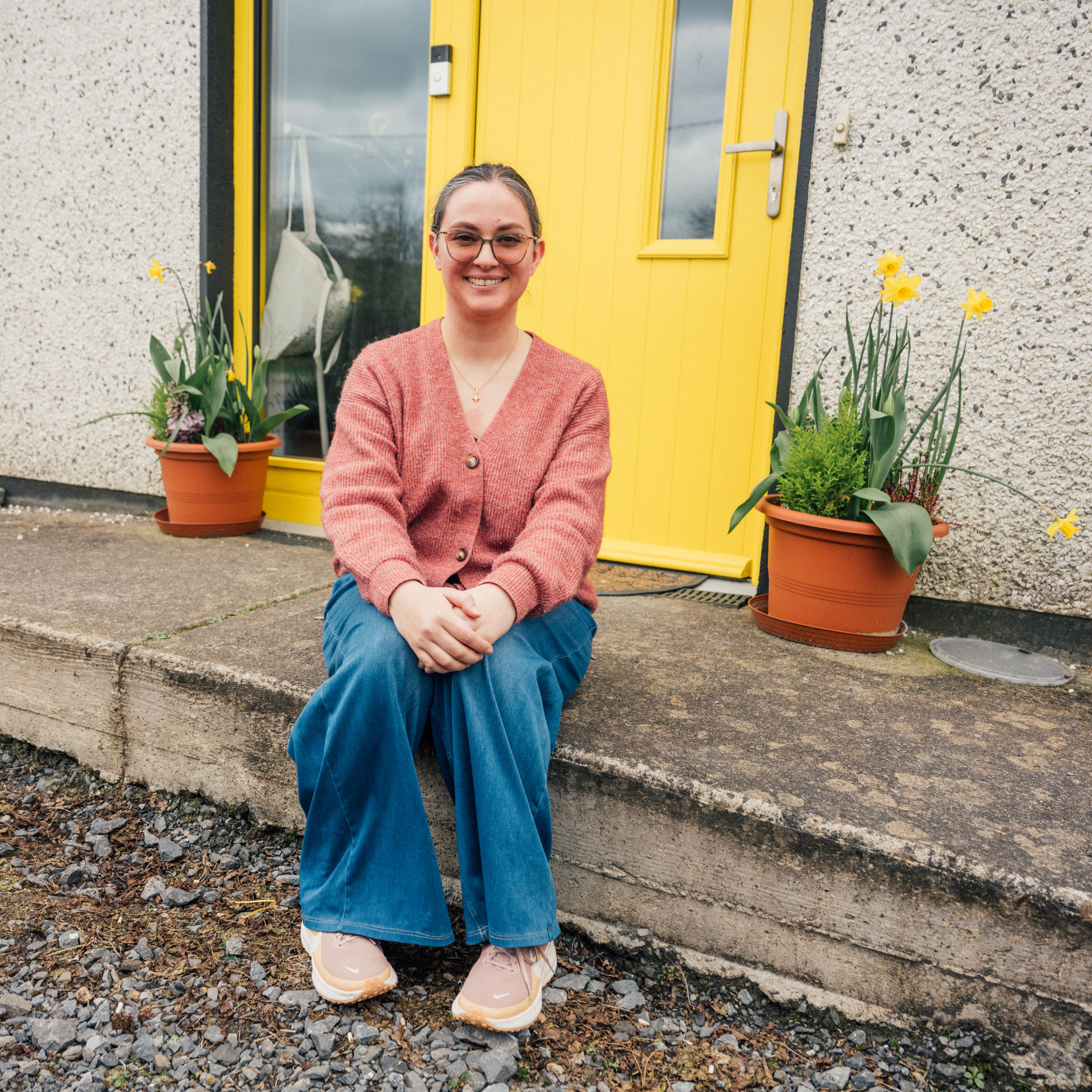
The speaker, originally from Mexico, moved to Ireland a decade ago primarily to pursue a master's degree in public affairs and political communication in English, viewing it as a personal challenge. A secondary motivation was exploring her Irish ancestry, as her surname, Mead, originates from Irish brothers who emigrated to Mexico. She contrasts life in Ireland, particularly the damp, dark weather and reserved social etiquette, with Mexico's sunny climate and more open, direct culture. After completing her degree in Dublin, she relocated to rural Mayo with her Irish partner, Enda, whom she met on Tinder. This move brought challenges, including isolation due to a lack of local friends and initial difficulty driving. She discusses the complexities of integrating socially, noting that while Irish people are welcoming, forming deep friendships can be hard for immigrants. As a mother, she also highlights differences in parenting and social expectations, such as her strong preference for announced visits over the local custom of spontaneous drop-ins, reflecting on adapting her Mexican upbringing to life in rural Ireland.
(upbeat music) - Bring your parents over, make them move from Mexico. - No, no, like they like to visit. - They're coming actually next month. - Oh, great. - That's lovely. - The weather. - Or stop with the weather. - What's wrong with the weather, Gabriella? (laughing) - The weather. - The weather. - 10 years in here and I just can't. - I can't. - I know. - And especially over the Wats of Ireland. - Oh, stop. I'm sorry. - Yeah, because actually Dublin was great. Like I didn't find this that bad. - Yeah. - But when I moved here, I was like, what is this? Why doesn't it stop raining? Why is everything wet all the time? - They just dark. The rain for me is not the problem. It's these. - The dark. - You know that it's - The dark. - The yaks. - Then you don't see the sun. And especially if you come from a country like mine. - Yeah. - That we have sun all year long. Like it's very rare if we don't have the sun. So that has been a huge change. So we usually try to go to Mexico during winter. - Of course. - I mean, like why do all the Irish people go and retire in Spain? - It's like because they need the sun. Everyone needs the sun. - Everyone needs the sun. You can tell when their sun, even if it's cold, people's mood are completely different. Like everyone is way happier. They have a smile in their face. They're not as jumpy. They, you know. Yeah, like it's just a completely different country. - So how did, why did you decide to come to Ireland? How did that start? - Because. Well, it was two reasons. One, because some part of my family comes from Ireland. Like my surname is Irish. - What's your surname? - Mead. - Mead. - Mead. Oh yeah. It's not very popular actually. Like a lot of people see it and they're like, "Is it or not?" And then I tell them, I'm like. - In Mexico it'd be quite unusual though. - Very unusual. And especially this one, because it's only two brothers that left Ireland to Mexico before the famine. And they have babies. And now all of the myths that you know, like that are in Mexico come from those two brothers. - Wow. - There's no other myths there. Like it's only from those two people. So they were brothers. One of them, of course being Irish, went to Chile to help with the independence war. - Yeah. - Yeah. - Because probably because they couldn't get it here. - Yeah. - Say they were like, "I just want to fight for someone." - Yeah, that's it. - Yeah. - So he went all the way to Chile. I actually don't know why he ended up there. Or you know, like that story. But he was going to be hanged. So the brother that is my ancestor got the word, you know, like, "Oh, they're gonna execute your brother." So he was like, "Okay, I have to go." And Mexico was kind of like the middle point for Latin America. - Yeah. - So he was there with, I think, the English ambassador. And he was like, "Please save my brother." And so the brother was paired and they brought him to Mexico. And then they decided to stay in Mexico because they saw a lot of opportunity. They became miners of silver. - Wow. - Yeah. So they made a lot of money. They made a lot of money back there. And they just stayed. They married. - A lot of money. Had a lot of babies. - A lot of babies. - Yeah, I don't know how many each, but I don't know that they got married with two English sisters. - Yes. - And yeah, they stayed there. So that was one part of why I decided to come here. I was kind of curious. - Yeah. - You know, like, "Oh, Ireland, yeah." And then the other part was, I just wanted to do my master's degree in English. It was like a challenge for myself. I was like, "I want to study it in English, not in Spanish." And then-- - And then-- - study in English. - Yeah, like the language, like any English-- - Yeah, like I wanted to do it in English, because, it was just a challenge for me, you know? And like, I just won the challenge of doing it in English and not in Spanish. But the state for me was like, "A big no." Because I don't like-- (laughs) Like, I like it to visit. But I don't, I wouldn't like to live there. I just don't agree with the way they think. - That's fair enough. - Yeah. - And it's very expensive. - Yes. - So I was like, "I'm never going to be able to afford going to a university there." - No. - I don't want to owe them for-- Like, I still, I know people that are in their 50s and they're still paying for college. - Oh, it's such a sham of a system, isn't it? Like, their student loans. - It's-- - Oh my god. 'Cause they never pay them all. - No, it's just interest, interest, interest, piling up, like, it's-- - Mad to have a-- - It's ridiculous. - To have a country and not want your people to be educated, to not make education for people like what's the point? - But see, it's just the system. They just don't want people to be aware. - Yeah, absolutely. - So you settled on Ireland then? - Yeah, well, I also thought about Canada, but then I thought about the winters. (laughing) Because I lived in Montreal and when the winter came, I was like, "No." - Yeah. - Just escaped to Mexico again. So I was like, "No, Canada no, the UK, absolutely not." And then it was just like, "Oh yeah, Ireland." And then I just googled what I wanted, because I didn't know that there was actually a master's degree on what I wanted. So I just like, kind of googled what I wanted and then the course came in. - Yeah. - And it was exactly the course that I was, like what was in my head? - What was the course? - It was public affairs and political communication. - Ooh, yeah. - Hello. - Okay. - Hello, I like politics and I like communication and I wanted to blend it in. - Yeah. - Because all my work experience in Mexico was in politics and also in communications. And yeah, like everything just went so smoothly. - Yeah. - Like, honestly, it wasn't a hassle at all for me to apply for anything. Like everything just, "Phew." - Wow. - So for me that was a signal as well, you know, like a sign. It was like, "Oh, if it's DCC, it's because you're supposed to be there." - Exactly. - Love it. - So I just applied for that course. Like it was the only course that I applied for. And I was going out with a guy back then and he did his MBA in Los Angeles. And he was, but he's very, you know, I don't know, like a very anal person. And very, and he was like, "You didn't apply for all "their courses?" And I was like, "No." And he was like, "What if you don't get it?" And I'm like, "That didn't even cross my mind." Like I didn't even think that I wouldn't be selected. Like I just was like, "Yeah, this is it, "and I am going to law." I feel it. That I did the same thing. I put one thing down. I was like, "Fotography, their degree, their that one." - Yeah. - I want to do that one. And I was like, "Yeah." And I was like, "What else did you put down?" "Nothing." I just want to do that one. - Yeah. - Was it on need? - I'm not like, "Got it." And I was like, "Go." - It's meant to be. - Exactly. - Yeah. - I had that feeling to say, like it was the same. So I was like, "No, I didn't apply for anything else." - Yeah. - And then I got it. And he was like, he was shocked. He was like, "Oh my God." And then I got a scholarship because it was 2016 and they were doing a Easter-vising scholarship just to celebrate the hundred years. - Wow. - And I saw it, but then Mexico wasn't in the list. I was like, "Fuck." And my mom was like, "No, email them and just ask." You know, the worst thing that they can say is no. - Yeah. - We don't have a scholarship for Mexico. And that's it, you know. Like we can still pay for the course. And I was like, "Okay, I'll email them." And they say like, "Yeah, yeah, you can apply." But it was like the day that it was closing. So I thankfully I had all the paperwork. And I just send it probably like half an hour before it closed. - Wow. - And I got 50% off, which was great. - Yes. - It was amazing. So yeah, and then I just gave him the first of September of 2016. And I'm still here. (laughing) - Ten years. - Ten years. - And now you find yourself living in rural Ireland in Mayo, we're in Mayo, right? - Yeah, it's Mayo. - Yeah, Mayo. - We're in rural Ireland. And now you've got a little bilingual boy who's gorgeous. So you become a mom. - Yeah. - You've done a lot in ten years. - A lot is like a completely different life. - Was the course in Dublin? - Yeah, it was in T.U.D. Well now T.U.D. was at the IT. - Yeah, T.I.D. - And then Enda came into the picture. (laughing) - Thank you, Tinder. - Was it a Tinder? - Yes, on Tinder much. A lot of people always are like shocked by that, but I'm like, yeah, no Tinder back then. Tinder wasn't that bad. - Yeah. - Now I hear that is, I hear this stuff. - I hear this stuff. - People are on Hinge and Bumble and stuff for going back to like plenty of fish. But like Tinder was the thing. - Yeah. - People did it. - Yeah. - And obviously it works. - Right, yeah, and now you have an Enda and then you have a two year old and a dog and a cat and a house. - In a house? - In rural Mayo. - We were lucky enough to find the house and get into the property ladder. - Why Mayo? - Because Enda is from here. He's from Claremores. - Oh, okay. - If it was me, to be honest. - Go on. - Maybe not Dublin, but maybe Galway or something. Because I'm used to CDs. Like I used to live in Mexico City before I came here. - Wow. - Okay, so that's a bloody huge thing. - Oh, yes. 20 million people. - To Mexico City, to Claremores. - Oh, yes. - No, and it wasn't even Claremores. I went to live to Mayo Abbey, which is like this ice. They don't even have an ATM. Like it's just the pop. The shop, of course, that it's in the pop. And they are the ones that do funerals. And, you know, there's a school, there's a church, but that's it. There's nothing else. Enda's grandparents used to live in Mayo Abbey. So we ended up finding a house there to rent.
which it was an easy to combine because renting here, even back then, that was 2019, it was very difficult to find, but we were very lucky. So I came from a city of 20 million to Dublin, that it was 1.5, which for me was like holidays. And then to a village of, I don't know, probably like 100 people, maybe less. That's a culture shock, right? Like that year for me, I think it's probably, well no, his first year of life was the hardest, but like that year was very hard. Really? Because I didn't have a driving license. I had mine from Mexico, but you're not allowed to use it after a year. Okay. Like you cannot get insurance or anything, so I had to do the lessons again and everything, and you know how long it takes in this country to get a license. And then you're kind of stranded out here if you don't drive? At first I was like in the cottage, we didn't have Wi-Fi. Oh no, it was honestly, yeah it was hard. It was very hard. That's it. That's the big sacrifice for the man you love, isn't it? It's very, very. That's the cute, because you've got this master's, you know, very well accomplished. You're driven. You've set yourself challenges to go across the world to learn in English. That's very driven, strong, independent woman. And now you're in a cottage in Veil, when you go away, get around in the middle of nowhere. It was just. because he was living in Dublin when we met. He was in marketing. Okay. He was in marketing. Yeah, he was in marketing in Mille, the ones that sell freezes and stuff. But then he was like, "No, I don't want to be in front of a computer all my life." And he discovered the campervan world because he's best friend. She's a musician. Okay. And one day she was like, "Oh, would you help me to build a campervan?" So I can travel around and it's cheaper for me because she was going in her car. Yeah. But it was like a commodation and that kind of. Oh, yeah. And it was being very expensive for her, so it wasn't making any sense. And he was like, "Oh, yeah, I'm gonna. Like get rid of the job." Yeah. And then after that I think what I want to do. So he started building the van with her. And then he saw the opportunity that, you know, there's not many people. Building campervan. Building campervan's like his style here. So he was like, "Ah, I'm gonna open my own business." So he told me, "I want to open my own business in Mille." And I was like, "Okay. Okay, bye." Yeah. I was like, "Can't you open it in Mille?" Or, you know, somewhere closer to Dublin. But all his family was here and he had a lot of support here. So when you're starting a business like, you know, you don't have anything. So it was hard in that sense. I was like, "Oh, yeah, maybe." And I didn't. To be honest, I didn't even do research or anything. Like in my head I was like, "Oh, yeah, I'll be able to find something." No. Oh. So you were just planted in Mayo. Yeah. And then like, you've no friends, right? Like in Mayo, like you didn't have a network, a support network. No, not really. Like that's really difficult. Yeah, because the only friends that I had in Dublin, like there's still my friends. Yeah. A girl in the masters, like we became very close friends. And she is, but that's another funny part, like none of them are Irish. Oh, yeah. Because Irish people I find they're very welcoming. They're very nice, but it's difficult to get into their life. Their circle. I've heard there's a lot from other immigrants, to say. Like it is very hard. It's like, "Oh, yeah, is there so friendly? You're so polite." But like getting into a circle of friends is really, really difficult. Yeah. Like I don't have, like the only Irish friends that I have are enders friends. Yeah. But my own? No. Oh, wow. The friends that I have in Dublin, these girls, well, she's, I don't know if she's Irish. Like her parents are Irish, both of them, but they moved to Sweden when they were young and then they had her there and she lived there until she was like 20. Yeah. So she's Swedish. She's Swedish. But she's Irish at the same time. Yeah. That's a weird thing. Then the other tool where my housemates, one is from India and he's getting married soon in June. We're going to go to his wedding. He's getting married with a German girl. And then the other one is from Greece and she's getting married with a Greek. And those are kind of the friends that I have in Dublin. But yeah, here in Mayo, like it was just Enda and Enda's family and that was it. You know, like I didn't know anyone. But I didn't expect it to be this hard. Yeah. You know, because in Mexico, we're just not like that. Like we are very, you know, like it doesn't matter if you're foreign or whoever you are. Yeah. Yeah. People are very, you know, like, oh yeah, come here. You know, the crack, yeah. So I always thought like, oh yeah. I think Mexican is slightly similar to Irish in lots of ways. But then the difference is sometimes we can be a bit hostile. I wish people can be a bit like salty. And we're like, yeah, I don't know. I like it a bit bitty. Whereas like Mexicans, they just live on the surface and they show you how they feel. And I'm like, I love that. I do think the same that we are a bit more open in that sense. Yeah. And also like in here, I find it so difficult. Like if you want to, for example, someone comes in and tells me, I don't know, do you want to go to my, to have tea in my house tomorrow? And I'm like, no. No, no, no, no, yeah, like just because I don't want to. Or I don't, I don't feel like it, but I don't feel that I have to give an explanation. But in here, oh my god, you have to give like, oh, you've been more key offended. Oh, yeah. And at the beginning and that was like, what's our problem? What do you mean? No, no, you have to say you know, like I have something on and I'm like, no. Like why? Like, no, yeah, that is cast. I know, but it's very difficult because a lot of people, when they don't know me, they probably think that I'm rude. It's just different. I'm just like, no, or I don't like it or I don't want more. But that's what I mean about Mexicans. There's no filter, there's no disguise, there's no mask, there's no that shit that we do. Yeah. Yeah, exactly. I find that very difficult here. But it's not, it's just like, why should I be explaining myself to someone? You know, like it's just, I don't want to. You're dead, right? Why so just? Like, no, I don't want to. Thanks very much, bye. Yeah, like when she was born, I told them that like I don't want visitors. Yeah. Like I don't want visitors. I just maybe just, his parents and his siblings, no kids. And my parents and that's it. Like I don't want to see anybody else. When the baby was a small baby, like, yeah, the first like maybe two to three months. Yeah. Just when you have a baby, it's, it's a very, it's a, it's a completely different situation, you know, like you become a completely different person. Like, like you're a completely different person. Yeah. That version of you will just die. Just gone. Yeah. And then you give birth to the baby and to yourself. Yeah. To the mother. Exactly. Yeah. And then you're figuring out how to be that person and also to get used to have a little person. It's very difficult. So when you have a newborn, they're usually our sleep. Yeah. And then you're like, you know, don't make the child. And of course a kid wants to play, wants to scream, wants to run because they're kids and that's normal. So that's why I told them like, just leave them for a while. They will meet their cousins. Yeah. And they'll ask their cousins to go out and play with their cousins. And then they'll just be like, well, I'm just a kid. So, I'm just a kid, you know, I'm just a kid. And then you're like, you know, like, what do I do? I'm just a kid. I'm just a kid. I'm just a kid. That's because my mother in law and my father in law did it a couple of times at first. And I had to tell Linda, you know, I was like, no, no, that's not like that. I think that's an Irish country thing that they pop over to everyone's houses on an earth. But in Mexico, it happens very often as well. People just love to come in and it's grand. If you like it, that's great for you. I'm not that person. I am allergic to that. I do not call into my house on an earth. - No. - Absolutely not. Like, at least that text. I text three arrows in advance. Minimum. I need to close on. - Yes. - I need to clean the house. Exactly. I tell you, please do not arrive on an earth. Yes. You will not be welcome. That was a big shock for me because if you go to my mother in law's house, there's always someone. - There's just popping in. - Yeah. And she's used to it and she loves it. Like, you're thrishing it. - She's very country-themed to do. And it's great for them. Just nothing. - Exactly. Not for me. So they knew in advance that I was a bit like that. We have to announce ourselves before we go to Gabi's house. I'm like, "Yeah, well, yeah." I was raised like that because my parents are like that. - Yeah. - But my dad, for example, he was raised in a family that it was Irish families. They would just go and pop in and pop out. And then when he met my mom, my mom was the one that was like, "No, you have to." And I was your dad before going to a place. - Yeah. - And then my dad was like, "Oh, my God." So he loved it. He didn't know anything else because he grew up like that. So he thought, "That was normal." - That was normal. - "Dore opened and you come to the house." - "Oh, yeah." - "He was just like, "Oh." - "He conveys a lot of people through your house the whole time." I couldn't ever. - You never relax. - Exactly. You know, like sometimes you just wanna sit down and watch the cellar, do you say? - Yeah. - You don't want it. - Or nothing. - Or you just want to be in your pajamas all day. - In your pajamas. - Not cleaning, not doing anything, just being like this. - Which is totally fine. - Yeah, exactly. - You see, happy and sad, dear Ned. - Yeah, it's a good life. Like I do like the fact that my son is going to be able to grow as we did in a sense. Because I didn't grow up in Mexico City. Like I was born in Mexico City, but I was raised in my mom's hometown, which is like two hours driving from Mexico City. - Okay. - It's a bit smaller, I mean, smaller, Mexico smaller. Mexico smaller is, it is a city of 200,000 people. For us that small. - That small. - I feel very happy. - Like we were raised, you know, we were outside in our bikes, playing with the neighbors. It was fine, it was grand. It was like this, you know, like back then it was a lot of green. There was cows, there was, you know, it was like that. Now it has changed a little bit, but I was like, I don't want my son to be in a city. I don't think I want that. - Really. - Growing up, it's just that it's a completely different way to grow up, I think. - Yeah. - There's a lot of noise. Like not just, you know, like sound, it's just a lot. It's a lot of stimulation everywhere. - You're dead rise. - Yeah. - A lot of visuals going on. A lot of light and cars and people. - Information. - Information. - Yeah. - And in here, I like the idea of my son growing up in these because I don't know, I think we've gone very materialistic in the world and very, you know, things, things and yeah, just a lot of stimulation and I'm happy that he will be able to grow here, grow up here. And a little bit more, you know, settle like not as BC as in the city. - I know life. - Yeah, so. - But Kunau's, he might end up, you know, being like, I want to go and live in Mexico City. - This is it. - I mean, you'll have the language, you'll have the heritage. - He has a nationality as well. Like he has double nationality. - Right. - He is Mexican and he's Irish. - And you'll have a support network over there. - Yeah, exactly. Like my parents are still there. Well, but they're not getting any younger either. - Yeah. - That's the, but your sister's there. - Yeah. - And a lot of friends. Yeah, like all of my friends are there. So yeah. - Yeah, that's a bad thing about being an immigrant. - You do miss people. - Oh, yes, all the time. - Yeah. - I think you never, you're always living like grieving. You're always grieving every day. It's like you enjoy your life here because I do enjoy it. And I'm very happy to be here. And I'm thankful for being here. But at the same time, I'm like missing so many weddings, births, pregnancies, deaths, the day to day situations. Like just calling my friend and being like, let's go for a coffee. Like simple things, you know, like, but, you know, it's one thing for the other. Like as well, Mexico at the moment is not in its best shape. It has gone very bad. - As if. - Yeah, like, it's just the governments that we've had have been just very poor and people in general. Like I think that, I don't know what's happening in the world, but people are just very, I think it's this fixation with money and things. And now with social media, I think it's a lot of fake things that you're seeing all the times in the sense of, you know, like people showing off their lives and all, I am so happy and I'm blah, blah, blah. And it's not real. - No, it's all nonsense. - It's all nonsense, exactly. So I think that people are pursuing the wrong things. - Yeah. - And that have disconnected us from us, like human beings. Like if you go now, for example, to a coffee shop and you see the youngsters. - Yeah. - They're on their phones. I know. - And they are talking to each other, but on the phone. And I'm like, what? Like, yeah. It's just, yeah, no. And that's a global problem, isn't it? Like, I mean, from wherever in Mayo to Mexico, it's everywhere that you can see it. Yeah. I mean, I guess because you're here and you're planted right in nature and stuff. So Shay might have a different kind of outcome. You know, he's gonna get out there and play the trees with the dog and everything and you're giving them the best chance to play from that. Like, at least we're trying to. And, you know, also a lot of rules. You have to be, you know, very mindful as well because kids, I think kids learn for what they see. - Yeah. - Because you can tell them a million things, you know, speeches and speeches. But like, if you they see you on your phone all the time or watching TV or like they will, they copy you. All the time they are copying you all the time. So we have to be mindful as well of our use with screens too. - Wow, yeah. - Yeah, like having a kid is like a mirror. I see it as a mirror. Like, it brings up a lot of things from your own childhood. And of your adulthood as well, you know? Like a lot of your attitudes and everything. And it's like, oh, she's like, why am I reacting like this when he cries or when he does these? And why am I telling him to do that? Like, is it coming from me or is it something that my parents told me? - Wow. - And, you know, like, is it my idea or is it the society's idea that I'm putting in his mind? Like, at least for me, I don't know if all parents do this thinking. But for me, it's been like, I don't know, like an opening. - Yeah. - Very challenging. - That's a lot to learn in two years. You know, like to have that perspective change. - It's all completely accomplished. - Shinscale Ella, that's another story, was hosted and created by me, Ruth Medjber, with sound by Ronan Lalley. The podcast is produced by DReady at PODL Audio, with original music by Eléme.
Podcast Summary
Key Points:
The speaker moved from Mexico to Ireland for a master's degree in public affairs and political communication, driven by a personal challenge to study in English and a curiosity about her Irish ancestry.
She discusses significant cultural adjustments, particularly to Ireland's weather, darkness, and social norms, contrasting them with Mexico's climate and more direct, open interpersonal interactions.
After her studies, she moved to rural Mayo for her partner's business, experiencing isolation without a driving license or local network, highlighting the difficulty of integrating into established Irish social circles.
She reflects on parenting and personal boundaries, emphasizing her preference for planned visits over spontaneous "pop-ins," which contrasts with local customs.
Summary:
The speaker, originally from Mexico, moved to Ireland a decade ago primarily to pursue a master's degree in public affairs and political communication in English, viewing it as a personal challenge. A secondary motivation was exploring her Irish ancestry, as her surname, Mead, originates from Irish brothers who emigrated to Mexico. She contrasts life in Ireland, particularly the damp, dark weather and reserved social etiquette, with Mexico's sunny climate and more open, direct culture.
After completing her degree in Dublin, she relocated to rural Mayo with her Irish partner, Enda, whom she met on Tinder. This move brought challenges, including isolation due to a lack of local friends and initial difficulty driving. She discusses the complexities of integrating socially, noting that while Irish people are welcoming, forming deep friendships can be hard for immigrants.
As a mother, she also highlights differences in parenting and social expectations, such as her strong preference for announced visits over the local custom of spontaneous drop-ins, reflecting on adapting her Mexican upbringing to life in rural Ireland.
FAQs
The biggest challenges are the weather, especially the constant rain and lack of sunlight, and the long, dark winters. This can significantly affect mood compared to sunnier climates.
She moved to Ireland for two main reasons: to pursue a master's degree in English as a personal challenge, and due to a family connection, as her surname is Irish and she has ancestral roots there.
She received a 50% scholarship offered in 2016 to celebrate the centenary, which she applied for at the last minute after emailing the university, as Mexico wasn't initially listed for eligibility.
She found Irish social interactions more reserved, with a need to provide explanations when declining invitations, unlike in Mexico where directness is common. Unannounced visits were also a cultural shock.
Moving from a city of 20 million to a village of about 100 people was a major culture shock. It was isolating, especially without a driver's license or Wi-Fi initially, making daily life difficult.
While Irish people are welcoming, she found it hard to integrate into their social circles. Most of her friends are other immigrants, and forming close Irish friendships outside her partner's network proved challenging.
Chat with AI
Loading...
Pro features
Go deeper with this episode
Unlock creator-grade tools that turn any transcript into show notes and subtitle files.
 PodcastTranscript AI