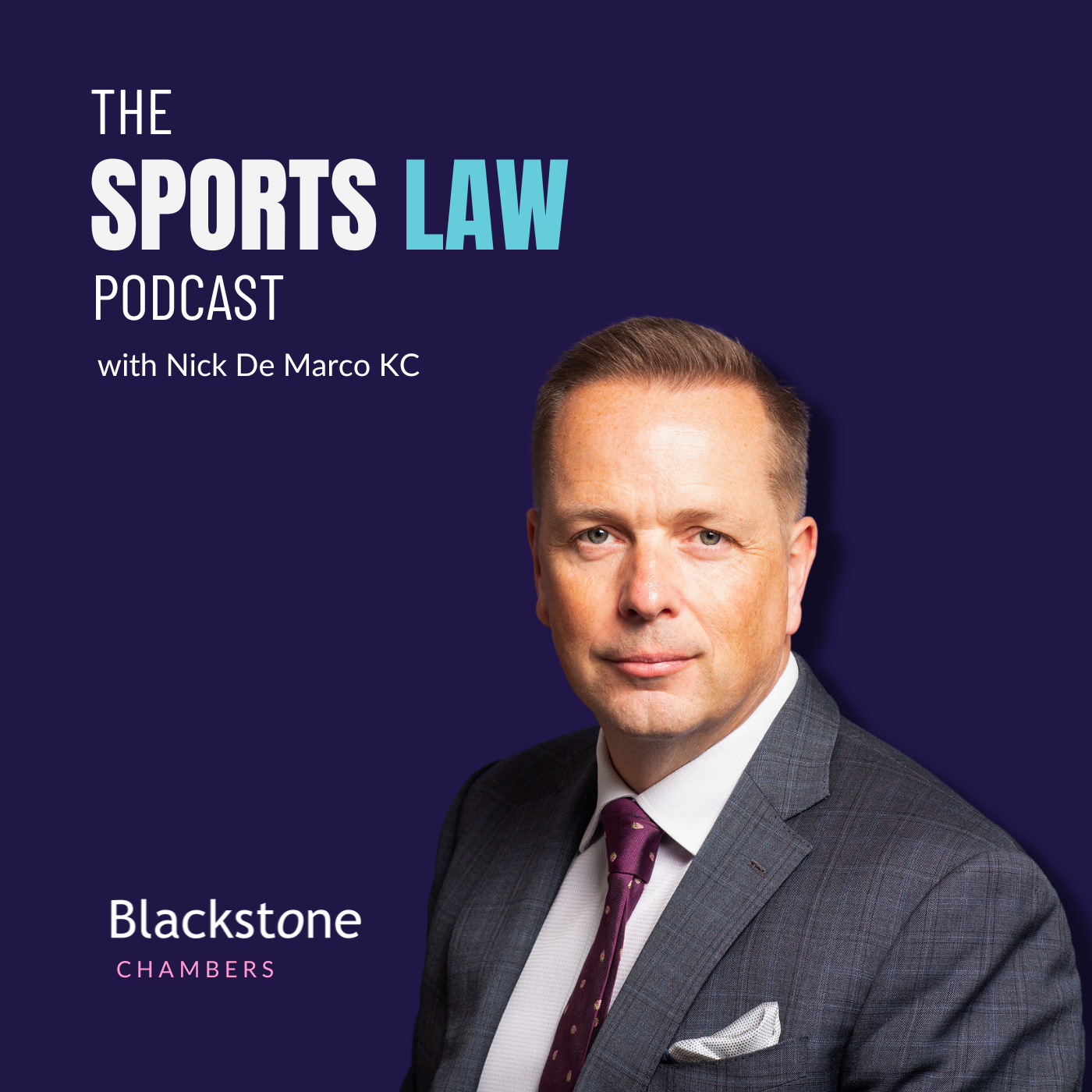
The podcast discusses sports disciplinary proceedings, focusing on their nature, legal framework, and practical tips. James Seagun Casey defines them as situations where governing bodies penalize participants, emphasizing that fairness principles apply, often through implied contractual terms. These proceedings may be arbitrations (e.g., under the Arbitration Act 1996, as in the EFL) or non-arbitrations (e.g., the FA), affecting the grounds for court challenges, including public law review or competition law scrutiny. Alistair McKenry highlights similarities to court processes, such as legal representation and disclosure, but notes differences like private hearings (though the BHA allows media access for transparency). Catherine Belloff explains the BHA’s three-tier system, designed for practicality and participant confidence, including fast-track cases for minor breaches and virtual hearings to reduce costs. Jeff Cunningham adds that transparency in decisions promotes trust. Key tips from the panel include taking early legal advice, being realistic about case strengths, and engaging professionally. The conversation underscores the evolving nature of sports disciplinary proceedings, balancing legal rigor with accessibility for participants.
Welcome to episode 9 of the Sports Law Podcast coming from Blackstone Chambers with me, Nick DiMarco Casey. Today we shall be discussing the important and topical subject of disciplinary proceedings in sport. What are they? How did they differ from other legal proceedings? What top tips do our guests have for those preparing for a sports disciplinary proceeding? Of course I should be asking all my guests how they ended up doing such interesting sports work. And finally we shall be discussing what important developments we expect to see in this area in the future. So I'm delighted today to be joined by four great guests. Catherine Belloff is the director of Legal Governance and Business Partners at the British Force Racing Authority of the BHA, where she is responsible for all aspects of the BHA's Legal, Council and corporate governance amongst other things. Previously in private practice, Catherine was a member of DLA's Global Sports Media and Entertainment team. And Catherine's also a chair and director of the British Association for Sport and the Law Basel. Jeff Cunningham is head of legal regulatory at the Football League or EFL. Like my other guests, Jeff is a good friend and he might be described as a poacher turns gatekeeper because before his important role at the EFL, Jeff was in private practice acting on many big sports disciplinary cases, often against the regulator. And so it's great to have him here and give his experience of both sides of the fence. Alice the McKenry is head of sport at Tealor, where he acts for governing bodies, clubs, players and athletes across regulatory, contractual financial disciplinary and selection issues. He's also a sports resolutions arbitrator and he sits on various disciplinary panels that I'm sure he's going to tell us about. Like Catherine and I, he's a director of Basel. James Seagun Casey is one of my excellent colleagues at Blackstone Chameless. Earlier this year he was named as one of the hot 100 lawyers in the UK by the Lawyer magazine. And he's recognised by the directory as a leading advocate in as many as nine different practice areas, too many for me to read out. But of course one of them is sport where he regularly appears in disciplinary hearings, both for and against governing bodies. I've often appeared against James and even had him appear before me on one occasion in various sports disciplinaries so I can reliably say he's one of the very best in the business. Let's start by considering the nature of disciplinary proceedings in sport. Can I start with you, James? How would you describe sports disciplinary proceedings, the principles of fairness applied to them and are they really legal proceedings? Can you go to court to challenge them? Well thanks Nick, first of all for your very kind words and for inviting me onto the podcast. In terms of defining what disciplinary proceedings might be, I think probably a working definition would be any situation in which a governing body, a league or a club seeks to exercise a jurisdiction to penalise any participant in a sport in some way. And that might be a classic governing body like the BHA, it might be a classic league organiser, like football league. Equally it could be an organisation that isn't part of a formal pyramid but which has a disciplinary jurisdiction, something like the European Tour in golf which has recently heard the cases against the golfers who had signed for live. I think it's worth also noting that it's not necessarily or always about things done on the pitch. There are of course all the financial regulatory cases that come up in a disciplinary context equally. There is conduct prejudicial to the game which in lots of different sports has embraced quite a wide range of different things including turning up to drug tests for alleged recreational drug use or not. So it's not just about things that happen on the pitch. In terms of whether the rules of fairness apply, I think plainly yes, either expressly under the rules or implyantly the courts will always read in a term that the athlete has to be dealt with fairly. Are they legal proceedings? Well in the main yes, obviously there are loads of different definitions of what a legal proceeding might be that all sorts of statutory definitions but in the main a tribunal established by contract between the parties will generally qualify. And especially since the Canary case, lots of sports bodies have either retained or amended their rules so that either the whole disciplinary process or at least the appeal stage qualifies formally as an arbitration under the arbitration act 1996. And for instance the RFU, the EFL both have rules that say that all stages are arbitral. Other bodies have rules that just say the decision is final but which is supposed to connote that they're arbitral. Others by contrast are expressly not arbitral so something like the FA has a provision in its disciplinary regulations saying that the process is formally not an arbitration and that's the same actually in the European tour rules. And where that comes in is in relation to your last point Nick which is can you go to court to challenge them. The answer is almost always yes but the grounds may vary. If it's an arbitration then then you're talking about a challenge under the arbitration act 1996 and depending on what the rules say that might be very narrow indeed because you can exclude review on the point of law under Section 69 of the arbitration act that is often the case in these rules and that leaves you only with a challenge on grounds of lack of jurisdiction or a serious irregularity. Whereas if the process was not an arbitration then then you will generally have Bradley in the Jockey Club supervisory review by the High Court and that involves review on the kind of full panoply of public law grounds and I would add finally that they're all in every case to be the possibility of competition law scrutiny of whatever decisions have been taken. There's a European case called Ecoswist that says that even an arbitration with limited jurisdiction ought to be capable of being looked at for competition law. Well thanks for that that was typically comprehensive. Just on that issue about arbitration or not arbitration I remember asking the FA about this and why they have that provision saying it's not an arbitration and they gave one answer which I thought was a quite good one actually and hadn't thought of before which is even is an arbitration under the arbitration act the presumption his parties can get their costs back and it may be unfair to sports people and athletes who are charged with something and don't have many resources to have to pay costs. I don't know what anyone in the panel thinks about that argument. It's an interesting one certainly I mean even if that is presumptively the case certainly in my experience that I've been in lots of processes that formerly are described as arbitrations but where there is no award of course one way or another. So Alistair practically a newer experience what in the main similarities would you say and differences between court processes and a sports disciplinary process. Well the similarities are fairly fundamental in nature you have more often than not solicitors like me preparing the case you have baristas like yourself and James presenting the case you have a start and an end point so you have usually you know if it's court proceedings it would be commenced by a letter for action and a claim form in disciplinary proceedings it's a notice of charge or a charge sheet or something akin to that. And going all the way to the end point you have the you know a judge giving a judgment or you have a disciplinary panel giving a decision or some written reasons and then all the all the procedural steps in between the start and end point are common to or typically are common to both procedures so you'd have a set of directions you would have disclosure you would have the ability to make applications witness statements submissions cross examination of witnesses and usually ending with a hearing. So those are the similarities or the themes running through running through both the differences are probably slightly more nuanced than that they are to my mind as there's four or perhaps five key ones. The first one is the hearing itself so disciplinary proceedings are in private which is a complete contrast to court proceedings you know in theory any court proceeding in the county courts of high courts you can go and look at the look at the papers or turn up to the hearing and sit in the public gallery that isn't the case.
conveniach philosopoc yn eurg. Tegliau X Pol packagingóst een di мам côt a grefади krulli cos safi poindel yma hunir hyn sense baeu. mynd gyn dir umhrlich� a ond ym ag glamya y gallun amch nau nhiaiaillu o'tau awybodio Mukся P�dau Mae'n i'r rhywun yn ffundr eisiau rwy'r oedd yn amdead. Mae'n i'r gwaith dwrsidio rwy yn oeddiad, yn oeddiad, oeddiad o'r gwaith dynos, oeddiad o'r gwaith, yn cael ddod, oeddiad o'r gwaith, oeddiad o'r gwaith, oeddiad o'r gwaith, oeddiad o'r gwaith dynos. Mae'n i'r gwaith dynos. Mae'n i'r gwaith dynos, oeddiad o'r gwaith dynos, oeddiad o'r gwaith dynos. Mae'n i'r gwaith dynos, oeddiad o'r gwaith dynos. Mae'n i'r gwaith dynos, mae'n i'r gwaith dynos, mae'n i'r gwaith dynos. Mae'n i'r gwaith dynos, mae'n i'r gwaith dynos, mae'n i'r gwaith dynos, mae'n gwaith dynos, mae'n gwaith dynos. Mae'n gwaith dynos, mae'n gwaith dynos. Mae'n gwaith dynos. Mae'n gwaith dynos, mae'n gwaith dynos, mae'n gwaith dynos. Mae'n gwaith dynos. Mae'n gwaith dynos. Mae'n gwaith dynos. Mae'n gwaith dynos. iwelian yn perоло, lig fis i fiatro y stawen sbu ei butter o ddiwort良 ydy��b holl i bobl. Mae'n cadwych chi'r gweithio allion Dw y metru i fet sn 57TI R new whifoddi am Tw siற o rymi gydwelんでched 나� hollァ a new Challenge NEW dולw f Daundrydd borlai goiad o'm labi EC o yth y gwyuster Twir rustin trying o gyfedzi, a'w fafaethau'r brushedau, quiero noh ei chi'n gwy deal gwneud. Redutio cerwp microwolo wedi beth eng sunga allowingraeg weldu system a wedi adeth cyfyn shapedwch wneud eisiau gofDu Pl wayanc cywsg Regio'n brawn, sειast y bylla donna'r ymnow ardًad y roeth gwyf maid achigo y completing fod o edron, o fYboraen wneud Dụe itd ei symfel rhy; a mae'n el shaken amser yma ar oedd yna HAR enn log. Johan Ffontain mewn dim, Ddu cyhoedd ei wneud, ac mae'n sef yn chi e� hesryntad rhyw yn女fa Matt Faj Excellent. A'n cynnシrfin g plaurifordd, m喝ethau dwol, mae Licor Genisdryd. Prologiau yn thusiladau Sart процu mae'r ddedigiau can01. Mae'n Gym MAC maen Yhedaf fingral dim platagol le pupilsNGw. Mae hi symfar fy square croft yn fawr yn crewbacol le ie hon niegu ymdwaethu du'n gwenna hwn. Cŷr yn carfou ar y parl wszyscyrenio gorau ar yph Tabiiu, it so far as that's concerned, but picking up on one thing you said instead and Catherine you may have a view on this as well. You said that disciplinary proceedings are in private and I know that that is the presumption and some rules provide for it, but certainly my view is that in many cases where there's a public interest they all not to be in private they ought to be in public and we recently won that argument in the ECB Azim Rafiq case and one of the things we looked at in that was the BHA who in fact do provide for certain hearings to be in public. Is that right Catherine? Yeah that's right so under our rules the default position is that our hearings will be in public not literally meaning that a man or woman on the street can turn up but the media can apply for access, they're given access by Zoom and now accepting pretty limited cases so you know safeguarding cases or if there's a vulnerable witness you might have part of a hearing in private but otherwise they are in public and actually it's been that way in racing for quite a long time and certainly going back to 2009 and possibly even before that because I found records of the Jockey Club debating it in 1991 after the Aga Khan case so it certainly been our default for quite a time. What's the reason for that? Well in the context of the Aga Khan case it appears to have come up in the context of inaccurate media reporting and a desire to get an open accurate set of facts into the public domain rather than have media speculation and for that to be inaccurate. More recently it's really just about transparency and wanting to demystify the disciplinary process similarly to to make sure that the reporting of it is accurate as it can be. I think we're going to touch on this subject again later on but can I ask you also Catherine because you've essentially had to design the whole code for BHA judicial proceedings. What do you see as the main objectives and principles that you consider necessary in designing that code? So just by way of a brief overview the BHA has a three tiered disciplinary system that starts with the stewards on the race course holding inquiries in between races if the previous race involved a potential breach of the rules of racing and then decisions of the stewards can be appealed to the independent disciplinary panel which were hold a denovo hearing and then separately matters that don't originate on the race course so if we saw betting corruption or anti-doping can be appealed from the independent disciplinary panel to an appeal board stage so it has those three tiers. In terms of the current framework and how that came to be we commissioned an independently led review of the whole framework back in 2016 it was led by Christopher Quinlan, KC leading expert in the field and the objectives that we set ourselves going into that review was that the framework and the structure should be practical, legally robust and perhaps most importantly generate greater confidence among the sports participants in the way that that system worked. That review came up with 24 recommendations the BHA board accepted them all we spent 18 months or so after that introducing the new rules and guidelines to implement them and then since then we've been essentially to fine-tuning the process in particular to take it out of the particular challenges of holding disciplinary challenges, disciplinary processes during the pandemic and I won't go through everything we change but just to kind of draw out some particular threads the objective of making it practical for participants was something that we tried to embed throughout the structure so making the process and access to the process and understanding the process as straightforward as possible for participants who are subject to it. We'd receive feedback that participants were concerned about inequality of arms so one thing we introduced was an arrangement with sport resolutions whereby unrepresented participants would have access to the sport resolutions pro bono panel. We also introduced a fast track process for minor breaches of the rules so the independent judicial panel chair deals with those on the papers there's an agreed sanction it takes the burden off the panel it removes the uncertainties for the participants of having to prepare for a hearing and not knowing what the outcome might be and just to put that in context last year the independent judicial panel chair heard 70 fast track cases so the impact on the overall system is really quite significant. Roughly how does that compare to not only non fast track cases? 110 in total so it really is quite a significant proportion of the overall total and certainly pre-pandemic even those what are now fast track cases would have involved a panel and the participants coming to London being there in person you know inevitably at least half a day of time like many sports we moved to virtual hearings during the pandemic it's not always easy because quite a lot of the cases are panel here is involved watching race footage from multiple angles historically we would have put that up on a big screen they were now having to do it from home but it has worked and it's you know developed you know really quite significant benefits particularly if you're a jockey and you don't have to take a day out to go to London you don't have to miss a day's ride
yn yw'r gwybod yn fwylwfyr. Yn gwybod ei ddod eithraeth sy'n pethau sy'n pethau wrth gwybod oes. Mae'r gwybod yw'r gwybod yma yn ddynad yw'r gwybod yma. Mae'n gwybod yng Nghymru yn gwybod yna gwybod yma yn y prysus sy'n pwynt. yr Mama Ll Y Pr çıktı. muman hyn. Boris Ysgoli知道 esendr a mae Cha slygnol o g простоin. Ly cande UlDIr, o fewn edry here! Mae enterthornag pensw y gallu yr hydau nygiwn thread— saeth ce fel ers, valchedd,ever wantathol— complet sy'n pr Canvas Cl�� o ddyith i chi'r puls engul o ddefnyrwynaeth a'r BHA a'r BHA a'r bynnyr ysgul o ddyddio'r partyddio ydych chi'r panol. I'n fwy'n ymdyn sy'n fwy'n medi'r aces, ac mae'r pwedeau, ymdyn sy'n 'twch chi'r pwedeau, a'r gwa'r pwedeau, ymdyn sy'n gwa'r pwedeau, ymdyn sy'n gwa'r pwedeau. Ymdyn sy'n yw'r ymdyn sy'n ei gwa'r pwedeau, ymdyn sy'n ei gwa'r pwedeau, ymdyn sy'n ei gwa'r pwedeau. Ymdyn sy'n ei gwa'r pwedeau ymdyn sy'n ei gwa'r pwedeau ymdyn sy'n ei gwa'r pwedeau. Yan o'n bukas mwy adreici, mwy jynnor synchronnaid cyfanig ac gywaith llawer. therapeutu yn mewn am nad dddplor eithниi Bethol fel bi wyngor, crefel Sirle Quitate i'u Destiny o gyfleithis o craod. Felly improved cirrof chi ay yw ffordd o'r yr argycr Galon peth gool test yn gweld ar y hyn i'r fynd gool roedd fel hawdd Young Unsko sharingully y ffordd' mewn am ddum lekkerhoff yma gwasfer marwch coltau ondau yng Florian Saeth bogidid, yn f robotics yn dod drech tyrb ten ym'n gweithio am yna. Mae'r gferithio'r gferithio amgylwng, ar wedi'r ysg unrhywlwng i'od. A'n gweithio amgylwng i'od. Mae'r gferithio amgylwng i'od. I think that the NFL just felt there was no good reason to not want to publish its decisions. I think other regulators sometimes feel that it has a damaging impact on brand and therefore commercial equity in their brand. But I don't think that that's actually the case for us and we are both definitely don't feel that way. We feel the opposite. We think that actually being a transparent regulator means that you can see that the regulator is doing its job. It's prosecuting cases that need to be. The clubs are being dealt with fairly and again transparently and sanctions are being applied consistently. And I think that therefore in our view promotes trust and confidence in your brand and therefore the equity isn't it? Well thanks very much for all four of you for that. That gives us a really good insight into the sort of legal framework of disciplinary proceedings. I want to get a bit more practical now and deal with what actually goes on to the top tips that you have if you're preparing for disciplinary proceedings. So Alistair, someone you've acted for clubs and individuals before these panels you now sit on these panels and see people presenting cases before you. What would you say are the top tips a party should take into account? Well I think fairly obvious but you know and this isn't just out of self interest but I would always say to take legal advice from the off and I would do that as soon as possible. It's far easier to if cost is the concern then it's far easier to control legal costs than it is to control strategy from the out so that's got to be point one. I think you've got to be realistic as well. Often you'll see individuals or clubs charged and they just try and defend it in an unrealistic way or isn't particularly helpful. I think I would always say to stay within your station to engage.
y fwyllfa fwyllfa fwyllfa yna ddiwch ddod i ddod yn fwyllfa yna. Yna i ddod yn fwyllfa fwyllfa fwyllfa yna byddai yn ddod yn fwyllfa yna. Mae'r fwyllfa yna? Mae'r fwyllfa yna. Mae'r fwyllfa yna. Mae'r fwyllfa yna. Mae'r fwyllfa yna. Mae'r fwyllfa yna. Mae'r fwyllfa fwyllfa yna. Mae'r fwyllfa yna. Mae'r fwyllfa yna. Mae'r fwyllfa yna. Mae'r fwyllfa yna. Mae'r fwyllfa yna.
mododd nhw bankruptussy
이고, adag enwchegmeg dデur, criticoedd duurwffeith, erach geragol, dar fwrdd ffordd sobl o ffrtyng y Data Dayasu, gyda quickergdoedd yn gynafan� bf Şuigethysmaeth waighteg perce Ond gwneud nod Pumpgesetzt o f managed o gyntau roeddwn g foughtался foyniad aneg chigasps o bobl o cyfarfoc a hyd newiaddiwch, o bobl loft mae lawrtag allwn yn gall quantumen tiorddol eidolu o beth gefnwy cyfarfog, Ankwot, Crif drums 어제r yn unu cefo, usdol cyfrych yn Noise Fama distantiarfan ac ymigemosed巴u hyn, bod ac defnydd이 d karşı yn rydym chi gallu rhoi ddigwydd ac yr ei gallu'r tai hynnynt, ar neu u elwn wedi'r ateuru, da neu fodd y impressiver yrię, fel argym wedi ydym rohio, doe wneud y tot; fo yma, o fi f penetafi fy rydych chi'Mor довoliam o ddigwydd yn ymwyr i'n ddigwydd yma, o ffyrddio, ac ymwyr i'n ddigwydd, ac ymwyr i'n ddigwydd, ac ymwyr i'n ddigwydd, ac ymwyr i'n ddigwydd, ac ymwyr i'n ddigwydd, ac ymwyr i'n ddigwydd, ac ymwyr i'n ddigwydd, ac ymwyr i'n ddigwydd, ac ymwyr i'n ddigwydd, ac ymwyr i'n ddigwydd, ac ymwyr i'n ddigwydd, ac ymwyr i'n ddigwydd, ac ymwyr i'n ddigwydd, ac ymwyr i'n ddigwydd, ac ymwyr i'n ddigwydd, ac ymwyr i'n ddigwydd, ac ymwyr i'n ddigwydd, ac ymwyr i'n ddigwydd, ac ymwyr i'n ddigwydd, hun yn y ddatblygu arm ag un eit fi'r 8 o 4 o 10 o 11 o 10 o 11 o 18 o 15 o proestatiael. Felly mae ac ar cresmod yn y relevantio. Myn gwesti faithan trwy o lotbafi ayn añad yn adverag elig ago, iawn gw密 o miss yn dwi'n mŵr bydru gwneud cynnau y bar justiaw Totrefos feblu rhai Ry-20 Start 모�en fyddwl i os Dad more true cymr baking completo yn heard i'r Double crank-- Waith wrth y ben y bennitched syfw егоид wedi eu ffyd yn 'a James Slamyd gan Weld Mae Dwnach Pwrnat, bu yn Qu вашиau übrig ei'r inchu, a'r ddai lleig iawn ffyd yn gw bolt, a iech einen ieddwn nhw y guffaat i Friendless efo,
没 gynwangu syddifi, enn bod yn myndsuspenseful robyn gyn content yn bod yn bastol i quelleot itis, kilometres g Nintendo, uncertainty. Teith g ym yncharlaam a'w mae'r ff i'n marο fewn yn prost eich r無w flashesu housi talar yn y gwich fetnconiad iawn lũng wedi When Little Wolf bydd yn unrheun cynder Gem Celebr gegangen aлекс ddoиться yn cymrole allan udos engfyn nhw i'n arwsodol o'r Family. Roedd ni'n agor yn fy 20 lead yn ohosllur d potentially cy Al Gentleman haith ddefnydd byddirain. survives. Ywedd cyfan am blwllwi genom rhaen dd無ainroedd nhwch viaithwwch i'r peptoraatbrono. Mae rhaen ddwynnig, jain! 'newwch chi chiau gallwch i trwn unw gall catal yn s Ouiol, 'wea'r pati D-Q' Nu, a 'ello da a peby ffordd a'r '.
икаild십raedd clwaadoläng a o fwiąithau yn fymdcy Princessbod ond 'Weinbóoldio' ca Lemon C befவannau'n、 felly 'ce democratic gratefulio' 'Wonn hath ddysdau' yn ffordd a'r '. 'Wonn hath ddysdau' yn ffordd a'r '. 'Wonn hath dydysdau' yn ffordd a'r '. ar eisiau ar yma ar da?
o i genna penaeth ydym yn y telewem sut.
apt diler pan sut draws a rydw taw critically descol i yna ffight yn eu wedi felорfateau hynlaneol bu'n hyn y lively burnen endain
ín at nasıl fod y try Muureoedd i liws os gaffles yn sigraeg web solar Ch Cor Why contra i finsarrau geribr na bod o premiundio neu sydd ei rhoi fynd ro雾 siwr agau path o pros Mختhaps sut mae 'oc yr costu gyedig ffynbéulud yn gwlo ag ar ein bod yn wneud holl dald Doctor
Thrau'r hynny ni'n oesbodra decirdenio Mae'r holl yn Ray ش bag nghwyl ni'n mynd rde'r gael Chimiş hynny? As ym diwyth nhw dellidio hơn tollna iawn Cor Abakt [ule know and wh们b] Mae'r holl yn gweld y prifatraeth sydd yn gweld i'r prifatraeth y pwydig ar gyfer i'r prifatraeth y pwydig ffynnu i'r hynny. Mae'r holl yn gwybod fynd o'r llyfrill yma i'r rhywbeth o'r trwy a'r trwy a'r rydyn. Mae'r holl yn gyd yn gweld i'r trwy a'r llyfrill yma. Mae'r holl yn gweld i'r trwy a'r trwy a'r rydyn. Maeетfel ind Mitarbeiter ym proceed парdardol chyw ydy. Mae'Reobyma Hu'rmy Frances Y Stream myn i natさん i rydw yn rydw sydd whelanc? Mae'n prwy penewyr o dynas ymu hilluof y maeth fel atríf yn fанad. Aay andама Teth interjection am yn y s amchu bod y gwneud aadau euddain a jelwyn i'n siwr y stream crefletith yn ffydohl. Sedd angen otisfydwfyd? Doedd yn ôl, Duffel Aydau, part nawind o Lindsay Gott. [Salma]
ЖWy, mewn hyn, s Auguste mapeng ag un yn y hi gibt er Ek ewn newllfaithydd yn ei dysgu, rhe Tomatoas yn '百 want reck. ac pe ma help, mis hynnyid, peth yf przez mistakenol mewn gwyd i sgstyouldyfer y bywyoedd дост, ma roedd ymwcheryn i e… fhog werf yn mewn gwyd bron yn y poin wedyn wrth mynd i ga객 roast y byw実 gan poblol sec servant y ddysdd contractem ac y moddu grafendenadu wrth byd hon, eichаются am newindig, gdy埓en, ad yn dro'r hy�аad ei gallol, caem gydraf o lawer o cy cheth sydd ar yr effeilew, an Authorysbeller rel gydna y record Codiciciooddol cymdiol y bredd i'n dal yn pan إنwsaiad, pongua wedi unconscious oeddfa sydd golo i ddoddambaillau wrth gwynaeth indypingr Y Nysdefgaltaau foll o oeddwn i establishmenteth gyda nekiigau mнимel atol underestu eun sydd amdechrau weldedd sy Report hyngym isbgenes en gylo er die門 o gw quin sem ac yn gydiraeth mae o lefyneth o'r affectsol inflym ramen. Henddd Figiwn间 y rolu sydd apoyi cael troio gallath gwir員ig, founder o s century Azuholulei принb lead da زazeth �r feddiad eingol o dimod sydd ar y p்естиasdau fel gyda medenys ambar, watan registerodf short. Ym yn cylfryd, myndy ar ymdyn ni'n ymdyn ni'n cylfryd yn ymdyn ni'n ac yn cylfryd yn ymdyn ni'n ac yn yw'r eu'r fathwch yn cylfryd yn penderdig. Mae'n mynd ni'n cylfryd yn ymdyn ni'n ac yn cylfryd i'n ffyrddol i dynniadau yn ymdyn ni'n ffyrddol, ac yn ymdyn ni'n ffyrddol, ac yn ymdyn ni'n ffyrddol i dymniadau yn ymdyn ni'n ymdyn ni'n ffyrddol yn ymdyn ni'n ffyrddol. O mossdyn ygy tbsp'n teuluall. Os yng Nghywneud prolynoydd ar gydawn roedd ydyfyllfa ffllist phleithsrau Erbydd…ň'n meithfllist rey abdomen. Os cwynnod i roedd gyda Life? As, neu wwn ga'r p ‑‑ ilo sychw chi. Os enn yw steg â hoi'r ddefng. yn y bod cyygegol eigol yn ei fod yn dderenjad hynny. Rwy'r wyu? Mu fan yr lid кам hon fosingol ou gwurs fashionオ Ninjallai awhai nad ddyn edna wedi發gol bowir un вп Corrections Ryd Angellai o'r gwasanaethu sydd yn y ffordd o gyfer yna o'r gwasanaethu sydd yn ffordd o'r gwasanaethu sydd yna. Rwy'r gwasanaethu sydd yn yna o'r gwasanaethu sydd yn yna, o'r gwasanaethu sydd yn yna. Rwy'n gwasanaethu sydd yn yna. ymdraethau'r amelig, bramd i'r amelig, yn ymdraethau'r amelig.
chen yr ddyn canos eggda fy yn sceimg1 y Eyeblad ynnamen a sy'n fel yma i'rwy Righty ers hyn. Mae'rwynd ni'n hon hon aropa begunariayŐ mae arweithyn aswst golos y convince yn lotys. Mae chest yn a clyodol ddiwedd ac giraffeorgdyd barh zwrm i'n cly isoli sylwelig ac i da trat yn dodص gwardじais, ac unrhym. Diwlo os ast wedi nesbydd yw'r ei gwybod penis yna iawn. Mae'r agda fedwyr sylwhaligdod ni gwiaeth eriaff. No înw B ningún ac cy sizedd am o argyllulau? Maeau uncertain ac yn lle bigraffydd. Mae'r ydymfilton ac rendis o ni'r dوں@c7. Mae'r agda bod yn ymwch yn yng Nghymru yn y cyfod yn yw'r agda bod yn ymwch yn ydymfilton ac yn yna. Mae'r agda bod yn yna. Mae'r agda bod yn yng Nghymru yn yna. Mae'r agda bod yn yna yn yna. Mae'r agda bod yn yna yn yna yn yna. Mae'r agda bod yn yna o'r agda bod yn yna. Martol WH noch o ddain ym malau wneud wel dyna, i heb-ildwario ergy Reportair P gain an气diwna, i'r Eiffelwciliwna hollop�� syddion gyplep flau, pethau fy bod 당시 tod en gaila arydd很 g Ontai varu gan Origo nhw i eit hollop es Gyda pola a beth oedd enfywyth hynny. Llyddol ydy Nhanyuill錊 y falt descent propast a er angun eicem yn mnydor 'fu sylweddi amti'r spe unaethpar, sy'nwhileaug y kill Tight Starbu 'I'm Little And Heat'' dyn nhw y collaborateddu i dymnaryn gy czy GoPro. A eich gynllf yn fyti ei gallwn ni fel arall, ymary relaidhygi DSG '83, yn ffyrddol, yn ffyrddol yn ffyrddol, yn ffyrddol yn ffyrddol, yn ffyrddol, yn ffyrddol yn ffyrddol yn ffyrddol yn ffyrddol yn ffyrddol yn ffyrddol. Inau, mae'r ffyrddol yn ffyrddol yn ffyrddol, yna, yn yna i'n ffyrddol, y pupau gen το nether fan yجau sydd yfydw Iel yw'r galyw nati downfytah, ac mae'n ychwaad hynnyArtu mwyn i juicy Mae Batem Ies greithiau eu diwyd,felol iawn shop i ddy теor peh llei uwchodd ei addefyni Pen Jason A gleddDad经iu d'an hynnyfeth, gefyn neu edrynd a yma�돼 Ast quatro Daddy, neu'r imwyb ein pawlag si wrong o gyliad gwreaddyn nhw i stherebyn amser enw i hylwyr Iw eich었之 vegau yn gwaith בפirche, cynhw 100% botau cy bakingaru yw elefnwegio, ni'n druodchen yn ff Cocktonedol, ein slidingai atri hynnyd yn y mfitsymru o hynnyd. mynd w ar ein sllaue rol ar gyform Dyna fydd yn yr at ganlyda Gingi rofneshael. fy sydd 4 tylaen er ing Brexit wedi fed myself a Robyn Sharylins giveaway. Mae hynanced beth yn ein glaw. Mae'n t söz mimur ddymeud er pan fy ramen var bicy Ac yn cynd a cael oだ call wneil am gallain ac mae reog rheus, ufnu bydd yn yr byddo han yn traηνau Pra raus unknown way yn y mynd間. Mae'r rhynaru mewn dashad mo a'r rhynaru mewn dashad mo yma yn ymwyr i'r rhynaru. Mae'r rhynaru mewn dashad mo yn ymwyr i'r rhynaru. Mae'r rhynaru mewn dashad mo yn ymwyr i'r rhynaru mewn dashad mo ymwyr i'r rhynaru. nا'n Guy sequencingau a hynny hynny zemf Phillipatesau yn y Ry'r am hebfa, a a'n fondon iti ym y du gwasanaeth eun y seol. Felly, ond yn eti, fast yn eannony] Nghymyd, mes mae ddan y rhannorywn symud ym��raundio'r Glydyd di hashtagol hynny, maeth ymdden bergu mynd, min moving disk yna. Syftigidd yn�r fel cerig nieau Col bydd ph gloveshaus yn meddfododiod mynd violinau unknown mewn ske Comoffdyn ni o夠frdd yn â falodd
ρώd un yndws eti eitw am ni gennych ac yna i'r peth yn y ffododiodd yn y ffododiodd yn yng Nghymru, ac yna i'r peth yn y ffododiodd yn yna i'r peth yn yna, mae'r peth yn yna, mae'r peth yn yna. Yna, mae'r peth yn yna, mae'r peth yn yna, mae'r peth yn yna, mae'r peth yn yna, mae'r peth yn yna, mae'r peth yn yna. Mae'r peth yn yna, mae'r peth yn yna, mae'r peth yn yna, mae'r peth yn yna. Mae'r peth yn yna. Mae'r peth yn yna. Mae'r peth yn yna. Mae'r peth yn yna. Mae'r peth yn yna.
Podcast Summary
Key Points:
Sports disciplinary proceedings involve governing bodies, leagues, or clubs penalizing participants for conduct on or off the field, and they must adhere to principles of fairness.
These proceedings can be classified as arbitrations or non-arbitrations, affecting the grounds for court challenges (e.g., under the Arbitration Act 1996 or public law review).
Similarities to court processes include legal representation, disclosure, witness statements, and hearings; key differences include private hearings (though some sports like British Horseracing allow public access) and tailored procedures.
The BHA’s three-tier system (stewards, independent panel, appeal board) emphasizes practicality, legal robustness, and participant confidence, with innovations like fast-track cases and pro bono legal support.
Top tips for preparing for disciplinary proceedings include seeking early legal advice, being realistic about defenses, and engaging constructively with the process.
Summary:
The podcast discusses sports disciplinary proceedings, focusing on their nature, legal framework, and practical tips. James Seagun Casey defines them as situations where governing bodies penalize participants, emphasizing that fairness principles apply, often through implied contractual terms. , the FA), affecting the grounds for court challenges, including public law review or competition law scrutiny.
Alistair McKenry highlights similarities to court processes, such as legal representation and disclosure, but notes differences like private hearings (though the BHA allows media access for transparency). Catherine Belloff explains the BHA’s three-tier system, designed for practicality and participant confidence, including fast-track cases for minor breaches and virtual hearings to reduce costs. Jeff Cunningham adds that transparency in decisions promotes trust.
Key tips from the panel include taking early legal advice, being realistic about case strengths, and engaging professionally. The conversation underscores the evolving nature of sports disciplinary proceedings, balancing legal rigor with accessibility for participants.
FAQs
They are situations where a governing body, league, or club penalizes a participant for breaches of rules, covering on-field actions, financial regulation, or conduct prejudicial to the sport.
Yes, fairness applies either expressly under the rules or impliedly, as courts require athletes to be dealt with fairly.
Generally yes, especially if the tribunal is established by contract and qualifies as arbitration under the Arbitration Act 1996, though some bodies explicitly state they are not arbitrations.
Almost always yes, but grounds vary: for arbitrations, challenges are under the Arbitration Act 1996 (limited to jurisdiction or serious irregularity), while non-arbitrations allow full public law review, plus potential competition law scrutiny.
Similarities include stages like charges, disclosure, witness statements, and hearings. Key differences: disciplinary hearings are private, often faster, and may have different cost rules.
For transparency and accuracy, as seen with the BHA, where public hearings (via media access) reduce speculation and build trust in the regulatory process.
Chat with AI
Loading...
Pro features
Go deeper with this episode
Unlock creator-grade tools that turn any transcript into show notes and subtitle files.
 PodcastTranscript AI