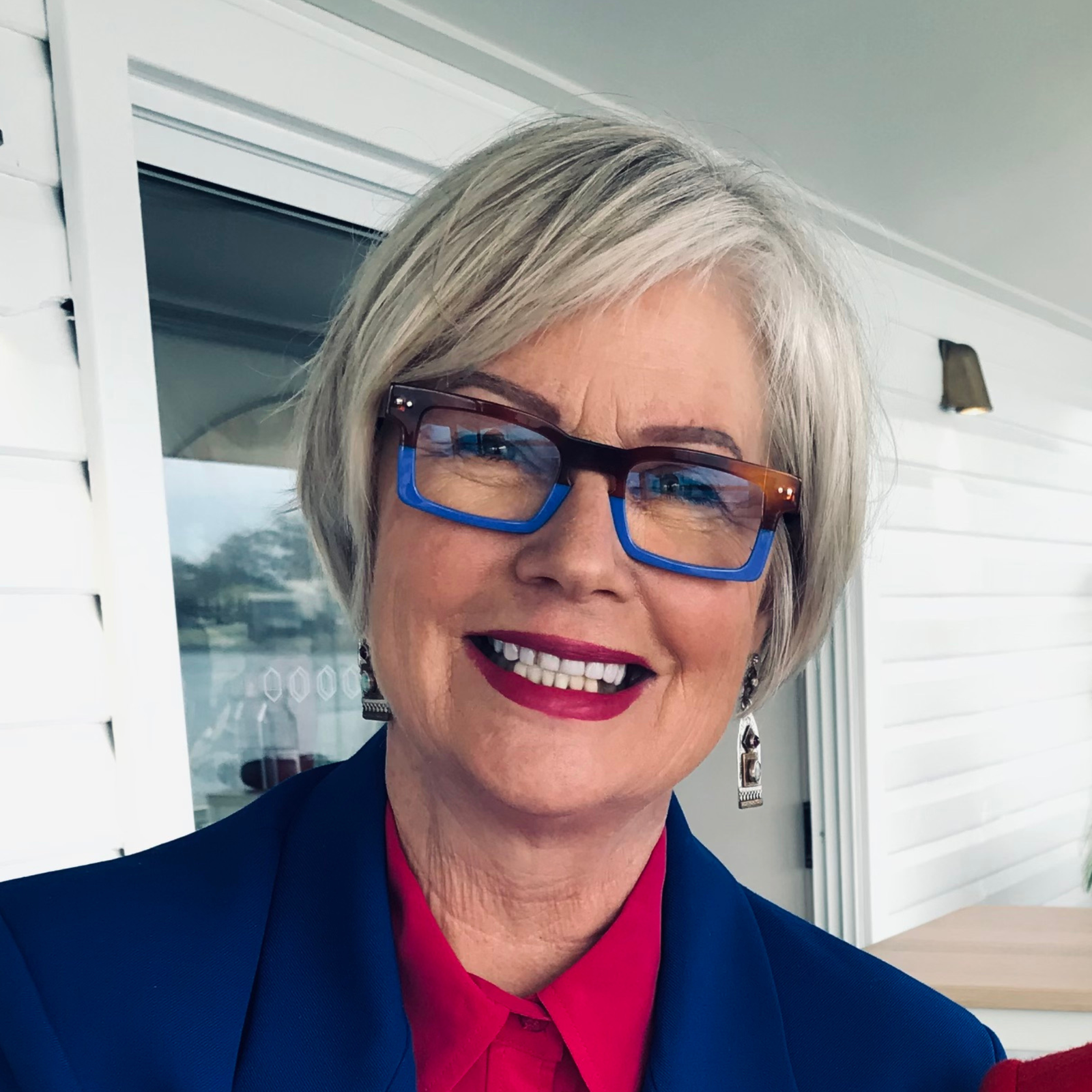
89 – Occupational Justice, Narratives & Beyond The Biomedical Model ft Gail Whiteford
from The OT Lifestyle Movement
81m 57s
In this podcast episode, host Rianne Crisp first shares three free resources she created to support occupational therapists: a documentary titled "Finding Me in OT" featuring legends like Michael Awama and Winnie Dunn; an edited e-book, "The OT Collective," with insights from OTs in diverse fields; and the DOT project, which invites OTs to write open letters about their journeys. She then interviews Emeritus Professor Gail Whiteford, a pioneer in occupational science. Whiteford recounts her evolution from a challenging undergraduate to a researcher passionate about understanding occupation itself, particularly concepts like occupational deprivation and identity. She critiques the profession's uncritical adoption of the biomedical model, arguing that OTs should move away from a "treatment" or "clinician" role toward a partnership where clients are experts in their lives. Whiteford stresses the importance of language, urging OTs to consistently use the word "occupation" to claim their unique domain, as exemplified by a therapist who refused to alter her reports despite pressure from a psychiatrist. She advocates for context-responsive, occupation-centered practice that focuses on enabling people to do what matters to them, whether individuals, families, or communities. The conversation highlights the need for humility, listening, and a shift from generic roles to a strong occupational identity to advance the profession.
Hey, hey guys, before we dive into today's episode, I wanted to share with you three free resources and projects that I have been working on behind the scenes that are available for you to access and are here to inspire you and support you on your growth and journey as an occupational therapist. The first one is a documentary that I've created. It's a film called Finding Me in OT. This is a story of my journey following my inocampus and unearthing my passion and purpose as an occupational therapist and awakening to the possibilities and the untapped potential of the profession. In this film, I interviewed the most incredible living legends of our profession, including Michael Awama, Winnie Dunn, Charles Christensen, Carolyn Baum, Lila Lorenz, Jen Gash, Kim Barthell and Kavita Murphy. And I tell you now, it is such a privilege to put something out there into the world that is so powerful that brings together the most amazing minds in occupational therapy to help us move forward as a profession and to become the best OT that we can. The second resource that I've birthed into the world is a book and it's called the OT Collective. This is a book that I've edited that has brought together inspiring occupational therapists from around the world who are working in all different passion areas. So it's a 100-page book weaving together insight and wisdom from OT's who work in different practice settings in different passion areas including art, acupressure, bodywork, circus, conscious parenting, farm-based practices, lactation, neurology, oncology, sexology, spirituality, tech innovation and so much more. The third little passion project that I've been working on is called the DOT project. We all have a story to tell and we all have some sort of wisdom that we can share that can propel other therapists on their own individual journey. So I've created the DOT project where occupational therapists from around the world, including yourself, can write an open letter about your journey to becoming the OT that you are today. So each letter begins with DOT and then you get to write whatever it is that you're feeling compelled to write and the letter is published on our website. And I want this to be a platform to share our lessons and learnings, to enable growth, to boost confidence, to stimulate different ways of thinking and to inspire the hearts and the minds of occupational therapists around the world. If you'd like to contribute to the DOT project or if you'd like to access the other resources, including the film, the e-book or other letters written for the DOT project, then hop over to the OT Lifestyle Movement website, which is ot LifestyleMovement.com and you will find it all there. Please share these free resources with your colleagues, your OT bestie, your classmates, your lecturers, anyone that you feel this will have a lasting impact on and we can help create the ripple effect. And in doing so, we will create change. One occupation at a time. Alrighty, let's get into it. Welcome to the OT Lifestyle Movement. This is for the occupational therapy visionaries and the ones who see things differently. We're moving our profession forward through living and leading a truly holistic lifestyle. Hey, hey guys, welcome back to another episode of the OT Lifestyle Movement podcast. I'm Rianne Crisp, occupational therapist and founder of OT LifestyleMovement.com. Today we are talking to Professor Gail Whiteford and one absolute honor this is. Emeritus Professor Whiteford has been an active contributor to occupational therapy and occupational science for three decades. She has served in clinical, managerial research and consulting roles, including for the Department of Foreign Affairs in Australia. Gail has given keynote addresses in 13 countries. She has held a number of senior academic, executive and conjoined appointments in Australia, New Zealand and Canada and served as Australia's first Pro Vice-Cancellor of Social Inclusion. Gail developed and led the world federation of occupational therapists, occupational narratives, charter based project and the book, doing our best, individual and community responses to challenging times published by OT Australia. Welcome Gail. Thanks so much, Rianne. So awesome to have you with us today and I cannot wait to dive into our topics. Before we do, we always hit the rewind button so I would love to hear a little bit about your story and how you came into research and how you came to do the OT work. You do today. Sure. It goes back a fairway now and I think for me as this all started as an occupational therapy student, I'd have to say I felt a bit different and I was a really annoying kind of rebellious undergraduate student. Probably didn't do that well academically. I got involved in the student politics. I was a bit of a rebel with only a poorly defined cause at that stage. But it seemed to me that we, at that stage, I'd come from the Northern Territory. I'd been working up there and my parents were living up there in Anamond. And I just felt that so much of what we were doing in our undergraduate occupational therapy course was really conservative and kind of missing the mark. And certainly at that point there was nothing about occupation in there at all. So I really wondered what it was all about and was, as I said, just to turn into challenge. I was one of those annoying students that always asked questions and made the other students really annoyed at me because they wanted to go to lunch. Yeah. So I was challenging kind of rebellious undergrad and worked in community management. And I was a mental health services which I loved. That was at the time of de-institutionalisation. So that did feel very real getting people out of institutions and into community living, often in hostels. But the real turning point for me was when I was looking at doing postgraduate studies coming upon the first masters of occupational science that by Anne Wilcoche, I'm sure you'll listen it's all no. And signed up for that with the first cohort here in Australia and changed my life, changed my career. And I'm really deeply grateful for that and still deeply indebted to Professor Wilcoche and certainly hope to, in some way, serve her memory in the things that I do today. Yeah. And you've done so much research over the three decades. What is it that has fed your curiosity? What is it that has made you keep seeking answers and looking at different ways of doing things and understanding people's narratives? Why is it that you're still going and still so interested as what you were back then? It's a good question because, as you say, I'm still really passionate about things. I've been passionate about for a long time. If anything more so given some of the contextual challenges that we face today, what underlies this is that I've always felt that the doing of occupational therapy wasn't firmly resting on and understanding what the sinkwater occupation is and it's really very, very complex. So it seemed to me that there's a lot of busyness of the doing of occupational therapy and delivery of occupational therapy services. But I think without a strong foundational understanding of what occupational means in people's lives, not just individuals, families, but communities. And as Dr Wilcox said so many years ago, occupational scientists study doing occupational therapists enable doing together, we help the world do better. It's kind of a corny saying, but it's quite true. So I was always interested in those more fundamental understandings about this complex thing that is innate to humans and innate to all the settings, cultures, contexts in which we live. And to other sound what's going on and you probably know from looking at my publications, I was really interested in this sinkwater occupational deprivation, which really is much more endemic than we realize. I might come back to that point. So what happens to people when there've been a situation where they're denied, excluded and deprived of opportunities to participate in society to do the things that create a sense of meaning, identity, contribution in the lives when they're not really included in
society, what happens to them? What are the impacts of that? Because I don't really think that we'd understood a lot of that. Then there are other really fundamental aspects of how people develop an occupational identity over time. How does that happen? How do they interact with opportunities or the denial of opportunities? So to me it was that big yawning, passionate sense of wanting to know and understand more in order to inform what we might do to address those very big issues in people's lives and not just individuals. I'm thinking here about families and whole communities that are face challenges in their lives for one reason or another. And that's so interesting because I feel like so many of us clinicians are working on that one-to-one basis. We are working with individuals. But I'd love to see how much of what we know and how much of the research that we've done with communities is translated to real life practice. What's the bridge here? Well, I suppose it depends what you think is real life practice. And I've just got to go back to something that you said. So you talked about being a clinician and I think that being clinician and individual practice, we get from biomedical practice. And so there's a whole lot of received baggage and very big discourses around what is biomedicine and the medical model. I think we have assumed in a very uncritical way. And so, why are we in a treatment model? I would disagree that people even really need treatment in terms of what we do in occupational therapy. I think treatment is a medicalised notion. So, you know, that's, I think we're in an era of being able to more critically engage with that as a historical contextual driver and say, "Hey, hang on, maybe we don't have to work in that way. Maybe we don't even need to see our role as being clinician, but a practitioner working with people because clinician just assumes a power differential." Again, I don't see so much. I see us working with people based on what they want and need to do in their lives, whatever context they're in. So I think the problem there is our history and the dominance of still today of biomedical discourse on our practice. No, I love that you brought this up because this is something that I'm really passionate about as well. And I talk a lot about stepping down from the pedestal into partnership. Yes. And, yes. Reaching model. So I work a lot of a coaching perspective where I am the partner that the person walking alongside this other person who is experiencing some sort of challenge in their life that's impacting on their everyday occupations. So I love that. Yes, and you're not treating them. That's the thing. You're there. It's a shoulder. Someone once told me that the origins of the word "therapy" is from tarapon, which means shoulder to shoulder and a shared endeavor that's life. And I think that's true. So we bring knowledge and skills to our interaction with people. People bring their own knowledge and skills to their interaction with us. And together, I think it's a knowledge and skills exchange in order to advance what it is that people need to do in their lives, whether it's caring for grandchildren after having a stroke or whether it's being in the workforce or whether it's trying to get yourself out of a refugee camp. You know, we come to that in a partnership model and you probably know about the participatory occupational justice framework that I developed with Townsend. It's been around for a while now. That's the basis of that framework. It's that it's working with people based on the issues, the injustices, the occupational injustice, they identify in a process of what they want to get out of it and get to a point that they've identified. It's not us. It's not about us saying, "Oh, we know what you need. I really hate that position. It's what do you need and want to do in your life?" And sometimes it's quite different from what you might think. So, you know, listening and understanding is really fundamental, but understanding it not as an impairment or a medical condition or diagnosis, I really think that stuff is relevant, but that's not the focus for us. The focus is, "Who is this person as an occupational being or who is this community?" What do they need to do? For example, in a small town in the Western desert or an Aboriginal community or an institution, "Wherever people are, what do they really need and want to do here?" And how can we help mobilize resources, advocate, build skills, undertake education, all the strategies that we would use? But it's always led by what that person or group of people need, not us coming in over the top. So, my perspective is a deprofessionalized stance. I'd have to say that I think that we haven't fully got to tackling issues of parent control in the profession, but they're still there, but they need a bit more critiquing. And I think the word humility, just constant mind, is to just say, "Yeah, we have knowledge in this area and there are certain things that we can help with." But essentially, the person knows their life better than we do. They are the expert in their life. And if we have the humility to realise that and to walk inside by side and not come in with pre-planned recommendations and prefabricated things based on what we think we know, we know nothing about this person's life, their physical environment, their social context, their personal characteristics, and really getting to understand these things about this person is so important. Because I really feel like we can have all the studies in the world, right? We can study this and study that, but we have never studied the person who is sitting in front of us. We don't know their personal circumstances. Absolutely. And that's because we're inculturated into a view of people through an impairment focus and through biomedical lens. So, you know, just picking up notes and it's a CVA and upright CVA or it's a fractured knife. I hate all that. That is not. And if people even say that in front of me, I get really upset. That's not. That's a person with a history, a cultural and occupational identity from a particular context. And it's really your role to understand that. And what is it that that person wants needs to do? What does that family wants needs to do? Give them the have a child with a disability. Or what is this community of people who are isolated and disadvantaged, just Jan, unable to access occupations that they have in the past? Or, as I said, people who have been people who are asylum seekers, refugees, people in institutions with power control. What is it that they're seeking? And so our motto should be seek first to understand that complexity of occupation, which takes me back to what I said earlier. I was always wanting to understand occupation as a phenomenon in and of itself in order to be the grounding for then working with people to enable it. So how can we ship things if this is the current status quo? How do we move forward? I think that the way to start is with language. I think we've got, published on this and it could come up in a lot of the projects I've done with practitioners who wanting to come more occupation-centered, focused and based, is aligning our language with our philosophy and our core focus on occupational doing. So you have to talk in a way to other people. That's consistent with that, rather than, for example, using diagnostic nomenclature. I think language is so, so crucial. And language is really empowering. Using our language to talk about our concepts really empowers occupational therapists so significantly. It's come up time and time again in the projects that I've done. And then using language consistently in what we write. So I've got a good anecdote about this one of a participant in a group I was running with some practitioners in a forensic setting, forensic mental health setting, we're going through a process of becoming more occupation-centered. And there's some good, about three or four publications on this project. So I won't go into detail, but one of the participants who got the arharthing of actually, I'm just being a generic worker here. I'm not focusing on doing all the what people need to do and all the deprivations in a forensic setting. And was really focusing on that. Was that a team meeting and the psychiatrist in their team said, "Oh, let's call her Lisa. Lisa, I really like this new reporting that you're doing because she really got more occupation-centered and was writing that up in what she was doing." So I really get a sense of what you're doing and what the value is to the patients in this unit. He said, "I love it. It's really clear. It's really strong." He said, "Just one request. Can you do that?"
changed this word occupation because I don't quite get that. And she said, "I imagined all of you were there with me because we were a community of practice scholars." And she said, "So I drew my shoulders back and I said, 'With all due respect, Dr. Johnson, I'm not going to change that word because that's our domain of concern.' And that's what we're here to do and that's our ethical and moral obligation to these patients." So, it's really challenging for you. I'm happy to footnote it with a definition that I think works, but I cannot and will not change the word occupation of our reports. And apparently the whole team went, "There's a bit of a silence there." And then he just nodded and looked at Lisa and said, "Okay, I can see you feel very strongly about that and I'll take that a notice and I'll try to understand that a bit more." But meantime, this is transformative work. So, you know, that's what I mean about. That's claiming our domain of concern and understanding strongly in it. And when we're there, we're strong. And that's our unique contribution. And it's not just a nice thing to do. It's the right thing to do. You could argue that if you were a purchaser of our services, that's actually what we're there to do. And I think generic stuff and I think generic roles are really kind of dangerous to our profession in the long term. And I think if we bend and flex to other people's requests because they don't understand what occupation is, then we will never stand for anything. We will never have this understanding globally of what we do as occupational therapists. And I think this is one of the big issues that so many people feel they have to explain what OT is all the time. But if we don't, then no one will know. And I think that's such a beautiful example. You know, and let's take a lesson from the world of marketing. I adapt the message depending on who the audience is. So my definition for when I'm speaking to people in the media, for example, or outside of occupational therapy, as I say, occupational therapists experts in doing, we work with people to enable them to do what they want and need to do in their lives in the context in which they live and to be included in society. To do that, we use a range of different strategies in diverse settings. That's it. Now, you can unpack many aspects of that, but that's in a nutshell. We're experts in doing and we work with people to enable support them to do what they want and need to do in their lives in the context that they're in. Because what we're doing should always be context responsive, which is includes, you know, not just physical, geographical, but cultural context as well. I've just come back from Morocco. I was reminded again of how important those cultural overlays are around sense of the meaning of different occupations and people's identities very culturally embedded. Similarly, if you were working with Aboriginal people, so strong, so important. So one of the things you did mention was around our use of language and what we say essentially and diagnosis was something that you brought up a couple of times. Can you then share what our focus is instead or what we say instead or what does this actually look like for the OT's out there who are listening to this and going, "Oh, okay. Well, now I've got this idea in my head, but what do I actually do with that?" Sure. With one of my former doctoral students, Claire Wilding, who's a really stellar researcher in her own right, we worked with a group in Victoria of clinicians in a large teaching hospital who felt unhappy with their service and the profile of it and the fact that probably other professional groups were dictating to their service a bit. I won't go into that that's kind of complex, but we know that that happens in places. So what they wanted to do was go about introducing themselves quite differently in more settings and explaining what it is that they were doing. So they came up with a pilot program where instead of going on to award and going, "Hello, I'm Sally, the occupational therapist and we're interested in functional independence and blah blah blah blah blah." They cut all of that out and they said, "They piloted saying instead, "Hello, I'm Sally. I'm an occupational therapist." We're experts in doing and I'm here to talk to you about what it is that you used to do and what you want to be able to do since you've had your stroke, since you've had this medical accident, since you've been diagnosed with MS. What's really important in your life? And blow me down, not unexpectedly, really. People went, "Thank goodness, thank goodness, I've been lying here for a couple of days wondering if I'm going to be able to pick up tools again or whether I'm going to be able to use this hand, I'm a builder. What's going to go, what's happening there?" "Am I going to be able to pick up my kid since I've been diagnosed with MS? Am I going to lose the ability to hold my kid?" "I'm a mum, I've got three kids, what am I going to do?" All the stuff that people think about is not the diagnosis per say. They think about how all this impact on what I'm going to be able to do. That's just in the kind of settings where we might be interacting with people at that level. But then out in the community, people living with chronic conditions, what can I do now? People in institutional settings, as I said, going back to places like refugee camps, I need to be able to do things. How can I go about doing it? Us saying, "We're here to work with you and what's really important for you to do in your life." Bypasses all that stuff about what is occupation blah, blah, blah. This group actually had a lot of success with that and felt, again, really bored by people's responses going, "Oh, thank goodness. Someone is here to talk about that really important stuff." What was very interesting is that the power dynamics in their team shifted quite a bit. I won't name the other professional groups, but some of the other allied health professionals were going, "What is this new thing you're doing? We don't really like it." As in, get back in your box and go back to what you used to do. People started saying, "Oh, no. Sorry, I don't want to speak to you. I want to speak to the occupational therapist about what I'm going to do when I go home." It shifted the dynamics. Interestingly, again, their interaction with the medical specialists was when it became very powerful. They were like, "Wow, I don't know what it is that you're doing in the orthopedic ward, but it's great." The patients that I'm saying really want to see you and spend more time in occupational therapy. Whatever you're doing, do more of it. It's interesting. I guess that goes back to us having been uncritical in our assumption of a whole lot of values and discourses that now we're kind of speaking back and claiming our end of the main. It will shift dynamics in our interaction with other people. Most importantly, with the people that we're there to serve, which is people who are facing occupational challenges in their lives. I would say to occupational therapists, get out there and do it and give it a go. If you're not, you're part of the machinery and you're what I would call a hedge monog age. That's really a term for someone who's just reproducing systems of disadvantage and dominance and power relationships. If you're not challenging, you're just doing the same old, same old. It's not really serving people that well. I worked in a hospital for a couple of years as a new grad. I was just reflecting back on that as you were talking because so often what we would do is we would triage. We would triage what is most important for that person in order to return home instead of actually asking those questions. One thing that I ask now, I have my private pediatric clinic, my bold clinic. I always ask, you know, what's most important to you right now? That's my question. Every initial meeting is what is most important to you right now. And then just listening because they will talk and there's lots of stories that are shared and that is where the goal lies. I know. And you know what? I'm imagining that you've sometimes been surprised when what they say is really important for them. I would add to do right now is different from what you might have guessed. That's been my experience. I would have thought of what they really need right now is that they're like, no, no. And that's where again, people's identities and their cultural backgrounds really play out in that. So I had experience with a family some years back who the elderly grandmother in their culture was so highly revered and she'd had a stroke. And I think everyone had assumed that in taking her back to there, they lived in an extended sort of family almost like a small village set up was to have ramps and rails and things. And they said, oh, no.
No, no, it's she's our auntie, she's our grandmother. We want to support her by actually physically caring for her, by caring her by lifting at least for now. We don't want that technical stuff, we don't want equipment. No, no, she needs our love and care and touch. And, wow, so again, we bring, we can't help it. We're all cultural beings. We bring our identities and cultural values. But, as you said, just park them and seek first to understand. It's a principle that you can't go wrong with. I was working with a family recently. And exactly what you said, I had in my mind prioritized things that I thought would be important to the family based on my own background beliefs, perspective, view of the world. You know, she was having a lot of difficulty and a living year old girl, a lot of difficulty with toileting, soiling all the time in pull ups. And that wasn't the priority. The priority was something else that I had in my mind triaged as a lot lower on the priority list. So actually listening, first of all, to what their priority was. And then the meaning behind that. So the why was that important to them. And then also the doing. Okay, so what can we do? How can we help you move from where you are now to where you want to be? And how can I be that support on this journey? On their journey? You know, I think we've got to remember that too. We are entering their life. It's such a privilege to be able to do someone's life. It is. And we're just a small chapter. We're just a small part. And if we get it right, we'll pop out the other end again. And they continue on in their lives and their occupational journey through life. And I said, if we've done our bit properly, we're not needed anymore. I think that's a success of occupational therapy input is not to be needed anymore. Because people have developed their own capacity to do what they want need to do in a sustainable way. That's right for the context that they're in. And that doesn't matter whether it's the central desert or urban Melbourne or, you know, the forests of Kalimantan. It's all about people themselves having the power and control. But I just want to pick up a point that also I've really been speaking a lot more about lately. And I think it's important. I mentioned occupational justice. So we're here to really create more occupational justice societies that are fairer and are more focused on the provision of opportunities and resources to support people. But these days, and in my Sylvia doc electric, a couple of years ago, I talked about thinking now more broadly to what I call occupational justice plus. So that's where we bring together a focus on ways of an opportunities for doing with ways of knowing, with ways of being and being represented. So that's to use the more theoretical language that's occupational justice plus epistemic justice plus human unique justice. So if we bring those together because you spoke about focusing with the family and what they wanted to really do, they have their own way of knowing of caring for a child with the disability. People from different cultural backgrounds have their own cultural ways of knowing. And there's not one knowledge. There's no lagers. So you have to also give people the right to work from their knowledge base. So we don't, we then are putting our professional knowledge base. We don't make it superordinate. We equalize it and say, well, I'm bringing this knowledge to the table. You're bringing this knowledge. And then coupled with that, though, you're right to be and be represented as you choose. But as not as I'm doing through the role that I'm in. And that's where again, if you're working in a biomedical model, that's almost impossible to do that. So I would encourage listeners to look at occupational justice plus. That's published in my Sylvia doc lecture in the Australian Journal of Occupational Therapy in 2020. So I've tried to pull some really complex ideas there. But in what you're doing and interacting with people, it's not that complex. So let's look at ways of doing, ways of knowing and ways of being in totality. And I think probably that's described what you're doing there with your family anyway, Rianna. And I love what you said about really our role is to make ourselves. So we don't need to be present in that person's life is to empower a family, empower a person, empower a community to help them to solve their own problems. So when that problem pops up again or something else comes up, they can go, "Ha, you know what, I've solved a problem like this previously, similar to this or one like this." You know, I want to try and do it again, like building that own ability, problem solving capacity within themselves as well. Absolutely. So that's kind of the definition of a deprofessionalized stance. Is that you're not making people dependent on your knowledge and skills. You're sharing knowledge and skills together as a collaborative, deeply collaborative way. And yeah, though, like I said, the best outcome is that they never need to see you again. Or in the future, a community might call you up or get in touch and say, "We've got a different issue now and we're really like working with you last time. Can we work with you together again to tackle this new thing?" Cool, great. Well, I think I've got the worst business model in the world. Well, you know, and that's what we're wanting, you know, and I love it. It gives it so fulfilling for me to see families come back the next week with the next fortnight or whatever that next session is and just share what they've learned and taken bits of pieces of things that we've spoken about in a session and taken that and problem-solved and worked through it and adapted and changed things. And that's what I love. Yeah, yeah. And you know, there's at another level, there's also, and this is I think in the participatory occupational justice framework, there's a process there that's also about advocating for change or sustainability. I think there is also a way in which we can work on behalf of people who really are voiceless and I think advocacy is really important and bringing awareness and attention to scenarios of injustice, occupational injustices that go on. And they don't have to be big ones and I'm thinking of some of the big examples of occupational injustices in the world at the moment might be, for example, what's happened to women in Afghanistan just allowed the right to participate in higher education. You know, you've got half the population then excluded from a significant form of occupational participation also excluded from forms of work. And there's a lot of people who are really women and allowed to work for NGOs, which a lot of the work of NGOs ironically is really aimed in Afghanistan at supporting women and children. So there, those are big and glaringly obvious occupational injustices for a big population. But there are small occupational injustices if that's what you're really focusing on rather than, for example, people's diagnosis and prognosis. So in many institutions, I think there are some real injustices there around, for example, access to technology. During COVID, so many people in aged care facilities had no way of being in contact with their families. I mean, in my book, every aged care facility should have banks of iPads and laptops and mobile phones. There's a real digital divide there, similarly people who are in facilities where they're fed and put to bed at 536 o'clock at night because it suits the staffing levels, not acceptable. That's occupational deprivation. And then, you know, there are so many more examples of that, people in institutions where there's absolutely just nothing to do day in, day out. Again, that's a good business model. It's really cheap. Just to line people up in chairs and don't do anything, don't know provision of opportunities for social connection or occupational participation, nothing, small labour intensive, a cost more. So, you know, there are smaller occupational injustices that we can highlight and bring attention to and mobilize resources to address as well as big societal ones. So it just depends what perspective that you're taking, what focus you have. And we start with the smaller ones because I imagine a lot of the OTs that are listening to this now are working one-on-one with people. If it is an injustice that they see but needs to be taken up a level, they need to go up to the next level of an organisation or of a community to address them.
something, how do we do this? How do we raise our voice? How do we advocate? How do we go about this? I think you need to just decide to do that. But that's what I mean. If you've got it truly, if you're really focused on people and their occupational needs and the fact that there are these injustices, it gives you an orientation which is very different from going into treat someone and their dementia or their orthopedic-related issues, when you pull the lens out and you see it more broadly from an occupational perspective, it does create the basis from which to act from a very different, creates the basis to then communicate and act quite differently. So I would say that in that kind of scenario, I would definitely be taking this out at an institutional level. And that's where we're kind of just good servant sometimes, getting in and doing nice stuff. But I would say there's a whole lot of people are being put to bed at five o'clock and you're just going in and treating one person and not really seeing that this is an issue for all those people in that it's a real occupational injustice. And you know, really what are you doing? I'm why you're there and I think of the moral and ethical issues of, you know, you're treating one person, there's 99 others who are quite severely occupational deprived. Well, hang on a minute, is that really what we're there to do? I don't think so. I think if you go back to the very early roots of occupational therapy, we were much stronger in social movements, which is about enabling forms of participation in society and economically as a byproduct of the industrial revolution. We were advocating and working with groups of people facing injustices. So I think that a medicalised approach has taken us down a by way, which we're not doing the most effective and important work. You've mentioned occupational deprivation. I know there's occupational alienation. There's lots of other terms here. Can you describe a few just so we can get an understanding of some of these terms? Sure. There is occupational marginalisation, which is I would see happening quite a bit playing out in societies now where the casualisation of workforces brings about marginalisation of whole swabs of the labour market. There's whole populations that people out there that are not getting either enough work or they're working poor, they're getting lots of work, but it's underpaid and it's always casual. If you're always on casualised contracts, then it's very hard to be an economic participant in society, for example, to get loans and get an mortgage or all those things, whatever. That's a form of marginalisation. This is not a new idea and Will Coch really developed I think that notion of marginalisation. I think she was a scholar of Marx. We could probably trace some of that back to Marxist thought, not to scare people off, as an ideology rather than as ideology as some ideas about how people participate in society. There's also I think I've been working with a couple of groups in different places, which is about occupational dislocation, where groups of people are kind of forced out of or forcibly moved from lands and areas that they would traditionally live and hand-traditional occupations into other sites where there's absolutely nothing for them to do. People were doing some work with a group of people in Chile who had taken up the cause of Mapuchia people, indigenous people in Chile, who had been moved from traditional lands because it was a good place to build a resort and then just kind of relocated in shacks and dwellings made out of cardboard and corrugated in somewhere else, way away from anything where there was nothing for them to do and they weren't subsistent and they just went into extreme poverty because the economic driver of building this resort, the government getting money from the sale of the land right around. That's a huge occupational injustice for those and where do those people go? Again, there's different levels when we think about injustices, but certainly I think from me, most enduringly, the experience of occupational deprivation for so many groups of people, if you think about what's going on in Australia now, in our treatment of asylum seekers in off-share processing centres and what's happened there, it's privatized. I think that's again pretty morally challenging while we privatized those services because when services are privatized as a profit motive. I've heard from an occupational therapist who was working in one of those settings that yes, there was toys and equipment and stuff for leisure, but it wasn't a lot covered with no key because the private organisation running this service said no, we can't afford the staffing to do anything about that, so it remains locked. Then you've got a whole lot of people becoming more and more distressed. We know that rates of suicidality for people in asylum seeking processing centres is very high. I've read about five times that a population normally. That's where this stuff can go. I think why aren't we up in arms about that? Also, I think our occupational therapy Australia as our peak body has gotten so much better at representing perspectives, an occupational perspective in these occupational injustices. I think last time I got some information from occupational therapy Australia, we've done something like 42 submissions to senate hearings, inquiries, including the treatment of asylum seekers and offshore processing centres and things like mental health services. I think that was just two years ago in Queensland. We've got much better at politicising ourselves, having a voice and standing up for these issues, knowing that there are people out there who are deeply disempowered, marginalized and don't have a voice. I would love to see more of that work going on. If we don't do it, how else is going to do that? Basically, how do the people who feel so passionate about something, whatever issue it is around the world, like these bigger issues that we're talking about, how do we get involved? What's the first step? Who do we connect with? Because I think that's what keeps us stuck, right? And I think that's what sometimes keeps us playing small is I feel so passionate about this and I want to help, but I don't know how. I don't know where to start. Right, okay. I think there is a couple of forums. I think that there's a good new group that's just starting up for occupational therapists working communities who want to be more justice focused in that work. So I'm really happy to forward you the link to that after this. I think that getting together with like-minded people always works. I think that there's some strong interest groups through the world federation of occupational therapists, including Ocean, which is the international group. And a lot of the people in that network are also doing justice-related work. I think that it's a matter of getting active yourself and finding like-minded people, reading, advocating. I think what you're saying is you can't just sit back and go, this is really not working for me, maybe I'll do something else. Or what occupational therapists are really good at when they're just satisfied with things. It's just go to a different job. It doesn't kind of really fix the root cause of what's going on there. But mostly, I would say we're far too nice where we really have been professionally a group of people have been afraid to upset the apple cart. It's time to get over that. Nursing do really well. They have a strong national body and their union. And they take action. They speak out on key topics. And we could take a page out of our medical colleagues, AMA, very active. As soon as anything appears that they feel is not in either their interests or more generally speaking in the interests of the health of Australians, they speak out. Just really decide that you're going to be someone who's not there to be nice and compliant and a hegemonic agent or a servant of the state, but really stand up for what we know is really important. And that's people's right to be included in participating in society, whoever they are, wherever they are. You stay focused on that. Can't go too badly wrong. I'm always curious and so inspired by rootees.
to take a different path or who have the courage to speak their truth. And I feel like you're like a trailblazer in this way as well. Like you're not afraid to step up and say something that may not be accepted by everyone. What gives you the courage to do this? [LAUGHTER] How can we all embody and embrace a little bit of this courage? There's a couple of things there. First of all, I think there's a bit of agenda issue we've got to address. I think it's culturally a little harder for women to speak up on out. They kind of get flack for either being too shrill or being too much like a bloke. I think women have to find their way to have a powerful voice and just not be concerned about critique of that. And I think on the other, on that issue of not being concerned about critique, you know, I have copped a lot of flack at home. I've had hate mail. And I've had people really suggesting that the things that I'm talking about and focusing on are not really of concern. And I kind of should get back in my box. So that's fine. As a friend of mine, who's a politician, I won't name, but Verbal Known said, "You know, if you're getting that kind of blowback, you're on something really important, so stay with it." But all of it is about going back to what is really fundamental and what you really believe. And going back to, if you really believe that people have a human right to be included and participate in society as fully as they are able to choose to, and that's a fundamental right. If you go back to that, it kind of keeps you going. That's your touchstone. And you measure then what's going on in any particular place against that. And so what I told myself, my little motto for myself is that this is not about you, Gail. This is about other people who either don't have opportunity or choice to address this. And people have asked me how I speak publicly. The way I got over Nerves years ago to go, "Well, I mean, actually, it's not about me and how nervous I'm feeling right now. My focus should be, I've got a group of people in this room. How am I going to reach them? What are they interested in? And what is the way in which I might reach them most powerfully on this really important concept, for example, about occupational deprivation or in Morocco, I was talking about our social contract, what that is and how we should be focusing on that. So to transcend your own ego, actually, I reckon, just get over yourself and go, "Well, okay, I have a privilege here to be able to have a voice. And if I'm really focused on needs and rights of others, then I can't go too early wrong. And I forget, blow back well." So I'll get on with it. Yeah, so we're not here to be popular or we're not here to make friends. Professionally, I'm talking about. We're not here to please people. In fact, quite the opposite. If you're really doing justice-focused work, you're probably going to ruffle feathers. You're going to annoy people. You're going to challenge power relationships. Great. Good. Do it. I love that. I love it. How did you handle the hate mail? Like, when you first started quite a quiet hate mail, I'm not sure what was in these emails. It was pretty bad. It was pretty bad. Was it something then that challenged or questioned what you believed? Or were you so strong in your beliefs that it wasn't penetradable? Oh, no. It still hurt. Boy, I was still shocked and hurt. But what I did, and some of us were quite shocking and deeply personal on the views that there were people expressed. I was shocked that there were people like that, but there are. And so what happened was, again, this politician, Brenda Mone said, "Okay, the best thing to do emails, download the emails, print them up, and then make a little bonfire somewhere. That's safe. And just burn them." And in a ritual, as in, you know, you're not coming into my life, and I'm choosing not to take the sun ball, and I'm symbolically burning this to get rid of it, and not allow it to impinge on my consciousness. And you know what, that was really a good ritual for me. So I made this little bonfire of these pulling emails. Bonfire is what you have to make over the years. Just that was one big one, and then there are other times when I just did the whole, you know, what? Just delete that and move on. And again, my focus was, again, I remembered what this saying was, if people are pushing back that hard, you're on a really important topic. But also to go, well, this kind of isn't about me. This is about this person. And, you know, again, they'll sorry that there are people who think that way about other people. You know, one person said to me, you shouldn't be talking about us working with refugees, because they're just evil. For example, so to go, well, okay, that is really very sad and a bit disturbing that someone thinks that way, but I'm not taking that on board. And yeah, there will always be people out there who are whatever reasons. And systems as well, you know, like what our beliefs are. I mean, that example, that's like, yeah, a terrible example. You know, I can't see many people agreeing with that, but you know, some that might hit hard or hit to the core, it can be, it can be hard sometimes for people to pick themselves back up from something and want to keep pursuing and want to keep going, because you've done this for such a long time. Sure. Yeah, no, I have, if someone, probably fairly well known in occupational therapy world once said, I don't think what you're talking about is occupational therapy. And I went, well, I'm very sorry that you feel that way, because I think this is really fundamentally what we're about. So we're going to have to see this differently. And I won't from what I've committed to, but I said to me, you should go back and check what you think you're here to do, what mandate you have, because I see our mandate in society very clearly. We're here to work with people to enable them to be included in society to do what they want and need to do. Whatever context they're in, whatever background they come from. That's our mandate. It's really clear to me. And that takes us to any setting. It takes wherever people there's doing, wherever people there are occupations. So I don't think we're limited to working in any particular setting. And certainly those that are very medicalised are possibly not what we do our best, almost powerful work. In communities where people really are trying to live with the challenges of, you know, chronic conditions, living with children with disabilities, being fifth generation unemployed, that's where we can do that best work. So check in, people listening out there are uncertain. I think go back to what is fundamental, what do you believe that we're headed to? What is our domain of concern? And what do we have a social mandate for? And if you're clear about that, that keeps you strong. The Maori in New Zealand, I learned a lot living and working in New Zealand. The Maori have a really strong concept, and it's called, as I understand it, to rang a wai wai. And that means you feet literally in the ground of your place. And when we're in, have our feet in the ground of our professional mandate of our domain of concern being about occupation, we're trees, you know, we're not going to get knocked over. But if you think that you might be there to reduce impairment or the generic work or you're not really sure, you're a little reed that can get blown over. So be the tree with deep roots in the ground of what our fundamental purpose is and what our contribution to society is, and yet a tree is strong. I love that analogy. One of the things that we have in common is this appreciation for narrative and to listen to other people's story. And I know recently with AOTA published the book, doing our best individual and collective responses to changing times. Can you take us through this book? What it is, what it means, why, yes, amazing. There it is. It is. This is such a wonderful book. And I'm not saying that because I was involved in it, it's a treasure trove of deeply, deeply moving stories and narrative accounts of how people coped with all the things that happened to us back to back. You know, there was droughts, then there was bushfires, then there was COVID, then there was floods. My goodness, communities were really knocked around and face this stuff, the kind of one after the other. And during that time, I
I don't know about you, but I was hearing stories about, oh, this amazing woman who set up a Donator Bail of Hay organization from farmers who are suffering from drought. That's really cool. Or another group who'd been through a bushfire who then reclaimed that land and set up a sculpture park. People doing really cool things during COVID, like, you know, the teddy bear hunt or the mini golf game set up by dads down the street. There was such wonderful stories filtering through. I thought, this is a really unique context that we're in. We've got to try and capture these stories because there's so much wisdom and so much understanding about doing as a response to these challenges. And people have what this book is full of is innate wisdom about how to respond through doing in all those contexts that they didn't need us for. I can assure you. And I took that idea to occupational therapy Australia and said, I think we're in a really important historical moment where we could capture these narratives and show the world what we're primarily focused on, which is doing and what people do in society and our role of course is to support and enable that. But to show rather than tell, and I'm big on this, I reckon we've been like adolescents for a long time telling everybody, "Look, occupational therapy is blah, blah, blah, blah." You know, I think we're adults now and we can show by standing with and illuminating the life worlds of other people. There you go, instead of us banging on about ourselves, I think again that's a very professional centric position. So occupational therapy Australia to their incredible merit and their vision said, yeah, this is a project that we think has got legs and they supported it financially, which was a very big commitment to them. And so gave me the green light to pull ahead a national team. We had expressions of interest from people from around Australia of occupational therapists. And I tried to pull together a team that really represented diversity. So new graduates, people from remote backgrounds, people from representing Aboriginal perspectives, you know, you name it. We really tried disability perspectives. We had a team that was as diverse as we could pull together. And then the next bit was developing what this call for stories would look like and the structure for it, thousand words and we asked for people to send in their own photos and out it went. And that's when I kind of held my breath and went organically, I don't know how that's going to get to people. And sure enough, in that zone, organic way, it got to people around Australia. And stories started coming in that we then I was very keen to make sure that it was an objective process. So we had double blind reviewing of the stories. So two people on the team read and reviewed the stories and then gave them a score based on the criteria we'd established. And then we came up with again the diverse sample of stories. But what was really interesting, Rianna, is when we read all of them, they fell into three really clear groups, stories about doing. So during COVID, I thought, well, I've got to do something. I've got all this time on my hands and I'm not going to be able to get to the shop. I'm going to grow my own veggie garden and herbs. Okay, doing with. So for example, during floods or droughts, people getting together to do stuff together, whether it was bag and groceries or whatever. And then doing for so those people who got out there and actually created opportunities for others, served people during those contexts, whatever. So doing, doing, doing for was clear as day that the stories were about those things. So that was the structure of the book then. We didn't want it to be a book about, you know, organized by context. So COVID drought flood, because that wasn't the point. It was what was this commonality of the doings of people in response to those really difficult and challenging times. And the stories range from a nine year old and her observations of what people were doing during the bush fires through to an Aboriginal elder, you know, talking about how he responded. So, you know, really diverse group of stories, but it's a wealth, wealth of knowledge that could be used definitely for research because it's public domain narrative now. And I do know that there's a group from Adelaide working on that as a research project. But in terms of really explaining to other people what our core domain of concern is, what we're focused on, I think this is a great tool for promoting occupational therapy, but through the voices of others, which is probably the best way to do it. 100%, I think it's such a beautiful project and I love that, you know, you had the insight, I suppose, to create a project like this during these hard times, during adversity, during times when people are really struggling and creating something beautiful. It is. I still move to tears when I read some of these stories and I've read them over and over. There's so much wisdom in people and that really sends us back to our earlier discussion. People do know a lot about their lives, their context, their culture and we just need to harness that in working with them and then away we go. It's not that difficult and I did a get with, but it's never a treatment. It's always about that person knowing what they need and we bring to that some skills and how that might be addressed and some strategies to do that. I loved it. I just loved working on that and I'm so again, all credit to occupational therapy Australia. There's not a book like this in the world. Probably we could be promoting it a little bit more because there have been publications on, for example, COVID or what people did during bushfires but nobody else has looked across those contexts with this particular focus. The other thing that I love about the book, it's not called a book about resilience. I hate the word resilience. I don't know what it means. It gets overused. I would look behind resilience and say, "Well, what is it that people actually did that you might be calling resilience? What did they do? That's my interest." It should be our interest to again. We've probably been poorly served in our profession by adopting a lot of psychologist constructs to us. I don't think they work. Great resilience can people deal with that, but for us, what do people do? In the book, they tell you what they did in detail and what it meant and the impact that it had. It's really quite a remarkable account. What did you learn from putting all this together? What did you learn from the project? Two things. I learned that people are remarkable. People are remarkable. They have this innate knowing that they need to be doing something to a swage anxiety, to feel more connected or to serve other people. The second thing that was really strong for me is that people doing with, sorry, doing four, doing four was really strong. Despite the fact that quite a few people had limitations themselves, they might have a disability or an impairment. Doing four was more powerful for them because it is about having a sense of contribution, connection and an identity that's very positive. I'm reminded that we're often working with people who have been service recipients for however long in their lives. That's not an identity that people sign up for. People who don't, as a child say, I want to be a service recipient. No, people would much rather be serving other people and contributing to others. Even when it's really, really hard for them. It's what I would call a very strong and positively associated occupational identity is doing something contributing to other people. Even when some of people had severe arthritis or had mobility issues or visually impaired, they're still out there volunteering, packing clothes for the flood victims or helping cook for the the faries who were out there finding
fires. I mean, so we've got to be reminded of that that people innately want an opportunity to do, not just do, but and do with, but do for others. And maybe we could structure our actions a little differently in that regard. I think one of the things that stood out to me in these challenging times is that we're not just interconnected, we're interdependent. So, absolutely. Yes. I see that coming through in the stories as well. Yeah, absolutely. And you know what, that's that's great and that's good. And when people harness that interdependence to do something like clean up after a flood or prepare food for the fireies or even to connect, you know, online through COVID, whatever it is, we're strong, we're strong. And so let's highlight, let's celebrate those narratives and get them out there and say, look at what people can do. And we're a group of people who stand with and can enable that to happen in society. Yeah. That's a good reminder. Hmm, absolutely. Before we go to the rapid fire questions, I have one more question for you. And that is regarding like your vision for the professional where you'd like to see us moving in your lifetime and beyond. Like, I'm sure you will never retire. It looks like you're just going to have something that you feel so passionately about and it doesn't feel like work and it's something that does light you up and gets you jumping out of bed in the morning and you feel so connected to your own vision or purpose. Like it's very purpose driven. You are compelled to do the work. Absolutely. I'm really, I feel so fortunate in my life that I found my true vocation. And it no, possibly have had some times when I just felt that I had a lot of my plan and was maybe a little tired because I over committed but I've never thought of what I was doing as work pretty well because I've always just I've loved it and I've met the most amazing people. I've been so fortunate to meet people in different places, different countries. So I feel really damn fortunate, I got to say. So I think that where we're going, I think if we're really clear and strong about what our mandate is in society and we pull away from overly medicalised interventions, I think also I'm not sure whether we shouldn't be inverting our numbers out of hospitals to community a little bit more. I know that they've done that in NHS fairly recent times, inverted numbers in hospitals to lower numbers and then having their positions more in communities. I think that's where we can address one of the big population needs which is how do we support people living with chronic conditions and keep them out of tertiary services. And so primary networks, primary care, community-based practice doing really strong occupation-centered work with people taking family community population approaches perhaps more than highly individualised. I think is also strong work. I mean you look at the numbers of occupational therapists per head in different populations. It's probably again where we should be looking. WFOT has some very good data on this. I did hear a presentation on that in Morocco by the President Samantha Sham. So I would encourage people to look at that. So I think that's where we're here and I think we can, you've always got to our government being on the board of a health district. You've got to have a bit of an economic argument for some of this stuff as well as being the right thing to do. We've got to understand that we can make a strong economic argument. The more that people are supported to live in communities doing what they need to do, participating in society, we reduce the burden of chronic conditions back on health care services. So you've probably seen the article that was published a couple years ago saying occupational therapy was the only health code that made a financial positive economic contribution. I think we can prove that more strongly in what we do. So we're keeping people out of the need for other services in communities, keeping them well, doing what they need to do, being productive members of society. That's it. That's an important role. It's a strong role and I would argue that it's one that is represents a huge social capital and economic benefit to our societies. So everything's right about being focused on doing participation and inclusion. We've mentioned a few times this move away from the biomedical model. What model should we be moving towards? I think a social model of health absolutely. So if we understand the relationship between health and wellbeing and people's circumstances and the context in which they live, but also I mean I think it's an occupational perspective of health and wellbeing that there's a primacy and the relationship between doing and health and wellbeing. So people are not able to do what they want and need to do if they're not participating in society and whether the impacts of that are economic. So being chronically unemployed or under employed is going to be bad for your wellbeing. So is being incredibly isolated in the community. So we know there's a primacy in the relationship between doing and wellbeing. So that should also be what we're focused on. And now there's a lot of evidence around that. It's not that occupational therapists have to scratch their heads going, I don't have any evidence to support that. There's now a really strong body of evidence about that positive relationship. And that's what we should be arguing for. That okay, if we keep people well by providing and creating opportunities for them to engage in forms of occupational participation, the society, they're going to have increased levels of wellbeing and we're keeping them out of services, which is as I said, an economic benefit. So yeah, social model of health, occupational model of health. If anyone out there wants to find more of the evidence, what journals, what articles, what research is out there that we can refer them to? I think a journal that probably occupational therapists don't use as much as they could is the Journal of Occupational Science. I'm going back to the Will Coch-Quote Occupational Science, a study doing occupational therapists and able doing together, we help the world do better. There's so much really high quality research published in there from around the world that's, I said, this mine of data and evidence around that the relationship that people can engage with and probably don't enough. But also the main occupational therapy journals from around the world are I think coming to more of that focus on the relationship between occupation and wellbeing for different populations and through different types of research. But I have some favourites in there, including probably not as well known, but Brazilian Journal of Occupational Therapy is wonderful. It's very much about working in communities with that social model of interaction, social engagement. Canadian Journal is always good. So our Australian Journalist also I think had a clearer focus on that in more recent times. But yeah, for occupational therapists who don't know the Journal of Occupational Science, get in there and have a look because there's, as I said, really wonderful, exciting and high quality research there that will really get you motivated. Excellent. Awesome. All right. Well, let's head to the three rapid fire questions. So the first one is in one sentence, how do you describe OT? Occupational therapist are experts in doing. Together with people we work with, we enable them to do what they want and need to do in their lives, in context and being included in society. Love it. Number two, what's one healthy lifestyle habit? Listeners can implement today. Audit your life. Have a quick check. Am I doing what I love? Am I doing what's meaningful? Am I doing what makes a contribution to others? And if you're not, make arrangements. Make some changes. Number three, if you could only offer one piece of advice to OT's, what would it be? Stand up. Stand up. You've been mandated to have a voice by society. We were a recognized profession. So you have a responsibility to stand up and use that voice to create a more occupational and just world. So go for it. Beautiful. Thank you so much, Gal. I have got so much out of this conversation and so much of what you say resonates and we might have to follow up
with another conversation because there's so many threads that I could pull up on. So thank you for your time. I really appreciate it. Thank you, Anna, and really acknowledgement to you in what you're doing here. This is such an important platform and to have the vision to get this going and the way you've developed it and where you've gone with it, you know, credit to you. It was a strong vision. And if not for you having done that, well, how would we connect with other people? How would we be sharing these really important ideas and how would we be sharing, how would we be sharing a vision of where we need to go in the future. And it's a conversation that we weren't having in the past. So you've created this, I would call it a discursive space or a dialogic space where that's happening and that's really significant. So thank you and acknowledgement to you in your efforts. Interestingly, this emerged in 2020 when there was lots of chaos in the world and it was something for me to do. You've done really well and you've created something really important. Thanks, Gail. Thank you so much. All right. Take care. That's it, guys. I hope this episode resonated with you. But more importantly, I hope it inspires you to take action. If you did enjoy this episode, please share it with your OT besties. And if it feels aligned, give a five star of you on the podcast platform that you're listening on because it really helps us connect with more OT's. If you hang out over on Instagram, come over and say hi. You'll find me at Reann and Chris. We also have a Facebook family that you can come and join and you can find us simply by searching the OT Lifestyle Movement in Facebook. Copy day, guys.
Podcast Summary
Key Points:
The speaker introduces three free resources for occupational therapists
The main guest, Emeritus Professor Gail Whiteford, shares her journey from a rebellious OT student to a leading researcher in occupational science, emphasizing the importance of understanding occupation as a complex, innate human phenomenon.
Whiteford critiques the biomedical model's dominance in OT, advocating for a partnership-based, "deprofessionalized" stance where practitioners work alongside clients as experts in their own lives.
She highlights key concepts like occupational deprivation and occupational identity, stressing the need to focus on what people want and need to do, rather than on diagnoses or impairments.
Whiteford emphasizes the power of language
She calls for a shift from a treatment/clinician model to an occupation-centered, context-responsive approach that addresses individual, family, and community needs.
Summary:
In this podcast episode, host Rianne Crisp first shares three free resources she created to support occupational therapists: a documentary titled "Finding Me in OT" featuring legends like Michael Awama and Winnie Dunn; an edited e-book, "The OT Collective," with insights from OTs in diverse fields; and the DOT project, which invites OTs to write open letters about their journeys. She then interviews Emeritus Professor Gail Whiteford, a pioneer in occupational science. Whiteford recounts her evolution from a challenging undergraduate to a researcher passionate about understanding occupation itself, particularly concepts like occupational deprivation and identity.
She critiques the profession's uncritical adoption of the biomedical model, arguing that OTs should move away from a "treatment" or "clinician" role toward a partnership where clients are experts in their lives. Whiteford stresses the importance of language, urging OTs to consistently use the word "occupation" to claim their unique domain, as exemplified by a therapist who refused to alter her reports despite pressure from a psychiatrist. She advocates for context-responsive, occupation-centered practice that focuses on enabling people to do what matters to them, whether individuals, families, or communities.
The conversation highlights the need for humility, listening, and a shift from generic roles to a strong occupational identity to advance the profession.
FAQs
Rianne offers three free resources: a documentary called 'Finding Me in OT', an e-book titled 'The OT Collective', and 'The DOT Project', where OTs can write open letters about their journeys.
It's a film about Rianne's journey following her inocampus, unearthing her passion and purpose as an OT, featuring interviews with living legends like Michael Awama and Winnie Dunn.
It's a 100-page e-book edited by Rianne, featuring insights from OTs worldwide in diverse areas like art, circus, neurology, and tech innovation.
It's a platform where OTs can write open letters starting with 'DOT' about their journeys, published to share wisdom and inspire others.
Visit the OT Lifestyle Movement website at otLifestyleMovement.com to find the film, e-book, and DOT Project letters.
It's when people are denied or excluded from opportunities to participate in society and do meaningful occupations, impacting their identity and well-being.
Chat with AI
Loading...
Pro features
Go deeper with this episode
Unlock creator-grade tools that turn any transcript into show notes and subtitle files.
 PodcastTranscript AI