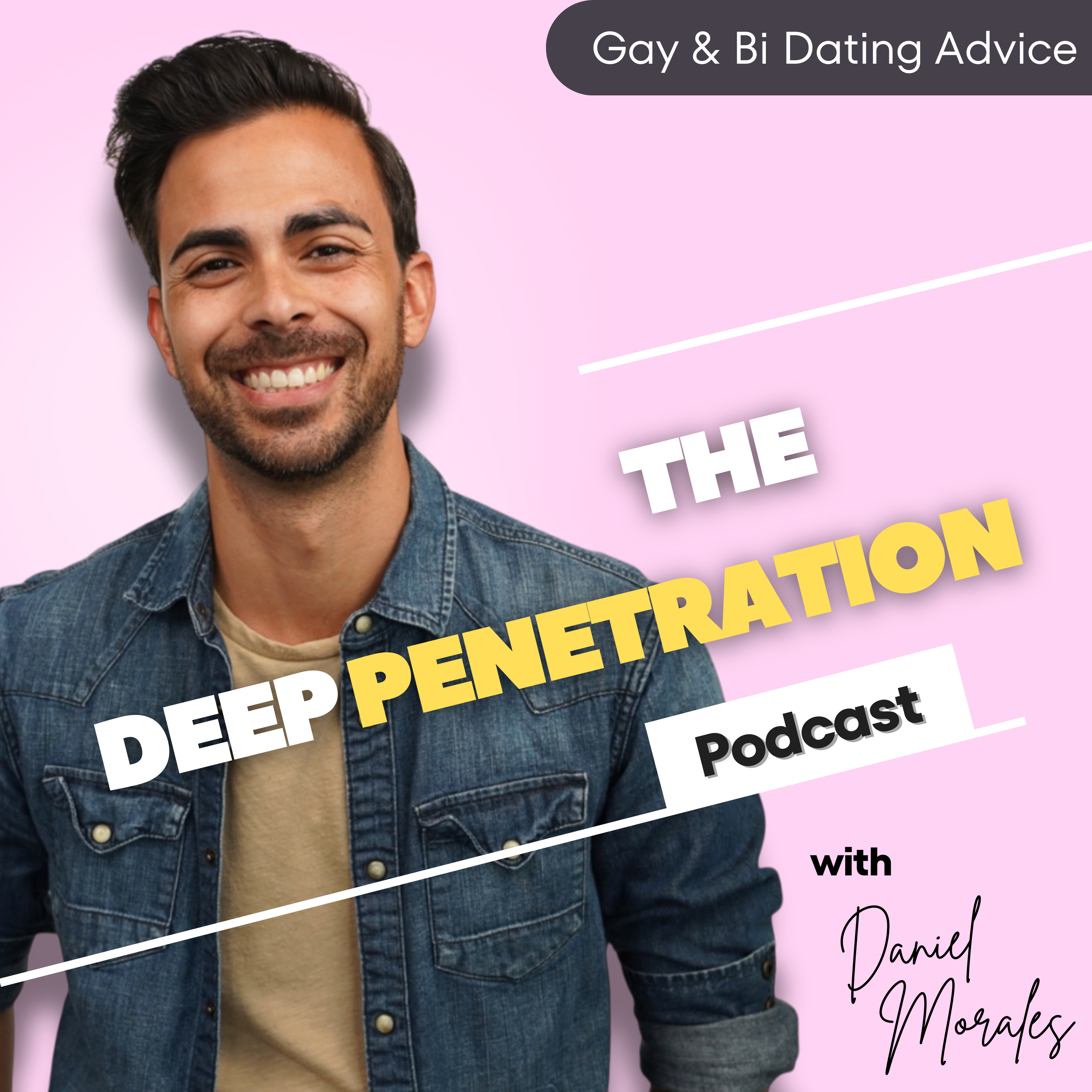
#79: The Toxic Masculinity Trap | Are You Sacrificing Love for a Preference?
19m 23s
The transcription is an introduction to the Deep Penetration Podcast hosted by Danny, a self-esteem and love coach for gay and bisexual men. The focus is on toxic masculinity, its effects on relationship dynamics within the gay community, and the importance of balancing masculinity and femininity. It discusses the characteristics of healthy masculinity versus toxic masculinity, signs of falling into toxic masculinity, and steps to escape it. Danny encourages self-awareness, challenging societal norms, and embracing vulnerability as ways to address toxic masculinity. The episode ends with a promise of a future part two on unpacking toxic masculinity and an offer for coaching sessions to support listeners.
Transcription
2976 Words, 16982 Characters
All right. So before we jump in, I am so sorry. That was so loud at the very beginning. I apologize. Before we jump in, let me welcome you to the Deep Penetration Podcast. My name is Danny and I am a self-esteem and love coach that works with gay and bisexual men. I'm sure if you are an avid listener of this podcast, which everybody should be. You've heard me say that a million times, but just in case anybody new is joining in, I wanted to introduce myself. So they get to know who I am. Please make sure you are subscribing to the podcast and to all of my other platforms as well. So that is either the podcast on Spotify, here on YouTube. What else? TikTok, Instagram, all of that good stuff. I will leave all the just all the information in the description of this episode. And I also have a free gift for you. So make sure that you do not miss out on it. Okay, so what are we talking about? We are talking about toxic masculinity, right? Such like a popular conversation to have about toxic masculinity. But no, but seriously, I wanted to talk about this because I think that this is something that I often times find in relationship dynamics within the gay community, interpersonal relationships, and just generally speaking, the effects that it has had on us as men in general. So I think if we're going to talk about toxic masculinity in the gay community, we have to acknowledge the fact that sometimes being masculine, it's not a choice, right? Depending on your upbringing, depending on your generation, family dynamics, your culture, your religious beliefs, those things can contribute to how you perceive yourself and how you are perceived by others. There's nothing wrong with being masculine, right? Just like there is nothing wrong with being feminine. And in my opinion, I think that an individual who's able to balance both is a well-rounded individual where I believe masculinity becomes toxic is when it becomes your entire persona or your personality, right? It becomes toxic when you start to degrade and devalue others for not being masculine. It becomes toxic when you allow your perceived understanding of masculinity to inhibit your ability to be vulnerable or to connect or to be emotional, right? With the people that are around you or express love because you're afraid of somebody criticizing you or rejection. And listen, I understand why masculinity is so attractive, right? And there are many theories out there as to why gay men attract themselves to more masculine presenting men or try to present masculine themselves. What I would like to talk about in this episode is my experience from some of my own personal stories, from working with many clients over the years. And just generally speaking from research that I have done specifically around this topic. So before we can jump into how it's affecting your love life, if it's affecting your love life, I think it's important that we dig a little deeper, right? So what is toxic masculinity? And to put it in the simplest terms possible, and to not bore all of you with like these super in-depth definitions, watch I literally just pull out like an old school cyclopathy of Botanica, put my glasses on and just like start reading that would be so boring. I'm not going to do that. So what it is is that it's an unrealistic expectation society has placed on men that promotes harmful attributes and behaviors and suppresses positive ones, right? The negative attributes that I'm referring to in this specific definition is dominance, control, emotional suppression, aggression, violence, sexual conquest, right? And I am sure that some of you out there are probably thinking to yourself like dominance and sexual conquest sounds pretty freaking hot to me. And yes, it can be hot. All right, in the right settings and with the right person, but those two things should be in balance with one another, right? They should be in balance with vulnerability, affection, intimacy, great communication. If you're actually going to have a healthy and a sustainable relationship. So if you are looking for a quick, those masculine characteristics can be very hot, right? Definitely have indulge in those myself. And for many of us, it fulfills this fantasy, right? The super hot like football jocks, the lifeguard, the coach, the cop, the military guy, and the list goes on and on and on and on, right? But what do all of these fantasies have in common? What they emphasize is the more aggressive and dominant attributes of a man, right? So now let's go a little bit deeper, right? Add a little more lube and just really get it in there. Jesus Christ. Wait, he has nothing to do with this. I do this every time squirrel. For many of us, we grow up craving the acceptance of of our family and our friends, specifically our fathers. Now, this isn't necessarily the case for every single person. I just want to qualify that. But for many of us, we feel closer to the women in our lives. And in his book, if you have not, I would highly recommend picking it up. The Velvet Rage. Alan Downes talks about the dynamics between gay men and their mothers and their fathers, right? Mothers are have a tendency of being more nurturing in many cases. And therefore, we as gay and bisexual men feel safer around them. And according to Alan, the first relationship with the man we ever experienced is with our fathers. And if that is a negative experience, we spend the rest of our life seeking the validation and the acceptance of male figures in our lives. So what's the theory here, right? We begin to find men who are emotionally unavailable, aggressive, distant, or lack the ability to be vulnerable, attractive. Why? We are trying to win their acceptance and love since we did not get it from our father figures, right? Or the more masculine figures in our life. We are trying to prove to these people that we are worthy, that we are equals. And that in and of itself can become a toxic cycle or dynamic, right? Internally, not even just externally, but internally. And I know for myself, right? And I talk about this in previous episodes, I wanted to be loved and accepted by the men I had felt rejected by my entire life, right? I wanted to feel equal to them. And therefore kind of perpetuating this masculine persona made me feel like they're equal. But not only that, if I could sleep with or end up in a relationship with a masculine man, girl, I had one the lottery, right? But little did I know that what that actually came with chasing the straight guy, right? Or the masculine presenting guy or the DL guys would actually leave to far more hurt than was worth it. So then the question becomes, is toxic masculinity something that is potentially sabotaging your relationships? I want to talk about the difference between healthy masculinity and toxic masculinity, right? Because I think that's going to be very important to to to differentiate here, right? So what is healthy masculinity? If we're going to break it down based on attributes or characteristics of what it means to have healthy masculinity, that is the ability to be emotionally expressive, right? Being comfortable expressing a full range of emotions. So that can be from anger to sadness to joy to youthful excitement, any of those things. An understanding that vulnerability is not a weakness, it's actually a strength because it helps you to connect to other people on a deeper level. The other thing here is just respect and equality, right? Treating all individuals, everybody with respect, regardless of their gender, their sexual orientation, the way in which they present themselves regarding to masculinity and femininity, and just valuing people in general without the need to have dominance over a situation or over a person, self acceptance, right? That's huge. Self-acceptance is such a big one and embracing your true self, right? Including traits that may not conform to traditional masculine expectations and understanding that that's okay, right? Having a balance of both being able to tap into your masculine and being able to tap into your feminine, those are all really important things. Confidence comes from self-awareness, right? An authenticity and not needing to have that external validation from other people, when in reality that validation should be coming from within yourself, now toxic masculinity. What does, what are some characteristics of toxic masculinity, emotional suppression, right? So for talking about the polar opposite of what I was initially talking about, which is the ability to emotionally express, the opposite of that would be emotional suppression. So avoidance of your emotions, right? Because you consider them to be weak or you consider them to hold you back in some way, or because you're also just afraid of criticism or judgment, right? And then equating like emotional detachment and like this coldness to strength. That's that's that's some toxicity going on there, right? Dominance and control, that's another one. So seeking power over other people, which helps you to feel more valid in your self, in your masculine energy, devaluing or ridiculing other people who don't conform to traditional masculine roles. And if you ask me, I actually think that's the sign of a weak individual, because that means that you are so uncomfortable with yourself that you have to deflect and put that onto other people, but I digress fear and intolerance. That's another one, right? Having this discomfort or this like disdain or this disgust for people who are non-conforming in many ways, right? So whether that be sexual orientation, gender expression, overall just behavior, right? No, no, not good. This this sense of like hypercompetitiveness and aggression that leads to you feeling more valuable or worthy because you've been able to kind of prove your dominance in a situation like all of those things to me are definite signs of toxic masculinity. So if this is something that you are kind of sitting here being like, huh, I kind of feel like I have some of these traits or characteristics or behaviors or maybe I did at one point and I haven't fully unpacked it yet. Let me give you some signs that you might be falling into the trap of toxic masculinity, right? So over emphasis on physical appearance, right? So what does that mean? Placing high importance on traditionally masculine looks and shaming people who do not fit into this ideal. Number two, fear of vulnerability, right? Avoiding any kind of emotional openness or seeing it as a weakness. The third one is preference for dominance or aggression. So seeking or valuing dominance within yourself, but also in your external relationships and equating that to strength, right? So having that kind of jealous, controlling type of energy when you are with somebody. Any form of discrimination against femininity, right? So feeling uncomfortable or angry or grossed out towards behaviors, traits, or appearances that are considered to be more feminine because for you, that is a sign of a weak man or a weak individual. And look, while I do believe that it feels like things have kind of gone really far in certain areas, regardless of that, every individual has a choice to express themselves and the way that they want to express themselves. And as long as that is not directly impacting you in a negative way, to be vocal or to take it upon yourself to try and break somebody down because of that freedom of expression to me is actually a sign of somebody who's incredibly insecure and weak, right? I think hyper competitive behavior is also something to look out for, right? So constantly feeling the need to prove your masculinity through competition or, you know, your fitness or whatever the case may be. And let me be clear on something fitness is super healthy, right? I'm not saying that it's a negative thing. It's when your entire persona becomes needing to portray to the outside world how masculine you are. Emotional suppression, which is one of the more obvious ones, right? So believing that emotions are weak or negative and you have to suppress them and push them aside, right? So if you fall into any of these things, the next thing is how do you escape this, right? How do you get out of this, this kind of toxic masculinity trap? The first thing that you're going to have to take into consideration to self-awareness and reflection, right? Acknowledge and reflect on your own beliefs and behaviors. Journaling I think can be super helpful is something that I recommend to all my clients, regardless of what we are working on because I think getting things out of here and onto paper and then being able to read it outside of yourself helps you to be a little bit more objective and view yourself from a different angle, right? So ask yourself why you hold on to certain preferences and whether they actually align with who you are as a person or this is something that you believe based on an indoctrination from societal expectations, cultural expectations, expectations from your parents or the masculine figures in your life. Do you actually really align with those things? And if you do align with those things and you're telling me that that is your authentic nature and that's who you are, so be it. Be you. But don't negatively impact other people in that process, right? The other thing here is that you want to try to challenge social norms a little bit. Educate yourself about the origins or the impacts of toxic masculinity, question traditional gender norms, and maybe just seek diverse role models, right, who kind of embody a more healthy balance of what masculinity looks like. I am not telling you to completely uproot your belief system and embrace, you know, full on feminine energy and start walking around the streets in your heels. I mean, if you want to, you do you, but it's not that far, right? I'm just saying to, to, to challenge yourself, because I think in that we grow as individuals, right, sitting in a little bit of discomfort, I think also helps us to grow as an individual. So for me, for example, I think a healthy role model when it comes to the balance of masculinity and femininity is the rock, right? Duane Johnson, I think he's a perfect representation of this. You know, when you look at him externally, you're like, holy crap, you do not want to meet this guy in an alley or maybe you do because you're kinky. No, you don't want to meet that guy in an alley because you're like, oh my god, that guy could literally destroy me. But when he talks and when he engages in all of those things, he's, he's soft, right? He's a softie. That's a balance, right? Anderson Cooper, I think Anderson Cooper is a great balance as well. Just some examples out there for you. And I would challenge you to think about some, some role models for yourself that represent that balance of masculine energy and feminine energy, healthy masculinity, right? I think another part here or another step is embracing vulnerability. You know, practice being open about your emotions with trusted friends or partners or family or whatever the case may be, start small. It doesn't have to be anything big. So maybe sharing minor concerns that you might have or a negative feeling that you experienced this week. And then you can gradually move towards more deeper conversations, emotional intelligence, learn how to build emotional intelligence. That's so important if you're going to have a healthy relationship with anybody moving forward. And if you want to learn how to do that, leave me a comment down below. I would be more than happy to help you through that process. There's so many other things that we can discuss when it comes to this, right? So there's steps to unpacking and addressing toxic masculinity within yourself. There's understanding how to start to embrace a more healthy masculine way of being. And if we get into all of those things, this is going to be a 45 minute episode. And that's a little too much, right? I don't know if you're going to want to stick around for that episode that long. And I don't know if I want to talk for that long. So what I think I'm going to do is I'm going to create a part two on unpacking toxic masculinity. So do me favor. Leave a comment down below. Let me know what you want to hear. Let me know your experiences with toxic masculinity if you've had any. And what you feel looks like healthy masculinity. I love to have these conversations with you guys. If you feel like you need support, if you feel like you need help with with any of those things, please feel free to reach out and book a coaching session more than happy to do that. I offer a free discovery call. It is a 20 minute call. It's not a coaching session. It's an assessment of your situation. And then we figure out how we can best work together and how I can best support you. I hope you're having an amazing day. And I'll see you guys in the next episode.
Podcast Summary
Key Points:
Introduction to the Deep Penetration Podcast by Danny, a self-esteem and love coach for gay and bisexual men.
Discussion on toxic masculinity, its impact on relationship dynamics, and the importance of balance between masculinity and femininity.
Differentiating healthy masculinity from toxic masculinity based on attributes and behaviors.
Signs indicating falling into toxic masculinity and steps to escape it, including self-awareness, challenging social norms, and embracing vulnerability.
Offer of further exploration on unpacking toxic masculinity in a future episode.
Summary:
The transcription is an introduction to the Deep Penetration Podcast hosted by Danny, a self-esteem and love coach for gay and bisexual men. The focus is on toxic masculinity, its effects on relationship dynamics within the gay community, and the importance of balancing masculinity and femininity. It discusses the characteristics of healthy masculinity versus toxic masculinity, signs of falling into toxic masculinity, and steps to escape it.
Danny encourages self-awareness, challenging societal norms, and embracing vulnerability as ways to address toxic masculinity. The episode ends with a promise of a future part two on unpacking toxic masculinity and an offer for coaching sessions to support listeners.
FAQs
It is an unrealistic expectation society has placed on men that promotes harmful attributes and behaviors and suppresses positive ones.
It can lead to dominance, control, emotional suppression, aggression, violence, and hinder vulnerability and emotional connection.
Emotional suppression, preference for dominance, fear and intolerance, hyper-competitiveness, discrimination against femininity.
Practice self-awareness, challenge social norms, seek diverse role models, embrace vulnerability, and build emotional intelligence.
It involves emotional expression, vulnerability, respect, self-acceptance, balance between masculine and feminine traits, and confidence from self-awareness.
Chat with AI
Loading...
Pro features
Go deeper with this episode
Unlock creator-grade tools that turn any transcript into show notes and subtitle files.
 PodcastTranscript AI