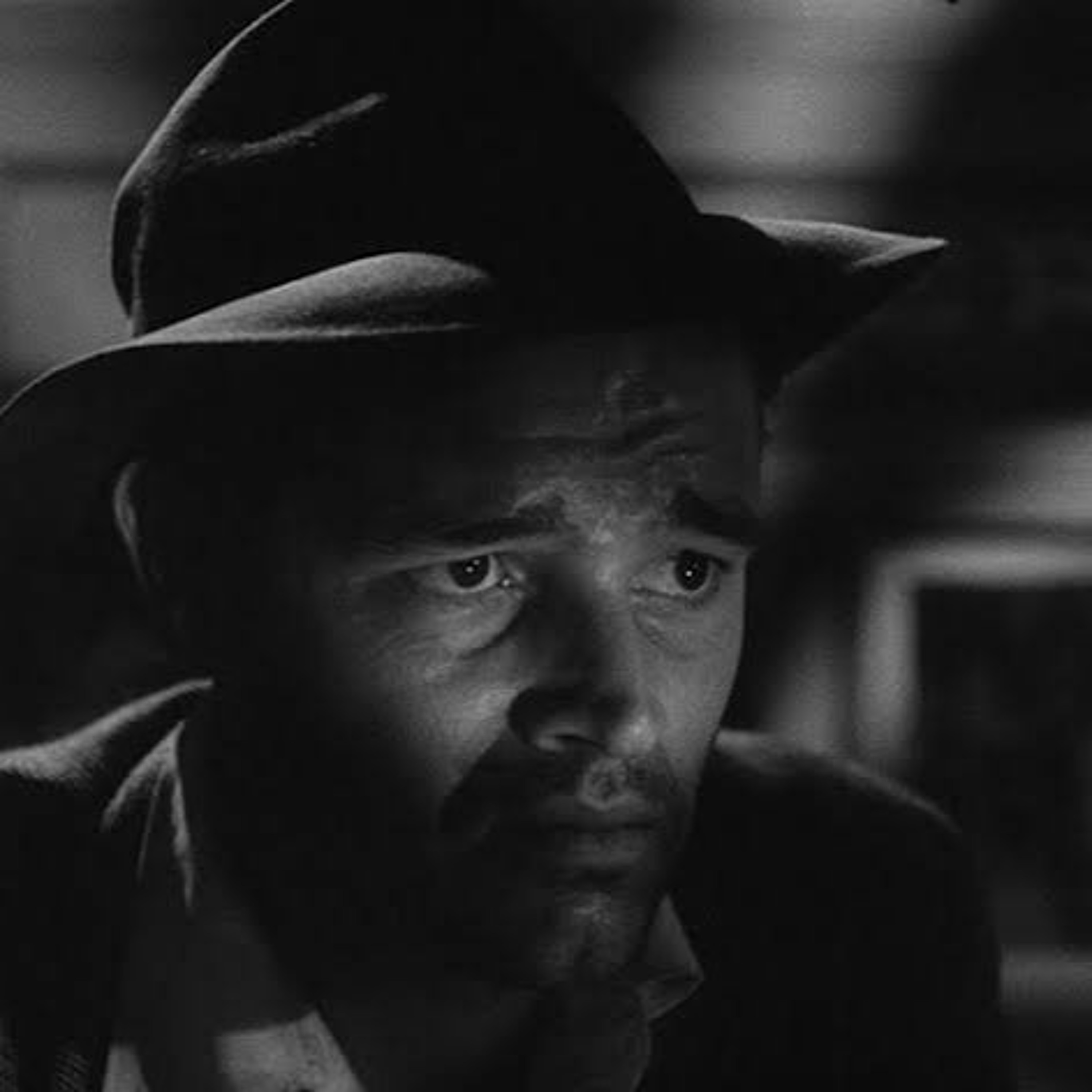
The conversation centers on two powerful artistic figures: James A.G., a groundbreaking film critic whose passionate, three-week defense of Charlie Chaplin’s *Musa Verdeu* in 1947 exemplifies the power of unyielding artistic advocacy. His review, while hyperbolic and emotionally charged, offers perceptive analysis and stands as a defining moment in film criticism, illustrating how passion can defend art against public ridicule. The discussion then shifts to Edgar G. Ulmer, a forgotten director of Poverty Row B-movies, whose work, especially *Detour*, reveals a deep commitment to visual poetry and narrative craftsmanship despite minimal budgets and institutional neglect. *Detour* is praised for its minimalist style, emotional resonance, and narrative tension, showcasing how creative struggle under constraints produces authentic art. The episode draws a broader lesson: true artistic value often emerges from limitations and personal struggle—contrasting with today’s AI-generated films, which, lacking human judgment and constraint, often feel artificial and empty. The conversation underscores that enduring cinema, like great writing, thrives on authenticity, emotional depth, and the courage to defy convention—even when the world doesn’t understand or reward it. These stories of artistic resilience reflect a timeless truth: great art is often born not from ease, but from the refusal to accept compromise.
[music]
Are you much familiar with the writer James A.G.?
I think he's come up before on the show.
I think I've seen on your show his book, "In Praise of Famous Man,"
and I think it's called, "Have you ever read that?"
I don't think so.
I swear to God, you are the James A.G. book in your show.
Maybe, if so, I'm unaware of it.
Next time I'm at the Gore-Leaverman Studios, I'm going to point out,
because I believe not only have I pointed it out before,
but I think we've even talked about it, you and I.
Are you sure this isn't like the guy from your other podcast?
It's definitely not.
It's definitely not.
It's fucked.
I swear, listen, we're going to settle this bet at some point.
Anyway, James A.G.
Oh, right.
He also wrote, "A death in the family from 1957.
Let us now praise famous man."
Yeah, well, what you've seen in my apartment is a death in the family.
A death in the family, yeah.
Okay, great.
I'm glad we finally settled that.
Among other things, he was one of the most influential film critics of all time.
He was long before Pauline Kale, he helped establish film criticism as an art form.
His literary reputation has led to much of his writing being collected over the years,
and I was revisiting his work this week, just idly reading some of it.
And I realize that every time I think I have a dogma of, you know, what good writing is,
what good anything is.
It's immediately undercut by an example of something that does completely the opposite thing
that nevertheless I approve of.
So, you know, he was a film critic for the nation for a while.
He also wrote for Time Magazine.
And in 1947, Chaplin's Musya Verdeu opened.
It opens to a very hostile reception for much of the mainstream media.
But James A.G., who was a great fan of Chaplin,
and after this review became a close friend of Charlie Chaplin's,
was such a defender of it that for three straight weeks in his column for the nation,
he just wrote about Musya Verdeu.
Even after, like, the movie closed, and the third column appeared after it closed,
because he was so obsessed with this movie.
He was so obsessed with writing the wrong that had been done in the critical reception of this movie.
By the way, not the point here, but you and I really were born in the wrong era of media,
weren't we?
Imagine it's the 1940s, and yeah, you've got to call them in the nation,
and you're just like, do you tell your editor?
I'm going to write about Musya Verdeu for the third week in a row,
and they're just like, yeah, that's fine.
Yeah, yeah, $100,000 a year in 40s money.
And do you want 4,000 words to write each of these columns?
Yeah, we'll give you a deadline over two months.
Yeah, $5 a word.
I know it's not much, but his first column, it includes disregard virtually
everything you may have read about the film.
It is of interest, but chiefly as a definitive measure of the difference
between the thing a man of genius puts before the world
and the things the world is equipped to see in it.
There is room neither to analyze nor to argue much about this peculiar criticism,
yet in all conscience a few points must be mentioned.
The rock of these reviewers have said, for instance, that the film isn't funny,
is morally questionable, is in bad taste.
The chaplain should never have stopped playing the tramp,
that Ray steals her scenes with chaplain.
The chaplain is no good at casting, writing, directing, producing,
that he should have hired people for all these jobs,
who know the techniques, which have been developed since talkies began.
Some brief replies.
And so most of the rest of the column is him rebutting these points, one by one.
Casting, for example, Martha Ray's mere presence disproves that.
So does Marilyn Nash, so does every player and bit player in the cast.
Chaplain is the most perceptive, imaginative, exact man alive at casting.
These reviewers are less so, so you get a sense of the hyperbolic frenzy of this review.
But it continues to the next week, week two, opening sentence.
Chaplain's performance as Verdue is the best piece of playing I have ever seen.
I cannot even specify the dozen or so close-ups, each so great,
and so finally related and timed that withdrawn and LinkedIn series,
they are like the notes of a slow, magnificent and terrifying song,
which the rest of the film serves as an accompaniment.
I could write many pages too about the richness and quality of the film as a work of art,
in fact, of genius.
And as many more trying, hopelessly, to determine how Chaplain's intellect,
instinct, intuition, creative intelligence, and pure experience as a master artist,
and as a showman, serve and at times disserve one another,
for intellectually, and in every other kind of self-exhaustion,
this seems incomparably his most ambitious film.
It goes on like that. It's amazing.
That goes on, then week three.
Week three.
Masiya Verdue has been withdrawn and will be re-released only after United Artists build up,
which will, I hear, try to persuade people that they will kill themselves laughing.
I will take care to notify readers of this column of its return and of changes if any are made.
I am grieved to be so late or early with this review, but not very.
This film has too long a life ahead of it.
It is permanent. If any work done during the past 20 years is permanent.
Now, there's much in here beyond just, like, exacerbate probably.
Yeah, was that just three-week straight of his column?
Is just, like, unconstrained adulation for Chaplain's latest movie?
You know, there is much, I think, perceptive analysis of the film and its themes as well,
but so much of it is at that extreme pitch.
In fact, you know, when Masiya Verdue opened in New York,
Chaplain at that time had become quite unfashionable for his politics and his, shall we say, morals.
And there was a very hostile, a famously hostile press conference of New York journalists,
where, you know, it's one question after another of, like, are you a communist?
Have you ever been a member of the Communist Party?
One journalist asked him, have you ever committed adultery?
And Chaplain, he's up there, he says, define adultery.
And they say, fornication with another man's wife.
Chaplain pauses and says, I don't believe so, no.
And you can imagine him inventorying in his head and thinking, well, you know, by that definition.
Anyway, in that crowd, like James A.G., apparently said something like, you know, Mr., I'm not quoting him directly,
but like, Mr. Chaplain, how does it feel to be a genius in a room full of lesser minds?
And if you're campaigning as the momentum of a runaway freight train.
And I don't know revisiting this review again, like, there's so much in the way this reviews written
that a sensible editor would say, could you maybe just like, you want to tone it down?
Just three weeks in a row.
Just a little bit.
And yet, there is part of me that thinks this is like one of the greatest pieces of film criticism of all time.
Like, just the, like, and I realize, I think, like, don't try this at home, folks.
This is, this is not easy for us mere mortals to accomplish, but sometimes hyperbole as a political act.
You know what I mean?
Like, this, this level of passion in defense of a righteous cause.
It's like, it's like a agilatory polemic.
Yeah, yeah.
And like, I don't know, probably 99 times out of 100, it doesn't work.
But I'm like, I'm reading these words and being like, yeah, like you tell them, James,
you tell Bosley Crowther of the New York Times what's what?
And, you know, to the extent that any piece of film criticism from 1947 is still being read today, like, it's this one.
There's something to that.
By the way, if anyone wants to hear our episode on Monsieur Verdue,
it was all the way back, episode 183 back to brunch.
And it aired, it was published on November 7th, 2020.
So that would have been, it was the first episode after the election.
Yeah, that's only, that's less than six years ago.
But boy, that it feels an eternity go.
And in terms of like the number of episodes we've done, I mean, that is more than 800 episodes ago.
I recall that we weren't hugely optimistic about the coming Biden administration.
But you know, history has proven us wrong.
That's right.
He was a transformational leader after all.
His rescue plan was five time.
It was actually, you know, 10,000 times the size of the new deal, even adjusted for inflation.
And no one has seen or heard from Donald Trump since.
But yeah, Monsieur Verdue is great.
And it's an underrated chaplain film, like, you know, people who know about chaplain today.
It's probably not even in the top, what, eight or nine chaplain films that people might casually know about.
It doesn't really get mentioned alongside, you know, modern times or city lights or those kind of movies.
But you've always been a strong proponent of it.
I think you, you, Verdue, pilled me.
And yeah, I mean, it's, it's great.
It is such a perfectly black-pilled movie.
Yeah, somehow not the movie that audiences were ready for two years after the atomic bombs fell.
Yeah, two years after Hiroshima and like the liberation of Ash Fitz, probably a bit much, but a good movie nonetheless.
Well, belatedly, welcome back to Michael and us, everyone.
I'm Luke Savage and with me, as always, will slow.
Yeah, we've just been having fun in the basement.
We've been watching some of our favorite YouTubers, you know, we've been hanging out.
Luke made me promise not to say which YouTubers we were watching.
We'll, we'll wanted to, uh, to dox.
Yeah, no, while you, yeah, actually you did.
Yeah, you wanted to leave, I don't know why I'm trying to like rescue you.
We'll want it to mention this YouTuber by name.
And while we were recording, he wanted us to leave the video paused like on his horrible face.
And I said, no, that's going to be really distracting.
And you said, okay, well, we'll turn it off.
But like, let's just leave it on for five minutes and just see how it goes.
And I'm like, okay, can we not allude to it?
We were like, all right, well, we're not gonna allude to it. We'll just turn it off.
Anyway, look, as long as we're reading things, uh, can I, can I read some good ass writing?
Yeah, let's hear this thing about soon.
I mean, this is a book I read last year, but, uh, the pros is so awe-inspiring.
I've been finding myself, uh, going back to it ever since.
Now, I suppose in, in some ways, this is less interesting than what, uh, you've just put on the table.
Because I think it is pretty much the consensus view that Joseph Conrad was a pretty good writer.
Yeah, yeah, I mean one of the one of the great pro stylus in the English language
Among other things writer of one of my favorite novellas the duel which of course was later made into the Ridley Scott film the duelist
Which I'm very fond of as well
But would you believe well that I'd never actually gotten around a heart of darkness until last year?
That's amazing. I read it in high school. Yeah, it's just one of those things where yeah
I guess we were too busy in high school being forced to read like Lord the Flies and to kill a mocking bird
Like some of that shit. I really think I mean, this is not why I brought it up
But like I really think that it's time that they maybe cycled some of those books out actually have they yet
Well, I was talking to a friend of ours. I was talking to Dan
Who's a who's a school teacher and he was saying that yeah, actually like the books have changed a bunch and that's really good
Because yeah, I feel like it was just the same books like I remember telling like my parents when I was in high school
That we're reading those and it's like that's fucking what we were reading like to kill a mocking bird God give me a break
So did he say what they're reading now? What are they reading life of pie? Maybe like I feel like that one
I've actually never read life of pie
But I feel like that one did get added to the rotation at some point. I mean hearted darkness
I would love I've never I haven't read life of pie
But I'm gonna cautiously say good that it's in the rotation just something something a little new something different
Yeah, I remember I mean we did a lot of Shakespeare in high school
But I mean that's that's like I'm sure they still do what what Shakespeare did you do in high school?
I mean again if we're if we're just complaining about things in retrospect
It's like can we have like last of Romeo and Juliet, please they think kids alike that because it's about young people
Yeah, it's about like teenage romance, but like I don't know and and cuz you can get like skeptics on board like 15 year old
Skeptics by showing them the boss Lerman movie. Oh past one of my longsword, but it's a gun. Why not the tempest
Yeah, I mean we read Macbeth and that's a good one. That's good
I feel like I never got to read a mid-summer night's dream in high school
And I feel like that's just such a pleasant play like why don't they give that to high school students to read in grade nine
We did the twelfth night, which I like the twelfth night. Yeah, and I mean they picked that one because it's like pretty easy to read and also not bad
You know a lot of Shakespeare's comedies, you know
Like they're not gonna assign like two gentlemen of Rona or the Marywives of Windsor right like twelfth night is just good enough
It's not that funny though is it I don't know. I think 12th night's pretty good anyway
You know what else is pretty good the opening of Heart of Darkness can I just I mean there's literally no point to this
But can I just read some of it to you? I mean what Conrad is able to do with the English language is just astounding
And I feel like I haven't even earned the right to read it on mic because it's so good
But I will try to do a justice. You know, this is a passage where if like a regular writer was writing it
They might say something like you know a ship called the Nally set sail from London Harbor and headed towards the sea
And this is how Joseph Conrad says that the Nally a cruising y'all swung to her anchor without a flutter of the sails and was at rest
The flooded made the wind was nearly calm and being bound down the river the only thing for it
Was to come to and wait for the turn of the tide the sea reach of the Tams stretched before us like the beginning of an
Interminable waterway in the offing the sea and the sky were welded together without a joint and in the luminous space
The tan sails of the barges drifting up with the tide seemed to stand still in red clusters of canvas sharply peaked with gleams of
Varnished spritz a haze rested on the low shores that ran out to sea and vanishing flatness
The air was dark above graves end and farther back still seemed condensed into a mournful gloom
Brooding motionless over the biggest and the greatest town on earth very beautiful
I posted that passage at some point and I was either you know
Maybe one of my subscribers on sub-stacker or one of our listeners. I can't remember said
This is the first thing I've ever read that makes me proud to be from graves
Which I thought was really funny, but folks if they didn't make you read hard of darkness in high school or hey
Maybe if they did it is a very quick read because it's a novella and it's got some of the most beautiful pros ever written in English
So can't go wrong. Well, this is a lot dumber, but speaking of of good writers my favorite writers our favorite writers
Long time listener of ours named Adam sent me something recently. Is it fear? I'm a strategy. No, no, okay
I'm even more articulate figure than that
But this actually will tee up an episode we got coming down the pike pretty nicely
This is from a comedian on Instagram named Graham Tatchler. I wasn't familiar with this guy
But he's got this bit where it's air and sork and teaching screenwriting and can I just play it for you?
I think it's pretty good. Well in screenwriting you have the protagonist
What I like to call the smart character and of course the antagonist the dumb character
And if you're going to have the dumb character dare to speak to the smart character
The trick to making sure the smart character sounds smart what you need is to write their response first
So let's say the smart characters response to something is I have an MBA from Stanford
I memorized the sonnets before I knew how to shit sitting down and I have the first lady on speed dial
Why don't you ask someone who thinks the Swiss invented the cuckoo clock nice, right?
But it doesn't make any sense which is why you need the dumb character to first say hey
Could you sign this birthday card for my sick wife from the pieces form the hole the smart character is put the dumb character in their place
Which is to be dumb and that's dialogue if you're doing it right well
We will have some new air and sork in content pretty soon
I know I know the people have been demanding it you know, I mean we got a I by this point man
We got a we got a kind of a pace and space out the air and sork in content
But you know, we got a lot of requests over the years for the air and sork and master class on screenwriting and I honestly think like
Someday you know we should do is we should get like we should get fucking hammered
We should own a Friday night and and like learn screenwriting from air and sork and and record on it
There is a new air and sork in movie in theaters right now. Oh not for much longer
Well, you know what just put a pin in it as we may return to that. Yeah, yeah
Listen in the weeks to come to find out what movie that is this doesn't fit into any conversation anywhere
But before you got here Luke, I was on YouTube and I was having a great time watching videos of rich little on the
Micah could be show. Do you know who rich little is remind me rich little was an impressionist from the 70s
He's still alive. He's in his late 80s. He would do impressions of people who are really old at the time and
That would be like Jack banny George Burns
Johnny Carson Johnny Carson is one of the more contemporary ones when was he on the
On the Micah could be show like like is there two years ago? He's doing he's doing Jack banny impressions on the Micah could be show and he was big in the 70s
He wasn't doing Jack banny impressions, but he did do a Dean Martin impression and I was having I was having before you got here the time of my life
Watching this because my cocky what do we know about him very evil man very affable man
He still has a show isn't he like ambassador to Israel. It is it's literally Israel. Well who better to oversee the holy land
You know I was two maybe was three years ago. It was like it was right before. Okay, I assume he doesn't have a show anymore
And in this administration he probably has like five podcasts. Yeah, he may have a show
Fortunately, you know none of the stuff I find really objectionable about my cocky came up
But I really just loved watching this show because you know these two old guys talking about
Things and talking about them in a way that would have felt incredibly dated if it was 1971
And like so like you know rich little was saying how you know
He was on the Dean Martin celebrity roast like 24 times. Yeah, have you heard of the Dean Martin celebrity roast?
Yeah, because there were infomercials for them everywhere. Yeah, when we were growing up God that fuck that's like such a depressing
There were there were infomercials for the Dean Martin celebrity roast when we were growing up
That's right, and there probably still are you could get like you know
100 and close to 40 folks aren't we a hundred videotapes of them if you call them the next five minutes and if you call them the next five minutes
You'll also get a hundred more video tax and you'll get a complimentary bath towel. That's not all. Yeah, you know
Some of the Dean Martin celebrity roast are actually awesome because it'll be like and now our master ceremony is Dean Martin and to roast him
James Stewart John Wayne, Groucho Marx, Orson Welles, Jack Banny, and Tony Orlando
Like just a mix of like the most famous people of all time and just like some some guy and then like like oh and
Rich little you know, and yeah, Rich little's thing was he would come up and he and he would go well
I'm Ronald Reagan. Oh
Yeah, he was
Saying a story about hanging out with Ronald Reagan, you know, they're visiting Reagan in the White House and the ambassador from some African nation was there
Mm-hmm, and they were talking about Laurel and Hardy and Ronald Reagan said I love I've always loved lore
I do as good an impression of Reagan as he did
I've always loved Laurel and Hardy. I especially liked their routine who's on first
Which as you know is Abbott and Castello, but but Rich little did it just let's just roll with it
Yeah, and then ambassador from the African nation said who's that and
Reagan this is how funny a man Reagan was Reagan said that's right. No, no, he said what's that?
And he said no, what was on second?
And the guy says I don't know and he says that was third base
So Reagan was a wonderful guy in conclusion, but they were also they were also saying that
People today, you know, they still watch the Dean Martin Rose because you just can't find anything good on TV anymore
And you know, they have they have rose today. They have rose today look
But the comedy's gotten pretty blue since then, you know, comedy's not a little blue and
you know, and the guys on it, you don't even know who they are, you know?
It's not like, it's not like the Duke, John Wayne, you know?
Most people today definitely know who Dean Martin is.
So how late did Dean Martin do the roast?
Like into the 80s, I think.
Like okay, so that makes me feel a little less embarrassed
that there were Dean Martin roast, like infomercials when we were growing up.
I think that's the kind of thing I used to see on, like, you buy a VHS,
like a movie on VHS and that would be one of the previews.
It would be like the Johnny Carson box set or something like that.
I saw that Johnny Carson box set at a million times.
But some Dean Martin gossip for you.
Everyone thought Dean was a drunk, right?
But you know, but one time as I was going up to the dius,
I just took a sip of Dean's drink.
It was apple juice.
It was all an act.
Is that an example of the kind of transgressive humor
that they used to put in the Dean Martin roast?
Yeah, you know, Dean Martin was a bit of a,
a little bit of a heavy drinker, you know, don't get too close to him.
You'll get a contact tie, you know?
I can't do a Dean, that's the, I don't know what that was.
Who's roasting him there?
That was me trying to do a Dean Martin voice, but I can't, I can't.
But Dean Martin wasn't roasting himself, was he?
No, I was just trying to do a Dean Martin voice.
See, I'm the new, I'm the new Rich Little.
Yeah, so this was on the mic I can be show as recently as like 2022, okay?
Well, the many listers we have over the age of 70 or all smiling right now,
the majority of our listeners who as you know,
were born after the year 2008 are like, they don't know who any of these people are.
Oh, come on.
I mean, I barely know who out of these people are.
You got to go on YouTube right now, give yourself a Rich Little education.
He does all the hardest impressions to do.
Ronald Reagan, John Wayne, Jimmy Stewart, I'm Jimmy Stewart.
Hi, I'm Jimmy Stewart.
I'm Jimmy Stewart.
I'm a, I speak, I sound earnest when I talk.
Now, you're going to have to put yourself in a headspace of back then.
So you won't get more modern impressions like Jack Nicholson or Arnold Schwarzenegger
or Tony soprano, you know, impressions like Jack Nicholson.
That's exactly like like current guys, right?
Like so Vestors to love.
Yeah, right, right.
Like that's right.
Like Elvis might be kind of borderline, I think.
I don't know if he's quite there.
Like Robert Redford, you know, the, the, the new guys.
The big hot, hunky a list actors.
That's right.
That's right.
Well, actually speaking of old things and people who talk funny and old-timey sort of way.
Oh, yeah, let's go.
Man, we watched an absolute banger of a movie today.
No reason, no particular, like no contemporaneous or topical reason for watching this.
But if any of you have listened to the recent crossover rep,
we did with the fine folks over at Trash Future,
which you can find at patreon.com/miclinus.
You know, we had a long conversation about AI films and, you know,
why they're good and why they're good for culture and cinema.
Obviously, as supporting evidence for one of his points,
Will brought up this famous film noir from 1945 called Detour.
And he didn't say, he didn't say it all what it was about.
He said it's one of the most famous film noir ever.
And you made some comment about kind of the minimalism of how they shot it.
You know, there was a kind of wider point about how good art involves,
you know, it needs a border.
It needs, it needs limits.
And Detour was just a film that came to mind in order to make that point.
And as soon as you said that, I thought, you know,
I've never seen Detour.
It might be nice to see Detour.
And then I thought, oh wait, I have a film and politics podcast.
I could see Detour tomorrow, if I won.
So folks, we watched Detour.
And you know what?
It's extremely fucking good.
[MUSIC]
And why was there always that rotten tune following me around, beating in my head, never letting up?
Would you ever want to forget anything?
Would you ever want to cut away a piece of your memory or bled it out?
You can't, you know.
No matter how hard you try, you can change the scenery.
But sooner or later you'll get a whiff of perfume,
when somebody will say a certain phrase or maybe hum something.
Then you're licked again.
Yeah, I mean, oftentimes Luke will suggest a movie.
And I'll say like, what's the political angle?
What's the Michael and us angle?
I didn't bother today.
I knew there wasn't one.
But that's fine.
I love Detour.
Detour is one of my favorite movies.
By one of my favorite directors, Mr. Edgar G. Ulmer.
Detour is notable for many reasons.
It's one of the most famous B movies of the 1940s.
And B movies had a different meaning,
had sort of a different connotation back then.
A different but similar one.
Back in the days, back in the golden age of Hollywood.
You had the studio system.
And you had your major studios, your MGMs, your foxes.
Yeah, it wasn't like today where there's a million different film studios.
And you know, there was a lot of monopolism in Hollywood back then.
That's right.
You had your brother's Warner, Disney Comma Walt.
And these companies had exclusive deals with their theater chains.
They had these monopolies.
And that was, of course, broken up in 1948.
The Paramount Decree, famously.
And yeah, monopolism was never a problem again.
And the entertainment industry.
Those were the elite tier studios.
And they always had deals with the theater owners
that they would keep a huge percentage of the box office,
something like 60%, 70%.
Now, the major studios had their B film divisions as well.
Where, you know, for the second half of a double bill
in theaters that double bills,
they'd supply a B movie.
And they would just collect a straight rental fee for that.
And then below the major studios were the minor studios,
monogram pictures, republic pictures,
and PRC, which is the company that made this movie.
It stood for producer's releasing corporation.
Colloquially, it was known as Pretty Rotten Crap.
That's what they used to call it.
And these companies typically served independent theaters,
theaters that were in the inner cities,
theaters that were in certain areas of rural America.
Theaters that the major studios didn't care about,
serving audiences that the major studios didn't care about.
And they would supply double features to these theaters
for a flat rental basis.
And so like, it didn't matter if the movie was good.
They sort of pre-sold these movies
to a certain number of theaters.
They wouldn't share in the profits,
but they would pre-sell them for certain amount of money.
So if you figure out how much you sold it for,
and you make it for a little bit less than that,
you're guaranteed profit.
On the other hand, you're also not inclined
to rock the boat too much.
Because the margins are very small.
You don't necessarily want to do something that's going to like,
something too arty to freak these theaters out.
You know, a modern equivalent of something like this
would be like the hallmark Christmas movies,
or the direct-to-video like Bruce Willis movies,
you know, stuff like that.
In terms of kind of the distribution
and the kind of institutional background,
not in terms of the quality.
It just, and to Clue and I,
we're always talking about, like,
has anyone ever found like the Edgar G. Ulmer
of hallmark Christmas movies?
Where is the Edgar G. Ulmer
of direct-to-video Mel Gibson movies?
And, you know, they're not thick on the ground.
Edgar G. Ulmer has an amazing story.
I mean, I've talked about him.
I've written about him many times,
and I'm always happy to do it again.
He was born in Vienna,
but he made his first professional mark in Germany
in YMAR era Berlin.
He worked at Max Reinhardt's theatre company
in his interviews,
including a very long one he gave to Peter Bogdanovich
towards the end of his life.
Ulmer was a bit of a fabulous.
He would kind of inflate his past,
so he claimed to be on the set of
every, every famous German movie from the 20s.
He was like, "Oh, he's like the Zellig of Vymar cinema."
It's like, "Oh, yeah, Fritz Lang, I had him on speed dial."
When we made Metropolis.
Yeah, I came up with Metropolis, actually.
He is one of the co-directors of a movie
that I think we saw a long time ago
called People on Sunday,
which is a city symphony of Berlin,
you know, just before the Nazis took over.
He directed it with Robert Seodemack,
who later became, you know,
a very well-known Hollywood film noir director.
It was written by Billy Wilder,
cinematography by Eugene Shifton and Fred Zenneman.
Fred Zenneman later went on to direct high noon,
so it was this amazing assemblage
of people who went on to do incredible things in Hollywood.
The other thing that you can give
Edgar G. Ulmer credit for is he actually did work
with F.W. Murnau.
He worked on Sunrise.
He worked in the Sats on Sunrise.
I love being a fabulous when you have this background.
Like, it can't just be like,
you just tell the stories honestly,
you have to inflate things further.
It's like the kid on the playground
who says that his uncle works at Nintendo.
And then it turns out like his uncle
actually works at PlayStation.
And you're like, okay, you didn't have to make up
the Nintendo thing.
It's like it's cool that he works at PlayStation.
He worked on twisted metal.
I don't care if he didn't make Mario 64.
That's right.
You know, he eventually, I think he followed Murnau to Hollywood.
And he eventually, you know, made it,
well, his first movie as a director
is a great movie about venereal disease
called Damaged Lives,
which is the most visually poetic
venereal disease exploitation movie of the 1930s.
But then, you know, he got his big break
working at Universal directing the black cat in 1939.
Oh, yeah, one of my favorite films.
Overdue for an episode on that.
Yeah, an incredible film.
Incredible Bauhaus set design of that movie.
Boris Karloff, Bella Legosi, together at last.
And that movie was a big hit.
And it should have been the movie that made his career.
But Ulmer instead ran off with the wife
of the nephew of the studio head.
So he got black ball from Hollywood after that.
So he spent the next 10 years bouncing around America
directing movies wherever they would let him.
So yeah, he directed more medical safety films.
He directed Yiddish language and Ukrainian language movies
for those diasporas.
He directed an all black cast movie.
Whatever diasporic group was around,
he would direct the movie for her.
Until finally, they gave him a contract at PRC.
Where he became, they called them the Frank Capra of PRC.
You know, he was the prestige director of PRC.
Which didn't mean a whole hell of. a lot. I mean, he spent his life hoping to one day ascend to like become a big studio director,
like Michael Carties or someone like that. He ended up making the most visually beautiful,
the most visually imaginative, the most careful and considered exploitation movies at these companies.
And I'm just going to read, you know, a paragraph that's, you know, this is one of my favorite
paragraphs of film criticism. Andrew Saras' book, The American Cinema, Directors and Directions,
1929 to 1968. Saras' the critic who is credited with having brought the otur theory to America.
And Ulmer was discovered by the French critics. François Truffaut called him his favorite Hollywood
director. And in fact, he said the Jules and Jim was partly inspired by Ulmer's film The Naked
Dawn. Again, if you've got that kind of street cred, why are you making stuff up? You don't need to.
Yeah, in this book, Andrew Saras wrote, "The French call him Olciniast modete,
and directors certainly don't come any more modete." But yes, Virginia, there is an Edgar G. Ulmer.
And he is no longer one of the private jokes shared by otur critics, but one of the minor glories
of cinema. Here is a career more subterranean than most, which be signature of a genuine artist.
Strickly speaking, most of Ulmer's films are of interest only to unthinking audiences
or specialists in Misa Sam. Yet, anyone who loves the cinema must be moved by daughter of Dr.
Jekyll, a film with a scenario so atrocious that it takes 40 minutes to establish that the
daughter of Dr. Jekyll is indeed the daughter of Dr. Jekyll. Ulmer's camera never falters even
when his characters disintegrate. As the executor of the Murnau estate, he is faithful to his trust.
And when his material is less impossible, his reflexes are still sharp for the meaningful challenges
of the black cat, blue beard, ruthless murder as my beat, detour, and the naked dawn,
that a personal style can emerge from the lowest depths of poverty row is a tribute to a director
without alibis. And I think that gets to the heart of, for those of us, those happy few of us who
love Edgar G. Ulmer, he's an inspirational story as someone who, yeah, faced with daunting odds,
faced with an indifferent system, kept imposing a personal style on these movies.
And if faced with limited budgets too, right? Absolutely. And if you go from like movie to movie,
he and see Ulmer, you know, it's the way the camera moves, the compositions, the shadows,
none of this sounds impressive when I'm saying it now, but if you've watched a lot of movies from
PRC, well, you'll notice as directors are just like directors are trying to make their days,
they're making movies in five days, ten days, put the actors side by side and have them recite
the dialogue and get as much on film as you can. The old 180 degree room. Can I remember that?
That's right. That's right. And yeah, what he was able to accomplish, but you know,
he was, you know, as we said, he was a fabulous and detour became his best known movie. It
became the movie he was proud of stuff. And in interviews, he would say it cost $20,000 and we
made it in five days. Well, it probably didn't cost $20,000. The listed budget for it on Wikipedia is
$20,000 to $100,000, which if you're thinking about like what those sums are worth in 1945, especially,
it's a pretty big range. It is a huge range, but it should be noted. So like, let's say this movie
costs $100,000, you know, double indemnity by almost old colleague Billy Wilder made around the
same time. Probably cost a million dollars. You know, was it shot in five days? Apparently,
it had a schedule for as long as like 14 days, but they may not have used all 14 days that may have
included, you know, some of the exterior pickup shots in the movie. Nevertheless, it was shot with
fairly limited resources. And I would just encourage anyone if you have unlimited time and hate
yourself and have nothing to do. You know, watch 10 other movies from PRC. Just call them up on
YouTube right now. Call in sick from work. Any 10 movies from PRC from the 1940s and you will
see the difference. Then watch D2. Yeah. That's right. By the way, I looked it up $100,000 in 1945. So
like, even if he was underselling it by a factor of five, $100,000 in 1945 is still less than $2
million in today's money, which is not a massive budget. But yeah, I brought it up on the trash
future podcast. If folks haven't heard it because there's a scene in this movie very early on
that I always I always refer to. It's a flashback to New York. And of course, this movie was shot in
Los Angeles, mostly shot in the studio. There were not resources to go shoot in New York. And so
to convey New York, Ulmer gives you a street sign that says Riverside Drive. He gives you a
like a little bit of set, but not much, a little bit of strawberry, not much, and a lot of fog. Yeah.
It's like, and the odd extra silhouetted. Like, I think there's an extra playing a cop who
who's silhouette. You just kind of merkely see through the fog. Yeah. And I was thinking about
this in relation to AI cinema because like, I've seen these AI short films that people are making.
AI can make your movie look like a Ridley Scott film. Yeah. I would like with 30 seconds notice,
you can give it the prompt. I would like three million orcs, please. That's right. And it can do
that. But that's a lot of orcs. Sometimes you don't need that many orcs. Well, sometimes,
sometimes one orcs is too many. AI can't program taste. It can't program judgment.
It can't program a good visual sense. So yeah, I've seen these AI movies. They're just
eyesores. Yeah. It's just too much. I mean, no, I know. I see like most mostly their
eyesores, like just the use of it as an eyesore. And it's, I feel like that is probably going to
continue in one sense or another. I mean, not to retread all the ground we covered on trash
future, but I feel like even if the technology gets technically better, there are problems. Like,
it is not conducive to making good art to not have limitations. Like, think about how many great
films there are or great novels or great insert artistic medium here that are the products of
struggle, you know, creative struggle, economic struggle, or even just putting aside those kinds
of more obvious struggle, just the basic technical struggles of, you know, let's stay with cinema here,
of trying to tell a story and communicate ideas and develop characters and develop a narrative,
trying to do that with the technical limitations of the medium of cinema, because even if you have
unlimited money, that does not mean a total absence of constraint. I mean, Christopher Nolan,
like, wouldn't say that the Odyssey wasn't a struggle. And he has more resources than God. That's
true. And by the way, like, I see these AI short films and it's like, I resent the entitlement of
these people too, where it's like, well, why Christopher Nolan and not me? Why can't I make the Odyssey,
you know? Have you ever thought of like, I don't like working within your means and maybe like,
maybe developing your talent? And then maybe, maybe, just maybe, you'll get to that. Why do you try
making D2R first? Yeah, which probably had like adjusted for inflation, like, one one trillionth
the budget of the Odyssey. I mean, Christopher Nolan wasn't Christopher Nolan, like, when he started,
you know, he worked at it. He created his style. So when this drunk hand of me a 10 spot after
a request, I couldn't get very excited. But was it, I asked myself, piece of paper calling with
germs, couldn't buy anything I wanted. It couldn't. And I thought of something. Well, I will just say,
before we get into the film itself, that without knowing anything about the production history or
the company or the background, all these wonderful details will is just shared with us. I wanted to
watch this film because I think I was and have been in the mood generally for minimalism. I wouldn't
say that's directly because we're all kind of oversaturated with AI slop at the moment. But,
you know, people recall when we talked about the marvelous film Good By Dragon in a few weeks ago,
you know, and I was basically like James A.G talking about Good By Dragon in. I was just gushing
off musively. But I feel like in the same way that over the last few years, I've really doubled
down on, I don't know, reading big, challenging books that take a lot of time and effort and focus.
You know, I feel like at the same time, I've really connected or reconnected with sort of old
favorites, you know, films that are kind of slow and plotting. I like things that kind of force
me to slow down because I think even if you have the best habits when it comes to, you know,
trying to limit your screen time and, you know, not staring at your phone all the time and those sorts
of things, many of us are obligated, whatever it is we're doing to just be looking at screens constantly.
I mean, I'm not looking directly at it. There's a screen in front of me right now. There's a screen
in front of Will. There's too many screens today. There's too many distractions. There's too many
notifications. If you do what I do and you're basically writing for, you know, six to eight hours,
you know, four or five days a week most of the time, just what that, what that can do if you're not
careful to your, like, attention and your focus and the way that even just like digital spaces
themselves, web pages, fuck, even word documents, there's so much busier than they used to be. Everything
has just been kind of enslopified, like the version of Microsoft Word I'm using to write at the moment.
There's too many fucking buttons. There's too much going on on the screen. Can I just have like a
blank page please? Why does everything have to be busy like this? Anyway, this is just a very
long-witted way of saying I think that the evolution of media and technology over the past five or
six years, especially has really brought me back to long and slow and boring things or if not a
long and slow and boring things, you know, boring and putting scare quotes on that, but even if we're
not talking long and slow, just things that don't provide instant gratification, things that you
immerse yourself in. You know, I noticed that when Will and I were watching this film, you know,
we were talking a lot less than we often do for watching, say, a Kevin Sorbo Christian movie or
something. Well, forgiven was kind of a minimalist film, don't you think? It kind of focuses your
attention. Limited number of spaces. It does amazing things with a small budget. You're right,
you're right. Yeah, I like that almost as much as good by dragonin and detour, but no detour,
which is, you know, not a long and plotting film by any means and for
in its own way, despite its minimalism.
It is quite frenetic, quite suspenseful.
It's only what, 68 minutes or something like that.
Really, really enjoyed it.
I'm not exactly sure I have a political reading of it,
but I do think there's not, you know,
nihilism's not quite the right word.
There's a fatalism or a black pillidness to it
that perhaps does make sense, at least indirectly,
for a film made in 1945.
- Well, you know, and I think of, we'll get to the plot,
but I think of Edgar G. Ulmer's life
and knowing, you know, how proud he was of this movie
and how much this resonated with him.
It's hard not to think of this movie
as kind of an emotional autobiography for him,
you know, as Tom Neal says in the film,
"Fate has a way of sticking out its ankle
"and tripping you whatever direction you go."
I mean, that happened to poor Edgar G. Ulmer
on the way to cinematic immortality.
Should've had a beautiful career at Universal
and then who knows where else directing A-list stars.
But instead, fate put out a foot and tripped him on the way.
So yeah, the film, which is just 68 minutes long,
but is still a full course meal,
begins at a roadside diner somewhere in Nevada.
We meet the main character, Al Roberts,
looking very sad and disheveled and quite anti-social.
He is a freak out because he hears a particular song
on the jukebox, a song that reminds him of his lost love.
Al Roberts is played by Tom Neal, a B-movie stalwart,
a man in many great, great films like The Brute Man,
Bowery at Midnight, as well as a big studio movie
it's like the Gary Cooper film Pride of the Yankees
where he played fraternity boy uncredited.
So it was that kind of career.
Tom Neal, by the way, surf time in prison
for involuntary manslaughter of his third wife.
That's just the tip of the iceberg
of a very colorful Wikipedia personal life section.
The co-star of this movie and savage, no relation.
It sounds like he was sexually harassing her on the set.
She said somewhere that yeah,
they didn't get along during filming.
He embarrassed her on set by putting his tongue in her ear
and so she slapped him as hard as she could
and after that they didn't talk to each other
except when they were filming scenes.
So yeah, Tom Neal, not a good guy,
despite his virtuastic performance uncredited
as fraternity boy in Pride of the Yankees,
got to separate the artist from the art.
Well, you know, his performance in this movie,
I don't want to take anything away from whenever it is
that he brought to it with his own God-given talents.
But I do think that this is one of those performances
kind of in the lineage of like Ryan O'Neal.
I knew you were gonna say that.
I'm glad, yeah, like a guy who a director hooked onto
his natural cipher-ness, you know,
his sad sack quality, his emptiness and rolled with it.
- Well, and of course the really virtuastic performance
in this film is the one by Ann Savage,
who I saw Vim Vendor's German filmmakers,
a big fan of this movie and he called her performance
30 years ahead of its time,
which I'm not even exactly sure I know what he means,
but I'm sure he's right.
- It feels right and she doesn't even turn up
till I think it's about the 32-minute mark of the movie,
which in a movie that's only 68 minutes long,
you know, it's like near the halfway point.
- And comes to dominate your memory of the film.
- But by the way, Ann Savage also, her last film was
as Guy Madden's mother in my Winnipeg.
- Incredible.
- Which I'll always love Guy Madden for,
in the year 2008, making a movie that played at theaters
that had Ann Savage's name on the poster above the title.
- That's incredible.
- It's incredible.
- But anyway, I would encourage people,
if they haven't seen the movie to just stop listening now
and watch it.
- Yeah, I mean, this is a new art.
It really is a film benefits from a veil of ignorance,
viewing approach.
I was kind of on the edge of my seat.
Lots of twists and turns, and it's only 68 minutes,
and it's in the public domain,
so you can find it anywhere.
There's a beautiful criteria and restoration, though.
If you have the criterion channel.
Yeah, he's at this roadside dire,
and he hears this song that reminds him of his time in New York
as a two-bit pianist at a two-bit night club,
where he worked with his lost love Sue.
And there are some flashbacks of them at the night club.
For somebody who is known for his visual poetry, as I said,
Almar is often quite subtle at what he does.
I mean, just the way his camera moves through the night club,
his compositional sense in these early scenes.
- Yeah, I took note of the way that this scene was shot
in particular, so there's an establishing shot of the club,
and you can see people at tables,
and there's this wonderful monologue
that he recites describing what the club is.
- It wasn't much of a club, really.
You know the kind.
The joint where you could have a sandwich,
and a few drinks, and run interference for your girl
on the dance floor.
I prompted the piano in there every night from eight
until a place closed up, which usually meant four in the morning.
A good job as jobs went in those days.
- And you see him vamping on the piano,
and his lost love Sue, because this is a flashback,
of course, played by Claudia Drake.
She comes up to the piano, and yeah,
there's just this incredibly unusual shot
where you're kind of seeing him in profile,
and then she's standing over the piano,
and they're having a conversation.
It's just not how conventional filmmaking would shoot this scene
at all, or would shoot a conversation like this.
And I'm fairly certain, then, the camera reverts
to the kind of wide shot of the club again,
which again, it's just very subtle,
but it's a very unconventional choice.
- Well, you know, the way that this couple
is framed together in these early scenes,
it never allows you to quite ease into their relationship.
Everything seems just always a little bit off-kilter.
Everything seems just a little bit imprecise or impermanent.
It doesn't establish them visually as a settled couple.
- Yeah, and I love how little you actually see of Sue.
I love how she's just a kind of an ideal,
because one gets the sense that Al,
who does a lot of bad shit in this movie,
you get the sense that even then,
he's kind of an unreliable narrator,
or like he might be, like this is not the guy I would want,
you know, if I was hitchhiking by the side of the road,
this isn't the guy I want to pick me up.
I'll just say that.
But so Sue, who only appears in these flashbacks,
she appears twice more when he calls her,
but then she doesn't really speak, does she?
- No, you just see her in a room,
a seemingly well furnished room,
where she's just listening to him on the phone as he's talking.
And I think Ulmer and the writer, Martin Goldsmith,
allow you to entertain the possibility that, you know,
she may be completely gone.
She may have a completely different life at this point.
He's just calling.
- Yeah, or maybe his quest to find her,
he has a very different idea of how it's going to end
than she does, because this scene where they're walking
in the fog, which we alluded to earlier,
it's here where we learn why she's out in LA,
and he's, you know, throughout much of the film
in the flashback, most of the film is a flashback,
traveling across America, you know, hitchhiking from New York
to rendezvous with her in LA and get married.
But as they're walking through the fog,
I mean, they have this kind of stilted conversation
where she's explaining, you know, well, you know,
I do love you, but, you know, I've got to go to LA,
and I won't be gone for that long,
but you know, I've got to go pursue my dreams.
And he's really short with her,
he's really not understanding.
And again, it gives the impression that
the very idealized portrait of the relationship
that he's offering in his narration
is, yeah, kind of maybe really not all that reliable.
And like, when he's calling Sue,
is Sue even really there?
Is she really even picking up?
What is her idea of what their rendezvous is going to be?
So after just a little while longer,
playing at this two-bit nightclub,
he realizes he has to go to Hollywood and find Sue.
So we see him hitchhiking, going from state to state,
car to car, until he gets in the car
of one Charles Haskell, played by one Edmund McDonald's.
Not someone I'm familiar with.
His Wikipedia picture is him in the movie D-Tour.
He died in 1951.
Fates stuck out an ankle and stopped him in his tracks too.
He was in a lot of movies, though,
and I'm sure some of them were good.
He's certainly good for the limited amount
of screen time he has in this one.
It's fun how you don't get to choose your destiny,
you don't get to choose what your legacy is.
You know, he worked on this movie probably a day.
And now, you know, 70 years later,
this is the only thing we're talking about that he ever did.
- I mean, hey, the guy was born in something like 1905.
- It's not bad. - No, it's not bad.
- We're talking about him in 2026.
- It's not bad. - I have a good job.
- Yeah, so anyway, he gets into Charles Haskell's car.
He notices some scratch marks on Haskell's hands.
And Haskell says, "Ah, yeah, picked up a, picked up a. "
- He says that I was tussling
with the most dangerous animal in the world, a woman.
And then, and then, Al says, "Oh, must've been Tarzan's mate."
And they have this kind of back and forth.
- It comes across that Haskell thought
that this woman that he picked up hitchhiking
would perhaps be down for a little more than just hitchhiking.
And they got into a tussle and he threw her out.
- Yeah, Haskell immediately gives off
the worst vibes possible.
It's like, whoever this guy is,
he's misrepresenting himself.
He's talking a little to cavalierly about like crimes
that he may have done about throwing a woman out of the car.
- Well, you know, just as Al Roberts
is an unreliable narrator,
I feel like all the major characters
of this movie are unreliable themselves.
There's a lot of ellipses
in the development of these characters.
You know, the Haskell,
we never quite know how legitimate he is.
You know, he's obviously not all on the up and up.
You could have $3,000, you could have $3.
- Well, he's got a lot of cash in his wallet.
And again, you know, he's not on screen for very long,
but there's that scene where they stop at the diner.
And Al says, "Oh, it's okay, I'll wait outside."
And he says, "Oh, you know, don't worry about it.
This one's on me."
You know, when you earn a million bucks overnight,
you could pay me back someday.
And just, yeah, like right away,
the vibe of this guy is like,
you're just thinking, like, what tier of criminal is this?
Like, what tier of con man?
This is a guy who, I would guess,
probably does not actually have a lot of money,
but probably has a lot of just cash in his wallet
at any given time.
Like, he's not rich, but he's not cash poor either
because he's always got some kind of scheme going
or multiple schemes.
And he's never really honest about himself to anyone he meets.
- Now, the first major twist comes
through an outrageous con--
or an outrageous series of contrivances where Haskell's sleeping in the passenger seat,
Al Roberts has been driving. It starts to rain. Roberts pulls over to pull up the roof of the car.
For some reason, this rain has not woken Haskell. He's still asleep. When Roberts opens the door, Haskell
falls out, hits his head on a rocky's dead. And I know what you're saying. You're here in this
story and you're thinking that's a load of Milwaukee to quote my favorite precedence. He clearly just
killed him for the cash and the car didn't he? I hear you say had any jury in the world would say
that. And that's why I had to hide the body and change clothes and assume Haskell's identity.
I mean, you know, this kind of is a contrivance, but the monologue in which you see how he talks
himself into this, it really worked for me. Oh, it's brilliant. You can kind of see like even if we
take his account at face value, you can kind of see how somebody might just get caught up in this
kind of sketchy situation where something extremely improbable happens. And instead of just doing
the right thing and being honest, you know, you could see how just out of like sheer shock and,
you know, maybe because they're not a very good guy to begin with, even if they're not a murderer.
Yeah, they just kind of reason their way into, oh, okay, like nobody even knows I'm here. And if I
just bury the body like, you know, this is the lowest risk thing because no one's going to believe me.
And you know, having made that decision, sure, I'll just go through his wallet and take the money.
And I'll take the car too. And then like very soon this guy who hasn't actually done anything wrong,
at least not done anything malicious. He has done something malicious. He's committed a crime. He's
a thief and he's covering it up. So in his guilt, he drives, he drives, he drives, he drives,
he finally makes it past the border of California. He's passed some like border patrol agents and
successfully passed himself off as Haskell. Well, he gets stopped by the police officer. I think
that might even be right after he's come back from where he's like put the body. And he hasn't
hid the body very well. He says something about how like the throwaway line about like he doesn't
sound like he dug a hole. He just puts some brush over him or something. That's one of my favorite
shots in the movie, by the way, where you see it from the cops POV looking through the windows.
Incredible. And you see Tom Neill's like dumb face looking through the other window. And there's
just rain pouring down on his face. His face lit with a flashlight. Alma finds a million amazing
ways to light Tom Neill's face. They're just putting a flashlight on him basically to make him look
extra guilty and sad. I mean, the device used to show that he's coming in and out of a flashback
as he's sitting at the table at the diner or bar wherever he is at the start of the movie and at
the end. And the light just kind of darkens and his face is just very lightly illuminated. Or then
if he's coming out of his reverie, the illumination is traveling in the other direction. I mean,
again, these are the kinds of things you do when you don't have unlimited resources. And the result
is incredible. The conversation with the cop, which is so nerve-wracking where his guilty face just
appears through the window of the car. And then this very skeptical and stern cop is looking at him
through the other window. And then there's just rain pouring down on on either side of the car.
Absolutely extraordinary. And you know, in the back of your head, this is just on a set. It really
looks like they're on the side of the road in the middle of the Nevada desert or something.
Or, you know, somewhere maybe slightly east of Nevada. And it's bucketing with rain. And this
is just two guys in a room somewhere. Whenever I've seen one of those AI short films or oftentimes
when I watch like one of those bad Christian movies we sometimes do on the podcast, I think the people
who make these movies don't consider enough that the cinematic frame is their canvas, right? Think
about what you're putting on the screen. Think about how you're putting it in the screen.
In Detroit, you know, after he's passed the border of California, he stops at, you know,
the local Texaco station to fill up the tank. And as he's pulling in, you see a figure in the
distance standing at the side of the road. And Ulmer doesn't even like announce it yet who that
figure is. I just love the way that he's thinking visually, he's thinking, introduce this character
by having her in the distance. Like, somebody isn't going to be in the distance in this movie without
it mattering. Yeah, because they didn't have enough of a budget to hire hire the cast necessary for that.
But this person in the distance turns out to be Vera. Well, she says you can call me Vera,
who knows what her real name is. And Al Roberts in the guys is Haskell, you know,
feeling a little cocky. He's passed the border. He says, uh, you there. Why don't you come in my car?
He says you there. And she's standing really far away. I mean, another, another clue is to like,
the fact that Al is probably not a very good guy. I mean, I guess, you know, in theory he's offering
her a ride. But like, he's not offering it very generously. He's like almost like yelling at this
stranger. He doesn't know her situation. She's saying, you there. Hey, getting the car, you know,
and what, like, what is he thinking in the back of his head? Well, you know, also like 15 minutes
ago, he said this conversation with Haskell, where Haskell says he says something like, hey, you know,
what did she expect? You know, a Dame hitchhiking, you know, they're not exactly choir girls. Are
they? They're not exactly Sunday school teachers, I think, as the line. Right. Right. And so like,
that's probably what he's thinking when he picks her up. That's what's between the lines. Oh,
there's a woman by the side of the road who's hitchhiking. So how can I take advantage of that? Exactly.
Yeah. Yeah. So yeah, he picks her up and, uh, man, she looked like she could have thrown off the
crummyest freight train in the world. Yet in spite of that, I got the impression of beauty. Not the
beauty of a movie actress mind you or the beauty you dream about with your wife, but a natural beauty,
a beauty that's almost homely because it's so real. Uh, but then suddenly she turned her face to me.
Where did you leave this body? Where did you leave the owner of this car? You're not fool,
anyone. This buggy belongs to a guy named Haskell. That's not you, mister. You're out of your mind.
That's my name, Charles Haskell. I can prove it. It's my driver's way. Thank yourself, the trouble,
mister. Evan Haskell's wallet only makes it worse. It just so happens I rode with Charlie Haskell
all the way from Louisiana. He picked me up outside a street fort. You rode? You heard me.
Then it all came back to me while I talk about dueling and scars and scratches. There was no doubt
about it. Vera must be the woman Haskell had mentioned. She was the one. She was the one who had been
hitchhiking with Haskell earlier. So now she's got leverage over poor Dom Al Roberts. She holds him
hostage. She and him are going to turn in the car and she's going to take all the money. And for
that, she won't report him to the police. And then the second half of the movie becomes a sort of
duel of wits between these two characters. You know, Vera, who has all the leverage over him,
but it was kind of unstable. She's introduced. It's an amazing performance by Aunt Savage.
She's introduced as this ferocious, hardest nails figure. And then as the movie goes on,
she sort of disintegrates. There's like, there's a vulnerability to her. You get no sense of
what her background is or where she's from. I mean, certainly it's it's somewhere hard. And,
you know, as the movie goes on, she loves wielding power over him, but there are also times when
she's just like throwing herself at him. Yeah, I mean, there's a lot of sexual tension even amidst
the animosity. I love I think one of the first lines she gives in the movie, which in a perfectly
ambiguous way establishes her character. He asks her, how far did you say you were going? And she
responds, how far are you going? Again, perfectly ambiguous. This is somebody who wants to travel like
the greatest distance she can. There's something she's getting away from or multiple things she's
getting away from. She also says something like, you know, it wouldn't do me any good to see you get
pinched. The cops are no friends of mine. But it is funny. They rent this hotel room, which the movie
wants you to think is really dingy. And both of the characters are constantly referring to how
crummy this hotel room is. And it's like this beautifully furnished like 900 square foot like
room where there seems to be complimentary whiskey or something and complimentary cigarettes. And
it's like a one bedroom that has a like a pull out mattress that's like looks king size. I don't
know what they're complaining about. Times were different. Yeah, I can't even blame it on post-war
economic prosperity. Can you? Because it's still 1945. That's right. Yeah. Just one beautiful
piece of dialogue and acting in this moment. But both of them, frankly, got a hand at to, you know,
the god Tom Neal in this instance where like she's like pulling out the she's going to make him
sleep on the pull out thing. And she says, do you know how to use it? And then he like smashes the
pull out back. He says, I invented it. I know. Just beautiful delivery from him at that moment.
And a conversation they have is amazing. You know, you see these kind of extended snippets of it.
But then in various cutaways and transitions where he's monologuing some more, you know, you find out
and you get the sense that they're just talking for hours. And their conversation is this weird
mixture of hostility and I don't know, strangely intimate personal exposition. I mean, not direct
personal exposition. But you know, she's saying stuff like, you know, life's like a ballgame.
You've got to take your swings before you wake up and find it's the ninth inning, you know,
things like that. I think the the performance that her most brings to mind for me is Sandra Bernhard
in the King of Comedy. Yeah, that's good. You know, something that mixes like menace and hardness
with vulnerability and like a certain like quasi eroticism as well, certainly like a pungent
sexuality. Yeah, I mean, you get the sense that Vera, I mean, I think Vera is maybe a little more
grounded than Sandra Bernhard's character in King of Comedy. But I do think it's a good comparison.
But you get the sense that Vera, even though we don't know very much about her, has just had
an extremely hard life. And she's probably been mistreated by most of the people and most of the
men she's come into contact with. And so this is where she's ended up. She's ended up in a place
where she's just looking for whatever happiness or gratification she can find when she wakes up in
the morning because life has taught her that that's about as much as she can expect. And in making
that discovery, you know, it's let her down and even darker path. So what's the second half of
the film goes on and we are just going to spoil the end of the movie folks. They take the car into
the local dealer and you know, just as the dealer is about to figure out that Al Roberts is not Charles
Haskell. He's asking about, you know, what insurance do you have, Mr. Haskell? And Al realizes he
doesn't know anything. He's, you know, has no background on Haskell. So I can be able to answer
any of these questions. Which by the way, I love that. I love that it's like this used car dealer
who's like, oh, don't worry. I'll do all the paperwork.
I will call your insurance company if you just give the name again, these were different times,
but Vera comes in, he's told her to clean out the glove compartment. You know, she's posing
as Haskell's wife and she's just saying, oh, you know, honey, come, yes, we've changed our mind,
we will not be purchasing the car. Because she's found a newspaper that reveals that Haskell's
father is a very rich and influential Baron of some kind, who is on his deathbed. People are
looking for Charles Haskell, Jr., because he's probably going to be in the will. And so she says,
perfect plan. You got to show up at Haskell's father's deathbed and claim that inheritance.
And he says, I can't do that. I don't know anything about Charles Haskell. There's that great
monologue where it's like, I reminded her that as Charles Haskell, I didn't even know my mother's name,
where I'd gone to school, the name of my best friend, whether I had an aunt or not,
my religion. And if I had ever owned a dog, I didn't even know what my middle initials stood for.
And it leads to the final twist of the film, another extraordinary, incredible contrivance that fits
in perfectly with the unreliability of our Robert's narration. Where she runs to the other room,
she's going to call the cops on him, but somehow she gets the phone cord wrapped around her neck.
He pulls the cord from the other room. He's trying to stop her calling the cops. And so he's like
pulling on the phone cord really hard. And he can't see that, yeah, somehow in the other room,
she's got it around her neck. And when he gets to the door, he realizes that he's strangled her.
No jury in the world would believe it, folks, but again, fate somehow, it sticks out an ankle
in front of you and trips you whenever you go. And that leads to the films. I think problematic in the
classical sense, conclusion, where he's leaving that diner. Well, first he gets the news that, huh,
isn't that interesting? They found Vera's body, but they're looking for Haskell. So in death,
Haskell has actually solved my problem here. Yeah. However, he still can't go back because
people could identify him at any point. Can't go back to Sue. He's got to leave Sue behind.
Yeah. So he's just wandering the highway until at the very, very end, he gets arrested. He gets
arrested, folks. Crime does not pay. He says the last line he delivers is as he's walking down the
highway, he says, I know someday a car will stop to pick me up. Like right now, for example,
that I never thumbed. Yes, fate or some mysterious force can put the finger on you or me
for no good reason at all. And then you just see this highway patrolman put his head into the car
and drive off. I like the ending. I think the ending's fine. I think it works okay. But like,
it has the stench of something that was imposed on the film. Well, it was imposed by the sensor board
because the sensor board at the time wouldn't allow you to put, like, you couldn't have a murderer
get away with murder in a film because that wasn't wholesome. Alma had to put this in at the end.
And this film, we haven't mentioned it, but it is based on a novel. Yeah, Martin Goldsmith's
1939 novel of the same name. Goldsmith also wrote the screenplay. I was reading. There's a wonderful
biography of Ulmer called Edgar G. Ulmer filmmaker at the margins by Noah Eisenberg. And among other
things I learned from it, Goldsmith turned in a script that was basically, like, it would have been
twice the running time of this movie. It was hugely detailed, hugely elaborate. And the creative
team, you know, hardened it into the little diamond nub that it is. But Goldsmith obviously
deserves a lot of credit for the incredible dialogue in this film. Yeah, there are so many
quotable scenes, but I got to say, I mean, even though the sensor board imposed this ending on the
end, and, you know, I don't know how the novel ends, I actually think in some ways it's a perfect
ending because you can interpret it in a number of different ways. I mean, the way it's shot,
it appears, you know, certainly on a kind of first blush if you're seeing the film for the first
time. It appears he's just left the diner and he's walking down the road and he's getting
arrested right after. But I don't know if we should really take this scene literally. I think we
can almost take it as a kind of a phantasmatic projection of, you know, whatever semblance of a
conscience he has left. And I mean, it's both the reflection of his guilt and the reflection of
the film's thesis about fate. And his thesis about fate, at least as he communicates it, you know, fate
or some mysterious force can put a finger on you and me for no good reason at all, you know, very,
very blackpilled. But actually, now having talked her way through the movie, I think I would also
proper a third possible interpretation of this scene and of Al's character as a whole. I mean,
there's another way of reading this movie in which basically the entire thing from the very moment
he walks into the diner, the whole thing is a sort of phony confessional. It's something that he's
telling us. It's also a story he's telling himself in which he is somehow made less guilty than
he actually is. You know, in the same way that, you know, in the scene where he decides to bury
Haskell, we see how quickly his conscience is able to rationalize doing things that are immoral
and bad and incredibly inadvisable. You know, we might just read his character like that in general.
And so, you know, for doing that, I mean, maybe the final seed, maybe he actually is getting his
comeuppance because he was a lot less clever at evading the law than his own rendering of events
made it sound. And maybe he was never really that serious with Sue to begin with and maybe he
actually did just murder two people. Well, all I know is whether you're Al Roberts or Tom Neal,
sometimes fate sticks out its ankle and trips you.
[Music]
Podcast Summary
Key Points:
James A.G. was a profoundly influential film critic whose passionate, hyperbolic defense of Charlie Chaplin’s *Musa Verdeu* in 1947 exemplifies the power of fervent artistic advocacy.
His three-week consecutive column defending the film showcases an unwavering commitment to artistic integrity, challenging mainstream criticism with deep emotional and intellectual conviction.
The review transcends mere praise, offering insightful analysis of Chaplin’s craft while reflecting on the clash between artistic vision and public taste, especially in a politically volatile era.
The piece is viewed as a landmark in film criticism, demonstrating how passionate, even extreme, writing can serve as a political and moral act of defense.
The conversation draws a parallel between the enduring relevance of such criticism and the modern obsession with AI-generated films, which lack the constraint and authenticity of human-made art.
Edgar G. Ulmer, a prolific but overlooked director of Poverty Row films, created visually poetic and artistically significant work despite limited budgets and institutional neglect.
*Detour* (1945), Ulmer’s most famous film, exemplifies minimalism, narrative tension, and emotional depth, embodying a struggle against technical and economic constraints that foster true artistic expression.
The film and Ulmer’s life reflect a narrative of fate and resilience, where personal and artistic downfall becomes a testament to perseverance and creative integrity.
Summary:
, a groundbreaking film critic whose passionate, three-week defense of Charlie Chaplin’s *Musa Verdeu* in 1947 exemplifies the power of unyielding artistic advocacy. His review, while hyperbolic and emotionally charged, offers perceptive analysis and stands as a defining moment in film criticism, illustrating how passion can defend art against public ridicule. The discussion then shifts to Edgar G.
Ulmer, a forgotten director of Poverty Row B-movies, whose work, especially *Detour*, reveals a deep commitment to visual poetry and narrative craftsmanship despite minimal budgets and institutional neglect. *Detour* is praised for its minimalist style, emotional resonance, and narrative tension, showcasing how creative struggle under constraints produces authentic art. The episode draws a broader lesson: true artistic value often emerges from limitations and personal struggle—contrasting with today’s AI-generated films, which, lacking human judgment and constraint, often feel artificial and empty.
The conversation underscores that enduring cinema, like great writing, thrives on authenticity, emotional depth, and the courage to defy convention—even when the world doesn’t understand or reward it. These stories of artistic resilience reflect a timeless truth: great art is often born not from ease, but from the refusal to accept compromise.
FAQs
James A.G. was a pioneering film critic and one of the most influential figures in film criticism history. He was a strong defender of Charlie Chaplin's film *Musya Verdeu*, writing three consecutive weeks of passionate, hyperbolic praise despite mainstream criticism, which showcased his deep commitment to artistic integrity.
His three-week review series is remarkable for its unwavering defense of Chaplin's film, offering a passionate, almost poetic analysis that defied mainstream media criticism. It exemplifies how film criticism can serve as a political act of advocacy, rooted in belief rather than mere analysis.
Detour is a classic film noir from 1945 directed by Edgar G. Ulmer, celebrated for its minimalist style and emotional depth. It's highlighted as a prime example of how artistic value can emerge from limited resources and constraints, resonating with a modern appreciation for restraint in storytelling.
Edgar G. Ulmer was a visionary director known for his work in low-budget, B-movie circuits. Despite being overlooked by mainstream Hollywood, his films—like *Detour* and *The Black Cat*—demonstrate a unique visual style and emotional depth, earning admiration from critics like François Truffaut.
Detour is considered a masterpiece due to its tight narrative, atmospheric minimalism, and emotionally resonant performances. It was made with a tiny budget and in a short timeframe, yet it showcases a personal directorial style and profound storytelling that transcends its financial limitations.
The discussion argues that artistic limitations—like those in B-movies or AI-generated films—can foster creativity and authenticity. In contrast, unrestricted budgets or AI-generated content often lack the emotional depth and technical craftsmanship found in films made under real constraints.
Chat with AI
Loading...
Pro features
Go deeper with this episode
Unlock creator-grade tools that turn any transcript into show notes and subtitle files.
 PodcastTranscript AI