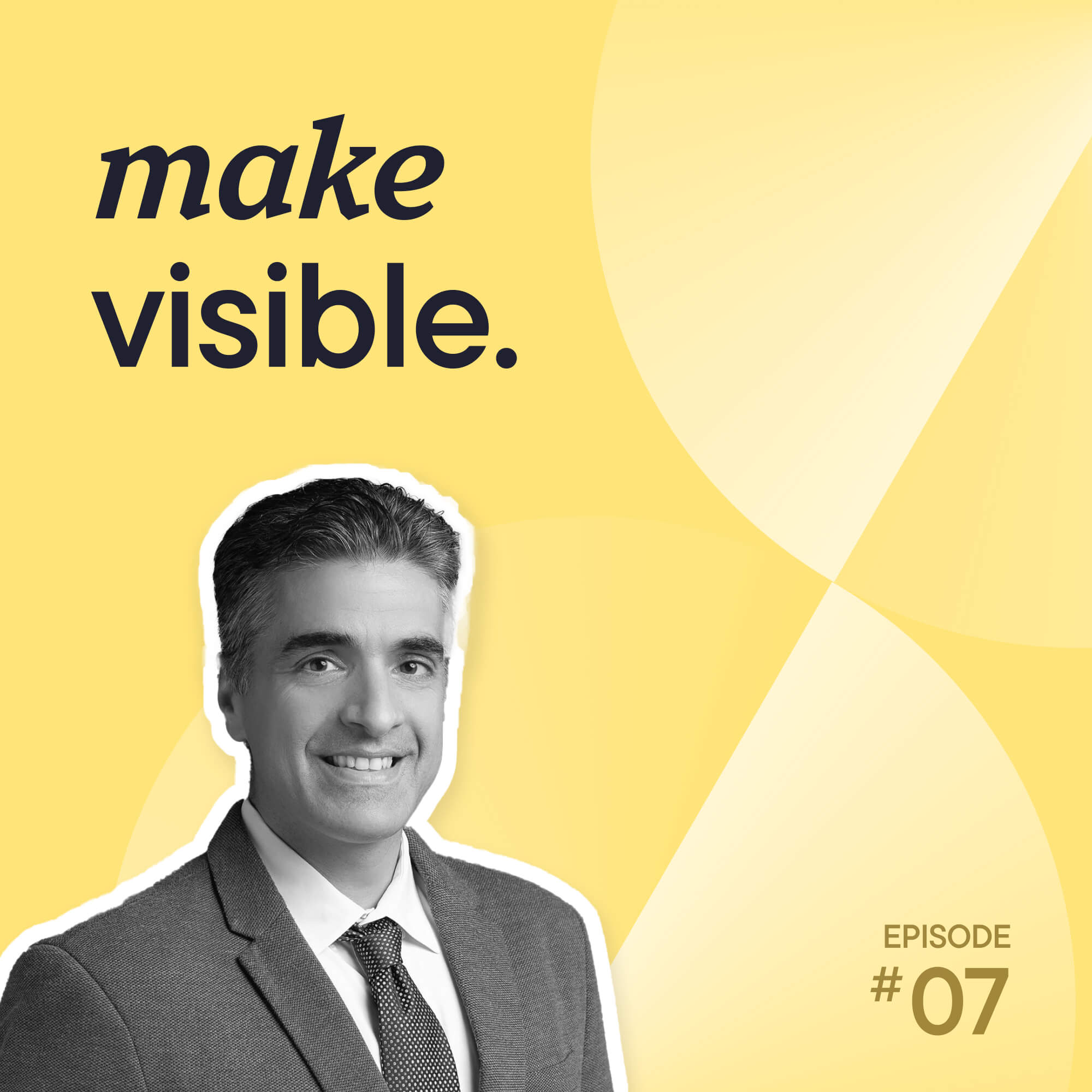
#7 Discovering new treatments for Brain Fog with Yale M.D. Arman Fesharaki-Zadeh
45m 3s
In this podcast episode, host Emily Kate Stevens interviews Dr. Arman Fasheraki Zadeh, a neuropsychiatrist at Yale who specializes in cognitive deficits from TBI, dementia, and long COVID. He explains that long COVID "brain fog" mirrors symptoms seen in TBI and post-concussive syndrome, including executive dysfunction and emotional dysregulation. This overlap stems from inflammation targeting the prefrontal cortex and its connections to the limbic system, which controls mood. Dr. Fasheraki Zadeh developed a protocol combining guanfacine, an ADHD medication that enhances working memory, and NAC, a potent antioxidant that replenishes glutathione and reduces inflammation. The regimen was inspired by prior research on guanfacine for TBI patients and NAC’s use in liver detoxification. He notes that psychiatric conditions like depression also show synaptic loss in the same brain regions, validating the physiological basis of these symptoms. While the protocol is not yet published for long COVID, he has seen positive clinical results and extended its use to MS and other post-viral syndromes. The discussion highlights how sensitive imaging now reveals shared neuroinflammatory mechanisms across diverse conditions, challenging the historical separation between neurological and psychiatric disorders. This approach offers hope for validating and treating complex chronic illnesses by targeting common underlying brain changes.
[Music] Welcome to Make Visible, the podcast shining a light on complex chronic illness. I am your host Emily Kate Stevens and I've been living with an energy limiting condition since 2020. Here I will speak to the world's leading experts to bring you the latest science research and insights into invisible illnesses, including MCFS, EDS, fibromyalgia, pots, long COVID and more. Welcome to the latest episode. We are trying to weave between hard peer reviewed science, anecdotal evidence and theories that have some weight and present as balanced of you as possible of the ideas that are out there in this invisible illness space. So, following the previous episode with Professor Amy Anston, who has looked in great detail at the prefrontal cortex, and she referenced working with a doctor by the name of Arman Fasheraki Zadeh, who has been using a protocol of Guamfacine and NAC to work with his long COVID patients in his clinic. Arman Fasheraki Zadeh, is a behavioral neurologist and neuropsychiatrist at Yale medicine. His primary focus prior to the pandemic was traumatic brain injury and other neuropsychiatric conditions concerning cognitive deficits such as Alzheimer's, dementia's, and he's taken his expertise of these conditions and their impact on the brain to formulate a regimen for long COVID patients from which he seems to be getting positive results. I have been interviewing doctors and medical experts specifically about long COVID and now what I am trying to do is actually broaden out some of that work that we have done and really focused on it in long COVID and see how we can also apply that to other complex conditions. Some of those being the post-infectious conditions, but we're also interested in whether we can apply some of these theories to things like EDS or I know that you do a lot of work in TBI. So that's where my positioning is. We feel that I know that people are frustrated in terms of the wrong COVID community, but there's been such a wealth of research compared to the things that other illnesses have received. So we're trying to open it out. I have been here since 2016, here at Yale School of Medicine and my specialties has been focused on traumatic brain injury and dementia. So that's been my focus for the past eight years of being here. I've been treating long COVID patients shortly after the pandemic started and again, as far as the span of time I've been seeing these folks I should say. So since June 2020, that was my very first patient, a lot COVID and to this day I continue to see them. You've had a big focus on TBI, but in terms of your clinics, historically, who was coming through your doors? Were you only treating traumatic brain injury patients or were you at that time also treating people prior to COVID with some of these other conditions which could be perceived as sort of neuroinflammatory or neuroimmune conditions? That's a great question. So I'm a memory cognitive specialist. So in the span of in the context of COVID, folks who had memory cognitive issues came to see me, they continue to come to see me. Folks who have been injury, same story we're called persistent post-concussive syndrome. In more rare cases, even chronic traumatic and cephalopathy or Alzheimer's perhaps due to multiple concussive injury, there's a link between the two by the way. So in that context, I've been seeing folks from various different medical conditions, ranging from COVID to TBI to dementia, and our clinic, the core basis of that are dementia patients. So folks who have Alzheimer's and more rare sub-dessed dementia clinic, front to temporal dementia, which you also do research on by the way and other sub-types as well. So the starting point to answer your question is memory and cognitive deficits in those contexts? The memory and cognitive deficits. Obviously, when you started seeing long COVID patients, was one of the prevalent symptoms for people that were coming to see you? Can you tell me what this term you've written papers on it, everyone talks about it? But how do you define this term brain fog? That's a that's can be tricky topic in a sense that is could be somewhat vague and non-specific. But what I learned in terms of the way the patient referring to it was difficulty in focusing, difficulty in multitasking, difficulty in organization, difficulty in recall of immediate information about working memory deficits. And what struck me was how similar, and I think this has been mentioned in the papers also, how similar the long COVID patients presentations were to push in cost of patients, to folks who have had part concussions. And I have this kind of what we call persistent post concussions syndrome, how similar the overlap of the symptoms were. And I will also add to this that I've seen patients who have MS and cognitive deficits that have had I've seen patients who have, you know, who've been on chemotherapy and have cognitive deficits. There is quite a bit of this new way in the even presentation, as you mentioned also earlier. There is quite a bit of overlap in these presentations also. So I was struck by the similarity of the phenotype of these folks. And what I learned from the world of TBI is what kind of inspired the regimen that I use for local patients also. Okay. And before we really talk about that regimen, does that mean that those conditions, you talked about the similarities presumably in presentation in terms of the symptoms that the patients were coming in with? Can you say that you can actually see physically in the brain similarities between those conditions in terms of neuroimaging or in terms of neuroinflammation? Is there actually a physical insult that you are able to see? Man, there is a great degree of heterogeneity in the presentations also. So oftentimes we may not be able to see on MRI actually distinct idealisions or morphological changes, but on select cases I have seen what we call white matter changes. So a diffuse white matter lesions that are also seen in conclusive patients. I've seen that also in dupe patients and I've seen it prevalent quite prevalent in MS patients. So this kind of diffuse white matter changes due to inflammation. And inflammation is a big umbrella. So we're talking about this phenotypic similarity. There is kind of this poor inflammatory process that we speak to TBI, researches and experts, inflammation is one of those pathophysiological changes that are causing postconcazion patients. So what might be shared amongst all these diseases processes, be it synaptic loss or a network alteration? So the outcome may be very similar and inflammation might have that kind of common pathological sequelae in all these conditions. So actually inflammation in the brain? That is correct. And the idea of that it can be pervasive and it can be extremely heterogeneous in population. The reason a pathophysiological also makes sense because we have what we call the ACE2 receptors where the COVID virus attaches itself to. And the expression of ACE2 receptors is variant amongst population. The response to COVID infections have been very diverse and there are folks who recover in a span of two days and there folks who have this persistent long COVID symptoms. Again, speaking to the fact that the inflammatory response might potentially explain part of this scenario. And obviously there are research to ongoing on this topic. Now obviously we've had a huge number of people with this symptomatology for as a result of a COVID infection. But that's actually also to do with the sheer number of people that got infected with COVID globally. Do you in your work view that post-COVID syndrome as similar to MECFS or are the possibly, specifically, non-specific pacifier infections in terms of the way it affects the brain? I think they share a great degree of similarity in terms of the mechanism. So what are the areas of the brain that is extremely vulnerable to both neuro-mynological changes or angiphalabins are prefrontal critical area. And those are the areas if I describe the function out of the areas, it will make a lot of sense. So these are areas in charge of executive functioning. And what that means is ability to multitask, to test switch, able to recall immediate information, emotional regulation. Also a lot of folks with this post-concussive or long COVID symptoms, they have a lot of emotional and dysregulation symptoms also. And in addition to the cognitive and that this is real work.
focusing on the cognitive issues, but the affective emotional problems are also described in this population as well. - And that's because it's all controlled by the prefrontal cortex. - The prefrontal cortex has a regulation role, thinking of it like that there are a lot of fibers attaching what we call the limbic network, what is locally called as limbic brain also, the amygdala, the insula. And there are a lot of connection kind of going back and forth between the prefrontal cortex area and the subcortical limbic brain. And those connections are also vulnerable to the inflammatory process as well as the prefrontal cortex area. So the idea that even though the conditions are quite, could be quite distinct in a kind of descriptive sense, but the outcomes are often again, the same vulnerable areas are affected. - And is that why many of these conditions progress into people having conditions such as depression, anxiety are those all regulated by the same same part of the brain? - Well, the areas of the brain that I mentioned play a major role. So when it comes to emotional regulation, I see that in our TBI patients also very frequently. So the rates of depression, anxiety, and impulsivity and emotional and dysregulation extremely high, and traumatic brain injury patients. The rate of substance use is also extremely high. Again, the idea of substance is also, you can look at it from different perspective, is a coping strategy for emotional regulation. So folks dream because they feel anxious, they feel depressed. They have difficulty controlling their emotions. So that's where the rate of substance use also in folks with lung COVID. I have looked at those studies recently, but I do believe that folks have no depression, anxiety, extremely common with lung COVID cases as well. - Yeah, it's been reported. The last day, Jonah came out in 2021, looking at, I believe, 20,000 and 60,000 plus patients. Rated one-third of these folks had neuropsychiatric symptoms and kind of lumped in their category, the combination of cognitive surfaces, as well as emotional and affective problems as well. - Yeah, and I think a lot of the time, those people are told, well, obviously, you're going to have these various issues. You're going to have anger issues because you are frustrated about your condition. And I think sometimes it's actually quite important for some of those people to be validated and told. Actually, it's not just that you got really moody because you have to spend all your time in your bedroom. They are actually physiological things that are going on in your brain that have created these things. And that's not to exonerate people's behavior completely, but that's to give some context, to why there's this shift in personalities. - Absolutely. There is a paper that was published, if I may just open a small plug here out of your back in 2018. And this was published in Nature Communication. And the old, at age old paradigm has been that psychological conditions are computed separate from neurological conditions. So there's a separate, there's a chasm, befealable called depression, anxiety, even more severe conditions such as PTSD and bipolar and schizophrenia versus neurological deficits. There was a study that came out that was published in 2019, first author Shofi Holmes, who's actually British and collaboratively are a group in psychiatry here, and they looked at synaptic density in the brains of patients with major depression disorder. And what they found was really remarkable as well as PTSD, so they look at two groups of patients, MDD, major depression disorder and post-traumatic stress disorder. What they found was there was loss of synaptic connections. In the same area that I just mentioned earlier, the prefrontal corcoral area. So there was loss of synaptic connection, those areas in folks who had symptomatic major depression disorder, as well as PTSD. So there are physiological biomarkers that if you have sensitive enough of a scan, so in this case, it was SV2A, which looks as synaptic density, it's SV2A PET scan, I'm doing research on RNA also. The idea that we could actually capture that in patients who have these longstanding psychiatric conditions. Now, you're looking at it from the long COVID perspective, it does lead to this chronic inflammatory process, and the partially brain that are more vulnerable, also the prefrontal corcoral area or the PFC area. And those are the same areas that have been affected in depression, there was same areas that have been affected in traumatic injury, to the same areas that have been affected in and neuroimmunological conditions, such as long COVID, or post viral symptoms. We can talk about the regimen also, but I will mention the same regimen that I've applied for long COVID patients, I have tried also for MS patients. I've seen success in a clinical setting, we have not published these studies, but anecdotal recognition that the same tripping modality that has been affected for long COVID patients has been tried also for other pregnant post infectious and post viral scenarios. Picking up on something that you just actually said, almost at the beginning of that section, is that this differentiation that there has always been previously of neurology in psychiatry, and that's why I feel like you are perfectly placed because you are a neuropsychiatrist, so you are presumably trying to bring both sides of that. So you are looking at the way that the psychiatrist looks at the brain, almost as a separate entity, and reinserting it into the body and looking at it holistically, is that what you try to do in your work? There are a lot of bridges going back and forth, and the reason there has been a separation, one of the reasons there has been a separation between the neurology and psychiatry is because our imaging withoutis or biomarkers have not been sensitive enough up to a decade ago to capture those changes in the brain. Now we do have those modalities available. The synaptic density path imaging was just an example. There is functional MRI studies that have also captured the neurosursetting, which is not clinically available yet, but it's an exciting forefront and terrible, will be coming up soon. And also we tend to forget that a stigma Freud, the father of psychoanalysis was in the roger. And the reason he became fascinated with psychoanalysis because he didn't have the necessary tools at that point. This is more than a century ago to explain the behavioral symptoms. Now we're getting closer to a point that we can actually have, again, sensitive imaging markers that can potentially open up that window to look at these patients differently. It's amazing. So let's add that juncture, talk about the protocol that you actually have developed for treating long COVID patients. Where did this initially come from? Because it is FDA approved drugs. It is not something that is completely plucked out of the air. Can you tell me what you previously used it for and how you thought it might help with long COVID? - Yeah, that's a great question. So the combination regimens includes guanfacing, which is an alpha-2 agonist and NAC in acid rule cysteine. Now guanfacing was initially FDA approved back in 2009 for ADD-ADHD. So in a lot of mechanistic, it makes a lot of sense. The pioneer, by the way, behind this drug is neuroscientist here at YAHL. Her name is Amy Arnston. - Who I have interviewed. Absolutely wonderful lady. - She is wonderful and she will happen to be a senior author who has been a mentor on this project also. - Yeah, and you've done the huge amount of collaboration with her on these things. - I have. And again, she's been wonderfully supportive. She was a pioneer behind guanfacing approval back in 2009 and she's worked on it for decades using primate studies and eventually clinical trials with patients. So this was back in 2009 and the work of guanfacing, the idea of using guanfacing for post-conquestive patients, was initially utilized by a TBI researcher who's senior to his figures older than I am, but he's been doing this for longer than I have. Thomas McAllister, who I believe is now, has been the chair of psychiatry in the Indiana University of last time I checked. So he used guanfacing for post-conquestive patients and using FMRI studies and showed that it led to working memory improvement. And this was published in 2012. We talked about more than a decade ago, 12 years ago. So the idea that post-conquestive, and again, this was a small-scale study and that became the inspiration of using guanfacing clinical settings. So for more than a decade, nobody uses it in the clinics, even though guanfacing has been FDA approved for ADD and ADHD. The NSRO system is a very useful robust supplement as anti-inflammatory antioxidant benefits and the lab that did my PhD and had published on NAC also. For use in Wage. For use in injury models or brain injury. And it has also been published by the way for clinical TBI patients as well. So it's a safe supplement. It's a very robust antioxidant and has some anti-inflammatory benefits. To give you an idea in terms of how robust it can be, folks who either intentionally, unintentionally, overdose on tidal law, which is of real fortunate, and deliver can become necrotic. And it says being used to rescue deliver due to this toxicity. So in the emergency room setting, guanfrobed if somebody overdoses on tidal law, NAC is used the first agent that is used to rescue deliver from that injury. That's so interesting, because it's actually something that I have been recommended previously by neurologists. And I hadn't necessarily understood of its healing benefit.
in other circumstances. So is that it's anti-inflammatory properties or is it effective? - Yes, antioxidant properties. - Okay. - So that's very robust antioxidant properties. - So it's the detoxification. - Yeah, you could think of it like that. So is a pre-curstial glutathione. So glutathione is a compound that is in the liver and is a major detoxification antioxidant system in the body. So in a cis-central replenishes that system. And also there are studies that are showing that it can modulate glutamate and dopamine levels, which is fascinating. So in the world of psychiatry, there are studies that are published even is used in OCD patients. It's such a safe regimen that if you speak to psychiatrists who've been doing this for decades, they use in a often as an augmenting regimen to add it to other regimen, to increase its efficacy. So we can play kind of quote unquote multiple roles, complimentary roles, I should say. - Some of these things are so interesting because there is such a, these conditions are treated all so separately, but I have spoken to multiple people now who have married. These conditions that one perceives to be completely psychiatric or completely, but that are now with this research that we're doing, being married on a physical level with other conditions. I mean, the fact that you can use something to treat ADHD and long-covid, and there are correlations between people getting post-COVID syndrome and ADHD. It's interesting. It's also very contentious, topic, but I do find it fascinating the way that we're joining these dots together in this space. I would have in this discussion because when you speak to a post-concussive or long-covid patient, they can look like the ADHD patients also, just the way they manifest in their symptoms. So they're probably focusing on attention and multitasking. Those are the same type of symptoms that ADHD patients often complain about also. We're talking about this kind of door-short lateral based executive function and deficits. Those are the same phenotypes that we see in these conditions. So they do share a lot of kind of phenotypic similarities. I can't imagine, again, looking at this inflammatory hypothesis that not affecting the outcome of interiors, and in brain development, or the outcomes of that, and haven't looked at the studies, look at specific COVID and ADHD diagnosis. But mechanistically, it wouldn't be shocking to see that there is some sort of a conversion of these diseases processes. That's fascinating. So tell me about the protocol, how you start developing it for long-covid patients. The results. Now, you said in 2023 that obviously we need to have placebo controlled trials in it. When I have searched, I have not yet come up with any of those placebo controlled trials, although it is labeled as a drug of interest in this space. And I don't think we've done any clinical controlled trials into Guamph scene since 2012 in Europe. But obviously we have not caught up on this side. But tell me the process that you went through and the stage that we've reached. Well, like many other physicians in my space, I was frustrated by not having effective regimen for long-covid patients when I started to see these folks. But fortunately, three plus years ago, I started our concussion clinic here, coincidentally by clinic, me amongst other interested parties. We didn't have a TBI unit in the canal patient setting. So when I did my fellowship here back in 2016, 2017, my priorities has always been to my area of injury. And from the very beginning, my PhD work was also in TBI as well. Where the inspiration of long-covid treatment came from, as I mentioned earlier, were the phenotypic symptoms, similarities between these two groups of patients. So the Guamph is an AC combo I had been using for TBI patients for a number of years prior to trying that also for long-covid patients. Because these drugs were safe to use also at Guamph is an already-benefit approved for 80-80 issues so a safety profile has been established. And the NAC also has been using a clinical setting for decades. So I knew that I wouldn't be worried about, quote unquote, side effects. And following these patients longitudinally for that purpose, there are side effects for Guamph is NAC, of course, and we have to be mindful of the not major side effects. They're also mentioned in the paper as well. But just the idea that their side effects are mild enough that the benefits can outweigh the risk of these use. So essentially cross-purposing a regimen that's already been out there for more than a decade. So when I started using Guamph is in the first time I believe it was back in 2021, this was the medication without there. A lot of neurologists didn't know about Guamph is in, because it's predominantly in ADD-DADHD space. And either Chosocietrist or Dolphicietrish kind of gives it more often. TBI specialist, in spite of Thomas McAllister's publication in 2012, nobody picked up on that. Which to me was a significant surprise, because whenever I spoke to my neurology colleagues here at the R, when it came to treatment of postconclusibation, they treated them in therapy and maybe colonized strained inhibitors like Donepozole, but nothing was established. So the idea came from the TBI role, but I did use the same application process. And it started to see benefits in long-covid patients. So there was a long-covid patient in your clinic and you said to them, would you like to try this on this basis? Or how did you even approach that first trying out of the regimen with your patients? So the thought process behind it was that I have been struck by how similar your symptoms are to my TBI patients that are in the clinic. And there is a treatment protocol that is safe, because again, these regimen have been around for a while. And since you're having this persistent symptoms and it's been months serving years of these deficits, and I have seen patients who are extremely high functioning, by the way. And these long-covid symptoms have been deviled it, and they have been really almost traumatizing for these folks. So trying out a regimen that is safe and has been established for the conditions, they were very much open to the idea out of all the frustration and not having anything else available. When I started to see benefits, I almost felt the sense of obligation to get this out on a larger scale. I'd be through publications, but also doing clinical trials, which I'm still interested in pursuing and I have been pursuing it. When I asked when I reached out to Amy about the Guamphiacine AAC idea, and we decided to formalize this regimen on a case serious basis. Yeah. And I will also add, again, nothing self-confident about this. But the two of us, between the two of us, Amy and I, we received a stool emails from, especially first two years of '23 and a part of the 2024, stool emails from across the planet, all the way from Australia to Europe, to Middle East, to North America, South America, folks that have tried the regimen, and some of the benefits from this. And again, no drug combination is perfect, but the idea that it did provide benefits for a good portion of those folks. So, and this was very encouraging. And how long did it take you in your patience to see a difference? How long does this combination take to take effect? So typically, the dosing regimen, I started with one milligram for the first month. That's kind of the ramping up period. And we reached a two-midagram after the first four-week research show. But at the time, patients get on the two-midagram with the tolerate the regimen, okay. That's when this starts to see the benefits. And the side effects I would just mention, they've been mentioned in the paper all, so it can include blood pressure changes, so making sure that we kind of watch the blood pressure a little bit closely, dryness of the mouth, which is shared amongst many other medications also. So those are the potential side effects that I give a little bit of a warning. Just the two. And I've had complicated patients with no had constipation issues, but again, nothing really major. And if the business and the hypertension can be a problem for some folks, and in those cases either we have to stop the regimen or we can lower the dose, I saw a nurse patient, I might, whose story by the way was published in the case series as well, and she's continued to be on this now, years after. So this is the three plus years after the COVID infection and it still tolerates the wall, and she's still working, she's productive. So I think that's very encouraging. I had a patient who saw, who was last two weeks ago, significant lung COVID symptoms also, she was very high function a prior. And interesting enough, by the way, I do want to add that that's majority of my lung COVID patients have been coincidently females. And I don't have a viable, mechanistic explanation for that, but I can tell you anecdotally, that in the clinic, the good portion of my lung COVID patients have been women, and I'm on to how they show why. - A lot of people have different theories on that. - Yeah. - An interview that I did was the suggestion that, also the demographic of the women, it's a lot of 35 to 50 year olds. I think it's interesting when you look at those demographics. Do we have more of a susceptibility in our systems, or is it a lie?
lifestyle thing that actually causes the demise. Right. And also the hormonal changes in that age category, not the measure pre-medipal soil, metapalzole. Yeah. Here is the women go through whether that there is a correlation between those. That's quite interesting, isn't it? Because in terms of estrogen, the suppression of information by estrogen, and then if you are beginning to lose estrogen or be depleted in estrogen, perhaps the homistasis there is somehow there's somehow an imbalance. Right. And I think mechanistically, I think there's a lot to be found out in that space. But I can tell you, I told you, as I mentioned earlier, is an interesting correlation that I keep continuing to see in our patient part. The two patients I mentioned, they're both women, of course. The most severe ones, I know I've had these physician colleagues of mine with long COVID, whose jobs were severely affected because of this condition, which is really unfortunate. Yeah. Do you find that in some of your patients, by treating your treating the brain fog, the neuroinflammation, but by treating that, that it actually cascades to deal with others of their symptoms that are often seen as being physiological, but actually essentially could be classified as neurological. So things like the pots, I know that you said with the one for scene, you can have blood pressure changes and perhaps it's not that suitable for pots. But if there are certain things like that, that's autonomic, that's actually the neurological dysfunction. Have you seen improvements in symptoms that you wouldn't necessarily cascades brain fog with your regimen? Right. Most of the for pots patients, and I think that's the population that I also am very careful with, when it comes to prescribing glyphosis, for the exact same reason, I just described because it does lower blood pressure. And that's the population that is vulnerable to blood pressure changes and autonomic changes. So I tend to stay or very be very cautious with glyphosis. I did not prescribe that at all or just be very, very cautious with that. In regards to other other symptoms that I've been surprisingly responsive to glyphosis and that's a great question. Steve, I'm surprised enough, which I did not expect. And there have been a few cases in the clinic that patients mentioned to me that even more so than in those patients, the remission of I'm surprised how well I sleep at night and is added to that component. Or mood, there have been a couple cases that the mentioned in the mood was improved. And again, going back to the idea of your prefrontal corral area having a very, really predominant role when it comes to emotional regulation. We tend to separate out. So it's kind of the our human cognitive biases that we like to put things in boxes. So certain parts of the brain are in charge of certain functions and certain parts of the other functions. We don't look at it as a network. And we should look at it that way also, because the brain is even as modular, there's also a very dynamic interactive network. And by forgetting that component of it, I think we're missing out the bigger picture. So when it comes to emotional dysregulation, the long-covid patients, and I'll give you another example, I had a TBI patient in the mind who who perseverated quite a great deal. And she one of the most the buildings that sent us in her case was she detent to preserve it on a topic and she would go on on loops essentially. Right. And what I saw and I thought it was really fascinating was go on flasing kind of broke that loop essentially. So the idea that this perseveration, this strumination on a certain topic, it almost like, you know, it reintroducing breaks in the brain. Like we can move on from this topic to the next. And I thought that was really interesting and mechanistically also again makes sense because you prefrontal cortical area also provides emotional breaks. So when we get angry or frustrated, what keeps us grounded and continue to have social decorum in situations that are reading anxiety or anger provoking is your prefrontal cortical area. So create that space like, look, I know this is frustrating. Let's think about this for a moment. That's your prefrontal cortex kicking in essentially, your PSC kicking in. And go on flasing strengthening that network, it would explain a lot of this again outcomes ever seen. That's absolutely fascinating. And I think that we also need to apply that network basis not only to the brain but to the whole body because it's that flow of information backwards the afferent and efferent that is so misunderstood or ignored, certainly. Right. And overlooked and often. And that's I think that's and as science and medicine is moving forward, even in the world of I have folks and my colleagues in Parkinson and there's a whole new movement looking at gut and microbiome and this relationship to Parkinson. The fact that a lot of the I do see a number of Parkinson patients just because a lot of them have memory issues also. And the GI symptoms in Parkinson's is very prevalent. And we'd ask to be known for decades. So this idea that we tend to again put things in boxes. Yeah. And that's fascinating, isn't it? Because of the way all of these things actually so many of them seem to be coming back to the gut, even if you talk about potential viral persistence, there is talk that that is quite specifically, well, there's a suggestion it might be in the brain as well, but the viral persistence has been found in the gut. And then when you sort of dig deeper into all of your different immunological systems of the body, the mast cells and there's so many connections. There are so many connections between the conditions and between also what we're putting into our bodies. Very true. And that network of the cascade effect. So you mentioned there that the gloves seen had assisted with sleep. And I think that is one of the those things that is such a big area in so many of these chronic conditions is the lack of ability to sleep, whatever an infection has done to your body and makes it difficult to sleep. The healing that can come once you are able to sleep creates a positive cascade effect. And I don't think necessarily everyone's keen to take actual sleeping tablets. So I mean, there have been things like I'm a tripsiline used. I was put on I'm a tripsiline to help with my sleep. And I didn't find it effective. I mean, the whole area of civis fascinating because it's been overlooked for decades now, there's more attention to it. And there's this other network by there that was newly discovered called the glyphatic network. And essentially, I'm sure you're familiar with this kind of brain clearance network. So you have the lymphatic system of the body. You also have the glyphatic system of the brain. And that network is usually active during our sleep. So you brain can detoxify itself in your deep sleep and your REM sleep. So folks who have ongoing neurological, psychiatric conditions, oftentimes you can tell by their sleep patterns. So they tend to have less time spent in deep sleep and REM sleep to become this kind of this negative vicious cycle that can feed on to each other essentially. So we sit in our TBI patients, we sit in our patients, we take psychiatric conditions, all sorts of steppes, one of those domains that is often affected. Yeah. And of course, there's psychosocial issues and that as well that you mentioned earlier in our conversation that we can overlook either. So the suicidal kind of logistics, psychosocial tool of the disease as well. And I think that's certainly a place of factor. Yeah. I found absolutely fascinating when I learned about that glyphatic system and the need to actually have sleep and what our body are the fact that our body is actually cleansing itself detoxifying whilst we sleep. As someone who had never previously really needed that much sleep or had that much sleep, I was always fine on five hours. Suddenly I became someone who really needed to sleep and I couldn't sleep for about a year and a half. I didn't sleep. I sleep pretty well now and I have to say that has made such a world of difference. It's just improving that sleep and finding any tools that you can use. And I really love the tools that are multi purpose or have dual purpose. So that byproduct of going on for sin and improving sleep is a definite plus. So tell me you said that you are focused on pushing forwards for clinical trials with this. Tell me what stage you have reached or that we have got to collectively if there are other researchers also looking at this. Where are we with actually some more empirical evidence for this regiment? So I'm still in the funding application phase. I have applied for one cycle previously and this was my my my first R1 application. It was scored and it was scored well. And again, these days everything is super competitive. So it hasn't been funded yet. But I'm hoping to get it funded for next cycle. And apparently there was an announcement that there's increased funding for COVID research here in US. So I'm hopeful that in the near future this will get funded. And also in the world of TBI space the same idea that I use this regiment for post-concussive patients. So there's kind of two parallel tracks. But there's never the last day shared the same regiment. So I'm that work is still ongoing and we're collecting data still to this to this [BLANK_AUDIO]
And so that's I'm excited about that and we'll make sure they have further results to keep everybody updated and hopefully further publications as well. Amazing. So it's an ongoing. And in terms of anecdotal efficacy, how many patients have you have you treated with this regimen or how many people have you seen benefiting from it? And totally make sure that I check the numbers here. And I have right now both 1400 patients in my clinic. So they're very, very packed clinic. And about fifth of these patients are combination of long COVID and post-concursive patients. So in the orders of hundreds by now, combination of two, either one COVID or post-concursive. And certainly in the order of, I would say between 50 to 200 patients have been treated with this combination regimen. And so I'm again, the fact that it's safe, the fact that it's been actually approved kind of lowers the barriers but at the same time, I think it was really important to have more empirical kind of double-blind control studies. They can really establish efficacy. And that's what I'm, what I'm aiming for still. And it's the time is of the essence. So I do know that this needs to get out as soon as possible. It gets really established and prioritized. Yeah. We really, really appreciate all of the people who push on the typing of things like that because there is, there is this view that we have moved so fast in terms of, in terms of actual COVID, the way that the vaccines were developed, the treatment of it, and then subsequently in long COVID compared to any other illness we have moved incredibly fast. But obviously there was such a huge number of people suffering from these conditions that there is definitely an urgency. But we very, very much appreciate the efforts that people like you have put into expediting these things. No, thank you very much. I appreciate that. And our research is both inspired and moved by the need that is there. And that's what continues to inspire me right now as well. The folks that are continuing to an eclinic and the fact that even I see results and my work is also inspired by that. So with inspired the publication, it was also the fact that I saw real clinical results and outcomes in the clinic. And kind of getting out of quote unquote the quotation of kind of ivory towers of the Ivy League and academic settings and getting this message out to the public, folks who don't have access to research. And they want to get to know and they're never going to suffer with the same type of symptoms how to be expand on this. So that continues to inspire me and I appreciate the opportunity to share a few thoughts here. Thank you so much. We would love to hear if you have tried Guantanese and NAC. And if you have found it to be effective in your condition, one of the things that we are trying to do at visible alongside helping people to pace is to drive research in a direction that is helpful to the patient community. So the information that you feed into us, we are then trying to work with the medical community and with researchers to develop strands that will help move forward our comprehension of these illnesses. Please keep feeding back to us. Tell us what is of interest to you. We are working through an ever-increasing list of things that you want to hear about and people from whom you want to hear. Stick with us. There are so many exciting interviews coming up. I do hope that you're surviving this period, being gentle and kind to those around you and to yourself. Thank you for listening to Make Visible. Please do like, follow or subscribe to listen to our next episode where we'll be uncovering more insights into complex chronic illness. This was brought to you by the team at Visible, a group of scientists and engineers whose lives have been affected by energy limiting health conditions. We're building wearable technology that's helping a hundred thousand people measure and manage their complex chronic illness. To find out more about what we're working on and how visible could help you, visit our website at makevisible.com.
Podcast Summary
Key Points:
Dr. Arman Fasheraki Zadeh, a behavioral neurologist and neuropsychiatrist at Yale, treats long COVID patients using a combination of guanfacine (an alpha-2 agonist approved for ADHD) and NAC (N-acetylcysteine, an antioxidant).
He observed that long COVID "brain fog" symptoms—difficulty focusing, multitasking, and memory recall—closely resemble those seen in traumatic brain injury (TBI), post-concussive syndrome, and other neuroinflammatory conditions.
A common underlying mechanism across these conditions is inflammation in the brain, particularly affecting the prefrontal cortex, which regulates executive function and emotional control.
Dr. Fasheraki Zadeh emphasizes that psychiatric conditions like depression and PTSD share similar physiological biomarkers (e.g., synaptic loss in the prefrontal cortex) with neurological disorders, bridging the traditional divide between neurology and psychiatry.
The guanfacine-NAC protocol was inspired by prior research
He has also applied this regimen to MS patients with anecdotal success, suggesting its potential for broader post-infectious and neuroimmune conditions.
Summary:
In this podcast episode, host Emily Kate Stevens interviews Dr. Arman Fasheraki Zadeh, a neuropsychiatrist at Yale who specializes in cognitive deficits from TBI, dementia, and long COVID. He explains that long COVID "brain fog" mirrors symptoms seen in TBI and post-concussive syndrome, including executive dysfunction and emotional dysregulation.
This overlap stems from inflammation targeting the prefrontal cortex and its connections to the limbic system, which controls mood. Dr. Fasheraki Zadeh developed a protocol combining guanfacine, an ADHD medication that enhances working memory, and NAC, a potent antioxidant that replenishes glutathione and reduces inflammation.
The regimen was inspired by prior research on guanfacine for TBI patients and NAC’s use in liver detoxification. He notes that psychiatric conditions like depression also show synaptic loss in the same brain regions, validating the physiological basis of these symptoms. While the protocol is not yet published for long COVID, he has seen positive clinical results and extended its use to MS and other post-viral syndromes.
The discussion highlights how sensitive imaging now reveals shared neuroinflammatory mechanisms across diverse conditions, challenging the historical separation between neurological and psychiatric disorders. This approach offers hope for validating and treating complex chronic illnesses by targeting common underlying brain changes.
FAQs
The podcast shines a light on complex chronic illnesses, including ME/CFS, EDS, fibromyalgia, POTS, and long COVID, by interviewing experts.
He is a behavioral neurologist and neuropsychiatrist at Yale Medicine, specializing in traumatic brain injury, dementia, and cognitive deficits.
He defines it as difficulty focusing, multitasking, organizing, and recalling immediate information, similar to symptoms in post-concussion patients.
They share a common inflammatory process affecting the prefrontal cortex, leading to similar cognitive and emotional symptoms.
It combines guamfacine (an alpha-2 agonist for ADHD) and NAC (an antioxidant) to improve working memory and reduce inflammation, inspired by TBI research.
Advanced imaging shows synaptic loss in the prefrontal cortex in both conditions, indicating shared physiological biomarkers rather than a strict separation.
Chat with AI
Loading...
Pro features
Go deeper with this episode
Unlock creator-grade tools that turn any transcript into show notes and subtitle files.
 PodcastTranscript AI