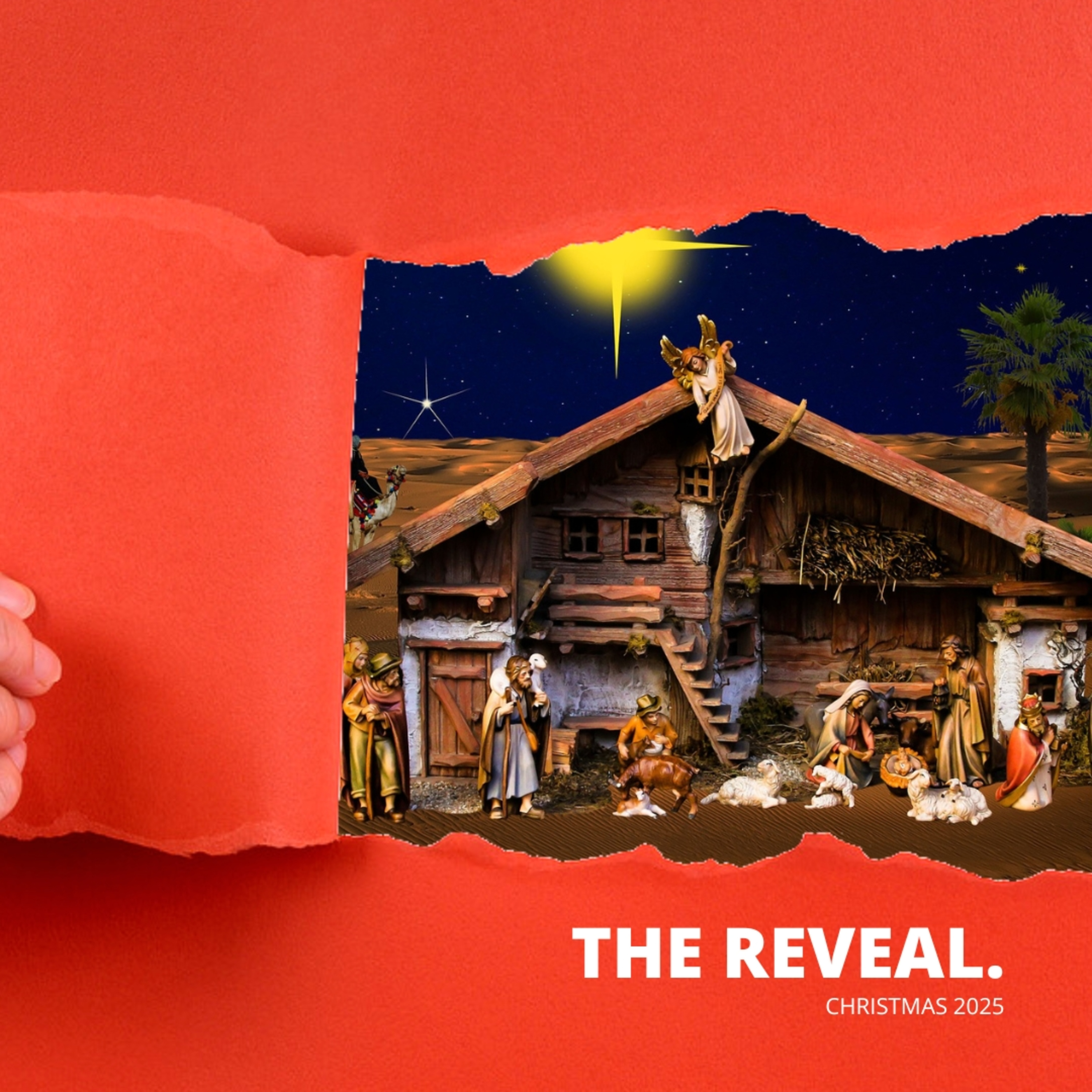
The transcription discusses the extravagant product launches in the tech world and compares it to the significant revelation of God stepping into human history through the birth of Jesus at Christmas. It delves into the concepts of reconciliation and restoration, drawing parallels between the Old Testament prophet Zephaniah's prophecies and Mary's understanding of God's promise. Emphasizing that restoration starts with humility and admitting brokenness, the text highlights how God reshapes and renews individuals, akin to the Japanese art of Kintsugi, where broken pottery is repaired with gold. This process of restoration invites people to return to God with humility, allowing Him to restore His image in them and make them new. The text concludes by noting that restoration is a journey that individuals undertake together as a community, allowing God to mend their broken pieces and reveal His glory through their renewal.
Transcription
3646 Words, 21080 Characters
Well, December is here and with it the first taste of worn weather didn't last
long. Christmas trees, decorations, turkeys, fruit mince pies, puddings, chocolate
that's never been so expensive and all the other Christmas staples and festive
staples that have been sitting in stores for weeks already. Every where you
look TV, billboards, websites, now that we're almost through that month long
drag of Black Friday sales, you're being bombarded with ads insisting that
their product is the missing piece that you need for a complete Christmas or a
complete life. No one plays this game quite like the tech world. Companies like
Canva, Apple, Google and even OpenAI have turned product launches into full
blown spectacles. Canvas, Canva create events are a perfect example of this.
Newly crowned as Australia's most valuable tech company, Canva stages these
events with massive sets, polished presentations and a carefully engineered
sense of anticipation. As a Canva user myself I checked out some of the
recorded content from their latest release and I was struck by the language of
granting wishes. They've listened to their users and rolled out tools and
features that people been wishing for. Promising to help you work faster, make
creativity easier and save you time, all while keeping your most in their seemingly
limitless world of their platform and their brand. And Apple of course have been
doing this for years, rolling out the best iPhone we've ever made, even when it
feels surprisingly similar to the last year's model. Google and OpenAI and many
others join into announcing breakthroughs with the kind of energy usually reserved
for music headliners, sometimes even turning their charismatic CEOs into
household names. These events hype the reveal, teasing it, building suspense,
tapping into your sense of lack and they're unveiling the product that they want
you to believe is the answer to all of your prayers and the thing that would
change your life and they call me cynical. But Christmas does something
infinitely deeper. At Christmas something is revealed that holds far more weight
than the latest phone, the latest AI tool or design platform. What God reveals at
the birth of Jesus is not a feature update or an upgraded experience. It's the
announcement that the world is not abandoned and that God Himself has stepped into
human history. This wasn't just something that people wished for. It was
something that God had spoken through the prophets hundreds of years earlier.
And today marks the beginning of our Advent journey. Yes, it is a little weak
late. We've been doing the Advent candles which is great. Advent comes from
the Latin word for coming and it's a season of expectation and anticipation as
we prepare for celebrating the birth of Jesus. This year in the remaining three
Sundays of Advent and our Christmas Eve service, we're exploring a series
called the reveal. We're going to focus on four things that God reveals to us
through the story of Jesus' birth. And to do that, we'll look back to see to the
prophets of the Old Testament and see how their words were fulfilled or how they
were revealed in different moments of the Christmas story. And my hope for this
series is that it helps us to catch our breath in the busyness of December. That
it gives us space to marvel again at the wonder of God's generosity and to
encounter Jesus revealed to us afresh as we move toward Christmas. And that
idea of revelation or something promised breaking into real life isn't just
an abstract isn't as abstract as what it sounds. So while I grow in it the way
tech companies hype their products and the whole no-expenses spared spectacle,
I'm still interested in tech. I get the excitement and I get the anticipation
about it. I'm always on the lookout for software that might make my life easier
or help me stay organized and not forget things or store information in a way
that I can easily find it when I need it. I like trying out new tools just to see
how they work and how different companies have solved the same problem. And I'm
fascinated and sometimes mildly concerned by how quickly AI is
involving and becoming part of everyday life in ways that I would have never
imagined years ago. All of that reveals something about me. I'm aware of what
isn't quite working, what feels broken or what needs fixing. But even my best
attempts to fix what is broken in the world are tiny compared to the
kind of need God's people carried. God's people in the Old Testament understood
that feeling on a far deeper level. Their anticipation wasn't about convenience or
productivity, their longing for the promised one was rooted in something more
significant. Their relationship with God had been fractured since the fall. It wasn't
the same. They were waiting for restoration for the promises spoken through the
prophets to finally come to pass for the one who could heal what had been broken.
So just as tech launches tap into that sense of need real or perceived, the birth
of Jesus taps into the deepest need of humanity. And the anticipation
surrounding his coming wasn't hype. It was hope. The point isn't just that
people longed for something better. As that God had already set in motion a
promise far bigger than their hopes. Before anyone could name what they needed,
God had already spoken a future into being. And one of the voices he used to
declare that future was the prophet Zephaniah. Zephaniah spoke during the reign of King
Josiah, a king who tried desperately to pull Judah back to its identity as the
people of God. Josiah initiated reforms. He taught our idols and called the nation
to return to God. But the truth was clear and blunt. The people were too entrenched
in patterns pulling them away from him. Their relationship with God wasn't
slightly off. It was fully broken. And Zephaniah doesn't soften that reality.
In fact, his book opens with this cheerful line, "I will sweep away everything from
the face of the earth." Declare as the Lord. Not bad to get people's attention.
Because it's confronting, isn't it? But it isn't rage for the sake of rage. It's
the honest exposure of the brokenness gripping God's people. Turning away from
God meant turning away from life itself. And that same brokenness still
describes the ache we feel today. When we realize the world and our lives aren't
working the way they should. Yet even in the middle of these hard words, God's heart
breaks through. Hidden within the warnings is this invitation. "Seek the Lord,
all ye humble of the land." You who do what he commands. "Seek righteousness,
seek humility." Perhaps you will be sheltered on the day of the Lord's anger.
That small word, "Seek," opens a door. "Look for me," God is saying. "Even in judgment,
he reaches out. Even in their mess he wants them back." This pattern runs all the way
from Eden to Zephaniah. God creates humanity in his image, crafted from dust,
animated by his breath, made to reflect his character and humanity turns away. We
were made to live in harmony with him. Heaven and Earth overlapping but sin distorts
the picture as we're talking about before on the kids tour. We became a damaged
reflection. And like a parent grieving something precious that's been
carelessly broken by their child, God grieves that the brokenness of humanity. His
anger isn't petty, it's the sorrow of a creator whose masterpiece has been
defected. The relationship he intended, an intimate one, a whole one, a life
giving one, has been ruptured, and he knows what restoring it will cost.
Zephaniah hints at the next step towards resolution in this passage. He points
towards the need for reconciliation between humanity and God, and the
responsibility of God's people to seek him. This step is called reconciliation.
Think of it like this. You're watching the football. I've got soccer up there
both. You can choose your own favourite code and it will still work. And a player
makes a dirty tackle or a player that leaves someone badly injured. You're broken
bone, a torn muscle or something serious. The network replays it from every
angle, slow motion and all, and if you squeamish you duck out for a coffee. The
offending player is usually sent off or reported. The injured player is carried off
and eventually the game moves on. Now imagine something unusual. Imagine the
player responsible for the foul approaching the injured player afterward and
saying, mate, I'm sorry. That challenge was out of line and I'm sorry you got
hurt. The injured player would be surprised, but probably decent enough to say
thanks, mate, and shake their hand. That's reconciliation. Yes, it's an idealized
moment, but it helps us see three things clearly. That reconciliation doesn't
remove the consequences. The player still will cop the fine or the suspension.
Reconciliation doesn't undo the damage. The injury still needs treatments and
healing. Reconciliation requires humility, seeing the
offense and the brokenness what they are and choosing to repair the relationship.
This is the heart of reconciliation. Broken creation brought back into right
relationship with its creator. Israel experiences pattern again and again. Key
figures like Abraham, Moses and David walk closely with God though each had their
highs and lows, but still they became reconcilers on behalf of the people,
standing before God with humility, acknowledging sin and seeking reconciliation.
Got to firm this through the covenants that he made with them, but reconciliation
alone isn't the goal. It is only the beginning because being
forgiven isn't the same as being renewed. God doesn't just bring his people back
into his presence. He intends to make them new. And Zephaniah points to this renewal,
he says, "Then I will purify the lips of the peoples. That all of them will
may call on the name of the Lord and serve him shoulder to shoulder.
From beyond the rivers of Cush, my worshipers, my scattered people will bring me
offerings." On that day Jerusalem will not be put to shame. For all the wrongs
you have done to me because I will remove from you your arrogant boasters.
Never again will you be haughty on my holy heal.
But I will leave within you the meek and humble. The remnant of Israel will trust
in the name of the Lord. They will do no wrong. They will tell no lies.
A deceitful tongue will not be found in their mouths. They will eat and lie down,
and no one will make them afraid.
This is reconciliation in motion. God doesn't bring us back to leave us where we
are. He purifies us, reshapes and restores us.
But this only unfolds as we humble ourselves and allow him to expose what's
distorted in us. Think of the process of smelting gold.
The awe is solid and stubborn, but under intense heat the impurities rise to
the surface and they're scraped off. Leaving gold that is soft,
pure and ready to be shaped into something beautiful.
Scripture often speaks of the hardness of the human heart,
and God's refining work softens at the same way.
When we surrender to Him the impurities rise, the sin is skimmed away and we become
people who can reflect His character.
So six centuries after Zefanoah promised that God would purify and restore His
people, and after 400 years of prophetic silence God finally breaks in again.
The spirit came to a young woman in Nazareth and tells her she will give birth
to Jesus, the son of God. And Mary's response shows just how clearly she
grasped what God is doing. She recognises that this isn't random.
It's the fulfillment of an ancient promise breaking into the present.
And Lucris records her song in his gospel saying,
"My soul glorifies the Lord and my spirit rejoices in God my Savior.
For He has been mindful of the humble state of His servants.
From now on, all generations will call me blessed.
For the mighty one has done great things for me, holy is His name.
His mercy extends to those who fear Him from generation to generation.
He has performed mighty deeds with His arms. He has scattered those who are proud
in their inn most thoughts. He has brought down rulers from their thrones but has
lifted up the humble. He has fueled the hungry with good things but has sent the
rich away empty. He has helped His servant Israel,
remembering to be merciful to Abraham and his descendants forever,
just as he promised our ancestors.
Mary's song picks up the very themes of an oil left echoing centuries earlier.
First, she recognizes God's posture towards the humble.
He has been mindful of the humble state of His servant, servant.
Mary isn't pretending she's worthy. She calls God her Savior,
fully aware of her own need, yet her humility and willingness to become the
soil where God's promise takes root.
She embodies the very postures F and I said would mark
the people God restores. Second, Mary shows genuine trust,
Elizabeth of firms of her blessed is she who has believed
that the Lord would fulfill His promises to her.
And that belief is not naive, it's clarity.
While the nation had lost sight of the promise, Mary hasn't.
She sees God moving even when nothing around her looked like victory.
And this is where the contrast with human expectation becomes sharp.
Zephaniah did speak of the future coming of God as Savior too. He said,
"Sing daughter's iron, shout aloud, you just Israel.
Be glad and rejoice with all your heart, daughter Jerusalem."
The Lord has taken away your punishment. He has turned back your enemy.
The Lord, the King of Israel is with you. Never again will you fear any harm.
On that day they will say to Jerusalem, "Do not fear Zion.
Do not let your hands hang limp. The Lord your God is with you. The mighty warrior
who saves. He will take great delight in you. In His love he will no longer
rebuke you, but will rejoice over you with singing."
Zephaniah speaks of God coming as a mighty warrior.
An Israel clung to that image through oppression, an exile and despair,
imagining a conquering Messiah that will crush their enemies,
restore national power and make Israel great again.
In Zephaniah's day the enemy was babble on. In Mary's day it was room.
Either way the expectation was the same. God's Messiah will come with force
and he will win with power. But Mary doesn't sing about that.
Instead she sings about a God who overturns the world with mercy,
justice and a complete re-ordering of human power.
She sings of the proud scattered, the humble lifted, the hungry fed,
and the powerful brought low. She understood that God is keeping his promise,
but not by matching Israel's imagination, by reshaping it entirely.
Somehow Mary grasps that the mighty warrior's victory won't be military at all.
The Messiah growing inside her is the one who will defeat sin
and death and every power that distorts God's image in his people.
He is the fulfillment Zephaniah anticipated. The God who recognized that reconciles, purifiers,
restores and delights over his people with singing.
While many had lost hope, Mary sees the truth.
God has not forgotten his promise. He's finally acting and she welcomes it,
even though it looks nothing like what people were expecting.
And this is actually what Zephaniah prophesied about.
He wanted to lift our eyes beyond reconciliation to see something even greater.
God's goal was never simply to bring his people back. It was to make them whole.
He says, I will remove from you all who mourn over the loss of your appointed festivals,
which is a burden and reproach for you. At that time, I will deal with all who oppressed you.
I will rescue the lame. I will gather the exiles. I will give them praise and honor
in every land where they have suffered shame.
And at that time, I will gather you. At that time, I will bring you home.
I will give you honor and praise among all the people of the earth
when I restore your fortunes before your very eyes, says the Lord.
This is God's promise of restoration, not merely mending what's broken,
but renewing what was lost and returning his people to the life they were meant for.
These verses speak to the upside down order of transformation that Jesus would bring.
Rescuing the lame and gathering the exiles, bringing people home and restoring their fortunes.
And yet, when the first century Jews longed for this restoration,
they expected God to come with spectacle, glory, power, enemy-crushing victory.
As anti-right notes, they were waiting for God to return in person to liberate them,
reveal his glorious presence, defeat their enemies and restore their nation's fortunes instead they
got Jesus. And Jesus refused to fit their expectations, not because their hope was wrong,
but because their imagination was too small. Restoration wouldn't come through a sword,
but through a cross. It wouldn't come by destroying enemies, but by destroying the power of sin and death.
His path downward in humility was the very means by which God began making all things new.
This is the pattern Mary saw. She recognized that restoration begins with humility,
the willingness to admit our need and trust God's promise.
That's why she could rejoice. She knew she needed a Savior, and she recognized God was finally acting.
And the same is true for us. Restoration starts where reconciliation lands in the
honest confession that we're broken and we cannot heal ourselves.
But once we turn to God, He doesn't simply forgive us and leave us where we are. He reshapes us.
He restores the richness of our life, the one that we are created for, the richness of being
his people, bearing his image and living in his presence. And the picture of this restoration
is beautifully captured in Kinsugi, the Japanese art of repairing broken pottery with gold.
The fractures aren't hidden, they're highlighted. This work doesn't merely restore its usefulness,
but breakage becomes part of the story, and the restoration becomes part of the beauty.
And that's what God does with us. He gathers the broken pieces, binds them with His grace,
and restores us into something both useful and beautiful. Our healed cracks tell the story
of His mercy. Our restoration reveals His glory. And this is the hope that begins in Bethlehem,
the hope of being made new, of finding our lives stitched back together by the hands of the one who
made us. And it's the richness of life we're invited into even now. As we return to Him with humility
and let Him restore His image in us. So as we've looked at the gift of restoration this morning,
I'm mindful that we're all in different places on that journey. And that's okay. We don't walk this
along, we don't walk this alone. God restores us as a community, peace by peace, as we learn to follow
Jesus together. Let's take a moment, close your eyes and breathe and pay attention to what God is
doing in you right now. For some of us, the word brokenness blends hard because that's what you're
feeling right now. There's a fracture in your life, something painful, something unresolved,
something that feels like it's getting in the way of your relationship with God.
Maybe even makes you question whether restoration is even possible for you.
I want you to hear this. God doesn't ask you to hide the cracks. He invites you to bring them to
Him. The same God who gathers exiles and mends the lame is more than able to hold your broken pieces.
If that's you, as you pray, as we pray together, you might hold your hands open in front of you.
It's a simple gesture of you bringing your brokenness to Him and receiving His comfort.
For others, today has stirred hope. You can see God's hand at work in you or around you.
And like Mary, your heart wants to praise, to rejoice, to trust, to lean into what God is restoring.
If that's you this morning as we pray, feel free to lift your hands in worship as an expression
of gratitude and expectation. So wherever you find yourself, aching, hopeful, exhausted,
grateful, God is ready to meet you. Would you stand with me as we pray together?
God of all creation. We come as we are this morning, joyful or weary, thankful or uncertain,
steady or fragile. You see every piece of us and nothing is hidden from your restoring love.
In our joy, delight in us. In our worship, draw near to us. In our questions, speak your peace.
In our brokenness, hold us with compassion. In our weakness, be our strength.
In our sorrow, be our comfort. Thank you that you don't merely forgive us, you restore us.
You take what is cracked, strained or shuddered and with your grace you bind it back together.
Teach us not to disguise our fractures, but to let them testify to your mercy like gold filling
the seams of a vessel made new. Shape us into a community being restored. People who encourage
one another carry each other and reveal your image more clearly as you make us whole.
Do your restoring work in us, Lord, and give us the humility and courage to say yes to it.
Podcast Summary
Key Points:
The tech world and companies like Canva, Apple, Google, and OpenAI create extravagant product launches.
The birth of Jesus at Christmas is highlighted as a significant revelation of God stepping into human history.
The concept of reconciliation and restoration is explored through the Old Testament prophet Zephaniah and Mary's recognition of God's promise.
Restoration begins with humility and acknowledging brokenness, leading to reshaping and renewal by God.
Summary:
The transcription discusses the extravagant product launches in the tech world and compares it to the significant revelation of God stepping into human history through the birth of Jesus at Christmas. It delves into the concepts of reconciliation and restoration, drawing parallels between the Old Testament prophet Zephaniah's prophecies and Mary's understanding of God's promise. Emphasizing that restoration starts with humility and admitting brokenness, the text highlights how God reshapes and renews individuals, akin to the Japanese art of Kintsugi, where broken pottery is repaired with gold.
This process of restoration invites people to return to God with humility, allowing Him to restore His image in them and make them new. The text concludes by noting that restoration is a journey that individuals undertake together as a community, allowing God to mend their broken pieces and reveal His glory through their renewal.
FAQs
Advent comes from the Latin word for coming and is a season of expectation and anticipation as we prepare for celebrating the birth of Jesus.
Christmas reveals that God has stepped into human history, not just fulfilling wishes but fulfilling a promise spoken through the prophets.
Reconciliation brings back into relationship, while restoration involves renewing and making things whole, returning to the life meant for.
Kintsugi is the Japanese art of repairing broken pottery with gold, highlighting the fractures and making them part of the beauty.
The invitation is to return to God with humility, allowing Him to restore His image in us and stitch our lives back together.
Mary's response focuses on mercy, justice, and re-ordering of human power, contrasting the people's anticipation of a conquering Messiah.
Chat with AI
Loading...
Pro features
Go deeper with this episode
Unlock creator-grade tools that turn any transcript into show notes and subtitle files.
 PodcastTranscript AI