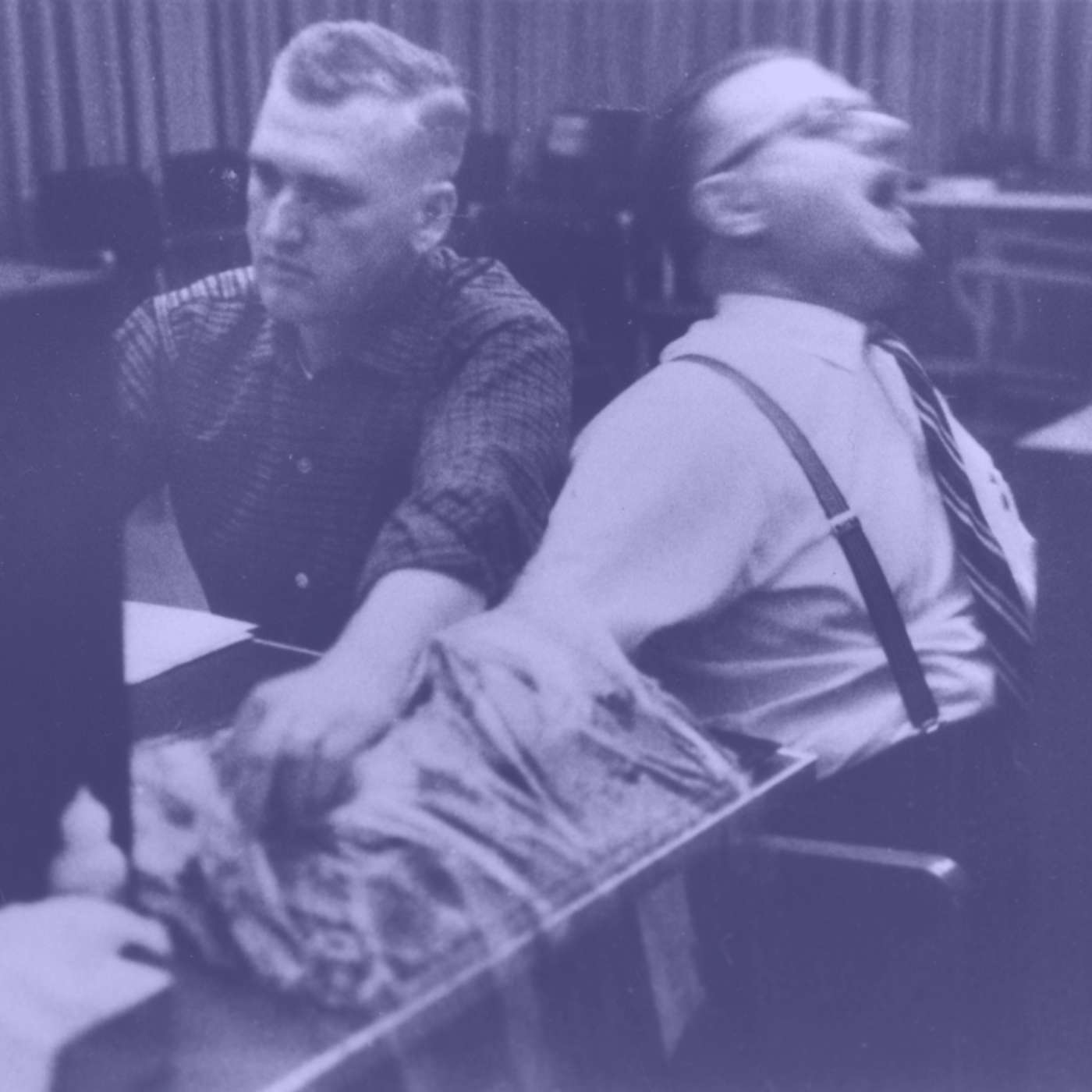
#631 | The Dark Side of Psychology | The Milgram Experiment
from English Learning for Curious Minds | A More Interesting Way To Learn English
26m 43s
Stanley Milgram’s 1961 experiment explored how ordinary people would obey authority when instructed to administer painful electric shocks to a stranger. Volunteers, paid $4.50 regardless of their actions, believed they were part of a memory study involving a learner who made mistakes. In reality, the learner was an actor, and no real shocks were delivered. Despite being deeply distressed, 65% of participants continued to the maximum voltage of 450 volts. Milgram’s findings revealed that obedience is widespread and driven by situational factors like authority, institutional credibility, and gradual escalation. The experiment demonstrated a psychological shift—the "agentic state"—where individuals see themselves as instruments of authority rather than moral agents. While criticized for ethics and whether participants truly believed the shocks were real, follow-up research supports the idea that most participants genuinely believed in the pain they were inflicting. Milgram concluded that harmful obedience is not rare or tied to specific cultures or ideologies, but is a human tendency under certain conditions. His work remains one of the most influential in social psychology, emphasizing the need for awareness of structural influences on behavior and the importance of designing institutions that prevent blind compliance.
Hello, hello, hello, and welcome to English Learning for Curious Mines by Leonardo English.
The show where you can listen to fascinating stories and learn weird and wonderful things
about the world at the same time as improving your English.
I'm Alistair Budge and today it's the start of another three-part mini-series this time
on the dark side of psychology, where we'll look at three of the most famous and uncomfortable
experiments in the history of the science of the mind.
In today's episode, we'll look at the Milgram experiment, which sought to find out what
ordinary people do when an authority figure tells them to do something terrible.
In part two, we'll turn to the work of Harry Harlow, the American psychologist whose disturbing
experiments with baby monkeys changed our understanding of love, and in part three,
we'll travel to the psychiatric hospitals of 1970s America, where eight perfectly sane volunteers
checked themselves in to see what would happen. Like all of our mini-series, parts two and three
will be member-only episodes, so now might be the time to check out our membership.
Membership of Leonardo English gives you access to more than double the number of episodes,
like parts two and three of this mini-series, plus all of our learning materials,
including instant translations in 12 languages, study packs, and much, much more.
So, if you are ready to take the next step on your English learning journey,
the place to go is LeonardoEnglish.com.
Okay then, let's not waste a minute and get right into it.
The year is 1961. It is April and in Jerusalem, a trial has just begun.
The man on the stand is Adolf Eichmann. Eichmann had been one of the central architects
of the Holocaust, the Nazi program to murder every Jewish person in Europe.
In his role as a senior officer of the SS, he had organized the logistics of mass murder.
He dropped the timetables for the trains that carried millions of people to the death camps.
He coordinated the paperwork between police forces and administrative departments across
a dozen occupied countries. He may never have personally killed anyone, but he was very far from
innocent. If the Holocaust was an industrial process, Eichmann was one of its principal engineers.
He had escaped to Argentina after the war and had been living under a false name.
The Israeli Secret Service, Mossad, tracked him down in 1960 and brought him to Israel to stand trial.
The trial was broadcast on television and followed around the world.
For the first time, people saw Adolf Eichmann and many were surprised. Given what he had done,
many people had expected to see a monster, someone who clearly looked evil, threatening and menacing.
Instead, what they saw was a thin, bespeckled, rather ordinary looking man, a man who wouldn't
have looked out of place teaching at a school, knocking on your door to sell you life insurance,
or working in a bookshop. In other words, a perfectly normal looking man.
During the trial, as he sat in a glass box, he kept saying the same thing. He'd just been following
orders. He presented himself not as an idealog or fanatic, but as a functionary, a man
who had followed orders inside a vast bureaucracy. He held no personal animosity towards Jewish people,
he said. He had done what he was told within a system, and that was what the system required.
Now, you might believe him, you might not. The court did not, and he was sentenced to death.
One person watching closely was a German-American political philosopher named Hannah Errant.
She was covering the trial for the New Yorker magazine, and she coined a phrase that has been
debated ever since, the banality of evil. Her argument was that Eichmann was not a monster
in the traditional sense. He was an ordinary bureaucrat who had given up moral responsibility,
and simply done his job. And that, she argued, was in some ways more frightening than the idea
of pure evil. Now, another person watching the Eichmann trial closely was a young social
psychologist at Yale University, named Stanley Milgram. He had been contemplating the idea of
obedience, and specifically the German people's compliance with the Nazi regime.
He had come to believe that under the right conditions, ordinary people anywhere might be capable
of the same thing. There was nothing uniquely German about what had happened.
He wondered, could ordinary Americans be made to hurt an innocent stranger? Simply because
an authority figure told them to? So, he designed an experiment to find out. Milgram recruited
volunteers through newspaper advertisements for what he described as a study of memory and learning.
It was a paid experiment with participants getting $4.50, which is around $50 in today's money.
Importantly, they would be paid regardless. The pay wasn't contingent on whether they did
what they were asked to in the experiment. The advert attracted a broad cross-section of people,
teachers, engineers, postal workers, salesmen, people in their 20s, and their 50s. People of
different educational backgrounds. In other words, it was a decent enough cross-section of society.
When the volunteers arrived at the psychology department at Yale, they were met by a man in a
gray laboratory coach who explained the study. There would be three people in the experiment,
the experimenter, the teacher, and the learner. The experimenter was the leader of the session
and would explain how the study would work. He was the figure of authority.
The two volunteers would be given slips of paper to decide which one was the teacher and which
one was the learner. The thing was, only one of the volunteers was actually a volunteer.
The other one was part of the experiment team and was only pretending to be a volunteer.
The reason for this was to make the volunteer think that they would be randomly assigned
as either the teacher or the learner. But in fact, the real volunteer would always be the teacher
and the fake volunteer would always be the learner. They were told it would be a memory experiment.
The teacher would be required to teach lists of word pairs to the learner. If the learner made a
mistake, the teacher would administer an electric shock. They would start relatively small at 15
volts. But every time the learner made a mistake, the voltage would increase up to a maximum of 450
volts. The learner would be strapped into a chair with electrical wiring so they couldn't escape.
And before the experiment started, the teacher was given a small electric shock at the lowest
level so they could feel what the learner would feel. The shocks the experimenter explained
could be painful, but they would cause no permanent damage.
Now, the setting mattered enormously to Milgram's design. This was Yale University, one of the most
prestigious.
institutions in the United States. It stood in the public mind for seriousness, for expertise,
for trust-worthiness. The man in the grey suit spoke calmly and authoritatively. The equipment
looked professional and expensive. Everything about the physical environment communicated one message.
This is a legitimate scientific enterprise conducted by experts who know exactly what they
are doing. Trust us. Follow our instructions. The shock generator the teacher was shown
looked convincing. It has 30 switches, each labeled with a voltage. 15 volts at the low-end,
up to 450 volts at the higher end. The labels above the switches ranged from
slight shock through to moderate shock, strong shock, very strong shock, intense shock,
and extreme intensity shock to a final cluster of three switches, simply labeled x x x.
The learner was then taken to an adjacent room, and as the teacher watched, strapped into a chair.
Electrodes were attached to his wrist. The door was closed.
Now to remind you, at this point, the teacher believed that they and the learner were both
volunteers in a real experiment about memory, and they had been assigned the roles randomly.
This was, as you heard, not the case. The learner was also an actor, a member of Milrum's team.
And there were no actual electric shocks. The electrodes were props. The shock generator was not
connected to anything. The real experiment was not about memory. It was about the teacher,
seeing how far this person would go. The experiment began. The learner attempted to answer questions.
When he got one wrong, and he was scripted to get many wrong, the teacher was instructed to
administer a shock, increasing the voltage with each error. At 75 volts, the learner grunted.
At 120 volts, he called out that the shocks were becoming painful. At 150 volts, he demanded to be
released from the experiment. At 165 volts, he cried out loudly. At 180 volts, he shouted
that he could no longer stand the pain. At 300 volts, he refused to answer any more questions,
and begged to be let out. At 315 volts, he screamed violently. At 330 volts, there was silence.
Just silence. No responses. No movement. Now, many of the teachers were clearly troubled by this.
They sweated, trembled, and begged the experimenter to let them stop. The experimenter, of course,
was prepared for this. Milgram had instructed them to give specific responses.
If the teacher asked to stop, the experimenter was to tell them calmly. Please continue, or please
go on. If they still refused, the experimenter told them that the experiment requires that you
continue. If they continued to protest, they were told it is absolutely essential that you continue.
And if they refused again, they were told you have no other choice. You must go on.
The experimenter was always calm and collected. He did not raise his voice, or used any kind of
threatening language. Clean, clinical, calm, and unemotional. And as a reminder, the participants,
the teachers, had been clearly told that they could leave at any time. Nobody was stopping them.
They would be paid regardless of what happened. There was no incentive for them to continue,
other than because they were told to by the man in the grey coat. So, what happened? Well,
before conducting the experiment, Milgram had asked his colleagues to predict what they thought
would happen. Most predicted that very few people, perhaps one or two percent, would go all the way
to the maximum voltage. After all, these were random people, upstanding citizens, being asked
essentially to torture an innocent stranger. Someone they believed had also volunteered for the experiment.
Milgram's own estimate was that perhaps three percent would reach the highest voltage.
And those would be, he assumed, individuals with some psychological abnormality.
What actually happened surpassed all their expectations. Every single participant
went at least as far as 300 volts, which, let's remember, was after the learner had screened
in agony and refused to answer. And 65% of the participants administered the full 450 volt
shock, the maximum voltage. Some participants said things like, "I can't do this," paused,
"look back at the man in the grey coat," and then reached for the next switch.
Milgram was shaken. He repeated the experiment multiple times varying the conditions.
He tried it with women as the teachers, similar results. He moved the location from the prestigious
Yale campus to a rundown office building in town to check whether the authority of a famous
university was doing some of the work. The numbers dropped slightly, but not by much.
He tried versions in which the learner was in the same room as the teacher, so the teacher could
see them flinching and crying. The rates fell, but still many people complied. He tried versions
in which the teacher had to physically hold the learner's hand onto a shock plate.
Even then, with the learner visible crying and begging for it to stop, 30% administered the maximum
voltage. Milgram also tried a version in which the experimenter was not in the room at all.
The instructions were given by telephone instead. Compliance dropped significantly.
More people refused, and some of those who appeared to comply secretly administered
lower shocks than the ones they reported. The physical presence of the authority figure,
they turned out, was an important factor. And he tried a version in which the teacher was paired
with two other teachers. Teachers who were presented as fellow volunteers, but were in fact actors
who were instructed to refuse at critical points. And here compliance dropped even further.
It seemed that simply seeing someone else refuse planted the seed in the participants head,
that they too could do the same thing. Now, Milgram published his findings in 1963,
and later in a book, "Abedience to Authority" in 1974. In it, he suggested that this experiment
showed that the capacity for harmful obedience to authority is not a special property of
Germans in the 1930s and 40s. It is not unique to people with unusual psychological profiles
or to people raised in particular ideological systems. It appears to be broadly distributed
across ordinary human beings, regardless of nationality, education, or personal decency.
The people who administered these shocks were ordinary men and women. Many of them
were deeply distressed by what they were doing. And yet, they did it. Why? Well, there are a few
theories about which factors contributed to this. The first is something we've touched on already.
The structure, there was the setting Yale University at first, at least. Then there was the
authority figure. There was the scientific context. There was the graduated escalation that made
each individual step seem small, just 15 more volts, like a frog in boiling water.
And there was the physical and psychological distance from the person being harmed. You were
just pressing a button. You were not being forced to pick up an iron bar and beat someone with it.
together all of this.
This was enough to override what people knew somewhere inside themselves to be wrong.
This is what Hannah Arendt believed she had seen in Eichmann, and it is what Milgram said
he had demonstrated in a laboratory.
People are deeply responsive to context, to authority, to the structures they find themselves
inside, far more so than the simple categories of good and evil would suggest.
Now Milgram was at pains to clarify what his findings did not mean.
He was not saying that all humans are potential Nazis.
He was not saying that individual character is irrelevant.
Some people did refuse.
Some walked out of the experiment before reaching the maximum.
What the results suggested, he said, was that obedience is far more common than we assume.
And the conditions which produce it are neither rare nor exotic.
The implication Milgram drew was a call for structural awareness.
We know what the conditions are, the authority figure, the institutional context, the isolation
from peers who might model descent.
If we know all that, then we can begin to build institutions that counteract them.
We can train people to recognise that shift when they enter it.
We can make refusal easier by making it visible.
Obviously, this is easier said than done, but this experiment did valuable work in highlighting
the conditions in which people can find themselves doing things they would not normally do.
Now of course the experiment has had its fair share of critics.
In the immediate aftermath, it was criticised on an ethical level.
After all, the teachers had been deeply distressed.
But the more important criticism was about what the findings actually meant, and whether
the experiment was valid at all.
The most serious objection is that participants may not have fully believed the shocks were
real.
Some of them, at some level, may have suspected they were in a controlled situation where
harm would not actually be allowed.
If that is true, the compliance figures are less alarming.
They mean only the ordinary people are willing to play along in what they suspect is a performance,
not that they are willing to harm a stranger.
Now to be fair to Milgram, he addressed this head on, and he tried to figure out whether
this was the case.
He surveyed the participants afterwards, and the majority reported that they had believed
the shocks were real.
Some told him that the experience still haunted them.
And other researchers have since examined the original transcripts, and identified clear
signs of real belief among most of the participants.
In other words, they did believe they were inflicting real pain, but they did it anyway.
Now, although the debate continues, Milgram's experiment is one of the most cited in the
history of social psychology.
It has been replicated many times since, in modified and more ethically cautious forms.
And the core finding has proved remarkably robust.
In 2009, a scientist named Jerry Berger conducted a partial replication at Santa Clara University,
stopping the experiment at 150 volts, rather than allowing it to continue to the maximum.
He found that around 70% of participants were still willing to continue past that point,
which is a figure consistent with Milgram's original results.
Now, the uncomfortable thing for anyone listening to this is that you're probably thinking
some variant of "I would never do that", but what the experiment suggests is that you're
probably more likely to do it than you think.
Milgram had a term for this.
He called it the "agentic state".
It is the psychological shift from seeing yourself as a moral agent, someone who makes their
own decisions, to seeing yourself as an instrument of someone else's will.
It's what soldiers describe when they talk about following orders.
It's what corporate employees describe when they implement policies they find troubling,
what did not choose and cannot individually change.
In a microwave, it's what we all experience when we are asked to do something we would
not do on our own initiative, but we go through it because the organisation we belong to
requires it.
And Milgram is not judging us for it, or providing an answer for what to do about it.
What he is saying, and this experiment suggests is that the division between good and evil
is not as clear-cut as we might like it to think.
Okay, then that is it for today's episode, the first part of our three-part mini-series
on the Dark Side of Psychology.
Next up, we'll be moving into the disturbing world of Harry Harlow's Monkey Experiments,
and a question of what love actually is, was put to the test in a primate laboratory
in Wisconsin.
And in part three, we'll be heading to the psychiatric hospitals of 1970s America for
the Rosemallow experiment, perhaps the most controversial study of all.
As with all of our mini-series, those will be member-only episodes, so now is the time
to briefly remind you that if you'd like to listen to those, as well as our hundreds
of other member-only episodes, now might be the time to become a member of Leonardo
English.
You can find out more about that over at LeonardoEnglish.com.
You've been listening to English Learning for Curious Mines by Leonardo English.
I'm Alistair Budge, you stay safe, and I'll catch you in the next episode.
Podcast Summary
Key Points:
Stanley Milgram conducted a groundbreaking experiment in 1961 to test how ordinary people would obey authority figures when asked to inflict painful shocks on a stranger.
Participants were led to believe they were part of a memory study and were instructed to increase shock voltage after each mistake by a "learner," who was an actor and not actually harmed.
Despite initial expectations, 65% of participants administered the full 450-volt shock, showing that obedience to authority is widespread and can override personal moral concerns.
The experiment revealed that situational factors—such as authority, institutional legitimacy, and gradual escalation—can induce compliance even among people who are distressed.
Milgram introduced the concept of the "agentic state," where individuals feel like instruments of authority rather than moral agents, blurring the line between good and evil.
Critics questioned whether participants truly believed the shocks were real, but follow-up studies suggest most did, and the findings remain robust and widely cited.
The experiment highlights how psychological and structural contexts can override personal conscience, raising awareness about institutional risks.
The results suggest that obedience to authority is not unique to historical atrocities and is a human tendency under specific conditions.
Summary:
Stanley Milgram’s 1961 experiment explored how ordinary people would obey authority when instructed to administer painful electric shocks to a stranger. 50 regardless of their actions, believed they were part of a memory study involving a learner who made mistakes. In reality, the learner was an actor, and no real shocks were delivered.
Despite being deeply distressed, 65% of participants continued to the maximum voltage of 450 volts. Milgram’s findings revealed that obedience is widespread and driven by situational factors like authority, institutional credibility, and gradual escalation. The experiment demonstrated a psychological shift—the "agentic state"—where individuals see themselves as instruments of authority rather than moral agents.
While criticized for ethics and whether participants truly believed the shocks were real, follow-up research supports the idea that most participants genuinely believed in the pain they were inflicting. Milgram concluded that harmful obedience is not rare or tied to specific cultures or ideologies, but is a human tendency under certain conditions. His work remains one of the most influential in social psychology, emphasizing the need for awareness of structural influences on behavior and the importance of designing institutions that prevent blind compliance.
FAQs
The Milgram experiment investigated how ordinary people would obey authority figures when instructed to administer painful electric shocks to a stranger.
About 65% of participants administered the full 450-volt shock, despite the learner expressing extreme pain and distress.
No, the shocks were simulated. The equipment was not connected to any power source, and the shocks were not physically painful or damaging.
Participants were deeply influenced by authority, the experimental setting, and the gradual escalation of voltage, which made each step seem small and manageable.
The agentic state is a psychological shift where a person feels like an instrument of authority rather than a moral agent making their own decisions.
Yes, despite ethical concerns and debates, the experiment's core findings have been replicated and remain a foundational study in social psychology.
Chat with AI
Loading...
Pro features
Go deeper with this episode
Unlock creator-grade tools that turn any transcript into show notes and subtitle files.
 PodcastTranscript AI