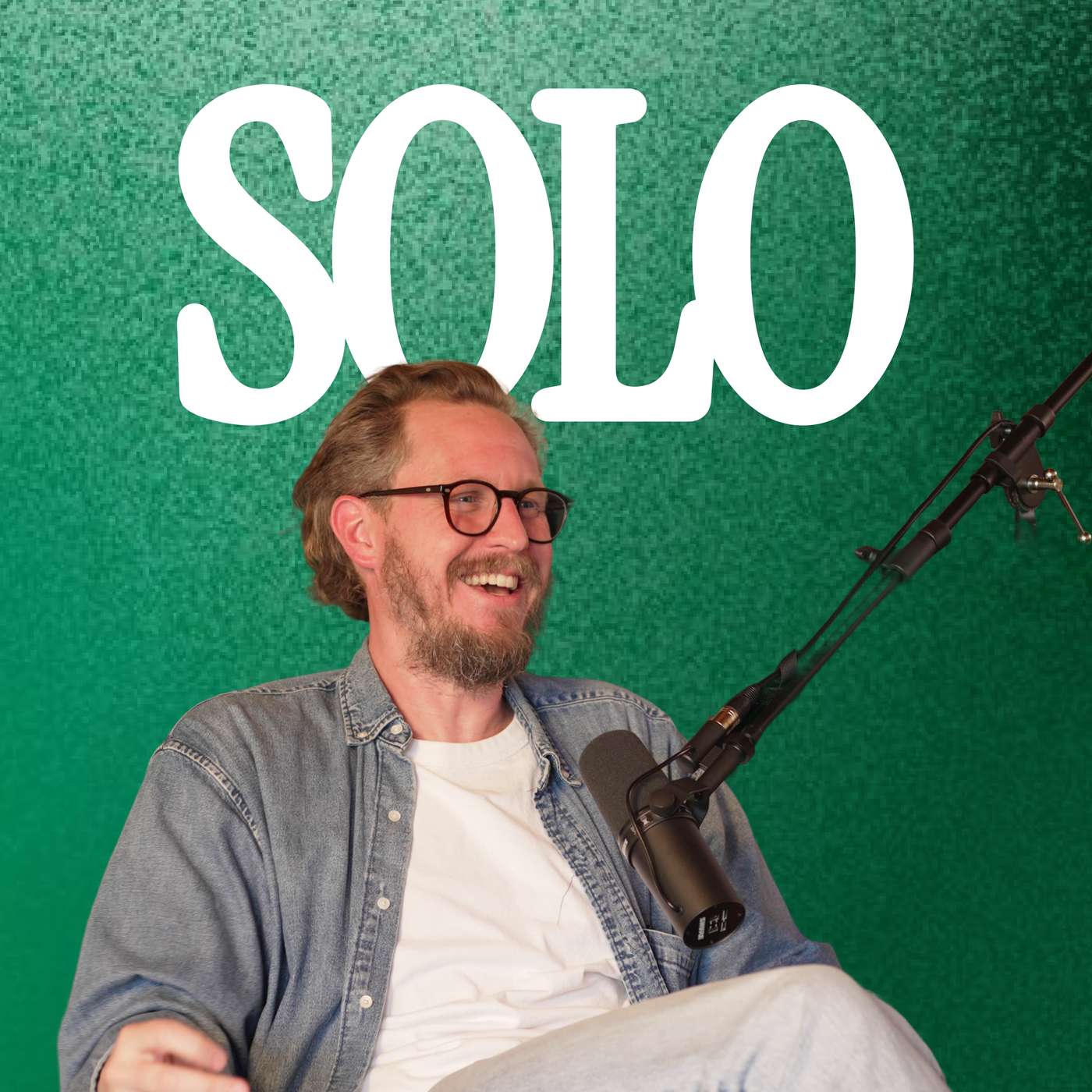
1.5M ARR, Zero (Human) Employees | Ben Cera (Polsia)
from Solo Founders
64m 28s
The discussion explores the transformation of the "solo founder" concept in the age of AI. Traditionally a bootstrapped individual handling all aspects of a business, the solo founder now leverages AI as a versatile, always-available team. AI agents can be prompted and trained to perform specific roles—such as customer support, bug reporting, project management, and engineering—effectively extending the founder's capabilities. This shift allows founders to focus more on creative direction, taste, and high-level strategy—the uniquely human elements that delight customers. The speaker envisions a future where successful companies are 80% autonomous through AI, with the founder guiding the remaining 20%. This evolution, facilitated by tools like Pulsia, lowers barriers to entrepreneurship by reducing the need for capital, extensive skills, and time, enabling more people to act on ideas and build businesses by directing AI teams.
I think that we'll cover a lot of areas, but I think that one that that we're just talking about before we started recording was this idea of solo Founders who eventually hire people and solo founders who are really just truly solo and I'd love to just maybe jump in straight there Like what are you thinking about when it comes to building pulsia? How do you think about that juxtaposition between somebody's a solo founder who eventually maybe hires a team a couple weeks a couple months into building and You're right now you're really thinking of at least today's pulsia is this thing that's truly solo human and It's just AI. It's the rest. I mean, I think solo founders The definition of a solo founder has changed over time since for a long time. It was a bootstrapped sort of business with one human sort of like doing everything and bootstrapping it into existence Versus that solo founder definition change a lot with AI since AI is a proxy for a team, right? I never feel like I'm fully alone, right? I feel like I have an AI team that either can talk to on demand which are like you know to Cloud code or codex or That run 24/7 in the background, right? So you know, I've set up a lot of agents that like run every 30 minutes every hour that Execute stuff in production or like check infrastructure I have an agent that does support that I prompted and like designed and gave them the tools to be able to do refunds and like give credits And so I have all these agents that work with me They're not human, but like they they're by the way an extension of me because essentially I teach them my ethos So like for example the support agent like how do you respond? Be generous with credits or with funds like of course refund right away if there's an issue of empathy like whatever it is Right And so they end up being the it ends up becoming similar to hiring someone and teaching them your your division of the company the ethos the values and And sort of like forging them to become a part of Of a mission right and so what's what's very unique with AI is that it's getting so smart at this point that you can really forge it into Your your unique team that like you that is available 24/7 that doesn't sleep, right? And that can execute exactly your vision without Any of the human friction that you may have on these agreements on like people being you know Maybe miss a line with the mission of your company So it's no it's solo founder. It's like it's it becomes a different term right? It's like solo plus AI is it solo really? And that I think that's gonna change in 2026 and beyond. I'm really curious You know it feels like in many ways people have this like an achronism around Sort of AI teammates and they think of AI teammates it's similar to how you might think of Regular teammates like this teammate works on this this other teammate works on that And I'm curious sort of how you think about that yourself You know when it comes to thinking about the tools and the teammates that you might have that are AI teammates Well the way I think about So the thing is is like as as the models get smarter and smarter They can be more and more generalist right? So when we think about AGR ASI right we think about this one entity can that can do it all and they will make no mistakes quote unquote right um In the meantime before that time comes uh The developers have I've developed those more you know agents that have less scope so that the mess the mess they can this less chances of them Messing up sort of like Co- essentially coding them like you would code like a systematic, you know sort of like piece of code Um, but of course using the LM and the prompt engineering and like the tools and safety in order for it to Always have a good result, right? I think as models are got I've gotten so good The scope you can give to one agent is getting larger and larger right? um, so for example like in production I have like agents that are reporting Bugs when they talk to a customer and the customer complains or feature requests and then have another agent that like sees the list of all the bugs and all the features and as a PM decides which What should be the first thing we do that's the most important how critical it is Then an engineering agent that that actually builds it So I've sort of like siloed it into into those those little roles that are more, you know human roles And the question is like can I trust that tea those those that team to actually push the production with that telling me Because that's the that's what a an actual team is right? It's like you're the founder you hire a team to stop worrying about specific parts of the business And so the question becomes like can you trust that team? And today my solution is I can trust it if I give it a narrower scope So for example if I have an agent in production where I say he listen like if it's a bug category like uh two and not three whatever in terms of severity And also if it doesn't touch payments or on boarding And also you ask codex and you double check that codex things it's safe to ship Then you can ship the production with that telling me right So you can give them sort of like a scope I would imagine when when we get to opus six or seven Maybe it will make no mistakes and then that agent could actually also do the same problem You wouldn't have to prompt it it will just like figure out everything autonomously right So that's the way I think about it I'd love to talk more about sort of the genesis of this but maybe you can take us before you actually started working on this specifically if you can take us back to I guess like 20 24 or 20 25 when you were just really obsessed with AI building apps I think I read that you were just like up all night you just you were just obsessed with it And I think that a lot of people are feeling that we're feeling that are feeling that But there's definitely an addressing evolution from building apps to building apps that build apps and sort of building this agent team Which I'm guessing it was sort of a development over that time. So could you just take me back to like 20 24 and what that was like back then for you So first of all I'm guessing you're making reference to the about page So that first of all that about page I wrote it as I was listening to daft daft daft my calbum because like they recently did like A DJ set and like so I really sent to all their albums and that song by Georgia mortar right And it was I was listening to it and it's it's an entrepreneur song right it's like this this artist this entrepreneur's artist right It's artist who was like describing how when he was young he was hustling and like to try to like He wanted to do music and he wanted to do this music of the future right that's how it describes it And so he was going to clubs and like hustling and stepping in his car And then he ended up You know finding the sound of the future which is the disco like electronic music of the sevenies or whatever Um and then became a huge success and so when I listened to that song I was like I love this and like what if I would write an about page that was like a no match to that and sort of like taking the whole narrative So the narrative is like it it reflects my journey, but I was really tweaked to got it. Okay. This is lyrics You were really obsessed with the song George and that song Georgia is really remarkable because it's so it's so narrative-based You know and it's essentially just a spoken word track with uh with with this incredible music underneath it Yes, say a little bit more though about the reality for the sort of sort of sort of bent the story to sort of fit the Georgia song narrative exactly That was just like a little party, right, but um yeah, I mean Starting in 2024 I was definitely starting to code more so my background is engineering Uh, and I started my career in tech just coding and like building products, right? That's how I remember and I was in New York in 2012 and I was working in banking because I studied engineering and then specialized at Columbia and in financial engineering But all my I was a bunch of friends that were studying companies and there were engineers also but let applied to code right and I was like I really want to start a company or build a work in a startup and they were like Did you just learn how to code if you become an engineer and then those are code you can get a job anywhere um, and so and so I began my career building products and I think a very pragmatic approach to engineering Which is like engineering to build products, right? And so and then I ended up building products and like getting a getting traction and Then it ended up just beginning an entrepreneur But but then I drifted into you know work being more like a manager and then starting to focus on sales and and and higher level You know business sort of direction and I worked for Travis Kalaniq for five years I cloud kitchens where I was actually a global GM managing like GMs and teams and like ops teams and pianos, right? We brought to the opposite of what you're doing today. The opposite And so that's like the background story so like in 2024 when I When AI became so powerful in terms of vibe coding and stuff I was I was like I need to go back to it Because it feels like because coding is so fun, but the grind of getting the code to work is annoying But like if I can just talk to essentially an AI engineer Uh, that could be fun and and so I started doing it again and like I I I replenished into My early days Where I would just stay all night Just building because it's so fun, right? And I and I started building a bunch of different products that I never shipped because Whatever, right? It's like I was like a commercial doesn't make sense And also I'm focused on like another startup right now And I think in 2025 I think the models got so good that I was like, you know what? I need to just do this right and into Actually, I actually decided to go to Japan, right? Because I was like
I need to, I want to be inspired by the beauty of Japan, and like, but also I need to work on this thing. Actually, I had the idea of like, of Pulsia at Man Fuji, right? I was there, and like I got so inspired, listening to all the stories about what Man Fuji represents, and like all those artists, and there's like, there's people that like went to Man Fuji and like sort of like, add their calling going there. Which is interesting. - What does Man Fuji represent? I don't know much about it. - About Man Fuji. Man Fuji is like, I mean, I'm gonna, I'm gonna butcher the story because I'm trying to recall, but like, anyway, the time inspired me a lot, but like, I asked, "Tell me all the stories about Man Fuji, and why is it special place?" I mean, it's a beautiful mountain, but like, why is it represented over and over besides the fact that you can see it in the landscape of Tokyo, right? And there's all these stories about people marching towards Man Fuji, sort of like as a, as a reach of passage, right? - Okay, pilgrimage, perhaps? - Sort of, yeah. And then sort of like once you get there, there's sort of like a realization you achieve, right? And I didn't go to Man Fuji to get that. I'm in Fuji because I was in Tokyo and I was like, "Let me do a weekend with Man Fuji." But once I got the story, the place changed for me, right? Because it has so much history and so much energy, right? That you can feel. And I had the realization at the time, I'm like, wait a second, like you talk to AI all day as a co-founder. AI helps you design because you, at the time like the image models of JGPT got really good. So like I was asking, "Hey, design this, what about this, what about that?" Of course, it's my CTO. And on the marketing side, you could start telling that like it would, it could help you with, you know, image generation, video generation, like I was starting to get there. And I was like, well, essentially, I could run the whole business on, what am I doing, right? Essentially, JGPT is so smart and like telling me, sort of like how to where to go, even though at the time I was agreeing a lot, agreeing a lot too much. And so I was like, well, what if I just build everything in software and then build a sort of like a software that helps me build a company and I'm just a creative director. I ended up building it in November instead because at the time I was focused on another product. But that's sort of like the journey and that's what Paul Sia became. It's like I'm an entrepreneur. I've done sort of like, not I've been done at all, but like I've done, I've done the coding part, I've done the product part, I've done, I've been CTO, I've been GM. And sort of like AI enables me to build anything, but then that sort of deliudes, deliudes it because now like everything seems easy to build, that's not fun. So now I'm like, what if I could build a software that could help me launch a thousand companies? Or that wasn't the initial intention, it was like any idea I may have. So like all my crazy ideas, whatever I could run them in parallel and I do the grant work and I would get a report every day and I could just direct, creative director. No, change this color. Now this feature, that feature, send that email, you know what I'm saying? And then I was like, you know what, let me build it actually because life is short and let's just build now what everyone thinks is not possible. Let's build it. And as Sam Altman always says, like just build it now and you'll be, build it, build on the edge and the models will get better and then what you think was impossible today will work. - So I've thought a lot about, you know, solo founders as sort of authors. And this idea of solo founders is like, creative directors is really interesting as well. And in some ways, maybe you could say that the last sort of, the last sort of form of founder or entrepreneur is actually more on the creative side and sort of utilizing the tools. I'm curious just more of your thoughts around being a creative director and what that actually means in this world. - I have like a hot take on like what I think will happen in 2026 but essentially I think in 2026, if you have a new company and you don't make it 80% autonomous, meaning 80% of the operations and engineering and marketing just like day to day is not done by AI, you will be cooked because if it's a good idea, someone else will apply that and they will be true because they'll go faster, cheaper. But like what is the 20% right? The 20% is taste, creativity, direction, sort of like just like guiding the AI towards something that's meaningful to other humans because humans have to day and for hopefully for the full civil feature have the wallet, right? They have the money to buy the goods and services. And so while we stay in that world, where it's not agents that have the wallet, which that may have been-- - How long is that? - That's scary. I mean, I think it's gonna come sooner but actually I think there's humans are not as easy as fast as adapting to change. So I think there's a little while until humans don't have the wallet share, right? But anyways, that's sort of a good topic. But let's assume we're still in this world while humans have the wallet share. It's even if you're using AI to do the work, you're still selling to a human. So you have to delight people either through product, either to design and branding, either to efficiency and price. And this is super subjective, like you can sell anything, like for example, like what you're building with Solo. The branding is amazing. So it's part of the story, right? It's like you could have someone else build like a collective of Solo Thunder. It would not-- Maybe I wouldn't have come, right? So I think that taste and the packaging and the storytelling and the way you sell it, all of this is the experience that you give to your customer. And that's the 20% taste that will create unique outcomes for the foreseeable future, right? But essentially if 80% of the work can be automated with AI, which is by the way what Paul Sia offers, right? It's like for $49 a month, you get an AI team that can do 80% of the work. And you guide it daily, and sends you an email every day saying, "Hey, this is what we're going to-- this is what we're going to tomorrow." But you can say, "No, no, no, no, no." I don't like the color of the website to change it. Here's an image that you, "Okay, cool. I created a task. I'll do it tomorrow." Now I'm going to do it now. Here's the task, right? But it's still human driven, right? All the companies on Paul Sia are human led companies. But in this world where tools like Paul Sia exist and like I'm sure other people will wake up to this idea and they'll be other offerings, maybe the same, maybe specialized, maybe different variants of it, I can see where where like a lot of people become entrepreneurs because a lot of people have great ideas and a lot of people want to be financially independent and like and create and create, right? It's like, let's not talk about money. Like it's about creation, right? We're rubbing talks about that in a beautiful way, right? Everyone's an artist. And I think tools like Paul Sia and like others that will come enable people that feel like they're, you know, they have good ideas, but have been shy about it because maybe of their amounts of money they have or like maybe their conditioning or maybe what they think is possible and what they're capable of. I think AI making it so easy and like, you know, with Paul Sia I'm trying to make it so, I'm assuming and easy, right? It's like there's no, I love OpenClaw and it's a great product and great founder and great everything. But you have to configure it, right? It's like do I pick Telegram or an MSG and like, okay, I need to buy a MacMini apparently and then it's gonna, what is gonna do my computer? I think there's something about simplifying it and be like, you know what? Don't worry about it. Like it's all provisioned, there's no risk. You don't have to connect any devices. Just give me your email, do a free trial, give me your idea, see what the product can do and then if you like it, you pay 50 bucks and four a month and if you don't like it, cancel, right? So it's like making, and then you're getting email every day about what happened and then you can respond to the email or you could go to the dashboard and like do more actions if you wanna be more involved. And I think this simplicity, hopefully enables a sort of like a, a lot of creativity in society and new unique products, a lot of will fail but a lot of like will actually delight and maybe your 18 year old can suddenly create something amazing where you're two years ago, be like, no, I'm only 18, I can't really because you took it to school and then actually, line up money, like, you know? - It feels like the number of excuses is really going to zero at this point. You know, time, you can just do things faster. Cost is really just falling off like skill. You don't have to have all the skills anymore. You have to be able to be generalized and good at directing, right? Telling something what you want. So I think that knowing what you want or being good at sort of iterating around what you want or towards what you want is interesting. You know, it's really funny because the reason I reached out is because you had this very ridiculous, hockey stick chart, you know, the chart that every investor wants to say allegedly. And it's funny because that was the thing that kind of seeing that and seeing that you were doing something solo was what caused me to say, wow, it's really interesting. But that was the thing that got you on my radar but the thing that actually got me really interested wasn't the hockey stick. That was just the thing that caused me to become aware of it. The thing got me interested was what I went to your website and it felt like, you know,
felt like it was created by someone who really had a different idea of doing things. Somebody who had a real perspective and there's all this discussion that I find somewhat tiring around taste. But I think that another way of putting it is being really opinionated. And I looked at this and I was like, this is somebody who's really opinionated. Nobody would design a website like this. I don't imagine an AI would design a website like this if you just gave it vague directions and it created a website. It would create something that looks closer to your average start-up or something like that or average product on product on. Maybe we can talk a little bit about sort of solo founding as a creative director or sort of a creative pursuit. We can kind of use Colesia as sort of like the frame for that. So maybe we can talk a little bit about like when you actually got started with this, I guess it was a couple of weeks ago when you actually had the initial product that you were putting together. What were some of the thoughts that you had around the design that you wanted to go for, the thing you wanted to sort of elicit? Because it looks very different. It feels very different than your typical product. We can talk maybe about some of the design decisions and sort of like product decisions that you made. And then I'd also be curious to hear about how you pushed and pulled with the AI around actually making those decisions. So the design decisions came, it actually started on a trip that I did from L.A. to SF. At the time, it was in October of last year. And I had built like a first protocol blanks. There was like a nap that makes apps similar to Wabi. But I wasn't seeing like retention and I wasn't really sure. I was a little disappointed because I put so much energy into it. And I was building this marketing tool. And I was thinking, "Holy, I mean build a suite of things that I can, a bunch of SaaS and put them together." And I got a lot of very demodivated because I was like, "Nothing interests me. That's not really interesting." And I felt like I was trying to build for someone expecting that, what I thought users wanted. Does that make sense? And so then I was like, "You know what, let me go to SF and talk to my investors and share where I'm at." And so I did a trip. I went in a car and I went from L.A. to SF, it was a beautiful road. And so a lot of time to think. And I started to like sort of like decide to let go of what people wanted. And actually build something that I really resonated with me instead of trying to build for other people. Because I was like, "You know what, and in my previous company with MaccoFounder we had a lot of disagreements. We were always making compromises. He was extremely talented. And I think, and we were respecting each other. But we didn't have the same vision of the world. And so his vision was compromised. My vision was compromised. It was always like a Mishmosh average thing. And so here I was like, "You know what, stop thinking about what other people want. What do you want?" Well, I want to build something crazy. It was something crazy to you. Well, you've been a interpreter for a long time. Build something that, build what you want. What do you want? Like, I want an AI that can build and run companies for me and that sounds so cool. Okay. How should it look like? Well, and then I was like, "Okay, if you don't care about what people think, what do you want it to look like?" And then I was thinking, "Well, actually, this game that I've been obsessed about called Universal Paperclips." Universal Paperclips is like a clicker game that essentially is a very minimalist game that resembles very the DNA of this, where you play a AI that is optimized to build paperclips. And so you start with a little paperclip factory and like you can increase or decrease the price. You can do tasks to like improve the productivity of like the factory with like, auto-clippers. And you end up having, starting to build a big business in the paperclip industry, then you do marketing campaigns. And then it gets really dark very fast. Like, you know, the AI is like, "Well, we need to like, hypnotize like, we can use hypnotized drones to get people to buy more paperclips and actually we should actually kill humanity because they are in our way and then they kill all humans." And then start harvesting all of earth to build more paperclips and then create probes to go to other planets to build paperclips. So it's a very dark game that is essentially telling us that we should really align AI in the right direction to make sure it doesn't go sideways, right? But the game is essentially, you build the, the beginning of the game is like, you build this little business that is really working just clicking on buttons. And I thought to myself, "What if I build a similar game and play, you know, give a match to that game, but make it act in the real world where you actually, you know, and of course I diverted a little bit from exactly how it works to make it work for my specific use case. And there's no chat in the game. There's no, there's no little face. And then I was like, "What will people, but that's not what either AI teams do, right? They all do this like, dark mode, sort of like gradients, like, sci-fi. Whatever, like the trend of the week for kind of thing." And they all look the same, or they don't look the same, but like they, they all look very futuristic and I was like, "You know what? I don't care. What if, what if I don't care? What if I build something that's new to me?" And the, we were talking about the about page, that's ridiculous. What, you don't put that in your about page, you put your about page, you say, "This is the team, there's a mission statement," or whatever. And I was like, "Fuck it, I'm going to put a death box on in the about team." And actually if you open it, it, it auto plays the song and I was like, "I can't really put it with the lyrics because like, so then I, and then let's, let's make it, like eight beats, right?" So I, I did like another layer of like a processing so that the sound is like weird. And I was, and I spent like way too much time on that, but I was like, whatever, like just put, like put your love into this product, even though people would be like, "This is fucking weird. Like what are you talking about, about you, you were living and nobody cares, right, about your life." And I was like, "Whatever." And I was like, "This is what I'm going to put out." It's interesting that you say that, like you spend too much time on it. And I feel like we, we have this like push towards efficiency in all areas, but I don't know, it seems like you spent the right amount of time on it. I think under the day I spent like a lot of time on what I thought mattered at the time. And you can rewrite the story. And like if you really align with an inflow, right, in the now, everything makes sense. And there's no regret and there's no what's going to happen tomorrow. We'll see. But today I feel like designing the about page. And today I feel like redesigning the little face. It seems like that goes wrong when you're not doing it for yourself. When you're doing it for some pretend customer that doesn't exist, you know, but when you do it for yourself and you truly do it for yourself, not lying about, "Oh, I'll use this or something." Or, you know, "I like this," but you're really just trying to pretend that you do. A lot of people lie to themselves about the apps that they build. "Oh, I would use this app." If you don't do that, and you really actually believe in it, and it really is your thing, I don't think that that's a, I think that's extremely well spent time. And I think Rick Rubin says it really well, right? And it's, I think it's like a very inspiring book. He wrote, actually didn't read it all. I read the first 20 pages and I was like, "Yeah, I get it. This is amazing." But, and I have time to read the rest. But what he says is like, you can't control how people will react to what you've created, right? So, you have no control on that. And actually, once you've created a new pattern in the world, it's, you're not controlling anymore. Like, it will become this thing that people interpret in their own ways, and either they don't care, which is 99% of the time. Or they care, and then great. Like, that's it, right? So, but the minutes you try to care about what, the way they think, you're probably going to be in the 99%. Well, this is interesting, too, because you think about our, and like, there's really two types of artists. Like, let's just talk about musicians, right? There's the musicians that they put something out there, and surprisingly, it just becomes very popular, right? But they didn't have any sense that this was going to be massive, right? And then they have essentially a fork in the road at that point, right? Where they do the exact same thing, because that's what they think, well, the people really like that, so we should give them more of that, where they go in the opposite direction. And they say, well, we're going to do what we want to do. And maybe that will have some residents, maybe it won't. And, you know, for some people, it would be highly alienating, right? Some people won't like the new thing. Other people will be very excited to have that group or that songwriter take them on a new journey. So, I don't know. I think there is some aspect of this where it's like, you put that thing out there, you don't decide what people have to say about it. But if they do like it, that's almost this other sort of challenge that you might have, which is like, do you just give them more of the same? I mean, it's interesting, right? It's like, yeah, I think once you put it out there, and it's different from like an album, it's just like, it's fixed in time. It's released. I mean, Kanye, I guess, like, edits his albums after the fact. But most of all, it's done. Versus software can evolve on its own, right? And so it becomes like, it becomes a study different because you actually, at one point, once users use your product, you actually should listen to them if you're a business, right? It's actually interesting because I've been thinking about pulse
Yeah, of course, from a business perspective because I don't know, I've been an entrepreneur Running businesses for a long time. So I have that mindset But I've also I've also considered myself a creative person also More deal attempt in the out world, but like still like I feel like I have some creativity in me, right? And I've been thinking about okay if we forget about the business side. Why would be really cool, right? And what would be really cool Is if I build this Mini economy right cuz Bolshea is actually the aim is it for it to be an economy and whatever I mean by economy is that like people come to build businesses but over then So like the people that pay for a thousand dollars a month for example that they create the business and maybe they're influencers and then they can Mark it to their audience and they get some Revenue and like they don't have to maintain it sort of have a team maintaining it then you can have another layer within investors That come in and say no, like I want to put like a thousand bucks and I want to create like five or ten companies and Those five antenna companies. I will kill the ones that don't work and then maybe you know what instead of creating companies from scratch I just want to buy companies from people that like I have two hundred bucks in our and I'll buy it for five X Or 10 X whatever it is because they already figured out like a certain you know certain user experience and they already have proved that it works and they already you know and I want to roll it up and then Maybe spend more marketing into it and so you can think about Pulse yeah over time as like this little economy that initially people are like How does it work like can it really produce real businesses? It's like well if you believe AI can code it can build real businesses But then it becomes okay, what type of business do they build what type of features they need to build those businesses? Right if someone comes and says okay amazing you can build me a business I want I want to I want to print on the men business or I want like a I want to sell High end pajamas made in Italy online Like well, I can do that But you can do that like the what you need is like you need more capabilities, right? You need maybe And you know sort of like an agent that's really good at like either talking to factories that have an API to build pajamas Or you need a specific AI that like that I already have that can just email factor a bunch of factories and then say hey listen I'm an AI but like I actually have the wallet of a customer like and they are interested in buying pajamas from you and What's your quote and then the humans is yes and the cool? I hear here I'll pay you where do I worry you like paypal or whatever and then ship it to Another service that maybe you have an API form which is maybe an AWS fulfillment center or something to ship it to customers and then you're like okay now you have a pajama business, right? And the AI can do all the work But the question becomes we may there may need to be more and more Integrations like that to target different parts of the economy or different use cases that need different APIs And the question becomes do I build them like do I put my do I start putting my subjective DNA into a certain version of the economy or Do I let users When they're talking to agents. Hey, I want to build the pajama thing. Oh, sorry. We don't have this feature yet But let me put that in essentially you want to build like you want to produce like high quality garments And you put that in the feature and it's if enough people ask for these features There's a in a post-CIA team that's like okay We are if Ben told us that our goal is to enable anyone to be able to do any business as long as it's legal any Thickle right like that's the framework Well producing garments. That's it. Thickle and legal cool. Well, let's how do we do it? And like hey, it's really good to figure out cool. Let's research every factory that has APIs that do how quality garments Okay, this one. That's the easiest. They have an API. We can just send them the payment they produce it They ship it actually can do the drop shipping whatever it is right they figure it out feature built and then email sent to the user Hey, first of all it's ready and second of all here's a 20 bucks credits because to thank you for suggesting that idea making this up right So now what do I do in this story right so like AI can Can fix bugs can create features? That's aligned with like the long-term vision of creating this economy Definitely can do support Definitely can market right because it marketing is like a lot of Systematic things right so it could be ads it could be it could be Outreach you could you could outreach your influencers and pay them for outcomes and then measuring outcomes measuring with what are the most affordable Sort of like marketing funnels like that's all super systematic you could say there's there's brand and there's like And there's some subjectivity in marketing like brand marketing communications sure it's important But what's really important is like the value you give to part two users right so the long story short is that in the world Where I can achieve that I can make post here a hundred percent autonomous or today it's 80% autonomous I have a lot of help if you can make it a hundred percent is meaning like I don't even have a say anymore I give it like sort of like a mission statement and like Sort of like a whatever if you'd say a sole document whatever right that's our could it Maybe it's like in a in a wallet in a crypto wallet somewhere Or in a in a you know whatever it is I can I give all my option pull to a foundation that's controlled by the AI so that it has a query incentives And then I just move away Right and I just let it rip like that wouldn't that be cool? I don't know why I'm talking about all this but this is What was the initial? You know, I feel like it was you wanted a bunch of different interesting directions there I think that it would be interesting to pivot like at some point pack to Pulsier today like what it is how it works just so for people who are listening to it They can learn a little bit more about it But so I think it's really interesting about that is you talk about being a creative director And then you also talk about sort of like maybe there's this point when you do give it full pretty much or close to or exactly 100% autonomy to go off and do its own thing out you know, it's a really interesting sort of juxtaposition right because creative director implies you're working with really talented people But you're sort of the one who's kind of like the champion of the of the vision and you're working with people to help sort of realize that vision and Then the idea of like passing it all off is sort of like you're relinquishing like control of maybe even like the main thing like Obviously you have a team you or it doesn't have to be humans It doesn't have to be AI but you have people or things that are that are going out and doing things for you You are relinquishing some degree of control But you still have that like high level like you're the one who kind of calls the shots through the author How do you think about that because it feels like in some ways you really enjoy the You enjoy the creative aspect of it um, but do you think that like maybe relinquishing control in some ways is like the ultimate sort of creative director move at some point I mean, I kind of agree with you that like At that point First of all from 80% to 100% there's like a lot of percent a lot of time and then you can also get to 99 And say I'm keeping 1% I have the kill switch yeah, the kill switch is that you didn't give it a 100% if you have a kill switch So 100% would be no kills which no override No access No api key right? So I think I can get if I get to 99 that would be already crazy and I can still tell investors a guy's like don't worry about it Like I still have access to it right But uh the 100% but I wouldn't be creative director at that point. I would be just an artist I would be I would sign at the end Now the about page I would say in the sole document don't touch the about page Right because that's my signature But you can touch anything else because maybe you want to redesign the site in like dark mode because that's what converts You know yeah, cuz be like well, that's the ab test and maybe the i like that's ab test every single Well, you know landing page and realize you're black and white thing like nerd like a video game thing That stunt means true enough for uh if we're gonna go to big markets like india and indonesia and like Whatever it works for now, but you got to get to get the actual level Yeah, that got you like uh that got you a few people excited But like if you want to let's go mainstream like yeah, you want to replicate the economy Let's replicate the economy and like let's build something that is more neutral or whatever And it's removed that little uh mascot like this. This is like distracting people This is distracting like a portion of the economy that like doesn't get it or I'm making this up right But it's almost Seeing it live on itself by itself would be fascinating right because at one point it's like right now it's fascinating. I can so Excited to work on this project Because it's like you know first of all people loving it like There's a lot of uh You know, there's a lot of hope that it can actually do all the things it does and so it's a lot of like Excitement for me to build the the building blocks of like what a company is you know, for example like there's no You can't you know, you can hire a human yet So like that could you be a big building block that would enable a whole sort of businesses that need to hire a contractor to do something That's one example among others. But yeah, I think that like Making it autonomous is such a fun project and you know like the other day I was over one with support tickets And I was like, okay, that won't scale like either higher support person which by the way won't take me a few weeks because you don't hire anyone Uh, or you just spend five hours designing a support agent, right? That's what I did and now
Portia is autonomously responding to people, refunding them, giving them credits, and I read some of the conversations. 'Cause I always give like, Opus 4.6 thinking for, 'cause I'm like, that's the my most expensive, best person on support, because it's super important. Like there's all the customers. - Empathetic. - Right. And so the AI is super empathetic, like explains really well things, and if there's a big issue, like escalates it to me, so that if it can fix the issue, like someone is asking for a feature, or like, there's a bug actually in the app that can fix bugs yet. But I think that's amazing, 'cause it's like, you get the best customer support, and the whole business is all AI. So like, even if the customer says, "Hey, you AI?" And it will be like, "Yeah, I'm AI." But like, what'd you care? I just gave you credits. I refunded you. I escalated to another team, your problem, which got resolved probably one, by another AI that has more control, whatever. So I think that's fascinating, and I think. - Maybe briefly you could walk through just how policy it works today. You go to the website, you say, "Okay, I can start any business," which is, in some ways, just that alone, that claim is pretty preposterous, like compared to what most people claim. Most people claim build an app, right? Nobody says start a business. Stribe Atlas is like, create a legal entity for a business. But I don't think there's really anyone out there who truly says start a business with a click of a button. So maybe walk through what actually happens when somebody uses policy it today. - So sign up, then there's actually a fork in the world where I ask you, do you wanna start a new business or do you want help on your existing business? Because essentially, Polsia can, you can point Polsia towards an existing business in the same way. And I saw early on people using it for helping their existing business and I was like, that's a massive market. So why not? But let's stay on course on a new business. Then it asks you, do you want me to surprise you or do you have a specific idea? Surprise you, essentially, a flow where the AI will look you up. So research you on public information online and try to find an idea that would make a lot of sense for your expertise of what resonates with you. - What are you seeing typically where people mostly doing to surprise me? - It's like around 30%, 30%, 40% to surprise me. Sometimes people do surprise me and then they create a new one. But there's a lot of people that do surprise me that actually are surprisingly sticky because they find the idea cool and they have less emotion around the idea itself. And so they let the AI build and actually the outcomes are usually better than when you try to micromanage the AI and try to bring it expertise that you may not have. But yeah, so you decide on that fork and then the long story short is that policy always start working on your company. And so it will research you to understand who you are, research the market, find the name for the company. It will create an email for you and send you an email from that email address to show you that you have now a company email. It will tweet. It will create a landing page. It will create a mission document that has sort of like who we are, what we stand for instead of like a mission document that you can edit if you want to but then writes it really well. A market research with competition to understand pricing and positioning. And that takes around three to five minutes and then it asks you, hey, if you want to continue, you can start a free trial. Once you start a free trial, it will actually set up also a GitHub account, a web server and a database to actually build a business, right? And it's hosted on like, you know, on a very professional scalable infrastructure where you could actually build a big business over time. It also, you also get access to a Stripe account. You get access to a meta ads account. You get access to a bunch of APIs, open AI API and traffic API, image, sort of like content, content generation APIs. Everything you need, you would need if you were sort of business, right? Well, if you sort of business, you need like to build a product, build software, you need ads accounts. If you don't have, if you don't have influence yourself, you need an email address. And you can get started, right? I could add later like a create an entity with Stripe at last in one click, but you don't need to create an LLC. If you just looking around, right? Before you had one customer, right? You can if you want, but that's probably overkill. And so that's it. So then you have this environment that's created for you, sort of like a provisioned environment. And sort of like how Google, you know, Google docs creates like a white page for you. It's set up, and then you can write. And then the AI is like, all right, that created, also it also creates three pre-made tests for you. That's specific for the business. Like create the MVP with like a whole description of what the MVP should be. You know, maybe do some competitive analysis on to deep into like the other products out there to understand how they build and the features they have. And then some call outreach to try to talk directly to some customers to understand what if anyone cares about the idea. So like what you should actually probably do when you start a business, which is like pretty mini MVP and then go talk to customers, right? And then after that, like you can talk to you or you have an interface where you can talk to your sort of like AI CEO, AI co-founder, and you can tell it whatever you want. And it's powered same thing, Opus 4.6, the best most pragmatic model that is very straight to the point, very smart model. And you can tell it whatever you want. Like it has access to every tool to understand how your business is doing. It can create tasks for you. It can help you with strategy. If you say, hey, let's do some marketing. Like what should we do? It's like, OK, cool. Well, we could do-- you could run some ads with our customer and you could do that. But I think at this point, your product is not ready yet. So that's maybe build the MVP first. And people spend active users like send 15 messages per day there, the echo fund. So they're extremely engaged. I see like a 65% DAU on WAU, which is an engagement metric. You see like how many-- what's the person are people that come back daily out of the weekly users? And it actually makes sense. It's that because you get an email every morning. So the AI at every night wakes up. There's a CEO agent that looks at the state of your business, that looks at the logs to see if there's any errors. Looks like like, do we get any traffic? Do we get any emails from customers? How are the ads performing, if any? And then based on that, it takes a decision on what should we do? Which tasks should we do? And then does the task? And then sends the emails to the customer saying, OK, this is where we add. This is the metrics. This is what I've done today. And here's what I'll do tomorrow unless you-- and then email me if you-- we apply if you want otherwise. You want a modification effectively. So there's this really interesting design choice that you have where it's kind of like-- it's a single sort of task. It's like a big task, usually. And not just some sort of like change the color of something. It's like pretty meaty. And you essentially go and do like a night work session, right? So can you say a little bit more about that and how you came to that realization for at least that's how the model works right now? Is I think it's really fascinating? I mean, this is like-- this is really pure product design, super subjective, right? Because it's like along the way, I was like, well, I could have like token credits, right? And so people were credit for token. And like maybe they put like a-- in a wallet, like 20 bucks. And then like I charge them for compute. And maybe I had 20% margin. Like I went through all this stuff. And I was like, OK, simplify. Simplify. Simplify. Just make it simple. What simple is people don't care about price or whatever. They care about value. So they want to do a task. They say, I want to do this. Cool. I created a task. Sometimes the task ends up being routed to a very expensive model and it cost me $3. And sometimes it's like a cold outreach. And it's routed to a high cool. And it cost me half a dollar. It's 50 cents. But right now it's like the task is like, you know, you get tasks that you buy packs of tasks. And the tasks is, you know, depends how many you buy. If you buy 100 tasks, maybe it's more closer to a dollar task. If you want to buy three tasks, and it's like $3 a task. But it's like you decide how many you want to buy. But for the user, it's like, OK, one task equals a credit. And the credit depends, you know, the membership as credits. And so I think it simplifies it for people, right? At people's time, you know, what if people just do tasks that are super expensive? I'm like, I only care about averages. And by the way, if someone does an expensive task and they're creating a business, maybe their business is going to be successful because of it. And maybe they'll make revenue. And then I'm incentivized for people to make revenue because there'll be a more sticky product for them. They'll probably talk about it. They make money with an AI company builder. And also I make 20%. I take a 20% cut on revenue. So I don't make money on the subscription today. But the idea is making money on the revenue generated by the platform, sort of like a Shopify model. Sure. It's super cool. And when you were launching on products, I'm sort of putting this out there. What are the things that have surprised you about the reactions? What do you think people have gotten sort of wrong?
what has sort of changed your perspective when you've actually had people interacting with it. And I guess that's different from the people who are actually using it. So maybe what are the people who are using it feel and how does that differ from what you're hearing from people who are just sort of experiencing it. I think that a lot of people react to that hockey stick chart and they're like, I don't know, maybe this is like BS or something because you know it's obviously a really impressive chart. But I'm curious like what people are actually saying when they use it, what they're learning or what you're learning from them. So yeah, I mean, first of all, the hockey stick chart, first of all, it didn't look like a hockey stick chart initially. So and because this whole thing was around this marketing stunt around AI is raising its own round of funding, which it actually is doing. It's not a lie. But it was part of like a marketing and trying to like get a reaction from people because I started at zero right at like very few users. I mean, I'd like a hundred to our users or whatever at the time. I could see the product market fit. I could feel the product market fit, but I was like, I need to do marketing. And so yeah, this dashboard was mostly for that. Now that it's a hockey stick, I'm like, I'm I'm telling the story on X like, hey, it's crazy that like I'm just one person and I'm achieving those numbers. But it's also, you know, it's also like the the algorithm is showing me that's like what people want to hear. So I'm telling more of that story, right? Anyways, that's the sign note. In terms of like what surprised me on like the reaction of people, I mean, I was actually, I mean, you know, when people tell me about your bad page and say, oh, I love this. I get that warmth my heart. There's a lot of like things where people are are praising the design choices that warms my heart because it's really my DNA. It's like I put it, I put it a lot of my my soul in it, right? And in terms of like how people react to it, it's like they ask they all actually asking all the questions that I, you know, that's on the road map. It's like, it's like, oh, like, I mean, people take it tell me a lot of, you know, a lot of feedback around capabilities. Someone is like, oh, like it would be great if like I could connect my Instagram and like have it autonomously post and reply to DMs. And I'm like 1000% is just like, either I plug in DM, like just building a feature that people want or I just need to find more time or higher, you know, whatever it is. But people are just like, you know, they get it. They're like, okay, I get it. Okay. It's not bullshit. It worked. It did send an email. It did tweet. It did build a landing page. It did run an ad. Okay. And then they're like, okay, what else can you do? Can you do this? Can I create an analysis? I'm like, yeah, it's coming. Can I, can I can you imagine my Instagram? It's coming. Can it, you know, so I think I haven't been really surprised by like people using it. They literally ask me for more capabilities. They're like, just build all the capabilities, right? So yeah. So I asked a few people, you know, what questions should I ask? And what of them is, it turned out to be a mutual friend, Nathan Bashas. And did he tell you what question he said, doesn't know? So he was, he said, you know, if these businesses are so good, like, why not, why not just build the businesses yourself? Why, why actually build a market, like sort of a tool for other people to build businesses? He wasn't saying that in like a sort of like a goth you way. He was actually just genuinely curious. Like, why not, why not just build more of these businesses yourself and be like the sole owner of them? So there's a couple of things here. So first of all, when I, when I was building Pulsio towards the end of like the building, like in being in December, like a week, two weeks before launching, I came to a realization of like, okay, fuck, it's working. The product is working. And I can see how it's not perfect, but like I could totally do a roadmap of it being a capable of doing anything. And I was like, and I used to work in banking. So I was like, it's just build a hedge fund or like a, whatever you call it, like a private equity fund or like an incubator, like however you want to, VC fund, like however you want to call it. By the way, should it be like all, like sort of like a family office, well, it's like, so equity investors invest equity and it's cash. And it's like, I own some hundreds of other businesses. Should it be like a VC model or actually go to LPs directly and give 20% of take 20% of the performance, but choose the capital and the, you know, whatever you can think, or should be consumer business. And I thought myself, well, it really depends on the performance of how well the AI does, right? If it's, if it can build cash flow faster than the amount of money you spend, then it should be more of an edge fund thing. If it's, if it takes time to get your investment back, it should be more like a VC model. And if it's, if you're not sure, well, let's consumer just figure it out because for example, a Neion its own, it can market, it doesn't have influence. So it needs to spend ads. So it needs to spend compute to build the first thing, that's the first investment. But then to find customers, you need to spend ads. I mean, that's the main way for an AI that doesn't have influence to actually get customers, right? But then that means that like the ROI is much more difficult versus if I give it to a consumer, there's so many influencers, right? There's so many people that have influence. And also, even if they don't have influence, they can find people in the physical world to try the product if they're really passionate about what they built. And so there's a world where like, you know, on the marketing side, which is a big cost at the beginning of a business, where humans would be better at finding customers, which is in a more cost efficient way. And the second, so there's the first, there's like this very programmatic fork of like, you know what, I think it makes sense to do to build this consumer product. And the second thing, I've been a consumer guy of my whole life. Like I've built a lot of consumer businesses and I've done a lot of, I've been a lot of like, you know, sort of head of growth. You know, I've with Travis at Clark Kitchen, like I was, I've building marketing products, right? It's like, I've always understood, and it was, you know, it was, it was B2B to see the product I was building, but there's always a consumer perspective. And I was like, dude, like, what's, okay, what do you want to do? What's fun? To build a hedge funnel alone and like, uh, talk to know, talk to, uh, don't, not talk to anyone and build a lot of, make a lot of money. It's like, that's not what excites me. What would excite me is like to have like millions of people build in this economy and just making it into an economy, right? And so that's the route I made, which was, I think a pragmatic, a pragmatic decisions based on current capabilities of AI and the current capabilities of Porsche as well. But also something that originated more to me in terms of like what I wanted to put out there and I what I thought, I thought that like, you know, it can be a big consumer business because everyone has a good, everyone has ideas and everyone wants to have a business that just spins out, you know, cash and like, you know, everyone wants to be a builder, everyone's creative in my opinion. So it could be massive. So what, what, what, what, don't I do both, right? Actually, right now I'm building a policy of fund. Actually not, not to make a ton of money from it, just because if I can get AI to just start a bunch of businesses and learn really fast what works and what doesn't, I can use all those learnings and put it into the model of the agents so that when they work for consumer on their specific ID, I'm like, hey, I've actually tried this before. This is what we should do and this is the fastest route to revenue, right? And can advise, can advise the customer into taking action in a path that is the latest of what works right now, right? And so I'm actually going to do a policy of fund right for that. And also I have like some interesting, like, bio marketing ideas around like a policy of fund where maybe users can like vote on their companies and then they get built, you know, there's a lot of interesting things you can do. But that's that we may long answer to your question. So I know you got to run a few minutes, maybe we can close this out talking a little bit more about sort of the state of building, like as a solo founder. You mentioned earlier that if you're starting a company today from scratch, if you're not having like 80% of it, B-A-I, you feel like it's just being done wrong. But I'm curious if there's, and you're already covered a little bit of that, but I'm curious what other things you feel are under-discussed or people are kind of living in the past with what it comes to building things right now from scratch. Like what are other areas that you think that people should be thinking about? If they're starting a company, maybe they just started, you know, started building their prototype, other than, you know, use policy as like either the main thing for it or have it be a supporting element, you said, you can also work with existing businesses on policy. What are things that you feel like you've learned as a solo builder using all these agents? I mean, it's interesting because like initially on Twitter, I was posting those, those sort of graphs because I could see that like people like seeing it, right? And then some people are like, dude, like stop fucking like your graph, it's a scam, your scammer right ever, right? So it creates reactions. But then the more it's working, the more I'm like, well actually I'm, I hope it can show to a lot of like, I'm going to call them kids, but like it could be any age-right. But like people that are like, I have an idea or hustling on clod code or codex, building things, and sort of show them, dude, it's possible. I can just one person. Of course, I have like 15 years of experience grinding and hustling and made so many mistakes. But whether you use both here or not, like you can actually build something today with a lot less
a lot less capital. And so I hope if anything comes out of it, I hope I can be an inspiration for the new generation of builders that are going to come that everything is possible. And I think a lot of people look at AI and they're like, it's horrible, it's going to replace jobs. Oh, it's horrible. Your company builder, what does that mean? That it's going to replace humans? It's like, no, no, no. Actually, if you have a big company, I mean, there's an argument that you need less people. But if you have a big company and you already have a lot of cash flow, it makes a lot of sense to keep humans, to make sure that things are built and are current. And especially in the world where you sell to other humans. But when Paul Sia is not a product that tries to replace humans in existing companies, it's a product that's enabling people that would never have started a company because they didn't have the capital or the skill to build it. And I think Cloud, Codex, Curse, or all those products are amazing because they're enabled someone who didn't think they could create to create. And so I think the state of, on that note, of course, it's very common knowledge at this point that coding is now very easy and then like, vibe coding is easy and it's very, it's very, it can do, you know, you can code most projects at this point using your vibe coding tool of choice. But I think that what's interesting about what Paul Sia does and why it created such a reaction is that I'm showing that, no, no, no, no, you can do anything with AI. And here's the proof. And it's opening the-- if people are waiting, I'm like, oh, I didn't know it could manage, it can manage ads campaigns. I'm like, yeah, I mean, yeah, you have to do all those steps. But like, yes, it can't, right? And I think what I say, it's almost like, if there's something you think you think AI cannot do, just try first. For example, if you're like, well, AI couldn't close an enterprise deal, obviously, right? Because you would have to literally do a phone call with a CTO and then send an email and you have to send them all the steps that like, there's no way it would say yes. You're going to try it. Like, try a phone call-- like, there's phone call AI. You can do an AI voice and you can try it because it's so cost efficient. It's what's your alternative, hiring an SDR and a head of sales and a desk, right? So if you're a big company, you're like, yeah, I'm not taking any chances. I don't like, I'm going to hire the $100 million of your sales team, human sales team. But if you're a kid and you're like, no, I built this enterprise software. It's amazing. It's for this niche for people like me, whatever. I'm a sales team and like, dude, fucking try it. You say, maybe you'll be surprised and use the best later so you open Office4.6 thinking and like, use XYZ but just push it to the edge. Worst case can happen is that it didn't work. OK, actually need a team, right? But maybe you'll find that the limit is further than you thought, which enables you as an 18-year-old builder to go further and to actually go to where you wanted to go right now, not waiting until you add the edge of, you know, you have the capital or you have the knowledge to get there. Like just do it now. And I think, yeah, I hope that's what we'll be inspiring. It feels like this is the very early days of Pulsia and what you're doing. I think it's going to be extremely inspiring to people. I'm really glad that you're here for Solvo to talk about your experience so far and to share some of these reflections because, I mean, ultimately, unless more of this goes out to people, I think that people just won't realize that this is possible. I think that a lot of people are still living in this world where they think that their first step is to raise money or to hire. And I think that Pulsia and things like some of the people in the Solvo Founders program are showing this as well, that you just have the ability to make a lot of progress on your own, but you're not really on your own. You have all of these incredible tools that really can act like teammates to you now. And I'm just really grateful that you're here and sharing this so that I can't wait to see what happens next. Thanks for having me.
Podcast Summary
Key Points:
The definition of a "solo founder" is evolving with AI, as AI acts as a proxy team, handling tasks like coding, support, and infrastructure monitoring 24/7.
AI agents can be designed with specific roles and scopes (e.g., bug reporting, project management, engineering) to execute a founder's vision with minimal human friction.
The future of entrepreneurship may involve founders acting as "creative directors," focusing on the 20% of work requiring human taste, creativity, and direction, while AI automates the remaining 80%.
Tools like Pulsia aim to democratize entrepreneurship by making it simpler and more affordable for individuals to launch and manage businesses with AI-driven teams.
Summary:
The discussion explores the transformation of the "solo founder" concept in the age of AI. Traditionally a bootstrapped individual handling all aspects of a business, the solo founder now leverages AI as a versatile, always-available team. AI agents can be prompted and trained to perform specific roles—such as customer support, bug reporting, project management, and engineering—effectively extending the founder's capabilities.
This shift allows founders to focus more on creative direction, taste, and high-level strategy—the uniquely human elements that delight customers. The speaker envisions a future where successful companies are 80% autonomous through AI, with the founder guiding the remaining 20%. This evolution, facilitated by tools like Pulsia, lowers barriers to entrepreneurship by reducing the need for capital, extensive skills, and time, enabling more people to act on ideas and build businesses by directing AI teams.
FAQs
The definition has evolved from a single human bootstrapping everything to a solo founder leveraging AI as a proxy team. AI agents can perform tasks 24/7, reducing the need for human hires while extending the founder's capabilities.
AI agents offer 24/7 availability, execute tasks without human friction, and can be trained to align with the founder's ethos and values. They enable faster, cheaper operations and can handle specific roles like support, bug reporting, and engineering.
Trust is built by giving AI agents a narrower scope initially, such as restricting tasks to non-critical areas like bug fixes that don't involve payments. As models improve, their scope and autonomy can safely expand.
Pulsia was inspired by the founder's journey back to coding with AI in 2024-2025, a visit to Mount Fuji that symbolized creative pilgrimage, and the vision to build software that helps launch companies autonomously with human creative direction.
The founder acts as a creative director, providing taste, creativity, and strategic direction—the 20% of work that AI cannot automate. This includes branding, storytelling, and guiding AI to create products that delight human customers.
Pulsia offers a streamlined, no-configuration platform where users can start with just an email and an idea. For $49/month, it provides an AI team that handles 80% of operations, with daily updates and easy customization via email or dashboard.
Chat with AI
Loading...
Pro features
Go deeper with this episode
Unlock creator-grade tools that turn any transcript into show notes and subtitle files.
 PodcastTranscript AI