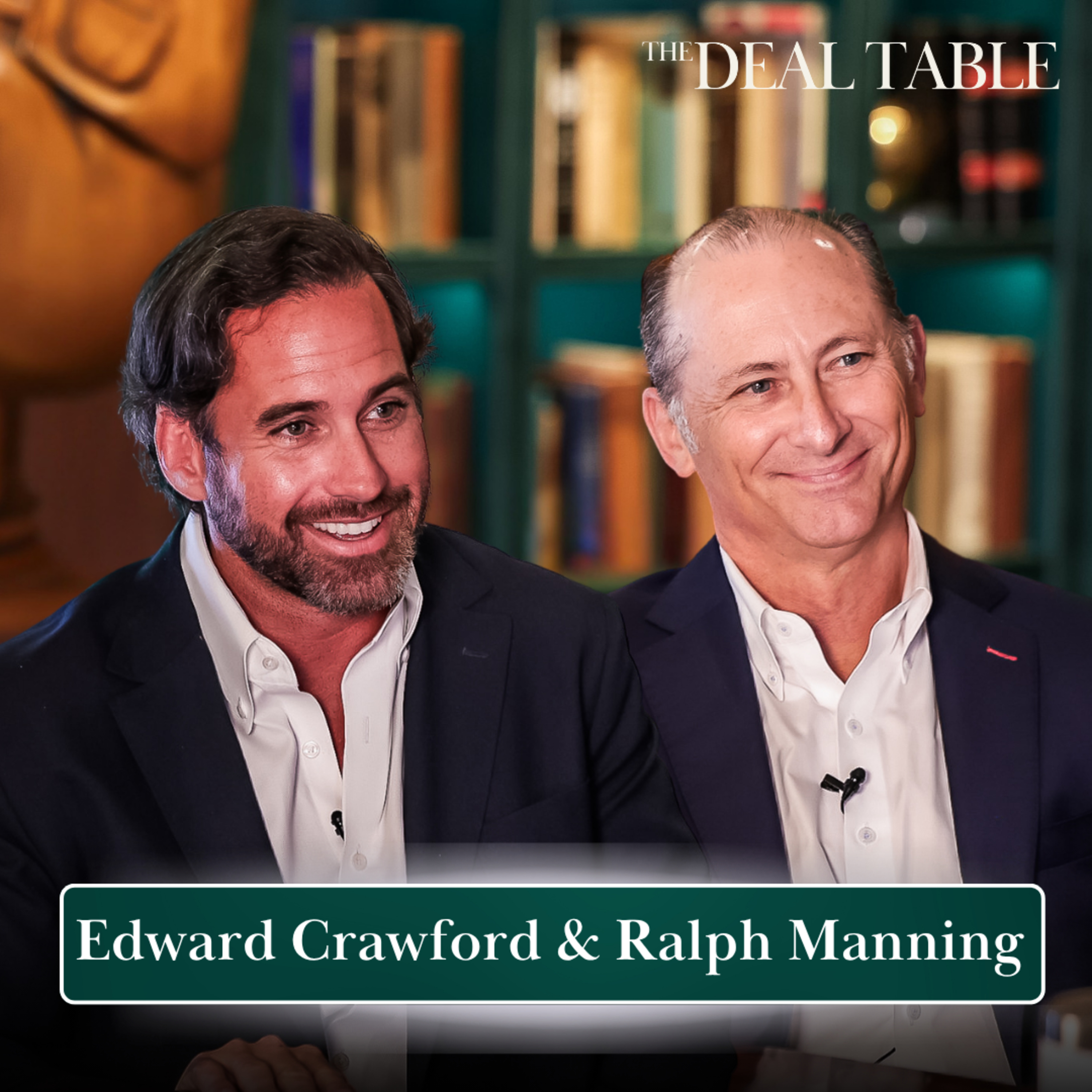
#49 Edward Crawford and Ralph Manning, Coltala Holdings: $400M, 24 Deals
1h 18m 38s
Caltala Holdings, co-founded by Edward Crawford and Ralph Manning, is a permanent capital firm dedicated to building enduring businesses in mission-critical sectors such as healthcare, aerospace, water, and defense. Unlike traditional private equity, which emphasizes short-term exits, Caltala prioritizes long-term value creation through deep operational improvements, employee empowerment, and cultural transformation. The firm’s core philosophy, "mission and margin," asserts that businesses must serve a vital societal purpose while maintaining financial health. This dual focus is rooted in real-world experiences—such as turning around a nonprofit struggling with resource constraints and managing a coffee cooperative in the Peace Corps—where purpose and profitability are inseparable. Caltala uses a lean, process-driven methodology, like value stream mapping and Kaizen, to identify and resolve inefficiencies, cutting lead times from 140 to 30 days in one aerospace case. The firm emphasizes a "learner mindset" in its teams, where continuous improvement and adaptability are central. Profit-sharing is democratized, ensuring all employees—regardless of role—benefit from performance. Caltala avoids opportunistic exits, instead building deep, long-term partnerships with business leaders, preserving operational control and vision. Its success stems from deep industry knowledge, strong relationships, and a commitment to transparency and trust, contrasting sharply with the perception of private equity as destructive. The firm has deployed over $400 million across 24 transactions, all in sectors where services are essential, regulated, and technically complex—ensuring resilience and stability in turbulent economic times.
"They looked at me and said don't talk to me about a budget and numbers because my mission
is greater than that. And I said, well, it may be but your mission has to be financed."
Today's guests are Edward Crawford and Ralph Manning, co-founders and co-CEOs of Caltala Holdings,
a permanent capital holding company focused on building enduring businesses.
Since launching Caltala in 2017, they have deployed more than $400 million across
over 24 transactions spanning health care services, essential services, manufacturing and aerospace.
"If you want somebody at 2 a.m. when something's happening with your company, you can call me and
I'll help you then I'm your partner. If you want a guy from New York who has a Harvard MBA who's
going to tell you how great they are, you can maybe go work with them. They might have more money
than we do, they might have more expertise. But if you want a real partner, we're your guys."
Crawford's background spans the Peace Corps, Naval Intelligence, Goldman Sachs, and Private Equity,
shaping the firm's mission, capital strategy, and relationship-driven approach. Manning brings
decades of lower-middle market investing experience and leads the operating discipline behind
Caltala's portfolio through the Caltala Enterprise System. Together, they combine purpose with execution,
strengthening leadership teams, removing operational bottlenecks, and building businesses through people
process and performance. "A five-year cycle is relatively quick in the lifespan of a company.
Now that we have the confidence to know so much about our business and be able to see the risk,
just because you can't see risk in a business doesn't mean it's not there."
"What made y'all successful in implementing that versus like so many companies that fail in
publicity?" The deal tables brought to you by Capital Southwest, a Dallas-based internally-managed
business development company focused on supporting lower-middle market businesses.
The firm partners with business owners and private equity sponsors to provide flexible
capital solutions that help companies achieve their growth objectives. Capital Southwest,
a best-in-class BDC built on partnership and long-term value creation. Security National Bank,
a family-owned bank with more than 60 years of serving business owners who value a true
financial partner. From lending and treasury management to long-term financial relationships,
the bank takes the time to understand the people behind the business, not just the balance sheet.
Security National Bank, they bank the person, not just the business, blockchain.com. Since 2011,
blockchain.com has earned the trust of more than 40 million users and facilitated over a trillion
dollars in crypto transactions. Through blockchain wealth, they bring investors and their
advisors, the white glove service private banking has offered for decades, built for digital assets,
blockchain.com, in digital assets since the beginning. Ralph, I'll be honest with you,
like I know way more about Edward and I think he's a little bit more on the internet. He's like
Indiana Jones type, superhero type, James Bond type, like he has a lot of hats. I think he actually
has Indiana Jones hat. Indiana Jones hat. I'd like to learn a little bit more IU right from him.
Just put you in the hot seat because it's so easy to just go where Edward's been at.
So welcome. Thanks for being here. Yeah, thanks.
Just four years to tell us about, what do I need to know about you?
Well, gosh, that's a great story. Well, group and for worse, live and for worse. So we kind of split
divide and conquer Dallas and for worse and it does make a difference because when you have a presence
in both locations, you just, you know, you have a better connection. For what's going on in those
markets in terms of like what we do and then we met network when people is a big part of it.
So I'm in the Crest and Fort Worth, which a lot of people don't know there's a Crest and
Fort Worth, but there's a Crest and Fort Worth and there's an Old Parkland in Dallas and they have
kind of become the, kind of the epicenters for, for, you know, an economic, what I would call
like an economic ecosystem, if you will. And you know what I mean by that. So yeah, I use Old Parkland
as kind of like a signal device where like some of these, first of all, my real thumb is everybody
meets always full of grud. You know, but if, if, if I'm doing a hundred million this, a billion
that, I'm like, cool, do you do a lot of business, Old Parkland? What's that? Got it. Yeah, you don't
do all that stuff you just said. Yeah. Yeah. Yeah. Absolutely. So, so cool. It's all like, um,
I know I won't steal your thunder, but that's an interesting name. Where does it come from?
Because I know that's your favorite story. Yeah. So, so it's actually, so Ralph failed to
mention that he runs a business called Lissle Jacket Farm. So he's been in the horse business.
I think three, maybe four generations and his daughters are in it too. Wow.
But so, so horses, animals, the outdoors is something we both enjoy. And as we were thinking of a name,
we were thinking of, okay, you know, our opportunities, we want to, you know, we want to build the
people, the build the business of the build America. That's kind of our ethos, right? And mission
is margin is how we think it, think through that. And a cult is a young horse. Usually four years
are younger. Ralph, maybe it's four and a half. Ralph and no better. But it's a, it's a, it's a
growing horse that's running, right? And then all of means wing or wing like structure in both Latin
and Spanish. It's a horse that we put wings on. So our idea is we find a business that's
growing that's got a lot of potential whether it's a leadership, whether it's a structure.
And we try to help put wings on the business by building out the team,
looking for new markets and expanding it. And so it was as simple as that. And most of the names
that private equity firms pick are like Red Dog or Bird or, you know, White Creek or whatever.
And those all cost a lot of money and they're not super creative. And so Katala, there was a
fairly attractive girl on Facebook named Katala. Outside of that, like all you're going to see is us.
So I think it cost $45 for the website. So I'm a value guy. And it was, it was a really good
value. And, you know, if you ask about Katala, like that's all you're going to see. There's nothing
else but us. It wasn't the girl on page. Yeah. Exactly. Yeah. And we're trying to develop
enough content to where, you know, we kind of, at least, at least compete somewhat with her.
You can always just hire her as a influencer. Oh, wow. Post internet, it's gotten really hard to
come up with a unique name. Yeah. And if you ever try to name something, you know what I mean?
You know what's interesting about that is yes, but also no. Because like, I just formed a new LSE,
maybe a little over a month ago. And, you know, I'm, I don't know if I want to put this on camera,
but I'll just share it because it's obvious. But legally, I'm like, I don't know if the lawyers
come after me, but like hypothetically, well, it's just a, because that's the word that you save
yourself. Right. I was like, you know, I want to start a new LSE for kind of what I want to do with
my what's next. You know, I just finished SMU with my executive MBA, strong ties SMU now. Well,
what about prune adventures? It was available, not just the website, but the the secretary of state.
Yeah. So I had an LLC that's called prune adventures LLC. And then I was like, well, what are the
other LLC, not LCs, but are the other websites for capital, printer holdings? I was like, how was
this available? And it was you have to get creative, though. And then what would Ralph speaking to us,
we came up with another name, our first choice, which was cult air. So cult, same thing, same root
with voter, which means to unlock, so unlock a cult and unlocking the potential. Is there a female?
There was no, but there was a operationally focused private equity firm with a horse theme
already. Okay. So when we saw that, we're like, gosh, there really aren't many new ideas. Like,
we're going to have to get real creative, right? So. So mission and margin. Yeah. Explain that to me.
Well, I'll tell you what that's a, that's an interesting story. I won't, I'll, I'll not use a name,
but in 2025, I was on the board. I got invited. Tricked. You were on the board of a, a very high
profile nonprofit. That's actually headquartered in Las Vegas. Two locations here in Texas.
And what I didn't know at the time when it was a 35 year history, Frank Sinatra was one of the
spokespeople, Ed McMahon, legacy history. It was in terrible condition and it was, it was on the
verge of bankruptcy. So I came in and they kind of thrust me into it. And in 2005, I got to leave
my first turnaround, which is an nonprofit, but I was surrounded with social workers who had a very,
very passionate mission and a very important mission. And they looked at me and said, don't talk
to me about a budget in numbers because my, you know, my mission is greater than that. And,
and I said, well, it may be, but your mission has to be finance. You know, and so you couldn't,
you couldn't say that to them, but over, over a period of 20, about 18 months, actually,
when we turned it around and reversed the course and it was an incredible experience to live
through and it goes through that. Experientially, they learned that if we run a better business,
even though we're non-profit, run a better business, we can provide higher, higher quality care
in their product, their services to abandoned and abused, abused children, right, who have
the poorest of the poor, have nothing with the clothes on their back. And that, that's where the
mission and the margin came into play. Edward conversely was in the Peace Corps and started coffee
cooperative, which is still in existence today, the non-profit that I was, that I was on a boarder
for 12 years, still in existence today. And so this ethos of that mission and margin are not,
you know, are not symbiotic or held in equal regard, I think, is, or are mutually exclusive.
is not true, they're actually mutually inclusive.
And so we kind of all know that we're not a for-profit world,
but it applies to for-profit too.
You gotta have a purpose, you gotta have a mission.
You need to be bigger than you, bigger than anyone personally.
So when we go into businesses, we acquire a business,
and the goal is to, as we talked about Cotala,
you know, take that business from where it is today
to a very different place.
Here's a mission in Marginitos
that we wanna bring to that work, not just, you know,
build a very business, but do it in a way
that has more meaning than that, more purpose.
So that's actually how we connected on that purpose.
'Cause it would drew us together.
And if you look at, you mentioned the coffee cooperative,
but it's like, if you are in one of my mentors
with the chairman of Whole Foods,
and he said, like, in 2008 Whole Foods
will only exist if we make a profit.
And we have all these people that have water projects
in Colombia and, you know, people that we're serving,
if we don't exist, they're in trouble.
But we have to make a profit.
And so that's where the Margin piece comes in.
And if you look at just the basic economics of this country
and of kind of our economic ethos,
if you look at Adam Smith, he has the wealth of nations,
which a lot of people refer to the invisible hand of economics,
that works so well in Russia.
- All right.
- But if you look at his other book,
which is the theory of moral sentiments,
it's about community, it's about impact,
it's about taking care of the poor.
And so if you combine those two books,
you have America, because we have to have a safety net
for those who are the poorest of the poor.
But we also have to have the ability of someone
to make it up through the top, right, and make a profit.
And so if you look at a lot of what Old Parkland stands for,
it is a lot of that.
It's economic opportunity for everybody, right?
It's not just the rich get richer,
but it's also not just like take everything and give it away
at the expense of people making profits.
So we really connect it on that,
and it's what drives us and gets us out of bed each morning,
'cause we're creating jobs, we feel like we're making a difference.
Does the mission part dictate the types of businesses
you invest in?
- Well, so I think it's become more important.
I think when we lived, we all did, of course,
but we lived to the pandemic, right,
and went through a pretty, there's a story there,
but I won't go into it, but you gain the building
that we ran at the time, or for a worth, I was at the time,
there was a bank in the building and an only gas company.
So the building was able to stay open
because it was providing housing mission critical service.
- Right.
- And that resonated with us too,
because we were in a business at the time
that maybe wasn't deemed so mission critical to society,
and it was pretty compromised during the pandemic.
All of our businesses today are mission critical
with the services that they're providing,
are not luxury goods, they're not optional items.
They are mission critical to society,
and so that was an experiential period
that we lived through that kind of informed our thinking.
So that was 2020.
So every acquisition that we've done,
subsequent to that has been mission critical.
- Mission critical businesses, and that's the thing.
- Can you go into your definition of mission critical?
'Cause obviously we all know what COVID era,
what that means for that,
but what does that mean for you moving forward outside of it?
- Life and death, like literally our healthcare business.
Water's pretty, pretty important.
- That's pretty, that was our argument somewhere.
- Very crucial.
- Yeah, I mean, as things go,
transportation, if we want to fly on airplanes,
what we're doing there is, it's not an optional work.
We're an old parking, so we have a real estate
consultancy business that's really an engineering firm.
But without that business, commercial properties,
don't transact, you mentioned earlier,
you're tied to commercial real estate.
So they don't get built,
and you don't buy and sell the sear's tower
or institutional grade real estate
without the assistance of what we're doing there
on the engineering side and consultancy.
So that's how we would think about it.
- What about defense?
'Cause like, I know you hosted the sentinel.
- Yeah, sentinel defense.
- Because that's a big part of it.
Part of the airspace, yeah.
There's a defense component there.
And so, absolute, we're 100%.
I mean, that's like keeping those airplanes in the air.
There's four specific planes you might want to talk about.
- Yeah, there's the doomsday plane,
and there's various others that we work on
that stuff hit the fan in this country,
that is the go-to vehicle,
and we're the ones that do a lot of the work on it.
There's second, third, most important person in the country
to do some work for their planes.
So we're keeping people safe when you get on a Southwest flight.
That's part of our job, but also on the defense side,
when people are in harm's way or protecting our country,
making sure that you see a lot of plane crashes
and people dying of plane crashes
that aren't getting shot out of the air.
And that's not something we think is acceptable
or that we want for our servicemen and women.
So, we're both protecting people who are moving around
or daily commuters on Southwest and American and United,
but also the American war fighter.
And we feel very strongly about that.
Love that business.
- Can you talk a little bit about specifically
what that business does?
- Yeah, yeah, so we have two businesses
when they could all air space.
One is a consulting business, engineering consulting.
So we work for all different types of businesses
of doing their engineering support, right?
Designs that sort of thing.
And then we have a composite repair business.
It's a structure shop.
And so think of wings, wings flaps,
inlets, rust reversers, the cones on the front.
We, you know, when there's drainage in a wing
and a bunch of wings are getting, you know,
damage or water in them will take, you know,
a couple hundred of them to fix them.
When a plane needs to get redone, we'll do that.
So one of the thesis in that investment is an aging fleet.
A lot of Southwest and American planes
should be retired at 21, 22.
They're 26 years old.
- That's one-year-old planes.
- You may have been stuck for mechanical failures
because it's older planes.
The B-52, which is near and dear to my heart,
'cause I'm from Shreeport and we have
a Barchial Air Force Base is a fairly old plane, 52, right?
And so we've got an aging fleet on the commercial side,
but also on the military side.
Even some of our drones are old.
If you look at the global hawk, right?
The scan equals, some of these drones are older
and need to be refurbished and kept going.
And so we are the service group
that keeps these platforms going and safe in the skies.
- It's a very interesting business.
And I'll give you an example,
like if the government buys a lot of planes,
they might buy a Gulf Stream, and they're gonna fly,
you know, really important people in this plane.
Well, they've got to have communications equipment installed
on that plane, defense equipment, all kinds of things.
And what Gulf Stream doesn't have a set of drawings,
they don't have a plan for that.
So they'll come to our business
and they'll say we need to install this communications equipment
used to go on the roof.
And so we'll figure out how to do that.
- Yeah.
- And our engineers will create something
that we've heard before that time that there wasn't,
there wasn't a how-to manual on how to install that.
Of course, it has to be FAA compliant,
has to pass all the regulations.
And so there's some very interesting projects
that come through that company.
And if you were to see these aircraft parts
back to the other business when they come into the,
receive it when they come into the plant.
Boy, you know, they look like they've been through a war.
I mean, they're dirty.
- They only like they're gonna make it back.
- Broke it, and then they go out the shipping dock,
and they look like brand new parts.
And so, you know, what makes that business interesting
and also complicated and challenging is
we're not making like widgets,
like the same product every day.
So things come in, broken, all kinds of parts,
different every day.
They have to first be engineered,
like you have to develop a plan on how you're gonna fix it.
So how you're gonna fix this part?
That has to go to the cost where they have to prove it,
'cause if it's beyond economic,
apparently they won't fix it.
So you fix it, and then it goes through production.
But, you know, they're always having to create,
so one of our businesses actually will outsource
to the other engineering business.
We'll work with the repair business
to help them on the engineering side,
but yeah, it's very interesting.
- We get calls, you know, you know,
a lot of people want Starlink and a fuselage,
but it doesn't fit.
Elon Musk's Starlink, right?
So we'll look and say how big's your fleet,
like we'll figure out a way to develop a part,
we'll figure that out for you, right?
So, it seems like, and I might be showing my ignorance
of the space, but, 'cause I know technology's always evolving,
you know, especially in the defense tech world,
we're always trying to evolve and always progress.
But the last two years, start with Ukraine, now Gaza,
it feels like war fighting is revolutionizing
an extremely fast pace, more so than has in like the last 30 years.
- It's probably in the last 15 or 20,
but if you're familiar with the book,
D-I-U-X or Defense Unit X,
what is it called?
- It's called D-I-U-X, Defense Unit X,
- Okay. - But Ash Carter stood this unit up,
and they basically, Palo Alto used to be,
some MIT guys went and started it, right?
And they were supporting through technology, the DOD,
and then they got away from it because the DOD,
and the US government, frankly, got so hard to work with.
So Ash Carter stood up this unit,
they went back to Palo Alto,
said, hey, come do contracts with us,
come sell us technologies, they said no,
we're doing Facebook and Google,
we're doing commercial stuff.
And so they broke the bureaucracy,
and they said, we need drones, we need AI,
we need this for the safety of our country
and got Palo Alto back involved.
Since then, since that book, since what he stood up,
you've had 25 venture firms solely focused on defense tech.
And in sentinel defense, sold out.
We didn't have enough room for all the people
because so many people are interested in that investment.
Right, so you really have a massive amount going through it
and you look at Seronic is a $9 billion valuation.
You've got Shield AI is building V-Bats and X-Bats
that are drones that are autonomous in Plano, right?
You've got so many defense companies that are growing
and have multi-billion dollar valuations
whereas that wasn't possible before.
Nobody was gonna just rub the primes.
Now you can make the argument
that they're a couple of emerging primes
and the primes have invested in them.
You look at Will Edwards business here in town,
Fire Hawk, 3D printing his own fuel,
Raytheon's an investor.
So the primes are investing in these businesses
because they can't move fast enough.
So it is the first time thank God for Ash Carter
and what he did.
I think it was a big service to this country
but it's moving fast.
When I was in Afghanistan,
the only drones we could use outside of our big commercial,
I mean our big drones, the small ones.
If you wanted to use them, you were Chinese.
We had nothing.
Predators and the big stuff and nothing small.
- So when I went to my M.O.I. school in Rincor,
that was an artillery, even though the fleet
had already moved on to the FATED system,
we were trained and this is circa 99,000
on Vietnam era computer system
because that's what was certified in the training system.
Even though they had already moved on in the fleet,
but they hadn't developed training system for--
- People using iPhones in fighter jets
to determine certain things
because the system and the fighter jet
couldn't keep up with the iPhone.
- Wow.
- And that just really doesn't work for a while.
- I mean there's so many stories about the military
and technology that kind of--
- But it's the trajectory is good.
You know, we didn't have enough minds we were just
to put them in the Gulf of Hormuz.
We had like, I think four in Japan
and we had two somewhere else.
Like, we don't have any of these.
We're running out of missiles.
At one point there was bottleneck
where Min and Louisiana was the only really place
that you could produce enough black powder
to do anything and they burned down.
There's like if Min and Louisiana is the front page
of the Wall Street Journal for being a supply bottleneck,
that's a bad thing.
I'm from the area.
It's a great town.
- So you guys are a lower middle market,
middle market investor in these businesses.
Is this a thesis you developed
and you went out looking for things that fit the thesis
or did you find the business to develop the thesis?
- It was a thesis.
- We've been six day one really, yeah.
- Okay.
- The thesis evolved over many, many years doing this,
in my process of firm and others.
But when you're buying these smaller companies,
they have a lot of constraints.
And you see that all the stuff's been written about
and I think there's a lot more for me area about it today,
but kind of growing up in the business and learning it
is like, what got you here won't get you there.
But what got you here is what you know and you trust
and it's been working.
But then, so that's kind of when we come in,
usually a lot of these entrepreneurs,
they start to hit a ceiling.
And a lot of times, many times, sometimes they know,
they don't wanna acknowledge it where the constraints are.
Other times, they just feel the headwinds
and it's getting harder, it's not like it used to be.
And they're tired and they want a transition.
And so yeah, that's one of the things.
And so there's a longer story there
we can talk about, but bringing a toolbox, right,
to as Edward mentioned earlier,
'cause one of our early things was how do we come,
so you know, you always see these projections
and you do a lot of invest in making work.
So you understand what I mean,
but you're like, there's just numbers on a page,
but those numbers on a page probably do represent
the market opportunity, like that's probably
very, very viable projection.
But it doesn't answer the question
does the company have the capability to do it,
to actually fulfill that market opportunity.
And if they've got these constraints that we've identified
and that's the predominant reason why
the owner operator is looking for some form of transition,
they probably don't have the capabilities.
And so when you acquire a company like that,
also what are you gonna do?
Well, I mean, if the owner operator's stuck,
but he's got this interesting market opportunity,
how do you unlock it?
And so bringing a toolbox is how we figured out
through four or five different things that happened,
but it's been an interesting journey.
- Yeah, that's what's different about our firm,
it's all the Katala enterprise system.
And if you're familiar with Dan or her
or the Toyota production system, that's where it came from.
And so as we look at each business,
we start with a certain methodology.
The first thing we do is try to make sure it's the right leader.
Then we try to get the top five leaders around that leader.
And then we start putting in our system, right?
Sometimes we'll do pieces of our system for,
but it's a lean management system.
And so for example, as we find the top three problems
in the business, and then we address them
through using our problem solving toolbox.
Aerospace is a good example.
We had a constraint.
We had 140 something day lead time.
And our customers didn't like that a lot.
And it was tying up money in the shop.
It was tying up people in the shop.
We had labor issues.
And so we basically did what's called value stream map.
We drew out every single process
from when something comes in at intake and eval
all the way to paint and getting it out the door.
And as we drew that up, we said,
where do the bottlenecks lie?
Where are the biggest lead time day bottlenecks?
Inspection, the paint shop.
And that's our eval at the paint shop
and then final inspection.
We spent two weeks doing Kaizen,
which is the Japanese word for continuous improvement,
working on each one of those problem sets
and just grinding it away and figuring out
what the root cause.
Here's the root cause.
Root cause in the paint shop.
We were doing dusting.
We were doing painting.
We had large changeover.
Stuff was piling up.
We got a new paint shop.
It was like 80 grand.
Not a whole lot of money.
We fixed it, right?
We had intake and outtake going through the same door.
We fixed that.
And then we had eval.
We said, let's streamline the eval process.
So instead of taking the whole thing apart
and figuring out if it is,
let's take a look at it.
See what we think it is.
Get back to the customer.
If they say, go, then we take it all apart, right?
So we did those three things
and we cut lead times down to 30 days
from 140 in check to 30 something days.
Now here's two things I'll say about that.
Unlock the business completely.
One, the best idea.
So these are just some of the principles
that we've learned that we love to share.
We talk about it because of just the wisdom that comes from.
But the idea, the best idea is kind of
from the people doing the work.
The people doing the work,
knew they had to go through all those questions.
But they did not have a framework or a structure
from which to get them out.
That's one thing.
The other thing that I would tell you that--
'Cause the owner's the bottleneck in that.
Right, yeah.
Well, they knew there was a bottleneck
but they did not know how to solve it.
But more importantly, so think about it this way.
So think of it like a NASCAR race
or any kind of race, race cars going around.
Race cars do what?
They go through a pit stop.
And where do they do in the pit stop?
They work on the car, right?
And they work on that process over and over and over again.
How fast can they make-- how short can they make that pit stop?
That's a value stream map.
They take it and they say how many minutes seconds
can we take out of that process?
So they keep iterating, iterating, iterating,
and make it tighter and tighter, that pit stop.
But the point is, is they bring the car in and they work on it
and they put it back on the track.
If they didn't bring-- that's called working on the car,
working on the business.
So most of these businesses, the people
have never had permission to like take a time out
and like work on the business.
You busy going around the track and eventually they--
They burn up the car because they don't
do come into the pit stop.
So all we do is we say, OK, that's called a changeover
in a plant.
A changeover is-- you're changing the line or you change--
All we do, we show them how to work on the business.
And 20% of the time needs to be on the business.
And 80% needs to be in the business.
And what happens in that pit stop that gets to business to go,
businesses don't grow in a straight line like this.
They grow like this and then there's these flat periods
and they grow.
What happens during this flat period
is determines the steepness of that curve
when they grow again.
And so that's-- so back to the mission.
What we love to do is I tell all of our teams,
I say you're just as good as the folks down at Lockheed
or at Journal Dynamics or out at Boeing or those companies
invest in their people.
Training program.
Development.
And they invest a lot because Turner was very expensive.
And so we do that.
So that's what we enjoy doing is investing in our people
because they're just as good as the people down at Lockheed.
But most of the time, almost every time.
They haven't had the opportunities or the training.
Extraordinary.
People plan process performance.
That is the sequence that we do it.
And we have a profit share for each business that
democratizes it very different than a lot of other folks.
But instead of having five people at the top earn
a bunch of money, every single person in the business
gets a piece of the profit share.
And it's usually could be 8, 9, 10% of after-tax profits
every quarter gets distributed.
So if I'm making 40, he's 60, you're 80, and you're 120.
20. You take your 120 divided by the four of us. That's the fraction that you own of that
profit ship. Very simple. That month. If the business does well, whether you're a fork
lift worker, janitorial staff, or whether you're actually fixing the planes, you get a check.
If it doesn't do well, you don't get a check. And you understand why. We try to go, but
so everybody wins, but everybody's tied to it so that everybody says, hey, I'm part of
this. I'm part of this team, right? You know, in the Super Bowl, you get a ring if you're
on the team now, right? We just want everybody to get to get that ring. Yeah. And I think, you
know, change, change, change is very hard. And most people resist change. Our biggest success
story is in the aerospace business. And I attribute, we attribute that to the fact that they were so
tired and frustrated with the firefighting of what they call it. You know where you're just running
around you. And as Edward mentioned earlier, there's so much demand in that business, fortunately,
that the businesses just coming in, but they literally, literally can't. And they're just,
they were so tired that they were actually like, well, it's like anything coming in to do
something. Well, please. And a lot of times people, they were just changed because it's foreign,
you know, and we all know how that works. But here, they embraced it. And it was magical to watch.
Great culture. We pray before our meetings. We pray for each other. It's a really neat culture
of this business. So, yeah, you brought up dinner. It seems like everybody tries to do that.
Like what made y'all successful in implementing that versus like so many companies that
fail in publicity? Well, it was simplistic. Yes, but it was, it was kneading. It's so very
fortuitously. No, no design of ours. We met Larry Colt, who was one of the, he was one of the
CEOs of dinner. He's there 15 years. Sea of GE, though. Yeah, he's just, he let, he runs GER
space, coincidentally. So he, so market cap of dinner under his tenure was three billion when
you started in 30 when he left. But he did a tremendous amount of work and taking the dinner,
her business system, the Japanese. It was mostly all about process. Process is very important.
I think Larry's biggest contribution was really taking that and marrying it to what we, what we would
call American business strategy. So making, and they call it strategy deployment. So it was taking
this toolbox that was Toyota production system and then making it more strategic and, and, and
creating the DBS out of that. And when I, when we met Larry and when he talked, and he was like,
he said, well, why aren't, we asked the question like, why aren't more, why don't private equity
firms do this? He didn't have a great answer. I think we know the answer and the answer is that
this is really hard to do. And this change happens, like we gave you an example where we got an
immediate impact. But for the most part, it's small gains incrementally over a long period of time.
And private equity is in a hurry for the most part. A five year cycle is relatively quick in the,
in the lifespan of a company. That's, that's not a long time. And honestly, to do a transformation
like we're talking about is a 10 year project. You have to think in decades, not, and Mr. Colp will
tell you that. It fits the model. It doesn't fit the model. If you're exiting in seven years, you
hit in six years, starting to get good. You're giving away all of your investment to the new, to the
buyer. You're not, you're not, you're not owning it long enough to really reap the gains of it.
So we think that's the why behind why. But Dana, her is like, very much like a private equity model
in a public market vehicle. And they've done over 600 acquisitions, integrated them repeatedly
successfully and generated these very predictable results. And it comes from process improvement
and systemization. And so what we learned there was, for me, at least, I speak for myself, was
just completely underestimating the power process and continuous improvement. It seems like
process, when you start talking about it, people think about it as being kind of bureaucratic.
But it's the opposite of that process. It's the bigger you get, processes speed. Process allows
you to scale without it. You can't. And so anyway, that's a little bit of a digression. But so,
so he was so successful at Dana, he was retired when we invited him. And we were, he was very
influential in encouraging us to do what we did with Kotala. And we were trying to get him to come
in as an investor and come on our board. And we do have Dana, her people as investors,
and more or less on our advisory board. But not Mr. Colp, because he got recruited to go to GE
first to the board for a year. And then as CEO, if you've filed that story at all, you know,
what's happened. There's been a miraculous turnaround. So, and he's been in bit, I mean, these are
bigger companies for us to implement it in the lower middle market. Yeah, you got to keep it simple.
You got to say, what are your three problems? Okay. And you say, okay, your problem is lead times,
value stream mapping. Okay, your problem is sales. Let's build a sales team. Let's do it. Let's
do sales funnel management. Let's look at probability weighted sales. Let's make sure we develop a
function to where you can look at the lifetime value of a customer, instead of doing one transaction,
do a transaction for 15 years with same customer, basic blocking tackling like that. And so,
what we've done, we've actually built it into clawed through AI is, you know, each one of our
businesses is on a different level of their CES journey, their lean journey, right? In summer doing
sales things, summer building out the team, summer doing more ops work, but we take our, our book
of tools. And instead of saying, here is what you will do, Moses from the mountaintop, we say,
what are your, it's a credit. What are your three problems? Let's look at which tool might best fit
to help you solve that problem. It's like driven by the operator, by the people on the ground.
If you have a hammer, not everything is a nail, so it's like, just whatever's it. What's the problem?
And then we have a toolbox and you can pull the tool out. Aerospace, that particular problem required
a value stream map and some other things, but it was very bestpoke to their problem, which was
critical to that business because the bottleneck was restricting cash flow and other things.
I'm just telling you, it's an example. They did not know how to solve it. They were, they had a great
business with a forecast, but without the capability. And that's our, that's our single largest,
I would say, success story, because it's so tangible and measurable. We have a chart, we looked
at it yesterday, term times, I think, we're 32 days, and they were 164, I'm going to say, in April
of 2025. And then at Choy, our home health business, we had, I think, four or five really talented
salespeople, and now we have 220. But to do that, it took a lot of intention on, what does a
salesperson, of course, look like? What is the ideal candidate? What is their culture index survey,
you know, profile look like? What is the compensation model? Where do you focus? And so a lot of
those things as you go from, you know, very small business. When we met David and Trina, they were,
you know, a small business getting started. He had started off three credit cards, and now he's
three, four hundred million dollars of top line, and, you know, in nine states, right? And so it's
beautiful to see somebody grow like that and go from a, you know, a couple people to like hundreds
or thousands of people. Yeah. So, and I don't know what you call it, but I'm just going to use simple
conversation. Like, I believe y'all are more, because you refer to how like typical private equity
venture capital, they buy it, and they're out in three to five years, because they want the exit.
Y'all are more of a buy and hold for the long haul. Did you, did DBS influence that, or was it
that that influence getting DBS? Two things. One, I would say very specifically, is like,
was we were having these conversations for three or four years before we started going to
different businesses. When I got in in the late 90s, you could, you could find opportunities,
and, I mean, I'll just say it, use the word cheap. You could buy them, you could buy them appropriately.
That would be better than, right? Fast forward to 2014, 2015, 2016. The market got a lot more
efficient, a lot more crowded. I mean, you all know this. A lot more efficient, a lot more,
I mean, like, the representation that even small companies get today is substantially higher than
it was back in the era when I started. And so, it's really hard to find a good opportunity.
And if you sell it, you got to replace it. And it's gotten really hard to do. So, to your question,
Ryan, it was like, but here's what. So, I'm getting it. Before Kotal, I mean, again, I'll just speak
candidly, but like, there were many situations where we would say, we need to sell this company,
you know, before something bad happens. And what I mean by that is because we couldn't see
into our businesses. We didn't have, we couldn't see everything we needed to see. And you know,
there could be a burger booth in there, especially in, in like a healthcare business. And so,
you just say, everything's working. The market's good. We should, we should, we didn't have the
confidence to hold long term. That's the, that's the question that you're asking. Now, I would argue,
we have the confidence to know so much about our business, and to be able to see through it,
and be able to see the risk.
And if we see risk, you can mitigate it just because you can't see risk in a business doesn't mean it's not there
You know what I'm saying. It's there. You can't see it. That's the biggest that's the most
That's the scary kind of risk is that you know, you know, so you like we have a level of transparency in our businesses
Which gives you the confidence to hold a long time and we the first thing we do is stabilize and defend the core
And then once we have that you got the the first person you got the core five six people built
You build out the management systems then you can have confidence. Okay, we're gonna get we're gonna hit this month
We're gonna hit the next month versus like we hope sales come in we hope it goes well
So you know building value for the long term is just where we're focused and so it allows us to to hold the bill a little bit longer
Um, but also, you know, you can't because a lot of people to rouse point have to have to get out
Um, and we don't have a fund model so we don't have to sell you know, year seven to go raise another fund
So we're not we're never in opportunistically
Selling a business because we have to if that makes sense
So it's aligned with the operator and the people in the business is there a wing knowledge that that's the first time
I've ever heard like historically companies just selling
Assets because of fear of what's gonna happen
Like obviously
People selling for because they have to they want to make money the markets right that all makes sense, but just like
Hey times has been good something bad's gonna happen. Let's get out. I've never heard that thought process before
But you know growth fix complexity and elasticity kills growth and no one wants to admit that but it's almost a
The op you know, we're not maybe not like a fear, but like confidence. Yeah
And when you're sitting there and you have a big gain on paper you want you know
It's hard to not want to take that gain
However, like I said if you that's fine if you can turn around the next day and
If you can't replace that asset with something that's just as good
Then you've traded down, right, and I'm telling you it's gotten a lot harder to do
Yeah, I think everybody acknowledges that
It's gotten a lot harder to do if you've got early great asset. I'm gonna say honestly
I'm gonna replace that with something just as good next week. Well
Maybe I mean it may take you two years three to find something just as good
Well, it's that does tails and I promised lane. I'll let you talk
The phone call I had with Edward a couple days ago where he's like Ryan if you
Have access to businesses that are looking to exit or take on whatever
That is the golden ticket
You know everybody can raise money everybody has money. Money's not the issue access to capital's not the issue
Is deal flow. So if you have that you write your own check
So that end ought to skip call call the audience. Well, and I would say I say something else
I would say it's like everything in the world today is becoming more specialized
So the other thing that we haven't talked about that I would say that well, I think we both share is this idea of going deeper and broader in a segment
because
Knowledge about a particular industry segment
gives you in a network
Inside of that segment gives you a completely different ability to
respond opportunity
than being a generalist
And growing up in this business. I was always a generalist now
We view ourselves as
We not view ourselves, but we're working diligently to become
Knowledgeable at a much deeper level by not doing as so many deals
Focusing on a smaller number. Yeah, it's hard to get into aerospace like that's a network that's you know
Healthcare is another one that's hard to get in. So really really yeah, really you brought up HVAC healthcare
Blue car type businesses, but then also the the aerospace
So is the niche that you are wanting to be is more
Aerospace related businesses defense tech businesses blue collar businesses or is it the niche?
That lens I would say it's the essential service niche, but if you look at it
It you know, it's it's air-land and water right now, right if you think about it, right?
Those three businesses that you just spoke to like you know in the air. We've got aerospace
So we're protecting people there. We like that business a lot. There's tons of barriers to entry
We're in MRO. It used to take you three months and about 500 bucks to start an MRO
Now it's about 1.2 million dollar capital outland about three years
Aren't a lot of people starting those things, right? And so we feel like that's a good that's a good
There's also supply demand about we like that space
you have to have certain
Certain clearances to do certain work on certain frames air frames
You have to have certain competencies. So it's a it's a technical side of work, right in our
In our engineering business pond Robinson the exact same thing. We're working in data centers
All of our guys are either architects engineers or both
There we talk JP Morgan's one of our clients. We got some of the largest clients blue chip clients
So we're one of the top firms of the country and when we called them when we were looking to quiet
They said pond Robinson is the best quality shop in the country. It's the gold minutes the McKinsey
That it's the apple, right? And so that business very hard to break into that we have engineers
So we have really you know technical people in all of our businesses if you look at all of our businesses
It's a technical workforce. It's either a craftsman or a tech expert in culture index methodology, right?
And so a lot of very detailed work is going on
Versus a lot of other businesses. So in our water business. We have roughnecks
We have drillers. We drill very complicated wells and we have to get them out
There's sort of formations. There's subsidence within aquifers
We mentioned earlier that 60% of water and a lot of you know
San Antonio Houston also comes from underground water
You don't want to have subsides you have to manage those aquifers very well
People can die on these ricks. They can catch fire all sorts of things can happen once again a very technical workforce
So we like being with a technical workforce that takes pride in their work
And that's kind of where we like to be in home health. It's it's nursing's elders nurses LVN's physical therapists, right?
So that's kind of the area we want to stay in is that kind of technical workforce
They take pride pride in what they do and then recruit the best and pay them a little bit more than our competitors
You have to be better to
Prosper in our regulated industry and it's a bit of a barrier
Yeah, and it is definitely a barrier in aerospace. It's definitely a barrier in
In health care and it's a barrier
But all four of those businesses, but I would say those are two really good examples
You know, you got to have licenses. You got to be
you so many
DFFA comes in and inspects us united will show up in inspectus. They'll do audits south west will show up American Airlines
Gulfstream
On-site, so I mean like you've got to be on a game. Yeah, so you got it you like
You're not just got to run like a runner a good business, but you have to run a good technical side of your business
You got to have good safety kind of have good compliance
Got to have good regulatory and so that makes it harder for people to compete
But if you like transparency and quality being in those businesses feel safe because you're good at what you do
If you're winging it and you're just over leveraging things and trying to get to a sale
You could blow up and we've had a lot of businesses do that around these more on more regulated businesses
So we do like them. So yeah, I just want to back up to the process of acquiring businesses
And I'm kind of curious because you you're kind of the anti-PE right there a lot of you think we really kind of aren't you do that are very different in a way that would
I'm scared to say it's positively yeah my perspective at least to the seller right would be positively differentiated
And so I have some questions around that. I'm curious about the chicken and the egg here
You you have a thesis you identify businesses that you think are a fit so you can sort and screen and figure out which
businesses are in this space they're in this size
And then you're doing an outreach directly to those businesses to establish a dialogue not always not always
We actually I can tell you our marketing framework is a little different than your traditional private equity
We're not calling a bunch of banks in New York. Yeah, we have over 30,000
newsletter subscribers to the Catala report wow
We have 8,000 followers or so on LinkedIn
Which at one time was the you know outside of Texas cap Texas Pacific group and some others was one of the largest
Followings of any private equity firm in the state. Yeah right and so what we've created is we have and we have a relationship funnel
We're Ralph and I build deep relationships. He has 50. I have 5th. We built deep relationships with about 50 people
This is one of them over here. You want them right?
But but we source our businesses through deep relationships
We have the marketing engine and the relationship engine so the marketing engine is we're always relevant
We tell our you know, we send the newsletter out so our teams see what we're doing
So we see what they're doing to educate them to educate the market and our thousands employees
Plus 30,000 people to follow us right on top of that
We get to know people at a deep level so that when they say hey, you know, I've known Edward or Ralph for 15 years
I'm about to sell like we get a lot of inbound calls
We get inbound through LinkedIn saying I mean, it's been 1015
Just so far this year just saying hey, we don't like private equity
We like what you stand for. Yeah, we believe it's true. Right. We would like to have a dialogue and maybe sell to you
How wonderful and so that has been what we've intentionally tried to build
But there's a there's a book called the story brand if you've ever read it and it talks about
You know how how some of the top movies were made in LA and and it also tells you about politics and just you know
As you're building a brand your brand is not about you like Katala is not about Ralph and me
Katala is about the heroes that run our businesses on a daily basis. They are the heroes. We are the support
staff. They are Luke Skywalker and we are Yoda. And when we go in with that and we say,
hey listen, like, I've been to war it back, right? I'm a foxhole guy. If you want somebody
at 2am when something's happening that you're company and you can call me and I'll help
you, then I'm your partner. If you want a guy from New York who has a Harvard MBA who's
going to tell you how great they are, then you can maybe go work with them. They might
have more money than we do. They might have more expertise. But if you want a real partner
where you're guys, and that has worked for a lot of folks that don't want to deal with
a traditional private equity model. So you have private equity, you have a family office,
you have, you know, you're kind of your big, what I call, strategics, and you have groups
like ours. And so we stand out in that regard. And I think most of our sellers were looking
for something a little different and that's why they are they are they are they staying
on? Are they doing an equity roll over and they're staying on an operational roll?
Most of all of our sellers are staying on an operational roll. In some cases, they become
the long term guy like a David Jackson in choice. Yeah. I'm convinced he'll run a multibillion
dollar business one day and it'll be called choice still, right? He's on that pathway.
He's great. Others wanted to retire, wanted to hand it off, but really care about their
business. You we still speak with Alan Pond a lot from Hod Robinson. His name is on the
business. He deeply cares and he helps us with strategy and we get to lunch with him often.
So there's always an ongoing role and involvement and a role from the founders, whether they
stay on or not. I was just say the perception, you know, the bad press that PE's had the
last several years, like where they're coming in and it's it reminds me of the movie Pretty
Woman, where, you know, not the free woman aspect, but like the business scenes of it, where
they come in, strip it and then they destroy the company. Yeah. But like it seems now,
whether it be a social media or just tweet for our news network, where, where, you know,
what we saw with, and I know, and I'm dumbing everything down is not always PE fault, but
toys for us. Did they fail or was the PE cover they came in? Red Lobster. Did they fail
or was the PE came that stripped away the real estate? So there's so many examples of like
PE coming in, stripping it bare, making all the money and it's like, you know, just throwing
away to the crowd. Yeah, I mean, I think for us, so that's a great point. I mean, so assuming
that it fits, like you, you're all, you know, assuming it fits within kind of our mission,
you know, kind of our, our, our box, then it's really, what is your market opportunity
and what problem are you trying to solve? And like we kind of turn the table and start
interviewing the team, because if we start talking about guitar enterprise, the conversation
we're having today, and they're kind of like pushing away from the table, then that's
not something that you can fix. Like if people don't have a learning, you have two kind
of mindsets and we all have a little bit of both. No, we're an learner. Yeah. And it's
like, are you 50% no or 50% learner? Are you 80, 20? One or the other. And if you're 80,
no, we're a 20 learner. That's not a good fit for for our model, because we're learning
every day, and we, we, we, we'll be the first to, we always have more and more. Lord, we learn
the less we think we realize we know. Yeah. But when you're running it, especially today,
when you're running a business, the world is changing so rapidly that you can quickly
become irrelevant, quickly, if you're not working diligently every day just to stay even
with what's happening in the world. So a learner mindsets key, right? Among our teams.
And I'll tell you that like you can tell pretty quickly if they don't have a learner mindset.
Yeah. For a practical standpoint. Well, if you get into a business and they're not
in a competitive process, they're not being represented and they're out in the market,
then I guess you would have the opportunity to have that dialogue and to talk to people
and to evaluate it. We run competitive processes. And so it's a very compressed time period.
And I, maybe that's one of the reasons that you favor. You know, there's an opportunity
to get there directly. So I'm kind of wondering that chicken and egg is, yeah, you got to figure
out whether or not there's a cultural fit, whether you think these are folks that you can
put into your model. You've got to assess whether or not the process that you guys run,
these proprietary processes are applicable to that particular business. It wouldn't motivate
to the seller. Right. The seller once topped dollar is not for us. It's the tell, it's
the seller cares about his people, his legacy, and wants somebody to continue that legacy.
And he or she wants to have a word in it. That's different. And what we see, Ralph mentioned
earlier, like people leaning forward or leaning back, there's a humility with the people that
we've worked with that's very refreshing. There's a humility. If I don't know it all,
I've gotten to this point and I'd like to go even further and need some help. And once
you kind of admit that, and like Ralph and I, like we all, at some point, we need some
help. Like there is no self-made millionaire, billionaire in this country. They had, they
had a taxis and they had roads to drive on that. Somebody gave them a bank that gave
them alone that you can't get in a lot of countries.
Help along the way. You know. And so that having that humility from founders say, "Hey,
I may bad ass at selling stuff or I'm an amazing home health guy." Or, "You know what?
I can fix planes like nobody's business." Or, "We have the best quality service in the
United States at this, but we can't grow because we don't know how to sell stuff or
don't know how to build that team." Once we see the humility of, "I need help in these
few areas," then we can say, "Okay, let's help bring you tools." But if we're having
to go in and say, "We identified these things for you to do," and it's kind of Moses
from the mountains. It ain't going to work.
All right. This stuff didn't come from us. I want to say that we're not like, as Edward
Lakshen said, we're not Moses from the mountain top.
This is a toolbox. It's been proven out over thousands of companies by the best companies
in the world like a Dan or her, like the old G. E. Nalva G. Aerosmiths, like Boeing. They
use all these tools. These small-to-bit-sized companies don't even know they exist.
So it's really, it's that simple, but it's that complicated, it's like resourcing our
teams. But first, you have to have the market opportunity. You have to have a team that
wants to lean in and recognizes that. So Edward said it earlier, but it is a conundrum.
It is a, once you understand this, it has changed your thinking, but growth in a business
by its very nature creates complexity in the business. And that very complexity kills future
growth unless you break it down. And so the toolbox is what you use and what large companies
use to continually break the kompaks like simple way back down. So they can keep growing.
And that's the secret sauce. And so how do you do that? We do it through process improvement.
Well, it depends on what process is you're trying to improve, what tools you're going to
use. But at its simplest, you know, kind of foundation, that's what we're doing. So
it's not, it's not our tools. I mean, we have, we have learned and brought these resources.
We implement them very well. If you don't have the right culture approach, nobody will
accept your tools. So from the interview process, the key. One thing that Lano always brings
up the M&A world is that the seller, sometimes the very final will just not sign the paper
because like I had changed my mind. So how much vetting, what's that process like to
go through the psychology of, of the operator to see if it's a good fit? It's hard. It's
a great question. At the end of the day, it's a transaction and, and, and, you know, deals
can be no two are the same and they're all the same. But I would, I would say you can
see a lot about an operator and a leader. Look at their people. It's like, look at somebody's
family, right? How's the relationship with the wife? How the kids doing? Right? Are they
estranged? You know? And so, you know, if we look at David Jackson, his people will, will
go to war for David Jackson because they know, they know he's going in first and he's going
to take the risk first and he's going to own it because he's a humble good, we call it
servant leadership, right? If you look at our, our aerospace business, it's the same thing.
Like the guy, the guy's running that business. They're the first guys in the shop and the
last to leave. They deeply care about it and they'll go to war for their people. They
will take money from their own pockets and give it to their people at times or tough.
So when you can look at someone's culture and say, these people really, you know, we,
we ask line workers and people on the floor. So one of the first things we do is find out,
hey, what do you think about the leadership? And they're like, these guys are great, right?
That's when you know, when we know we have the right person, but I cannot emphasize culture
more because if you start with the people and they know that they're first and you have,
you know, we, we try to get the right compensation plans. We cut it right health care. Those
things are very important to us. We mentioned profit share earlier. If, if the people are
winning, then long term, they're going to want to commit. But if you're running it on
a spreadsheet and that's all you got, then it's, you know, and that's all that the seller
cares about or the founder cares about, then you, you know, that's not a good fit for us.
People have different definitions of what culture is and one of the definitions that
I like because I think it's very practical is culture is what people do when nobody's
looking. And that's what I'm sorry about. So we, you know, when you've got people that
are there for the right reasons and care about the business and care about each other and
have each other's back, that, you know, that's a risk mitigator character. We have a saying
we run from crazy and we've, we've adopted. I know you've had Ken Herschen here, but you
can really well and we've seen it. He has a saying called yellow lights don't turn green.
And that's one of our favorite, and we see somebody that's a little bit crazy or frankly
just selfish or like throwing all their people under the bus and we're like, "Huh,
probably going to throw us out of the bus, too."
Like, "How long is that work?"
I should use that with yellow light, might not turn green.
I should use that with some of the searcher community, you know, in the lower metal market,
you get a mix of institutional buyers and searchers and independent sponsors, and you guys
are kind of a unique blend of, yeah.
And I've seen searchers that they're two years into their process and the lights are all
yellow and they're running 'em because they're so eager to get a deal done and they dropped
their discipline.
So I like that.
I'm going to use that.
Yeah.
So it's like square peg round hole.
Yeah.
That's a yellow light.
Yeah.
They're trying to force it.
I'm curious about how your personal background sort of informed how you work.
I don't know that I've met anybody who served in the Peace Corps and was a Naval Intelligence
Officer.
You are, at least the second Naval Intelligence Officer on the Deal Table podcast.
Victor?
Victor, go go.
Yeah.
Was the first.
Yeah.
He's old school, and yeah.
Yeah.
And I would say that in the dialogue with him, his training as a Naval Intelligence Officer
helped inform how he tears apart businesses and how he looks at things.
Yeah.
I'm, you have an interesting blend with Peace Corps and Naval Intelligence, but how does
that help you in business?
Well, I just say, you know, our people-centric approach is, you know, when I went to the Peace
Corps, I landed in a small town called Blancos and I had a backpack.
And they said drink coffee and, you know, figure out something to do, and I had two-and-a-half
years to do it, right?
And I found out in my first assignment, they were corrupt, and so I kind of ran along.
And so I did a poll of everybody, and I asked them questions, you know, so a critic method.
Once again, got to know and drank coffee, developed relationships.
And I found out that the, their coffee, they were getting charged astronomically, you
know, large prices for the coffee that, you know, it grows 40 years under shade, so it's
the best thing they can grow.
They're growing Yuka and stuff like that, and corn on inclines that we could hardly climb
up.
And once you cut it down, it would expose the soil that was gone, so Haiti's all desert
because of nomadic farming.
So the only way to preserve the actual watershed was through coffee.
And so I said, hey guys, I don't know much.
I read three books on coffee at the Peace Corps Library, but if you do this, I look, I think
it'll work, right?
And they trusted me enough because I had been with them, right?
And so that's kind of our people focused, and then as an intelligence officer, the idea
is getting to the ground truth as fast as you can.
So we did something with our, we had an issue with one of our businesses yesterday.
We do what's called an A3 problem solving for.
And the whole idea is find a problem, see what the root cause is of the problem.
Once you find the root cause, come up with the mitigate and fix it forever.
And if you look at Elon Musk, that's what he does in all his companies.
He goes, what's the biggest problem?
This one and they spend a week and they go solve it and then you move on to the next problem.
And so finding the people on the ground that really know the work, the work is done on
the ground.
And we have it saying, you know, you don't have a right to an opinion until you've seen
the work.
And so instead of us coming up with solutions, we have them find the problem that we help
them do the solution.
So whether it's Peace Corps or the military, it's that human element of understanding them
and asking them the questions.
And then helping them find the right answers is really the problem.
>> So we're from Louisiana, so I like to tell this quick story.
I'll tell a real quick story, but like I read a book on Andrew Jackson.
So Andrew Jackson gets appointed by the president.
They want him to go down and defend New Orleans.
>> Yeah.
>> Got all New Orleans.
So he shows up in New Orleans and he's got his, and he gets his aides and he's at, forget
what the place.
>> Jackson Square.
>> It's their building there that became St. Louis Square.
>> St. Louis Square.
>> Yeah.
>> And anyway, so this is after we've been through all of this training and we've learned
to lean, it's called, you know, you're not entitled to an opinion unless you've been to
the gimba.
In other words, you don't seek a conference room and like Moses from the mountop, you know,
you're the smartest person.
You go to the where the work gets done and you see for yourself.
So what does Andrew Jackson do?
So they bring him all these maps.
They're trying to figure out where the British most likely to come in.
>> Yeah.
>> Are they going to come from the east?
They can come from the west?
Are they going to come right off the middle?
And they're trying to, because they have limited resources and they got to defend the
flank.
So were they going to create resources?
So Andrew Jackson said, I see the maps, take me.
I must see.
I've got to see.
So Andrew Jackson went and he went to see each of the three most likely places where the
British would come in, because he knew he would form a different opinion if you could
actually see it.
And I'm reading this and I'm going, he went to the gimba, where the work gets done.
And he went, before he was going to fall in opinion, but just think about that.
So this stuff is not new.
It's mostly, in fact Larry Colp has a saying, it's applied common sense.
>> Yeah.
>> It's common sense applied rigorously.
>> Yeah.
>> Yeah.
>> Yeah.
>> So it really is.
But you look at Andrew Jackson, 18, whatever.
When was it?
18?
>> It was, it was 1812.
Close to 1812.
>> It was.
>> So there you go.
>> Into, to put a point on that story.
>> Common sense.
>> By the way, they won the Battle of New Orleans.
>> Yeah.
>> And they defeated the British.
Part of that was probably a trivial to the fact that he was wise enough to know that he
wasn't going to just rely on what the age were telling him, he, the general, wanted to go
see the game.
So he went, I think that's fine.
>> And he was from Tennessee, where you're from.
>> Yes.
>> And when he gave that famous speech in Jackson, what's today is Jackson Square?
>> Right.
>> It was to a half Spanish, half French audience who didn't understand half what he was saying,
thought he was a hick, and didn't consider themselves American.
>> Oh, wow.
>> And so he enlisted a guy named Jean Lafitte who was a French swamp pirate, the local, on
the ground guide.
>> Yeah.
>> So hey, you want to join us, because if not, you're going to lose Grandile.
The pirates joined him.
>> Yeah.
>> And it was a pirate in the future president of the United States to beat the crap out
of the greatest naval warfare that had ever existed on the earth.
>> And Lafitte's blacksmith shop, I think is the only thing in the Finch quarter that survived
to four years.
>> What do you find?
>> Because they had a bucket brigade uniquely and specifically for, yeah.
>> It's one of the only French Creole cottages that still exist because the rest is all
Rada and Spanish after they burned out all the French Creole stuff.
>> There's a great story.
>> Great bar.
>> Yeah, no bar if you haven't been.
>> I love that story.
And I love going out into the field and figuring something out.
It reminds me of one of my favorite movies and books, which is Seabiscuit.
If you know the story of Seabiscuit, you know, they ended up racing against the East Coast
established horse, Warad and Romano, remember the name of the horse.
And it was a much faster, stronger, bigger horse.
They was kind of a joke that they were even going to race Seabiscuit.
I don't know if you remember the story, but the East Coast owner established the rules,
and the rule was that they were going to start with a bell, not inside the gates, but
a bell.
And so he went to the track and he trained Seabiscuit on how to get to the inside with the bell.
And then the night before, like two in the morning, he goes out and he walks the track
to the point of Jackson, and it rained and it was dry right by the rail, but it was wet
outside.
So we thought, we can beat him to the inside and make him run outside, and they did.
It's going to get bogged down, just like the British.
So showing up at two in the morning and walking the track, you know, a lot to be said for
that level of work.
Well, there's a book, as a southerner, there's a book called The Fish that Eight the Whale
that I highly suggest you read.
Yeah.
But the word banana republic came out of a guy.
Yeah.
You know that, don't you?
I gave it away.
Oh, I recommend it and gave it away.
Especially as this is how it became friends.
This is one of the greatest American stories ever told.
We met in an event with Senator Parker, and I'm friends with, with Senator Parker and
so's Edward and, and Senator Parker's like, Edward, Ryan, y'all should meet y'all.
Yeah.
I like both of y'all, y'all should like each other.
And then I think five seconds in, I was talking about this book, and he's like, I'm from
there.
Yeah.
So there was, there was a Jewish immigrant, immigrant, Russian Jewish immigrant, and he
was a fruit jobber who got basically bananas and was selling them in New Orleans.
And he realized that they were throwing away the yellow ones because this was before, you
know, once he got ripe, there wasn't anywhere to go with it.
Yeah.
And so he developed a train route with a box car and started selling them up and down
the south, right?
He ended up making enough money to where he was like, hey, I'm going to start my own company.
Then he went down the Honduras and bought some land and realized that he could 4x the yield
by just basic immigration techniques.
So then his business gets big enough to compete with United Fruit Company.
So the president of Honduras is not really abiding by what he wants at the time.
And JP Moore, all these people know he's going to do it.
And so he gets a guy that looks kind of indigenous and he says, you should be president.
And he sends a group of boats down there and he takes over Honduras, installs a president.
The president says, this company will no longer pay taxes.
Oh.
Banana Republic was formed, right?
He and United Fruit, Jeffersonian Harvard descendants, they start fighting with him and
they call it the Banana Wars, but they're literally proxy battles.
In Guatemala, these different countries, that's how Che Guevara was hardened and moved
to Cuba to take over Cuba and the Batista regime.
So fast forward, they forced them to merge because there's so much bloodshed between the
two companies.
And he ends up owning something like 30% or 30 million dollars of the company.
They start not doing well.
And this guy ended up, his house is where the president of Tulane lives.
That's where his house is.
He's one of the richest people in the world.
And so, United Fruit Company, these guys, they invite him up and they're taking the company
down.
It's not going well.
He goes, hey guys, you need to change.
I know what to do.
And they laugh at him.
They say, thanks.
No, thanks.
Four weeks later, he comes up and he says, hey guys, I think you need to, and they're like,
we can't really understand what you're saying.
And he says, understand this and he drops a bag of proxy votes and goes, you're all fired
out in this company, you know?
Wow.
And he built the back.
I believe he was 71 at the time.
Yeah.
Anyway, fast forward.
He was one scholar for public service and a stone scholar for Latin American studies
of the masters of Tulane.
And it was it.
the very liberal program and I always wondered like,
you know, who funded this, he did.
- Wow.
- So the banana, the banana king, the economic guy,
who funded this program for years and years at Tulane.
- And because you opened the door.
Another great story.
- Another aspect of this, this gentleman's,
his son was at World War II or World War I that he passed away.
I think too.
- 'Cause I think he was a pilot.
So his legacy is gone, you know,
other than his well-themed.
So then, after World War II and Israeli straightsman says,
hey, we need your help and he's like,
well, what do you need?
And they said everything.
And what's not known because he didn't,
'cause he didn't want to be in the press.
After World War II, it's not like the immigration laws were lifted.
Jews were still being killed, they were still being persecuted
and they couldn't escape.
So he used his boats to sneak them in Israel.
And then, so he was the first ex-dis out of Europe,
post-World War II to get to Israel.
- Pretty exciting, yeah.
- Underground railroad for Jews.
Yeah, yeah.
- Well, which brings this to you.
- Who brings this to you?
- Yeah.
So coming to the end, I mean, we've talked about a lot of books,
which is great, but because I'm trying to be better at it,
what would you recommend?
Like Ralph, from a book standpoint.
Like what was just something you have to read?
- Well, I'll tell you real quick.
So we both had the opportunity recently to go do some work
one-on-one with Jim Collins.
He's just come out with his latest book,
"What to Make Up Alive" and was released in April.
And he spent 12 years, the last 12 years researching this,
very much like he did companies matched pairs that with people.
And so one of the things, so one of the things that he has learned
through all of his research across all of his books
and then specifically this one was something that we both,
I think, appreciate, is this idea, our concept that we have,
we all have a genetic encoding, which is what we're trying
to measure with our psychometric testing.
Like what do we have proclivities to do?
Well, what are yours?
- What do you get it?
What have God give us to give for you?
- Yeah, and he calls that being in frame.
And the importance of knowing what you're doing in life,
which is kind of, we're talking about a lot today,
is are you in frame with your genetic encoding or not?
And so he has these matched pairs of people that he studies,
say for 12 years, there's about, I think roughly 40.
And then he distills all of this information from.
What he shows is that people go through periods
where John Glenn, the astronaut was one,
where he went through a 10-year period
where he was out of frame.
And in frame, we was incredibly brilliant as an astronaut,
out of frame as an executive of this business,
and then back in frame as a senator.
But he shows-- - Helping service.
- Yeah, the way to do that,
and the way to know if you're in or out of frame,
is very interesting, and one of the most interesting things
that came from it is he, one of those people
that he studied was Benjamin Franklin.
- Yeah.
- And Ben Franklin, if you read an autobiography
of Ben Franklin, almost 60% of that,
that's what's written about Ben Franklin,
took place after his 60th birthday,
which gives hope for people like me.
- At a time when people didn't live over here.
- You know, there's still hope that I can do things.
As we get older, which a lot of people start sunsetting,
and he says no, no, and he gives multiple examples.
That he studied these people who did
some of their most prolific work after the age of 60,
which actually if you think about it, makes sense,
because we've had all the life experience,
we've accumulated all this knowledge and learning.
And so it's also in the motivation to do our best,
which I think, ever took a great example of,
eat well, try to stay healthy, exercise.
So that when you return 60, you've got runaway in front,
because it's really, you're finally equipped
to actually do something important, you're qualified,
you have something to give back to the world,
don't squander those years.
So that, I'd highly recommend that move.
- Nice, Edward, you know, I would say,
I do think, I do think the Banana King
is an amazing underdog, American great,
American messy success story.
And I think that is an incredible book
for us as Americans to read,
'cause it's not always easy and a lot of tips and turns.
But what I'm reading now is I'm a Jiu-Jitsu guy,
and I've just fallen in love with it,
and there's a Gracie wrote a book
called The 32 Principles of Jiu-Jitsu,
and it really is fascinating.
There's just a lot of principles that go
with martial arts, which a lot of people have learned,
that apply to life and business.
And one of the ones that I take the most out of
is don't white knuckle everything.
Your grips are important in Jiu-Jitsu, your holds.
If you grab something too tight and you white knuckle life,
they say in Jiu-Jitsu, if you grip it too tight,
eventually your grip's gonna break, right?
And it's, it's, look at though,
this is a marathon, not a sprint, relax.
Look at the problem, don't freak out,
don't try to control everything,
and surrender a little bit.
In my personal faith, like, I think surrender
is one of the hardest things for hot,
blended American males like us in this room to do,
and it's been hard for me to do.
And so the ability of surrender and have a gentle grip,
Jiu-Jitsu means the gentle art.
It's about taking somebody down, redirecting force,
not using brute force.
And so as we look at business or life,
it's like, hey, let's use this force,
let's not grip it so tight.
Let's try to, in having two commanders,
one who had a gentle grip and was very talented
and one who had a tight grip,
but it's not living with us anymore.
And seeing that real time was a big, very impactful for me.
So that book, I think, is very, a very neat book to read.
- Well, that's a good theme coming out of this discussion,
is it is a marathon.
Life is a marathon, not a spread.
And I think one of the quotes that I like to repeat is,
most people overestimate by a lot,
what they can accomplish in a year.
And they underestimate what they can accomplish in 10 years.
And that goes back to why we invest in our system,
think in decades, which is one of the things
that came out of Collins book, the marathon.
- Really, eight and a half years in, we got plenty of thoughts.
- So, yeah, you got to focus on every day,
and get every day done, and get important things,
focus on the top three things every day,
but that's that incremental gain
over a long period of time, it's compounding a fact.
That really moves us.
- And then can you do two to three sentences on give and take,
'cause you just recommended that to me on Monday.
- Yeah.
- And it speaks to me that I need to read it immediately,
but I don't want to give a point.
- Give and take very interesting book by Adam Grant,
and it breaks people into three categories,
givers, takers, and mattress.
And, you know, takers are those who take, take, take,
their selfish, and eventually, if they do real well,
you know, and they've missed up,
somebody wants to bring them down.
Matchers are those quid pro quo guys
that are always keeping score.
You got lunch last time, it's my turn.
And then there's actually two types of givers.
And if you're in the go-giver, like people say,
hey, do givers, are they really successful?
And the truth is, and the economic data is yes,
highly successful, unless you are a giver that is a doormat.
Put the mask on yourself first, take care of yourself,
and don't let somebody come take over your business
or mess up your family.
And so it really goes into that.
And it shows that if you can be a giver,
and I've truly believed this.
I think that servant leaders and givers
can be the most successful in life,
and have the most successful companies,
the most successful families and marriages.
So I think it's a really neat book
that is a very positive uplifting book,
but also shows like if you don't watch your back
and take care of yourself physically,
and put the mask on yourself first,
then you're not the best giver either.
So.
Edward, Ralph, thanks for being here.
Lane, final thought?
Great session.
Thank you, guys.
Enjoy the playing.
Good to get to know you.
Yeah, appreciate it.
There's a little Memphis, a little--
Yeah, I know that.
[MUSIC PLAYING]
[MUSIC]
Podcast Summary
Key Points:
Edward Crawford and Ralph Manning co-founded Caltala Holdings with a mission-driven approach that blends purpose with operational excellence, focusing on mission-critical businesses in healthcare, essential services, manufacturing, and aerospace.
The firm’s "mission and margin" philosophy emphasizes that both a clear purpose and financial sustainability are essential—businesses must serve a vital societal function while being financially viable and resilient.
Caltala operates through a long-term, value-driven model, using a lean management system (inspired by the Toyota Production System) to improve processes, reduce lead times, and empower employees with profit-sharing, creating sustainable growth and strong cultural alignment.
Summary:
Caltala Holdings, co-founded by Edward Crawford and Ralph Manning, is a permanent capital firm dedicated to building enduring businesses in mission-critical sectors such as healthcare, aerospace, water, and defense. Unlike traditional private equity, which emphasizes short-term exits, Caltala prioritizes long-term value creation through deep operational improvements, employee empowerment, and cultural transformation. The firm’s core philosophy, "mission and margin," asserts that businesses must serve a vital societal purpose while maintaining financial health.
This dual focus is rooted in real-world experiences—such as turning around a nonprofit struggling with resource constraints and managing a coffee cooperative in the Peace Corps—where purpose and profitability are inseparable. Caltala uses a lean, process-driven methodology, like value stream mapping and Kaizen, to identify and resolve inefficiencies, cutting lead times from 140 to 30 days in one aerospace case. The firm emphasizes a "learner mindset" in its teams, where continuous improvement and adaptability are central.
Profit-sharing is democratized, ensuring all employees—regardless of role—benefit from performance. Caltala avoids opportunistic exits, instead building deep, long-term partnerships with business leaders, preserving operational control and vision. Its success stems from deep industry knowledge, strong relationships, and a commitment to transparency and trust, contrasting sharply with the perception of private equity as destructive.
The firm has deployed over $400 million across 24 transactions, all in sectors where services are essential, regulated, and technically complex—ensuring resilience and stability in turbulent economic times.
FAQs
Caltala combines a strong sense of purpose with financial discipline. Mission and margin means that a business must have a meaningful purpose, like serving society or solving a critical problem, and that this purpose must be supported by sustainable profitability and operational excellence.
Mission-critical businesses provide essential services that are vital to daily life or national security, such as healthcare, water supply, transportation, and defense. These services are not optional and directly impact public safety and economic stability.
Unlike traditional PE firms that focus on short-term exits, Caltala adopts a long-term, buy-and-hold approach. They emphasize deep operational improvement, employee ownership, and sustained value creation over quick financial returns.
The Caltala Enterprise System is a lean management framework based on Toyota Production System principles. It helps businesses identify top problems, solve them through continuous improvement (Kaizen), and build operational efficiency through process optimization.
Every employee in a Caltala portfolio business receives a share of after-tax profits, typically 8–10% quarterly. This democratizes success and aligns employee incentives with business performance, fostering ownership and engagement.
Caltala targets essential service sectors such as healthcare, manufacturing, aerospace, defense technology, and water infrastructure—industries with technical expertise, regulatory barriers, and strong societal impact.
Chat with AI
Loading...
Pro features
Go deeper with this episode
Unlock creator-grade tools that turn any transcript into show notes and subtitle files.
 PodcastTranscript AI