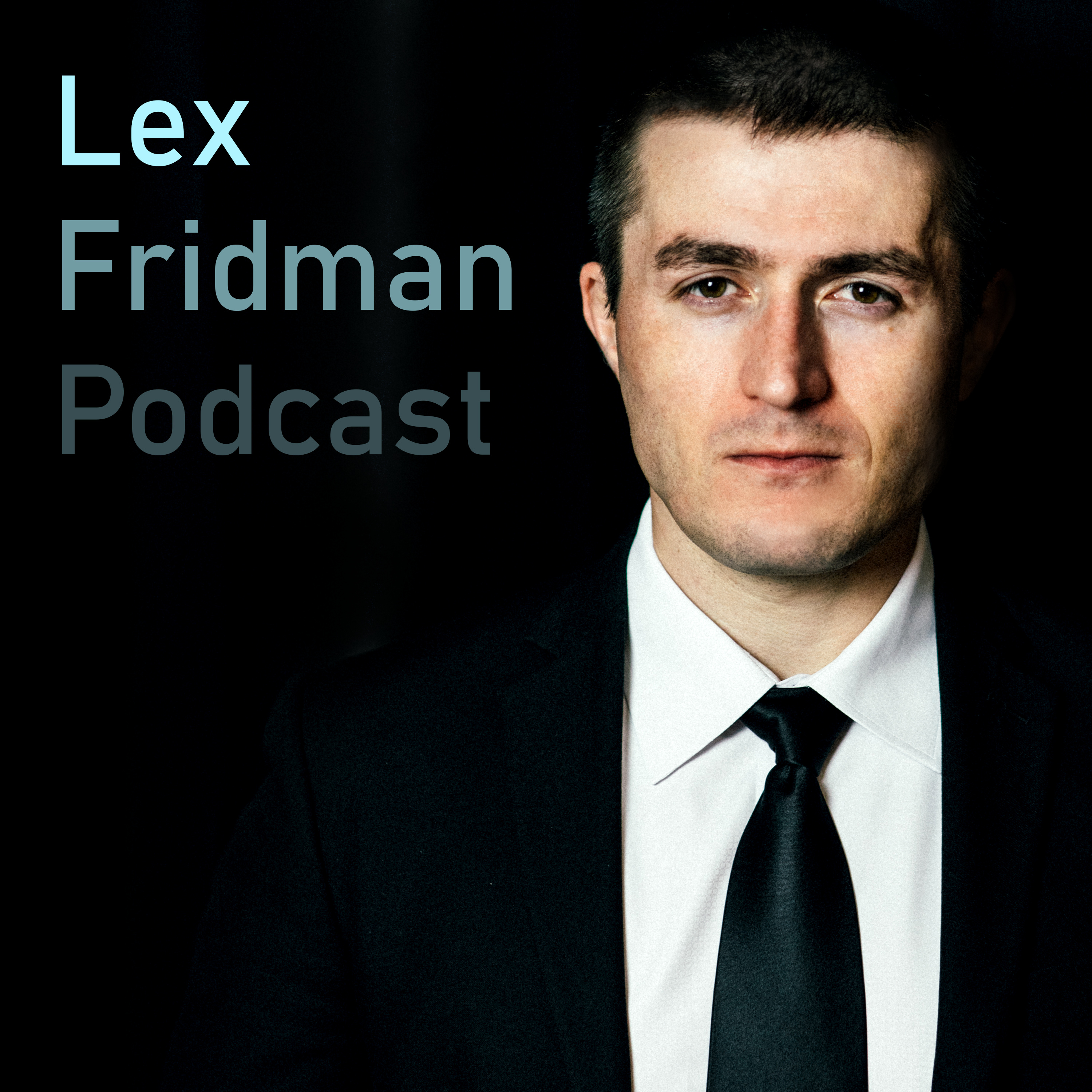
Bernie Sanders reflects on his political journey, emphasizing that true progress in democracy comes from addressing systemic inequities rather than focusing on personal ambition. He criticizes the role of money in politics, arguing that billionaire influence through lobbying and super PACs has distorted the democratic process and created a deeply unequal society. A central pillar of his platform is Medicare for All—a universal, publicly funded healthcare system that would eliminate out-of-pocket expenses and provide care to all citizens, mirroring models in countries like Canada and Scandinavia. Sanders points to a stark contrast in wealth distribution: despite rising worker productivity, the top 1% now holds a disproportionate share of wealth, leading to widespread economic anxiety. He credits grassroots activism and public demand for change as the engine of transformation, citing movements in civil rights, gender equity, and healthcare. Drawing on historical figures like Martin Luther King Jr. and Eugene Debs, he underscores that moral leadership and long-term vision are more powerful than short-term political gains. Sanders also critiques hyper-capitalism, advocating for innovation that serves human needs—like affordable housing and clean energy—without allowing wealth to accumulate at the expense of the working class. He notes that while innovation and entrepreneurship are valuable, they must be balanced with policies ensuring economic security and dignity for all. His vision for the future of the Democratic Party is rooted in progressive, grassroots-driven change, where political leadership reflects the values of fairness, equality, and shared responsibility. Ultimately, Sanders believes that true democracy lies not in wealth accumulation, but in the ability of every person to live free from financial fear and medical insecurity.
The following is a conversation with Bernie Sanders, senator from Vermont and two-time
presidential candidate, both times as the underdog who, against the long odds, captivated
the support and excitement of millions of people, both on the left and the right.
And now, a quick few-second mention of each sponsor.
Check them out in the description.
It's the best way to support this podcast.
We got Aidsley for naps, Saley for eSIM, Magic, Ground News for a nonpartisan presentation
of the truth, AG1 for vitamins, and Element for electrolytes.
Choose wisely, my friends.
Also, if you want to get in touch with me for a multitude of reasons, go to lexfriedman.com
slash contact.
And now, on to the full ad reads.
No ads in the middle.
I try to make these interesting, but if you skip them, please still check out our sponsors.
I enjoy their stuff.
Maybe you will, too.
This episode is brought to you by Aidsleep, and it's pod for ultra.
I have some travel coming up, and one of, if not the biggest thing I will miss, is not
sleeping on a bed that has the ability to cool itself on both sides.
It really is a magical reminder of what technology has been able to achieve since the Industrial
Revolution.
Yes, there's. Endless ways in which suffering has been alleviated across the world, and it continues to, and
the quality of life continues to improve.
But this little inkling, this little reminder is a beautiful one.
To be able to lay down on a cold surface, using an app, control the temperature of that
surface, put on a warm blanket, and I am forever lost in the creation of the millions of engineers
who came before.
us. And the millions of engineers who will come after, who are doing everything they can to build
a better world. And that's what I dream about when I'm taking a nap. It's that better world.
Go to 8sleep.com slash Lex and use code Lex to get $350 off the Pod 4 Ultra.
This episode is also brought to you by Saley, a brand new eSIM service app that offers several
affordable data plans in over 150 countries. That for me has been the biggest pain when traveling
is to make sure when I get to the airport, when I leave the airport, I'm able to communicate with
the world or just communicate with a map that can make sure I don't get completely lost in this
new country where I don't speak the language and all the other complexities of travel.
Everything is made easier when you have an internet connection. And again,
just the
reminder how lucky we are in the 21st century. Billions of people are able to be seamlessly
connected with each other. So anyway, I've had countless and countless experiences where
I have a terrible internet and the SIM situation is complicated. Do I buy a new SIM at the airport?
And it's just a mess. And so Saley takes on this problem, make sure it's affordable, but also make
sure it's super easy. If you're traveling and you want to make sure you stay connected, try them out.
Go to Saley.com slash Lex and get 15% off any eSIM data plan. That's Saley.com slash Lex to get 15%
off. This episode is also brought to you by Ground News, a nonpartisan news aggregator
that I use to compare media coverage from across the political spectrum.
In these days and weeks, especially, a site like this is just priceless. Reporting on the different
things going on in the world, I'm going to talk to you about one of the things that I've been
doing. And it's really nice to be able to get multiple perspectives and for that perspective
to be presented with a clear indication of the best kind of estimate from which side of the
political spectrum this reporting is coming from. Anyway, Ground News is doing an amazing thing that
I always thought should exist and I'm glad they're building it. Basically, Ground News is doing an
amazing job of basically creating a tech solution to the problem of the division of the completely
biased, subjective reporting, presenting itself as if it's objective. So breaking through all of
that. And they're doing a lot of really nice other things like the blind spot feed shows
discrepancies in media coverage on the left and the right. There's just a lot of really nice
features. Go check them out. It's groundnews.com slash Lex and you'll get 40% off any eSIM data
off the Ground News Vantage plan, giving you access to all of their features. Trust me, it's
worth it. That's ground, G-R-O-U-N-D, news.com slash Lex. This episode is also brought to you
by AG1, an all-in-one daily drink to support better health and peak performance. I drink it
twice a day, usually after training. And that training could be a long run or jiu-jitsu. Grab
a drink. Grab a drink. Grab a drink. Grab a drink. Grab a drink. Grab a drink. Grab a drink. Grab a drink.
Grab a drink. Grab a drink. Grab a drink. Grab a drink. Grab a drink. Grab a drink. Grab a drink. Grab a drink.
Which I really love and I love the fact that I've been injury free, not even really minor injuries for
quite a long time. I've been able to knock on wood. I've been able to train really hard and enjoy doing
it. And of course, go through the whole rollercoaster of training, which is when you go against people
that are really good, you sometimes get humbled. And that humbling can be emotionally challenging.
But then from that, you grow.
And it's the beautiful journey of the sport, especially as you get older. Somebody has better
technique than you. Somebody has better timing than you on that particular day. And together,
you figure out what works and what doesn't. And through that process of humbling,
you chip away at the ego that most human beings have. I think it just makes you a better person
when you realize that you're somewhere in the food chain.
Nowhere close to the top. And you're mortal. And you kind of suck at most things. And the only way
to get better is by working really hard. All of those truths hit you really hard when you're doing
a combat sport because you can't pretend you didn't just get your ass kicked. So it's a beautiful
process of humbling. And when you should try AG1, they'll give you one month's supply of fish oil
when you sign up at drinkag1.com.
This episode is also brought to you by Element, my daily zero sugar and delicious electrolyte mix.
Whenever you see me drinking something that looks like water during the podcast,
it's almost always water mixed with watermelon salt flavored Element. I take one of them
Powerade bottles that are 28 ounces. I fill it with water, shake up one packet of Element,
put it in the fridge, and after like 30 minutes, it's ready. And it's delicious.
I'm surprised how many problems in the mind, in the body are solved by making sure you get enough
water, getting enough sodium, potassium, magnesium. To me, probably sodium is the most important,
then magnesium, then potassium. But electrolytes. It's crazy how I'm just feeling tired or having
a headache or any of those kinds of feelings can go away. If you just, as the meme goes,
just drink water. If you're thirsty, just drink water. It's true. Like water and electrolytes and
a nap and a shower. Those four things can like transform your mind entirely in a matter of
minutes. It's crazy. Humans are such fragile creatures. At once resilient and at once fragile.
Anyway, get a sample pack for free with any purchase. Try it at drinkelement.com slash lex.
This is the Lex Friedman podcast. To support it, please check out our sponsors
in the description. And now, dear friends, here's Bernie Sanders.
Growing up, did you ever think you'd be a politician?
Nope.
Not in a million years.
Yeah, I know that you hate talking about yourself, which is rare for a politician, I would say.
What's your philosophy behind that? You like talking about the issues.
Yeah, I do. I mean, you know, everybody talks about themselves. It's not about me.
You know, nice guy, not a nice guy. What politics should be about is the issues facing
the people of our country, the people of the world, and how we're going to address it.
That's what it should be.
That said, there's interesting aspects to your life story. For example, in,
1963, you were very active in the civil rights movement, got arrested even for protesting
segregation in Chicago. And you attended the famous March on Washington, where MLK gave his
I Have a Dream speech. What was that like?
It's extraordinary. I took a bus ride down with fellow students in the University of Chicago.
And it was a zillion people there. I'm not sure if it was the first time I'd ever been in Washington
in my life. But it was, you know, it was a lot of fun. And I think it's a lot of fun. And I think
it was a very impressive moment. And what he was talking about, what people very often forget about
that it was not only racial justice it was jobs jobs and justice that was the name of that rally
and uh so it's something i've never forgotten what uh influence did he have on you what would
you learn about the way he uh enacted change in the world king was a very impressive guy
uh more impressive i think than people think that he was uh and what he did is he created his
movement from the bottom on up so was he developed real organization grassroots organization which
put pressure on communities and officials to end segregation to open up voting patterns
and i think what has to also be remembered about king which is really quite extraordinary
is you know he won the nobel peace prize and there was oh you're great you're wonderful
but then to the end of his life he took on
the
on the war in vietnam and as soon as he did that suddenly the editorial pages throughout america
established from papers uh no longer thought he was so great in fact the message sent out you're
black deal with civil rights don't worry about foreign policy we'll take care of that but he
said you know if i talk about peace and non-violence i can't sit back and allow what's going on in
vietnam to continue without speaking out incredible courage to do that and by the way when he was
assassinated at a uh fighting for the rights of afsmi workers garbage guys who delivered the garbage
who were treated terribly low wages bad working conditions they went out to support their right
to form a union that's when he got killed so on the war front one of the things that people don't
often talk about your work in politics you gave what i think is uh a truly brave speech on the iraq
war in 2002 i believe uh you voted no on the iraq resolution you voted no on the patriot act
and uh you basically predicted very accurately what would happen if we go into iraq what was
your thinking at the time behind those speeches behind voting no on the patriot act on the iraq
resolution and maybe ironically came out of maybe the war in vietnam and the ease and lies that people
told we went into vietnam under a lie uh we lost close to 60 000 americans millions of people
in vietnam cambodia died as a result of that so you think twice about it and then the war in
uh iraq you had you know people like dick cheney and others telling us oh they have nuclear weapons
and all that stuff it's the only way we can resolve the issue i didn't believe it i didn't
agree with it and then you're right it turns out the history of the war in iraq is the only way we
i was right what's the way to fight this thing that uh martin luther king tried to fight which
is the military-industrial complex it's huge i mean it gets to the broader issue where we are as
a nation and what i you know almost uniquely in congress talk about is the fact that we are moving
lex to an oligarchic form of society and not a lot of people are familiar with that term but what it
means you know we talk about oligarchy in russia oh i'm putting this around by the oligarchs well
guess what what do you think is happening in russia i'm putting this around by the oligarchs
in the united states so what you have right now is an economy with more concentration of ownership
than we've ever had all right that means whether it's agriculture transportation healthcare whatever
it may be fewer and fewer massively large corporations control what's produced and the
prices we pay and then you look at our political system and it's we don't talk about it what is the
political system today and that is that billionaires are spending huge amounts of money to buy this
election
in trump's campaign you got three multi-billionaires spending over 200 million dollars three people
democrats have their billionaires not quite as concentrated but at the end of the day
billionaires play an enormous role in terms of electing politicians and in washington in
determining what legislation gets seen and not seen but it's not just single billionaires it's
companies with lobbyists you got it let me give you one example lobbyists we pay in
the united states by far the highest prices in the world for prescription drugs this is an issue i've
been working hard on with some success take a wild and crazy guess how many lobbyists are there from
the drug companies in washington dc well over a thousand over a thousand there are 100 members
of the senate 435 members of the house 535 members of congress there are 1800 well-paid
lobbyists representing the drug companies including former leaders of the republican and democrat
party that is why one of the reasons why we pay the highest prices in the world for prescription
drugs military industrial complex you got a revolving door people go from the military into
the general dynamics into lockheed martin and the other large companies and what we see there is an
institution in the pentagon we spend a trillion dollars a year on the pentagon it is the only
federal agency that cannot is not able to submit to an independent audit so
if you think there's not massive fraud and waste and cost overruns in the pentagon you would be
sorely mistaken do you think most politicians are corrupt in accepting the money or is the system
corrupt or is it a bit of both if the corrupt means that hey you here's ten thousand dollars
vote this way doesn't work like that very very rare occasionally very very rare that's
corruption what happens is that if you are in
a campaign and right now the amount of money that people have to raise you're running for senate in
ohio you're talking about fifty sixty million dollars where the hell you're going to get that
money it's not going to be ten dollar donations you're going to be surrounding yourself with
people who have the money you're going to go five thousand dollar uh a plate dinners etc so you're
surround yourself with those people who say oh these are my problems this is what i need this is
i need a tax break for billionaires blah blah blah so you become you live in that world they are your
support they are in a sense your your political base so you're very cognizant of what you do
uh in terms of not upsetting them so it's not corruption in the sense of people you know taking
envelopes with you know huge amounts of money to vote a certain way that very very rarely if ever
happens it is the power of big money to make politicians dependent on those folks and that's
why you know when i ran for president but i'm probably maybe most proud of
is the fact that we received millions and millions of campaign contributions
averaging 27 bucks a piece i think in 2016 have companies lobbyists ever try to buy you
try to influence you we don't welcome them into our office i do deal with these guys but it's
usually on a confrontational tone though so they don't come in to my office very often telling me
their problems so how do we fix the system how do we get money out of politics this is not you know
like many other issues i we don't have to reinvent the wheel here it exists in other countries
uh if you go to you know every country has their own election system but nobody has a system where
billionaires can spend unlimited sums of money through super PACs to elect the candidates of
their choice so first thing you got to do and it you know one of the things lex i found that the
more important the issue the less discussion there is the less important the issue the more discussion
there is a number of years ago the united states supreme court in one of its more pathetic uh
decisions passed the the citizens united decision and what citizens united decision said is you're
a multi-billionaire you want the freedom you're a free person in a free country you want the freedom
to buy the government and how terrible it would be to deny you the freedom to spend hundreds of
millions of dollars on a campaign to elect the candidates and they said that's that's the that's
your freedom and that's what citizens united is about uh we've got to end that uh in my view we
move to public funding of elections
that means you want to run for governing you want to run for senate show that you have some support
get you know five dollar contributions from x number of people to show you you know you're
not a flake uh you have some support and government will pay a certain amount more
and there will be a limit on the amount of money that can be spent so it'll be a real
you can run against me and i'm not going to outspend you ten to one that's what we should
be moving toward in my view how do we make that happen when uh there's so much money in the system
uh oh to the people who paid for their election does it have to come from the very top essentially
sort of uh a really strong popular populist president but you're right you raised exactly
the question if i am getting a huge amount of money from billionaires do you think i'm going
to go out and announce i think billionaires should not be involved in buying elections i doubt that
very much so what you're going to need and you tell me if i'm missing something but i pay attention
you don't hear either of the major candidates looking at me i'm not going to be involved in
talking about that issue do you i think what happens is when an individual politician speaks
out about it they get punished but i think this is a popular idea so if a lot of them speak out
that's why if it came from the top if a president was using a very large platform to basically speak
out it provides a safety blanket for the other politicians to get it all out of the system but
there has to be a kind of a mass movement yes it does i mean every place i go i always speak about
the issue and i think it's a very important issue and i think it's a very important issue
and it always, people understand it.
You're a Republican, you're a Democrat, you're progressive,
you're progressive, you're conservative, who really believes that we are a democracy when
billionaires can spend tens and tens of millions of dollars to buy elections?
So it is a very popular issue.
It's important.
You're right.
We need political leaders to be speaking out on that, but we need a grassroots movement
to say, when somebody is at a town meeting, you're running for the Senate, you're running
for the House, what's your view on Citizens United?
Are you prepared to vote to overturn that decision and move to public funding of elections?
Extraordinarily important.
Okay.
So many of your policy proposals are quite radical.
No, they're not.
I beg to differ.
Okay, great.
Go through.
Well, they're popular.
So what I mean is, relative to the way other politicians speak, it's usually a little bit
more moderate.
So from everything you've learned from politics, is it better to go sort of radical, maybe
we can come up with a different word, versus a more moderate, safe, ambiguous kind of policy?
Okay.
Let's talk about it.
We talked about one issue, very important.
Money in politics.
Money, yes.
Getting money out of. Big money out of politics.
Do you think that's a radical idea?
Well, I mean, yeah.
It's a popular idea.
It's an idea that makes sense.
But in order to implement it and actually make it happen, it requires, I mean, to flip
the system upside down, right?
In that sense, it's radical.
But if you go to walk down the street here and you say, "Do you think billionaires should
be able to spend as much money as they want to buy politicians?"
I would say not.
Nine out of 10 people say, "That's crazy.
That's not what America is supposed to be about."
So in that sense, it's certainly not radical.
Let's talk about healthcare.
Go out on the street.
Do it.
Or do a poll.
I've done the polling.
Is healthcare a human right?
Should every American be able to go to a doctor when they need, regardless of their income?
You know what people say?
I would say about 85%, 90% of the people say, "Of course."
The idea that healthcare is a human right available to all exists, Lex.
In every major country on earth except the United States.
So you're here with me in Burlington, Vermont, right?
If you got a car, go 50 miles north to Canada.
Walk a little Canadian, walk into Canada and ask people, "When you go to the hospital,
how much does it cost you?
What's your kind of bill?"
And they say, "What are you talking about?
It doesn't cost us anything.
It doesn't cost us a nickel."
That's the case in virtually every country in Europe, so the idea that healthcare should
be available to all, that there should be no out-of-pocket expense because it's a human
right, is widespread around the world and very much agreed to in this country.
Bottom line is that because of our corrupt political system, we have a healthcare system
designed not to provide healthcare to all people, to make huge profits for the drug
companies and the insurance companies, and that is what's happening, and we got to change
that system.
So I'm a strong advocate, and I've led the effort on Medicare for All.
Okay, let's talk about Medicare for All.
If you could snap your fingers today and implement the best possible healthcare system for the
United States of America, what would that look like?
Well, we have a pretty good system, not great, but a pretty good system in Medicare.
So it's there for the elderly, and Lyndon Johnson passed that in the 1960s, so huge
step forward.
It is being chopped away by the private insurance companies through Medicare.
It's through Medicare Advantage.
But if you strengthen Medicare, and you do away with the kind of deductibles that seniors
now have to pay, and you do away with other stuff, and you say basically, right now, you're
a senior in America, go to any doctor you want, when you're in the hospital, Medicare
will pay the entire bill.
If you expand Medicare to cover dental, hearing, and vision, which it doesn't now cover, you
do all of those things, and then the next thing you do is say, "Okay, to be eligible
for Medicare.
You have to be 65."
First year, we're going to lower it to 55, then we'll lower it to 45, then we'll lower
it to 35, then we'll have everybody in the system.
So I think in a four or five year period, you can strengthen Medicare and have everybody
in the system.
And when you do that, and this is not just me talking, a number of studies have pointed
this out, when you take the profit motive out of it from the insurance companies and
the drug companies, you can end up providing quality care to all people at no more than
we're spending right now.
Because right now, we are spending twice as much per person in healthcare as the people
of any other nation.
Incredibly wasteful system.
So the way to pay for the system is to increase taxes, but you're saying if you cut that cost
and increase the taxes, you're saying it's going to. Here's the story, and I've gotten my share of 30-second ads attacking me on this.
Bernie Sanders wants to raise your taxes on healthcare.
It's true, in a progressive way.
But right now, do you have health insurance?
Yes.
Okay.
Somebody's paying for your health insurance.
It depends.
If you are working, most people get their health insurance through their jobs, okay?
So if you're working for a large company, your employer is paying your health insurance.
And by the way, that comes out of your wages.
Healthcare costs in America are very high, and your employer will tell you honestly,
"Look, I can't give you more than a 3% wage increase, because I got a 10% increase in
your healthcare costs.
You want that?"
Or if you're a union negotiating, you know what they'll say?
"Hey, you want decent wages?
We're going to have to cut back on your healthcare."
That's what every union has to deal with, you know, every negotiating session.
So we're paying for it through employers out of pocket.
We pay through it through Medicare, Medicaid, Veterans Administration, et cetera.
What I am proposing is really not radical.
It's what exists in Canada and other countries.
It is publicly funded, like the police departments and like libraries are, and like public education.
This is publicly funded in a progressive way.
So right now, rather than paying. If you're paying out of your own pocket, if you are a family, let's just say you're self-employed
right now, and you are, you know, you have a couple of kids and a wife, it could cost
you $15,000, $20,000 a year in insurance costs.
Well, that's all eliminated.
Will you have to pay more in taxes?
Of course you will.
Maybe.
It depends on your income level.
But it could be that you'd be paying $12,000 more in taxes, but not $20,000 more in premiums,
and deductibles.
You save money.
So it's paying taxes rather than paying money to the insurance company.
You got a better deal through the tax system.
So the most painful thing in today's system is the surprise bills, the number one cause
of bankruptcy, and the psychological pain that comes from that, just worrying, stressed,
in debt.
You got it.
And just basically afraid constantly of getting sick because you don't know if insurance is
going to cover it.
And if you're not insured, you don't know how much it's going to cost, so you're not
going to go to the hospital, even if there's something wrong with you, if there's pain
and all that.
So you just live in a state of fear, psychological fear.
That's the number one problem.
It's not just financial, it's psychological.
Look, and I think you said it very well.
I'm chairman of the committee that deals with this stuff, so I talk to a lot of doctors.
And doctors in Vermont and all over this country tell me that they are astounded.
People walk into their offices much sicker than they should have been, and the doctor
says, "Why didn't you come in here six months ago when you first, you know, felt your symptoms?"
And they said, "Well, you know, I have a high deductible of it, $10,000 deductible.
I don't have any money to pay.
I'm uninsured."
Some of those people don't make it.
Other people, and this is what is totally crazy, they end up in the hospital, a huge
expense to the system, rather than getting the care they need when they needed it.
So that is how, I'll give you another example of it, we pay the highest prices in the world
for prescriptions.
One out of four Americans can't afford the drugs their doctors prescribe.
So you walk into the doctor's office and they say, "Okay, Lex, you got this, that, and the
other thing.
Here's your prescription.
You can't afford to fill it."
What happens?
You get sicker.
You end up in the emergency room, which is an extremely expensive proposition, okay?
Or you end up in the hospital, you know, rather than dealing with the problem when it occurs.
And what is not talked about, you know, I mentioned earlier how we don't talk about
some of the major issues.
There's some 60,000 people in America die every single year unnecessarily because they
can't get to a doctor when they need because of financial reasons.
And you want to hear even crazier, one out of four people who get cancer treatment in
this country either go bankrupt or deplete their financial resources or their family.
So your point is right.
You know, if somebody diagnoses you with cancer, you're scared to death, you're worried about
how you're going to live, you're going to die, what's going to happen.
And then on top of that, you got to worry about whether your family goes bankrupt.
How insane and cruel is that?
So to me, you know, I think healthcare is what unites us all.
Everybody has family, they get sick, we'll get born, we all die, we all want care.
And we all have got to come together to create a system that works for all of us, not just
the drug companies or the insurance companies.
There's just so many stories and not even the horrific stories, there's countless
horrific stories, but just basic stories of cost like my friend, Dr. Peter Attia has this
where he happens to be wealthy so he can afford it, but he had to take his son to the emergency
room and the son was dehydrated and the bill was $6,000.
They just did a basic test and gave him an IV, the basic thing.
And he has really good insurance and the insurance covered $4,000 of it, so he had to at the end
pay $2,000 for a basic emergency room visit.
And there's a lot of families for whom that one visit for such a simple thing would be
just financially devastating.
And you know what?
People know that and you know what they say, you know, "I don't feel well today.
Something's wrong."
I ain't going to go to that emergency room because I don't want a $6,000 bill.
And what happens?
He had insurance that paid two-thirds of it, right?
Yes.
So what happens if he didn't?
What happens if he didn't have money?
He'd be hounded by bill collectors for the rest of his life.
So it is a disgusting system.
It is an inhumane system.
But, you know, the insurance companies and the drug companies are very powerful,
and they make a lot of campaign contributions, have a lot of lobbyists,
and we are where we are.
But, you know, I think, you know, the American people want fundamental changes there.
So that's another good example of a really popular idea
that is not implemented because of the money in politics.
You got it.
That's a wonderful—and I'll tell you that, not only that,
not only is it not implemented because of money, it's not even discussed.
All right, so I'm saying here, and no one disputes me,
we are spending twice as much per person on health care, right?
Right.
And yet, 85 million Americans are uninsured or underinsured,
and our life expectancy is lower than virtually every other major country.
Do you think that might be an issue that we'd be discussing?
Again, if a single politician discusses it, they get punished for it.
So there needs to be a mass movement, and probably, I mean, from my perspective,
it has to come from the very top.
It has to come from the president.
And the president has to be a populist president,
where they don't care about the parties with the rich people.
They just—
They just speak out because they know it's a popular message,
and they know it's the right thing.
So speaking of that, you had a historic campaign run for president in 2016.
And in the eyes of many people, mine included,
you were screwed over by the DNC, as especially the WikiLeaks emails showed.
What's your just looking back feelings about that?
Are you angry? Are you upset?
Yeah, of course I'm angry, and of course I'm upset.
But, you know, when you take on, in this case, the Democratic establishment,
who have controlled that party forever,
the moneyed interest in the Democratic Party,
you know, you're taking on corporate America,
when you're taking on the corporate media,
and when you're calling for a political revolution
that creates a government that works for all and not just the few,
you know, the opposition is gone.
You know, the opposition is gone.
It's going to be extraordinary.
But what I am extremely proud of from that campaign in 2020 as well
is that we took on the anointed candidate of the establishment,
and we showed, you know, we showed, despite the fact the entire establishment,
I had in the Senate, I had one supporter.
There were 50 Democrats.
I had one supporter.
I had no governors supporting me, I think.
Maybe a few people in the House.
But we took.
We took on the whole political establishment,
and we did, you know, got millions of votes,
and the ideas that we brought forth
were ideas that they had to eventually deal with in one way or another.
And if you look at the American Rescue Plan,
which I'm proud to have helped write during the midst of COVID,
a lot of the ideas that we fought for were implemented in that bill,
and I want to make them obviously permanent.
And you almost won.
And a lot of people thought that you would win against Donald Trump.
I think we would have.
You know, I think Trump is a very, you know,
I think he's a little bit crazy between you and me,
but he is a smart politician,
and he's appealing to a lot of the anger that working-class people feel.
And you know what?
Working-class people should feel angry,
but they should make sure that their anger is directed in the right direction
and not against people who are even worse off than they are,
which is what demagogues like Trump always do.
So, you know, I think we had, as I went around the country then and now,
we have a lot of support from working-class people
who understand that there is something wrong.
And this is an incredible fact that no one talks about.
All right, I'm going to ask you a question.
Are you ready for this, Lex?
Let's go.
Here we go.
Over the last 50 years,
there's been a massive increase in worker productivity
as a result of technology, right?
Everyone agrees with that.
And it's, I don't know exactly what it is,
but the worker today is producing a lot more than the worker.
50 years ago, doing something similar.
Is the worker today, in real inflation accounted for dollars,
making more money than that worker 50 years ago?
Well, there's a lot of close arguments there,
but your point is well taken.
It's either the same or a little bit higher or a little bit lower,
depending on the statistics.
It has not increased significantly,
and the wealth inequality has increased significantly.
That is the point.
So you would think that if a worker is producing a lot more,
that worker would be better,
would be working lesser hours, et cetera.
That hasn't been the case.
And what has happened in that 50 years
is according to the Rand Corporation,
there has been a 50 trillion, trillion with a T,
redistribution of wealth from the bottom 90% to the top 1%.
So you got CEOs today making 300 times more than their workers.
You got three people on top owning more wealth
than the bottom half of American society.
So that's why people are angry.
And they're worried.
They're worried that their kids may have a lower standard of living than they
in the wealthiest country in the history of the world.
So there's a lot of anger out there.
And I think we tap some of that anger in a constructive way,
essentially saying, you know what?
We don't need so few to have so much in wealth and power.
Let's distribute it more fairly in America.
I got to get back to 2016 because it's such a historic moment.
So there's a lot of fans of yours that wanted you to keep fighting
and gave, in the end, the establishment and joined them in support.
And your fans wanted you to keep fighting for a takeover,
for a progressive takeover of the Democratic Party.
If you just look back and had to do it all over again,
what would you do different?
Well, by the way, in terms of a takeover of the Democratic Party,
we did try.
We ran, do you know who Keith Ellison is?
Keith is now the Attorney General of the state of Minnesota.
He's doing a great job, really.
One of the outstanding attorney generals in the country.
And Keith was then a member of Congress.
And we ran Keith to become the head of the DNC and the establishment
from the president of the United States on down went crazy.
And they beat him by a few votes, not a whole lot.
Um, so it's look, you, you're faced and you know, that's the exact same
position that many of us are in right today.
So people say, well, why did you support Hillary Clinton?
Yeah.
What's the alternative Donald Trump, I think Donald Trump is an extremely
dangerous person trying to undermine American democracy.
So I can't support him.
You know, Hillary Clinton, obviously his views are very, very different than mine.
Uh, but that in that moment, you know, that's where politics becomes really
tricky and it ain't easy and, uh, you know, sometimes you have to do things
that you're not really all that excited about, but I think it was right to try
to do what I could to prevent Trump from getting, uh, elected.
And in 2020, I did the same with Biden and we had more success
with Biden than we had with Clinton.
Well, there's this interesting, uh, story about a long time coming meeting
between you and Obama in, uh, 2018, I believe.
So, uh, Ari Rabenhoft, who was a former deputy campaign manager wrote a great
book, I would say about you called the fighting soul on the road with Bernie
Sanders, and, uh, he tells them many great stories, but, uh, one of them is
your meeting with Obama and he says that.
Obama told you, Bernie, I wish I could do a good Obama impression, uh, Bernie,
you're an old Testament prophet, a moral voice for our party, giving us guidance.
Here's the thing though, prophets don't get to be king.
Kings have to make choices.
Prophets don't.
Are you willing to make those choices?
Basically Obama was making the case that you have to sort of, um, moderate
your approach in order to win.
So was, was Obama right?
Look, and again, that's why Paul.
The politics is very, very fascinating.
You know, sometimes you can run and lose and you really win.
If your goal is not just individual power, but transforming society.
Uh, one of my heroes, you mentioned Dr.
Martin Luther King, Jr.
Who is one of my heroes.
Another one of my heroes is Eugene Victor Debs that ring a bell.
Yeah.
Yes.
Okay.
For many reasons.
Yes.
All right.
Debs, many listeners may not know who Debs was.
Debs was a union organizer in the early 19 hundreds helped form the American
railway union ran for president.
I think five times ran the last time while he was in a jail cell because of his
opposition to world war one and got a million votes doing that Debs lost badly
in every race that he ran in 1932, Franklin Delano Roosevelt ran for president.
And much of what Roosevelt ended up doing.
Was at least some of what Debs had talked about Debs helped lay the groundwork for ideas.
So sometimes you can lose and win if you're into transforming, uh, society.
What my view is where I disagree with Obama is I think you have got to
raise consciousness among ordinary people.
And when people know what's going on and are prepared in an organized way to
fight for change, they can make incredible changes.
And we've seen that in recent years, you know?
You know, today we take for granted,
well, we have a woman running for president
of the United States, so I'm supporting.
We have had other women running for president.
We have women governors and senators.
Not so many years ago in the United States Senate,
there were 98 men, two women.
Even before that, 1920,
it was when women got the right to vote.
How did that change?
How did women's role in society change?
It changed because women and their male allies
stood up and fought.
Gay rights, old enough to remember
that anybody I knew who was gay,
you think they would talk about it?
Come out about it?
No, they wouldn't.
That's changed.
We have seen, in terms of civil rights,
massive changes.
Change happens when people
at the grassroots level demand that.
We talked about healthcare a moment ago.
We will get universal Medicare for all
when millions of people make it clear
that's what they want.
I believe politics starts at the grassroots level,
and that's how you got to bring about change.
Just to go back to Obama, though,
in many ways, he too is a singular historic figure
in American politics.
He has brought about a lot of change.
He's a symbol I think that will be remembered
for a long time.
What do you admire most about Obama?
Well, you know, I know him.
We're not best friends, but I know him well,
and we chat every once in a while.
First of all, don't underestimate
what it was in 2008
to be the first black president
in the history of this country.
And I think few would deny
that he was the first black president
in the history of this country.
I think few would deny
that he's an extraordinarily intelligent guy,
very, very articulate,
one of the best speakers that there is in America,
and that he and his family,
and again, it's a lot harder than it looks,
he and his family for eight years,
that's his wife, Michelle, and his kids,
really held that office
in a way that earned, I think,
the respect of the American people,
even when people disagreed with him politically.
He deserves, and again, don't ever,
don't underestimate.
I think, you know, years ago,
there were people who said a black president
in our lifetimes, never gonna happen,
can't happen, too racist to the country.
He did it, and that is a huge accomplishment.
And I think, you know,
he has had some significant achievements
in his presidential tenure.
He and I, you know, did disagree
on a number of issues.
I think he will tell you,
I think his public stance is that,
yeah, if you had to start all over again,
he would do Medicare for all, single payer,
but where we are right now,
the best he could do is the Affordable Care Act.
Well, we disagree on that,
and we disagree on other things.
But, you know, I think he deserves
an enormous amount of credit
for what he has accomplished.
And he, like you, also gave a damn good speech
opposing the Iraq War before running for president,
and that takes courage.
Yes, it does.
But then it also shows that once you get into office,
it's not so easy.
It's not so easy to oppose
or to work against the military-industrial complex.
It is very hard.
People do not fully appreciate
how powerful the establishment is,
whether it is the healthcare industry,
whether it's the military-industrial complex,
whether it's the fossil fuel industry.
These people have unlimited amounts of money.
They are very smart lobbyists in Washington, D.C.,
and they are very, very greedy people.
They want it all.
I have to ask you about capitalism.
The pros and cons.
The pros and cons.
So you wrote a book,
It's Okay to Be Angry About Capitalism.
That is a thorough, rigorous criticism of,
I would say, hyper-capitalism.
Yes, that's right.
A certain kind of capitalism that you argue
that we are existing in today in the United States.
But a lot of people would attribute to capitalism
all the amazing technological innovations
over the past 70-plus years
that have contributed to increase in quality,
of life, in GDP, in decrease in poverty,
decrease in infant mortality,
increase in expected life, life expectancy.
So how do you see the tension,
the pros of capitalism and the cons of capitalism?
You know, some of my European friends,
they say, you know, Bernie,
in the United States, you're considered to be very radical.
If you were here in, you know, France or Denmark
or something,
you'd be kind of mainstream left guy.
Yeah.
Not all that radical.
So this is what I think.
I mean, I think the best that we could do right now,
where we are right now,
is to create a society which does two things.
It encourages innovation.
But at the same time,
it makes sure that all people in a wealthy nation
have a decent standard of living.
In some countries, if you look at Scandinavia,
and this shocks people,
because we don't talk about this at all.
So in Scandinavia, it has been the case,
you know, Denmark, Finland, Norway,
for years that people have healthcare.
That's not a big deal.
You end up in a hospital, so what?
They don't pay a bill.
You have, and this shocks people.
In America right now, we have people who get one week,
two weeks off paid vacation.
Sometimes we've got nothing, you know that?
There are people out there who have no vacation at all.
You know, in Germany, you get six weeks paid vacation.
And other holidays as well.
People are shocked by that.
In America, we don't have paid family and medical leave.
The only major country not to do it.
You know, other countries, you know,
your wife gets sick, you stay home with her.
Your kids get sick, not a big deal.
You get a certain amount of paid family and medical leave.
Cost of prescription drugs are far more affordable.
So what you want to do is create what's called a social safety net.
That means I don't care what your income is.
Of course, you're going to have healthcare as a human right.
Of course, you're going to have housing that is affordable.
Of course, your kids are going to have great quality education
from a child care university without much cost.
You know, every country has it a little bit different.
But there are countries in the world right now,
I think in Germany, I think college is now tuition free,
as I recall, for obvious reasons.
They want to have the best educated workforce they can.
So in terms of government playing a role in a civilized
democratic society of providing all basic needs,
healthcare, education, housing, retirement benefits.
Yes, that is what we've got to do.
Now, does that mean then that the government is going to run
every mom and pop store on the corner?
Of course not.
You want innovation.
You want, you know, you want to go out and start a business,
produce a product, good luck to you, make money.
But on the other hand, in terms of even making money,
we want you to be able to do that, come up with good products,
good services, but do I think you should end up
with a hundred billion dollars?
No, I don't.
And you know what's funny, I had, I did an interview
with Bill Gates, who is I think the third wealthiest guy
in the country, struggling behind Musk and Bezos, I think.
And he's only worth a hundred plus billion, but he gets by.
And I said to him, Bill, he was supposed to ask me questions.
I asked him the question, I said, Bill, tell me something.
You know, you're an innovator with Microsoft
and all that stuff.
Did you know that you'd become a multi-billionaire
and was that motivated you, that one motivated you?
And he said, no, and I believe he was honest.
He said, I love doing what, I love programming.
And I was a kid, he started doing that.
He loved it, he was motivated by it.
Do you think that there are scientists out there
who are working day and night trying to develop drugs
to deal with Alzheimer's or cancer, that they motivate,
oh, boy, if I come up with this drug,
I'm gonna become a billionaire?
So I think, you know, we want to reward success, fine,
but you don't need a billion dollars.
We want people to get satisfaction from what they
accomplish, the work they're doing,
whether it's cleaning the street
or developing a new, you know, drug.
So I think we have gone a little bit too far,
and you're right in talking about the book was an attack on,
I called, you call it hypercapitalism or ubercapitalism,
but right now, and this is not an American issue,
this is a global issue.
You know, it's not an accident that Musk is over there
in Saudi Arabia talking to the, you know,
trillionaire families in the Mideast.
These guys were Putin and his friends.
You got a, probably not more than, you know, five, 10,000,
extraordinarily wealthy families who have unbelievable
economic power, over seven billion people on this planet.
- Well, Elon Musk is actually an interesting case
because he's investing all the money back into the businesses.
So I think there is a balance to be struck,
and you just spoke to it, which is we can still celebrate
even big companies that are bringing wealth to the world,
that are building cool stuff,
that are improving quality of life,
but we can question of why is it that the working class does not
have a living wage, in many cases,
instead of trying to find that balance.
- That's right, that is the, look,
I am no great fan of Elon Musk,
especially in the role that he's playing right now
in Trump's campaign, but is he a brilliant guy?
Of course he is.
Does he work like a dog?
Of course he does.
Does he come up with these incredible innovations
in companies?
Yes, he does.
Does he deserve credit for that?
Yeah, he does.
But, you know, even in terms of encouraging innovation,
I would hope that we are focusing on
the important issues.
I would love to see great innovators figure out
how we build the affordable housing that we need,
come up with the great drugs that we need to solve
many of the terrible illnesses that plague people,
climate change, for God's sakes, all right?
Do we need innovation?
You know, we're making good, some progress in this country.
Should we do more?
What kind of technologies out there
can really cut back on carbon emissions?
So, you know, I hope we focus on some of the most important
issues that impact humanity, but, you know, reward innovators,
I don't have a problem with that,
when three people end up owning more wealth than the bottom half of American society.
Maybe you can briefly speak to something you tweeted recently about Donald Trump going to
McDonald's and the minimum wage, I believe, of seven and a half dollars. Can you just speak to
that tweet? Look, nothing new. Trump didn't invent it. It's called the photo opportunity. I've done
one or two in my life, too. So you go to a place, he puts on an apron. He, good old Donald Trump,
just another McDonald's worker. But anyhow, he was civilized. He did his photo op. That's fine.
Kamala Harris was in North Carolina handing out food to people who were victims of the
hurricane. Fine. That's what politicians do. But some reporter asked them, they said,
you know, Mr. Trump, are you for raising the minimum wage? And that was a fair question
because you got, I don't know how many, but many, many thousands of McDonald's workers and millions
of other American workers right now.
Are you for raising the minimum wage?
I'm trying to get by on nine, 10, 11 bucks an hour. Federal minimum wage is seven and a quarter.
You have people working at McDonald's right now, for sure, who are working for 12, 13 bucks an hour.
So the reporter said, how, you know, what do you think about raising the federal minimum wage?
And he's, oh, these are great workers. I love McDonald's and so forth. He didn't answer the
question. Well, I think that in the richest country in the history of the world, if you work 40 hours
a week, you should not be living in poverty. And that means we should have a federal minimum wage,
not absurdly seven and a quarter.
But in my view, $17 an hour. Will that solve all the economic problems for working class people?
No, it won't. It'll help. It'll help.
Since running for president, you've often been attacked, especially from the right,
about being worth, I believe, $2 million and owning three houses. So from my perspective,
the answer to that is most of your wealth has been earned from writing books and selling those books.
And you are one of the most famous politicians in the world. And so your wealth and the context
in comparison to other people of that fame level and other politicians is actually quite modest.
So what's your response usually to those attacks?
Do I own three residences? Yeah, I do. I live here in Burlington, Vermont. We live in a
middle-class neighborhood. Nice house. Guess what? I'm a United States senator and I own a home in
Washington, D.C. As do I own a home in Washington, D.C. As do
most senators. You know, you live there year after year. Actually, when I was in Congress for 16
years, I rented all the time. But I got elected. Okay, got a six-year term. You know what? Let's
buy a house. So we bought a house. And guess what? Like many thousands of people in the state
of Vermont, I have a summer camp. It's a nice one on Lake Champlain. That's it. Now, how did I get
the money? You're right. I wrote two bestselling books, including this book on capitalism. It was
New York Times bestseller for a while.
And also another book was a youth book. And that's, and I make, I don't know, 175,000 a year.
And that's more or less how I became the zillionaire that I am.
Well, I should also mention that sometimes the word mansion is used, and I think your
residences are quite modest, at least from my perspective.
Normal houses in Burlington. They're not, you know, they're middle-class houses, very nice house.
So when you started in politics, I read you were worth $1,100.
That much?
Yeah, that much. That's right.
Has the increase in wealth changed your ability to relate to the working class?
Oh, that's a good question. And obviously growing up in a working class family
has been maybe the most singularly significant aspect of my politics. It's, you know,
I grew up without money in a family that lived in a rent control department in Brooklyn, New York.
So that has impacted me. I'll tell you, I don't really give a damn about money. I drive a car
that's 11 years old. You know, it's an old car. And money, here's my jewelry. It's a solar watch.
Nice.
And my wedding ring. That's about it. I don't have a Rolex watch. Would not be interested in it.
But I'll tell you what has impacted me. My wife, who also grew up in a working class family,
will tell you the same. We don't worry. You raise that issue. You know, if we have to go to the
doctor, if our kids have to go to the doctor, we go to the doctor. I don't stay up nights worrying.
I used to, there was a time I have to worry about how to pay my electric bill. I don't worry about
that anymore.
So what has happened, that stress, that economic stress of not worrying about a financial disaster,
that's gone. And that is enormous. I, you know, maybe as much or more than any other member of
the Senate, work hard, not only for, but with working class people. I'm chairman of the committee
deals with labor issues. We have been involved probably in dozens of strikes all over this
country. I've been on picket lines. So, you know, I do my best. It's a very easy trap to fall into.
You can get separated from ordinary people and their struggles. Not hard to do. I try as hard as
I can not to do that.
So sometimes people say, can money buy happiness? I think I agree with you. That worry, sort of
being able to fill up your car and not worry about how much it's going to cost, or be able to get
food for dinner and not worry about how much it's going to cost. Or even, you know, I've been very,
recently to have enough wealth and not worry about healthcare, to have insurance and be able to afford
an emergency room visit. And that worry is just such a giant lift off your shoulders.
Lexi, I think you said it very well. I remember even to, and I saw this change in myself.
When I used to go out and I'd do the grocery shop. My wife does a lot of the cooking. I do
the grocery shop. I used to look at the prices of everything. I do that less now. You know,
there's a can of stuff, so what? But that's a luxury you have when you don't have to worry
about that. And I don't have to worry about it. But your point is, again, to me, I don't like big
fancy cars or big fancy homes. Don't go on. My wife will tell you we've not been on a real vacation
for God knows how long, because I work pretty hard. But the major thing about having money,
which is enormously important, is just what you said. I don't have to worry. If somebody in my
family gets sick, I don't have to worry. I don't have
to worry about that. I don't have to worry about putting food on the table or paying the mortgage.
So that's what money has done. Okay. Let me ask you about the future of the Democratic Party. So
one of the biggest impacts you've had is you've been the fuel, the catalyst for the increase of
the progressive caucus, the progressive movement within the Democratic Party. Do you think that is
the future, the progressives, even democratic socialist leaders will take over the party?
That is the most important question regarding,
to my mind, American politics. One of the successes that we've had, and I'm proud to
have played a role in this, is that if you go to the House of Representatives right now,
you will see almost a hundred members of the progressive caucus led very well by a woman
from Washington, Pramila Jayapal, does a great job. You know, it's people like Alexandra Ocasio-Cortez
and Ilhan Omar and many others. Many of them are young, often women, people of color,
and many of them come from working class backgrounds. So what we have been able to do
in recent years, elect a number of strong progressives who represent working families
very, very effectively. The struggle in the Democratic Party is between the corporate wing
and the progressive wing. And, you know, the corporate wing takes a whole lot of money,
sees its salvation in getting a whole lot of money from wealthy individuals and
large corporations, and is not very vigorous, in my view, in representing the needs of working
class people. If they were, we would have health care for all. We would have a minimum wage that
was a living wage. We would not have a housing crisis. We would not have a tax system in which
billionaires pay an effective tax rate that is lower than a truck driver or nurse. So I think
one of the reasons that Trump has had political success,
is he, it's not so much his ideas. Most working class people don't think
we should give tax breaks to billionaires or worry about the size of, you know,
Arnold Palmer's genitalia. But they are angry. People are angry. And the Democrats have not
responded effectively to that anger. So the struggle that we are waging right now is the
future of the Democratic Party will be a party of the working class and represent working class
issues, whether you're black or white or Latino or Asian or whatever you may be.
Or will it be a corporately dominated party? That's the struggle we're in right now.
Did you consider running in 2024? From my perspective, I would have loved it if you
ran. I think you would have had a great chance of winning not just the primary, but the presidency.
I gave about five minutes thought to it. And the reason was, we have a slogan in the progressive
movement, it's not about me, it's about us. And, you know, to have taken on Biden, who in my view,
on domestic issues,
has been quite strong, would have really split the Democratic Party and laid the groundwork for
an easy Trump victory. And that I did not want to see. So sometimes in life, and I know that a lot
of, you know, younger people don't agree with me, but, you know, you got to make choices which are
painful. So I strongly supported Biden because I liked his domestic record. He's done some good
things against a lot of opposition. And I'm supporting Congress. And I'm supporting Congress
right now, but I'm doing my best to see that a dangerous guy like Donald Trump
Trump does not become president. And the hope for you is that there will be future candidates
that are populist, that are progressive. Yes, absolutely. Let me ask you about AOC. She's
become one of the most influential voices for the progressive cause in the United States.
You two had a great conversation on your podcast. And in general, you work together. So what's to
you is most impressive about her? I really like Alexandra a whole lot.
She is a young woman who comes from a working class background. She helped her mother clean
houses. She was a bartender in the Bronx, New York. And I'm very proud that my campaign for
president inspired her to run. And she ran on a progressive working class program. And she took
on one of the more powerful guys, a guy named Joe Crowley, who was pretty high up in the
Democratic Party. And he was a very good guy. And he was
and she knocked on doors. She had no money. She did a very strong grassroots effort. And I
appreciate that. So that's number one. I like what she stands for. She's incredibly smart. And she
has that certain charisma that, you know, maybe you're born with it, maybe you develop it. I don't
know. A couple of years ago, she came up here to Vermont. This was a time she and her partner,
Riley, came up. And we were out in the street, and people came, saw her, and they said,
oh, Congresswoman. And she just smiled. And she had an approach to people, which was
beautiful. I mean, it wasn't phony. It was real. But to be a politician, you got to know how to,
you know, you could be a great intellectual, but you can't relate to people. She relates well to
people. And so I think both from a personality perspective, from an intellect perspective,
from an ideological perspective, she helped create the Green New Deal concept,
the need to create jobs as we transform our energy.
And so I think she's a great example of that. And I think, you know, I think she's a great example
of that. And I think she's a great example of that. So I'm a big fan of Alexandria.
What do you think is the most powerful, enduring impact you've had
on American politics? Looking back, you've been in it for quite a bit.
Well, you know, I don't know that I can give you a singular answer. You know,
I was mayor of this city and proud of what we accomplished here. Proud of my accomplishments
as a U.S. senator. You know, when COVID was devastating this country, and we had a massive
economic downturn, as chairman of the Budget Committee, I helped write
the American Rescue Plan, which put a lot of money into people's pockets. We cut childhood
poverty by 40% by providing a child tax credit. We kept hospitals going. We kept colleges going,
kept people from getting evicted, helped get public health out, people getting the vaccines.
You know, I'm proud of that. But at the end of the day, I think what I have shown is that the ideas,
this gets back to the early part of this conversation, the ideas that I am talking about
are ideas that are widely supported. You know, so when, you know, Donald Trump says,
oh, Bernie Sanders is a far left. You know, it's like I'm some kind of extremist coming up with
ideas that nobody supports. Everything that I talk about, raising the minimum wage, health care for
all, a tax system which demands the billionaires pay their fair share, those are all popular ideas.
But people didn't know. You got to run for president and have 20,000 people come out to
your rallies and win 23 states. There's, hmm, well, maybe those are the ideas that are widely supported.
Those ideas are not so crazy after all. And we got to entertain them. The establishment doesn't
like that. They really don't. They want to tell you, and this is their main, this is how they
succeed. What they say, Lex, is the world is the way it is. It always will be this way. We got the
wealth. We got the power. And don't think of anything else. This is the way it is. You have
no power. Give up. They don't say it quite that way, but that's really what the intent is.
And what we showed is, guess what? You know, running a,
an outsider campaign, we took on the democratic establishment. We came close to winning it.
And we did win 23 states. And the ideas that we're talking about are the ideas
that working class people, young people believe in.
Yeah, you showed that it's possible to win. And that's an idea that will resonate for decades.
And out of that came dozens of candidates now in the House of Representatives,
people on city council, people on state legislature who did win.
So we mentioned about the worry.
Of getting sick.
The worry of life that many people in the working class are suffering from.
But there's also the worry that we all experience of the finiteness of life.
Do you ponder your own mortality? Are you afraid of it?
Well, when you're 83, it does come across.
All right.
Yeah, of course I do. And. No, I'm not afraid of death. What I am afraid of, I think, is infirmity.
I have been, knock on wood, this is wood, I think.
Uh, reasonably healthy with an exception. I had a heart attack five years ago.
And what blew me away was that my body failed me for the very first time in my life.
That was stunning to me.
That, you know, suddenly I was in a hospital bed.
Uh, you know, I have a great deal of compassion for people as we speak who are in nursing homes,
having a hard time walking.
Maybe your mental agility is slipping a little bit.
That's tough.
That's what worries me. You know, we all, we're all going to die and, you know, that's that.
So I'm not afraid of that, but that aspect of getting older and, you know, that does concern me.
That said, your mind is as sharp as any politician that, uh, I've ever heard.
And also just off mic, I should say that just the warmth that you radiate and I deeply, deeply appreciate that.
Well, thank you.
Just as a human being. So you still got it after all that, after all those speeches.
And after all those, uh, houses, after all of it, you just still the, the humility, um, and just the sharpness, the wit is all there.
So Bernie, um, yeah, like I said, I wish you would have ran this year, but, uh, I also wish that there's future candidates.
And there will be Lex.
I absolutely do.
And I think, you know, he asked about my legacy and the idea that they're all wonderful, really, really wonderful people, uh, who are now.
Got involved in the political process that are fighting for justice.
That's a great legacy.
What gives you hope about the future of this country, about the future of the world?
You know, sometimes one can become very cynical.
You look at the terrible wars that are going on right now.
You look at the divisiveness in this country, the ugliness, the poverty, you look at climate change, you know, you can get depressed from all of that.
But I am lucky in this sense.
And that I've had the opportunity.
People often ask, what's it?
What is it?
Why is it?
How do you keep going?
And I remember it actually was in California where it really crystallized.
I was at a rally in the agricultural area of California and we did a rally and it was sunset.
Thousands of people were out and you looked around the crowd and there were young people, black and white and Latino and Asian American, huge cross section.
They're older people and they all wanted to make America a very much better country.
Really moved.
I mean, I see that time and time again.
I've just been on the campaign trail and you see great people, really beautiful people who are not interested in becoming billionaires.
They want to improve life for other people in this country.
So, you know, I am grateful that I, you know, it sounds like a platitude, you know, it's what every politician says, oh, blah, blah, blah, blah.
But when you go out around the country, you know, you go to Native American reservations and you go to factories and everything.
And you see so many wonderful people.
You know, I have been able to see things that many others have not been to every state in the country.
And that inspires me.
I share their optimism.
I share your optimism.
Bernie, I've been a fan for a long time.
It's a great honor to speak to you today.
Thank you so much.
Well, thank you very much for what you're doing.
Let me just say a word about what you're doing.
Okay, let's go.
As a return to the compliments here.
You know, I think there is a growing dissatisfaction with corporate media and not because it's fake.
Fake news that the reporters lie all the time.
That's nonsense.
They don't.
But I think people want to hear folks really talk about in a calm manner about some of the very important issues which are not discussed in corporate media.
And I think that's what you and some others are doing.
So I thank you very much.
It's a very important service to the country.
And thank you from a mayor perspective of creating a wonderful town.
And I look forward to looking at the fall leaves walking around tonight.
I think it's quite great, the leaves.
I did create some other leaves.
A lot of things.
Okay.
Thank you so much, Bernie.
Thank you, Lex.
Thanks for listening to this conversation with Bernie Sanders.
To support this podcast, please check out our sponsors in the description.
And now, let me leave you with some words from Aristotle.
The real difference between democracy and oligarchy is poverty and wealth.
Wherever men rule by reason of their wealth, whether they be few or many, that is an oligarchy.
And where the poor. The poor rule, that is democracy.
Thank you for listening, and I hope to see you next time.
Podcast Summary
Key Points:
Bernie Sanders believes in addressing systemic issues like wealth inequality and healthcare access, emphasizing that politics should focus on people's needs, not personal gain.
He highlights the role of money in politics, criticizing how billionaires and corporate interests influence elections through super PACs and lobbying, calling it a threat to democracy.
Sanders advocates for Medicare for All as a publicly funded, universal healthcare system that would eliminate out-of-pocket costs and reduce the financial burden on families.
He argues that despite increased worker productivity, wealth has become increasingly concentrated at the top, with a massive redistribution from the bottom 90% to the top 1% over the past 50 years.
Sanders credits grassroots movements and public awareness—such as the push for universal healthcare and gender equality—as essential drivers of political change.
He draws on historical figures like Martin Luther King Jr. and Eugene Debs to show that moral leadership and long-term vision can transform society, even if it means losing short-term electoral victories.
Sanders emphasizes that innovation should be celebrated, but must be balanced with policies that ensure fair wages, affordable housing, and a social safety net for all.
He criticizes hyper-capitalism, particularly in its current form, where extreme wealth inequality and corporate power undermine democratic values and working-class well-being.
Summary:
Bernie Sanders reflects on his political journey, emphasizing that true progress in democracy comes from addressing systemic inequities rather than focusing on personal ambition. He criticizes the role of money in politics, arguing that billionaire influence through lobbying and super PACs has distorted the democratic process and created a deeply unequal society. A central pillar of his platform is Medicare for All—a universal, publicly funded healthcare system that would eliminate out-of-pocket expenses and provide care to all citizens, mirroring models in countries like Canada and Scandinavia.
Sanders points to a stark contrast in wealth distribution: despite rising worker productivity, the top 1% now holds a disproportionate share of wealth, leading to widespread economic anxiety. He credits grassroots activism and public demand for change as the engine of transformation, citing movements in civil rights, gender equity, and healthcare. Drawing on historical figures like Martin Luther King Jr.
and Eugene Debs, he underscores that moral leadership and long-term vision are more powerful than short-term political gains. Sanders also critiques hyper-capitalism, advocating for innovation that serves human needs—like affordable housing and clean energy—without allowing wealth to accumulate at the expense of the working class. He notes that while innovation and entrepreneurship are valuable, they must be balanced with policies ensuring economic security and dignity for all.
His vision for the future of the Democratic Party is rooted in progressive, grassroots-driven change, where political leadership reflects the values of fairness, equality, and shared responsibility. Ultimately, Sanders believes that true democracy lies not in wealth accumulation, but in the ability of every person to live free from financial fear and medical insecurity.
FAQs
Bernie Sanders believes healthcare should be a human right available to all, regardless of income. He argues that the current U.S. system is wasteful and inhumane, leading to high costs and preventable deaths. He supports a public, universal healthcare system similar to those in Canada and other countries, with Medicare for All as a key proposal.
Sanders believes wealth has been heavily redistributed from the bottom 90% to the top 1% over the past 50 years. He advocates for a system that balances innovation with economic fairness, including raising the federal minimum wage, increasing taxes on the wealthy, and strengthening a social safety net to ensure a decent standard of living for all.
Sanders strongly criticizes the influence of big money in politics, arguing that it undermines democracy. He supports ending the Citizens United decision and moving toward public funding of elections, where candidates receive government support in exchange for limits on campaign spending.
He supports Medicare for All because it would provide universal, affordable healthcare, eliminate surprise bills, and reduce the financial stress families face when seeking medical care. He notes that the U.S. spends twice as much on healthcare as other nations while having lower life expectancy and higher rates of uninsured individuals.
Sanders believes that real political change starts at the grassroots level. He emphasizes that when ordinary people organize and demand change—such as in civil rights or healthcare—they can create massive shifts. He sees this as essential to transforming society, not just winning elections.
Sanders criticizes hyper-capitalism, where wealth concentration is extreme and working-class people struggle to make ends meet. While he acknowledges capitalism's role in technological progress, he argues that it must be reformed to ensure a fair distribution of wealth, quality education, and affordable housing.
Chat with AI
Loading...
Pro features
Go deeper with this episode
Unlock creator-grade tools that turn any transcript into show notes and subtitle files.
 PodcastTranscript AI