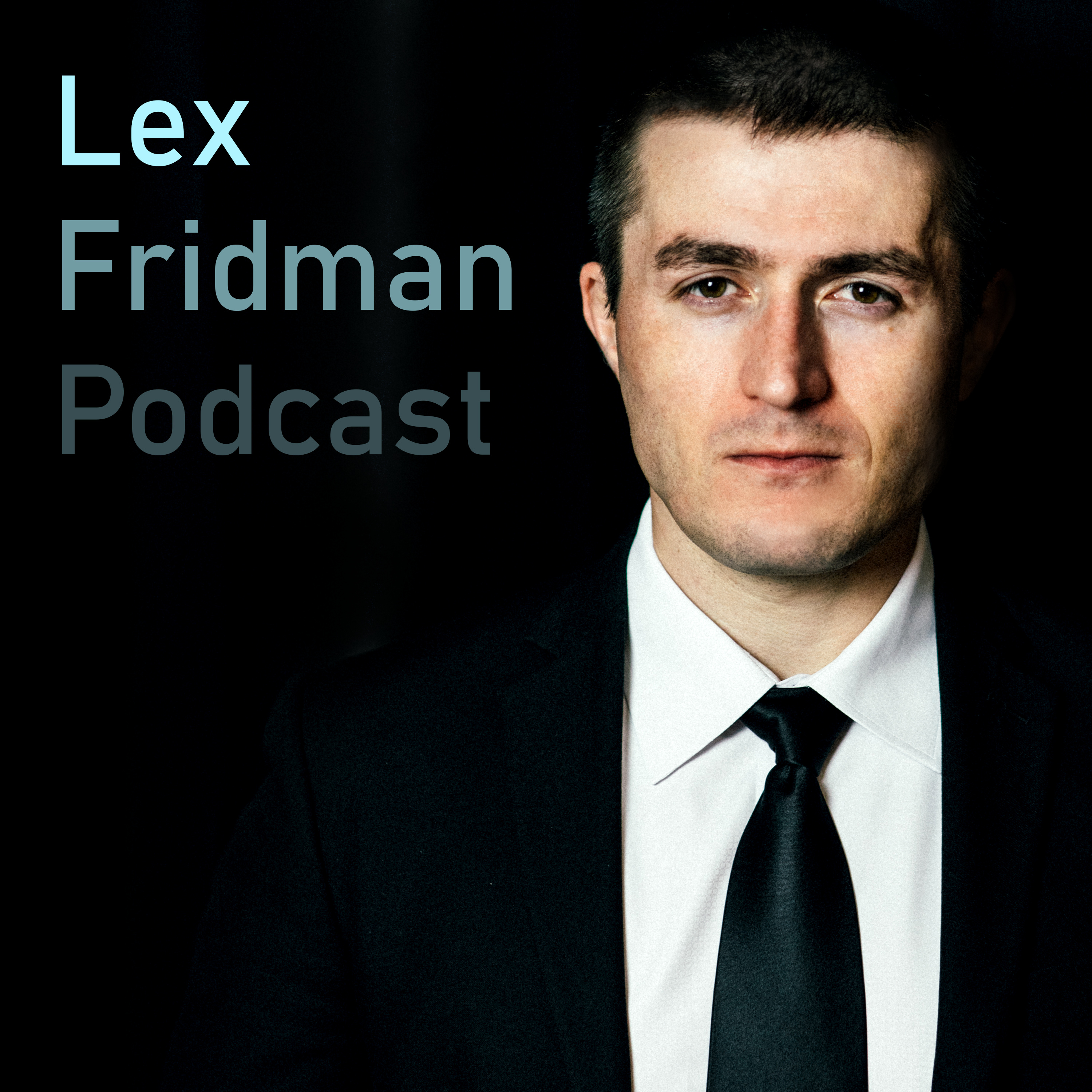
#425 – Andrew Callaghan: Channel 5, Gonzo, QAnon, O-Block, Politics & Alex Jones
2h 59m 43s
Andrew Calligan, known for his unconventional and deep dives into fringe cultures, shares insights from his personal journey of self-discovery, mental health struggles, and social exploration. His early years in school were defined by boredom and resistance to traditional education, which led him to journalism as a path of freedom and meaning. A pivotal moment was his experience with hallucinogen persisting perception disorder (HPPD) and depersonalization, which shaped his deep interest in human psychology and extreme realities. His 70-day hitchhiking journey across the U.S. revealed profound kindness among marginalized and working-class people, especially Mexican day laborers, while exposing stark social divides—like hostility from conservative Christian families and the welcoming spirit of others. He credits this experience with reinforcing his belief in empathy, authenticity, and human connection. Influenced by figures like Hunter S. Thompson, Calligan champions fearless, immersive storytelling that explores the edges of society and the human psyche. He also reflects on political extremism, cultural biases, and the role of journalism as both a journalistic and therapeutic tool. Throughout, he emphasizes that despite chaos and mental challenges, genuine human connection persists—especially in places and communities that are often overlooked. His work continues to celebrate the resilience of the human spirit in the face of societal complexity and personal struggle.
The following is a conversation with Andrew Calligan, host the channel 5 on YouTube, where he does guzzle style interviews with fascinating humans at the edges of society. The so-called vagrants, vagabonds, runaways, outlaws from QAnon adherence to fishheads to oblock residents, and much more. He created the documentary that I highly recommend, called This Place Rules, on the undercurrents that led to the January 6th Capitol riots. And now, a quick few second mention of each sponsor. Check them out in the description, it's the best way to support this podcast. We've got ship station for businesses who want to ship stuff, better help for humans who want to figure out what's going on in their mind, element for hydration, masterclass for learning, and AG1 for delicious, delicious health. Also, if you want to work with our amazing team, or just want to get in touch with me, go to lexfreement.com/contact, and now, onto the full ad reads, as always, no ads in the middle. I try to make these interesting, but if you must skip them, friends, please still check out our sponsors, I enjoy this stuff, maybe you will too. This episode is brought to you by Ship Station, a new sponsor, it's a shipping software designed for businesses that want to save time and money on shipping, whatever e-commerce thing going on to do the fulfillment for that. So if you're a business owner, you need to ship some stuff, check out Ship Station. There's an incredible commercial, I think it's probably fake from a long time ago. It's either for Walmart or Kmart, I don't remember. And we talk about Walmart in this episode, which kind of warms my heart, if I'm being honest. Actually, I do think it's Kmart. And the commercial is, well, they talk about, I just shipped my pants at the risk of explaining humor. The commercial involves the full on absurdity of various kinds of people talking about shipping their pants and shipping the bed, all that kind of stuff. Anyway, it's hilarious, and I wish people would do edger stuff like that more often, where the commercial itself is a little piece of artistic absurdity. Anyway, go to shipstation.com/legs and use code LEX to sign up for your free 60 day trial that shipstation.com/legs. This episode is also brought to you by BetterHelp, spelled H-E-L-P. Help. They figure out what you need and match it with a license therapist in under 48 hours. It's for individuals, it's for couples. It's an easy, discreet, affordable way to get going on, you know, taking your mental health seriously. From a big fan of conversation, obviously, for exploring the human mind, exploring the dark and the light that looks in the shadows and in the corners of the human psyche, getting conversation, rigorous conversation, deliberate conversation, careful conversation, empathic conversation. It's a really good way to shine the light on the darkness and discover the darkness behind the light, if that's fair to say, at a great conversation yesterday with a bad favorite barbecue buddy of mine. He runs J-N-L barbecue that I highly recommend, did you guys should check out. We talked about life, freedom, country, talked about a lot of things, about love, about love for humans, about love for the art of what you do, the man loves barbecue. He truly loves cooking and the artistry, if I can use that word, kind of like with geodreams of sushi, well, bad dreams of barbecue. Anyway, he is not a licensed therapist, he's not even licensed barbecue creator because you don't get a license to that kind of thing. His father, grandfather, he's just been in the family. He's been a Texan for like, I don't know how many centuries, but you know, Texan through and through barbecue guy through and through, but if you want that kind of depth of conversation, but with a little bit more rigor and some, you know, expertise and professionalism and discreteness, then you should try better help. Check them out at betterhelp.com/lex and save in your first month, that's betterhelp.com/lex. This episode is also brought to you by Element. It's an electrolyte drink, delicious, it helps you get your sodium potassium magnesium in the right kinds of proportions. For me, if I had to get rid of everything I consume, the last things that would remain that would make me still feel good, like say if I'm fasting for many days, which is the thing I kind of want to do, like fast for like seven days or more. I think it's a beautiful experience, but if you do that, you still need water and electrolyte because if you have those, then you can be happy. Your body can be happy, you can still feel good, and it's just also a fun way to consume water for me. And it's just a fun, delicious way to consume water for me. I'm traveling to the Amazon jungle in May, and so I get to think about all the things I'll consume there, and I'll definitely miss Element. The things you miss, but also the things that empowers you when you travel to those kinds of places, is the little habits, the little comforts of home, and Element is that for me. And I'm looking forward to a long run today. I don't know how many miles I'll do, maybe 10, 12, maybe 15, and I'm going to drink Element before I'm going to drink Element after, before so I feel good on the run after so I'll cover well from the run. It's a big part of feeling good for me, giving all the dye, giving all the craziness that I do. For example, pack for free with any purchase, try it to drink Element.com/lex. This episode is also brought to you by Masterclass. We can watch over 180 classes from the best people in the world in their respective disciplines. Phil Ivy, I'm poker, Aaron Franklin, I'm barbecue and brisket, Carl Santana, I'm guitar, Tom Arrello, I'm guitar, Terrence Tom, mathematical thinking, Martin Scorsese, I'm filmmaking, boy what I love to talk to, Martin Scorsese. This from his Masterclass, you can understand the depth of genius there. There's some directors that I would just love to talk to for 2, 3, 4, 5 hours. Darren Aaronowski then got to meet recently, boy what a beautiful mind. I love great filmmaking and I love artists that enable that, whether that's cinematography, directors, actors, all of that, writers, the paintbrushes and the colors behind the art. I love it all and so Masterclass is a good place, I give the early inklings of what it takes to create that genius from the very people that created it. Get unlimited access to every Masterclass and get an additional 15% off an annual membership at masterclass.com/lexpod. That's masterclass.com/lexpod. This episode is also brought to you by AG1 and all in one daily drink to support better health and peak performance. I just drink it and that's the reason I feel good. I'm going to do a long run later today and I'm going to drink shortly after that, mostly because it makes me super happy. I'm going to make an AG1 in the container that comes with it when they ship it and then put cold water in there, mix it all up and put it in the freezer for about 30 minutes. It gets a little slushy, it gets that, but some texture to it after a long run in the Texas heat. It's just so refreshing to get that AG1 and I think about life that I'm listening to some intense audio book and it's just a Zen place where I get to reflect on the battles that I fought inside my mind on that long run. Then AG1 is just the delicious orchestra that plays while I reflect on the battle fought. Once they will give you one month supply of fish oil, when you sign up at drinkag1.com/legs. This is the Lightstream and podcast to support it. Please check out our sponsors in the description and now dear friends, here's Andrew Calligan. I tried to color match you though, got the black and white going. I went to Walmart before this and got the Wrangler shirt with the Texas Longhorns tee. Is that where you shot Walmart? Generally, I'm a target man myself. There's no way you get those suits from Target. You see, you're seeing it tonight. It's a nice way to compliment a suit. I think you go men's warehouse if not further. I think you would be wrong. You go further. No, the other direction. You got that from Target? Not Target. I was joking about Target. I like Walmart better. It just felt like a funny thing to say. No, it was funny. The most expensive thing I owned is this watch and it was given to me as a gift. Yeah. When I was on tour, I had these $2700 Cartier glasses that I got for a lot of money, $2700. Like some glasses? But they were really embarrassing, but I was on tour, so I just felt like I could do anything as far as fashion choices. But looking back at pictures for myself in that era, I'm like, "God." So that was the symbol of the fame got to your head. I think so. Yeah. I think spam getting to your head, if you spend more than $100 on sunglasses, you've officially gone off the deep. You've crossed the line. Totally. And that's where you go back to Walmart to humble yourself. I really love Walmart. In fact, I moved to Austin.
Because I was a Walmart and a lady said that I look handsome in a suit and I was like that's it I love this place. She just said it for no reason whatsoever. This older lady just kind of looked at me and with this Like genuine sweetness just said. Oh, you look handsome. She's not wrong, man. Thank you. That's part of your whole swag, though Yeah, the suit thing. Yep. Anyway What was the first if you remember first recorded interview you did? Well like my first grade teacher Mrs. Claudia We had this is back in the day like I was telling you we just asked her about her life in Columbia and stuff like that But I didn't really get into actual journalism until my ninth grade year. I had no idea I had an interest in it before then I wanted to be a rapper It's all about hip-hop and meditation and picking psilocybin mushrooms and public parks and stuff like that. That's what I was into That's a lot. So I've been meditation rap public parks. Yeah, I was making like conscious rap music I was to the point where I had like four dream catchers hanging above my bed Alex Gray painting on the wall Tapestry on the ceiling Just scribbling rhymes now all the time So you said somewhere that you sucked at school. Okay. Well, let me let me let's step back a little bit So I had this amazing journalism course in ninth grade Yeah, I went to an alternative high school and the teacher was named Calvin Shaw and he was just like I ended up taking his class all four years and he used to let me actually leave school like I didn't like going to school. So he'd let me basically go around Seattle and do different interviews with people as long as I could come back By the end of the day and write a story for his class and he'd mark me as present So the first article that I wrote was about the silk road and the deep web Because you know as a ninth grader when I discovered the hidden wiki I thought that I was like really tapping into like the the most secret society elite level black market in the world And so if you remember they had that hidden wiki link that was like hire a hit man, you know And so I a message them and I was like all right, you know I want to get someone killed at my school like how much is it gonna cost me and I published my interview with the Hidden wiki hit man. It was probably a fed or something But who knows and that my first article was called like inside the deep web a conversation with a hit man That's nice. Yeah, I mean you're fearless even then. I mean I was hiding behind a tour browser So there's not much fear to be had. Oh, so it was anonymous. It was anonymous, but I did publish it under my name So you're right. I could have been could have been in danger. I also saw these at you took too many shrooms when you were young and that led you to have hallucinogen Persisting perception disorder HPPD. Can you explain what this is? Well that condition is classified by persistent visual snow Floaters morphing objects like I see them right now. I see them all the time. This the snow is in the room. This snow is definitely in the room It's all over you and basically It wasn't that I took too many shrooms. I think that it was I took I took about an eighth of Sennias since much rooms, which are the ones that come from the earth instead of cow shit and I took an eighth of those at my friend Toby's house and which is a normal amount but I was in eighth grade so I woke up the next morning with these extreme, you know, visual distortions and I thought that it would go away I tried to make it go away, but there was there's really no cure for HPPD. It's a lifelong condition So it's just a matter of dealing with it and realizing that it is only visual so when people ask me, hey, I have HPPD How do I cope with it? I say remember that every other sense that you have What you can hear what you can taste, you know your feet on the ground. You're still on earth. You're still here. Well, he said it's only visual Mm-hmm, and yes gratitude for being alive at all. Yeah, it's great But you said that this led you into some dark psychological places like Depersonalization disorder. Yeah, depersonalization is the feeling that you are not real But that reality still exists de-realization is the idea that reality itself is an illusion created by your mind And that you're the only person alive and that everything that your brain is projecting to your visual cortex is a lie and that you're the only living human being both are pretty Intense HPPD creates both of those things and so when I've talked to people who have the condition It's really either or but more than 70% of people with HPPD fall into either category They're both coping mechanisms for the I don't know what really happens I talked to a researcher once named Dr. Abraham. He lives in upstate New York He's the leading scientists when it comes to HPPD research He's the only one who actually seems to care about finding a cure and the only known treatment right now is alcohol and benzodiaffines That's not good right so Alcoholism something that came into my life pretty early alcohol abuse as a result of that experience because that helps with the visual symptoms Make some of the static go away Never tried benzodia so which so can you explain to me what in that spectrum you are like So do you sometimes have a sense that you're not real sometimes something else is not real like the reality's not real Yeah, I experienced it all the time you know But like I said my job helps with that because I get to feel like I'm you know when you seek out extremes to a certain extent And you put yourself on the front lines of intense events whether it be politically or socially or just dive into deep fringe Subcultures you get this feeling that you're real and being film is also a confirmation if you can look at the MP4 file that you're in fact living here on earth Confirming yeah, you were in it with the reality by watching a cell phone video exactly so that is that basically the engine behind All the extreme interviews you've done well I got HPPD around the same time that I began this journalism course in ninth grade So I sort of always use journalism as a therapeutic mechanism to deal with Some of these symptoms, especially depersonalization. There's some pretty good illustrations of what it feels like kind of feels like you're trapped behind your eyes Or that you're just just like nebulous soul that's trapped in a flesh suit that you're not really a part of that you're sort of puppeteering a flesh and bone skin suit trapped or just the ability to step outside of yourself You feel like your soul is not something that is connected to your body. It's something living in your head It's really hard to explain to people who haven't gone through derealization or depersonalization But if you go on support groups, they always say like I don't break free from behind my eyes like Dark stuff like that. Also you trapped. I mean, there's a higher state of being through meditation that you can kind of step outside of yourself But this is not that unfortunately it was kind of the meditative path or You know the eastern path that I took and kind of fused that with psychedelic culture and Seattle that took me down the psychedelic Use rabbit hole in the first place So like I'd say it all started with Siddhartha Siddhartha. That's a good book. Have you done shroom since then? No, I don't really do psychedelic drugs But like a lot of people think that I'm against them which I'm not just doesn't work for me if it works for you I'm sure that can be really fun, especially I know there's lots of like therapeutic uses for acid and ketamine and psilocybin, but I personally abstained from those kind of Anything's like a tropic. I try to stay away from drinking a bit Well, yeah, I mean I didn't drink it all before I had the HPPD stuff And I would have drank later in life, but definitely like 14-15 Everyday after school I drink a 40 ounce of Mickey's. It's like a kind of looks like old English But the bottle's green and it has a hornet on the side of it Just kind of became a ritual just to deal with the anxiety of that situation and it made the the snow go away Yeah, alcohol really works to suppress HPPD symptoms So you said you hated classes in school except that journalism class Okay, we need to clear this up because on my Wikipedia page for some reason for Andrew Callahan early life It says Andrew hated every single class except for one Yeah, so I've had a bunch of teachers who are super cool like this guy Tim my astronomy professor at ninth grade Mrs. Zenetti my creative writing teacher and sixth grade and this really cool dude at my college in New Orleans Damn Charles Cannon who taught me a class called New Orleans mythology. My three favorite classes besides my journalism class And they all hit they all hit me up and they're like hey, man So all you said you hated every class Sorry, I couldn't be everything that you wanted me to be yeah, and so I just want to say shout out to all those teachers I didn't hate every class the point that I was making is that being forced into the institution of school so young and having to take common core classes like biology dissecting frogs History of the Han Dynasty stuff like that that I didn't want to learn, but I had to learn multiple times I mean I learned about the dynastic cycle an ancient China Three separate times at three different schools and I was like who is writing this curriculum and why is it so important that I understand this process? Yeah, the part that makes school difficult especially in college is that you have people just go into school Just to get the degree who don't really know exactly what they're interested in and they don't even have time to figure that out Because they're in a business program or a communications program with no specific interest Well, I think if you want to do school right take on every single subject that you're forced into It's like the David Foster Wallace just be unborrable by it Just really going as if ancient Chinese dynasties are the most interesting thing you could possibly learn And it is somewhat interesting to Silk Road and the the Great Wall and Terracotta soldiers and stuff But I'm just saying like when I got to college I signed up for journalism school, right? And I didn't get to take a media class until the second semester and you know I had to take everything prior to that and I'd already Spent so much time. I just think the excruciating boredom of schooling left a bad taste in my mouth But there was individual classes that I liked a lot. Yeah, there should be some choice Or maybe a lot of choice even at the level of high school for what what kind of classes you pursue. Yeah, for sure And you're also saying so Wikipedia is not always
Perfectly right no, but it's just interesting because like I've said so much in podcasts, but that's what they isolated Mm-hmm, and I've gotten that question before which I understand it's the first thing on my Wikipedia page But it makes me sound like a super hater have you ever seen this Instagram page called depths of Wikipedia? That's great. Oh, it's so good dude. Uh, you said you love journalism. What did you love about journalism? I mean what hooked you on a basic level? Everybody wants media coverage, right? Everyone likes to be on camera and get exposure for whatever they're doing and so being a journalist and being a almost like a portal for exposure for people allows you to be on the front row of everything that you want to to be a part of you get to be in the front row for history as as it's unfolding because everyone wants to be covered so being a journalist gives you a ticket to everywhere that you want to go in life and so it allows you to step into different realities almost and go back to yours and it just keeps life interesting by the ticket take the right. Hunter S Thompson is Z up there and then as one of the influences, who are your influences? I think the early Daily Show was so good. Um, Sasha Baron Cohen huge influence. I mean, that was like the Alley G show especially. I think Louis Thoreau's broadcast on BBC were great. Um, I was really into Hunter S Thompson too, but not really until college you know, I really like a particular Hunter S Thompson book called The Great Shark Hunt where he covers the Ruben Salazar murder by LAPD or LA Sheriff's Department in the in Boyle Heights in the in the 70s and his his relationship with his lawyer Oscar Acosta and that whole saga is great. Fear and loathing I like but not as much as his straightforward reporting because there's the Gonzo side of Hunter where he's like saying he's taking drugs and seeing shit and there's the other side of him which is like an actual reporter interested in telling a story that has news value. So it's two different lanes for him. There is something about you that makes people want to say you're the Hunter S Thompson of this generation and I don't think they mean the drugs. I think they mean some kind of non-standard willingness to explore the extremes of humanity and like almost a celebration of the extremes of humanity. Yeah, well, that's a very kind comparison. I'll get there one day maybe. I just went to Aspen on a little Hunter S Thompson re-contrip to go check out the Woody Creek Tavern which is the spot that he was like his bar near his cabin and it was pretty cool to see. Unfortunately, it's kind of turned into not a dive bar now but it's a sit-down sort of country restaurant but it was cool but I expected to see a bunch of gnarly Hunter S Thompson types. What's he doing drugs? I mean drugs and alcohol is all part of it somehow. Yeah, so it opens a gateway to a deep understanding of humanity. But I will say though like as someone now who doesn't party like I did when I was younger, it's not as important as I thought it was. You know, yeah, I'm conflicted on this. I'm good friends with a lot of people that say alcohol is really bad for you and I believe that too. But there's something that I'm just as an introvert as a person who has a lot of anxiety. For me, alcohol has opened doors of like just opening myself up to the world more. Well, I'm actually a fan of alcohol moderate drinking but I'm saying like my life before I would say 2019, 2018 especially there was the chaos on camera but then there was my private life which was like chaotic partying all the time. And I convinced myself much like Hunter did. That was the secret sauce that in the core, the spiritual, in my spiritual core that gave me the creativity. But then I cut out a lot of that stuff and I'm just as creative and it's interesting that a lot of I think one of the hardest parts about addiction is that if you're functioning highly creative addict of any kind, your brain and your addictive part of your brain convinces yourself that it's all part of the cross purpose and that it has this like symbiotic, you know, inspirational thing going on. But it's not it's not true. It can be but it's typically not. Yeah, it's not it's not a requirement. Right. You can sometimes channel. You can sometimes leverage all those things for your creativity, but the creative engine it lives outside of that. Like have you read that Hunter's a daily routine in the year up to his death? It was like 15 grape fruits and ape all a coke and like just like a certain amount of shotgun shells for him to fire into the sky every morning. Yeah. There's no way and he didn't do anything creative in those in those final years. Yeah. But so the creativity goes away and gradually you just become like a party animal like Andy Dick. A caricature of yourself. Yeah. I mean that's why life is interesting. You make all kinds of choices and sometimes you can have create works of genius in a short amount of time based on drugs and no drugs. Einstein had that miracle year. Well, he published several incredible papers in one year 1905. Did he do drugs before that? Lots of coke and I was like, I believed you for a second. I'm like, Einstein have blow. I don't think he did. I do think he gets that hair. Come on. It's true. I'm just asking questions. High confidence hair. Look into it. Yeah. You know what I mean? Yeah. Well, no, he's a well put together a sexy young man. The hair came later. Yeah. Was Albert Einstein attractive as a teenager? That's not teenager. Was he attractive as a young man? It's actually attractive. I don't I mean, I'm turned on by Einstein at all ages. I don't know what it's going to be. But are you more turned on by the work that he did or his physical being? No, sometimes I fantasize what it would be like to be in the arms of Einstein. It could even get that out. Yeah. The arms of Einstein. Yeah. Just I want to feel safe. It's a good idea for a romcom to be a little more serious. Like general relativity that space, time can be unified and curved by gravity is an incredibly wild and difficult idea to come up with. Like it's a really, really difficult thing to imagine. Given how well Newtonian classical mechanics physics works for predicting how stuff happens on earth to think like like like the that gravity can get more space time, both space and time. And it permeates the entire universe. It's a field. It's a really wild idea to come up as one human on earth to intuit that is really, really, really difficult. And it's really sad to me that he didn't get a Nobel Prize for that. Was there people saying he was crazy when he was around? Or was he universally recognized as like an OG of this? No, I think once the papers came out, he was widely recognized as a true genius. But before that, he wasn't recognized. He had a really difficult. So back now, where does a black hole go, like after something gets sucked into it? You mean, is it a portal to another place, that kind of thing? Yeah. No. Well, we don't know. It could be that it could be that the universe is kind of like Swiss cheese full of black holes. There's something called hawking radiation where the because of quantum mechanics, the information leaks out of a black hole. So it is possible to escape a black hole. There's a lot of interesting questions there. I hope we get to the bottom of that. And there's a supermassive black hole at the center of our galaxy, which doesn't seem to scare physicists, but it terrifies me. Oh, yeah, for sure. Astronomy can be terrifying. Yeah, we're all like orbiting. I mean, when I just opening the sun, but the sun is part of the solar system is part of the galaxy, and it's all orbiting a gigantic black hole. Have you ever spoke to someone who's been out of space? Jeff Azos. He flew his own rocket. Wow. That's quite cool. Astronaut that's been to deep space now. Well, maybe I've spoken to an alien. They just hasn't admitted it. I want to do a research paper, or like a report about space madness. You know, it's supposed to be this like torturous feeling that you get when you look away from Earth and into the abyss after you've exited Earth's orbit or whatever. Because there's one specific psychiatrist who knows how to deal with space madness. And I want to figure out how interview people with it. Is this a real thing? Like is there a Wikipedia article on it? Yes, look up space madness treatment. Now I don't trust Wikipedia after what you told me so. And now they think I hate classes. I thought you meant more about the fact that you're isolated out in space that we need social connection and it's difficult. Yeah, I think it's just a feeling of extreme and insignificant that you might get sometimes when you look at the night sky. But it's that times a thousand. It's like an existential void that's created after looking into the abyss and then realizing how small Earth is in the grand scheme. You just start to really have a strange new perception about the the pointlessness of existence. I don't need to go to space for that. I mean, only a handful of people have been to space, but I'm sure they're all pretty well off. So this psychiatrist has to be like in a multi-million. Well, technically we're all in space because Earth is in space. But so I wonder if you have to go to space to talk to the psychiatrist. Probably so. Well, technically we're all in space. So you can't that's a boundary he can't have, but not everyone believes that as you've seen from my my work probably. You're right. And that's those are important people that are asking important questions. Yeah. You hitchhiked across US for 70 days when you were 19. Right. Tell the story of that. Well, this sort of connects to what I was talking about with the boredom of school and these common core classes. So after my first year of school where I lived in the dorms like a old school dormitory building at a school in New Orleans called Loyola University, I wanted to I wanted to just do something I felt so bored. I was working for the school newspaper for the for that whole first year was called the maroon. And I didn't have the ability to write my own stories like I had a defer to an older editor and they would give me stories to write about and they were all about like on campus happenings like the Pope visits New Orleans or glass recycling to be restored in the French quarter or hoverboards banned on campus due to safety concerns.
And it just kind of felt like, all right, I kind of wanted to be a Gonzo reporter. I'm not sure if working my way up through the traditional newsroom hierarchy is gonna get me to that point. So I started reading a bunch of old hobo literature, you know, like post-World War II vagabonding stuff. And there was this book called "Vagabonding in America" by an old hobo Ed Byrne. And I read this and it just basically, obviously some of it was outdated. They had stuff and they're like the hobo code. Like, oh, this moniker on the side of a fence means this person has free soup or something like that. They didn't have stuff like that. But what it does-- - That's great. - It told me about train stop towns, like Dunsmear and places in Montana where there was a friendly attitude toward drifters and that still persists from the 60s and 70s to this day. Even though, in my opinion, movies like Texas Chainsaw Massacre have ruined hitchhiking culture in America because now everyone thinks you're gonna, you know, decapitate them if they pick you up. So after my final day of courses at Loyola, I literally left all of my belongings inside my dorm and took the street cart to the Greyhound station, got a one-way ticket to Baton Rouge and I was like, I'm gonna hitchhike across the whole country back to Seattle with no money. And that was the plan and it worked out. - I love it. I traveled across the United States before and similar kind of plan 'cause you weren't-- - You weren't, were you on the silver dog? - So it's the Greyhound bus. - The Greyhound is pretty nice. - That's a step above hitchhiking. - Yeah, that's way better than hitchhiking. - hitchhiking Greyhound Amtrak. - Amtrak, no, that's the leadest. - What's in between Greyhound and Amtrak? A car, that's what it is. - Yeah, it's a car, yeah. - A shitty car. - Okay, cool. - Yeah, I lived in a shitty car. - You lived in a car? - Yeah, when I was driving across the United States. - Solo? - With a friend, some solo, and I would have, I would eat cold soup. - Hmm, I love cold soup. What I like is the cold chickpeas and a can. So you get the water out and just dump it in your mouth. - Yeah, those are good. Beef jerky, kind bars, kind bars are really good for the road. - Yeah, I mean, all of that is great, but too much of it is not great. Like too much cold soup, not great. Too much beef jerky. - So what was the route you took? Was it Chicago across? Was it Philadelphia across? - Philadelphia across. - To LA or where? - Uh, San Diego's wind up, but it was a zigzagging, went up to Chicago and then all the way down to Texas. - So you went Philly through Appalachia up to the Midwest. - Yeah. - Did you cut over through the Southwest down to San Diego? - No, no, I went straight down to Texas all the way down to the West, so like. - But did you cut from Texas West through New Mexico and Arizona to get to San Diego? - Yeah. - That is the best road trip place. Interstate 40, like Albuquerque Flagstaff, Vegas, Kingman, the Mojave Desert, Yuma, doesn't get better. - Yeah, I mean, in your kids, so you don't care, and you throw 'em caution to the wind, and I've met some crazy, crazy people. - It gives me some sanity, like whenever I'm feeling kind of out of control or, you know, like bummed out. I just remember that the road is still out there. The open road never goes anywhere, and it's kind of like a, I see like an invisible door in the corner of the room all the time that makes me more comfortable, 'cause I'm like, "Hey, at the end of the day, bummed out, I can go hit the road, and I'm sure there's gonna be a fun time ahead." - Yeah, get that greyhound ticket and go. - I would say silver dog half, because sometimes I gotta ride the dog when no one will pick me up. There's some places in the country where no one's gonna pick you up. - Yeah. - Kansas, Missouri, they're not gonna do it. - Hey, if you're not charming enough, he's all about that. - I was 19, fresh, clean, shaving. - Yeah. - I was pretty charming, I'd say. But the older you get, the harder it is to hitchhike, because they think you're like an escaped convict, or some type of psycho wanderer. And some of these people are like what we call punishers, people who never stop talking. And so they see someone hitchhiking and they're like, "Yes, I'm gonna talk at this person." And you can tell their eyes are wide, they're like, "What's up?" And you're like, "Oh, shit." So it's six hours of just like, "Oh, cool, nice." - That's rough. - Yeah, yeah. - You're right, you're right. I like people that are comfortable in silence. - Yeah, and then that also raises the question, are they about to kill me, you know what I mean? - I think that's a you problem, not a. You know what's funny is almost everybody who picked me up when I was hitchhiking was like a day laborer. It was almost all Mexican day laborers who picked me up. - Oh, interesting. - 'Cause I think that like in some places down there, that's a typical thing to do, hitchhike to work. A lot of people don't have cars, but they still have to get to their jobs. So a lot of people ask me, "Hey, where should I drop you off? "Where's your job at?" And I'm like, "My job is to explore." And they were down with it. - See, like for me it was really easy, because you just say like, "I'm traveling across the United States." And I think people love that idea. And they want to help. They romantic, 'cause they also have that invisible door. Everybody has that invisible door, I just want to go. - So you know what I'm talking about? - Yeah, I mean, I don't think. - I can anchor you a bit, just to remind you that every pattern that I've fallen into is voluntary, and it's from my own stability and mental health. - Well, that's why I'm like renting everything and I'm making sure like tomorrow I can just go. I give away everything I own twice in my life, just very like, I'm ready to go tonight. Let's go. What's the hardest item you've had to part with in this experience? - There's nothing. - You've never had a material object that was really hard to let go of? - No. - So you'd give that watch to somebody, if it meant anything. - No, this, you're right. - You're right, that's probably the only, I've never had to let go of that though. That's the only thing I own. This doesn't mean a lot to me, but they're everything else. But then again, listen, 'cause, okay, this watch is given to me by Rogan, who's become a close friend. But like whenever I romanticize the notion that this watch means a lot to me, it's like, oh my god, I'll just give you the same one again. - Yeah. (laughing) - It's like, I caught you, haven't I? - It's a pretty sick ass gift though. - Yeah, it's pretty sick. I'm not usually a gift guy, but, you know, when somebody, you look up to kind of, gives you a thing, it's a nice little simple of that relationship, so, it's nice. But other than that, no. But even this, like, whatever. The relationship is what matters, the human is what matters, not the. - Like, we're 100%. Do you have something like this? - Not really. I mean, there was a hard drive that I lost that had all of my childhood pictures on it and stuff like that, that I think about all the time, 'cause I left it on a train. And like, the certain memories you think about it, you just get pissed off, I just think to myself, someone has that somewhere. I have dreams about reuniting with the hard drive. - You and Hunter Biden have the similar type of thing. (laughing) - I don't think he wants to reunite with that one. - Okay. - It's crazy, like, you know, all he did was smoke crack, right? - Or was there more stuff going on? - I think there's prostitutes involved. - Oh, okay, whatever. - I think you gotta look into it. - I think I have to look into it too. (laughing) - I don't know. - Was Karek a Jack Karek? And somebody that was an inspiration at all in this road trip? Did you even know who that is? - No. - The P generation of all this? - I didn't know who it was. And then after I did the, ultimately I wrote a book about my Hitchhiking experience years later. And everyone was like, have you read on the road? And then on the road, I probably heard the title of that book every day at least 10 times for two years. And I'm sure Karek is a great guy. (laughing) I mean, I just don't, I'm not too familiar with the beat generation. - That's a great book. It's a, you read it or no? - I refuse to read it. People even have gifted it to me. I've been like, hey man, you're gonna love this one. And I'm like, is that on the road? Oh, if I honestly, people have given me a book with wrapping paper on it. And they're like, this is Reddit rally. I was like, that's fucking on the road, isn't it? (laughing) - Give you a different cover. - Yeah, no, I'm like anything but that. But I'm sure it's a great book. It's just, the comparison thing drives me crazy. - Mm-hmm. - But respect, big respect to Karek. - It would never speak down on the whole, anyone in the beat generation. - What are some interesting moments you remember from those 70 days? - Man, there was so much. I mean, getting mistaken for a gay prostitute on my first Hitchhiking ride in Louisiana was pretty funny. - Where did you come from and where did you go? - Well, I mean, the journey began in Baton Rouge. And the first destination was Houston, which is about four and a half hours west on Interstate 10. So, I'm in Crowley, Louisiana. I'm on the side of the road. And I guess this was a cruising truck stop. It was known for being a place where male lot lizards would go to procure clients. And I was there. - Lot lizards are-- - It's a derogatory term in trucker culture for a prostitute who hangs out at the loves or pilot flying J. Large interstate truck stops. Now, trucker culture, as it once was, is pretty much finished because of the livestream cameras they have inside of the trucks now, so you can't snort suit a Fed or pick up anybody. You can't even pick up a Hitchhiker. Or you get fired. - Killed all the romance. - Yeah, definitely. The old school outlaw trucker lifestyle, unless you're an owner operator who's not even in a union, which is like a real cowboy-weighted hallloads, you can't do that. - You were mistaken for a lot lizard. - You were mistaken for a lot lizard by a small man from Honduras with a spiky leather jacket covered in studs, didn't speak any English, but I thought he was just a nice guy. And then he pulled over at a, there's private theaters in the South where they have confessional booths set up and they have three channels. And people go in there and, you know-- - It's born? - Yeah, people go in there and, you know, please-- - That's right, yeah. So I thought he was taking me to one of those. I was like, all right, cool, man, yeah, you know. This guy wants to go jerk off. I'm just gonna wait in the car, it's all good. I don't discriminate. But then I was like, he buys a booth for me. And I'm like, okay, you know what I'm saying? Not really in the mood to watch porn with this random guy. So he gets in the same booth as me. And he starts jerking off right next to me. And I'm like, oh man, like, I don't think this is chill. I'm like, dude, can you stop? He stopped jacking off and he's like, what do you mean? [BLANK_AUDIO]
I thought this is what you want to do like I have money for you. What's up? Yeah, and I was like oh no, I'm just a regular guy. Yeah, he was super cool about it He started laughing. He's like oh my bad man. I thought you were you know selling something I said no, and he said oh it's all good and he gave me a ride all the way to Houston That's great. Yeah, we talked about anything except that for the rest of the car ride. That's great There's just rolled with it also about that It could I mean I had about a foot and a half of the guys I wasn't too scared I also had like a knife in my pocket But I didn't want to stab him, especially not at a place like that and you were still that that didn't like leave a bad Taste your mouth. Well, I figured that can't happen again. I can't keep happening So I was like all right if I got this out of the way the first ride the following rides are gonna be spectacular Yeah, I mean Who among us have not been mistaken for a lot lizard to fact you heard it here first What else what what some interesting beautiful People that you've met or well, I used to have a couch surfing to five places to stay in the couch Now you can only submit like five couch surfing requests a day unless you're a premium member Which means you also host people couch surfing still around yeah, yeah totally Oh nice, but it's evolved obviously into a different thing Airbnb is a kind of competitor to that right couch surfing is free though Right, so couch surfing they call it like the CS community So basically there'd be these like couch surfing super hosts in different cities like there was one in Santa Fe This firefighter dude who had like 15 other couch surfers there chilling nice So I would do it everywhere a lot of them were Catholics You know so is their way of giving them back a lot of them were nudists and So I didn't realize that there's a small little section at the bottom of someone's couch surfing profile that says clothing optional Yes, and that means if you go there I thought it meant like it's cool if you walk to the bathroom in your underwear No, if you go there everyone's gonna be blood naked, so I made that mistake a few times not that I'm anti nudist But I didn't want it, you know, I wasn't ready to take that leap of faith and Yeah, it was just great couch rafting hosts were amazing. Yeah, but that was just great It was this constant thing where I felt like wow people are so welcoming I'm not having to pay them a dollar for this experience. Yeah, I love couch surfing Yeah, for like again for me being an introvert just crashing on a person's couch Being essentially forced into a great conversation is great. Yeah, the one thing that gets exhausting about hitchhiking is constantly thanking people You know being in like sort of constant superficial gratitude Everywhere all the time like oh, thanks for let me sleep on your couch. Thanks for the food Yeah, part of the reason I wanted to live in an RV later in life is to avoid having to constantly live in this like Thanks so much type of frequency because it's exhausting to constantly hey man Thanks, I think the shallowness of that interaction is exhausting not just the not not the things. Yeah, it was a true favor Of course, I love giving people gratitude for that But just this thing where everyone who picks you up is you know you get you get eight rides a day You're like thanking eight people a day like they're you know the second coming of Jesus You start to feel a little bit to base. What'd you learn about people from that from that journey? That's your first time really kind of going into it that the American public is just so kind overall. I mean they're so like Embracing depending on who you are and specifically though The Christian family people of the U.S. who drive in minivans and have that that fish sticker on the back where it's like Jesus fish and then they have the family sticker. You know where each member of the family is a actually stick figure those people Never picked me up and would flip me off with their whole family Sometimes they would throw full doctor peppers at me as a family while I stood on the side of the road They're family together. They'd yell shit like go to hell hippie when I was on the side of the road and so it's weird that the most charitable Christian American family values people never gave me any charity or even Conversation they were antagonizing me and saw me as like a hippie leftover from the 60s who needed to go to work Go to Vietnam. I don't get it. Yeah, but the people who really extended a hand to me is people on the margins Yeah people working on seasonal visas People whose cars have you know less than a quarter tank left People struggling with addiction who saw me struggling or at least they thought that I was because they assumed I was hitchhiking Not out of adventure, but because I had no car and we're willing to sacrifice Their day almost sometimes to take me exactly where I needed to go That's beautiful man. I've had some kind of experience that people were struggling the most of the ones who are willing to help you when you're struggling Yeah, there's there's people in like in religious context and other kind of communities that just judge others Because they've kind of constructed a value system where they're better than others because of that value system and that they actually has a cascade that Forces you to actually be kind of a dick Yeah, I never thought about that way. It's so true. Do you think about like morality and religion a lot? Yeah, yeah, yeah, I've been to certain parts of the world where religion is really a big part of life I'm just uh always skeptical about Tribes of people that believe a thing and they believe there are better than others because they believe that thing That could be nations that could be religions. Yeah, I mean in Ukraine and in Russia, I was seeing a lot of hate Towards the other. Yeah, and that that hate. I'm always very skeptical of because it could be used by powerful people the direct that hate uh Just so the powerful people can maintain power and get money. That's kind of stuff It's a scary thing to see how easy it is for high up political people to mobilize the hate of just the average working person And can almost convince them to sabotage their own countrymen who they they share more in common with than the politician They look up to just to advance the agenda of one party That's what we're seeing now. Are there some places in America that are better than others? Can you can you speak negatively? of um like uh I've forementioned Joe Rogan talk shit about Connecticut and I'll stop is there another can you pick a region in the United States? You can talk shit about talk shit about oh for sure. I mean What from that experience? Let's just narrow down to that. Oh Colorado Oh, she really yes, so many people that love Colorado dude Dallas, Denver Um, I used to think Phoenix sucks, but I love Phoenix now the way they build these cities to just be so circular and massive It's just like stopping. You don't like circles. I like grids man. Oh, you're a grid guy Manhattan New Orleans San Francisco. What is it about grids that bring out the worst in people? Circles is wherever we're just there's a everyone just vibing out the grids gets people locked in and hateful. I don't know man, but I've never heard anyone talk shit about Colorado I have to say it's kind of refreshing. Yeah, it provides a Necessary balance for the Colorado Wikipedia page. Yeah, Oregon too. I got problems with Oregon. Oregon. Yeah. Well, here's the issue You have and I don't like just calling people racist because it's kind of like a two-dimensional insult But you have the most racist state with the most Psychotic anarchist city in the middle of it. What is going on up there? How did this happen? The Yinn in the Yang is so extreme that there must be something in the In the Blamada. What do you have against anarchism? I have nothing. I used to be an anarchist when I was in eighth grade I had his friend in Mads who was part of a group called Seattle Solidarity, which is like an Antifa precursor So I grew up like going to black block protests and I mean there was a particular shooting The murder of John Williams who is a Native American woodcarver in downtown Seattle. He got killed by A Seattle police officer named Ian Burke. He John Williams was carving a pipe or from a woodblock with a pocket knife He's deaf in one ear Officer pulls a gun on him and says put it down He doesn't hear me shoot some six seconds later so that police involved shooting is what instantly turned me into like A very critical of law enforcement kind of person when I was super young and so As someone who used to see this guy who got murdered was a 55-year-old man I used to see him around Pike Place where my mom lives. It's a public market in downtown that to me Put me into the anarchist political sphere because just just channeling the anger of that experience and the officer got no charges By the way, you can look up the video. It's horrific You know and it didn't get reported the officer. I'm pretty sure it's still active duty and so it's like situations like that Early in life channeled me toward political extremism, but I grew up to realize how incompatible that anarchistic worldview is With reality and with the with American society can only exist in a small little chamber You know, you can't apply that to the industrial heartland of the country and I think also anarchism So I'm gotten to know Michael Malos who's written quite a bit about anarchism And it's also exists as a body of literature about different philosophical notions that kind of resist the state The ever-expanding state and different kinds of ways and it's always nice to have Extreme thought experiments to understand What kind of society want to build but implementing it may not necessarily be a good idea. Yeah, I mean am a goldman I'm a huge fan of her writing Also the prison abolitionists that are associated with the anarchist movement Angela Davis Ruth Wilson go more all that stuff influential I still adhere to a lot of those principles when talking about stuff like radical prison reform and stuff like that But just I drifted more toward Having a more open mind as I got older extremism implemented in almost all of its forms is probably going to cause a lot of suffering. Yeah You worked as a doorman on the I could say legendary bourbon street in New Orleans Where you saw what you described as this might be another Wikipedia quote by
- But this is where I do my research. - Just say, hellish scenes. - Hellish scenes and quotes. - Wikipedia is damn right about that. - All right, thank you. That's a win. That's one in the win column. So yeah, tell the story of that. What's it like to work on Bermister? What kind of stuff do you see? - I mean, I was a host at a fine dining restaurant that on the corner of Bourbon in Iberville. So that's the first street if you go from Canal Street onto the quarter. So this is like across from like a daiquiri spot. It's the middle of the tourist corridor of New Orleans. And the spot was kind of like, and kind of a tourist trap, it was called Bourbon House. The food was good. Chef Eric, I don't want you to see this and think you don't make good and dewey sausages, but it was overpriced. And so we had to maintain this like fine dining facade on a street where almost everyone is like throwing up, fighting or is half naked. So there was this policy. We had these giant glass windows next to the tables. So if you're eating at a Bourbon House, you can look out onto Bourbon Street and you can see, as you're dining, a full panoramic view of all these partiers, throwing beads, boobs, all that. We had this policy where if we're serving someone, we can't look onto Bourbon Street if something crazy's happening. So there's a fight or something like that. We can't look, right? So there is a dude, I remember I'm fucking serving a table. There's a dude in a Batman mask, but naked with 12 pairs of beads, just jerking it. Back to jerking it, he's jerking it, right? And every, every single person at the restaurant looking out there, like, look, they're taking pictures and the manager Stephen looks at me, he's like, "Keep your fucking eyes on the table." So I'm serving these people, you know, and I'm like, "What, you're like red beans in the rice or would you like some creole, fucking done it?" And there's just this dude, and you know, ultimately the manager went out and escorted him further down Bourbon Street, but you know, I would get off work at around midnight every night, and that was when Bourbon Street is at its most chaotic. And so I lived in the French Quarter as well. So I lived about 12 blocks down Bourbon at a small creole cottage in a cute little like orange, old school in New Orleans, one story spot. I lived in the attic above these gay meth dealers named Frankie and Johnny. - Oh wow. - And so I would get off work, and I would basically have to walk through like this battlefield. I mean, it was a battlefield, getting home was out of like the Warriors movie. It was the best of humanity on display. Yeah, it was like Kensington, Philadelphia, but just alcohol, you know what I mean? - Oh, it's all alcohol, but it's a lot of visitors, right? - Almost all visitors. And that kind of would set the flow for the weekend, for example, if the Raiders were playing the Saints, Raider Nation, and they do not play around. If it's the Patriots, that's a whole different crowd. They think they're better than everybody else. - Yeah, but they technically are better than everybody else, but yeah. - But people from Massachusetts aren't like the cream of the crop in terms of like American superior. - Strong words, yeah. - No offense, but I mean. - No, I'm sure they won't take that. - They are good at fighting, they'll tell you that. - All right, great. - New England has hands compared to some places. - Which places are those Colorado? - Colorado has no hands. The West Coast, not too much hands. - That's why you feel safe talking shit about Colorado. - But if you get to the corn-fed parts of East Colorado, I mean, these guys got hands bigger than my head. They'll be the shed of me. But anyways, I'd walk back to my house on Bourbon Street, and I would be sifting through this battlefield. And I had a friend at the time who was like, yeah, we should do a taxi cab confessions type spin-off where we ask people to confess a deep dark secret and we post it the next day. And so we tried that and it went viral on Instagram instantly. It was mostly incest stories, people admitting incest. I know it's a common southern stereotype, but there's some truth to it. There were some murder confessions. That was pretty crazy. We never really posted any of those, but how did you get people to confess? - Pretty easy. And New Orleans has a homicide-solve rate of like 22%. So I mean, most of the time, they'll just tell you. I remember I was walking down Bourbon and I asked this kid, I was like, what's your deepest dark secret? And he told me he's like, I just smoked a dude in the Magnolia project, housing the third world project development. And they said, I just smoked a dude in the Magnolia play-around for touching my sister and listening to sister. And I was like, what? And he was like, yeah, look it up. And I was like, all right, hold on. And he was like, man found dead in central city play-around, like appeared to be a homeless shot execution style. So I told the kid, I was like, why'd you tell me that? He's like, man, put that shit out there. Like, I'm trying to go viral, like tag me, too. - Oh wow. - I don't think you understand that even if you're a juvenile, he was probably 15. You can get juvenile life in Louisiana for a homicide, even if it's justified. So I just deleted the footage in front of him. I was like, I'm gonna delete this footage. See that trash button? I'm hitting it right now. Don't tell anyone that again. And he was like, all right, I appreciate it. And he walked off, but it's the little moments like that. - Anything for the gram, I guess. - Yeah, after a while though, it became sort of repetitive. 'Cause there's only so many things that people can confess to that are they go viral, you know? And just-- - Oh, so you were trying to see like what? - Well, I mean, there's an incest one. Some people would just say like, I eat ass. That was like every one said that. Or like, I cheated on someone or-- - I've seen a surprising number of people on your channel say, mention eating ass. - Yeah. (laughing) - How seriously you said that will live in my head for the rest of my life. - That's good. - Yeah, I want you, I want to live in your head saying that a lot of people mention eating ass. - Yeah, a lot of people do mention that. Also, that's kind of where I develop this magnetism for freestyle wrapping. You know, everywhere I go, people wrap. I'm not sure why. I mean, as a former rapper myself in middle school and for the first year of high school, I think that maybe like it takes one to no one. But everywhere I go, people start wrapping. If you and me went outside of this podcast studio and walked around for five minutes, I can find somebody. - It's wrapping. - I can tell who wraps. Who can wrap? Who has eight bars in their head that they're ready to go. - I think you're also there's something to value that gives them creates the safe space to perform their art. - Yeah. I mean, the Quarter Confession series was the first time you saw the suit. - That's when the suit came out. - Yeah, it was kind of like a Ron Burgundy, Eric Andre and inspired type of thing. - Where did you get that suit? - Goodwill. - Goodwill. - Yeah, always. - Wow, I was playing checkers, you were playing chess. Good job. - I mean, Goodwill has a surprising amount of identical gray suits for sale. - Yeah, I've actually gotten suits that the three stores before, they're gray. - Yeah, a lot of people donate suits. And I was going for oversized suits, which are the cheapest ones there, so. - Yeah, I was like 12 bucks, $12 to $25 every time for the outfit. - If I wanted to look super sophisticated, like I'm forming another era, I would go to the thrift store. - Yeah. - 'Cause they're usually like this. There's like the patterns they have. It's just like a more sophisticated suit, which is what you kind of picked out. It made you look ridiculous, but in the best kind of way. - The tough part about Quarter Confessions for me is that everybody that was featured for the most part would, more or less, regret being a part of the show. - Yeah. - And that, over time, just gave me a bad feeling where I was like, you know what? I kind of feel like I'm doing an ambush interview, especially 'cause I'm presenting a so agreeable, yet the intention is to make something funny. - Yeah. - And I get that that's what people do in the satire sphere. I'm sure Allie G and Bruno and Borat did the same thing. And I don't think it's unethical, 'cause that's all for the purposes of comedy, is what it is, but for me, I wanted to do something different. - Yeah, because there's an intimacy to confessing a thing. - Right. - And then you just don't really realize the implications of that. - And the atmosphere of Bourbon Street is like, anything goes, like it's a free spirited place, but if you transport that energy digitally to a different place like Colorado, they might look at it and be like, different place in time, like five years later, that same person has a family and stuff like this, and all of a sudden, they're talking about eating ass. - Right, exactly. - You know, the kids have to think about that. Or imagine if there's a video of your grandma or grandpa out there when he was a kid talking about eating ass. That's a horrible experience. To discover that about your respected elder, later in life, it's tough. - I don't even know where to go with that, but it's literally the opening question was, tell me you're Deepa's darkest secret. - Yeah. - You just come up to somebody like that. How often do you get like a no? - How often was the yes to no ratio? - Well, the weird thing is like, we don't really extract answers from people. What makes a good interview is when they're ready to talk. The more you have to talk and try to get an answer out of them, it's just not a good vibe. So we kinda look for people who appear to be already ready to talk. Open body language, they seem confident and verbose and we approach them first. - There's a look. - We wouldn't approach a shy person and be like, come on, tell me. - No. - What about a person with pain in their eyes? - Oh yeah, we're interviewing them. - Yeah, so they're ready to talk. They're just not like, yeah. There's different ways to be ready, right? I see almost people a lot and they always look fascinating. And the ones I've talked are always fascinating. - Yeah, we just did a video at the Vegas tunnel just like trying to obviously got taken down by Fox, but whatever. We was gonna make a joke that I didn't see it. (laughs) We tried to help a lot of them by getting them IDs. And when I made the documentary, I had this idea that if I, it's a big roadblock for them is getting identification. Without IDs, you can't check into a homeless shelter, you can't do day labor, you can't qualify for housing, nothing. So when we interviewed them, they'd basically tell us, if I had my ID, I wouldn't be here. And so we said, okay, we're gonna really help this time. We're not just gonna talk to them about their struggles. We're gonna actively go out and get them out.
at MIT's at the DMV. So we did that and nothing really changed in their life. And we sat down with a recovery specialist who works directly with them day in and day out. And he explained to me that he's been trying to do the same thing. I tried to do in a one week period for the past 10 years. And then they have deeper underlying traumas and pain that need to be dealt with far before they even take the steps to enter society as a housed person. That's a heavy truth right there. Breaking that shame cycle has to come first, because you got to think, right? Like I'm from a generation that romanticizes vagrancy and homelessness to a certain extent, if it's called van life, or if it is done in a way that's sort of like rolling stone, willy Nelson hit the road. People who are above 50, they feel really embarrassed to be in the spiral of homelessness. They feel like failures. A lot of them have kids who they weren't there for. That's not the kind of pain that can be dealt with by giving someone a tiny home. It's a good step forward. But for someone to really make a change, they have to want to change. And so it's, how do you help someone and guide themselves in the right direction? And if you're too paternalistic and you use shame as a method to get them to clean up, they're gonna end up right where they started. That's a tough truth to accept, 'cause a lot of people want to quick fix to things. And I don't blame people who go out and give baloney sandwiches out to the homeless. - In each case, it's probably its own little puzzle. - Each person is so complex. Now imagine drug abuse, what that does to the brain. - Yeah. - Trauma, childhood trauma, there's so much to unpack. And then just the belief that they're, the undesirables, that they don't deserve to be a part of society because they failed a fundamental obligation like taking care of their kids. - If you could take a small tangent to, you mentioned this Vegas video, which is fascinating. It was taken down recently by YouTube, or YouTube took it down based on, - Yeah, it was illegal. - Fox five, I guess. - So the documentary was an hour and 45 minutes. We used 10 seconds of a news clip that was publicly broadcast by Fox five Vegas. And according to the Copyright Act of 1976, you're allowed to use any publicly broadcast news clip in a transformative capacity in any documentary film, or research paper or broadcast or anything. They specifically, this corporation called Gray Media that controls the TV stations in almost every small town. They had lawyers hit up YouTube and YouTube complied with an illegal copyright strike to get our video immediately removed. And I'm a YouTube partner, I'm in the YouTube partner program. So to think that I wasn't forewarned is, it's a bit strange, but it also smells like corruption to me to a certain extent. - Yeah, you shouldn't have that amount of power. At the very least, they should have the power to just like silence that five second clip maybe. - Yeah, but I'm taking them to court because I have the means to be able to do so. I'm a larger creator, I have an audience, I have the financial backing to do it. I can't imagine how many people out there are smaller creators with like not as much consumer of a fan-based, they can mobilize against someone like Fox five or the money to go to court. So I want to take them all the way there to set precedent for future cases so that these giant mainstream media conglomerates can't copyright strike documentary filmmakers at will. It doesn't make sense. - Oh, thank you for doing that. That's really, really, really important. And that's really powerful. And it might hopefully empower YouTube to also put pressure on people to not. And YouTube is in a difficult position because there's so much content out there. There's so many claims it's hard to investigate, but YouTube should be in a place where they push back against this kind of stuff as the first line of defense, especially to protect small creators. So what you're doing is really, really important. - Appreciate it, man. - It sucks that it was taken down. Do you have any hope? - Well, I talked to my YouTube partner today and he said that the Fox five lawyers have two weeks to comply with my counter appeal. But you know, I spent 20 grand on human voiceovers in five different languages. I invested probably in total like 70K into this video. So even if it gets reinstated, this steam's kind of been taken out of its trajectory. - But also it's just like a really important video is good for the world. - Yeah, like why the hell would Fox five have an invested interest in having the video taken down? - I just hate it when people do that. To videos or to creators that are doing good in the world. - Yeah, it's not an expose A on the mayor of Las Vegas. It's an attempt to show the civilian public how to get involved in a local nonprofit and potentially intervene in the lives of the tunnel people. - Well, Fox five, the other channel five, as you said. - Yeah. - Well, thank you for pushing back. - Amen. - And highlighting it. Hopefully it gets brought back up. But yeah, depending on other creators. - Yeah. - So that other creators can take risks and don't get taken down for stupid reasons. - Yeah. - So quarter confessions was written? - No. - It was all real life reality TV documentary. But it caught the attention of a larger company called Doing Things Media. - Yes. - And they contacted me pretty much like a week after I graduated from college in the May of 2019. And they said, "Hey, how would you like to produce a show?" I was like, "What do you mean?" They were like, "We'll get you an RV. We'll pay you 45K, you get to pay for gas, for food, for two hotels a week, go out there, make content, and we'll be in the background and just powering it all." And that was the birth of all gas, no breaks. - Yes. - I mean, all gas, no breaks was named after a book that I wrote called All Gas, No Breaks, a hitchhiker's diary, which chronicle the 70 day journey that we were just talking about. - It's a tough book to find, by the way. - Oh yeah, there's only a few copies left. I'm thinking about doing a reprint at some point down the line, but I sold off the last 100 copies like a month and a half ago. - Yeah. - Until then, you guys should go read on the road budget caravan. - Yeah. - You should read it. - Yeah, I don't know if you read it before. - If you can't get my book, get on the road budget caravan. - It's great. - It's the best. - Once your bird dies on you. - April 23rd. - Okay. - I'm a Taurus. - I'm a typical Taurus man. - Yeah, I'm a typical Taurus man. I'm a Scorpio moon. Should write that down. - What's the time when you were born? - 11, 30. - I'll have a 30 at night or a. - Of course. - Yeah. - Typical. This guy knew it. That's the real science. - Yeah. - Anyways, so the idea of All Gas, No Breaks as a show was to combine the, I guess, road dog ethos of the All Gas, No Breaks book with the presentation and editing style of quarter confessions. So as to take quarter confessions on the road, it was pretty much like a simulated hitchhiking experience, but with the editing and punchy effects of quarter confessions, which is like, I wear a suit, we do the fast zoom-ins, little effects, stuff like that. It was a man, those were the best years. It was just so fun. I mean, imagine you're fresh out of college. You were just a door man interviewing people about like, making out with their cousin and stuff, and then boom, this company that you've never even heard of is willing to buy you an RV and give you 45K a year, which to me at the time was more money than I could possibly imagine. So I called my dad, I was like, Dad, I need you to find me an RV 'cause he's the only guy I know who knows about cars, and even he doesn't know much about cars. So he was like, all right, I'm on it. So the RV was 20,000. And the first event that we were called to cover is the Burning Man Festival. And that was tough because Burning Man is not too keen on filming. It's supposed to be a non-commercialized escape from reality. And they have a gift economy set up. It's based upon mutual participation and non-exploitation. And so the idea of making a Burning Man video was tough at first because burners oftentimes, and this is not all of them, but are pretty well off in general. A lot of them have tech jobs or pretty high up in Silicon Valley. And Burning Man is where they go to take off, to take the edge off and basically become their burner persona. On the playa, they become reborn. And they take ketamine and they wear colitis-goal glasses and steampunk hats, and they snort MDMA and they run around the sand. Listen, do you snort MDMA? That's what I need to do. - Yes, you can. - I thought it's a pill, I didn't know. - It's better to take it in a pill or water, but you can snort MDMA. I definitely need to take it in MDMA. I'm already full of love, but like that, I'll probably go on another level. - Yeah, don't snort it 'cause it'll only last, you like, 90 minutes. - Let me write that down. - So anyways, we didn't know what to do because we tried to film. - Don't like snort. - The initial idea for all gas no breaks was to, instead of asking people, what's our deepest darkest secret? It was, what's the craziest trip you've been on? So the idea was to not satirize drunk people, but satirize people who were fried on acid. And so we went to Boulder real quick to the test interview with some lady who talked about seeing ancestral aliens during a peyote retreat. And so it's pretty easy to extract trip reports from hippies and gutter punks and stuff like that. Our oogles. So we go to Burning Man. We start asking people like, you know, what's your craziest trip story? And they didn't have the same type of free-flowing storytelling style that like on the street, crust punk, in New Orleans might have, where they're like, I don't give a fuck, I'll tell you whatever. These people were very bottled up about what they were willing to disclose. So we went on Burning Man radio and we did a broadcast and we said, hey, we're doing, we're psychedelic journalists. It was me and my friend Ciel at the time. I said, we're psychedelic journalists. We're parked on Tan and I, which is a cross-street and black rock city. And we said, we have a 1998 Catalina coachman sport. It's an RV. We've set up a podcast studio. We're doing a show about psychedelic voyages. Yeah.
So low and behold two hours later we had 10 people lined up at the RV nice willing to talk So that's headed people in advance for us, and so we did a couple interviews And that was that well, what were some of the stories from the church reports? There was this lady named Rosma Who said that she was known in several circles in Berkeley for being multi-Orgasmic and could create multiple repeated climaxes Using only her mind by like squinting her eyes and squeezing her eyes together so much that like the pleasure spiral just you know Went crazy. I feel like I talked to several people like that at Berkeley. Yeah, you know what I'm talking about And not that well, yeah, that lady. I think she did she manifests herself in many forms Yeah, right so but still it was on the cruder end. There was one guy named Kimbo slice was his burner name. He talked about taking a shit after taking like a Quarter of mushrooms and how he was like seeing his childhood and visualizing his past life You know as the the turrets were flowing into the toilet and just talks about the psychedelic union between Pooing and taking taking shrimps So he is very visual with his word. Yeah, so there was stuff like that I interviewed Alex Gray, which was super cool about his first trip in San Francisco when he was in 1971 Shortly after the summer of love. I got to do some pretty cool interviews, but still it was a semi-ambush style. I wouldn't say that we were doing journalism yet. It was still comedic video work You know, was there a narrative that tied it together? It's like really just a trip comedic almost with the interview and then I go burning man and then it's on to the next one So I guess that could give a loose structure, but it's just like a punchy and slapstick thing Everything was going good until we interviewed this guy named DJ soft baby He was wearing a golden leotard With once again kaleidoscope glasses shirt shirtless dancing like you know dancing and he was eating chowder out of A plastic bowl and he was like this chowder so fucking good He's like this is the best chowder ever had in my life and he starts putting the chowder on his face And he's like I want the chowder all over me Yeah, and so we we just go hey man. Can you just do a dance for us real quick just for some b-roll He does a dance we posted on instagram the next morning Doing things media CEO calls me read he says all of our pages are down And he's like that guy you filmed dancing last night on drugs putting chowder on his face That guy is at the top of MIT Top of my teeth. I don't understand. He went to him like saying You know my brother's a rocket scientist. He's like head of NASA Well, I mean the guy knows people in Boston. Okay, you know Not in the whitey bulger sense, but in the reverse sense I've trouble believing that DJ soft baby. Oh DJ soft baby was major. It could have been Harvard It could have been but it wasn't it wasn't you mass? I don't think there's anybody that's at quote at the head of MIT who's putting um What was it all over his face? Chowder. Chowder. Well then you haven't been the burning man yet. Okay So we have to consult the my colleagues at MIT if they know DJ soft baby So whoever you probably was Harvard. Let's put it on them. Okay. The top of Harvard So he made some calls, you know To the to the tops to the heads of big tech. Yeah got all the doing things media pages taken down at the time That was like a vast network of pages and we ended up having to take the obviously the video came down And he held the entire network of Instagram pages hostage And so that was a he made us agree to never post that video again and then somehow got all of our pages reinstated So that was my first brush with like You know powerful people on drugs And that was probably my last brush with powerful people on drugs. So what what did you transition into from there? I think after burning man We went to the south went to Taladega race weekend went to a Donald Trump junior book signing Went to a juggalo adjacent fetish mansion in central florida called the sausage castle. Ah juggalo adjacent Sausage. Okay. Can you can you run that by me again? The juggalo adjacent fetish mansion in central florida fetish mansion central florida juggalo adjacent I mean every single one of those words. I like needs a book or something. Right So juggalo by the way, who are the juggalos? Is this I see I see p fans. Okay, but I say adjacent because it's not a juggalo mansion But there's a lot of juggalos who kick it at the mansion. It's juggalo friendly. Oh, okay juggalo friendly. Yeah, cuz they get made fun of in a lot of places Also, it's not okay. Got it. And juggalos say outrageous shit, you know, and they embarrass themselves and they fight a lot So they're on the FBI's gang list which if you ask me or the the jugglers the jugglers If it was the the head of the jugg the jugglers it would be violent J and shaggy too dope But there's associated acts like twizz did and there's a whole rabbit who honestly tech nine is sort of a part of that Tech nine. I don't know who that is. Should I know he's a he's actually one of the top-selling touring rappers despite having sort of not that many streams Tech nine is like it's got a huge cult following in Missouri This is like the juggalos started in Warren, Michigan, we should also say ACP in St. Clompossi. So this is a thing. This is a movement. Oh, yeah, if you if you went to Seattle right now And punched the cop and they booked you in county jail. Mm-hmm. You may end up running with the jugglers Running with the jugglers. They're of presence in Pacific Northwest prison system from what I've heard. Can you tell a juggalo? From like a distance. Well, they say whoo whoo. So if you see a juggalo, they'll say that also like I'll try to I'll try to look at that. They're uh, they're kind of It's called the dark carnivals the mythology they abide by what do they define themselves? What's the ideology family family? No, I understand But what's the ideology? What's the the philosophical foundation of their anti-racist? They like to drink fego and also just like cheap liquor and stuff like that. They're They're into drugs. Yeah, a lot of circles if you pull out a crack pipe people will be like I don't want to drink with you anymore If you're to juggle a party and someone smoking twizz or something. It's relatively Accepted. What's twizz? Meth Meth right right lots of tattoos. Yeah, the hatchet man is the most common one. So it's a psychopathic records logo It's a cartoon of a clown wheeling a hatchet. It's actually a pretty sick logo. I vaguely remember enjoying some of the ICP music It's good. That's pretty good. It's funny. It's edgy They get satirized a lot But I got love for the clowns and also so when all gas no breaks transitioned away from you know rich elite drug parties And into like the south is that's when the fun really started to happen Living in your RV in Alabama and Florida and stuff is the best. Why why what what is it about? People are just so friendly down there and it's yeah, it's warm year-round and people are non-judgmental. It's just great. The South gets hated on a lot especially in the coastal coastal states Mississippi and Alabama kind of like the butts of a lot of jokes and stuff But those are great states. No, I love it. New Mexico. Albuquerque all those. Oh, yeah, the ABQs It's great. ABQ. What's that? Albuquerque. It's what Jesse Pinkman called it is the ABQ Oh, shit the depth of reference as you bring to the table is intense. It's okay I met a lady in Albuquerque when I was traveling across the United States and she said take me with you Said I'm sorry, man, I can't yeah, but I'd think about that lady Think you made the right call. I don't know Yeah on the road. Yeah, by Jack Kerr-Rack Best book I've ever read in my life There's a there's a moment when he meets a nice girl on a bus and They have a love affair. Mm-hmm. It's good on a bus or they No, no, they went to California Well, yeah, and there was a love affair on the bus, but it wasn't sexual. It was just romantic. It was it was in the air It was in the air which there is something in the air on the bus Like a greyhound mega bus that type of situation. There's certainly something in the air Was a romance there is man we travel across because it's exchanges getting together and you're like feeling each other out and But you're in it that you each have a story because you wouldn't be taking a bus unless you had a story So you especially if you traveling across country there's something you ever taken the dollar bus from Fill it in New York the Chinatown bus. Yeah, I have that's a great bus the people on that. It's not a fucking dollar though It was it there's some that are five books No, no, no, if you book away ahead of time It's like $20. I was like this a fucking line calling a one dollar. I got on the I don't know why I'm swearing The anger came out. I put this wearing is okay sometimes when I gonna last time I was on the Chinatown bus There was like a rooster walking down the aisle actual rooster. Yeah watch chilling. It was awesome Well, there's a nice part of your film with a rooster. Mm-hmm. I forgot about that Yeah, that felt almost fake Yeah, did you plant the rooster? No, the rooster. There's a place in ebore city in Tampa where roosters walk around All the time and we had a rooster park there right by the main drag for But did I say we had a rooster parked? We had the RV park just ebore city for a long time and that rooster laid eggs in the undercarriage Nice back to the Augustine brakes thing though. Yeah, yeah, yeah, so it was lots it was really fun making it and then We started all gastrobraics in September of 2019 six months later the country shuts down and everything just hits the fan I was actually here in Austin when it shut down I was on 6th Street. I remember the uh, I don't just hang out on 6th Street all the time, but I was just here. Yeah, come on Just be honest. I do like 6th Street. Yeah. I like East Austin better, but I like 6th Street too So anyways, the NBA shuts down everything is shutting down and I saw I went down to the 36 and I asked this door man I was like are you guys ever gonna shut down? He was
I was like, "Fuck no, bro." The dirty six never closes. And I was like, "All right, we'll see about that next day, plywood." And then I was like, "All right, I thought my career was over when COVID hit." I was like, "What are we gonna do?" Nothing's happening anymore. There's no more parties or taladega races or burning man's to go to. So I went back to Seattle on the RV and I just spent four months just depressed, living in the RV, trying to figure out what would happen. But all gas, no brakes went on still. - Well, yeah. - This was the crazy thing about that period of time, is that when COVID hit, I'm sure you remember, everything turned political overnight. In Seattle, if you went to a house party, you can get canceled, you know, because people were like, "Oh, you're a super spreader." So if you wanted to socialize, even with a group of four or more, you had to do so with your phone stamina turned off. And a lot of people were doing hyper-social policing at that time. Beyond that, in the South and in more conservative places, they were doing the opposite. They were trying to prove that they could hang out 500 deep with no mask to make a statement against the establishment. So you had this polarization that led to more division. And that's when the anti-vax protests started. And I went to Sacramento and the passion was unreal. This is about, this is about two months after the COVID lockdowns began. And that was my first political video. Was it the Sacramento, the California State Capitol and Sacramento documenting the, they called it the Freedom Rally, but that's typically like anti-vax stuff. And it was real intensity. And that video was my most successful to date at that time. And so I was like, "Okay, am I a political reporter now? Am I covering politics? Like, what's going on?" - What were the interviews they made up that video? - What kind of, what style of questions were you asking what? - I don't know if you remember, but I was actually scared when the pandemic started. I thought that this is something that might kill us all based upon what I was consuming. And so I'd ask people, what do you think about this lockdown? And I've had people say, "I'm immune compromised. If I get exposed to COVID, I have a 95% fatality rate." But guess what? I'd rather be free and dead than alive living in fear. And I was like, "Wow." So it was just stuff along those lines. You had some San Diego surfers there complaining about the beaches being shut down when such awesome waves were coming. - Yeah, it's interesting how that really brought out the worst in people. - Oh, yeah. I'm not sure why that is. Fear, maybe paranoia. I don't know, it really divided people. We're along the lines as you mentioned. Like triple mask yourself or fight for your country. - Yeah, right, exactly. Why is it two options? That is literally what it was. - It's wild. - And both groups think they're fighting for this survival of something. And so that's where you really run into problems when you have two polarized groups who both think that their cause is for the common good. Mutual understanding is impossible at that juncture. And so after three months of almost every, everybody being locked down, George Floyd happens. And I remember I saw the third precinct burning on my phone in Minneapolis. And everyone says, "Angry, you have to go cover this." And I'm somebody like I said, police violence has been close to my heart since I was a kid. And my first thought is I can't do that. I'm a comedic reporter. I can't go to Minneapolis and cover this. It'll be the end of my career. And I had a friend named Lacey who I went to college with. And she told me she was like, "Bro, this is your chance for you to do something serious. You can actually create a meaningful piece of reporting like you always wanted to before quarter confessions. And you can turn Augusto breaks into a new source." So I called Reed, who is the CEO of the company that owned Augusto breaks. And I was like, "Look, man, I want to go to Minneapolis. I was in Orlando at the time. I was actually at the sausage castle." And he said, "Sorry, the sausage castle?" Yeah, the juggler, man. Oh, right, that's called the sausage castle. So I'm watching Minneapolis unfold on Lake Street where it was burning. And I got to the Orlando airport. And I booked a flight without. I booked it on my own card. I didn't consult my boss or anything. And I was sitting in my seat on the flight. And he straight up told me he's like, "If you fuck this up and this destroys the brand, we're getting a different host." This, if you mess this up and you turn our show away from a party show about drinking and drugs and all that stuff and you make this a social justice show, you're done. But I was like, I just turned my phone off. I got to the Minneapolis airport on the second night of the riots. And when I got to the airport, there was National Guardsmen in the airport. And there was a call of duty mission, the one in the airport. And on the speaker, they say, "If you're arriving here right now, you are not permitted to go anywhere outside of the airport. National Guardsmen will escort you to your Uber or to your car. They're going to take a picture of your ID. They're going to figure out where you're going. You are not permitted to go outside tonight." And so Lacey picks me up. There's two people in the back, two of her homegirls wearing like Shisty masks. And I'm like, what are we doing? What, where are we going? And she goes, we're going to go film the riot. We're going to Lake Street. And so we drive down there. K-Mart is burning. Target is burning. Everything is on fire. She has the Sony A7. She gives me a microphone. And she's like, go talk to that guy. And that was a guy with a Molotov cocktail on his hand who had just burned K-Mart down. And so I go, what should I ask him? She goes, what's on your mind? So I walk up to him and I'm like, what's on your mind? He said something like, everything that was happening here was supposed to happen. This is how we feel. Is it right? No. Is this going to benefit the community? No. But this is how we feel. This is how we feel. That's pretty powerful. Yeah. Through a lot of the documenting that you do, this is how we feel is like screaming through that. And I noticed that aside from a group called Unicorn Riot, there was no one else actually interviewing the protesters. The local news was on the bridge 15, not 15, but five blocks away. Filming just the scene itself, just the fire. But I saw some crazy things off camera too. I saw, so there was kind of two groups there. There was like the anarchists, more mobilized protesters. And then there was just mostly African-American community members who were just pissed who had nothing to do with the organized resistance. And they were all kind of joining forces to riot. And there was this anarchist kid who ran up to White Castle with like a Molotov cocktail. And he was about to throw it at White Castle in this black deer run up to him and grabbed his arm. And he's like, nah, we fuck with White Castle. And so you see, if you go on Lake Street, every business is burned. White Castle remains. I also saw these dudes ripped this ATM out of a bank and hit it with sledgehammers. They were a group of friends hitting it with sledgehammers, right? They were hitting those sledgehammers, boom. All of a sudden, money starts spraying out of the ATM. Like, I've never seen some shit like this. Like pouring out of it. And then these group of friends who were just united and getting it open, start fighting each other for the money as it's flying out of it. And so it was just, it was like a, like Joker from the Batman's army type vibes. But I got shot in the ass by the National Guard. It was no good. Like, oh, what, Robert Bullock? Yeah, yeah, yeah, not shot. That's how I feel like. Honestly, it hurt. It hurt. I'm not sure what I was expecting as an answer to that question. Yeah, but I liked it. It was good. Yeah. And then after that, I posted the video and it was very well received. And that was the pivotal point where I realized that everything was going to change. I mean, there was still kind of a comedic element to the way you do conversations with the way you edit. So did you see yourself as a potentially, like, a Jon Stewart type of character? At first, but, you know, I just think human beings are just funny in general. Yeah, the absurdity of it. Cool thing about Jon Stewart is like, I generally like to say that anybody who works for corporate media, whether it be Comedy Central or anything owned by Time Warner, Fox, MSNBC, they can't say what they want. Because in order to climb up in those organizations, you have to appease the narrative of the company that you're working for to rise in the ranks. Jon Stewart, I feel like, has so much clout in the media world that I'm pretty sure he can say whatever he wants. Like, I actually don't think that Jon Stewart is controlled by anybody. I really don't. I think that he can go on to show and talk about whatever. I do think that certain people have broken the brains of, the COVID broke the brains of a lot of really great people. I admire Trump broke the brains of a lot of people. I admire like to where Trump's arrangement syndrome became a thing. Like, you can't see the world quite as clearly because of it. And I think Jon Stewart is quite a genius at like stepping away, even though the world needed him in that time, stepping away during that moment of Trump and coming back now, sort of being able to reflect being sort of the other statesman. My favorite Jon Stewart moment that illustrates that perfectly is whenever he went on the Colbert show. And he was just joking around with Stephen Colbert, who I think is a full blown.
propaganda about the Wuhan lab leak theory. He was just goofing around. He was like, it's called the coronavirus lab and they had it before. And now what do we have? And it was like, you could see in Stephen Colbert that he was like gunned to his head type shit where he's like, "John, John, stop joking about that." And that made me realize like, oh, everything that John Stewart did, especially for the 9/11 first responders, he's a true American. And not in the sense of like the different political parties want you to believe as an American, not to do your part in social distance American, not to wave your Trump flag in the back of your pickup truck American, just a guy who genuinely stands up for what's right. - There is a degree to which you can be in those positions easily captured by group think, though, even when you're not controlled by bosses and money and all that kind of stuff. - I think John Stewart's been mostly resistant, but it's hard, his position is difficult. - I think he's done the best job though. If someone in that, obviously Democrat connected corporate media economy, he seems to be the freest talker. - Yeah. So this is when you first became famous. - I'm not even sure what fame means. I mean, I just see myself as me. Why didn't you get the shades? Oh, that was on tour. That was, that's a whole, the shades, that's a dark time. But I didn't make, like, this is a meme really, I don't even know if that's a simple thing. - I didn't make journalism to become famous. I made it to give people a platform to share their stories. It just so happens that people liked it enough to where I became sort of famous. But if I could go back and not be the on camera guy and just platform the stories, I would. But the reality is people need a face to attach to the stuff they like. And so that's just how it is. But yeah, I would say right around Minneapolis protest, Portland's protest, Proud Boys rally time when I was really in there is when I started to be acclaimed it's more than just like a ambush meme, Lord. - Did that have effect on you, the fame? - Not at that point. - Not at that point. So like you were still able to have a lightness to you. - Well, the country was basically closed. - Yeah. - So it wasn't like there was a street to walk down where people were like, there's that guy. So getting famous, famous, during COVID made it so when the country reopened it was as if like my life really changed because I was like, oh, all these fans I made during COVID are like seeing me out of the bar. This is cool. - Yeah. - If first fame is the best thing ever because you can go anywhere in the country and these spaces that you normally feel a bit insecure in, like a local dive bar, a cool restaurant, a coffee shop where you just be another guy. All of a sudden they're like, oh my God, I'm a big fan that give you like free stuff. You get this sense of acceptance that you never would have gotten before. So, but there's also the dark side. - Well, I saw love, man. I mean, I just speak to the first part you're saying is there's so much love that people have in this show. - It's amazing. I'm sure you know what it's like. That's beautiful. - The only downside of fame really is that you can't really be anonymous again. And you have to seek out more strange environments to be anonymous in. Like right now I live in the desert, basically. And I want to live in the middle of nowhere in the Mojave Desert. Not because I'm scared of people, but because I just want to be like curious me again. The people don't know and I can ask questions to people that I'm interested in without them going. I remember, I see you here or I see you there. That's the main thing. That's what I loved about hitchhiking. - Yeah, I just have an anonymity. - Yeah, it's the best. But both are great. Complaining about fame is just the lamest shit. - Yeah, when she go to furry conventions that you covered, we're not the love furries. I should do that. - Yeah, we should go to get, I go all the time. We should go together. What's your favorite offer? - No, I have not. - I think you might like it more than you think. - I, listen. Maybe I'm just afraid to face what I really am. - Yeah, your persona, the true Lex will come out when you're in a 36-hour-all-er. - Everything is possible. - Lizard suit. Lizard, is that what they go with? - Well, Scalies are the lizard furries. And there's a big division in the community where they think Scalies are kind of douchebag. The Scalies suits are more expensive. About seven grand, whereas a first suit is 3600. So, and they're also taller. - Yeah. - So when the Scalies pull up to the fur-fest, it's like, ah, fuck the reptiles. - Fuck the reptiles. I can get behind that. I like, like, more like a teddy bear type of guy. - Yeah. - I think bears, what's, that maybe squirrels, I don't know. - Oh, squirrels are so cool. - Giant squirrels, yeah. - I want to put it GoPro on. I want to just see what the hell they do. - You were talking about that conversation with the guy at the head of doing things media. How do that end up? - Well, I mean, I want to clear up a few things. Read the CEO of doing things. I actually think he's a good guy. I think that he was just trying to run a business. He saw what was working for his brand, which is very college-centric, very festival-centric. And he was right to think that journalism and especially coverage of sensitive topics, like COVID or, you know, police brutality would definitely not work on merch. You know, you're not going to sell a picture of me interviewing someone at a riot, like you would me interviewing a ferry or a drunk dude in Alabama. It doesn't work the same. So it was a lot harder to monetize, not just because of a YouTube censorship, but also just because of the sensitive nature of the content. So Reed was looking out for himself as a businessman. There was a different partner. Well, I'm not going to say his name. There was more connected in Hollywood. I think he's responsible for the collapse of the show. - What was the collapse like? What was. - So, right is the country's reopening. I get a DM from Eric Wareheim of Tim and Eric. And I'm covering something called the UFO mega conference in Laughlin, Nevada, which is a beautiful river town. And, you know, he de-emptes me and says, "Let's make a show." And I'm like, "Oh, shit, is this real?" You know, I grew up such a big fan of Nathan for you and the Eric Andre show. And those are produced by their company, absolutely. So I was like, "Hell, yeah, let's do it." Three days later, I get a call, it says, "Jona Hill wants to hop on board." And I can't believe this, you know, I'm still on the RV. And I'm in Laughlin, Nevada. So I'm like, "Jona Hill, super bad. Are you shit me right now?" So I was excited. And, oh, and Moneyball. "Jona Hill's a great actor." - He's great, he's great all around. - Yeah. - And so. - He's got the credit by now, but still deserves more. - So basically, just within a week, I assembled this super team of Tim and Eric. - Super bad team? - Yeah, pretty much. Of Tim and Eric. - Sorry, I'm so sorry. Good, and Jona Hill. And yeah, we just pitched it around every single TV network rejected it. I don't know why. And they mainly did that because I was in this weird situation where I had signed a contract with doing things media that I didn't realize was called a 360 deal. That's what they use in like the rap world. Basically means that I can't do anything outside of them without them getting 100% of the money. So if I was to go work at Sabaro or Quiznos, while I was working for all gas no breaks, they would get my 500 bucks a week from the sandwich spot. I was unable to earn any outside income. I didn't read the fine print 'cause I was 21 and like I told you, 45 K a year RV sounds sick. And basically the TV networks were like, why would we buy a show if the digital brands gonna be running at the same time? 'Cause they didn't want to stop doing all gas no breaks to make a TV show. They wanted all gas no breaks to continue as a web show while all gas no breaks as a future TV show at Showtime or Hulu or somewhere like that was also concurrently running. Which is impossible for one man to do. And so every TV network said, okay, we're not doing that. We want an exclusive rights contract with this guy. Next, oh yeah, this is crazy to think about. Is it all happened so fast? So Jonah Hill says A24 films wants to do a movie instead of a show and they're gonna let you keep the digital brand running. So this meant that I could keep doing my Instagram stuff with doing things media, slash all gas no breaks while making an A24 movie with Jonah Hill and Tim and Eric. So it was just like, I was excited, it sounded perfect. So they said, okay, what do you want to make a movie about? And I told them, okay, here's what's gonna happen in 2020. If Trump wins, there's gonna be riots across the country. The major cities are gonna burn down. If Trump loses, the militias and his loyal supporters are going to try to have a coup in DC. That's what I said. And I said, so I'm gonna follow the lead up to whoever wins the election and I'm gonna document what happens after. So they said, okay, and so I was to begin filming in late October, you know during the campaign trail, maybe mid-October. Up until November, and then in the following months to see what would happen. This meant that I couldn't film anything for all gas no breaks. The digital show, because I had to dedicate 100% of my time to making this perfect movie. Still, one of the partners at doing things media was demanding that I not only produce the movie, but also more content for the show. And I told them, there's only so many hours in a day, man, that's gonna be impossible. And I said, if you want it to be possible, I can make it work, but I wanna have half of the monetization from the show. 50% profit split, which I thought is fair. If you want me to do double work when I was getting almost nothing before, split me in on the profits. They fired us immediately. Me and my two childhood friends who I hired to work on the show with me were all out of a job. As we were filming for the now HBO project, we got our fire notices. the guts on those and that and that person.
'cause you should be owning probably close to 100% of it. - I think so too, but they didn't see it that way 'cause they figured we made the initial investment. We discovered him as how they looked at it. So it wasn't Reed, but it was the other partner who wasn't Reed who said, we have tons of verbatim. He said this, we have, I have tons of connections in the comedy world. We can replace Andrew overnight. I'm not sure why he made that miscalculation. I wish he would have thought about it twice. I wish he didn't have to end like that, but it did. - Why do people do that? Like what's the benefit of acting like that? - I think you can part amicably without the drama. - I think all betrayal and anything like that is motivated by self-interest. Whether that be economic success, social stability, whatever it is, they figured that because I was being such a burden and asking for the profit, that they could just release me and find someone equally talented and not split them in so they can make more money. - Honestly, well, that's a stupid way to think. - People think like that, man. People who are, the word I use is like side kicks syndrome. Like when people are kind of a part of the production, but they're not integral, they start thinking that the front man doesn't matter or something and that the brains of the operation are actually the people on the periphery. And so they start to believe that they can just shift things around and the audience won't care. Not realizing that I was actually the one who created the show and that the lore of the show is connected to my rise outside of their jurisdiction, if that makes sense. Like the people who watch all gas no breaks watched quarter confessions and read the book. And so, you know. - Well, this happens also not just financially, but just with people that sort of part of a team but they don't really contribute creatively to the team and they force their opinion or pressure. I mean, whether it's from editors or all that kind of stuff or from sponsors or there's pressure they create when they, when the creator alone should be celebrated and have all the power because they're the ones that are creating the thing. - In a way, I have sympathy because I can't relate to that 'cause I've always been the front man of my own projects by design. So I'm not sure what it's like to be like someone's owner from a content perspective. I don't understand the challenges they face. Maybe there was something that I didn't understand. I don't know. - Well, oftentimes if you own a thing like this company, you do think about brand. - Right. - And then maybe you have a big picture idea what brand means and that can be at tension with the creative project, right? - Yeah. - But ultimately freedom for the creators is the best kind of brand. - Yeah, I remember all three of us who worked on Augusto breaks got fired at the same time. And we were in the RV that Tim and Eric's company bought for us, which was a bigger RV in the parking lot of a Walmart in South Philly. And the propane had just ran out and it was 15 degrees outside. So like the RV was getting really cold really fast. And I just looked at my phone and it was like, you're fired. And I was just like, God help me. I've had a couple moments like that and God does help me. And there were always in the parking lot of Walmart, right? - Well, yeah, although. - I know that Walmart by the way. - The one in South Philly is great. - Yeah, that's great. - But technically now you can't park an RV there. - Well, you're not, you're not a man who follows the rules. - Well, if you know what I'm saying. - The thing is, those Walmart, Cracker Barrel and Big Five are supposed to technically all let RV campers park overnight. But if there's like a crime problem in the city where they're at, they can lobby. Individual Walmart's can lobby with the corporate to take that away. So like all the Portland Wal-Mart's, you can't sleep there anymore. Any city with like significant homelessness and like petty property crime, the Wal-Mart's are a no-go. - Fascinating. So that was a low point. - Yeah. And but from there, from the ashes, the Phoenix Rose. - Over time, yeah. Channel five was born. - Channel five was born in the March of 2021. After we finished filming for the HBO project. - Oh really, so you went all in on the HBO project? - Yeah, I mean, we filmed the HBO project from November, 2020 up until April, 2021, damn near. We were just like, you know, picking up the pieces, going back for individual interviews, stuff like that. - So let's go to that project. It turned out to be a movie called This Place Rules. - We're supposed to be called America Shits itself. - Yeah, maybe you can tell the story of the film. You have what's this name? I wrote this down. Joker Gang and Gum Gang, is that correct? - Yeah, the opening scene. The opening scene of two characters, just talking shit and then getting into a fight. And that, I think it was really brilliant how you present that that is almost like a microcosm of like the division between the extremes that are left and the extremes are the right. - That's exactly what it was. I'm glad you picked up on it. - Yeah. And then what I really liked is that the Joker gang was kind of a little bit of a spoiler alert. I apologize. But at the end of the film is a kind of voice of wisdom. - Yeah, he seems the most sane. - He was the voice of wisdom. He like cut through it. - Yeah. - I also just realized that a lot of people are gonna stream the movie after watching this podcast, which is cool. - Yeah, where did they stream it? That's an HBO man. - Oh, but yeah, HBO man. I never got a chance to promote them. - It's such a pain in the ass man. I wish we could all just pay on it on YouTube or something. And HBO gets the profits or whatever. But it's such a, I had to subscribe for every single thing. - But yes, if you want to watch it, it's really, I recommend extremely highly sign up to HBO or whatever the hell. - On the positive note, HBO is great to work with. Like they're the most professional, like respectful company I've ever worked with pretty much. - Yeah, HBO has created some of the greatest TV ever. - But even in the background, like they get shit done, there's no way time. They have some of the best heavy hitters on their team. For trailers, for posters, all the promotional apparatus they have is like super solid. - Did you get like good notes from people there? Like how to, a little bit man, but you know. - It's a truly original like documentary. Like meaning like, I just haven't seen anything like it. It's even like, so like there's a humor and a lightness at the right kinds of moments. Like like I said, there's like a rooster in your, that's like, okay, that's like a non-sequitur like thing as part of a storytelling. It kind of intensifies and reveals the absurdity of the division and how one once like January 6th happens, like everybody that goes onto the next thing. - Yeah. - It's like what happened to us. It was almost like a delirium that everybody was participating in some weird, just like, well, like people say mind virus. Like all of a sudden we just got captured. - Yeah. - And people are just like yelling at each other doing the most ridiculous shit. And I mean, really January 6th, the way you presented it especially just reveals the circus of it all. I mean, it really broke the fourth wall, I thought I would describe it because if you were at January 6th and the lead up, it felt like it was the beginning to a series of similar riots. But it just popped off so much that that was it. You haven't seen anything like it since. It was supposed to be a second one on January 20th. It was the actual inauguration that never happened. It was a crazy time to be alive and around. And especially the relationship that I developed with Enrique Tario, who was the former chairman of the Proud Boys. He's now facing, you know, 23 years in prison. It's like a trip 'cause I went to his house in Miami maybe two weeks after January 6th and talking to him. It seemed like he didn't think anything was gonna happen. He was just like, yeah, man, that was crazy. I'm a lot of wasn't there. Like they're dumb for doing that. He even told me he doesn't think the election was stolen. Which is just a mind-fuck. It's like, why'd you get everyone so hyped up? It's just weird to think about how so many people's lives are drastically altered forever because of that just bizarre moment in time that we'll always live on. - Yeah, what did you, QAnon as part of that story? Would you learn about QAnon from that? Just an all-encompassing world of you. That family that I talked to, I call them the QAnon family, but it's called the Spencer family. You know, they were non-political up until the stop-to-steel movement began in September of 2020. And within four months, their entire life revolved around the mythology and lore of Q. And I've never seen in my life a siop just devour people's minds in such an intense way in such a rapid period of time. - And I love how the kids in the movie are also the voices of wisdom. The Spencer family, it's the kid who like goes to the full journey of like believing that whatever Hillary Clinton is a lizard or and just believing all the worst versions of the conspiracy theories and then kind of waking up was like, what was the point? - Yeah, it was heartbreaking to see his disappointment and his dad for even following QAnon so militantly. 'Cause he was like, I feel like they let my dad down, I feel like they let our family down. You know, because January 6th was supposed to be the day according to QAnon that the storm happens and that the military is supposed to mobilize and arrest the members of the deep state, Clinton, Soros, all that, Trump was supposed to go into a helicopter. And take control of the country back from the swamp and it didn't happen. In fact, the next day, he was like almost denouncing it. Now he doesn't, but then he did. And it was really, I think it hurt people's pride a lot. My friend Fordyato Blow, he's a Trump rapper. He describes it that way. He says a lot of people's pride got hurt by January 6th. - Trump rapper. - Oh yeah, dude. Honestly, there's some pretty dope.
Trump rap out there. I'm serious. Yeah, like, you would think like, oh, yeah, Maga, there's no rappers there, but there's rappers. And they do a pretty good job. They're good at delivering the messaging they want to deliver. Yeah. I mean, they think of stuff that I'm like, that's clever. Oh, they're like, they have some political depth zone. Yeah. Wow. I mean, is there something more you could say about like, how Q&A works? Like, who's behind it? What's your sense of who's behind the whole thing? You know, I don't want this to sound rude or anything. I just don't care about Q&A. I've put so much thought into it. And I just can't seem to care about it. We said, like, almost a disappointment because like, to me, it was like a thing that just captured a very large number of people's minds and then it just kind of faded. I guess that's why. It just seems like it's gone. And the ideas of Q&A have just bled into mainstream standard conservative thinking. But there has to be a kind of retrospective. Like, that's the problem I have with COVID. You know, a lot of stuff happened. Everybody freaked out. There's a lot of big drama around it. And now everyone's like, okay, forgot. Yeah. Just like, move that way. What are the lessons learned? Has anyone learned any lessons? Yeah. Like what exactly? What I'm saying is I don't want Q&A adherents to see this and they don't care about them. Yeah. But like, as far as who is behind it, the damage is done. Yeah, but what are the mechanisms that made it work? I mean, have you kind of like thought about that? I kind of think that these viral ideas can be driven by, and your film kind of shows this, by just a handful of people. And they're not malevolent. They just want to cloud. Yeah. And there's something sexy. There's something really sticky about conspiracy theories, like, especially extreme ones. You just kind of like, some of them can have this momentum. They capture the minds of a lot of people and you just go with it. And it like, when I hear some conspiracy theories, like, there's something like a small part of me that kind of like, yeah. It's possible. It's possible, you know, that Q&A is a siop to distract people away from actually uncovering what the deep state is and who is truly running things behind the scenes because the deep state is just the 1%. It's that you take, you get people so close to any type of class consciousness. And then you totally divert everything into like, lizard humans who live on the moon and that Hillary Clinton is eating babies on camera and Q&A did just that. They want you to, they want to convince you that one, there's no conservative deep state, which is even more hilarious, that Trump isn't connected to a huge rich corporate apparatus of propagandists. And two, that the democratic establishment is the only deep state. And that some middle of the road conservatives, that there's no grifters or manipulators outside of that three headed snake. You know, there's grifters everywhere everywhere. Everyone wants to make money, dude. This is the world that we're in. It's in collapse. Everybody wants to make money and engagement is the rule of law. So anything, that's why these news organizations follow retention incentives. They want to make money by selling ads. So they try to create fear and constant division to enrich corporate media establishment. And you have people who are almost realizing, hey, it seems like Fox and CNN might be owned by the same people and are tactically using these machines to keep us divided perfectly 50/50 to ensure that the power structure never gets disrupted. And then you get these people, you know who's going to save us? Donald Trump. That's the guy. How is that the guy? It's not the guy. I don't have TDS. I'm not an orange man basher who thinks about the guy at the time, but I don't think he's the guy. You were shirtless lifting weights while whiskey or some alcohol was poured into your mouth by Alex Jones in this movie, and then you did the same to him. That's true. That feels like an interrogation. So Alex was a part of this film. He was like throughout throughout the narrative. And yet he had a great interview with him. What did you learn about interacting with Alex Jones for making this film? For one, he's the exact same off-camera as he is on camera. It's not an act. He told me that all real Americans die before 58. He mentioned Sean Connery and a few others. And how old is he? Getting up there. Yeah, I think early 50s. Yeah. I just found it fascinating. I mean, how nice his studio is. I mean, the guy's got like an MSNBC level set up. I actually had a great time with him. You know? I mean, it's bizarre because having him in that movie created so many problems for me. And when I interviewed him, you know, I didn't necessarily portray him in the best light. You know, we joked around a bit, but it wasn't Alex Jones hit piece necessarily. But I like to think that I was a bit critical of him in the film, especially the ways that he antagonized his supporters to storm the Capitol or to follow that trajectory. He told me when I met with him, he was like, I know you think that having me in this movie is a good idea, but you're going to have some serious backlash because of that. At the time, I was like, man, it's fine. You know, it's all good. We're just hanging out drinking whiskey, doing bench presses, drinking Jameson. It's all good. It was a first of all, I had to campaign to get him in the film because the studios were like, we don't there was a bizarre time around like, I think it was 2018 where de platforming was the big thing that people were encouraging. It said, giving a platform to problematic ideologies will in turn expand their reach. And so even extending your platform to someone whose problematic is helping them, AKA destroying humanity, whatever it was. So that was the whole thing. And when I did this media training that was, you know, mandated by HBO, it was all training and how to defend from that exact question. It said, when we put you on NPR, and we put you on CNN, they're going to ask you about platforming problematic ideologies. And you're going to have to say stuff like sunlight is the best disinfectant. I believe that extremism only goes away when you shine a light on it because leaving it in the dark will only allow it to grow. They gave me like 15 pointers. I didn't use any of those pointers because I'm not the kind of person who wants to be a media trainer. I like to speak freely. But in the promotional run for the film, you know, when I went on CNN, this was a crazy experience. So I went on CNN. And thankfully, my friend was with me. And so I'm on CNN. And by the way, your friend is chilling and sunglasses laying in the couch. That's very sweet. It's a mix of like the dude from the Big Lebowski and the Brad Pitt role in true romance. Yeah. You know that reference. No, but I mean, I'm sure it describes Larry. Kind of looks like Brad Jack. Yeah. So HBO had a press tour set up for me and the main ones were CNN and NPR. And so they said, we're going to you're going to go on CNN on the Don Lemon morning show. And he's going to ask you about your life, what led up to the movie, what we can expect. So I get in the studio. It's about seven o'clock in the morning in New York at his show the night before a Times Square. So I'm like, groggy, I'd whatever they put the lab on me. Boom. I'm live on CNN Sunday morning. And he goes, how would you describe Enrique Torio as mental state in the lead up to the capital insurrection? And I'm looking around. I'm like, is this guy serious? Like am I sandwiched in the January six hit piece right now? I thought it was about me. And so I told him it's not about Enrique Torio. It's about how companies like Fox MSNBC and even your station CNN use the 24 hour news cycle to enrage people to generate ad revenue. Yeah. And Pitt Americans against each other during times like that. And he said, there's nothing fake about CNN. I said, I didn't say you were fake news. I'm not saying you're lying, but you're directly antagonizing and stirring people up against half the country because you need money during to support a dying platform. You said that pretty much. Nice. And great. You know, I was so my mom was watching it. She was texting me. She was like, what are you doing? And I was like, I don't know. And so he goes, why'd you extend the platform to Alex Jones? And I go, I don't know. I just wanted to drink some Jamison and lift some weights with him. You know, I'm just at this point, I don't support that kind of media. I don't support CNN. So, you know, I just, I didn't give them much information about Alex, but it was very awkward. They'd never posted the segment online. When I got off of that interview, I had a handler that a 24 assigned to me. So I had someone with me and she, you could tell she was flustered. Like she was furious about what I just did. And so she goes, I just got an email from Time Warner C suite. And I go, what's Time Warner C suite? She says, I don't know if you know this, but the same people who own, who own the same people who own CNN own HBO. And it's Time Warner. And so they canceled my press tour. So my press tour was finished. You know, all the late night shows that I was supposed to go on, I was supposed to go on like the late night shows. And that was off the table, because they were worried that I was like a loose cannon, I think. And then the only remaining appearance I had left was NPR in Boston. And that was supposed to be a premiere. So it wasn't supposed to be an interrogation. It wasn't supposed to be anything like that. It's supposed to be a premiere in front of a live audience where they watch to
film and I show up after for a Q&A. So I'm like, all right, whatever. It's kind of weird. They only have this one press opportunity left. I kind of felt bad that I ruined the entire press tour by confronting Don Lemon. But at this point, I wanted to just do this final one, especially because it was a viewing. And I was like, cool. I sat in the audience, I watched people laugh to the film. It was awesome. So I go backstage and there's an NPR journalist waiting for me. And nothing against people who wear masks, but she had 2N95s on. And I'm not 2N95s. It's over the line. So I go, hey, great to meet you. She doesn't shake my hand. And I go, why not? And she goes, you've been around some people who I don't want their germs. And I'm like, okay, okay, this is weird. I thought this is a sort of like fun premiere for my movie. We sit down. The first thing she asks me is, how do you think the Sandy Hook families would feel about you platforming one of the most despicable Americans in history, Alex Jones? In front of a live audience, NPR never published this. The only recordings of it are by a fan named Rob in Boston who put it on YouTube, vertical phone footage. And I literally, I'm like, well, the Sandy Hook families lawyer, Mark Bankston, who represented them in court in Connecticut told me specifically that Leonard Posner, the father of Noah Posner, who died at Sandy Hook was a huge fan of the film. And so I said that to her. And that kind of just like silenced that conversation. But the rest of the whole conversation was just about exploitation. And why are you platforming mentally ill people and giving a platform to conspiracies like QAnon? Don't you feel like you're a part of their spread? Someone call you a misinformation reporter, all this crazy stuff. And yeah, next day hit the fan. Fuck all those people. That film, just in case you don't get a chance to see it and you should, your critical of Alex Jones in the most artful way, like it was the correct way to be critical. It showed him to be more interested in the grift of it. And you didn't do it in a like appointing fingers and like saying in the kind of NPR way that you just mentioned. It's more like a human way. Like this is tragedies happen all over the world. And there's grifters that roll in and then take advantage of it in interesting ways. And then human beings get swept up on either side of it. And it's revealing the human the absurdity of it all. And it was done masterfully. It was done like for people who criticize you for platforming Alex Jones or whatever. Yeah. The film from a political perspective is probably means very much left. Yeah. Like heavily left. But does it without that exhausting energy of like judging. Right. Just this kind of, you know, yeah, two two masks kind of judging. Yeah. And it was just when all that was happening when I was under fire from the mainstream press for platforming Alex Jones, I thought back to what he said to me. And does it mean I agree with everything he says, but he told me you're going to be in trouble with these people if you put me in your in your video. And you know, it wasn't too bad in trouble, but definitely I do think sometimes what the film would have been like without him. And I think that it was worth it because his scene is so funny to me. And it brings me back to a different time in my life. And I'm happy that that scene's out there. I think it was really well done. Thanks, man. The layering of it all, the entertainment, plus sort of not considering from his perspective the consequences of like rallying people up in this way that it's not just, I mean, you really highlight this in the interview like he keeps saying it's info wars. But then there's always kind of a sense that info wars can turn to actual like civil war. And yeah, but maybe not. Maybe it's all just a circus like we play for each other. If you look at the speech he did on January 5th, it was said he said tomorrow, you know, millions of patriotic Americans will take our country back. Yeah. So he eggs people on. And then when it gets hot, he steps away. Yeah. But like you said, the thing he told you, he turned out to be right. Oh, yeah. And the frogs are becoming gay. They've always been gay. Well, saying frogs are straight is even crazier. Everett's story is where you kiss one and becomes a prince. Yeah, shit's true. 100%. You think Alex believes what he says in terms of the everything he says on info wars, like how much of it is real? He's right about like big tech censorship. Man, I think if he's right about anything, it'd probably be the heads of big tech colluding together across company lines to de-platform certain people. He's right about that. I think most of the things that he says follow the question everything narrative and everything is kind of like a conspiracy or like a plot or a false flag. I think that he's built up a following for so long that wants him to do that. So I think he'll question things that he probably thinks are relatively straightforward because that's the stick of the show. I mean, the info war is fighting misinformation and people want to see him be that guy. So to a certain extent, if you're a creator who supports your family, you do follow economic incentives and people want you to be the character. And so you're going to naturally gravitate toward being it. Do you feel that pressure yourself? I did years ago, not anymore. I feel like now I can speak freely and really say what I want to say in my new life. But when I was younger, yeah, like I had to be this sort of awkward sort of amicable aloof guy who just didn't think anything about anything and just was here to listen. But now I feel more confident adding some narrative and voiceover and things like that. So for some people, especially who publish on YouTube, the YouTube algorithm that can become a slave to the YouTube algorithm. Yeah. I mean, for sure, because I definitely feel that sometimes. I know what works for me, but I like to think that my audience appreciates when I tried new things. So I'm not totally enslaved to it. I mean, yeah, I try not to pay attention to the user any of that way. You get some high views. So I'll report that for you. So I wrote a Chrome extension that hides all the views on anything I create. So you took it to that level. Yeah, just because it's a drug, man. And I'm also a number guy, meaning like, you give me like, if I do 30 pushups today tomorrow, I'm going to try to do 35 just like enjoying yeah, number go up. Like that's why I like video games like RPGs like where you're like improving your skill tree. You're like getting an extra point. And there's some aspect of YouTube and other platforms, anything and any other platform, you're like, ooh, I got more today than I yesterday. That's really, really dangerous to me because it can influence how much I enjoy a thing. Like if nobody gives a shit about it based on the numbers, you're like, oh, maybe that wasn't such a great experience. I thought it was a great experience, but maybe it wasn't. Yeah, honestly, I do actually feel that way sometimes. Like I'll put out something that I care about a lot. But if it doesn't get as many views, I'm like, all right, it must have not been as good as my higher view videos or whatever. Yeah, that's that's just like not true though. Yeah. And it might mean like a YouTube that your thumbnail song for something like this or whatever. Whatever, however, the algorithm works. But I mean, that's the thing I'm battling against to make sure I ignore all of that. And it's actually something Joe Rogan has been extremely good at. He gives zero shits. Yeah. And I think it's easier to do when you're really successful. He was doing that when he wasn't successful. Really? But anything, he just follows like the stuff he enjoys doing. And legitimately enjoys it. He happens to be really good at it. But he gets good because he's doing the things he really enjoys and like fun, passionate about. And that's why he'll have like ridiculous guests and just like just shit he enjoys doing. Yeah, that's pretty cool. Maybe I'll one day try to do that. For now, I'm too attached to like the gratification of getting a million views in a day and stuff like that. I'm not going to lie to you and say that I've beat that or something like what it's a worthy enemy to be fighting because it's a drug and it's one that should be resisted for a creator because I feel like it can do negative stuff to your mind as a creator. Oh yeah, for sure. Anybody that controls you is not good. A lot of people are controlled by their audience. They don't have to have a puppet master on a corporate level. Audience incentive is a different type of I don't want to say slavery. But yeah, it is. And that's why variety is good. And you're doing that. Yeah, I was expanding. Well, let me just zoom out on this. You made a film. Yeah, it was a great experience, man. I mean, it was awesome working with Tim and Eric, awesome working with Jonah Hill. I feel the same about HBO and A24. Everybody that I worked on the film with I have a lot of love for and I appreciate the experience. It's my first movie. It's a big deal. Like it was a good one. In my head, it's like I finally got to make the transition from YouTuber to filmmaker. And that was always this psychic barrier that I felt like I had to jump over, you know, there's a, I mean, just the way shot, the humor that goes throughout it, just the narration that you're doing in like a shitty director's chair. That's really well done. Whose idea was that? It was actually Tim and Eric's idea. There was a really great editor named Clay, who works for absolutely and they did all the editing pretty much in the office. And so it was Clay's idea to add a retrospective director's chair near the work to the film. Yeah, just like starting with the absurd fight and then going like, oh, that's a good way to start the movie. Just really, really well done. Thanks. What about Jonah Hill?
like great guy he believed in this he did so was that what's that like what do you think is behind him believing in such a wild project i think that john hill has a good eye for like what's cool amongst the younger folks like he's in the skateboarding stuff that's why he did that film mid 90s and i think he probably saw a similar thing and what was going on with all gas no breaks and was like shit this could be this could be big and so not only did he actually fun the film he also gave me his agent and i forgot to mention that it was john hill's lawyer that he gave me for free that got me out of my contract eventually with doing things media or freed me up to speak about what happened so he was also part of you kind of gaining your freedom yeah in a weird way like even though him and i don't talk that much just because he's doing his own thing john hill is like a huge factor in my current success and just like everything that i've been able to accomplish just on your own politics is a fair to say that your politics leans left i'm not really sure sometimes you know i like to think that i am socially left like i think people should be able to dress and act like however they want i don't believe in restricting people's social freedoms economics wise it doesn't seem like leftist economic policy works very well on a city city funding level like if you see what's going on in california it seems like the uh the city leadership is mishandling the funds in california too so i don't know about that but i don't know i don't really see myself as left or right i just never have well if you just like object to the zoom out and don't have an insane standard of the extremes it feels like a lot of you work leans left i tend to lead toward lean toward like the empathetic perspective which i do think is more on the left and the right but also i'm not into like super like pc stuff you know i don't believe in limiting free speech either i don't believe that i believe in a free internet which i think is more embraced now by conservatives but it does seem that maybe you can correct me but it gets a sense sometimes that the left attack their own very intensely it does happen but every community has terms of exile i mean look imagine think about what happens in the conservative realm you know like when black rifle coffee company like denounced cow written house they lost a lot of money too like it's not the right attacks it's owned too i mean think about bud light and stuff like date terms effects i mean you know like every community has terms of exile you just got to know who you're engaging with and you had to make that decision carefully i mean as if there's an actual write-up of the things you're not allowed to say for each thing and then yeah i wonder who's less would be longer it just does feel like the last list right is a little longer if you're conservative and you have a t-shirt with like a demon on it like say goodbye you know i mean they're you know there's certain stuff that they freak the hell out about um and conservatives are really concerned about pedophiles yeah i mean i mean i don't like pedophiles either but i don't think about it all the time what's one of the things you do in the film is kind of confront one of the q and on folks where his concern is that everybody said pedophile and you showed to him what calls himself a pedophile hunter and makes videos exposing democratic elite pedophile cabals and is himself a convicted child molester there's an old thing that people say that every a confession every accusation is a confession to a certain extent so like it's it's bizarre that some people's whole life after a big mistake will revolve around trying to seem like the good guy instead of taking accountability for themselves yeah it's a common thing you see all the time like neighborhood watch people you know what i mean like what made you that you know like what did you do bro that you feel like you have to get karmic retribution by doing the reverse I don't get it yeah do you think uh to the degree of bias that affects your journalism no but i mean with the migrant situation i don't know what was that covering that like i just got a lot of hate from conservatives for like letting the migrants tell their stories about their journey and stuff what what did you learn from just going to the border i mean just the sheer desperation that the the the citizens of the world are in i mean there's people who truly believe that america is the only hope for their success and to feed their family and i think a lot of them are kind of getting catfished meaning america has its problems too it has severe problems there's extreme poverty here what they're in america like if you just compare to other nations the level of corruption is much lower to where the opportunity for person to succeed to rise is higher i wish success on everybody who comes here but my thing is the expectation that they have and the sort of american dream propaganda they've been installed with isn't necessarily a reflection of contemporary american reality so i'm talking to people who speak no english and say i'm here for a better life i go where you gonna go they say i have no idea and i'm like man that's tough and you you you you almost think how bad are things elsewhere for someone to abandon their family make this journey across multiple continents and up here with no plan and it just made me realize how sheltered i am through a certain extent as an american and going walking back what i said a little bit because i was just trying to make a point yeah but what what i think of as bad poverty like let's say West Baltimore or ninth-word New Orleans is nothing compared to what's going on in almost half of the world if not more and so it just made me zoom out a little bit and sometimes you forget about third world poverty when you live here for so long and you get programmed to believe the worst things that are out there is like canton's in philadelphia or tenderloin san francisco but those are just microcosms of more or less functioning cities despite what they might lead you to believe philadelphia is a great place so is san francisco but there's places where everywhere is really rundown yeah and like people focus on in major cities in the United States like homelessness somehow that's a sign of a fallen empire right but you know that that's a problem there's definitely it reveals some mismanagement of cities and i mean homelessness in Seattle and san francisco is for sure a result of the housing crisis especially post-COVID and all the gentrification that preceded it you know and it's unfortunate now to that the conservative media is saying like look at biden's america as if biden created homeless people and it's just disappointing because once again you're seeing the media use real issues that should concern every u.s citizen and causing people to point fingers at a different political party as responsible for the suffering of others do you think january six can happen again no i don't think so all the lessons were learned yeah for sure i mean people got really screwed over i mean don't you have a sense that there's a greater and greater growing questioning of the electoral process and all this kind of stuff i think that americans overall are very comfortable with our standard of living i think people like going to sonic and waiting in their car and getting milkshakes and people like going to the amc theaters and they like going ice skating and mini golfing and going to the bar after work i don't think that anyone wants to collapse of the basic structure of the country even the most politically divided don't want to see seven eleven go away we are so comfortable if you look at other countries even europe look at how they protest and look at the arab spring those guys were talking like january sixers and they actually took control of the government yeah you know and so think about even if the mega crowd took over the capital building it's just a building i don't know i just think that americans when they talk about civil war stuff it's just so we're so far from that even if the rhetoric is as divided as it was in 2020 it won't happen again for it to really happen it has to be there has to be a level of desperation there has to be a level of economic desperation that's causing people to starve or some basic resource going away water something like that who do you think wins trump or Biden in the civil war well no the guns in a game of mario kart no in the election 2024 oh man i have no idea man i don't even know if i'm in a vote it's weird that this is our choice i know i wish people were more focused on like city politics like i'd rather vote like yes or no for a bike lane in my neighborhood that i would for the president it's a local politics to use word is usually oh i mean you can your vote actually matter let's say you have a community of 500 people and you live in Henderson Nevada you can influence whether or not there's a bike lane or this is going to be a playground or you know an amp you get to choose and you can influence a hundred people to choose and boom this is your community you can't influence the result of an election still that those at the presidential level it sets the tone of the country and so trump running again and Biden running again it just feels like there's going to be a lot of questioning of election results i just can't believe those are our guys yeah i mean what is that's really our guys like that's where we're at all these smart people we have in this country the great history we got joker gang versus gumbang where'd you find joker gang well is yellow jet jugglers he's just no no no no joker gang is like a man
Ami Cuban guy is Joker 305 Ross Chico alive so me and I have been following him for a long time on Instagram because he's still like Post videos of himself like poppin percusses and smoking blunts on the toilet freestyling And so I had followed him for a while and then I finally got this platform and I said oh my god I bet you know that we have a million followers Joker gang will sit down with us and lo and behold the cloud did its thing and There I was face-to-face with the man There was a controversy a year ago Where a woman came forward and said that you were pushy with her you respected and no you got the consent But you were pushy about it looking back Can you tell the story of that what are the lessons you learn from it? Yeah, I mean, I've yet to speak on this for a lot of reasons mostly because it's just it was a hard time and it's a sensitive subject And I've wanted to prioritize the reporting but I think that now I'm Ready and able to do so everything sort of started on um December 30th 2022 and that was the release date of the HBO project like I told you We didn't know when the movie was gonna come out We weren't told that it was gonna come out on that date until early November and so it was like oh my god Here we go. We had a movie coming out HBO had I didn't even know it was gonna be them so every day for those 50 days To where I received word and to the movie announcement or to the movie release was like I was like a kid waiting for Christmas morning You know, I mean it was like Every day I just I saw the movie release date as the first day of like the rest of my life and so I remember The week of the movie release It was like every day. I was like oh my god six days five days four days and When it became two days like I was so excited and so like Honestly anxiety riddled because it was such a massive platform that I went out to the desert by myself out in the Mojave Got a hotel and just kind of sat there and then Movie release day comes I was supposed to come out at um 8 p.m. Pacific Standard Time I remember it was like 12 hours left 10 hours left and then eight minutes before the movie at 752 Or I guess it was sent at 10 52 East Coast time. I got a text message requesting a portion of my fat HBO check to contribute toward Apparently years of therapy bills that this person had accrued after She says that she felt that I pressured her into giving consent Years prior and I was confused not not only because of the timing But because this is someone that I hadn't seen in years or spoken to in years and I presume that I was on good terms with So I didn't respond to the text message And then when I didn't respond about seven days later this person made some tick-tock videos and with the help of some friends Launched an online campaign. They got picked up by the press pretty quickly So what did you feel like when you got that text? Well It's tough because on one hand I'm not opposed to restitution being part of a private accountability process for real abuse You know like if you've hurt someone to an extent that it took them out of work or something like I think they're entitled to some money But unfortunately as I later learned this person had legal counsel and this was an attempt to basically create evidence By extracting a confession from me to use as precedent for a civil lawsuit to the tune of a couple million dollars It's dark Yeah How did you meet this person? Well, I met them when I was 22 and like I told you I was living in an RV Making the show called all gas no breaks and I would travel between cities like every other day And so I would basically pick a new city And I got in this like pretty bad habit of what I would say is essentially treating Instagram like a like a dating app You know, I would go to a new place. I'd post my location I'd surf the DMs and I would look for like fans to meet up with it wasn't always girls It was just people a party with because I was also partying every night, but a lot of times ended up being girls and stuff and so that's kind of how this situation was Um, I didn't have sex with this person Um, had a consensual encounter that they reached out to me About two weeks after saying hey, I don't want you to take this the wrong way, but looking back I felt a lot more pressure to agree than I realized in the moment I don't think this is any fault of yours I just think that you came on a bit too strong and I didn't want to let you down. So I gave in and it was That language made me feel horrible mainly because If this person had told me hey, I don't want to hook up I would have said yeah, of course not while I don't want to hook up with someone who doesn't want to hook up with me And I think that as fame increased during that time I think I was just kind of oblivious to How people were seeing me especially those who had a digital relationship with me prior to me knowing them And I don't think that I handled that the right way Well, thank you for taking accountability But just to clarify You got consent Yeah, I was the initiatory party in an interaction with a fan who felt it She had to say yes because of I'm not sure why I don't know why but like I said This person also disclosed to me they had a history of childhood trauma and were actively being treated for PTSD And that they felt things moved too fast for them given their situation And so I told her I said hey, if you want to reach out if you want to talk on the phone I'm always here for you. I'm sorry to hear that. Let me know if we can talk further About six months after that I was at Sturgis bike week And I remember this day. This was the hardest day. I was just chilling and I got a text from my friend Then I said hey man, you're getting canceled right now And I was like what do you mean? Like did someone find an old tweet or something? What are you talking about? And I opened my phone And it was this Instagram story of me It was like the ugliest picture of me you can find It was like my face open that was like screenshot it And it said I remember this specifically because I just couldn't believe it It said the ugly loser who hosts all gas no breaks is a piece of shit He knowingly abused my friend and got away with it If you follow him, I'm gonna message you and ask you why So this person who I don't know I didn't even know Where who that accusation was coming from They text they emailed every production company that I was working with DMed hundreds if not thousands of people Like just saying that like I was this piece of shit and I didn't even know Who this person was so I was frantically calling and texting like every person that I'd seen intimately for the past year And be like hey are we on good terms is everything okay? And then I figured out that The person was coming from Florida and I knew who it was And so thankfully I reached out to the original person who I had the communication with And I said hey like I think this might have been you this might have been your friend who posted this Are we good like I'm sorry. I apologize to again I was like listen, I feel bad that you feel this way. I want to do anything that I can To help you again. I apologize And she said apology accepted. I'm sorry my friend asked if I could if she could post on my behalf And I'm sorry I was going through a lot mentally and I saw your fame increasing so I agreed to let her speak on my behalf And We let we made amends in private, you know, I said okay. I'm here for you Let me know and she said apologies enough Thank you for taking the time to speak with me And that was two years prior to this text message being sent to my phone eight minutes before the movie so naturally I wanted to go on my Platforms and talk about what was happening But I also didn't want to mess up the rollout of the movie, you know and So the PR firm was like we got this will handle this for you and that was I guess by way of a TMZ Thing that said Andrew Callahan is devastated. I'm not sure why they thought that that was gonna make people Be in my favor, but yeah, he's just a picture of me on NBC that said Andrew Callahan devastated by allegations that that was their plan. I guess to show that I was remorseful or something, you know how much of this do you think lawyers kind of pushing this When money and fame are involved Well, I wish I could say the lawyer, but I just can't um that was involved in this But I will tell you that I try to lean away from resentment and toward accountability completely What was my role in the situation? How can I never make someone feel like that again? What can I do? What changes can I make to make sure that one? I never treat someone this way and two to never be in that position again Well Again, thank you for taking accountability and the main reason I talk about that is because it wasn't just that person There was multiple people who made videos reporting similar behavior And so it's obvious that that was a pattern of behavior of mine And so I made the apology video To announce that I was taking some time away because I just needed time away. I mean my entire support system collapsed my friends at the time Disappeared I was getting like obituary's texted to my phone That were like hey, it's been nice knowing you. It's it was great to see you grow Good luck You know like I was dead And yeah, it's got dropped from my agency. No one gave me tough love No one called me to ask me if I was all right. It was just only Everyone disappeared in a week Again, thank you for taking accountability But I just hate how many cowards that are out there Like when people hit low points is when When you should help When you should stand with them if you know the their character
Yeah, and it was just it was hard to separate like the initial situation that I knew was more or less a setup and the possibly genuine other accounts and So it was like all right, you know what at this point in my life I want to be on the right side of history. I don't want to be the anti-cancel culture mouthpiece I don't have the the mental strength to fight this especially because I was envisioning the HBO dropped to be this like the world opens up to me moment and it was just the reverse But the it wasn't so much the media reporting on it that hurt me. It was just a little stuff like a childhood friend That you love seeing they unfollowed you on Instagram or Just like seeing someone on the street that you grew up with and like waving at them and they don't they don't do anything back And you're just like oh my god, man like this is my new life But what are you supposed to do thankfully? I like somehow two weeks after I met an amazing partner who I'm still with to this day And I was able to conquer my two biggest fears, which is monogamy and dogs. I Was terrified of dogs and terrified of having a girlfriend now. I have a girlfriend who I love and two dogs So what was the lowest point? Well Right after this happened I entered like a recovery programs Started with AA but then I found a more specialized program that dealt with the issues that I was dealing with say the hardest point was Logically deducing that The lives of my loved ones will be better off if I was gone, you know what I mean and Thinking that my mom and my friends that their life will be better if I took myself out of the picture and For one, I just figured you know their friends canceled, you know her son is a disgrace You know my family is gonna think they raised me wrong and my friends. I'm a social pariah now. I'm a burden. I'm better off dead and The hard part was you know, I would read Stories and books written by parents who lost their kids to suicide and They reported feeling a lot of anger After the suicide So I tried to think of what's the way I can do it to get the least amount of anger on behalf of the people who would grieve Because the hanging someone will discover you so I figured drinking myself to death would be the way to do it and I wasn't able to Yeah, that was just a dark place, you know, I remember hating the people who loved me because I knew they would grieve and that made me mad. That makes sense like I was ready to go. I had no will to live but Their grief was like I didn't want to cause that because I don't want to hurt them So I was like I Hated the people who loved me because they were stopping me from taking my own life You know and It's weird to think that like when I was going through that If you walk by me in the street, I'll look like a normal guy And so now when I walk around and I see people I think to myself you have no idea what that person is going through, you know like It's crazy that So many people are suffering and like complete Silence and you can't they don't wear it on them You know many of the people you talk to will probably that Many people you've interviewed before all this and after I'll probably go into some shit I also thought if I could write down what I just told you on a piece of paper and I was to do it and then they found the note they would take it more seriously Because they would know that I wasn't lying. Yeah, but then You know if you do it it reduces the lifespan of your parents by 15 years So I looked at it like I was taking time away from them Well, thank you for the most part leaning towards accountability. It's the right path to take what advice would you give to young men? That look up to you on how they can be good men Especially in regard to women if you have any kind of platform, you know whether it doesn't have to be Famous on Instagram. It could be like if you're a pillar of your community in the culinary world or whatever it is Just be hyper aware of that and remember that you are inheriting a power dynamic that can create situations where There might be some pressure that you you don't even realize is there, but it's definitely there and You just have to be aware of that and too When when meeting new partners having hookups and stuff like that just try to have a trauma informed conversation about their past really know The experiences in the back story of what a new partner has gone through in that world of intimacy Whatever they're comfortable, you know to share obviously, but you know, I would advise against one nightstands I would advise against hooking up with someone That you're meeting for the first time have those conversations prior because even though it might sound like a vibe killer It's not and if you think that that conversation is a vibe killer You probably shouldn't be in that situation in the first place, especially now How hypersexualized things are and how common that type of violence is you need to be able to have those conversations and stop and say hey Tell me a little bit about your past Is there any triggers to make you uncomfortable let me know how it can be the best partner to you? And I'm sure that college H people are not having those conversations, but I'm sure that it would go a long way So especially when you're young college aged You don't have enough experience to be able to read a person without having that conversation There's a lot of times you can see the trauma without Explicitly talking about that takes experience and knowledge and seeing the world when you're young and you don't know You really don't know shit Making things a bit more explicit. It's probably better. Yeah, and also like as men were trained to believe that It's our duty to be the initiatory party and any type of like sexual encounter Like oh like man chases woman You know, I mean like you know, you have to be the one to make the move and or like she's playing hard to get if you know She's resistant to your first like compliment or something I think that That's not always how it has to be and that extra caution needs to be placed if you're taking the initiatory role in an interaction Especially if someone has a traumatic background They might agree to do something with you because they're scared and you might not realize that's what's going on But because you don't you don't see yourself as a predatory person You don't see yourself as someone who would ever consciously make someone uncomfortable or cross a boundary But people have histories that you might not understand and for me as someone who doesn't have much Honestly like childhood trauma or anything like that. It's been an interesting year for me working in therapy and elsewhere understanding How that affects the mind and also I understand hurt people hurt people and that someone with a traumatic background Isn't going to have sympathy for applying that traumatic pain to someone else even if that person isn't the cause of What put them in that spot if we can go back to channel five can tell the origin story that yeah, I mean channel five We's during the all-gas no-breakstays We used to tell people that we were called channel five if we wanted them to stop antagonizing us while we were filming Because every town has a channel five So when people were like what's this for if they're being super rude and like trying to get in the camera and be hella obnoxious We would just say oh we're channel five and they would be like oh my grandma's gonna see that and they would leave us alone So channel five was a diversion tactic during all gas no breaks and it just so happened that we were in Miami Beach one time And this kid came up like drinking liquor like you know trying to yell about like whatever they whatever they yell about in Miami Beach like titties or whatever and We're like bro. This is channel five. Be careful what you say He was like for real and he just walked off and I said to my friend at the time I was like that's not it pretty good right channel five and he goes it's not pretty good. He's like that's got to be trademark though. No It's not trademark. Yeah, it's crazy right. There's a channel five in every city channel five KTLA channel five Seattle Coma news dude channel five itself We own it Yeah, because no one's thought of something that simple because you'd think you'd have to specify we own channel five calm channel five And dude, we own it. It's awesome. So it was the same kind of spirit as As the previous thing. Yeah What was the first one you did under the channel five flag Miami Beach spring break? I think I've seen that and it's gonna be a callback. I think I think there I Think somebody mentioning eating ass there too. That would be the place. I believe that there's only about five places in the US Where people yell about eating ass all the time urban street South Beach Miami 6th Street, Nosten Broadway and Nashville and I'm just gonna go ahead and say Times Square. You might not think it but Times Square really. Yeah, they yell about us there Times Square. I would say Beale Street in Memphis, but it's not it's not good. Oh, yeah I mean Beale Street is like that the median age is too high on Beale Street for anyone to yell about ass Oh, this is a fascinating portrait of America through that specific lens. So Miami Beach and then How would you describe your style of interviewing just now? You've collected so many If you if you had a style, how would you describe it? I guess before especially it used to be like deadpan now I would describe
it is more directed, but still relatively affable, agreeable, deadpan interview style. Yeah, there's a, like in the face of absurdity, you're just like there with a microphone. There's a comic aspect to it. And that's intentional. Yeah. I used to look at the camera like Jim from the office back in the day. Yeah. I don't do that anymore. What about the editing? Like, how do you think about the editing? I still do most of it, but Susan helps a lot too, it's my associate. Yeah, the editing style, like I said, we pioneered this editing style that honestly was inspired a bit by like Vic Berger, but we took it to real life, crash zooms, kind of chopping up vocals a bit to add comedic timing where it didn't necessarily exist, like you might add two seconds of awkward silence that are built with room tone, or you might make everything really fast by cutting silence and switching frames, I mean switching camera angles. But now we try to be pretty straightforward because we want to be taken more seriously. You know, yeah, sure, what's crash zoom, by the way? A crash zoom is when the, like it's artificial zoom that you might add in Adobe Premiere, where the camera zooms in on someone's face, where the resolution is not there. The resolution is not there, unless you have a, like a black magic cinema camera, which you don't. These are the final sides to me, that's still in constraint. Yeah. Yeah. And you also do voiceover storytelling. I think the first time I really did that was in the San Francisco streets video, because there's so much content about San Francisco homelessness, tenderloin shoplifting, but there's not that much context in those videos about the history of San Francisco, the housing crisis, nimbism, random zoning stuff that sounds boring, but has a major role in the current situation on the streets there. As to why the tenderloin is neglected by police and by the city council and the other neighborhoods like Knob Hill and North Beach are so nice. So I added that purposely to the San Francisco video and then also to the Philadelphia streets video to accentuate the reporting and add some historical analysis. What's your goal with some of these videos, like the Philadelphia streets one? Is it to reveal the full spectrum of humanity or is it also to tell us the way that's almost political? A lot of state. A lot of state. Number one is always humanization. That's the primary goal is to take people in circumstances where they're often news items and remind the public that these are people with lives and concerns and dreams just like you. But secondly, we also want to start introducing more solution oriented journalism. So not just, oh my God, I'm becoming aware of how horrible this is, but what can you actually do to help? And as you can see with the Vegas tunnels video, people are responding pretty positively to it. Like here's how you can maybe help a homeless neighbor, help get them an ID, help them qualify for housing or get a job at the scrapyard. There's always ways to help, but so much of the YouTube world is oversaturated by just like endless videos of people suffering. And the comments are always like, wow, so horrible. But what does that really do for somebody? You've interviewed many rappers. Yes. Did you keep me? There's a lot to it. Yeah. Can you explain this drill rap situation? What is drill? It's an evolving situation drill began in 2010. Some people say it was Chief Keith in Chicago. I think it was King Louis in Chicago. But I think all of it was very influenced by a walk of flock of flame who dropped an album called flock of Ellie in 2010 that was like hyper violent adrenaline boosting rap music made by people who were actually in the streets. So in the 90s, you had like, if you had 50 cent, you had a rapper rapping about like whatever it gangster shit selling crack and beating people up, but they weren't actually doing it. Drill has a true crime component to where drill fans want to know that the person rapping about catching bodies does in fact kill people. So drill is a, it's pretty horrifying. It sounds great, but it started in Chicago, then it spread to England and now it's bounced back to New York, like the Bronx and Brooklyn specifically and spread from New York to the rest of the country. So now there's probably a drill rapper every 10 square miles. So these are as opposed to pretending to be a gangster and killing people. You get some credibility by actually doing it. Yes. And the fans are typically not in the communities that are affected by poverty. So they're kind of like superheroes to white kids. It's dark and not just white kids, but just anyone who's not in the hood. It's not necessarily a race thing. There's white drill rappers too. Slim Jesus was a big one. He's out of the picture now, but there's white drill rappers. Slim Jesus. You made a video on O-block. Yeah. What is O-block? The place, the culture, the people you ate. O-block is a housing project in South Chicago, in the Englewood area where Michelle Obama grew up. It's also where Chief Keefe was born and raised. I don't know if he was born there, but he was raised there. And he is the forefather of modern drill music as we know it. So these are the projects where drill began. It's also the first place where you have an intersection of drill music and true crime. Because O-block has a lot of rappers. And then nearby is an area called St. Lawrence, a gay Tuk-a-ville, which has a lot of rappers as well. And so these two rival drill gangs basically have a lot of history and it connects to music at large. So you've interviewed people there. Was there any concern for your safety? No. I mean, I think that O-block has calmed down a lot for one, and that's security, so you can't even really get in and out. But two, I think that O-block's trying to rebrand itself a lot because it could be because Lil Durk's avoiding a Rico charge could be for a variety of reasons. I know you don't know exactly what that means, but. Lil Durk? Rapper Lil Durk is from affiliated with O-block, and a lot of people have been murdered and retribution for killings that Lil Durk may or may not have influenced the ordering of. But anyways. Lil Durk documented the killings in the VR rap music probably. Okay. I know you don't know about drill, but Lil Durk was associated with rapper name Kingvon, and Kingvon, perhaps paid for the assassination of a rapper named FBG Duck who got killed in Chicago's Gold Coast neighborhood. It's possible. The O-block six are drill-associated, not rappers, but shooters, and they perhaps operate on Kingvon's behalf when it killed FBG Duck. Kingvon was Lil Durk's artist. Kingvon's now dead. So there's definitely a concern that some of the fed charges will fall on dirt. Not sure if that's true, but it's rumors in the hip-hop community. So O-block right now, and when I film the video, is trying to go through a major image rehab. If you go on any Instagram of anyone in O-block, they've all converted to Islam, and so they post pictures of themselves praying in the morning and have captions like put the guns down. Let's pray. So I think when I went there, they saw it as a good opportunity to do a positive rebrand. And so I interviewed a rapper named BossTop who was there all the way back in 2011 when Chief Keith was coming up. And so he basically ensured my safe protection. But he didn't even need to. They're all very friendly. And they know exactly what's up with YouTube stuff. I like how 2011 is the old days, like the ancient, the fondling fathers. I was in eighth grade. Oh man, time flies when you're having fun. It sure does. Lil Dirk. Where's Lil Dirk? No. Atlanta. So he left Chicago, not safe. Yeah. I mean, every rapper has to leave their hometown. That's what I did. It's a journey. Yeah. It's the out of what it's taking me out, bro. How is your, I mean, you do interview a lot of people. I mean, that's like a top comment, but it speaks to the reality of the fact that you always find somebody rapping. Or you, uh, yeah, you create the space for people to rap. What's that about? I don't know. Well, they're usually really good. You think so? I appreciate it. Well, hell yeah, man. I mean, rappers, in their own way, since I touched a microphone, rappers have gravitated toward me. I think there's something happening. You're a rapper whisperer. I think there's something happening on a deeper cosmic spiritual level that lets the mind of rappers know that like they have a safe place in front of our camera crew. Yeah. An interview with Krip Mac. I do. Who is Krip Mac? He's a girl right now. Oh, he is. Yeah. Is that a hashtag? Yeah. For sure. What, uh, that's an intense interview. People should go watch it. People should go watch your, uh, all the interviews, but that one is pretty intense. Thanks. Um, I was a little afraid for your life. Oh, Krip Mac's the safest guy in the world. Is a sweetheart? Oh, definitely, dude. Yeah. That's fun. I feel like more safer on Krip Mac than I'm doing with any given pedestrian. Yeah. He was loud and flavorful, yeah, I should say. So, uh, who's he? What's his story? Well, his name is Trevor. He grew up in Ontario, California, and the inland empire moved to Texas with his mom after his dad left. His mom started, started dating a cop from Houston, then Mr. Gary. His mom found Mr. Gary getting, you know, annually penetrated by a coworker. And so, uh, she booked Krip Mac, uh, one-way Greyhound ticket to L.A. where he joined the Krip's. That's a good story. You know, it's true. Oh, you jumped right to Mr. Gary. Yeah, yeah, yeah.
Yeah, I'm just saying that, you know, he's a classic case of somebody without a father figure who found camaraderie and, you know, sense of belonging and purpose in the street gang, which in LA is like a rule of law in most of the city. Uh, we were, I forget what context earlier talking about martial arts and fighting and he's got to work on his punching form. I, yeah, I think so. He gets into a lot of fights in jail, though, and from what I've heard, he wins like, he doesn't have half of them. So it's good. What do you go to jail for now? Firearm possession. It was a probation violation. Oh, it's too bad. All right. Uh, what's so Philly, you went to the border. Mm-hmm. Occupy Seattle protests. You went to Ukraine. Yeah. Uh, what are some interesting things that stand out to you for memory? Just as I asked the question, some interesting, I mean, I was in jail at the border for a while. That was horrible. What was that like? Was that your first time? Yeah. Well, you know, I didn't know that I couldn't hop my own border as an American. I'm thinking, this is my country. I can get in any way that I want wrong. You can only enter the US through an official board of entry, which I learned the hard way, because I got arrested by a border patrol and held as a detainee at a migrant center for a few days. What was that like horrible, which aspect? I mean, well, for one, like, I don't know, it was just to be in a place like that. And I probably sound like such a wimp right now, because I know someone's watching this who's done some hard time. But we thought we were going to do at least six months in jail, because the guards freaked us out. And we're like, you're being charged with a federal crime. You know what you boys did is serious. We're waiting on word from San Antonio about whether or not we're going to extradite you. So we're just sitting in these cells alone, most of the time in solitary, with no pillows, just a smoke pillows, no pillows, no mat, nothing, just a space blanket, and I was sleeping on my shoes, stinking up the place. It was no good. You mentioned the full convention. Yeah. What have you learned from those guys, the ufologists. I really want to know what you think about that. That's the one question that I want to reverse on you, because you've talked to so many people. Do you think that aliens have actually visited earth? Yeah, went when when exact dates. I do. I think there's alien civilizations everywhere. I talked to a lot of people that have doubts about it. I just think I even suspect there's an intelligent alien civilization in our galaxy. And I just can't imagine them not having visited us. So I lean on that. What that actually looks like. I don't know. The stuff we're seeing in terms of UFO sightings. I think that's much more likely to the degree. It's real. It's much more likely government projects, so military, Lockheed Martin, this kind of stuff. So you think that they have knowledge of it? Yeah. Yeah. One thing I think about with aliens is scale. So we have this idea that an alien would be a gray alien. Almost humanoid look alike that would visit us in human form arms legs head, who's to say that they're not able to shrink down to microscopic size, but the same neural capacity. Yeah, or just have a very difficult to perceive form. But I mean that they would go small, not big. No, I think that would take a humanoid like form just to be able to communicate with humans. I think that the big challenge with aliens is to be able to find a common language. So if you come to another planet and you suspect that there's some kind of complexity going on, but it looks nothing like humans, you have to find a common language. And I think aliens would try to take physical form that's similar. Yeah, that's dumb humans would understand. Language is really interesting to have this series that I'm going to announce for the first time on here. But I'm really interested in endangered languages in the US. There's like 150 languages in the US with less than a thousand speakers. Wow. And I want to like help spearhead efforts to preserve some of these like, for example, Hawaiian sign language, 15 of those people left. Holy shit. Because when Hawaii got annexed, the ASL community tried to make it so the deaf native Hawaiians wouldn't be able to speak their native sign language. And so they would do it under the desks at like schools for the deaf and blind. And they would get like their mouth washed out washed out with soap and stuff if they. So much as did the Hawaiian hand signs, also the Galagiti language and the South Carolina sea islands, Hilton head island and stuff. That's like a, some of the Creole language that's been in the US for hundreds of years, existing and isolation. That's being threatened by golf course developments. I don't know how into language you are, but I've been getting super nerded out about it. Actually, I'm interviewing somebody tomorrow who is an expert in human language. He's from MIT studying the syntax of a lot of languages, including in the Amazon jungle, the, the people that live in the Amazon jungle region. Yeah, it's fascinating. Human language is fascinating. And also the barriers that creates and also how the games are played to what you're speaking by governments. This is part of the story of Russian Ukraine is as a battle over language. The Ukrainian language is a symbol of independence, which is why they may they were trying to make it the primary language of the nation. So sometimes the language represents the culture and the peoples. Yeah, it's like intricately tied to the culture of the people. I've been trying to learn Navajo, which languages do you know? Spanish and English. Spanish well. See. I don't know Spanish that well. So that passes me. Yeah, you're fluent basically. Oh, it doesn't. Oh, no, that was good. That was real cancun spring break. Well, I actually speak fluent Spanish, according to Spotify, because there's a every episode translated overdub by AI in Spanish. Yeah, there's a very Spanish robot. As a Spanish robot, it's really I sound like incredibly intelligent intellectual in Spanish and make it free. Man, exactly. From everything you've done, all the people you've seen, do you think most people are good? Underneath it all. Yeah. So the ones that do all the extreme shit. Okay, I'll put it like this. Most people think they're doing the best thing for the world. I don't think anyone except for maybe a small fraction of sociopaths wakes up every day and says, I'm going to fuck somebody's life up today. I think the far majority of people are fighting for what they think is right and do want to see America succeed and want us to be in a happy place where no one is subjugated. I just think people have drastically different ideas of what means will get us there. And unfortunately, that's leading to a lot of misunderstandings between cultures. And yeah, I think that most people are good. I've been through some things that leads me to believe that a lot of people though are primarily motivated by self interest. And that in a fight or flight situation, most people will choose flight. So I don't know if people are courageous as a whole, but I think generally good, but the energy to stand up for what's right. Not sure about that. They're the capacity though to do good. I think human beings are inherently selfish as well. But I don't think that you selfish is inherently bad. I think humans are primarily motivated by self interest, but generally have positive intentions. I do hope more humans rise to the occasion and have courage. Courage of their convictions, courage to have integrity. But yeah, I think the most people are good and they want to do good and they have the capacity to do a lot of good. That's why I hope for this whole thing we got going on. How do you heal the misunderstandings between people? You think listening? It's the only option we have. No forced education, no like forced meetings or mediations between political opponents. Just listen to more people and really listen. Try to get rid of whatever preconceived notions you might have about how you should feel about someone you are supposed to disagree with and just keep your ears and your heart open to people that you don't know and your life will change. Keep your heart open. A lot of people are scared to listen. Well, Andrew, I'm a big fan and thank you for being one of the best listeners in the world. Hey, man, and showing the full spectrum of humanity to us so we can listen as well and learn. And just thank you for doing everything you're doing. Hey, man, thanks so much for having me on. You're a great man. Thank you. Well, I appreciate it. Thanks for listening to this conversation with Andrew Kalkin to support this podcast. Please check out our sponsors in the description. And now let me leave you some words from Hunter S. Thompson. The edge. There is no other way to explain it because the only people who really know where it is are the ones who have gone over. Thank you for listening and hope to see you next time. [Music]
Podcast Summary
Key Points:
Andrew Calligan’s early life was marked by boredom with traditional schooling, leading him to pursue journalism as a form of creative and spiritual exploration.
He experienced hallucinogen persisting perception disorder (HPPD) and depersonalization after using psychedelic substances, which influenced his deep interest in human psychology and extreme experiences.
His hitchhiking journey across the U.S. at 19 revealed the kindness of people on the margins, especially day laborers and marginalized communities, while exposing him to the cultural and social divides in America.
The experience shaped his belief in the importance of empathy, genuine human connection, and the value of non-institutional, personal forms of community like couch surfing.
He draws influence from Hunter S. Thompson and the beat generation, valuing fearless, gonzo-style reporting that dives into the extremes of human behavior and society.
Calligan reflects on the contradictions in American society, including religious judgment, regional differences, and the misuse of political extremism.
He uses journalism as a therapeutic tool to manage mental health challenges, finding grounding in real-world experiences and storytelling.
His journey highlights the balance between chaos and connection, showing that even in disorder, human compassion and authenticity persist.
Summary:
Andrew Calligan, known for his unconventional and deep dives into fringe cultures, shares insights from his personal journey of self-discovery, mental health struggles, and social exploration. His early years in school were defined by boredom and resistance to traditional education, which led him to journalism as a path of freedom and meaning. A pivotal moment was his experience with hallucinogen persisting perception disorder (HPPD) and depersonalization, which shaped his deep interest in human psychology and extreme realities.
S. revealed profound kindness among marginalized and working-class people, especially Mexican day laborers, while exposing stark social divides—like hostility from conservative Christian families and the welcoming spirit of others. He credits this experience with reinforcing his belief in empathy, authenticity, and human connection.
Influenced by figures like Hunter S. Thompson, Calligan champions fearless, immersive storytelling that explores the edges of society and the human psyche. He also reflects on political extremism, cultural biases, and the role of journalism as both a journalistic and therapeutic tool.
Throughout, he emphasizes that despite chaos and mental challenges, genuine human connection persists—especially in places and communities that are often overlooked. His work continues to celebrate the resilience of the human spirit in the face of societal complexity and personal struggle.
FAQs
HPPD, or Hallucinogen Persisting Perception Disorder, is a condition characterized by persistent visual disturbances like snow, floaters, or morphing objects. Andrew developed it after using a small amount of a mushroom called Sennias, and it has had a lifelong impact, including symptoms of depersonalization and derealization.
Andrew started journalism in ninth grade at an alternative high school with a teacher named Calvin Shaw, who allowed him to conduct interviews with people outside of school. His first article was about a hidden wiki that offered fake 'hit man' services, which he published anonymously.
After feeling bored by traditional school and seeking a more authentic experience, Andrew decided to hitchhike across the country. He read about old hobo literature and was inspired by the idea of exploring America's rural and roadside culture, leading to a 70-day solo journey.
Andrew observed that many people on the margins—like seasonal workers, day laborers, and those struggling with addiction—were incredibly kind and willing to help strangers. In contrast, some well-organized families or religious groups were hostile or dismissive, highlighting how values and judgment can shape interactions.
Andrew uses journalism as a therapeutic tool to cope with symptoms of HPPD and depersonalization. Being in the field and engaging in deep, real-life interviews helps him feel grounded and connected to reality, which counters feelings of being detached from his own body or environment.
Andrew cites Hunter S. Thompson, The Daily Show, and Sasha Baron Cohen as major influences. He particularly admires Thompson's blend of gonzo reporting and deep storytelling, which aligns with his own interest in exploring extreme and unconventional human experiences.
Chat with AI
Loading...
Pro features
Go deeper with this episode
Unlock creator-grade tools that turn any transcript into show notes and subtitle files.
 PodcastTranscript AI