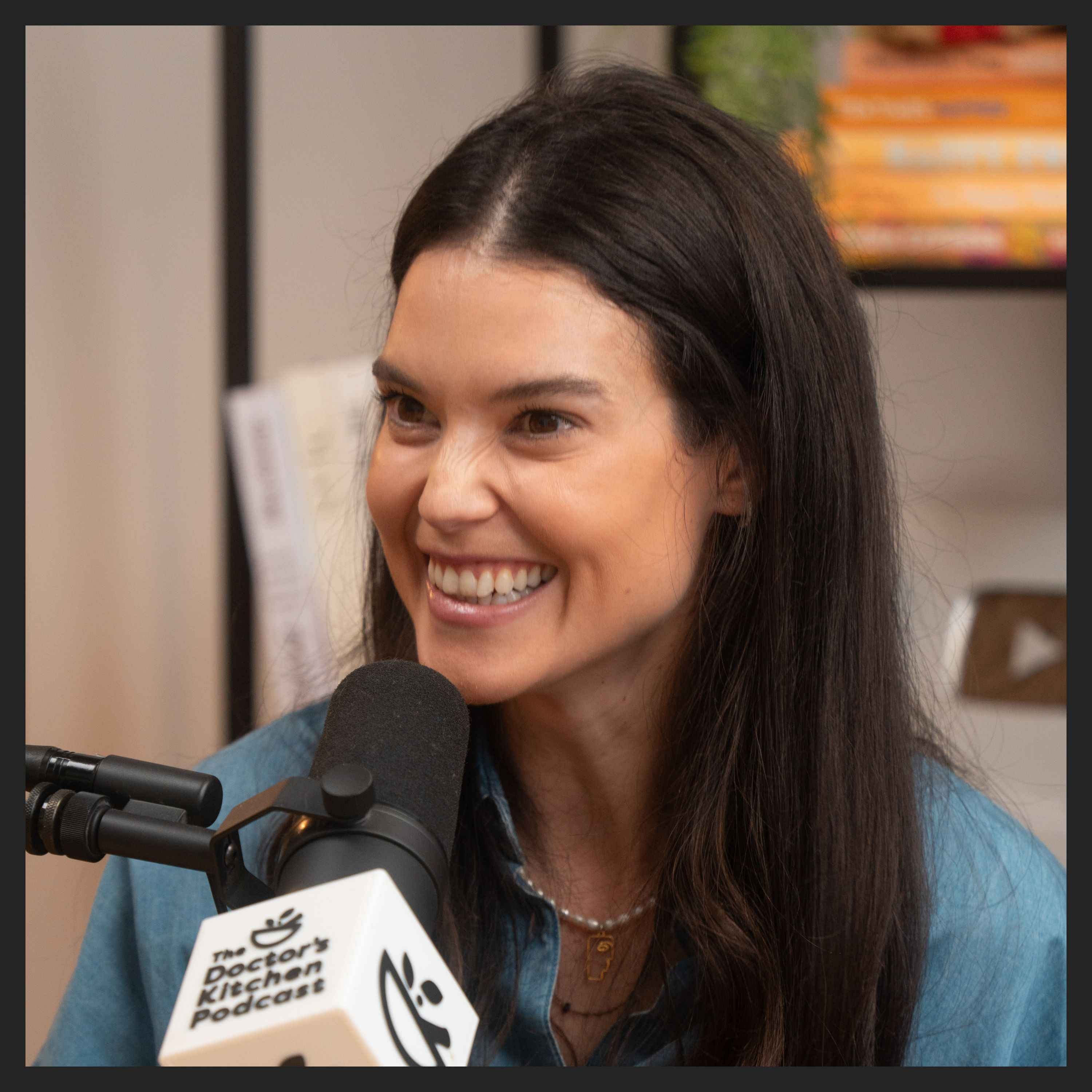
Speaker 1I'm Dr. Rupi and on this show, I help you feel more in control of your health through food and lifestyle medicine. What if I told you that two people could eat the exact same meal with the exact same calories and have completely different hormonal responses because of what they believed about what they were eating? Or that a group of women lost weight and dropped their blood pressure by 10% just by changing the way they thought about their daily activity? Well, these aren't fringe findings. The way we think about our health can meaningfully impact our biology. My guest today is nutritionist Sarah Ann Macklin, Sunday Times bestselling author of Healthy Shouldn't Be This Hard. And on this episode, we're going to unpack four ways in which our thoughts can either help or hinder our health. There's a body of evidence, showing that the belief you hold about your food, your movement, and even your genes can rewire your biology. And while we all need to learn the art of self-compassion to truly shape our health for the better. Sarah Ann Macklin, how is it possible that our thoughts can affect
Speaker 2our hormones and our health? So my background is a nutritionist and I was always really aware about how important food is, right? For how we think and how we feel. And it is, there's so much to be said in that. But there is a massive missing ingredient here when it comes to how we look at ourselves with health information, how we relay health information and how we interpret health information. And so for me, yes, it's bi-directional. It's not just the food that affects our mind, it's bi-directional. Our mind can also affect our entire physiology. And that to me was the missing, kind of the missing picture. And so I first started coming across this research by an incredible researcher at Stanford called Dr. Alia Crum. And she is someone who I have looked up to now for years. She did this fascinating study called the milkshake study. So what she did is she gave two participants, I would quite like to be in this actually, if I'm honest with you. Two participants, what she told them was milkshakes. And she said to one group, this has around 600 calories in. And she said to the other group, this has got around 180 calories in. She labeled one indulgent and one diet. So just think about how many times you're going out, maybe looking at drinks and ordering something that's diet or healthy or like, oh, I'm going to indulge tonight and have something a bit more delicious. And then she looked afterwards at the participants and how they responded with their hunger hormone. And the one that was indulgent, their hunger hormone actually decreased, which meant that they felt more fuller and they didn't want to eat anymore. The ones in the diet group, their hunger hormone didn't change. What was interesting is both of those milkshakes, both of them had a different type of diet. And what they found was that the milkshakes both contained 380 calories. So they were identical. They were identical. And so sometimes when you're relaying figures, it can be hard to catch up. But basically, neither was indulgent or diet. They were both exactly the same. But the perception that the participants had in that study thought actually changed the way that their hunger hormone related to what they thought and perceived that milkshake to be. This is wild. Isn't it wild? And so I'm thinking, hang on, for years, I've been seeing clients in clinic as a nutritionist. And I'm like, this is really healthy. No, this is more indulgent. You shouldn't be having this often. And if you're thinking about when you read in the news or when you're looking on Instagram, the way the linguistics of how food is described and interpreted has the biggest effect, maybe more than the food itself. And so I'm like, wait, that should be the baseline of scaffolding when we're talking about health and food. And so that took me down an entire massive journey as a nutritionist to totally change the way that I kind of work with clients, work with myself, but also really wanted to get this message out into the world that actually, before we start with all the external metrics, which can work and do work, sometimes people can be doing all the right things with health. I'm sure you've seen this. And I've been there myself. I'm doing all the right things. And yet I'm still feeling terrible. I'm still not getting that result. And it's the mindset. Yeah. And it's the mindset piece that's so important.
Speaker 1It's so important. I'm so glad you wrote the book and you're, you know, the book is littered with a whole bunch of these different examples that we're going to unpack today. There is another example in your book around this whole idea of how you can adjust your hormones with thoughts with another study from Ellen Langer about sugar labeling and blood glucose in actual people with type two diabetes. So those with a metabolic condition can still be primed by blood glucose. Yeah. And they can still be primed by the way something is labeled on a drink.
Speaker 2Isn't this crazy? So Ellen Langer is, they work together quite well. So she is, she's a pioneer. She's the oldest scientist, first woman scientist at Harvard. And so just for that, I think she's a super woman.
Speaker 1I didn't realize that. Oh, wow. Yeah.
Speaker 2Yeah. She's like pioneered and, you know, I mean, she's a tough cookie. I've had her on the show and you can see how she's pioneered. She's a force of nature. And I think, you know, Aaliyah Crump's kind of come up behind her and they work very, very closely together. Two of the most phenomenal scientists and they just look at the mind and body in a different unit. I mean, Ellen Langer will say it's not the mind and the body is mind body. You know, we shouldn't be looking at this as two different things that attach together. They are one set. They are one full unit. And I think that's where we've gone wrong. We're kind of treating everything from the body down as opposed to looking at it from the head up because all of our thoughts upstream is what's causing the inflammation, the chronic disease, all of these things, how our cells metabolize food. And so the one that you mentioned, so I actually got it here because it's one of the studies that I find really, really fascinating, but I'm going to look at it. So I don't make sure I get my stuff. But she basically conducted a study looking at food labeling. And so if you think about food labeling in the UK, think about all that, the traffic light systems and the way that we're again, we're interpreting food. Right. And so automatically we're making a very snap judgment straight away by what we're being perceived. And the perception, I think, here is the biggest thing. Because that is changing how we're seeing things and it's also creating a memory bank. And so the brain is using all of our past memories to create our predictions. And I think that's another really interesting point that we need to remember. But she basically looked at drinks that were either high sugar or low sugar, but labeled. And 30 people with, so small, but with type two diabetes were given the same type of drink with labels, but suggested with the different types of sugar contents. And what was fascinating is that participants' blood glucose levels actually went up. When they thought they were consuming a high sugar drink, even though again, similar to the milkshake study, all the drinks were the same. So again, the perception, I always think about this with like, I don't like saying brand labels, but I always think about this with like Diet Coke and Coke Zero, right? And it's like, okay, is our blood glucose response literally responding to just the label and nothing else? And I think that is what's so important. Everything that, and I think about this now with GLP-1 is coming out. If you look at the blood glucose level, you can see that it's actually going up. So if you look at the, you know, how restaurants have now consumed with menus, they're putting calories on the menu. And Aaliyah Crum did a really interesting study, again, with the linguistics of food, that just how you describe the food will also change what you decide that you're going to consume and also how your body responds to it. So if you think about a garden salad, okay, we know that's good for us, but our body will feel hungry because it's so bland in the labeling. But if it's then also being put on the menu, and you think about a juicy, delicious, crunchy, hamburger, your body is like, oh my gosh, the signals are going off. And that is how we look at food on a label. Whenever do you get like a beautiful salad that is probably full of so much goodness and so much fiber and so much crunch and so much protein described in a really Moorish way, it's normally the indulgent foods that are Moorish. So even the descriptions on menus are affecting how we're metabolizing and responding to food.
Speaker 1Hey, it's Rupi. We're going to take a quick break here to hear from sponsors who keep this show completely free for you, our lovely listener. I'm so glad you brought up the, um, the traffic light system because it's like one of my bug bears is when you see something that has got really nutritious ingredients in nuts, seeds, really good quality, high fiber ingredients, and you see a red. On that wagon wheel, it immediately gives you this idea that it's unhealthy just because of the fat content where we know, you know, mono saturated fats, even different types of saturated fats can have differing effects on your body. But that priming of, oh, it's red ergo is bad for me. It's something that we need to really unpack for a lot of people. And it's, it's hard because when you go into the supermarket because of legislation, which probably has it, you know, their, their mind in the right place of what they're trying to do. But if you're looking at a population level for public health needs, it's still going to have that negative, uh, side effect. If we don't take into account the fact that priming thoughts is going to have downstream effects.
Speaker 2Well, I look at this as well, and I don't want to get a lawsuit against me by saying this, so I maybe won't, but I write about this. I had to be, I had to take their name out of the books. My publisher was like, let's just be very careful. But you know, we have a lot of weight loss groups that are funded by the NHS. And there's parts of them that are incredible. It's the community basis, right? When you have community support and you get people kind of, you know, rallying in your group, that is obviously going to lead to part weight loss. But a lot of the foods that they're they do are on point systems and they're not nutritionally dense and so we're already priming our brains on point systems which i'm now kind of debunking in this entire book is the wrong way to go like we need to be consuming nutritious food all the things that you and i talk about but also priming them in a really delicious way not looking at foods that are diet foods that are full of hardly any nutritious foods and touting them as that's the way to lose weight like all of these perceptions are fundamentally changing how we're consuming the food and and potentially leaving people hungrier afterwards and feeling more deprived and feeling less nourished and i think that's such a such an important conversation it really is not having totally i mean like when
Speaker 1we create recipes on the doctor's kitchen app i'm always reading the copy and thinking okay this has got to sound nourishing delicious like something you want to look forward to when you're planning your meals for the week because if it sounds bland or like oh this is kind of drab because it's more functional than flavor functional is such a good way yeah it's just like it it's not going to leave you with that satisfying uh feeling afterwards if you've had like you know bland kale salad or whatever it is like you know we're always going to the the textures the sort of heritage the spice the zing the sort of like the citrus notes all that all that kind of stuff like we're just you know it's very onomatopoeic it's yeah i really want that to in all the imagery as well as the the recipe nomenclature actually changing your customers
Speaker 2yeah metabolism and now and now after reading your book yeah now you know i mean you're literally making a change not just because you're getting them to eat delicious food and nourishing recipes but you're literally changing their mindset towards food unknowingly you're doing that but
Speaker 1you have literally done that yeah yeah which is amazing let's move from um from thoughts and and food to thoughts and movement because this is a really real big eye-opener for me about how your beliefs around how you move your body can literally change body composition without changing the movement itself this is wild to me this is wild and i actually relate this in the
Speaker 2book to busy mums oh great because i do a lot of case studies in the book yeah from people that i've been seeing over the last 10 years and if you if you're a busy mom listening to this or if you're somebody who i don't know is on construction or is on their feet all day or is a waiter or anything like that somebody just moves i mean i don't know i don't know i don't know i don't know sadly a lot of us sit at desks but if you are someone who was up up and down the whole day this will really really relate to you so again dr ella langer um she did this this is one of her first studies and it was called the chambermaid study and she went to the chambermaids and she said how often do you exercise and they all looked at her in despair and were like never like i never have time i'm working all day on my shifts so she took half the participants and she said to them okay this is how much energy that you expend when you're literally taking the laundry walking up and down the stairs changing the beds hoovering all the hotel rooms this is how much energy that you
Speaker 1expend so these are ladies working in hotels in hotels gotcha and so a month later she went back
Speaker 2and she said to the other part of the group nothing so half of the group then had that perception of mindset of wow every time i do this hoovering or change the beds and doing my 10 hour shift this is how much energy i am expending the other group weren't told anything so they just carried on as normal okay a month later the ones that had done the perception mindset exercise of wow this is how much i'm burning they lost 10 of their body weight but around their visceral fat around their stomach which we know is the most important determinant of where to lose weight because that's linked to chronic disease um a metabolic disorder so if we want to lose weight we want it to be around our waist their blood pressure dropped by 10 which you know this is a doctor yeah isn't that wild they had so many different health metrics change but the funny thing was nothing else changed they didn't do more exercise they didn't increase their hours at work the other group which is the control group nothing changed they didn't lose any weight their blood pressure didn't change and so none of their metrics that were measured had any effect they just stayed the same so the perception of what they were telling themselves and then i thought when i was interpreting all this research i thought think of the busy moms i always think about the moms that come and see me in clinic they sit down to me and they're like i just don't have any time to do exercise all of my friends that don't have children you know they're still going to the gym in the morning they still have their lives you know i used to run marathons i don't have any time to train anymore it's always like this depleted mindset that they're never doing enough yeah i think moms are the biggest superheroes out there because they're doing everything and you know this because you've just had a child and i can imagine with your partner you see her like never sitting down it's like she's probably more exhausted now than she's ever been and she's like running around grabbing toys like constantly on the go yeah and i relate that to the chambermaid study i'm like we should be distilling this information to the busy moms where it's like you might not be going to the gym and doing a 45 minute session but you're doing way more than that probably because you're up and down the whole time and when we think about exercise it's not about standing in a gym and doing so many reps it's about the constant movement of your body and i think we've misaligned like you look at the blue zones they didn't go to the gym the whole time you know the people in sardinia are walking up and down these hills they're carrying their bags of shopping they're constantly moving their body they're not running at that the you know at that speed on a treadmill doesn't say that doesn't work but it's just saying that we need to be looking at this in a different way and so i really hope that you know with all these studies in the book and the what i'm trying to present is that if we can change our mindset towards actually how much we might be doing it could have actually a massive effect on our health i completely agree
Speaker 1and i think again there is this mismatch between public health messaging around 150 minutes of moderate to vigorous activity every single week plus a couple of strength training sessions and if you don't hit that then you know you're not doing as best as you can for your cardiorespiratory health and reduction of metabolic disease and all the rest of it whereas actually if you tot up all the little incidental things that we do during our day you know walking to the train station picking up toys going to nursery you know doing the hoovering doing the hoovering like this morning literally like my wife had to go early for work so i was i was dealing with um ralph's and his breakfast and all that kind of stuff i had him in my on my hip and i'm doing the porridge at the same time so it's like a kettlebell and he's 12 kilos it's heavy you know so i'm like one side and then i'm gonna switch him because he's like doing something else and then i'm gonna throw him in the air because i gotta keep him like active yeah happy and like and i've just i've just taught all these things up and one of the one of the things that i think i i'm finding myself um in a negative self-talk spiral with at the moment it's the whereas actually if i top all those little like kettlebell swings i'm doing with the 12k more i'm probably doing more yeah so i need to like put this into practice myself and i think again to your point if we relayed this at a public health level think about all those incidental things that you're doing during the day that counts that's actually helping your health we know that it's it's literally having an effect on people's changing our physiology yeah and one of my
Speaker 2best lines ever is audrey hepburn where she says i never went to the gym but i always took the stairs and i'm like it's true and i to get here i walked up two flights of stairs yeah i got the train here i was walking up three flights of stairs at the train station like i'm moving all day yeah you i think about that i'm walking upstairs and i think about audrey hepburn she always looked she was always in shape and she always took the stairs yeah and so it's those things i think that we've got to start relaying in our mind of you know i haven't i've been on a book promo now for like three weeks i haven't managed to go to the gym sure but i am on the go 24 7 and i'm i'm like relaying and rewiring the thoughts that i'm telling myself whereas a couple of years ago for this book i would have been like gosh i'm no time for myself i'm literally not going to the gym i'm not stretching i'm not lifting my weights and i would have put myself into a negative spiral and i think it's so important to change that that self-talk is is one of the most powerful ingredients we have for our health totally and if people are listening
Speaker 1to this and thinking oh well that's one example of chambermaids like how is this actually relatable to the general public as we're alluding to now there is actually research looking at the enhanced data of like 60 000 participants i think it was who if they perceive themselves as less active they actually had higher mortality rates yeah and the reverse is true of those who perceive themselves as being more active whether or not they are or not it's just that perception that actually has a literal effect on them and i think that's one of the things that is so important to think about because i think that's one of the things that is so important to think about
Speaker 2is the fact that we can see in the epidemiological data absolutely like i look at my dad and he was he started off as a builder and he built a construction company um and you know i think about i mean my dad now goes to the gym he's 71. he now goes to the gym because he's not a builder anymore because he's 71. but you know he was on a building's like every single day and he was so in shape and he would be doing physical activity all the time i just don't think we think about people that are literally going out every day and doing physical work and we just don't put it down to exercise sometimes totally i think it's so important and i and i think the way as you said messaging public health data all of this like we should be doing this much week getting a heart rate up it's helpful to an extent but i think we're not including everyone in how we're relaying that and you know i'm not going to the gym this week but my heart rate's definitely been up yeah because i've been running around in between things i mean i literally went to the wrong studio this morning think of the extra steps literally was like running from the station and i mean i've not got trainers on but like all of this counts but i wouldn't have thought about it in that way before and as you said that's a massive that's a massive group 60 000 people yeah um you know and i think you know this the research that we cite as well you know they're all very accredited you know harvard stanford they do a lot of rcts these are placebo controlled trials and i think that when i started uncovering all this research i don't know i felt like i'd had a secret that i'd been holding on to because i was like why is this not being spoken about and you mentioned something really important at the beginning because when i wrote started writing this book i started writing it into the rise of bro science and the optimization culture because i was getting overwhelmed with it i was feeling like i was depleting i was like i can't do all of these things i'm not getting up at 5 a.m and taking a cold shower and also i was like putting on a cold shower and i was like i don't know if i want to get under that cold shower but everyone's telling me i need to because it's going to increase my hrv and blah blah blah and then i should be intermittent fasting and obviously through the show i've learned that that's not what women should be doing but i had all these should should should should should and so the should should should should should leads to a massive lack of like depletion because you can't keep up with all the shoulds in life like there's so much that we have to think about today literally to survive and then we're trying to add on all of these things and the sadness that i found with myself but also with my with my clients was that the ultimate goal is that we can't keep up with all the things that we're trying to do and that's why we're trying to do well like that's what we're trying to do but we're putting ourselves at the bottom of the list with all the things that we're not doing yeah to get there and the rise of this optimization culture the the rise of the bro science culture is helpful to a degree and before then it shifts and goes
Speaker 1unhelpful i think there's a real lovely balance to be struck between the interest and like genuine excitement that we both have yeah some of these things like cold water therapy and intermittent you know certain modes of exercise that could be beneficial particularly as we age whilst mitigating ourselves against the overwhelm of all this information and it's like choosing which path you want and at what stage of life as well and as we're talking about your dad i was thinking about my dad as well who's also in the construction industry he's been in the bathroom business for 40 years now he never sits down he's always behind the tray counter dealing with running into the back of the warehouse grabbing like little elbows and radiators and boilers and all that kind of stuff so he's literally in the gym pretty much the whole day and like he's stick thin and he eats like a horse and it's you know i i had to remind myself to actually remind him that he's basically doing wonders for his heart health yeah and wonders for his brain because he is constantly moving all the time and i think there is if anyone's listening to this or watching this there's probably someone who's listening to this who's listening to this who's listening to this that needs to be told that yeah you know yeah what you're doing every day is actually
Speaker 2phenomenally good for your health and what i love if you just said one of the biggest parts of my book well i didn't realize that you just said it so there's a part so the book is so when i got all of this research i was like okay what do i do with this like how do i turn this into something actionable and it's not about positive thinking because sometimes things aren't positive and i also get very frustrated if i'm not feeling positive someone goes just you know just cheer up just think positively and i'm like well if i could i would like that's really unhelpful advice right now um and i'm a massive believer in you know the positive thinking leads to positive results but we also have to be that we're human and if we don't experience all the different emotions then we're basically becoming an ai robot yeah so it's important to feel the sadness and the joy and the grief and all of those emotions together so i was thinking okay so our mindset is really integral how do i get people to feel like i'm a robot and i'm not a robot and i'm not a robot and i'm not a robot to connect to this and change and help rewire and work with neuroplasticity and what i was thinking is okay well if we're stuck in the self-criticism loop which we know we can go into the science and that in a minute increases the stress response and we know that stress is like one of the leading factors of mortality here um because stress increases inflammation and we're now living in more chronic stress than ever ever before what's the antidote and it took me a long time to get there but the antidote to me was the cringe word of an english person who is probably listening to this too when i say it and i say that with love is self-compassion um the americans have this tandoor tea they they love it like whenever i say in america they're like yes and i say it to an english audience and they just look at me like i have the death stare um and i'm like i know we feel very uncomfortable with that word here but as oliver berkman once said to me if you feel the cringe lean into the cringe because that's where the work is and i was like that's such a cringe word and i was like that's such a good point and so the reason why self-compassion is such a protective factor for mental health is you said something they're really interesting we should always tell someone in our life if you know if they're doing that we should relay this information it's a very compassionate approach it's like i see you and i see how much you're doing and how incredible you are and what you're doing for your health you're giving massive compassion and encouragement and you're connecting there with empathy it's flipping it it's literally the external compassion back inwards so rather than telling yourself god i haven't gone to the gym since i've had my child and i'm exhausted and i'm running all of these different things and the depletion mindset you're giving yourself a compassionate friend filter and you're basically not telling you that you love yourself it is not that at all because that's what i couldn't connect with i was like i don't know if i love myself like i find that really hard to connect to it's actually respecting yourself it's giving yourself a bit of compassion so you don't go to your friend and say i love you so much every day you're like this is you feeling like actually i've had a really hard month i haven't connected any of my health goals i've gone off i've had a pizza nearly every other night and i've ordered in and i had no time are you going to tell them they're a loser are you going to tell them they're a failure are you going to tell them well you might as well just give up because you know there's no point going forward and any health goal because yeah the whole month's now destroyed yeah but that's not what you're going to say to that person right and i think that's the most important part when it you and then it's like stepping into action okay so like what can i change here what is like the most supportive mechanism now for me to move forward and that's the most courageous step with compassion there's so much research as well that also shows that it increases motivation and so you know a lot of us talk about willpower and the lack of willpower and actually it hasn't got anything to do with the willpower and i debunk a lot of this in the book one of the most important things is when it comes to self-compassion is that we know it actually increases your motivation it is one of the most important things and i think that's the most important thing strengthening things that you can do to help support motivation and behavior change and when i finished writing this book an incredible meta-analysis came out of 113 studies that showed self-compassion is the most protective factor for psychological well-being really wow and it i know it was just this moment when i finished it and i was like damn that's not in my book but then i was like yes it's true and i think we need to really reframe our connection and understanding to what self-compassion means it is literally treating yourself like you would a friend which is really really important like it is not giving us it's not self-pity it is not self-esteem and i can go into why these are really bad metrics self-esteem is not a good metric to use it's not self-pity it's not weakness it's actually a very courageous strength you are stepping in and acknowledging suffering you're connecting to common humanity that lots of other people also feel this way but you're actually going to make a step to make a change and that is so important that is like you're being your own best friend your own ally and and i kind of say you're your own ceo of your health by that point and that's what happens with the optimization culture is that we feel we get completely lost and we're looking at all of these other things that other people are doing that increases our comparison comparison is one of the most demotivating things you can do because you're trying to keep up with everyone else's life you completely forget your internal life in your internal world and what you're feeling and then you're working with wearables which to an extent can be really helpful giving you like weekly data monthly data recording your to dictate how you feel every single day you're losing your interception your internal signals that are saying hey rupee this is how i feel today you're externally outsourcing that to a to a metric by saying actually no you feel like this today and that changes your physiology because you're perceiving what something's told you rather than taking the autonomy and saying this is how i feel yeah and so it's really really important that compassionate mindset to use like your body is like an incredible wisdom yeah machine it's literally working with you to say hey today we feel x but we are so smart in our minds that it overrides all of our signals in our body absolutely so compassion just brings you back it brings you back to you
Speaker 1hey it's rupee we're going to take a quick break to hear from sponsors who keep this entire production completely free for you our lovely listener including stride stride is basically like getting a manual for your own body you spit on a swab you do a quick stool sample at home and you get bloods done by a phlebotomist who comes to you they'll tell you exactly how your genes and gut are wide and what you should be doing in terms of your lifestyle that's based on your biology rather than generic advice i love stride i'm a scientific advisor to them and i highly recommend you check them out by clicking the link in the podcast caption i really want to bring back this idea of self-compassion and leading into the interception internal uh intelligence and wisdom right at the end because i feel like there are some tips that i want to learn from you from all the research that you've done another thing that you talked about in the book is uh your belief around your genes and i found this yeah again crazy to to to read you know our genes are the literal blueprint for life like how we produce proteins or everything and your belief about your genes can actually have a literal effect on like your your feelings and and and um measures of health talk us through how this is even possible i know i remember this
Speaker 2is alia crumb again yeah she is do you remember i think it was about 10 years ago they maybe it was more than that they start coming out like all of the gene tests that you would send off and you were like am i at risk of oh yeah obesity am i at risk of alzheimer's and you're like looking at the snips and it's kind of looking at information and dieting it back to you and it's all interpreted mostly through an app right and i remember i mean before i get to say i remember sitting in a i went for a mole checkup and i remember some of them they came back as they weren't sure and so i was literally sat in the hospital in a like mole cancer mole clinic and even when you hear that word and i got my dna test through as i was sat there okay and i remember opening the app and it had like the skin cancer risk and it was just this massive moment where i was like wait i'm here i'm going to do this i'm going to do this i'm going to get something checked again because there's a little bit of a flag everything was fine everything was fine but it was this weird and this is before i came across this research but there's this weird moment where i was like do i open this app while sat in a skin cancer unit in hospital or not because it's literally telling me that i might be i might have the gene for it yeah yeah and my dad actually had skin cancer so it was like a big like i was a really big worry that that might happen to me um and i think about people that have you know alzheimer's you know my grandmother had alzheimer's and i remember thinking oh my gosh do i have the risk of that gene so we are sending people information on an app which one if you're looking at an ethical way is is it ethical like there's a big kind of discussion around that like how is somebody going to perceive that information what's their interpretation how is that going to make them feel emotionally but also physiology like is it going to change things so when i saw dr leah crumb study blew my mind so she did it she did it in two ways she did it with food and movement okay which is basically the basis of lots of stuff that i talk about in the book and the things that you and i are always talking about yeah on our podcasts so she took um it was an rct trial so again it was completely randomized the people with participants in the study had no idea and she did one with the exercise so she put them on a treadmill she got them to run and then she took all of their metrics and then a week later they came back and she kind of gave them their analysis of their genes now remember this is randomized she said to one group oh you've got the endurance gene which means you're going to be a really good runner yeah and she said to the other group oh you don't have the endurance gene which basically means you're not very good at endurance and there was quite like a big process on how she relayed the information and kind of told them you know the strengths and the weaknesses of the outcome and then they put them back on the treadmill the ones that were told that they had the endurance gene beat their personal best and absolutely smashed the next round the ones that were told they didn't have the endurance gene beat their personal best and absolutely smashed the next round the endurance gene the vo2 max reduced the lung capacity reduced they came off the treadmill earlier early oh my god all of these different metrics in their health had changed but the funny thing was neither of them had this gene or didn't have this gene it was all random quote um rct completely random just randomized just completely randomized oh my gosh and i find that mad because i'm like well so basically neither of these groups had that gene or didn't have that gene but they were just told that they did or didn't but the perception of knowing that they had that gene or didn't have that gene literally changed the way that they perform even their like lung capacity changed crazy isn't it and if you're thinking about you know maybe you're changing for a marathon or maybe you're just going to the gym to do a yoga session or a HIIT session or you're doing high rocks if you're telling yourself that you you aren't an endurance runner yeah which how many times has someone said that i'm not very good at endurance now i'm way more you know i'm way more this type of exercise what do we one do we know that but two like what are you telling yourself that might be affecting you and that's why i'm not very good at endurance and i'm way more you know i'm way more this type of exercise what do we one do we know that but two like what are you telling yourself that might be affecting you and that be affecting how your body is responding to that type of exercise i mean i always say i'm much more a yoga and pilates person and a long distance runner i mean that's just my own perception and i have no idea but if you're thinking about when we're getting our our gene information back and this relates very much to the second part of the study that she did which was around food and she gave participants again a meal she took their gene information and she brought them back and she said to one group again in very detailed depth you have this thing called the fto gene which basically means that you're at risk of obesity she said to the other group you don't have the fto gene so actually of obesity she said to the other group you don't have the fto gene so actually you're fine you won't be at risk you're fine you won't be at risk you're fine you won't be at risk the group that were told that they had the the group that were told that they had the the group that were told that they had the fto gene metabolized that meal fto gene metabolized that meal fto gene metabolized that meal completely differently the next time completely differently the next time completely differently the next time i'm around i'm like hang on a minute i'm around i'm like hang on a minute i'm around i'm like hang on a minute if we're telling people let's think about if we're telling people let's think about if we're telling people let's think about glp ones and again it was completely glp ones and again it was completely
Speaker 1glp ones and again it was completely random completely randomized they didn't random completely randomized they didn't
Speaker 2random completely randomized they didn't have they didn't have that gene or they have they didn't have that gene or they have they didn't have that gene or they did or they didn't they it was just did or they didn't they it was just did or they didn't they it was just completely randomized and so the completely randomized and so the completely randomized and so the information that we're relaying one to patients yeah thinking about when patients are going in right and getting this information two when they're getting dna tests and just getting it back on an app or three even just what we're telling ourselves like a lot of people would just say i've always and it's true people maybe have really struggled to to lose weight because they've got things like polycystic ovary syndrome or you know an underactive thyroid there's lots of things but then then telling themselves again on top of this like the distribution of this information is also having an effect yeah and so like is there a way that we can one have better communication with patients absolutely is there a way that we can have better communication with ourselves and is there something that has to be put in that when people are getting information via an app it needs to be delivered in a certain way because this is genuinely affecting how people are moving yeah i'm responding to food
Speaker 1the way people interpret the analysis of their genes can have an impact as we you know heard from from that wonderful description of ilia crumb's work but also the patient in a clinician's room and how they're being uh told about the condition that they have or they might be at risk of you know it reminds me of the conversation i had with dr deepak ravindran who's an incredible anesthetist and and pain medicine consultant who's written a book called the pain-free mindset and i love that name it's incredible and you know this is someone who uses very heavy duty pain medication in people who have chronic pain for lots of different causes some of them have back pain some of them have got um you know intractable chronic pain uh a lot of them have a psychological origin as well but as you know the picture is uh most most definitely mixed but you might have heard this description that a lot of i'm not calling it orthopedic surgeons here but a lot of orthopods they will say oh look you've got arthritis is bone on bone and you've got this image in your mind of like i've got no son of your fluid i've got no cushioning in between my joints i've got no my joints and every time i step on on my foot i've got my my my bones just literally crushing together and so this idea of bone and bone yeah which is in a lot of ways inaccurate as well but this idea of bone and bone is it's like it's priming your brain it's like no wonder my knee feels absolutely horrific every time i jump out of bed whereas actually what deepak has talked about in his books is if you soften the language and you actually get people to understand the process in a way where they have a lot more control over how they perceive that pain you can literally reduce their pain scores literally and you can get them off heart heavy duty pain medications which i find fascinating so again just the power of the physician's words just just comes
Speaker 2to the forefront yeah everything like how we're interpreting the information but also how we're then relaying that in our own minds yes it's so important like you know when we think about the brain generally it is a memory back and it's a memory back and it's a memory back and it's a memory back everything that we have is a is a perceived memory and that creates our perception and so if we're constantly being told the whole time like well this is going to cause you pain and there's not much that we can do and this is going to be ongoing that is living in your that's the perception of every time that you feel a pain that's coming out and you know lisa falvin barrett she's probably one of my my favorite guests i've had on the show and a neuroscientist at stanford and she talked to me about you know about how our emotions are shaped by our perceived memory back perceptions we don't just have an emotion it's all the memories that are stored it's the memory that creates the emotion so the power of the brain is so important to be able to know that we can have autonomy to change that we're just never given the guidance and the understanding of how to do it
Speaker 1yeah exactly and i think you've alluded to it just there but the process that we have within our own minds is really important so up to this point we've talked about you know alia crumb tricking a whole bunch of people into thinking that their milkshake is really important and i think that's is really calorific and that their movement is actually you know uh not doing anything for them and they're not physically active or your genes are saying something but actually the way we talk to ourselves and bring back your self-compassion um topic is is deeply impactful on our on our physiology and i really want to talk about this idea of chronic stress and how it raises cortisol levels quite literally but also how we can modulate negative self-talk that can unfortunately shut down our prefrontal cortex and lead to behaviors like overeating or you know this idea of having to look and sort in our in our day-to-day to sort of like emotionally calm ourselves um so let's talk about like negative self-talk and how we can modulate that gosh so everyone has it i honestly think
Speaker 2that one of the biggest so there's two really amazing researchers here that we haven't mentioned yet but one is dr kirsten neff and she's like the leading researcher in america she lives in texas um on self-compassion and then you've got professor paul gilbert here in the uk who is the leading self-compassionate therapist and works a lot with the compassionate mind um and they are both two very influential people when it comes to self-compassion so when i started you know when i first started coming across ellen langer and alia crumbs research and a lot of the you know awareness of placebo non-placebo perception all of the mindset states that we get in with our health and then i started to deter and go okay well let's look at the self-compassion research and let's just see because for me it was it's very eastern philosophy that's where i first came to it we never came to it from a scientific level and you know that with both of us that's very important you need to prove something which sometimes saddens me because also there's so much richness in eastern philosophy but i was like i've gotta just see where the research is here and professor paul gilbert talks a lot about the kind of self-criticism that our brain has naturally evolved to have a negativity bias okay that's also a great thing because if it hadn't we wouldn't be alive yeah we wouldn't have evolved through evolution we would have been eaten by a saber-toothed tiger running towards us but however now that we are bombarded constantly every day with threats our brain lives in this in this threat system and responds but most of us are unconscious because it's day to day and so also a lot of us don't talk about this negative state and self that we live in how often do you go you know how's your day been yeah it's been great or hi how are you yeah i'm great how are you it's just this constant normal very base level politeness that we have so we don't share our common humanity that we all have this negativity bias like that is the way that our brain is being constructed to help us survive and live and thrive in the world but that gets to a point now that the world that we live in it's not helping us thrive anymore and so obviously acute moments of stress it's incredible but in chronic stress we need to tip that negativity bias and we need to try and retrain it so the power of the compassionate mind and self-compassion is as a muscle you have to train it but we've never found the tools or understanding and spoken about this enough to train it so a lot of us can just feel quite isolated and thinking why are we having so much negative self-talk there is so much that we can do to help connect back to our prefrontal cortex to make more rational decision makings and to train this compassionate way of having it sadly a lot of us bypass the sensory cortex within our brain which makes us have only 10 logic and 90 reaction outcomes and so that's why sometimes we might be grabbing for food very very quickly or making very mindless decisions instead of mindful decisions yet when you work with the sensory cortex and you connect to the prefrontal cortex you have 90 logic and 10 reactivity so you need to be working more with the mindful brain which is really really important and that's the second step of my self-compassionate formula so the way that i try to get to interrupt these thought loops is when i want everyone you know when someone comes to see you well i don't actually i know if you work in nutritional science but when patients come and see me or clients come and see me i get them to fill out a food diary and it makes them be really aware sometimes they're like i had no idea of how little or how much food i was consuming um and you do that because recall bias is so high that if i said to you what did you eat last wednesday you're like i don't know i think i had this for dinner and like this for lunch and there's loads of stuff that you've you've left out same with our thoughts so i also get people to do a thought diary and write down every thought that comes into your head just for the day and it is overwhelming how much negativity there is within those thoughts and how much repetition there is within those thoughts that's one of the most first things to do and i think it's really important to do that and i think it's really important to do that right so you're becoming very mindfully aware of like i am completely unaware of just how much i am doing this because it lives in your brain every single day the thing with that thought is also it's also not you that's someone else in the past that has ingrained that thought into your mind it's really important to detach from that um when i had alan de botton on he said something fantastic he was like i like to do a goodbye ceremony to that thought that's in my mind say hi voice thank you for being there but it's actually not very helpful i acknowledge what you're saying to me but i would like to say i kindly decline and it was really beautiful and he said it in a very like compassionate therapeutic way the way that i did when i um did some courses um with eating disorders many years ago they taught that you should also name that voice and i know you know you don't have to have an eating disorder to do this but i found it really interesting that actually this should just be part of the negative critique because it isn't you and one person named it rain and i talk about her in the book and i think it's really interesting because i think it's really interesting and i thought wow isn't that beautiful she's named it this like very heavy emotion um that she feels and some people name like after their grandmother that was awful to them or whatever and um but they they name the voice and so whenever you hear it you're like oh that's rain talking to me now and you kind of allow it to see it and you acknowledge it it's important to acknowledge it but then you kind of allow that to detach from your central node of being so naming the voice is really really interesting and i use this technique n n n technique name name the feeling name the emotion name where you are there's the thing called the wheel of emotions that has over 180 emotions most of us only know three or four emotions and so that's also the emotional granularity which is being able to name and describe a feeling is very reduced because we're never really taught about our emotions so if you're struggling with naming an emotion look at the wheel of emotions it opens your eyes to like oh i actually feel this not that so name the emotion normalize the emotion okay rupee probably isn't the only person that feels he can't go to the gym whilst having a child there are so many other men that are feeling this way like this is very common this is very temporary naming it and connecting this to the wider being it's not just you because when we feel that self-criticism very much we become very insular within ourselves and we actually can think it's just us going through it you know i had a really hard month last month and my brain just naturally went to this is i'm the only one who's going through this right now and actually no i'm not like a lot of people were going through what i was going through last month and in my personal life it wasn't just me i was going through this right now and it's just me and realizing that these these feelings are universal can help take you out of that isolated place that we can really feel when when self-criticism becomes very harsh and then nurture like nurture that so use the friend filter that i said so like what would you say to a friend right now what advice would you give to that friend what would be really helpful for you right now is it literally grabbing that chocolate bar or is it maybe like going for a walk and getting a bit more of like fresh air and perception is it calling a friend is it taking a drink of water and just taking 10 deep breaths like what would you say to a friend and what that does is it connects it to my philosophy that i created of self-compassion which is one self-empathy you're seeing you're seeing the problem that's happening right the empathy that we put out we don't redirect it inwards so having self-empathy so that's the naming then you're connecting to the mindful brain that's really important connecting into that prefrontal cortex allowing the sensory cortex to activate to make more of a rational mindful decision because we live in a very mindless world right now we're so reactive i was so mindless this morning i went to the wrong bloody studio but i didn't beat myself up about it right i'm like okay i'm in the midst of craziness right now and like okay my my map sent me to the wrong place but like i'm i'm not a bad person i had the best intentions yeah so you connect to the more logical rational outcome the mindful brain is so important because we bypass that so much and that's where the compassionate is really built and then you go into the um shifting phase which is the compassionate mind moving into resilience and that's the nurture phase that i just spoke about that's actually allowing yourself to treat yourself like you would a best friend in that time and i think how often do we give ourselves the same advice that we give to our best friends and i think that's really key because we actually know it it's not a lack of information we actually know what we would say to someone that we love absolutely yeah we really know this and that's what i don't want people to feel overwhelmed with when it comes to this subject like you actually all know this because you do it to other people unless you have no friends in the entire world you know this because you have friends you have people
Speaker 1that love you it's just that practice of it's getting into that sort of um uh frame of i'm going to speak to myself as if i would speak to a friend and when you it's it's almost like
Speaker 2catching those negative spirals you know catching it because but we're so unconscious of it and think about it like how often do you doom scroll when you're like not aware of it oh yeah oh my god 20 minutes down i'm looking at a neighbor's cat yeah wearing a bow tie taking a selfie like how did i get here yeah and you were like then you like catch yourself but you didn't catch yourself going down to the doom scroll you're catching yourself once you're watching the cat having a selfie with a bow tie on that you don't even know yeah how you got that
Speaker 1this is so similar with our negative thoughts i think something you also talk about was the asymmetry between the negative self-thoughts and the positive self-thoughts right so again it's not just this idea of like toxic positivity we just like mitigate it we're just like um feelings of happiness or like gratitude or whatever but you we do have to recognize that there is a bias towards negativity and that the uh the the complement to that or the the counter rather is uh actually a lot more a lot more
Speaker 2positive self-thought so because we have we have more negative negativity bias and if you think about at the end of the day if somebody has said one mean thing to you that will be what's in your brain you might have had 10 great things said to you or 10 good moments but if something if someone says something to you bad i look at this on amazon reviews right i look at my amazon reviews and i'm like what how did that person write this and i've got like all these other amazing reviews on amazon and then there's one that i'm like i've zoned in on and i'm like connected to it yeah that's all i remember yeah yeah i've forgotten all the other amazing reviews that have been left that have like felt so connected to this book and i remember the one that was negative and i'm like but that is so funny because if they were all negative and one was positive i wouldn't remember just the one that's positive i'd still remember all the ones that are negative and when i was researching the book it was there was there was two conflicting some said three positive uh three positive comments and some said five okay but for every negative comment so we'll round it up every negative comment you need between three and five positive comments to balance out that negative comment but then think about what i just said to you we have more negative thoughts in a day than positive ones and so actually it's very very skewed so we've really got to train that muscle yeah and that's from being self-compassionate yeah and it isn't weak and it isn't it isn't self-pity it isn't i think the thing that we feel in this country is it can be very narcissistic or it can be very demotivating or it just means that you're becoming lazy yeah but actually what it means is that you're recognizing and you're actually taking action like that is what it means and that we know that we have much better health outcomes and much more motivated health outcomes and much more longer-term behavioral change when you can actually step in to doing something about it yeah that's what compassion does to you it's nothing about laziness hey it's rupee we're going to take a
Speaker 1quick break here to hear from sponsors who keep this show completely free for you our lovely listener on this pod we we talk a lot about food and diet and we have a a bias towards physical activity and all that kind of stuff and i think what i've learned from your work and the the book that you've written is our thoughts can be powerful medicine and it's definitely something that i'm trying to practice more so in my personal life i mean i went on a silent retreat very recently and i think honestly it's i i bang on about it all the time so my listeners are probably like really bored of me constantly talking about it and i don't think it's for everyone i think for certain people you want to microdose before so go for like 30 minutes like without any stimulation and just sitting on a bench in nature and actually experiencing boredom just to see what that's like because that you actually recognize that your brain is really powerful and you've got this working memory and it's like you can start piecing things together and i spent a lot of those uh first three days that i was there just unpacking my childhood and earliest memories and just going through it very methodically whereas if you asked me to do that during a working day i wouldn't be able to i wouldn't have the attention span it would be a lot like slimmer because of all the pulls and our time and so more and more in my personal life i'm realizing that thoughts are medicine and i think the framework for your book and obviously you go into a lot more other subjects than ones that we've talked about today it's just giving me the impetus to really think critically about how i talk to myself and just the power of that thought insertion when i'm thinking about my diet or thinking about my exercise or you know what my the analysis of my blood results looks like and actually you know what those initial sort of visceral feelings are and how that's going to
Speaker 2have a physiological effect massive and i think you know like the third part of the book is all tools so it's interesting so i think you just i displayed a lot of research and case studies in the book but then i'm like the tools was the hardest part to write because i'm like how do you write self-compassion at all like honestly i rewrote that section like three times um and i'm proud of that section now because i think there's we're also so different and i'm sure you had this but you know when i went to my publisher they were like it needs to be a 30-day plan it needs to be this and i was like screaming i was like this is the opposite of what i'm writing about and they were amazing they were like okay well what would you do like how can we get people connected to this so i literally start the third part of the book by saying my publisher wanted me to write a 30-day plan and for me the most important health message that i've always stuck to is that health is so individual and there's not a formula for every single person yeah some people are much more cerebral much more in their minds other people are much more in their bodies so we need different tools and techniques to support different individuals and so from those three stages that i wrote i ask each person to pick two of the 10 tools that are in each of those 10 in each of those three stages so at the end you get six tools and every person who reads the book will have a different toolkit at the end of it and it's important that you try all the different tools because you're going to see well that doesn't resonate with me just as you said for pastner for some people is incredible and life-changing like mo gowda said he does it for 60 days 60 days 60 days he does it and he goes and i'm like well i don't know if i could do that and then you start to feel a bit more shame right you know i don't know if i could do that but i think that's the most important part of this book is that i don't want anyone to feel like they can't connect to a tool i literally say there will be tools in here that you will not connect to and there will be tools in here that will be life-changing for you that will really resonate with and so i want you to make your own formula at the end with your toolkit that you have six tools that you can take with you that are free yeah that don't cost any money and that are free and that are free and that are free and that are that you can use to support the self-criticism thought loops and making them more compassionate for yourself going forward in life and i think that's the most important part that we're so individual we all have our own memory banks we all have our own past experiences we all have our own insecurities um but being able to like use compassionate lens with them in your own way
Speaker 1i think is the most powerful yeah absolutely i mean i'm not going to ask you to do a 30-day plan or suggest like one tool that people should do after listening to this pod whether they're listening in the car when the air pods are putting that down but if there is like a process or an exercise or framework that you want to leave people with what where do you think people could start so i think there's a couple of things so we haven't
Speaker 2spoke about the chocolate bar test yet okay so that's the very start of the book and this is how i get people to resonate with self-compassion in relation to food so it's called the chocolate bar test and i when i was thinking about this i was thinking okay how can we resonate this directly to food but we're not going to do that so i'm going to start with the chocolate bar test also how we see ourselves so i think you're going to resonate to this a lot because you have a child so your child comes to you we're going to do this in real time okay okay so raf comes to you when he can speak and says daddy i really want a chocolate bar and it's a saturday what do you say
Speaker 1uh i say well i've got plenty of 85 percent blast dark chocolate in the
Speaker 2in the store cupboard if you want i love this this changes depending on who's sat across from me and i knew that was going to come out at least you're going to go 90 so you're a little bit kind
Speaker 1yeah yeah okay it's in all honesty i'd probably say i'd probably think about whether he's had lunch or whether he's had breakfast or and then i think okay how am i gonna like ensure that this behavior is not just you know habitual i'm like very much in my parenting era right now so i'm constantly thinking about the psychological impact i'm having on my child exactly um and so i'd probably have a reasonable stab at like whether i give him a little bit or whether i say look you know what we're gonna wait until after your meal which is coming up so you don't
Speaker 2ruin your appetite amazing so i love that answer that's the best answer and then after he's had his chocolate after he's had his meal and his three years healthy protein in his fiber and all of his water he's such a such a healthy child um and you give him his 85 percent piece of square he comes back and he goes daddy i want more can i have another one what do you then say i say well why do you want more i guess because i do it's so good i really want another one yeah what do you say i am probably gonna say well we're gonna hold off until maybe a bit later maybe tomorrow because you don't overindulge do you uh-huh but daddy i want another one can i not have another one what do you say then i'm probably getting to an argument my kid i'm being really honest and why do you get into an argument with your child well why because i'm trying to enforce
Speaker 1some sort of boundaries and an idea that he can't just expect to have everything all at once and he's gotta you know um not necessarily earn it but he's got to understand the ramifications of overconsumption of certain foods even if it is healthy like 85 percent chocolate and that's not
Speaker 2because you're mean right that's not because you hate him that's not because you want to make him sad it's coming from love it's coming from love yeah it's because you love him yeah so let's reflect the chocolate bar test back to ourselves okay yeah yeah this is the moment when it clicks for people yeah because it's like okay so you've already thought about the first moment of when you're going to give your child that chocolate has he had his meals he's not going to eat it before he's not going to snack before like he can have a treat absolutely i'm not going to like deprive my child of ever having a chocolate in his entire life but when's the best time to give it to him because i care about how he's going to react to that yeah and i actually wanted to have nourishing food first yeah and then i'm going to give him some chocolate yeah but when it comes back to me again it's like well actually i'm not thinking this is the best thing for you yeah it all comes from a place of care yeah and you know what you're doing and i think most parents listening to this would probably abide by very similar rules they know that having chocolate before a may meal was probably not the best having chocolate 10 p.m at night is not going to be the best but they also do want to give chocolate to that child because they know that you know on a weekend they they want to give them a square of chocolate the flipping of it is really difficult because that's when people go i don't use that same analogy in my brain yeah with myself yeah and that's the tool that i want to leave people with to start with that moment of connecting back to do i do that with myself yeah is that my relationship that i have with my health absolutely it's really important you can do that with exercise you can do that with your sleep like you probably won't allow your child to go to sleep with the phone in their hand but how often do we go to bed with the phone on hand yeah right you probably would say to the child like let's switch off from screens because it's not going to help your sleep but do we do that totally so the chocolate bar test is a really powerful way to connect to the self-compassion experiment that i start with
Speaker 1in the book i love that i love that so i mean that's definitely something i'm going to be taking away for myself i feel like i do have like good sort of like um uh frameworks and a foundation of like you know keep myself in the straight and narrow when it comes to like exercise but the one thing i've learned from our conversation obviously loads of other things in your book is um the thought diary the thought diary for me i'm definitely going to do that because i think i'm i i'm awash with negative self-thoughts even though i've got quite a positive disposition but i'm definitely awash with negative thoughts whether it's when i'm driving or when i'm commuting on the train or whether i'm doing something online or whether i'm you know doing a pod like there's thoughts coming in everywhere yeah yeah and i think it's like i've never done a thought diary in the same way i've done a food diary exactly exercise diary yeah or a supplement stack like review you know when i give my clients a food diary there's
Speaker 2also a thought column within it so how are you thinking and feeling when you're having this food what's coming into your mind what were your thoughts just before because you know if you even like dial it back to not even what's in my my book but just general you know when you look at people that have gut problems there's so much amazing research now that it's maybe not just potentially food there's also like the mindfulness techniques and all the kind of the wiring that you need to do in order for you to be able to have a healthy diet and so i think it's a really important thing to think about and i think it's a really important thing to do and i think it's a really important thing to think about and i think it's a really important thing to think about and i think it's a really important thing to think about and i think it's a really important thing to think about and i think it's a really important thing to think about and i think it's a really important thing to think about and i think it's a really important thing to think about and i think it's a really important thing to think about and i think it's a really important thing to think about and i think it's a really important thing to think about and i think it's a really important thing to think about and i think it's a really important thing to think about and i think it's a really important thing to don't ever think about what we're thinking, feeling or doing in that moment. Are you eating alone? Are you eating with people? How are you feeling? What shaped your day? That to me is one of the most profound things that happens to me when I work with a client. Because it's like, we're matching the two. Like there's a whole chapter on mindful eating, solo eating versus eating with a community versus how you can do it properly. Like all of these different, you know, I've lived alone most of my 20s and into my 30s. You know, and I've lived with partners in that time, but I've always basically had my own lifestyle because I've traveled a lot with my work. And the impact of solo eating can be helpful and detrimental, but there's a really good way to do it properly. And I think all of these factors massively play in. And I think also understanding who you are, like the start of the book, I talk about two different types of people that I see that both share the same connection, optimizers and lapsers. The optimizers, you and I, we're the optimizers, right? We're always like, what can I do to keep going? With my health, then you have the lapsers, who are constantly like falling off the wagon per se, and then trying to get back onto the next diet and just always feeling in this like same loop. But the importance of the connection at the bottom of it is a self compassion element. There are two different extreme sets of people, but they both share this common denominator of self compassion. And so like when we can work on that, and I've seen it with the two different, I've had massively high performers that have come work with me and I've had the complete opposite. Sure. But when we work on this part, all the other health behaviors, like start tipping into place.
Speaker 1Yeah. I love that. Sarah, you are an inspiration. Your book's awesome. Thank you. And I'm super excited and congrats, Sunday times with Sarah already. Amazing, amazing, and with good reason as well. Thank you. But I've got so many tips and things that I'm definitely going to be putting into practice, and I'm sure our listeners are going to absolutely love the book and everything you talked about today. So thank you. Really appreciate you coming in. Thank you so much. Thanks so much for listening to this episode of The Doctor's Kitchen Podcast. Remember, you can support the pod by rating on Apple, follow along by hitting the subscribe button on Spotify, and you can catch all of our podcasts on YouTube if you enjoy seeing our smiley faces. Review show notes on the doctorskitchen.com website and sign up to our free weekly newsletters where we do deep dives into ingredients that will make your day. We'll see you next time.
 PodcastTranscript AI