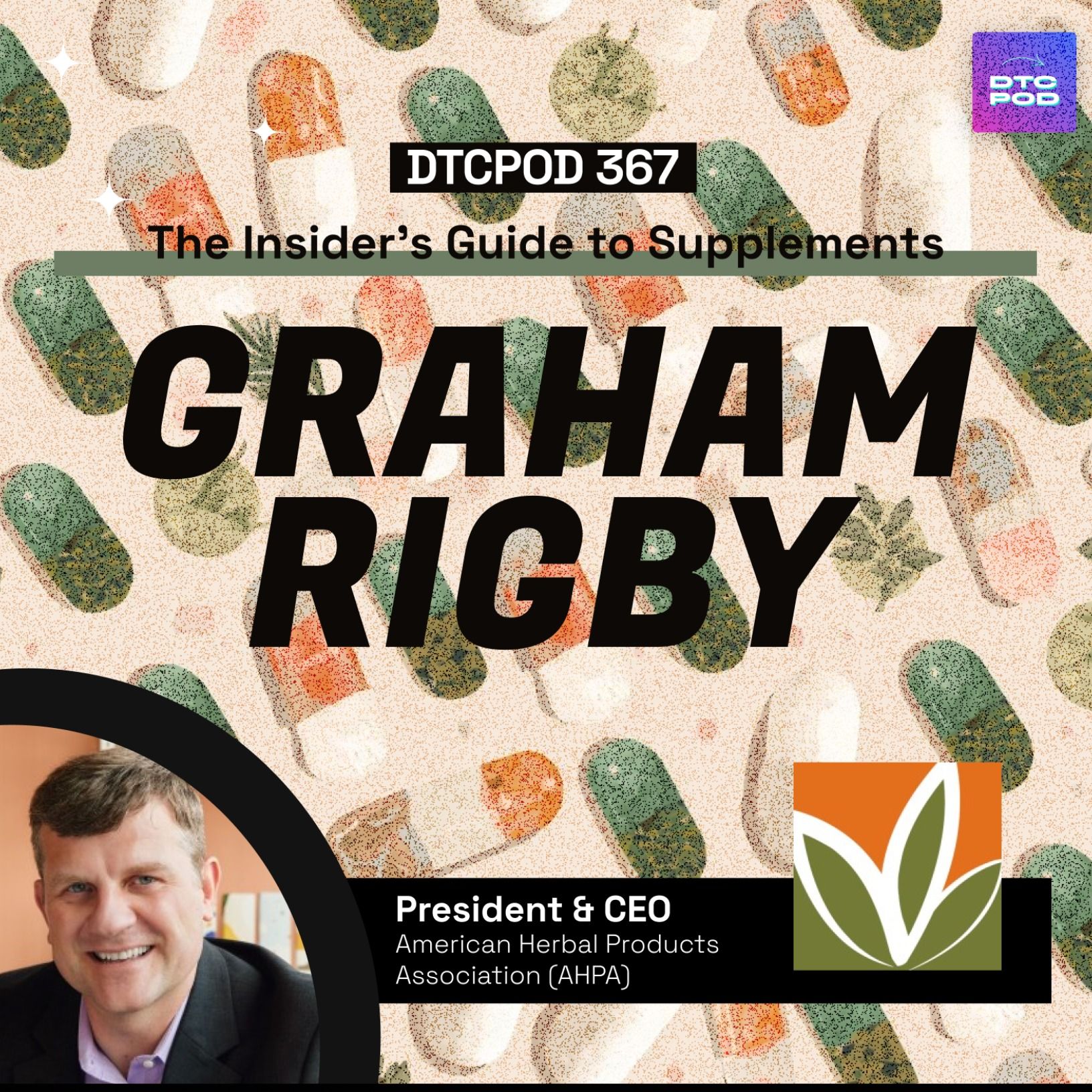
#367 - The Insider's Guide to Supplements: What Every Founder Needs to Know About Compliance, Claims, and Scale
53m 37s
The podcast episode features Graham Rigby, president and CEO of the American Herbal Products Association (AHPA), discussing the growth and regulation of the dietary supplement industry. He highlights the sector's expansion from $2 billion in 2000 to $13.3 billion recently, fueled by startups targeting benefits like beauty and stress with herbal products, appealing to a broader age range including younger consumers. Rigby explains that supplements are regulated under the 1994 Dietary Supplement Health and Education Act, which mandates Good Manufacturing Practices for quality but does not require pre-market FDA approval. Instead, the system uses post-market surveillance, with FDA audits ensuring compliance. Brands must avoid drug claims, sticking to "structure-function" statements about general health, and can leverage contract manufacturers and associations like AHPA for guidance. Innovation is aided by more accessible clinical trials, allowing companies to differentiate their products while maintaining safety through established ingredients or new dietary ingredient approvals. The discussion underscores the balance between innovation and regulatory compliance in this evolving market.
[MUSIC] This is D to C pod, where the worlds of creators, consumer goods, and brands collide. We get behind the wheel to show you how today's biggest products and ideas are made, launched, and scaled. If it's shaping the future of commerce and culture, you'll hear it here first. Catch new episodes weekly on Spotify, Apple Podcasts, or D to C pod.com. Be sure to check out our newsletter for weekly breakdowns and recaps linked in the show notes. [MUSIC] So before we kick off today's recording, I've got one more for you. E-commerce costs are rising. USPS changes alone could push delivery costs up more than 25% this year. And to stay competitive, you need to supply chain partner built for scale. And that's what store it is. A modern 3PL that unites warehousing, fulfillment, and transportation with cloud software for full visibility and control. In 2024, a loan, store saved customers 130 million in parcel fees and powered nearly 1% of all US Black Friday and Cyber Monday sales. Now they're offering a free mystery shopping report. See how your obstin logistics stacks up against competitors with real actionable insights. Get yours at stored.link/mystery and scale smarter with stored. [MUSIC] What is going on DTC pod today? We are joined by Graham Rigby, who is the president and CEO of the American Urban Products Association or the AHPA. And he also has a ton of experience working in the space. He's worked as the chief innovation officer at KERRUB. And he's worked directly as one of the co-founders of Infinite Garden, as well as working on ingredient AI. So before I get too far into everything, Graham, I'll let you kick us off. You're someone who has a ton of experience in the herbal supplement sort of space. You've been working in this sector for a long time. There's massive changes that have been going on. We've seen some of the biggest brands in wellness and DTC scale in this category. So excited to have you on. So maybe we can just start with a little bit more about your background, how you found yourself into the role and what you spend your time focused on at this intersection between herbal wellness and direct consumer. Yeah, things are having the very excited B here. Big fan of the pod, obviously, all you do for the entrepreneurial and just health and wellness community. Yeah, as you said, I've been in health products, dietary supplements for the past 20 years. On the industry side and startup side for a lot of it. And now leading a trade association sort of tasked with providing education, guidance and understanding of how best to compete and grow and be compliant in our regulated industry. The industry is driving, I think, herbal products, you know, gone from two billion in 2000 to 13.3 billion last year. And that's driven by a number of vectors. One is all these amazing young startups that are happening. Founders are getting companies and they're not just doing your traditional vitamin mineral preparations. They're focused on herbs. They want stories. They want things that they can kind of tell. And their consumers ultimately want feedback and they want sort of results from these. It's not just sort of the age old, how do I age healthily? You know, I might have some joint concerns. I need things for joint health. People are taking products for beauty. They're taking it for athletic performance. They're taking it for stress and sleep. And these are benefit areas that are attracting a whole wider swath of consumers. It's not just sort of, you know, weekend warriors, 45 plus types now that are looking to supplements. You've got teenagers. You've got college students. You've got people in their 20s looking to look in their field their best and are turning to herbs much sooner than generations that preceded them. Graham, that's such a good point in terms of just like how the landscape sort of shift. I think the way you're characterizing it in terms of, you know, there's a lot of marketers who have been able to like enter the space and tell those compelling stories. Whereas before it was kind of like, you know, you would just go to your local herbs shop and get what's on the shelf. And it was like, it's a totally different kind of marketing environment. But, you know, one thing I want to talk about on this, this episode, there's two, two big things that I think we can go into. One is what does this actually mean? Like how have some of these the biggest best in class brands done it? What did they need to know from the regulatory point of view and how they work with the AHPA to do it? And the second is more around like regulation. Obviously we'll get into innovation and stuff, but I want to know like, what is this space look like? Because I think a lot of times from consumers or brand builders or whatever hear about supplements. Like, you know, on the e-commerce side, you hear, oh my God, supplements are so hot. Everyone's doing supplements, every influencer and their friend is launching a supplement. But, you know, you and then on the other side, you just hear like horror stories of these like supplements that are just sold in gas stations with super sketchy ingredients and all of this. So, I think there's going to be a lot of us, a lot for us to unpack. Maybe we start with, you know, in the vein of like just D to C and stuff that you've done with leading brands. Like, how does the AHPA interface and how have you guys like worked with some of these bigger brands that are super, you know, household names? Yeah. I mean, it's a great question. I think maybe a couple of milestones to put out there for the audience. One is in 1994. There was a landmark legislation passed called the Dietary Supplement Health and Education Act. And that basically created the framework for what we now know as dietary supplements over 30 years ago. That sort of opened the doors to innovation and allowing people to suddenly find herbs, multivitamins, protein powders, a lot of the products that we know as dietary supplements today, but it also created a highly regulated framework with which FDA would provide oversight. Supplements first and foremost are regulated as food. And they are food supplements. And so, they're obviously food is in the definition. But when you think about pap capsules and powders and soft gels, they also look closer to OTC and drugs. And so in addition to that 1994 law in 2007, good manufacturing practices were mandated by FDA that came into effect in 2010. And those CGMPs, there's a lot of acronyms and regulated industry, of course, those good manufacturing practices, they govern how you identify the composition of your products, how you manufacture them, and how you ensure each specification confirms the identity, potency, composition, and purity of each dietary supplement. And so there's a lot of regulation to understand. There's a lot of regulation and guidelines that, you know, at the American Oval Products Association, we help companies, especially small, medium-sized businesses, understand the regulations, provide templates and ways with which to comply. And in host educational events that provide a way for people to sort of get a huge download of, okay, what are the most important things I need to know? How do I best comply? How do I kind of keep up with all the regulations and things that aren't just coming from the federal level now? In 2025, we've seen a lot happen on the state level as well. And Oppa and organizations like us, we're here to sort of consume everything that's going on from a regulatory, state, and federal government level and provide sort of an extraction of that that's easy to consume for members so that they can make sure they're compliant and focus on growing their businesses without worrying about any compliance gaps. So maybe a fun way to kind of like put this would be like, if I'm starting a supplement brand, right? Like, what do I need to know about, you know, compliance? Like, how do I do it? Like, you know, do I, you mentioned you need, you might need a GMP facility, you may need certain sort of packaging. There might be certain things that I can and can't say, but let's just use the example of a super traditional, like easy ingredient, nothing super complex. You know, how would a founder go about bringing a supplement brand to market? And what is that minimal viable sort of thing that they need to do to get an ingredient from some sort of manufacturer to sell it to a consumer? Yeah, it's a great question. I mean, I think the first is sort of understanding the idea and the consumer framework, right? Which a lot of founders and startups, that's where they start. Like, where is the idea? Where can I disrupt this industry? Where is some way to differentiate? The good news is once you have that, the dietary supplement industry is a group of, you know, kind of external partners with which you can kind of build a relationship with to help you with both the sourcing, the manufacturer, the bottling and the labeling of these products. And so there are many contract manufacturers, raw material suppliers, you know, sort of label packaging suppliers that are all within both opa membership and just the industry writ large that are there to sort of help you understand all the different things. So it's not like you're going to be flying to India to find Ashwagandha to farm it yourself, you know, you can obviously partner with folks who are expert and have done that. But there are a lot of responsibilities for the brand itself once you've sort of up and running. to create specific needs.
for your products so that your contract manufacturer knows what they're building, knows what you're looking for. You can work with contract manufacturers. They have R&D teams you can work with to sort of understand what are some of the things I want in and out. Do I want a clean label product? Do I want to add any additional ingredients in addition to say, Ashwagandha that you might be wanting to formulate with all the way to sort of what is the label going to say? And what are the claims I'm going to be able to make off of those? You need to have kind of those specifications. You need to register with the FDA that now you're sort of a food brand that that is going forth and you're going to start putting products in. And then one of the things that is really helpful about that 1994 law we talked about before is it doesn't require pre-market approval. And so you don't have to wait for FDA to go through all your documentation. You have to have all that documentation and compliance ready to go. But you can launch your product and notify FDA within 30 days of launching it that you've done so and any claims associated with products you've made. And then the way that the regulations work is it's a post-market surveillance regulatory regime, which means FDA has inspectors that can come to your facility or come to your offices whenever they want in the US unannounced. And basically we'll go through all that documentation we talked about your specifications, your labeling, your claims, all these things that you have that need to comply with the regulations. And they'll do an audit. And basically they'll go through all that documentation. They'll sort of find that you're in full compliance or maybe find a couple of things that you might need to sort of work on. And then if you get any sort of observations, you'll have 15 days to kind of submit back to FDA. Here's our corrective action plan. Here's some things that we can do to kind of do this better. And it's a way that FDA can make industry better while it's out there serving the consumer needs for health and wellness products. And it's pretty unique. We're very fortunate in the US to have this innovation friendly environment, but it's not without all of these compliance requirements that definitely need your attention, which can be overwhelming when you just start out. You know, it's like, wow, I'm one person or I've got a small founding team, you know. And so that's where you can kind of rely both on partners, contract manufacturers, suppliers, as well as trade associations like op, but it kind of help fill in the gaps and have a lot of experience folks like myself that have done this for a long time to kind of give you some clues or help, you know, answer some of the questions that might take you a long time to figure out on your own. And what are the differences, I guess, just for, you know, people are listening and I think you kind of alluded to it, but what are the differences between like a drug, a pharmaceutical drug that's like done and goes through trials and like has claims versus like a supplement or a nutraceutical that, you know, you can kind of sell, make sure your claims are compliant. You've kind of put it through you've registered with the FDA, but I think one thing everyone sees on all these packages is like this statement has not been evaluated by the FDA right so like what's what's the difference between these two worlds between pharmaceuticals and like these nutraceuticals. Yeah, it's a great question, you know, underpinning all of the food and drug administrations, you know, efforts is consumer safety and so like first and foremost, whether it's a drug, whether it's an over the counter drug or whether it's a food or dietary supplement safety is obviously the most important thing. And so for a lot of drugs or like new to the world chemicals that that are not natural or not found in nature, there's a whole set on series of safety trials that need to happen from, you know, cell culture all the way through human clinical trials just to prove that it's safe there's no untoward effects and that it moves on to sort of efficacy. And that's really in an environment where pharmaceutical company is looking to kind of own that chemical and then brand it and obviously have a lot of years of run where they're the exclusive provider that is their IP that's their unique way to market, which is obviously lucrative and then you go through pharmacist doctors prescriptions everything. But that the way that they get to safety and efficacy is through multiple clinical trials oftentimes because it's completely novel what they're doing to the world on the food side, there are several pathways to prove that something is safe and once you select an item that has a proven track record for safety. It's in the food supply it's done sort of significant toxicology work, then those are things that you build on within the dietary supplement space and so something needs to have sort of an underpinning of safety it's either been used, you know, as a food stuff or you know an article of food for a long time predicating the laws sort of on the books or it's gone through the significant rigorous toxicology study. And then it's allowed for it to sort of be made a dietary ingredient and then once you have an ingredient that sort of pass all that that is an approved dietary ingredient from FDA, then it can go into dietary supplements and the sort of manufactured so long as it's following sort of the contours of the approvals that that ingredient has made in terms of its form its preparation and in sort of the composition that it follows. And then there's a path way for new dietary ingredients that you can petition FDA to say here's a new you know a new botanical that didn't follow some of those things you know an old dietary ingredient or you know it's in the food supply and it's generally recognizes safe. And then you have to sort of prove that that ingredient is safe FDA review it and then they'll give you sort of an NDI approval with which you can move forward so there's lots of gates you can kind of go through to make sure something is safe. It tends to be faster than pharmaceuticals and tends to require less. And it also offers less in terms of claims like if you just have a certain ingredient there's only so much you can say about it but many companies like op a member AG one they've done several human clinical trials with which now they can make you know specific claims on hey AG one is great for digestive health it's great for gut health. We know that is this powerhouse sort of you know super food and super greens beverage but they've really have been able to identify through the power of clinical research more benefit areas that are unique to them and that's you know I think an emerging area that is now accessible to founders in a way that it wasn't you know I first started and you know the mid 2000s to do a human clinical trial would cost you $400,000 $500,000 you'd have to have a site you know recruited people. Would have to drive to the site they get their blood taken whatever now in 2025 you know there are startups like radical science like people science you know again people that within the op orbit that we could introduce you to if you have questions of talking to these folks but they're using the power of the smartphone to allow people to sort of enter in how they're feeling what's going on so they can participate in clinical trials at home. And that has brought the cost down significantly near talking about 10% or 20% of the cost it would cost 20 years ago and so that's been a huge boom and allowed you know a lot of these companies to sort of invest in clinical research when they get to a level or when they think they can you know use that as a proof point for consumers to get them to say yes because there's a lot of options and there's a lot of ways to a lot of products out there were then dietary supplements is a clinical science is one way to differentiate. It's not a requirement for safety per se but it does help you set yourself apart and differentiate in the ways that we see kind of you know ultimately drug companies using clinical research to kind of put forth benefits that they've proven so slightly different you know that they're obviously dietary supplements are absolutely not drugs you know they don't cure prevent. Treat disease that's very clear on that little box that you sort of reference but the one thing that the shea box you know also says is the FDA doesn't evaluate those statements which it does you the that 30 day sort of requirement that I mentioned before you send that to FDA and if you make a claim that is you know not sure that it's a drug claim for example you say you're curing some disease. FDA will write you back and say that's not an appropriate dietary supplement claim you need to change that otherwise you know you'll sort of set off a series of accelerating engagement from the agency that you really don't want it would not recommend that you know you want to sort of comply with appropriate structure function statements that promote the health and wellness of the body versus treating or curing a disease and that's the major distinction in terms of claim structure between food supplements. Between food supplements and drugs yeah and I want to kind of just double click on that because I think that's kind of where rubber meets the road for a lot of marketers right in terms of like what can you say versus what can you not say what is a health claim what isn't a health claim I think you know right now you're seeing every brand is you know back by science and formulated with so and so. And influencers are launching supplements and everything so you've got a lot of chatter you've got a lot of marketers who are you know doing their thing kind of pushing that line figuring out like where it is so.
what just simply put like what can you say what can you say and like yeah yeah and I think you know when this is a really it's a great question and it's the hardest thing when you get into health and wellness startups because consumers do not think this way right consumers aren't like oh this is the regulatory framework for dietary supplements and that does not equal what I see on OTC products and that does not equal what I see all the drug advertising that I consume they just think oh I've got something wrong with me can I take this product for it but you know as as marketers and as you know startups we have to sort of evaluate what is appropriate for a supplement to say so that we don't delve into or sort of make drug claims which would make the company liable they're very competitive but I would say they're not very sustainable over time because if you grow and you you make enough noise then the regulators will definitely find you and and certainly help you move back to you know the dietary supplements sort of contours of claim structure that you should I think it's easy way to think about it as you're jumping in is additive things that are promoting health and wellness that are sort of promoting skin hydration and glow and moisturization and not treating sort of a skin ailment or disease that's a way it's sort of like if you think of sort of additive and up to the right versus taking someone that sort of indeficit and bringing it back those are typically good ways to think about it you're promoting you're enhancing sort of work out performance you're doing those things versus kind of treating a negative oftentimes we think of that way because it were consumers but we want to promote you know the the immune system function versus treating anything that our immune system might be fighting you know is a good way to kind of divide it up clearly the most competitive ways for start-up sick and peter you know right on the line of those things and there are many you know excellent sort of resources to help you I would highly recommend as you get going that you identify sort of a capable FDA attorney who can help you understand both you know where a claim can fit and you know how aggressive or conservative you want to make and then secondly the substantiation that you need to have for that claim because the more specific or aggressive a claim you have the more data you need to have to support that as well because there's not only sort of FDA regulations to to worry yourself with there's also the federal trade commission who if you're making fraudulent claims you're making things that aren't substantiated that's the the agency that would typically look at that and they have engaged on dietary supplements in the past around immune health and in other areas and so it's something to be mindful of you both need to sort of meet you know what is an appropriate claim for a dietary supplement that sort of follows promoting the structure and function of the body and health systems and then you know on the FTC side making sure you have substantiation to really under you know underpin it and they're also give your consumers confidence and the thing I like to say with new members starting up you know and as companies are getting into it you really want the consumer to have an experience that they can either feel or recognize or trust with the signs that you have because the worst thing you can do is pay the cost to acquire a consumer and have them churn after one one bottle or one piece right like that's that is absolutely no way to make on D to C money and so clearly having things where you've got a sustainable building approach and something that people can recognize which often costs a little more than the basic standard but can pay off in the long run and obviously having higher attention. Yeah and I think one other like last question kind of on the the claim side is is there a distinction because I feel like you know one of the big things all these brands are doing is they're running all sorts of marketing messaging to like target different indications like as you scale it's just inevitable right like your target for first you just start with one indication and then you're like wait a minute this ingredient you know does all these different things so we're going to segment our audience we're going to target you know gut health over here we're going to target target brain health over here etc etc so how does is there a difference between what you can say on a label right like versus what you know you can just convey through you know online creative or what other online content creators are sort of saying is there any distinction or does it remain the same. Yeah it's a great question I mean I think FDA has said you know that it's sort of website or content that you're creating is sort of de facto labeling especially if it goes back to the sale of a product which I'm assuming most content you know whether on tiktok or instagram is sort of doing that there are certainly some rules where you don't have to have all of you know if you're lattering back to a website having all of the the different distinctive you know language or the the dishey box or all the things we talked about you know there's ways to kind of make it cleaner and more seamless so long as that you know warning is is obviously displayed when you get to the product page and as you're looking to sort of do that you can certainly talk a lot more about your products and sort of bring romance in other angles versus the maybe specific structure function claims and so that's an area you see a lot of people you know people are interested especially younger generations you know millennials Gen Z alphas they want to know where their products are coming from they're very interested in sort of how clean these ingredients are in the overall format are there a lot of preservatives are a lot of other things that really art health claims at all they're they're not given the same regulatory rigor there's more classic definitions of is this an artificial preservative or not and do I have it is it something that I can't pronounce or is it something like rosemary or oregano that's obviously providing you know a natural preservative in an official oil or something like that that you see on the market so so I think you know there those guidelines still hold obviously you know people take a little bit of latitude it's easier to sort of take down creative that pushes the line versus to change your label in some ways and so you certainly see people doing that and again I think these are all calculated choices that being mindful of the regulations and the marketplace you know that's that's kind of the challenge for marketers and founders in the spaces finding that niche and sort of that through line of being compliant and competitive which is a challenge but it is achievable. Next thing I want to switch gears a little bit I think we've you know we've covered a fair amount on the compliance side of things but I want to talk about like what are I want to talk about the industry in of itself right like I think we see a lot of brands who do really well on the storytelling side on the ad side on the u gc on the creator side that can scale really quickly but what are some of the channels uh in the nutraceutical the wellness supplement sort of space that maybe a lot of people don't know about that they can tap into for growth for example um what does the distribution picture look like for retail how do some of these uh brands that are in this supplement space get into retailers are there other sort of channels that people may not be thinking about other than their own shop obviously driving traffic to your own shop is you know one way to do it you can control the margins you can control the spend you can grow up but at the end of the day you're driving all your own traffic so I just love to talk about what does this landscape look like because a lot of people who are getting into supplements you know they're like oh like I've got this problem that I want to solve oh my god I can solve it with like this really great ingredient okay I'm going to start driving creative in driving all this stuff to my own site but they don't come from this industry they don't know what the picture looks like so why don't you just characterize I guess the broader landscape that isn't D to see if that makes sense yeah absolutely I mean I think um you know it's funny like when I first started in dietary supplements amazon didn't sell supplements so this is like 2008 2009 there were like some people reselling third party on amazon but it was there were many other players like I heard been light of cost and others that were the major e-com players at the time and now obviously amazon is the biggest supplement store in the world and that's obviously a choice that a lot of D to see you know founders need to make you know do I want to go into amazon in addition to selling direct a lot of sort of the logistics underpinnings can be shared a lot of three PLs you might partner with can obviously fulfill amazon products orders as well as your own D to see so there is some you know sort of overlap there in some synergies in terms of expanding thinking beyond sort of D to see and thinking about okay are there other e-com channels that I want to do um you know tiktok shop is another one that has really sort of come up fast a lot of people are selling products if you have like really great you know you'd see or just sort of content you know we'd seen brands kind of explode on tiktok shop and then it sort of permeates out from there there's many other sort of e-com websites that that are selling products that once you've stood up a three PL that can do e-com fulfillment you know you can easily do that and then a lot of these retailers you can also
also ship them product with which they can fulfill through their own orders. So I think that's another possibility. And it's typically the easiest way to move from D to C to E-com because a lot of the thinking, the spend, and sort of the analysis is similar. One of the ways that I learned, though, when I was a carav, and within other sort of health and wellness, D to C digitally native startups, is that channel diversification is the way to kind of make sure that you've got different ways to sort of penetrate the market. And there's different risks and certainly costs. The reason to go into a brick and mortar retailer like a target or a Costco or a Whole Foods market or some of these is they are acquiring your consumers for you. Like the consumers are walking in the door because they need to get bananas and cereal and protein drinks and whatever they're there to obviously to kind of get their normal food that we're consuming. And so the cost to acquire those consumers a little bit less, the you give up margin in order to do that. You're not capturing the full consumer margin, but you are de-risking the idea that our consumer is going to be in that aisle. And you're also adding a different element and that is now I'm sitting next to another brand. When I'm communicating with you directly on Instagram or TikTok or whichever way you're reaching out to your consumers, I have, I'm getting your attention from doom scrolling. You click on me and I've got you captured, right? And that's the magic of D to C. You need to think harder and longer about your labeling when you're in aisle at a target or Whole Foods because there are a lot of choices and consumers as everyone can represent we're all consumers. You're not sitting in the aisle for three minutes wondering about this production, thinking of where it was sourced or this brand. You're doing the eight, 10 seconds, what's the quick hit? What does this say? Am I interested? Do I like the branding? Do I like the design? Does it have the ingredients that I'm looking for? And then it goes in your basket and you're moving. These are even though our health is obviously our most important asset. I wouldn't say that consumers, all of us, buying supplements aren't spending, certainly in brick and mortar styles, a ton. Oftentimes people will see an ad from you on D to C and then recognize you in a store. And that's why many retailers like Target and Costco and others are actively recruiting D to C brands to come in and giving nice end-cap shelf space or promoting these pieces because they want to be seen as the innovative retailer. They want to compete with the e-commerce of the world and they need great brands like yours that you're building. And so that often can be sort of a mutually beneficial area of expertise. The cash requirements to get into brick and mortar can be significant depending on what retailer you have to build a lot of inventory and a lot of volume and then sell that in. And so there's different risks. I wouldn't certainly recommend that you do that right out of the gate. But as you're growing, if you walk through Target right now, you're going to see a lot of brands that started as D to C that are now sort of thriving in their ritual multivitamin or seed probiotic or others you're seeing them sort of come in. You'll see a constant flow of that I think is important in that diversification. As you look at your runway and you look at your tam and ways you can access and get to other consumers, there will be more and more consumers that are in brick and mortar. I think for e-commerce all in, it's maybe a third of the industry right now in terms of where supplements are sold. And so there's many more categories, brick and mortar, drug chains like Walgreens or CVS, et cetera. That's another outlet that obviously sells a lot of supplements people go in. They're looking for health products. And so those are others. And then depending on your product line and where you are, there's also some non-traditional areas that you could sell in. Chiropractor officers, naturopathic officers, sort of practitioner officers, a practitioner offices where you're going to see a chiropractor, you're going to see an herbalist or a naturopath. A lot of times those offices in order to make their ends meet because they're not getting insurance money, they're not getting sort of payment through the classic medical system. They're selling product and that product is consistent with any advice that they're giving you. And so that's another potential area where there are some large brands within that space. Because again, if you're going to see a chiropractor, you're going to see a naturopathic physician. More likely you're not, you're going to be invested in, sort of purchasing products that they're looking for. And so that can be another one. So there's quite a few different channels and ways to think about it. That's just sort of quick overview of some different ways to think about growing beyond D to C alone. No, that's super helpful. And then moving forward, I'd love to talk a little bit more about like ingredients AI and infinite garden. And what you guys are starting to see there, I think what we've been talking about is we're kind of at this point where there's more and more ingredients, there's more and more research, all of it, there's more ways to drive traffic. So on one hand, we've got a market that's more crowded than it's ever been. On the other hand, you've also, like you were saying, the growth just in terms of what people are spending on supplements, people are buying into this sort of stuff. And then I think the third tailwind you have is just modern lifestyles, whether it's the food system or just the ways in which we live. There's more and more appetite for fixing and addressing these sort of problems. So why don't you just take me through what it is that you guys are building on those side of things and where you guys see the markets going? Because like I'm saying, on one side of the coin, you could make the argument that like, OK, this is this market's way too saturated. AG1's done it, seeds done it, rituals done it, and on and on and on. And then on the other hand, you could say, wait a minute. I think there's actually a lot more opportunity here for growth of like really great quality brands with the right distribution and the right story and all that good stuff. Yeah, for sure. I think AI is going to be obviously the disruptive technology of our time, certainly of the next several years. And I think both of those startups, you know, ingredient AI and infinite garden, they're both sort of op-a-members. I was on the founding team of both of them and obviously cheer them on. I think the disruption, actually, op-a-we just launched the technology and AI committee where everyone is interested in how to leverage and deploy AI within this industry. I kind of bored the audience to death with all these regulations, informs, and documents, and specifications. But you know what, large language models are really good at? Creating all of these and filling out all these documents and sort of creating SOPs in all this language that's structured. And so, ingredient AI is really using large language models to accelerate the way that companies can formulate products, you know, sort of identify ingredients, identify potential claims from the medical literature that's sort of out there, that they've sort of looked at all the way to helping you find contract manufacturers or all material suppliers, et cetera. And so, there are one of many startups that are sort of in this place, in this space, using large language models with which to connect and summarize the data, but also really identifying some of the pitfalls. And I think one watch out I would have for anyone listening is that you have to be really careful with a lot of the free, large language model interfaces because their data set is the entire internet. And it might be, you know, blame blogging about how much he loves beats and how it's done this for him, which may or may not be, you know, linked to scientific pedigree or sort of any understanding. It may just be, hey, you love beats and that's great. But, you know, chat to you or, you know, cloud or whatever you might be working with, it's going to evaluate all of that information. And sometimes it can come back and this happens in all sort of AI prompts, right? You're like, if you have any expertise and you get something that's not quite right, you're like, are you sure about that? And then you get the prompt, it's like, oh, no, sorry, that's wrong. It's actually this thing that's totally different. When you're doing health and wellness products, it literally can be life and death, right? Like it can be, and the reason all these regulations exist is because people are literally putting what you're making in their bodies. And so that is a huge responsibility for us, you know, as sort of founders, as entrepreneurs, and certainly as, you know, folks who are trying to promote responsible commerce, which is what we do at OPA. And so, you know, ingredient AI, apex compliance, there's a bunch of, you know, AI startups within the space that are limiting the data set so that the output from the large language model can be more control, reduce hallucinations and. a much higher degree of confidence. And that's a really good thing because a lot of the doctors, practitioners that are formulating products, they've been scared away from AI in a lot of ways because it's sort of created this false sense or given you the wrong answer. And then all of a sudden they're like, I can't trust it. AI is only getting better and better though. And so the beauty of a lot of these innovators and pioneers is that they can help sort of work out some of those kinks, ensure trust. And then also really control that data set to make sure the output is 100%. So they're definitely worth checking out. And I think they're only getting better as the technology gets better. And I think those who kind of evaluate the way to incorporate AI will be much further ahead than those that don't for sure. Talk to me, this one's going to be a fun one. Talk to me about the sort of like intersection that we're starting to see between traditional medical doctors and the supplements industry. I think one thing that's been so fascinating for me to see just because I have a lot of friends who my doubt was a doctor, a lot of my friends have gone through it. And you've got some of the smartest people in the world who on one side they'll be like, oh my god, they'll just kind of look at these doctor content creators and be like, oh my god, this guy doesn't have a degree, doesn't know what the hell he's talking about, but he has a million followers. But then you also have really successful, really credentialed doctors who are also great at content. And we're just starting to see kind of like this shift happen where you've got doctors who are also creating content and then doctors who are also recommending supplements, you know, they know all the information. Now they're starting to see the benefits of a lot of these nutraceuticals where they're actually recommending products that are in the health and wellness base that maybe aren't necessarily a pharmaceutical. So you're kind of getting this crossover. So how do you see this landscape sort of evolving and crossing between like the modern doctor and like the online content creator and the supplements industry? - Yeah, that's a great question. I think historically the amount of sort of health and wellness, nutritional information that classic medical schools have taught, burgeoning doctors has been limited to 90 minute seminar or something, you know, this is not an area that they go deep in. You think about a three year program plus your residency plus all of this. And so what we found is a lot of times, you know, doctors are learning about products from their patients, you know, and they're saying, hey, you know, I'm taking this, what do you think? And just in terms of like patient service, I think some doctors have wanted to get educated and sort of understand what's happening out there. The other huge underpinning is that the cost of health care is kind of out of control. That's obviously why the government's been shut down, right? Now there's some signs that it might reopen, but at least there's been huge, you know, sort of focus on as everyone sort of getting their insurance premiums this month, it's everything's going up. And the reason that there's so much interest in self care and that is health and wellness products that you would buy yourself to promote your own health and wellness is one avoiding huge medical bills that they can have there. And when you go to, you know, your traditional sort of general practitioner, you go for your medical health cup, there's not a lot of things that are prescribed to you to promote health and wellness when you think about it, right? If you have a problem, you're having an issue, if you're dealing with some disease, there's a lot of recommendations and prescriptions. If you're just like, hey, you know, I wanna get leaner and I'm worried about, you know, sort of my skin and some things you're trying to promote, that's not where your traditional doctors office visit is sort of gonna help you. And so people do want those things and so they go looking for credentialed people online. And as you're saying, there are some people that are incredibly well educated, promoting things that make sense and even for consumers, it's like we're relying on our eighth grade health class in a lot of ways. I've never taught how to take care of ourselves, right? Like this was not something that was programmed into our education. I, you know, I made the comment about medical schools. I would say education in general, there's not a lot about unless you study exercise physiology, you understand nutrition, you sort of choose to do those things, you know, basic education doesn't do that. And so we as adults, you know, we turn 18 and we're like, now we gotta figure it out ourselves, right? It's like, okay, well, I gotta work now and I've gotta got all these things. I'm stressed out, I'm trying to work out, I'm trying to make it all work. But so people that are compelling content that are giving sort of, hey, here's a way to address the thing that's going on with you. That's why it's so appealing to us is there's an information gap we're trying to solve. These are not things that our traditional medical system is giving us because they don't have the training or really the time. You think about the average hospital, you know, annual physical visit is like eight to 10 minutes, you know, it's not like time to converse or sort of go through what it is you're dealing with. And so we spend a lot more time on our phones, we spend a lot more time getting information. And so that's where if you're compelling physician or credential person who has a story to tell and is meeting an information or filling an information gap you have, that's why I think you've seen this explosion and offline influencers that have pedigree and some are great and some are not, you know, to your point. And so it's up to us to have that buyer beware. But that's why you see such a huge explosion of these influencers and people that we're looking to for health and wellness advice. And where do you think we go? Like how would you characterize just the, you know, this natural supplement sort of space? Do you see it continuing to grow at the same trajectory that we've seen over the last couple of years? At what point is there market fatigue? I know a lot of people are like, oh my God, I'm taking so many supplements. Like how many do I actually need? How do you see some of these trends that we're seeing where people are turning to like more things like blood tests and regular tracking, maybe even outside of like the doctors practices? Like how do you see that, you know, driving the supplements and wellness space forward? Yeah, I mean, I think diagnostics and you know wearable devices, these are all driving a conversation about thinking about your health status on a daily basis which is not a new concept by the way. A lot of, you know, botanical products now are inspired by air beta sort of the ancient healing system of India. And in that healing system, there is both sort of your constitution that you sort of are born with. And you know, there's sort of nine different types. There's three major types and sort of nine total types that you can be. But there's also an understanding of sort of your pre-creasy sort of your daily, where are you compared to your balance point? And I think in some ways these devices and blood tests are allowing us to sort of understand what is sort of normal and healthy for me and then when things get awry. And you know, one of the things that's happening from a societal standpoint that's fascinating is, it was a Gallup poll recently that showed that Americans are consuming less alcohol, the least amount of alcohol than they have in 90 years. And you know, I think one of the reasons is, if any of you have a wearable and you've ever had a night of libations, your wearable has told you (laughs) that you did not get good rest and your sleep was not good. And whether you felt woke up and it was okay or not 'cause it was an awesome night, there's a reminder that there's sort of this unintended cost of, you know, having a good time. And so the proliferation of people looking to Kava and other botanicals, you know, for sort of a fun, you know, sort of stress relieving experience and one that doesn't involve alcohol, I think that's something that's sort of out there and going to continue and will drive behavior towards botanicals both on the promoting health and wellness, but you also can see, you know, and Kava's sort of a good example where people, like they're just looking to relax. They're looking for something that has been known and people have been taking for centuries to kind of, you know, relax and chill out and just sort of take a beat on a Friday night or whatever and see, you've seen this proliferation of Kava bars, not only in places like New York City or you might, but there's hundreds in Florida, you know, there's sort of this proliferation as people are looking to drink less but still socialize and sort of be there. I think that the idea that companies are investing in science is also in gendering trust and the more you get results, health and wellness can be, there's a momentum factor involved, right? It's like once you start to see some results, you get hungry for more. You're like, ooh, you know, I suddenly, I'm seeing a muscle that I didn't know I had and like I want to keep working, this is working and so I'm going to keep taking my creatine or I'm going to, you know, I've seen sort of something happen with my skin complexion or I've seen my hair, you know, sort of improving a way that I was hoping it would and so those things once you sort of have that form of experience, you start to trust and add more products to the mix as you're looking to, to solve some things. You might also say, hey, I'm going to run the Miami Marathon next year and well, all of a sudden, I care a lot more about exercise recovery and joint health than I did when I was, you know, doing whatever it was, I was doing before I decided to run a marathon and so people come in and out,
you have a pregnancy all of a sudden, you know, the nutrients you're eating for two, your blood supply goes up 30%. You need more iron, you need more nutrients. And so I think that's always going to happen. And I think that the idea that we can be more personalized in our nutrition programs, whether it's through technology, blood testing, like you said, there will always be the need to help fill in some of the gaps or promote things that those diagnostics are telling us. And I think, you know, herbal products and natural products will always have a role to play if not a bigger role as people get more into their health and want to live longer. I don't think longevity, which is what a lot of people are searching for is a trend. I think clearly, you know, people have been looking for these to, you know, looking for ways to kind of live longer. And not only live longer, I think, you know, getting to a certain age is one thing. Healthy life expectancy is sort of what people are really chasing, right? Like no one wants to be confined or restricted from doing the things they love are just sort of surviving. People want to be active and sort of have this healthy lifestyle long into their later years. And so the more you can sort of get into into your body and invest in your health and wellness when you're younger, the more that pays dividends, you know, obviously longer. And I think all these things are sort of converging in a way that's, you know, bringing up great interest within health and wellness. So the trends are very strong. The Kager is super strong on dietary supplements and health and products. It's like six and a half percent on a $70 billion category. These are big numbers. And so I think the only other advice that would have the founders is like, don't get intimidated because one person did it. There's a, it's a $70 billion industry with a six and a half percent Kager. If you do it right and find your sort of niche to consumers, you can kind of break through. And there are many, many companies that are doing that now. And it's a growing category where again, all these other socioeconomic factors are healthcare system are driving people to take care of themselves in a way that historically they haven't. Graham, I want to thank you for coming on the pod. We covered everything when super in depth. This was a super fun conversation for anyone who's like tuning in wants to get in touch. Like, where, where can they learn more about you, Alpha? Where do we connect? Are you guys on socials? Why don't you shut out best places to get in touch? Yeah, that'd be great. I mean, anyone we can follow us on all the socials linked in Instagram, Facebook. You can reach out to me, DM me on LinkedIn. I would happy to sort of provide more information about Alpha, share some of my experiences. And then we can kind of welcome in, give a sense of how we support founders. And one of the other things we're looking to do next year is to actually do a small business boot camp, focused on health and wellness, D to C founders and sort of new companies that are looking to learn the regulations and get, you know, some of the education that we touch on a little bit. So stay tuned for that. We're going to be working. See if we can't get something with the DEC pod guys and Alpha as a collab in 2026. So more on that and check our socials for that will certainly be promoting it. Awesome. Thanks so much, Graham. Thanks, Blaine. Appreciate it. If you enjoyed the show, we'd love your support. A rating and a review would go a long way as we continue to host the best builders in DTC and beyond. Follow and subscribe to the show and make sure to check out our show notes where you can find our socials and weekly newsletter. Visit us on DTCPod.com to join our founder community and access resources from every episode. We'll see you on the next pod.
Podcast Summary
Key Points:
The dietary supplement industry has grown significantly, driven by startups focusing on herbs and specific benefits like beauty, athletic performance, and stress relief, attracting a younger demographic.
Supplements are regulated under the Dietary Supplement Health and Education Act (DSHEA) of 1994, with Good Manufacturing Practices (GMPs) ensuring product identity, potency, and purity, but they do not require pre-market FDA approval.
Brands must navigate compliance, including proper labeling and avoiding drug claims (e.g., curing diseases), using only approved "structure-function" statements about general health.
Innovation is supported by contract manufacturers and trade associations like AHPA, which help with regulatory guidance, and new technologies are making clinical trials more affordable for differentiation.
The regulatory framework relies on post-market surveillance, where FDA conducts audits, and safety is established through ingredients' history of use or toxicology studies, unlike pharmaceuticals which require extensive clinical trials.
Summary:
The podcast episode features Graham Rigby, president and CEO of the American Herbal Products Association (AHPA), discussing the growth and regulation of the dietary supplement industry. 3 billion recently, fueled by startups targeting benefits like beauty and stress with herbal products, appealing to a broader age range including younger consumers. Rigby explains that supplements are regulated under the 1994 Dietary Supplement Health and Education Act, which mandates Good Manufacturing Practices for quality but does not require pre-market FDA approval.
Instead, the system uses post-market surveillance, with FDA audits ensuring compliance. Brands must avoid drug claims, sticking to "structure-function" statements about general health, and can leverage contract manufacturers and associations like AHPA for guidance. Innovation is aided by more accessible clinical trials, allowing companies to differentiate their products while maintaining safety through established ingredients or new dietary ingredient approvals.
The discussion underscores the balance between innovation and regulatory compliance in this evolving market.
FAQs
D to C pod explores how today's biggest products and ideas are made, launched, and scaled, focusing on the intersection of creators, consumer goods, and brands shaping commerce and culture.
The podcast suggests partnering with a modern 3PL like Stord, which unites warehousing, fulfillment, and transportation with cloud software for visibility and control, helping to save on costs and scale efficiently.
AHPA provides education, guidance, and support to help companies in the herbal supplement industry comply with regulations, grow their businesses, and navigate federal and state regulatory landscapes.
Key milestones include the Dietary Supplement Health and Education Act of 1994, which created the regulatory framework, and the Good Manufacturing Practices mandated in 2007, which ensure product identity, potency, composition, and purity.
Founders should partner with contract manufacturers, raw material suppliers, and labeling experts, register with the FDA, and ensure all documentation meets regulatory requirements for specifications, labeling, and claims.
Dietary supplements are regulated as food and focus on promoting health and wellness with structure-function claims, while drugs undergo rigorous clinical trials to prove safety and efficacy for curing, preventing, or treating diseases.
Chat with AI
Loading...
Pro features
Go deeper with this episode
Unlock creator-grade tools that turn any transcript into show notes and subtitle files.
 PodcastTranscript AI