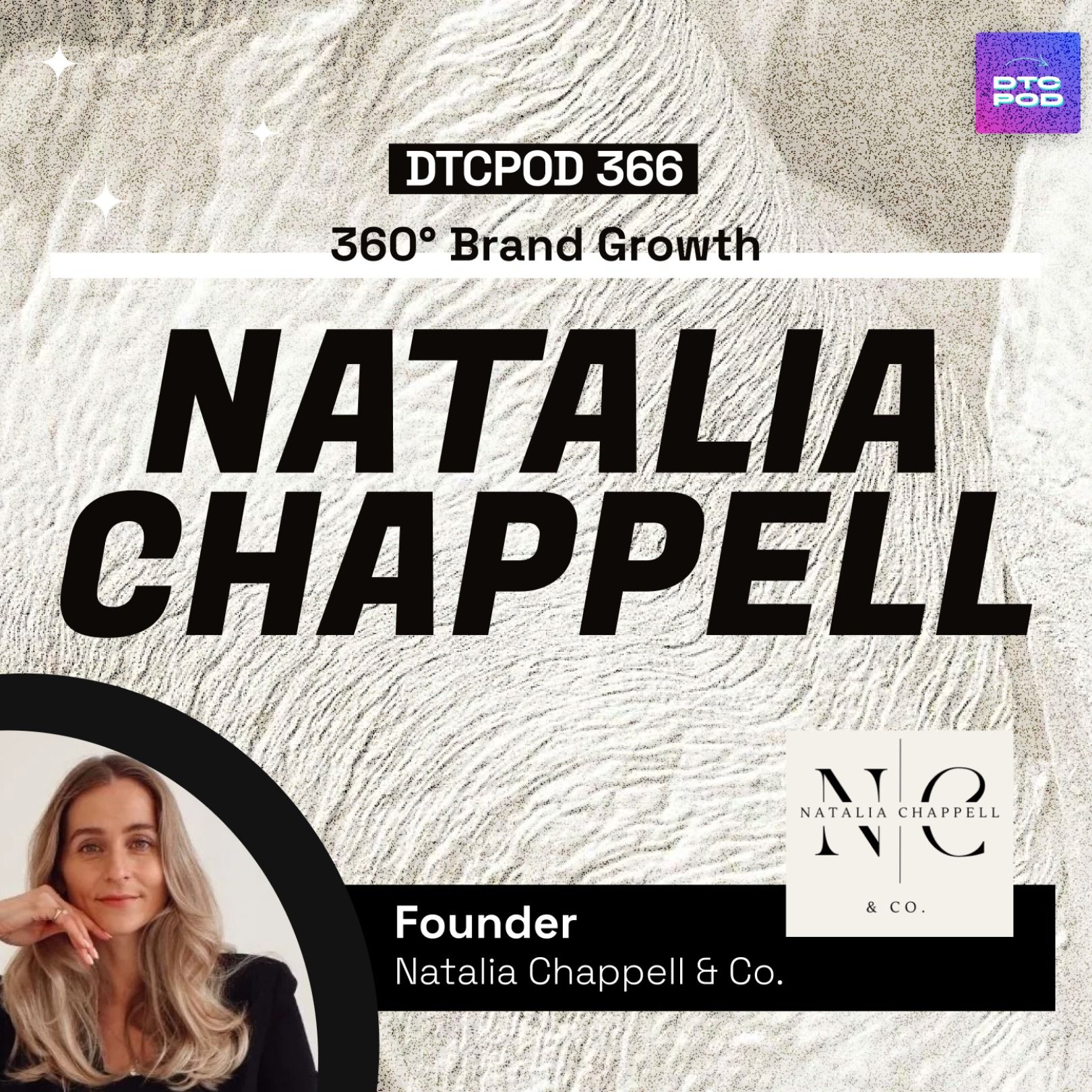
#366 - 360° Brand Growth: How Premium Brands Crack the UK, Optimize Their Funnel & Scale Profitably
48m 37s
This episode of DTC Pod features an interview with Natalia Chappelle, a UK-based e-commerce expert and female founder. Natalia discusses her background in fashion marketing and digital strategy, having worked with major luxury brands and at THG (The Hut Group). She now runs her own consultancy, helping luxury fashion, beauty, and lifestyle brands scale sustainably. Natalia stresses the importance of a balanced marketing mix, integrating paid channels (such as Meta and Google Ads) with organic strategies (like email marketing and CRM) to drive efficient customer acquisition and retention. She highlights common pitfalls, including poor data hygiene and over-reliance on single channels, and advocates for proper tracking setup using tools like conversion APIs and first-party data. Additionally, Natalia addresses the challenges female founders face, noting that less than 2% of VC funding goes to women-led businesses. Her approach focuses on long-term, data-informed growth rather than short-term gains, ensuring brands can scale profitably while maintaining a healthy return on investment.
[MUSIC] This is D to C pod, where the worlds of creators, consumer goods, and brands collide. We get behind the wheel to show you how today's biggest products and ideas are made, launched, and scaled. If it's shaping the future of commerce and culture, you'll hear it here first. Catch new episodes weekly on Spotify, Apple Podcasts, or D to C pod.com. Be sure to check out our newsletter for weekly breakdowns and recaps linked in the show notes. [MUSIC] So before we kick off today's recording, I've got one more for you. E-commerce costs are rising. USPS changes alone could push delivery costs up more than 25% this year. And to stay competitive, you need to supply chain partner built for scale. And that's what store it is. A modern 3PL that unites warehousing, fulfillment, and transportation with cloud software for full visibility and control. In 2024, a loan, store saved customers 130 million in parcel fees and powered nearly 1% of all US Black Friday and Cyber Monday sales. Now they're offering a free mystery shopping report. See how your obstin logistics stacks up against competitors with real actionable insights. Get yours at stored.link/mystery and scale smarter with stored. [MUSIC] >> What is going on DTC pod today? We are joined by Natalia Chappelle, who is the director of Natalia Chappelle and I'm super excited for this conversation because Natalia is based in the UK and has a ton of experience working with not only in house with some super high profile brands on the luxury side of things, beauty, as well as a whole bunch of different sectors. But has a lot of experience in terms of understanding the UK market and what it takes for brands, whether it's a US brand that's scaling up really quickly and wants to enter the market, what it takes to be able to pull off a successful entry into the market. So today I'm really excited for the convo. We're not only going to talk about what it takes to scale a world class brand. We're going to be talking about specific markets and learnings that you can apply to your particular brand. So I guess without any further ado Natalia, I'll let you kick us off. Why don't you just tell us a little bit about your background. How did you get here? Take us through your whole career path that led you into the e-commerce world. Thank you for having me. Yes, I guess I have always loved fashion. I studied fashion marketing at university and then decided to persuade my career in digital marketing. I always thought all these years ago that I would do advertising, actual TV advertising. But then I quickly realized that data is king. And if you can combine that and creative, then actually you can drive some pretty incredible campaigns and results. So I accelerated my digital marketing experience for a very well-known brand in the UK, which had tons of data to go after and I learned really quickly. I then decided that it wasn't fast paced enough for me. So I joined a business called the Hug Group or some people may know us, T.H.G. It actually entered the US market by acquiring them store and a brand buy a sense, the beauty brand. And so it's quite well known, sort of across the pond with some of the US entries, but really and a huge e-commerce business and I headed up the marketing team within the luxury division. So there was a beauty in my protein division. So retail and own brand, very, very good to different points of business that you can learn from in terms of your margin, how you manage the books, how you look after your PNL and everything. And we were sort of the luxury retailer called Coggle, so storing and stocking quite a lot of well-known brands, talking about US brands, that being coach Ralph Lauren, various different brands as such and then UK brands but also Scandi and European brands as well. And so price points, couple of £100 plus a couple of £1000 and US dollars similar and sort of really focusing on digital marketing primarily because it was a DTC brand with one store in the UK but primarily focused on how can we acquire customers, make that relatively cost effective so that we could reinvest money into the marketing funnel and then continue to grow that whilst also looking after our retention. Obviously, that is always like the golden method to make any business grow. But the reality of it through COVID and everything else is a challenge. As a digital marketing business, it grew for us substantially in COVID because we were actually able to continue to deliver customers when a lot of businesses weren't able to do that. And that continued to grow from strength to strength. But as a female founder, speaking to many of those businesses and brands, I recognise that there is an opportunity really for me to look at things holistically and what I'm mean by that is, you know, investing your meta ads but also making sure that the customer you're acquiring is actually signing up to emails and converting because we forget that we really need to be looking at the big picture and, you know, the conversion path these days is so confusing with where the customers first touch point is, did last touch point and how that sort of looks into actually from viewing your brand to converting. And the sum of the frustrations I felt, some of these brands we worked with had and as a female in the workplace, I know the UK versus US varies in maternity cover and so on. But I just really couldn't imagine how as a female and being a mother one day, I would be able to do both of these things. I'm lucky enough that I love my job and I really wanted to continue doing that but I just didn't feel that the corporate world would allow me to do so. And so I stepped away from a very safe job and decided to set up as a proud female founder. And we now work with very many brands of similar scope within the luxury fashion, home, homeware, lifestyle beauty brands and help them scale up sustainably very much so we don't sort of deliver short term growth because that never is a good long term view and there's always going to be some risks associated with that. And I also very much so shout about the fact that as a female founder, less than 2% of VC back in goes to those female founded businesses. So I fly that flag very, very high and I hope to really spread the awareness so that more female founded businesses get the backing that we rightly so need and deserve. No, absolutely. And it's so awesome to hear and I'd love to kind of talk a little bit about your strategy too when you when you start working with the brand. So first and foremost, you know, some of these brands that you've been working with more recently, who are they? How would you characterize them? I know we talked about it in terms of like sector, but what about in terms of the scale? Right? Like when you where do you feel like you do your best? And then I want to kind of talk about what does your playbook sort of look like? Because like you said, you're not just looking for quick growth wins per se. Obviously, we'll take them if we can get them. But what does what is your process look like when evaluating a brand and looking for opportunities to drive success? So we focus on, you know, a lot of what we do requires budget itself plus the management fee. So when we speak with brands, they operate in the sectors similar to, you know, what I've always worked on and the people that work on the team too. And that covers luxury fashion, lifestyle, homework and beauty brands. But they are in sort of at the infancy of its growth. They are at the next stage where they are bringing, you know, one million pound plus revenue in a year. And they're ready to grow and really sort of bring their efficiencies in. And of course, we need to look at that holistically. So we very much so focus on how we do that. We understand that there'll be data loss from platform to platform, but educating the brand founders and most of the time we will always work with their marketing team who are knowledgeable about marketing. You know, we don't typically work with people who are wanting to start their journey on meta and they've got very limited understanding of it because so much of it comes from education. It obviously requires a budget itself. And so that's the sort of main focus is in how we would work with a brand. And the ready and the next scaling up is very much to focus on. We've got established channels. We now just really need to accelerate that, bring the efficiencies and ensure that we are continuing to acquire the customer whilst actually also retaining them. So we often talk about that paid to free channel mix. And what we mean by that is your Google ads and meta, TikTok ads and so on, those performance channels. We want them to continue to drive revenue with a really strong
grow us whilst having your organic channels and that being your email marketing, your CRM strategy and everything sort of in the back end with people actually directly going on your website because they're already aware of you and purchasing without needing to be nudged with an ad. So then your LTV and all your KPIs here are very well measured so that you've got really lovely channel mix and you're able to continue to reinvest your marketing to drive that growth and that sustained growth. Everyone would love a click of a finger and a very quick growth overnight but most of the time if you're going to do that it's because you've invested tons of money in one channel and if you're just relying on that one channel and God forbid something happened such as a new product is rolled out or replaced with the one that's currently driving your revenue then you will be in quite a sticky situation. So how would you characterize where a lot of these businesses I guess are at maybe when they start you know start working with you. So I guess we've got that from a revenue point of view but like when you're onboarding them when you're looking at their mix between paid and organic you know I think one thing that I constantly notice in like e-commerce probably you know maybe they found a lot of success in paid channels or maybe they found an unlocked one you know really content driven channel that's working really well but a lot of times like yours to your point on the organic side there's like a lot left on the table. So how do you kind of like get in there what do you typically see when you're onboarding a client are they set up how much are they spending a month in meta you know and how do you you know a evaluate their existing channels and then b what's the kind of what are the conversations and things you are talking about. Obviously it's it's a little bit different with every client but like how are you balancing that channel mix. So what you're saying it's like you've got the organic which is feeding the paid and the paid is feeding the organic and everything you know the business continue to drive a really healthy row as it can continue to grow. So most of it always comes down to the data and without without that we can optimize anything and a lot of the time should be surprised how despite a big brand driving you know minimum one million plus in revenue a year is is is not actually utilising and there'll be cracks in the walls in terms of actually the hygiene set-up. So typically always analyse the amount of traffic that you are actually getting to your website. What your signals are you know if you're running all of your ads are they actually all tracking properly is everything tagged on your website accurately and again caviating that will there will be data loss but first party data is so important now to make sure that you're delivering the best possible marketing that you can for your customers and treating them the way that they should be spoken to the panel and their journey. So that's a huge level of analysing that we will look at and actually spin it around to say we can support you in growth but what does that growth look like to you because a lot of people just want double digit sort of consistent growth for revenue but it's not just about that is do you have the amount of products that you feel comfortable so from meta you know you could be spending you could be tripling your budget and that being a couple of you know so let's say 30,000 pounds of meta ad spend just on in on a monthly basis you could double that to to tripling that and that's all well and good but if you're driving traffic to your website which isn't sustainable to drive that conversion piece because there isn't enough of product rescue and breadth of it then you're going to waste your spare your money so we try and educate people and understand actually what the business goal is for the next six to 12 months and categorise it in the sense that if we feel confident that we can drive the conversions because we rely on data so much then from a paid point of view we can continue to accelerate it and forecast everything on the existing data that we have because most of the time with somebody who's spending you know thousands of pounds on on meta and that's meta alone then you've got Google ads lots of these people will be tapping into TikTok shop we've got a lot of it on TikTok ads we've got enough data to be able to say okay this is how we can scale it up now because our cost of acquisition is x and then this is what we anticipate for it to be scaled but we very much so educate people that there's obviously so much you can do if you're a beauty brand you more likely have a lot more breadth of stock then if you're a fashion brand because your skew depth is less wide than your actual offering of your products you've got your size and limitations and loads of different things a lot of people forget that they just want to see how they can grow and we know over the past couple of years the challenges with cross borders and getting your product and you know in the UK you West we've got loads of different issues now with customs and stuff so there is actually quite a lot that we try and educate because whilst we can spend all the money it ultimately still comes down to making sure it's efficient and on top of it we need to continue to grow our creative strategy and from that we look at content creators in UGC because that's really really what drives your strategy forward on matter and so it's really just understanding on where you're at now and how can we forecast that growth to be there because that's not the issue it's actually anticipating that increased traffic and revenue growth on your website and making sure that it actually converts because that was without that we'll obviously not be able to get the conversions feeling back to matter and therefore that won't be a successful and your money isn't going to be very well spent yeah and I think that's such a good point to what you're saying it's like what you're really trying to do is create this like kind of flywheel where everything starts to feed itself you've got your organic which feeds the paid you've got the paid which goes back into learning which gives you more fuel to have more creative which means you can you know have a more diverse creative which means you can scale your budget and on and on and on but I want to kind of take a step back we were talking about data when you're talking about data how do you like where do where are you referring to are you talking about in your Shopify dashboard you're pulling a couple of reports there you looking at Google Analytics like when you're thinking about like okay a lot of brands don't have good data hygiene even once they're past the seven figure mark like where do you start and what are you setting up on the data and the tracking side to make sure that moving forward you're going to have the numbers and the data that you need to help them continue to scale profitably so we've got you know yes you've got GA4 and Shopify data and always caviarting the you know meta GA4 and Shopify will have different attribution models so there will be cross you know reference in terms of data sometimes there'll be you know duplications and many of our clients both when I worked in house and and now sort of doing that on my own for brands we'll always ask the golden question of why doesn't it all match and I always say you know if I had the magic answer to making sure that every single one of the results and numbers are up then I would probably be currently doing Pilates in them all they've not doing this and what I mean by that is we all ask that question you know it's it's marked in words nightmare to know that not every single one of these numbers will add up so the hygiene and on meta is making sure that your cap is activated and that is using your conversion API always making sure that that data is fed through and then you've got all your first party data the amount of times clavio and meta will somehow have failed and you haven't got your up to date segments feeding through you know how are you defined and you're new to existing customers have you refreshed all of your segments do they are actually look okay we it's so often over and site by many of these brands that you know they say oh it's been a while since we reviewed our flows on on email and then you think well you've got so many more people now in your database but you're not talking to them the right way and that applies to your organic strategy on your email how you operate that into making sure that your all your audiences are uploaded into Google ads as well because otherwise you know if you're a waste and spend by talking to your return and customers as if they're new customers then that's you know something that should be a quick win for you to turn that into an efficiency you should in theory be retargeting customers with a much higher robust and you are of course by acquiring your customers because this people already know you as a brand and they should be so much more efficient for you and so these are the kind of things that we typically do it still amazes us
me how many people either have not refreshed it in a while or attempted it doing something and then you know didn't really do it. A lot of the time they trust that the web developers will do it but they may be out of touch slightly. So it really is just understanding that everything is linked properly and up to date but caveatting that there are also third-party platforms that you're able to look at that pulls all the data together and it sort of matches up your different attribution model to make sure that your results are there but that you're optimizing appropriately to ever find that your data is telling you. No I love that and I think it's such a good point and even you know the point that you just made about making sure your meta audiences are set up the right way so your existing customers you're targeting them with the right ads for the right part of the funnel that they're in and just making sure you've got everything you know go in the right way like for example one thing that you know we did in one of our brands that like helped a lot that's something that even some brands that are getting set up just don't do is like meta knows what's converting and what's working on that side but meta can't take attribution for customers that are coming from organic channels so you should make sure you're feeding those customers back into your meta pixel so it can continue to learn so again your organic is helping show meta what those local likes should look like so again I think you know just being smart about that and making sure the you know the ad engines that are you know driving your traffic they know they have all the right up to date data so that they can you know learn the right way as well as optimize and serve the right content to the right customer in the right stage of the funnel. Absolutely and to your point there you know your organic engages and anyone else there should be fed into your paid strategy and that's exactly what what we talk about when we refer to the holistic approach and making sure that the customer is there whether it's paid organic and it should work in conjunction with each other rather than against each other. Perfect and let's talk about um you know let's talk about on the organic side right like what do you do to help a brand optimize on that side what are you looking at is it you know is it SEO is it direct traffic is it Google shopping like where when you think about like organic traffic and building a sound strategy to complement the paid stuff uh you know how are you doing it what are you thinking about how are you getting that set up. I think a lot of the times we treat um your direct website as the first sort of point of optimization because anything that is being driven to from a traffic point of view we want to make sure that we analyse it and yes make sure that all of your sites have got possibility to run the best that they possibly can so really tapping into SEO and best practices making sure that your product description pages are your sort of most optimized and best optimised that they possibly can be if that's where your conversion pieces from a London page point of view what learnings can you do there so very much so doing a big website audit and highlighting the things that are missing in terms of you know your product descriptions could really be doing with updating and you haven't actually got reviews added to all of your pages that are necessary to be added so huge part of this is making sure that once the customer lands on site they're actually treated very similarly to as if they've walked into your store they will be greeted by an assistant asked what they're looking for and then guided based on their answer to the right product and that's exactly what the online experience should be to that customer you should never treat your product description page as an assumption that that customer is going to add cart and then check out it needs to be there with recommendations similar products if the product is out of stock it really needs to be converting them at any given point then secondary to that we always make sure that the content strategy within your influencers and UGC and everything there is is really really strong because again how you're talking about your brand who is talking about your brand is so important to potentially reaching that new customer and then land in them on your website and getting them to convert it is something that a lot of people assume is in the right approach or you know it can be it can look like an ad but I think that's where we come back to authenticity in making sure that you choose the right person particularly in the UK market it's a huge focus on choosing an authentic content creator to produce your content for you and then how you utilize in it you can absolutely make sure you upload it on email on your paydats as well it just needs to be utilized to make sure that's fit for purpose but very much the looking with that content first approach to tell a story about your product and about your brand and that's quite a huge thing that we focus on and help with all of our brands we work with. I think that's super important and I want to just double click on that really quickly in terms of like aligning your content strategy from others to align with your brand and how to pull that off the right way. I think one thing that's always like so fascinating is you know we live in a world of views and you see you know you're like oh if this thing does a million views and you get X amount of conversion like you're rich right but in reality you know I've seen it time and time again you can have a content piece go super viral and it does really well but like it just doesn't convert and a lot of that comes down to the message so it's like that question and my better off getting like five to 10,000 views of something that's like right on the money in terms of like what we do with the value prop is that's like geared for conversion that's like you know really really hitting at that bottom of the funnel or are you creating like fun entertainment top of the funnel content maybe it goes viral but you know it doesn't really go anywhere from there so and then obviously when you're scaling your content through UGC's and affiliates that becomes really really important to get right because now it's not you controlling your message and tweaking it really simply it's like you already have one layer of like it's like playing the game a telephone where they're already probably not going to say exactly what you're saying so how do you think about that when you're playing the game of conversion you're looking at the data you're trying to like have the right strategy for the creators that you're working with how do you equip them for or how do you prepare them for success in conversion or you do you have them play the numbers game do you have them play the conversion game how do you think about it I think there are definitely two sets of objects objectives to that and we always very much so try and educate everybody about exactly how UGC and content greater strategy works it's time consuming it's about relationships and actually building a trust with somebody you work with that goes back to the whole idea of do you want to go viral or do you actually want to convert those sales and sometimes there are people who are just going to drive traffic to your website and brand awareness but as you said that doesn't necessarily mean you'll turn into any form of monetary value and therefore you can deem that as let's aim to go viral I think anyone who does that and hopes for the best is probably not going to be in the market for a very long time because you should always aim for that sustained growth and with the right content creators who actually generally love and are passionate about your brand will have a very very engaged following who will also tap into that specific product that you're offering in terms of how they portray the brand you always really want to trust them with the fact that you've chosen them for the right reason and that's why it takes time because you're going back and forth you want to make sure that the product selection is appropriate that the education is there but what you're effectively doing is given up some of your control because you know that it's their content they're producing it's then who's creating that authentic content with their audience that will hopefully convert nine out of ten times that will happen but you just have to be aware that you're going to have to let go of some of that control and look at your brand through someone else's glasses that's kind of what we always say it is a lot to give up especially with your really precious about your brand but if somebody's passionate about the product then it's no different than how your community of people and customers it operates with your brand too and I think that's exactly what that UGC and content creation does for you it can be a huge impact and can drive a load of revenue for you if it's executed properly but just caveat in that it does take time because relationships don't happen overnight and you really have to nurture it and it can be cost-effective if it's executed well but I wouldn't just go for the big numbers and assume that that's what's going to turn your brand around overnight and how do you think about a creator like running and structuring the creator programs a lot of times one of the trickiest things is finding sourcing and onboarding creators so what do you guys do do you have creators that you've worked with like you say you have relationships do you you know kick off every new project and try to figure out the perfect creators for that particular brand you work with an agency to help on that side like what's what's worked for you guys and how do you think about that because I know you know there's so many creators some are really good.
some are not so good as a brand you're being like, okay, how do I set this up? Who am I sending product to? Who's getting the brief? Who are we onboarding and all of this? So yeah, how do you think about that side of a creator and affiliate program? I think a lot again, we've come a long way through an affiliate program. We are actually able to also track things a lot better now. And so the way we sort of structure it, we have loads of relationships from being in the industry for a number of years now to be able to know who are we sort of go to and some people who we know we trust and that will aid deliver and they will be reliable and that will also actually deliver the results that we want them to. And they want to work for every single one of the brands that we work with, hence why we've got a number of those people and and how we sort of keep in touch and make sure that we've got good relationships as well as through number of events that we've run with brands in the past. We typically will also engage with the scontent creators because it's actually a really good way to build those relationships. And there's always a brief that we will always include and it's super clear on this is what we want to get out of it. Are you keen to get involved? This is what you get out of it. Please select some of your products. We would love if you were able to follow some of these and here are some of the guidelines on brand and making sure that that's covered and then off to you to see how you sort of operate. Some of the influencers and content creators will be will directly work with some will have management and that's when it becomes a bit of a three way relationship and conversation so to speak. But most of the time it very much just stems from the relationship that you will have with those people, the trust but also actually the tracking. So affiliates are great to be able to do a lot of those will have you know URLs through and platforms such as A-Win obviously LTK is huge a lot of content creators will want to use that and we always say that anyone who's saying we will work on a commission basis versus I don't know I would really love to be paid £10,000 or £10,000 new as dollars and I actually don't work on commission basis that's when you will then want to question whether they can provide any further insights into their own results, their own growth of their following because sometimes you you can make substantially more money on a commission basis than you can on a flat fee and and that's when you can say well maybe this is more of a traffic campaign rather than a revenue campaign and it just comes down to the objective what do we want to achieve out of it but I can't stress enough of how much of this is relationships and a lot of those people that we work with that we have on the books have been with us for a very long time and will always create incredible content for us and they don't really let us down. No I think I think you're you're spot on there switching gears up a little bit Natalia I want to talk about what it takes to break into the UK as a brand one thing that we're chatting about when we're chatting offline was just how you know there's been some brands that do a really great job of making that transition from you know whether it's coming in from the US or a different market and entering the UK and some have like totally flopped right so you've seen the space you know the messaging that hits you know the marketing that hits all of that why don't we just chat through a couple a well maybe we can just start with what does it take to break in right from a X and O's like logistics point of view what do you need to do to be able to like sell in in the UK and then we can talk about you know different specific brands and so of course it'll all depend on your product and your offering and your actual AV or your you know basket value and do you have a plan to have a warehouse in the UK because regardless of where you are in the world we know the customs unfortunately are really tricky and overcoming those loads of paperwork and saving yourself a headache is huge and trust that everybody in the world both the US and the UK market are very similar in the sense that customers want it tomorrow want it now and so are you able to really offer that service which is a huge thing aside from your actual logistics and your location of your warehouse and your customs and all your sort of duties that may impact therefore your bottom line and your margin on your product secondly can you deliver the service that a lot of customers will absolutely want to get out of the product and and how your delivery thresholds and your actual charges apply being aware of the various different people and the services offering that people offering the UK is really hugely important and we rely quite heavily on Royal Mail which is a UK sort of based logistics delivery company which is traditionally being run for a number of years they've got the red vans and they sort of that traditional delivery threshold will which a lot of people will know it's reliable it isn't light and you know you want to get it sort of delivered a couple of days later so these are your main things really because your service is so huge down to your customers reviews and how then people will actually come back again if it's efficient so these are really quite big things and and educating yourself and doing your market research in the UK will be quite important to understand whether you're able to have a warehouse in the UK unfortunately since leaving the EU you know with Brexit and all the challenges you have to have that in the UK rather than in Europe because it just means that additional paperwork they have to enter into through the customs and in the border so to speak then secondly it's actually understanding the UK market and how you talk to the customer the language you know your US language versus the British language is very different we typically don't use words like awesome and capitals because it feels quite shouting we like more sort of and the stated word in in you know how we obviously don't say we use a fall we say autumn you know it's actually wild how many brands I see time and time again that get targeted with that talk to you in that not appropriate copy on your creative as well and then thirdly making sure all of your marketing is relevant to the UK market we talk about influencers and content creators they vary from the UK to the US and so who are the people that are relevant to the UK market it's really important because that's what will bring your brand to life to relevancy within what's happening in the UK don't be shying away from the US and why you're tapping into the UK market and talk about it because a lot of the UK brands really thrive on saying this is a really could you US brand I really want to buy it because it's telling me of all the US people that is doing rather than trying to adapt it to be the UK brand that's kind of the point of difference and finally the biggest one there are loads of calendar moments happening in the UK a lot of the times we have bank holidays or what we call the public holidays and those typically fall in a Monday it just means it's an extra week and you know an extra long weekend in the UK and a lot of the times a lot of retailers will run bank holiday offers so if you've got your ads set up there you will be expected to see slightly higher CPCs and cost increase because a lot of people will go after that customer equally and author-related you know brand will will do something to make that customer convert so it's really just tapping into everything that's happening in the UK rather than copying pace and what you've done in the US and expecting that to convert in the UK I think that's really really important and many brands from the US that have done that well have have thrived and have done really well and we've got a great example of Drank Elephant who entered the UK market they don they did that through space and K which you know it's a high value retail they did an event with them and they talked about everything from the USP from why they are an amazing American brand that's finally making its way into the UK it created a huge bus with the right content creators they did an event down in London and it was really successful and that brand is still thriving and it continues to do really really well not gonna sort of bad mouth and be negative about some of the other brands that haven't done particularly well but the brands that have failed and sort of returned back to the US are the brands that haven't adapted the strategy they haven't done their sizing the the marketing hasn't felt appropriate to the UK consumer the wording everything sort of from that side of things has meant that they probably haven't done the right thing by getting that UK customer engaged and therefore you know obviously costing loads of money in having the UK stores where actually over the past couple of years we've seen a huge digital growth through content creators and everything like that and if you aren't tapping into it that's how you will likely see some challenges in continuing to grow in the UK market which just as the US market is relatively competitive yeah and I think that's what the main thing I'm hearing it's like if you're gonna do it do it right
right? Don't just try to necessarily copy your exact same playbook, run your same ads. You need to be not only set up from an operational perspective, but also set up on the messaging. It kind of goes back to your first point about making sure your communications to your customers, whatever part they are in the funnel are appropriate. So, you know, if you're launching in the UK, you need to communicate to those customers, whether it's top of funnel meta or, you know, maybe it's an in-person sort of ad or campaign or whatever, it just needs to be kind of dialed and focused. And I'm curious if there's any other examples of, you know, brands that should have maybe like done really well, brands that consistently do really well in the US market, but like, you know, maybe they just weren't really received well. I don't know if you have any other examples that are top of my knowers, if not, I'm just curious if there's any other examples of brands that either did a really good job or, you know, maybe you feel like could have done a better job if had they really, you know, done a couple things different, they could have really stood out. Yeah. Well, it's interesting really because obviously the way that we portray Ralfloren is likely to be very different across in the US, but by tapping into all the events that take place throughout the year in the UK and one of those is Wimbledon and Ralfloren being the sponsor for a number of years, tapping into that sort of preppy British heritage and looks is what makes Ralfloren continuing to grow well by adapting its product offering, its messaging, the partners and everywhere that is seen to be a brand that's continuing to do well and that will of course be very different over in the US, but brand that is actually, you know, portraying itself to be British heritage isn't actually a UK brand which is really interesting because of everything that it really very much so taps into and think when we talk about the success of the UK brands or the UK market is trying to wave itself into the British heritage and everything that makes, you know, that sort of Britishness and the etiquette and everything that it becomes and what that brand does particularly well. Coach is another brand that has tapped into a younger generation through utilizing the right content influences and ambassadors and celebrities in the UK that's made itself to be a successful brand. It had played hugely with CGI and other various things and it's what made the UK relevant in that form and actually it's what typed and made the brand grow with a younger audience and is done that quite successfully. Then thinking about us, suppose some of the brands that have perhaps challenged and not failed in the right word, but haven't done quite as well, you know, for ever 21, just didn't really adapt to the existing quite already established brands in the UK markets, such as Primark, which is also in store, but offers that value, fast fashion for the UK consumer and has been doing that for a long time. It just didn't really do quite as well. It relied far too much on its sort of in store presence, but we know that's moved on quite a lot and actually the UK High Street has challenges and has been struggling. That's why your digital experiences are really important and everything that takes place online is sort of at the forefront of your brand success. So really making sure that you know your trends and really tapping into that Britishness is what people like to see even if your brand isn't actually British, but it's tapping into the moments that take place in the calendar. What is it that's relevant? What do you want it aspire to? And that's really what we've seen through some of those brands that's done really, really well. And then perhaps some of the other brands that have failed and kind of had to return back to to the US. No, super helpful Natalia on all of that. And my last question before we wrap up here is, you know, you've had the pleasure of not only working in-house across a bunch of brands, but working very closely with brands that are scaling up really quickly. As you look forward to, you know, we're heading into Black Friday, holidays, and then into 2026. Obviously the landscape always changes. It sounds like a lot of the principles that you're operating out of art really are like evergreen sort of things. But are there any, whether it's particular platforms or trends or things that as you look towards the new year, get you excited as a marketer? Are there any things that you're looking to kind of go harder on or, you know, maybe leverage as you continue to grow your brands? Definitely. I think staying on top of trends and always being ahead and not being afraid to test new platforms is a huge part of what we do and how we operate and how we help brands grow. We have seen great success with partnership ads and again, tapping into that authenticness with lower CPCs on meta. It's something that we're really looking forward to testing more of. Again, it taps into that more authentic content creation that's brought through an influencer, a content creator that's already got a really, really trusted audience and bringing that through on brand. A lot of the times they aren't polished. They don't look incredible. I think TikTok has taught us that exact thing that you have to apply and adjust your strategy to each platform and continuing to test those things will be really, really key to brand growth. I'm really excited to continue to accelerate partnership ads and alongside that, I think really just understand and how we can talk to that younger customer who continues to keep us on our toes and what are their values and how we can bring them on to the journey to eventually purchase is the key to any brand's growth. So really engaging with how that younger customer works, we know in the UK they're very much so all about authentic, sustainable, that sort of invested in pieces to last and longer is sort of key for growth. I think finding those customers and where they are and adapting your market and market and strategy to them specifically is what will get brand's growth and continue that sort of sustainable revenue stream. So I'm really excited to continue on that strength as well because you're always learning something new every day. Oh absolutely. So as we wrap up here in Natalia, where can, where can we get in touch with you if you know if we're looking to start scaling our brand or tap into the UK or just chat further with you about your take on our brand and what we need to do, where do we find you? Why don't you shout out your socials? So I am quite vocal on LinkedIn. I love talking about everything about how you can be a female founder in the workplace and continue to love your job whilst also being a mother. So definitely give me a follow on LinkedIn and drop me a message there. We are just currently redesigning our website so whilst that's probably not the best point of contact because it doesn't represent how far we've come along. Natalia Chapel and Co on Instagram is our other source of information and everything that we do from silly videos and trending videos to actually all the information about marketing as well. Perfect. Well Natalia, thank you so much for joining us. We had a blast and we hope to check back in with you very soon. Thank you so much for having me. It was great to chat to you. If you enjoyed the show, we'd love your support. A rating and a review would go a long ways. We continue to host the best builders in DTC and beyond. Follow and subscribe to the show and make sure to check out our show notes where you can find our socials and weekly newsletter. Visit us on DTCPod.com to join our founder community and access resources from every episode. We'll see you on the next pod.
Podcast Summary
Key Points:
The podcast episode features Natalia Chappelle, a UK-based director and female founder with extensive experience in luxury, beauty, and lifestyle e-commerce.
Natalia emphasizes a holistic, data-driven approach to scaling brands sustainably, focusing on balancing paid performance channels (like Meta and Google Ads) with organic channels (like email and CRM).
Key strategies include ensuring proper data hygiene and tracking setup, educating brands on efficient customer acquisition and retention, and advocating for more venture capital funding for female-founded businesses.
She works with brands generating over £1 million annually, helping them optimize marketing efficiency and avoid over-reliance on any single channel for long-term growth.
Summary:
This episode of DTC Pod features an interview with Natalia Chappelle, a UK-based e-commerce expert and female founder. Natalia discusses her background in fashion marketing and digital strategy, having worked with major luxury brands and at THG (The Hut Group). She now runs her own consultancy, helping luxury fashion, beauty, and lifestyle brands scale sustainably.
Natalia stresses the importance of a balanced marketing mix, integrating paid channels (such as Meta and Google Ads) with organic strategies (like email marketing and CRM) to drive efficient customer acquisition and retention. She highlights common pitfalls, including poor data hygiene and over-reliance on single channels, and advocates for proper tracking setup using tools like conversion APIs and first-party data. Additionally, Natalia addresses the challenges female founders face, noting that less than 2% of VC funding goes to women-led businesses.
Her approach focuses on long-term, data-informed growth rather than short-term gains, ensuring brands can scale profitably while maintaining a healthy return on investment.
FAQs
D to C pod explores how today's biggest products and ideas are made, launched, and scaled, focusing on the intersection of creators, consumer goods, and brands shaping the future of commerce and culture.
Brands can partner with a modern 3PL like Stord, which unites warehousing, fulfillment, and transportation with cloud software for visibility and control, helping save on parcel fees and scale efficiently.
Natalia emphasizes understanding the UK market holistically, focusing on data-driven digital marketing, and ensuring a balanced paid-to-organic channel mix for sustainable growth and customer retention.
Proper data hygiene, including accurate tracking, first-party data collection, and updated audience segments, is crucial for optimizing marketing campaigns, improving conversions, and driving efficient growth.
She focuses on long-term growth by balancing paid and organic channels, educating brands on data utilization, and ensuring marketing efficiency without relying solely on short-term wins or single channels.
Female founders often receive less than 2% of VC funding, face barriers in balancing career and motherhood, and need more support to scale their businesses sustainably in competitive markets.
Chat with AI
Loading...
Pro features
Go deeper with this episode
Unlock creator-grade tools that turn any transcript into show notes and subtitle files.
 PodcastTranscript AI