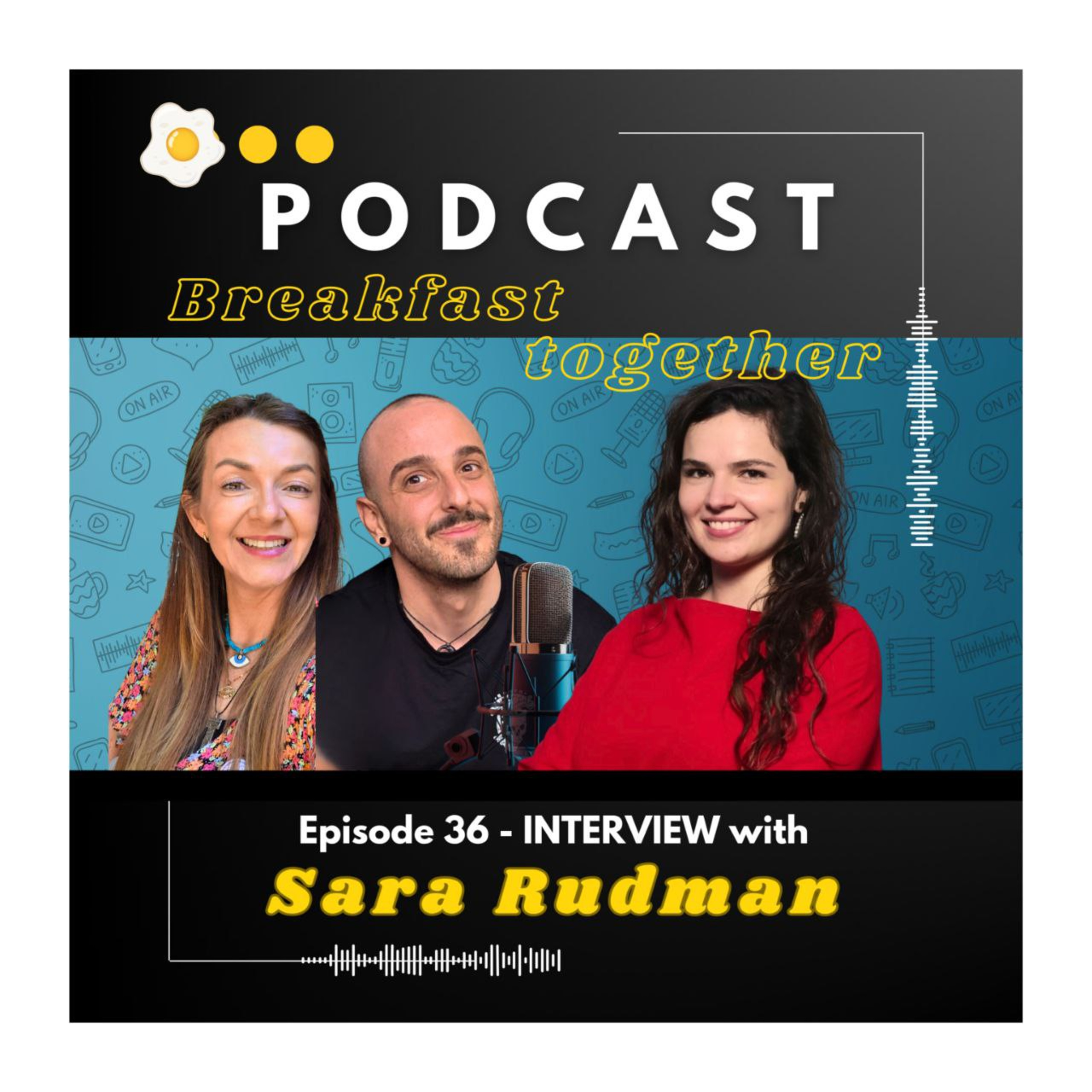
This interview features Sara, a Slovenian entrepreneur and language enthusiast based in Lisbon. She discusses her extensive travels for language learning, having studied in Australia, lived in France to learn French, and resided in Kazakhstan to learn Russian and explore Central Asia. Sara speaks six languages and is drawn to new ones primarily by their phonetic appeal and the personal connections formed while traveling. The conversation covers cultural anecdotes, including the notable social norm in Kazakhstan where blowing one's nose in public is considered highly inappropriate, similar to farting in Western cultures. She also comments on the distinct regional accents within Slovenia and her experiences adapting to life in Lisbon, noting the friendly yet somewhat reserved nature of Portuguese society compared to other Southern European cultures. The discussion highlights her proactive approach to seizing opportunities for cultural and linguistic immersion.
Welcome! Welcome! Hello Asalla to breakfast together! Hello everyone. Welcome back! Good night. Good night and everybody. Another episode from the interviews series and we have our guest. It's another guest. In this episode she's currently residing in Lisbon. Lisbon, a beautiful place. We're going to soon visit here there. This is one of our friends from the political circles and I think we met in the political conference first time in Budapest. What happened there? What happened? I think it's been a while. Yes, not only this person that you've already heard for just a little bit living in Lisbon and being a very interesting person but also she is a start-upmer. She has visited and lived in countries that are very interesting. So she is from Australia, France or Kazakhstan. She is a founder of a company and is developing her own linguistic application. So we are very excited to hear more about her. Sarah, welcome to the studio. Welcome! Welcome! Happy to have you here. Hello! Thank you. Thank you, guys. If you already know the voice of Sarah, of course you understood she's in the book for some time but if you don't know about her you will learn more things in this episode. So tell us about yourself. Did we mention all about you or did we skip something? Tell us about yourself. Oh no! You got it pretty much covered. I think female residing in Lisbon. Yeah, you got to say it much covered. Yeah. So do you want to tell us a bit about like because we know each other but we haven't talked like you know of course we don't have the time in this political conference is how the whole thing started like you are from Slovenia like a bit about your life there like you that you moved abroad the first time where and in Australia or always the case. Yeah, so I was 18 or 19 when I decided I was going to go study in Australia. It was a little hard to get that spot because a lot of people applied to go there and it was very hard to convince my parents and the people making the selection process because I was the youngest person there. But yeah, no I got the spot actually worked on the grades that year just to get it. And I spent when semester in Australia. I wouldn't say the language journey started there because of English but afterwards I did move to France specifically for to learn French and then to Kazakhstan specifically to learn Russian. So that was just then going there just for the language or working at the same time like in a work or like in a project or something like that. Well, depends on the country's history. I went there just to experience something awesome and it was. Sure, why Australia? Did you have any inspiration about Australia? Like did you I don't know what your documentary is at 12 year old, Sozin Kangaroos and said one day I'm going to be there or for surfing? I don't know, I remember it was like a crisis 2014 or something or 12. And I said I want to go and exchange programs. So let's go to France and my parents were like look, I don't know what next year is going to look like crisis. Of course, and so there's I just go for the best option that you want to go to. So Australia was the best one. I mean, I'm based out of Europe. I can go to France any time. I cannot go to Australia just don't know when. That's true. Alright. That's a good way of thinking action. So Australia is an idea and then the next one was France and Kazakhstan just for learning language, right? Well, Kazakhstan was more of course, Prussian. I wanted to learn Russian. But then I really wanted to travel in central Asia. For the same reason as I went to Australia, I was like, I'm never going to have this time in my life to just go to this region where business will never take me for sure. So I have to do it now. It was like an obligation to myself as a traveler to go there. It's very, it's a very bad space. So again, you cannot just go on a whim for like a week to Kazakhstan. It's too big to cover. And I guess you don't speak Kazakh or you have a learning Kazakh. You know what? I actually fell in love with Kazakh a few months in Kazakhstan, but I didn't learn it. I just I'm just listening to a bunch of Kazakh songs. It's one of the languages on the list, one of many. Okay, okay. And what are you based in Astana or? I was based in Almaty. So the biggest city on the best city in my opinion. I lived there for a short while. I think. Oh, yeah, yeah, I lived in Astana Almaty and Octau, but Almaty is definitely my favorite. I really like that place. Nice dynamics. I would like to ask you as well. Yeah, Octau is an interesting place, I'd say. And I'm I'll, I'll not it definitely definitely vote me. I would, I would go back. I mean, the. The kind that you know that, I don't know if you visited 20 minutes away from the city. There is this big Almaty lake in the mountains with this super nice, through quartz water. It's called Balsoia Almatsinskaya Orzera, a very mysterious name in Russian. I know I haven't gone to that lake. I try to several times, but I went to all of nearby lakes there. Yeah, yeah. It's a beautiful area. Is that cool? Calls, call side? Is that a call side that you're talking about? Asia. No, it's it's called just. Bau, Bau, Balshoia Almatsinskaya Orzera is like from abbreviation. They just call it Bau. And apparently it's the lake in the mountains. And it actually looks like Switzerland postcard. And they don't allow anyone to come close because this water is used also for drinking purposes. But yeah, it's just this really beautiful spot. I was surprised that it's so close to the city. It's just like 20 minutes by bus or something like this. But yeah, they had to shimble out this very nice ski resort. But anyway, how did you find Russian in general in the sense that was it something like do you think for example Slovenian background helped you with Russian at all or there was no connection and you had to sort of crawl in the beginning and then start working to know what I mean just like. Yeah, no, as a Slavic speaker it's much easier. I actually Sloven helped a bit but I have been speaking Croatian serving Croatians since childhood. So that one really helped much more. And then actually happened that two years after Kazakhstan I could not speak Croatian server Croatian anymore. It's like eight of that language. So that was the starting point. I would basically turn it from like Marje to Marjana and then I couldn't do it back. Oh yeah, I know something about battles of languages. What's the case with Croatian because I've a server Croatian I guess I know that the Croatian is closer to or maybe like a specific dialect is closer to Sloven where Serbian is a bit more in the same south language group of the languages. But it's not so close so what can you tell you a bit more about how you learn Croatian or like why you were speaking with your family friends or what the case. So if you've ever had a Slovenian friends you might know that during the summer we all migrate to Croatia. For one to weeks several times a year like in a summer. So I would grow up every summer there or an island or something and I would just hang out with the local kids. I had a had a crush on a Croatian guy once as well. That works the best. Well, it's a child. So double best. Yeah, I mean because you mentioned like that you you speak from early from the early years like from early stage of your life. So I was wondering like I guess it's also like your neighbors. But a lot of people also speak Italian I guess when they are living in Slovenia since it's like also borders with it. I would say no I mean yes the part that borders with Italy they just speak a lot of Italian but generally this means don't because it's a distant language. Even Croatian my generation doesn't speak it necessarily it would be my parents generation that were a part of Yugoslavia. And then yeah the kids today and myself we speak it because we go to Croatia and because the music from Croatia, Serbia and Bosnia is very popular. It's like it's like house-panish songs are very popular worldwide. It's the creations there. Uh-huh. Nice. I didn't even know about this very interesting. Since we are talking about the the languages and one interesting fact that I when I was in the beginning of the year,
I was reading information about Sloven. It's true that there is like a lot of dialects and there is some kind of common Slovenian language that is spoken in the education in schools or TV and everything. But I feared that there's like a lot of small, different dialects which I don't know how much through is and that's why I want to ask you. If one, let's say a person from one that speaks like a local dialect speaks with another one, there is a case that they might not understand each other, is that true or no? - It is true for a particular region or two in Slovenia, but I would say the thing that is even more pronounced. So the dialects, I don't think are such a big problem except for two regions. It's the accent. Everyone, every village has its own accents. It's incredible. I live 20 minutes outside of Javjana. So when I went to high school of Javjana, people would make fun of my accent. It's just to put accent of Slovenia and when you have a TV show, the drunk guy, the stupid one is portrayed with my accent. - Oh, okay. Okay, so you end up bullied by your accent, Slovenia. And that's 20 minutes outside of Ljubljana. Interesting. So you speak like your local dialect, but also the common Sloven language or is that what the case? - No, I would say this dialect is very much a standard Slovenian as well as just the accent is quite strong. Even my name, Sara, would be Sara, like something like that in another region. That's 20 minutes away from Javjana, let's say. - Okay. - Yeah. That's quite incredible actually, but I mean, I don't, I think this is another reason to visit Slovenia just to see as well, try to listen to it. I don't think I would hear it at first, but at least knowing this would make me, my listening radar sort of more in shape to try to catch those differences. I wanted to ask you actually about your, because I know that you've studied quite a bit. And you seem to have this mentality of grabbing the opportunity when it comes. So with France, we understood that you went there as well for the exchange program, right? Is that correct? And the Kazakhstan too. How about like, yeah, how about other languages that you're planning to learn? Because now you are in the workforce, there are no more exchange programs, but there's surely some other opportunities to learn. What are the languages that you're planning to learn and maybe why? Like that would be interesting to know. - Yeah, so I would say, I've been cheating on human languages with computer languages. So I started to learn a language called C. - What are you doing that in your life now? - It just kind of came up. - No, it's actually one of the best languages to learn in view of what to really do a lot of stuff, but it's not that used as like other languages. It's used for the base of the things, but not so used. But let's go back to languages we learned. - I don't use C anymore. I learned it, but now it's other stuff. Yeah, no, the other languages I've been into have been like Hindi and Persian. Actually mainly those two lately. I'd also had like German in school. There was once a free Spanish class that I took as well. - Yeah, and a lot of it. - Would you say something in particular? Yeah, would you say something in particular sparkles that interest? Like do you see the pattern in yourself? Like what is most attractive? Is it like a person you meet? And maybe that person is so interesting, you get like to talk or is it maybe some kind of a movie you watch and then you're like, oh my god, I need to know more about that culture. So I learned the language. Is it the travel? Like do you have a pattern for yourself that you know, oh my god, okay. I'm hooked now. - Yeah, I think there's two. First is like phonetics actually. The French phonetics is like my first foreign language after English was interesting. And then Russian sound is super cute. And then Farsi for instance, they have this like rhythm in their language. Like every constant is followed by a vowel. So it creates that rhythm. And they have this all sound that's also beautiful. - Yeah, and then in Hindi, I like the respiratory sounds like, and yeah, I think that's one. And then the second one would be of course, like the effect you have on the when you travel on the people and like how they just open their hearts whenever you start. I mean, just making like a small effort in their language. Usually they're very impressed apart from like France. - And the interesting fact, actually two things here. I think we didn't mention the six languages that you speak already. So if you want, you can say to people here, what's your languages then? - We'll be Slovene, Serbacration, English, French, Portuguese, Russian. - Perfect. And another fact that I wanted to mention here is like a, the thing I mentioned that before as well, but in the polo conferences or the gatherings, normally you don't speak English, yes, we speak when there is, maybe after two, three days when the brain is tired and we use the default language, but normally we speak Spanish. And Sara is one of the people when she joins us, we always have to switch here and Joshua. So it's like one of these people that you kind of not hate, but you say like, oh, why? No, no, I'm kidding. (laughs) - I don't know that you saw that. I don't want to know what they think about me then. - No, no, it's funny because this happens when, like everybody is like the common language. For me, Spanish is what English is for the business world or the rest of the world for a language event, but also talking of course. We haven't, I think we haven't spoken here for the other languages that you speak. My friends is pretty crap. So maybe next time it will be better. Sara can help you out with French when you guys meet next time. - There you go, but you can also reply in Spanish because I do understand kind of. - No, okay. - So for sure. - Okay. So next time we're gonna continue speaking Spanish instead of switching to English. (laughs) - Joshua does his reply in Portuguese, hopefully you understand. - Which, yeah. Which comes to the question about Portuguese, do you wanna tell us a bit more about Lisbon, what was the idea, how was the idea born, how was born and you moved there. I know there's like a lot of tech people moving to Lisbon and I think especially after Corona, where they opened the load down the taxes or they opened up the counter during Corona, something like that happened and it goes a lot of attention, especially Spain and Portugal. - Yeah, I think that during COVID, everyone started working remotely and Lisbon has the largest number of sunny days, sunny days in Europe. And I think that for some time, it didn't have a tax on crypto. And they also had like a special arrangement for foreigners that they would only pay like a 20% flat fee on their income tax, which is nice if you're, if you make a lot of money, but that's not the reason I came, I didn't make them. (laughs) - Still the bills, then you still the bills. - I came for, 'cause my ex got a job there. We just came together and then I stayed and I'm gonna stay now. - Okay, sorry to bring up this story if it's sad or not. (laughs) - Cé la vie, as they say. - And how do you find like, in the portuguese people do you do great well with the culture do you find like differences between the culture that you were grown up, like the culture that you met in countries like France, Kazakhstan, Australia. - How do you? - I would say the funny thing is like a lot of people expect the Portuguese to be very much like Spanish, which is not the case. - No. - Yeah. - Especially Portuguese portugau. - Yeah, exactly. So yeah, I would say they're much more closed off and it's actually, you know, it's hard to make friends as an adult. But then like being a foreigner, a Portugal makes it a bit harder as well. So I do have a lot of girlfriend, but I don't have a lot of girlfriends. And that's also kind of like the case that a lot of people experience here or they have more Brazilian friends. I also tend to, I mean, I'm ashamed of this, but I tend to like switch to English a lot of times just because I cannot make jokes in Portuguese at the present. So I maybe creates a barrier, so it's my own fault. But yeah, no, the cultures are, it's a European culture. So quite, quite similar. Even if you go to Slovenia, you'll have difficulty making friends where closed off a little bit. But the generally people,
are very nice. I think the sunny days are the trick at least that's how I would feel. That would bring you to Lisbon? Oh it could definitely, could definitely, yeah. That's the idea, yes. I'd like to go to the south and escape a big gloomy weather of, I don't know, I believe in Berlin so as probably you know it's super gloomy here. Not right now but in general during the year. But yeah, I think because you mentioned that people are a bit compared to other European, south and European countries, especially Spain and Greece which I come from in Italy. I think Portuguese in my experience, again I haven't lived there so I don't know. But from the people that I know there are a bit more introverts than compared to like loud Spanish Greek Malacca, sorry for these old candidates. People, when you go outside we're loud, we like to talk out loud. How is the case there? I feel it's a bit different, it's kind of like Latin but they're not, you know. Yeah, it's like Latin but French, you know. They're not like French but that's kind of how I like to just like to couple it from the south and European. So they're Latin as much as French are the Latin. But yeah generally like a very nice people, it's just hard to get in the group. Did you have any funny experiences or funny or like notable stories and if you don't have any for Portugal can you think about any of the other countries like specifically what I'm trying to look for is some cultural funny stories because when you travel 100% you're going to have something super awkward that you will remember in the end of your life I guess. There's the bunch. Choose one that's appropriate. Okay, this one's like very fascinating to me because I, you need to live there to actually experience this. But you know how in Europe when you're sick you blow your nose. Why? Because you need to get the bad stuff out and you know all you go on a straight blow your nose whatever. In Kazakhstan you do not do it in public. It's considered as bad as farting in public in Europe. And I didn't know that and I was like blowing my nose during the class of a psh. It's minus 20 there for like five months straight. And I didn't even wear a hat. I was like, I don't even have. Anyway, I was sick all the time. I was blowing my nose. I went on a date where I blew my nose and I remembered the guy just looking at me like this. Like this custard. At one point I was talking to my friend at the canteen and I had to blow my nose and then like there's some girls at the next table that started like yelling at me. And then I was like, whoa, I finally, and also my roommate, she would not blow her nose in front of me. She would go to the bathroom to do it. Wow. Okay. So then I started actually when I was traveling around Asia, I started asking every country. So can I blow my nose? And I made it up in Georgia when they said no. Okay. That's a really closer to Europe. Good to know. This is a good tip. How about interning? Oh, I don't think it's a big problem. No, you can't do it. I don't see though as many. I've never, I've never like seen anyone being super awkward about this. But also it's not maybe as noticeable because again, the climate, at least where I live at the moment, people don't get with that sickness as often. In Turkey, the most common problem is not the flu or cold. The most problem is I don't soon understood. It means my heartbeat has gone down and I feel weak. This is the most common thing when you work, for example, with people in, let's say I was working as a teacher in a school. It's not the cold and the flu that was taking people down. It was that tension in the sense that heartbeat that people would be complaining about. And every second day where somebody was like, oh, I need to lie down. I need to go home. My pulse is very low. And I'm like, is that even a thing? I find something. So with the nose, it's fine. Is it weather related? You know how in Europe we can play the air pressure? I think so. I definitely think so. And at least it's a very central European thing to have cold flu and a constant, to have a discussions and to have a problems. This is like so much Slavic problem, I guess as well. Not only, of course, but very much. Anyway, I have a question, of course. Because, Sarah, you know, you're a very interesting person to me. People that combine the tech background of their job, like Dimi, for example, Ojosha or Sarah you. Or we had Christina the other time for the interview. And also she has a very different professional background. So people that combine professional background, very different from their hobby as languages. I'm always very curious what, or is there and what is the connection between, for example, such tech background and the language learning. And is there any, anything that helps you to, let's say, crack languages, like you said, you're fascinated by phonetics. But is it also something that helps you? Is it intertwined at all? Or it's just a co-exist together? And that's just what it is. I think computer languages and human languages do have grammar in common, which I really enjoy actually. So in addition to phonetic, I enjoyed that when I was doing the programming languages. And I also enjoyed math growing up. So combining the two, seem like a great idea. So it actually helped, I would say, or at least my passion for grammar helped. But I'm part of that. I don't see a connection. I think it's just like we're all kind of curious, or a lot of people that you've met in the community are curious and like to learn. So it's not surprising that they were just like to learn another random thing, you know. Like learning languages is a bit random, isn't it? And like going after, I don't know, learning Turkish, yeah. This is a bit random. Right? And then you might just know it's learned some tap dancing while editing. Yeah, why not? But I see the connection, though. And I wanted to ask you about this super exciting news, I believe. I haven't known this about you, but just recently, you've built your own linguistic application app. Is that correct? Yay! There'll also be more about it. Yeah, tell us more about it. So I don't know when this is released, but the app is coming out in November. We've been developing it with the body of mine over the last year, and it's going to basically take gamifying, gamified learning to the next level by monetizing it. So you'll be able to also make some money while learning the language. Nice. You'll be able to get their points. That we will actually, you have to add what some ads here and there, unfortunately. But then those points can be converted into some cash. Oh, okay. Tell us more. Tell us more. How does it going to work? Yeah, yeah. What's the idea behind that? Well, it's just that I've noticed that there's a lot of it's called like Play to Earn games out there where you just like you play Tetris or something and you watch an ad before it, and then you get some points and you convert it into Bitcoin. And just that the fact that you've made one or two cents, it releases a bunch of dopamine and a lot of people are so motivated just to do it and they spend hours just playing that game just to make those five cents. So the target market shares more like youngsters that have a bunch of time on their hands. And they might want to learn to earn invested money or time in that. Yeah, and it's going to be completely free. You're not going to remember a lot, but it's going to be a few cents here and there. So yeah, I would like to have like stories through the end of the year that says, oh, I learned finished and I got like 30 euros out as well or something. Nice. Oh, we should definitely try that. I'm down for that. And I kind of feel that, yeah, I've noticed this in different applications. Like in general, human brain works. It's it's where it works way better when you do something and you achieve something in sort like in the sort let's say time frame 10 minutes, 15 minutes. I think a lot of people apart from us, language learners, we spend a lot of time from learning, maybe talking about myself, but I think that everybody's doing that from our circles. People that they want to learn a language, but they're not sure and they just want to get maybe the bit by its of the language, they will definitely try that.
So that's an interesting application. Yeah, really, really good idea. Cool. Well, it's called Lingudi and the fingers crossed that work. Nice. Congratulations in general. I think it's a-- Yeah, it's superb to hear that something like this is growing off as well. And product exciting. And it's your own baby, right? You're so motivated and worked on an idea that is your idea. That is my advice. Nice. Nice. Cool. I think for the end of the interview, we normally-- we do some-- we'll have some bonus questions. And I want you to-- we'll ask you. And I want you to reply as fast as you can. Of course, take your time. But I want you to reply the first thing that you have in your head. OK? So let's start. Favorite country for food, people, and the language? Georgia for food. The jikestan for people? Iran for language. Wow. OK. So I see there the pattern there, like in the region, right? OK. Yeah. And speaking of which, I'm curious if that's going to be indifferent. If you had to live in one country, and that would be Portugal or Slovenia, something completely different, what country would that be? Georgia. OK. We see them farther and again. Yeah. I bet you really like also the-- what is this typical of these? Coriander. She likes the coriander. Then that means that she likes the coriander. And I don't know if that means better like the coriander. Because you know in Georgia-- There's a bit more about Georgia. Yeah. Yeah. Why Georgia? Like, did you-- what's the connection? I've been there like three times and every time I go, or it's just my lovesy princess. I don't know, like, the food I always gain two, three kilos. So that's why the food-- And even though it's quite thirsty, I'll tell you-- Portia Port is a difficult to reject. Yeah. Oh, my favorite one is the one when they do the eggplant. And they covered it with nut sauce and put some pomegranate. Say something. Yeah, I don't remember-- Wait, how is it called? It's something-- I know what you mean because I absolutely love it. It's so good. Yeah. Yeah, I will not remember either. Now, I'm there. And then like, I mean, it's a touristy country at this point. But you can still have like very genuine experiences there. It's not overly saturated. And OK, it's beautiful. Like the nature, the sights, very diverse, very good cheese as well. OK, so back to-- Oh, yeah. And then to be-- That's good enough. No, no, go ahead. And to be said, it has like a waterfall in the center of the city. And yeah, there's a language is weird and very difficult. And I'm never going to learn it. And they have their own special things. And I don't know, have you guys been there? No, never. Yeah, yeah. Yeah. So I think-- I visited Georgia. It was-- yeah, because it's-- you know, it's kind of Georgia, Armenia, Azerbaijan, that-- it's kind of this oriental region that is available for the countries, especially from post-sobbing countries. So I visited Georgia actually right after the university. And I fell in love with the food and the nature. I will never forget the mountains in there. I just literally thought that it's like a scenic decoration, that it's not true. You cannot have just this beautiful, because big mountain for 5,000 meters right there in front of you. Like, it just looks so surreal. Yeah, a very-- a very small but interesting country with a very old culture and a language that is so old, I guess, Georgia and Alfa, but it's like one of the oldest Alfa bits in the world or something like that, if I'm not mistaken. No. No, no, no. It's hot. Is it? I'm not quite sure. No, I thought it would be-- they basically invented it. I think the-- so their minions make fun of-- Yeah, because our minions is older. Alphabet. Yeah, yeah, yeah. So basically, apparently the Georgia escaped to their minions. And it's like, hey, we want an alphabet. So their minion king or whoever he was, he threw a lot noodles in the wall and said, here you go. That's why there are so many-- Yeah, that old though. That's why there's so many like round twists in the letters, no. For me, it reminds me the script from the Lot of Rings. And that's fascinating. I love it. But I guess it's difficult to read. I mean-- Not really. It's very phonetic. Yeah? Definitely. Kind of like, it's a relic, I think. Never been to this area. But I would like to visit at some point in Georgia or many. And then probably do all the stands, like start from one side. But when a Russian is still not at a good level, so need to work on my Russian and then-- Give me, you know, when we're with the Pauli Lord Gathering, and I'm talking to my friends in Russian and you come. And we just-- this one person doesn't speak Russian, so we have to speak to him. OK, yes, sorry. So next time, I'm going to come and participate in a Russian. [LAUGHTER] Sorry. That's a good way to go. Cool, cool. Are there any final words, Sarah? Yeah, any final words, any advice, maybe, to anyone who is into languages or into starting their life in the new country, since we're all experts, all learning in our own way? Yeah, I mean, if you're a student and going to live abroad, I think you're going to have a great time. If you're an adult, you better be extroverted for the first year or two. And I would say don't make friends that are other experts or international friends because they will leave after two years. Have a local friend. I would be happy. That's a wise advice. I really like that. Yes, it's true. And that's the pain when you're expert. When you see friends or people that you made or had some good time and they just leave and you stay there. It would be painful. Anyway, it was a great chat, Sarah. Thank you very much for joining us today. And yeah, we hope the audience enjoyed as well. If you have any questions, we're going to be linking down below Sarah's Instagram profile. And you can find her app or just message her directly if you want to ask anything. It was really nice to have you here. It was an interesting talk. And we see each other pretty soon, I would say. Yeah, no thanks for having me guys. It was nice to get you up and see you guys again. Have a good one. That's all. Bye. Bye. [MUSIC]
Podcast Summary
Key Points:
The guest, Sara, is a Slovenian entrepreneur currently living in Lisbon and developing a language learning app.
She has lived in multiple countries for language and cultural immersion
Sara speaks Slovene, Serbo-Croatian, English, French, Portuguese, and Russian, with interests in Hindi and Persian, often motivated by phonetics and travel connections.
She shares cultural insights, such as the strong regional accents in Slovenia and the social taboo against blowing one's nose in public in Kazakhstan.
The conversation touches on her move to Lisbon for lifestyle reasons and the challenges of integrating into Portuguese social circles as a foreigner.
Summary:
This interview features Sara, a Slovenian entrepreneur and language enthusiast based in Lisbon. She discusses her extensive travels for language learning, having studied in Australia, lived in France to learn French, and resided in Kazakhstan to learn Russian and explore Central Asia. Sara speaks six languages and is drawn to new ones primarily by their phonetic appeal and the personal connections formed while traveling.
The conversation covers cultural anecdotes, including the notable social norm in Kazakhstan where blowing one's nose in public is considered highly inappropriate, similar to farting in Western cultures. She also comments on the distinct regional accents within Slovenia and her experiences adapting to life in Lisbon, noting the friendly yet somewhat reserved nature of Portuguese society compared to other Southern European cultures. The discussion highlights her proactive approach to seizing opportunities for cultural and linguistic immersion.
FAQs
Sarah speaks Slovene, Serbo-Croatian, English, French, Portuguese, and Russian.
She chose Australia because it was a unique opportunity she might not have again, unlike European destinations like France which she could visit anytime.
In Kazakhstan, blowing your nose in public is considered very rude, similar to farting in public in Europe. People often go to a private space like a bathroom to do it.
As a Slavic speaker, Slovenian helped, but her childhood exposure to Serbo-Croatian was more beneficial for learning Russian.
She initially moved to Lisbon with her ex-partner who got a job there, and she decided to stay due to the sunny climate and lifestyle.
Portuguese people can be more reserved, making it harder to form deep friendships. Language barriers, like relying on English, can also create social obstacles.
Chat with AI
Loading...
Pro features
Go deeper with this episode
Unlock creator-grade tools that turn any transcript into show notes and subtitle files.
 PodcastTranscript AI