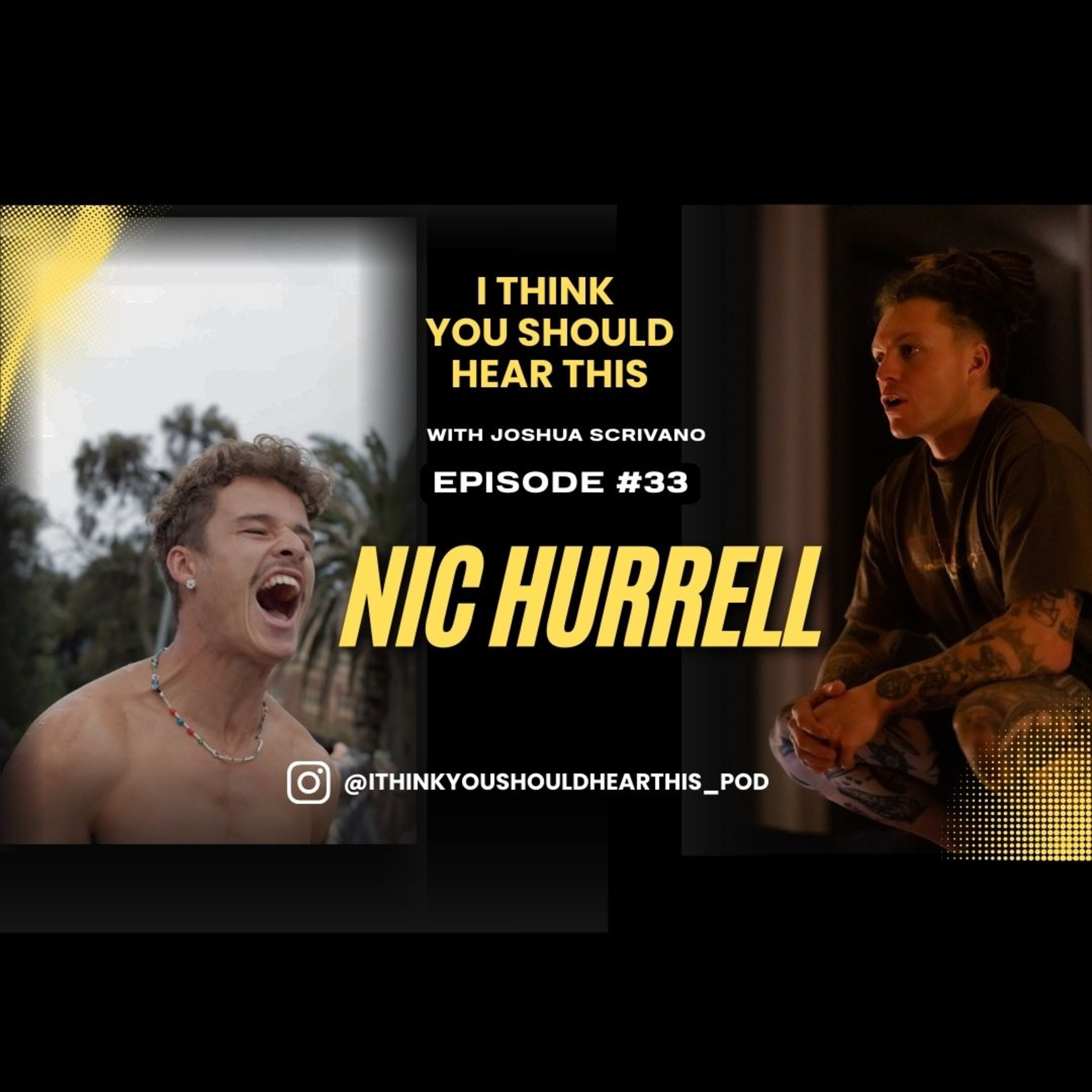
The transcription features a conversation where the speaker reflects on his life journey, from a joyful childhood to a teenage identity crisis tied to football success. When his talent faded, he felt shame and adopted a false persona, seeking acceptance. He later developed the "three P's" framework—purpose, process, and play—to help others, especially young athletes, avoid similar pitfalls. He created a mindset app for his old football club and contrasts Australian culture, which often values drinking and partying, with other cultures that emphasize family and community. The speaker left a corporate VC job to pursue what lights him up, like hosting silent discos in Bali, believing that success follows alignment with one's passions. A profound mushroom experience taught him that we are "vessels of experience," and fulfillment comes from internal curiosity, not external rewards like money. He advises balancing financial needs with pursuing meaningful activities, trusting that abundance will follow. The conversation underscores themes of self-discovery, cultural critique, and the importance of vulnerability and authenticity in personal growth.
I think you should hear this. We can be as silly as we want to, I'm just saying. Yeah! Literally, the people that watch it will get the most out of it and the people that just see the rails will just see the rails. But it's that I want to see who has really is that can watch the whole thing. So yeah, I want to thank you for joining me on the party. It's been a long time coming. I was talking about it for a while. So it's good to finally have space and time zones that somewhat leak up and we can have the conversation. Well, we are brother. Let's play. Yeah, so let's talk about your hero's journey because we can get into what you're doing now. But I'd love to lead into it with all the things that have led you to this moment. So maybe we'll do a brief background. So the moment, living in Bali, living a lifestyle that is more towards your purpose and through people who do know you, I would say you did the corporate stuff and realized there was something missing in here and now you're doing that sort of stuff. Running some epic scientists goes, making healing fun. And that's really cool. But for someone who wants to work in healing space means there was some sort of export, self-exploration first. So I want to wind up after the start and learn about who Little Hose was. Oh, yeah, brother. So I think I'll tell my story in chapters. And the first chapter from like zero to 11 is just like your quintessential beautiful childhood loving mum and dad, happy family, younger brother and sister. We all get along. This led to me to be a bit of a walking rainbow. I was just one of the most happiest kids going around. I remember going to Chapswood Mall when I was 13 and I was wearing like M&M short pink flip up glasses that were glasses plus sunglasses, a fluro jacket like you name it, I used to wear it. It was colorful. It was on me. I think I even went to the mall once wearing a nutrient green box on my head just to prove to my friends that I didn't care what anyone else thought about me. And so I was just one of those kids who was just looking to have fun 24/7. And this was great until around that age of 13, 14, 15 where I was also a super talented 40 player and I think when I was, I won the best player in the comp back to back years 13, 14, when I was 13, I felt 33 out of 36 best on ground votes and I started getting whispers in my ear from all my coaches and all the rep coaches that I'd be drafted one day and all the rest fast forward to probably ages 15, 16 and that was no longer the case. I had stopped growing. Thanks, my daddy's short asses. A mixture of injuries and just other players probably being more passionate about the game than me and ultimately pressure getting to my head. I remember after the year that I got 33 out of 36 votes every game after that. I was thinking at halftime shit have I done enough to get enough votes this week. And for anyone who plays high level sports, the minute you're thinking about the game rather than you're in the game, your performance begins to be compromised and I think that was also a massive factor for majors 14, 15, 16, 17 that really held me back amongst also just not being as talented as bunch of the other kids by the end of that journey. But the thing that made life, my life really difficult was because I was so talented in those younger years. My whole identity got attached to being the best and so it was no longer Nick the person. It was Nick the footy superstar. And so come ages 15, 16, 17 where that was no longer the case. I entered a massive shame spiral because I didn't know who I was if I wasn't Nick the footy superstar. And this led me to do what most I think teenage boys do when they experience shame, which is they pretend they don't care. They become the party animal, the joke star, whatever it may be. And so I became that person, but not in the way I was when I was 11, 12, 13 where I was a walking rainbow where that was coming from a place of love. I was now coming from a place of fear that I wasn't good enough that I wouldn't be accepted that I wasn't lovable. And so version of me that I found myself being in these late teenage years was probably just a scared little boy looking to wear every mask in the world just to be accepted in love because he didn't know who he was anymore. What was the life with your family at that time? So a lot of us, or young boys played free and you said you didn't feel love unless you performed. And you like both sounds of it, this is all internal pressure. So what was the life when you had an off game or a good game? What was the feedback like from the parents? How did they support you or challenge you to? Have any memories of them being outwardly judgmental? My parents are to the most loving people in the world. I see it as more as an internal judgment and an internal standard that I placed on myself and not understanding what vulnerability was, what shame was, what even performance mindset was. I was just a kid who loved footy was really good at it. Didn't know who he was outside of it and then never had any help transitioning to what next was until much later in my journey where I started to figure things out on my own because I kind of hit that breaking point. So for me as a person who now does one-on-one coaching with kids and his coachkids at your age that went through that experience, what can someone like me do to support a kid going through? Anchoring them to what I like to call the three P's, purpose like why they playing footy, process, are they showing up as their best at training as a game because that's the only expectation on them and play like are they still having fun? And if they can anchor to that purpose, that process and that play, without bringing our expectations or what we're attaching to and our definition of success, away from the exterior things that we can't control, like how many touches we get and if we're winning or not, to things that we can control. And I'll sound like Ben Crowe mine because a lot of what I believe in this space comes from him and I see him as the best so I see him as a good person to be learning from as well. Perfect, yeah. I think that can be taken outside of the football space as well if you have those three things. It's going to help you keep going forward. 100% and from this place over the past six months I've taught myself how to code and I've actually created a performance mindset app called Be Your Best and my old footy club has now signed up to use it and one of the pictures was especially for the unknowns. I think the footy clubs serve such a special and important place in these people's lives, especially leaving school where there's a lot of natural hierarchies and a lot of natural statuses that are created and humans being status oriented animals. We're always looking to attach to something in that school. Usually they're attached to your grades, to your social group, to your social media following or your antics on the weekend. Once we leave school, I think we go through this really challenging time in our lives where those hierarchies are broken and we start scrambling to refine them and without the prostructural support we often turn to I'd say more unhealthy attachments just due to kind of Australian culture being one built on my partying and drinking and celebrating that rather than a culture that celebrates mission meaning purpose and standing out. We all know about tool poppy syndrome. In fact, if you actually do stand out, you're punished as a result and I think this is super crippling for a bunch of reasons but I say this because one of my sales lines to the club was like, hey, if we can start instilling these mindset around connecting to a purpose, a process and just having fun in life at the footy club, then we're going to really set these men up and girls up to be able to do the same in their workplace, their friends groups etc. And so I really see footy clubs as a great treasured horse to teach these life skills if they take responsibility for it. I'm looking to do similar things in a similar space like for me working with young men something I want to do. So it's great that you're leading the way as a treasured blazer that you are. Generally, football clubs are run by old white Australian men and generally from my experience in footy clubs, I am the odd one out who does cop the tool poppy syndrome or you're like, you're not feeding in, what are you doing doing different things. So how, what made you approach your old club and what makes them different to other clubs that I've experienced. But how does this feel like she worked? For me, I had two different approaches for the the nine aims team. I'm fortunate that one of the players I used to play with is now one of the co-coaches and he was always into this world of mindset. And so it was a very easy sell. I was like, hey mate, I'm doing all that stuff. You always used to talk about in a nap and he was like, sweet, let's do it. For the girls, Prem Squad at that footy club, rather than go straight to the coach, I actually went to the girls and I said, hey girls, like the leaders of that team, here's a presentation I put together. Let me know if this sounds like something I was going to serve you as a group, especially a group of a younger age, they're a premiership team, but the average age is too very young. So from there, they took it to the coach and if your leaders of the group are taking it to the coach, the coach isn't really in a position to say no, especially if they're a good coach. Yeah, absolutely. So do you work with the Met Senumens program though? That's a work in progress. They're back-to-back premiers and kind of got their program dialed in. So I'm seeing that the under nine aims and the women's as my validation. That this could work for everyone else too. Yeah, yeah, say it's funny. Why are women so willing to try new things and do things that might make them look inward, but men with some little bit stuck? That's a great point. And one of the things that comes to mind for me, as I reflect on this is it would imply the man have a vulnerability or a weakness and I think Going back to that idea of. Men in Australia celebrating things like drinking and partying and job titles and everything else. None of those things are associated to the inward world. So I see a massive opportunity with the young garage groups, those between 19 to 23. I don't know if you've spoken to any 19 on 23-year-olds, but the most tapped in wise people going around. And so I see it, I guess, as someone who's two or three steps ahead in some areas of life, just creating spaces that I didn't have for those younger people coming through. And whether I make the change or I just create the space for them who then make the change, the jobs are the same. Yeah, I'm just having my business break going through here. I'm like, yeah, we should probably collaborate on this because there's something I want to do. If you're still in Bali, I'm happy to present it, IRL. We can take this one off. Yeah, yeah. Just thought of the spirit while I was here. But yeah, because I had a minute of a matter of event this morning, and the only white Australian guys that were there were me, the other guy I've got helped me facilitate it. And another bloke who is in their personal development mental health space, like he's like a big guy. So he's done the work and he's involved. The rest of it were like five Polishers, Asian dudes, Nepalese, Indian, Greek. And I was in it at the time. I'm looking around and I was like, I was doing this to guys in my free club. This is why I created it because I knew something I was lacking. Even I had the community of a free club, we didn't have substance. That substance says, with the conversations that have substance. And I'm sitting there and I was like, well, all of these different backgrounds, they have some sort of connection to strong family values, community and religion. And all the Polish and guys by one that, oh, it's my brother. Like, we got to go. We got to go to church. I was like, yes, that's so good. And they're all going to serve something greater than themselves. And they have purpose. And for the Greek guy, we were having a great conversation about his kids and family values. And he's just opened up his own gym. And he left his family business through the gym. So it's family first, Indian's always family first, Nepalese, he lives with his brother. Everyone's tied into their family. They have something where in Australian culture, we don't really have that as much. All our families come from somewhere else with Tang here. So it might be a small family not as close. And we get our family from the free clubs. So if you don't do what the rest of the family does, your car's out in Ruralore. And so instead of breaking free and doing the scary thing we go, I don't want to not have my family. So that's our lack. Yeah. That's that's what I come up with in that time. Totally. And I think what else comes to mind is these other cultures. I see vulnerability and being comfortable in these spaces. It's like a muscle. And so if we're throwing these 28 to 35 year old men who have never touched these things into the depend, films are unsafe. I know the system literally seizes up. It feels uncomfortable. Whereas these other cultures, if they've been around it since age two, it becomes way more natural for them to be open-minded and accept and be willing. And so I see my rock over the past five years as someone who probably had a few realizations at times. I felt like my peer group didn't have. Tell me just shove it down. Their throat is never going to work. It's going to just repel them. And what I've learned to do is just correct curiosity. I'm going to live my life. I'm going to do these things. And I trust that one day I'm going to do something that sparks something in them to ask a question, to want to learn more, or that I get so far in my journey and have outcomes that they might one day look at and go shit. The stuff Nick was talking about must be true. Maybe now I'll talk to him about it. And so it's funny timing this week that we're having this pod because three days ago, a article on business insider came out about me quitting my VC job and moving a bar, and literally starting silent discos. And I did that because as anyone who looked at the start of this co-op, I've got way too much energy and playfulness to be in a corporate nine to five jobs at a behind a desk all day. And whereas holding spaces where people just get a fill alive and have fun, that's me. And I didn't do that transition because I wanted to be successful in a way that other people call it success, but when success starts happening as a byproduct of just doing the shit that lights you up, it leads to a smile because the thing we're often chasing is the thing that we already have with us not honoring. It's like looking into and listening to a beautiful, vibrant, colorful mirror. Amen. So you're saying all the things that I've been thinking like, thank you, thank you, not very purposeful, you and I just are left thinking, all right, this isn't the place for me. That job I want to do. But yeah, like you said about we are doing the things we do to be successful in the way that other people think in a material way, but those opportunities might still arise just due to being in alignment and doing good things. Amen. And I think that attraction to wealth, I gave people the people to say, and they were still like, you know, but what do you look at business banking, you can make more money. I feel like if I was doing it for money, when I get it, I want it to be satisfied because you can always make more money. And I was actually thinking about, you know, how you're living in Bali and I'm really attracted to the idea of studying, starting, not studying traveling. I don't want to go and live overseas, but it's the idea that you're free, traveling is freedom. It means you don't have to be at home to work. So I don't have to physically leave anywhere. It's having that ability to not go, I can't do that thing good because I have worked tomorrow at my unfilling job. When you're on holidays, you feel some of better because you're not obliged to be something you don't want to be. That's friggin'. Totally, two weeks ago, I accidentally did a hero dose of magic mushrooms. There's a part of an intention to do it. That's definitely. Yeah. Each month, one of my intentions this year is just to do it inward journey with mushrooms. I think it's one of the most beautiful ways to just drop in to what's truth for you and get out of the noise of my head. Let's just say I probably did double the dose that I was meant to do. One of the massive realizations that came out the other side where I found myself in a spot where time didn't exist. I didn't know who I was. I didn't know who my girlfriend was. I didn't know my family was. I didn't know the difference between opening and closing my eyes throughout the experience. Like I had a full ego death. Like nothing was real anymore. But one of the key realizations from this experience is all we are is a vessel of experience. Every moment we're having an experience. And so if we want to figure out a life worth living for us, ask ourselves what experiences light us up the most. And when it comes to money or any external accolades, what part of that experience lights you up in the present moment? None. And so it's no surprise that we don't find joy, fulfillment or any of these things achieving them. Because I don't do anything for us in this present moment. And once we were able to flip that and just use our internal compass, our natural curiosities as a guide to follow what lights us up, all these things like purpose, meaning passion, mission, become obvious and become easy. And this isn't to say quit your job tomorrow and do what I did, which was exactly that. I quit my job without an guaranteed income. Just better myself to figure it out. And I did, but it created more stress on my nervous system than I'd ever wish upon anyone. So it's just understanding what the role of money is in your life. And money is the source of safety. It provides food rent all these things. And we need these things. And so when I heard earlier today, Josh, that like you're now getting a part-time job that will cover those things, but then give you enough space for the remaining days of the week to do stuff that lights you up. I'm pumped because you've shifted that definition of success away from this earn as much money as I can to, hey, I just did enough money to be able to then do the things that light me up. And I trust if I do those things long enough, then all the money that I ever wish I could ever have is going to come anyway. Yeah, exactly. I just, I mean, struggling so much with burnout. And it's because I'm trying to do my obligation at work and then create all the other things on top. I actually, I booked in with the AAP from work, so I spoke to a star. And he's like, so what do you do? And like, what do you need to let you just suddenly you need to let go of? So I'm like, oh, yeah, he's like, you can't do all these things at once. I was like, I acknowledge that. He's like, so what do you get on like, oh, I was like, work. He's like, well, I'm not saying to quit your job. I was like, no, I can't quit my job. I need money. But I need to find a way that I can make this work. And then yeah, a week or two later, I asked, I put, I said the intention with that conversation with him. And then I asked someone. And because I asked, they have lost. I'm just going to keep doing that. Keep putting things out there. What's worse than that happen? You get a note. I'm a said brother. And one of my big beliefs in life is I believe there's a magic flow to everyone's life. A life path only you can walk through your passions, your curiosity, your life circumstances, your experiences to date. And the secret to finding this flow is doing what gives you flow internally, that flow state, stuff that lights you up with it. What's aligning for you externally? And I believe to find what's flowing for you externally, the universe communicates with us every single day. The problem is it doesn't use words, often don't hear it. It uses what I like to call ease and resistance. Eases like the magic.
magic serendipities you ask for something and they happen. Resistance is when no matter what you do, no matter how hard you try, nothing is going to plan. And because of like school, university assignments, jobs with KPIs and bossers expectations and deadlines, I believe we've been conditioned to bash through resistance. But I believe resistance is the universal's way of whispering, "Hey, there's a better path." And as soon as we start to see resistance as a positive redirection, it's the universal's way of serving us, helping us redirect to a path that's more aligned, life becomes a magical adventure, a magical game because it's always serving you. And see, they're serving you by putting on the slipstream to you to achieve your ambitions or creating resistance to help you to get there. And when I hear that you ask for something and the university immediately said, "Okay, you can have that, it's just that sign of like you're in flow. You're walking that right path and shit's about to get crazy and magical." That's the plan. I'm here for it, I'm open to it. Yeah, it's exciting times. But let's get back to you. We got to her about 1670 year old Huzz who was struggling with shame for not becoming the AFL player that people were telling you who's going to be. How did you dig yourself out of that? You said you were wearing masks. What happened after that? From ages 18 to 21, I just became the biggest party item on the planet, the classic story. You go to my Instagram page from back then and I was like a jackass stunt impersonator. If there was something crazy to do, I'd do it. It was like my window of tolerance for what was normal and acceptable was non-existent and I would do anything I need to to get a laugh, to get a smile. But the hard thing about this was over the years, the states had to get higher and higher and higher. And I started seriously hurting myself in summer, the stunts. This only really ended when I got my first serious girlfriend at 21 and it began to become clear to me that I was just doing these things to be loved and once actually someone was loving me, I felt less of a need to do these things. But even within that relationship, I then started asking myself, who am I? Because if I'm not the 40 superstar and I'm not the crazy party animal doing crazy stuff like, who am I? And I still didn't have a super clear answer. And it's probably one of the main reasons that relationship didn't last. And it wasn't until 23 that everything shifted for me. It was February of 2020. So just COVID had started, but obviously we weren't in lockdowns or anything. And I was traveling solo throughout America, both North and Central. And I remember waking up in New Orleans in a dorm in a hostel. And I woke up and I was traveling solo for the first time, as the first morning I woke up. And I realized it was the first time in living memory. I asked myself, like, what do I want to do today? Not what's expected of me to do today? Because I realize every day, I was literally just waking up to perform to be accepted doing what was expected to be loved and to fit in rather than doing what truly lit me up. And I really surprised myself because that day, someone usually very extraverted. I sat on a bean bag in the hostel, common room and read a book for like seven hours. And I was like, who the heck is this guy? I've never done this in my life. I was my first day of solo travel ever. I'm reading a book. And this started to plant the seed that there was probably someone inside that was the real me that I didn't really know. And that didn't really have a relationship to. And upon returning from that trip six weeks later, I was returning to what was a dream job, but what I saw was a dream job. I'd work there throughout my final year at uni. And I loved it. And I've not what I loved it. And the reason I thought it was a dream job is it merged to my passions, which was business and entrepreneurship and education. And I was working for a venture capital company in their programs. Tenswi Basie were running programs to help people start and scale their businesses. However, a month into working full time. I remember coming to the office and just feeling dead inside. I'm like, wait, what? Like, this is it. I now just come to the office every day of the week for the next however many years. And this was probably the most disorienting, soul-crushing moment of my life because the past 18 years it led to this point in a way. I'd done, I'd suffered through 13 years of school, four years of uni, years of unpaid internships and part-time jobs to get to this point because the promise was when you get to the dream job, you're happy for fielding all these other things. And so when I didn't find those things, I felt super portrayed, portrayed by the system that I just blindly trusted would deliver me to this place. And the best analogy I can provide for that experience is if how I saw the world was a city, this experience was like an earthquake hit. And every single building came tumbling down. And it just left me with questions like, who am I? Was my purpose like, what am I doing in my life? And for the past five years, every day since I've been rebuilding that city, brick by brick, but based on my own experiences of how I've experienced the world, not what I've been told to be true. And that's what ultimately led me to living in Bali, hosting healing but fun festivals, dancing across beaches around the world, hosting scientists, goes hosting games that get people to do crazy things outside their comfort zone. I've actually anything that feels fun to me, I do, and it's worked out. How are you? Do it. Yeah. So cool. I feel like we've run a similar timeline. I remember like March 9, 2020. I had a very similar moment of like, what is going on in the world of my life? I don't know why March 9, I must have seen something or, but I think it was March 9 for me to legitimately. So maybe there was something in the stars that day because yeah, truly. Yeah. Yeah, it was, I was reading a lot of people and that's like a pretty significant time. Yeah, I definitely felt a very similar experience. So I love to see your body now, the other guys, dumb to think, follow what you're there about, what you dream, what lights you are. One of the big learnings from that journey. So I had that realization in March of 2020, become beginning of 2023. So literally almost three years later, I was still in the same job. And so what I learned in this journey over those three years, I've done like every, read every book, listened every podcast, did every course. I think I spent another like 42,000 dollars on like another 52 different coaches programs, et cetera. Like I just became this consumption machine attempting to find the answer of like, how do you break free of this corporate world to live this other life? And a quote that really resonated with me was James Clear on atomic habits, which is you don't rise to level your goals. You fall to the level of your systems. And in my mind, I meant that means there must be a system to achieve any goal. It's my job just to figure out what it was. And for three years, I thought it was attaining more knowledge, but it wasn't the thing that finally shifted things for me at the beginning of 2023. As you know, I started doing a challenge. I did one thing a week that absolutely terrified me. And the first week of that challenge, I was so insecure, so vulnerable that I just even filming a picture of a video of me talking to camera and posting on my Instagram story terrified me. So that was week one week two was uploading a video of doing my more norm morning dance and posting my Instagram story week three was going to a restaurant sandwich magic tricks for random people who are eating there. No, I'm not a magician. And week four, which is one of the moments that probably shifted everything. I took some scientists go head to it's down at Bondi Beach. And after a meditation group, I attended four of us just started dancing in the morning and had the best time ever within eight weeks of that challenge. I moved to Bali within 12 weeks of that challenge. I'd quit my job. And within 17 weeks of that challenge, I was funding my life through hosting silent discos and accepting donations across Thailand and Bali. And what I learned was we don't rise to live our ambitions. We fall to the level of what feels safe. And so for three years where I found myself stuck, it wasn't from a lack of clarity, wasn't from a lack of ambition, wasn't from a lack of desire. It's because I didn't feel safe. And so the minute I started pushing myself outside my comfort zone and held myself accountable to change what felt safe for me. Everything shifted. And that was the inspiration for the growth game, which you joined previously. And is also the source of my inspiration now where I support people with business and doing what I've done, which is working for yourself from wherever you want in the world. I don't focus so much on the business itself. I focus on healing. And for a long time, I really didn't like the word healing. And probably a lot of listeners like healing, like what a cliche buzz word, like what does it even mean? And if you asked me a year ago, it told me that I would be calling myself someone who healed people, I would have cringed massively. And the reason for that is I also didn't like the word. And that's because every definition that I'd ever heard, implied that we all in vertical was broken. And we needed to invert a conversation, return to wholeness. And I felt many things in my life. I slid from friends lost to my life, didn't know who I was. But I never felt broken. So I really didn't like the word. And so over the past 12 months, I've come up with a definition that has felt more true to me than one that has left me feeling more empowered. And one that makes healing sound like it can be fun. And what I invite people to do if they're listening to understand this definition is just close your eyes for a moment. And think about you as a kid. See those chubby cheeks, that goofy smile, the life and energy behind your eyes. Remember how playful you were, how carefree, how full of love you are going to open your eyes now. See I'm a big believer that we're still those small people in these big people bodies. But as we grow up with, we've collected what I like to call these emotional splinters, these moments in time that being this loving playful carefree version of ourselves no longer felt safe. And so we began to adopting Mars. And so all
healing is, is taking off these masks and returning to that playful, loving, carefree essence. The problem is, we've come to see growing up and having fear of judgment, fear of not being good enough and fear of failure is like normal. That being a busy, stressed person is normal. I mean, to say that's fucking bullshit. There's nothing normal about it. What's normal is we've normalized trauma that puts us into that state of being. And so what breaks my heart the most is by normalizing these things, normalizing emotional splinters, which mostly happen at school because we put a bunch of hormonal teenagers into basically a prison for seven hours a day. No wonder they're going to start teasing, joking, bantering with each other and hurting each other's feelings. But we leave school and we end up in a place where we're literally too scared to be ourselves. And that's what breaks my heart the most. And so, for me, what liked me up these days is I got healing but fun because we're going to drop you into the state to reconnect that loving playful, carefree version of you that you were as a kid. And then we're going to start shifting all the stuff, keeping you disconnected from them. And so I like to see the healing journey through the lens of four hours. The first hours to recognize, so recognizing what these emotional splinters are, these protected patterns that are keeping us stuck are the second is to release. We've already released the emotion that stuck inside the shame, the embarrassment, the fear that's keeping us in this triggered tense state. Once you release it, for me, being a rainbow and I was 13, 14, it wasn't until I was 26 that I re found that rainbow. So for 13 years of my life, that rainbow disappeared. I woke up every day, chose it, choosing not to be them. And so once I reconnected this version myself, I need to rewire. So third, fourth, third wire, I was to rewire meaning we're going to rewire our thoughts and our behaviors, our habits to start showing up as this person once again. And the fourth is just to reconnect to creating space in your everyday life, just to give yourself permission to be that silly playful kid again. And for me, that comes through dance. But for others, it might be a walk, might be a journal, might be whatever it is. And so I share this because I see one of my missions at the moment as creating curiosity and acceptance and excitement around the thought of healing. It's not this taboo thing to go see a counselor or a psychiatrist or all these things. I see healing as one of the most beautiful things in the world. And my girlfriend says it best. It turns us into these amazing butterflies. So for turning to these butterflies, shouldn't we enjoy the process? And with that, I truly believe healing can be as fun as partying. And so I've pitched a future where on a Friday night, we don't go to the pub to have a beer. We go drop in and start diving into our deep shit, start creating some shifts inside of becoming better versions of ourselves. Because if we look at the things that we enjoy most about a pub on a Friday night, it's usually where we go to socialize to connect with friends. But usually in those states, what are we connecting over the footy, the weather, our job? It's this deep for those who can't see, a centimeter deep. If we're there to connect, why don't we properly connect? Why don't we drop deep with these people with our friends, the people that we love? Because I'm sick and tired of especially men in Australia when their friends or son turned out to be depressed or take even extreme measures and think, fuck, I was there for them. Why didn't they just reach out? It's because they didn't feel safe to reach out because you don't have a culture where it feels safe to talk about these things with one another because we haven't normalized it. And so as part of normalizing these things, I think we also need to start making them fun, which is exactly my approach. I'm ready to hear to avoid the deep shit. I want to go to the deep shit, but let's get in there and have fun while we do it. I'm inspired. This is my audition for my tattoo. Yeah. Dude, that's literally the reason why I decided to go to Soga. I realized why I drank, why I probably went out. I wanted to go connect with people and that helps you, you know, lower your inhibitions. You're more free, flowing, you know, having it to have it in good time to let you go down. Well, that person is obviously, obviously, within me, let's work out myself and learn how to do a Soga. I remember. And I really think that you are a good way to take stock of your friends and if you can't enjoy their company, soba, then maybe it's just out of alignment. Like, if you're sitting there going, oh, I've got nothing to talk about. Then you're talking to the wrong person and that's why going to, you know, like a community, the beach and meditating and then having your soul and just go with them after. That sounds like your tribe. If you're able to just sit with them and then go get up, start doing having a good time, that's aligned it. Not the mates you can only bear being with at a pub unconscious. And the funny thing is I think a lot of people claim they want freedom, but my definition of freedom is having the choice to choose what you do and so many of us with these triggers and protective patterns inside, running our lives with the opposite of free. We're scared. We're coming from this place of fear. If you're truly free, then any moment you have a choice about how you want to show up, whether you're sober or drunk, but like you, Josh, I've been sober for three and a half years now because I like to think I'm fit, flirty and fun, sober, then why would I ever need to drink? And I only drink because I was so scared on the inside. And the way I actually met my girlfriend was we're out at a place that people go on a Thursday night here and it's usually where everyone goes to drink. And me and my girlfriend, I didn't know who she was at the time, but were there only two sober people there? But we're all the, also the most two craziest dancers there. And in that moment, I knew I'd met my match because it takes a special type of person, unfortunately, to express themselves freely in these ways sober. But when it comes to dancing, this also breaks my heart because dancing is the most natural thing for our body to do in the world. It's what we do when we hear music, when we hear dance, when we hear, we want to move our bodies. And so when people say, "Inverted comes, they can't dance," it's like, "No, you can, but you just don't feel safe to dance." That's also part of the mission of you people headphones, you put them in their own little world and it's amazing to see people who usually just tap in their feet all the sun, have their arms in their screaming at the top of their lungs. -Rio, dude, I'm having this trouble at the moment. How am I going to meet someone in the early place? You can meet people offline. Is it a place where people drink? -There's girls out there thinking that he's that same thing, brother. And you're that night shining armor. -Hey, man. So let's talk more about what's going on in like Bali and your events then. Because I think for those interested in doing it, what is an event look like? -Yeah, so all my events have designed around those four hours of recognizing, releasing, rewiring and reconnecting. For my signature dance events, I send people two ways. I either send them to the moon with happiness or I send them deep into themselves and we come back out the other side. And so my vibrised dance flows, designed just to send people to the moon and make them feel like these kids again. And I'll make you the happiest you've ever felt. It's hard to use words to describe the experience. It's kind of just something that you need to experience. But for those who have ever felt those peak highs dancing, whether you're drunk or sober, think about that feeling. But for 45 minutes straight, that's my North Star. And the reason I actually created that journey was I remember being 18 years old at a live band, blind drunk thinking, "I know this isn't good for me, but God damn it feels good. How could I ever not do it?" And when I went sober, I wanted to re-find places I could experience those peak highs. And so this dance journey that I've created is designed to reconnect people to that place, but completely natural, completely sober, through breath, through movement, through dance. So that's vibrised. I've got another journey called Healing Compass, where it's designed for us to identify what these stuck blocks are and then dive into them and start to create shifts. And the past four weeks and a road that I've delivered this, I've had grown men bull their eyes out because especially men, we're bottling up so much. And if we're telling ourselves it doesn't exist, it means just really good hiding it. And I look forward to meeting you one day because we're going to crack you open. But it's also the most empowering things because when you're in these deep states of release and all this pain is coming up, it seems paradoxical, but these are also the most joyful state because your body is feeling so relieved and so happy to finally be letting it go. That when you leave these sessions, you feel like you're being reborn because you've let go of the metaphorical backpack. And so they're my two signature workshops, but I also run a festival designed around these four hours. So each session's designed to help you recognise release, rewire, reconnect, but all in a fun way. And so I, when it comes to traditional modes of therapy, I think they have a role, but I also think the Western world is so caught up with dealing with people's minds and verticom is fixing their minds. That's so many problems that the mind has I found in the body. And so everything that I do is designed to get you into the body. And often when we start releasing what stuck there, the mind starts sorting itself out. And so for anyone who's had a bad experience, I feel like inverted commas healing hasn't worked for them in the past. I would invite you to have an open mind about experiences like breath work or these, well, when you come to Bali, they're probably seen as pseudo science modalities, but there's a reason we're doing them. And it's because they work. And so I just invite people to continue having an open mind. I'm just thinking about things like that. When you going through injuries, as a teen, do you, do you need a look back and think, oh, I know the real reason why I was staying this injury or I met a physical reason. So my girlfriend is a wizard this stuff whenever something happens. I'll be like, I was like, okay, what's yeah, what's the metaphysical reason when I look back at my journey. And I was one of those kids who was always injured. I actually think that one of the reasons I was always injured was because when I was injured, I'd get attention. Oh, Nick, what's wrong? And I think part of me just wanted to be seen and felt and understood. And part of me was also scared to be out in the field because for
for me became an assessment. Every time I was out, I was judging myself or felt like I was being judged. And so injuries end up in a weird way providing relief from that judgment, but also giving me the intention my soul was craving. So that's how I'd answer that question. Love it. When you were struggling as well in like the late teens then, did you see like eating professional health or at any point? No, not at all. So obviously you said there's been there is a place for it. How have you done that? Yeah, I've been to probably seen three to four different therapists. Usually it's come off the back of like a relationship where I've been a famous off super lost and I've needed clarity. And personally, the reason I feel like that's fled most in my life is because that's where I probably had the most trauma. And when I say trauma, some people might be might have the same reaction I did when I walked into my first breath with a class where they said today we're going to be releasing trauma. And I was like, trauma, I ain't got no trauma. I'm a privileged white boy. And the problem was I didn't understand what trauma was because 15 minutes into that session, I was pulled up. I was curled up in a ball, boiling my eyes out because boy, a boy, did I have some trauma? And so just to take a moment to define what trauma is just so the list may have a more of a mind about it in the future is we got big T trauma, which is what most people see as traumas like the car accident's going to war, losing a limb, parents dying. These are the experiences of so overwhelming for our nervous system that they shut down that we can't handle it. And so you hear the classic C emotions as energy emotion. And that trauma is anything that stops that emotion. So big T it stops because it's too overwhelming. But the little T traumas, the micro traumas, which is what I think we're all riddled with, especially from school, it's just any moment where you need it to feel safe to express. And so for me being a walking rainbow at 1314 and eventually teenage boys being teenage boys started calling me things like gay, a pimpe, lame, whatever it may be. In that moment at her, I wanted to cry. I felt like I was just expressing myself authentically, but to cry, I'll be upset in front of them, we don't need to more teasing, bantering, joking. So I do, oh screw you guys. I don't care. The little head I know is I hadn't given myself permission to express that emotion now. And so it becomes a kink and our amygdala, our emotional center of our brain. And basically for the next 13 years of my life, anytime I looked at something rainbow, I felt a sense of fear because our amygdala doesn't have a sense of time. It doesn't know the difference in past, present and future. And so every time I looked at rainbow closed that that shame, that embarrassment that people had made me feel was getting triggered. And it wasn't so I started doing things like breathwork and started shifting these and processing these emotions that were bottled up inside that I once again have the freedom to choose how I showed up without that fear. To bring this back to my relationship so in my, I think therapists, I'm sorry, I think therapists in that region of my life is because as a man, I think from the ages 13 to 21, I didn't cry once. And I would have had a bunch of girlfriends and all the rest throughout those years. And anytime I was broken up with or hurt within a relationship, I didn't give myself permission to grieve. And so I felt like I just had a massive backlog of fears and triggers that I was attempting to avoid and escape. And they especially came up in the sense of like an avoidance attachment style. And the most disillusioning thing for me was realizing the reason I was being avoidant was because underneath I was actually anxious. And my body wape preferred being avoidant and not feeling anything than suffering through the anxiety of actually how much I secretly cared about the goals that I was with. And so in each case of seeing those therapists though, not one of them ever gave me the shifts that I needed to like change my behavior or feel better. It wasn't until I started going on my own journey that I really began to see those shifts take place. More and more, mirrors. Thanks for sharing. Yeah, you're bringing up a lot of lots of thoughts for me. This is probably the avoided in me as well, losing the words because it's easy, not saying lost now. For the OlinBuy listeners, there's five protective patterns that I think are keep most of us stuck in life. Listen as a sneak peek in the journey that I take people. So I think there's four needs that we chase in life to a survival needs. So this is connection with tribal animals. We always want to be loved. And the second is autonomy or life design. We want to feel a sense of control over our life and a sense of choice. And this is most commonly expressed through life design. Some people are really happy having a routine life. And some people like myself want a bit more adventure. But having the choice or autonomy to choose what that life design is is super important for happiness and more being. Then the other two emotional needs, these help us thrive in life are a sense of mastery. So a sense of growth. This is like improving a craft. Something that we love to do. Something that we can improve on. And the fourth is a sense of meaning. So serving a purpose, a passion, a mission, whatever it may be. And in our sessions, I'll guide people through a script to identify which one of those four things is most emotionally charged and new right now. And the stronger the emotion, you feel the more of a trigger it is because the more of a truth that it's out of alignment. Once we do that, I then ask you people, well, what action do you need to take to shift that thing in your life? So doing this for you, Josh, you're very clear that at the moment, it's that sense of autonomy, the life design, you want some more control over your time. So you can actually choose to pursue the sense of meaning and mastery more. And if I asked you, well, what do you need to do? You know, you'd say, well, I need a quit. I need to find a part-time job. And so the third question becomes, well, why haven't you? And I believe there's five protective patterns that keep us stuck. Most, one is the people pleaser. So it's putting other people's needs above our own. The next is a performer, becoming a chameleon, doing what we think we need to do to be loved rather than acting true to ourselves, become the perfectionist. Someone who's always attempting to make things perfect, but never actually making the change, never publishing the thing, never doing the thing because to actually do it and share it would open the you up to judgment. The fourth is the controller. This person is so scared to do something poorly or allow someone else to do it in case it works out badly. And it's a bad, a reflection upon them that they just hold it all themselves. And the fifth one is the ghost. So we just don't show up. We have all the thoughts, the all the ambitions in the world, but to actually put ourselves out there and do the thing is too scary for us. And so one of the most powerful exercises I found myself doing was just beginning to identify which protective archetypes are showing up in which areas of my life. So for instance, with my friends, I'll say a performer, feeling like I needed to earn their love. And especially as I started going through massive shifts in my life, going from this massive party up to someone seeking purpose, I end up being a bad version of my new self and a bad imposter of my old self around them as I failed to perform and didn't know who to be anymore around family. A lot of people become the people, please, we don't want to upset anyone to make sure everyone's happy. And around our careers or entrepreneurial endeavors, we often become the ghost because to actually put ourselves out there feels terrifying, the judgment that fear of not being good enough, the failure. And so the thing is if these protective patterns are flaring in your life, it's because something inside doesn't feel safe and something doesn't feel safe because you hadn't experienced earlier in your life that has made it not feel safe because you probably did the exact thing that you now want to do, but it didn't go to plan. You felt shame, you thought embarrassed, you felt fear, you felt something that you don't want to feel again in your body remembers. And so rather than do the thing and potentially feel that again, we stay stuck for the paradox and the sad irony is by attempting to avoid doing that thing and not feeling that way again, we often end up feeling it anyway. So we don't take for me for three years, I became the ghost because actually put myself out there and be judged, terrified me, the shame that people would laugh at me was too much. But then three years went by and I still hadn't done any of the things that I wanted to do and I felt that shame anyway. And it wasn't actually by taking the action is the thing that finally led to me to feel the way that I wanted to feel and no shame came from it. If anything, I was celebrated. And so this is a big reminder, also true, it's courage to have a comfort in these moments. But I share this to say I see this exercise as one of the best and quickest ways. People would identify how wounds and trauma and other things are showing up in their lives and keeping up. Awesome. I think that people get a lot of value out of this conversation even just the little couple of minute moments. There's been plenty of them already. I realised what I got lost on. Part of it is in this where you brought up. But also what we were talking about earlier with men. I think they was thinking about the little tea and a lot of people really do brush them away. They try and store them deep and deep down and then they just pile up. So today we had an event and we had 20 kilo terebells and four kilo terebells. I said they're just as important as each other. Because the big 20 kilo one is so obvious and it's right there. But the full kilo one that might just be stored in your knee. You might be carrying that somewhere you don't know. But after years and years of componing, that's she's going to get you and you're going to have it some sort of injury. Something's going to happen. And I feel like that's how it shows up in what a salient meant. Because we feel like we're in a lucky country and we're privileged and we haven't had to deal with things that other people don't deal with. And also maybe that's how society puts it as well. So we don't actually get acknowledged for our little teas that we go through because so often all we're showed on the news is the negative things that go on and the rest of the world. So we put our shit to the side because we need to donate money to some other countries doing worse. But we look at the suicide rates that are going with men in Australia and the world as well. Clearly there's the shitload of little teas that aren't being acknowledged. And that is the fee of judgment, the shame that and we're returning to that ghost around our friends. It's quite sad and I think that we need to normalize about having these cars.
conversations and showing people that there's other ways and calls the air can use. 100% and look, I fell such a victim to that in the sense that I remember thinking, I think I've hacked away to never be sad because I feel like I didn't deserve to be sad. Like you said, we're a privileged country or the rest. And I was thought about how the reason social media is so bad for us is that it just starts our reference points, meaning we start comparing ourselves to more extreme realities. And often it works in the inverse that you're seeing someone who's prettier than you, eating better food than you want a better holiday than you in a better job than you. So you feel less than. And I thought by the same principle, what happens if any time I felt sad, I just reflect upon people in Africa who are starving right now. Could I hack myself to like always feel happy as a result? But what I learned is the stories we tell ourselves are also copied mechanism. And so how else truly feeling in those moments were sad, guilty, shameful, embarrassed. And by me telling myself a story doesn't make the emotion go away. It just makes me shove it down and replace it with an artificial layering. And I think the more can recognize that stories are just as big of copied mechanisms as eating, as watching porn, as going on Instagram are the more empowered that we're beginning to be able to acknowledge how we are truly feeling because we remove all those coping mechanisms and we're just left with the thoughts. We have to do something with them. Sorry, and we're left with the emotions. It's just hard to actually start being proactive and dealing with them healthily. And I think pushing them those comparisons down just creates resentment for other people too. Because that fuck them, you know, that fuck them and the shit they're dealing with. It's instead of just acknowledging how you feel and not not worrying about anyone else. 100%. Yeah, let's talk about the growth game a bit more. Because that had such a profound impact on my life. Wouldn't be sitting here having this conversation with you one and two, it wouldn't be in dial and playing fully. That whole year of 2023 after, you know, you leading from the front and doing the things that you're doing and then inviting us to play this game with you. It made me show up more online, be willing to go and do crazy things in front of other people and say what if it does go right instead of what if it does go wrong and that genuinely was the thought process for me coming up here. What if I have a great time? What if 35? I'm good enough. What if it goes well? And then through asking myself that question, I came back to my window of the Premise Shoot Metal or M&Eck and two new friends and a great experience and now I get to recreate the same thing and potentially do it all again. And now, you know, we talked about the part time job and moving to Queensland. My eyes were not open to that and willing to be fully growth games. So one, thank you so much for it. Yeah, true. I'm eternally grateful and in debted to you for it. But yeah, let's let's chat about it and some great stories and things have come for it. Yeah, so I guess the premise of the game was a love games when I was a kid, I love board games, I love PlayStation, that turned into like loving sport. And so I'm a big believer in the power of games as well and just how they're able to detach us from reality and I was put us in an alternate frame of mind and also making things competitive could also bring the best out of us in a way. And so the premise of the growth game was there's a week, you have a weekly challenge and a daily challenge and the weekly challenge are you get 10 points for and the daily challenge you get 1.4, but then there's also a scale. So there's a 1x or 1.5 x or 2x and a 3x depending on how scary this thing was for you. And I had, I think there was over a hundred of us who played in the end over that year. And what's that message as I received from people throughout that process, are some of the most beautiful messages I've ever received similar to what you just said where it was just holding people accountable to finally doing the things that they've been wanting to do for however long, but felt like they didn't have permission or the space to do so. But once you articulated it in the game and now you had a week to do it and you're in a team, so you didn't want to let the team down. It was amazing what people found comfort and confidence in. I'm grateful just as much to everyone who participated in the growth game because it also helped me stay accountable to doing these things which also helped change my life and led me to where I am today. Do you have any stories/testamodils that you want to mention that people can maybe look back on or to get a glimpse into typical aure of it? Yeah, the aure. I remember one guy was a great singer, but he'd never sung for anyone even his girlfriend. And I think in week one of the challenge he's saying for his girlfriend for the first time, we two of the challenge he sang for his parents for the first time and in week three of the challenge would pop up and and sing a song on the side of the street in front of a cafe. And so he'd literally gone from never having the courage to sing for anyone to now singing in public. And that was just one of many stories of how quick people can shift their reality once we begin shifting what feels safe. And he also said to me one of the most beautiful messages after that experience as well. Yeah, Jordy, if you ever see this, I love you man, and that was so cool because I didn't know we could sing and invited him to it and got someone, you know, it's come for some footy. And look what? This is like, why do you not share this? And then he shared it finally on Instagram as well as part of the growth game. And again, as you mentioned earlier, you have all these fears and the reception was beautiful. So many people giving positive responses, not a single negative comment. We create all these things in our mind that just don't exist. All these beliefs that come from in here. That's like, how do we create them? I don't know, but it was a so awesome to see, especially some of I know, do it because I knew the value that I had from it and to see someone else go, all right, let's do it. That was yeah, I'm believe. Literally beautiful. And I see like, for me, I see our lives as are and any, any skill is art. For me, the definition of art is something that communicates a message and makes someone feel something. And so I truly think anything from obviously playing guitar to like creating a spreadsheet, which creates change and serve the purpose in life can be seen as an art. And so I saw the growth game and a lot of what I do is just making people feel safe enough to express whatever their art is. Yeah, that's beautiful. I love it. Yeah, there's another one in both that can see in an airport. Oh, yeah, to be us. A Swedish pop star who popped up and sang it in airport to launch one of his new songs. We had plenty of people launch different online programs or start teaching yoga or start filming themselves and start showing up online for the first time. We had actually, I'll go this way. I began to realize there was a pattern. There was five layers that people started to go through throughout the growth game. The first layer was visibility online. So starting to show up from their essence in the online space, the next was beginning to show up live in person. The third was beginning to either ask for money or invest money in whatever this thing was. The fourth was opening themselves up vulnerably and starting to claim it as an identity and start sharing with their friends or family that this is something that I want to do with my life. And the fifth layer was beginning to step into a place of domain authority or expertise. And I see these things as kind of the layers of fear and safety that we all go through as we start on this adventure of finding our flow, doing the things that we love and light us up for the people that they could look back on my Instagram. Those literally went like step by step for me. One of the first things I did was do breathwork live on Instagram, which is just me talking to a computer screen. And then the next thing I did was I wrapped on live on Instagram. Did it tear my job? That was my favorite. Yeah. Did really, like really poorly. But again, the response was awesome because it was it also mirrored fear. Like live for people for them to see, but to see someone that pushed through fear I think. And people just got around me. That was so cool. I felt so supported and safe to fail after that. I think that's the other thing, right? We talk about leaning into the scary things and so often it goes right. But even when it goes wrong to be supported was cool. It's okay to fail. And it's a reminder. So I one of the scariest things I did was I popped up and started a scientist going in airport with my girlfriend. And the thing is if I asked myself if I saw someone do this, I would think now the biggest legend in the world. Why do I hold this fear? And unfortunately biology has left us with some faulty wiring where we condition to expect or have a negative bias of five to one. It's a survival mechanism. And so one of the best things we can do is start training ourselves to expect the best instead of the worst. And this is what I did when I started doing magic shows for rooms of 30 people stand up comedy starting science, disco some beaches. And rather than allow myself to think, oh, everyone's going to hate me. Everyone's going to laugh at me. Picture everyone celebrating what I was doing. And it's amazing how quickly that anxiety can turn into excitement. And I actually believe excitement, nervousness and anxiety are all the same. Physical sensation. It's our expectation of the result that determines what we experience. And so in that moment that we hosted this disc on the airport, I think that
five people joined, we'd dance you out three songs. The 500 people in the terminal all sitting afterwards gave us a standing ovation. Everyone just clapped and supported us. And it was just such a reminder of like, yeah, of course, like, that's what I would have done if I saw someone do this. Why would I be scared and fearful of anything else? - And I wonder what percentage of the 500 people sitting there going, oh, I really want to join in, but I just can't. - 100%? - Yeah. I had a conversation with someone at the Fuddy Club, 2024. And he's like, I love your stuff. I go, I want to come and do it, but I'm just not, like I just can't, you know, go stuff going on, I need to talk about it. And as I do, if you looked around this room right now and you said that on stage, the amount of people that raised their hand and said me, too, it would be 90%. Plus, that's the power of being a leader, left yourself and showing up online and doing it. It gives people permission to then go, all right. I'm not the only one that wants to do this. Let's do it. - For sure, one of the big realizations that I had in the week two of this challenge, where I was doing things that scared me and I uploaded a picture of me dancing on my Instagram, I was like, why am I scared of this? Because if this was my morning coffee, I wouldn't be scared. So why am I scared of it me dancing? And what I realized is, because it was seen as not normal. So culture, define what normal is and anything outside of that is then seen as inverted commas as weird. Weird is simply, I didn't expect that. That was unexpected. And so part of the power that I see for people like yourself and what I strive to do is changing what normal is. And that's why one of my favorite shirts is to embrace your weird because by embracing your weird, you're giving permission for everyone else to do the same. - Love it. - Yeah. Yeah, I think we could, I'm thinking if like weird and normal was on the spectrum and we like, slowly merge them, I don't know. Like within what is weird, you know, go over the lines. - I wanna make normal weird. - Yeah. - And one of the things I do, I observed is, look at yourself and compare yourself to your five closest friends and what the average person does. And if you're showing up as the average person does with your R&B boots, your blue chinos and your white raffle and shirt every Saturday night, then my guess is you're not being you, you're being what feels safe. And the same can be said for your job and everything else. If you're feeling unfulfilled or unaligned and you're not sure why and you look around and you're the same as everyone else, that's because you're not honoring that little kid on the inside who wants to be seen and expressed in other ways. And the thing is, it's not your fault. Because we've all had experiences that made living that life feel unsafe. But once you become aware of it, you're now of a choice. And if you choose not to follow that choice, then it does become your fault. And so you have a whole pass up to this moment. And once you have the realization, the responsibility kicks in. - I'm likening this to, I love the RMS and chinos reference. - For a 20-year-old male, I was at a sacred, wak-raving workshop. I didn't have to know Jess, but yeah, there's like, how would you dance if you were a festival and you're sorry, well, you're trying to not care what anyone thinks, like you would if you were drunk at having a grand old time. Close your eyes, pretend no one else is there. And then you open your eyes and you look around and realize no one's looking at you anyway. And that spectrum of weed and normal, if you just didn't see the ends and you were just instead of being weed or being normal, you were just being, then that's the freedom. And I was thinking about, you know, when you're in a room and you're someone hands you the opposite of party, you don't know who's the party and you're looking at it and like, hmm, what song should I play? What are they in a life? That's going to make the room feel good. Instead of going, oh, I've got the ups, I want to play what I want. I want to play what makes me feel good. Amen. That's what listening to what you had to say, make me feel. - That's such a good analogy. 100% my flashback to that exact moment I've had in the past and that terror that I was going to fuck up. And by fuck up, I mean, that people wouldn't like it and then I wouldn't be loved and the shame and the embarrassment that was going to come as a result but was completely artificial in my mind made up. - Yeah. Crazy. Why do we, why has society made us this way? Is it never, I mean, it may have always been, but it feels like it just doesn't feel like it has to be that way. - Well, this is my pet peeve with school because I believe learning is, the most fun thing in the world. It leads us to grow. It's, ideally, we're following our curiosities, we've naturally light us up. And so the fact that we leave school hating the idea of learning literally should be a criminal act. It is heartbreaking, but combine the fact that school makes learning seen as something that's not final, something that people want to do, combine with putting us in uniforms so we can't express ourselves, putting us into a routine where we're all told that we're the same, where we have to get there at the same time that our energy levels represent that, that we all have the same learning style. It's just the fact that we've never been given the permission to explore who we really are. We've never been given the space to express, to be seen, to experiment, to fail safely. And so when people talk about the matrix, I don't just think the matrix is some grand scheme that some people in higher up have planned. I think it's just a byproduct of efficiency and capitalism. And it's an accidental negative externality of it. But the thing is we're now getting to a place and I actually think I'm hoping AI breaks the education system because everything can now just be AI and written for students that actually forces us to make a change. Forces us to come back to the human and focusing on the human. And so when people talk about the matrix, it's not, in my perspective, this grand scheme. It's just an accidental negative externality, but once you become aware of it, you want to think and have the choice of understanding, okay, this is how it's setting my life up. To be safe, to earn enough money that I can go on a few holidays a year, buy nice things. And if that's your recipe of happiness, great. Keep walking that path. But the moment that I had when I was 23 was, I realized that wasn't my recipe for happiness. And so that's what led me to strive to make a change. And part of what my mission is now, and I've created a game called the Find My Flow Game, is going back to that quote of like, "I believe there's a system out there for any objective. "And I am attempting to create that system "that will give people the security, the comfort, "and the safety to start walking these alternate paths, "to find their flow, to do the stuff that lights them up "for a living, and have the location, financial independence, "and in a way that's structured, fun, "and you actually achieve that end state." - That's epic. - I don't want to go down the collier corout, but the AI routes interesting. 'Cause I think that's like, you could have a whole 'nother podcast on it. But I do, yeah, it can really make teachers obsolete. Obviously, you mention that they don't really cater for different learning styles, and a lot of kids will engage better in classes, just because they like the teacher, and they can go to the class to make it interesting. Yeah, again, I don't want to get put, it's just going to be short mentioned, but they talk about the universal basic kingdom. And so a lot of jobs are going to be obsolete. Depending on how that, I believe, it seems like it's on its way in, could honestly be freeing, 'cause it allows people to use energy and time to create a life that will escape the matrix. I don't think we'll be given the resources, but. - So, yes, if people feel safe to do that, but people at the moment don't feel safe to go express to do the stuff that lights them up, and even if they had the financial security to do, so it still feels too vulnerable. It's like going to the gym and all of a sudden benching 100 kilos if you've never been before, you're going to hurt yourself, it doesn't feel safe. And so what we actually need to do is start training safety for people to feel like they can express in these ways, and pursue these things, and that they won't be judged or laughed at, or fear that they're going to fail, or fear that they're not going to be good enough. And so, for me, when I think about AI, the irony is AI can be the best learning tool, even though it can write your essay for you now, you don't actually learn best by writing essays or regurgitating information. So I was an editor for one of the best writing schools in the world, and I participated as a student twice, and then I was an editor twice. And my writing improved exponentially more when I was an editor, versus when I was writing. And the reason for that is when you're an editor, we've given a framework to look at other people's writing from, and then as you read, you're going through the framework in your mind and providing feedback based on that. I would then be able to edit 10 essays a week, and naturally by now reading other people's writing and thinking about these themes of what makes a good writer, and now naturally came out in my own writing, compared to when I was forced to just write one essay a week. The power here is how I can now create endless amounts of essays and different things for us to give feedback to. And so the education shift that needs to happen is away from a go-to-tation and actually the creation, and more towards the actually teaching what is good writing, what is good taste. And I love the largest perspective, that AIs create at the middle and needs your prompting and your guidance to the start, and then needs your taste and your review at the end. And so this is the reason why graphic designers or website creators are always going to have a job if they know how to use the AI, because their talent is a good idea.
and what is good is way better than the average Joe. And so we actually need to do to set people up for future success is less about the skills that AI is replacing and more about teaching and what good is for each skill. - Yeah, for sure. I love that you mentioned about their editing as well and how that helped you learn. So I feel like the best way to learn is by teaching is you're explaining something to someone and then you then have their realizations of, oh yeah, that's how it works. Because most of the time you take the information in, you read it off a whiteboard and you go, all right, cool, write it down and then never pick it back up again. But once you're constantly passing that on to someone else, you might say it in a way or in your language, right? And then it clicks through rather than having regurgitated what the teachers told you in their way, you then process it in your brain and then spit it out. Same as the therapy is talking to a therapist, not them telling you how to be better, you let it out and then you unravel the things by speaking to it. - We could talk about therapy in the pros of cons of it more in detail, but also happy not to go down that road on this occasion. - Yeah, I'm very happy to, if people want to talk about therapy, we can find another day. I feel like we've covered a lot. Is there anything that you want to speak about now? There's something as light of you up, you want to get out. - There's three things that I love that light me up most. At the moment, one is scaling businesses, second is making healing fun in the 30s games. And so to shamelessly plug what I've built the past three months is what I call the Find My Flow Game, which basically is I ran business accelerated programs for five years, so I was taking everything I learned from that process, combined with three years, the past three years of my own healing journey wrapped into a fantasy game, fantasy football, fantasy AFL, fantasy NBA, where we put you in teams and each week you go up against other teams and you're held accountable to pursue your business goals, but also focus on these protective patterns that goes the performer, the controller, that are keeping you stuck. And I'm a big believer that as we focus on both these things, the business and the healing, all the ambitions that we have in the world start just falling into place, they start flowing. So for anyone who's got that idea that they want of the sewer on the journey of a feeling super stuck, then I'm telling you, it's not a knowledge problem, it's not an ambition problem, it's not a discipline problem, it's a safety problem, and that we need to start shifting the thing that's keeping you stuck. And so I'd love for you to reach out so we can connect and get you in the game. - Can you repeat the quote that you said to us of what you don't, we rise to what and fall to? - Yeah, I'm a big believer, we don't rise to the level of our ambitions, we fall to the level of what feels safe. And so the secret to unlocking our ambitions is not to create our ambitions as to lift what feels safe. And you can either do that through things like the growth game where you're constantly putting yourself basically through fear therapy, or we can actually just go to the source of what's creating the fear and healing it that way. And so what the fine my flow game does is both at the same time. - Well, I'm really excited to start that with you tomorrow and see what we can build. I'm still in shock about the person that you connected with me with today and the one degree of separation that we have and how we've now subtracted that one degree and we're connected, that's absolutely insane. - Yeah, you have a knack of connecting people like that. It's pretty cool. I can't wait to continue to remove degrees of separation on the journey going forward with other players in games, but also with yourself at some point, whether that's in Sydney, Bali or the surrounds. - Hey, man, brother, can you just bring that premiership metal over for 40 trips in a few weeks? - I wouldn't be there as, yeah. I have other ambitions and I don't think going on a Bender tripping bar, he's gonna help me get there. I'll stick to the sobriety for now. - 100% brother. - We'll flow at other times. - When the time will, yeah, when the time will lines. You can crack me open and we can dance and cry in Bali. - Hey, man, brother, music to my ears. - Well, Nick, thank you very much. I sincerely appreciate you and the conversation and I'm sure everyone who made it this far will have taken a whole lot out of it. They may be looking inward and having things come out. And if they are interested in flying my flow up and anything that you're doing, I'll drop a tag of your Instagram and any other websites that you want. Until then. - Yeah, brother, let's play. (upbeat music) (upbeat music)
Podcast Summary
Key Points:
The speaker shares a personal hero's journey, starting from a happy childhood as a "walking rainbow" to a teenage identity crisis when his football talent declined, leading to shame and a loss of self.
He emphasizes the importance of anchoring to the "three P's" (purpose, process, play) for personal growth, and created a performance mindset app called "Be Your Best" used by his former football club.
He contrasts Australian culture's focus on drinking and partying with other cultures' strong family values and community, noting that vulnerability is a muscle that must be exercised.
He quit his corporate VC job to move to Bali and start silent discos, driven by a desire to align with what lights him up, rather than chasing external success.
A key realization from a high-dose mushroom experience is that we are "vessels of experience," and fulfillment comes from following internal curiosity, not external accolades or money.
Summary:
The transcription features a conversation where the speaker reflects on his life journey, from a joyful childhood to a teenage identity crisis tied to football success. When his talent faded, he felt shame and adopted a false persona, seeking acceptance. He later developed the "three P's" framework—purpose, process, and play—to help others, especially young athletes, avoid similar pitfalls.
He created a mindset app for his old football club and contrasts Australian culture, which often values drinking and partying, with other cultures that emphasize family and community. The speaker left a corporate VC job to pursue what lights him up, like hosting silent discos in Bali, believing that success follows alignment with one's passions. A profound mushroom experience taught him that we are "vessels of experience," and fulfillment comes from internal curiosity, not external rewards like money.
He advises balancing financial needs with pursuing meaningful activities, trusting that abundance will follow. The conversation underscores themes of self-discovery, cultural critique, and the importance of vulnerability and authenticity in personal growth.
FAQs
The speaker shares his journey from a happy childhood and early football success to an identity crisis when he stopped excelling, leading to a shame spiral and later self-discovery through mindset work and purpose-driven living.
The three P's are Purpose (why they play), Process (showing up as their best), and Play (having fun), focusing on internal control rather than external outcomes like stats or wins.
He created the app to instill mindset skills like purpose, process, and play in football clubs, helping young people transition from school hierarchies to healthier attachments beyond partying and drinking.
For the men's team, he pitched directly to a co-coach who was already into mindset work. For the women's team, he first presented to the players, who then took it to the coach, making it easier to get approval.
He believes Australian culture celebrates drinking, partying, and job titles, which avoid inward work, while other cultures have strong family and community ties that normalize vulnerability from a young age.
He realized that we are all vessels of experience, and fulfillment comes from following what lights us up in the present moment, not from external achievements like money or accolades.
Chat with AI
Loading...
Pro features
Go deeper with this episode
Unlock creator-grade tools that turn any transcript into show notes and subtitle files.
 PodcastTranscript AI