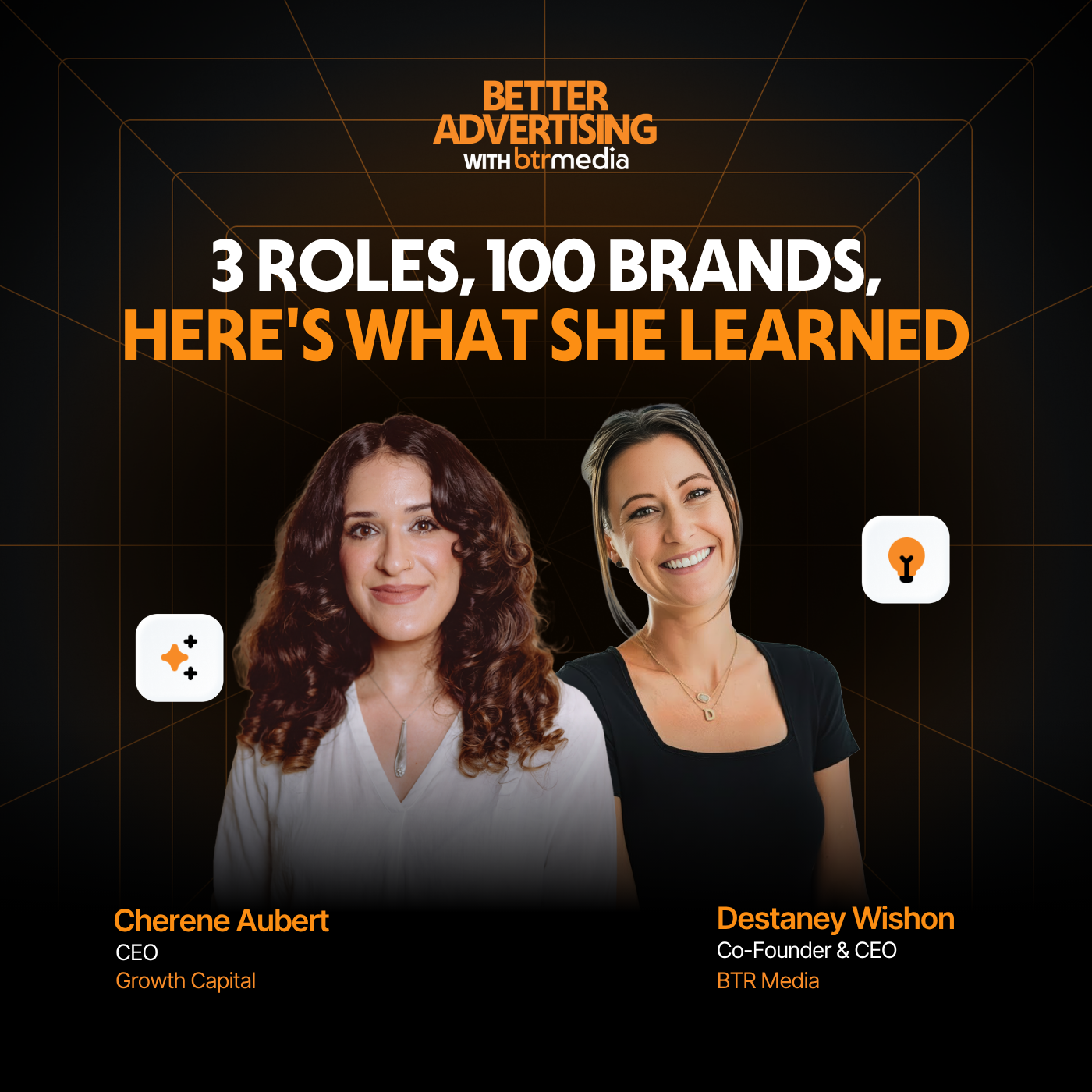
Cherine O'Bare, CEO of Growth Capital, shares her transformative career journey from agency operations to leading high-growth brands like Bobbi and Ilya Beauty, providing deep experience across digital marketing stages. She highlights a critical gap in how brands misalign expectations with growth talent—often bringing in underexperienced leaders or junior agencies without understanding the complexity of digital ecosystems. This misalignment leads to poor strategy, especially in fast-evolving areas like TikTok Shop and Amazon. Cherine emphasizes that brands must adopt a funnel-based media strategy, balancing performance and brand awareness, and avoid over-reliance on one channel. She observes that early-stage brands should focus on core performance channels (like Meta for DTC), while scaling into broader awareness and cross-platform strategies as they mature. Additionally, she stresses the importance of hands-on engagement with platforms—like Amazon ads or Shopify—due to rapid industry changes driven by AI and new features. Cherine also notes that AI tools like Codex and Claws are valuable for strategy and coding, but building custom, maintainable systems is unsustainable. Instead, she advocates for scalable, purpose-built software that democratizes digital capabilities. Finally, she underscores that agile, lean agencies can adapt faster than large, legacy organizations, and that organizational inertia—especially in mid-sized businesses—slows tech adoption. Her key message: brands need pattern recognition, strategic clarity, and real-time operational involvement to achieve sustainable growth in a fragmented, AI-driven marketplace.
(upbeat music)
- Welcome back to Better Advertising with Better Media.
Today I'm exceptionally excited to have on Cherine O'Bare,
the CEO of Growth Capital.
Cherine, you've had an incredible journey.
You've worked agency side, brand side, and now CEO.
Can you give the audience a little bit of insight
into what that journey has looked like?
- Yes, I'm so excited to be here, Destiny.
Thanks for having me.
So, you know, I started at agencies.
I, you know, was fortunate enough to be at the,
I would say, the ramp up of E-Com,
at a software design and dev agency.
And then I got to be at a few different agencies.
So I got to see 100 plus different brands,
different sizes, stages.
And I got to operate the agency in those roles.
So not only driving client strategy,
but building agency teams, building systems.
And I look back at that time in my career,
and I'm like, how valuable was it to like,
not just do marketing, but operate and scale marketing teams
and systems, especially now with a little bit of attention.
Like AI, you have to be a systems thinker.
And if you can systematize your work,
you can scale it and automate it.
And so after my agency career,
I went in the house at a few high growth brands.
So I was at Bobbi as their VP of growth and data.
We went from zero to 102 years,
expanded into all targets, acquired a competitor.
It was insane.
And then I joined Ilya Beauty post acquisition.
So they had exited to the Clarence family office.
And, you know, oversaw their Amazon.
Do you see global advertising, CX data, AI enablement?
Just an amazing, amazing brand.
And I love my time there so much.
It was jumping into the deep end of the beauty industry
and really driving the digital business end to end.
And I like to say that I quit my dream job
to start my own business.
And that's when you know it's like real
that you're giving up something
that you worked your whole career for.
But yeah, I, you know, saw brand struggling
and wanted to fill a gap that I saw existed.
- That is exceptional.
And not to mention the perfect trifecta
before kicking off entrepreneurship.
You had the agency side.
So you saw the systems and the people
and the strain that I think happens with agency growth.
And then you went into the startup world,
which is really just a hundred miles an hour.
You almost don't prioritize the systems near as much
'cause you're moving way too quick and growing way too quick.
And then you went to the post acquisition state,
which is typically a little bit more,
I would say, managing up a little bit more education
and expectation setting.
So you ate all three of them
before kicking off your own thing,
which I think gives you a very good foundation
for being successful in this role.
- Yeah, I feel so blessed to have seen
like so many case studies in e-commerce and digital
and marketing at different stages.
And I think that is what makes me feel like
this is what I'm meant to do.
'Cause I see it.
I see that most brands have the same issue.
They're growing quickly.
They're maturing.
Their goals are becoming more ambitious.
They have numbers to hit that they've never hit before.
And some brands are at the stage
where no one in their industry has even been in that,
you know, seen that before.
And then you have like the growth marketing talent pool,
which is like it's such a new industry.
It's so nascent.
And there aren't that many people who have seen,
you know, that many businesses at different sizes.
And so brands have this kind of misaligned expectation
where they bring in a head of growth
that maybe has been at one or two other brands
before and they're putting unrealistic expectations
on one person to drive the growth of the business.
Or they're bringing in agencies that are made up
of junior people that haven't been in brands before.
And so you kind of have this like this misalignment
of everyone's capabilities and expectations.
And so for me, that was like, oh wow,
you know, I have seen a lot of things,
not everything, I've seen enough.
And I know enough people and when you get, you know,
when you get to a certain part of your growth career,
most people realize, hey, there's a lot of demand
for my skill set and I can probably make a killing,
not working a job and just being a consultant.
And you know, I'm lucky enough to have a lot of amazing people
in my network who are at the stage of their career
who've been in brands, who've been at agencies,
who've seen almost seen it all.
And that's how I assembled my team.
And I think the thesis being, hey, we have experience,
like let's come into brands and actually help them close
the gaps and see the things that they can't see yet
and be those strategic partners.
- I love that.
And I also love the story arc of everyone almost,
thinks they can start as a consultant.
And then the fly will keep spinning
and before you know it, you're an agency owner.
To your point, if you are good at what we do,
there's a lot of opportunity.
And I think you identified the key point.
I think there's definite misalignment and expectations.
Another area we're seeing is a misalignment in education as well.
I feel like especially for a lot of your traditional
brick and mortar brands, your higher growth disruptor brands,
they hit this point where your e-commerce team
can't necessarily run in a silo anymore.
No, we saw it a lot.
I come from Bentonville.
So the Walmart world was, hey, yeah,
you go figure out this e-commerce thing,
start selling on Amazon and see what happens.
Well, this created this silo of e-com.
And now we're at a point where look, those things overlap.
They converge.
Customers are shopping on both platforms at all times,
but the leadership teams and the managing expectations
across leadership teams to e-con teams,
like there's misalignment.
There's misalignment on the education side.
What is row as an incrementality?
Actually have to do with in-store sales.
There's misalignment, I think, to your point on expectations.
Now, that being said, you've worked both sides.
You're now advising brands from the outside
instead of running them in-house.
Is there anything that you can see clearly now
that you're like, yeah, I miss that as an operator
and this is where brands are actually making mistakes
now that you've been able to zoom out a bit?
- It's such a good question
and I feel like the way that we've structured the agency
has been to be more like an integrated team,
which is incredibly unscalable as an agency,
which sometimes I'm like, what am I doing?
I'm like, I'm taking the hard route,
but I'm taking the playbooks that worked as an operator.
And the issues that brands face are so similar
across different brands.
It's like crazy.
Like, oh wow, you guys all have the same issue.
This is great because I figured out a solution
and now I'm trying to systematize it within your business
and that is unscalable.
So I think the thing as an outsider looking in
that is most helpful that I feel like me,
like I look at it as like,
how can I be the best partner to brands?
We just see so many different brands now
and we see what's working across different brands
and like, yeah, you can't share exact tactics
between brands, but you start to gain this pattern recognition
which I love to having at the agency
and which is what I think made me a good brand side operator
is like this pattern recognition
and you start to see like the thing with digital
is it doesn't, you can't just keep repeating what works.
If you repeat what works, everyone does it
and it doesn't work anymore
because the customer gets fatigued.
The ad algorithms get fatigued.
They're craving newness.
And so the benefit is like we get to see what's new
and what's working and what's cutting edge
and you get to really see like how slow moving
some brands are in their decision making
and that's really what prevents growth from happening.
It's like, okay, this brand that's, you know,
you may be a $50 million brand,
but this $20 million brand or this $10 million brand
has unlocked this tactic that you are over complicating
and that's really hard because that's just the nature
of scaling is how do you scale a business
and have infrastructure to support scale
while allowing the business to still be agile and nimble
as it relates to digital and growth.
Absolutely, and you see brands
on both ends of the spectrum to your point.
You have your kind of old school enterprise brands
that move way too slow.
I mean way too slow.
We've been seeing in a lot of conversations
for, you know, TikTok shop integration
and a lot of your kind of OG brands
don't love the thought of just sending out their products
to a bunch of creators and allowing the creators
to create content for them.
You know, their concerns about the negative backlash
or what their brand's going to be associated with.
And that's why.
Why you have brands like Groons or Mary Roons, they're just eating up market share because
they're moving exceptionally quick.
But to your point, there's other side of the spectrum as well.
You have brands that aren't taking the time to come up with their unique edge or competitive
advantage or creative set.
And they're just copying the exact same playbook.
I mean, everyone can scroll LinkedIn and see the comment me's for the, here's the Groons
D to C playbook.
Go copy and paste it.
It's like, one, yes, to your point, the customer fatigue.
No one wants to see that exact same ad over and over again.
But then you talk about like the CPMs.
It's exactly why we saw this struggle in the D to C brand spaces because meta worked
so well.
And then CPMs got a little bit more expensive and they realized, hey, maybe I do need to
diversify to a platform like Amazon where my customer acquisition costs are a little
bit cheaper.
I think that's something that I've seen you post quite a bit about is not just copying
and pasting someone else's style, but actually uniquely identifying your competitive advantage
and figuring out what that edge is before going to market, especially when it comes to
creative.
Yeah, there's so many things that can be transferable between brands and then there's so many things
that are specific to a category or even as an individual brand.
And I mean, Amazon is such a great example.
There are products where you can pour money into surjads on Amazon and you will drive
incrementality all day every day because the customer is there and they're doing discovery.
On Amazon for the first time, it's not a highly considered purchase.
They want to find like the one of the best reviews, the top ranked and the first one and
you win.
And then there are categories like premium beauty is a great example and Amazon has done
a great job building confidence in their premium beauty program and consumers are becoming
more aware that Amazon is a destination for premium beauty.
But the customer, the beauty lover, the beauty fanatic is not doing discovery for the first
time.
On Amazon, it's a completely different shopper that's doing discovery for the first time
for beauty.
So premium beauty brands still have to do their discovery on TikTok and in social and
know that their customer is going to then purchase on Amazon as a path of least resistance.
And eventually it'll get there to where consumers will do discovery for those types of products
for the first time on Amazon.
But like it's still so social and influencer driven.
And so I see brands make this mistake sometimes too where they, they're like, wow, Amazon
is an incredibly profitable channel, it's our most profitable channel.
As a matter of fact, why are we putting any money into paid social or TikTok or meta
and D to C, which is margin dilutive now and it's so hard and expensive and no customer
wants to shop there.
Let's put all of our money into Amazon and it's profitable.
We have a 10 tacos, 10% tacos and then they put a bunch of money into Amazon and the
incremental sales don't come or the daily average sales stays consistent and they're like,
what happened?
What's wrong?
And it's like, well, as we start dropping because what they didn't realize is it was inflated
by branded search driven by off platform.
Exactly.
And even even on the non branded side, like the type of customer that's doing non branded
discovery for, let's say, a concealer may not be ready to buy a $30 or $40 concealer.
The person that's doing discovery for a concealer on Amazon may want to, may be a value
shopper and a convenience shopper, which is not the premium shopper yet.
And so, you know, it's amazing and I think this is where incrementality testing and having
a full funnel media strategy and understanding like where does retail media and marketplace
media buys fit and where does upper funnel consideration stage like influencer content
fit, where does brand content fit.
It's like almost, you know, everyone's looking at it and so siloed, but you going back to
the fundamentals, you need to build a content strategy and a media strategy by funnel and
understand your customer journey and your customer funnel.
And so, yeah, it is, that's the answer to, it's so different for every brand and every
category.
Absolutely.
And to your point, that's where the pattern recognition really comes into play.
When you are working brand side, you're often in a silo of this is what has always worked
best for us.
And you maybe don't pull in those associations.
I think that I love that you just mentioned is the different buckets of marketing.
And I think that's another area where we're seeing teams really struggle.
There's a lot more overlap now than there ever used to be.
And the lines are also blurring quite a bit, you know, Amazon and Walmart and the streaming
TV race and really pushing for more of those budgets.
And then things like AMC make it a little bit tricky where you can now, you know, curate
an audience across upper funnel media, but also with your bottom of the funnel search.
So when you're working with a brand, really, how do you advise them on how they look at
that budget distribution?
When do they focus on pure performance, measurement, when do they focus on brand building?
Of course, again, it is one of those that really just depends.
But do you have any like key guidelines that you like to give brands?
Yeah, it's the billion dollar question and I think incrementality testing does help us
get closer and same with like MMM.
But really not every brand has the budget to invest in those tools yet.
And so this is where it becomes like a little bit art and a little bit science.
And the things that I've seen to be true is there are stages.
So if you're an early stage brand, you're, you know, and you're spending a thousand dollars
a day in media, you're probably not the right time to invest in TV and like brand awareness
media, your direct response media is you're building your brand awareness.
And so your focus should be in the beginning and the early stage if, you know, the best depending
on your sales channel mix, if you're a D to C brand, for example, and you're starting
on meta and that's where the concentration of your budget is.
Some brands have the temptation to like diversify their media investment like that early and
it's like no, don't even think about that.
Like if you're playing in meta and you're in D to C, think about diversifying your content
first, your content should be at different funnel stages.
So don't just have static ads, don't just have conversion ads, like have some influencers,
have some education have, but still run, run it in a meta direct response conversion campaign
and get an understanding of get learnings.
As the brand starts to scale and depending on the category, there is like some framework
around the next best channel based on your category and sales channel mix.
And like using beauty as an example, because that's where, you know, I've spent so much
of my time and career and testing and even other categories, like I would say TikTok is
such an amazing brand awareness channel, again, like you don't need to go into TV right
away, like TikTok is not as good at meta at driving last click direct response conversions
because the user doesn't want to exit the app, but it's a huge like awareness channel.
And then you go one layer deeper and it's TikTok shop, which is this powerful content affiliate
awareness conversion full funnel engine that drives Halo to Amazon and retail and is
an incredibly powerful and then I think as a brand grows and matures, yeah, then you
start to layer in you start to think about, okay, direct response has been a core part
of your strategy.
There are diminishing returns on our customer acquisition cost.
We are on new channel.
We want to grow our awareness as fast as we're growing our distribution.
This is I think a good stage at which brands should start to think about channel diversification,
not even channel diversification, but expanding their media budgets and investing in brand
media more seriously.
Oh, wow, that was a textbook.
Let's crop the episode, drop that on LinkedIn and everyone can walk away with immediate
value.
I don't think you could have answered that better.
That was incredible.
Why, thank you so much.
It takes lots of experience at being, you know, some level of hands-on keyboard to really
understand, I think, that ecosystem, like you need multiple reps before it starts to
click.
We worked with so many brands, I've like this one off, you know, got lucky moments and
they'll like be like, okay, we need to go all in on TikTok shop because of this, but
I think that is exactly what brands really need to focus on and how much it relates to
your overall brand goals and journey as well.
I love that you mentioned the milestones and the stages.
Brands like to, you know, look up to someone that maybe isn't exactly where they should
be or are and they want to try to replicate that system, not realizing the resourcing
that could be difference between the two.
Yeah, and you said something there, like hands-on.
keyboard. As a marketer, as a digital professional, as anyone that
wants to say current, as it relates to the changing ecosystem,
which right now with AI, everything is going to be continued to
change so quickly. 100% believe that you have to stay hands on
keyboard. I will never stop opening the ad accounts. I will never
stop opening the email platforms or the Shopify admin panel.
Once you stop opening the accounts, you start losing touch.
And I mean, like, I am in cloud code. I'm in codex. I'm building
AI agents. The day that you stop experimenting in this industry,
your career starts dying. So I, yeah, I think that is so key.
I love that. And I've always said the same thing. One of my favorite
challenges is still logging in to Amazon ads. And I will challenge
myself to look for all of the new things that I've maybe
been rolled out in the last week. Amazon likes to sneak in little
betas in places. So it's like a personal gamification to go find
it because of the exact same reason. The industry moves so
exceptionally quick that you have to be involved real time passes
and you're gone. Yeah. And I think this is like, there's a lot
of glamour at being at a brand. And when I was at a brand, I was
like, I will never start an agency. That's not what I want to do.
I'm going to start a business. It will never be an agency. I won't
do that. But there is something, you know, that I forgot, which
I loved about my agency career, which is that the like hive mind
network effect learning that happens across so many businesses.
And when you're working along so many peers that have a similar
skill set, you just become so much sharper. And I feel like right
now is the best time ever to be in an agency, especially with how
quickly AI and tech is changing and how much digital advertising
is changing. Like if you're not in it, you lose touch. And I, I
think it's cyclical too, like there are cycles of innovation
or there are periods of stagnation in like what, what worked and
what didn't. And like being at a brand too long is can also be
detrimental to your career, I think. So this is just my PSA
that agencies are awesome. Like I've come around and I'm like,
this is an amazing like business to be in and to learn and a
time to learn. I couldn't agree more. And you know, for those
listening in Shrine and I actually had a big bonding moment
about this ahead of time. And we'll hopefully do another
episode where we talk more about agency life. But we both
worked at, you know, agencies where you saw the strain of
working at agency, high turn stress spread way too thin. And I
think when we went into this, our roles as CEOs of agencies,
those are big prioritization of ours is balancing both. And I
think that's where others and some of our competitors mess up
and it's a competitive advantage for us. But it's like, how do
you do both? How do you take care of your people? How do you grow
when you wake up in a world that always feels like you are
behind? And I think that's something I'm incredibly
passionate about in you are as well, which was really cool to
talk about.
Totally. And it's, you know, the growth, like any kind of
digital advertising or growth agency is, I think, so much
different than other service businesses, because you are on
the hook for delivering outcomes that are business critical.
And you have to balance your own business, your own agency's
growth versus your clients growth. And that can be a
diversion of focus. And so for me, the way that I want those
goals to be aligned is like, like what the brand achieves,
what what our clients achieve is our goal. That's our main
goal. Because if the client achieves, if we're just working to
improve and grow the clients business, like by default, our
business will grow, we'll get great referrals will, you know,
we'll keep our clients like that's the most important thing.
And I think when you lose sight of that and you focus on, how do
I grow this agency business like it's scale it into oblivion,
you lose that quality that you're giving to your clients,
which is like the invaluable thing that they're paying for.
So I think there's like just always going to be a natural
tension there.
Absolutely. I could not agree more. Now I know my listeners are
begging for me to ask you this question. So I'm going to leave
it as a little bit of a bonus codex and deep diving into
cloth and all of the things with AI, do you have any bold
predictions or opinions when it comes to AI utilization, whether
on the agency side or on the brand side?
I have quite a few. I mean, I think codex is amazing right now
for code. I think it's winning for coding. I think clawed is really
great as it relates to planning and strategy. And so I personally
use them both. I have not fallen into the camp that one is
better than the other. I think they have their unique strengths.
And I'm like, I'm going to use them both as much as I can
until I get priced out at some point. But I hear this a lot.
I hear the software is dead argument a lot from people that
are like very deep in AI. And there is a potential reality that
software will die. But I think like my big take right now is
that software is not dead. As a matter of fact, like there's a
bigger need for new software than ever before. And you know,
you I saw it firsthand in Ecom. Like when Ecom started, there
was a ton of open source software and magenta was the core
platform and then demand where and you know, all of these
kind of open source software where you can build these amazing
custom sites and have these huge dev teams and everyone can
build whatever they wanted. It was like, you could build
whatever you want. It's amazing. And then Shopify came along and
was like, hey, we actually like kind of simplified it. And we
just like pre-built what you need. And then there's a whole
network of apps that exist that can plug into our system. And
and they pre-built everything else that you need. And you
actually don't need these major big tech teams because the
software is the solution. And I think with AI, we're kind of
going into this like, I don't need it. I don't need the
software anymore. I could just code I could vibe code my own
version of it this platform. And then everyone is like, yeah,
there's like a period where everyone does that. And then
they're like, Oh, wow, this this sucks to maintain. So I'm
going to bring in an AI engineer or an AI expert and they're
going to maintain it. And then everyone has these like
Frankenstein systems that they're building. And none of it
is replicable or scalable. And then someone's going to build a
software that does it like 10 times better and their core
focus is maintaining and building that piece of the stack. And I
think like small businesses starting out with AI, building
their own infrastructure is an amazing way to get immediate
leverage and like keep your op X low. But there will be there
aren't going to be better solutions that are scalable that
many people can use without having the time of building and
maintaining that I think will still exist. I think it's a really great middle ground of I think
it's a democratizing engineering and time to products quite
a bit. So your softwares, which have always been a little bit
heavy when it came to new releases and customizations to
your point are going to have that flexibility to provide more
customization similar to what an agency can provide. On the
flip side to your point, all of these smaller companies have
an opportunity to really have a competitive advantage in this
area. So it's a fun space to be in. Totally. And I think we
also underestimate how long it takes businesses to adapt
change and they don't even need to be behemoth billion dollar
legacy corporations. It's like even the businesses that have
100 employees and are doing 100 million. It's going to take
them so long to adopt across their whole organization new
tech. And that's where software and service providers come in
and help. Absolutely. I'm looking up this stat because I
reminded me of it. I cannot remember what it is. But it was
like this stat around organizational change and how long it
takes like this waterfall effect to actually impact the whole
org. And this is absolutely something that we're seeing,
like I consider it one of our biggest advantages that we are
small lean and flexible because now we're going to hop on it
incredibly quickly. Like our engineering team has been trained
since day one how to implement. But much larger agencies like
you have your pre existing systems that need to be kind of
revamped and so many other elements. And that is definitely
something that needs to be considered not to mention like the
human elements. Not many people can move at the rate of change
that I think we do in the commerce space. Like we are very
accustomed with the retail media networks of the retailers
pushing change on a weekly basis almost. You start expanding
that out into other industries. They're not accustomed to
that. So trying to keep up with something like AI can be
exhausting and maybe an unrealistic expectation as well.
Yeah, exactly. And there's going to be a new generation of
experts that come up and make amazing careers out of it.
Absolutely. Well, we are close to time. Sure. And this has
been an amazing episode. Thank you so much for joining. Do
you want to just give a shout out?
out to any of your personal socials or your growth capital
size so people know where to find and reach out to you?
- Sure, I would love to.
You can find me on LinkedIn from my very professional takes.
And then you can go to Twitter to find me
for ridiculous takes and questionable value.
And then if you want to learn more about the work
that we're doing, you can find us at growthcapital.co.
I love it. Thank you so much for joining Charine.
- Thank you, Destiny.
I loved the conversation.
(upbeat music)
Podcast Summary
Key Points:
Cherine O'Bare’s diverse career—from agencies to brand leadership—has given her deep system-level insights into marketing scalability, team operations, and digital growth across stages.
She identifies a critical misalignment in brand expectations
A key strategic insight is that brands must understand their customer journey by funnel, balancing performance marketing with brand awareness, and avoid siloed thinking, especially in platforms like Amazon and TikTok.
Summary:
Cherine O'Bare, CEO of Growth Capital, shares her transformative career journey from agency operations to leading high-growth brands like Bobbi and Ilya Beauty, providing deep experience across digital marketing stages. She highlights a critical gap in how brands misalign expectations with growth talent—often bringing in underexperienced leaders or junior agencies without understanding the complexity of digital ecosystems. This misalignment leads to poor strategy, especially in fast-evolving areas like TikTok Shop and Amazon.
Cherine emphasizes that brands must adopt a funnel-based media strategy, balancing performance and brand awareness, and avoid over-reliance on one channel. She observes that early-stage brands should focus on core performance channels (like Meta for DTC), while scaling into broader awareness and cross-platform strategies as they mature. Additionally, she stresses the importance of hands-on engagement with platforms—like Amazon ads or Shopify—due to rapid industry changes driven by AI and new features.
Cherine also notes that AI tools like Codex and Claws are valuable for strategy and coding, but building custom, maintainable systems is unsustainable. Instead, she advocates for scalable, purpose-built software that democratizes digital capabilities. Finally, she underscores that agile, lean agencies can adapt faster than large, legacy organizations, and that organizational inertia—especially in mid-sized businesses—slows tech adoption.
Her key message: brands need pattern recognition, strategic clarity, and real-time operational involvement to achieve sustainable growth in a fragmented, AI-driven marketplace.
FAQs
She started at agencies, where she gained experience in e-commerce, brand strategy, and team building. She then moved into high-growth brands as VP of growth and data, working at companies like Bobbi and Ilya Beauty, before founding Growth Capital.
Brands often bring in growth leaders with limited experience and set unrealistic expectations, while agencies may rely on junior staff without brand insight, leading to a gap between capabilities and goals.
Early-stage brands should focus on performance channels like Meta for DTC, while scaling to include brand awareness channels like TikTok and TikTok Shop as they grow, ensuring content spans different funnel stages.
Amazon drives discovery and conversions for value-focused shoppers, while TikTok is better for brand awareness and discovery for premium beauty audiences who make purchases later via Amazon.
She believes that stopping hands-on work—like checking ad platforms—leads to losing real-time insights, and that ongoing experimentation is essential to keep up with rapid industry changes.
Her agency operates as an integrated team focused on pattern recognition and strategic partnerships, offering tailored solutions based on observed trends across brands rather than one-size-fits-all tactics.
Chat with AI
Loading...
Pro features
Go deeper with this episode
Unlock creator-grade tools that turn any transcript into show notes and subtitle files.
 PodcastTranscript AI