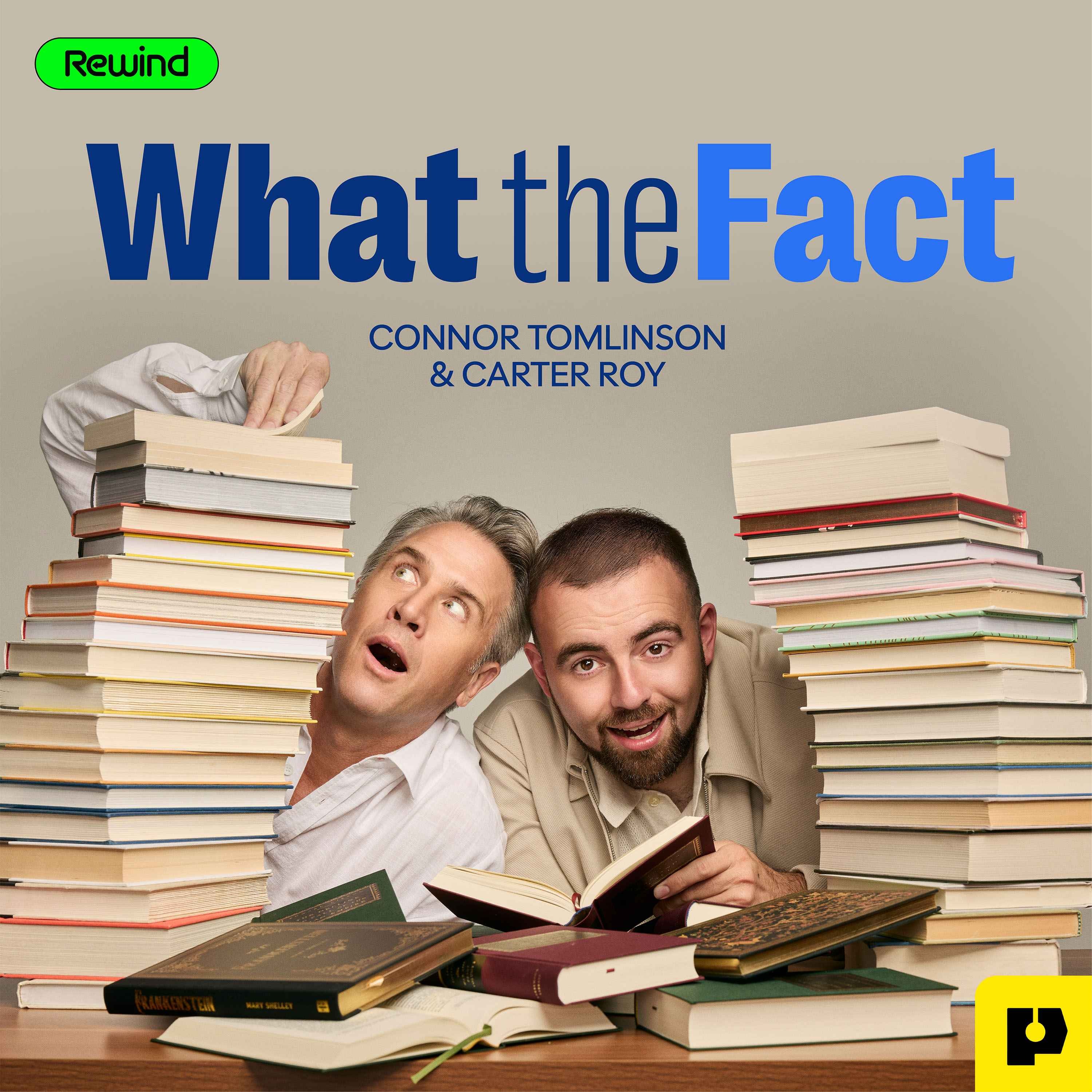
The documentary explores three iconic films that nearly failed and instead became cultural milestones due to unexpected crises. *Back to the Future* was rejected by over 40 studios, dismissed by Disney for a perceived incest scene, and almost died when Michael J. Fox was replaced—only to be saved by a last-minute recast. *Jaws* faced disaster when mechanical sharks malfunctioned in the ocean, forcing Steven Spielberg to rely on suspense and sound design, making the unseen shark more terrifying and shaping the modern summer blockbuster. *Apocalypse Now* endured a typhoon, a lead actor’s heart attack, a director’s near-suicidal breakdown, and Marlon Brando’s unscripted, mysterious performance—all of which became integral to its raw, psychological depth. Despite the chaos, each film evolved through adversity, proving that failure and crisis can birth artistic greatness. The show concludes that *Apocalypse Now* is the most staggering near-miss, as it transformed personal and professional breakdowns into a masterpiece about madness and the jungle. Ultimately, the central lesson is that perseverance, vision, and embracing chaos lead to unforgettable cinematic achievements. These stories highlight how true innovation often emerges not from perfection, but from resilience in the face of disaster.
(upbeat music) - You're only a failure if you tell yourself you are. What do we do when we fall down? We pick ourselves up again. I don't know about you, Mr. Spielberg. But I'm, I'm going to pick myself up. What are you gonna do? - If you gave him that speech back then, that might be why Jaws got made and led to everything he's meant since. (upbeat music) (upbeat music) - Hi and welcome to What The Fact, the show that reveals the wildest true facts ever recorded and tells you the whole story behind them. I'm Connor, your film buff friend, and I'm about to wreck the phrase, they don't make them like they used to, because they very nearly didn't make these at all. And I'm Carter Roy. I will be your guide through history. What happened, how it happened, and why it happened? Like and subscribe on YouTube so you never miss an episode. Today, we're tackling three of the most famous films ever made. Each one was a single bad day away from never being made. We're gonna tell you everything. How each one nearly died and the strange thing that ended up saving it. And at the very end, Conner and I vote on which one we are luckiest to still have. - Okay, Conner, do you have a favorite genre or era of movies? - Oh, I have several favorite genres, fantasy, sci-fi, western, action. And but my favorite era of movies might just be the 1980s. - Ah, yes, the near and dear to my heart as well. Do you have a favorite movie from the '80s? - Actually, I have several. - Okay, hit me. - Back to the future, Gremlins ET. Oh, the Goonies. - Oh, yeah. - Ooh, Revenge of the Nerds. Weird science fast times at Richmont. Hi, the list goes on. - Let's just go on. I watched Weird Science so many times as a kid. I can't even. - Yeah, yeah. - All right, let's start with our first one. - Do you know which movie was turned down by Hollywood more than 40 times? Then fired its leading man six weeks into filming and re-shot almost the entire thing and still became one of the most beloved films ever made. That movie is one of my personal favorites back to the future. (imitates music) - Amazing. And do you remember the first time you saw it? - Well, the first official time was when I was with my mom, and we saw it at this thing called Screen on the Green. Okay, so picture two young screenwriters in the early 1980s. Robert's mechus and his writing partner, Bob Gale. They've written a time travel comedy about a teenager who accidentally drives a car into the past and has to make sure his own parents fall in love or else he'll erase himself from existence. We know it now as a masterpiece. At the time, every studio in Hollywood looked at it and passed by Gale's own count. They were rejected more than 40 times. Some studios said no more than once. That's a lot of rejection too. Can you imagine getting rejected for the same project 40 times? - I mean, take all the great film directors Spike Lee, Martin Scorsese, Francis Ford Coppola, Steven Spielberg, my favorite. It, and of course George Lucas. - Yes. - They never let themselves get shut down. - That's right. I mean, that's kind of it. Almost forgot James Cameron. - Oh, yes. - Of all, no, and they all have obstacles they had to push through in the same way. - In fact, did you know that the first Terminator movie was actually filmed illegally? - No, I didn't know that. - James Cameron was way over budget and had to take out a lot of out-of-pocket expenses and use unauthorized equipment. - It's amazing, because that movie, of course, is iconic all the time. - All the best movies are. It's almost a pattern. Goodwill Hunting was rejected everywhere before Miramax picked it up. Get this. ET was turned down by Columbia Pictures who called it a wimpy version of Close Encounters. Columbia later called it one of the worst decisions they ever made. And quick thing, that was actually true with K-pop Demon Hunters when it was first released. It was originally going to have a theatrical release, but Sony thought it would fail miserably. So Netflix took in the whole script. It dropped it on their streaming site and it has become a global phenomenon. Catapulting Netflix, straight to the top, in my opinion. Bob Gale has also said in interviews that the idea for the film came from finding his father's high school yearbook and wondering what it would have been like to meet his dad as a teenager. The whole movie grew out of one personal thought. In fact, if you don't mind me saying, it's that movie that really makes me appreciate my family a whole lot more. It makes me think of, what was my grandma like when she was a teenager? What did my mom do when she was in high school? - Totally, I made it real to actually go visit your ancestors. - What was it like for my dad growing up in England? - Yeah. - Amazing that it turned that on for you. Half the studios at the time said the same thing, that time travel movies don't make money. And the other half didn't like the tone of the script. They said the movie was too sweet. Now, this was the era of raunchy, r-rated teen comedies like porkeys and executives wanted something dirtier. (laughing) Now, what are your thoughts on raunchy versus too nice? I guess there's room for both in the world of film. I mean, the two night he swans, those are more for romantic nights with your partner or a family friendly thing. Raunchy's morphs of something you watch with your beer buddies. - That's right. - But something in between, like something in between those things, that's the kind of movie I enjoy. Something balanced. - Yeah. - Little something for all parts of ourselves. - Exactly. - So, finally, after hearing, why don't you take it to Disney enough times? They give it a try. It's family friendly, right, perfect home. And the executive reads it and is horrified because, spoiler alert, the teenage mom, back in the past, develops a crush on her own son, who she, of course, doesn't recognize yet. And according to Bob Gale, Disney's response was essentially, are you insane? This is a movie about incest. We're Disney, we don't do that. How absurd, er, I mean, think about it. Your mom sees you has no idea who you are because you don't even exist yet. - Completely. - But I'm just glad Universal chose to pick it up. - Yeah, that's a good thing somebody did. So that's the situation they find themselves in. It's too tame for the Raunchy studios, too edgy for Disney and time travel doesn't sell from everyone else. So the movie is dead. What finally changed it? No two things. So Marcus directed a movie called "Romancing the Stone" in 1984. It was a hit and all of a sudden, he was a director, people wanted to work with. And second, he had a very powerful friend in his corner, Steven Spielberg, who in my opinion, is one of the greatest film directors of all time. - Yeah, I think almost. - Who made some of the best movies of all time. - Oh yeah. - I mean, what are your top three Spielberg movies? My three favorite Steven Spielberg movies are Jurassic Park, Indiana Jones, and Jaws. Spoiler, we might get to that one later. So Steven Spielberg who gets his own moment in this episode. Now with Spielberg producing Universal, finally said yes. Okay, Connor, have you seen "Romancing the Stone"? Can't say that I have as a kid, because I was 11 when I watched it, it was awesome. Like it's not quite Indiana Jones level, but it's like adventurous swashbuckling. It's pretty great. So the movie is finally being made. Crisis over, right? - Well, yeah. - Except there is one second disaster that hits, and it's the one almost nobody's not coming, because when back to the future started filming, Marty McFly was not played by Michael J. Fox. Instead, he was played by Eric Stoltz. - And Fox was the first choice all along. The problem was that he was already the star of a hit sitcom, Family Ties. And its creator, Gary David Goldberg, wouldn't release him. Fox didn't even know the offer existed. Goldberg and Spielberg handled it between themselves. And Fox only heard about the part after it had already been turned down on his behalf. So the part went to a serious, well-regarded young, dramatic actor, as you said, Eric Stoltz. But when they started shooting, everyone realized something was off. Fox was an intense, deeply committed, method actor. And he played Marty completely straight, but back to the future is a comedy. - Yeah. - Yeah. So you can imagine that role being played dead seriously, doesn't quite work. - And what's your take on, like, method acting in general? Can I be taken too far? Is it a good thing? - That depends on your definition of method. I mean, now, in my opinion, method actor means highly professional, like, you take the act seriously, but you do know how to be lenient. - Mm-hmm. - Yeah, I feel like it gets a bad rep when people. people tip past leniency when they started to take it to another level. It's not about the work, but maybe about the work. Like when you get intimidated, you'll like do something fun. I'm like, you might laugh nervously, I guess. Is that one? Did I just laugh nervously? I don't know. Yeah, like Daniel DeLewis is famous for maybe the most famous method actor. Or let's see, last of the Mohicans, gangs of New York, Lincoln. Yeah. My left foot. Oh, the crucible. Yeah. Phantom Threddy just didn't. I mean, I love his work. So during an entire shoot of Lincoln, Daniel DeLewis sent text to his fellow cast members in 19th century language, four score and seven years ago, Robert DeLewis gained 60 pounds for raging bull, playing Jake Lamata, and training with the real Lamata, who said afterwards that DeLewis could have fought professionally. He also got a real cab license before his role in taxi driver and drove shifts picking up real passenger. So both on screen and in real life, Robert DeLewis a taxi driver. Are you talking to me? I'm talking to you. There's no one else here. So you got to be talking to me. Yeah. So Zemeckis makes one of the most terrifying calls a director can make. Six weeks into filming, he fires his leading man and reshoots almost the entire movie. It's one of the most expensive recastings in Hollywood history. And this time, Spielberg went back to Goldberg himself and talked him into it. So for about three months, Fox shot family ties during the day, got driven across town and shot back to the future at night, barely sleeping, 20 hour days. Cranky. Yeah. Do you think you could shoot a full TV show all day and a movie all night? I'd be pretty cranky when I woke up. Well, you wouldn't even wake up, I guess you'd never go to sleep, you'd just be cranky all the time. Unfortunately, Fox was diagnosed with Parkinson's disease in 1991, just six years after back to the future came out. He was 29 and at the time he kept the diagnosis private for seven years while continuing to work. He has since founded the Michael J Fox foundation, which has raised more than $2 billion for Parkinson's research. And that is a cause very dear to my heart because my grandmother, a good woman, was diagnosed with Parkinson's a while back and she's in the end stages of it. No, no, she's fine. She's very fine and she's all right, it really is taking a lot out of her. Yeah, it's a hard disease and it's amazing that his foundation has given so much help for research for it. Well, here's the rule I want to keep in mind today when it comes to the films because it comes back with all three of these movies. The disaster that nearly killed back to the future that panic inducing budget torching recast six weeks in is the exact reason the movie works because the thing everyone remembers about back to the future, the reason it's beloved and not just clever is Michael J. Fox. His charm is the whole movie. The catastrophe handed them the one ingredient they couldn't live without. So back to the future, almost never got made at all, but at least once it got the green light, they got to actually finish it. Whereas our next movie got made, got the green light, started shooting and then nearly fell apart in the middle of the ocean. Do you know which blockbuster nearly ended its director's career before it even started because the mechanical shark refused to work, the shot ran three times over schedule and the studio was one bad day away from shutting the whole thing down. That movie is jaws jaws became the highest grossing movie ever made up to that point. And it's the film we credit with creating the summer blockbuster, yeah, it totally changed the cinema landscape. So let's set the scene. This year is 1974, Spielberg is just 27, yes, the same Spielberg who's going to save back to the future a decade later. And for those of you out there who are sonic the hedgehog fans, you would know, 1974 was the worst year of shadow the hedgehog's life. Really? I didn't know that. Yeah. What happened? What didn't happen? He lost his home his best friend and got frozen for 50 years. And they almost didn't make jaws, it really would have been a bad year then. Yeah. So right now in 1974, he's practically nobody with exactly one theatrical feature to his name. A 1974 film called The Sugarland Express that had just flopped at the box office. And he's been handed a huge studio production based on that best selling shark novel. The plan is a tidy 55 day shoot. Steven Spielberg was my age when he first became a director. Yeah. And he directed one, actually, he's 27 when he's doing jobs and that's basically a second. Who knows? Yeah. Maybe aside from acting, I might be directing someday. It seems like maybe headed that way. Yeah. Yeah. What kind of movie would you want to direct if you could do your first movie to direct? Well, obviously I would follow in the footsteps of my favorite directors. Maybe start with teen films, maybe go into family movie, he's an eventually sci-fi fantasy or action movies. Yeah. I'm not so much a horror guy. And Spielberg makes one fateful decision that basically dooms the entire production. The studio way of doing things was a controlled tank on a lot. And nobody had attempted to shoot this technically demanding out on the actual ocean. Spielberg wanted it to look real. So he insisted on filming on the actual Atlantic off Martha's Vineyard. That's actually a very smart decision looking back. I mean, in film studios, pay premium for authenticity completely. When I think of Lord of the Rings, I feel like that's partly what makes it so great. You have the CGI with the monsters and battles, but the battle. You got to make it real. You got to make it real because authenticity, reality, that's what sells the most tickets in popcorn. That's exactly right. See? You can be a director. You already know it. I learned that from Jack Black. Okay. Another good hero. It turns out does not care about your shooting and schedule, because the ocean's unpredictable. Completely. The weather, the winds, well, and we'll see a few more things about it as well. She's a cruel sea carder. I mean, it's Poseidon and Neptune, right? You never know. Actually, they're the same God, just with different Neptune is just what the Romans call Poseidon. Okay. So God of the sea, either way. Yeah. And King of Atlantis. It ever existed. It turns out the actor who played Alex Kittner, he actually owns a sandwich place, a bar on Martha's vineyard. Really? I know, because I actually got a comment on my YouTube channel from him. That's amazing. Is it like a lobster chat kind of place like fish sandwiches, maybe? Well, it's like a deli. Okay. Now, the reason Spielberg shows Martha's vineyard was because of the shallow water. His explanation was that it was the only place on the east coast where he could go 12 miles out and still have a sandy bottom, only about 30 feet down for the shark rig. The irony is that the shallow water that made it practical for filming also made it genuinely plausible that a massive shark could be hunted close to the shore. And speaking of that massive shark, that is meant to be the star of the movie, the shark. And it's played by three enormous mechanical sharks, 25 feet long that the crew nicknamed Bruce after Steven Spielberg's lawyer. I wonder if when the lawyer found out he was like, really, you named the shark after me? That usually he would, I think of lawyers, I think of no offense, mosquitoes, the mosquito Bruce. That could be a whole other series. And here is the fatal flaw. Bruce was built and tested in fresh water. The account for what salt water would do to him. So the moment they get him out in the ocean, he mal functions constantly. He sinks, his skin bloats, his jaws won't open. That's pretty key. There's a famous phrase that haunted the entire production day after day. The crew would radio in the same four dreaded words, the sharks not working. I bet that made Spielberg pretty anxious. You know, Rexie, the T-Rex and Jurassic Park, well, her name's Roberta, but most people gave her the nickname Rexie. I think it's more fitting. Anyway, Rexie, the T-Rex and Jurassic Park, another Spielberg movie soaked up rainwater on set and would start shuddering and moving on her own, producer Kathleen Kennedy who some of you may know or worked on several Star Wars projects, said it would come alive and scare the crew half to death mid-launch. Good girl, Rexie. Way to go, Rexie. Also, I think it's pretty, isn't the shark in finding Nemo named Bruce? Yes, actually. So the production spirals from there, boats take on water mid-scene, the weather turns as happens on the ocean, they're rewriting the script as they shoot it. The 50s.
55 day schedule balloons to 159 days, so roughly 100 days over, and the budget nearly triples from three and a half million to about nine, and the island turns on them. The story everyone tells is that the locals pelted Spielberg's rented cottage with fish guts. In fact, that became part of the plot line of jaws. Amity Island is a summer town that needs summer dollars unless they want to be on welfare for the whole winter. That's right. That's right. So the town obviously doesn't like them there. So the studio is just about ready to pull the plug and shut the whole thing down. Everyone around Spielberg is telling him this movie is a disaster and that he's finished a liability who will never be hired again. And here's the thing, he believed it. He said that since then, he generally thought his career was over right there in his 20s. Get this one producer basically told him to keep shooting until somebody physically took the film out of his hands. Who was this producer? I don't know, but I appreciate that they have his back, right? Because they're basically being like, they're going to try to shut you down. You just keep at it. You keep at it. Like, that's a good producer. What if I went back in time and what if that producer was me? That would be crazy. That would be crazy. That would be crazy. So you would go to Spielberg and you'd be like, what would you say to him? Steve and what did you expect? These were always going to get worse before they got better. You're still a young man. You have a promising future ahead of you. But you're not going to see that future. If you just give up, if you're only a failure, if you tell yourself you are, what do we do when we fall down? Spielberg. But I'm going to pick myself up. What are you going to do? If you gave him that speech back then, that might be why Jaws got made and led to everything he's made since. And now, of course, here's the twist. Today's rule is the disaster is what made the movie great because that broken down shark is the reason Jaws is a masterpiece. So think about it. Spielberg couldn't show the shark because it was always broken. So instead, he had to imply it, a thin, here, a shadow, that yellow barrel or two or three, getting dragged into the water. And of course, those two iconic notes of John William's score, he scared you with what you couldn't see. I'm pretty sure they call it a four-four-string ostinato and D minor. Every sailor knows that too means death. Really? Is that what it's called? I did not know that. Yes. It's harrowing just to hear it. And when the music gets faster, you know the danger is getting closer. So he scared you with what you couldn't see. And Spielberg has set it himself for 50 years. If the shark had actually worked, the movie would have been nowhere near as scary. Or as good. Yeah. Completely. And I think that's like a rule that a lot of filmmakers came to understand and use, like show less and create more feeling in the audience rather than showing more. So what movie is scared you more by not showing the monster? Childs play. We don't actually see the Chuck E's true self until he literally comes a lie in Andy's mother's hands and attacks her. Yeah, I'm sure that would scare anyone. Aliens was the first movie I ever watched, though I actually did a jump scare. I was like, a kid in the theater, I'll never forget to add skittles when the alien hits that tube. It was like, I literally jumped and threw all my skittles. You know what I believe that every time Ridley Scott makes a new movie, God flips a coin. Yeah. To see if it's good or bad or to see if it's good or bad. It's like the picture that is God sitting on his throne up in heaven, Michael, the archangel walks in and says, God, this just in from earth, Ridley Scott's making a new movie and God's probably all well time for the coin toss and that broken shark movie is the one we call the first summer blockbuster staying number one for 14 straight weeks. So back to the future, almost didn't get made, jaws almost didn't survive being made. Our third and final movie tonight is the one that almost destroyed the people who made it. Okay, Connor, I'm going to describe it and you're going to guess. Okay. Maybe one I know. I think you probably do. Okay, here's the setup for our last movie, see if you can guess what it is. Okay. Do you know which movie survived a typhoon that destroyed its sets, a leading man's heart attack at 36, a director who threatened suicide and mortgaged everything he owned and then premiered at the biggest film festival on earth before it was even finished. Well, movie I'm describing, that's a tough one. Is it the Shawshank redemption? No. Oh, no, no, not this one, amazing movie. Let's see. This one also has an aging iconic movie star who shows up on set a little overweight with a shaved head, Marlon Brando. Yes. This shows up on this set, which is takes place in Vietnam, apocalypse now. So Coppola was already at the peak of his powers. He just made the Godfather, its sequel and the conversation, arguably the greatest run any directors ever had in sitting in his own company's files was a script built on the novella Heart of Darkness, which follows a man traveling deep up a jungle river to find another man who has completely lost his mind. Here's the part, almost everyone gets wrong. The Vietnam idea was not Coppola's. John Millius wrote it in 1969 after a professor challenged his film school class to crack Heart of Darkness and the director originally attached to it was George Lucas. Yeah. George Lucas. Yeah. The creator of Star Wars. In fact, yeah, Lucas then left to go make Star Wars and Coppola's company owned the script. So he made it himself. It was so ambitious and so risky that when the studios hesitated, Coppola did something close to insane. He largely financed it himself, his own money, his own name, everything he had online. That was quite the gamble. Complete gamble. And he's huge at this point. So like putting his reputation, his finance, everything is God on the line. And interesting thing about George Lucas and Star Wars. When Star Wars first came out, everyone thought it would flop. So you can imagine the world's surprise when it later became a global phenomena completely. And I think speaking of movie scores, there was a similar reaction. They screened Star Wars without the soundtrack and everyone was like, oh no, it's not going to be good. And then they're like, no, no, wait till you hear it with the soundtrack. And that's what made it iconic. Thank God for John William. Completely. So the plan was a $12 million shoot that would wrap up in a few months. He actually got was a 238 day shoot, spent over 16 months that cost more than $30 million in generated over 200 hours of footage. And that's before we even get to what happened out there. Making movies is never easy. You've got to have a lot of investors in on this as well. I mean, making movies is big business. It's an art as well as a business. Yeah, it takes both together. I've been saying, you sound practically like a director. You already know all the costs that go along with it. Trust me. I know the importance of a good movie. The lead role goes first to Harvey Kytel, who gets replaced inside the first couple of weeks. In comes Martin Sheen. He replaced Harvey Kytel. Yeah, yeah. And with Martin Sheen, right? Another replacement mid shoot. And a few months into the shoot on August 3rd, 1976, they filmed the now famous opening scene, his character alone in a hotel room having a drunk and breakdown, except there was no scene. Coppola had thrown out the scripted opening, so there was no dialogue on the page. And Sheen wasn't really acting. He was genuinely, dangerously drunk. He punches a mirror for real, cuts his hand open and starts bleeding, and he insists on keeping going. And that's real blood in the movie. And it was on his 36th birthday. Oh, there were other actors who have gotten hurt on set. That's part of what makes making movies pretty dangerous. Did you know when filming the two towers, Vigo Mortensen, who plays Eragon and broke two toes kicking an Urukai helmet, and that agonized scream in the scene was the real thing. Remember when Eragon Legolas and Gimli find the piled corpses of the Urukai? Yeah, yeah. Totally. And a good thing too, because believe me, orcs are monsters, and there's nothing in them worth sparing. No. Learn that. And I remember that scream, right? That's right before he sees where they may have moved on the ground toward the forest. Fankhorn forest. Yes. That's right. It's already off to a rough start, and then nature shows up. Typhoon Olga tears through the Philippines where they're filming and destroys the sets. The production shuts down for about two months, and everything has to be rebuilt from scratch. That is two of our three movies, nearly killed by the weather. I mean, the ocean drowning jaws, and now a typhoon leveling this one, yeah, making movies is no picnic. No. And that's, I mean, that's what. studio is always like, no, let's do it inside. But then the great directors like, no, we need to do where it's real. Now, Marlon Brando arrives to play the villain, Colonel Kurtz. Coppola is paying him $3 million and Brando shows up, something like 90 pounds overweight. And this is the part that stuns me. He hadn't read the script, not bad for $3 million. Coppola has to shut down production for a week just to sit with him and rebuild the character on the spot. Then Brando turns up to set with his head shaved and refuses to be filmed except in shadow dressed all in black to hide his size. And here's the twist. That accidental choice makes Kurtz much more mysterious and more terrifying than anything that they'd actually planned. I don't know if this is true, but I heard Marlon Brando ate a lot of pork in his life. Okay. Yeah. In the original Superman movie, where he plays Joel, he's almost unrecognizable to me. And then there's the story like the Godfather of the audition. Did he put cotton balls in his mouth? I think so. Yeah. I think it was like Coppola was like, how would you do it in his grave? Or maybe his orange peels are caught in a convert, stuffs his mouth and like, embeds it on the spot. Yeah. Yeah. What does he sound like? He's gonna make him an awfully can't refuse. Yeah. And then that's not the worst because the worst comes on March 5th, 1977. Martin Sheen, 36 years old, has a heart attack out in the jungle in the middle of the night. He's alone. His wife has gone to Manila for the weekend. And he crawls a quarter of a mile to reach help. Oh my god. Yeah. Genuinely believing that he's dying. He's airlifted to a hospital and he isn't back on set until April 19th. And here's how fragile this production was. They were so afraid the movie would collapse if the truth got out that Coppola and Sheen both put out the story that it was only heatstroke. A man nearly died in the movie covered it up to keep the show going. All the more reason to stay. Hey, active. Yeah. And as far as Coppola, the director, he is coming apart at the same time. He's near a near total nervous collapse. Yeah, nervous breakdown. I can only imagine he threatens to end his own life more than once. Yeah, loses 100 pounds because every dollar of his own is writing on this and it cans in 1979, Coppola said it himself. They had too much money, too much equipment, too many people and in his words, little by little, we went insane. Now, he also says something that gets right to the heart of it. His movie isn't about Vietnam. It is Vietnam. And as we've clearly talked about Steven Spielberg, had his bad days, too, when you're a director or a man with a dream, getting told you're finished, is bad enough actually believing it makes it even worse. Yes, completely. If you could go back in time and talk to Coppola during Apocalypse Now, what would you tell him? Let me share some genius words of advice with you. It is when we reach our lowest point. We become free and open to the greatest change. Try seeing it all from a different angle. Amazing. Yeah. And he found that somewhere out there because he did push through and get it done and obviously I have seen in one too many great men pursue their dreams only to give them up. Yeah, push through. And now for the ending, the final test for the movie's survival, Coppola can't finish the film in time. So he makes one final gamble pushes through. He takes the unfinished version to the 1979 Cannes Film Festival, one of the most prestigious festivals on the planet and shows it labeled as a work in progress. It was the first unfinished film ever allowed to compete. He's screening his messy, incomplete cut for the toughest critics in the world and it wins. It takes home the Palm D'Or, the festival's highest prize, sharing it that year with the German film, the tin drum. The finished cut wouldn't reach theaters for another three months. In fact, the con cut ran 139 minutes with no credits. They were not finished. The version that reached theaters three months later was eight minutes longer and a completely different film. And here's our rule one last time and it's the darkest version of it. With the other two movies, the disaster nearly killed the film but accidentally made it better. With the pucleps now, it goes further. They chaos didn't get in the way of the movie. The chaos became the movie, a film about people descending into madness in a jungle made by people descending in a madness in a jungle. The disaster and the masterpiece are one and the same. Apucleps now with that in mind has probably got to be, well, aside from the godfather, Francis Ford Coppola's magnum opus. Yeah, it's and you talk about like life imitating our, our imitating life. Like it's happening simultaneously. They're making a story about a journey into the jungle, losing your mind. And meanwhile, that's just another one of the things I love about movie so much. It's the effort, the time it takes to make the, to give the world something that's going to drive them out of their minds. It's so cool too, because you think of Heart of Darkness, somebody originally writes the novel, then somebody decides to turn into a screenplay but set somewhere else. Somebody decides to make a movie. There ends up being a movie happening within the movie in a documentary about the movie like all these stories that come out of somebody wanting to tell a story. Three movies, three near death experiences for those movies, back to the future, jaws, apocalypse now. And now we settle it. But the vote tonight is not which movie is best. They're all great. Yeah, they're all excellent, completely. Which near miss is the most staggering. The movie we are luckiest to still have. Okay, Connor, I'll let you go first and then I'll make my case. Honestly, after all this, I would have to say apocalypse now because that pushed Coppola, his cast and his crew to their absolute breaking points. And yet out of those breaking points came a masterpiece completely. And even I think Lawrence Fishburn was like a teenager on that movie. He was like 17. So this is his first formative acting. I love Lawrence Fishburn. Completely. I almost think now I'm like, Oh, you wouldn't have who he is in the matrix. If he didn't have this morpheus, morpheus, yeah, somewhere in him, like it also launched his journey in career in an amazing way. Yeah. Yeah. Though I got to say, I think for me, jaws, not only because it didn't get made, but because if the mechanical shark had worked, maybe all the movies after like, all right, we have to make this amazing monster has to be perfect. Focus like it really changed movie making to be like, Oh, things in the shadow can be just as powerful as when they're actually seen. I feel like all of it is the same lesson, which is like, you might have all these people that doubt you, but if you have one person who believes in the project and push it through, you got to stay with it. You know, that's what I think all film directors should have the same mindset. Whether it's a long shot, a misfire or a hit, it screw it. I got the script. I got the cast. I got the crew who I am not just making a movie. I am making art. I want to make something that will make my mark set a record or low the entire world out of their seats. That's what every filmmaker should have as their mindset. And that is why I love movies so much and I always will. So for everyone at home, we want to hear your thoughts. Drop it in the comments. Which of these three are you happiest pulled through? And if there's a movie you want us to dig into a production that almost didn't make it, it will tell us about that too. Thank you so much for joining us on What the Fact. Until then, the wildest stuff is real. And the real stuff is wilder than you think. That's a fact. God on YouTube. New episodes drop every Wednesday. Welcome to the history class. You wish you had in school.
Podcast Summary
Key Points:
*Back to the Future* was rejected by over 40 studios and nearly died when Disney rejected it for containing a taboo incest scenario, while Spielberg’s influence and a last-minute recast with Michael J. Fox saved it.
*Jaws* faced near-certain cancellation due to a mechanical shark that failed in saltwater, leading Spielberg to rely on implied danger and suspense—making the film’s success rooted in showing less and creating more fear.
*Apocalypse Now* was nearly destroyed by a typhoon, a leading man’s heart attack, a director’s mental breakdown, and a casting crisis with Marlon Brando, yet the chaos became central to its raw, authentic tone.
All three films narrowly avoided total failure, with each disaster ultimately shaping their final form and cultural impact.
The common theme is that true artistic breakthroughs often emerge from crisis, where failure forces innovation and authenticity.
The films represent different creative risks
The success of these films proves that resilience, vision, and belief in a project can transform near-failure into masterpiece.
The show concludes with a vote on which near-miss is most impactful, awarding *Apocalypse Now* for its extreme suffering and transformative result.
Summary:
The documentary explores three iconic films that nearly failed and instead became cultural milestones due to unexpected crises. *Back to the Future* was rejected by over 40 studios, dismissed by Disney for a perceived incest scene, and almost died when Michael J. Fox was replaced—only to be saved by a last-minute recast.
*Jaws* faced disaster when mechanical sharks malfunctioned in the ocean, forcing Steven Spielberg to rely on suspense and sound design, making the unseen shark more terrifying and shaping the modern summer blockbuster. *Apocalypse Now* endured a typhoon, a lead actor’s heart attack, a director’s near-suicidal breakdown, and Marlon Brando’s unscripted, mysterious performance—all of which became integral to its raw, psychological depth. Despite the chaos, each film evolved through adversity, proving that failure and crisis can birth artistic greatness.
The show concludes that *Apocalypse Now* is the most staggering near-miss, as it transformed personal and professional breakdowns into a masterpiece about madness and the jungle. Ultimately, the central lesson is that perseverance, vision, and embracing chaos lead to unforgettable cinematic achievements. These stories highlight how true innovation often emerges not from perfection, but from resilience in the face of disaster.
FAQs
The script was rejected over 40 times because studios believed time travel movies wouldn't make money and found the tone too sweet, especially compared to raunchy teen comedies of the era.
Michael J. Fox was initially replaced by Eric Stoltz, but the serious, method-acting style clashed with the film's comedic tone, leading director Robert Zemeckis to fire Fox and reshoot nearly the entire movie.
Michael J. Fox's natural charm and comedic timing became a defining element of the film, making it beloved and ensuring its success despite the initial disaster in casting.
The mechanical shark failed repeatedly, forcing director Steven Spielberg to rely on implied threats and suspense, which made the film's atmosphere more terrifying and innovative.
The production faced a typhoon that destroyed sets, a leading man’s heart attack, a director’s near-suicidal breakdown, and a massive budget overrun, all of which pushed the team to their limits.
Brando arrived unprepared, overweight, and with a shaved head, which made his character Colonel Kurtz more mysterious and terrifying, adding a layer of psychological depth the filmmakers hadn’t planned.
Chat with AI
Loading...
Pro features
Go deeper with this episode
Unlock creator-grade tools that turn any transcript into show notes and subtitle files.
 PodcastTranscript AI