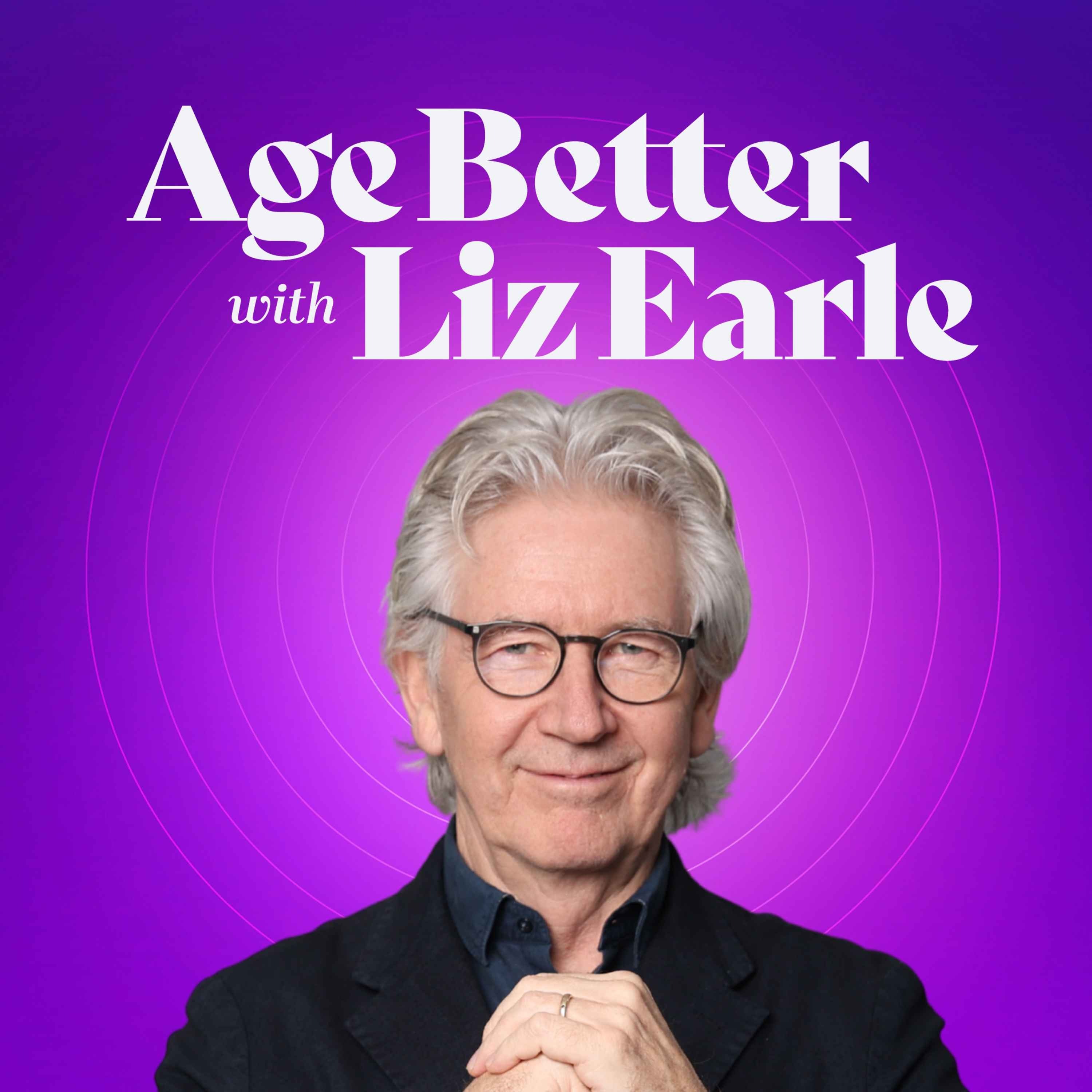
3 easy ways to cut your Alzheimer's risk – with Patrick Holford
from Age Better with Liz Earle
56m 39s
The transcript highlights Patrick Holford's work with the Food for the Brain Foundation, emphasizing a shift from treating Alzheimer's to preventing it through lifestyle changes. Holford notes that cognitive function declines linearly from age 18, so prevention should start early. He describes how China, facing a potential 20 million Alzheimer's cases by 2030, has adopted his prevention strategy, including free cognitive tests and community support for those over 60. The foundation's online test, used by over 500,000 people, measures cognitive function and assesses risk via a questionnaire. Holford identifies four key risk factors: low omega-3 DHA, high homocysteine (indicating B vitamin deficiency), poor blood sugar balance (HbA1c), and low glutathione. He stresses that homocysteine is a critical biomarker—levels above 10 accelerate brain shrinkage, while below 7.3 is ideal. Lowering homocysteine with B vitamins (B6, B12, folate) is the most evidence-based prevention, as shown by Oxford studies. Holford also discusses the importance of personalized testing, like a finger-prick blood test to measure these biomarkers, and the need for behavior change through digital health tools and community support. He concludes that with proper diet, supplements, and lifestyle, brain health can be maintained at an extraordinary level into old age.
we can see very clearly that the cognitive function decreases on average, linearly, pretty much from the age of 18. So in a sense, you could say, if you want to prevent Alzheimer's and dementia, which is the last part of this ever worsening score, you should start from the age of 18. So I'm going to go to any country that wants to actually prevent Alzheimer's because it is a fact that you could do it. It's not a hypothesis. It's not a nice idea, but to do it, you really have to tackle diet supplements, lifestyle, education, not medication. I'll get on with it and we know how. Patrick Holford is the founder of the Food for the Brain Foundation and he wants us to switch to a prevention rather than cure approach to Alzheimer's. Hello, welcome to Age Better with me, Lizarl. And it is my mission to change the conversation around aging through the conversations on this podcast. I really want to share the knowledge and the tools that can help you thrive in later life by taking action today, because when we understand what our bodies truly need, we really can age better. Now this week sees World Brain Day promote the idea of better care and crucially prevention when it comes to our brain health. Supported by the World Health Organization, this year's theme is Brain Health for all ages, a brilliant reminder that no matter our age, it's never too early or too late to make lifestyle changes that will benefit our brains. And Patrick Holford, founder of the Institute for Optimum Nutrition and the Food for the Brain Foundation, supports that notion wholeheartedly. Well, it's been a few years since I last spoke to Patrick here on the show, so there is lots to catch up on, our Amaloid Plac Drugs Working, which Alzheimer's risk factors are still not widely known, and could GLP1 medications be useful in preventing not just weight gain, but dementia? Patrick, a warm welcome back. You are such a favourite here. I know there's so much interesting stuff to talk about. We last saw each other on a beach in Larmud, isn't we? It's true, getting a little bit of vitamin D in those winter months. So important, and you were looking very well on it too. And I know that you've been travelling even further afield, and I'm really keen to find out what you've been doing, especially I know you've just returned from China. What does the Alzheimer's landscape look like there? Were you there researching for the foundation? Well, the first thing that I think is important in the context of repositioning aging is they've got 320 million people over 60, and they will expect if they don't do prevention to have 20 million with Alzheimer's by 2030. And the cost of that is about a trillion dollars a year. It's kind of untenable. We are facing the same sort of thing, but obviously the numbers are smaller. So the first thing that they're doing, and I'm talking at absolute top government level, is anyone over 60 is called a member of the silver-haired community, not older, not old, not elderly, not, you know, but the silver-haired community. And it's pitched in a very, very respectful way. And I'm a member of the silver-haired community. Not that you know it, because I die mine. Would I not be allowed to die mine in China? Well, I think you can still be there. Okay. And so that's the first thing, and the other is that they are really focused on prevention. You mentioned wanting to switch the talk from cure to prevention. And since we spoke my book, Alzheimer's Prevention, is the cure has come out. And as I left, because I was there for 10 days, and I taught 10 million people, and I met top ministers and professors of public health, of nutrition, of geriatrics, of gerontology, of social care, and so on. They told me in the very last interview, because we're making a film on Alzheimer's Prevention ultimately, that they are going to use the strategy in my book, Alzheimer's Prevention is the cure, as the strategy in China in order to prevent Alzheimer's. That's amazing, magic. You have influenced an entire nation's policy, not just any old nation, but one of the biggest nations, if not the biggest nation, in the world. That's extraordinary. Yes, and it goes a bit further than that, because we are in a digital age, and really in an AI digital age as well. And the first thing that they want to do is encourage everyone to test, and by the way, I'm going back next year, and they want to reach 100 million people, to use our online free cognitive function tests. Oh my gosh, on your website, your website will explode, my internet. Well, we have a, yeah, we have a whole Chinese version on top of that, since we last made, innovate UK here in the UK, have awarded the charity at grants to put the cognitive function test also into the national health service. Oh, amazing. So this is like step one, because now you can actually measure, you know, when we talk about keeping your brain healthy, well, what does that mean, and how would you measure it? And you can actually measure cognitive function, and we've done about half a million tests now. And what is fascinating? And no one could predict it, because this test was originally developed by memory clinics to basically diagnose whether you have dementia or not. Like most tests, they're designed, they're, they're originally designed to find out if you've got diabetes or not got diabetes. But having run half a million tests, we can see very clearly that the cognitive function decreases on average, linearly, pretty much from the age of 18. In other words, a 20-year-old does better than the 25-year-old, who does better than the 30-year-old, who does better than the 35-year-old. So in a sense, you could say, if you want to prevent Alzheimer's and dementia, which is the last part of this ever, you know, worsening score, you should start from the age of 18. So we have a measure now of actual cognitive function. And then when you do do the test, which everyone should do in this free, and of course people go, I don't want to do the test, because I don't want to know. Well, then you feel in a questionnaire about your diet and your lifestyle and a bit of medical history and so on. And then we can work out your future risk, which sounds scary. And what you can do to reverse that risk, you know, right now or eliminate that risk, because in most cases, you can truly eliminate risk. That's phenomenal. So, you know, get on it. It's a bit like having a fitness test and finding out how fit you are or aren't and then being given very specific, you know, the quick wins, the things that are going to make the biggest difference. So the test is free, and it's on the Food for the Brain's website. It's called the Cognitive Function Test. What do you have to do when you're sat in front of your laptop? And once you've done it and you've got your score, what sort of changes can you be advised to make? Okay, so the first next thing, and it's part of this in the VUK grant, is very soon, no, let's say next year for confidence. You can do it on your phone as well. You can do it on your smartphone or your computer or your iPad or whatever. And that's very important because actually in China, the older generation completely skipped computers, but they all have smartphones. And in China, you actually pay with your fingerprint, you know, or your phone. So they're kind of doing what we'll all be doing. I mean, even apps won't exist in about three years, you know, with AI. We won't need all these extra complications. So yes, you just got to make some space. I would say 20 minutes without the cat jumping on your lap or, you know, not being drunk or, you know, not being, you know, just, just, just, just, just, just that in mind. Just space and do the test. And it's not the first, the actual test is not a questionnaire. It's interactive. I can't tell you exactly what it is, but you can. Okay, we can't be prepped. Yeah, does this like this and all that sort of thing. Okay. And that's what you do. And it will give you a score on a scale from Red Orange, Yellow, Green, and probably nearly everyone will be at some level of green and they'll show you what the average is for that age group. But then you fill in the questionnaire and this is terribly important because things like the UK buyer bank, UK buyer bank is the biggest database of about half a million people, including myself, who went along there, gave blood, did tests, filled in questionnaires. And so obviously you can any study the things that you've been asked a question about. You can any study blood tests of things that were actually tested. And back when the UK buyer bank started, there are a number of things that they haven't thought of and there are a number of tests that they never ran, a bit like Homo Sistine, which we shall mention, which is probably the, if you had to pick one test only, it isn't just one, there are five, but if you pick one test only, it would be Homo Sistine. So here you are, you fill in the questionnaire about your diet and lifestyle. And if you're doing everything that would predict no risk, you know, you're really fair, you don't smoke, you don't drink tons of alcohol and you've got good nutrition, you'd score closer to zero risk. And if you're doing everything that would predict risk, you'd score closer to 100%. And then the other thing, which I'm not sure if it was fully on the
word last time we spoke is that there are what we call the four horsemen of the mental health or brain health apocalypse and that is to do with and I can explain this quite simply if we think of structure function and utilization of your brain. So you've got to build the right brain. You can't have a healthy house if you don't have the right building materials and those amazing omega threes that we're all aware of and fish oils and those who are a bit more aware will know that it's omega 3dh a that builds the brain can only be in corporations to brain if you've got enough b vitamins which drive a process called methylation which is indicated by your blood level of homocysteine. So do you have enough b vitamins check your homocysteine? Do you have enough omega 3 check your school via mega three index? Do you have enough vitamin D? Check your vitamin D. Then and we can come back and on-pick this the brain has to fuel and its major fuel is actually glucose sugar we can also run on ketones that's another conversation and when your glucose engine gets all messed up you start to get damaged red blood cells which is called HBA1c sugar coated red blood cells. It's what doctors use to diagnose diabetes so you really want to know that you say how is my sugar balance measure your HBA1c and what is considered healthy in terms of the range we now know may not be you need to be lower for brain you know good brain health and then the next question is whenever you're generating energy in the brain and the brain generates way more energy I mean every site every sound every thought is literally you know consuming energy you get a lot of oxidation and we all know by now that aging is largely you know that oxidation and something we can talk more about glutathione is the absolute hub of antioxidants so we've now found a way to measure something called the glutathione index five tests all in one pin brick so the next thing you're invited to do is bio kit it's sent to you so you have to pay pay for it this is prick your finger five drops drop drop drop drop drop send it off to the lab now we got your biological data and now we can really start to fine tune and say exactly what you need and then we'll invite you back in six months to read of the test and so on so then you become part of our community and now we have got coaching groups and we've got a learning platform and we can really home in on on your particular areas of biggest wins because the real crunch point I mean we can talk about all this is wonderful stuff but the bottom line is you have to change behavior so both in China and here there is this you know within our charity anyway this conversation about how to use digital health interventions to actually encourage behavior changes much like you've probably got a watch you know like and I have a phone that's measuring your steps or something and that becomes motivational and like in China they're giving people watches and everyone over 60 I mean this is quite amazing really I've been told to hit 10 thousand steps a day everyone over 60 yeah I said the minister my parents wouldn't manage that they're in their 80s well they might know and I said to the you know the the appropriate minister that's a very you know progressive number and some would argue that seven if you look you know just coldly at the science that 7000 you know maybe maybe enough others say 10,000 is better and they say we'd rather shoot for the optimum than fudge it so that it's quite an interesting idea I mean I do agree with you 10,000 maybe quite a lot you know for a very much older person but the encouragement with support is to shoot for you know the optimum and what happens if you don't do all those steps does your social credit rating disappear and you're not allowed to leave the house or what I have no idea at this point in time but I'll tell you the group that I'm working with there who have 20 million people within their group over 60 they have thousands of people within their communities to support them and extraordinarily the former Minister of Health he said there were two statements one was what we need is diet supplements and lifestyle three things diet supplements and lifestyle interesting the other is what what we need is education not Medicaid oh I love that that's a good one so they've they've really been encouraging every means to educate and with local community people to do that and personally I know in any change carrots and sticks are usually required you know a bit of both one way or another even if it's just the you know sort of social pressure to do something or whatever it happens to be but so it is a fascinating conversation because here we are in a situation where if nothing changes we are going to see in our country and then there's even more so hundreds of thousands if not millions of people spending their last you know five six seven eight nine ten years with this fuzzy brain ending up not even being able to know who their grandchildren yeah or who even they are having this appalling demise and when I look at my great teachers you know like like Dr. Linus Pauling had 48 PhDs two noble prizes when I'm some was asked are you a genius he said Linus Pauling he was the best chemist ever has been or the wonderful Dr. Aben Hoffa who was a professor in Canada of psychiatric research you know they died in their 90s but most importantly they died completely compass mentors and I work with scientists many in their 90s who are as sharp as a razor and could run circles around young people now their legs minor work quite so well it's a bit harder to maintain your muscle mass they their hair will have gone grey the eyesight may not be fantastic they're hearing may not be brilliant but I've not really seen that slippage in the mind and that and that's what I think we can really maintain our brain health at an extraordinary level I'm amazed to hear that supplements are heralding you know headline there along with diet next size because you really don't get that in in you know government manifestos if you like let's talk about some that the supplements because obviously we can do this pinprick blood test and it will show low levels of certain things are you saying then that prevention could be as simple as we've talked about getting your steps in but if we have the things that you're testing you know the glutathione the vitamin D the omega threes particularly the DHA the the the B vitamins presumably the methylated B vitamins that actually then we are protecting ourselves from Alzheimer's massively and if we were to step back and look objectively at the science and that's what was so cool for me in China I was talking to people who just looked objectively at the science the single best evidence-based prevention treatment and this was the conclusion of the largest ever mesh analysis systematic review of Alzheimer's prevention was lowering home assisting blood home assisting with the vitamins and we're talking about vitamin B6 B12 and folate you mentioned that methylated folate B12 is better and it is somewhat better but it's true that the studies that just used you know the cheapest B12 folate etc. still worked. You can follow the acid. Yes. Even folic acid. All the original studies that I think you're aware of out of oxford university that showed actually that people given the B vitamins versus placebo had almost nine times less shrinkage of the Alzheimer's related areas of the brain they were using folic acid and just to sort of be a bit of a devil's advocate there. folic acid was developed as a stable and cheap version of phone late which is what you find in food but it does degenerate it's not very stable and that's what's been used for years and pregnant women are advised to have a folic acid supplement because it's so vital for methylation which is so vital for all DNA. So neural tube defects, minor bifurter, is a function of faulty methylation raised home assisting lack of bivotimus and it works folic acid works but it turns out a few years ago two companies I think it was Rochemok managed to develop and patent a way of making methyl folate which is a bit better maybe 15% better but most importantly they're the only ones who are making it so suddenly there's a lot of marketing went out to say folic acid.
- Oh my gosh. - Got to have methylfolate. And there is a small portion of people who have a gene mutation, which means that they can't really use the folic acid. So I do agree the methylfolate is better, but it's twice the money and it's 15% better. And I wouldn't throw the baby out with a bath. - Interesting. - The focus is get your folic acid folate from greens and beans, which are really, that's where you get it, greens and beans. But, and B6, which is in whole foods, but actually the critical of those three B vitamins is Vinnen B12. And a classic example of this is my lovely wife, Gabi and I. We eat the same food. We live in a farm in Wales. We grow beyond organic. You know, we have a very, very good diet. And when we had our home assisting measured, because we are the first place that I am aware of, the first lab, that has found a way to measure home assisting accurately in a pin prick, a dry blood spot. Normally it's a bit difficult. You have to go to the lab. They, after the blood draw, they've been the sample, because it's in the white part of the blood. You know, it's not the easiest test, but we found a way to do it. And it's quite completely accurately. So when we were going through this process with a wonderful lab guys that we worked with, we had ours tested. Now above 10, you've got accelerated brain shrinkage. Ideally, above 7.3, you get chromosomal damage. So if you said what level is best to have the, you know, phaging or anti-aging, I'd say below 7.3. And certainly you don't want to be up to, you know, 15. Anyway, my wife's was 15. What? And I was seven. Ah. And we both supplement. She, there is this irony. She takes, I take a strip of vitamins and amegas and things a day, twice a day. And for whatever reason, she takes one strip a day. And if asked, she said, I'm not sure I could deal with all the energy that Patrick has. But anyway, so she takes a bit less in the supplements, but my multi is only 10 micrograms, or bit of a B12. The RDA, which is the ridiculous dietary arbitrary, is two micrograms. Most people are fine with 10. My home assistant is perfect with 10 micrograms a day of B12. And hers was 15 and the brain shrinking's it. So she is a relative malabsorber of vitamin B12. And she now supplements 500 micrograms a day, not because you need that much. She went absorb it all, but that gets enough in. And within a few weeks, her level had dropped to eight. So here we have two people. She's younger than me, eating the same food, more or less supplementing the same. And she needs much more. And you cannot predict that. No, I mean, it's so important, isn't it? I love all this personalized medicine that we can do now with simple finger prick blood tests that the insights are extraordinary. And then one of the really cool things is that, basically there's a brilliant professor. It's part of our group. We just around the same time as the China trip, we did a professional conference, Alzheimer's prevention, new frontiers. And we invited the most extraordinary lineup of top, top scientist and professors, some of whom have really led understanding what Hamiloy is about, which I really want to mention. Yes. And one of them is Professor William Harris. He's the director of the Fati acid research institute, FariFRI. And he developed the omega-3 index, which is now widely used as the pin prick blood test for amegas, which basically measures of all the fatty acids in your blood. We're talking about red blood cells. Because when you take a blood sample, we've got red blood cells. And the important point is that red blood cells, they live for three months. So when you do a red blood cell test, which is what the sugar one was, HBA1C, you're getting an average of the last three months. Because the red blood cells can get sugar damaged. If you do a glucose test, you're just telling you what happened right the second. So if you drank a can of coke, it would be high. If you had no carbs for 12 hours, it would be low. So we want these red blood cell tests. That's what omega-3 index, the percentage of omega-3 EPA and DHA, out of all of the fatty acids. And you want to be above 8%, probably optimally 10%. Japanese will-- many will be at 10% because they see food, marine food, nearly every day. The average prisoner will be at 2%. The average American eating a sad diet, standard American diet, and possibly in the UK will be at 4%. Below 8%, you're getting increasing risk for dimension, no question. So you want to be above 8%. And I'm 11%. So are you getting enough? Well, ask your body. So some will say, you know, the government recommendation for children is to have a serving of oily fish once a week. And I think 5% of children achieve that. I was going to say, not many children that I'm aware of, or for eating oily fish. Really, really low. Really low. Yeah. So, you know, and then some would say, three servings a week. And maybe you do that. And we're talking here about smashing it. Esper salmon, M-themat core, A-fat anchovies, Esphasardines, H-fairing, which would be a kippur as well. And some will go with somebody, yeah, I do that. Others supplement, but what's your blood going tell you? So here's a fascinating thing. It's a bit like, you know, if you give a builder a hammer, do you get a house? No. If you give them a bag of nails, you get a house. No. If you give them some timber, do you get a house? No. But if you give them all three, you get a house. So you cannot incorporate the omega three into your brain unless you have enough, what are called phospholipids. And phospholipids are also rich in fish. And they're rich in eggs. So the only omega three that works in the brain is omega three, DHA, attached to a phospholipid. So it's called phospholipid DHA. And the process is done by bevitamins, methylation, back to the home assistant. So it's a very simple question. I asked Professor Bill Harris, do you ever find people that have the same intake of fish or are supplementing the same amount of omega three that have a very different blood level of the omega three index? And he said, yeah, all the time. And I said, have you ever considered that if a person, which is so common over 50 or 60, is a malabsorbed revietum in B12, and therefore can't do the attaching bit, you wouldn't find the omega three in the red blood cell membrane, because it couldn't stick in there. And he said that is totally logical. I'd never thought of that. So here you have two groups of scientists, the world leaders and bevitamins from Oxford University, Professor David Smith, Professor Helga Reffsam from Oslo, and the world leading omega three guys, realizing the one does not work without the other. If you correct those two, so this was coming back into your original thing. According to the big metronautists by the US National Institute of Health, if you correct hermocysteine, you reduce your risk by 22%. And if you correct a low omega three, you reduce your risk by also 22%. You can't exactly say 44% for both, 'cause that's a bit of crossover, but I think it would be accurate to say that you will cut your risk by a third, so you've eliminated a third of risk immediately by ensuring that your homocysteine is below 10, you have enough B vitamins, your omega three index is above 8%, you have enough amegas. So that's third risk done finished. Fascinating stuff. Oh, Patrick, there's still so much to explore with you. We're gonna take a pause here and come back to talk about why amyloid plaque drugs are not living up to expectations. And also what some of the biggest risk factors are that we still aren't talking about. (upbeat music) Well, welcome back. Let's kick off with the amyloid plaque drugs, because last time we spoke, we covered these. And there's been a lot of hoopla in the press in recent years about we're going to have these drugs that lower the amount of this particular sticky plaque in the brain and it's gonna stop Alzheimer's. Where are we with all that? Well, I think, I mean, genuinely, those in the world of proper medical science have given up on the amyloid lowering drugs, because there is not a single one yet that has produced a clinically significant effect. So whatever the story might be, the bottom line is, do they work? And the answer is no, they don't work. They don't reduce risk. They are ineffective, but they do. These are injections, usually monthly, of anti-amyloid and deportees. They do low amyloid. So they did what they said on the tin, they would lower the amyloid, a bit like Staten's lower cholesterol. No, they do that, but they don't work. So the what three what?
words that I really love at what causes that. So you have to ask the question, because there is amyloid in the brain. I mean, there are people who have lots of amyloid and no dementia, and there are people who have no amyloid and dementia. So it's not perfect, but it is in the brain. So you have to ask, why? What causes amyloid in the brain? And at our conference recently, we had a brilliant professor, a sort of cardiology biology professor. And he showed us, you can scan a brain. He said, there is no one with any form of dementia who doesn't have at least a thousand points of bleed in the brain. Microbleeds, points of bleed. So I would say there is no dementia that is not vascular dementia. So when someone has said that they have vascular dementia, it means they had a big bleed, like a stroke, and suddenly their cognitive function decreased. So their pathway to, you know, terrible brain out of his step, big steps down, and we call it, a scler. While generally Alzheimer's is a steady, it's like a slope rather than steps. But if you scan the brain of any arm with dementia, you will find at least a thousand points of bleed. And there's a way to do this. Now you can scan the same brain to find out where the amyloid is. You cannot differentiate between the two. The function of amyloid is to stop a bleed. The brain is an electrical circuit. It's like you can't get water into an electrical circuit. And if you get blood into the brain, you can't have that. So it's plugging the gap. The amyloid is plugging up the gaps. It's not only plugging up the gap, so it's like the plaster on the bleed. But if you get a bleed, you can get an infection. So we've heard a lot about herpes, infections, and gum disease, and infections, you know, and viruses in the brain, which only get in, you know, if you've got bleeds. So it not only stops the bleed, but it stops, it encapsulates a bacteria or a virus. Because if that was to infect your brain cells, the brain's immune system would then go and kill infected brain cells. So basically it's got a function, which is to stop bleeding. So we want the amyloid plug. Well, we don't want to lower it. Well, we want it to stop bleeds. And if we rip it out, if we want the bleeds in the first piece, we don't want the bleeds to stop the bleeds. We go back to that, so the amyloids will cause us that. But just before you get there, the point is if you rip it out with drugs, what do you get? Bleeding. That's the major problem with these drugs, apart from their ineffectiveness about a quarter, again, bleeding, right? Which is what you'd expect. So it's completely wrong. But if you go about further, you'll see what causes bleeding. And in the world of science, like if you, these aren't the exact numbers, but for example, if you find that people who smoke have four times the risk of lung cancer and people who don't, you get very, very excited. It's what we call the odds ratio, you know, four, wow, not double the risk, but quadruple of risk. Well, home assisting increases risk for Alzheimer's and dementia by 10 times. It increases the risk of a bleed in the brain by 17 times. Wow. So what's happening is that the home assisting, this toxic amino acid that goes up when you're lacking B vitamins is also an artery toxin. It damages blood vessels. And you've got 4,000 miles of blood vessels in your brain. So the home assisting will damage them. You bleed, then you produce amyloid and then you rip the amyloid out and you bleed some more and you ignore home assisting and be vitamins, at least in the UK and America, because you can't patent them and you can't make any money out of them. Oh, that's right. You know, because presumably these guys must know this. It's way dirtier than that. And the people don't realize that he's a little example, right? I knew that there was one study by a Professor Paul A.C.A.I. S.E.M. and it's a very, very clever study and it was the one that's quoted widely to show that the B vitamins don't work. What he did was take people with cognitive decline, give them the right level of B6B12 folate, measure the home assisting, which came down, but it had no effect on their cognitive function. It pro quo, it doesn't work. So just pause on that one. Then now we get all these drug studies, the lachana map, aducana map. They're always ending map, which means an antibody injection, a monoclonal antibody. All these new drugs, which end in map, are injecting an antibody that attacks a cancer cell or attacks this or attacks this or attacks this. And it was his name all over them, right? That's interesting. The top guy promoting the amylo drugs was the guy who did the study that didn't work on the B vitamins. So how do that work? So here's the cheat. Basically, I said to you before that you want to get your home assisting below 10. Above 10, you have brain strength, below 10, you don't in effect. Now most people over 60 are above 10. The average is about 30. He took a group of older people with cognitive decline, whose level at the beginning of the study was nine, right? Was below the point of concern. And the B vitamins did lower it from nine to seven, but they did nothing. This is a bit like taking people have no pain, giving them a pain killer and then reporting it. How do you feel when you say, well, I feel the same. Exactly. And that was the cheat. That was a very clever selection. And so what we're trying to say here, and this is the reality is not just that the things that work that are not patentable are ignored as they were in the Lancet Livingston Commission report in the UK on dementia prevention. But money is and strategy is actively being spent to kill things that could interfere with the drug bunker. That's the reality. That is the corruption. And that's why regardless for all the reasons that people don't like China and all rest of it. If I'm in a country where they look at the evidence and they say, homocysteine, B vitamins, and mega three, active. And I should mention that because it's such an obvious thing. If you do know physical exercise, your muscles atrophy. You only maintain and build muscle if you work them. The worst thing to do is to retire and then do nothing. So when I hit 65, I graduated as a paraglider pilot. The next time I'm going to learn the bass guitar. Yes. You know, I'm going to keep learning just like teenagers and kids. They just keep learning. And if you want your brain to generate, stop learning. If you want it to grow, keep learning, but you have to have the right building materials and the right fuel. Well, it sounds like China are going in the right direction with this. And it's going to be a massive population study. And I guess all eyes will be there to prove it. And whether the results are ever reached the West and are given the credence that they perhaps will be deserving. But they're obviously opened up their eyes to the fact that simple supplements can be helpful. I mean, how do they view medication? What? Because obviously you've got traditional Chinese medication over there. Yes. Do they like Western pharmaceutical companies coming in and telling them what to take and what to do? They're not necessarily against it. So we talk about interesting drugs and vaccines and other such things. But I think the difference is that they've always thought of food as medicine. So whenever you have a meal in China, which is way more varied than our meals. And when we talk about seafood, we just have certain fish, you will see all sorts of marine food that you may never have seen before as well. So they're much more varied and they have a conversation about this being good for this and that being good for that. And so the concept of food as medicine is totally in their culture, in their bloodstream. And as a consequence, they've got traditional Chinese medical herbs and potions, which they take for this or that. So supplement is not a strange thing. What I realize is probably you and I through the years, we sort of edit and slightly censor what we say, perhaps about a supplement, just to be kind of, you know, not to left feel. Well, if you looked at the science and just said it the way it is, so we have in the UK, a paranoia, the medical profession, have a almost aversion to the concept of a vitamin supplement or a mineral supplement actually doing anything. And it's a tremendous barrier. I mean, it's outrageous to think that B12 can actually not be prescribed by a GP to somebody with all signs. That's the situation that we are in. You know, it's insane. You know, I was talking to my lovely friend, the former bystander of Oxford Medical School. And he sat in an electron diabetes at Oxford Medical School, one of the arguably one of the best place.
to train a medicine. And the last, I think it was five minutes, I usually say seven just to be safe. We're on nutrition and the lecturer said, that's the only nutrition you're getting in your medical training. - What? - Yeah, I mean, it's like nothing, nothing. - So with so much focus that we need to have on food and nutrition, since we last spoke, GLP1 weight loss medications have been bigger news than ever and there is ongoing research and whether they might actually help prevent or treat Alzheimer's, but presumably they are reducing the amount of nutrients that are available 'cause people literally do stop eating. What's your take? Do you think that they might be working because they're limiting the role of, say, sugar in cognitive decline or is something else going on or are there some real questions here that people on these seriously need to be supplementing? - Well, I definitely think they're gonna work in the sense of reducing dementia risk if you look at studies, because basically mitochondrial dysfunction driven by too much sugar is the next thing. So we spoke about structure in the B.V.S. and M.E.G.S. The next thing is really function and how the brain works. So in a sense, the GLP1s are like an immediate metabolic health boost, immediate which will unquestionably have an effect that's gonna reduce diabetes, heart disease, obesity and all those kinds of things. But, and this is the big butt because everything we talk about, you know, eating a low GL diet, maybe going a bit keto, doing more exercise, possibly supplementing and the mineral chromium is vastly underestimated. Cinnamon is good and all these sort of things. They're all basically GLP1 affecting substances. The GLP5 is brilliant and there's a natural sugar called alulose as well, really, really good. So yes, I give people this fiber called carboslo which is GLP5 and alulose. All of this is doing the same thing the drugs do, but why not just take the drugs? And the answer is the most worrying thing apart from some terrible adverse effects that some people get and some really terrible ones that very few people get, including going blind, we literally, you know, it's, it happens, it's rare, but it happens, is the muscle wastage. And, you know, we all know that basically muscles use fuel. So if you, I mean, a lot of people say, I'm not eating any more than I used to, but I'm getting more weight and I said, well, that's because you've lost muscle mass. You're losing half a pound of muscle mass a year at least. So you've got to maintain your muscle mass. So I think anyone who does GLP1 and doesn't absolutely transform their exercise regime to build muscle is going to end their journey on the drugs in a much worse state than they started. And if they don't actually, you know, change their diet as a consequence, that's a real problem. They may stop drinking, which of course, could be a major benefit in a, of the drugs, but they may then quit the drug and start drinking again. But, you know, being a worse place. So I'm not totally against the drugs, but I think that they're unconsciously the wrong thing. The government look at it and they go, do you know, bang for the bark. If we stick everyone on these drugs, we'll reduce our medical bill, which they will in the short term, but they may not in the long term. Oh, gosh. And that's the real risk. And what we're also learning, which is Brillium, is that, you know, your brain cells run on ketones or glucose. They're like such high-powered cells, neurons, brain cells, that they have to have five-star fuel. And there are other cells called astrocytes, which are like fueling cells, that give them glucose or give them ketones. And they can't store the fuel, that they're like, you know, super-powered little things. They've got to be given the fuel. And when the glucose engine is all messed up because of too much sugar, which leads to insulin resistance, then the brain stops working, so you get brain fog. And this is really a key for people listening as well. If, and you'll see this, very clearly in your relatives with cognitive decline, to get brain fog and sugar craving or alcohol craving, then why? If the brain is starved of fuel, it's going to tell you I need more fuel, and it will tell you I need more sugar. So what you'll find in people with dementia is they just want a lot of biscuits. They just want sugar, they crave sugar. Yes, they do. Now, what if you switch to the other fuel ketones? And you go, wouldn't I have to be on a kind of total fast or completely carb-free diet? And here's the amazing thing, which is another of our professors from Canada, a professor Stephen Cunay. We have now learned that almost all the ketone fuel made in the liver from fat, that is made from fat. So when you fast, you burn your fat and you turn it into ketones, which can power the brain. But we have learned that almost all the ketones made in the liver are made from a very specific fat called C8, carbonate, eight carbons long. When you have coconut oil, it has 7% C8. If you go to the health food shop nearby, MCT, medium-chained, triglycerides, it's about 20% C8. But now you can get pure C8 oil. He gave, in a series of studies, people with cognitive decline, no change in their diet at all, not going key to jag. Two tablespoons, 30 grams of C8 oil, and measured in their brain a 230% increase in brain energy from ketones. No change in energy from glucose, big increase in energy from ketones, and their brains came back to life, their cognitive function improved. So it's a bit like you've got a hybrid car and your petrol engines all messed up. And now you plug in a bit of electricity and suddenly it's working better. It may not be the cure, but you're getting the fuel in. You're filling the energy gap, and the brain fog goes. So this is a quick win. This is a really quick win. Some people stick it in a coffee. Some people stick it in their smoothies. You know, if you've got no energy problem at all, it may not have any effect. But if you are experiencing brain fog, I would definitely have two tablespoons of what's called C8 oil. Taste it. Taste it. I mean, I make it from organic coconuts. So it's tiny, tiny hint of coconut. But you're too happy to make it yourself at home. No, no, no, you have it made. Yeah, I got a company to take out of organic coconuts. Pure C8 oil. It's called keto fast and that really does the trick. Wow. You mentioned earlier a keyword that I love, and it was central to my last book, actually, How To Age. And that's mitochondria. So can we perhaps finish with a conversation about mitochondria and the importance, if any, in their development of Alzheimer's? Is there a connection? Yeah, there totally is. And I also want to make an apology because in the beginning, when I said we were last in Lama, in the sunshine, making the all of which was true, there was a lot more going on in that sunlight than just fit of an egg, which was one of the things I loved in your book was to really focus in on that. So I'm going to throw you a few curved balls here. Miter-condria. The energy factory in cells are absolutely key. Really, you could almost say that is what dementia is. Is a mitochondrial dysfunction. And hence the brain can't work. And things start to break down, whether it's omega-3s, B vitamins, antioxidants, it's all happening inside the mitochondria. It's all happening in the mitochondria, of which there are thousands, tens of thousands, hundreds of thousands, millions, billions. You know, that's where the action is. You're absolutely right. But there's another layer which is going to emerge very, very soon. And in your brain, you don't just have brain cells called neurons. And fueling cells called astrocytes. You've got these other cells called microglia, which are the brain's immune cells. And they are kind of looking after you. They are the brain's defenders. They're making sure everything's all nice and healthy. If you get an infection, the microglia are immediately involved. If you have inflammation, they're involved. And what we've learned is those microglia under those wrong set of circumstances, just like the mitochondria, under the wrong set of circumstances, become your enemy rather than your friend. Instead of being your brain's butler, they start to attack the brain. So we're going to hear about the brain's immune system, the microglia. And really what we are learning is the health of the mitochondria, parallels the health of the microglia. Your whole energy system is indicated by this wonderful mitochondria, which you're giving you energy all the time. And the immune system that defends the brain from offending items.
which is the microglia, and they go together. So here's a really cool thing that you're gonna hear about, which is the effect of light. Ooh, I'm excited. And yes, this is called gamma oscillation, but it turns out that the brain sort of keeps itself in tune much like an orchestra with various oscillations of light, which is called gamma oscillation. And in a healthy brain, you'll see a very smooth flow of this gamma wave. And in an unhealthy brain, a very sort of crooked flow. And very specifically, and I've just been studying some research out of MIT, Massachusetts Institute of Technology. And they took people and gave them, exposed them for half an hour to a very specific wavelength, called 40 hertz light. So they actually had it on there like an iPad. And they didn't have to look at it, it was looking at them. And also 40 hertz sound. And there was a phenomenal effect on stopping, these were people with Alzheimer's in stopping further degeneration, I mean, an extraordinary effect. And it's very hard to do anything at those late stages. And I think what's happening is that as people get more into dementia, those healthy immune system, one in Couglear, have become your enemy. They've gone from being your friend to your enemy. And your whole brain is in a state of inflammation, your mitochondria aren't working. And the question is, how do you switch a defective system back to a healing system? And what we're now learning is very specific wavelengths of light in for red light is also really interesting, are having an effect in switching the brain back into healthy state. So I think the radical sort of left field ideas in your last book about the effects of light, we are really starting to realize that a healthy environment is not just free of toxins and glyphosate, eating organic and getting enough sunlight. Yeah, there is a very specific effect of light. - Light and sound on the brain. - And sound, yeah, I cover that in my book. I cover the sound waves and cell frecuencies and all sorts. Fascinating. Oh, it's so good to be ahead of the curve. Listen, before we go, last question for you, when we spoke last time, we were talking about the Alzheimer's and the dementia charities not being interested in listening to you about nutritional protocols for prevention, despite them being so simple and inexpensive and effective, et cetera. Dare I ask if this has changed at all? - I'm not aware that it has. So not really. And I mean, the tragedy was one of the major societies. They were most proud of having contributed to the discovery of amyloid. - Oh no. - Which is now crumbling. And it is so tragic that this issue of Alzheimer's goes higher and higher on the apparent agenda. And yet we're actually doing nothing about it. And the two things that really struck me in China, number one, you get from Beijing to Shanghai, it's 1200 kilometers in three and a half hours. That's shorter than checking in for a flight and flying. We can't even get to Birmingham. It's going to cost another tens of billions by 2040, saving less half an hour. They've just got their trains, their mag trains, up to 650 kilometers. They want to eliminate all domestic flights and because you can do it faster on a train. Solar powered. - Phenomenal. - Yeah. And the generation of cars they're now, you drive in, the robot takes the battery out, puts the new one in, within two minutes, you leave with 200 miles on the clock. Solar powered electric. And we just can't even get it together to do what's necessary to protect ourselves and our parents and our elders, our silverhead community because we're still in the pocket of corruption. How are we so ineffective? It just blows my mind. So I'm off to Algeria next, by the way. Invitation of the health minister. So they are really interested in putting this whole strategy into their country of over 40 million people. It's not a nice idea. You can prevent Alzheimer's. But to do it, you really have to tackle diet supplements, lifestyle, structure, function, utilization, education, not medication. Let it get on with it and we know how. Love it, love it. And it's all there on food for the brain. I'll make sure that we put links in the show notes. And of course, you can take that free questionnaire. It'll give you a score. You can send off your pin prick, blood test and get going with the things that you might need. Patrick, thank you so much for being with us, completely fascinating as always. Let us not leave it another two years, hey? Thanks for saving so many brains. Oh, bless you. Oh my gosh, Patrick, always such a pleasure to catch up. There's so much to talk about, isn't there? And I know that we didn't even touch on the subject of hormones. And it is such a big thing, isn't it, when it comes to brain health. Anybody who's seen Dr Louise Newson's brilliant book on hormones will know exactly that. And of course, don't forget that you can go back into the archives and listen to a really good podcast on all of this with one of the world's leading experts, Professor Jayashri Kulkani, literally looking at the role of replacing hormones and reducing Alzheimer's risk. And that was recorded a few years ago. She's way ahead of her time and is completely fascinating. And if you'd like to listen to that and all future episodes, 24 hours early and add free, then do subscribe to Age Better with Lizard Plus on Apple Podcasts for a very small month of free. Do let's continue this conversation about the small but mighty lifestyle changes that we can all make to better protect our health. We can chat on Instagram. You'll find us at Lizard Wellbeing and you can also find me personally there too. I am at Lizard Me. Until the next time we chat then, go very well. Goodbye. Age Better with Lizard is not medical advice. If you need help with the health concern, please speak to a doctor.
Podcast Summary
Key Points:
Cognitive function begins to decline linearly from age 18, making early prevention crucial for Alzheimer's and dementia.
Patrick Holford advocates for a prevention-based approach using diet, supplements, lifestyle changes, and education, not medication.
The Food for the Brain Foundation offers a free online cognitive function test to measure brain health and assess future risk.
Four key risk factors for brain health are
China is adopting Holford's prevention strategy, targeting 320 million people over 60, using digital tools and community support to encourage lifestyle changes.
Homocysteine is a critical biomarker; lowering it with B vitamins (especially B12) can significantly reduce brain shrinkage and Alzheimer's risk.
Summary:
The transcript highlights Patrick Holford's work with the Food for the Brain Foundation, emphasizing a shift from treating Alzheimer's to preventing it through lifestyle changes. Holford notes that cognitive function declines linearly from age 18, so prevention should start early. He describes how China, facing a potential 20 million Alzheimer's cases by 2030, has adopted his prevention strategy, including free cognitive tests and community support for those over 60.
The foundation's online test, used by over 500,000 people, measures cognitive function and assesses risk via a questionnaire. Holford identifies four key risk factors: low omega-3 DHA, high homocysteine (indicating B vitamin deficiency), poor blood sugar balance (HbA1c), and low glutathione. 3 is ideal.
Lowering homocysteine with B vitamins (B6, B12, folate) is the most evidence-based prevention, as shown by Oxford studies. Holford also discusses the importance of personalized testing, like a finger-prick blood test to measure these biomarkers, and the need for behavior change through digital health tools and community support. He concludes that with proper diet, supplements, and lifestyle, brain health can be maintained at an extraordinary level into old age.
FAQs
According to the data from half a million cognitive function tests, cognitive function decreases linearly from around age 18.
The largest meta-analysis concluded that lowering homocysteine with B vitamins (B6, B12, and folate) is the best evidence-based prevention.
The four tests are homocysteine (for B vitamins), omega-3 index (for DHA), vitamin D level, and HbA1c (for sugar balance). A fifth test, the glutathione index, measures antioxidant status.
It's a free, interactive online test that takes about 20 minutes. After completing it, you fill in a diet and lifestyle questionnaire to calculate your future risk and get personalized advice.
Key changes include improving diet, taking targeted supplements (especially B vitamins and omega-3s), getting regular exercise like walking, and focusing on education rather than medication.
High homocysteine levels (above 10) accelerate brain shrinkage; ideally, levels should be below 7.3 to prevent chromosomal damage and support healthy methylation.
Chat with AI
Loading...
Pro features
Go deeper with this episode
Unlock creator-grade tools that turn any transcript into show notes and subtitle files.
 PodcastTranscript AI