The podcast explores the historical and contemporary significance of the term "Caucasian" in racial discourse, particularly in the United States. It traces the term's origins to the Caucasus region and its adoption by 18th-century European scholars like Christoph Meiners, who used it hierarchically, and Johann Friedrich Blumenbach, who employed it more neutrally to describe human varieties as a continuum. In the 19th century, American medical texts and scientists popularized "Caucasian" as a synonym for "white," influencing U.S. racial policies. This conflation had legal repercussions, as seen in late 19th and early 20th-century court cases where the term was used ambiguously to deny citizenship to immigrants, such as Japanese and Indian applicants, based on shifting definitions of whiteness. The discussion highlights how "Caucasian" evolved from a geographic descriptor to a contested racial label, reflecting broader societal debates about race, identity, and inclusion, while questioning its continued relevance in modern contexts like the U.S. census.
Oh, yeah, we're supposed to start now, right? Yep. Hi, I'm Jim and I'm Eric. And I'm Joe and this is speaking of race. So as you all probably know, the US census is back in the news again. And that means race categories are in the news too. It seems like every 10 years or so, we have a debate again about what race terms are supposed to appear in the census, although using the term debate is probably way too generous given the way this government functions. Fair enough. I wanted to take a minute to unpack a term on this podcast that sounds sciency and seems like it should be preferred over colored terms like white or black. And that term is Caucasian. Actually Caucasian isn't a word that has ever appeared as a choice on the census. Huh, white is the only term that is appeared in every census since 1790, even when other groups aren't identified by color. Huh, that's interesting. That word Caucasian is weird. If you think about all the other descriptors that we now use to refer to races, like well, African American or Asian American, I can wrap my mind around those terms, but the old terms like Negroid or Mongoloid, those words sound straight up offensive. That word Caucasian, like what is that pointing to? Exactly. So today I want to get to the bottom of this. What is the word Caucasian pointing to and where did it come from? Caucasian could be a term that refers to people from the Caucasus mountain range, which is in the present day countries of Georgia and Azerbaijan. Yeah. So that area was for a long time a mishmash of tiny states with names like Circassia and Ossedia and Dagestan and it was sandwiched between the, the Black Sea on the west side and the Caspian Sea on the eastern side. For centuries, that little bit of land in the world was wedged between the Russian empire, which was expanding to the south and the Ottoman Empire that was expanding to the north. But a version of the term Caucasian first appeared in print as a blanket term for that region, about 2000 years ago by the Greek scholar Strabo in his book, just called the geography. But knowing all that, why in the world is this word still matter in the United States in the 21st century? And I've always wondered how did a region in Asia become a sort of polite scientific term for white person? Really it was Strabo. Huh. Good to know. Okay. Well, I can't answer that question yet, but I can give you an example of why it matters in the US. So for people who remember way back to 2013, the New York Times weighed in on this affirmative action case in university admissions called Fisher versus University of Texas Austin. I what I don't remember what that is about. What was that case about? This is great. So a white girl sued UT Austin because she said she was being discriminated against because of her whiteness. I mean, it's interesting for us because in the majority opinion, the justice, Anthony Kennedy used the word Caucasian to describe her. And that's what the New York Times was picking up on. And they asked if Caucasian as a term was losing its meaning. So did Caucasian lose its meaning? Well, I'm going to say no. So five years after the Fisher VUT Austin case, two anthropologists, Carol Mukopadiyaya and Yolanda Moses were still arguing to get rid of this word. So it had not disappeared. And in that piece, they blamed Johan Friedrich Blumenbach as the originator of the term. And in some ways, they claimed he was the father of scientific racism as well. We actually mentioned Blumenbach during our series of episodes on the Enlightenment and the emergence of race science. I think that was last year. Blumenbach classified humans into five major groups based on his set of skulls. Unfortunately, those two cultural anthropologists got that wrong. What do you mean? Well, it's common knowledge that Blumenbach was racist and did his skull stuff to promote his racism. Besides the anthropologists we just mentioned, you can see that in a highly regarded source like Nell Irvant Painter's history of white people. While some folks, yeah, while some folks like Cat Black get it right on the YouTube. But that's all a misconception. Blumenbach really spent a lot of energy arguing for environmental causes of both physical and behavioral differences between groups. And he also was a staunch spokesman for intellectual equality, especially promoting the accomplishment of Africans. Blumenbach didn't even use the Latin term for race in his major work on human variation, preferring varieties that blended into one another. He also wasn't the originator of the term Caucasian. It turns out well, well, well, that's what you get when you allow anthropologists to write history, I guess. Yes, right. Caucasian in the modern sense comes from the historian, Christoph miners. Oh, I guess that's what you get when you allow historians to write about race. All right, fair enough. Miners first used the term Caucasian as a term for a human race in 1785 in his book, The Outline of the History of Mankind. And that was almost a decade before Blumenbach picked it up and used it when he first named his previously numbered races in his description of some Egyptian mummies. Christoph miners was part of a new university at Gertengen that professionalized history and even created the model of the modern research university. I feel like I should say the modern major general song. Exactly. He also say good to get again. I like that. Let's do it again. Again to you too. All right. So miners probably borrowed the word Caucasian from much older sources. It turns out that a copy of the third volume of Strabo's geography. That was the volume that enumerated all the people groups and land divisions that the Greeks had found in Asia. That geography had just been translated from Latin and French into German in the 1770s. So I don't think we have hard evidence, but I can imagine that miners saw that term for the occupants of that West Asian region. It's possible that miners wanted to create a more modern history of humans based on race. But in his book, he covered a lot of different groups, but he divided humans into two main branches. Here's a quote from his 1785 book. I know it's tradition that I read these, but I want children. Yeah, I want to hear her German pronunciation. Okay. Well, I'll read it, but Eric has to do the journal. I'm not good. Vote of all the foundations and observations I've made. No other seems to be based on so many testimonies and facts and none so rich and scientific deductions as this. The present human race exists of two higher tribes, the tartar or Caucasian. Eric, what's the German for that? A Caucasian. Okay. So the tartar or Caucasian and the Mongolian. What's the German for that? Mongolian. Right. The latter is not only much weaker in body and spirit, but much worse in its ways and devoid of virtue compared to the Caucasian. The Caucasian tribe divides into two races, the Celtic and the Slavic. In other places, he argued that the main characteristic separating human races was beauty. There were beautiful and ugly races granted for him that beauty was made up of things like bodybuild sensitivity, intelligence, but he stuffed all that together. Under this aesthetic evaluation, right, as if beauty is some stable quantifiable thing that everybody recognizes the same way. Right. So we should not voice off the blame for this term Caucasian on Blumenbach then. Is that what you're saying? Yeah, but he was at the same university as miners and he must have picked up the term from him. It seems like the translation of Caucasian into English was Blumenbach's doing. His 1794 note to the Royal Society called observations on some Egyptian mummies open in London, first used Caucasian as a race term in English. I want to point out that even the Oxford English Dictionary missed that. So I submitted it to them online a couple of days ago to try and get them to correct their first occurrence in English. Jim, you're about us changing the OED. You heard it here first. Okay. Okay. Okay. So taking a step back, we are saying that Blumenbach did put the term into English first. Yes, he did, but you have to remember, he wasn't using it in a racist fashion. That's what I'm trying to say Caucasian for Blumenbach didn't mean some kind of superior race. The way it did to many others at the time. Okay. I see. But we probably should still think of Blumenbach as a polygenist, right? He still believed like both people he was working with at the time that there was this independent origination of different human branches that produced human races, right? No, not even close. He identified five main groups, but he believed in monogynism that all of them converged into a single human race. He even made a point of emphasizing that each race blended imperceptibly into the others on a spectrum. He viewed it as a continuum. And he wrote explicitly about how the mental faculties of one group did not in his opinion at least. Differ from those of any other. He thought that the differences were purely physical and environmentally determined. Okay, okay. So what you're trying to say, I think is what he was doing was describing races, right? And he was using the term Caucasian, but he wasn't arranging them hierarchically. Is that what you mean?
Yeah, right. The important thing is that he saw this human variation as a continuum, and he didn't see that there were rigid barriers between the five varieties that he was naming. He did not see a hierarchy with Caucasians on top and non-white races below in terms of any kind of ability or achievement or any other metric of racial value. Okay, so why does that matter for our discussion at hand? My read between the relationship of Christoph Maynard's use of race, and then the selective borrowing of others from Blue and Box five race categories, mostly American writers were borrowing from him, and it's that borrowing that seems to have set us in our current direction. I mean, the reason I think that makes sense is because color terms like white were already appearing in the United States, even before Blue and Box used that word Caucasian. For instance, the first naturalization act of 1790, which was interestingly written by the same congressman who wrote the Bill of Rights, made this claim that only in their words, quote, free white persons, and quote, could become citizens of the United States. So defining what white meant became really important in the United States right off the bat. So they're using the term white in 1790. Does the term Caucasian come up there too or not at all? I can't find it in any government documents, but French scientists, like, especially the famous naturalist George Cuvier, Cuvier was using that term Caucasian right after Blue and Box, and it soon appears all over the United States. So for instance, in 1830, the Kentucky physician Charles Caldwell published this big book, thoughts on the original unity of the human race. And in it, he cited four distinct types of human and he uses that word Caucasian and then Mongolian and African and American and he makes those correspond to four skin colors white and yellow and black and red. And then I even found an old medical book written by Dr. Robely Dungelsen in 1832 that uses Caucasian as a synonym for white. For some context, Robely Dungelsen, even if he's not a well-known name today, he was Thomas Jefferson's personal physician. He was actually considered the father of American physiology and that 1832 book, which was just called human physiology. That was the first and most widely used textbook in all American medical schools in the first half of the 19th century. So that's probably why, at least in my opinion, the conflation of Caucasian and white skinned spread the way that it did in the United States. Through a medical textbook. Yeah, and he had a whole section on human varieties and he has illustrations and he describes what he thinks are the characteristics of the different races. It talks about Kuvia and Blumenbach and not coincidentally, that's about the time that Samuel George Morton would have been going to medical school or being involved with medical school. He used the term Caucasian and he used Blumenbach's five-part classification in his craniacana and craniacipdeaca, which were published in 1839 and 1844. Maybe even closer to home, lest we forget. In 1844, the Alabama physician, Josiah Clark-Nott, began his project to show that blacks were an entirely different species and inferior. And he started by trying to show that even ancient Egyptians were, in his words, Caucasians or white. Okay, that's totally fascinating. I did not know that probably a Caucasian made its way into the United States through physicians who were also kind of self-styled natural historians and were trying to figure out sort of what to do with human races. But that seems to be what we're saying, right? Pretty much. Yeah, it seems like it. Huh, okay, so that means that by the middle of the 19th century we have this mixture of Caucasian and white and they've become more or less synonymous at that point and they're contrasted with Negroid or black, right? At least in the sciences, in medicine and stuff. That's what it seems like. Okay, but one thing we really haven't gotten to yet is how the term Caucasian shows up socially or politically outside of those sort of rarefied physician circles. And in order to do that, I think we need to talk about something I know a little more about, which is how the term got used in the US judicial system. The landmark use of the term Caucasian in the US court system appeared all the way back in 1878. Actually, that that kind of makes sense. By 1878, the 14th amendment had passed saying that all persons born or naturalized in the United States are citizens of the United States. Yeah, so what do you do with Chinese immigrants, right? Yeah, I guess that's also the time when you have all the anti-Chinese sentiment building up. Exactly. So one Chinese immigrant, ayup, attempted to become a US citizen. Judge LSB Sawyer ruled that ayup was racially Mongolian and therefore couldn't be. And by 1878 Sawyer said, and here's a quote, one would scarcely fail to understand that the party employing the words white person would intend a person of the Caucasian race. That's exactly the way he said it in the decision and what he used to bolster his decision was Webster's dictionary definition and the American cyclopedia, both of which referenced a really screwed up version of Blumenbach's 1795 classification. And that's the basis for the use of Caucasian and the American legal system today. Don't believe everything you read in encyclopedias. Is that the take home here? For starters, yeah, or Wikipedia. Okay, anyway, so that 1878 case set the precedent for two other cases about naturalization that took place in 1922 and 23 that went all the way to the Supreme Court. Man, now I could see a pattern given the years that you keep mentioning. All these times are when all these draconian immigration laws keep being passed in the 20s. It was people coming from Eastern and Southern Europe. Exactly. So the point that I'm trying to make here is that there is this resurgence of the term Caucasian and debate about it in the political sphere right at the time when there's a lot of anxiety about racialization and who gets to be American and who gets to count as white. I think these cases show that the category Caucasian got solidified as a scientific concept with legal force not just as a way of indicating whiteness but also as a way of adjudicating who wasn't white or who didn't get to count. So the first of these two 1920s cases was Takao Zawa versus the United States. That was 1922. The plaintiff, Azawa, he was born in Japan but he lived in Hawaii in California for over 20 years. He went to UC Berkeley, he became a successful businessman, he married, he raised his kids, his kids spoke openly English, he even converted to Christianity so he was really assimilated to what was kind of mainstream American culture at the time. He petitioned the US to grant him citizenship pointing out that people from Kyoto where he was from had particularly white skin so he's like I'm white, can I be a citizen? Yeah, I guess that makes sense because even by the early 20th century naturalization laws in the United States still contain that phrase free white person. Right. So you'd think this would work out but the court ended up denying his citizenship based on the fact that Azawa was from Japan. That wasn't a part of the world defined as being Caucasian in the original blue and box sense of the term. So in other words, Azawa might be white skinned but he wasn't Caucasian because he didn't come from one of the regions suggested by Judge Soyer as he read the American cyclopedia. Yeah, more or less. So a year later the Supreme Court heard yet another case, fairly similar one. This one was called the United States versus Boggat Singh Thin. It was about a man Thin who was a high caste Hindu of full Indian blood born at Amritsoor Pondrob, India. So closer to the Caucasus mountains. Yes, this is on the side but he actually wasn't Hindu. He was Sikh. Yeah, got that wrong. In any case, he had. Oh wow. Yeah, I know. That was even in the case law. Yes, it is. Huh. Yeah. In any case, he moved to the US and served in the military during World War I. And he was a bit of an angle file. He'd been inspired to move to the West in the first place by the writings of Thoreau and Emerson. And since as you just said, Jim, northern India was near blue and box original Caucasian definition. He thought he ought to be granted citizenship because he was in fact Caucasian. And so the district court in Oregon agreed and granted him citizenship. That makes sense. I would think that after the 1922 Ozawa decision that you just described, Caucasian must be something that relates to region of origin for legal purposes rather than just light colored skin. Otherwise, Ozawa would have been granted citizenship. So I'm guessing that Thin was granted citizenship as a free white person, right? Wrong. So the Supreme Court ended up denying Thin citizenship based on the fact that although he was from North India from a region near the Caucasus Mountains, he wasn't white skinned enough. Wait a minute. How does that work at all? I mean, Blueman Bock drew the boundaries all the way down to the Ganges. Thin was scientifically a Caucasian, but he wasn't white. So he couldn't be a citizen, is that it? Yeah. Yeah. So Ozawa was white, but not Caucasian and Thin was Caucasian, but not white, so neither did I. This is the legal magic of constitutional originalism, I guess. Wait a second. I guess I don't understand. Do you mean that the justices used an argument about what the framers meant in 1790 in the original Naturalization Act? Actually, I meant that constitutional originalism can mean
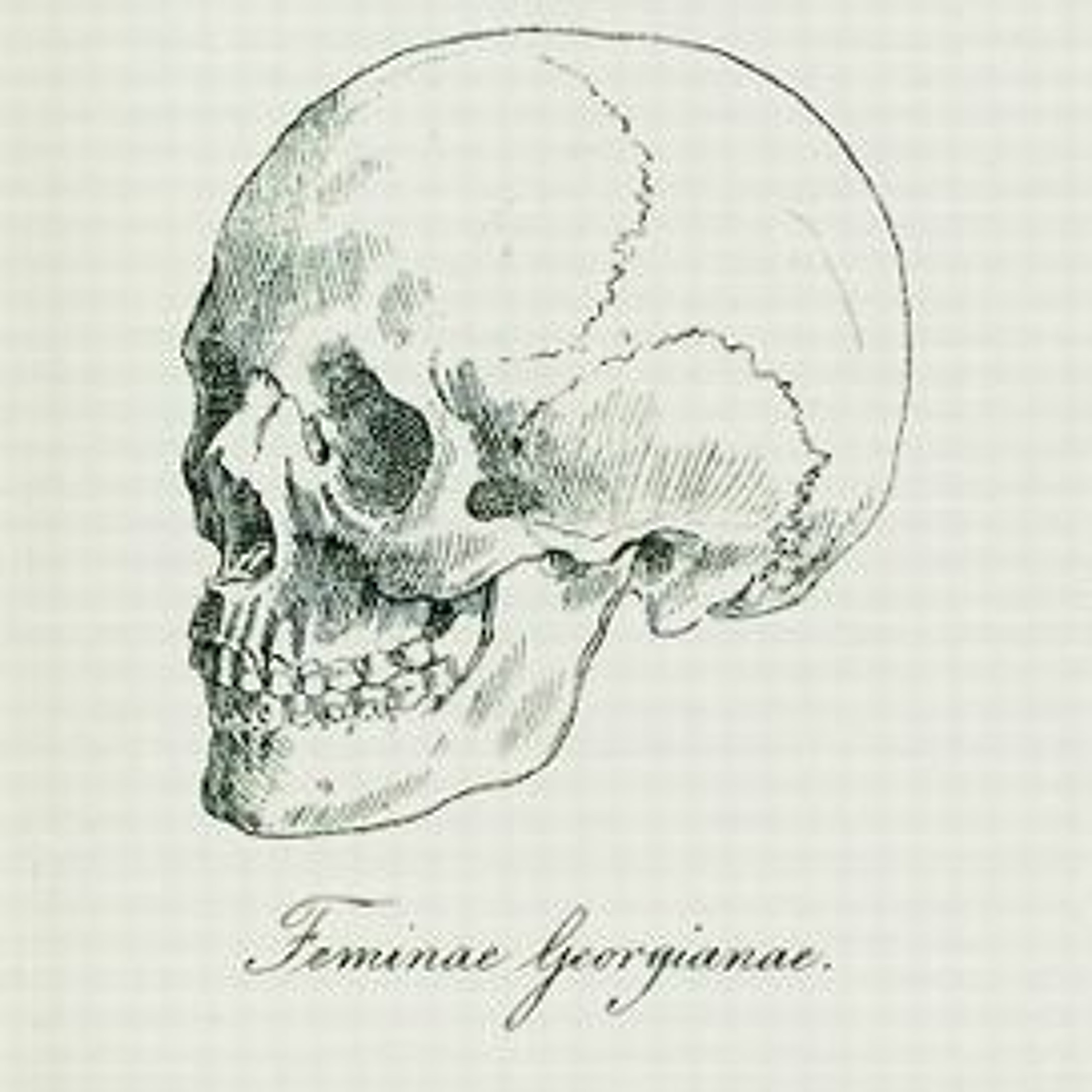
whatever you want it to mean in order to fit what you already think. Eric, you want to read that quote from the decision. Okay, okay. All right. So, mirror ability on the part of an applicant for naturalization to establish a line of descent from a Caucasian ancestor will not, if so, facto, to and necessarily conclude the inquiry. Caucasian is a conventional word of much flexibility as a study of the literature dealing with racial questions will disclose. And while it and the words white persons are treated as synonymous for the purposes of that case, they are not of identical meaning. It may be true that the blonde skin and avian and the brown Hindu have a common ancestor in the dim reaches of antiquity, but the average man knows perfectly well that they are unmistakable and profound differences between them today. So, you're saying that both the average man and scotus has always been as racist as it is now. Man, so much for logic or even science. I mean, Azawa was white, but not scientifically Caucasian. So, no dice for him and Finn was scientifically Caucasian, but he didn't look like he was from like the Midwest. So, no dice for him either. Right. It's this total slide of hand that's going on here. It's so interesting. So, so even though we use this word Caucasian as a sort of scientific-ish sounding, you might even say politically correct term for white people, it has been used and misused again and again throughout history as a way to draw political and economic boundaries. It can be used to include some people in whiteness in the United States and it can just as easily be used to exclude others. But I don't know. I mean, these cases are from the 19th century and the early part of the 20th century. This has to have changed more recently, right? I mean, I recall in that I just had a conversation with a student the other day who is complaining that he has to check the white box on the US census because he was saying, "Look, I am clearly not Caucasian. I should be able to check the other box." Really? Yeah. Ah. Well, I mean, the words are slippery, right? There have been a bunch of legal battles built on that slipperyness. And you'll love this one, Eric. In the early 1980s, there was a case based on a professor who was denied tenure because of his race. He contended. Oh, no, not a tenure case, no. Yes. So this is the case, Saint Francis College versus All Cous-Raggie. It was a 1987 case. An Iraqi professor teaching in the US claimed he was denied tenure in 1979 because he was racially discriminated against. But the college said since he was scientifically Caucasian being Iraqi, he was not protected by a civil rights code pertaining to discrimination by race. Oh, man. Then he, it gets better. He claimed that just because he was Caucasian, he was not thought of as white and therefore his civil rights have been violated. So guess what happened? You know what? I'm ready. I've gotten my hopes up before on this episode and you've been dashing them repeatedly. So I'm not going to make a guess. Then I will read from the decision. There's a common popular understanding that there are three major human races, Caucasoid, Mongoloid, and Negroid. Many modern biologists and anthropologists, however, criticize racial classifications as arbitrary and of little use in understanding the variability of human beings. It's said that genetically homogeneous populations do not exist and traits are not discontinuous between populations. Therefore, a population can only be described in terms of relative frequencies of various traits. Clear cut categories do not exist. Oh, I was I was preparing for something bad, but that that seems like a yay. It's a small one, yeah. It sounds like colorblind racism to me, but whatever. Yeah. Yeah. And and this, this is why we need to think before we use the term Caucasian. It makes the speaker sound all sciencey, but it's totally pseudo science. I love the fact that all this fufera is over a label whose type specimen was probably a sex slave, the young Georgian woman of Blumenbach. What? What? The skull that Blumenbach picked as the holotype of Caucasians was from a slave that had been sent to him by a person who was visiting an anatomist in Moscow. And the provenance that came with the skull was that this was a young Georgian woman who had been captured by Muslims and then was lost in war to the Russians and had been serving as a sex slave when she died at a young age in Moscow. Man, science is messy. Whoa. So Caucasian, the original Caucasian was a woman from Georgia. Sex slave. Yeah. Wow. And Caucasian is anything but neutral the way it's used today, especially among the white nationalist. It has had a slippery beginning and it's been used politically in ways that Blumenbach certainly wouldn't endorse. Yeah. Even if Christophe miners may have endorsed those ways. Which I'm sure he would have. All right. Well, on that short and sweet note, I'm Joe, the cultural anthropologist. I'm Jim, the biological anthropologist. And I'm Eric, the historian of science. Thanks so much for listening to Speaking of Race. We'll be back again soon with more things. Don't forget you can always find us on Facebook at SOR podcast or on Instagram or Twitter at Speaking of Race. [Music]
Podcast Summary
Key Points:
The term "Caucasian" originated from the Caucasus mountain region but was adopted in the late 18th century by European scholars like Christoph Meiners and Johann Friedrich Blumenbach to classify human races, though Blumenbach used it non-hierarchically.
In the 19th century, American physicians and scientists conflated "Caucasian" with "white," embedding it in medical and legal contexts, which influenced U.S. naturalization laws and racial categorization.
U.S. court cases, such as Ozawa v. United States (1922) and United States v. Bhagat Singh Thind (1923), demonstrated the term's legal ambiguity, using it to exclude non-European immigrants from citizenship despite scientific or skin-color definitions.
Summary:
The podcast explores the historical and contemporary significance of the term "Caucasian" in racial discourse, particularly in the United States. It traces the term's origins to the Caucasus region and its adoption by 18th-century European scholars like Christoph Meiners, who used it hierarchically, and Johann Friedrich Blumenbach, who employed it more neutrally to describe human varieties as a continuum. S.
racial policies. This conflation had legal repercussions, as seen in late 19th and early 20th-century court cases where the term was used ambiguously to deny citizenship to immigrants, such as Japanese and Indian applicants, based on shifting definitions of whiteness. S.
census.
FAQs
The term 'Caucasian' was first used as a racial label by historian Christoph Meiners in 1785, referring to people from the Caucasus region. It was later popularized in English by Johann Friedrich Blumenbach in 1794, though he did not intend it to imply racial superiority.
No, 'Caucasian' has never appeared as a choice on the U.S. census. The term 'white' has been used in every census since 1790.
The conflation of 'Caucasian' with 'white' spread in the U.S. through medical textbooks in the early 19th century, such as Robley Dunglison's 1832 physiology book, which was widely used in American medical schools.
In 1878, a court ruling equated 'white person' with 'Caucasian race,' setting a precedent. Later cases, like Ozawa v. U.S. (1922) and U.S. v. Bhagat Singh Thind (1923), used 'Caucasian' to deny citizenship to non-white immigrants, even if they were from regions originally classified as Caucasian.
No, Blumenbach argued for environmental causes of human differences and believed in monogenism, viewing human races as a continuum without hierarchy. He promoted intellectual equality and did not use 'Caucasian' to imply superiority.
The term is problematic because it originated from flawed racial science and has been used historically to exclude non-white groups from citizenship and social equality, despite its inaccurate and arbitrary basis.
Chat with AI
Loading...
Pro features
Go deeper with this episode
Unlock creator-grade tools that turn any transcript into show notes and subtitle files.
 PodcastTranscript AI