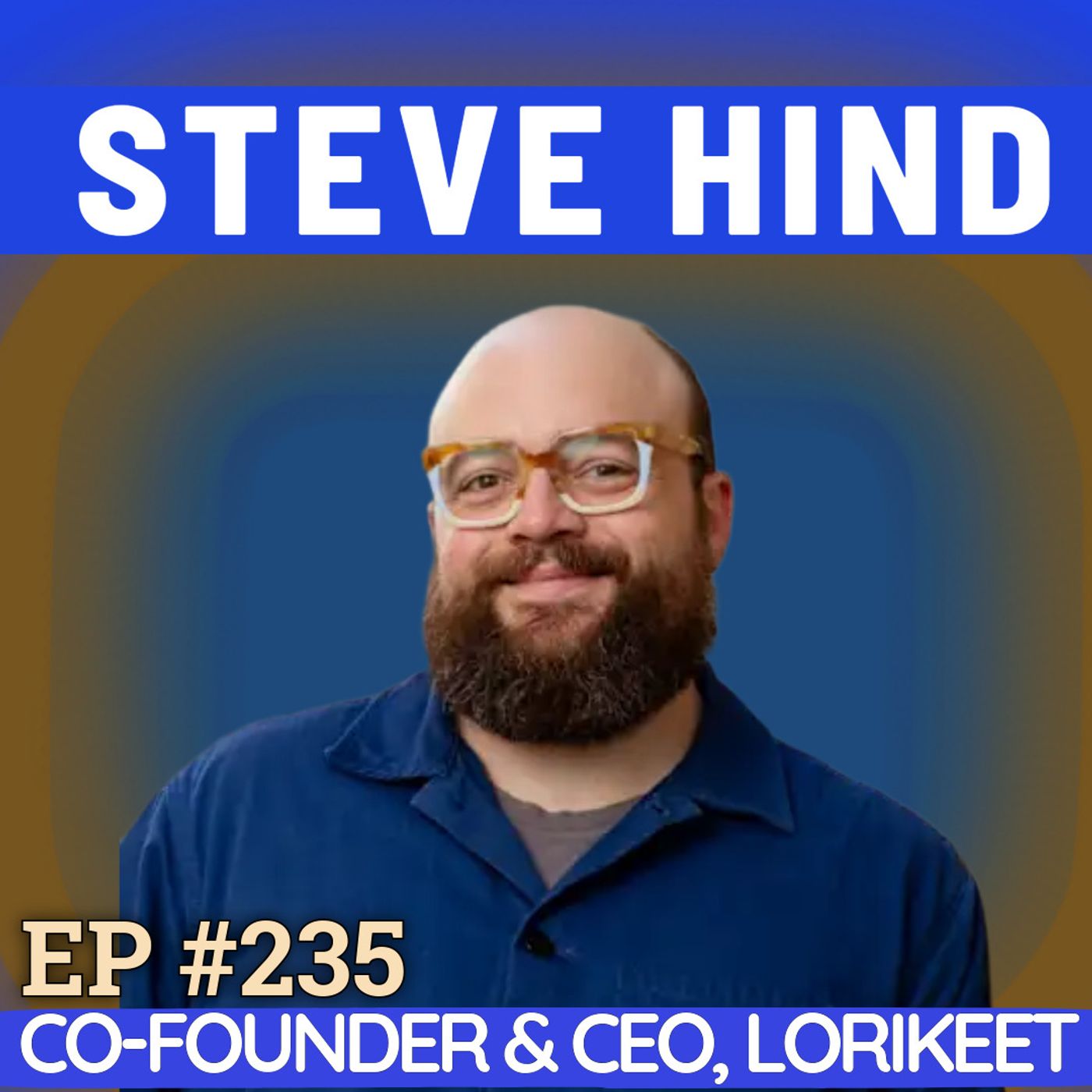
#235 Steve Hind: Forging Lorikeet’s Exponential Growth With Unlearnings from Debating, Bridgewater and Stripe
83m 13s
In the podcast episode, Vita and Steve engage in a conversation that delves into Steve's background, experiences, and career journey. Steve reflects on his upbringing in Townsville, mentioning the impact of his parents' professions and the influence of moving to Brisbane for better opportunities. He shares insights into his early jobs, such as washing cars and working as a paralegal. The discussion also touches on Steve's debating experiences, from high school to university, highlighting the competitive nature of debating and the lessons learned in terms of self-improvement and performance psychology. Steve elaborates on the transition from small-town Queensland to Sydney, emphasizing the exposure to new opportunities and ambitious environments. The conversation also explores Steve's career progression, including his current role at Lorakit and the skills acquired from debating that are applicable in his professional life.
Transcription
19015 Words, 98674 Characters
Hi, I'm Vita, the founder and host of this podcast, "The High Flies". Hey, I'm Steve. I'm one of the co-founders of "Larricade". Steve, I'm nervous for this. People tell me you are very smart, and everyone I've spoken to is amazed by your intellect. So I am quite nervous. I'm nervous now that you've said the expectations. It didn't be bad no matter what. No, seriously, you've impressed everyone that you've come across, which is quite amazing. So I'm really keen to unpack that fancy brain of yours. Let's see how far we can get into it. And as I have discovered through getting to know you a little bit, you've got high standards. I'm curious if I could promise you one thing to make this your favorite interview. What would that be? Good question. I mean, the podcast interviews I find most interesting are the most detailed and tactical. So if you think I'm giving you like surface level stuff, feel free to push back. Great. Thank you for that permission. That's good. What if we could reimagine the traditional notion of a high flyer? Hey friends, welcome back or welcome to the High Flies podcast, where we do reimagine a high flyer showcase the brightest and most relatable role models and companies and their journey from sunrise to today. As one of the premier products in our curiosity center, line up, providing on-demand intelligence to help you be one person better every single day. I'm your host, Virita Gowell, and let's have some fun. Our listeners have called this podcast as a meticulously researched biography unveiling the extraordinary lives and decisions of the most remarkable individuals and companies from around the world. We hope you're enjoying our catalog of 200+ episodes since we launched in 2020 with many of our guests appearing in rare public interviews. It's now time to explore your curiosity. Please enjoy. That's it, the scene with some fun facts, Steve, to get us going. Where we want and where do you live now? I was born in Townsville in North Queensland and now I live in Surrey Hills in Sydney. And work, what was your first job and what do you do now? My first job was, I think my dad bought me like a bucket and some car detergent and used to put me in the car park of his apartment building to wash cars for 10 bucks a pop when I was about 10. I would just get left there for the afternoon and then see how much money I could make, but I think my first like proper job was as a paralegal while I was at uni. Yeah, I think it was at Allen's, right? Yep. Yeah, you've actually got a good reputation there. We work with the Allen's team in my company and I said you're coming on and I think a bunch of them worked well with you and the debating team at UCID. So you've done well there. And Steve, as you know, the purpose of this show is to reimagine the concept of a high flyer, to celebrate people beyond just their job title. Is there a high flyer? You know who feel hasn't got the recognition that is it? Jesus, what a good question. Is it too cheesy if I call out my wife? No, I think partners and parents deserve way more recognition. Yeah, yeah. So I mean, staff, right? Yeah, yeah. So until the start of this year, for six years, she led the kind of fundraising, donor advisory, marketing, cons, functions that give well. You know, they raise something like 300 million US dollars a year for the most respective charities in the world to achieve on that budget and grow it very significantly over that time. I think there are no philanthropic organizations in Australia that operate at that scale. And you know, she's like a big deal in those circles and it's been funny coming back to Australia where philanthropy in general is less of a thing. And you know, I'm constantly astounded by her success and very proud of her and feel like that's a thing that gets a lot less recognition than it should, especially because there's so much like valorizing her startup founders, but I'm like, hey, actually, like you have like my wife is like the best fundraising executive, you know, at least in a good chunk of the nonprofit world. Has that helped you with lower kids fundraising? Do you sit at dinner and talk about fundraising? I mean, nonprofit fundraising is much more like sales. And I actually think like my wife is incredible at sales. And you know, I think in a different world where she'd fallen into B2B SaaS instead of into into nonprofits, like she'd probably be crushing it on the sales side. The reason nonprofit fundraising is amazing is that you're actually getting people to hand over millions or tens or hundreds of millions of dollars and they get nothing in return. Like at least in sales, you have a product to give them and nonprofits, you're just giving them like the warm fuzzing so it's pretty impressive. Yeah, I was on a board of a charity last year and it was really hard trying to unlock funding when there's no economic returns if ever to your point. And a lot of it is like people's personal connection to the problem, give their kid a scan so they want to donate to cancer, whereas they don't feel connected. So yeah, kudos to your wife. And then we've obviously the whole thing is getting people to donate to causes that they don't have a personal connection too. So it's like that on hard mode. Yeah, yeah. Or kudos to staff. That sounds like a high-fly for sure. Let's wind back the clock, Steve, and talk about your sunrise. And I think I am particularly intrigued to understand you at a human level. I've got to know you a little bit over the year and everyone I spoke to I think is almost to know why Steve the way he is. So hopefully this gives them an insight into where you come from and what I'm assuming that I should know the answer to that. So you said Queensland, you said Townsville, that's pretty far away from Sydney, pretty far away from Silicon Valley. What are your memories of growing up and I guess influence a family? Yeah, I mean, I got pretty lucky that in lucky in the butterfly effect cosmic sense the world that my parents got divorced when I was pretty young. And so that naturally meant that my dad left Townsville to look for better work opportunities and move to Brisbane a few years later, my mum and I moved to Brisbane and so I ended up going to high school there. But I think Townsville like genuinely like tough place to be a young adult. There are just not a ton of opportunities. There's not a ton of role models who have, you know, global scale, interesting professional jobs, right? And so getting out of that environment and being fortunate enough to get a scholarship, they let me go to a fancy school in Brisbane. It was pretty helpful in getting a bit of a reset. And then I think, you know, the other part of that was just like when you come from a pretty small pond, I think it can be natural to have pretty moderate ambitions. And I think the one thing I was lucky was just that my parents pushed me pretty hard to like raise my sides. Like I really remember distinctly saying to my mum when I was heading off to this, you know, fancy private school, I got a scholarship to the, oh well, you know, that's place with a bunch of smart people. So I guess if I get like bees or something like that would be pretty good. And she was like, well, I don't know, like, I think you could probably do really well there as well. And I was like, oh, can I? I think it's like a Tyler Cowan thing. He says, one of the highest leverage things you can do is raise the ambitions of young people and help them realize that like more is possible. And I feel like a few times in my early life, I was just lucky that like family or people like come into contact with did that for me and only child. Yeah. Yeah. And what did your parents do for work? So my mum has been a kind of primary school teacher. My whole life, she's going to retire next year off doing it for, you know, 45 years give or take. And dad has done all sorts of things. I think like entrepreneur is the right, is the right classification, but definitely a different version of it to me. When I was a little kid in Townsville, he had a hot dog franchise. We used to have a lot of hot dogs in the house. He had a chocolate franchise. So we'll have chocolate in the house. He had a dog washing franchise for a while. He ran a business brokerage in Brisbane. He was the finance manager at a car yard for a while. They're the finance manager for a property developer and they spent some years as a property developer, made a lot of money, lost it all. He's now retired basically, but just a real can't work for a boss. Kind of dude who's tried a lot of different stuff and definitely was never bottlenecked on being smart enough, but maybe bottlenecked on being patient at off sometimes. Back to the episode in a moment. I'm now joined by Felicity McMahon from one of our wonderful partners, Alan's. Hey Felicity, how you doing? Really well thanks, thanks for having me. I'm excited to have you on and unpack the exciting topic of merger reforms. So tell us how these proposed merger reforms impact the ability of venture capital firms to participate in early stage investments. Good question. So this is one of the most significant changes we've had to the merger control regime, which is where the ACCC looks at what competition issues might arise from companies merging or investing in one another or taking an investment in another company. And for the first time ever in Australia, we're going to have a regime which requires companies to get approval from the ACCC in advance of making that investment if they meet certain control and monetary thresholds. So that means if you're a VC investor and if you're a startup looking to take investment, you need to consider whether or not this regime is going to add a layer of regulatory interface that you might not have to have thought about before. So in the past, we didn't really think about this too much in relation to VC investments because usually the VC investors are taking minority interests and usually they just don't have enough influence or they don't have a competition issue. Now you have to think about this irrespective of whether or not there's a competition issue. It's just a question of do you or don't you meet the thresholds and if you meet the thresholds, then you'll have to get ACCC approval before you implement that transaction. Very interesting. Sounds like a fairly significant potential change. What strategy should VCs consider implementing to remain ahead of the curve? So the first thing to note is that the regime isn't yet settled. So it applies to any investments that complete on or after one January, but the law is still being tweaked slightly even at the moment. Don't think that it's settled. Make sure you keep up to date with the changes and think about this early. The earlier you think about it, the more you can manage the risk and there are various processes that you can go through to get your approval ahead of closing, which is really helpful. It also might be possible to structure your investment so that the regime doesn't apply. That may depend on whether or not you're willing to take fewer control or influence rights over the target or the start-up, but there may be ways that you may be able to structure around it. Obviously in an entirely legal way, you know. Great and I'm sure if there's any questions, folks can reach out to you or one of your hallowed teams directly. Absolutely. We are working really closely with VCs to help them stay ahead of this. Fantastic. Thank you for listening. That was really helpful and now back to the episode. And I mentioned earlier about debating. I know that came more when he went to university. Was that also prevalent in high school? Yeah, I mean, look, I've probably listened to my parents argue with each other a lot, but pretty pretty smart, articulate people who didn't get on super well, which is why they got divorced, but I've probably heard them argue a lot. And yeah, I mean, look, I actually remember the pivotal thing for me with debating was when I was in 14 and like year nine, I made the top age group team for debating and my school that I was at had this system for getting lines on your blazer. And I basically figured out at that point the only way I was going to get any lines on my blazer was if they were for debating. And so that may be sort of stick with it much more, you know, a hedge against being terrible at like rugby and cricket as opposed to love of the game and then stuck it from there and was, you know, pretty successful at high school and then kept at it. Talk more about it. The interesting thing about debating is I don't know for how many of the many years I was involved, I really loved it as opposed to just doing it out of like bloody minded determination to win, which is like maybe not the healthiest motivation. Tell me more, what do you mean by that? So what was the driver to push through? I like, I think at high school because there's a lot of like representative stuff, it did feel like an honor. Like I was a captain of the Australian team when I was in high school and that felt genuinely humbling and a cool thing to be part of, right? I felt like that's, you know, representing my company and being like my country and being a massive nerd, but it's still cool and I felt very grateful. I think I got to university like a bit burned out on it and probably a lot of what motivated me, probably the back half of doing at university was just feeling like people who I thought I was better than had more success than me. And so I was like, I'm not giving up until I've had the level of success that I think is can measure it with what I can achieve here, because it annoys me that people who I think I am better than it debating have been more successful than me, which as I said, is like a little bit of a maniacal way of doing it. And then I probably came to love it again once I stopped competing as much myself and just went back to coaching because that's much more rewarding I think than doing it yourself. You're making me feel better because intelligent people like you can also be insecure, so that's good to know. Oh, hugely so. Yeah, yeah, a maddeningly so, yeah. Do you still carry some of that to with Lorakit, where you're trying to play that in a lizard brain to prove to the world that you're smarter than people think you are? I definitely am just so you know, I definitely know. I don't think it's, I don't think I so much care about am I smarter than people think I am. I think people probably tend to think I'm smart, but really mind I think it's more am I achieving what I think I can achieve relatives or other people, look at other people and like, I don't know, I think I can, if they can do that, I can probably do that. That's probably more of the motivator. Okay, let's about what outside people think I think it's more just like, if I look at where I think I should be, I get like, you know, a bit of oil, I really should be able to do better than this. I want to talk about the transition from small town Queensland to the University of Sydney. So I'd love for you to visualize when you turned up in Sydney with your bags in, as you me were living on campus and then you, as you said, you got into this like prestigious university and you're debating and immediately smart people. What did that do for your ambition thermostat? Was that a out of world experience the first few months? Yeah, I mean, yeah, it's like, it definitely like a thing that turns up the ambition thermostat, right? And you start seeing what are the levels of things, right? Like I think a couple of times in my life, I've ended up doing or trying to do jobs. I didn't even really know existed. At some point of time before I, after my kind of six years of Sydney union went to BCG, I had no idea what a manager of consultant was. Like I couldn't have told you. I actually tend to think that wanting to be a manager of consultant at high school is a sign of sociopathy because it's like, it's crazy to even know what that is or aspire to it. But yeah, I mean, it's had like literally no idea. And so you, then you meet, you know, one of the older debaters and what do they do? And how will they work at a manager of consultant? What's management consulting, right? And that sort of stuff is, is pretty powerful in helping you understand what even is the option set for someone who is like me and might be interested in this sort of stuff. So when I googled someone told me the name Chris Crowe, I think he was your debating partner. So when I googled his name, literally like five articles come up of you and him winning like all the championships in 2009, 2010, I think you beat Oxford and Harvard one year as well. So kudos to you. Clearly, you were very good. I'm curious, what are debating that level teach you about how to make people change their minds? Like at something you do with Laura Keet now, right? Where you're convincing investors, you're convincing team members, you're convincing customers. But back in 2010, how did you learn to use words to influence and persuade people? So I actually think, I think there's a chunk of lessons from debating that were unhelpful that I had to unlearn, which I can, I could speak about in a second. I actually think the most, the most useful thing, or that maybe the two most useful things from being like very competitive and debating, one is you have to be coachable and coach yourself. Like in terms of the sort of like commitment and obsession with performance you need, it is very similar to trying to be a world class athlete. It's not similar in all respects, right? Especially because no one has the resources to be doing it full time. But you've got to be able to step out of every debate and go and get as much feedback as you can from the judges and then filter that feedback through what of this feedback is most useful to act on so that next time I'm more likely to win or I can do better next time and I can improve what I understand. You do a lot of trying to learn more material and understand more stuff. You think a lot about the theory of what types of arguments and what types of approaches make most sense. So like you have to be just like all in on like studying the thing and trying to get better at the thing. And then I think the second one is actually like I would say on my day and on other people's day, there were probably a few people around the circuit at my time who was solidly better than me on average. But I lost finals to them much less frequently than I would lose other debates to them. I think actually a lot of probably the success person I had was like just keeping our shit together in finals and probably actually performing a bit better in the final in front of the big audience and in the big moment than other people. And so a lot of that comes to that like performance psychology and trying to be like on top of your own shit and think about how it is that you're going to perform in the moment. But to the original question actually like I think a lot of the stuff about how to persuade people that you get from debating is dead rock. Like you win debates by through force of logic and charisma convincing the judge and the crowd that your side is right. But like you don't actually believe in that side. And investigating what is true is merely one tactic of many to win the debate. And you get into the workforce and it's like the opposite. Like you actually need to work really hard to find out what's true. And in many times being like very forceful and intentionally persuasive undermines you. Because in a debate your opponent has to debate you and then a judge decides who's right. In the workplace if you come off too strong on someone in a meeting they don't debate you back. They just walk out of the room and white at you or don't do what you said they were going to do or you're like there are lots of different ways in which they can win. And so a lot of it was actually like re-engineering. Like how do you try really hard to create space for people to disagree with you even if they're finding you in the moment to be like very forceful or persuasive. And then how do you make sure that you're like super clear in your own thinking and in thinking you broadcast that you are actually just trying to figure out what's true. And if anyone has a reason why what you're saying is not true like you really want to hear it and you're going to drop what you were saying before and jump on the kind of true bandwagon. This is really interesting. I think what I'm hearing is in debating you persuade with words I guess and then product or business you persuade with what you ship. Right. That's one way of putting it. I said debating is like where the sport works is that you are assigned aside. So you're going to you know for the next 90 minutes you're going to make the best argument you can for a particular point of view. And I'd say in the rest of the world you're actually just trying to find out what's true and then what to do about it. And so the problem with debating is you start from the position and then come up with the arguments and the way you actually want to operate in the rest of the world is trying to discover what's true and then build the best solution for it. I mean it also goes to something that I mentioned to the other day that I actually appreciate about you is you have opinions but then your team always say that your opinions actually have substance. I'm sure you've met a lot of people that just put out opinions for the sake of opinions. Can that have a downside and maybe this connects to any moment in your career or even loricky today where yes having opinions and confidence is good particularly with you which generally has substance and thought behind it. But can that come back to bite you? The biggest way it comes back to bite me all the time is I actually think my opinions probably have significantly less substance most of the time that my team does and it's the fact that they're all telling you that is part of the problem. My wife jokes that I'm like terrible to play pub trivia with because I'll just guess at an answer but it sounds like I'm like really convinced and I like have all these reasons but I'm actually just guessing and I worry probably that happens too much too is it is definitely a thing about me that I know I'm kind of void which is like in the absence of a path forward or an opinion I've always been the person who put my hand up and be like well why don't we try this and that probably comes from some debating training well if you're a captain of the debating team you've got 15 minutes to put your argument together you've just got to take a swing and go for it but the problem is if I come across the wrong way people don't realize I don't know either and I'm just trying to move us forward and that is it's interesting to hear you say that came out from feedback and that makes me quite paranoid. Well I mean yeah I mean that's interesting I guess what I've learnt as a team leader myself and over my career is speaking last helps combating that then that way you don't steer your team based on the most things. And I think for me it comes back to actually insecurity where I feel I need to tell people my thoughts otherwise they'll think I'm the dumb person in the room but I realize actually I don't need to express my thoughts I don't need to say anything for the first 10 minutes and just be quiet and let everyone else talk and then mediate I don't know how you manage that. I'm terrible at it. I always talk first. Well I'd love not to I think so when I it's a little bit different maybe as a co-founder but as a manager I will say to people who work with me hey one thing to know is that when there's uncertainty or silence I'm going to jump in and sometimes that's just going to be having that's going to happen because I process something quickly and I really don't want to step on your toes so if we have an important meeting together give me my stage directions feel free to tell me don't speak until you're spoken to and I will just I'll just try and discipline myself and shut up and let you run with it. I think the challenge a little bit when you're the co-founder is you know everything early on in a company is existential as much as possible you want people to learn by doing but sometimes they need to learn by seeing because we don't have time to fuck it up learn the lesson and then repeat and so if we're having an important conversation and it's a topic that like hey I've seen this movie three times before and I just need to tell us what the final scene is so that we can go take the next step I just can't not jump in it it almost feels it almost feels like a baby in the team if I sit there and let everyone have a debate when I think I know what the answer is already now if I don't know what the answer is already I really want to understand and I want to have the debate and maybe I think I know the answer and I'm wrong but I really struggle with that speak last thing I just can't do it and I'm not even sure it's always the right advice because I think sometimes like you owe it to your team to just be like hey we can skip forward and go to the next thing how does that and we can jump around here how does that play out with Jamie like when you and him catch up your co-founder for those you don't know like because he is quite different to you I spoke to him the other day and he is quite considered in what he says he's quite reserved he's got a dry sense of humor how does that play out with him day to day where in terms of like influencing the company direction I mean one of the great things about working with Jamie is I just think from the time we started working together we found it very easy to get in sync like we can look at the same set of facts and have an incredibly similar take on them in the vast majority of cases and so that means I think we can both play to the way we are naturally like he knows I jump in on stuff I know that he sits back but then I think the flip is like he puts a lot of signal on situations where I'm not jumping in and I put a ton of signal on the situations where he is and I like listen really intently because I know he's not like saying shit for the sake of it and it ends up working really well I could easily imagine other dynamics where like my way of being would be super annoying like I think it would be a fit for everyone I think it's part of the reason I'm like really lucky and fortunate to work with Jamie's I think we just have a good a good click because of those like the way that we tend to work compliments each other but the foundation layer to it is I think we're generally aligned so like I'm one of the things that we try and achieve is like someone should be able to ask us the same question and get a very similar answer a very high percentage of the time and then if we maintain that piece being true in some ways like who speaks just matters a bit less he said to me you get you you get that right 70% of the time which is a pretty good hit rate yeah that's what he said and I think also the other one that is just natural of company building is as you hire functional leaders I guess that'll be a proof in the pudding of how your role changes right like I think you've got now got a sales leader marketing leader product leader you've got market leaders in some in Europe in the US so I think maybe just Europe for now how do you think about that like again letting go something I personally am very bad at that's why both you and I have founders is we have that sense of agency and that sense of just get shit done but as you bring in these leaders and executives how do you give them you know autonomy and empowerment and like only step in when they ask you to yeah I mean look at if I can um stand back and just take a pot shot at the Australian corporate culture for a second as a way of answering it one thing I've noticed it's very interesting is I find a lot of Australian execs at startups as well are almost like performatively deferential to their teams my job is to hire great people and then get out of their way a lot of my team's gonna make this decision and it's just not a thing I see in the States I think if you end up like if you have a role where you have genuine ownership over an outcome then you have to achieve the outcome and ideally your team is so great that they achieve that outcome autonomously and you're just there to cheer them on but like a lot of the time that won't be true either usually because of gaps in context but sometimes because of gaps in skills and I think your job as a leader is to make sure that you're collectively successful and then over time also develop people and give them opportunities to stretch but like I think like the you know I would not hire someone and say you know my my hope here is to be completely deferential deferential to you on this area of the business because unfortunately like a bunch of institutions and individuals gave us a bunch of money and I feel very personally responsible to that and to doing a good job and likewise a bunch of companies put their trust in us to talk to their customers and again like I have to make sure we do a good job and so you know one of the things that I try and lean on really hard is I really do want people to act with agency and conviction and just do stuff but it's downstream of making the right decisions in other words I'm not going to let someone fuck something up as a learning opportunity if it's a big enough thing that it matters if it's a small things by all means do it see what we learn take the experiment I don't know either you know but something really important like if I think you're making the wrong decision I've got to tell you that so it's like you have a lot of autonomy subject to making good decisions if you make bad decisions you have less autonomy and I try and be up front with people but like the thing that's required I think to be successful in a high agency environment is that you are able to make a decision learn that it's the wrong decision either from the outcome or from feedback and then just go make the next decision and the next decision and if the way you react to learning that you made the wrong decision is to then try and avoid making decisions by like continually asking me what I think or continually trying to find a way to drive consensus so that you don't actually own the decision then you like lose the velocity that you need and you lose the learning loop that you need and I try and be up front with people but like that's the thing they've got to be hopeful and then there's a bit of a trustful right like I have to trust that they really get it and they have to trust that if I tell them like I didn't care if you get something wrong I care if you like understand something from it and why and keep taking swings I have to trust they actually mean that let's double click on the Australia versus US one because I agree with some parts and disagree with some parts and you said earlier let's go beneath the surface so I've interviewed a lot of international folks on this podcast which is interviewed John from extra I put you work to it then my works in companies myself my view is it's company and person dependent not not culture country dependent that's just my thought but I'm curious what did you see in the US when you think of a stripe or a watershed or a bridge water or even just your friends at other companies like what is world class company building in terms of a team and leadership that to you is like the best that you've seen in other markets that you want to bring to locate yeah so let me look at the starting point I mean you're definitely right as you go subdivide some of these generalizations you see different patterns but I feel like I feel like I've sampled enough till generalized and not be totally wrong and the things I would generalize for instance Australian work culture is on average more direct than American work culture East Coast American work culture is more direct than West Coast work culture there's sort of deferentialness from leaders to their teams in Australia feels a bit performative and is sometimes an exception to that like I think Australians can tend to be very direct with counterparties but very indirect with their teams and I see Americans can sometimes be a little bit you know more direct internally and then more like fluffy in the external communication so you see some of these some of these differences but I think one thing I've observed is like a lot of Silicon Valley culture is very heavily inflicted by Google which is a unique business that basically hit a cash guise and then needed to maintain the cash guise and so what that often meant was that keeping people happy and keeping people like inside the tent is a really valuable tool when your main job is to protect the cash guise or will you find the next cash guise and there are a lot more businesses that face higher existential risk are fucked by that like one of the things you see culturally from Google and Google people is that like giving someone tough feedback or holding them accountable is not a very high ROI thing to do because it might upset them and upsetting people is bad and it might poison a relationship you could use later whereas if you look at people who've come from more accidentally threatened business maybe like canonically in a big business Amazon actually the most the worst thing could happen is that we screw something up not that you offend someone and so none of that is actually about the access of are you personally abusive it's much more the access of are you willing to say I don't think this person is performing I don't think they should be on the team would you say that to your cross-functional partner if you're working with someone and you have a problem with them would you try and share the feedback and get in sync or would you go tell their manager and you know let it be handled through the correct channels it's those sorts of things and so if you apply that framework of kind of existential threat I do think a good chunk of corporate Australia in particular does not feel very much existential threat and so you start seeing some of those outbreaks of just a not very accountability of performance driven culture back to the episode in a moment let's talk about some of the most intimidating acronyms in business ISO 27001 sock 2 essential 8 they sound like an alphabet soup don't they trust me I've been there vanta is like your businesses compliance superpower they automate the messy mind numbling parts of security monitoring compliance tracking and audit preparation all of you as listeners of this podcast get a special offer all you have to do is go to vanta dot com forward slash hi that's via n t a dot com forward slash hi hi g h or reach out to me via email in the show notes and that link vanta dot com forward slash hi is also in the show notes now back to the episode I mean we in my business work very closely with Google's bit I do agree with your meta point and actually worry is that happening again with stripe in Palantin hour where you see so many of the alumni and your one example where I mean I was saying this to John the other day a lot of the AI revolution is being run by x stripe folks in so many companies around the US right and a lot of the stripers are being carried forward and you on podcasts are constantly hearing about oh Palantin did this so we should do it again stripe did this we should do it again how much of that is I'm sure you've heard that line like there is no original ideas like a lot of the world is made up of which is copy someone else's idea and packages as our own like does that worry you again we're talking to the abstract now does that worry you as like someone who's well read and you keep tabs on other companies I actually think I think like sampling very broadly and then copying what you think is worth copying is a really great idea the challenge tends to be people commit a logical fallacy with this which is they say oh stripe did x and stripe is successful therefore x makes you successful and just as a matter of pure logic actually all that proves is that x thing is not inconsistent with success but what it turns out is that inside is hugely illuminating because there are lots of things that people say you must do to be successful that stripe did not do and so having an existence proof that there are things that are not necessary to be successful really opens the aperture to give a classic example you know one of the like curse problems I owned at stripe was our internal infrastructure for building our customers and at tens of billions of dollars of revenue a substantial portion of that infrastructure ran off an operations team and spreadsheets and that was not optimal but that's what it did and so now when I'm running my little dinky dyesass business and people come and try and sell me automated billing solutions and tell me like you can't possibly scale the 10 million of AR with manual billing I'm like yes you can I know for a fact you can and some of that stuff I think of like understanding like what things exist and don't exist in quite successful companies is very valuable but the other piece of that on stripe specifically is I think there's a perception outside in that business has always been a juggernaut that was inevitably going to the mood and maybe that was true but the thing that john and patrick did really well is I can tell you the culture internally was never that it was a culture of taking people who may be outside in or on a rocket ship and making them believe that every decision they made and every action they took would make a really big difference to the success of the company and that success was not guaranteed and that's why if I was at a mega scale up now I would hire every early stripe person I could find as well too because you're basically importing these like experience smart people who are going to come into your business and be constantly paranoid about how you might lose and by doing so make you more likely to win so I think there's like on the stripe examples specifically I think there is a good wisdom to why those people have been in so high demand yeah yeah I mean revisionist history is a real phenomenon and it's the same with volunteer you probably know Shannon Scott who's it yeah well he's been on the podcast then he doesn't do many interviews so I was very grateful and he said that he know what they were doing in volunteer he was like employee number 100 and he was there for 10 years and now and hindsight the dots connect I mean that kind of plays out I think even when I speak to your VCs like I one name who would they'll say I Steve was destined to be successful because he worked at bridgewater he worked at stripe he worked at watershed and I actually say I know all your VCs well and I always say to them is that again revisionist history where the dots seem to connect in hindsight was when you first met Steve did you think the same like I'd love to read your memo when you first met him what I mean we don't need to read the memo just ask them what the valuations were if I was I was always destined to succeed we could have tacked another one or two zeros yes that's interesting but anyway we'll dig digressing I want to come back to you and of course spend a bit of time on lorikey shortly well one thing I came across that I don't think you've been asked I came across a guardian piece that you wrote back in the day and this I think connects to lorikey you like the summary that I took away from that was you were saying if you hook people and then deliver clickbait is okay correct me if that's the wrong summary but that's what I took away from it I'm curious how does that map to modern product let grow and lorikey to generally the world of marketing and content if a customer clicks on your product because they're curious how do you make sure they feel rewarded and not tricked like I'm curious because you have that thesis back in when was your article think back in 2009 or something yeah it was a decent while ago I think the thing I was trying to react to was like I was I've always been very interested in media and was like working in media in various shapes and was like reacting negatively to this very strong meme at the time the like clickbait was bad and it was bad if the New York Times headline was like five things you need to know about sedan or whatever and I was kind of like what's inherently bad about that like the thing you're trying to do is capture someone's interest if you capture their interest and then you deliver them information of value that seems good and from my perspective the headline was like way less important and it's just tactic and if traditional media outlets want to adopt that tactic so that they can compete with upstarts and deliver good stuff that seems fine I think the most analogous thing in the AI space is I believe for quite a while that like what makes a customer experience feel quote unquote human is so unrelated to how many humans that are involved it's actually much it's do with whether the customer feels understood whether they feel like their problem was you know solved or it was explained why it couldn't be solved and you know they were put on a good stead and if you can aspire to build an AI solution that can do that what you can often actually do is deliver like that human experience at a greater scale and a greater efficiency and that's a benefit so maybe the patent is just there which is I think the headline is way less important on what you want to do is understand like what's the underlying value driver and then correct look at that and then in a lower-keyed context do you still hold some of those beliefs today? yeah I mean that's like that's how we think about lower-key right I I think what we are trying to do is build a platform that enables our customers to provide like better customer experience than they currently do by building an AI system that's able to take the things that make you say an experience was human and replicated at scale and then the headline of is it AI or not is a destruction from that it's much more just about is the system solving people's problems in a way that resonates with that one that they appreciate I actually think one of the things that you've said to me a few times is that you think you're not good at marketing I actually would challenge that I think you actually have some pretty interesting thoughts on go to market and marketing maybe you don't get the recognition of Tim Doyle gets but I think actually you have some thoughts that are valid anytime I have pretensions to be good at marketing I talked to Tim about it which I do often because he's very generous with this time and who's tomorrow I mean honestly the reason I'm not good at marketing is I really overthink this like one of the things that really annoys me is marketing that feels like it's talking down to its audience and so I refuse to do it but I think that's probably to my detriment so to give an example right Laura Keat is able to guarantee that our customers and customers will get an answer to their question in seconds but every competitor about us can do that too and so I just refuse to let that be part of our marketing messaging and I know probably deep down I'm overthinking that and we should just say get answers in second but I feel like an insult to the intelligence of the audience because if the audience was well researched they would know that the competitors can do that too so I think we should be finding like a better story to tell but I think like probably we could go run a test and learn that like actually it would be better marketing just to tell people the things that they want to hear but I just can't do it so that's what I mean when I think I'm a bad marketer I think good marketers are like way less ego about it effectively they're just like hey one message is going to work for my target audience to you know to sell widgets or sell B2B SaaS and I just can't do it so we're someone else in it's even involved like I know you built your website and your branding you went from Optek to Lariky did you delegate that to someone else it's undiligable yes you were severe what I'm trying to say is you did it well it's okay for working with people I want to spend a bit of time on your career and almost framing as a toolkit of skills you've learned pre-Lariky and then come back to Lariky so I and I want to go through each role because we'll be here forever you talked about Alan's and BCG both prominent companies but different industries ones in law ones in consulting you had each for I think a couple of years when you look back on those experiences it came up in my research that you actually very hungry feedback during your time at BCG and I think you were telling me this the other day when we spoke yeah yeah I caught up with someone I'd work with like my first year of BCG 13 years ago who said that was the thing he remembers just like all the people he worked with I was just like constantly demanding feedback and I like didn't notice I was doing that at the time that just seemed like what would be useful and probably ties a bit to the debating thing right like you as I was saying like you got to come out of the debate find the judges be like what can I learn from them so I can do that next time and probably roll that forward and I think it's super helpful I mean I remember when I was kind of learned to do product to strive I was like every time we'd have a meeting I would grab the engineers and be like how did that go what could I do differently is that good I had no idea what I was doing and so you just get in the habit of like trying as hard as you can to ask for that feedback and people like to help other people so probably create some virtuous loop where they're more likely to do it in the future yeah it's really interesting as you go back to my door to our previous topic around where you're opinionated and confident with your thoughts but then this feedback mindset I think that's actually a really good balance because most people tend to be one of the other in my experience have opinions and do not care what people think or they're just asking a feedback and don't have any opinions well the interesting thing I think about making feedback work for you is you got to separate it from how much you care about what people think just for argument say imagine I don't care what you think it's still very useful for me to get your feedback and then what you have to do is have a filter that says what of this feedback is going to help me achieve my goals and then I'll go adapt it adapt it that way yeah I mean I've been the recipient of your feedback so that's good like I have your email did I actually respect it where you'll be quite a front way if you don't think it's going to add value if you don't have time you'll reply but you'll be like hey tell me more and if it doesn't add up your thanks but not right now which I think I wish more people did rather than ignoring the email so and it's it's tricky because it's easier to just put it in the too hard basket but I think yeah one of the reasons I think some of that can be useful for instance I will try it if people send me non-AI generated spam email I will reply to it like basically without fail often I'm going to reply and say hey this sounds fun but I can't prioritize it now no thanks the reason I do that though is actually those moments are also internally useful because there are a chance for you to reassert what matters to you and so it's actually a good practice to confront those things and answer them versus just put it in the too hard basket and slink away yeah so 2014 I believe this is when you left Sydney and went to the US yeah tell me your mindset of that point in life I left consulting because I hated how stressed I was getting about what our clients would do relative to them often and I felt like if I'm going to be like stressing myself out over what happens in this business I feel like I should actually be accountable what happens in the business and not just advising and an MBA was just a way to it's a graceful exit from consulting if you're not sure what should come next and so I went to grad school to see what else was out there and learn what some of the options were that was the big mindset it was just like I really didn't know what it was I wanted to do and this just was a like an MBA is a very it's like expensive but it's a punt like you just get to be like I'm going to defer trees and what to do for two years and you know that's in like a I always say to people if you know what you actually want to do just go do it don't do an MBA but like in a situation where you know what I want to do it was helpful so I pulled out a couple of questions from your roles now that I don't think you've been asked and let's see how we go you can tell me if it's a boring question so so Buzzfeed I think the main question I have from Buzzfeed is like the culture because you've talked about how the culture was you learned a lot about what not to do in terms of culture building I'm curious what's one Buzzfeed cultural habit that you swore that you'd never replicate if you ever started a company the thing that I observed and I had a limited purchase so maybe people who were closest to it would say this is not true but the thing I observed was that a lot of people sway in the organization came from whether the thing they were responsible for was delivering results and it created a lot of permission to behave however they wanted so there was all sorts of just like political skull duggery crappy abuse of behavior but if you were doing that and also like your department was getting a lot of views there was a bit of a blind eye turned and that I just didn't strike me as okay like I think you have to have some rules of the road about how you can interact with each other and then if you allow people's performance in one area to let them get away with being monsters you can send in the message to the organization I think in a bad way bridge water when you went there so I think you were there for three years or maybe give it take a little bit less how do you reflect back on that time because I think my reflection of you is you're a product guy you're a tech guy like that's your stick whereas bridge waters finance and trading and algorithms how do you reflect back on that time if you could do it again would you not go to bridge water that's a very tricky question I mean I went there because I'd paid for my own MBA so that I wouldn't have to go back to PCG that was a way of tying myself to the mass to make sure I didn't go back to consulting and they offered me just like way more money than it seemed reasonable to offer me and I was like I've got this huge student loan but the other reason was like I was addicted to the idea of it being a very big pond where I would get a ton of feedback and get to learn and get held accountable and I think bridge water like totally delivered on that I mean the greatest gift that bridge water gave me that I think like I think every organization should aspire to give is like they tell you in addition to your performance every six months what they call your curve which is the sort of like assessment of like your ceiling at the organization and I was like an eight curve in the investing community eight out of 10 so top 20% and they were right about that like the person I sat next to is now the deputy chief investment officer and the guy was like a total shamazzle of a dude in terms of just like turning up on time and managing people and stuff but he constantly was just thinking about investing and having really interesting ideas and like very creative and very analytical and so I could see where I felt short of what they needed and why some of the skills I had didn't line up with what they needed so me being like organized and able to manage and lead was just less valuable to them but the fact that they were open about that and then I could they would share that assessment and I could be like yeah I agree like I see why you you see that and I think you're right made it easy for me to be like look I get then on my current curve probably best case scenario for me is you know I'm on the currency team maybe I'm the head of the currency team I'm not going to be the chief investment officer is that a path I want to be on and I was like I don't really they said to me hey you know near is going to become the CEO why don't you backfill near as like the manager of the investing department and I was like well because Bridgewater is the best place to invest I don't want to move on to the management side but because you can have that conversation openly I could decide hey I'm going to call time here and go go back to tech where I see more growth opportunities and where I think maybe I'm a better fit but I think the me being a product person is the thing I stumbled into I someone I worked with at Bridgewater who's now an engineer at Google I caught up with him for a drink and it was talking about some of the stuff we built together because I found myself just building products at Bridgewater but even though that's what I was doing and he was like it's yeah it's so funny to see you in product now because actually like you were just being a PM at Bridgewater and I was like yeah I guess I was put it didn't I didn't even know what it was I was just doing me and it turns out that's called product and so it was lucky to get back into tech yeah I mean the product one sounds like do the job don't ask for it right and a lot of people wait for permission whereas clearly that agency came across so before I ask you about how striped happened so you and I spoke at the start about how this identity that you had from small town Australia trying to prove to people really good the debating baggage so to speak and how both of us agreed that insecurities played a life in our better role in our lives where was your head space at this point I don't know if you'd met Steph by this point I don't know if you're married so you can tell me but you've got this MBA now you're well now one of the smart kids right you've been a Harvard you've been to UCD you've done debating you've gone to the US what was that inner dialogue with Steve back in 2016-17 pre-striped? yeah I mean not to sound like a massive a massive fuck with but honestly like the big benefit of the MBA for me was actually just the big reset in my self-assessment because you know once you feel like you're in the big leagues like when I got there I was like oh actually like I think I'm still doing pretty well here relative to other people like maybe I should really have high expectations of myself and that was huge like maybe a slightly sharper way of saying it is I was not wildly impressed actually by like the average caliber of my classmates and you know not because I went to press people but I think maybe I'd like I had in my head this idea that there was like this bigger league and then I was like oh no actually you know I can compete there I can be good I don't think it made me think I was like smarter than ever else it has made me it made me think I was like in the category like I'm at least hey I'm in this place there's no higher tier that I'm not at at least for certain types of things and that's very useful because once you tell yourself you have the raw material to do it then it becomes a question of how do you find the right angle and find the right things to work on which is a little bit good at debating knowledge you once you think hey actually I am good enough to win this thing now I've got to work out how to go and win it it's a bit analogous to that came out of that and said cool part of the reason I was willing to walk away from Bridgewater as I said to them I was like look I agree with you that I'm top 20% here I think there's a job where I can be top 0.1% and I think it's incumbent on me to go find that and that was a benefit of having that I think experience from business school and you'd met Steph by this point to your wife yeah I mean we we've been together for shit coming up on on 19 years we've been married next month we've had me married for 10 years so it's been gone for a while yeah so she'd been there through all that yeah congrats okay so now tell me so Jan 2019 is when you leave Bridgewater Stripe was a pretty big decentralized company with this point I don't know what revenue are employees yeah how did you come across Stripe and how did you get the job so actually came across Stripe when I was in Sydney after I left BCG I went and helped Mark and Dylan when they were like two people building Quill just I was like just paid me up to make my rent so I can like learn some stuff before I moved to the States and we were integrating payments and I had a big argument with Ben who was their kind of founding engineer about why they should use brain trust instead of brain where they go brain fish no brain fish fuck what are they called whatever the brain one they got acquired by three powers instead of Stripe and he was like no Stripe so much better the developer experience is so much better I think I've been you want to develop your experience what I was about someone going my first interaction with Stripe was losing that argument and figuring out that maybe this Stripe thing had some traction with developers and then you know circle back on them but in 2018 when I was like looking to leave Bridgewater I was actually having a lot of trouble getting tech companies to return my calls because being a couple of years post MBA with the finance background and without startup experience is quite hard for people to know what to do with you because if you've been in private equity they can put you on the finance team but I wasn't doing analysis on companies I was doing analysis on economies and currencies so you know it was just hard for them to know what to do and Stripe actually reached out to me just because of my BCG experience and that was enough to get my foot in the door but it was interesting to me that like literally not many tech companies that I think most of whom much worse than Stripe were like even returning my calls and Stripe proactively reached out to me and I was lucky that Clay Hughes Johnson who was the CEO over the time ran this business operations team that was like intentionally charted as like a generalist talent intake so you know the whole point of the team was like they didn't need to only fish from people who worked at startups before and they were willing to take bets on people I just got very lucky that they took a bet on me. On the Quilla point, Snowmark and I spoke to him the other day he actually said to me that there was a point where they were paying you more than they were paying themselves because they wanted to bring you on board. I don't know if you knew that but I think I literally my rent was 250 bucks a week and I think I went a little bit more than my rent. Yeah that's what he said he said he asked you what the rent was and his call will just pay you a bit more and then you from day dot that you wouldn't last like for years you was a pit stop which clearly was but I think Mark's now an angel investor right in your hand. Yeah, which is great. So Stripe so you were there for three years you've talked a lot about a lot of the skills you've taken and I know a lot of Stripe folks who recently had born Pan we might know who built us a marketplace he was at Stripe obviously John Hadeck and they all talk about the customer obsessed culture of Stripe like John said that Patrick was deeply in the customer logs and even on Slack there were like those channels where folks would share customer insights and I think you've talked about how on Sundays you'd go and review like the you the engineering and share feedback. I'm curious what are the customer insight approaches you've taken from Stripe that you just talk from Stripe like of course you didn't start Lorekid straight after Stripe maybe that formed as you left Stripe but when you add Stripe did you realize how important customer centricity or customer engagement actually was? I realized that because it was in the bloodstream and I got very lucky that you know the first thing I worked on Stripe I was working really closely with Eduardo Serrano's like now an angel in Lorekid but he was like the latter am lead at Stripe he was in the first 30 or so employees there like a real OG Stripe person he just kept banging me over the head with her just talk to the customers understand them see what they need think about what's best for them and you just you really internalize okay that's my optimization function and then what you realize is that actually doing that is not only not at odds with building a good business it actually builds a much better business because you force yourself to run through walls to do good things for them instead of treating everything as this little like zero sum interaction where you're trying to wedge something out of them will get something out of them and then you know the big benefit of going to watershed was like the founders and a lot of the elite team were early striped people as well so I felt like that was almost like more time at Stripe just you know maybe like an 80 person version doing a similar thing and the same thing that just like what's best for them how do we help them let's take on as much pain we need to ourselves to make things better for them and trust that doing that over time is going to compound into something valuable I wonder if I flip the question can you share a moment of low energy or when you were like down on the dumps at Stripe where you were like I just can't do this this is not I don't belong yeah like you talked about bridge water some of the feedback you got yeah and that's right was there a moment where that's where that's where I left Stripe I mean right the what happened at Stripe basically was I was responsible for our platform for managing revenue and cost internally you know as a product infrastructure for our teams related to that there was financial reporting problem Stripe was looking at going public I was like look I think I can help on the financial reporting side too and then there was a bit of an overhaul of the ready-to-go public project and they put me in charge of it and the reason that kind of happened was that will the CPO knew that there was going to be a lot of roadmap impact of getting ready to go public any kind of wanted someone on the product side kind of owning the decisions at the end of the day about what exactly we needed to build and how we were going to build it because it's about it is a product and you should think of it that way and you know that was like hugely I felt it was hugely challenging and I felt honored to be given that level of responsibility it seemed like completely insane to me but as that we played the tape forward and after we got the initial plan in place and we started moving into it you know I was effectively at that point like an up and middle manager so you know every two weeks we had a steer code with CTO the general council on the CFO that I was responsible for running you know reporting on our progress and talking about our plans and problem solving and I would talk to the PMs who reported to me who were like talking to users and solving problems and I was like jealous I was like I wish I got to do that I'm basically here like horse trading with the audit department and the finance department and the sales ops department about you know what infrastructure we build when to support this public company readiness and it may be realized that you know there's such a profound skill to that and it wasn't for me my boss at the time was Rahul Patel who became the CTO at Stripe is now the CTO and Thropic and when I told Rahul I think I was you know I think I'm done he was like but look you know from where we are now like this thing's gonna happen and this thing's gonna happen and here's how we're gonna fix it and I was like I have just limitless faith through all that that's gonna happen and I think if I'm beside you while you're doing it I'm gonna learn a lot but I don't think it's what I want to learn and that's why I want to leave and he was totally right by the way and he became the CTO and here like the guy is one of the most brilliant people I've worked for but it was sort of learning that like it's just not the kind of game I want to play and I think when you realize you're playing a game you don't want to play it's hard to show up with the level of intensity you need to perform with the level you're at and part of the reason I left is I'm like well I don't like if I'm performing really well now I don't think I'm gonna be performing at this level in six or four months because I'm gonna lose my fucking mind and I'm gonna become short tempered or burnt out or disgruntled and so I've just got to be willing to make a change and you know it was a pretty dramatic handbrake turn you know I had a kid coming so if I'd made it maybe five more months I could have taken some generous pat leave and reset and Patrick had said to me like hey get this project where it needs to be and you can have whatever job you want next I just couldn't do it I honestly couldn't do it and I on paper it seems insane but I honestly don't regret it I just I can't look at that decision and say it was the wrong call even though I think literally it was probably millions of dollars that I ended up you know in terms of stock I walked away from an additional stock I was being granted but I just couldn't do it fast fast hey firstly thank you for sharing that I'm furiously nodding my head cuz I totally resonate with that I've left jobs well if I'm not in it you'll just see it on my face I can't do it for the money I'm impressed people can just come in and do it for the money and leave did this also lay the seeds for Laura Keat where I've heard you talk about initially you wanted to work on a meta productivity tool for op seams and how you you saw the dysfunctions at Stripe and Watershed are these the dysfunctions that you're referring to? no I mean no no really like actually the stuff I'm talking about that drove me crazy is just like the politics of op and middle management that a high growth company yeah right yeah you know like you can do the like consensus based management thing or you can I was getting through in that environment I was way less experienced than all my peers on the org chart but I was just like maniacally focused on what I thought the right answer was running through walls and that just felt really unsustainable because you need a broader toolkit to be successful in that environment the dysfunctions I saw were just like all these ops teams in high growth environments like under the grind like under the pump it's a thankless job that's never good enough the point of operations is to do things repeatedly at high quality but the context keeps changing so you can't and then when I saw that a watershed and I was like hang on the like regulatory reporting ops team at Stripe at 8000 people has the same problem as like an ops team at watershed at 80 people holy shit there's only generalizable here that's what kind of catalyzed wanting to go work in this like ops space that we've ended up in now for a year so before I get to lawyer one question on watershed that I've found really interesting my research is I believe you went from managing a team at Stripe to becoming an IC at watershed is that right yeah how is that adjustment like a breath of fresh air it was probably good to be compressed and then after a little while you started building a team again and got more involved in self-cross functionally but like I was totally up for that as I said like being a manager at Stripe was really taking me away from the thing I love most which was like talking to users and solving their problems with software and so getting back to doing that at the front lines was awesome and then over time like okay wall to achieve the scope of what we need we're gonna have to pull in people and build a bigger team so I was able to do it but yeah I feel like if at least for me where the thing I love is building the software like doing it with more people is cool because you get to do it at a greater scale but I don't think the like headcount empire in and of itself was a source of like meaning or self-worth on watershed some people say that the company didn't achieve its potential like it had Mike Moritz and a lot of these like high profile investors on board and also some people say that on your resume like the two success stories are Stripe and bridge water and hopefully the rocket was watershed didn't get that point I'm not as close to the watershed story is that true that watershed didn't quite achieve its potential so I mean I'm a shareholder in watershed I kind of exercise my options when I left I mean I think like what watershed is the best and most successful platform in the world for managing climate programs I do think there's been a secular shift that kind of post-2022 everyone's just decided they give much less of a shit about climate which I think is a real shame I think it's still actually an early ending like watershed is winning that market the goodness of that market has probably changed a bit but I think it's cyclical and there are some very strong secular forces that should make it good so I mean look as a shareholder I think there's I think it's too early to say it hasn't succeeded I think as I understand outside it it's actually like a pretty big business in terms of AI and if you didn't have the like AI darlings changing everyone's benchmarks you'd still be looking at insane that's a beast of a business so anyway I'm optimistic as a stockholder there's some good things are going to happen I think that the quality of the team the quality of the logos that company racked up in its first two years are insane you know Sierra is famous for the amount of enterprise sales you know in my space but they've done in their first two years I say watershed's logo war its first two years were significantly better it's like one of the most impressive things you'll see yeah I mean time will tell but I totally agree on the climate point so it's a lot of kids we obviously talked about lower key through this conversation but it'd be spent a bit of time on it so I remember when you and I first met the company was called Optek which I think is kind of in the history books now and I don't think Jamie had come on board I think you were doing a bit of work with Eucalyptus and I mean Tim said to me that you were like an advisor for Eucalyptus for a while and product and then I think apparently one of your investors potentially introduced you to to Jamie and then you off to the races you've been at it now what three three years full time is that right just doing half yeah just under three and a half business let's do it off okay what's what surprise you the most so far I mean yeah I mean if I measure against my expectations in mid 2023 the biggest one is I thought we were going to be building a kind of PLG product that ops teams would adopt organically and we build a lot of community and do a lot of like category creation and what we've ended up doing is building an enterprise sold product in an established category where we have a bit of a wedge in the differentiator and they're just totally different games I mean the biggest way in which they're totally different games is if you have a PLG product you don't have to get up at five in the morning to do sales course in the US time zone and I do so it's been quite different to my like day-to-day existence and to also like what sorts of things we need to be good at as a company but it may be an example you just got to follow them archive and follow the pool line if you start by saying oh there's only certain types of companies I mean look everyone has some filter but if you start saying why I'm only going to build something that's PLG then okay well you just have to choose from a smaller set of attractive options to sell into and I'd prefer to try and build something good and like sleep in. On your customer ICP focus I think you really talk good marketing with FinTech and HealthTex is what do you advertise and I'm sure over time that'll broaden out time will tell that's my hypothesis. When you look back like I know you clip just like your first design partner if I'm correct and then that really helped. If you could do it differently like that starting point would you start broad? This is a contentious question right is like do you start broad or do you start narrow and I know you and Jamie have spent a lot of time talking. It's so market specific. The thing I would say is starting by solving a very hard problem is a good way to wedge into a market and it's an even better way to wedge into a market when the market doesn't have a high degree of competition because starting on a very hard problem is slower. I think the like critique you would make of our strategy of starting on the hardest problem is that we were in a land grab market. So we have competitors who started a bit before us and managed to gather a lot of market and mind share selling like low hanging fruit picking dross at a time when that was enough to get some early momentum and we was not interested in doing that and trying to solve a much harder problem. Again I think it's actually too early to know if that's a good decision or not. I think that cultural DNA we've built into the business by being maniacally focused on solving the hardest problems for the users as opposed to doing this like arbitrage of seldom some crap that they're willing to buy now and then hope that you seldom some non-crap in the future. I think has some like long-term serious long-term benefits for us but it is definitely the case like you would be blind if you didn't see that some of our competitors who got to market sooner and grabbed a lot of mind and land share have got themselves into a strong position now. I think it's a position from which that we can and we'll compete with but would you prefer to be the business that's a 10 billion valuation or ask I mean that 10 billion valuation confers a ton of benefits. You're still early as a company and I guess I don't know do you ever sit back and say we've made it I think complacency time will tell but was as there been a moment of the two and a half years where you've gone okay we're on the right track like you've got a customer or you've locked you've hired an employee or an investor can you share a specific moment or two that confirmed it for you? Yeah I mean I feel like we've had a lot of signals along the way to see like we're doing things I mean maybe two that jump out to me was like the first kind of you know mid-six figure you know as in you know in the hundreds of thousands of dollars a year contract that we won in like a direct head to head against Decagon I was like okay like actually we've had this hypothesis that we could compete with these guys and we'd not see them head to head that much and then seeing a customer go and run like a lengthy pilot tell us the results were better from our product that our product was outperforming okay we're there and then at a similar time we had a similar sort of win with LinkTree but the difference was I was just way less involved in the deal like up until that point like I was cubing like every single deal and have been involved and like LinkTree I was much less involved and we ran the pilot and if the pilot went well and they churned off the solution they were with and they moved over to us and I was like oh wow you know this is not just it's not just like me brute forcing it like we actually have a product in a process that can repeat and win against this sort of market leaders those felt like very important moments and that really happened to lead up to our series AE because I think that was the thing that everyone was looking for us to prove for series AE it wasn't really about a revenue milestone it was about like can these guys actually go compete head to head and win against the leaders in the market and then probably for our next round it's going to be can we do that in a really repeatable reliable basis but that felt like a pretty big moment for the business maybe to extend that so my knowledge can they have customer support is pretty limited but from what I understand it's a knowledge management problem and a workflow automation problem in a 50 way is that right well actually at a very zoomed out level it's a customer experience problem which is a product problem it's a problem of how do I want to show up for our customers and what type of experience do I want off of them and then the knowledge management it is like a how in some ways but it's about what do you want to do for your customers and that's one of the interesting ways in which like it's like bringing a software solution to that's addressable because we can help bring some of that product thinking to our customers and challenge them and say hey like saying this to your customers is less good than saying that and maybe we should get the AI to handle this a different way or maybe we should rethink how we solve this problem now that we have AI available to help make it more scalable and that's the thing that is actually the big value unlock. It's tell me about the sales process well I think you've said in a lot of other interviews confidently when you get into a vendor process you generally win and Jamie said to me the other day that the way you guys think about it is competitors think of deflection where's Laurel Kid actually wants to talk to people right rather than just have an FAQ bot or what have you how do you win these RFPs what is that process if you could if you want to name one or just talk generally about a case study how does that actually work in practice. We were lucky enough to sign last week our kind of biggest customers so far in terms of the volume of support interactions they manage which will be public and due course but I got to have the chance in London to have a conversation with buyer about that process and it was the thing he called out was remarkably consistent with other conversations like this that I've had which is that they you know they measured our products performance and it was better they thought that the reason for that was the product was like very configurable to make sure it could represent what their business needed to do like it could solve their hard problems it wasn't cookie cutter and then they believe the people they met from Laurel Kid would genuinely curious about and cared about their business and their customers and would help them get the most out of Laurel Kid to make sure it can deliver its promise and that's like a that's a pretty consistent pattern I think when we do the best version that's why we tend to win in these processes if we fuck up any of those steps we're less likely to win because they're not choosing us because their investors told them to they're not choosing us because we are we're the most well-known or where the flashiest brand or we have a celebrity CEO so it's got to come down to the product is good and the product plus team deliver good results. That's interesting and time will tell how your revenue compounds to two thoughts Steve and one is my personal observation so when I look at your LinkedIn activity and I follow very closely because I'm always fascinated by your thoughts you seem doing playing the underdog card do you agree with that observation yeah we were obviously the underdog like I think the the root of good marketing is respecting the intelligence of your audience and if you start from the premise of telling them the skies green I think you lose credibility to deliver the rest of the message so we may as well make sure that they understand that we are like reality-based humans and then go proceed from there versus try and try and pretend otherwise. That's refreshing to hear I think that goes against most startup trope whereas most startups are trying to tell you they're the best things since last spread. Well I mean I think Loric it's pretty great but I think it would be silly to pretend that like we're not the underdog versus a seara who raised it like a 10 billion valuation and having a celebrity CEO right? Yeah it was goes to my second point which is the US so exactly to your point seara and dachy gone and there's probably other competitors popping up they're pretty well funded they've got some of the tier one usvc's on the cap table does that ever get limits you in terms of raising capital in the US where some of these folks probably won't and shouldn't invest in you right given the access they've got to your competition right how do you think about expansion from a capital raising perspective as you go forward? Well I think it's a starting point yes it is true there's like a bunch of the big multi-sage funds off the table because they've invested to your point it hasn't stopped them reaching out from time to time and I have to reply politely and say hey I'm not sure if you're aware but you're heavily invested in a direct competitor of ours I'm not sure we should be chatting and the reality though is like there is a ton of capital and there are some very good investors I think a secondary effect is you know a lot of vc investing is actually very consensus driven it's not contrarian and so some of the multi-sage funds who don't have a dog in the fight yet definitely look and say geez it's it's pretty it's pretty career risky to go put a chip on this like random ask group of Australians to go compete with Brett Taylor and so what you need to do as an entrepreneur is two things like one is make your business as strong as possible objectively so that the amount of belief you require from people is the absolute minimum and then two go find the believers and I think that's like a totally reasonable task and I think we have full agency over over performing it and then the kind of second element of that is one of the big changes in the Australian setup saying over the last decade is there is now plentiful local capital and so certainly to the extent the only believers with the Australian VCs we can build the business we need to build off the back of that it's not the case that the only believers are Australian VCs you know our series A was laid by a top global FinTech fund QED but even if that were true like that that was also still not be limiting but maybe a decade ago that would have been because I think they liked some of the five power for following capital and they now have that five power yeah I mean I'd say I'm looking forward to the Aussie VCs evolving their mindset with their still feel getting a US VC on board brings a level of credibility that they can provide which I think is an Aussie mindset that's limiting it I think it's I think to something that's true especially signed to enterprises in the US I just think at some point it matters less right there is some stage in a company's inception where the brand the VCs and the doors they open to make a difference but at some point like you've got a single swim you know what the the warmest of introductions from Sequoia is not going to overcome a product that sucks it might get you the year one contract but if your product is not performing they're going to be back on market and that's where we think long term like product performance and product advantage is very important and it's a matter of you know doing as well in the businesses you can over the period where other stuff matters more and then over time later calling you the product become more and more important totally which goes to your earlier point in marketing right you can attract the audience but if you can't deliver the results that audience is in many ways irrelevant and I'd say this goes to all to the stripe point earlier which came up a lot of my research is that's unlocked a lot of doors for you that a usual Aussie founder probably wouldn't have access to like I've even had a good account like QED like they got a strong recommendation from one of your stripe colleagues Sequoia Pec was the same saying that's good as to you that you've done the work while you add stripe and you've got these people that stand up for you I mean one yes I mean having worked in the States and you know had the privilege to work with some great people who've gone on to do other great things as was like a great learning experience for me I think the other element of it that I think is probably underplayed in fundraising advice but is actually really important is just that a lot of your fundraising success is actually going to be baked into the cake before you start fundraising and I think the reason that doesn't get emphasised is to some extent it's disempowering advice at the moment of fundraising like I say to people like hey like whatever's in the pre-seed deck actually matters way less than you think it does what matters a ton is back channel references on you and you can't control those anymore so actually the best advice to people about fundraising is think of fundraising as a process you actually start five years before you fundraise and the reputation you build and the things you deliver in your career in the five or ten years before you fundraise are actually going to make a much bigger difference than a lot of the stuff that you think matters even though the stuff you think matters you can control in the moment and that's like kind of annoying advice but I think it's true and as you said it comes up here it's like even at a series A level the feedback from your former colleagues from a couple of years ago carries a lot of weight and so I guess the only answer is just try and be good at the shit you do and try and be someone that people enjoy working with and think is impressive and then you know it makes things easier down the road yeah yeah and that that's evident I think in the approach at the moment a Blackbird staking with investing in their portfolio company operators right is because they've seen them perform yeah seeing that feedback firsthand and really know their strengths and weaknesses so that's playing out well I want to move to rapid fire sprint before that I want to do a quick status check as you said to me at the start that if I go beneath the surface this will be a fun interview how have I done good great I mean I'm going to go to the conversation hopefully other people will okay okay hopefully we've got past the surface level talking points I think so I think on some I think on some topics we had some good back and forth debate I'm not as good a debate as you are obviously I think we had some good discussion so that was good let's move to rapid fire sprint to wrap this up is there one non-work investment ideally of time and energy that you consider the best in your life is there a course you've done or a holiday or the like I mean maybe just a sample from recently bias you know coming up on two years ago you know I've struggled with obesity basically my whole life I like made the call to start using GLP1 medication combined that with getting into kind of weight lifting more recently like competitive power lifting and I think that combination of jumping on top of that like obesity problem as like a medical problem that's worth taking medication to solve and then ramping up the time and financial investment in broader health and you know picking up like a physically demanding hobby has been really good in terms of my health but the health then flows through to I think like your mental health your energy levels and therefore how you feel today today but also your stress and management I'm pretty religious now about you know I'm basically pensed down from about your mid-day to 130 every day to go lift and workout and you know given my schedule it starts at about half-os-five it entered about nine p.m. like it having that break in the middle of days also just like pretty important for my sanity but setting that very hard guideline at guardrail even with the demands of the business and making sure I can stick to it as much as I can and that I keep lifting even when I'm traveling and you know even have to use some crappy hotel gym has been pretty important. same I mean resistant training is just the game changer and I started probably four years ago and yeah it doesn't nothing comes even close. This goes to my second question which your team are very curious about is your operating system they all said you're very good at being present at work but then you're also very present at the family you've got two young kids you mentioned your wife being your high-flyer of choice how does that operating system look like canvally I'm very battered I'm probably a workaholic like I'm always doing work and that's one of the downsides having a laptop at home running your own businesses you can just fire it up and have it on a 10 p.m. at night what is your operating system like what are the no-goes that you do in the evenings of the weekends I think for what it's worth it probably sounds more successful than it feels the so the kind of cut the guardrails I try and have in place you know as I mentioned that lunch time get to the gym get out of the office lift reset is very important I'm pretty aggressive about trying to make sure at home they're kind of 545 or 6 to have you know with the kids do bedtime and bath time with them you know they're in bed by about 7 30 and then I do my calls with Europe and again try and be very disciplined about like really be in bed by 9 9 30 it's very easy to just sit and keep answering emails or slacks the problem is then you get tired then you get run down and start getting sick and it's compound so some of it is the discipline if you just it's been hard but getting in the habit of actually need to close my laptop now even if the list is not clear which is uncomfortable but like long term necessary but look I think you know weekends I'll usually find a decent window like Saturday mornings I do U.S. calls in U.S. hours from 5 30 or so and then on Saturday I'll go breakfast as a family but we'll try and find time Saturday and Sunday to carve out and do a bit more work but I think that the place where I do need to definitely be better especially on a Saturday when the U.S. is still online just being disciplined about am I online or am I off if I'm offline I need to be like present you know at the park with the kids the challenge sometimes is like sitting there pushing them on the swing and trying to answer slacks at the same time which is definitely an area where like I would like to improve about just the more witches we try it now we've got a bit better and that is the kids who got older it's a little bit easier to be like we're at the park we're playing together okay now we're home it's like quite timely you can watch TV or you can read a book or play with your toys and I'm going to be on my laptop and mainly focus on that and that's a little bit easier but yeah it's a challenge I would say probably the impression you've picked up is I'm more successful at it than I actually am but at least there is a plan that I'm trying to hear them I can iterate towards making the plan for it more successful well it's it the core impression I've picked up from your team is they're just big Steve fans they're all huge fans if you like they're just so you can't really maybe they knew this is going to come back to me no but can it be as you know I've done this I've done this for six years on the podcast and going to a lot of teams and even like the founders families really well through the research and you hear like really mixed feedback I'm in a fortunate position where I hear a lot of horror stories and I won name names but when you hear positive feedback and also like speaking to co-founders like you were kind enough connected to Jamie just hearing how he speaks about you unsolicited like he doesn't have to say that he's so important right like that country culture like we talked about LEA is actually really important where there's a lot of cultures are really bad but you wouldn't know that on the surface that is very gratifying thank you like I'm humbled to hear that and that's very nice one one interview question you love asking perspective candidates in a hiring process yeah I mean actually like my the type of interviews I do with candidates are really always just two questions one is like how can I help you understand lurike better and then two what are you hoping to get out of your next role that basically is all I need and I have the benefit now of the way we run our recruiting system I have other people who can go really deep on kind of skills and experience but for me like the quality of the questions candidates how about our company our business tells me a ton it's amazing to see the differences in those questions between different types of candidates and different types of roles you get a lot of signal out of it usually the highest signal you get is where people are asking a question it's very different to what you'd expect from their role so you know one of our best backend engineers who works a lot on our like database scalability all of their questions were about our strategy positioning finances etc and then on the flip side you might speak to a finance candidate who's really interested in the product and kind of what advantage is you having the product and that gives you a lot of signal and then the second is just like you ask people open ended what you want out of your next role I can listen to them and then just try and give them an honest answer about to what extent I think they're going to get back from Laura Keat and that's very high leverage one thing you want to learn in the next six months in your personal life or work I continue in my like spare kind of work time to just keep pushing the envelope as much as I can on coding agents you know my kind of engineering contribution to Laura Keat has had like a you know golden gate bridge shape where at one point I was like half our engineering team and at one point I was basically not touching the code I'm like back getting like one feature or change in at least a week now and continuing to think about okay how can I use a coding agent to scope a problem break it down into pieces execute them one by one think about how to roll them out and do that like off the side of my desk while also leading the company is very interesting and I think there's still tons of room to run there and I think the benefit of me playing around with it is it's just a good way to then be calibrated and what should we expect from our team how can we enable them so I found that very high leverage and there also it's fun because building software is magic on that point I know you love trialing different AI tools what's one that's getting you excited at the moment that's not mainstream I mean geez maybe two that are slightly less mainstream one is I think my daily driver for coding is amp from source graph rather than called code I think their kind of approach is to be like token maximalists so they're not trying to limit the model save money they're just like use the best possible model and make it more expensive which I think is the right equilibrium and then I've been using code a lot for non-coding things so I have a folder where I have code like connected into like a linear mcp and I can go through and be like cool what progress do we make last week on the engineering side you know is there anything dragging are there any questions I should be asking or anything I might be missing and that's been quite high leverage that's like a newer thing I've been playing around with last two one pet peeve pet peeve is people asking me things that they know the answer to better than me hey should we do this with this customer or not I'm like I don't know amount I can definitely give you an answer but I think actually like you understand this way better than me and you should you're looking for a safety blanket and you should just make a decision interesting and last one I ask every guest if you could recommend one question I should ask the next guest obviously you don't know the next guest what will that be I am always really interested to hear in as much tactical detail as possible how people balance the different commitments in their life I think a lot of the discussion of it is pretty surface level and I've got enormous leverage out of the times when like someone in an hour just positioned to me has just been willing to get hyper tactical about how they manage you know kids or school or exercise or nutrition and I find that like detail always very interesting yeah yeah the one that I've been going deep on and came up with the few folks is note taking and you spend my time on that and the comment pattern actually John had it was the same Shannon Scott's the same they're still take manual notes between people and Ben I have a window scribe in person meetings I will have that and take notes yeah Steve that's the finish line you've made it thank you so much I'm so glad we finally did this and yeah super excited for what's in store next year yeah thanks so much for having me this was a great conversation I appreciate all the time and research I put into it as well that's a wrap so something in this episode spark to thought send it to a friend or colleague and to curious about partnering with us and the curiosity center whether it's this podcast to our reports events and more and join the ranks of existing commercial partners including Google KPMG Vanta the University Melbourne and others my details on the show notes until next time I'm Vita Tegawao and this is the High Flies podcast
Podcast Summary
Key Points:
The podcast "The High Flies" features a conversation between Vita and Steve, exploring Steve's background and experiences.
Steve discusses his upbringing in Townsville and transition to Sydney, highlighting the influence of his parents and debating experiences.
The conversation delves into Steve's career journey, including his time as a paralegal, debating achievements, and current role at Lorakit.
Summary:
In the podcast episode, Vita and Steve engage in a conversation that delves into Steve's background, experiences, and career journey. Steve reflects on his upbringing in Townsville, mentioning the impact of his parents' professions and the influence of moving to Brisbane for better opportunities. He shares insights into his early jobs, such as washing cars and working as a paralegal.
The discussion also touches on Steve's debating experiences, from high school to university, highlighting the competitive nature of debating and the lessons learned in terms of self-improvement and performance psychology. Steve elaborates on the transition from small-town Queensland to Sydney, emphasizing the exposure to new opportunities and ambitious environments. The conversation also explores Steve's career progression, including his current role at Lorakit and the skills acquired from debating that are applicable in his professional life.
FAQs
'The High Flies' is a podcast showcasing role models and companies' journeys, founded by Vita.
Steve currently lives in Surrey Hills, Sydney. His first job was washing cars and later worked as a paralegal.
The merger reforms impact the ability of VC firms to participate in early stage investments by requiring advance approval from the ACCC for certain thresholds.
VCs should stay updated on the evolving regime, consider early planning, and explore structuring investments to potentially avoid the regulations.
Competitive debating taught Steve to be coachable, seek feedback, and perform well under pressure, skills that help in persuading investors, team members, and customers at Larricade.
Chat with AI
Loading...
Pro features
Go deeper with this episode
Unlock creator-grade tools that turn any transcript into show notes and subtitle files.
 PodcastTranscript AI