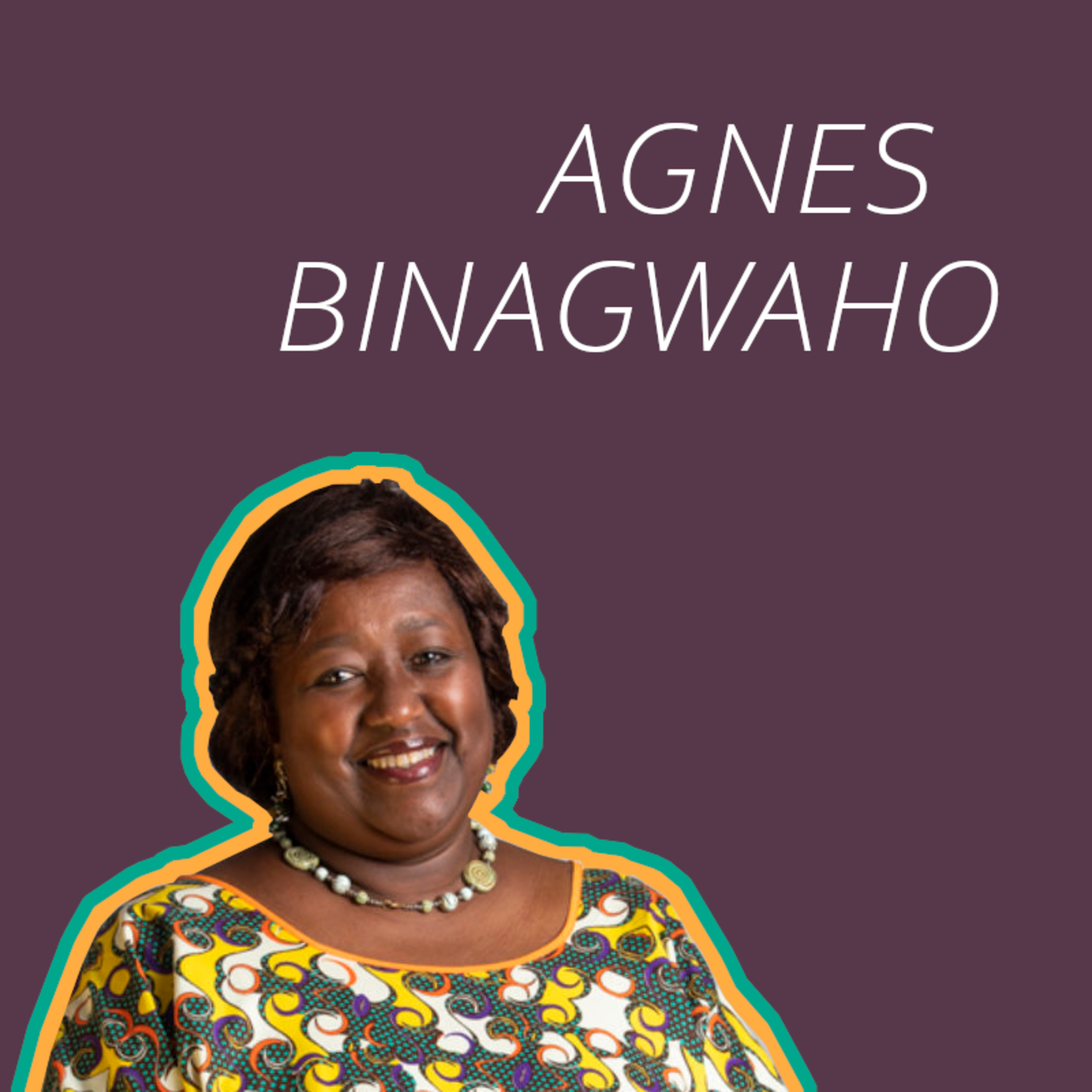
This podcast introduction and interview excerpt feature Dr. Agnès Bin-Waho, a pivotal figure in Rwandan healthcare. Returning to Rwanda after the 1994 genocide, she contributed to rebuilding a shattered system that once had the world's highest child mortality. The reconstructed system prioritizes equity, universal coverage, and community-based care, leading to one of history's fastest declines in maternal and child mortality. Dr. Bin-Waho emphasizes addressing the social determinants of health and critiques a colonial history that imposed patriarchal structures, undermining traditional female authority. She now heads the University of Global Health Equity (UGHE), founded to educate a new generation of health leaders. UGHE's curriculum integrates clinical skills with management, leadership, and a biosocial understanding of health, aiming to correct systemic injustices. A central theme is the efficacy of community health workers and decentralized care, arguing that most healthcare should be delivered locally, not in hospitals. The discussion frames health as a universal right and a product of social justice, showcasing Rwanda as a constructive model for equitable health system design.
[Music] Welcome to Social Medicine on Air, a podcast where we explore the vibrant world of social medicine. We learn through conversations with healthcare practitioners, researchers, and activists who are working to create a more just and healthy world. [Music] Hey everyone, Brendan here. And I'm also joined by Leyla today. Hey everyone. So we are very excited about our guests today. I'm as you know, many of us in biomedicine are taught to think of a person who's made healthy by the care that they receive in the hospital or clinic. But of course, kind of the entire just of this podcast is that health is determined not only there, but far beyond the walls of the hospital or clinic. So our guest today is Dr. Agniesz Bin-Waho, who's worked at all levels of healthcare. And that means from direct patient care to community work and to high in the government jobs like being minister of health in Rwanda for a half a decade. And so the interview we had was very wide-ranging and unfortunately got cut a little bit short based on some schedule considerations on her end. But we also wanted to give a little bit more background about the recent history of her country, Rwanda, and her work in rebuilding the healthcare system there as well as the new University of Global Health Equity she's leading. So in terms of its history, Rwanda is a country in East Central Africa that was given to Belgian leadership under the League of Nations mandate following World War I. During this colonial period, Belgium's favored the minority tootsies over the Hutus, categorizing them, classifying them for completely arbitrary reasons like the width of their noses or the color of their skin, pitting them against each other for no reason. This imperialization catalyzed attention that led to many different wars and revolutions and exploded into violence in 1994 when over a million tutises and their allies were murdered by the ethnic Hutu majority in just under three months. As the mass killings began, the foreign nations who had previously declared ownership of the country did not rise to the call for help and even the UN was ordered to only evacuate foreigners but not intervene to save the Rwandan people from slaughter. By the time a tutileid Rwandanese forced gained control after around a hundred days, hundreds of thousands of Rwandans were dead and nearly two million had been forced to flee their country, further exacerbating this humanitarian crisis. Yes, and you may be familiar with some of this history that we wanted to run through that for those who may not be. Dr. Ben-Wahu herself was born in Rwanda but her family moved to Belgium when she was young and she grew up there and was educated there and returned to Rwanda in July of 1996, two years after the genocide. In the country at that time had the world's highest child mortality rate and the shortest life expectancy. And for the last nearly three decades Dr. Ben-Wahu has helped reconstruct her country through service in the Rwandan healthcare system and the rates of child mortality, maternal mortality and death from tuberculosis, AIDS and malaria have all plummeted. Dr. Agnès has racked up numerous accolades including 15 years as a practicing pediatrician, leading the National AIDS Control Commission between 2002 and 2008 and leading the Rwandan Ministry of Health between 2011 and 2016. Most recently she's empowering the next generation as the vice chancellor of UGHE, a university that was started about five years ago as an initiative of one of the largest social medicine organizations partners in health alongside the Rwandan government and with support from philanthropic funding. It's a pan-African healthcare focused university that's being built in the ground up on principles of equity and justice and healthcare instead of treating these as an add-on or optional addition. And it offers training programs and health locations as well as health implementation science. It also takes equity principles and they account for students, for example, recruiting a 70% female cohort and needs-based financial support for all students. And also this comes up briefly in the interview but Dr. Agnès is also part of the fascinating story of the power of social medicine and addressing the true determinants of health in the recent history of Rwandans, which is mentioned in some of her TED talks which we'll link to in the description below. Watch them. Yeah, they're so good. Okay, very good. She talks about how she arrived in Rwandan after the genocide and became part of the recovery efforts and the contemporary Rwandan government is a complicated subject we didn't have time to jump into. But for their healthcare system, they've wisely invested in rebuilding on principles of access and universal coverage, decentralization, community focused care, equity, evidence-based interventions, human rights, and preferential option for the most vulnerable and the care that they give. And have invited in groups like partners in health and others to help rebuild a national healthcare system with these social medicine principles in mind under Rwandan leadership. So Dr. Ben Guaho does want the world to recognize that these global health problems or reflections of our systematic problems and that healthcare for all is the duty of all. And she is just a true champion of goodness and fairness and justice and we are so excited to have the chance to talk with her today and to share this conversation with you. Even with COVID in the most recent history, Rwandans dramatically outperformed other countries. And I think that taking a social medicine perspective as we've tried to do in this podcast is often meant taking a critical perspective which challenges a lot of the systems that we inherit. And I'm glad that we've done this, but I'm also especially excited for this interview because it is an inspiring example of a constructive project that shows how these principles can be the foundation of a health system and university training system that works for everyone, especially the most vulnerable. So we're very excited about this today and also just wanted to more officially welcome Leila to the podcast. She is a force behind the scenes and is joining us now in season two. And this is her first interview on the podcast, so welcome to you as well. Leila. Ah, thank you for having me here. It was absolutely incredible to speak to her. She is a force. She is a force to be reckoned with. She is such a commanding presence. She was ready to deliver some truth and, um, yeah. Well, let's jump right in. We were wondering if we could begin by starting with a question. Could you speak the name of an ancestor who inspires you work or a child you are thinking of when you were trying to make the world a better place? But there are many. So the problem is to chose who because there are so many people who are the first of all people who are doing great job with some a little bit more knowledge, little bit more skills or, uh, means. But if we say I can talk about a child will lose because the parents came too late for malaria and the child was in a strict really deep anemia. And we didn't manage to find the, the, the, the vein, the vessels to, uh, provide a profusion. We went up to the theater to try to do what we call in French denudation. It's probably the same word in English, but it was too late and we lost a child just because of malaria and, um, it should have come three hours before the child will still be now a great adult. And, um, because of, um, lack of information at that time, it was before 2000, uh, et cetera. So, the other children we lost because the YHV positive drugs met in in the developing world, the developed world, not in the developed, uh, developing world. Uh, so that's injustice was because, the YHV positive in the wrong place on us to be saved. So this also was a motivation to try to try to, uh, correct these imbalance, um, um, also children that, um, who are, who got the chance to be, not infected through their parents, uh, but had their parents dying from HIV and being often, with all the catastrophe that can be, uh, that they can face in life. Uh, so there are so many, many. Oh, thank you. Thank you. Thank you. Thank you for sharing. Um, okay. So one of the reasons that I was so excited to finally get to speak with you is, um, your passion for empowering women, empowering African women. Um, women are overrepresented in global health workforce yet, completely under-represented in
global health leadership. I love that you empower African women, will also lifting up women all over the world by calling out the so-called developed worlds, gilded misogyny. Western cultures push this idea that there's like a linear trajectory of progress when like they're just a head of developing countries, but decolonizing is also gender work in that colonialization brought gender ideology into the African elite and tried to erase traditional forms of female pre-colonial power. I think it's amazing that African perspectives like yours are able to criticize the patriarchy and this imbalance of power. The way you go through that is like paving a way that's based in more African and more universal values. I just was wondering if you could speak to fighting these gender inequities and how does one choose to positively create policies and institutions to work towards justice? So you know what guide the country is its constitution, the laws between constitutional and ordinary laws we have organic laws etc. And if you don't frame gender equality at that level, constitution in the constitution in the organic law in the laws, it's a fight that each generation will have to to one it's a lot of energy you can lose and also there is no guarantee because the law is a guarantee of continuation it has to pass again to parliament to be cancelled so you have time to arm yourself your friends your network to fight the change when it's not positive. Now in the traditional law don't forget that the more the the Catholic religion is full of misogyny you know a woman cannot be pastor and this was not at the beginning. It came later on with a pope that was totally misogyny I don't know which problem he had with woman. Pastor cannot be married it was not in the beginning it became after when so those are creation of human that has became rules and part of the religion and it's the same that for other religion if you remember Muhammad was an employer of his wife that's how they met each other so the the he was not a misogyn you know you agreed to work under a woman they fell in love they married each other so we need to really honestly using history sociology anthropology to desegregate what is human constructs and what is religion and now where I start with religion is because my country has been was not real it was colonized by the German when the German laws the first world war it was put in two torrents I don't know the right word in English but it was not a full colony even if the Belgian this made the didn't make the difference but they didn't want to run it so they give it to the Catholic pastors and the Catholic pastor were men single in bed with a full of misogyny in their practice and just say that the first scene come from a woman what is not true etc and they start to say that our culture was what the savage result even if it was not true women has a place in society and if today we have more than 60 percent of women in parliament the highest level on earth is because we have a tradition of giving the words to women even though it has never reached that level in the tradition but let me tell you an example the king the mother king was a very powerful person when the king was doing the war she had full she had full power even when the the king was too young to govern she had all the power except the one to go to war but she can order a war and send and send the people to do that so the the traditional army were not allowed to kill civilian and etc so this is why I say that having been governed through an entity that have used the white pastor when I say white pastor is not the color of the skin is the group to do the law to implement the law and etc they undermine the woman the role of woman our culture our spirituality our traditional medicine even because the spirituality and traditional medicine were linked so behind all our traditional healers so the damage they have done to our ancestral knowledge is immense and they're always still nothing that they bring good here never what I appreciate about the work that you're doing in light of that history is like you like you mentioned the organic laws as well as the the policies and regulations and institutions actually that can lead to flourishing injustice I'm very curious about the way that you're able to combine both that critical perspective as well as kind of the constructive aspect of your work so I'm curious what are the lessons that you have learned in the story of starting University of Global Health Equity because that is a project of construction of the creation of new norms new traditions and of course drawing on things which came before as well but what is the story of the creation of that university what are you trying to do and then also maybe what are its challenges or lessons that that you'd have for other people who are working in that space so let me tell you first that my true lesson I get them by coming back to Rwanda and working in Rwanda changing things in real time not in the head of teachers as student only and this took the university start the master degree in 2015 for the master class were enough so during the time we were building the campus we taught to the master in Kigali and other places in Rwanda now everything is on campus with the lab the classes the dormatory the studio for the staff and the faculty etc but what we why we start to create this university is to teach what was missing in education of people like me people like Paul Farmer people like Peter drawback were there to start this is we learn to be good clinician but more to treat what is what appear not the underground problem of of the situation of the patient social determinant of health start to be important now in education but study with a biosocial lens meaning look at the situation of the society with these lens like you use a microscope to analyze the blood of the patient and find the parasite if he has malaria using also this lens to analyze the society and why the the person is sick meaning what what is due to the place where he live we we have to teach that more deeply absolutely we didn't have that but more than that doctors nurses in this part of the world in all part of the world how managers they manage the even private sector they manage their office you see them in the public sector they manage their words they manage the network they manage to work with the multisectorial.
approach and if they don't learn management, they're a very good clinician and not perform. And what happened to people like Paul, like me, like Peter and so many others, we had to learn management by doing. I was a pediatrician. I end up being managing the National AIDS Control Commission. What was you? It was for the nation. After that permanent secretary, after that minister, and I had to learn by doing. We are teaching management to all, even to doctors. We are teaching also leadership because we want the students coming out of UJG to be capable to build a health sector when there is nothing with what they have to repair a health sector, to manage a health sector, to help and advise the local leaders who are responsible at this strict level or the minister, etc. or the president of the Republic. Meaning they need to be confident enough in their leadership skills, about the leadership skills that they will do, they will be able to do the maximum for the patient they want to help. They have to manage the best so that can serve the best of the people they have to serve for bringing the staff, the staff, the create the system, but also organize or create the space to do all this and also to set up a system of support for the vulnerable to get access to health services, to get access to the knowledge, to ask care on time. That's the story of the first little girl that died just for a couple of hours too late, for something that should even not bring you in hospital if the parents had the right knowledge and also to create the support to get access to modern treatment in a sustainable way. That's the story of those kids who didn't get access to IV treatment at a certain point or their parents dying because of that and to create support for those children who became so vulnerable because of not having parents. So all this need to be taught for doctors and nurses so that they can create themselves, the environment that will help them to provide the quality care they want to provide. I love that and especially in the context of how your health care system is integrative in that it speaks directly with community members, community health workers, faith-based leaders, district authorities, and it's more about like meeting people where they're at, like if they're not able to make it to the hospital, like let's get them the care that they need at home or you know, like even if they can go to hospital, it's a system, six system that oblige you to go to hospital when you don't need. There are so many, or tell me there are so many diseases, more than 80% of diseases can be treated at home. We need to demystify the quality service, a clinical quality service that can be given by lay people well trained and by community health workers with quantity in your home if they are very well supervised and go to hospital when you really need an infrastructure, a space like that and equipment like that and specialists like that. It's not for the majority of the diseases. So it's a disease, it's a wrong way to educate clinicians, doctors, nurses, and lab technicians, etc. To be focused on institutional care. Institutional care is when home-based care cannot help you. You win in time to go there, you win in proximity and follow up, you win in cost because you don't have to pay all those things, you need in transport and the cost of transport. You win time because you are not separate of your kids and you don't have to play to them in a place, etc. to go and get care. That's wonderful. And I think that the proof of the power of that approach with community health workers who are chosen from the community and who are well trained and powerful assets in the fight for health is as well as the larger institutional work that you've done as Minister of Health and then of course at UGHE. Rwanda has seen some of the, I think I'm correct in remembering that it's the fastest decline in human mortality ever recorded in human history over a five to ten year period. For children and mothers. Yes. Yes. Yes. Yes. Yes. Yes. But that's probably why. Tell me why is because children and mothers are dying in communities. So solve the problem where the problem is you get far more quick result. Yes. Isn't it? Go and try to buy a cheese in a fuel station. No. Go to a shop where they are selling cheese and you'll get a good cheese. So it's the same. Go and tackle this where they are. with the right people and it doesn't cost money. I told you this first little girl who died it's for getting the advice three hours later to let. Yeah and that's universal. That could be applied anywhere. So I used to say that if the developed world with all the people that are jobless, transform them, jobless and educated, transform them in community heads workers. First of all, you'll create trust. What the Western world distrust science distrust medicine distrust ask distrust vaccine. I don't know. I think the distrust is self-image when they see it in a mirror. The distrust is a way of life. And here if we create trust is because participatory process was there don't create something for the community without the community. It has always been like that and it's not only for general election when we vote for the Congress or our mayor's or the etc. It is even to take the decision what's next with the money we have. And of course with all we are not only the agreement. But at least we all follow because we have all got the chance to give a view. And if the majority go for we do this so everybody will help the majority to do things faster so that the idea can be tackled next. And when you don't consult people they just slow down the process. The number of deaths for COVID in the US is an example of deaths just because of distrust just because of bad organization, bad distribution of vaccine. Careless about the people. Don't find the people where they are. Don't study the vulnerability of people. Black people get less access to vaccine and the solution the the explanation was oh they don't like vaccine because they don't trust. No they cannot go because they don't have an automobile to go and do the line like it was request or access to internet to register. And where they do paperwork in some clinic then the number of black people receiving vaccine was according the percentage they percentage in the population. So denying the right to participate in your health decision. First of all is denying of big human rights. An important right. And not doing it it's a so big mistake in creating a health system that is functioning with the right to demand according the needs but also the provision with the support of the community because you cannot provide support to community without the community and they will not help you to help them if they don't trust you. They will not. Yes. Absolutely. And also like speaking of equity, these populations that are not given access or not allowed to be a part of the conversation are disproportionately affected like minority populations have a much higher incidence of COVID of malaria of everything. So to not only not give them access to care but not give them their equitable share is everything. Yeah. Even building on that question
And I'm curious, like on one hand, we have the language of human rights, which is so important, and which is essential in the conversation, in the language of justice, language of doing the right thing. And at the same time, you know, you exist in many spaces where the conversation is the vocabulary and the discourse of money of what is cost effective of development. And how do you, you know, make the case for human life and just inherent dignity that all people have in a world that only wants to talk about money? - You just call a cat a cat. Just call people who are responsible for people to die because they make condition 90 to money. You call them criminals. You just say that the people doesn't talk about, they talk about justice, but not social justice. And you justice is also a social constraint. So you're the justice in the system in your country is really a system that criminalized the vulnerable that is by judges, or they are doing that. So you have some judges who are criminals. So calling a cat a cat, I don't say it's a nice little animal with a lot of this or this, who's touched. No, it's a cat. And call a criminal a criminal. And stop this hypocrisy because global health is full of hypocrites. Who doesn't want to call a cat a cat. And because of that, doesn't make people or the wrong people accountable and they pass through that. - Yes. - So just tell the truth and always. And also if you tell the truth and always, you can do the demonstration that those guys you pretend to be good are bad guys. They expose them. They know them. People doesn't like to be the bad guys. So they will change. And people will die. They will be less death. So it's your responsibility, it's my responsibility to tell the truth and to call a cat a cat. - Yeah, that's incredible. - A criminal, a criminal. Because it's not normal that because being careless, negligent, so many people die and the people who took those decisions purposely while having the right advice are free and not locked up. Like you like to say. - Yeah, it's just really saddening that it has to be like framed in a way that saving lives is an economic imperative. Like we can prevent losing our investment if we help them now rather than focusing on like what's best for the person or how can we help people? It's more like how much money can we save or how much money is there to gain. - But then also that it's wrong calculation. It's not a matter of money, it's a matter of power. Because they have enough money to stay rich, but they want to show that they are the bus. That's why they are really criminals. Al Capone used to kill enemies to show enemies that is the bus and the poor, poor, poor man. We have the same in global health. We can identify people who take the wrong decision knowing that they take the wrong decision, knowing that people will die just to show that they are the bus. They are the Al Capone of global health. - And how do you walk into spaces in which there's a conspiracy of silence on those realities? And how do you. - People who are silent. - Yeah. - To say that the worst is not our enemies, is the silence of good people. And that's true. And in your country, for George Floyd, people went across the world in the street and say, "Naf is enough." It was the first big movement like that. But now, that's still continuing. It's still hypocrite. So you have four times more risk to go in jail just because of the color of your skin. This is hypocrisy. And everybody should wake up and say, at least 10 times I will denounce such a tip of hypocrisy today and every day, every week, every month, every year. I also wanna pull on a thread that you mentioned earlier. You often speak about trust and how trust is the biggest determinant of health, the biggest social determinant of health, which is provocative because we think of housing, we think of poverty, we think of. All these other factors that are the social determinants of health, but you have put the focus on trust. And I think that is so key. And also the healthcare system, of course, can be part of maintaining inequalities. But as we've already talked about, under your leadership, you've had so many successes in the health field. And I'm curious how. I mean, Rwanda has a history of violence, of course. The United States where we're both located right now, as you just mentioned, George Floyd has a history of violence. And yet, the work is building trust. How do we build trust in the histories that we inherit, which are not of our own choosing? But how do we begin to build social cohesion? How do we begin to build trust, especially when we know that trust is so important for the health of the vulnerable? You know, it's the same thing. You just have to tell the truth. If people saw that you don't lie when you give a good news, or you don't lie when you give a bad news, they will listen to you. So be. create a system of accountability. I don't believe that we will be forever all equal and there will be. We are all going to progress. But being accountable, everybody can be accountable. And. We need to work on that. So truth, accountability, and also an equity agenda. You know, we start in Rwanda with medicine for only 3,500. When we need more than 100,000 for I/V, for HIV. However, people knowing that the way we chose, the people who get access, it's not because they are wealthy or educated or from the nose, the South, or the rest of the country. It's by an equity agenda that cannot serve everybody now. They are just waiting their turn. And even if they don't get the chance to join before dying, they respect the system. Providing quality, having a multi-sectorial approach. Don't believe that people from the village transmute their community health workers than people from cities. Whatever. whoever you are, whatever place you come from. So a multi-sectorial approach with community health workers and don't forget that community health workers report to the Ministry of Health, but belong to local leadership management as well. Make sure that the community participate so they know and they are part of the decision that concerns them. And knowing that they trust you for the quality of what you will give. And use implementation science, meaning go for context-specific evidence-based intervention with clear implementation strategies that you explain to the people and you are accountable for. And you prove with research that you have a good. take the good one with monitoring and evaluation, etc. And also that we go for progress. And progress is not in the health sector. You fight for people to have incognitating activities. Like the community has workers in Rwanda have cooperatives that come together. And one day those cooperatives will be. beneficial and the community will be better. And you explain that and you say that with the money of health, you create a better economy locally. And with this economy, you will bring more health. And it's an. etc. And you explain all this. Don't believe, don't do good to me without explaining that it's good. It's like, you know, when you are drawing and somebody one and one to pick you and you have screaming because you don't know that a person is coming to help you. You may face the same at community level. You need to explain and take the time. After that, the community members will be with you and you will fly. Yeah, it's not enough to just provide blindly the patience need to feel empowered in their own healthcare and understand. And this is universal because even in the Western world is nuts. It's everywhere. Everywhere. And having a equivalent of community health workers, it will be different according culture. Like in your culture, it will be more social workers or people with social education, even.
benefits, giving on sites, et cetera. I depend of where you are. Community health workers elected by the people create social cohesion. And what we say, it's social capital. And social capital is so necessary because you get more care where you have a high social capital. You get more out of the care you provide. When you have a high social capital, then when you have a low social capital. And it's so important that should be trust social capital. That's the reason why in Randa, we have higher retention rate and survival with those people living with HIV/AIDS, with generic drugs than in the US with all the last drugs of the day. Just because of the social capital. And trust, of course, what we go with social capital. You trust your bank. If you don't trust your bank, you don't put your capital there. Social capital is the same. It's also about trust. And knowing that it's an investment in you, you have value. - Yeah, I love that. And also just like speaking to also of accountability of physicians and I read when you were speaking about we need to have more of an open conversation where not only do the patients need to understand what's happening, they need to be able to feel comfortable and empowered to question. To question what's happening. And physicians need to be held more accountable as well. - Absolutely, I was comfortable to back first. I was comfortable for that patient to understand what they are going to face. And never say that it's too complicated, et cetera. People who can tell, did you, did you make a source? You take vegetable, you have to boil them. And after that, you have to take all, you have to fry them not too much. Just enough, the onion before because of this. It's complicated, more complicated than to do something clinical. If people can do that at home, then can do and understand everything. It's just arrogance and the way we keep the power dynamic, doctors love power. And we have a power dynamic, we need to destroy and to reverse. The boss should be the patient. We should be at service and only at service. - And how do you implement that? - What is a tactic because the power differential is obviously such a problem. How do you implement the patient really being in the driver's seat? - Giving the voice, give them the voice. Using the community health workers, why electing them? They have a voice with the community health workers. They are not happy with the community health workers. They have just to say, we don't want this one. We want the other one. And if the village agree, the ministry has to educate the new one. So by giving them a chance and also the community as workers is the interface for all explanation for all this between the structural health sector for everything is structured. But between the community and professionals, they are there. And if they say, this one is not kind, doesn't work. So. - They're out. - Absolutely. Now at health facility level for around 15 to 25,000 people, there is a health center with nurses and midwife. There, there is a board with a representative of the community, give them the voice. They give them the voice on the quality of care you provide. Even if they're mister because they don't know that the quality of care is this or that. You have to explain. That's mean you didn't explain well. And after that at the hospital level, you have a board again with the representative of the private sector, the community and the local leaders and the religious, even in health center, you have religious. So the people feel they are represented. So they are free to talk. And also the overall things in my country, what happened. Once a year, the parliament do a survey. How do you feel about the health sector? Do they help you? Are you happy? Do they serve you well? Are they kind? And sometimes you are summoned by the parliament just because you didn't explain. Like when we were working how to introduce maternal parents to child transmission, to fight that. So we were putting center with lab and antenatal services and delivery services across the country. And we had two days of testing for pregnant women. But the population was not happy and they say to the parliament, no, it's too good. We want that four times. We want that every day. Four to five times. And we had to go and explain it's too expensive. If you want to scale across the country, this is the money we have. So if each 15 to 25,000 people will have two days of testing for all pregnant women, this is what we can afford. We had to go and explain and people were happy. But before that, they were not happy because it was too little. So that's good. So you have so many mechanisms to assure a accountability, satisfaction of services that it's just a bed will not to leverage them. I create that's right. Because in your country, you have so many more. It seems like the root of so much of the mistrust is the lack of communication. It's a lack of ability. No, no, no, no, no, no, no, no, no, it's because of mistreatment. Communication is there, you know, when you see, when it's night and you see two policemen want to mistreat you and you're a black at night, the communication is there. The trust is not there because I'm not secure. Yes. That's it. So no, no, no, no, call a cat a cat. I also think probably with the patient physician mistrust, they're at least in America, there seems to be, it's like it's changing now for the better. But there was this detachment of science and medicine from arts and humanities and in a point where social determinants of health were not incorporated as much into treatment plans and plan of care. And with the pandemic, it seems that a value, like, especially speaking to what you were talking about earlier with specifically in our country, we need to have an implementation more like mental health programs and instead of like a police officer targeting a person experiencing homeless having a psychotic episode, you'd have like a social worker go out and deescalate the situation. But I just wanted to ask, but that's still killing everything. Right. Absolutely. So, so there is progress, there is hope and that there is hope, but it's fragile and it should be generalized and it should be denounced generally and people should be accountable without finding that normal. How you should amend in his back, he has no arm and you get out with it. How do you want them to trust the system? How do you believe that if a doctor mistreat you, you will be protected by the justice who doesn't protect your life. So it's a deep societal disease. And if you don't tackle it and if you don't call a cat a cat, people will continue to to be afraid. This is barbarity. This is murder. This is negligence. When you are a doctor and you are recognized negligence, you may lose your license, but the policeman got just another gang. So, and this system, it has been proven by a great study done by Welcome Trust and Gali Open City Gallup Institute that trusting the health sector go with trusting your government, your system, judiciary system and your security system. Without that, you will never believe that if there is something happened to you, you will be protected. So you don't trust your health system and you don't trust science. So everything is intelligent. The first step is to go to cat a cat and stop not making people accountable. And also acknowledging this being a systemic issue. Yeah, oftentimes I feel like people of opposite beliefs would get defensive when saying something is a systemic issue because they are of the people in power, like of a higher social status. And they are the criminals.
and they are the supporters of the criminals. So expose them. You cannot have two language, you know. You cannot have the butter and the money of the butter. You have to choice. And don't let them go. Expose them. If your kindness by not exposing them will kill many people. So I have to go. Thank you so much for your time. It has been a joy to speak to you. Thank you so much for your wisdom and prophetic words to all of us. And as well as the work that you've done for the vulnerable and Rwanda and across the world. Absolutely. Thanks for showing the power of goodness and fairness and that things can be different and you can make change now and you don't have to wait on somebody else. Absolutely. And also that it's a duty of privileged people like you and me to do it. Bye bye. Thank you. This is Social Medicine on Air. Colossed in and produced by Arti. Jonas Adelis. Sebastian Funseka. Robert Boyle. Brendan Johnson. Layla Subon. And poetry Thomas. Intro without your own incidental music credits going to Smith, Ft. Huston. Huge thanks to Dr. Barwasella. Find out and advice and declare a brand for designing our logo. If you haven't already, please leave us a review and give us some stars wherever you get your podcasts. It really helps us to keep going. And if you would like to share your story on the podcast or have any thoughts, questions, feedback at all, please reach out to us by email at social medicine on air at gmail.com or on twitter at socialmed-on-air. We wanted to ask a super quick favor. In order to better understand and to serve our community, we are asking our listeners to fill out a super quick anonymous 5-minute survey. The link to that survey is bit.ly/smowa-survey. That's bit.ly/smowa-survey. We're really hoping this information can help us to do what we're already doing better. We would love to hear from you. That's it. Thank you so much for listening. [MUSIC]
Podcast Summary
Key Points:
Dr. Agnès Bin-Waho is a Rwandan physician and former Minister of Health who has played a key role in rebuilding Rwanda's healthcare system after the 1994 genocide.
Rwanda's health system reconstruction is based on principles of equity, universal access, community-focused care, and addressing social determinants of health, leading to dramatic declines in child and maternal mortality.
Dr. Bin-Waho now leads the University of Global Health Equity (UGHE), a pan-African institution founded to train health professionals with a biosocial lens, integrating management, leadership, and equity into the curriculum from the start.
The interview highlights the importance of community health workers and decentralizing care, arguing that most health issues can be effectively addressed at the community level rather than in institutions.
Dr. Bin-Waho connects gender equity and decolonization in global health, criticizing how colonial and religious histories undermined women's traditional roles in Rwandan society and advocating for legal frameworks to ensure lasting equality.
Summary:
This podcast introduction and interview excerpt feature Dr. Agnès Bin-Waho, a pivotal figure in Rwandan healthcare. Returning to Rwanda after the 1994 genocide, she contributed to rebuilding a shattered system that once had the world's highest child mortality.
The reconstructed system prioritizes equity, universal coverage, and community-based care, leading to one of history's fastest declines in maternal and child mortality. Dr. Bin-Waho emphasizes addressing the social determinants of health and critiques a colonial history that imposed patriarchal structures, undermining traditional female authority.
She now heads the University of Global Health Equity (UGHE), founded to educate a new generation of health leaders. UGHE's curriculum integrates clinical skills with management, leadership, and a biosocial understanding of health, aiming to correct systemic injustices. A central theme is the efficacy of community health workers and decentralized care, arguing that most healthcare should be delivered locally, not in hospitals.
The discussion frames health as a universal right and a product of social justice, showcasing Rwanda as a constructive model for equitable health system design.
FAQs
UGHE is a pan-African university focused on healthcare, founded to teach social determinants of health, management, and leadership. It aims to train health professionals to build and repair health systems with equity and justice as core principles.
Rwanda rebuilt its healthcare system by investing in principles like universal access, decentralization, community-focused care, and equity. It partnered with organizations like Partners In Health to create a national system centered on social medicine and vulnerable populations.
Dr. Agnès Bin-Waho served as a pediatrician, led the National AIDS Control Commission, and was Minister of Health. She helped dramatically reduce child and maternal mortality and now leads UGHE to educate future health leaders.
Rwanda embeds gender equality in its constitution and laws to ensure continuity. It draws on pre-colonial traditions where women held power, countering colonial misogyny, resulting in over 60% female representation in parliament.
Community health workers provide home-based care, reducing the need for hospital visits for over 80% of diseases. This approach lowers costs, saves time, and improves access, contributing to Rwanda's rapid decline in mortality rates.
Health is determined beyond clinical settings by factors like education, equity, and community support. Addressing these social determinants is key to creating just and effective healthcare systems.
Chat with AI
Loading...
Pro features
Go deeper with this episode
Unlock creator-grade tools that turn any transcript into show notes and subtitle files.
 PodcastTranscript AI