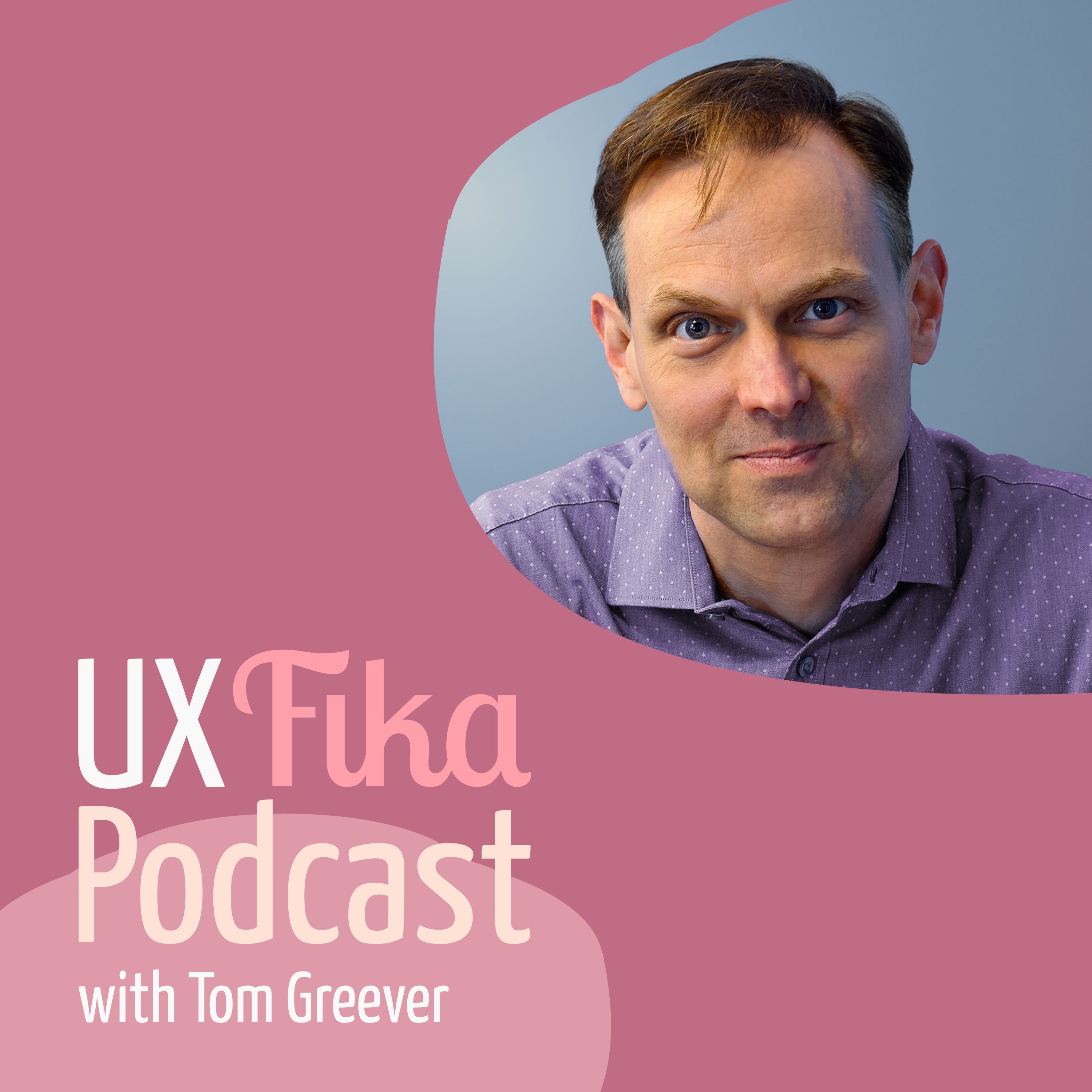
#22: Tom Greever on Articulating Design Decisions, Pair Prompting, And Importance Of Relationships
81m 57s
The transcription discusses the eagerness of product teams to utilize tools before defining product requirements, emphasizing the importance of articulating design decisions. The podcast featured in the text highlights the significance of clear communication in design, especially as AI starts influencing design choices. Pair prompting with product owners is suggested as a beneficial practice in ensuring alignment on product requirements. The conversation also touches on the positive impact of AI in streamlining design processes, allowing more time for in-depth work. The overall sentiment is optimistic about AI's role in design and the opportunity it presents for designers to focus on high-value tasks as AI handles more routine aspects.
Transcription
15176 Words, 80429 Characters
What we're seeing now is because product folks are so eager to get into the tools because they can now. Sometimes they want to do that even before they've written the product requirements. And rather than lose all of that context and the data that goes into prompting that, I've gotten my teams to pair with their peers in product, share springs, and literally prompt together. And one person will start a prompt and someone else will say, "Oh, what about this?" And they go back and forth until they finally end up with some version of a prototype or MVP, whatever you want to call it, that appropriately describes the product requirements. And so now, we actually have access to the history of that prompt that helps us understand their thinking in a way that, you know, looking at a PRD, which tends to focus a lot more on kind of like metrics and outcomes and hopefully doesn't even describe the UI in great detail, right? We actually now can kind of like see and participate in some of that thinking in a way that we weren't able to before. So I think it's an incredibly positive development for us. In this episode of the year's figure podcast, I sit down with Tom Grieber, executive design leader, author of articulating design decisions. And someone has spent over 20 years helping teams communicate their ideas clearly, confidently, and with impact. We talk about how his now classic book came to be, what's changed since the first edition, and why articulating design decisions is more important than ever in an age where AI is beginning to make design choices for us. Tom shares her writing the book and rewriting it during the pandemic, revealed that most designers don't need new theories. They need simple, practical tools to help them leave with clarity and empathy in rooms where decisions are made. We explore what it really means to be a great communicator, from designing meetings like journeys to understanding your stakeholders as deeply as you use this. And while listening to understand, not to respond is one of the most powerful design skills you can build. Beyond design, we also talk about family, shared goals and how the same principles that make great meetings, trust, empathy, and curiosity can also make a marriage and family life thrive. If you like this episode, please leave a review on a rating so more people can get the advice and hear Tom's story. Hello Tom, and welcome to the UX figure podcast. Hi Anna, thanks so much for having me, it's great to see you again. Yeah, it's good to see you too. We're just chatting away about that, it's been a while, 2017, and feel in a way it feels like it was yesterday, right? But in other way, it feels like it was a lifetime away. It does, and we're talking away about kind of, which we'll get back to later, but when I saw you bought one of your kids to the conference, and when you compare how old that kid will stand and how old that kid is now, and in fact, I didn't have a kid, and now that kid is, you know, much older, yeah, kind of realized. And actually, so I brought one of my sons to that conference in 2017, so he would have been about 11 years old. And now he's 19, he lives in Los Angeles on his own, he moved, he's moved out, he has a full-time job on his own. So yeah, life, life moves quickly. That makes me realise that it's, yeah, a lot of happens in like eight years. Yeah, yeah, for sure. But most of, and we talked about this in a preach out, so I want to hear the full thing now, because I think one of the times we spoke was when I was just feeling this weird and I just moved, I think, and you had, you had quit your job and you had all these plans. Yeah. Yeah, I mean, I was in a, in a time and space when a lot of people were asking me to come to do workshops or speak at conferences, mostly based around the book. And I had never really spent any dedicated time doing that. I always felt strongly that I wanted to be actively involved in the work. I didn't, I didn't want to just be like an author that wrote a book and then, and then never, you know, worked in design again. So that wasn't really a priority for me for a long time. But, but I also really like saying yes to the opportunities when people come on and are interested in, in my help. So I got to a point in my work at that time where I was like, you know, maybe I just should take a year to do that. And in fact, my son, who I mentioned, he had a lot of activities going on that required him to travel. My oldest daughter was doing some events that required her to travel. And so, you know, when my wife and I kind of like looked at our schedules, we thought, oh, I could take a year to fix the problem with the kids and I could do, you know, some of these trainings and things. So yeah, that was February of 2020. I quit my job and I spent about a month, you know, booking all kinds of events and things all over the world. And, um, and of course March 2020 came around and everything was just cancelled. It was a totally different. It was not what I expected. I had to kind of pivot. But yeah, that was unfortunate, but with the timing of all that. And there was no travel for the kids either, I'm guessing. Yeah, no, they didn't, they didn't travel either. Yeah, everything was just completely shut down, you know. We, um, we moved to Sweden at that time. And we left London, obviously, went into lockdown. I think it was like three days after we left and moved to Sweden and there was no lockdown. And it was just this massive contrast coming from reading all of the headlines about, you know, the importance of lockdown and going to Sweden was like, loaded up. It's all open, not completely open. There was still a great distance and stuff, but it was, yeah, it took some getting used to, but it was in hindsight, it was nice, but yeah, it was a mental, mental journey. What are you to? I'm to live here. Yeah. And since then, you've released a new version of your book as well. That's right. And actually, that's one of the things I did during that period, because I had had, I'd had people, um, you know, providing feedback on the book or asking me questions about it. And so you kind of start to see like, Oh, you know, I could, there's additional, there's more to be said here, right? Or maybe I could tweak this. And so I actually worked on a second edition of the book, during that, during that timeframe, when, you know, when everything was shut down during, during COVID. And so that came out, um, shortly after, um, I'm, I'm actually planning to work on a third edition. I mean, up here pretty soon as well, because, um, AI has changed so much of, of how we work on a regular basis, but I think in a way, articulating design decisions is more important than ever, right? Yes. Because if we have, if we have robots helping us design, or if those robot plays, for other people in our organizations, we, we need to be even more attuned to the kinds of decisions that we're making and, and being sure that we get support for. Yeah, we really are. What's the main difference between the first edition and the second edition? I think the main difference is that the second edition is just a, it's a tighter edit. It's just kind of a butter rewrite. I mean, when I wrote the first edition, I never, I didn't really anticipate the reaction that it would get from, from people like that, that it, that it would be helpful or be popular at all. Like I kind of thought, oh, I'll write a book and it'll go out there and it'll, and some people will read it maybe. And other than that, it'll be like, you know, a line on my resume. And so I, I'll admit, I don't think I really maybe put as much thought and effort into that first edition as I wish I had like an insight. And so once I started getting feedback from people and realizing, oh, okay, yeah, there are definitely some areas where something was misinterpreted or, and definitely if you don't know me, you may not read my dry sense of humor all the time. And so it was just an opportunity to kind of clarify some of that and add some stuff that I had realized in hindsight was was missing. So for instance, I, I added a little bit more about remote work because of course that was working out in the middle of the pandemic. So, you know, where network was new for some people. There were some things about, you know, the way that we plan meetings and especially the preparation part of the meetings that was absent in the first edition that I, that I added. And in the, in the first edition, you know, I spent a lot of time in the beginning talking about kind of the history of UX and why are we here and how did we get to this point and after several years of the book being out, I didn't seem as relevant to like the new or generation of designers who weren't there to experience the change in the industry. So. Yeah, no, that makes sense. That makes sense. What's the, when people kind of, because this book has become, you know, there's so many people to say is it's a must read and it's one of the most regarded books out there because because what you say is so important that we can actually communicate our work and we can, we can tell the work to people in a way that resonates. What's the thing that makes people buy the book? What's the thing they struggle with the most? Right. So it's interesting because in a way, the, the, the, the principles that we kind of want to be sure we hold on to are obvious to, to most people. I, I don't think there's anything in the book that, that people would be like, Oh, aha, I never, I never knew that. Um, I, I, I think what tends to resonate with people most is that I give you kind of practical things that you can do. Um, super simple things. In fact, that are easy to remember. Um, for instance, leading with a yes is the thing that tends to get the most positive feedback on from people. I'll have people message me pretty regularly saying like, Hey, I read your book. All I did was lead with a yes and it completely changed my mind. Right. Um, the other one is the ideal response where each, each letter of the word ideal is it a cross stick for kind of like one part of our, our response that we need to be sure that we're kind of like touching on. So I think, I think because there are some practical tools like that, it takes what has, and been in a lot of people's minds sort of a fuzzy soft skill. And I, and apply to a framework to it that, that is easy to approach. And so I think that, that is what draws people to it. It's nice. So version number three is going to focus a lot more on kind of presenting work that AI has helped create. Yeah. I mean, I, I think there's a lot of opportunity there, right? Um, I know on my own teams, you know, we currently use AI to help us like summarize and synthesize nearly all of our research, right? Um, from, you know, from our own transcripts and video recordings of the sessions that we've done, right? I know a lot of us, my teams included are using generative AI to create first version MVP, you know, products, right? Um, and so you've got, you've got this gen AI engine making a lot of really fundamental design decisions for us now. And it's, it's not enough to, to tell our peers and partners and the business, right? Oh, well, you know, this is what, this is what Figma make thought we should do, right? Like that, that's not going to fly. Like we, more than ever, we need to be able to articulate and explain what is it about some tool like Figma make that, you know, what is it in those tools that's baked into kind of like the years of knowledge that it has and is pulling from that causes it to recommend, you know, this solution over another one. We'll still have to justify those decisions, maybe more so now, I think. No, I agree. I'm curious because I, one of the benefits of AI I think is that people are forced to write. They're forced to put words onto things. Like I've always tried to coach primarily junior designers, but also midway designers to kind of think, you know, put down what the purpose is that you're doing, try to like plan out what it is that you're working on and like be, be deliberate and very specific about why you're doing some things. And when prompting, you have to be because otherwise you don't get anything good out of it. Have you seen that AI is actually having some positive benefits and people being able to articulate certain things, because then I'll put in words onto it. Yeah, absolutely. And in fact, you know, there's a meme out there that says something to the effect of, right? Like in order for AI to take our jobs, our clients or our stakeholders will have to be able to explain what they want. So we're good or safe, right? Because that, that is kind of like the joke is that our peers and partners don't know what they want. They can't expect what they want. That's why we have to help them even articulate their own needs and their own part of articulating design decisions. So I do think there's positive benefit to that because it forces everyone, not just us, but especially our stakeholders to really write down what it is that they want. And one way that, and sorry, I shouldn't even say what it is that they want, but what it is that we need in order to accomplish the outcome that they have in mind, right? One of the ways that I have seen this have a positive impact is doing what my teams and I have called a pair prompting with our product owners. So nice. You know, it's really common for a product owner to go off and write a PRD, a product requirements, and then kind of dump it in our laps and be like, Ta-da, here it is, like, you know, go make a design or review. And often there's plenty of opportunity for collaboration on that, on those product requirements. What we're seeing now is because product folks are so eager to get into the tools because they can now, sometimes they want to do that even before they've written the product requirements. And so rather than lose all of that context and the data that goes into prompting that, I've gotten my teams to pair with their peers in product, sharesprings, and literally prompt together. And one person will start a prompt and someone else will say, oh, what about this? And they go back and forth until they finally end up with some version of a prototype or MVP, whatever you want to call it, that appropriately describes the product requirements. And so now we actually have access to the history of that prompt that helps us understand their thinking in a way that, you know, looking at a PRD, which, you know, tends to focus a lot more on kind of like metrics and outcomes and hopefully doesn't even describe the UI in great detail, right? That's good. I never thought about it that way, actually, but that's really good because you can go back over like the revisions almost. Yeah. And then when you're having that conversation with them, it gives you the opportunity to ask, right, they'll write a prompt and it gives us the opportunity to be like, oh, that's an interesting way of saying, like, why are you, why are you asking it to do that? Right? And it forces both of us, right? So like, get at the data. Like, what is it inside us that is causing us to ask this robot to do it that way? And there's really valuable information in there. Yeah, and it must be a really good way of actually teaching the product owner as well about UX design thinking, all of the things that they need to kind of keep in mind. So it's, it's sort of multiple purposes. That sounds really good. Exciting. So do you feel good about the transition we're in at the moment? Or how do you feel about the direction we're going? No, I'm very positive about it. I think that, you know, GNI is going to already has really removed the need for a lot of manual work on the commodity of design, right? If we're designing communications platform, you know, I don't need someone on my team spending three hours trying to figure out what the speech bubble design should be, right? Like we can get 80, 90% of those primary artifacts like on the screen. And then what that means is that we get to spend most of our time doing the detailed work and the deeper work that quite frankly, we've always wanted to do. That we're always wishing we had more time for, but we're spending so much time doing things that were commoditized that we didn't have time to run a true heuristic analysis, to do quite as much, you know, QA or UAT as we wanted to talk to people more, right? To look into the nuances of the interaction design and make sure that it's done really, really well, right? Those are things that tend to get pushed to the sides when we've got a deadline looming. And now in theory, we should be able to have more time to do that so that we're actually doing deeper work. There's an interesting corollary here, and this is a little bit off topic, but in the 1980s, when ATMs automatic teller machines were first being released, tellers at banks were really worried that these machines were going to replace their jobs. And in fact, I believe there was even a union that was on strike and trying to, didn't want banks to have these ATMs everywhere. Well, ATMs naturally kind of took over. But what they did end up doing was they ended up allowing banks to open many more smaller branches in community instead of one large central bank in the middle of the city. Those branches actually needed higher skilled, more qualified, higher paid people to run those branches and to do loan origination. And so all of those tellers who were previously sitting at a bank and giving out cash to people, they were replaced by ATMs, but they ended up moving into more higher skilled jobs at these branches. And banks actually ended up hiring more people to take those jobs than they had previously when they had tellers at a centralised bank. And I think we're going to see a lot of the same thing in UX, right? Yes, the robots are going to take over a certain portion of our work. But that leaves for us the deeper work, the stuff that is really meaningful, that actually has the impact that is going to help us get the outcome. A Gen AI engine is not going to know the nuances of our business and exactly how our customers work. That's what we bring to the table. So let Gen AI do the easy stuff that can be commoditised and let us focus on the deeper work that is actually going to make a difference in our business. I really like that one. And I think that might actually fill some people with hope as well. Because I think I've been mapping things for a very long time, but it's been quite a hard sell because it takes too much time. People don't see the value of it. It's too complicated. That was back then. Now people see the value of it. But those kind of things are the ones that yes, they do take time, but they should take time. And when we can spend more time on those things up front, making sure we understand the full end to end customer journey, we understand the problem space. Then we can spend more time on that and then use AI to help speed up some of the things. Make sure we don't sit and do 10 different variations of the button, for example, like all of those kinds of things. So. And I mean, to be real, like I think we will see some people leave the industry, right? Like I do think there are so many people that kind of rushed into UX because it was growing because there was a huge need. Yep. Not everyone was at the skill level that was really needed to create user journeys that would move the needle for businesses, right? Like, just to be honest, that's the reality. So I think the people that don't have those skills probably won't survive, right? Because they will be replaced with AI, and unless they're able to learn to re-skill and actually find that deeper work that provides value, then there won't be a place for those folks, unfortunately. And so I do think we will see some people exit the industry. I agree with you. And I think that brings us back to to your work, as well, don't take late design decisions, because start, like you're saying, that's going to be the most important things going forward, is being able to have the conversations as being able to lead the work and take the work forward. Do you want to, for people who haven't read your book, do you want to talk a bit about what the book kind of covers and how it's structured? Yeah, I mean, at its core, the book is really about how do we get support for our work when we're faced with so many people who have different opinions, different levels of kind of like authority to approve our work or not, and may or may not have any expertise in design. It's super common, I think for any designer or UXer to have especially a stronger personality come into their meetings and tell us to change something that we disagree with. And if we're not able to help them understand why we did what we did in a way that is meaningful to them, then we risk having to make changes to our work that may not actually make a difference in the lives of our customers or users and maybe not even for for the business. So the book is meant to address kind of like that problem. The book is structured in a linear kind of time frame like a meeting, right? So from from chapter one all the way through the end, I kind of walk through the timeline of a meeting before the meeting during the meeting and come after the meeting. And so we kind of look at each each step in progression, starting with our relationships with stakeholders. What do those even look like? What do we even know about the people who support we need so that before we even get to the meeting, we're prepared to talk. And so that is kind of how the book is laid out and how I walk. I use a similar framework but with storytelling in mind and it's that kind of understanding your audience. So like that understanding your stakeholders is probably one of the most underrated things we can do. I think because we spend so much time understanding, you know, the uses we are designing for but we kind of forget we have people we are working with that we also need to understand. Yeah, I think we can apply the same skills that we use in understanding our using our products, right? Exactly. We know what it looks like to talk to people and ask questions and understand their needs. And so if we apply that to the other stakeholders in our business, like what's important to them? What are there? I'll use what are they trying to accomplish? Like we can look at that meeting interface with us, right? So what are they trying to accomplish in our meeting? The same way our users are trying to accomplish something on our applications, right? And the better we can do it, understanding what's important to them, what those values are, and then framing our work in a way that makes sense to them than the more likely we are to get their support. Yeah, what do you see are the biggest kind of challenges when people are presenting their work? What do they, what's the biggest mistake people make? But don't make, I guess. Yeah, I mean, I think there's really two. One is just not putting any time or ever into thinking about why you did what you did. I think it's common for people to believe that because they have good intuition, because they have training, because they participated in the research sessions, and they know our customers, they just kind of assume that they'll be able to walk in the door, and pull off the covers of their design, and be like, "Ah, here it is," and that they'll be able to just explain it. But in reality, that rarely happens. It's actually very difficult to do that. And so you need to spend time upfront thinking about why you did what you did before you even go into anything. That's the first one. The second one is what we've already touched on, which is just understanding our stakeholders, right? Like I think people go in, and even if they've thought about why they did what they did, they tend to explain it into terms that makes sense to them, not to the recipient, right? And you really need to be sure that you're thinking about your stakeholders, the people who support you need. How can I frame my work for them in a way that makes sense so that they can agree to support our decisions together? Yeah. And then you say somewhere as well, the great designers, that's actually the title of chapter number two, I think, isn't it? Chapter number one, great designers are great communicators. Yeah. Yeah, because you can have the the greatest design in the world, right? But if you're not able to share it with other people in such a way that gets you support to move forward, then it's never going to see the light of day, right? It's sort of like if a tree falls in a forest, kind of a thing, right? Like if you have a great design, but it never ships or someone changes it, or it even has a negative impact because of the kind of like the politics of your organization, then are you really a great designer, right? And so I don't think we can only consider raw design skill as the main judge of whether or not we're great at our jobs. We're great at our jobs when we can actually ship good design work that make meaningful difference. And the way that we do that, often that differentiator is in our communication skills. And it's like classic one related to kind of great designs that you mentioned as well. Like the best studies they always win. No, they don't. And that seems unfair, right? It doesn't seem like it should be that way. But often the ideas that win are the ones that came from the most convincing person or sometimes just the loudest loudest or even just the person who had the most, you know, tenure or authority, right? Or is it the highest level? And that doesn't seem fair, but it's reality. And I think if we can accept that, then it's a lot easier to understand that the only option we have in that situation is to try to influence people with our words, with our minds, with intellect, with explaining our choices in a way that will actually make sense to them. Explaining our choices, sometimes you need to show kind of versions, start potentially not the kind of one you want them to go with, right? Sure, there's a story to tell, isn't there? Right? Like sometimes people will have the same obvious ideas that we had at the beginning of the process, right? And if we're able to say, like, yes, I'm so glad you brought that up, right? I tried that. Like we have the same idea too. Like, so we're tracking, we're on the same page. Let me tell you how we got from point A to point B. And it's interesting, Anna, because I actually don't explicitly call out storytelling techniques. Like I don't talk about, you know, character art and the hero's journey or anything in my book, but I frequently have people tell me, like, oh, this is about storytelling, which makes perfect lead into yours too, because you do go into some of those details. But it's a lot of the same principles, right, that like telling that story, yeah, bringing down along on that journey is part of the solution. Yeah, I love the analogy to the hero's journey, because there's an outside journey that happens. Yeah. And that's the same for all of the characters in the story. And then there's an inner journey, the hoppers to each and everyone who's passed the story and looking at stakeholders in that way and thinking about, you know, they all have their own way of viewing things. I think the series to playlist on Spotify is a great example of this, because it's telling, you know, the story Spotify out of a car member is six people or eight people. And it's from the different perspectives of different people. And that's so important to remember that, you know, we all have a different view of things, a different experience of things. We all have our own agenda. So someone who's worried about budgets, someone's worried about time, someone's worried about, you know, I'm going to have to fire off the team, you know, whatever it might be. It's kind of bringing those things along and making sure you understand where other people are on their journey, how you can kind of lift them up. Yeah. Well, and in, you know, in fiction, every character has an inner conflict, right, that they're trying to resolve, right? Every character has an arc. They may not be the main character, right? They may not be the protagonist or antagonist, but even the minor characters in a fiction story, for example, have to have that arc. Otherwise, they're flat. They're not interesting. They don't contribute anything to the story. And I think if you kind of look around the room of your, your team or at your office and you realize, like, oh, everybody here has a story. Everyone here has an inner conflict, something they're trying to accomplish in their job. Now, that might, that might mean that their motivations are often self-centered. Again, that might not seem fair, but it's also true. Right? People are looking for a promotion. People are trying to exactly credit, right? Like, people are trying to advance their careers in the context of the work that we're doing together. Whether we like it or not, that's reality. And so if we understand that that's a part of everyone's journey, then we can, we can help tell a better story by incorporating them into that story, right? In a way that helps them resolve that conflict and that arc for themselves. I know you talk about that. Yeah, I know, but there's so much. And I know, you know, you have your, your third chapter, "Design the Meeting," because that's another thing. We need to spend time designing those meetings and figuring out what order we say things and how we do it and all of that as well. That's right. And that's what I forgot. Yeah. And you know, when it comes to creating those, those meetings and, you know, in the book, I kind of go back and forth between calling it a meeting or a conversation because sometimes they really are like formal meetings with several people. Sometimes it might be less formal than that. In all of those cases, we kind of need to be prepared. And one of the areas that I find to be the most problematic for people is setting the context at the beginning, right? Helping people very quickly get up to speed knowing the right level of context to set. I find that either people set way too much context and they go into too much detail. And now like you're losing them. They're not paying attention. They're like, yeah, I know this, right? Like we already talked about this. Or you don't set enough context and you're dealing with a colder who just came from a budget meeting. And now they're being dropped into your meeting. And I expect it to like remember the last thing you did together, right? And so that skill of reminding them of the decisions that we made last time. Even something as simple as the problem we're trying to solve, right? It is so easy for people to show up to a meeting. I don't remember what we talked about last time. I'm going to look at your work and have a knee jerk reaction. But actually, if we can help bring them along that journey and remind them, hey, the problem we're trying to solve in this particular part of our software is this, right? Now that's going to refocus them in a way that will allow us to get more helpful feedback and reactions. It will. And you know, you mentioned the word journey. And every single presentation and meeting is a journey as well. And we define barriers in use of journeys. So in the same way, if we know, we have a troublesome stakeholder who might is inclined to take over a meeting or do something. We can identify that and kind of address it at the end. So there's so many, so many UX skills and tools that we can use to actually become better. We need to appropriately kind of divide up those conversations into meaningful chunks to hold people's attention, right? We need people to be engaged with us. We need them to remember what we talked about, right? And if we go on too long down a rabbit trail, we might lose them. If we give them too much leeway to kind of take the conversation in the wrong direction, then we're not going to get the kind of feedback that we want. And so we need to create a structure that also like in a similar way, right, tells that story from beginning to end. So the meaning itself even has an arc to it, right? We're like the middle of the meeting is when you're most likely for people to tune out and forget, right? So what can we, what can we insert at the midpoint? Like asking people to take a break, we can switch presenters, right? We can restate the problem. Those kinds of things are incredibly helpful at re-engaging people and making sure that we get the best from them. Yeah, it's, no, I love this subject. It's really fascinating. There's so much you can do and it helps the scientists as well. I mean, I remember early in my career when I got left meetings being frustrated and like, you know, you've never even got to present the recommended solution. And you never even got to say your things because someone gets to complete it to go, and you just did that going like on earth. Yeah, and you know, and those, those things all those things will still happen. It's never, it's never perfect. And hopefully we can learn learn from it each time. But I do think there are, there are simple things that we can do to kind of like make it easier for us to remember. How do we, how do we hit on all the highlights so that we don't have that feeling of like, oh, left and we didn't even get to the thing that I needed needed feedback on? Yeah, no. What would you say is to kind of the most important thing for people to do? To kind of articulate their design decisions to get by in for whatever it is that people that they are presenting. Yeah, so I mean, in addition to kind of understanding your own thought process, which we've talked about understanding your stakeholders and kind of like what's important to them. And then we've already talked about how we structure the meeting. The kind of the next piece that's important to me is creating the right kind of notes and documentation and basically writing things down, right? This is also a skill that can be learned. It does require, you know, some discernment and practice. But if we're not writing things down, then we risk people having their their own false memories, right? They'll remember what they thought we talked about as opposed to what we actually did or what they wanted us to decide, right? So there's this spectrum between taking notes in the moment to creating more formalized documentation about not just not just what we decided, but why we decided, right? Like what's our rationale for having designed something this way? And you know, most of us are working with design systems too, where the the designs that we create will ultimately be broken up into more, you know, reusable components. So especially for those components, why did we design this component this way? And what context should this component be used or not used? And more documentation like that that you can create, the easier those conversations become in the future, because now when a stakeholders asking us, oh, hey, can we, you know, can we change this here? If we're able to reference documentation, be like, all right, well, hey, the reason that we did it this way, the reason this component is designed this way is because of this context for the user, right? Because we need them to look from here to there, right? If we have that documented, it becomes much easier to manage that conversation. That's not to say that there aren't exceptions. There always are. But if we're going to make an exception, let's at least make sure we're on the same page about that we're making an exception, why we're doing it and we're doing it intentionally. It's we're not just accidentally sliding into, you know, a bunch of design that we will uncover months from now, but we're being deliberate and intentional about the choices that we're making. I feel like with somewhere along the lines, because when I started out, and the reason I started writing down those things was for this reason as well. So I started out wondering why our friends all started writing, because you know, you know, remember when we printed everything out, we presented physical papers, put them up on walls. That was the primary way. We used to write out the purpose of this page is to, as a first time visitor, you should be able to, as a returning visitor, you should be able to, but the reason for that was partly so we ourselves would know why we did something, why we would propose something, but also so that we had like agreement with stakeholders and with clients because of where to agents decide for most of the time. So we could go back and kind of go, this is what what we said, this is the this is the purpose of the homepage, so we're not going to have, you know, 10 more things here just because you need to get them on the homepage. Yeah, absolutely, and it's I'm glad that you I'm glad that you referenced the benefit to us because I think while while in the book, I talk a lot about the benefit to, you know, getting that support or helping our stakeholders kind of be in the right frame of mind in order to respond to us appropriately. That's true, but it also has a remarkable benefit for us as well because we we too need to be able to explain our own thinking to be reminded of why we did what we did. If we have if we have those reminders, especially if we have them ready at hand, I think we're much less likely to be defensive or feel nervous, kind of on our heels, ready to respond. No, we have those things. We they're written down. We've created good documentation in the end so that we can refer to them and and have a healthy conversation around them. And by thinking it through and inviting it, no, no, rather, by writing it down, we've also thought to three, because you have to think three when you write it down. So yeah, anytime you can translate, yeah, translate that that thinking into a different form written down is great. Even just verbally is good. It's funny. I was I was reading a different book recently that that referenced something called the orangutan room. I don't know if you've heard of this. I had not heard before, but it's it comes from Warren Buffett, who of course is very, you know, wealthy and kind of famous management and investment expert here in the US. But apparently he had he had an exchange with a colleague at the time who she went to him with a problem and all he did was listen and she worked through the problem on her own and left. And they made a reference to it that it could have been anybody. It could have been an orangutan in that room. All that person needed was the time and space to process it and work through it, right? And I think that is true for us. Sometimes we just need to give ourselves a space. It can be private, right? It can be in a journal, right? It can be just verbally talking to ourselves or sometimes just having another or someone else that we trust, like, Hey, I'm going to explain my work to you not necessarily. So you can give me feedback on it, but just to help me find the right words so that when I go into that conversation, I'll be better prepared. That sounds like pretty much every single time I go to my partner and I need help with something, and I bless you all out. And then I was like, Okay, now, we're practicing, right? And we do this, we do this with research, right? I mean, it's really common to do a practice research session before you bring in all the, you know, with some internal expert, right? We just want to make sure that the script we wrote is good, that the test is going to go well, that the prototype is working before we bring in the actual customers, right? It's, it's the same principle here, right? Like, practice it with someone else first, even if it's just yourself before you get into that room, especially if the stakes are high and it's, you know, executives in your company. I feel though that somewhere on the right lines where UX UI kind of got merged and the democratization of UX kind of started, we lost that. It was a big shift of kind of getting out of the deliverables business for all of our reasons. But if you feel like we'd stop documenting or designers or UX designs, stop documenting things in the same way as they're done before, I feel like. How do people respond to you when you say that you should document decisions and why you made those decisions? Is that something that people are kind of open to? Or do they feel like this is unnecessary work? So it's not, I think it's usually, you know, happening transparently in the background. It's not, it's not the sort of thing that I'm necessarily going to upfront tell my stakeholders, like, okay, great, I've got to go spend a couple hours writing up this documentation first. But like, that should be part of our process. I do think that it tends to get left behind. It's a bit like, it's like exercise, right? We all know that we should exercise more or eat healthy, right? But we often don't do it as much as we like or want. And it's because it does actually require some discipline to do well. The more you do it, the easier it gets, the faster it gets, right? I'm sure we've all had the experience of, you know, deciding that we're going to get fit, and we come up with a plan, but it's so much energy in the front side of that to come up with the plan and make sure you have the equipment and where am I going to go and do I join the gym? All those decisions, right? It's the same with, you know, something as simple as creating documentation. We have to know what tools we're using, what are the formats and templates? Where will we store it so that other people in the organization have access to it? It's not, because it's not just for us, right? Otherwise, there's very not nearly as much benefit. So once you make those decisions and form that plan, over time, it gets easier. You can reuse templates. You can update last week's notes to this week's. You can set aside part of the day on a Friday once a month to go through and clean up things, right? But you do have to, in my experience, have that discipline and the accountability from the other people on your team to really do it well. So that's good advice, because I see a lot of people not doing it. And also they usually doesn't fall in design as a maybe a shouldn't, but someone needs to kind of take down those little decisions, I think, as well. But we need them for design systems, as well. A lot of the time design systems are, in my view, anyway, they have, there's too little to help guide, understand the why and the usage of it. Yep. So it's really beneficial for that too. Well, and I think especially with, you know, chat-based, generative AI tool, like we have, we have a helper there that can, like, even if we can just make some very simple notes, right? Like, hey, here's the notes from our meeting. Here's the transcript. Help me summarize. Not just the decisions that we made, but why we made them. And if you're not even sure why, I've actually found that some of these tools, you can actually, you can show it a design and be like, hey, we have this design, we made this decision. It had something to do with this, like, help me unpack this from a design perspective, right? That's not even a bad way. Even just to get some ideas about, like, trying to understand our own thinking. I found that to be particularly useful because occasionally, it's no different than showing it to a colleague and being like, hey, can you help me understand why we did it this way? Another designer is going to be able to look at it and say, like, oh, well, because we want them to look from, you know, left to right, top to bottom, that it's laid out in this way with white space over there, right? That may be an explanation that even a chatbot can help us uncover, because often there is, there is expertise in thinking in our heads that we don't even realize we're applying sometimes. And so having, having an extra person to look at our own and help us work through that can be valuable. Yeah, there's another useful way of using AI to get this out. That makes sense. So we kind of covered the importance of articulate design decisions going forward. What, you have a bit in your book as well about kind of designing the meeting and once the meeting after the meeting is done, so to speak. Yeah, it's a bit about that one. Sure. Yeah, I mean, it's occasionally overlooked, right? That people agree to something in the moment, and then they leave, and, you know, other conversations take place, right? And I think, first, we just need to be aware that that does happen. And it's, I don't think it's intentional. It's definitely not malicious. I think it's just part of the way humans communicate, right? Some people weren't comfortable speaking up in the moment. Now that the meeting is over, they may pull you or someone else aside, right? So I think just being aware that that happens is important. And there are always topics we couldn't get to. People we wanted to hear from who didn't speak up. People who were especially noisy about one thing that we didn't feel like was relevant. And so we need, we need to make them feel good about the process. We're also making sure they don't derail it, right? So there are lots of things we can do after the fact to follow up with those people to, you know, send quick thank you notes or emails or summarizing the meeting and sending out our notes, especially with next steps, right? I think those those those steps are critically important too, because one of the worst things is when our stakeholders leave a conversation with us and go, well, I don't really know what they're going to do next or when I will hear from them again, right? And so sending those expectations as quickly as possible after the meeting is key. But a lot of that doesn't, or at least not in the companies I worked, it doesn't full of the designers do that if all some, you know, someone else. Often often that's the case that's true. I think it obviously depends on who's leading the meeting, right? And who has kind of like the responsibility for that. I do think there's still a part for us to play, even if it's falling up individually with folks who had, you know, questions or we didn't hear from that we wanted to that is obviously something that we can do easily. If we're not, even if we're not the ones sending out kind of like the summary of the notes, I hope that we're building relationships enough with the folks who are that we have the opportunity to at least review or double check or make sure that we're aligned on what it was that was decided, right? Even if there's a primary note taker and it's not you, I still want to have access to those notes and to have permission to add to those notes myself, it because there may be a nuance to how we're going to do it or some language that would be that would be helpful in the future that I want to be sure to include. So I don't think that absolves us of our responsibility to participate in that process, even if it's not, you know, our primary responsibility. So there's a lot of, I've been freelancing for a long time, so you end up in working lots of different organizations and you realize how different, like in one organization, you allow to do certain things in one organization, it looks completely different. There's something you take for granted in terms of having relationships with the clients, if you work eight inside, all of a sudden you don't or, you know, you have no idea what's happening outside of those meetings, there's no conversations that you are hard to assume. There's different types of challenges for getting those things across, but yeah. But figuring that out, right? Like understanding those process, getting to know those people, I mean, it can be the same for folks who are on internal team. It's really fun for us to move to a different part of the organization or our stakeholder leaves, and we get a new stakeholder, right? I don't think we shouldn't miss that opportunity to really dig deep into understanding, okay, what is the process here that's going to be successful? I mean, you, as a freelancer outside consultant, you're probably accustomed to like, hey, day one, I need to figure out, you know, who's who, how we make decisions, what our working schedule is going to be, and I did that when I was a consultant as well. And what I found on internal teams, we tend to be a bit more lazy about that. We just kind of assume because it's in company, and it's a lot of the same, oh, we just, we know how we're going to work. But actually, we need to have the same level of diligence. When we kick off a new project, let's make sure we don't forget to talk about what those expectations are. That's true. And you brought up relationships before as well, and I think that's another one that you need to build up relationships with whoever is having a conversation with a client or internal team members. So you kind of, you know, again, helping them, you know, do their work and look good, whatever that kind of means, but deliver the stuff to them that will help and make them understand why as well. It's important that, you know, you have access to the night so that's right. And at your bitten at its core building that relationship is actually about establishing trust with them. Because the more that they trust us, the easier it will be to get their support. Right. And it is time consuming to build trust and to build that relationship. And I think often we, we think we, we just need to get down to business. Right. It's like we're in this meeting. We only have 30 minutes. Let's just like get straight to it. And some of the nice cities of small talk or getting to know someone in a more personal level. It feels a bit like a luxury, right? Yeah. A luxury that maybe we don't have. But in reality, that time that we spend getting to know people, building that relationship, ultimately building trust, it actually saves us time in the meeting, definitely in the future, because we'll be able to make better decisions more quickly together. So I don't think we can underestimate the power of that. No, 100% degree, 100% degree. I like that. Speaking of relationships, I, when I was doing research, I had of his talk. I read your LinkedIn profile, obviously, as you do. And there's a line in there or two that I really like, you say, I'm also dedicated family guy with entrepreneurial kids and a marriage that's an absolute blast. Love that you said that your marriage is an absolute blast. Yeah, it is. You know, it's, it's a ton of fun when you, when you have someone that you can trust, really, really gets you and understands you and can challenge you, right, to be the best version of yourself, that no matter what, I've got this person who has got my back. You know, my wife and I feel pretty strongly about always believing the best about each other, right? Like, I think it can be super easy in a relationship to, I don't know, kind of like neglect, you know, some of those things, right? It's, it's easy to just assume that like, that person is always going to be there or that, you know, that, that person is getting, they'll know what I mean, right? And that's not always the case. It can be really easy to be misunderstood and especially as life gets busy or things are happening or especially when things get stressful or difficult, you go through a difficult season, it's always been important for us to believe the best and try to, try to have fun in the process, even though things are, are difficult. And so, yeah, it's been a blast being married. I love it. I love, I love my wife and I appreciate it. It's super grateful for the relationship that we have. How long have you been together? It'll be 25 years, this may. 25, nice. So when you say you're having a blast, is that particular thing you're doing always just, it's just good. So I think it's that we, we've both chosen to have shared goals, right? Whether it's the goals, you know, for me and the things that I'm doing in my work, whether it's the goals for our family and our kids and the kinds of things that we want to do together, that's not to say that all of my interests are the same as my wife's interests, right? Or vice versa, that, that's not to say that we don't sometimes have goals that, you know, we need to encourage each other to support one another on. It's that we choose to support one another with those, those goals. And so because we're choosing that level of support, kind of no matter what, it makes it so much more rewarding when we can see each other, accomplish those goals either individually, or as we can see each other, we can see us accomplishing those goals together, right? As a couple, right? As a family, we often do what we call the, so first of all, my last name is Griever, obviously. And so we refer to our family as team Griever as a reminder that we're all on the same team, going in the same direction, chasing after those same goals, right? And so once a year we do what we call the team Griever, we call it the anniversary retreat because we would do it around our wedding anniversary. But we would take a day out of each year to just pause and go through the list of like, okay, hey, what are our highlights from the last year? Like, what were our favorite things that happened? You know, what are the things we didn't get to do that we wish we had done? And now, like, looking ahead at the coming year, what do we want to accomplish? You know, in the next one year, five year, ten years, what are those things that we expect to do? And the next, you know, one to five years, and we just make lists. I mean, we literally just write it all down. And we don't always get the kids as well. Yeah. And we don't always accomplish all of them. But it's a, it's a super simple way to align everyone on like, hey, here are the things that are important to me. Here are the things that are important to our family. Let's all now go support each other in service of that. And what that means is that sometimes there's an activity over here that is going to conflict with the thing that I wanted to do. And we're going to have to learn how to work that out together because we both want to support each other, right? And that is what I think has enabled us to have so much fun, to have a blast, to be able to look back on these years and know that we're accomplishing the things that we want to. And so that's, that is a blast. It's super fun to look back on all the things that we've done together as a couple, as a family, and to be super proud of that, especially with the kids. Kids, kids are a blast as well, as I'm sure you know. Yeah, I know they really are. They really are. Speaking of documentation before, do you document your little goals? Do you have your little backlog of like the previous years? Yeah, it's pretty, it's, it's short. Yeah, I mean, I keep them in, in Apple notes, but like we just, we, we copy, we copy last years so that we can go through last years and see like what we do, what we not do. And then we go to the top and we make a new, a new, a new list. And then I changed the title and then I have, I have them. Yeah, I like that. I like that. I like that. This, I mean, this is just another example of her. Everything is kind of linked where you talk there about having share goals and understanding what's important to people that kind of relates back to articulating design decisions as well and running successful meetings and what about as well? Yeah. Yeah. And again, what you said about and going, well, I was going to say one, one example of that is we're actually where we started the conversation. You reminded me that when we met, I had my son with me. And I live in the United States and this conference was in Europe and in Lisbon, right? But you know, one of our shared goals, so we, we homeschool our kids. And so, you know, one of our goals is that we want to be able to give them experiences. We want them to, to travel and to learn through experiencing other cultures and histories and everything. That was incredibly important to us. So when I had opportunities to travel and speak, we have five kids total. And we thought that's a lot to travel like all seven of us going to Europe is a lot like maybe to do regularly. But what we could do is I could take one or two with me. And as long as it was okay with the conference, it was a great opportunity. They get quality time with me. So that builds into relationship. It honors our value of learning, you know, by travel and through experiences. And it also helps me do things that I want to do in my career, right? And so that was the beauty of it is being able to like look for those opportunities where we can maybe accomplish more than one goal at a time. And it required sacrifices, right? It's obviously not free, you know, for my kids travel with me, right? It's not free. When my wife stays home with everyone else and doesn't have my support, you know, when I'm when I'm there, but you know, we've had we've had to happen the opposite way as well where my wife takes a child with her when she goes on a trip too. So, you know, we because we have these shared goals and we know that up front, it becomes a lot easier to to point to them and to ask for help and support and make sure that we're all headed in the right direction. I like that. I like that a lot. I wrote down in as a kind of in the in the notes I had this talk as well because when you wrote that you were you were a family guy, I wrote down the dance perspective on being away at conferences, etc. And my perspective was talking to someone else about this recently as well is that, you know, well, we met I didn't have any kids. I loved being away to conferences. I traveled pretty much, well, I traveled every other week, so I flew away too much. But I was away a lot. And for me, that's changed since I've had kids. I have this kind of desire to go and speak a conference this again and be aware, you know, meet you guys and all of that kind of stuff. But the pool of the kids and the pool of being away from them, it's really hard. I struggle with it. Like, so maybe I need to bring my kids as well. Yeah, and they, I mean, yours are just now getting to an age where the, you know, it would work. Acropria, you know, to bring them. We had a rule that you had to be nine years old in order to go on a trip overseas. We did, we did some domestic trips with them when they were younger. But nine, nine was the magic number for some reason. But yeah, it's a sacrifice. And that's why, like, it can't, it can't all be about, about, about me and what I want. Sure, I could, I could probably spend a lot more time traveling and speaking. And that would be very rewarding. But it would be at the expense of something, right? Yeah. And that, that something could just be time with my family. And so if we agree as a family, like, that's not what we want. We do want to support me in being able to do, to say yes to those opportunities. While also acknowledging there are going to be some that we have to say no to because there are other opportunities that we're also pursuing as well, but that may not, that may not be that. No, it's, I actually bought, in 2019, I spoke it, well, I spoke it to a couple of conferences, but I bought my partner and I bought our eldest daughter to them. And that was nice. But it's, it also, it's also a different experience because you, you no longer just buy yourself and you can't just go off to speak as thin as in the same way end. Yeah. Again, you can be bringing it done speaking. You've been on your feet most of the day. You've been talking to people. It's just exhausting. You just want to go to the hotel and crash, right? Your family's ready to see you. I have, I have taken my whole family on a few, on a few of these, these, or it's not only just been me and one other, but we, we, I brought them to the UK almost for a whole month once. And then we went to Italy for another conference in Milan. And it was a great experience. But you're right. It's totally different because in that case, it was a bit like mixing a vacation and some sort of these stuff with speaking at the conference. And it was fine, but it was definitely more different, more tiring. I mean, it just, it required the context switching, I think, is what it's difficult. I just forgot that you have five kids, but I've, I've known that before. I'm the eldest to five. Okay. So yeah, yeah, we have five bit unusual these days, but yeah, it's, it's been super rewarding. It's super fun when you're old. When I was a kid, it wasn't that much on. Yeah, but you appreciate it now. I do. I really appreciate it now. I'm going to sing to my brothers as we get. So we're driving up to, um, to where they live closest to Stockholm. One is in Stockholm, one is outside Stockholm. So that's going to be really nice. Yeah. No, it's good. It's really good. But what else is happening in life? You're also right. I'm a Dorsey handy sarcastic sports quarry and funnier in real life, which makes me curious. That was my attempts to be funnier. To be funnier. Yeah. I think, um, I don't know. Some people don't know. We don't realize that I, I have a dry sense of humor. A lot of things I say tend to be like sarcastic and I meant to be an attempt at humor. It doesn't always land on people. Have I missed anything? No, I don't think more. I tried to keep, I tried to keep this a little more, a little more business. But I know I, uh, yeah, I know I, I enjoy part of part of what my intent with that is like I, I enjoyed creating things. Right. So, um, I actually have restored a car before I love doing work around the house and kind of done a lot of, um, not, not just minor home improvement stuff, but some pretty major stuff as well. I love doing that sort of thing. Um, I just, I love making stuff, even if it's with my hands. And so I think whether it's a car or a house or, uh, you know, a piece of software will probably always be involved in creating things. That's nice. Do you see yourself creating things in five years time? I do. Yeah. Yeah. I think I'll continue to, to do that. Yeah. I'll probably, I, I often tell people I have too many hobbies. There's just too many things I'm interested in doing. And there's not enough time for it. Um, I mean, even if I were to stop working completely right now, I don't, I don't even know how to do everything that, that I want to do. Right. So I think I'll always be creating something whether I'm being paid for it or not. That's nice. My dad is a writer and he's still writing in his 83 and there's always kind of a hoping that, um, that we can have something that fills our life in the same way that makes us kind of get up in the morning and look forward to the next day and feel like, even if we're on our own, we have something to, uh, something to do that kind of fulfills us. Yeah. Yeah. I writing as writing as one of those things for me to, um, I have a couple fiction stories that I've started. I have something of, um, I wouldn't call it a memoir, although it is about my life, but it's all the funny stories that I've told my, it's about my childhood over the years that keep coming up. They'll remind me about remember when you were years old and this happened, right? And so, um, they encouraged me to start writing it down. So I've kind of like started to write some of that stuff down, but it's so easy to lose track of time and not, not make time for that sort of thing. It is. I started writing Daniel notes as well. I can't remember what I called it, but something I letters to my daughters or something like that, but it was just like now that my parents are a bit older, I kind of think about this so much. I want to know about them. I want to know about their life. Yeah. And in one way, I want to tell the story about my life to my girls. And you know, I don't know, it's something nice, even for yourself, just writing it down. Yeah. Some of the highlights, some of the low points and where it kind of, you know, the stuff you're worried about and the stuff that really worked out. Yeah. Yeah. Something fascinating about that. Keep on writing, I say this podcast is called the UX figure podcast. So obviously, Fika element. Do you have a favorite Fika? I mean, definitely coffee for me. I've had a good coffee off to the side here, although I haven't taken a sip. That's really the main one for me. Um, maybe if I were somewhere special and if it were actually good, I might get a pastry, especially a croissant. Those are a fresh, well-made croissant is to die for. Just a normal croissant to playing croissant? Yeah. Playing. Yeah. If it's done well and fresh, yes. I mean, the only time I think you need to add something is when they're not, when they're not fresh. Oh, I love being able to make my croissant. One of my daughters has taken out baking and recently made some croissants from scratch. And there's just no no comparison to a croissant you can buy at a store compared to a fresh one that was just made, especially in, you know, like a bakery. But I, you know, I live in the Midwestern part of the United States. So there's just there's not Chris good good croissants here. You're forced to bake them. Yeah. Yeah. There's something about the shapes of croissants, right? Yeah. That's a good point. I've never thought about that. But yeah, that's that it's a unique. It's something about they're not like they either supposed to be bent or they're not supposed to be bent like I can't remember which one. Well, and it's almost, you know, it's symmetrical too, right? It almost has a pattern the way that like a a seashell would have a pattern too. It's almost feels like an element from nature in a way that maybe that's partly what makes them good. I don't know. So coffee and a croissant. Have you got a favorite cafe? Do you not have that many? Okay. Yeah. I don't I don't think I actually have like the one favorite cafe in the whole world that that I've that I've been to. I've been to a lot of cafes. Some stand out to me more than others. So I knew you were going to ask this. So I did I did come up with a few if I'm allowed to share more than one. Yeah. But there's a there's a bakery and cafe in Charlotte, North Carolina called omelies. That is is very quite very very cute. Head had they do have fresh croissants as well as macrons and other other other pastries, but when I've traveled to Charlotte that has been a really fun place to go and work and meet people I would recommend omelies. In London, I don't know if this one is really going to count, but in London, there's a cafe and T shop called the English Rose. It's actually right next to Parkingham Palace. So it's in the middle of like all the tourist shops and trinkets shops where you can buy things. So I don't know if any Londoners would feel like it's like the best place. But compared to the surroundings, it actually feels very small and quaint and the decorations are all very, you know, custom old sets from someone's house. You know, everything's a little mismatched. It's very cute and every time I've been there with my I've always taken my kids there. We go we go every time and they do they do kind of like a proper like high tea there as well. But you can also just go in and get get coffee and and sit. So I really appreciate it that. And of course, it's right next to Buckingham Palace, which is a cool place to be. And then if we want to bring it closer to home for me, I don't know if any listers here would ever visit, but there's a there's a cafe not far from my house. Well, it's about an hour away, but it's called Crumb Crumb brew coffee in Marion, Illinois. And if anyone listening ever ends up in Marion at Crumb brew, let me know and if I'm available, I'll dry down and meet you because it's it's pretty far out of the way. It's in a rural area, more or less, but it's it's where I live. We don't have we don't have a lot of nice little coffee shops like that because it's such a small town. But this is this is one of those standout places that my family and I go pretty often. So that's nice. I love how you say it's not very far away. It's an hour away. Well, I thought we're going to say it's the next block. Part of the United States, we're driving between five to eight hours is totally fine. I will remember that on Friday when I'm going to be driving for about six and a half hours and then plus breaks. Yep. Yep. So easy peasy. Well, okay. Any any life advice? You know, some of this is stuff we or it's related to things we've already talked about, right? So I'll start with something my dad used to say all the time, which is do something even if it's wrong. And I don't think he actually meant that we should make poor decisions. I think what he meant was that, you know, it's often better to make a decision with the information that you do have to be moving forward, even if you make mistakes, right? And even if you long, that it's better to do that than to languish in indecision or ambiguity. And so I think, you know, this relates to our conversation about articulating design decisions because often, often what sets people apart as leaders is their ability to be decisive, to make decisions, even when there is ambiguity and imperfect decisions. And so I think as designers, we can really lead the way by leading those conversations by being willing to make a call, even if we're a little bit uncomfortable, right? Even if we don't have all the information that we need, it's better to do something even. That's the first thing. The second thing we've also kind of talked about related to relationships, you know, I'm convinced that relationships are just the most important thing they matter, they matter more than anything else. That could be our relationships with our stakeholders in the business we've already talked about, even with our own kids, as we've talked about as well. That's been one of the principles that my wife and I have really thought about a lot in raising our kids. It's really easy as parents to see yourself as this authority figure, kind of how it kids what to do. And I know there's always good intent with parents when we do that, and we do that as well, obviously, but we frequently remind ourselves that the relationship with our kids matters, matters way more than if they're obedient to us. Because at the end of the day, they're going to grow up, they're going to move out of our house, they're going to go off and do something else. And if we don't have a good relationship with them, then kind of none of that other stuff is really going to matter. My wife has this saying, which I often apply to my work, she'll say, "You can either be right or you can have a relationship." And she doesn't usually mean that directed specifically at me. No, but sometimes, okay. But this idea that like sometimes as humans, we can be so obsessed with being right, being in the right. We know that our person is wrong. Maybe they're just wrong in the decision that they want to make about our design or our work. They want to do something that goes against our principles. We know it's not going to work. We know it's going to fail, right? But sometimes in those situations, we have to make a call. We can either be right. We really push our own agenda and force it down their throats, or we're going to have a relationship. And in the context of a relationship, it becomes a lot easier to have that shared perspective and to actually make forward progress with the people that matter to us, whether it's in life or in work. That's really, really good advice. We have a little bit the same in our relationship in my family or with my partner that we try to see the good in everyone in each other. It makes some massive difference and remembering that other perspective, even when you kind of feel like, okay, I want to keep on at it because I know X, Y and Zed, but kind of sometimes just letting it go and finding that kind of common ground. And understanding is not the same as agreement, right? No. It's possible to listen and to understand even when we disagree. And I know right now, you and I are talking about, you know, our personal interpersonal relationships, right, the closest relationships we have, but that the same thing is true with our relationships that have work and with our stakeholders, right? It's okay to listen and understand, for the purpose of understanding, so that we can move forward together, even if we disagree. And I just do advice for life in general, as well as work. And it's also good to disagree, I think, and be open about it. Even, you know, in a relationship, but also in work, and kind of being clear that we, you know, I don't agree with that one I got. When I left my last contract, one of my old colleagues, he was like, you're the only person who's ever challenged me. But like, we were the same. I have a tendency to ask questions not because I doubt people, because I want to understand, I want to understand where they're coming from and kind of how they got the fun potentially missing something. And he's the same. So, you know, when I was asking questions, but like, why did you do like that? Well, I can't remember what the question was. It wasn't, I wasn't challenging him or criticizing him, but it was just, it was just having that kind of trust. And, you know, I trust working with him, I can bring these things up, it's not going to cause any issues. Right. And we create better work out of it. That's right. And, but that, that kind of challenge can only happen in a relationship where there is mutual trust, right. I think this is actually a thing that I think sometimes people misunderstand about, you know, leading with a yes in the book for instance, or what I hear you saying is the repeating, rephrasing it back to them, right? Like that, that we should, that we shouldn't challenge them. And it is true that in, in, in the book and in my, my talks, I make a very strong point that like, I don't want to be negative. I don't want to use native language. I don't want to talk about this as like a battle or a fight where the winners and losers, right? But there are respectful ways to understand each other's perspectives, even when we don't agree. And, and done so in a way that doesn't cause either me or the other person to be defensive. Right. And I think that's what you're describing there, right? It's possible to challenge someone without making them defensive, without causing them to feel like they need to, you know, dig in or push back or, or disagree. It's not even about agreement or disagreement. It's about understanding. If we can stay focused on that, like I want to understand you, that makes it, that makes a huge difference. And ultimately, build stronger relationships with those people. It does, but you're right. It does need to have some common ground. And to some extent, you need to have some, some equal-ish balance of kind of authority, ish trust or kind of established some kind of relationship where, you know, you can't have a super junior person coming in and doing it all the time successfully, although it can't work. But yeah, yeah. Well, you almost, and something I've encouraged my teams to do is to really just ask permission. So just be clear about like, hey, if you and I, if we're, if we're going to jam on stuff together, but if you're going to give me ideas, I'm going to give you ideas, I need permission to be candid with you, polite, of course, but, but candid and respectful. And you have permission to do the same for me. And we both agree that that feedback is not about us as individuals or as people, or not about our expertise, but it's about a shared designer to make the work better. And sometimes just having that two-minute conversation up front with someone is all it takes to be like, all right, yeah, I'm game. Let's, let's do this, right? I see so many benefits in doing it that way, the co-prompting kind of thing, or per-prompting thing. Because you write, you can't do that unless you can have that kind of debate back and forth in terms of what's needed. Well, it's, it's funny you mentioned prompting, because I was talking to someone recently who was, was working with our boss, our shared boss. And they can sometimes be a little bit difficult to communicate with or to get the right feedback from, right? They kind of jump to things. And my colleague told me that they actually prompted our boss the same way that you would prompt Chad Jean-Pierty was like, okay, hey, I need you to play the role of a director of products. Oh, no, you know, I'm hoping exactly what had they needed to wear and what they needed from them. And he said it totally worked. Yeah, no, that's, I love that actually. That's really good. I thought you were going to go in a different direction, but that I really like that, actually. Yeah, so it turns out we're just like the robots, right? Like we need to be told like, what's our context? What's the, what we need to play? If we know that, then we can, we can have better conversations. So now, not only are we going to see like LinkedIn posts being written by AI, when I'm going to start talking to each other as well. Right. Yeah, exactly. Hey, I often tell people, if people responded to me, the way Chad GBT responds to me, so positively and encouraging every single time, I'd feel really good about online meetings. Yeah, no, we're two. I actually remember one, this is just before we kind of cut off it. I had one point down as well. And I can't remember where you put it down, but obviously storytelling, to be a great storyteller, you need to be a great listener. And somewhere you had down implicit versus explicit listening. Right. And the difference of that, whether that we can link it back to prompting or good kind of relationships or listening to feedback. But, um, sure. I mean, the explicit listening is anything you're doing, right? That makes it clear to the other person that you're listening. So, you know, looking at them or your camera, nodding along, right? Even, you know, interjecting verbally now. And then, oh, right, I see that, right? Like, those are more explicit listening skills. Even taking notes can be explicit. Implicit listening skills have more to do with, you know, demonstrating and showing that we're listening, right? We actually took the notes. We actually processed what they said. We're going to repeat it back to them now in a way that demonstrates that that we actually did listen to them. And both are important. The point is to listen for the purpose of understanding, not listen for the purpose of responding, which is what is usually our natural state. We listen to the other person so that we conform a response. We have to kind of undo that habit sometimes, right? The purpose of listening should be to be sure that we understand are on the same page before we move, you know, the thing that is important to us. That's the part I wanted to get out. Yeah. Making sure we get a way a bit from kind of listening to to respond. Yeah. On that note, Tom, thank you so much for this chat. This was took us in a more different direction than I thought it would as well, which I really enjoyed. So thank you for the conversation about family and kids and relationships in all sorts of ways. Yeah, that's right. Well, I was lovely to see you again. Thanks so much for the time and for the chat. Look forward to seeing you sometime soon, I hope. Yeah. Yeah. Maybe with the one or two kids and two, you never know. Yeah. Yeah. I'll look forward to seeing you and your kids at the next conference. Maybe I'll hide them away somewhere. That's it. Yeah. Well, thank you so much anyway. I'm done. Okay. Have a good rest of your day. Thank you so much for listening to the UX figure podcast. If you enjoyed this episode, please leave a review and a rating so more people can discover the show. See you next Tuesday for the next episode.
Podcast Summary
Key Points:
Product folks eager to use tools before writing product requirements.
Importance of articulating design decisions highlighted in the podcast.
AI's impact on design choices and the need to communicate reasoning effectively.
Benefits of pair prompting with product owners in the design process.
Positive outlook on AI's role in streamlining design processes and focusing on deeper work.
Summary:
The transcription discusses the eagerness of product teams to utilize tools before defining product requirements, emphasizing the importance of articulating design decisions. The podcast featured in the text highlights the significance of clear communication in design, especially as AI starts influencing design choices. Pair prompting with product owners is suggested as a beneficial practice in ensuring alignment on product requirements.
The conversation also touches on the positive impact of AI in streamlining design processes, allowing more time for in-depth work. The overall sentiment is optimistic about AI's role in design and the opportunity it presents for designers to focus on high-value tasks as AI handles more routine aspects.
FAQs
By pairing with product owners, designers can maintain context, share insights, and collaboratively prompt to create a prototype that accurately reflects product requirements.
Readers find tools like 'leading with a yes' and the 'ideal response' helpful, as they provide simple and easy-to-remember techniques for effective communication.
The second edition offers a tighter edit, clarified content, and additional sections on remote work and meeting preparation, based on feedback and insights from the first edition.
AI has reduced the need for manual work on design commodities, allowing designers to focus more on detailed and deeper work that was previously overshadowed by routine tasks.
The transition aims to leverage AI for routine tasks, freeing up designers to engage in more meaningful and impactful work that aligns with business goals and user needs.
Chat with AI
Loading...
Pro features
Go deeper with this episode
Unlock creator-grade tools that turn any transcript into show notes and subtitle files.
 PodcastTranscript AI