#21A - No Green Premium – Sustainability Needs Innovation to Win Customers (Part 2)
from Michael's Green World
1h 10m 31s
This episode of Michael’s Green World explores how sustainability can drive customer value for all customers—regardless of their environmental concerns—by shifting from sustainability 1.0 (environmental compliance) to sustainability 2.0 (customer-centric innovation). Hosted by professors Gautam Shalagala and Frederick Dalzaz from IMD, the discussion introduces three key strategies: product resonance, where sustainable features improve product performance and affordability; customer usage resonance, where business models like subscriptions or circularity optimize how customers use products; and strategic resonance, where companies expand into new markets by solving deeper customer needs. Real-world case studies—including Michelin, John Deere, Mahindra, and Siemens—illustrate how these strategies deliver value to blue, gray, and green customers simultaneously. The core insight is that sustainability acts as a lens for innovation, revealing inefficiencies and enabling more efficient, affordable, and impactful solutions. The episode emphasizes moving beyond ideological debates and instead focusing on practical, customer-focused innovation. It concludes with a call for a practical "playbook" to guide businesses through these strategies, promoting faster progress by aligning sustainability with profitability and customer value. The book *Clean Winners*, set for release on March 22, 2026, will further detail these frameworks, offering actionable steps for companies to implement sustainable innovation effectively.
This is episode 21 of Michael's Green World.
This is the continuation of the podcast number 20.
In this podcast, we explore how innovation, markets and sustainability connect.
Today, we explore how sustainability can create customer value for all customers.
Not just the green ones.
In the context of the EU Green Deal, sustainability means redesigning product services and solutions to reduce environmental and social impact.
For companies, this involves significant effort to comply with the rules that are now in place.
For some customers, a company's commitment to lowering its environmental footprint is an important value.
But only a few are willing to pay more for these offerings and in doing so, financially support the investments required to achieve this progress.
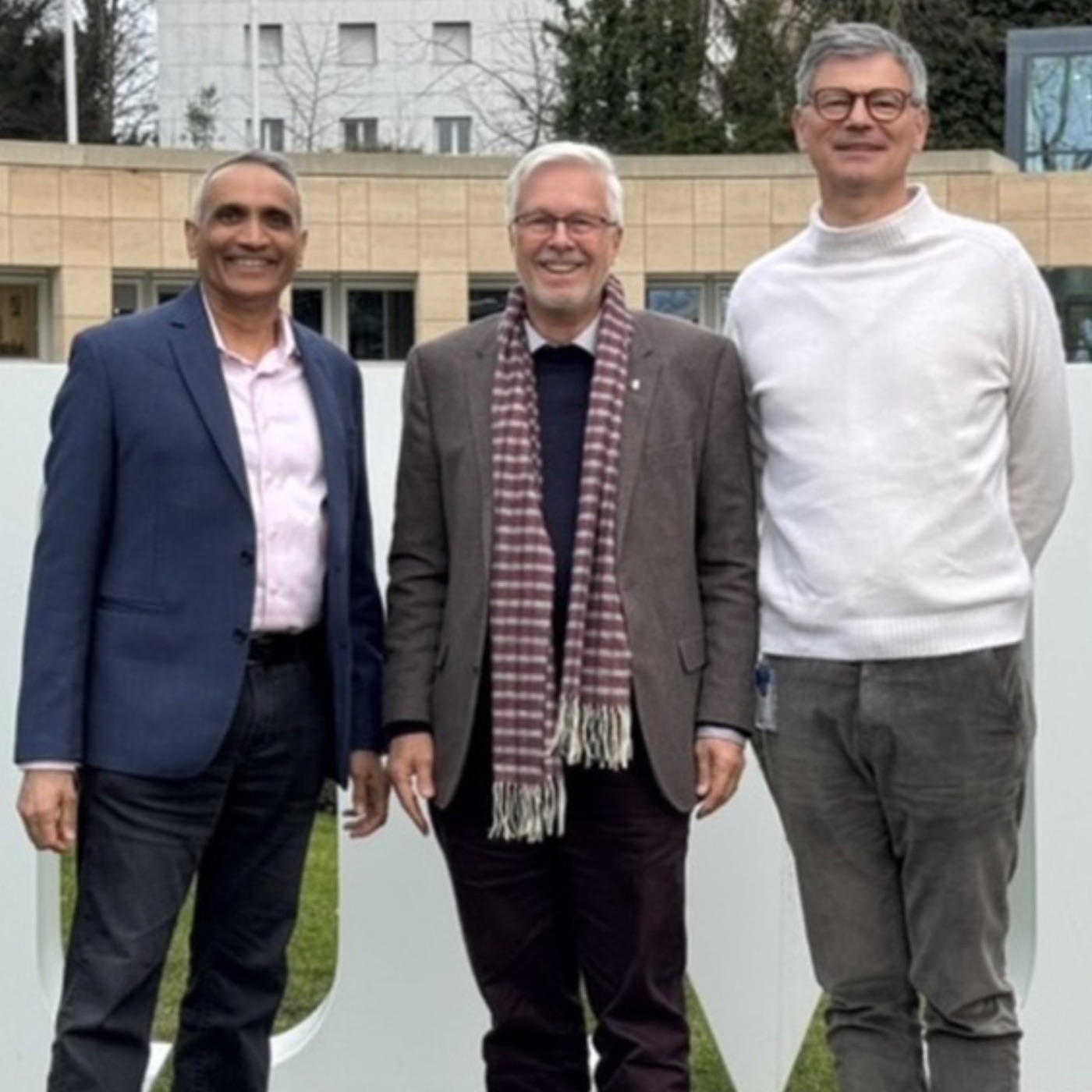
This episode is a bit special, we're recording it together here on the IMD campus.
It's not every day that we bring two professors together for a joint podcast conversation like this in person.
I'm really happy to welcome Gautam Shalagala and Frederick Dalzaz, both professors here at IMD, the International Institute for Management Development in Lozan, Switzerland.
Gautam, could you please start by briefly introducing yourself?
Thank you so much, Michael, for inviting Fred and me to your podcast.
I'm Gautam Shalagala, professor at IMD for the past 10 years.
A professor of strategy marketing with a keen interest in sustainability as well as in digital.
And with that, let me pass it over to my colleague Fred here.
Thank you, Gautam. It's really a pleasure to be here.
My name is Frederick Dalzaz. I'm also a professor of marketing and strategy at IMD.
And it's fair to say that we've been working with Gautam for the last six years on sustainability.
And it's great fun, very important topic.
Before we dive in, let's briefly remind ourselves of what we discussed last time in episode 20.
Gautam, could you please give us a short recap, both for listeners who may not have heard the first episode yet, and to help set the context for today?
Absolutely, Michael. Thank you. Fundamentally, think about sustainability.
Three ways in which companies are playing that game.
Right to play are investments that companies make to earn their license to operate.
This can be because of regulators, but it can also come from external pressures like customers who say unless you meet a certain bar, you don't get to serve me.
It can come from investors who demand certain things.
It can even come from your employees who say, you're not going to work here.
They refuse to be in a company that doesn't do certain things.
That's really your license to operate. That's your right to play.
The next level was the right to stay. These are resilience investments.
Forward looking investments that you anticipate could have, could create problems for your business, could be because of climate change, could be for other reasons.
And you make those investments just in order to make sure that you are staying in your business.
We gave a brief example with coffee and cocoa prices where they are and how they needed to work with the farmers in this case Nestle in order to make sure they have the right type of supply and sufficient supply down the road.
Right to win is really the most exciting area because this is where you can use sustainability as a way to win.
And this is really what we are calling a sustainability 2.0.
Now, it's not that people didn't say you could not use sustainability to win in sustainability 1.0, except they asked the wrong question, which was, how do we become more sustainable?
It's sustainability 2.0. The right to win, the right question to ask is, how do we use sustainability as a catalyst to improve customer value? That's the foundation.
Now, to do this, we have said there are three ways in which you can do right to win in this sustainability 2.0.
The first is what we are calling as product resonance. Companies that are playing this game of asking the right question, which is linking sustainability to customer value.
We call these companies resonators. And these resonators, the first way they can do that is through products, better products that create value for customers through sustainability. And again, value just to be sure is not carbon reduction.
That's not what we are calling as value. Value is better performance benefits. These are all the traditional benefits, quality, delivery, things like that, service, etc.
Or and/or affordability. That's the value we are talking about. So you can do that to products and you will see some examples coming up.
Second is you can do this through customer usage. We call this usage resonance. And this is where customers may be misusing, underusing, overusing products.
And you can actually come up with business models, whether it is circularity, whether it is, you know, subscription models in order to get these to work out.
The third domain is really strategic resonance. Let me spend a few minutes on what we mean by strategic resonance. Strategic resonance is where a company can use sustainability to address a question that we didn't really talk about till now.
If you think about product resonance, customer usage resonance, these are all how to win. These are value creation of how to win, better value through sustainability.
With strategic resonance, we want to address the other question or strategy which is where to play. So we are saying can you use sustainability as a way to expand your playing fields and your playing fields with your customers?
Can you go deeper into your customers by offering new products and services that originally maybe you were not thinking of?
So Frederic resonance is really the new word here that Gautam is using. Explain to us, it sounds like a synergy. What do you mean in your new book, clean winners when you talk about resonators?
Absolutely. So resonance is a term we coined to show that sustainability performance and product performance can resonate together. Synergies, if you want. One plus one equals 2.1.
Sustainability can bring customer value and/or bring affordability to the product. They resonate. It's very important to think about resonance because it says that sustainability strategy and market strategies can be working together, they are not separate, sustainability sits squarely in the business area of the firm.
It's not something you do on Friday afternoon, you do sustainability and by doing sustainability you gain an advantage at three different levels, either product advantage or customer user advantage or strategic advantage.
So we coined the term product resonance, customer user resonance and strategic resonance and we can look at them one by one. And resonance not only means that they coexist but that they strengthen each other.
That's the key. If they only coexist we call this independence. We say, well, you do your sustainability strategy one part of the week and the rest of the week you do your classical marketing strategy.
There is no resonance. It's independence. And remember last time we talked about the worst case where your system is strategy as a negative impact on your market strategy, which we called dissonance.
So when we talked about product resonance, we said that the sustainability features will improve customer value or improve affordability.
Do you have an example for that kind of innovation?
So let me, let me talk for example about GAR. GAR is a German B2B, German company, rematable company when you think about it. They have been working on a new strategy, a new product line, which is called add.
cool for their spread-rider units. And let's talk about their gray and green
customers. It's a new spread-rider technology that enables customers to reduce
operating costs by 20 to 30%. And of the story. So if you're blue or if you are
gray, you don't care about the planet. Are you interested in this technology? Of
course you are, because you can cut your cost by 20 to 30%. And again, this is the
idea that we have is that sustainability can be a bonus if you want for
everybody so that society can win not only the green customers but also the blue
and the gray customers. And it happens that these technology can also cut
carbon emissions by 50 to 80%. Wow. So much. So much. So everybody will want to buy
the cool, not only the green customers because some of them are looking at the
operating cost, either the blue and the gray customers. And in addition, the
green customers, I have the double-warning effect, a double-key-school-effect if
you want, which is not only I'm going to say of course, but I'm going to become
more system. Another interesting example is asset-abloy. So asset-abloy is a
released company and marketing a lot of different brands in many different parts
of the world. One brand they have is Curry in the US. And this is what happened.
They started the new QMAX door. And the QMAX door is a door with a
termally enhanced core that makes it a better door in terms of thermal
insulation. When you buy a door, one thing that is very important is the fact
that you can instantly queue from the core or from the sun. So this is a door that
does a better job. Customer value, you're the better door. The heating costs go
down. Exactly. So when you buy the QMAX, then you can expect that your
heating or ventilation costs are going to go down. But here's the thing. This is
again a product resonance strategy because in fact this door is 100%
recyclable and has 15.6 carbon reduction emission. So nearly 14% emission
reduction, right? So again, if you are gray and blue, you don't care about the
savings of CO2. That's not on your business. But you like the fact that you're
going to save money because it's a better door. It does a better job in
insulating you from the outside weather. And if you're green, not only you get
this advantage, but on top of it, you get a lot of sustainability advantage
because it's a better product. The raw material is better. You have post
recycle content in it. And it covers the CO2 emissions of the door, which is
really nice. So these are some example that I think are very interesting to
think about. Those are great, easy to understand combinations, right? It's more
efficient, but it also has a great appeal to the people who think that it's
important to reduce emissions and things like that. So you cover the whole
market, but it's an additional customer advantage that you hadn't been
thinking of before in that combination. That's exactly it. In a way,
sustainability 1.0 was looking at the green customers, thinking that the
green customers were going to spread and were going to be the majority of the
market. This was not completely realistic. We do a more realistic assessment.
We say, well, again, green customers, 5, 10, 15% maybe, if you just appeal to
these customers, you're not going to be successful. If you're not successful
with your sustainability products, what will you have accomplished? It does not
scare. It does money. Somebody is going to pull the plug when we have a
difficult financial situations. This is not sustainable. So in order to be
sustainable, you want to market your products to the people who don't care
what sustainability. And then you make sustainability sustainable over time.
That's a trick. Now, let me talk about the second level, customer usage
results. Because I think this is a very different way. This is a second
strategy that we can be using with sustainability 0.0. The best way to talk
about it is to think about a lemon. Okay. You might know, what do you know
about lemons? Not much, right? So when you use a lemon, let's go over the
whole end to end customer usage journey. You go into the grocery store, you
pick a lemon by the color. By the way, you don't know a lot about lemons.
Then when you're home, you will cut your lemon into, you will squeeze the
lemon because what you wanted is is lemon juice. You then throw away your
lemon. And this is it, right? That's the usual way we use a lemon.
Absolutely. So now imagine and and this is a parable for me to imagine how
average customer is using products. Here is customers do not have a PhD in
everything they buy. They don't have a PhD in lemons. We don't have a PhD in
lemons. We just use the lemon that buy and the story. We are not
experts very often in what we buy and the purchases at the customers
are very often also not the experts differentiate in detail. And that's the
key to understand customer usage resonance. Remember, Galton talk about the
fact that we are not using the product at its best that there is a lot of waste.
Well, let me tell you the way you use lemon entails a lot of waste. So let me
contrast the way you use a lemon with the way a professional supplier of lemons
could use lemons. And the idea before explaining it is maybe the supplier could
squeeze the lemon for you so that you would get a better efficiency and a more
sustainable business model. Here it is. A professional lemon grower will know
which are the better lemons, right? Which are the lemons that are more juicy.
We come back to that. The second stage is a professional lemon squeezer would
squeeze much more juice than just squashing the lemon with your hand. They will use
tools that will get much more lemon juice. It's very important because when they
do that, they can give you more juice. You will be happy as a customer because
you will get more juice. And very important, they will keep, they will be able to
keep some juice for themselves, which means added profitability for the supplier.
But that's not all. Once they have squeezed the lemon and they have used all the
juice, they can think about the rest, which is the skin, the pulp and the seeds.
So the skin, they can get a lot out of the skin using lemon as a flavoring
ingredient. Like the oils that are in the skin. Exactly. For fragrance, for
example, then the pulp, you can use the pulp, reuse the pulp to put that in
some other products as a raw material for other products. And then the seed,
you can think about reusing the seed and planting better lemons. Are we
talked about sustainability? No, we've talked about business. It's a supplier
selling you. Why are you owning and using your product? I can all use the product
on your behalf. Let me give you some example and we come back to the
circularity. Michelin for 30 plus years now has been developing a different
business model. And different business model is I'm not selling you tires.
I'm going to sell you kilometers. Why? Because the truck owners, they
don't make a professional use of the best juice possible of the tires. If
Michelin owns the tires and maintain the tires, they can get more juice out of
the tire, which is here, more kilometers. And because they can make extra
kilometers, Michelin can give you extra kilometers for you, extra juice, and
keep some of the extra juice to them to make sure that the business is more
profitable for them. Why? Because they keep the ownership of the tire. So
then their business is more risky. So they need to be compensated for the
extra risk. That's what is going on. It's how you can. So these are these
business models, which are servicization. That's one way to call them.
Another way to call them is paper use business models. But the key here in
paper use business model is to make sure that you can extract more juice than
the customer. If you are a supplier that can extract more juice than the
customer, then you can be in this business. Maybe the most well known
example is World's Voice. World's Voice has been doing paper hours of usage of
the engines for the planes for more than 60 years. So whenever you use a
France, Louis-Thames, or Qatar Airways, chances are that the engines on the
planes are not owned by the airline companies. They are owned by World's Voice.
And World's Voice will be paid by the hour of
first why? Because nobody better than Holtzfoltz know how to use Operate and maintain Holtzfoltz
engines. It's a business model that is more efficient. Out of each engine you can squeeze more
lemon, more juice, more efficiencies. So you get benefits for the operating cost and you can get
benefits for sustainability. Which means that the trade-offs when you design the product can be
managed in a much more clever way. Exactly. And this is where it's so interesting what you are
saying. It's because remember my lemon analogy and we are talking about the seeds. The seeds is what
you can reuse to build better lemons. So when you know you're going to own operate the engines
or the tires at the design stage you think about it. You say how can I design my tires or my engines
better so that they can do more kilometers or they can last longer. And how can I design
them so that as to make sure that we can recycle them. And then without talking about sustainability
strategy like circular business model you are developing this business model but for business
purposes. You are more efficient and you are more affordable. You bring more customer value.
And this is why we call it customer usage items. And gray and blue customers are happy.
They get more efficient tires or the use of the tires. They get more efficient use of the engines.
In addition green customers are super happy because not only they get this benefits but they can
also they can claim that they have developed some system green benefits. And this business model
because of the keeping of the juice allows you to get some feedback into your business model
for the risk that you have and the interest that you have to pay for putting up the money
for the tires or the engines in the first place. Absolutely. This is one. And I also see a strategic
benefit. Your customer relationship is a different one and it can be very positive but maybe that
is something that Gautam will be talking about later on. Let's see. You are spot on. What is the
number of contact with your customers that you have when you sell tires? A rule of thumb is about
one point of contact per tire per year. If you are selling kilometers instead of selling tires
how many contact points do you have with every customer? A lot because your tires become
more unmore connected. You get a lot of data so you get a lot of relationship with your customers
and you get what is really a way to win customers you get intimacy. You develop a deeper
broader relationship with your customer which is also a strategic advantage. But a strategy
resonance is another topic as we will see later on with Gautam. All right. Wonderful. Thank you.
So let's use another B2B example. I want to talk about Halsey, the Swiss construction company
but in a different setting because what's talking about emerging countries here. In Africa for
example, the main construction material in many countries is brick that are being burned
to get the right structural properties, the durability. You make the brick and then you burn it
in an oven to make sure that it can have a lot of strength. That's the traditional solution
all good except that you require a lot of energy and the main energy source in many African
countries is wood, which is a problem. And the second problem is the fact that this burning
emits a lot of CO2 emissions. All right. So Halsey has been working on it for a long time
and they came up with what is called drabric. So drabric is interesting because
it's a specific mix of earths, sand and cement but you compact it without having to burn it.
Very interesting. And the very interesting is by compacting it you get compressed bricks
of high quality up to three times more strengths than conventional bricks. So you get your product
advantage. At the same time you get cost efficiency because you have about 20% less expensive than
regular bricks. And your gray and blue customers are very happy because you get a better product
at a lower price. Everybody is happy. Now at the same time again the cherry on the cake, the
sustainability part comes in kicks in. And what is interesting is that on average when you have
to build a house you have to burn 14 trees. And this emits a lot of CO2 emissions of course. So
this is where it's reduced CO2 emissions by a factor of 10. Here is a very very nice example
of what you can do. You have a better product that is less expensive and is more sustainable
so that it can be successful in the marketplace and it can be requested by all customers
irrespective of the color of the system. So that's a really good example and it's also a
trigger probably for the global manufacturing process. So you probably write we're not yet there
because you have this is okay for the quality startups that we have in Africa and now they're
working their way up to different standards, a diverse innovation. Right. It's the name of this
strategy to invent first in countries that may have different standards and lower standards. You
stuffed with innovation there, General Electric has done that many times in India where you
stuffed by innovating in emerging and developing countries and then you improve you improve
you improve until your innovation can find a nice market in richer countries. This is called
reverse innovation. Nothing new here but now you do reverse innovation with sustainability in mind.
What is really interesting with whole sim is their ability to do 3D printing. So that's another strategy
that they have and they have a fantastic technology. The ink is the concrete and they do 3D printing
that will have the same advantages. It's going to be cheaper, it's going to be as durable or
more durable but what is really, really interesting for a purpose is much more sustainable than
traditional construction. So they have different innovation. As Galtown has said I think it's
very important. Sustainability becomes part of the innovation mindset and through the sustainability
lens you can get more innovation than without. That's what we're talking in our book Clean Winners.
So the sustainability mindset can be a trigger for innovation. But what about the customer usage
though? What can we say about making innovation towards the way the customer uses the product?
I think we should give you a couple of examples maybe just to make these things more concrete.
Fred knows very well the chief innovation and sustainability officer of a
chemical company and they looked at these inefficiencies. Do you want to give that example or
let me just pitch it? So this tackle company for example does coatings on set aisles,
some things on the sea. Now if you think about what goes here we are sitting in a room with a
carpet here. If it is going below a carpet you know the rooms are going to be carpeted. If it's going
to go below a carpet, do I really need the aesthetics to be the finest? I don't. But what they were
doing is everything had to be triple coated, quadruple coated, which was simply increasing their costs
doesn't create any value. So here's a simple example of where a company can say wow that's an
inefficiency that doesn't really add much value to customers. I don't need three coatings. There's
nothing about ace that exists smoothening there. I can have one coating. So what have I done?
I've actually by using less chemicals now I've made the world better in some ways. But most
important I can also make it then more affordable for the customers. If I want to play their price
yet that is. So this is a simple example. They would never have thought about that if not for
the lens of sustainability. Only because they were thinking you know how much chemicals are
be using. Then is their excess use? That's when they said oh let us look at the different use
cases and they came up with it. That's one simple example. Fred do you want to give the finish example?
Well you are the expect on finish. I will go to the John Deere example later because John
Deere is very very good. So again John Deere everybody knows this company that has been around
for 100 years and for them for 100 years. A new tractor was a bigger tractor and a faster
tractor. And they made a lot of progress on that. Then the John Deere people had this very
interesting mindset change and said well we are not only looking at the tractor itself because for
for the farmer.
the tractor is not an enemy itself. The job to be done, as we say in marketing, is I want to
increase my crop output with the minimum cost. This is what they wanted to do. So they thought
about it and then look at the the the holistic job to be done, which involved the tractor, yes,
but also the farmer, also a lot of energy, water, the seeds, fertilizer, herbicides, etc. etc.
And they thought about it and they said, well, maybe we can improve the farmer's productivity
by looking at one thing, which is the way fertilizers and herbicides are spread over the crops,
because it's highly inefficient, as is. You spread all over the crop, all over the soil,
without discrimination. So they came up with something very interesting and it took
some time. I'm with you. It takes some time. I wouldn't say it's a long term, but they work
into a new technology that is called C and spray. So here it is. It's another tractor. Maybe
it's not as fast as the previous generation of tractor, but it has visual capabilities. It looks
with machine learning, it looks at what is on the soil. And I'm going to make that up, but to
give you the idea and they say, okay, is this the machine will ask, is this a weed or is it the seed?
If it's a seed, spray fertilizer, if it's the weed, kill by herbicides. It's not like this. It's
not as easy, but you get the direction. But let me give you the results from John Gears. I mean,
it's on the videos. If you want to look on average, on average, this new technology reduced the need
for herbicides by 77% and the use of fertilizer by more than 60%. Oh my god. Oh my god. Because
the farmer is super happy. I mean, the farmer never liked to put herbicides and fertilizers.
These are important cities when you know that fertilizers and herbicides come for 20% of the cost
of the farmer. When you cut, let's say, let's be very conservative, 50% of that. So you could 10
percent of the cost for the farmer. The farmer is super happy. The gray farmers and the blue
farmers are super happy. We never talked about the sustainability at this stage. We talked about
business. How can I get the highest outcome for the minimum cost, right? So the gray and the
blue farmers will go for it. And of course, the green farmers are even more happy, not only the
safe cost, but the safe, the private. So this is what we're talking about with with Gout and before
giving you this example, you have to make sustainability relevant for the non-sustainingly
minded customers. So that's systemic and win because then sister can scale. Everybody's happy
to use this new technology because everybody is selling money and the planet wins in the end.
I think it's an important example. Gout and you don't need to talk about the finish. You know, let me
lay the landscape here. Finish is one of the branch owned by Reckett, UK-based Reckett. It's
dishwashing, liquid capsules, etc. Today it's the largest dishwashing liquid. Now what was happening
in Turkey? The company had about a 70% market share several years ago, say 10 years ago or so.
Then PNG entered the market with a very good product called Fairy and they started really
eating into the market share to the point where Reckett's market share came to below 30% or about
30 or percent, but actually PNG had just overtaken them in a very short time. You think, you have
brands, you have great protection, but this is what they are. So they knew that they needed to
rethink their approach. That's when one of the leaders, Fedori Spulio and Turkey team said we need
to look at the customers with a fresh perspective and they went into their homes, etc. to look
at what are they doing? How do they get their dishes clean? Till then, of course, years and years
Reckett had been doing research and all they cared about was dishes coming out clean or spocky,
as they say, with less stains, etc. Now when they went into the consumer's homes and what they
realized is the following. There are some customers who were washing by hand just about 20% and
most of the other customers were putting them into a dishwasher. Now if you wash dishes by hand
for the same kind of low, actually you use 10 times more water because the tap is running
constantly, etc. 10 liters dishwasher, 103 liters hand wash. However, but 80% are using dishwasher.
You say, okay, good. There is no problem. No, but actually what they realized is majority of the
customers before they put them into a dishwasher, they rinse the dishes and that uses some 57 liters
to 70 liters of water. It's a consumable use of that water. Now that they were thinking about
sustainability was on their radar at that time. Then they thought, oh, why can't we improve the
quality of a product so nobody has to rinse the dishes before putting them into the dishwasher?
Now why is that important? Turkey is a water-stabbed country, right, or getting there.
Two, water waste just increases your water baths. It doesn't benefit anybody. So by coming up
with a dish washing in a pod or capsule that eliminates the need to rinse but gives you sparkling
dishes at the end is greater customer value. And that was a huge success for them. So this is
again, if they didn't have this sustainability lens in mind, they wouldn't have paid attention
to what I use it. I don't care how much water has been used. I only care about the outcome,
which is, is it a clean dish? But by looking at it holistically, especially with that sustainability
lens as well, they did three things. One, lowering water bins is relevant for all customers.
Two, eliminating the need to rinse. It's a painful chore. Nobody likes to do it. It's relevant
for all customers. I've never come across anybody who says, wow, I love to rinse my dishes, right?
Nobody does that, right? And so this is an example of creating greater customer value.
Lowering water bins, same cleaning dishes, and eliminating the chore of rinse.
So what you're saying is that customer centricity gets a new accent or a new bias.
And maybe a recommendation is to have marketing research betuned into these types of
more holistic questions as to what is the usage of the product and what is really important. Fantastic.
Because before I'd record customer centricity, my clean dishes, because they're looking at it
only from the product perspective. And the perspective that Fred and I have been looking at what
your company is doing, look at what customers are doing, look at what other suppliers are also doing
in this case may be a diswashing company. And if you take that holistic perspective and understand
the customers end to end journey, you will probably find new inefficiencies that will end
be the trigger of new innovation. Those inefficiencies always means more wasted resources.
That's how they're related to sustainability almost always. And in fact, you know, with that
frame, we said, okay, so with this sustainability 2.0 question, which is, how do you use sustainability
as a catalyst for innovation to create more customer value? Is it only one way to do it?
And this is where Fred and I, we came up with the framework saying, no, actually, there are three
ways in which companies can play this game. Thank you for the examples on how
customer usage can resonate with the performance of the product. Interesting. And now, what about
strategic resonance? This will be maybe the icing on the cake? Two examples. I want to give you
one from the agriculture space and another one from the B2B industrial space. From the agriculture
space, I can think of this company in India called Mahindra Group. Mahindra Group is a big industrial
conglomerate. If I'm not mistaken, they are the number one tractor maker by volume in the world
today. They also have automobile divisions, finance divisions, tech divisions. It's a true conglomerate.
Now, if you take their agricultural division,
you know, Anand Mahindra, who is their chairman, you know, if you are selling tractors and equipment,
you always think about how do I make them better, more efficient. And really, if you put your
sustainability hat on, you will say, okay, can I reduce fuel usage maybe? Can I, you know, that's
kind of how you think about sustainability, right? But what he realized is that majority of
India's farmers are actually smallholder farmers, very small holdings, three acres, five acres,
these are not the big holdings that you see in Brazil and Australia and the US and even in parts
of Europe, you don't, these are smallholder farmers. So what they realized is you needed to go
well beyond just thinking about equipment, because at the end of the day, the true job to be done
for a customer or the true need of the customer is not equipment productivity, it is farm productivity,
that is the true need of the customer. So they came up with this idea of let's build a nation
of champion farmers. And the specific goal they attach to that is we want to double their income.
Oh, wow. Yes, exactly. We want to double their income. But that meant changing a lot of practices
of the farm, modernizing how they do things. But you needed to demonstrate to them, right? They're
not just going to believe you, because I'll say, no, my grandfather did it like this, my father did
it like that. Who the hell are you? You're just trying to sell me things. So they put together a whole
program where they would go to farmers, work with them closely and say, okay, you have three acres.
They be one acre, let us do differently. Two acres, you do the way you are doing. Let's look at the
comparison. And so here they developed through partners, some through themselves, many solutions on
how to improve farmer practices. This was not an area they were ever in. So this is building a
whole services line of business, which totally, you know, because before servicemen, servicing the
tractor, right, as in maintenance, as in maintenance versus farm product. It's a whole different set
of services, right? And that's an example of how thinking truly about the inefficiencies on the
farm, which are hurting farmer productivity and are terrible for the environment. You know, they weren't
using, you know, the soil properly over fertilizing a lot of bad practices out there. And so that's an
example of how Mahindra Group expanded its playing field by going into new kinds of services and
created a whole new growth engine for the company while also creating stickiness and protection for
its core business. Because that's really where still the money is being made. So I think it's
important to understand this from that particular lens. That's amazing. And they take really their
corporate responsibility. That's kind of in a new, serious way, right? Exactly. And really,
when you say we want to build a nation of champion farmers and double their income,
it makes things very precise. It makes things very concrete. It doesn't make this pie on the sky,
we want to save the planet, we want, it makes it very concrete, right? And the beauty about what
they've done is there's a social angle to it because they're uplifting the lives of farmers.
There's an environmental angle because they're better growing practices. So it brings all of it
together when you think more holistically rather than I want to have a carbon reduction target.
Right? And that's where always working backward from the customer will always give you this broader
lens and you will see so many sustainability issues. You don't even need to talk about sustainability,
they are there anyway to be solved. Right. It happens when you turn your entrepreneurial mindset
yes towards the market. That is correct. Rather than a blind KPI that is driven by a personal ambition,
maybe that makes you excited, but maybe disconnected from the market. And you're not saying that's wrong,
we're saying you need to connect the dots, always customer back, customer back, customer back.
Strategic resonance becomes clearer and clearer now. It's when your customer takes you into
businesses that you haven't exercised before. When you have a profile that makes you attractive
to work together with your customer and produce new values as a team. That's exciting.
I think another example I can give is of Siemens. The German industrial giant, everybody
knows something about Siemens, whether it is their wind turbines to so many products that we see
in our homes with the Siemens labels. Yes, from home appliances to health and health even in
the hospital you see that. Exiled me. So we see Siemens, well respected company, and Siemens,
one of the key businesses is they do HVAC and all of these systems for industrial buildings.
And so if you think about going to a factory, let's say a Heineken factory, they're thinking about
energy management through HVAC and those kinds of things. And so that's really what they were
focused on. They're in a sense at the exterior of the building. Now luckily what Siemens had done
is through their practices by using digital and data and so on, they were able to go to Heineken
and bring considerable reduction in energy use. It's right there has a environmental benefit,
but very important, monetary benefit, which is especially important today in Europe, for example,
because energy costs in Germany are about the highest in Europe, for example, right? Of course
Siemens is a global company, so I don't want it to seem like these factories are only in Germany
they're all over the world for them, but regardless energy use and they were doing that very well.
Now, so you're at the exterior or the periphery of the building, that's your playing field,
and that's what you're known for, you know, your Siemens buildings and that's what you do.
So when they got to know Heineken better,
somebody in Heineken said, "Why don't you help us now with some of our processes
that are very energy-heavy? They use a lot of energy, so you can think about in the process of
making beer. There's a lot of energy that is used in many of the different aspects of making
beer, including the bottling and the cleaning and a lot of energy is used and also water is used,
also water-intensive and energy-intensive and heating and cooling, heating, cooling both are
required. Now, these core competencies that Siemens had built that are in the exterior of the
building in HVAC, what is important, it's at the end of the day, it's about energy management,
and they said, "Could we not bring those data, those same capabilities that we are using for
monitoring outside the HVAC type of things into industrial processes, in this case, a food
process of making or a beverage process of making beer?" And this became a big success for them.
And they were able to very deliberately massively lower the energy consumption
in Heineken's factories, so much so that now they've scaled it to, I can't remember, like,
15 or 20 clients, I have to check their website, actually. Heineken has put it as given the
permission to talk about this openly, because they're so pleased with it that they've rolled it
out globally. This is, again, an example of where you are changing your playing field,
because you built this energy efficiency competence, and now your customers actually take you into
new spaces, they're asking you to do it. So, again, they were never in these processes,
and now they are embedded into those processes. That is what we mean by strategic resonance.
Where you look?
not only at what you do, but you look at other players.
Not only is your customer, but what other suppliers are doing.
And you say, wait a minute.
What other suppliers are doing is causing some inefficiencies.
And I can bring my competencies, or I can build new competencies
in order to solve those customer problems.
And that creates a new growth engine for me.
This is the idea. This definitely works.
But I have a question to you, whose responsibility is it
to pull the company out of the comfort zone
because building new core competencies
means sometimes different types of people, different emphasis.
Maybe new departments, new structures in the company,
and also sometimes new people that you need to talk to
on the customer side, so even the customer interface,
so the sales department could be touched.
Even marketing will differ considerably
because you're moving, for example, into more like a service
marketing, whereas before it was more of a product marketing
thing, maybe that was the core strengths of the company.
So how do you see that going on?
I'll give you two responses to this one.
One from a personal experience, and then
what I, in this case of Siemens and other types of companies
planning to do the same thing, what they need to consider.
So what's my personal example?
I used to work for a strategy consulting firm
called Monitor Group.
And really, if you think about it,
if you look at how strategy or the Big Four have grown,
I mean, they don't do the things they were doing even 10
years ago.
There's only one reason.
They're very close to their customers.
And they go where their customers take them.
It doesn't mean there are no natural boundaries
to what they will do.
But they realize how important those problems are,
and they're very willing to invest in those.
Whoever thought that the Big Four will be earning so much
money from technology work, whether it is SAP implementation,
to back office, and things like that,
that they do for many of the customers.
So I think there is always this natural question.
The moment you decide that I want to be more intimate
and more close to my customers, then your decision
really is, can I be in that space?
And can I reasonably win in that particular space?
There is nobody would say, wow, an accounting firm
belonged in that particular space.
That is said, there's a lot of money.
This is going to help our customers.
It brings us closer to our customers.
They are willing to build a new line of business.
Luckily, these are not manufacturing and IP assets.
They just need to hire a bunch of people who could handle it.
So now, in the case of industrial companies,
I think it's a little bit more complex.
Because it's not just adding people.
Because when you have manufacturing and so on,
I think you have to think about how much can you extend.
And if you start thinking about the two ways
in which basically companies can win,
you can go horizontal.
You can take your same core competency
and go into new areas, new applications,
or you can go vertical into a customer, go deeper,
and go deeper, and go deeper by adding new things.
I think that's a fundamental choice
a company needs to make.
I don't think there's a right or wrong answer.
Companies can be successful doing either.
I think when you decide to go more deeper into a customer,
like Siemens has, into more deeper services
for single customers, into many things,
you have to build fundamentally a different type
of organization and bring in new people.
The meaning of key account management changes completely.
And very often salespeople
who are used to selling products struggle
with these broader types of solutions,
almost always you need to bring new blood.
If you want to see these as potential growth areas,
it's forming a new divisions, it's bringing a new blood.
I also think if you're doing things like this,
there's more cross-functional interaction
that needs to take place.
So complex, more complex than the professional services
example there, they're each doing their own thing.
Here there is a lot more integration that is required.
And so that's the choice.
It's not clear always that you need to do that,
but that's the choice.
I think the way the Siemens and I'll think about it is
one, there's an attractive growth space.
Two, it can take them deeper into customers.
Why do they think that's important?
Because many times the core businesses,
the products itself are being commoditized.
So if you want to protect yourself
from commoditized products, when you bring in these,
it gives you that level of protection.
So I think your market dynamics
often will determine what spaces are you willing to go.
And market dynamics is also precious, right?
So as long as you can innovate your products,
let's say and give them a technological edge
that a customer perceives, then your return on investment
on the technology side, on the pure technology side
could be looking very attractive.
That's correct.
And then the alternative of broadening
and making more complexity
and creating additional lines of sales
could actually be looking less attractive.
That's correct.
I think if you can innovate on your product,
but not over engineer, if you can stay through to the market
but not over engineer, because the moment you over engineer,
now your costs go up and the value goes down, right?
So if you are constantly in touch with those customers
and you're getting the right type of feedback
and you don't over engineer your products,
then I think if you are innovating,
you might just be perfectly fine staying in that place.
I think the threat to many companies
in the last few years has been many good enough solutions
have started appearing at very attractive thrice points.
Now to differentiate from those good enough solutions,
many times companies have said, "I need to innovate."
But that innovation has actually been excess innovation.
So if you don't fall into that trap, I think you're okay.
But if you are losing to good enough products,
and product innovation is not the only answer,
and you can't protect that IP,
or just the head of the competitors,
that's when you need to start looking at these other things.
You know, these other things sound good in paper,
but they're complex to pull off.
They're not always the answer.
I think it's very important that a lot of times
these big complex end-to-end type of solutions
are nice strategy on paper.
But don't always work if you're not careful.
And you have to also understand that market
before you make big steps into it,
because there are other players that either already do this,
or have an easier time as a fast follower,
and suddenly you're being followed by somebody
who does it better than you.
- La Mishla going into fleet management.
You can legitimately ask the question,
why are you as a tire company,
uniquely capable of doing fleet management,
better than fracking logistics companies
who could offer that as a service,
or even trucks companies manufacturers,
OEMs who could offer that as a service.
So I think that's a very important question,
that we don't get sucked into bigger broader solutions.
So I think there you always have to say,
why do I think I belong in this space?
And what can I do?
Can I get something you need that these others cannot do?
That will allow me to fulfill customer needs better than that.
Unless you can find that angle,
I think then you're just rushing in
to protect your business,
but you would probably not be so successful
if you're not careful.
So under the bottom line,
all these strategies, do they have something in common
when looking at it from the angle of sustainability?
- Yes.
- I think the thing that they all have in common
is sustainability provides that lens
for new innovation to create customer value,
performance and affordability.
That is the golden nugget.
As long as you keep that link in mind,
You can even forget the names of these strategies, because whatever you do, if you ask that question,
you're probably playing in one of these three strategies anyway.
Yeah.
So it's a type of customer-related efficiency, maybe, exactly, as a summary word.
And effectiveness.
And the thickness.
And if you're improving productivity on a farm, it's not just efficiency.
Yeah.
Yes. And it also changes your brand, right? The perception.
That's correct.
And that might be on the plus side, if you do it well.
Exactly.
Exactly.
The other thing that, in Michael's Green World, in our podcast here, that we discuss is,
how can we trigger innovativeness?
How can we give people challenges that are meaningful, that they haven't looked at until now?
And that's maybe sort of more a psychological thing that plays across all the different strategies.
Yes.
And almost all these strategies, what we find is, you have to escape the product.
Because if you're only thinking about innovation from that narrow product perspective, then finish
would be just saying, ah, my dishes are sparkling.
What else do I need to do?
It's only when you look at the customer journey, holistically, that they say, wow, there's
a lot of water usage.
If you're John Deere, you're thinking, I just need better equipment that can dig faster,
so faster.
If it's only when they thought more holistically, did they say, wow, why is so much fertilizer
being used, being used, we can reduce it by simply putting computer vision and robotics.
Because they understood what the farmer was doing, same thing with Mahendra, same thing
with Siemens.
These are all the different plays, product resonance, usage resonance, strategic resonance,
they all have that common core.
So, where does that take us with a view to 2050?
What are the probabilities that you can see that these things play out in a sort of quantity
and quality that actually for our world?
This is something that gives us hope.
I feel that every business is interested in reducing waste inefficiencies and so on.
That's really what we are talking about.
Look at it from the customer perspective, end-to-end, spot those waste inefficiencies, etc.
Most always they will have a negative impact either on people or the planet, use that as
the innovation engine.
I think sustainability has become a loaded word.
It almost feels like if we lose the word sustainability, maybe we are better off.
And we recast this as a new form of business thinking or something.
And we would make a lot of progress, faster progress, because everybody knows that's
beneficial for their customers.
It makes the business stronger.
It creates differentiation through innovation.
Everybody knows that.
So I think the fastest way we will make progress, and this is where I'm optimistic, is because
of the intensity of competition, today for China, for example, the competition has become
more intense.
I think everybody wants to find new ways to win and so on.
And that gives me hope that we will actually make great progress towards this as long as
we don't get caught up in the sustainability debate.
It is there anyway.
So if we remove that word, we might actually move faster in a sense.
I'm not saying I'm just saying remove the word, I'm not saying remove the lens.
Because it's become a polarized word.
In a way, it's polarized, but also it creates potentially at least, and that's why I think
people like you are important.
It can create the sort of tunnel vision, which is the opposite of what you are explaining
to us.
And this tunnel vision is dangerous because it limits our thinking, but also it absorbs
too much energy of the company.
That should go into experiments and pilots that try to enlarge and find out what are the
other opportunities.
That's correct, so.
And overall, it is a bit of a re-engineering of our economic network that we have is correct.
If we look back from 2050, probably we will say, yeah, the way companies interact with each
other and how the whole network was built up was quite inefficient.
That's correct.
Maybe that will feel like today when you're in front of a video conference and you think
back to the times where a video conference is where just the dream.
That's correct.
You know, maybe a good analogy is what Toyota and many Japanese companies did was remarkable,
but it was very focused on the product.
We are just checking that expanded view.
What they did was reduce waste.
They do.
They understood the importance of quality because it would reduce waste.
They understood the importance of using resources sparingly, using them when.
Just in time, so we would actually, you know, in those cases, improve business profitability,
but all of that had an impact on sustainability as well.
Higher quality is better sustainable, right?
And we are just expanding that view.
Yeah, you're talking about lean type of thinking.
Lean type of thinking.
What?
End to end.
Costume a back.
That's it.
End to end.
Costume a back.
Yeah.
That's it.
That's a great way to focus.
So I think if that's what I'm saying, if we recast things in those type of words, I think
people will get it faster and we won't have this opposition.
I don't see anybody from the Republican Party opposing it if that's how you frame it.
Agreed.
And so I would love to take this away from politics.
Yes.
So when we presented, it doesn't matter what political leanings they are, as soon as
they hear a message, I said, I did it.
I can be on board with this.
And that's what we really would love to do.
Very nice.
How are you casting this in your book?
I think in the book, we take less of these philosophical stances because for better
words, we wanted to stay away from all of these politics.
And we just wanted to get to the message of what went wrong and how you can do it better.
But it still has the sustainability overtones in this.
So I don't know what the reaction will be, a whole bunch of people will say, oh, another
sustainable book, I don't even want to read it.
It's very possible that we might fall into that trap.
If I had to recast it and rewrite this book, probably I would call it Leap Customer Bank
and Expanded Lean because that everybody would agree with it.
So I think we deliberately stayed away from philosophical debates.
We deliberately stayed away from all that because we felt that's what hundreds of books
have already become.
Be cool, do this, do it for your children, do it for, that's why we deliberately stayed
away.
And we became very practical saying the questions were wrong.
Ask the right question, here are three ways, you can do it.
Very good.
And do you have recipes in there or is that something that requires a separate discussion?
I think what we have is a lot of case studies, but the recipe book is coming.
So what I mean by that is, we believe that we have to create a playbook.
If you want to start the journey, here's where you begin, that here are the six steps you
need to go through for product resonance, and here are the six, seven steps you need
to go through for customer, you said.
We haven't created that playbook, we are in the process of doing that.
Very nice.
Thank you very much.
I already laid the groundwork for Clean Winners 2.0.
Thank you, Michael, very kind of here to have us on this show.
When will the book Clean Winners be released?
So the book will be released on the 22nd of March, 2026, hint you can already buy on Amazon
or any other library you can free order.
So we have reached the end of this episode, and I thank Frederick and Gautam very much
for having given us a deep insight into the topic.
Luke, it was a pleasure.
Thank you very much.
- Thank you, Michael. It was really an honor to participate in this.
I think if we can move the media along sustainability,
I think we'll make big progress, hopefully for our listeners, in the time that's spent.
- Thank you. Goodbye, everybody.
[BLANK_AUDIO]
Podcast Summary
Key Points:
Sustainability 2.0 shifts the focus from reducing environmental impact to using sustainability as a catalyst for creating customer value across all customer segments, not just eco-conscious ones.
Companies can achieve this through three strategies
These strategies demonstrate that sustainability drives innovation by revealing inefficiencies in customer journeys, leading to more efficient, affordable, and value-rich solutions.
Real-world examples like Michelin’s tire services, John Deere’s precision agriculture, and Mahindra’s farmer empowerment show how sustainability-driven innovation benefits all customer types—blue (cost-focused), gray (pragmatic), and green (environmentally conscious).
Strategic resonance enables companies to enter new business domains by leveraging existing competencies, such as energy efficiency, to solve customer problems beyond their core offerings.
Success requires moving beyond product-centric thinking to adopt a holistic, customer journey-based approach to innovation, uncovering hidden inefficiencies and creating shared value.
Sustainability should not be treated as a standalone goal but as a lens for innovation that enhances performance, affordability, and customer intimacy.
The authors advocate for practical, action-oriented frameworks—such as a "playbook"—to guide companies through these strategies, avoiding polarized debates and instead focusing on tangible outcomes.
Summary:
0 (customer-centric innovation). Hosted by professors Gautam Shalagala and Frederick Dalzaz from IMD, the discussion introduces three key strategies: product resonance, where sustainable features improve product performance and affordability; customer usage resonance, where business models like subscriptions or circularity optimize how customers use products; and strategic resonance, where companies expand into new markets by solving deeper customer needs. Real-world case studies—including Michelin, John Deere, Mahindra, and Siemens—illustrate how these strategies deliver value to blue, gray, and green customers simultaneously.
The core insight is that sustainability acts as a lens for innovation, revealing inefficiencies and enabling more efficient, affordable, and impactful solutions. The episode emphasizes moving beyond ideological debates and instead focusing on practical, customer-focused innovation. It concludes with a call for a practical "playbook" to guide businesses through these strategies, promoting faster progress by aligning sustainability with profitability and customer value.
The book *Clean Winners*, set for release on March 22, 2026, will further detail these frameworks, offering actionable steps for companies to implement sustainable innovation effectively.
FAQs
Sustainability 2.0 shifts the focus from simply reducing environmental impact to using sustainability as a catalyst to improve customer value. Unlike sustainability 1.0, which targeted only green customers, sustainability 2.0 aims to win customers by offering better performance, affordability, or efficiency for all customer segments—blue, gray, and green.
The three strategies are product resonance, customer usage resonance, and strategic resonance. Product resonance improves product performance and affordability through sustainability. Customer usage resonance optimizes how customers use products through innovative business models. Strategic resonance expands a company’s market by offering new services or solutions based on sustainability-driven insights.
Product resonance creates value by designing products that offer better performance, lower costs, or improved efficiency—benefits that appeal to all customers, not just environmentally conscious ones. For example, energy-efficient doors reduce heating costs, benefiting blue and gray customers while also supporting sustainability goals.
Michelin’s tire business model, which sells kilometers instead of tires, exemplifies customer usage resonance. By maintaining tires and optimizing usage, Michelin extracts more value from each tire, reducing customer costs and improving efficiency—benefiting all customers regardless of their sustainability mindset.
Strategic resonance occurs when a company uses sustainability to expand into new markets or services by addressing unmet customer needs. For example, Siemens helped beer producers reduce energy use in their factories, creating new business opportunities and deeper customer relationships beyond their original product offerings.
Sustainability acts as a lens to identify inefficiencies in customer usage or processes, leading to innovative solutions. For instance, John Deere’s use of AI to reduce fertilizer and herbicide use improved farm productivity and lowered costs, benefiting all farmers while advancing environmental goals.
Chat with AI
Loading...
Pro features
Go deeper with this episode
Unlock creator-grade tools that turn any transcript into show notes and subtitle files.
 PodcastTranscript AI