#20A - No Green Premium – Sustainability Needs Innovation to Win Customers (Part 1)
from Michael's Green World
49m 56s
This episode explores the evolution of sustainability from a compliance-based approach to a customer-value-driven innovation strategy. The hosts, Gautam Shalagala and Frederik Dalsas, introduce three levels of sustainability: compliance (right to play), resilience (right to stay), and innovation (right to win). While early efforts focused on meeting regulations and securing long-term supply chain stability, they failed to scale due to limited appeal beyond 10% “green” customers. Sustainability 1.0 was based on superficial claims and weak evidence linking sustainability to profitability, leading to a “say-do gap” and consumer skepticism. Sustainability 2.0 reframes the question: how can sustainability act as a catalyst for innovation that enhances customer value? This is achieved through resonance—improving product performance, reducing prices, or offering greater affordability—without alienating blue or gray customers who prioritize value. The hosts argue that true success lies in designing products and services that deliver tangible benefits to all customers, not just environmentally conscious ones. Using real-world examples like Alidavinson’s electric bikes and green shipping vessels, they illustrate how dissonance (degrading performance) or independence (no value change) can undermine adoption. The framework emphasizes a “tripod” analysis of performance, price, and sustainability to predict market success. Ultimately, the goal is strategic resonance—integrating sustainability into product design, customer usage, and business strategy—to create a broad, sustainable competitive advantage. The book *Clean Winners*, scheduled for release in March 2026, presents this framework in depth, offering a roadmap for companies to scale sustainability across all markets.
This is Episode 20 of Michael's Green World.
In this podcast, we explore how innovation, markets and sustainability connect.
Today, we explore how sustainability can create customer value for all customers.
Not just the green ones.
In the context of the EU Green Deal, sustainability means redesigning product services
and solutions to reduce environmental impact.
For companies, this involves significant effort to comply with the rules that are now in place.
For some customers, a company's commitment to lowering its environmental footprint is an important value.
But only a few are willing to pay more for these offerings and in doing so,
financially support the investments required to achieve this progress.
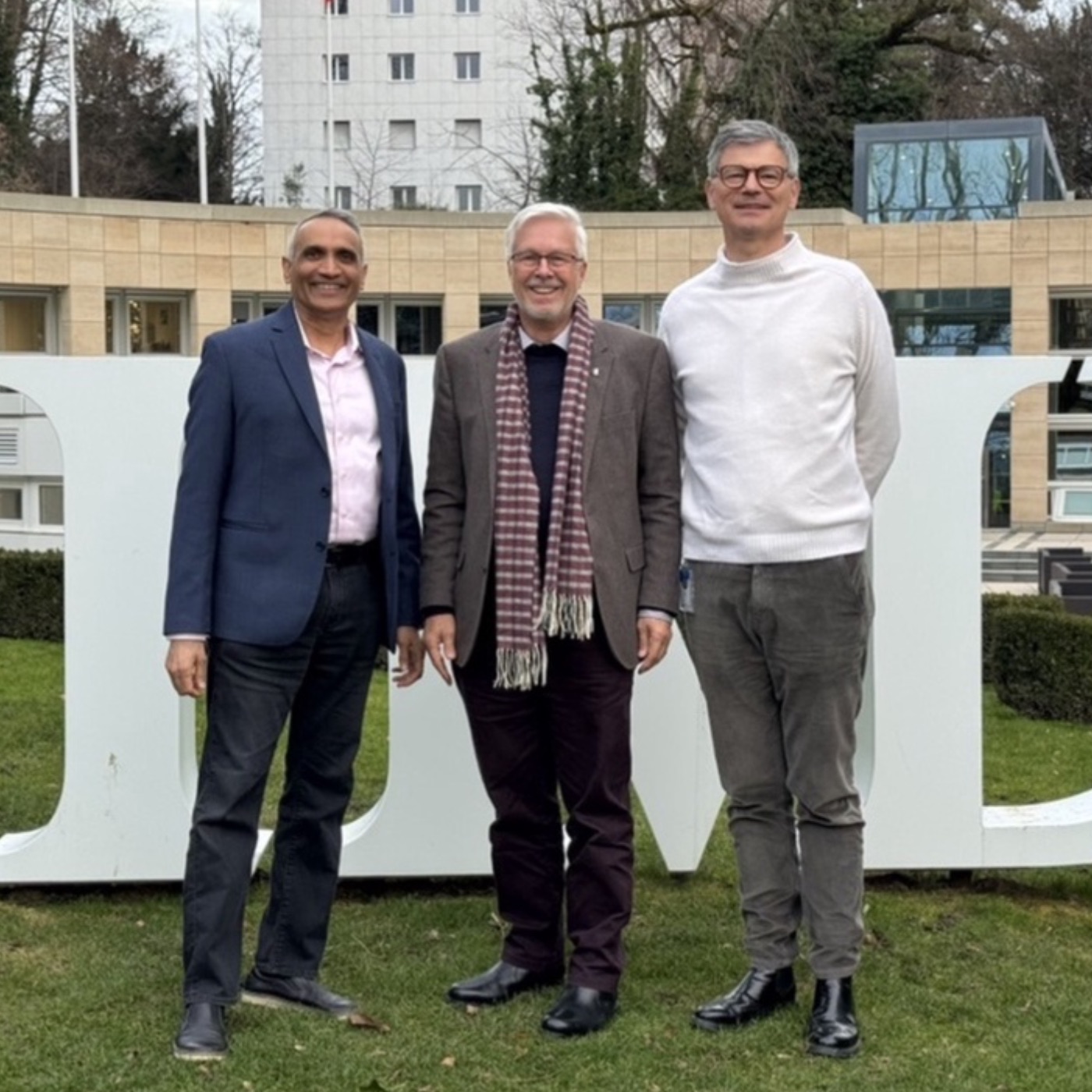
This episode is a bit special, we're recording it together here on the IMD campus.
It's not every day that we bring two professors together for a joint podcast conversation like this in person.
I'm really happy to welcome Gautam Shalagala and Frederik Dalsas, both professors here at IMD,
the International Institute for Management Development in Lozan, Switzerland.
Gautam, could you please start by briefly introducing yourself?
Thank you so much, Michael, for inviting Frederik Me to your podcast.
I'm Gautam Shalagala, professor at IMD for the past 10 years.
A professor of strategy marketing with a keen interest in sustainability as well as in digital.
And with that, let me pass it over to my colleague Fred here.
Thank you Gautam, it's really a pleasure to be here.
My name is Frederik Dalsas, I'm also a professor of marketing and strategy at IMD.
And it's fair to say that we're working with Gautam for the last six years on sustainability.
It's great for a very important topic.
Is there an aim to this part of the campus, or is that sort of the headquarters?
This is called the Executive Learning Centre.
And this is where we have a few classrooms, a lot of the faculty offices.
And it's a very pretty part, because we are almost overlooking the lake.
When you go into the classrooms, which participants love, you can see the lake and the mountains.
So it's a very special part of IMD.
A good place to learn, and that's exactly what we try to do today.
The term sustainability can mean many things.
What does it mean for you?
I think it's a great question, because we came to the realization that the term sustainability
had many different meaning to very different people.
And not clarifying this has caused a lot of problems.
So what we have come up with would be to say, well, sustainability means at least three very different things.
And until we understand these three things, we cannot talk about sustainability strategy,
because there are different levels.
So let me start with the first one, maybe, and you'll do the number two.
First of all, when maybe we'll talk about sustainability, they think about compliance.
They think about things they must do, or they're pushed to do, to comply with stakeholders.
Stakeholders may be, of course, regulators, but they can also be employees.
They can also be customers.
A lot of people may be in that camp.
Here, it's really about the right to play.
It's really, do you have the right to play?
Are you legit or not?
And of course, if you're not legit, then this is it.
You will not be seen as a valuable partner either by customers or by all the different stakeholders.
So that's the first level, right to play.
But it's only the beginning.
It's very interesting that it's only the beginning, but as we have been told,
some companies spend 90% of their resources at this level.
And they don't look at the second and third level.
Gautam, would you mind looking at the second level at this time?
Absolutely. So if right to play is the license to operate.
And they're taking a lot of resources because of all the regulation, rule changes, etc.
And we found through our interviews that some companies are thinking about sustainability,
another type of investment, which is the right to stay.
So if right to play is the license to operate,
the right to stay are what we call as resilience investments.
And these are very important because these are often forward looking investments.
So what do I mean by a forward looking investment?
Is the company looks at its supply chain, for example.
And it says, you know, here is where my products are positioned in the market.
Let us say you're a KitKat.
You have a certain price band in which you play, right?
Or you're an espresso and you play at a certain price band.
You have a certain types of varieties of coffee, right?
So right to stay investments are saying,
can I produce those varieties of coffee in the future?
Or can I procure them in the future?
Or can I procure cocoa at a certain price point?
So I can actually maintain my price point.
Now what's very interesting is if you take cocoa and you take coffee,
both of them are at 45, 50 year highs in terms of their prices commodity price.
If that continues, KitKat cannot be in the same price band.
If that continues,
Nespresso will not get all its varieties, right?
So here in this particular case, Nestle, which is the parent of both of these,
says, I need to make forward looking investments into my supply chain.
Work with the farmers more closely.
That way, if I help them improve their growing practices, for example,
make them more sustainable.
And they're not going with it to the sustainability standpoint.
But they realize that if they can help them, you know,
save fertilizer, protect the soil better,
they can actually get more productivity and greater productivity and greater output,
which means greater farmer income, which means they will stay in the business.
So they're investing heavily in these farmers in order to protect their right to stay.
These are resilience investments.
I think Fred, you have one example in Mexico about this, right?
So yeah, and I think it's very important to understand that both compliance and resilience
are not purely defensive moved by the firm.
You can actually develop a corporate strategy with those two.
I'll get back to that later on.
But yeah, when you think about a company like Mishnah,
just to give you another example, it's not only food.
Mishnah has a lot of plants everywhere in the world, a multinational corporation.
And in Mexico, they are keen to make sure that there will be no water shortages.
You may have known that some beverage companies were accused of drying up the wealth
in Mexico and India, etc.
So Mishnah says, "Okay, we need to be forward looking.
If we want our plants to be resilient, we need to make sure that we will be able
to save water and bring water to the communities."
It's a long-term issue.
And for me, this is the biggest difference between compliance and resilience.
That one is more important than the other.
It's just like a registry.
What is the long-term strategy to make sure that we will still be in business in 20 years?
Now, again, give one more example.
Just put it into this global context, which is top of mind for everybody.
Many companies are looking at diversifying their supply chains.
You can call it a China+1 strategy, whatever you call it.
But the biggest issue they face, for example, to go to India,
they don't always find that same skill level.
So you need to invest. Investing in developing the right skills, setting up schools to train that, for example,
so that you can have the right workforce.
Otherwise, you can't diversify. And then you are stuck in that paradigm.
So, resilience investments in today's world have become extraordinarily important,
but they need to be forward-thinking.
So, again, compliance and resilience are two different topics.
They are not only defensive topics, because you can build an offensive strategy by thinking,
"Okay, I want to comply, and I want to make sure we lobby in Brussels
or elsewhere to develop new norms.
And I really believe these new norms will be very important to the future,
so I will be better positioned to develop business further."
Same thing with resilience.
You can think about, "Okay, how can I pre-empt rare earth?
How can I pre-empt coffee beans?"
And so that's very, very important to realize that you can actually, companies can play with this.
Now, to be fair, Gautam, don't you think that we, most of our work,
as not being in the compliance, nor in the resilience,
a real but more in the market advantage realm.
What do you want to talk about it?
Because it's really important.
- Happy to, Fred, thank you.
We call this stuff I-to-win, right?
Think about these as optional investments,
meaning a company can either make it here or elsewhere.
And I think that's a choice.
And that's where our belief,
and this is really a core belief,
is if you make those investments into sustainability,
the right way you will have a right to win.
Unfortunately, we think that the way those investments
have been made in the past were being very sporadic.
They weren't necessarily tied deeply
to this company strategy.
And if you think about the strategy,
it always comes down to one important piece of that
is always, are you creating value for your customers, right?
The way to play, how to win part of that strategy.
How to win is always about customer value creation.
In our view, in sustainability 1.0,
and I'm going to turn it back to Fred here,
that's where there was a missing link.
So Fred, maybe you'll say a few words
about what that missing link was in sustainability 1.0,
which is why there's been this sort of backlash.
And then we can talk about what we believe
is a potential way to rethink this right to win.
- You may remember the dot com boom.
It was of a marketable period.
95 to 2000, the NASDAQ went up five by a factor of five.
A lot of money was invested in the dot coms.
This is the time where computer became a staple.
It was not a luxury anymore.
And everybody had internet access.
It changed the world.
And what happened was that after a while,
in April 2000, after the dot com boom,
you had a dot com crash, the bubble explode, right?
Now, why am I telling you this?
Because it was the first use, the dot coms,
were the first use of the internet.
A lot of money was point to that.
A lot of passion was involved
into developing internet related businesses.
But maybe this were not the real,
the nice way or the best way to do business through the internet.
The dot com crash, companies like Cisco,
lost 80% of their market value.
Even Almighty Amazon was not in a very good financial situation.
A lot of companies went under.
Now, last time I checked the internet still existed, right?
The dot com was not the best use possible of the internet.
And since 2000, the internet has been now growing
by a factor of whatever end.
So we think we are at this juncture with sustainability.
We had the first use of sustainability,
a first way to think about sustainability,
whereby firms were asking fundamentally one question,
how can we become more sustainable?
Now, it's a great question, right?
It's a very important question.
It was all about firms taking their share and saying,
look, we have a responsibility.
We need to become more sustainable.
A great question, but is this the best question that can ask with sustainability?
When they're asking, how can we be more sustainable?
What do they do?
They look at making some investment in sustainability.
That's what the input is.
We're going to tick some SDGs,
number one, number three, number seven, etc.
And we hope we're going to get some substantive results.
That was the main thrust.
Some companies were very, very good to do that.
We're going to go to that later on, probably with you, Gautam.
And some companies just paid lit service to it,
but that was the main thrust.
Of course, shear force were involved.
They say, look, wait a minute.
We're going to make some investment in sustainability projects
so that we become more sustainable.
Where is the beef?
What will be the outcome for us in terms of profitability?
But it was mostly thought as not an afterthought,
but something that will come together.
And indeed, what was very important during that time
was that the business case of sustainability was built.
If the business case can be said very succinctly
as doing well by doing good.
So if the goal is doing good to be more sustainable,
to get some sustainability improvements,
can we still be profitable?
Are we going to kill two birds with one stove?
A lot of research has been done during that time.
I think it's fair to say they're probably in strategy
during the '90s and the 2000s.
It was probably the most research topic in the strategy field.
We are to the point where we have second level meta-analysis.
We're talking literally about thousands of papers.
And the result was not bad.
The result was to say, yes, on average,
there is a causal link between being sustainable
and being more profitable.
And myself, because I'm one of the early research in this area,
I was teaching the business case.
I say, look, you see, not only you're
going to make the world more sustainable,
but you're going to make money.
I think I was blindsided.
And this is where people like Galtan opened my mind,
say, well, maybe there is something here
that we need to think further.
Galtan, will you want to elaborate on what hasn't happened?
No, thank you, Fred.
I think in all fairness, aside from the business case,
if you look at some of the leaders we've spoken to
an interview for our book, I think they
said that when they saw the people demonstrate,
the public demonstrate, whether it is the Brettonburg
or everything around it, then people were saying,
there is no planet be.
There was a firm belief in firms
that the world had fundamentally changed,
and that consumers are looking at this whole issue
differently.
And they mistook the demonstration
to be an intent to pay.
So there are a lot of things going on.
And remember, there was the Wall Street protests going on,
and a lot of people felt they were being left behind.
Companies were searching for better capitalism or whatever,
and there were books written on this, all in this.
So there were a lot of macro factors,
consumer factors, which were all coming together,
but sort of persuaded companies that if you are more
sustainable, that's good enough.
Then anything, then we can do well and doing good.
And Geltan, if I may, this is where the analogy with digital
is interesting, because they were
thinking at that state, no, forget about profit.
It's all about growth now.
It's a new world.
You have to be first, otherwise, you
are not going to make a market.
So as if it was a new world, and companies
have to develop this new strategy.
This is what happens with Sustainable 1.0.
Where in the new world, we need to be more sustainable.
The whole world, as understood that,
we need to change our strategy.
Now what happened next?
So what we realized with the Sustainability 1.0
is eventually reality set there.
Back in about 2025 now, if you look at 2019,
and you're asked in Europe, I'm taking Europe as an example,
Sustainability was mentioned as one of the top two concerns
for people, for over 20 to 25% of the people.
That's a substantial number.
Of course, these are serves.
You're just asking for intent.
But what happens?
Politicians see that.
They promote it also, and it brings more
into their legislation, all of those are going on.
Then think about it, COVID hits.
And then we have a cost of living crisis.
What happens, prices go up.
The moment prices go up, what happens to consumers?
They say, I need to pay my bills.
They think it's more affordable.
Yes, the consumers change their priorities.
Change their priorities.
Well, I would say the priorities have always
been about value.
They have never changed.
The consumer priorities have always
been, give me the value I care about.
But we thought that this was what they also
considered as value.
The reality is, in Fred and my research,
we've asked this question to executives, hundreds
of executives.
Almost every session we walk in, I asked this question,
Fred asked this question.
What is the highest percentage of green consumers
or customers that you have?
So if you take as green customers as one bucket,
these are the ones who are willing to make the trade
house for sale.
sustainability. I have to in Europe, never now heard a number greater than 10% right? So
the remaining 90% of what we call as blue and gray customers. And maybe you want to give
a brief description of blue and gray customers right? Yeah. So at one extreme you have the green
customers. You can even have the ultra green customer, the tree workers, okay? So we say ultra green
plus green 10% maybe I think I've heard 15% once but 10% so these people are willing to pay more
in order to get a system of products. Then you have at the other extreme you have the ultra gray
climate deniers and you have the gray people who do not care for some reasons they do not care so
much about sustainability. And then in the middle they have the blue customers. Again remember this
gray plus blue equals 90 to 95% of customers most of the time. That's very important we'll get back
to that. So I think what is important to realize is that this system you 1.0 was a great
adventure right? It was very much in demand by everybody but when you look through it you see
at least three problems. So first of first problem is the fact that the research academic research
I talked about demonstrated the link but the link was very very very weak very weak. Remember
what the outcome said in the beginning companies will make investments, some investments in new
plans, new markets, new products and some investment sustainability. So from an investment point of
view they're going to compare their return, how much return will I have if I invest in sustainability
versus investing in a new market or in technology. And I think it's fair to say that the return
on sustainability investment was very very rate partly because the green customers were only 10%
and we come back to that. That's the first issue. And even I recently read that some of the key
papers presenting the business case now are being questioned. Their method have been questions,
their result are being questioned which is really an interesting topic in itself. So that's a
first problem. Second problem. When you realize what has happened with system 1.0 I think it's a
right time to talk about the eco-camber. With eco-camber Frederick you mean the similar firms
largely talked to each other and repeat the same sustainability messages reinforcing each other.
The eco-camber are all the professional service firms. The mechanisms of the world, the
Tierney and these companies have been doing a lot of research showcasing the importance of
sustainability to customers. Same for example that 80% of the customers think that sustainability
is very important. A lot of results I remember by a large strategy consulting firm. It was like
80% of the customers have really to pay more etc. We questioned these results. We think that
this result we questioned the method because it was all declarative. I thought it was asking
are you a good guy? What would you say that? I mean if you asked are you a good guy?
Do you want to ask me on my way? You say yes, right? Of course. Of course I care about sustainability.
Who do you think I am? This is called a disability bias of these results. When you ask whether you
care you're going to say yes, are you going to pay more? Of course I'm going to pay more. It does
not meet the reality of what is happening in front of with your shopping cart when you are making
this trade-offs because the money is limited and so that's an equal to vast equal chamber.
You could say and I am willing to venture into that that this professional service firm had a
vested interest in showing that it's an important topic and showing firms their capabilities in
developing new system strategies. And then the third problem was in fact some companies were
saying well it doesn't make money, it does not work, it does not land. So then what would this
professional service firms or people who wanted to believe in sustainability? What would they say?
They would say oh if it does not work now, wait more. You have not done enough because what
is happening is what we call the long term. Wait for the long term. Exactly. But how is it called
again when they say the say do gap? The sustainability say do gap. That's what's very important.
You call that say do gap? Yes. The difference between saying yes I'm good and doing actually
spending more on the better product. Exactly. Big, big say do and this was a starting point remember
it was a starting point we say look when companies were starting to in a way incriminate their
customers. How could they do this to us? They say the one sustainable products were not buying them.
When you start shaming your customers as marketing professors, Gal time and I'm saying wait a
minute there's something wrong here. And the last line of defense by the way the firm was to say
to invoke ethics. Don't look at a return investment because anyway it's writing to do. So that was
sustainable 1.0. In fact we can summarize that by saying it was a thin line. It was not very solid.
It was just box and arrows. If you do a sustainability project, if you're a sustainable
impact, you will see that in short minimum term you will be better off from a from a financial
standpoint. I think what we did was to say maybe the king is naked. That's maybe we need to look
at with a different angle. Again not saying that we are doing to fail with sustainability but
like the dot com analogy. Maybe the first two is the first way we think about sustainability
is not the right one, maybe we need to reload and to go to sustainability point.
Despite that, I think Fred and I would say Michael that journey was necessary.
I don't think we want to paint them as blind or whatever. I think like we said there were many
things that pushed them there but reality is big shifts like this only happen when you have
passionate people who in some times you have to be a little blind. You have to go for it.
There's a little bit of faith and I think that journey was very important because only people with
passion can change the world. Well, a lot of passionate people who genuinely wanted to change
the world. A lot of companies genuinely wanted to do better. You're so right. I mean let me quote
hey you're here. Nothing big in this world has been created without passion. Exactly. Passion was
needed. Yes. The sustainability one point zero was needed. But what we think about today is
well maybe we need to go to now the next stage. It's beyond the dot com. What can you do with the
internet? Beyond sustainability one point zero, what can you do with sustainability? That is the
bulk of our research. That's right. Yeah, please. Yeah and I really believe you're right because
this was necessary and what it created in companies that I support on this journey is all the questions
were raised and the awareness was generated in a broad way. Top management slowly but surely was
involved and became part of the discussion. And that is I think sort of the food stock that you have
to have in order to make the next step. Absolutely. The other aspect that I saw was some individuals took
it as a challenge and it increased their creativity and they came up with new concepts and new ideas
that we haven't been discussing before. Shouldn't we as a company for example have our own
sustainability design criteria something like an eco design guideline for example. Things like
that have never been discussed before but they are a new trigger of a new dimension of innovation
and I've also observed that and that has not only concerned R&D but different departments
who started to think about their supply chain in a new way. For example better prioritizing it
instead of just making it an exercise saying hey let's see who is really important on our
journey if we take the long view. And you are bringing us really really set the stage for what
is the foundation for sustainability to point out. And here we want to deliver actually a very
optimistic messaging right. The pessimistic message today is to look at the world around you
everybody scaling back and there's backlash and some geographies and it's very easy to get
this made and there would be you know there's a lot of truth to that.
right? It hits you in the face every day. But what's the optimistic message? The optimistic
message is sustainability 1.0 really took into consideration the needs of the 10% the green
customers, right? If you're only going to address the needs of 10%, it's never going to scale.
Right? Unless the rest of the world also becomes green, which is a tall order, right? So what is
important about sustainability 2.0? And this is actually one of the biggest we think it's an
insight is the way you truly scale sustainability is in a company is to appeal to those who don't
care about it. Because if you can appeal to these grey customers particularly and then there are
blues and if you can make sustainability relevant to them not directly by pushing sustainability on
their face, but somehow you create solutions for them with sustainability in the background,
then you actually can accelerate the sustainability journey faster. I think, Gotam, there is an
additional point you talked about the backlash in certain geographies. What I observe is that with
these sometimes very intelligent criticisms that are being done on the concepts that have been
developed, it actually brings people back to thinking it through again and coming up with better
concepts and better justifications if the concept was good. Whereas before just as you explain
things were sort of on the superficial level good, good, good, but then if somebody challenges
something you know how it is in life, right? You write a paper, you give it to a friend and the
friend has a deep question and you rethink the whole paper and it becomes so much better.
What a great analogy, what a great analogy because that's exactly what we've tried to do with
our framework. Let me sort of give that framework in very simple ways.
You know, anytime you have a company, you have customers, the company is trying to create value for
customers, right? That's the desired output. In the process of doing that, there's also a lot of
undesired outputs that can happen, right? Those undesired outputs can also be because of
how customers are maybe using the product. Maybe they use, if you're a farmer, maybe you're using
way too much fertilizer. Maybe you're using more water than you need to. You're using maybe too much
pesticides. You're not taking good care of your soil. Those are all undesired outputs.
They can happen from the company, they can happen from the customers, they can also happen from
other suppliers, right? Our whole thesis is in sustainability 2.0. If you look at the desired
outputs, but then look at these undesired outputs, how they're happening and if you can reduce those
undesired outputs, then you can increase the value for the customer. And that's really what we
come to as the fundamental question in our book is the following. If sustainability 1.0 was asking
the question, how do we become more sustainable? Then sustainability 2.0 is actually asking a different
question. How do we use or leverage sustainability or use it as a catalyst for innovation which is
reducing those undesired outputs so you can increase customer value. So use sustainability as
a catalyst for innovation to increase customer value. If you do that, we believe two things are
likely to happen. One, you will create value because the focus is on value. Sustainability is the
driver of that value, but you have to make sure there is a customer value which is better performance
or better affordability or a combination of the two, right? So more benefits, it could be
delivery benefits to quality benefits, products last longer or affordability. You're not making them
unnecessarily expensive or a combination of the two. So sustainability should be the catalyst of
innovation to create that customer value. And for all customers, it's the most inspiring point.
You can only scale sustainability if sustainability bring values to customers who don't care about it.
Yes. And now this brings us back to literally that opening thing where we talked about the right
to players, right to stay and the right to win. Right to win are optional investments. Today a lot
of companies are scratching their head and saying should I really be investing in sustainability?
One company we spent a little bit of time with recently, they spent about 500 million per year
on R&B, about 22% of that is sustainability related. And they're asking the question,
is that too much? Why do I need to spend that money on sustainability? Maybe I can put it elsewhere.
Just regular innovation. It's a good question. We've won companies to ask that question.
Our thesis is actually if you spend it with this new lens of innovation, looking at these undesired
outputs, there's a lot of those undesired outputs today. Lots of inefficiencies in the world.
You probably won't be looking at them if you didn't take the sustainability angle. And our hypothesis
is innovation is a source of competitive advantage. If you can open a new lens to innovation through
sustainability, that can be a source of competitive advantage as long as it links to
customer wear. That's the important piece that should not be lost in this puzzle.
So I think what is really important to realize is that sustainability needs to bring something
customer value to the non-green customers. And when we do that, we appeal to the whole market.
We have more chance to make sustainability a success because the products and services are
going to be a success. So let me tell you how you make this happen. You look at how sustainability
can either increase the performance of your product or your services or and how it can
has an impact on price. And there are three different ways to think about it.
You have a case, I'm going to give you some example, the other case where you bring a more
system of product, but it has no impact on performance. We call this independence.
So your sustainability performance on your product performance are completely independent.
I'm bringing a new green product, but it has the same level of performance as the old one.
Let me give you an example in the service B2B services, Merck. Merck is number one of two
of transportation companies, lots of vessels. They have decided that they will propose a green offer
to the big industrial companies to transport their goods, which is a vessel that would not work
with a diesel engine, but with LNG. Fantastic, right? Now, what is important to realize is that
these vessels, LNG powered vessel, will have the same performance as a diesel vessel.
So same speed for example. Same speed. Exactly. So what does it say? It says that for the customer,
the industrial company, the Volkswagen of the world, for example, there is no product advantage.
It doesn't begin anything else. There is no advantage for them to use the green alternative,
other than the sustainability benefits. But again, the sustainability benefits are only valued by
5 to 10% of the customers. So many customers are going to say, "Look, yeah, why not, but I'm not
willing to pay more." Because I don't value the sustainability benefits. This is what we call a
case of independence, meaning that sustainability benefits are not having any impact on performance
of price, even worse. Maybe, and this is the case for maths, you add an intention of asking
customer to pay more because you are bringing the sustainability benefits. But 90% of the customers
say, "No, I'm not interested to pay more." Okay? So that's the case of independence. The second
case which is even worse is when you develop new products that are sustainable, you develop a
sustainable offering. But the problem here is that you're going to destroy top of the performance
when you introduce it as a sustainability alternative. Maybe you are a very interesting example.
You know how it happens. Maybe you have been a motorbikeer yourself. Motorcycles. Motorcycles.
What a great company. What a fabulous brand, right? It's an amazing brand. It has a lot that
people would tattoo Alidavinson logo before it was fashionable to tattoo yourself, right?
It's a very, very small man. Now, one problem that Alidavinson faces is that they have a rather
old custom base. And it's true that when you're 80 years old, you're not going to buy Alidavinson,
right? You're too old to ride a 250 kilo machine. So they wanted to get the newer custom base,
and they thought about electric Alidavins. And they said, "Fantastic, we're going to
get the new bikers and we're going to be more sustainable." Okay? Great. They did everything by
the book in terms of truck development, okay? They called it the new bike was called the LiveWire,
they went in the US, they talked to the retailers, they talked to the bikers, and then they launched
the LiveWire. Now, what do you think is how it's faired in comparison to their forecasts?
Any idea? Yeah. I think people were saying that they were interested, but in the end,
when it came to the buying decision, they had some barriers. And what was the barrier if I may ask?
The sound. Exactly. And you say, "Right, the sound is for the bikeer, the noise is for the neighbors."
Right. Okay? You buy a sound. Okay? You buy freedom and a very specific sound that the patent
in the US. And the sound is part of the brand. Absolutely. Now, make it electric. What happens?
First, you kill the freedom because at that time, you didn't have the mileage. You have mileage
anxiety. Will you be able to plug it? Where are you able to plug it? And sure. So, you kill part of
the freedom, freedom. And the second thing, you kill the sound. Right. If you're having no potato,
potato, potato, potato noise, you get a electric noise. And you can get a fake potato, potato,
potatoes, or potato, potato, potatoes, like this, right? So, you decrease the value for a custom.
By introducing a sustainable alternative to the regular bikes, you create in fact an alternative
that is inferior from a custom value perspective. We call this dissonance. Dissonance. You kill
part of a value for the customs. So, what is the problem with dissonance? You get the greens. The
green might be happy, but you will not get the blue and you will not get the gray. Why should I buy
a product that is inferior at the same price or even at a superior price? You must be killing me.
So, to answer my earlier question, actual sales versus forecast were 2%. 2%. They thought they could
sell 100 bikes and the only sold two of them. That's the problem's dissonance. But this type of
dissonance, this type of dissonance, you think it would be easy to find out before you do your
product development. You think so. You think so. And this is the most interesting part.
Because they have not been thinking along these ways, sustainability 2.0. So, all other firms
have launched products that are more sustainable. And somehow, they put under the rug the product
performance. They say, "Hey, you wanted a sustainable offer. Here is a sustainable offer."
And we got a very interesting B2B German firm whose CO was very much green. He asked to develop
these sustainable alternatives. And they did not realize that the actual quality performance
was being reduced. And we had some market directors from China from India say, "Can you please tell
the CO that this is the end?" We are reducing the quality of our product. We are increasing the price
nobody is going to take our products if we're still like this. Very interesting to see that
when you have this in a tripod, the tripod is product performance, product price, and sustainability
performance. When you think along this tripod, then you can make inferences and you can predict
whether your product is going to be successful, not only with the green, but also with the green
with the groups. And this is really, really interesting to look at this this way.
So, in the comments, means sustainability does not have an impact on your performance, but don't
expect that you can increase the price. Dishonance is when your sustainability features make the
product performance go down. And now we need to go into what we promote, which is when
sustainability increases either the product performance or decreases the price. And we call this
resonance. Resonance is what we think companies should be thinking about. How I can make my product,
my services, my business model, resonant. And this is where we have the three levels. You can do
product resonance, you can do customer usage resonance, or you can do strategic resonance.
Very different levels, three different strategies that are not by the way you can do one and two and
three. These are three different ways to think about how your substance strategy can have a positive
impact on your overall strategy. And we might talk about that in more detail in the second podcast,
if we want to detail each level and see how it can have an impact on on your strategy.
Frederick, that's a good idea. That will allow us to have a deep dive into resonance and what you
call sustainability 2.0. Before we end, let's summarize what we have learned today.
So what we're talking about are three different uses of sustainability. The basic use,
we talked about it shortly, we call it the right to play. This is compliance. It's very important.
The only thing that you need to be aware of is don't put all your resources at this lab.
Level 2 is long term, right to say resilience, how you work with your supply chain in particular
to make sure that you will still be in business over the next 20 years with raw materials, water
resources, et cetera. This is the right to stay very important again. But what we're talking about
in our book is really the right to win. Or how can sustainability become a competitive advantage?
Because if companies realize that you can possibly gain a competitive advantage through sustainability,
then every company will want to do it. How can I leverage sustainability to be more competitive
on the market price? Either by bringing more customer value or by bringing more affordability
to the customers. And this is where we are working. The book, Clean Winners, really talks about
the third level which is the right to win. Winning through sustainability and making sure that
sustainability sticks not only to the green customers, but also to the blue and to the red customers.
So it's a real broad competitive advantage that we want to get.
Yes, it is an additional competitive advantage. An additional lens through which you can think
about your own competitiveness with the competition. How can you leverage it with the competition?
And here, and we'll talk more about it in the next podcast if you want, because there are three
different ways you can leverage sustainability. You can leverage sustainability by looking at your
product or your services, which we call product resonance. You can look at how your customers are
using your product and services, and we call these customer usage resonance. And both of them,
product resonance and customer usage resonance, they took out how to win with sustainability.
There is a third level, which is what we call strategic resonance, and which asks the second
question of sustainability, which is where to play with sustainability. So it's really
thinking about sustainability as a strategy tool, informing you where to play and how to win with
sustainability. This is what the book is all about. I'm looking forward to it. When will it be
released? So the book will be released on the 22nd of March, 2026. Hint, you can already buy it
on Amazon or any other library you can free or if you want. Then I think we have sort of a cliffhanger
here. And we're looking to the next session. And until then, we say thank you very much,
first read. Thank you very much, Gautam. And yeah, until the next time.
Abiyah. Thank you, Michael. I think if we can move the
needle on sustainability, it'll be time well spent.
Podcast Summary
Key Points:
Sustainability has three distinct levels
Compliance and resilience are essential but often defensive; true competitive advantage comes from leveraging sustainability to create tangible customer value.
Only 10% of customers are willing to pay more for sustainable products—most (90%) are “blue” or “gray” customers who prioritize value over sustainability.
Sustainability 1.0 failed to scale because it ignored the needs of non-green customers and relied on weak evidence linking sustainability to profitability.
Sustainability 2.0 shifts focus from “becoming sustainable” to using sustainability as a catalyst for innovation that improves product performance or reduces prices.
Three types of sustainability outcomes—resonance (positive impact on value), dissonance (degraded performance), and independence (no performance or price change)—determine market success.
Companies must evaluate sustainability through a “triple tripod” lens
The ultimate goal is strategic resonance
Summary:
This episode explores the evolution of sustainability from a compliance-based approach to a customer-value-driven innovation strategy. The hosts, Gautam Shalagala and Frederik Dalsas, introduce three levels of sustainability: compliance (right to play), resilience (right to stay), and innovation (right to win). While early efforts focused on meeting regulations and securing long-term supply chain stability, they failed to scale due to limited appeal beyond 10% “green” customers.
0 was based on superficial claims and weak evidence linking sustainability to profitability, leading to a “say-do gap” and consumer skepticism. 0 reframes the question: how can sustainability act as a catalyst for innovation that enhances customer value? This is achieved through resonance—improving product performance, reducing prices, or offering greater affordability—without alienating blue or gray customers who prioritize value.
The hosts argue that true success lies in designing products and services that deliver tangible benefits to all customers, not just environmentally conscious ones. Using real-world examples like Alidavinson’s electric bikes and green shipping vessels, they illustrate how dissonance (degrading performance) or independence (no value change) can undermine adoption. The framework emphasizes a “tripod” analysis of performance, price, and sustainability to predict market success.
Ultimately, the goal is strategic resonance—integrating sustainability into product design, customer usage, and business strategy—to create a broad, sustainable competitive advantage. The book *Clean Winners*, scheduled for release in March 2026, presents this framework in depth, offering a roadmap for companies to scale sustainability across all markets.
FAQs
In the EU Green Deal, sustainability means redesigning products, services, and solutions to reduce environmental impact and align with long-term ecological goals.
The three levels are: (1) right to play (compliance with regulations), (2) right to stay (resilience through forward-looking investments), and (3) right to win (using sustainability as a competitive advantage).
Compliance ensures legitimacy with stakeholders, while resilience investments protect long-term business operations by securing supply chains, resources, and market positioning.
By improving product performance, reducing prices, or enhancing affordability—sustainability can deliver tangible value that appeals to blue and gray customers who don’t prioritize environmental issues.
The 'right to win' refers to using sustainability as a catalyst for innovation to create customer value, thereby gaining a competitive advantage across all customer segments.
Products may suffer from dissonance—degrading performance or value—leading to lower adoption, especially among non-green customers who perceive the product as inferior.
Chat with AI
Loading...
Pro features
Go deeper with this episode
Unlock creator-grade tools that turn any transcript into show notes and subtitle files.
 PodcastTranscript AI