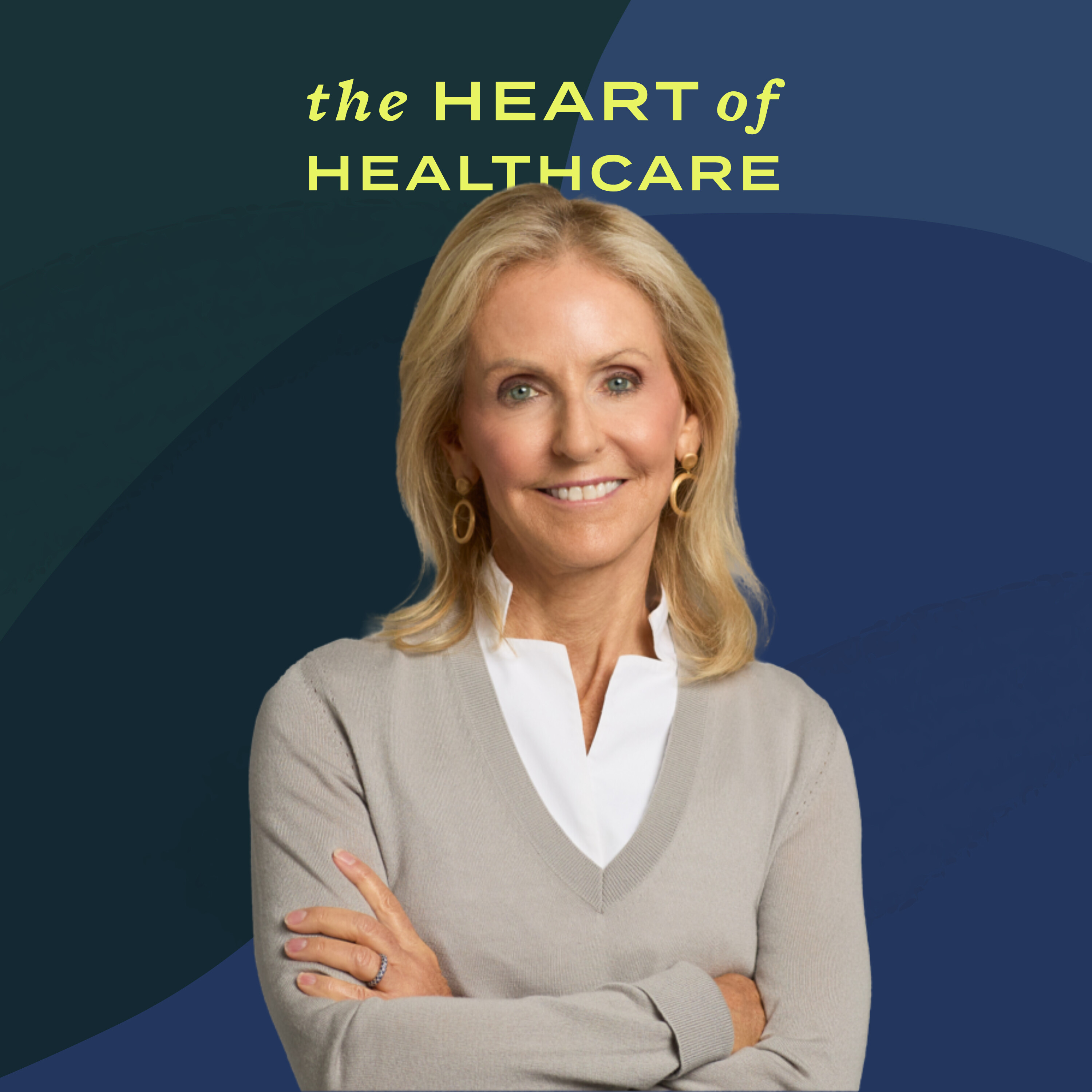
Annie Lamont, a leading venture capital figure, reflects on 2025 as the most difficult year for health plans, contrasting with rapid AI adoption among providers and health systems. She identifies a pivotal shift in healthcare innovation, where AI is no longer a niche but a foundational layer in software development, especially in provider-facing tools and drug discovery. Her investment strategy now centers on healthcare system software and AI in drug design, with early fund allocations reflecting this pivot. While health plans remain slow to adopt AI due to internal inefficiencies and lack of collaboration, providers are demonstrating faster, more effective innovation. She warns against overreliance on single-point AI solutions and non-healthcare investors who misprice healthcare complexity. Value-based care opportunities are strongest in home-based, chronic disease management, such as pediatric care, where outcomes and cost reduction are measurable. Regulatory gaps in AI and pharmacy benefit managers (PBMs) remain critical, with calls for national standards to prevent fragmentation. Full interoperability—especially with dominant EHRs like Epic—is seen as essential for innovation and true value-based care. Ultimately, Lamont predicts that 2026 will be a stabilization year, with early signs of recovery in biotech and provider-led software, though widespread transformation is expected over the next few years.
Welcome to the Heart of Healthcare Podcast. I'm Halle Teco. I'm Michael Esquivel and I'm Steve
Krause and every Monday we bring you the latest in healthcare innovation as we sit down with
entrepreneurs and industry experts. So buckle up and join us as we figure out how to improve
healthcare for all.
Hello listeners, happy JP Morgan week and welcome back to the Heart of Healthcare Podcast. I'm
Halle Teco here with my co-host Steve Krause and this week marks one of our favorite traditions,
our annual predictions episode with legendary VC Annie Lamont. Is 2026 going to be the year that
changes everything for healthcare? Let's talk about it. Annie, welcome back to the Heart of Healthcare.
Yeah, thanks. Great to be with you. Yeah, it's become a tradition as Halle said and we're super
excited to have you, Annie and I have to say it's not just us one of our most loyal listeners. My
father Harold Krause told me that his absolute favorite episode last year was the one that we had
you on where we talked about the year ahead and so he was the one who prompted me to reach back
out to you and make this a tradition. So thanks dad. I hate Annie. Before we look forward to 2026,
I'm curious. 2025 was a very dynamic and ever changing year both for our own industry of healthcare
and the broader world. How would you summarize 2025 for the healthcare industry?
I would say from the health plan perspective, probably the most brutal year, I think we've gone
through. Most brutal. I mean, you've been doing this for 30 years. So you think this is the most
brutal year ever you've seen in the industry? Yeah, 30 places, you know, years. Yes, I do. I do.
I think that was, you know, for MA and maybe it's, you know, the heights they've fallen from,
but I do think that it was the most challenging year that I've seen on the payer side.
And I think we're, I mean, we'll talk about 26. It feels like we're stabilizing there. So that's,
I think that's a positive. I think, you know, from an investment perspective, obviously AI massively
exciting. It's just, you know, have then have knots, right? It's just a world of those who are
raising a ton of money, high prices, and those that are challenged to raise, it may even be
interesting business models. But if you weren't, if you didn't have AI attached to it, or you were
in a fever service services business, people, not, you know, with people not interested, those
are the contrarian bets, I guess you'd say. If you think there hasn't had knots in the AI world,
already formulating, or do you think that's still TBD? I think that is going to change pretty
rapidly, just because everything with AI on it once again was interesting to people, almost
everything. And I think in the future, everything will have AI attached to it. So the, the just,
people will be more, investors will be more discriminating in the future. And I think we've
brought back, and you've probably seen this Steve, that we brought back more non-health care
investors. So we're back to this age of like, it's about the tech. And I think the tech is
incredibly important, right? And having your like, profound expertise is obviously a huge competitive
advantage, but you also need to understand healthcare. Now we have a generation of younger tech
entrepreneurs that actually do understand healthcare. So I think there'll be some very interesting
things there. And actually, let's worry about the entrepreneurs that I'm worried about, the
non-health care investor that's pricing up some of these deals and looking at single point
solutions, and sort of not understanding the broader picture.
You think we're doing all over again, the Zerf era.
And they were doing it all over again. I do too worry about that, Annie, but
and you've been doing this long enough to see previous several previous platforms shifts,
right? The internet, right? Actually, the move from on-prem to cloud was a platform shift,
right? The move to mobile, huge platform shift, although healthcare really didn't take
advantage of that. You know, the thing I'd say about virtual care is I think people thought it was
a platform shift, but it wasn't a platform shift. It was more noise and signal. I kind of feel like
I don't need to be polyannish, but maybe this time's different because maybe this actually is once
in a generation platform shift. Is that the bull case here?
Well, I think that is the bull case. I think the reality is we've never other than EHRs,
for providers. We've never really seen a large opportunity in software from an enterprise on
the provider side, and that took up all the dollars the last 20 years. And now I do see, and we have
never been that interested in software for providers, but you know, Athena Health and a few
eye health, creativity, a few way back. But now that seems like the most interesting area.
So I do think AI applied to providers and health systems is transformative, and they're going to
be so many, there are so many more interesting companies than there have ever been.
So I do think from a software perspective, I'm super excited because we always wanted to do
more software in healthcare, and now there actually is an opportunity to invest in software in
healthcare. Yeah, it's, I mean, as wild to see the way the hospitals, the providers were adopting
AI this year, especially compared to the health plans because health plans have generally been
more tech forward, but we really saw the flip of it. But I want to talk about how you're going to
spend your time this year. What is on your get an early list? Where are you going to be leaning in?
Yeah, I think, you know, one thing we have sort of a broad mandate, and I think we do look
at solutions for payer provider, pharma employer. And you never know, five to ten years from now,
exactly where, you know, where the buyers are going to be, what they're interested in, where the
world goes, where regulation goes. And so we do like to have a diversified portfolio, but we have
gone in more heavily in provider and will be very interested in AI solutions in provider. In fact,
our first two deals of the year and our new fund, fund six that just launched this week are both
going to be software to healthcare systems. So I think there'll be a lot of activity there. We're
also in pharma services, an area that we're very interested in. In part because it is a contrarian
that they are, you know, CDMOs and others out of favor. And because the biotech industries have
been so challenged, but I do think we're now have a step function where things are heading back
in the right direction. There have been a number of acquisitions recently that are inspiring
interest in a stock. I think there will be more biotech IPOs and more interest in the in the public
companies. And that just leads to more activity in terms of services. So we're interested there.
We've just invest in a chemical chai. And we are very focused on AI and drug discovery and design.
And so not necessarily investing in drugs against even I've talked about this in the past. We used
to do that, but I'm very interested in Gen A. I'm applied to drug discovery. And we've been looking
for the last 15 years at AI, I suppose it AI being very impactful for drug design and discovery.
And it's never meant that a drug was actually more developable or you're really identifying great
unique targets. And I think it's very different now. That's super interesting. And not just because we
do listen to fast episodes in last year at this time, you said one of the places you wouldn't invest
actually was biotech AI models. So it tells you how fast things change in our industry. What change
that made you reconsider that? Yeah. Well, that was a whole year ago. We just invested.
You know, again, like look at AI. So LLM's like we finally had models that actually moved,
sort of like moved towards proving developability. And you know, like faithfully that the process
of getting into humans was going to not only be very productive in terms of identifying
new drugs and targets, but actually proving that the likelihood of success in humans
was going to be higher. And I believe we attained that. And I believe try to attain that
this year. And you're actually seeing in like China where they can get into humans much faster.
You're seeing some proof points there. So you can't you know, you haven't seen it in the US yet,
but you you can see it in the models now a child. You can actually see how that's working in humans
in China for so long, the US has dominated the biofarm industry, right? From just the academic
research side to discovery development to the commercialization, but like a real geopolitical
threat is actually China winning the biotech war and discovery war. So it'll be interesting to watch
for sure. Yeah, now I think it's our greatest economic risk actually is seeding the industry
to China could happen. Hey, one question to follow, where are
you going to be invested? Where do you think our areas that you're probably will be avoiding?
Well, honestly, we we really don't love employer solutions. And so there's a it's a rare day
when we're investing until you might see one this year that's unusual. But you know, in general,
it's so hard to get directly to the consumer through the employer. And it becomes the shiny
object syndrome where the consultants recommend. And then four years later, they throw out that
solution for some other new solution. And I and I do think payers and employers are going to be
very persimmonious. I mean, I think they're going to be very focused on cost and what's actually
having impact. And so there are a few categories. I mean, you know, like Maeve has been very successful
[BLANK_AUDIO]
and tell that's great. There'll be a few others, you know, we have a company remodel, you know,
that's in the Icarus space. So that's a little different, but that, you know, have a great traction.
But I just, you know, one more benefit solution is just not where we want to be.
Are there any categories that have been out of favor that you think will come back this year,
like mental health or brick or mortar care? Anything that is going to make a comeback?
Yeah, well, I think a general fee for service and providers have been, you know,
or the thing that's suffered in the last few years, terms of valuations, as well as just general
interests. I mean, why would that be exciting? Everybody's trying to do value-based care.
And I do think advanced payment and fee for service, honestly, is probably, unfortunately,
in some ways, in terms of straight fee for service. I'm going to continue to be an opportunity.
And I would say, you know, if you're looking at consolidation, aggregations, they're,
those things are, they're very cheap right now. So that could be a contrarian bet.
How I reference that the provider's side has been quicker to adopt AI.
It's what I counterintuitive because the payers have huge balance sheets, and frankly,
it had been faster to move generally in adopting technologies. Why have they been slow in your mind?
I completely agree with that. I think the, I think the reality is that they, they're,
there are a couple areas where they were applying it to. I call center, you know, looking at RCM,
but, you know, you, you know, I haven't seen, I haven't literally haven't seen a great entrepreneur
working in the payers side. And I think what I have heard in talking to some of the large payers
is that they are working, you know, with open AI and others, and they've got a lot of projects
going on. And I think that's a complete fail. Yeah. I think that is going to be a complete fail.
Not because of open AI or anthropocard others, but because of the internal talent that they can
attract and how they're going to think about it. And I just think they are going to have,
to have a whole scale rethink of their systems of their approaches, because I mean, we're looking
at devoted and, you know, they have brand new systems, modern architecture, AI applied to everything.
They are beating the health plans by a 900 basis points. They're, you know, doubling, tripling
in size this year, not adding a person. I mean, these health plans are not going to be able to
compete. So I just think they're going to have to have really rethink what they're doing. And
I've talked to a few of them. Their view is not collaborative. Like, yes, let's work with
a great entrepreneur in one of your companies. And we're going to have exclusive rights. And we're
like, no, like what entrepreneur is going to do that? So you really would have to almost have a
collaboration amongst a number of them, I think, to do something great. You know, we've done that
like at Carebridge and Main Street. I mean, we've had five different pairs invested there and
working with us and being customers. And I think they have to think that way in terms of their
software infrastructure, because it is going to be such a burden for them.
I mean, just on that note, we also saw that most of the health plans were very much missing from
M&A last year, whereas in past years, these are some of the most acquisitive buyers of digital
health companies. Last year was really mostly private equity buyers. Who do you think are going to
be the dominant buyers in 26 distributors? You know, they put $20 billion out in the last few years
in acquisitions. I think they're there already. Yeah, they're ready. They're poised. You know,
Macastons all in on call anybody got oncology. They're that's what they want. So, you know,
I think the health plans are 2027. I don't think we should expect that much from them in 26.
They'll be probably a few small things. I mean, obviously, you know, it's very
challenged with the government. They need to sort of negotiate a deal there. Get that done and
move on. But I, you know, I think that's that is more of a 27 phenomenon for them.
Howley referenced the private equity playbook. And on one hand, you know, what you and I do in
investing in innovative companies, which have a different sort of risk reward profile.
On the other hand, now that AI has come, a lot of these private equity players see the ability,
not just in healthcare, but another industry is like accounting and legal and down the line to
take AI and turn what are traditionally services businesses into software businesses.
Focus actually unique in that you do a lot of venture investing. You also do some growth
investing. Can you buy that framework or, you know, of actually there's an opportunity to turn
services in the software? Do you think that's a lot of hype and not reality? Yeah, we've looked
at that more on the fintech side. And so I do think there are some opportunities there. We've
ended up not doing that and supply chain and accounting and legal. We've all had dedicated software
companies in that area. You know, for example, I do appreciate this. We did have a great entrepreneur
come to us rolling up personal injury law firms. You know, they have massive, right? You just
think about like they're really driven right? I mean, the way they're pulled, in terms of contingency,
no, like brilliant to get a lot of leverage there from that and receive it. But I was like, great,
I'm going to have personal injury lawyers suing my health care, you know, my doctor is working for
our health care company. This is not going to be good. So not an opportunity there. But I do think,
you know, there are a couple of accounting firm rollups that will, you know, get leverage. And
that's just, I mean, to me, it's interesting, but not interesting in the sense of it's just an
even, okay, you're going to expand your EBITDA. You're going to make money. We think the
opportunity exists in healthcare though. Or you skeptical. Do you feel like health to the
services is so unique in healthcare? Like we just, it is what it is software. Maybe it might take
a small, more slowly, but it's not going to actually do what people are expecting to do.
Look, I think there are care delivery companies that with the right leadership can be oriented
to integrating clinical and administrative AI. And so you could like, if you're in a risk model,
right, you could really clean up there. I mean, we've got a keto that's focused on that.
But I do think you have to have a unique management team. And are there things to roll up
with that that you could leverage with that? Yes. But I think that's almost more of a
2027, 28 maybe opportunity because I still think you're living with sort of legacy
management in lots of these entities. And I think until you have, like when you got Doc AI,
you know, and other things that have real clinical leverage, you know, if you could apply that,
obviously, to primary care roll ups, you could probably change. But you know, you do have to get,
like, doctor buy in. And I just think that's going to take a little time.
I'd say see it as leverage. Great. You know, once they see that, they're going to make more money.
Great. So you just need to, I think get comfortable with that.
The traditional M&A inquires have not really been that active for these for entrepreneurial companies.
Does that change? No, I mean, we've all talked about maybe Google comes in, maybe Amazon comes in,
some of these tech companies, maybe open AI or anthropic come in. Now that it looks more like software,
do you think the M&A environment changes? Or how do you think about that?
Honestly, I mean, from a software perspective, maybe, you know, like maybe Oracle gets active,
maybe Microsoft, you know, buys some things, right? I think that's what they've got a nuance
franchise to protect, right? So there are a few, do I think Google? No, I don't. Apple, not,
you know, has, that's a fail in healthcare. So now I don't think there are that many new buyers,
but yes, with the software model, I do think there are some that will be more likely to invest in
in acquire software, healthcare software companies, AI companies. It's just again, it's like,
we're going to need to see 27, 28, I think, before that happens.
I do think it was interesting that open AI and they came out with Steven saying like they're
going to play in healthcare. So that could be a really interesting force for our industry,
even in 26. Honestly, as we see that play out, I agree. They might not make acquisitions,
but it'll be interesting to see that tech company try this time around. Do they, are they successful
on like Google or Apple to your point? Yeah, I think you have to think about open AI as like consumer,
right? The consumer is opposed to enterprise. So and so the question is like, when do they get
serious about enterprise? So last year we made bets on the number of IPOs we'd see,
do you guys remember our bets? I do. You said five, and you said three, I said seven,
and depending on where you draw the line on what's counted as digital health, we had
between two and 10. So I don't think it a midline is a PE deal. Yeah. So I think two or three
actually. Yeah. I mean, if you're counting just like hinge health and omada, but healthcare
overall underperformed compared to the broader stock market and health tech underperformed compared
to healthcare, do you think that this changes what's going to happen in the public markets for
digital health in 26? Yeah, I do. I mean, I think the reality is that I think the only one,
you know, hinges up nicely, but I just think they're, look, first of all, I think there's this
overlay, you know, midline is one thing, and there's certainly going to be healthcare models
that people will be comfortable with. But I think the reality is is that people are going to look at
healthcare and still say, wow, I don't know where the world's going there. So like, how is this
company going to be impacted by Medicare advantage? What's happening there? Or, yeah, you know,
any exchanges or Medicaid or
You know, there's just, I mean, we just raised a fund.
I mean, there were definitely lots of questions
in trying to get people comfortable with like,
"Okay, the macro-environment in healthcare,"
you know, and something we, we invest in things
at lower costs, you know, like improved productivity,
improved patient experience.
That should be fine in any market, right?
But just reminding people, like, what is your strategy?
So I do think people are going to have to get comfortable
with that, and I do think in most cases,
you're going to have to be profitable,
not, like, perhaps, and a bridge, you know, like,
maybe because of the growth and excitement
that doesn't have to be profitable.
That could maybe go later a half of the year
and people want to participate.
But I just think they're going to be so few companies like that.
So I think it's going to be either like RPR,
obviously, it has to be predictable, revenue,
looks like SaaS, looks like Rule of 40.
- The only thing I'd add again,
and this is probably more of a five to 10-year perspective
versus this year, but the fact that these AI companies
look more like software, I think part of the challenge
of like the overhang that Annie was talking about
is like these healthcare models, PM, PM,
talk about value-based care, they're all so foreign
to the market, whereas like maybe the advantage
of some of these AI software first models
is like they look like SaaS companies, and yeah,
and the jobs their desperate can come in,
not just healthcare investors in terms of public markets
and really understand them.
So that's a, that's hopefully a benefit for all of us.
- Totally.
- No, I think it's been, yeah, 27, 28.
I think that, I think it's a big opportunity then,
and we'll be, I'm very excited about that.
I just think 26, there's not gonna be,
there gonna be so fear that are mature enough.
- So you've been investing across really every wave
of value-based care, and you've seen the multiple generations
of how this has evolved.
Some of the early models have really struggled.
Where do you think the real innovation is happening today,
and really for this year?
- I mean, I think it's always about,
are you actually impacting medics or not?
Do you have a model that's impacting medical expenditures
and how and why that is?
I mean, care rich had it, Medicaid, ironically,
two of our best deals are in Medicaid.
Imagine, imagine pediatrics, massive ROI.
Huge, they're focused on chronically ill children,
and that has been very, very successful.
So, and that is not, it's not a government program.
It's, you know, it is the customer
or managed care health plans, Medicaid managed care,
dual eligible and not duals, but, you know,
managed Medicaid, mostly in different programs,
and that's a model where you just focus on supporting
these children in the home and the caregivers in the home,
and doing that successfully.
So I think there are always opportunities
to impact the core care delivery,
and expenses around that, and that doesn't change.
And you know, that's what we're not as focused on.
What's CMMI doing?
Although I'm excited about the access program.
We'll see what happens in terms of,
they haven't really laid out exactly how re-enrichment
is gonna work, but I think they're,
the focus on the 99% of time that we spend
outside of the provider system, right?
And supporting people in the home and figuring out,
you know, it's not like RPM models and CCM models,
it's all about outcomes.
And I think when we invest in things in value-based care,
it's all about like, what's the outcome?
And are you really impacting care and cost of care,
cost of drugs in order to provide better care?
And that's the winning formula.
And people just have to keep that in mind,
as opposed to like, how am I gaming the system
with this particular program?
And I think that's where people have gotten
into much trouble, and obviously, rescoring.
It was all part of that.
- How are you feeling about the administration's
sort of new programs around value-based care?
Do you see opportunity there?
Or is more change in sort of policy models,
just not great for our ecosystem
and that it's instability and unpredictability?
- I think access will be interesting.
And the great news is as CMS, we actually, and CMMI,
people who have been part of the system
have been entrepreneurs, they are practical,
they do understand, they don't want to kill,
and they do want to create innovation in healthcare.
So all those things are good.
I just think it's always so hard to,
you want to have the sustainability's programs, right?
Need to be their past administration.
And so you want to make sure that whatever you're doing
is going to exist 10 years from now.
When you may be exiting from something, right?
So I think that's, that is really the fundamental issue
with every government program that comes out of CMMI.
You know, right now, I mean, RPM and CCM
are probably going to go away.
And if anybody sort of like focused on that,
is the principal way to make money, they're in trouble.
I mean, we never invested in exchanges
'cause it took five years for them to stabilize.
So I think it's just a matter of like watching time
and seeing what is actually going to stick
and be sustainable on that note.
How would you advise founders to think about policy changes
and when they're headwinds versus tailwinds
and when to change your business model
because of regulation versus state course?
- Yeah, that's an interesting question.
I would say, you know, like first of all,
we try not to invest in companies that are dependent
on sort of one program.
Unless we feel like that program is so impactful
and that whether you're Republican
or Democratic administration,
you're going to say this is like supports our mission.
Whatever that be, you know, like for a Trump administration
or the next Democratic administration.
So I think it's really just at the core looking at,
is this a program that makes a ton of sense
and doesn't have a constituency that is going to not support
that on the Democratic or Republican side, right?
I mean, we looked at what happened to ACO Reach,
you know, under Earlers with Warren with Biden
and you know, it didn't, it was the whole politics
and not policy, right?
And so you have to actually think about like
what are the hot buttons that will impact politicians
and they'll be demagoguing as you're looking at it.
So it might be decent policy,
but it's not good policy if it's not good politics.
- Totally, I love that.
Not good policy if it's not good politics.
Speaking of policy and politics where they might combine
and it's unclear how it's going to play out,
how do you think the AI regulation?
I mean, obviously your husband is the governor of Connecticut.
You've got some governors who are making moves to regulate,
you know, AI and health AI within their state.
You've got Trump and Sachs saying,
whoa, stop, nothing is going to be more prominent,
important than the federal policy,
although we don't have one yet.
How does this all play out?
And then you have the risk, of course,
that some of these consumer apps move so quickly
that there's bad headlines around health AI
leading to bad outcomes.
- I do think that the feds need to do something.
They need to, like, they can't just say,
don't do anything states when they're not doing anything.
So give us some guidelines.
I think even, you know, the,
I think all AI companies are looking towards that,
just like what are going to be some parameters?
I think that the Trump administration is right.
You cannot have state-by-state regulation
that's going to be conflicting with each other.
It would absolutely come up the wheels of progress,
for sure, if you're trying to figure out,
like, how do I, you know,
work with my model or my software to figure out,
like, every different state's rules.
So they should come up with some core guidelines nationally.
As we all know, AI and being at the forefront of it
as a country is so incredibly important
for our competitive advantage in the future
that it should be federally driven and they need to do it.
So the governors don't have the pressure to do it themselves.
Like, patchwork policies across all the states
isn't ideal, but it might be the only option
if there's nothing federally.
One of regulation we talked about last year, but was PBMs.
And there are some companies out there
that have done well that are new PBMs, you know,
capital RXs, Smith RXs, or companies that are actually,
do you like to make it some headway?
And yet, the VBMs are still,
there's still no regulation.
Like, is this, is this ever going to happen?
Now, I think that he's focused on drug prices
because it's a good headline.
I think PBMs are too complicated, like, the, you know,
if it doesn't, if the voting public is based,
as we get it, they don't understand, like, why would he bother?
But I do think drug prices.
And I was all over the Biden administration.
Like, you get, you have these, you know, group of 20
negotiations, globally, like, why the hell aren't you
negotiating that other countries pay more of their fair share
for drugs?
Like, that could take, you know, that would have taken
pressure.
So I do respect that they are forcing that issue,
that UK is stepping up, increasing a new drug,
25% there, what they're paying.
And I think other countries are going to do that
in Europe and elsewhere in the developed world.
And I think that, you know, as long as that actually,
the benefits don't all accrue to Pharma and not to lowering
prices in the US, you know, that is kind of a partial solution
in terms of having more fair pay for it.
I think the PBMs themselves, I mean,
all the money's made in specially Pharma.
I mean, you want to solve the problem,
force the, you know, the payers and the end of PBMs
to separate and cannot own specially Pharma,
because that is where all the problems are.
credibility is and it's and it's but do I think that's going to happen? No. I don't think it's going
to happen. Um, so well, I think Sarah Hocker reached Sanders to her credit and actually did that
and in her state of Arkansas, she made she was mandying that for for what it's worth.
So you don't think you don't think I'm bundling as is going to happen this year or even next year.
I don't want to mean it's funny. There's some energy around like united ounce providers
and, you know, that that is the problem. There's not the problem. That's not the problem. You know,
the fact that they own providers is not increasing the cost of care. I mean, if that was the case,
you know, you'd say to every not for broad healthcare system in America, you can't own primary care,
you can't have referral patterns. They don't only go to your basically highly incentive to go to
your hospitals. I don't think that's the problem. A provider, if it was actually working like it's
working a devoted is actually why it can be wildly successful in the future to lowering costs.
But we see more payviders this year. No, I don't. I don't think so. I mean, I think we're just
trying to stabilize what's going on in terms of primary care risk. And I think those that,
I mean, obviously, there's a lot of roadkill there. And I think, you know, by 2027, those that
survive it and do well, I mean, you're going to have, they'll do very well, ultimately, if they're
actually truly managing the next cost. Hey, and if you were ahead of CMS, okay, I know you don't
want to be, but if you were, what would be the one policy that you would love to see happen in
2026? Like forced interoperability. When you say force because obviously there's been some
strides made, but when you say force, what do you mean? Yeah, I mean that the EHR, right? I mean,
the epics of the world cannot block any data flow. I mean, if you're basically compliant
and, you know, the hospital system wants it, you know, they say they allow that, but obviously
they've been blocked to that for the last 20 years. So I think, I think it starts there in terms
of opening up data sources, interoperability in terms of new innovation, communicating with EHRs.
And then, you know, beyond that, I mean, I just think inciting standards and interoperability
across the healthcare universe is going to, it's really the only way to get to true value-based
care. I think is to have the data flow in a way that there's full transparency. Everybody can
get access to it. Basically, all claims, payers, providers, employers. And, you know, I think
that is such a data unlock. And if we can get there, and I know Amy Gleason has been working on it,
and, you know, and I think it's having some success, but I do think that is still such a,
it continues to be a barrier to innovation and improvement of experience.
So can I, can I posit one thing question for you? If that happens, which I know there's a lot of
work to be done, there's interoperability. And now you actually have AI solutions that are
frankly making software pleasant for doctors, and actually kind of systems of action, if you will.
Is there a world where Epic becomes less important? That would be the optimistic view that the
negative view would be what's happened to date, which is Epic is just so powerful, so good at
creating so much fun in the market, so good at saying they're going to do everything that,
you know, maybe we have a few flowers that belong, but we're kind of sitting in the same
place where we are today, and in a couple of years, where Epic's still the dominant system record.
I don't know, five years to see that, that's really my dream. I'm like just that they're,
they are necessary. They are in power for a lot more in the epicenter of that, that all of this
is data that everybody has access to, and if somebody's creating a better experience,
and, you know, free communication within the hospital system, with external parties,
that you wouldn't be as dependent on them, because they will always be two to three years behind
with a somewhat less good solution. So I would certainly hope so.
Well, Annie, this was a really fun look at the 12 months ahead. Hopefully we will be able to do this
again this time next year and see how these predictions turned out. Just one last question before
we let you go. What is the craziest thing that just might happen this year? Well, it's not going
to happen, but, but I would say that my dream is for not-for-profit hospital systems to become
for profit, because they act like for-profits, and I'd like them to pay taxes nationally,
rejoicing, right? Yeah. It'll happen right after churches go for profit.
Love that. I can expect that one. That's a good one. Well, thank you, Annie. It's always
awesome to get your perspective on our industry in the year ahead. We really appreciate it.
Great talking to you, always.
Thanks for listening to The Heart of Healthcare. If you enjoyed this episode and you'd like
to support the podcast, please leave a rating and review, and don't forget to subscribe.
The Heart of Healthcare is produced by Halle Teco and hosted by Michael Eskivell, Steve Krauss,
and Halle Teco. The show is engineered, edited, and mixed by Kyle Moore.
Visit our website, heartofhealthcarepodcast.com for show notes and details.
Podcast Summary
Key Points:
2025 was the most challenging year for health plans, while providers and health systems have adopted AI more rapidly, signaling a shift in technological momentum.
AI is now central to healthcare innovation, with transformative potential in drug discovery, provider software, and clinical workflows—especially in provider-facing applications.
Investment focus is shifting toward provider-side software and AI-driven drug discovery, with early fund investments in healthcare system software reflecting this trend.
Private equity and traditional M&A are less active in digital health, with health plans showing minimal acquisition interest, while PE buyers dominate.
There is growing concern over overreliance on single-point AI solutions and non-healthcare investors mispricing complex healthcare models.
The most promising value-based care models focus on chronic pediatric care and home-based support, emphasizing outcomes over administrative gaming.
Federal AI and PBM regulation remain underdeveloped, with a clear need for national standards to prevent state-by-state fragmentation and ensure patient safety.
Full interoperability—especially with EHRs like Epic—is seen as essential for value-based care, and could reduce provider system dominance over data access and innovation.
Summary:
Annie Lamont, a leading venture capital figure, reflects on 2025 as the most difficult year for health plans, contrasting with rapid AI adoption among providers and health systems. She identifies a pivotal shift in healthcare innovation, where AI is no longer a niche but a foundational layer in software development, especially in provider-facing tools and drug discovery. Her investment strategy now centers on healthcare system software and AI in drug design, with early fund allocations reflecting this pivot.
While health plans remain slow to adopt AI due to internal inefficiencies and lack of collaboration, providers are demonstrating faster, more effective innovation. She warns against overreliance on single-point AI solutions and non-healthcare investors who misprice healthcare complexity. Value-based care opportunities are strongest in home-based, chronic disease management, such as pediatric care, where outcomes and cost reduction are measurable.
Regulatory gaps in AI and pharmacy benefit managers (PBMs) remain critical, with calls for national standards to prevent fragmentation. Full interoperability—especially with dominant EHRs like Epic—is seen as essential for innovation and true value-based care. Ultimately, Lamont predicts that 2026 will be a stabilization year, with early signs of recovery in biotech and provider-led software, though widespread transformation is expected over the next few years.
FAQs
AI is transforming healthcare software, especially in provider systems and drug discovery. There's significant growth in AI-driven solutions for health systems, and a shift toward value-based care models that focus on actual medical outcomes and cost reduction.
Health plans lack strong entrepreneurial leadership and have internal talent gaps in AI adoption. Their traditional structures and siloed systems make it hard to implement AI effectively, while providers are more agile and quickly integrating AI into daily operations.
She is heavily investing in AI-powered software for healthcare systems and pharma services, particularly in drug discovery. Her portfolio includes early-stage AI companies focused on improving drug design and target identification.
M&A activity will be limited, with health plans likely to remain inactive. Private equity firms and large tech companies like Oracle or Microsoft may acquire healthcare software, but widespread M&A is expected to peak in 2027–2028.
There is a risk of inconsistent, state-by-state AI regulations that could slow innovation. Annie believes federal guidance is urgently needed to establish clear, national standards that ensure safety, transparency, and fair use across all states.
Yes—full interoperability is seen as essential for true value-based care. Annie envisions a future where EHRs like Epic cannot block data flows, allowing real-time access to claims and patient data across providers, payers, and employers.
Chat with AI
Loading...
Pro features
Go deeper with this episode
Unlock creator-grade tools that turn any transcript into show notes and subtitle files.
 PodcastTranscript AI