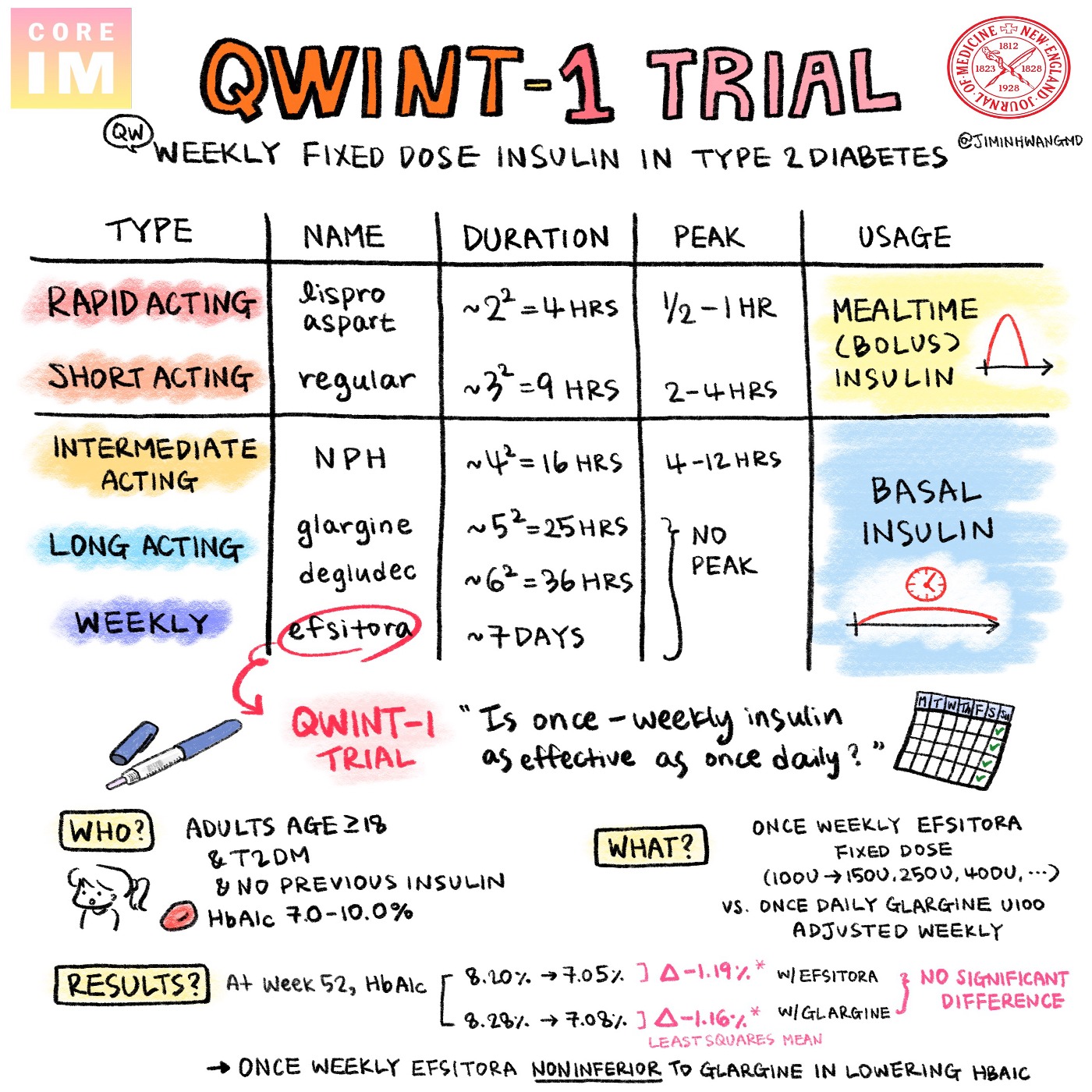
Just a quick message from a sponsor. Like most of us, what I first heard about the DEA mate requirement of eight hours of training, my first reaction was like, great, just another hoop to jump through. But then I learned about the pain management in OPO, its adaptive learning program from any Jam group. It's free and it's actually turned that requirement to something engaging and useful. The course is interactive, 62 case-based questions, videos, infographics that walk you through with the complexities of pain management, opioid prescribing, and substance use. You walk away not just by being compliant with requirements, but sharper for your patients. You earn 10.25 CME credits along with it and ABIM MOC points. So if you have to spend the time, why not make it count? You can check it out. I will link it in our show notes. That's cmdashinfo.nejm.org/core-im and with that let's get back to the episode. Welcome to Beyond Journal Club, a collaboration between core IM and NEJM group. The goal of Beyond Journal Club is to take landmark clinical trials and put them into context telling the story of how we got to where we are and what it means to take care of our patients. I'm Dr. Shreya Trevetti. I'm an intern at the EMC. I'm Dr. Greg Katz, cardiologist at NYU. And I'm Dr. Clem Lee, a med-pitaus plus in Boston and I guess editor at NEJM. I'm Dr. Luxembourg Vindher and a chronologist at NEJM editorial fellow. Today, we're diving into the rapidly changing world of diabetes to look at the Quint 1 trial. This investigated once weekly insulin-epsitora in people with type 2 diabetes and was published in the New England Journal of Medicine in June of 2025. And before getting into the Quint 1 trial. We'll review different types of insulin we have available and when we should be preaching for insulin in the first place. And then finally we'll dive into the Quint 1 trial and talk about how once week the insulin may fit into our landscape of diabetic treatment options. So I feel like I need to come clean because all of these insulin options honestly make me feel like I don't know anything about endocrinology at all. It's really confusing. Short acting, long acting, rapid acting, intermediate acting. They all have different brand names. Learning insulin treatment is like learning a second foreign language on top of medical jargon. Yeah, Greg, maybe we should be making a dualingo for insulin. Yeah, that very much resonates. And I think it's worthwhile to go through the different types of insulin we have available. And this will really prime us for the discussion we're going to have after the Quint 1 trial. So most people will recognize the long acting or basal insulin. We have two big options here. Glargine, also known as lantis and deglodec, also known as traciba. They take a couple of hours to start working. But once they do, they can lower the glucose for 24 hours or even longer. Next up, we have our meal time or correctional insulin. And we typically think about this as a rapid acting insulin. This includes our insulin, Lisbon and Aspart. And if it's helpful, you can use the pneumonic of the fast moving city of LA to stand for Lisbon and Aspart. Unlike the basal insulin, they're really quick on. They act in about 15 minutes, peak in one to two hours and last for a total of two to four hours until you're next meal. Yeah. And then the brand names for these rapid acting insulin are going to end with log. So you might see insulin Lisbon called human log or the insulin Aspart called Nova log. And so if you see an insulin that ends with a log, think about it acting fast and ending fast. All right. So here is where things can start to get fuzzy for people. There's also a short acting insulin called regular insulin. It's the old school short acting insulin before the newer Lisbon Aspart came onto the scene. The regular insulin takes a bit longer to kick in about 30 minutes. So it needs to be given before meals and it lasts around six to eight hours. Then we're going to go to our intermediate acting and pH as a basal ish insulin. So it's going to act or work for about 12 to 18 hours, but it has a peak and this happens about four to eight hours after the injection. The most common reason you're going to be seeing people reach for this insulin is when cost is an issue. N pH is a lot cheaper and this is typically because it's an older formulation. It's also great for treatment of glucocorticoid induced hyperglycemia because the peak of N pH lines up with the morning peak of prednisone. And then you might see the brand name for N pH as humulin N or novalin N. So one way to remember is if it's with an N, think of N pH and the intermediate, right? It's the intermediate one that is 12 to 18 hours of insulin duration. And last up and one that gets people a little bit confused is our mixed insulin. You might see this in somebody's medication list as 70 30 or 75 25. And so this is when we combine N pH with a short acting insulin. For example, 70 30 is 70% N pH and 30% regular insulin. Yeah, this does trip me up. And also just the Y, right? Like why is somebody on 70 30 instead of like the typical basal bowl list, right? So mixed insulin like 70 30 are really helpful in a patient who might be overwhelmed with the complex insulin regimen or might not be able to give themselves multiple injections a day. So rather than needing three to four injections a day, like a basal bowl as regimen would make you have, you can give a twice daily dosing of 70 30 because you'll get some basal coverage and some meal time coverage. So you're going to have fewer injections in the day, but you're going to lose your ability to fine tune the doses as much. And you're going to have a more hypoglycemia risk because of somebody's skipped meals. They've taken the insulin already that's going to cover a meal that they might not eat. So those are all just things to keep in mind. Okay, that was a really helpful review for me. I hope for our listeners too. And so to recap, there's four major pharmacokinetic profiles of insulin. Neutrachylamine, short-acting, intermediate-acting, and long-acting. The rapid-acting ones, Liz Broin-Aspart and the short-acting one, which is regular, are generally considered prandial or correctional insolence. Intermediate, NPH, and long-acting insolence are considered basal insolence. Yeah. And then there's also the mixed insulin, right? The 7030, which is NPH plus a short-acting or rapid-acting insulin. Yeah. And over the years, one way I've simplified the duration of actions for myself is by using a mnemonic of perfect squares. And so I'll just recap that here. The rapid-acting ones last about four hours. That's two squared. Regular insulin lasts around nine hours, so that's three squared. NPH lasts around 16 hours. That's four squared. Gluirgin lasts around 25 hours, five squared, and deglodic lasts around 36 hours, which is six squared. These are obviously rough estimates, but I'm hoping that that's a helpful mnemonic video. Okay. Now we've reviewed the current types of insolence, and we might have more insulin options in the horizon. What are the current guidelines for when we should reach for insulin for a patient with type 2 diabetes? Yeah. So as my colleagues and I like to joke about, you ask four different undercannologists, you might get four different answers. I think different providers are going to have their own process for insulin initiation. But if we go more with the guidelines, according to the American Diabetes Association or the ADA, for a treatment of type 2 diabetes, the initiation of insulin should be considered in two big picture scenarios. The first one is if a patient has symptoms of hyperglycemia. So these could include polyureia or polydipsia, and this is regardless of their previous medications that they were on for their diabetes. The second big scenario is if their hemoglobin A1c or blood sugar levels are very high. For example, an A1c of above 10 is typically the threshold cutoff, and according to the guidelines, that's the threshold or a blood glucose level of above 300 milligrams per desolate. I think it's really important that you have a good mental model for prescribing insulin, because once you put somebody on it, it is this massive change for a patient's life. Yeah, it's a really great point, Greg. I mean, with insulin, you are signing up a patient to prick their finger at least once a day, if not more, if they don't have a continuous glucose monitor, and then they have to proceed to stab themselves with a pen needle or syringe to give themselves their insulin. This might happen multiple times a day as well. Yeah, definitely. It's one thing to see that insulin in a patient's chart, but it's another thing to ask the patient how's it going to take that insulin and seeing the different types of answers you might get. I remember recently having this patient with early dementia, and she was on that, you know, long, the basal bowl list, kind of long-acting meal time insulin, living alone and not surprisingly with her memory issues, giving herself insulin became really hard. Her A1C jumped from seven to 9.8. I think that situation, and I think so many other patients I've had, I've kind of just been like, "I wish I had more options." Yeah, and you're in luck, because now we have another option. That's a great segue to jump into Quint One trial to discuss a new weekly insulin and how that might benefit our patients and specifically the patient that you just mentioned, Sharia. Just a quick word from a sponsor. With a cold winter, it can feel so easy to be in the dumps, especially with being sick here and there like I am right now. And one small thing that's helped me this season is cooking. The caraway cookware has made it much easier and very doable, really like leaning into the cozy meals like soup, simple one-pan dinners. Without the inner-shatterty, I think for me, knowing that the ceramic surface is naturally slick, I've never seen anything else like this. I don't have to put much oil. The cleanup is really so quick. There's also a piece of mind to it too. Caraway cookware is designed without those forever chemicals. There's a reason that over 100,000 people have created a caraway kitchen five stars. The thoughtful details help. For example, there are glass lids so I can keep an eye on things or a kitchen timer that works without wet hands. Caraway cookware is a favorite for a reason and you can actually save up to $100 dollars versus buying the items individually. And if you visit carawayhome.com's backslashcorean, you can get an additional 10% off your next purchase and this is exclusive. To our listeners, visit carawayhome.com backslashcorean or use the code coreium at the checkout. Okay, non-toxic kitchenware made modern and with that, let's get back to the episode. Alright, team, let's talk about the shiny new thing once weekly basil insulin. Sounds great, but what is the data? Important question, Triah. So the Quint One trial compared insulin F-sutora or a once weekly insulin to our good old insulin-glargine, which is taken daily. The researchers in the Quint One trial asked if one weekly insulin F-sutora would be non-infuriate to insulin-glargine and this was measured as the chained in heebagobin A1c after one year of treatment. So they randomized 795 patients one to one to either daily-glargine or weekly S-sutora. There were about 400 in each group and the trial was open label so patients knew exactly what they got. And then who were these patients in the trial? Yeah, picture your kind of typical patient here in studies. Mid-50s has had type 2 diabetes for about nine years, BMI of about 32 and then living in the US, Argentina or Mexico and this is where the study sites were. Half of the patients were women, about 70% were white and their starting A1c was about 8.2%. Yeah, that means we think like these were not the patients who were, you know, A1c of 11 were out of options kind of patient. That's totally true. And about half of these patients were on just one non-insulin diabetes medication and the other half were on two non-insulin diabetes medications. Almost 94% were on metformin and only 10% of these patients were on GLP1 agonist. So just to reiterate, in this trial we're seeing insulin being initiated in a population with relatively early and less severe type 2 diabetes. Yeah. And then this was a treat to target RCT, right? So let's go over what that means and how they dose the insulin. If we start with the F-Satura group that once weekly insulin, everyone began at 100 units of insulin a week with an auto injector. Then every four weeks, if a fasting glucose was still high, they would step up the doses. So from 100 to 150 units and then further to 250 and finally to 400 units weekly. And if the patient hit 400 and still wasn't a goal, you could even go higher. And ultimately 71 out of 400 participants were paced on more than 400 units per week. And when they were determining dose changes, these were based on the median of the previous three fasting blood glucose levels. They were targeting a blood glucose level of 80 to 130. Yeah. And then here's a twist. If a patient in the F-Satura arm became hypoglycemic and needed a dose reduction, they couldn't go back up again for the rest of the trial. Yeah, and that's important because real life doesn't always work that way. In practice, we often have the patients try titrating up again with some careful monitoring. And then for the glargine dosing, patients started at 10 units daily and were adjusted every few days to hit that same fasting target of 80 to 130. And in trials, we typically have some dropouts. In this scenario, the dropouts were basically the same about 11% in both arms. So no big red flags there. Yeah. And this is a non-inferited trial. So the study goal was to see if F-Satura lowered A1C just as well as glargine F-82 weeks. And as a brief review of non-inferiority trials, this is where we test whether the experimental treatment and in this case that's insulin F-Satura is not less efficacious than an active control treatment that's already being used. And in this case, that's daily insulin glargine. So in terms of the quint one trial, F-Satura would be accepted as non-inferior to glargine if it led to a hemoglobin A1C difference of no greater than 0.4%. So they also looked at fasting glucose, insulin dose, well-being, and of course, they checked for hypoglycemia. All right. I think that's enough of the setup. So Lakshmi, will you do the honors of telling us the trial results? How gracious of you, Clem. I would love to. With F-Satura, the A1C drops from 8.2% to 7.1%. And in the glargine arm, it dropped from 8.3% to 7.1%. So nearly identical. Yeah. Also, we know that F-Satura was non-inferior, but it was not superior to glargine and the scenario that p-value was 0.68. And for that secondary outcome of getting the A1C under 7%, 57% of patients in the F-Satura group and 52% of patients in the glargine group, which was not statistically different. And then looking at the change in the fasting blood glucose in one year, it was about 127 milligrams per desolateter in both groups. So the change from the start of the trial was not different. And then again, we have a tie game. When we look at the hypoglycemia, that is where things start to get interesting. But to step back a little bit, the ADA describes three levels of hypoglycemia. So level three hypoglycemia, which is any level of hypoglycemia that requires assistance from another person, usually due to a neurologic compromise like syncopy or seizure. In this study, there was one episode of that niche group, so it was pretty rare. But the combined level three and level two hypoglycemia, which is defined as a glucose of less than 54 milligrams per desolateter, was 43% lower with insulin F-Satura when compared with insulin glargine, which is really huge. Yeah, four people in the glargine group had more than 10 of these combined level two level three events. And in the F-Satura group, nobody did. Ah, that is so interesting that we can give a medicine just once a week and almost no one gets severely hypoglycemic. It seems so imprecise and it works. It's kind of amazing. Another thing that I was struck by here is how much insulin these patients required. So the glargine group needed about 333 units a week and the F-Satura group about 289 units per week. And so this group of people who were not on insulin to begin with, I mean, they were eight, not ten. But their insulin got escalated to like 40 units per day. And so even if these patients were not classically hyperglycemic, to me, these are very chronically ill people who have really severe insulin resistance. Greg, I'm so glad you pointed that out because I guess it's humbling to think about maybe the amount of insulin resistance that we might not be able to appreciate and how much insulin one might actually need to get those sugars in the 80s to 130s range that we all aim for. All right. So bringing us back, what's the takeaway here? All right. Thanks, Clam. So big takeaway. F-Satura, a once-weekly insulin. It works. It was similar at lowering the hemoglobin A1C when compared with daily insulin glargine. And even though it's not better than glargine for glucose control, it might be better than glargine for reducing hypoglycemia. All of that being said, just quick reminder that these patients where people with A1C is around 8, mostly just on one to two medications, not acutely ill, and of the outpatient setting. Most of these things are not making me think of individuals or patients that we would be worried about hypoglycemia on daily basis for. Yeah, definitely, right? Not the patient that we're struggling with treatment options before we show insulin. Exactly, Sharia. And there's a whole other set of quint trials that ask a lot of other questions about once weekly insulin F-Satura from comparing it to Dougladek to looking at people already on insulin. And without getting into details, there's a general overall sense that once weekly insulin F-Satura is able to hold up a cost other type 2 diabetes populations. So, this all sounds great, but let's call out the elephant in the room. Acutora is not yet FDA approved. Yeah, definitely a fair thing to call out. And I think if this does get approval and is available for patients, I'm curious about a very practical elephant in the room, right? We're doing all this and thinking about this from the very patient-centered perspective of like, how do we minimize injection burden? I guess, how do we reconcile a weekly long-acting insulin for patients that we might see? For example, that lady I was talking about with dementia, giving 4 or 5 injections of the insulin every day, getting agitated, which isn't going to make sense for her. And with these patients, yeah, maybe you can max out the glor gene, but you still find their finger sticks, pre meal or still in the 250s in the hospital. I guess what I'm trying to ask here is, how does this long-acting weekly insulin work for a patient like this? Right, would it actually help minimize the injection burden or would a patient like this still need meal time coverage? And maybe another way to think about it is like, you know, which diabetic patient population will this weekly insulin really help? Great question, Shreya. And I think to really address this, we need to go back into the pathophysiology of type two diabetes, everybody's favorite thing. So the earliest abnormality, I think we tend to see in type two diabetes is insulin resistance. The pancreas is able to make insulin, but the cells in the body aren't listening to the insulin and they're not opening the doors to allow glucose out of the bloodstream and into cells. And things get even more complicated when we think about what's happening in the liver. And so the liver basically has this faucet that is continuously making glucose and putting it into circulation for the rest of the body to use. A second role of insulin is that when it works and the body listens to it, it turns off this faucet and it stops the liver from producing glucose and putting it into the bloodstream. We're definitely oversimplifying here, but it's really helpful to understand that when the body has insulin resistant presence, glucose is unable to get into organs, but the faucet continues to drip glucose out of the liver. And both of these scenarios are continuing to worsen hyperglycemia. And then to worsen things, the more and more hyperglycemia there is, as hyperglycemia is toxic to the pancreas, the more and more that beta cells are being hurt and lost. And eventually we reach a state where the beta cells are so damaged that the pancreas can't even make insulin anymore. And this is when we transition from insulin resistance to insulin deficiency. And so to get back to your question, Strea, that patient you described probably had fairly late-stage diabetes. And so in the earlier stages, people can sometimes get away with just basal insulin. But once you have progressive insulin resistance and progressive relative insulin deficiency, it's pretty likely that patients are going to need meal time insulin coverage as well. Yeah, I see. So I guess if S-Torra just get approved, we might have some patients on it, but yeah, in one sense, they might have fewer injections for them perspective. They don't do that daily basal insulin. But for these late-stage diabetes patients, they might still need that meal time insulin injection. Yeah, so for those patients, we might still need to use meal time aspart or Lisbon. So Strea, it sounds like you tried to max out glaring for your patient, but it was a challenge. And I feel like this is something we see pretty commonly. Yeah, definitely. And the other thing I was thinking about in the sense of minimizing injection burden was maybe tapping into some of the oral options, right? And especially as Lushby and Greg mentioned, there's the insulin resistance physiology part of it. And then there's also the relative insulin deficiency. And so, and maybe think also about one of the oral options I can give her to minimize the injection burden for her. Yeah, I think it is really important for us to talk about what oral options we have on the table. And so this trial was looking at patients who had nowhere near to maxing out their oral medications. Remember, average patient from this trial, A1C of 8 on metformin and maybe one oral medication. And so, like, Lushby, correct me if I'm wrong, but is there a world where any endocrinologist takes a patient like this and puts them immediately on insulin, right? A1C of 8 just on metformin. There's no way you're going for insulin next, right? Yeah, unless there's something we're really missing, it's very unlikely to be my first choice in this scenario. And so then, how do you think about what to do next for a patient? A1C of 8, one oral hyperglycemic medicine and we need to do a little bit better when it comes to glucose control. We have so many other oral options, some are older, some are newer, but practically speaking, the older options that we have are cheaper and more accessible and in a lot of scenarios, the easiest to add. We've already covered STLT2 inhibitors, GLP1, GLP, GIP, combination medications in other episodes like the diabetes debate episodes. So maybe we'll get into some of the other oral diabetes medications here. To start us off, we have our secretedogs, think gliposide, glimeparide or epaglinide. These carry a higher risk of hypoglycemia, so they are a little bit riskier, especially in elderly individuals or those that maybe don't have great access to food. And so most of the patients in this study were on metformin, which helps with turning off that faucet in the liver and reducing hepatic gluconeogenesis. And metformin also improves insulin sensitivity a little bit. Yes, so for that patient with the only very slightly elevated, meal time blood glucose levels, metformin can be a really great option. Next, we have the DPP4s, or if you prefer to use their Christian name, diacaptidyl peptidase 4 inhibitors, also come in line. These are also called clippdins, like citic lipden or the trade name genuvia. DPP4s are really great for post-prandial hypoglycemia. They are typically really safe in the elderly and also those with chronic kidney disease or CKD. They have a really low risk of hypoglycemia because it's only when there's a glucose load, like a meal that DPP4 is able to stimulate the natural action of the incretion hormones, like GLP1. Again, this is an oversimplification, but just to explain why there's a lower risk of hypoglycemia in patients with this. Yeah, I love that pathophage. You can also worry if a patient's NPO or not, you can just feel comfortable that DPP4s is going to work only when there's a glucose load. Yeah, and actually, I remember doing an episode on inpatient diabetes meds and the endocrinologist, Dr. Oomperis, I think he was from Emory. He basically said he tries to get everyone on the surgical units on point two units per gig of long-acting insulin and then just a DPP4 to help with a meal times spike. And that was like, oh, that was such a good case for it. Yeah, I mean, clearly me and other endocrinologists really like using DPP4s, but something that we've also noticed is that, unfortunately, they're not covered by insurance. A lot of the time, which is something to be aware of. Yeah, that's a bummer. So I guess speaking of drugs that are then on the cheaper side, I also remember learning about the TZDs, right, that theosolidine diones and an oral option that helps with that insulin resistance and improves the sensitivity to insulin. Yeah, so next up, our TZDs, also known as the insulin sensitizers, as you mentioned, TREA. Unfortunately, some of their more negative side effects are weight gain and fluid retention, so they're not reached for as much. But the flip side to them is that some of them may also help with fatty liver or massolgy. These drugs got a really bad rap because of Rossi glider zone, which was a vandia, which was found to cause heart failure. And it's why that drug got pulled from the market. But now they're probably at least a little bit underutilized, partly because they cause weight gain. But pyaglydazone is cheap, available, and it's an option for some of our patients to improve insulin resistance. Yeah, totally fair. So it sounds like we have some different oral options we can reach for in the right patient where you want to try to optimize those oral options. And so in terms of my patient where I was trying to minimize the injection burden for her, I did actually go back to using things like metformin and TPP4, which, you know, sometimes when you think somebody's on insulin, you're like, oh, like I can't go back to square one, but it was actually helpful for her to get her sugars better and not being in like the 250s all day. And just think you had from a patient friendly perspective. What can I do to minimize her agitation? And so all of this discussion about oral medication options makes me wonder how relevant is this once weekly injection for a patient with an A1C of eight who's on once to medications. And so we don't know what this is going to be like in the actual practical patient who we're going to be starting insulin on because the phenotype in this trial on table one of this trial is very, very different than the phenotype of the patient who normally gets prescribed insulin. And so the cynical part of me wonders like, should we be cheerleading this result because of how far away the patients in this study were from the patients in real life who would actually be getting started on insulin treatment. And so this went one tell us anything about how insulin and esotora will work for patients in the real world because that's not who was included in this study. Yeah, definitely. Maybe it'll make us rethink kind of when we reach for insulin and how much insulin our patients might actually benefit from to get actual glucose control for really reaching for something less than 130. So I also think it's fair to end the episode with a bit of gratitude, right? And an appreciation for how far we've come. Yes, we don't have clear details yet on which population in the diabetes world is really going to benefit from this once weekly insulin. And yet we still have some work to do when it comes to minimizing injection burden. But you know, back in the day, we used to have to grind up pancreas from animals to extract insulin, right? And look at where we are now. And selfishly, I'm also glad that doctors are no longer required to taste or smell patients in your incidence to detect ketones for diabetes. Oh, I'm surprised to hear you say that. Yeah, glad that wasn't part of fellowship. And with that, it's a wrap. If you found this episode helpful, please share with your team and colleagues and give us a rating on Apple podcasts or whatever podcast app you use. It really does help people find us. Thank you to Dr. Sherman Wong for the accompanying graphic. If you have any feedback, please email us at
[email protected]. Opinions express our own and do not represent the opinions of any affiliated institutions. Thank you. Take care. Do you want to say that line again, Clam? Yeah, I don't know if I should say people. Patients. Humans. Humans. Not individuals. Not dogs. That's it. That's it. That's it. That's it.
 PodcastTranscript AI