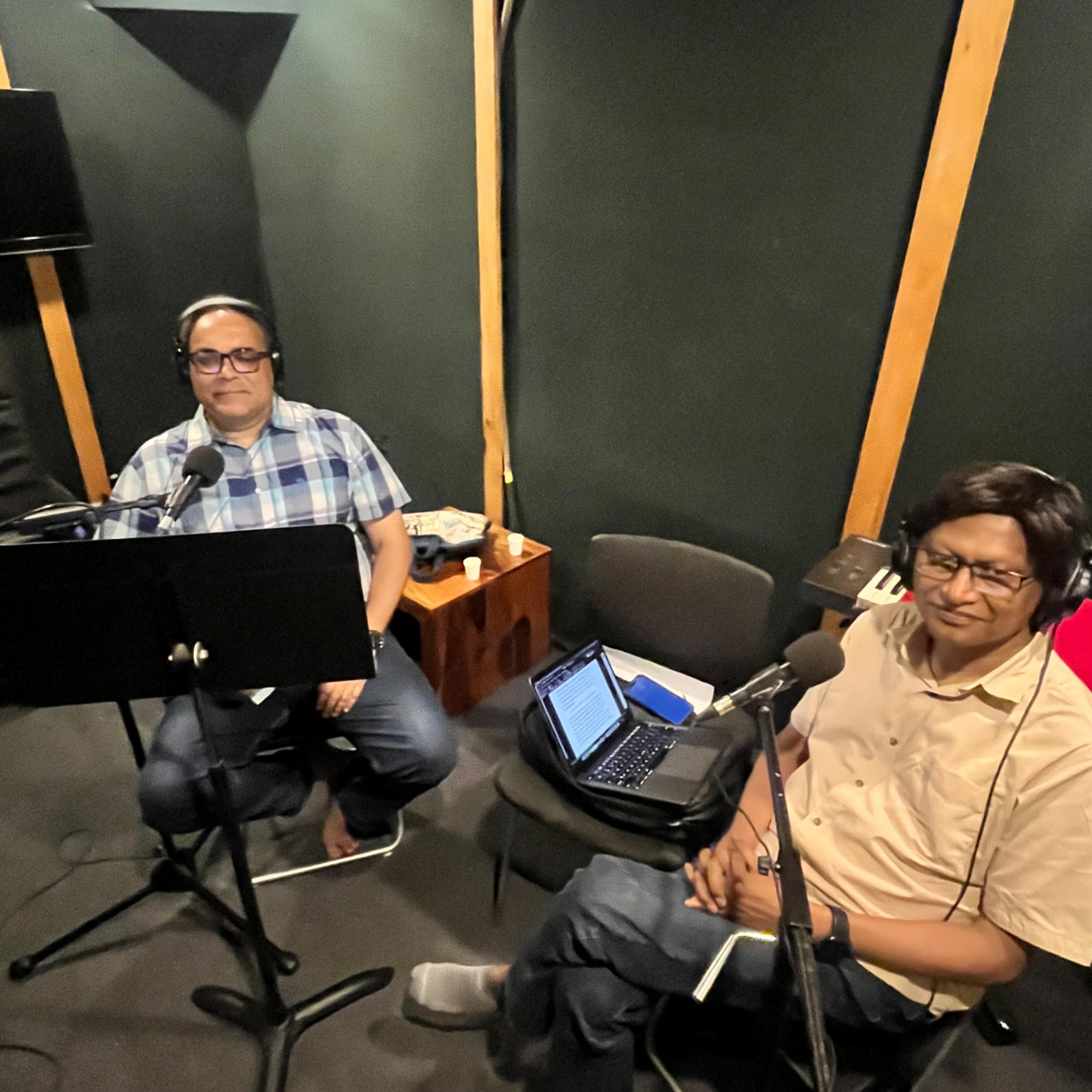
Hello friends, welcome back to the sales algorithm. I am Rangan J. Krishnan. I am running a podcast series on sales challenges faced by startups at various stages of their life cycle. In the first episode I introduced our guest speaker, Sandeep Chintawar and the interview provided an overview of Sandeep's entrepreneurial journey. And today's episode, which is a second, I'd like to take a deeper dive into a topic that's often overlooked, failures and setbacks. While success stories are widely celebrated, the challenges and roadblocks face along the way don't always get the attention they deserve. In my view, failures are not just inevitable in the startup journey, they are essential. Understanding how one navigates through tough times, learns from missteps and bounces back stronger, can offer invaluable insights to aspiring founders. So today we'll focus on those pivotal moments of struggle and more importantly how they were overcome. Sandeep, thanks for joining me back. Thanks, Jekyll. Thanks for inviting again. And nice to see that you've got a very good reviews from our last podcast. Thanks to you for all the content. After the successful release of our first podcast, I received a lot of reviews as you know from interested audience who wanted to know more about your journey. So today we'll just delve more into your journey. So my question has been designed based on that. First of all, let me take you back into when we were together at the University of Rurkey, which was then and today's site in Rurkey. We were both pursuing our masters in engineering. Can I ask you, if this was precise at time when you started preparing for your future entrepreneurial journey? Not really. Let's go back to our 1990s, right? If you remember, it was still a socialist country, like a socialist economy. It was a permit economy. Nothing was available easily. Getting a telephone line used to take years, getting a scooter, two-wheeler scooter used to take decayed, getting a cylinder gas connection used to take five to ten years. You grew up in Mumbai, you may not have had at least gas problem, but I grew up in a small town and then in Akpur, we had to struggle for all these waiting lists, right? And there were a unit to get a permission for getting manufacturing unit. So it was the very different economy. We passed in 1990, if you remember those days, TCS was 700 people company, most of the IT companies today who are more than a billion other companies, those were not there, right? So it was a very small economy. Right. And they were mainly into staffing and other stuff, right? Yes. And those were only a staffing that is sending people to the US and that was for the low end support jobs. Absolutely. The concept of whole software and the company science was not there, even in even US was, we'll talk about it and how the industry was. So there were very few opportunities. We used to get a lot of campus interviews, a lot of companies came for company science, but most of them, those jobs were low end. I joined one of the company and Delhi. I spent around six and one says one of the good job, very, very well paid. But I was not happy because if you go back, the competition as masters in Ruriky was interdisciplinary. Interdisciplinary means you come from other engineering and then you do competition science. That was very, not really a core competition. And it was not there in India. Most of our friends were in computer industry. They went to US for MS and then they changed their measure from civil or mechanical to computer science, right? When you change your measure to something like one and a half years course, where only two semesters, you don't cover all the computer science courses. And with that and with no information, no internet, it was so limited. Computers were not available. The computer time used to be able to book the time, if you remember. We had one. Many frame in IIT Ruriky and some small x86 computers in the department. Even for that, we had to book the time, right? And also take the permission from professors. So it was not easily accessible. So there was always a limitation of interdisciplinary. I knew that and then I wanted to develop those skills myself. So for that, I wanted that kind of job. I did very well in my job in Delhi, but I was not happy because whatever I had to learn, I learned it. And then there was no more scope to it because it was just programming. So I thought I need to find what I want to do and where I should go after looking at the limitations of the industry that time. So I left the job. Nobody thought that I will leave the job. And nowadays it's so far. That too. I remember the company without naming it. I mean, it was such a big company and to leave that company, you know, to have been really a shocker for your friends. Yeah, it was a shocker to my colleagues that time, a shocker to my friends and family. Nobody thought I'm going to leave this good job. But I just left, came to Mumbai, Pune. I lived with friends and my sister in Mumbai. And I started meeting people that time. No, everybody was busy in getting the job, getting settled. I was looking for what I should do. I wanted to do in computer science, but I was not getting a right opportunity. I wanted to learn. Learning was everything for me. Just get these skills. And going to US through staffing firm was not my interest. Absolutely. So those were the only jobs that time are going for education to US. So those were the two things. And I didn't want to go for both. So I spent around maybe seven, eight months in Pune Mumbai. I met a lot of people. I met entrepreneurs. I met opening civil construction contractors, industries, computer science, who had a software company. I met those that time. I met Anand who had just started maybe six months. So I met everybody around me, who I could get hold of. And then also trying to see. And then once one of our common friends who was in IIT Bombay that time, I visited him. And then he took me to his professor who was a head of the department at that time. And we were chatting and he said, "Oh, what are you doing?" I said, "This is what my situation is. I'm still trying to figure out. I want to learn." He said, "Just come here. You do research. Come for PhD." And then he sent me off for later in Puebics. And then I joined there as a research engineer. That was the one thing. And naturally I got access to more computer science and then I had full access to lab and to libraries. Obviously IIT Bombay is more equipped from that perspective and would I have given you some more opportunities. But while doing this, I realized that if I am in India or if I do not get a right chance to get to a depth of the computer science or do something which I like, my liking that time was networking. But I was not getting anything into networking because it's a cheap design plus hardware combination. Then I thought maybe I should try to develop some software where I can use my skills and maybe other people's skill. If I don't get it, I can hire people with that kind of skills and then do that. But I was not ready at that time. I spent around a year in IIT Bombay. One's professor called me and says, "What are you doing here? I think you should go to the University, go to US." Then I started again looking for companies where I can go to US. I wanted to go for a product company which is very rare that time, not even few hundred startups were there. And the big software product companies where nobody had any Indian presence. So I could get introduction to one of the entrepreneurs who was some family friend. He had that time project management software company, well funded. They hired me and I went to US. It was I think 93. So all this process, I realized that if I don't get what I want, I should at least develop a product. Then I started thinking about entrepreneurship, shall I develop my own product, then how to sell, can I sell and then doing my own analysis where I stand, all that. Great, fantastic. So when you began your stint in the US and you said initially during the pre-USD, you were not so much pivoted towards developing a product or starting a company, you were more on acquiring new skills, on learning new stuff and then you landed in the US. And again you started working for a company but this idea of creating something of your own started, the seed was germinated in your mind that you know I should do something by myself. But you did tell me that you didn't have many of your friends over there and you mentioned you didn't have any great network over there and I read to that you are not a salesperson. I know that I mean at least at that time you were not. No, maybe you're a salesperson but at that time you were not. Instead of all these drawbacks, how did you really manage to launch your first company within 18 months of being in the US? Can you explain it in detail? Yeah, if you asked me to do it again maybe I won't be able to do it. That time I was really given. When I went to US I still had my thinking that I want to do something in area where I like.
But whatever the destiny is, I never got that work, the type of work I had to do. So then I decided and I had already decided that I'll do something and then I met my ex colleague in India and we had already started talking about some products but when he also moved to US and then we met there. And then same time I was also convincing some of my friends to become a co-founder and that time we did a scan that what we can do with the limited resources. Now we cannot even imagine that we cannot go anywhere and check how many companies are there. Yeah, absolutely. I mean, although internet was there, you still didn't have search engines. No, you couldn't do any research on searching for anything, right? Internet was there but it was only catalogs and it was only for B2C. But really, really very small information about what companies are doing, some company websites. So it was very challenging to see that what is there in the market, how we can, it was only possible through human communication, meeting more people and as I told you before I had such a small network there, none of my high school or undergrad friends were there, some of our friends in Bururki were there but all were very early stage engineering jobs and again through the staffing companies. Yeah, again through staffing companies so they were not doing anything product related at that time, probably. So looking at that then I started meeting more and more people. Wherever I could get contacts, my alumni from my undergrad, alumni from IIT, Bururki, alumni from even IIT Bombay, I started meeting people. Whenever I met I used to ask do they know some people, everybody would know that when we used to go to US that time, we had like 20, 20, 20, 30 contacts, all the relatives and friends would give you a hand return in your diary, right? And if you go call them and then. With line line numbers. Because mobile were not so much there. So, we used to call those people while working on the product, yeah. I was apparently talking with those people. So we came up with the idea of case tracking software. The case tracking is. If you know most of the customer service or IIT or all the companies, they have different tasks and cases which goes to the departments, their groups and then you follow it. They were very few and very rudimentary that time. So we started developing it. We used to sit after our office hours, after our job in Kupotino, outside MAPL. There used to be one donut place, donut and coffee place. So, why say one? Have you checked it? Oh, yeah, still there. It's called donutville. One of the Chinese origin immigrant started it and still there. That's one of the cafe, we just still around there. Right up in nostalgia, right? Very, very. Yes, yes. So we used to go there after dinner, maybe eight and then used to sit there to two or three o'clock and we used to do coding. That time laptops were expensive but we had one laptop. Otherwise we'll go back to office and do the coding. But then do all the algorithms and discussions and architecture. Yeah, all the architecture. And then it had become a meeting point. So everybody knew that we are there from 8 to 1 in the 90s. So people used to come in mid. So it was fun also. Having fun while working was always my. Yeah, absolutely. Absolutely, I understand. And back then you still had your connects with IIT Bombay with the. Yeah, yeah. So coming back to you had asked me on product and then we were working on the product. Same time in 18 months I met many, many people. Every week I used to meet at least three to four different people and you had to go in mid in person, in their offices or at the end. And these were like top management people. Some of them top managers. All kind of people. I used to meet. I did not have anything I wanted to learn. I just wanted to learn everything about not only for technology, but everything about. It's amazing. the place. And same time I realized that I came from small town and I never grew up in big cities. Language was an always an issue. So I even did accent reduction, English speaking, public speaking. I did all the courses. And I made very good friends there. All these classes I made a lot of friends. And those were immigrants and not different positions. So I made a lot of friends all over. Not for the business. And even today I have. In general you started networking. You like networking as a subject in your engineering. I like social networking as well. So I like meeting people. I like to learn. I like to have deep conversations with people. It really really excites me. Socially I may not be very social person, but on deep conversations I have a lot of friends. It's not like I go to some party or some meet and then I speaking with a lot of people. But it's not my personality. But I have a very deep relationship with many many friends. But I believe this is a very great thing to do. I mean you first you think about doing a product and starting a company. And then you realize that you have limited network. You start really meeting the influential people in the industry, key people in the industry and start making real contacts and network. And while you're building the product, you're building a contacts or network. I mean this is amazing. And you said you didn't have access to internet. So there was not great search engines. I mean search engines and companies. I used to go to library. You go to the library and I used to go to library, local library, also go to Stanford, go to computer science library. I used to spend all my extra time after the job in doing something productive. Just this urge to learn something was so high. So much. In you, I mean that urge was probably more than building the company. Initially the urge of learning was very high. Very high and going to the land of opportunity. You see so many things. Coming from a socialist type of economy to going to a US. And you see all the information is there, right? Economies open. You can do so many things. There are so many success stories. I read a lot of biographies like Helet Packard. I studied them. That how did they start? They were technologists. Actually, those were also reluctant entrepreneurs when World War II started even before that. Their professor insisted them to start a company. So I was so impressed and amazed by Silicon Valley. And I still, it is a hot pot where all the talented people all over the world come from last 40, 50 years, more than 50 years. So it was looking at that. I thought it is a very good opportunity. I should not lose that kind of opportunity to learn and do something. And I always wanted to do something more than 95 job. That was never my goal. And I think long, if you have a long term goal, you can sacrifice your current things. Like fun, right? Absolutely. Our friends at that time used to have fun on weekends, going out on picnics. There are so many places to visit in California. I was working on the weekends all the time. I was studying, going to libraries, even upgrading my skills, doing programming coding. And many people helped me. Many friends who had very good programming skills, they wanted to do something, but not the company. They used to come on weekends with their computers and we used to sit in this to help in coding. So people really, really helped. Because they saw the drive, right? Yeah. I mean, the drive was really, I can see that, feel that drive in you. The way you were so much inclined to learn things. This urge to learn also helped you build your product and network people. All these things you did together, that's really amazing. And same time, you just went there and did everything together. This is precisely the point I'm making. And same time, starting a company, that time, even information about business law or immigration law was not available. I had to go and go to libraries and read about law. About immigration laws. Because many, most of my friends were on immigration visa. They did not have to. So starting a company and doing that. As an immigrant, as an H1D, what were the downside and what were the positives? Yeah. And good thing that I always use professional help. So that time, while in job, I had a professional law firm for a business and immigration law. So that time I had to go all the way, drive to San Francisco from South Bay and go to the law firm and engage them to start a company and understand it. So while I was on the job. So I did lot of things while on the job. Right, very committed. I must say, you were really, very committed on this whole thing. So great to know that you started with a dream to build your own product. Never lost sight of it. Never lost sight of a long-term vision. Despite of not having contacts, you started building contacts, grounds up. You started connecting with the company founders, investors, worked hard on your networking with people through various alumni. You said also you had alumni connections. And at the same time, you were working on creating a product. As well as doing everything that was needed to build a company. With the handicap that you didn't have access to internet, there were no search engines at that time and you had to go to libraries and you had to read. And what a journey and what a strong commitment I'm saying to build something. There is really awesome Sunday. And I'm sure a lot of youngsters out there listening to this podcast would know what it takes to build this kind of a company.
career in a company. Tell us more about your product development journey. How do you really conceptualize your first product and what inspired or sparked your develop that? And tell us also about your early failures and setbacks. You mentioned about the case tracking. Yeah, yeah. What happened to that? So, how we came up with that idea was as I told you, there was a very limited knowledge. Like company I worked for in US was also startup. So, we did not have much exposure about IT departments, right? And one kind of software companies use. But whatever we had and after discussing with people, we thought that the good scope is into case tracking because many all the IT departments or the engineering departments need some kind of case tracking. Absolutely. I think the service desk whatever you have these days as service desk is what is what is to be the case tracking. And now there are vertical case tracking for your industry, for service industry, for IT industry, internal right? All the medical everywhere now there are many, many products, billion dollar companies in case tracking like service now. So, we wanted to do similar one. We didn't product was coming up very well. It was very good architected. We spent good amount of time 61 maybe around a year, year and a half. I helped the co-founder and then actually he left after that. But we both spent good amount of time getting that product in place. We did not get break. As we had limitations, we did not break break break. We tried to all the people I knew or he knew were all engineers. We did not know people at senior level by then, right? I had some mentors, but still it was a limited technology focused product. So, it was a major setback. We still continued it while doing that. We had to pivot. Now there are a lot of good words for that. That was failure. You pivoted to the next product. It was an interesting story. One of my co-founder sprained. He was doing some company in India and he was also trying to do something in internet and then he made some MVP of the analytics. So, I got in hold in it and then invited him to join, but he had some limitations to come and then we thought this is a good area to come. We can accept coming. We can analytics is everybody needs analytics and then we did a lot of market research. First time we did not do much market research. It was given by typical engineering mind. This product is good. It is needed. This time we spent a lot of time to understand meeting people. To know that if there is anything existing as a product is also would take time. Yes. Not a lot of. Having any search engines around, you really had to spend time to know if anybody is doing that. It was 95, 96, mostly 95. The websites.com just started coming. Web masters were marketing people those days. Those were technical, but they were hosting companies websites. They were hosting websites. They were spending money, but they did not know who is visiting. They did not know how much time they are spending. Absolutely. Web pages just started coming, but they spending money. They had to show the ROI. There were startups. There were companies even Microsoft had some analytics product. We thought that some most of them were on Windows platform. While.com was coming, Unix again started coming back into the game because it was a client server. Web architecture. Web.1.0, simple HTML pages and the back and then HTML pages was interact with the backend and get the data. That was very new architecture. It was not running well on the Windows. Microsoft tried and on Windows NT, if you remember, the time NT was servers. They had Web server. Microsoft was one of the early company to come on the Web servers. They did not have browser, by the way, but they had Web server and they had an analytics product, but they were not looking much at it. There were a few startups in the area and somewhere who were doing Web analytics. That time Web analytics was extremely early stage. There were no cookies. There were only lock files coming out of Web servers. Most of the Web servers were open source in build coming with Unix or you download from somewhere. Even downloading was tough. Then you order CDs. Even DVDs were not there. DVDs were just coming. Software would come on CD. You order it and then you get it and you install it. Those were the days. It was amazing to see that we can do something there because technology is moving so fast. We can use latest technology and technology is always my weak point. I always wanted to work on latest technologies as a personal interest. Then building a team, hiring people in the latest technologies was always a actually less challenge because there were people in IT industry who wanted to do something. Doing some low end jobs where not everybody is. Correct, absolutely. So those were the time. They are also again going back to I think today's utopic was failures. While it was exciting, what is happening that time if you remember, Netscape was coming as a browser. Correct. There were some open source but Netscape was one of the upcoming. There were no standards, no technology standards for anything. They were changing every quarter and then they were releasing their browsers every quarter and then all other competition, including Internet Explorer, Microsoft started developing and other open source companies AOL had a browser. So everybody was going in their own direction and nobody had market big market share. Today we don't even think Chrome is the one you put it on a Chrome or maybe some safari. Absolutely. Nobody even thinks about it because everybody follow standards. Those time there was no standards. Every browser, we had to support every browser because everybody had 10-20% market share. Correct. Netscape was coming up but still they were not the market leader. The technology itself was developing and what we decided that time, especially I decided to use Java, Java was just coming. 1.1.0 was not there and some micro system had just one of their Java division as a Java soft as a subsidiary. We became a partner and then Java first started as a front end widgets and not as a backend. Now he's completely backend technology but when he started early they were focusing more on widgets. So we create a lot of, it was a very basic technology. We create our own widgets on Java and then we use that UI, Java UI to have our product UI. Nobody was. I think it was one of the first Java product, Java UI product that time and we got even our words also for that. But we had lot of setbacks. Having a product which will work on all the browsers and all the versions was just nightmare. So many times I thought that maybe it is better to change everything and go back to some other stack. We had the discussion all the time but we continued to do that. We tried some web based which is simple HTML but then those days HTML was not dynamic. These were very static pages. Having an application full flashed application on HTML was a challenge. So we continued working on Java while we started a few things on HTML. So and then it was a self-funded company. We had consulting division to sell funders. That was the limitation. We did not have product managers. So I had to do or somebody else had to do the product management or we hired one MBA intern. He was doing the work. We did not have senior architect. Some of my friends part time used to help. We hired some from IED Bombay. I had relationship with IED Bombay. It was one of my IED Bombay. I was the one of the first company to hire directly in US that time from the company to the party. So how was it? Was it relatively easier to hire people? Very very. I could hire anybody. I went there. The professor under him. I just worked. He was HOD and then he called the company to the company to the party. I presented them. For two days I told people that if you are going for MS or education, don't apply, but everybody came. I interviewed 12, 12, 14, 24 hours, two days, 12 hours each. Everybody. And then I ultimately decided to hire five or six people. And then I got them migrated to US on HTML. And those were my early employees. Very good. But challenge was they were good programmers but not much experienced. So we did not have much experience there. There was limitations on funding. Market was going very fast. And you need somebody on the application side. Tell them what is needed to be done. What the industry needs etc. And then we used to work days and nights. So we used to work in the night. After dinner, again go to office, release the software, test it. We used to be in executive suites. So we used to get other people's also to test our product because we had to test on so many browsers. There was not a limited test in that time. So many many.
challenges and failures but if you don't take it as a failure and take it as a journey I think and you make it as a fun. One thing I realize is if you have a fun while working and if you do things what you like. You don't even realize it. You don't even realize you are failing or having a challenge right? You take it along the stride and work as a team and go about it. But when you recollect that like you're recollecting right now of that then you would call it as initial failures or setbacks but you never got rejected or pressed for yourself. No, it was never got rejected on that. But if you look back and somebody asked, did you have any failures? I had a failure maybe more than majority of things what I tried didn't work. So I call it as a failure man than the successful but I don't think anybody in the industry are there who are not failed but as you mentioned when we started that people just make more on the success success. Success to this. Now nowadays they say that you have to fail fast if you have to succeed fast. The faster you fail the better it is for you in the longer run. So it looks like while you are describing this journey of your product you are developing a product on a platform and technology which in itself was not very stable at that time and that would have been more challenging I can imagine and the analogy I can draw with today's time is just like a company today is developing a product using AI LLM and as a product being developed the model is also being upgraded the model. Yeah, it is very similar. So, you know, so. Yeah, it is quite similar. I am, my son is working in, he is doing a startup where he is using LLM and I also you know I am in touch with some other startups who are using LLM and it is changing every week every LLM company, AI company is coming up with their own model and their releases and when you are using LLM at the back end to develop your agents those are changing every week. Yeah, and then today some one company is releasing an LLM with new performance and then after next week you are doing the other companies coming up. So it is very challenging for a founder even if you are good at your field you need to be on the top of what is happening there. It takes your time. And it is all about time where your energy and time is all, it is what it is. If you manage that well then only you can do a successful in any field, right? Correct. And in today's context for today's founders many of them doing work on AI. This is a good example to draw an analogy. Those days what kind of technological challenges you had you mentioned that and today what kind of challenges are there. Exactly. So it is a good analogy to draw. And in this is mature today they still have some standards compared to those days. Correct, absolutely right. So life is easier now than those days. Yeah. So if given the chance and the age that you had at that time if you had to start a company now we have to have been more successful than. Yes, that is what I was thinking. For sure. With the driver energy you had you would have been much more successful. Well, that is fine. Okay, now with your first product you had mentioned earlier, you had a couple of technology partners, right? You know, you wanted to say something on that. You had IBM and Cisco. Yeah. As we move to new product, we have analytics and started using latest technologies to develop the product. Naturally it got attention from other companies also. When we meet network, meet other people, right? One of the fastest growing company that time was Cisco. Cisco was the fastest growing company. One of the investors was Sequoia Capital. We had met Sequoia for some investment. It didn't happen but we got introduced to Cisco. That time we also got introduced to one of the unit in Cisco which was Internet Appliance Unit. They had spun off a separate unit for the latest Internet related appliances. They were hardware company, they are still hardware company. And they had a lot of products in that one of the products was local director that was a load balancer. While Internet was coming up, even Internet traffic was growing. And Cisco was the major player in the networking that time. And this was application, most of the companies had routers but nobody had web traffic management. Very few companies had that. For them also there was a problem that what they didn't know what is happening on their web traffic. They knew what was happening on the packets. They did not know on the HTTP level. Right. On the higher level, like which pages and all that. But when you say web traffic balancer means you need to have that information. So we started, we had lot of meetings and naturally there was a good chemistry match between their division and us, me, a lot of, we had a very good chemistry. And then we had come up with an idea of integrating our software, porting on their hardware. So it was a close partnership. So that went along very well. And then same time IBM was coming into Internet, everybody was trying to get into Internet. And they had their own web server, which they used to sell it in a box. Boxing is a CDN box. And they wanted some analytics. So we bundled with them. So we had lot of good bundling partnership. And we also had technology partnership with data centers. That time data center companies just started coming. Every company, nobody had more than one or two data centers. Right. They were all startups, VC funded. And downtown, one or two floors in one tower. So we did not have standards for even data centers. What you do is take your computer, put it in the rack, that is your data center. They were not even giving the computers. You take your own computers. The important point is getting these partners. And here again, I wanted to, again, talk to the audience. And as I mentioned in the previous episode, one of the key steps towards succeeding with their product and enhancing its brand values to find the right partners. Just like you found IBM and Cisco, do you think this would have gone a long way in enhancing a brand to the buyers, getting it to the buyers? A huge help, huge help. Because what happens in technology, especially when you talk about tech products, big brands have a lot of value. It has today like FANG companies. And it had that time too. That time, tech industry was very small, not even 10% of total size of what today is. But the names like Cisco and IBM, they were big names. Correct. Cisco was in forefront of the internet because they were, internet was sitting on their network infrastructure. So those names really helped us. Correct. Hiring people, even going for funding, meeting investors, we didn't raise point, but when we met investors, we used to get meeting when we said we have absolute partnership with them. Correct. So it helped a lot. And it so helped us to have a direction to the product. It was so challenging that time. Today now Web Analytics is so mature, right? That time so early, we didn't even know whether cookies are going to come. And people said cookies will not come. If cookies will not come, what analytics we are going to do. And so standards were coming, a lot of questions. Browser companies were going down, one company was coming up. So there were a lot of distractions and new companies were coming. The other thing is when you talk to companies like Cisco and IBM, they would have had their own problems or whatever they face and whatever they wanted in Web Analytics. They would have that kind of-- All of them, yeah. They have multiple departments working on different things. So you could get access to that information that what is needed in the product to get the results. Yes, we could get that. And there was some challenges too because we had to customize to their need. Yes. And when we independently sell out product, some of the features may not be absolutely. And a lot of resources been diverted to customize and then maintain the partnership. Correct. And then the venue wouldn't come because everything was in our stage. So we had a lot of challenges to maintaining that. Interestingly at the same time, we had companies like Vipro and some other Indian big companies came to us to do product types. So we never got time and resources. They were ready to fund, but they wanted us to do product development jointly with them. Okay. So this was a tight balance for you to-- One is working with partners, others doing enough to get your own revenue. Yes. So that would have been a balance to-- Yes, because the big companies' partnership takes a lot of resources. Absolutely. It takes your time to write the meetings and big departments, their legal and then-- Yeah. Then releases, their releases, now-- You have to synchronize that. synchronize all that. And then coming up with those cities and then shipping those cities and-- And it is calling some book. All right. So. Okay. So working on challenges and relentlessly improving your product, you reach a stage when potential buyers started showing interest? Yeah. Actually, many, many buyers started coming in. The startups, people going to IPO even Cisco at one time.
Other internet companies the other companies who wanted to get into internet many companies. We had So it was kind of a bus word but everybody had to get into internet. Yes, like today It's yeah, I want to get into AI so similarly that was a bus word that time But very few came to the petition like just example is Cisco another example was they had up We're put an offer whole management team except that time John Chambers was a CEO We had a meeting for the acquisition and They put an acquisition offer and then Cisco put it to you. Okay, because they wanted to acquire But in 20 48 hours there was a York so whole department was demand Within Cisco. Yeah, man. Okay, so it happens. We're in luck plays a very very big role in such a kind of dynamic time Because things are changing, okay, and humans are related there are it's all humans right? Right, so human relationships how the departments run what what is their dynamics and where they stand in this technology flow so Many many things happened those times. Yeah, really interesting And the what I can draw from here is Initially you sell the product you went through it you were bootstrapped self-funded you had a lot of challenges You don't have a big team then you found good partners there you had to really Customize the product to the partner and then at the same time have your own flavor to get your revenue streams I mean it is a great journey in spite of all your failures and setbacks You still reached a situation when Potential buyers started approaching you saying yes seriously looking into your product and saying well This is something that we are very interested in Yeah, but it was a really exciting times. Yeah People were connecting so fast every day for partnerships When when when people see that you are up to something You get a lot of people to talk with them Many acquisition offers didn't work out because of different reasons various mismatch or match Business mismatch you know to do with the product for example you told versus Political disease completely unrelated completely on it changes the direction of the company and also the partners exactly So some of these decisions are the incidents in your life Is changes the course of your life absolutely true. Yeah, so Those were the days Where things were moving so fast like what is happening right now? We can yeah little bit correlated to what is happening Yeah, we don't know what is every company we can't track it is physical and mental limitations to track What is happening in the end still working on the product I think founders of current generation will have same similar So that's what they can relate to this analogy. I mean what you do at that time What they cannot relate to is the limitation of resources? Yes today there is no limitation of resources you can like name it and you can get everything whatever you want There's nothing like you can't get today. Yes in terms of building a company building a product Exactly those days you have to live with those limitations. Yes a lot of limitations now. There are no limitations But getting a right talent True that always been a challenge over the years But for somebody who's got an idea want to develop a product the resources to do that This is a phenomenal time for doing a start-ups in a technology. This is the time This is the time if you're not even expert you can take AI as help you can have people You can get online get on the Twitter you can follow the people DM the people sure and then you can get to a right person Yeah one of the best times for entrepreneurs. Best times for entrepreneurs. I mean I really think This generation is quite lucky from that perspective. Okay after your first product success You you managed to establish credibility in the market and this would have been also kind of a validation for investors And they would have started taking you more seriously And from here on when you started building the next product Was it easier than your first product journey? What challenges you faced in this new product development and what was the setbacks? Yeah so it was only three years in business I was not even 30 year old And we had exited. I had some money, few million dollars that time not a bad I spent around year 99 to work on my other product ideas That time I was piece of mind. I had some money. I didn't have to We had the luxury of having everything on that we always wanted to do I took help of friends who were good technical we were good technically started working on MVP Then I rented a small office and had one of our common friends actually She started helping me and on some slides like a three or four slides got us first seed investment. I think few million dollars So your pictures as small as a three or four slides? Yeah, very very very small but because people have seen us Who were or any investors they had seen us Especially me contacting with them and then doing everything on our own Taking their guidance and doing it right and then giving all and being Have a gratitude about their help right? Keeping relationship with them and I think it's all relationship Yes, about funding. Yeah, so got initial funding And all the trust so our investor my I was handling finance and legal all the time in my all companies No investor in my second company asked any time. No audience nothing Total we may must have it is around 18 20 million dollars that time which is close to 100 million dollars today But there was 100% trust of the board and the investors but coming back to this I started spending time in rented office one of one of my friend we had some Angel funding city funding not angel proper state funding and started working on the some of the Things which I thought were technological problems We build an integration framework and transaction system and I wanted to do high performance transaction system For high performance transaction system that time Hard disk sick time memory sick time Even the routers were slow So I wanted to achieve that and very few companies like Tipco and them other few had High performance transaction system and I wanted to do it for business documents like invocations and puses So come one lever a layer a head upper and then do the transaction system for the and then Integrate all different business standards the idea is one of you must have heard from the AI And then other other upcoming standards and then I was on the Standards committee okay, and then connect all this business document together and then you even you could send in something in email and convert into External your standards committee. So this is a general board generic body or it's a Another generic body the generic business document For technology and document business document configuration thing how to interact how to interact On the internet because internet was had just come right correct So now it is like how business are going to make use of it how software to software communication will happen Okay, so now we talk about AI to AI communication agent to agent communication that time we were thinking about and I I used to do a lot of research on agent agent agent that time also yeah, I was there. So how agents can perform But this was software to software communication without any human intervention. Mm-hmm So you have a company I have a company. I have I am sending PO to you. It gets to your software You convert it right so you need a exchange in between correct to convert to your performance That's correct. You configure one time and then we can exchange for that there is the idea There used to be an event today there is a idea for you standard. So we Converted every kind of a document interchange Interchange okay, yeah, and then that was used in everywhere even credit card transaction processing healthcare transaction processing One of our customers big tell one of the big engineering fund They had hundreds thousands of suppliers connecting them. So you would even have the same problem. Mm-hmm So how did you uh Think about this problem having some integration Where did you come across this problem while working on web analytics internet? Oh, okay We're talking with the companies realize that Integration problem interaction is a big problem even on a networking layer got it So coming going back to Cisco even in second company. I we again had a partnership with Cisco. Oh Okay, we were talking about the higher layer of Don't tell me Cisco came again to you. Yes So we did a big one of the first you see it was a huge POC with Cisco Of their running their transaction network of their suppliers Same time their other department one appliance department again when you're new now new age they they wanted to put The business layer on top of Okay, okay. So it was a very good combination. We spent good on one type but in dot com crash Uh Everything we'll talk about it. So Everything crashed and then those departments will under us that is we're talking about the 2000 Yeah, yeah, so uh you asked me about challenges Naturally, it was a really fun time because I had money in the bank. I had good supporters I could hire anybody I want I hired my seniors. I had my ex colleagues I had my juniors true. All who were good technically. I convinced them to join And it was amazing team and I built a such a nice culture even all of the those colleagues
They still say and most of them were friends. It was like a real fun place. It was still a thing that is one of the best places to work that time, even today, in after 20 years. So I had built a very good culture and it was fun for everybody to. And we used to spend 12 hours going the night after dinner and again work. Even I did babysitting for someone because he was doing some work, right? So it was like a family. And it was quite a big. We had around a few hundred plus people in the US. And that time I had first time had a development center in India. And again I personally spend time in Mumbai and developed the center and worked on the culture. So a lot of people from that company is doing great in the industry today. And going back to those days, the data center had just started. We had to build internet communication network, right? So it has to be cloud. So we had to build cloud ourselves. So that time it was not cloud? No, it was not clouded. So we had to buy CPUs, mostly sun micro systems. That much expensive. Very expensive. Everything was expensive. The storage, hard disk, routers, that local area network to connect between storage and CPU because you need to have very less sick time. There was a special protocol, private protocol for of Cisco to run the communication on the network. So we take all this to the data center, our sorts of the city, connect all this together and then you have access to the internet. When width was less. So downloading software was not a solution most of the time. So we had to. Somebody had to go there, put cities for a whole day, install Oracle or database and operating systems and all that. A manual data center. Manual data center. So I had a director network operations and then network engineers and databases and administrators. So those were different days. Very, very interesting. I mean, just a little bit diverging from the topics that we have been discussing. What has been your wife's taken all this? I mean, you have been like so much easily working 12 hours and 15 hours a day. I mean, those were the early days of marriages, well I think? Yeah, just to get into inter-punjera journey and more in depth. It is always a personal side also, right? That time I decided that I would do something and then only marry. I don't know, it's good or bad. So you had set a target for yourself, okay? I will take a risk. Before 30, do something, right? Then marry. I don't know whether good or bad. The different theory is right. But I am happy with that because it worked well for me. I never had to worry about whether I can buy something or not to buy something. I'm saying, your wife didn't have any complaints from you. She never had a complaint. She is more the victim in this. We got married and next month we got an acquisition offer. Fantastic, yeah. Naturally, I was always working. But I always took off also. Whenever we used to get time, we just get out of the town there. No, on a serious note, I mean, you have done a lot of sacrifices. You should say that those days when your friends used to really be picking around and you were not really working. Similarly, that would have kind of rubbed off on your wife. For example, newly in the US and you drive to run a company. Of course, I'm sure she's been happy supporting you. But all the same, the sacrifice goes for both. No, it is. It has its own impact on family. Absolutely. I did not spend time. After we got married, as I told you, we had a company acquisition. So I had money and we spent good amount of time. That time, those years, I was having fun and others were working. Oh, great. So you already reached that stage of the other side of the. I used to go around on big days because. The other side of the scale. I did not have that stick. The only thing that I had to carry my laptop and working because I was working on ideas. But I had a lot of fun on that side. I think what tough on me, my wife would have been. Big change from typical Indian middle class. Absolutely. to such aggressive, dynamic there and then having such a big success. And then the impact of that. You always have positive and negative impact from the side. Absolutely. I mean, there's both sides to it. And definitely, it requires a partner who understands your dream, who lives your dream and helps you get your dream. Fantastic. Now, coming to the next, with your successes in developing products that fill the gaps in the market. You really went after products that were the gap in the market and you started developing that. It's really a great way of doing it, addressing the pains and challenges of the market. You establish your credibility in all ways. I mean, technically, also with the experience of having a run a company. So, everywhere you establish your credibility and got validation from various levels. Investors, companies, other companies, partners, etc. So, what would you want to say in general about your entrepreneurial journey, especially talking about failures? Given that you had so much of failures and setbacks in your own journey. So, what would you want to say about? I think I would like to say, especially on this podcast, when we listen to other people, we do listen to so many podcasts. People just talk about successes. And there are lucky people, or they have been lucky or they did not have much failures. And there are people who are billionaires and also very famous. They are first company being successful. I spend a lot of time because I did a lot and I think a lot. So, I think it's all about where your journey is from point A to point B. And everybody's point A is different. My point A is different than your point A. My point B may be your point A. When I went to US, I realized that where people are studying, that is my goal. So, it's all about point A to point B. But when you go out and when you get more exposure, you think that you are not a HD goal. But when you go back and see from where you started, you need to see where what you are goal was. You may keep changing your goalpost, but you had made some judgments. You had made some philosophy that I am here. If I want to do point B, there are different ways to look at it. Philosophically is that you just do whatever get in your way, job, business, whatever, and see and then go to top point B. Or you think that life is under your control and you want to do something. And then maybe you have different direction. But again it's point A to point B. Everybody has billions of people. Everybody has a point A to point B. In the span of 30, 40, at the most 40 years, right? Correct. So, point A to point B, maybe I am happy. But if you compare, go to Silicon Valley and see there are so many people who are successful. So, if you start comparing, then you say, "Oh man, I am not a D.I.M. so many failures." But you have to see from where you started. Again, there may be people around whom they say, "I have not even reached what you have done." Yes, for example. So many people are not here. Even today, right? So, coming back from US, one thing I learnt is there are so many people who don't have enough to eat. Correct. So, their point A is where, right? Their point A to point B is nothing but to have a food, right? Every day, and then some education to their kids and then one. The basic, the basic, the appointment of life itself is a challenge. So, it becomes a philosophical after a while and I think it's better to be philosophical from day one that what you want to do, and then you don't keep changing the goals for your happiness. Right. So, if you ask me whether I had a failures, I think I'm majority more than 50% I had a failures. I had tried many things, whatever I liked I tried, and I failed most of the time. Right. Whatever you see as a friend or anybody else is going to see a success, because that's how you market it. Right. And the most important thing before you continue, the most important thing about failures, how you take that failure. If you take that failure as something gone, I'm like kind of no, I've done something which is not working. So, I'm not fit for it and you start getting depressed about it, then there's the end of this story. But the way you did it, like took that failure and started doing differently or started working differently, started working with different people who had different skill sets, that is where it's really very interesting. It makes it more interesting. You started compensating. Oh yeah, so it's not like we don't get affected. I also got affected all the time. It took toll on my emotional and physical health. But how do you take it? How fast you come out? Exactly. And then how do you take it? Exactly. So if somebody is cheated you and you're failed, and next time you don't want to trust anybody, it is not going to work. It will not work. You still have to trust. Same thing.
with technology so okay you didn't do it or you didn't have fun or you didn't have right partner so you can't just sit at home and then brooding about it. You come up and say okay I want to do something. As you said how fast you recover from that is everybody gets a shock but how fast the recovers on the shock is very important. That's a good feeling listen like how quick you come out of it. And you need to create your worldview of the society around you. It is I think it depends on your internal thinking that how do you take all this if you take it as a journey then it is good if you take it as a successor failure. People keep changing if you have seen big success in early age and I saw negative reaction coming from everyone around and then same thing if you go down even there is a negative reaction. So you can't leave your life on the societal inputs or your family inputs. Absolutely. You have to detach yourself. Absolutely. Now why is entrepreneurship journey is going to be extremely challenging. And I like your statement of the philosophy in the beginning you said if you think you are in control of your life then you will be in a particular way. That's a very important point you made. I mean I don't know how many people think that way that I am in control of my life. Most people complain about in my life I only got these kind of opportunities. They say that luck is not something that is you know it's not something given to only certain people. Luck happens because that person is so open to opportunities. He sees only those all around. Yeah agree. There is a other facet also joking that is let's say you born in Mumbai or born in small town that itself had decided something. Yeah so it takes your point. It takes your point in some way in Islam in Mumbai or it takes your point in a little behind. Correct. So luck plays a very big role but how do you take you have 30-40 years. How do you took those 30-40 years. You can take as it is. Yes. Right. And then say okay this is my path. I didn't get any chances. Other things you keep trying. And you go after the chances. And go after the chances. Yeah that is the point. Yeah. For that also you need to be very happy unless you are happy you will not even know the chances are there. For example if you take your journey for example after Rurki you saw okay only these companies are coming to the campus. Yeah. Right. So you went to those companies started working there. Okay you are a person who keeps questioning who keeps thinking am I satisfied am I happy or not. There are many people who don't even do that. So you know the journey just continues as it is and they have been putting so many years in the same company. Yes. Even if a colleague I used to work with she is now a managing director of that company. Yeah. Right. So that is okay she has chosen. She has grown through the lines. That is fine. But there are still people for example they fix their point B they say okay my point B is just getting into the US at that time and that's it whatever life offers me there I am fine. So people who went through stuffing companies whether they were doing good whether they were using their computer knowledge or not was immaterial. They were satisfied with what but you were not. No. No. You wanted to really do something really from a product perspective something to create a change. Yeah. You know something new. Yeah. Now just see a few thousand people have worked in my different companies right. At least two thousand people. And some of them are now very big entrepreneurs. So they also learn something right from in all this process. Correct. So it's a good addition to the society even I could make higher six people's life change life. Absolutely. When I think I changed many lives. Absolutely. Out of those two thousand people. Absolutely. So I take it as a contribution then. Absolutely. Then doing a social service and donating some money. I rather run a business and teach people how to do business. Absolutely. And how do you be a good leaders. Correct. Other important things and failures I just told you I've been failure all the time. Even today I have few failures. And then I'm okay with that. And naturally I get down with that. I think that somebody cheated out. It was my wrong decision to invest in some company. But that's okay. Sometimes I don't call it learning. But it is a part of life. And I would say that if I don't have to say failure or success this is it both has actually same society is reacting that's why we react. If somebody had taught us in the childhood that losing hundred dollars or making hundred dollars is same. Right. That kid wouldn't have been known. That he wouldn't have been on the time. No, the senior motor success. Yeah. Correct. Correct. Correct. Correct. Correct. Absolutely. Very good point. Okay. So, Sandeep, over the years you had the experience of starting a company, networking with investors, scaling a company, selling a company and now more recently you are active as an investor yourself. So, you have been through the whole gamut of the entrepreneurial journey right from starting a company to funding a company you can say. So, what do you think today's budding founders and entrepreneurs should be aware of? What is your what are your points for them or any specifically you want to address them? No, sure, sure. I think there is there is a lot non technical, non product and non business and more about yourself or myself to be an entrepreneur or to be successful in any life. It's not for only for the entrepreneur, but you want to be a anyone to be life is you need to know what you are. Right. What kind of person you are? Like I knew as we discussed that I was not a salesperson, I knew that I was a technologist but I wanted to make a change. So, can I make a change right? Maybe in India I wouldn't be able to make a change that time because there was no platform but I went to California and I realized that this is a good platform. So, I put all everything all the time and all the efforts in that and did it. So, at least I have a confidence that I can do it and after coming back and I again tried here to do many things. Some things failed. So, coming back to it you need to know what kind of personality you are. Once you know, as close you are what you are the more successful you are. It's not about whether you are smart or intelligent. Correct. Just a question on this Sunday before you proceed. So, the teaching that goes to the youngsters today is identify your strengths and identify your weaknesses and of course the teaching goes and says you address your weaknesses and work on them. Whereas, with your interaction I have always seen that you rather look at your strengths and try to compensate your weaknesses with somebody else's strengths and that is a fantastic thing which I like a lot. It's a completely opposite of what society thinks and when I used to go to parent teacher meeting for my children I realized that they normalize everything. So, I stopped going to meetings. What is important is the society or the schools or new education system they all spend time on what your big points are and how to improve on that. I rather said that whatever I am good at I had good intelligence, I had very good mind, very good philosophy, good wisdom. So, I used that and trust, right? On ST. Many times people say, "On ST is not a good thing for business. Many many people advised me all across my life that you can't be so honest in business and you will not go anywhere, right?" And you should adjust with partners or whatever people with that's all the business is. But I said no, I can find people, I don't need lot of money to survive. So, if you know that is what it is, if you know yourself, you know real strength, you work on those and whatever you do not have, how people for that doesn't have a business. It can be family too. In family, if you have a extended family, you will find some people you can run as a family will run properly. Same thing with society, like you go in your housing association. If you have a right committee, you don't think changes. It's not about people who don't have talent, right? If you try to do which you don't have, then the problem starts. Or you try to show what you don't have or you are not. Because problem into a society is trying to show what you are not. The social media and all that. You try to show off what is not and you are the most unhappy person, right? And then you will try to manipulate whole thing around you. So that is the reason you need to know how you are, what are your strengths and then you work on it. There are so many people who can work with you. Only thing that you have to share your success with everybody. Correct. But I don't want to do that. Absolutely right. Absolutely. But not after success, you are not after society, respect or the social, social, social, societal hierarchy. I think 80% of your problems of entrepreneur will solve. Even today what we see in current Indian entrepreneurs, I spent a lot of time. People just want to make money and show in the society or the infamilie that they are better than them. That is not going to take them anywhere. Then all these candles come out right. They take the money out and then check the investors. So this cannot go for long. So we have to have, and I think if you remember, I also put a lot of thing on the honesty, right? Absolutely. And I think I still say that that should be there. Some of the value system has to be there in your personality. Correct. To be successful and happy. Correct. And also you need to see what are your real interests are. Now we are talking about entrepreneurship, right? So what are your real interests? It is so important. You were civil engineer. Now IT had a good opportunity. That's why you were.
into coding and now you want to start a software company. Something is not right. People go to IIT in civil or chemical and then go to go for coding. So then if you are so much interested in computer science, then you go to computer science to other college. Are you interested in computer science or are you interested in just to get a batch of IIT? All right. So there is a mismatch between what people say and what they are real intestine. And then all kinds of depressions and manipulations and corruption in the startups and then showing off and all these starts. If you are honest to yourself, you are self, forget about others. I think you can be an extraordinary entrepreneur yourself because you are going to be leader, you are going to hire more people, you are going to have co-founders, you are going to meet with partners and customers. So ecosystem, right? Or it is a social thing. It is not a money transaction. It is a people transaction. Going back to my relationship, my customers, my partners, my bosses, my colleagues, everybody are my lifelong friends. I never distinguish between employee versus bosses versus partners versus vendors versus customers. All are my good friends. So and lifelong friends, not even good friends, I have lifelong friends. So is it a success? I don't know. Maybe I have not made lot of money. But for some people it will be success. And then going to, once you know what you are, once you know what you like and you want to start a company, you start in that field, it will be very smooth. Naturally, there will be failures, there will be setbacks, but you will be able to handle those setbacks and you will not be unhappy after that. So you take that. At least you let the setbacks in that you tried what you want, what was in your mind and made an attempt to do that. And doing a startup for making money, for financial purpose is also there is nothing wrong in making money. You need a money for everything. So it is not like our middle class values that our money is so bad, right? So we always been taught not to talk about money much and then not to go for business because it is not good and now you and me we are in sales and business, right? So it is not that bad that you don't have to live your honesty and integrity to. Yeah, same here. I mean, being a salesperson I have never had to be dishonest. Same with just like entrepreneurs, even sales have this label that they are not honest. And I am telling you, my experience, I have been successful in sales in multiple organizations across the globe with pure honesty. So I have never been not a single time in my career ever oversold or undersold or wrongly sold anything. So this is what my customers respect about me and similarly I have the same story about. Oh, I personally, I close many, many deals across last whatever 20, 25 years without any problem and having a very good relationship with customers even today. If I go and sell them something and they need something, they will surely buy. Correct. And I think we. there is something we need an improvement in our societal view, our society's view, especially the middle class of India. They need to change their view about business and also how we see the success. I think it is changing. I mean, this current generation of startup entrepreneurs are also coming from good elite institutions but having a middle class background. That is because the parents of this generation have had this exposure of who can do business and how businesses run and whether they would want their children to do that. I mean, they are more open than our parents. Oh, yeah, far far better. We need to work more on it. We still need to have a society where we support failures. Some communities like Gujarat is the all the time support failures. Yes, that has been very. in generations. Generations, they are like that. They have a very close-knit community and they help each other. Yeah, so I think we need to. it is a high time in India that we learn from each other's community. Correct. They build their communities in hundreds of years, maybe in thousands of years. Because of very rigid marriage structure. But we can always take good from others. And because of internet and because of close networks nowadays, we have friends from all different communities we should learn. From other communities, whatever good at. And they should learn, others should learn from the other communities. It will really help in Indian ecosystem, in the context. Great. So, if I have to sum up all that you went through in the last 30 years, you started with an urge to learn. You knew where you were. You knew what your limitations are. You knew what your strengths are. You always wanted to play on your strengths. And the good thing about you was that you never were bogged down into, you know, these are my weaknesses. So, I should improve these weaknesses. You rather went for people who have that as their strengths and started partnering with them. There is a brilliant idea. You started networking a lot. At the same time, you worked on your product idea and was very, very, very committed. Your commitment was very high. Your urge to learn was very high. And also looking at the right problems in the industry. This is all a combination of a good entrepreneur who looks at the problems, who looks at the gaps and starts building products. And even with limited resources, resources you started doing stuff. And once you started tasting success, then you know, things started falling in place. I think in absolutely a great journey and brilliant to have you here today and the append, get into all those nitty grittys of your failures, your setbacks, your successes, your good times and your sacrifices. It was great to know. Very, very, very valuable insights and deep. Thank you. Thank you again for joining us today and sharing your insights. Thanks, Jike. Yeah. I'm sure this will be incredibly beneficial for budding entrepreneurs and founders. We thank you the audience for your attention and time and stay tuned to this space. And as we will have more episodes featuring successful founders, you can connect with me on LinkedIn. I go with the name Rangan J. Christian, RENGAN, J-Y-A-K-R-I-S-H-N-A-N. I await your valuable feedback on my email
[email protected] as in my name. Thank you. [BLANK_AUDIO]
 PodcastTranscript AI