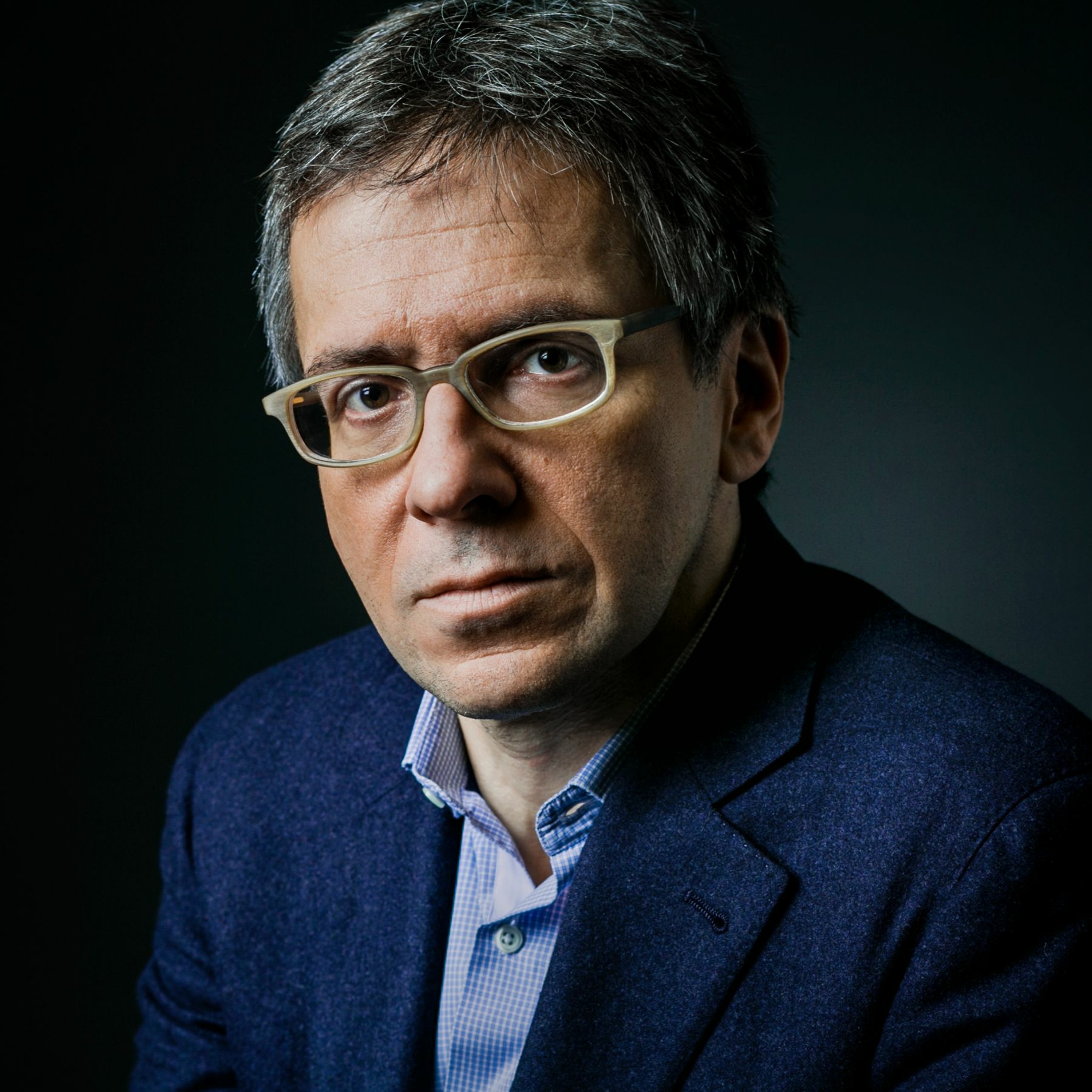
#19 Ian Bremmer: Raptures & Ruptures: Our World Today
54m 50s
The podcast features a discussion with Ian Bremer, who describes the current global state as a "geopolitical recession," where post-World War II institutions are misaligned with today's power structures and crises, necessitating reform to avoid major conflict. He addresses intersecting global challenges, including AI and climate change, emphasizing the need for robust international cooperation. Regarding the Israel-Hamas war, Bremer notes it is not an existential threat to Israel due to its strong geopolitical position, but highlights the horrific violence and Netanyahu's role in the security failures leading to the crisis. He draws parallels to past extremist attacks, like 9/11, warning that overreactions can lead to significant self-inflicted harm. The conversation underscores the urgency of adapting global governance to manage unprecedented risks while navigating immediate geopolitical turmoil.
My view is that if you think that Israel should not exist, or if you think that Gaza should be made into a parking lot, you are the same people. And I have no time for you. Hi there, I'm Ari Stein, and this is the 52 Insights Podcast. If you have trouble understanding the fractured world around us right now, you're not alone. In fact, it's become an exceptionally bewildering time for many of us. We are amidst what my guest today aptly describes as a geopolitical recession. Marked by an abrupt conclusion to the peace dividend which we've all experienced in our lifetime. Our world is now riddled with ruptures, conflicts, and a multitude of unpredictable existential risks. Yet Ian Bremer stands as one of the few remaining bipartisan centrist left who is able to articulate how many of these crises intersect. Throughout his extensive career, he's been admired for his consistently insightful analysis of our contemporary world. As the founder of the Eurasia Group, a political risk consulting firm, and GZERO media, Bremer has channeled his insights into several best-selling books, including his latest work from 2022, The Power of Crisis. He's also a frequent contributor to many mainstream media titles such as CNN and Time magazine. In these times of great upheaval, this conversation feels more essential than ever. During this chat, we delve into a range of intersecting issues. They include the unfolding developments in the Middle East, the rise of anti-Semitism globally as a consequence of this, the damning responsibility that Benjamin Netanyahu shares for this crisis, the growing and pervasive influence of global tech bros, the profound concerns surrounding AI and its unnerving power, why its rise could signal what Bremer says is the end of the West's filial order, and, lastly, and quite unexpectedly, why he sees that in the future, we might not remain in our present form for much longer. As always, if you have any comments on the interview or anything in general, share them with me on social media or through my email on the website. I always want to know what you, the listener, is thinking. And now, my interview with Ian Bremer. Welcome to the 52 Insights podcast. How you doing? It's been challenging a few weeks. Yeah, I can imagine. Are you holding up? Yeah, I'm tired. I'm just really sad with everything that's going on. It's going to be such a shit show for everybody. I just hate to see that. When you know it's going to be a disaster and people can't, people are refused to do anything about it. Yeah. How do you do with consecutive crisis after crisis? I mean, it must take a toll on your stress and your mental health. It's really, I find it really challenging. I mean, I work out every morning. That's true no matter what. But I mean, I've definitely found myself stressed, just generally stressed out the last few weeks. I mean, talk about, spend more time with your friends and just kind of both about the world, but also about stuff that's completely not related to it. But, you know, I mean, I just, just the level of, of just human destruction, right? I mean, just, just senseless human destruction, which is completely unnecessary and what you know is going to get a lot worse. And, and you feel, you know, like you're making a difference. It's good to feel like you're making a difference. I feel like you're, you know, I'm not doing anything to stop the violence, but I'm at least, you know, I'm definitely making people less insane and helping them talk to them. To their families, their kids, that sort of stuff. And so that, that, that feels good. But, but I, you know, you just, yeah, I've never in my life seen an environment that's this horrible from a, from a, in terms of the stuff that I specialize on. So that's too bad. Originally, we were going to discuss AI and its intersection with geopolitics and it's not going to fix. But considering all that's going on, I, I thought we'd broaden this out to include a few questions on the Middle East. I originally met you for the first time in September in London at a technology summit that I program called COGX. You delivered this fantastic presentation on the interplay between geopolitics and AI, highlighting how technology continues to impact the global order. And at the same summit, I put together a conversation between you and a previous guest I've had on my show, Bill Browder, the former hedge fund manager, dissident, bestselling author. So that discussion in itself became COGX's most watch video ever, messing over hundreds of thousands of years. That's great. I'm glad to hear that. Thank you. Yeah. That was a very honest and lively and engaged conversation. I really enjoyed it. Yeah. I think the line that struck me was when Nina asked Bill, you know, what's going through Putin's mind right now and he answered, you know, without hesitation, panic, sheer panic. So considering those dual risks or an artificial intelligence, they both stand as insurmountable challenges, both demand equal attention, unfortunately. I wanted to divide this discussion into two parts. One, the geopolitical challenges that we currently face and the interruption of the peace dividend. And two, the inherent risks associated with AI and who knows, you know, maybe in a decade from now, this chat will have lost relevance, hopefully. Let's start with this. I've had this prevailing sense for a while now that we're firmly situated in an era marked by shock and awe and precarity, considering historical moments of uncertainty, the Cuban missile crisis, the Cold War, both world wars, the Great Depression and so forth. Yet, the current circumstances to me feel distinct. And what I mean by that is it's if the world is trapped in a cascade of existential crisis, including the rise of AI and pandemics as well as grappling with the somewhat ephemeral nature of the climate crisis. Simultaneously, we grapple with enduring human-driven issues such as consecutive geopolitical conflicts, mental health, shifting economies. I want to get a sense from you how we should contextualize this moment. I'm happy to be wrong here, but it appears that there's a real dissonance in the atmosphere. What's your take on this? Well, maybe the easiest way to explain it is that it's cyclical, but the geopolitical cycles are long and so they're frequently not recognized as cycles. We know that there are boom and bus cycles in the world economy and we recognize a recession, we have a technical term for a recession when a developed country has had two consecutive quarters of negative growth. He said, "Oh, you're in a technical recession." We know what the fiscal and monetary policies to respond are. We know big recessions. We know small recessions. We live through a bunch of them. There are geopolitical boom and bus cycles too. We are presently in a large geopolitical recession. Let me explain what a bus cycle is. You create architecture and those are the rules and institutions by which a global order is politically structured. After World War II, which was our last really big bus cycle, that was more than just a recession, that was a depression. We created institutions and the people that created the institutions were the people that won the war. That's how you got the United Nations and the World Trade Organization. That's how you got the IMF and the World Bank, all of these institutions. You look at the Security Council and the countries that have permanent vetoes are the ones that won. What's interesting is that over time, the institutions are very sticky. They resist change because they're set up to be enduring. But the world changes. The balance of power, who your friends are, who your enemies are, as well as the major threats and opportunities that you want to be able to address geopolitically. Over time, those gap between that architecture and the underlying balance of power and what you need the balance of power for grows untenable. In that occurs, you're in a geopolitical recession. When your institutions are no longer fit for purpose for the global order that you presently see. When the Security Council now has a country with a permanent veto that is run by a war criminal, Putin's Russia, you can say, well, the Security Council really doesn't work anymore. Exactly. You're going to have to change it. But nobody wants to change it because it's tough to change it. Unless you have a crisis or really big crisis. That's what's occurring is you're now seeing the crises that come from the misalignment.
of old institutions and architecture with a new balance of power that will lead to eventually the creation of new institutions and the reform of the existing institutions we have. Now the hope is that you can do that without World War III. That's the hope. If we were to put the geopolitical escalations aside for one second, I still want to address the elephant in the room, which is, it still feels like there are crises that can't be put into one box. That feel untenable in a sense because if you put AI and climate crisis in a box, these are existential crises of our time. They can't be described and correct me if I'm wrong or quantified the same way as a boom or bus cycle. They inherently pose risks to humanity or to our species that you can't contain. We don't, we've never faced such insurmountable crisis. How do you view those? Well, the point is not that you can contain them. The question is whether you have the institutions and the leadership to effectively respond to them. Nuclear power, nuclear weapons. I mean, that's a proliferation of nuclear weapons. It was a global threat. That's not containable. 1962, we almost blew up our planet. That's not easily containable. But it turns out that with that exception over the course of the past few generations, we've generally done a reasonable job at keeping nuclear proliferation from occurring. There have been some unfortunate failures like Pakistan and North Korea. Iran here to for has been a success. But generally speaking, that's been something where the existing institutions and balance of power was enough to keep the big dangers from blowing up society. And indeed, the only two nuclear weapons that have ever been used in wartime remain Hiroshima, Nagasaki, ending World War Two. Now, when I talk about climate change or AI, you're right that these are big global challenges. But do we have the pandemic? Because also a big global challenge. Do we have global leadership and architecture to adequately respond to them? In the case of the pandemic, the response is clearly no. In the case of climate, I think the answer is increasingly yes, but it's because we're creating new architecture, given the size of the crisis. And in the case of AI, the answer is we'll see. And the jury is out and we're working on it. And we can talk about the state of play. That is the way I would frame that. And the fact that these are global challenges does mean that there's a lot of urgency. But it turned out the pandemic, there wasn't so much urgency to change global architecture. You'll remember the Chinese didn't cooperate with the West or the WHO on even the fact that a pandemic existed for weeks. And the Americans under Trump pulled out of the WHO. And the reason they could do that was because the crisis was insufficiently large to force people out of their comfortable domestic political pre-existing biases and preferences. I mean, that's the reality. But do I have this correct putting together what you're saying, especially alluding to the boom and bus cycles? If we're talking about a period right now where institutions are no longer fit for purpose and we need a new set of institutions to deal with crises that we've just alluded to, by repealing those institutions inherently we face existential danger, who runs them for what purpose, by whom, how long do they last, where do they sit, who oversees them, and so forth. So that is in itself a massive destabilizing threat that we face. The idea that the institutions have to be changed, sure, but usually the impulse to change an institution is coming from either a power base that is inadequately represented with your existing institution. So say the Chinese have the second largest economy, but they're not close to that level of representation in voting rights with the IMF. So not surprisingly, they're saying, hey, we want reform. Or it's because there is a new challenge out there that is inadequately addressed by the existing architecture institutions. And so you need to respond to that. So I would say you're right. There's always danger in uncertainty, but the impulses here are generally constructive. Yeah. All right, let's turn to a crisis that is unfolding under a very own eyes right now. I want to get your take on one of the world's focal points, which is in the Middle East, obviously a horrendous terror attack occurred on October 7th. How do you perceive the current Israel-Hamas crisis in the context? That is the Middle East incredibly modern turbulent history, especially since Israel's independence 70 plus years ago. Would you say that this is the most significant existential crisis that Israel has faced since gaining independence, potentially eclipsing all previous conflicts and wars it's been involved in? No, not at all, but it's fucking horrific. And so what do I mean by that? An existential crisis is what Israel faced in 1973, when the countries in the region that didn't want them there, didn't want Jews on the land of Israel launched a war against them. That was an existential threat. It could have meant the end of Israel. There is not an existential threat to Israel today. Israel has the ability to defend itself. And in fact, Israel has been in the strongest geopolitical position pre-October 7th, has it's ever been in since independence with I mean breakthrough Abraham Accords relations with the UAE and Bahrain and Morocco and improved informal relations with Saudi Arabia. And you know, the Israelis are technologically incredibly sophisticated, militarily incredibly sophisticated, best ally of the US and the region receiving $3.8 billion of military support every year. So it's not an existential threat. But it is the worst violence that has occurred against Jews in the world since the Holocaust. And it was brought by Hamas that is right there on their border. It's right there. And so the idea of Israel not striking back with incredible violence would mean that they were going to allow a terrorist organization to sit there and continue to exist right on their border. I mean, no country would tolerate that. None in the world, right? So you understand why they're doing what they're doing. Having said all of that, the biggest surprise of October 7th was that Israel's national security failed so badly. Because we all know that Israel has the gold standard of border security and defense and human intelligence and signals intelligence. And 2000 Hamas members managed to get across the border and kill 1400 Israelis and take 250 hostage. That's incredible. How did that happen? And the answer is their prime minister, Na'anyahu, was a failure. He undermined the Palestinian Authority. He strengthened Hamas over the past years because he didn't want a two-state solution. He focused security on the West Bank where he was illegally expanding settlements and forgot about security. He took his eye off the ball on the south. And he led a massive effort to change and weaken the judiciary, which destabilized Israel and had them all focusing on that for the better part of a year. So he is partially responsible. And when you ask Israelis, far more want Na'anyahu removed from power than support a ground war, which is quite shocking and something that doesn't get a lot of attention outside of the Middle East. Now anyway, look, that is as they say, water under the bridge because now 1400 Israelis civilians are dead from these terrorist attacks and many, many more Palestinian civilians and children are dead. And you know, you and I are having this conversation three weeks after the war. Who knows how bad it's going to get over the coming weeks, but I will tell you it will get worse. Yeah. By the time people are listening to this actually coming out, this war will expand beyond Gaza. And that is a deep, deep tragedy.
for the Middle East and for the world. - What I wanted to kind of slightly challenge you on, and I'm only doing it to try and get a better sense of the larger picture here. I agree that they are in the most uniquely robust position they've been in since their founding. But here's where this is something that I've been thinking about a lot, and I'd love to get you to take two parts to this. One, I have this feeling that it's not really about the security or the existential threat internally in Israel. I feel that Hamas deployed specific tactics similar to what Al-Qaeda employed against the US in September 11. And let me explain what I mean by that. In leading the US to a sort of self-canabilization being the goal that we've been witnessing over the last two decades, at least since Al-Qaeda touched down with the horrendous attacks in September 11, the US in response to those incidents increased defense spending almost $6 trillion. We've seen economic repercussions as well, even witnessing now because of that and strategic errors and enormous domestic polarization. Do you agree that these isolated terror cells excel at triggering internal turmoil, causing excessive spending and fostering internal hysteria? Do you feel like this invasion of Gaza, which we're seeing now will result in more economic harm for Israel as well? - You know, it's funny when the terrorists attacked Israel, it reminded me of Progozion, the head of Wagner who went to Moscow and was launching this coup attempt against Putin. And people were asking me why they did it. Why did Progozion do it? And I'm like, well, because the dude is super desperate, all of his options were really, really bad and he did something incredibly stupid. And he's a dead man walking. And when Hamas attacked Israel, I felt the same way. It was very obvious to me that every one of those Hamas military leaders was gonna get killed. Maybe not the next day, but I mean, certainly in short order, there was no way any Israeli was gonna allow that to happen. - I was signing there in Desens and so on. - Yeah, and I mean, how do I put myself in the mind space of someone making a decision that they know is gonna get them killed? Like, it's really hard to do that, right? But I certainly agree with you that the intention, at least in part of these ideological extremists is to cause far more damage. Now, I mean, with Bin Laden and Al Qaeda, there was a level of nihilism, just burn it all down. And then there was also the, there's this great, sort of religious crusade that we're on that's going to lead to the rapture as they perceived it. Certainly the United States ended up doing enormous damage to itself, far more to others. But enormous damage to itself on the back of 9/11. And I think that's a useful analogy to draw because the costs on defense and national security and homeland security far beyond what was necessary. The stripping of individual rights, particularly not just individual liberties across the board, but also the targeting of Muslim Americans in ways that clearly were undemocratic. And then of course the failed wars in Iraq and Afghanistan. And I say this is someone who was very supportive of taking out Al Qaeda, I know some have been laden in all of his henchmen, but not such a fan of declaring war on the broader people of Iraq, Saddam Hussein, and of the Taliban and the people of Afghanistan and Taliban, of course, are now back 20 years later. So the likelihood that the same mistakes are repeated by Israel, a much smaller country where the mistakes are not going to be 10,000 miles away, but a few kilometers away. Yeah, that is absolutely a lot more dangerous. And ultimately could be existential. And it's one of the reasons that I have been very public in opposing the ground war. I think that Israel has every right to full self defense and territorial integrity. And I think that was true not just after October 7th. I thought it was true before October 7th, which is why for me the priority is not yeah, who getting out because he failed the people of Israel on what they utterly was necessary. And he'd take a show on that point directly with you because he just seems infallible. Of course. And he's very Trump like in that regard, right? But the Israeli people overwhelmingly agree with me on that. And you know, if you want to know what Israel's going to do, you want to ask the actual Israelis first and foremost. And I don't think this guy is going to last much longer. So that is ultimately a positive, a very small silver lining that comes out of this. But in the interim, I have a very hard time seeing this war not expanding to far greater radicalization of Palestinian kids across the region in Gaza, in the West Bank, in Lebanon, the refugees there, the refugees in Jordan, in Syria, as well as anti-Semitism around the world. We've already seen in the North and Caucasus in Russia in Mahatch Kalah. There was a pogrom by local-- I saw that today. Yeah. Incredible that a plane lands from Tel Aviv and everyone in the locality decides they're going to go out, smash up the airport to kill the Jews. I mean, we thought we were never going to see this again. And it's happening in front of our eyes. So absolutely, this is a trap that the Israelis do not want to fall into. So this was the other angle I wanted to address the existential risk on. And then we can move on to the fun stuff, which is artificial intelligence. Yeah. It is difficult to define the level of panic and paranoia that I feel the Jewish community are feeling globally right now. And I don't think they've ever felt this, the all-important conflation issue. Considering the steep rise in anti-Semitism closer, and we see it ebb and flow as we do with every other race and culture with African-Americans, with the Muslim culture, and so forth. But something about right now bothers me and I'd love to get your take on it. This idea that the Jewish global community is unequivocally and extricably tied to Israel's politics. That we're all Zionists, we're all occupiers, we're all oppressors. And any negative media coverage about Israel elicits the same kind of impact on the Jewish identity. How can we think about this challenge rationally? - I mean, I've been doing my best. And I mean, I've been on the one hand very heartened that people around the world have reached out to me that I don't know in a way that I've never seen before appreciating me trying to just bring humanity into this conversation. Because, you know, what I'm going to do is that if you think that Israel should not exist or if you think that Gaza should be made into a parking lot, you are the same people. And I have no time for you at all, right? I mean, that these are human beings, fundamentally human beings. And they want the same things. And the algorithms and the social media are driving so much hate and so much irresponsibility and so much disinformation. And you need to have someone out there that can say, yes, Hamas is a terrorist organization. They are responsible for this. Their leaders should be destroyed. Yes, Palestinians, civilians are not Hamas. They need to be protected. You need to say yes. Israeli Jews have a right to live without fear on their person or attacks because their government has done unspeakable things. And all of those things are true. Sure. And you can have those conversations. But I was enormously pleased that in the first week of the war, I had what's his name, Ben Shapiro and Alexandra Ocasio-Cortez, both come out separately and say really nice things about my coverage publicly, which they don't, I doubt there's anyone else that has overlapped in their Ben diagrams. So that was nice. But I also got like 30 death threats in the first week. So, you know, I'm not sure how that all balances out. I mean, I do feel an obligation in an environment where there is so much hate and suffering and to be out there and loud. I feel the necessity to be authentic, to tell people what I actually think, irrespective of if I know that's going to lead some people
go and say an attack me. I don't really care. I have enough money. I've done what I've done for my entire professional life. You can't build that. And then when something really matters, say, oh no, I can't say that. I mean, that's why I really loved Dave Chappelle when the George Floyd riots hit. And he came out and I don't know if you saw this or not. He did something which I think everyone that cares about race relations and humanity should watch. There's like 10 minutes that he did on George Floyd. And he was the only person that could do that. Anybody else, you know, was going to just get savaged and destroyed. But I think he had built up credibility that he was going to speak his peace, his mind, even if it was controversial because it was that's the only way he knows how to be. And I'll tell you as someone who's done geopolitics for my entire life, this to me, what we're seeing right now to me, I think feels like George Floyd felt like for Dave. The George Floyd peace meaning that the police were on his neck and shouting out and right, right, right. Dave did he he was out there at a time that the black versus white in the United States had been more polarized and more hateful than at any time in my life. I mean, I was born in 69. There certainly was a lot of it in the 60s and a hell of a lot of it before then. So it's been a lot worse in US history. But the worst in my life and he came out and he he said his peace in a way that I think touched almost every decent American. And I don't care. I don't care if you're rich or poor. I don't care if you're white or black. I think any decent American that sat down and took a breath would would listen to that and would be would be impacted by it. And that I feel like I have to do that about the state of the world today. Yeah. Let's discuss that. I think it's a fantastic segue to explore the underlying cause behind our ongoing polarization. I worked in the tech industry for about two decades observing it from afar and it's been incredibly transformative to our lives. I think as part of this, we've witnessed the rise of a generation of remarkable CEOs in their 30s and 40s. All who possess immense privilege, education, vast networks and intelligence. We could probably agree that they all have good intentions or at least we can surmise that. But at the same time they've created these monstrosities, which we call networks that have eliminated any decency in our public square at all. And what I see is an enormous incompatibility going on here. So how do you put these CEOs into context in this day and age? Well, I consider the CEOs to exert a level of sovereignty as geopolitical actors. So all of the institutions we talked about that exist in governing our global order are institutions run by states. And yet when you talk about the digital world and particularly the question you just raised the digital public square actually governments are really not regulating it at all. It's been, you know, it's in fact these these worlds are being created by the rules are being set by these technology companies and the small number of individuals, largely white men that run them. And I think that that is unsustainable. And it's not because I don't like these people. I just think that self governance will not work, especially with the incompatibility of some of the business model with civil society. So I'll give you an example, Ari. If you and I are sitting and having a conversation on the phone about blowing up a building or assassinating a leader, be irresponsible for that conversation. And the phone company is not responsible. But if the phone company took that conversation, recorded it and then promoted it to everyone else that they know among their customers that has ever been sort of curious about or interested in maybe blowing up a building building or assassinating someone, then the phone company is responsible for having done that. And the technology companies arguing the social media companies, the platforms are arguing that they do not have any such accountability, not just for what appears on their platform, but what they algorithmically promote, what they allow to be verified, what their founder will publicly engage with it. They have no responsibility for any of those things that is not true. They do. And they have to pay for that because otherwise we pay for it. And you know, we're really good. We talk about the fact that we're capitalist in the West and we're great capitalist when we talk about profits. We talk about losses. We become amazing socialists. We really want to socialize losses. And in this case, the loss is to society and the companies have absolutely no interest in paying for it. Yeah. And to some extent, I feel like there's a sense of nihilism amongst maybe nihilism is too strong a word, burn it all down. I mean, the level of culpability that they don't seem to own is just astonishing. The nihilitate, I read it a huge feature on Sam Alvin recently. I don't know if you had the chance to read it and why it just came out. I haven't seen it. I will though. And it's enormously impressive how naive Sam comes across as if he wants to will AGI into existence, artificial general intelligence. But at the same time, will not be responsible or share responsibility for bearing the costs. I don't know if you actually know this, but in the same article, there is a provision within open AIs agreement documents with its funding partners, Microsoft and the like in the improbable scenario that AGI emerges. And they're all in agreement that they that it is and it is imminent at open AI. It renders all financial details obsolete. Well, look, the broader existential point, which I don't want to spend too much time on because a lot of people talk about that that are in AI so that they don't have to talk about the regulations they don't want in the near term. Right. But the broader existential point is that if we are in a techno polar world where AI is being driven by created by wielded by technology companies and they are functionally self-regulating that as you get to AGI, you will no longer have a Westphalian world. And a Westphalian world is one where the government set the rules and one of the things governments do is they set fiat currency. So I mean, that's the end of fiat currency. There's no question then all of your money and value would be through the platforms. That's absolutely something one can conceive of. This is very different from crypto because the governments will regulate crypto and stop crypto from being a fiat current from challenging the fiat currency. So I never felt that way. But if you link it to AGI and the tech companies run AGI, different story, but I'm much more interested in talking about the fact that the business models of these AGI companies, they're not aligned with destroying democracy. They're just the state of democracy is incidental to them. And if it turns out, that sounds like they want to destroy democracy. No, no, no, no, no, I don't believe that. I don't believe that the social media platforms and the I folks want to destroy democracy. I think that they are either indifferent to the political system they operate in or to the extent that they really care. They're not prepared to devote serious resource to it compared to their day job. And that's why I spend a lot of time talking about it because you might not know, you might not think this from our conversation, but I'm actually quite an enthusiast of AI. I consider myself a booster. Like I really believe in it. I think it's an incredible technology. I think it's going to drive a new globalization, which will enrich the planet. It will drive incredible innovations and inventions that will make humans better educated and healthier and live longer. And it will also allow poorer people, as long as they have access to electricity in the digital world. And we're not there yet. In Africa will allow them to do much better. So I'm all about that. But the thing is I also know that all of that stuff is going to happen with the people that are running AI companies. Like they're going to drive that. They are highly invested in building that tech. We're the stuff that I'm worried about. Like will we still live in a democracy? Will governments still have power? Will people still have representative authority from their government? Those are things that if we don't actually spend time talking about and pushing for, the companies don't care about. Yeah. I think all that stuff is fun to think about. And I'm genuinely interested in a network state, something that Balaji Sira Vassanen talks about. And a lot of insiders have been talking about something like this for a while. Tell you where I disagree with you in the sense that I put a chat together with Miramarati, the CTO of OpenAI, a few years. And this was a solid year before ChatGPT came and totally shocked and ordered us.
Yeah. That title was such a misnomer for me in a sense, aligning AI with human intent. I mean, look at the world. Look at human intent. Yeah. Oh, well, first of all, let's be clear. I wasn't talking about being a booster for AGI. I was talking about being a booster for the next 10, 20 years of AI, and I have no idea what AGI looks like. That's why I said I'd rather talk about the near term stuff and the longer term stuff because I'm not sure that we're getting from here to here. Right? I mean, there's a lot that needs to transpire before we get to AGI. But I'm deeply worried about something nearer term, which is well before AGI is a potentiality. I see human beings becoming more like computers, and I see companies wanting to facilitate that process. So I think it's incredibly unhealthy for human beings to be primarily intermediated by algorithms, either on their smartphone or through the metaverse or what have you. But companies, of course, absolutely want that because that will allow for the collection of greater levels of data, the driving of efficiency and profitability off of that. Now, human beings interact very well with human beings in a nature and nurture environment. We have no idea what's going to happen when human beings become more like computers. When most of their interactions are actually done on platforms through algorithms that give them the same and only the same opportunities for input that the computer has. I mean, you can't do all of this other stuff in the world that makes us human on the platform. You only do the stuff the computer can also do. And that, to me, is a much more immediate problem than the idea of computers becoming omnipotent human beings. I'm not worried about that. Let's talk about, because we reached the first question out of this, out of the gates, was on this idea that the tech CEOs, let's call them tech bro. It's always for what it's worth. The tech bro of all tech bro's, the golden bronze, the Greek god of them all, Elon Musk, you've asserted that at some point, I can't remember where you said this, but you did say you asserted incredibly interesting point that Elon must be part of NATO. You also go on to say in an interview with Foreign Affairs that we need to bring private actors as signatories with obligations into regulatory environments. I agree with that part. Not so much the first, but I think what I'd love to get a sense from you is considering, as you can tell, I'm not such a fan of Elon Musk, considering how petuliny is with the amount of power that he has, how misguided he seems, especially with his dismantling of X or Twitter, whatever you want to call it. Don't you think that someone like Elon coming from the private sector would wreak havoc as an actor with even more power on the global stage? So, I don't like Erdogan or Orban, frankly, and I'm not sure the Turkey and Hungary are great members of NATO, but I think that their countries should be members of NATO because it creates a level of both responsibility, obligation, and also defense. And so what I was saying had less to do with the person of Elon, and more to do with the reality of Starlink. By the way, I don't think Elon and his Twitter X manifestation or Tesla should have anything to do with NATO. But I think that Starlink is a capacity that makes that company a belligerent in the war. And the decision of whether or not Starlink is going to be deployed to Ukraine or to Gaza or to Taiwan. Sure. Should not be made individually, capriciously, by someone that has nothing to do with the security order. Now, there are a couple of ways that you can address this, Ari. And I'm not suggesting that the only way to address it is that Starlink should have some kind of functional role in NATO. And do I mean they need to be an equivalent member? No, but what I mean by that is that Starlink should sign up to these are the countries that you will sell to. These are the countries you will not. And we will have collective authority over under what circumstances you will provide the geo-fensing that will give the communications capacity and the fighting capacity of these people. And by the way, as a consequence of your willingness to do that, if you are attacked by an adversary, we collectively will defend you. Now one way to accomplish that is through that mechanism that I just said, which would apply to Starlink irrespective of who ran it. Like I have a problem with the idea that purely the CEO is going to determine whether or not a company and its national security functionality is or is not going to be relevant to the U.S. We've never had that conversation about a CEO before. It's an interesting conversation. I mean imagine that with Lockheed in the day, you know, it's like no, they're with the Soviets now because they've got a new CEO. Sorry. I'm not going to happen. But then you could also say actually this technology is so important that we're going to nationalize it. Or this technology is so important that the United States government is going to get a golden share on a board seat now. For a lot of American capitalists, they're going to say, wait a second. That sounds like something that Cheycoms would do. And I'm like, yeah, I get you. But if in new technologies, the private sector is actually sovereign in terms of national security and they're not necessarily acting as patriotic Americans. I don't know what to tell you. Like because it's either that or you let them continue to do that and the government just will be ineffectual. Yeah. And that's your third option. You could say, I want a techno polar world. And I just don't care if governments fall apart. My problem with that is an outcome as opposed to a hybrid outcome. I don't like the government's taking over everything. So I don't like the nationalization outcome. It's inefficient. It can breed authoritarianism, all this kind of stuff. It can be corrupt. But I also really don't like the techno polar outcome because a full techno polar outcome means that social contracts don't matter anymore because these governments, these companies are not necessarily going to show anywhere near the level of responsibility and accountability to citizens. And if you take that away from governments and let's face it, most governments in the world, whether they're democratic or even authoritarian, do feel like they have some level of accountability to their citizens. And I feel like you can potentially lose something very vital about rights of individuals on the planet if we go quickly to a techno polar environment. I wanted to ask you, this is an elaboration of the tech bro because I really have an issue with this flagrant behavior, sometimes that they demonstrate. I know that you've collaborated extensively with Mustafa. Yeah. Written articles probably worked on his book within the coming wave, which he just put out, like Sam doing these kind of almost Hollywood junket tours around the panic and the regulatory kind of environments and how civil society can help and what we need to know about this coming wave. I do maintain a deep level of skepticism because for me, they seem like agents of chaos, just the second version. We had Mark Zuckerberg, we had Jack Dorsey and now we have the next wave, Sam Altman, Mustafa Suleiman, Dario Modi of Anthropic and Elon Musk is still there blowing things up. Some might see that why are you out there talking about the risks? And at the same time, you have another hand, you're left hand taking billions of dollars from venture capitalists and he was doing that at the same time releasing his book in flexion AI. Completely good. There is an enormous conflict of interest. Should they even have anything to say about the risks and the rewards and the regulations? No, I think it's a fair question and I think he's honest enough to admit to you that it's a fair question. He's been a friend of mine for 15 years. I mean, since like he started a deep mind and he's always been telling me that I'm not paying enough attention to AI that this is going to be a much more transformative technology than I think and I'm not a technologist, I'm a political scientist. So first of all, the fact that we know each other well that the relationship is trusted and that he really has a deep understanding in a set of technologies that I as a political scientist could not write about by myself. I need that expertise. So at some point you have to, if you want to be useful, you have to engage with someone that is in the field. Well, so what I would say is for me, I've never had to make this decision. So it's kind of like a, it's easy for me to fake an answer personally because I actually created a, I didn't want to work for a big multinational corporation. I didn't want to. I was like, I'm going to create a political science company and scale it and where the incentives are just to get it right. So it's a private sector company, but literally we just have to get it right. You know what? If we occasionally piss off a corporation by saying something that like, they'll leave us as a client we don't care. Easy for me to say. Stakes are much lower. I'm not a billionaire, right?
much harder for someone like Moose. And if I were hidden his position and on the one hand had a lot of really interesting ideas around what this was going to mean from a policy perspective and on the other hand had an opportunity to become a billionaire personally and be part of like this new thing, wouldn't I want to have my cake and eat it too? Oh yeah, absolutely. And is that analytically impure? You bet it's analytically impure. But what I can tell you aside from the fact that I like him personally, and for me, like and trust for someone personally actually really does count for something, but because there are plenty of people in this field that I would absolutely not say that of. And you know, I, is that when we are writing together and I absolutely read his manuscript, but I didn't help write his book, he wrote his book. But when we did the pieces that we've done together most notably the foreign affairs cover on the AI power paradox, Moose was driving the inputs, the understandings on technology. I was driving the inputs, the understanding on policy. And while we had a lot of constructive fights, at no point was there even the whiff of I want to say this because I know that this is a better position for me to have, you know, for the company I'm trying to build only thing that happened. And this did happen. And it's kind of funny because I see that I saw this in myself 25 years ago when I was starting your Asia group is in the piece. He had a couple of bits that he the draft piece. And I hope he's not going to get upset. I'm going to say this is he was like talking a little bit about the how extraordinary his model was, you know, like for inflection for his company. I like dude, we are not marketing how great your company is in a foreign affairs piece on AI like that's just not going to happen. And I don't even think the draft got to foreign affairs and he was a little sheepish. He's like, yeah, I should do that. So like, you know, I'm not trying to pretend that this guy is the reincarnation of the Pope, you know, I would never say that. He's a human being and he, you know, he bleeds and puts his pants on just the way the rest of us do. But, but analytically having spent the better part of the summer working on a very serious intellectual piece with him, I would say that collaboration was one that I am analytically 100% product. What do you anticipate will occur in the public scurres these technologies advance significantly? We've already witnessed the paralysis as we alluded to before through social media, the rise of these exponentially powerful tools, generative generative. Let's think of the seventh iteration of chat GBT. Let's think of Dali in 2026. What is real? What is not? Could have amplified political discord indefinitely? Where is that in state there? How do you see that playing out? I think that we're not going to be here in our present form for that much longer. I'm not a singularitarian, but the level of not just disinformation and misinformation, but also the level of augmented intelligence as people start working with and integrating these systems into who they are and how they think is going to both unlock such tremendous new wealth and invention and also such tremendous disruption. I used to think I'm 53. I used to think five years ago I thought I would probably die of natural causes. Wow. I don't think that it. Why did you think that? I don't think that anymore. No, not soon. I mean, eventually like 1990, 95, 100, I just thought that I would. I thought that the end of my life would end naturally. I think that if I get another 40 years on this planet, give or take, I think that most likely either we're going to have our lives expanded dramatically beyond our present conception or we're going to blow ourselves up. I think that the tail risks are becoming the base case because of what AI is doing. Ian Bremer, thank you for chatting with me on 52 Insights. I really appreciate the time that you've given the insight and analysis you provided us. Good talking to me. Hey there, this is Ari Stein and you've been listening to the 52 Insights podcast. Thank you to Portico Cortet for their track endless and to barevalue.com for their production work. Make sure you to sign up to my newsletter on my website and subscribe to my podcast on Apple and Spotify to get notifications of when my next podcast will drop. You
Podcast Summary
Key Points:
The world is experiencing a "geopolitical recession" where outdated global institutions no longer align with current power dynamics and emerging challenges.
Crises like AI, climate change, and pandemics are global existential threats that require new, effective international architecture and leadership to manage.
The Israel-Hamas conflict, while not an existential threat to Israel, represents severe violence and a security failure, with Prime Minister Netanyahu bearing significant responsibility for the crisis.
Extremist attacks, such as those by Hamas or Al-Qaeda, often aim to provoke disproportionate responses that cause long-term internal damage to the targeted nations.
Summary:
The podcast features a discussion with Ian Bremer, who describes the current global state as a "geopolitical recession," where post-World War II institutions are misaligned with today's power structures and crises, necessitating reform to avoid major conflict. He addresses intersecting global challenges, including AI and climate change, emphasizing the need for robust international cooperation. Regarding the Israel-Hamas war, Bremer notes it is not an existential threat to Israel due to its strong geopolitical position, but highlights the horrific violence and Netanyahu's role in the security failures leading to the crisis.
He draws parallels to past extremist attacks, like 9/11, warning that overreactions can lead to significant self-inflicted harm. The conversation underscores the urgency of adapting global governance to manage unprecedented risks while navigating immediate geopolitical turmoil.
FAQs
A geopolitical recession occurs when global institutions and architecture no longer align with the current balance of power and emerging challenges, creating crises until new or reformed institutions are established.
He states it is not an existential threat to Israel, as Israel is militarily strong and geopositionally secure, but it represents the worst violence against Jews since the Holocaust and a severe security failure.
Bremer holds Netanyahu partially responsible for undermining security by weakening the Palestinian Authority, strengthening Hamas, focusing on West Bank settlements, and diverting attention with judicial reforms, leading to the intelligence failure.
He draws parallels, noting that such extremist attacks aim to provoke overreactions that cause self-inflicted damage, similar to how 9/11 led the U.S. into costly wars and domestic polarization.
Key challenges include AI, climate change, and pandemics. Bremer notes that effective response depends on having adequate global leadership and institutions, which are currently lacking or evolving.
Institutions like the UN Security Council are outdated, with members like Russia no longer fitting their original purpose, creating a gap between architecture and real-world power dynamics that fuels crises.
Chat with AI
Loading...
Pro features
Go deeper with this episode
Unlock creator-grade tools that turn any transcript into show notes and subtitle files.
 PodcastTranscript AI