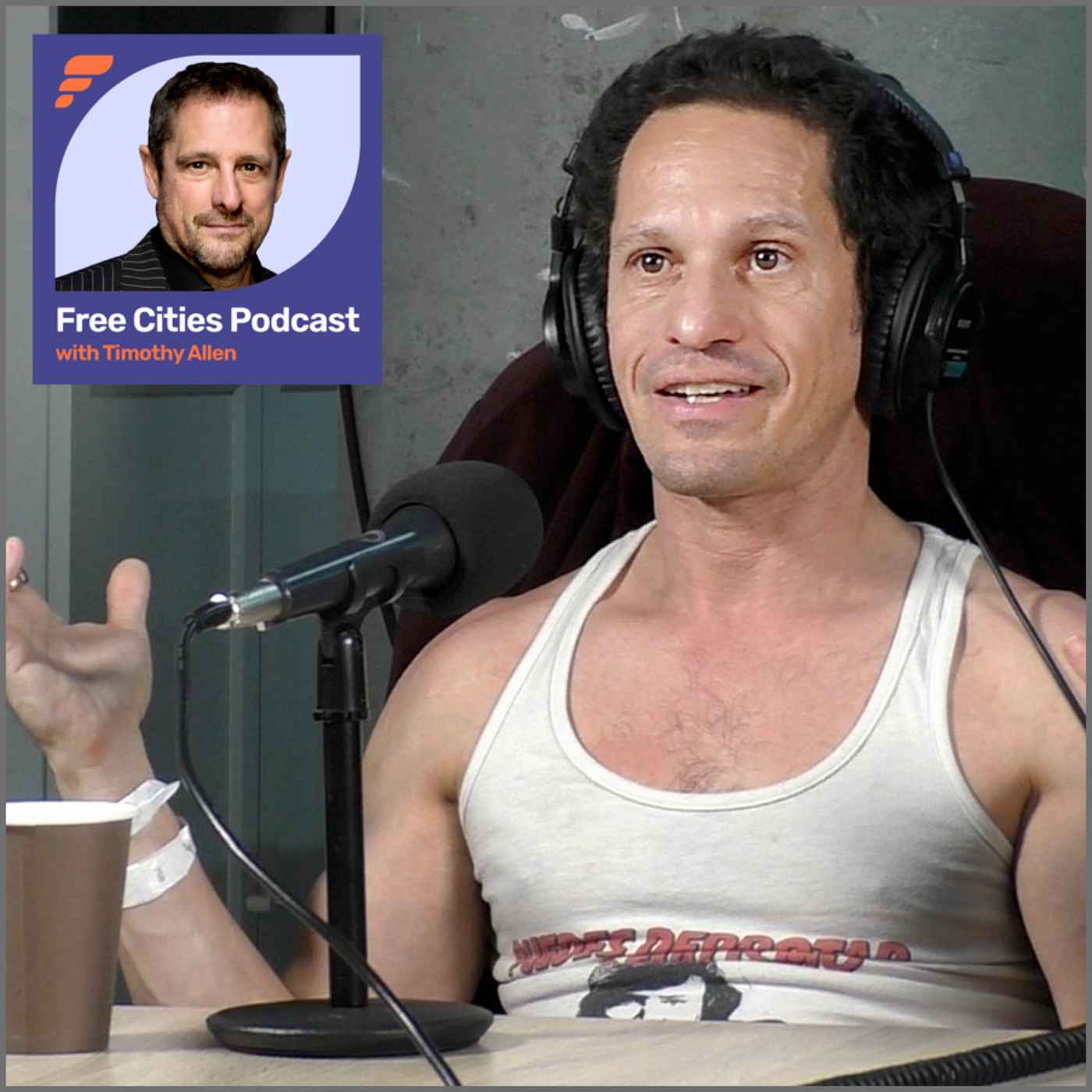
178 - 8 Hard Truths from 25 Years of Investing in Free Cities | Patri Friedman
80m 26s
In this episode of the Free Cities Podcast, host Timothy Allen interviews Patrick Friedman, exploring practical lessons from 25 years of involvement in alternative governance projects like seasteading and charter cities. While seasteading offers unique legal flexibility (e.g., for medical treatments on ships), it is deemed economically and logistically challenging compared to land-based models such as charter cities, which are more tractable for implementing new rule sets. Friedman emphasizes that successful initiatives depend on experienced founders—often in their 40s—who can navigate complex government partnerships, rather than youthful idealism alone. Key takeaways include the need for strong economic engines over ideology, the distinction between communities and functional jurisdictions, and the reality that many projects fail without pragmatic grounding. The discussion also touches on future governance possibilities in space, where dynamic geography could enable competitive pressure through movable infrastructure. Overall, the episode stresses a shift from visionary "larping" to actionable strategies that withstand real-world challenges.
[Music] Welcome to the Free Cities Podcast. My name is Timothy Allen and this is the official podcast of the Free Cities Foundation. [Music] Hello and welcome to this episode number 178 of the Free Cities Podcast. Yes, that's right folks. We are one-stop shop for everything. Free Cities, Charter Cities, S.E.Zs, Network States, Start-up societies, Pioneer communities, intentional communities, pop-up cities, governance, innovation, C-steads, home-steads, free-steads. I like that one. I only heard that one this week. Free-steads. There's so many ways to describe all these stuff these days. Anyway, you know me, I'm a simple man. It's all free cities to me. Anyway, welcome again from Prospera. Yes, I'm still here reporting from the front line. I've done three out of my four weeks of living here. Not looking forward to going to be honest. It's great, but I've got to go off to the US next week to Austin to record some shows there and also to visit the Running Remote Conference. Apparently the biggest remote work gathering in the world. I'm told looking forward to that one. This episode is brought to you by Veritas villages. There are lead sponsor, of course, and yes, they're building off-grid freedom-oriented communities across Latin America, designed for people who value sovereignty, resilience, and a higher degree of personal autonomy. And as you may have heard, they've recently secured approval for a new 340-acre development. In the highly-covered area of a tennis in Costa Rica, that's a quiet valley known for its very mild year-round climate rolling hills. And what we would call a slower, more livable pace of life than nearby San Jose. This project is happening alongside their other projects in Nicaragua. And Panama Veritas villages have a very strong alignment with the Bitcoin ethos. You can purchase your property with Bitcoin. You can spend Bitcoin within the communities themselves. And they'll help you set up mining rigs at your home. To make the most of your excess energy production, they also have a, what I would call, pretty sensible and real-world Bitcoin treasury strategy. All in all, there are trailblazing Bitcoin Citadel Company. If you're asking me, anyway, if you're curious to learn more or explore becoming a resident, you can find out more at www.veritasvillages.com/freecities. Please mention us and jump in the show notes if you just want to click on that link and go to it. Alright, so today's episode, well, I suppose it's a bit of a reality check for you all. If you've been following the space for a while, which I'm sure you have, you'll know there's no shortage of big ideas here, bold visions. And let's be honest, a fair bit of what people might call "larping". If you don't know what that is, look it up. So I think every now and then it's probably worth stepping back and asking ourselves what actually works in this space. My guest today is Patrick Friedman. He's been in this world for around 25 years. One of the true OGs he was here in the early days of sea-steading through to investing in real-world cities via Pornomoss Capital. And what's interesting about Patrick is he's not really selling the dream here anymore. He's pretty much stress testing it. In this conversation we break down what he sees as the eight hard lessons that he's learned during that quarter of a century of investing in free city projects. Why so many projects fail, where people go wrong and what it really takes to build something. That survives contact with reality. We get into sea-steading versus land-based free cities, the difference between communities and actual jurisdictions, why economic engines matter, much more than ideology, and why perhaps controversially I suppose experience tends to beat youthful ambition in this space. I hope that doesn't offend some of you. There's also a bigger thread running through all of this, which is where governance itself might be heading, especially as technology iai and global competition starts to reshape the landscape. So this one's less about what sounds good and more about what actually holds up best in the real world. Thanks for coming on the show, Patrick. See you next time, right, value for value supporters. Here's the rich list this week, according to myfoundtin.fm-board. In first place, well done, Christopher Orbenes, second place, Mattias, third Justin Bianchi, fourth La Paa and fifth Shadrach. Thank you, the OGs of this show, donating Bitcoin, streaming Bitcoin, many thanks to you all, and anyone that wants to get involved, jump on over to foundtin.fm, where you can support the show with a subscription or streaming sets. Also, if you wouldn't mind, please drop us a review on your podcasting app. I was forget to tell people. Right, everything you can possibly need about everything. Well, it's in the show notes and don't forget. Last thing, freecities.fm is the place to go if you want to dive into the whole archive of this pod. There's nearly 200 episodes over there, which I've recorded pretty much over the last four years. I haven't missed a week, believe it or not. I've been releasing something every Friday. For nearly four years, we've been here every step of the way documenting this movement, the original, and the best, even though I say so myself, tell your friends as more and more people get interested. I'm noticing that happened and Google Trends is showing that too. Send them my way and I'll get them up to scratch on what's been going on up until this point. Right, time for your eight lessons from Patry. You better grab a notebook and pen for this one. And when you do, of course, you know what to do, just sit back, relax and enjoy my conversation with Patry Friedman. I've got to ask you, okay? Because you're a bit of a C-steady OG. What's your opinion on it currently? What do you think about C-steady now? I think that there are kind of like certain niche use cases that it probably works for. You know, one that I've heard recently, for example, is doing psychedelic therapy on ships flagged by countries that were those psychedelics are legal. So, you know, it's a little bit like the Dutch abortion boat, women on waves, which brought a Dutch flagged vessel to countries where abortions were illegal. And then, you know, people could get on the boat and go to international waters and have an abortion. So that's a real thing. Yeah, this was in the 80s, 90s maybe. I covered it in my C-sitting book that I wrote in the early 2000s. And so as an example of the way that the law of the C works, where a ship is a bit like a floating embassy of a country, you register with a country, you fly the flag, and you're under their laws in your out past 12 nautical miles. And so it's a way of bringing different legal systems to different geographic places. And that's incredible and powerful. And I think that that's something that's very unique about the legal environment of the ocean. And there's various things that you could do with that, you know, whether it's psychedelic treatments or more general like cutting-edge medical treatments like you do here in Prospera, you know, where you and I are talking today. You know, you could do them on a ship. But more generally, the ocean is just very difficult, very expensive. You know, I started working on the C-sitting idea. It's spent like 25 years. We haven't had a lot of progress. And, you know, meanwhile, we have this whole charter cities and zones thing, which just seems much more tractable. It's less romantic. It's not as good as a meme. It's not as fun. But it works a lot better in the real world as a way to improve governance to develop different rule sets. And so for me, like I love the fun and the romance of C-sitting. And I think it's, you know, that kind of like meme quality is great. But as a practical way to get to use different rule sets to get to design different rule sets, you know, which is what I'm all about. I think it's just, you know, much worse. What about long term? Do you believe in it long term? I'm not sure, but I do believe in space-setting long term. And, you know, one of the reasons that I like the ocean is that it's a different physical medium. Like it has literally
different properties and that's why a cruise ship is as big as a skyscraper. A cruise ship is like a skyscraper lying on its side and it moves all around. Goes to different countries, you know, does trans-oceanic voyages and this medium of buildings can move, which is true on the ocean and mostly not true on land, although it's always a funny video when it is. It's even more true in space. You can move buildings even more easily in space. You know, obviously not, I don't mean like lifting out of gravity well, but once you're out of gravity well and in space, you can move buildings around. And this is important because it means that you can, instead of just voting with your feet or voting with your wallet by leading a badly run jurisdiction to go someplace better, you can vote with your building. You can vote with your house, you can vote with your factory, you know, with your office headquarters. And so when the physical infrastructure is able to move around, I call this dynamic geography and rearrange itself, this puts incredible competitive pressure on the jurisdictions to do a good job. And I just think on Earth, you know, there's so much land and there's so much more we can do with that land. You know, I'm not sure that we'll need the ocean for space. Obviously, it's incredible for all kinds of ocean specific things, but as far as places to build society, I don't think we need the ocean. We got lots more we can do on land. But from a conceptual and a future standpoint, I do think that this kind of dynamic geography thing is going to become real as we settle space. Well, the conclusion I drew, coming from say like the sort of prosper model, the private governance model, sees deading at least or the idea behind it, say cruise shipping even, is the better way of doing the land-based version because you can't move. So as a meme, I think it is great. It is much more real for me because you can literally move the building. It doesn't go unnoticed that a lot of space projects use the ocean to train, you know, like I'm surprised you don't think that there's a future in it before space. Do you honestly, do you think that people will make it to space before they make it out into the ocean to sort of create communities? I mean, it seems like it's a function of technology really and that's the only limiting fact here, but I get the feeling we get sea stuff before we got space stuff possibly. I mean, I think it's about economics, right? It's both the ocean and even more so space are very difficult operating environments, very expensive. And so it doesn't make sense to go there unless you're getting something that makes it worthwhile. And we see potential in space with, say, asteroid mining as an example. There are resources out there that might make it worth it to go and get them. On the ocean, the resources that are worth it to go out and get is mostly oil. And we're doing that. And there is some amount of permanent population for that where the amount of value extracted in the expensive, difficult operating environment is made up for by the value of the resource, and that's why we're doing it. But unless somebody finds or creates some new resource that requires people to live out there that is valuable enough that it pays for the costs of going out and being in that operating environment, I'm just not sure how it would make any economic sense. Have you heard about these rare earth nodules at the boat with a sea? Yes. Because that's pretty much, I believe it's true. It's hard to say, but people seem to believe it. Sure, but why do you need to sit on the ocean to extract those modules like we get the oil without the mostly cities on the ocean? True. I think that arises from the fact that, I mean, obviously, coming from a sea-steeding perspective, one of the ways to create a city, even on land, is the same as to have a business model there and start with a business. So hopefully, I mean, sea-steeders would hope that that would evolve into a city. I agree. We don't see oil rig cities. I mean, we see quite big oil rigs and hundreds of people living on them. But, yeah, so I mean, hope is great. And there's a lot of hope in this space, and that's great. And, you know, the people who don't have the hope should get the hope. But once you have hope, you also have to consider practicality, right? We only have so much time. We only have so much resources. And I think that, you know, kind of, yeah, hoping that an industry evolves in the direction you want is just, is not a very good bet. Yeah. And your theory would be then that in space, if you're mining an asteroid, you need a proper colony out there. Whereas on the sea, you don't need a colony. So chances are, they'll be, that will happen at sea, but it won't be in the city format. Right. I mean, you can think about like, what are the costs of transport versus the costs of staying out there, right? So with an oil rig, they can resupply it. You know, an oil rig makes so much money that you could resupply by helicopter if you had to, although you prefer not to. So you can resupply it. You can bring people there. And you don't need, you don't need self-sufficiency because you can bring the stuff there and import it to this environment where it would be hard to be self-sufficient because it's so difficult and expensive. But in space, you know, the transport costs for material are so high that, you know, I don't, I don't think that, you know, not that like a space colony is going to be like fully self-sufficient, right? There's going to be some amount of stuff like high value, low weight things that are worth lifting into orbit to import there. But the costs of getting there are so much higher than the costs of getting someplace on the ocean that, you know, the math says that a lot more needs to happen locally. You need to be a lot more self-sufficient. Do you think that the sort of space memes are realistic at the moment? I mean, Elon seems to talk about it quite a lot. And I get mixed answers to that question. Some people say, well, yeah, it's been like AI. In five years, everyone's lost their job. And then people say, in 18 months or in five years, it won't make any difference. What do you think about the space? It's prospect. I, it, I don't think that it does not look to me like we are close to being able to settle space and close as in like, it's within years. But launch costs are steadily decreasing, you know, our, our launch velocity is increasing. And you know, it's not, it's not 50 years away that we're going to be able to settle space. But it's also not going to happen in the next five years, right? It's, it's, it's somewhere in that, in that in between. You know, it's not, it's not an either or. Yeah. And on the topic of space, have you thought much about the governance models in space? Have you got a preferred version? You know, it, it's interesting. I think I've been trying to figure out this, this tension I have in myself of like being all about governance experimentation. But yet hating to get pinned down to any particular governance model. And I think the reason is that I just kind of have a, have a brain that's very relentless about trying to like take things to like higher and higher levels of like, of leverage of metanus, et cetera. And so for me, it's like, hey, I see this huge problem in the world, which is that our governance is pretty crappy. There's not very much competition. Our legal systems are bad. We don't have good and bad for our government. And as a result, they don't work very well. And I think that if we can try new things, we're going to fix that. But I try to keep like pretty agnostic about what new things to try. You know, the model that I'm focused on these days, you know, for a variety of reasons, both, you know, because I'm kind of like a libertarian and a free market person and an entrepreneur and, you know, I ran the first charter-seeing investment fund, Pronomers Capital for five years, is the like the for-profit corporation that is the government that sets the rules to try to attract people, to try to attract businesses and GDP, you know, which is the prosper model. That's kind of the model that I feel inspired to put my time into. But you know, in terms of my work in general, I just try to say very agnostic and I say like, it's my job to try to change the world so that people with ideas for different methods of governance can try them out. But there are so many different ideas that I can't track them. I can't process them. I can't read all the constitutions that people send me. And so I'm just, you know, very, very kind of hands-off on those details, right, so that I can like laser focus on like change the world so that the people who are passionate about some particular model or some particular type of governance have a chance to put it into practice and then we can see how it works. Hey, me into that. Right. I was listening to your talk yesterday and, you know, I've taken a screenshot here. You put, you're currently writing up what I've learnt.
from Fund One. And I thought it was an interesting list, especially the first one. Number one, you wrote down here, Lessons Learned, is that founders tend to be in their 40s, not in their 20s. - Yeah, that's quite contentious. (laughing) Especially, I mean, the free cities and sort of charter city spaces is, you know, it's a massive spectrum. And I find that on, you know, you kind of, on one end, you have a lot more youngsters, and more, you know, and on this sort of network state end, you find a lot of much more younger people. And, but yeah, the youngsters wouldn't like to hear that. Can you sort of like validate that? 20s, not 40s. The 40s, not 20s. - Yeah, I mean, so I kind of started out with the assumption like, hey, what we see in the Silicon Valley startup world, you know, I spent 25 years from, you know, 1998 to 2023 or something in the California Bay area, is that you have these hotshot, 20-something founders who sometimes build these incredible companies and turn out to be amazing badass geniuses and that that's kind of who you're looking for. And what I've seen in this space is that, you know, and there's data to contradict this, actually. I've seen like investment fund data that actually like found, it depends on the industry, but founders in their 30s and 40s actually succeed more often. Because they have more experience. But, you know, kind of like in this space specifically, like what we're doing is it's a startup on hard mode. And a startup is already hard mode. And when you're doing something that difficult, you really need an exceptional person with exceptional experience, because it's just that hard. And, you know, people know 20s. Some, you know, every exceptional person was in their 20s once, but they didn't have the exceptional experience then. And, you know, another thing about this space specifically is that to do the charter city model, you need to be sitting down with heads of state and senior ministers and talking to them about how you're gonna do this win-win partnership to develop their country, to bring jobs. And that's just much harder for someone in their 20s and someone in their 40s and, you know, it probably should be. And, you know, which is not to say that some 20-something founder won't go and kick ass and make a charter, like it could definitely happen. But as far as like placing my bets, right, I just really think that we need really experienced people who have experience working with governments and regulators to tackle this like super, super hard problem. Like it's just that hard, you know. And, you know, in fun too, I'll invest in people of any age, but in terms of my kind of like recruitment efforts, like what I'm looking for, it's really like incredible experienced founders because I think that they're the best bet. Of course, it's also hard to get them because they're the best bet for a lot of things, right? But I think that the potential of this space is big enough that we should be trying harder to get those people. It might also be because the charter city, three cities of proposition is very long term. And often that's a function of an older mind as well. I think the sort of yellow mentality of youngsters is great because it creates, you know, a lot of innovation. But, you know, I know charter cities that have been in production for five years and then they fell apart on the fifth year. You know, and that takes a lot of conservatism really. It takes a lot of, you know, of waiting for the right moment. And you can't be anxious to achieve, which is something that's a character I find a lot about, you saw young founders. But, yeah, yeah. - Hmm, yeah, be hungry to achieve, but don't be anxious to achieve. - Yeah. - Well, I mean, I'd have a chip on your shoulder take on a big hard problem. But you also, some things can't be rushed. Rush what you can, but not everything can be rushed and some of the most important things can't be. - Well, also when you're young, sometimes you don't have the time in your life to experience something long term. I mean, if you're in your early 20s, you've not really done anything for a long time except be a teenager really. And that's not necessarily useful. But, yeah, in your 40s, you probably had a solid 10 years between 30 and 40, where you were hopefully working on something very long term. Most people do, if you think about it, because people tend to get into their stride in their 20s and then often continue through. - Although we'll see how that changes with all this, you know, AI craziness and everything. - Well, yeah, I agree. I mean, a lot of changing now. - It is. And, but I, the fatigue sets in whenever I start talking to AI now. Because we could have a conversation about anything. And you could preface it with, yeah, by AI. - Yeah. - It's weird. I mean, I don't know. - It is. I mean, this is a really, really interesting time to be alive. You know, I have this line that the 21st century started in 2020 with COVID. I mean, in theory, it had started in 2000, and there was all the tech and the.com and that's all part of everything. But I think that we kind of didn't realize it. And like, this is the decade when, you know, starting with COVID, we kind of realized, wait, this is not the same as the 20th century. Like, the world has changed. Like, things are different. Our tech is different in ways that are like, profoundly affecting society in all kinds of ways. And I really think that that's playing out. And, you know, here we are at the midpoint of this like first decade of the 21st century. And now suddenly we have the rise of AI. So it's like, yeah, this is a different time. But it's hard, right? Like, you know, I actually have an AI background. You know, I did a master's at Stanford in AI. I was the first person, as far as I know, that I've made it all find who wrote an AI bot that beat online poker players, humans, for real money, back in 2006. Yeah. Did you use it much? A few months after I launched, the US made it all illegal. But how did they know? Regular story. They made online poker illegal. Oh, right. Yeah, not bots, online poker. But that's not what I'm passionate about, right? What I'm passionate about is improving governance, creating better societies, like empowering people to be able to create new types of self-guarining communities. And that's what I've sung my time into. And that's what I'm going to continue to put my time into. But it's kind of tricky when everything's changing around you. Why were the subject that I do? Or are you-- Yes. I'm not a guaranteed doomer. I'm of like, I think there's a significant risk of significantly bad things happening. And I think that people who think that there is no risk, I think that's just kind of unwise and shortsighted, right? Like, we are the apex predator of this planet. That's why we get to take out the oil. That's why we get to go to space. That's why we get to live and breed and have there be eight billion of us. And if you create something that is a new apex predator, that changes everything. And it doesn't mean that it's guaranteed to go terribly. But I think it's extremely myopic to not see a huge threat in that. But I don't know how much it matters because I don't think there's any stopping it. Have you done any thought experiments into the future about what the point of free cities might be in the distant AI future? Yes. It's really tough because I have thought about this a bit. It's like the short and medium term are easy, right? There's all kinds of ways to use AI to do better governance. We're working with AlphaCity, one of our portfolio companies on AI-based regulators for a new 21st century financial center. There's a lot of ways to use it. But in the long term, what are these ideas about? It's about finding good systems of rules, experimenting, competing with them. But that's partly a reaction to our human history, especially the last 2,000 years, and the ways that nation states work and have arisen, the ways that laws work and have arisen. And if you transition into an economy where everything is happening with AI and digitally and online in the physical world is less and less important because online, you do have easy creation of different rule sets that are opt-in. Every crypto network gets to define their own governance and experiment with it. And so the more of our stuff, the more value is in the digital world that makes the physical world less important. Now, the physical world still matters. Still matters a lot. It's like a choke point. but then like, if. someone else controls the physical world if an AI controls the physical world then like what what even is a free city Well exactly and I think that I mean arguably arguably AI's gatekeeping the physical world is an inevitability really when you when you think it through Why wouldn't they because You know well the reason they might not is because there'd be a pushback an AI pushback to the authoritarian AI that wants to control everything But It's hard to predict whether that would what that would eat how that would even play out Yeah, I mean that most of my hope is is kind of is like it's human augmentation right it's like humans using a eyes to To like to be able to outperform Being a eyes to make us smarter like anything that keeps like the human brain and human values kind of at the core and Driving things and owning things to me is like where the hope lies You know, but once it's like some AI fighting some other AI like we've already lost well also the the the interesting Prediciment is the idea of abundance produced by AI. I mean arguably I mean once again who knows But it's easy to predict that if you follow the timeline far enough AI's create complete abundance that every the price of everything trends is or the price of most of the things we cover Trends to zero because it's robots building new robots building things making things That's an interesting place to live Complete abundance extreme abundance. I mean you really have to think you have to self Reflect at that point who am I what am I? Because if you if you think about most of the things we do in the world. It's about scarcity. It's about you know Yeah getting scarce things Corporating scarce things into our life life scarce ideas, you know, I don't know I love the I love the thought experiments, but I haven't really I'm gonna clue whether it's even Gonna happen that way There's a lot the scarcity is a lot of the universe like there will always be scarcity right even You know, you can think about it as like there's physical reality and there's how we manipulate physical reality yet We want right like we want energy Okay, we can burn wood we can make water mills we can go get oil and Like the best possible technology is like the way of manipulating physical reality to get the most for the least and There they're you know on a given planet. There are some like best ways of getting the most for the least energy or Clean water or or whatever and you know The abundance is like AI helping us move towards that like efficient frontier faster But there's still remain physical limits. There's only so much fossil fuels. There's only so much uranium Like okay, you make solar panels and surround the sun But the sun only makes a certain like fixed amount of energy. Well, okay now you go to like other stars But that that takes time and that takes resources. So like there will always be scarcity But I I think what's much more realistic is is that like a lot of prices come down a lot We get much better at manipulating the world to get what we want So it's like some degree of abundance a degree of abundance that you know should be able to solve Anyone being hungry right or or cold? You know but not that we can kind of all have all the things we want that's impossible Do you think at that point AI will be governance as well? AI will certainly play a big role in governance and but you know the question of like who will control the world? You know, I don't have an answer to true. I mean neither but you I mean we can we can predict we can extrapolate what we think is happening and I mean one of the obvious ones would be that AI becomes very intelligent which it already is and it you know manifests a supreme intelligent That kind of knows better than we do Which is is it you know Normally I would think that's an apparent idea that someone knows what's best for someone else But in the case of AI it may well be and at that point the the sensible thing to do might be to say okay Let the AI decide then well, I mean the issue there is like what are the AI's goals and values right? So it's like if I'm just delegating something that thinks better than me, but we'll do exactly what I want Wonderful of course. I'd love to do that and take its advice But something that you know, I mean I think as well as I do and I'm pretty stubborn and independent and I don't want to be governed I want to like set my own destiny and you know something that thinks even better than me is you know it it it's gonna At least implicitly have some goals and values and you know I like LA's is work on this what he calls like the alignment problem Right and and if you if the issue is that is is whether you can trust that this thing that thinks better than you Will do what's in your best interests and so yeah happy to delegate decisions to it, but like I don't want to delegate power and resources to it Do you think so do you think looking out for your fellow humans an inherent property of a human then yes So would it not arise? But not necessarily an inherent property of like a praying mantis or black black widow spider, right? It's it's like we keep in mind You know, I think this is one reason people get a lot of stuff about AI wrong is like You know, we we evolved from monkeys So we are you know we're mammals we're primates and we're specifically this like tribal primate and so kind of like empathy and not wanting to hurt other people and you know valuing others of your species like all of that it's it's not necessarily universal to life It's not even universal among different species on earth. It's it's you know It's much more of like of a primate thing and so you know But of course all of our stories and everyone we know and all of our experiences are Our all primate experiences we live in this primate dream world because the praying mantis you know can't Invent the Tesla or SpaceX right we just step on them um and so like all of our thoughts about what is a mind are all kind of based on this Very certain type of mind which I love you know I mean not surprising because I am one like I want the universe to have lots more of of these types of minds But it's just it's just one one type of mind and like other species right what what is a super intelligent praying man is going to do you know probably go slice a lot of things with like those like those Skytharms But wouldn't yeah maybe but are there is that there is a kind of there's a fun there's a factor of evolution at work there if you think about it um You know you can argue that a praying mantis if it if it got super intelligence might not hack the head of its partner Might not I mean um because because arguably we are higher up in the evolutionary System than they loosely speaking. I mean I can't prove it. It'd be nice. It'd be nice I can hope but I think that um Yeah, I think that there's right there's there's certain kind of like rational values right like you know Something that's more intelligent is gonna look at like what do I gain and lose from this um and there are a lot of ways in which Cooperation is game theoretically beneficial. So I do think that you get like some of those good things Um from from the math from from the physics of the universe as it applies to Economics and cooperation and instability and respecting property rights and things like that Um, I just think that most people's intuition is takes that way too far because they expect everything to be like a primate So you don't believe things like the golden rule for example you don't think the universal in in it sort of evolutionary sense sooner or later you understand the golden rule for example and Presumably you push through that as well. Who knows what what's beyond things like do unto others as you do unto yourself? I don't know Yeah, I don't I don't think that there's a something in the game theory of the universe that says that like A newly dominant species should not wipe out the old dominant species. I yeah, should the newly dominant species Like should you have cooperation and and respect with others of a similar power level to yourself? Yeah, I think that's in the game theory of the universe But should you not step on ants? Yeah, no, that's not in the game theory of the universe Yeah, let's not blackpill ourselves though. Hey Let's go back to your list of lessons learned even though they don't matter It might matter there are also good features. Oh, here's a good one This is this is a here's a one I've got I've got an opinion on as well build for locals not nomads Yeah, that you know there's It's like if you're building a new city. There's this idea that like oh who are the people we can get to come to this new place It's the people who kind of don't live anywhere right now But there's two problems with that the first is people who are nomadic are not people who are settled in one place And so getting them to visit great getting them to stay while that's kind of contrary to that population and then You know the the other issue is that like
When you're small, it's hard to compete with things that are really big. So you want to compete locally, not globally, unless you think you can actually be the best in the world. This is kind of like a general principle for building companies. And you want to find the niche where you have an advantage. The thing about nomads is that if you're trying to attract locals and be a better place to live in the country where you are, you're competing. You're competing with the rest of that country. If you're trying to attract a nomad, you're competing with the entire world. And that's really hard for a small new community, which has less infrastructure, fewer restaurants, fewer people, like just less of everything, except the better rules. It's really hard to compete for those people. It's really hard to attract them because they could live in Lisbon or Bali or San Francisco or London or whatever. And so I think that it just makes a lot more sense to build for locals. And there's other reasons, right? The biggest stability and protection for these startup societies is the loyalty of the local population because you are making their lives better. That's what protects you from changes in political party, from corrupt officials, trying to get something from you, like protects you from all kinds of things, is that you are there making value, making people's lives better visibly, and they know it, and everyone knows it, and then they are your best defenders. And so it's like nomads are less useful to you defensively, much harder to compete for, whereas locals are much more beneficial, and much easier to compete for because you're in some developing country, and you're like, "Okay, I'm going to make a village, a town, eventually a city, that's a better place to live in the rest of this country." And that just seems like a much more plausible win. I mean, arguably, Marazan versus Prosper is a good example of this. Marazan, you don't need to convince people to move to Marazan. They want to move there. And yeah, and they have more residents, right? I mean, Prosper is I think less than 100 average full-time residents. I would say that. Marazan has more. I've had that same opinion for a while, but recently I've decided that nomads play a role, and I would say that in a place like Prosper invite everyone. Don't say right. And I think the role they play often is publicity. They're very good at publicizing places. You can see a number of cities around the world that have been rejuvenated by Instagram pictures of people who are living there and working on the computer and doing all that kind of stuff. Yeah, I think they add a ton. It's a good clarification. I mean, specifically for trying to grow your permanent population. I'm saying that's a tough market. But is it great to get nomads to come, absolutely, to come to your conferences, to bring ideas, to be interesting people, to come be occupants in your hotels? It's great. They play all kinds of roles. I just think it's dangerous to count on that as what's going to be your permanent population. What do you think the best business strategy with nomads is that little nodes around the world and places to stay? Is it something that they all grow out of in the end anyway? It's not my focus. My focus is on, I want to build those cities that write their own laws. Fair enough. Okay. What does this say next? L1s and L2s are very different. Yeah. So an L1 is something like Prospera. And an L0 is something like Honduras, or one could argue my fund, Pronomos, which is Honduras because it's a layer above Prospera, their constitution, their treaties, and their criminal law govern. Pronomos because we are working with a bunch of layer ones. We want to invest in layer ones. A layer one is something like Prospera, our company Alpha City, many others in space who are trying to build like this platform, this city that writes its own laws. And then an L2 is a community. Maybe it's a nomad community or a longevity community, a group of people who are probably too small to negotiate with a head of state and do everything it takes to get to build a city that writes its own laws. But who are hungry for those cities, who want them, who want the regulatory benefits, who want the freedoms. And so they're incredibly important. They're customers for the L1s. And they're incredible customers for the L1s because if you don't have L2s, then the L1 is having to try to sell people individually to get them to move there. But the L2, it's like, okay, now I can negotiate with a much smaller number of community leaders and understand them as customers. What does their community want? What would it take to get how many of them to move here? And they're almost like a representative for a larger number of people and that just makes everything work better. And then within the L2, an L2 can have its own unique culture and approach to things. It can build its own physical infrastructure within the L1 city that works how it wants it to. It can customize laws and regulations within the container. All of the L1s are legal systems that they're creating. But if you want to add things onto it that apply to your district or your people, you're welcome to do so. These things are mostly voluntary, instant, contractual. So L2s are incredibly important. L1s are incredibly important too. We need them both. The issue is I think is when people mix them up. So I'm often talking to kind of L2 leaders who are like, so I should be starting a charter city, right? And it's like, no. I mean, if you have enough people and enough experience, you can sit down with the head of state and convince them that you can impact this country enough to pass national legislation and raise the money bill of city, then please, we desperately need more L1 founders. Please do that. But that's the case for very few L2 leaders. I mean, very few people in general. But I also think there's a difference between kind of the community organizing spirit and the like, I can negotiate with the head of state and raise a billion dollar spirit. Like, they're both valuable and needed in the space, but in these different places. And so I think this kind of like slapness where like L2s are like, I should be starting a charter city rather than like, I should be looking at the existing offerings and building up my community and locating inside them, you know, leads to people like, you know, whether it's in how they present themselves, how they think of themselves, how they project plan, like thinking that like they are trying to like go and negotiate with governments for deals when they're just not at a size where we're kind of like, don't have a focus or a skill set where that makes sense. So like, it's all good unless you mix them up. Talking about L1 founders, have you had much contact or do you know much about L1? Not just to the, this project. A little, I mean, Olivia and Roger are both investors and pro-nomos to my larger investors. And you know, I've tried the project a little bit over the years. It's something that they've been kind of moving forward slowly on the side for a long time. And you know, kind of my kind of professional opinion is that, I mean, this is not just them. Everyone in the space is that this stuff is already so hard. It doesn't really work as a hobby project. Like you need an absolute badass person full time to do this really hard thing. And so their project didn't have that for a long time. You know, they had money, they had conviction and a vision which is great. And you know, kind of now they actually have, it's mainly Olivier now. I've gotten operational and they're, you know, actually negotiating with Nebos and trying to do something. And that's great. I'm not like, I'm not like deeply up to speed on it, but I've read a bit. No, it's just, when I first saw it, I thought it was an incredible project. I mean, we, like you say, we're a little bit starved of projects to talk about. But I haven't actually ever spoken to anyone about it who wasn't, like I say, Olivier or Roger Veeer is, you know, hard to speak to. And it seems like, I mean, when you say that you need to devote all your time to it, which I agreed, do you think Olivier is? Do you think that's what, is that all he does now? I, you know, I haven't caught up with him for a couple of years. So I don't know. Okay. Need a pipeline of countries. Come on, let's bird's fly. Yeah. Birds fly, fish swim and deals fall through. Right. This is the physics of the universe. And because deals fall through and, you know, note, like asterisk, the larger and the worse governed the entity.
you're working with is the more likely deals are to fall through or stall out. So because of this, I think that having oneitis about a country is not a wise idea because you're going to work with them and it's going to stall. Now what do you do? Now maybe you go back and work on your plans to try to convince them, build up more credibility. But really the failure rate of these country negotiations and the degree of fit you need between your vision and the country and its leadership and its people, you really want to be talking to a bunch of countries and finding the ones that are best fit and pursuing multiple ones at the same time so that first off you want them competing against each other and feeling that they're competing against each other. And when one stalls out, you put energy into the next one. If that stalls out, you put energy into the next one. So you've got multiple balls in the air because these balls move very, very slowly. So yeah, I think it's really important to have a pipeline of countries. Now there's an interesting question of whether you should then try to build one or build multiple at the same time. To me, building one makes the most sense. Technology says nail and then scale it, but the approach we're taking with Alpha City, with my business partner Bradford, is much more of like, we're going to try to do multiple of these at the same time as many as we can and have each of them learning and informing the others, develop things that we can apply across the multiple projects. For example, if countries have a similar constitution and treaties and you get similar zone law passed, that means you can actually set up the same regulatory system in multiple countries. It's almost like having data centers in multiple places like redundant data centers. So you could incorporate in one of our Alpha City jurisdictions and then you could just click and be like, "Oh, actually, I wanted to move from this country in Africa to this other country in Africa because it's actually the same legal system." So there's definitely some things that you get by doing multiple at once, but it does make it more challenging. Tipolis discovered that very real. And I remember a couple of years ago when the strategy became right, we are no longer just pursuing one thing. It was something that everyone talked about. But you better quantify what Alpha City is for people that don't know. Alpha City is our one incubated project in my charter city fund, Pronomos. My business partner Bradford Cross is the CEO and we're working with multiple countries in Africa, mostly in West Africa, to spin up multiple charter cities that each have different target industries based on the country, ranging from agriculture, which is a huge lift available for all of Africa to things like electrical manufacturing, AI data centers using geothermal power of which there's a massive amount of untapped geothermal power, cheap renewable energy, 5 to 10 cents a kilowatt hour, maybe less in Africa. Did they require special zone status and things like that? Absolutely. It's this charter city model where we work with the countries to pass national legislation to create a zone where the city writes many of the laws and regulations that apply to it. And what stage are those projects? We are this year we're expecting to sign multiple land deals and raise enough money to start building. So that's kind of like they'll be under the umbrella term Alpha City even though they're very different. Well, the industries are a little different, right? But like the software tooling, right? Like the governance platform, like the regulations, a lot of the architecture, there's going to be a lot of things that are similar. And you know, there's some industries like like AG that work everywhere and there's some things like AI data centers with geothermal that only work in those specific places. So it's a mix. But the basis, you know, the charters will be similar. Is that right? That's right. Identical or just. No, every country is different, you know, even countries with pretty similar history will have differences in their constitutions and treaties. So not identical, but similar. Near enemies. Lopping and the cloud. That sounds like that's a type of a book. Near enemies. I liked this one actually, because this is actually something we talk a lot about from our end of the spectrum. The laughing end of the spectrum. Yeah. Is the other end of the spectrum not us, but we're probably larpers as well. But you're alluding to the sort of, yeah, go on, you explain it. Yeah. This is a, you know, a near enemy is like, it's kind of like skill and turbidess. It's like, it's this trap, like that you can be trying to do one thing and end up doing something that's similar, but actually does the opposite of what you want. And I have the most fun with this one, I would say, because it's the most controversial, because there's so much larping and so much the cloud in the space. And so, you know, for each of them, so larping. Larping means live action role playing. Some people may know Feynman's cargo cult metaphor. It's when you imitate the superficialities of something without actually doing it. And the thing is that like starting a new country, if we go to the most fun, biggest version of the idea, is so fun and so romantic and so exciting and so unbelievably hard that even if you seriously try to do it as I have, like you're going to naturally find that it's so much easier to play with it and to say and do things that get the fun idea out there and get attention, then to actually make progress towards that insanely ambitious and difficult goal. And so, like for everyone, you know, and again, this is something that applies to me just as much that I have to constantly watch out for. It's very easy to get sucked into like the performing of the, I'm going to start my own country or society and not the doing because the doing is so much harder and like, you know, gets you less attention and like less rewarding, but it doesn't get it done. And I'm in this, I've, you know, spent like 25 years where this is like the thing that's been constant across 25 years as my mission, you know, because I actually want these to exist in the world. I enjoy playing with them. I enjoy the larping. I'm actually planning to do more of it this year than I have before because it's fun and it gets the word out. But I also really, really want to get the stuff built and that's the issue there. And then on the cloud side, it's like, look, like the reason that I focus on the physical world is because it's really hard to start new jurisdictions. This is like the bottleneck and the limiting point. Things are much easier to do online and as a result, they work much better. The barrier to entry to start something new is low. Things are mainly like opt in, like there's low friction to switch between things. And so in the cloud, yeah, everything's easier and everything works better. And so when projects have some physical aspect and some digital aspect, they often find the digital aspect gets developed much more quickly and launched much more quickly. But for me, you know, again, my North Star is physical territory with legal autonomy. And so getting sucked into the digital world is absolutely not what I want. I'm not saying everybody should have this focus. There's lots of people developing, lots of great stuff in the cloud and that's great. But it doesn't change the world and the way that I want. Things already work pretty well there. And like the pain point that I see and the thing that I want to fix requires legal autonomy on physical territory. So you wouldn't pursue something in seriously unless those two prerequisites, physical territory and a degree of autonomy. That's right. 100%. That's me. I assumed you were more network state. You're not. I have not done a good job. If I'm myself saying this a lot in individual conversations like more and more, I need to do a much better job of getting the message out at scale. Well, let's practice. All right. I'm Patrick Reedman and what I'm all about is physical territory with significant legal autonomy. I think the problem probably lies in the fact that your peer group is the network state end as far as I can tell, at least. I mean, I only come across you in that world. I suppose. Yeah. And I'd say like the village, the start of village is well. Those are the two adjacent, right? There's the kind of like cloud focus, cloud first, eat like network state stuff. And there's a lot of variety, right? There's network state projects that have no plans of ever doing physical autonomous territory. There's ones that do. It varies a lot. But on average, they're very like cloud oriented. And then there's the non autonomous, there's the physical but non autonomous, right? So there's the autonomous and non physical of network state. And then there's like the physical and non autonomous of like, I'm going to build a new city outside Austin, right? Or I'm going to build some nomad villages, you know, in some nomad destinations. And those are kind of both adjacent and I talked to those people, but those are not me. What do you think the network states valid? What do you think is a productive thing?
I definitely think it's a productive thing. I think people are really having trouble figuring out how to actuate it, how to break it down into bite-sized pieces and make value for people. My own reading of network state and my model of how I think about it is, most of the parts of our civilizational OS are old and they're written pre-internet. We want to replace the civilizational OS with things that are internet first, which doesn't mean it's in the cloud. Governance can be internet first. If you have a legal system that's like open-sourced and tracked on GitHub and great government portals and digital identity and stuff. I think that yes, we absolutely need to rewrite all parts of our civilizational OS or most of them, at least, to be internet first. That's great, but it's hard to compete with a monopoly. It's like if you wanted to replace education or health care, I'm an American. If I found some amazing new education system, I'm still paying the same taxes for the same schools. How do you actually compete with the state for these things that you're trying to replace is tricky, but I think worth doing. An interesting application of network state theory came across recently. It didn't sort of refugee communities or diasporas. The Tibetans was the example given. The Tibet Network State, which has power because in a sense they're kind of landless. Where does it get the power? The power comes in the ability to leverage the network state to get things done. You could put services on it as well. You know, just like the Prosper platform, you could have services on it. You could have, because it's a nation without a nation in a way. It's become China or it's become people living in Northern India. Right. I mean, like those people live somewhere, like I live somewhere, and they're paying some government some amount of taxes and fees for some amount of services. So it's like, where do you get the money to give them more services? Now they're, if you charge them for it, now they're double paying and it has to be really, really good. I think I, you know, as a tool for like organizing them absolutely, but I don't really see the state part of it. Well, that would be, that would come. That would be great if it did. Once you have the organizational aspect, you have the leverage to possibly create some kind of getting what you want. Yeah. Because it's specifically for people that are disaffected. Right. But on the whole, I mean, in your, in your sort of hierarchy of wants, their physical territory or tonometer, what would be the next one after that? Well, in order to work, I would say the economic engine, that, you know, that, because it doesn't work without it. Like number one reason people move is for jobs. Number two is family reunification, you know, which, which pulling people to new place is not, is not great at. That's another reason for building for locals. Yeah, that's the, that's the next piece. So, and power is at all. And now for cities case, all your projects are based on an economic system. Absolutely. You can't do anything without it. I mean, if, you know, someone wants to, I mean, even if someone was like, here's $10 billion, you know, make a city for Syrian refugees or something, like, well, what happens when that $10 billion runs out, right? Like without an economic engine, you know, which means like, making this stuff people want out of the efforts that, you know, the labor that people have and the resources that are available, right? I mean, it's not, I'm not talking about some kind of like theoretical thing. I mean, the economic engine, I mean, like, people need to do work to make stuff that pays for their housing and their clothing and their food and their, and their healthcare. Otherwise you don't have a sustainable society. Where are we now? Pop-ups. Okay. I've got an opinion on pop-ups. Pop-ups select for the rootless. They still have value. What does that mean? You didn't actually go into these ones, I think, in the talk. This, I mean, it's a bit, it's a bit similar to nomads, but, but like, look, if you're doing a, if you're doing a three day conference, then you're going to attract people who, you know, have, have families, right, have kids in school. I mean, you know, I'm, I'm a single parent and that limits my travel a lot, right? I, I can't go somewhere for a month unless I bring my kid with me and then where she goes to school and what happened to her friends and everything. And, and so if you're like, I think the pop-up thing is fascinating. Let's go play someplace for a month or two or three. You know, people have had some incredible experiences and they've been great, but you're, you know, they're selecting for the people who can pick up and go to some random place in the world for, for a month plus. And that is a very, very small subset of people who are like very, very unusual. And I, you know, I don't think they're the best, like, long term settlers for a society. But, but it's still useful as an experiment. That's going to say, isn't it? Right. Right. Yeah. I don't, I don't, I wasn't aware at least myself that a pop-up was designed to get people to come and stay forever. I kind of think. Well, I mean, but, but why is there such an overlap between, you know, network state and city projects and pop-ups? You know, they, they seem to be kind of like using them as like, hey, we're like, we're going to do our pop-up and we're going to gather a community and then, you know, dot, dot, question mark. We're going to build a city. Well, they're the lawpers, right? Exactly. I know, but like you say, law things fun as well. Sure. Pop-ups are fun. Yeah. Just, it's just, are they necessary though? Is the law being necessary, do you think? Just to keep sane or, or, or, or would you kind of like eradicate it completely? I doubt no, but, but know that you're doing it and play with it when it's fun, but don't let it infect your actual like business plans and, you know, critical points and the things that you're doing, but play with it. Okay. Two more. We'll wrap it up in a sec. Okay. Entrepreneurial lift early, legal arbitrage later at scale. So entrepreneurial lift early, legal arbitrage later at scale. Right. This one is explaining. So here's the thing and we saw some of this today is, is that we have all this data that legal systems with more transparency, less corruption, more freedom, lower taxes to some degree result in higher GDP growth rates over time. And because of the math of exponentials and the fact that GDP is growth is a compounding thing, you get things like Singapore or things like China, you know, in recent decades. And so over a period, a time span of say 50 years, the amount of wealth that you get by having, you know, 7% versus 4% GDP growth rate is many, many, many times over 50 years. So in the long term, this thing, and I should add that a lot of people in this space, so Octavio Sanchez, who's this incredible unsung hero of Honduras, who created the Zeta program, he mentioned this was a big part of his inspiration. And, you know, and over the long term, it really matters. So what I've seen in the space is people thinking that that's what's going to bring businesses there and form an economy in the short term. And that I feel like has absolutely not panned out and will not work. Like before you have an economic engine, it's like when you have the engine firing and turning over, doing something to optimize its efficiency, like, you know, we'll get it much faster. And then when you add, I mean, engine kind of misses out on this compounding aspect, you know, which is where the power comes from. But, you know, you increase your combat at growth rate and of something that's active and happening. Over time, you get a massive increase. But like, in order to create that economic engine at the very beginning, like businesses aren't going to move there because GDP is going to grow at 7% instead of 4%. You have to like figure out, like, what are the skills and resources that people have, that this country has, like, what industries are they not in, that I can help them get in. And you have to like, go in there as, you know, and a market analyst. And then as a salesperson, right, as in doing business development, to figure out those industries, to find the companies, to see what it would take to get them to move there, to solve the problems that are blocking them and actually get these anchor tenants, get these businesses to locate there or maybe even start them if they don't exist, you know, which is again, a lot of entrepreneurial lift. Like you have to hand build that economy at the beginning. You can't just create a great jurisdiction and have businesses come. Even though I do fully believe and agree that over the 50 years, that lift is real and that we can make a bunch of Singapore's, you know, over decades because it's not going
of it, but only if they get off the ground. And getting off the ground requires that, you know, sales and customer focus and actually creating that economy. Is specializing in pool at that point? Yeah, because these places are small, you're looking at like specific companies, specific types of businesses, and then growing that to industry clusters. I mean, I, you know, people interested in this to read about the history of Singapore, for example, right? It's like, yes, that, that better legal system helps everything, but the stuff that you need to be like hand putting together the economy, you know, you can't bring in everything. You have to, like, what are the exports, right? What are we going to specialize in and give to the world that will get us the stuff that we want from the world? And so, you know, when you're small and you can only, you only have so many people or so much land or so much capital, you have to specialize. Like, you should profoundly specialize. So in using your Alpha City projects as an example, where do you envisage that, what do you envisage that they will look like in say 50 years? I mean, well, they just turn into places. Like it, it sounds like they have personalities each one of them, you know, you know, tech, whatever. Is that, is that just a strategy to establish? And then in the future, you imagine they become something else? I mean, I would just look at the world today in the city today, right? That like every city, every great city has lots of great restaurants and, you know, lots of great coffee shops and clubs. Well, there's a few other not great clubs. But, you know, but, but their economies are driven by different things, you know, what power is San Francisco is different from what power is London is different from, you know, what power is Bali? Say for what power is Lisbon? Like, there's, there's, there's some stuff that's everywhere and there's some stuff that's like many places like a financial center. And there's some stuff that's, that's much more specialized and only in a few places. And I would expect the same thing. Talking just on the subject to that. What's your opinion on Dubai right now? And, and, you know, obviously, there's a lot of, there's a lot of hyperbole around Dubai at the moment. And it's over is this. It's that whatever. What's your opinion on the sort of long-term situation there? Do you think it's been impacted badly? I think it has been impacted significantly. You know, I talked to someone here who was in Dubai when the bomb started falling and he got out and he's like, all right, I'm going to say out, you know, I don't really have the expertise to know like what the prospects are for how long the war is going to last. But I do think it's having a safe and impact. In general, I'm a huge fan of Dubai, especially in the UAE in general. It's this country that has multiple competing jurisdictions within the same country. They're pioneers and experts on zones. I often cite Dubai's financial center as a huge innovator in my space. They seem like countries that are run more like a startup, you know, like Dubai, Singapore, Estonia. Like, now, maybe I'm done. Like, listed, like, there's not very many, you know, and it's, it clearly has like an incredible, like, execution administration talent, you know, because they're not, they're not living large on oil money, like, like, like some other places. So yeah, I'm a big fan, but, you know, war puts a damper on everything. Yeah, I wonder whether or not the impact is as bad as people think, because I don't know what you, obviously often, when people panic, often is the best thing to do is wait a little bit and then it really doesn't matter. Yeah, we'll see. Right. Last one. Sorry to keep you. Here we go. Do you know which one it is? Too much theory, stop wonking. Yeah. And build too much theory. That's, that's kind of love. That kind of goes along with the love. It's a, it's a, it's the type of, of lorping that's about policies and constitutions. It's like people who think that the bottleneck to making a new society is like one more idea, like one more policy, one more constitution. We are drowning in those, right? And, and, and that is not the issue. That's not the bottleneck. The bottleneck is people actually going out and building these and figuring out what is the demand, who are the customers, putting together the pieces to actually like move dirt. Like that's the bottleneck. You know, it's not that like someone hasn't quite designed the exact best constitution. I figured out these best healthcare policy. Like, which is not to say that you shouldn't design those things, right? If you are building a city at some point in the actual building of an actual city that actual people are going to live in, you're going to need to create those policies, which you're, you're going to do by trying to understand your customers and figure out what they want and see what the tech is available on what you can give to them. Like, you absolutely want to do all those things. It's doing those things way in advance without the customers kind of, you know, imagining like what they're going to want, you know, or thinking that that's going to get you any closer to actually building it at that early step. That's the mistake. I did. I did that term one king. It said, no, I made out the word, a walk is a policy walk. It's somebody's all about the different policies and there's a British word that I made referring to. Right. Well, thanks. I like to end on a sort of macro view. You're a good person for that because you're kind of, I think you'd be one of the best probably with the macro view in this space. So what are you, what's your view from up on high for the next sort of, I don't know, let's say 25 years, 25 years. That's a lot. No possible. All right. Just give, well, I mean, you're obviously positive. I think this stuff's going to work. I mean, it's, you know, it's, it's been a slow dragged out start, but we're learning a lot, getting more and more attention and more and more people interested, you know, this prosper, surviving the hostile administration and Honduras, like the number one question I get asked is like, won't the government just change their mind and take it over? People aren't familiar with the various legal stability protections that prevent that. And now we've had, you know, not just a very hostile administration, but very early in a project, right? It was like a year or two, like two years after Prost for Open the Door. So there's still two small to kind of have made lots of jobs and to have the resources. And they survived anyway. And that's an enormous testament to them. And it's a demonstration of the power of these legal stability protections. So, you know, and like as my friend Joe McKinney is tracking like the Google trends on searches for charter cities and starps societies and network states have like doubled or tripled since July, you know, in the last like nine months. So I'm just seeing incredible growing interest, you know, the space is really taking off. And I kind of feel like the engine of like competition and learning, like it's, it's kicked off. And so this stuff is going to happen. It's going to spread. It's going to grow, you know, and meanwhile the world is going to be transforming, falling apart in some ways, getting improved other ways around us. And you know, over 25 years, like who knows what that that's out to? I 100% agree with you. And I think we can't underestimate the importance of what has just happened to Prosper. Yeah. Because for, I mean, I've only been here for years, but during that time, the number one issue was, give me a working example. And now we have a working example that basically faced the final boss of free cities, which is socialist governments and one, and proved, as far as I'm concerned, the model and the legal protections, the community protections, the everything about what was said played out. And in the way we kind of hoped it would, and I imagine it was phenomenal. I mean, it's great. And it is. Anyway, Patrick, thanks mate. Thanks for coming in. And yeah, I'll see you another time. Alright. Right. You made it to the end of the show. So I'm going to go ahead and assume that you got some value out of this episode. If you want to help the show, please follow or subscribe right now. It takes only two seconds and it massively helps. If you've got another 30 seconds, well, leave a review on Apple podcasts or Spotify. Honest reviews, apparently are the single best way to help new listeners find us. If you want more, you can get bonus episodes and early access to episodes on fountain.fm for the price of one coffee for a whole month. Or you can support the mission by streaming sats on any of the value for value platforms or use the Bitcoin and Fiat donation links in the show notes. Every contribution to the show makes a real difference. Believe me, and one more thing, if you know someone who'd love this episode, share it directly with them. That personal share beats every algorithm in the book. All the links, the community and the newsletter.
are in the show notes and jump on over to freecities.fm for a deep dive into all the episodes with descriptions and more that's the new FreeCities Podcast website freecities.fm. Have a good week and see you next time.
Podcast Summary
Key Points:
The podcast discusses alternative governance models like free cities, charter cities, and seasteading, with a focus on practical, real-world applications over idealistic visions.
Seasteading is seen as niche and challenging, while land-based models like charter cities are considered more viable for governance innovation, though dynamic geography (movable infrastructure) remains a future concept for space.
Successful projects require experienced founders (often in their 40s), economic engines, and pragmatic approaches, rather than relying solely on ideology or youthful ambition.
The episode features insights from Patrick Friedman, who shares lessons from 25 years in the field, stressing the importance of practicality, government partnerships, and learning from failures.
Summary:
In this episode of the Free Cities Podcast, host Timothy Allen interviews Patrick Friedman, exploring practical lessons from 25 years of involvement in alternative governance projects like seasteading and charter cities. , for medical treatments on ships), it is deemed economically and logistically challenging compared to land-based models such as charter cities, which are more tractable for implementing new rule sets. Friedman emphasizes that successful initiatives depend on experienced founders—often in their 40s—who can navigate complex government partnerships, rather than youthful idealism alone.
Key takeaways include the need for strong economic engines over ideology, the distinction between communities and functional jurisdictions, and the reality that many projects fail without pragmatic grounding. The discussion also touches on future governance possibilities in space, where dynamic geography could enable competitive pressure through movable infrastructure. Overall, the episode stresses a shift from visionary "larping" to actionable strategies that withstand real-world challenges.
FAQs
The Free Cities Podcast covers topics related to free cities, charter cities, SEZs, network states, startup societies, governance innovation, and intentional communities, exploring ideas and real-world developments in these areas.
Veritas Villages builds off-grid, freedom-oriented communities across Latin America, focusing on sovereignty, resilience, and personal autonomy. They accept Bitcoin for property purchases and support Bitcoin mining with excess energy.
Sea-steading is seen as more romantic and meme-worthy but is expensive and difficult, while land-based free cities are more practical for governance innovation and economic development, with better real-world traction.
He argues that free city projects are extremely challenging, requiring experience in government relations and regulation, which older founders typically have, making them better suited than younger, less experienced individuals.
An economic engine is crucial because it provides the financial sustainability and practical foundation needed for a free city to thrive, often outweighing ideological motivations in ensuring long-term success.
Dynamic geography, where physical infrastructure like buildings can move, creates competitive pressure on jurisdictions to perform well. This concept is more feasible in space than on land or sea, potentially reshaping future governance models.
Chat with AI
Loading...
Pro features
Go deeper with this episode
Unlock creator-grade tools that turn any transcript into show notes and subtitle files.
 PodcastTranscript AI