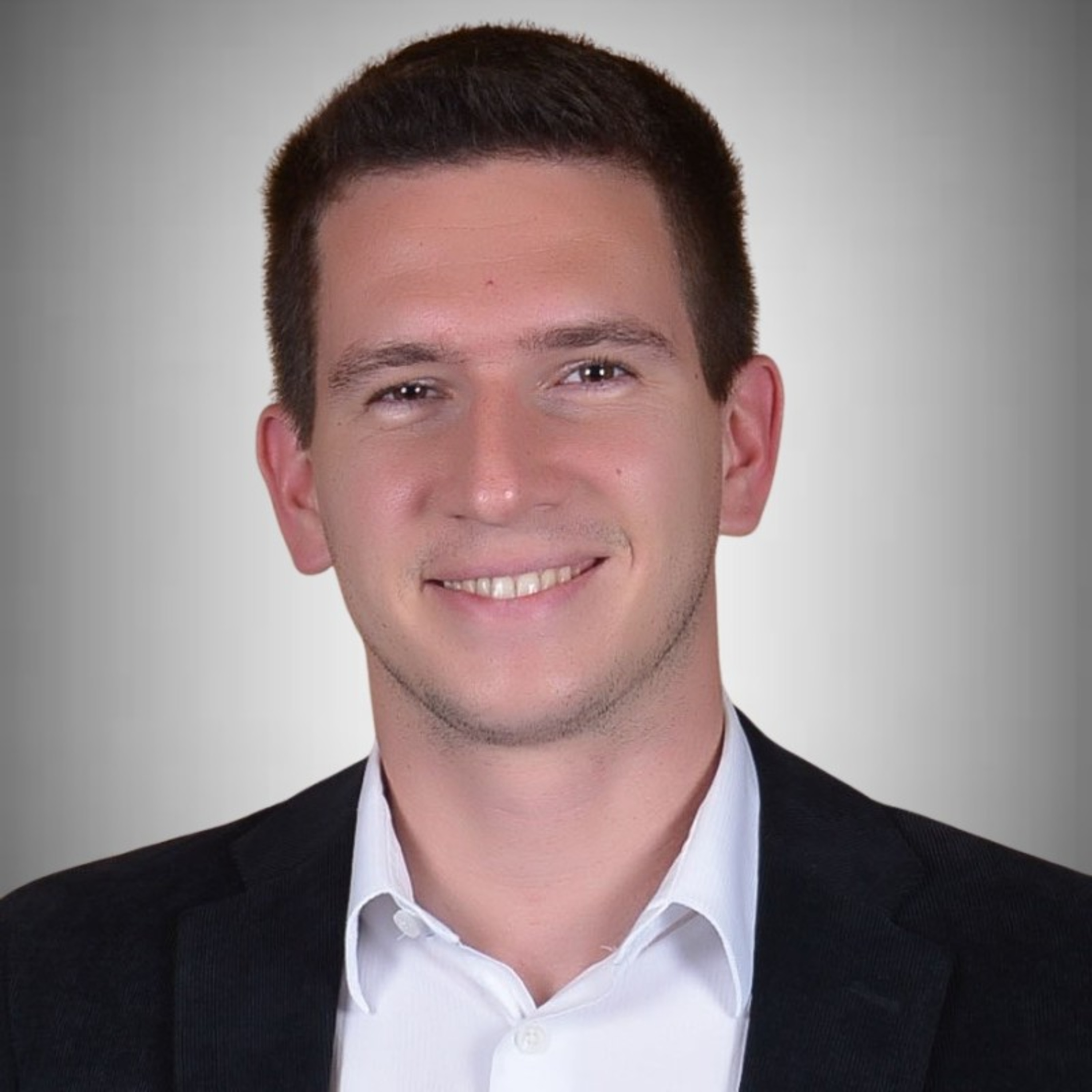
161 - A Founder's Guide to the Data Center Industry - Gabriel Storti
from Founder's Voyage
41m 43s
Gabriel, a seasoned entrepreneur and tech leader with over 16 years of experience, discusses his career journey from founding Obaja, an ultra-fast grocery delivery platform, to his current role at Microsoft. He explains that stepping away from Obaja in 2019 was a deliberate decision to focus on family goals and create a safety net, with a plan to return to entrepreneurship. His move from Brazil to Wyoming was part of that plan, emphasizing discipline and intentionality. At Microsoft, he applies an owner mindset to global-scale data center commissioning, which he sees as a bridge to future ventures. Gabriel underscores the importance of trust, alignment, and diversity in founding teams, and advises newcomers to observe and learn before driving change. His leadership style has shifted from transformational to authentic, incorporating storytelling with data and credibility. Looking ahead, he aims to master large-scale execution at Microsoft to eventually achieve financial freedom and return to building impactful solutions in Brazil. His motivation remains rooted in family, including his son and an expected daughter. Overall, Gabriel’s narrative highlights the value of long-term vision, disciplined execution, and adaptability across startup and corporate environments.
Starting with that end goal in mind, then building a plan to get there in discipline yourself to execute, we'll get you there. (upbeat music) - Our featured speaker today comes to us with over 16 years of extensive experience in mission critical operations, team building, negotiation, development of entire business unit operations for Fortune 200 companies. He's an entrepreneur and an innovator, passionate with hands-on experience in technology startups. Gabriel, it's a great pleasure to have you on as our featured guest today. Thank you so much for taking the time to share this leg of your journey with us. - Thanks, Nancy. - Spencer for having me at the now honor to be back. - The honors all ours, but it has been quite a few years and I know we've got a lot to catch up on. I was wondering if you could kind of take us back a little bit and maybe start talking about the decision you made to step away from your role as CEO of Obaja in 2019. Like how you decided the time was right for you to make that move 'cause I know that's a big decision. - It was Brazil's first ultra-fast grocery delivery platform. Basically customers could order from a selection of over of about 40,000 products as KUs. Even including your preference of the crust of the bread you wanted from a medium dark light, you could order anything, produce, buy weight. And it was the first company in the world to have access to Walmart's live inventory. We are connected to over 2,000 grocery delivery drivers. We had a unique near instant database updating system and which all of that enabled us to deliver groceries as fast as in like 20 minutes, 15, 20 minutes. Yeah, they're groceries. And the thing is that the reason I did step away, I love traveling and I was actually traveling in the beach in Brazil and I was walking near the shore and I read a message that says, "Leave behind everything that didn't work out and pave the way for a year of full of success and new achievements." And that was actually at a pivot point around 2019, I guess, beginning of 2019. And to be honest, I think everyone knows your life is short. I had other goals in my life. I want to achieve them as well. One of them having kids, providing a safety net for family. And all that would the goal would allow me to focus back on entrepreneurship. So that's the reason I decided that was a right time to step away because I have too many ideas, too many problems I would like to solve. And you know, Oveja was one of them. We have to work hard and be disciplined and work as much as we can do our best on a problem. But sometimes we have to know the right moment to step away and rethink and continue on with our different goals. Absolutely. I think so many entrepreneurs can share the experience of having a abundance of ideas and goals and things that they want to do with their lives and the realization of life is short and you probably aren't getting through all of it in your lifetime. So you being able to make that decision point and be like, okay, I've got to a level of success with this goal that I'm proud of that I'm happy with. Now I want to focus on other goals. Is a really powerful ability. And it's something that so many people need to be able to develop that skill. Can you tell us as well a little bit about the geographic move you've made that it's quite a dramatic point in your life to like decide to move to a totally different country. And a lot of people sort of have found benefits and difficulties with that. Can you talk to us a little bit about that? As I mentioned, I love to travel. I think it's traveling gives people visibility of different things, different culture, different perspective. I think that that's really important to learn about those different perspectives, different problems, you know, and regional problems that exist. And even solutions as well, right? The way I've always approached this is starting with an end goal in mind. It's clearly trying to think about, well, legacy, I want to leave behind in a different areas from my family to professionally to friends and all that. And then building a plan, how to get there. And the key thing is having the discipline to execute. So this shift from geographic, from Brazil to the US was part of that plan to achieve these goals. So okay, it was not easy, it's hard, right? And especially I moved from Brazil where I had my house at everything established. And I literally bought a car online, chose a car on my, I landed at the airport in Denver, grabbed a cab, went to the dealership, picked up the car and drove up to Wyoming. I'm based in Cheyenne, Wyoming. And all of that by myself got a house here established. It's all moved the family over, odds, cats, everything. And yeah, it's not easy, but it's one of those, it's things that were part of my plan. And it just needed to do that. So I think it's kind of commendable that it sounds like you have a play in mind because I think that's a difficult thing sometimes to wrap your head around, but you seem so confident in your decision making. And I think it's pretty commendable. And I know you've had a couple roles since your move. I was wondering if you could kind of tell us about your current position as the regional commissioning manager and Microsoft. So like what appealed to you about that role? - So just a brief background of my data center career, I started back in 2009, New York City as an electrical engineer performing commissioning. And for those who do not know what commissioning is, it's basically once we design anything, we build anything, ensuring that end product is performing as design. That's basically commissioning in a nutshell. 2012, I had the opportunity to lead a team that built the first data center in South America for one of the world's largest hybrid scale cloud providers. And that really set the stage for the cloud boom in Brazil today actually. So long story short, that's how I started my career. And what really appealed to me for Microsoft was really the sheer and scale in impact. As an entrepreneur, you're used to building things from go round up, but Microsoft operates at a global level, which is unique. It's such an amazing company. There's so many, thanks so many areas. And managing commission for data centers, I was really the backbone of the modern cloud. So it allowed me to apply an owner mindset to the infrastructure that empowers all these millions of people when you're small, you know, I've built smaller ventures and seen how it functions in a world class organization such as Microsoft is just phenomenal. And focusing on building a long-term foundation is really what I'm focused on right now for the next chapter of my impact. Yeah, that's incredible. I think it's such an interesting balance of experiences, starting your own small venture. Has like, you can move really quickly, you can make quick decisions, but you also don't have that much support. There's a lot of interesting things there, but also working a very large corporation has its own pros and cons. Can you talk to us a little bit about what you feel is like the balance of positives and negatives between the two and what draws you to them at different times or has drawn you to them at different times? So if we think about it, a startup ideally should not be a startup forever, eventually it will grow. Absolutely. Large corporations, if we think about, they were a startup in the beginning, right? Working in a large corporation, there's pros and cons of both, right? Start-ups and large corporations, but working in a large corporation, if you think about it, it really gives you an ability to fast-track into the future and learn about all the different things a large corporation has and really reflect on the purpose of each of those things, while also thinking on the best time and to implement each in a startup. Think both are good balance. Now, I think you make a really good point that perhaps you don't want to start up to always feel like a startup. I think, you know, there are some of us in this community that have found that we really love that startup culture, though, you know, and just kind of move on to the next startup. So I do think it's really interesting that you have such a varied background. What would you recommend? 'Cause, you know, I feel like this is one of the key ingredients we talk about all the time, that other entrepreneurs seek out in a founding team in those, you know, kind of beginning days and years. I think like the main thing is trust. Abing that trust among the founding team is probably number one, I would say. Second one is alignment on an end goal. What's the end goal? Agreeing on time commitment and a team, right? I think it's important to have diversity of different opinions and different skill sets. So yeah, absolutely. I mean, the family team is so important. It's good to have that variety and complement each other's capabilities. I also think one of the things that's a super interesting point is about like leadership and how someone's approach to it progresses. I feel like working in a huge corporation gives you sort of a trial by five for leadership in some senses because, you know, the teams can be so large and have such big impacts. How do you think your leadership has styled over the course of your career? And what do you think would be maybe some key ways that you think you've changed as a leader? - Actually, I was in, I guess, a coaching session with. one of Microsoft's executives actually, and we were talking exactly about leadership styles. And I did some further research on that, and I actually found out that there's a genetics, each person with their own genetics, some of them genes that affect leadership styles. So by knowing that you're genetics, they able to tailor, you know, and understand, okay, I'm better at calling this type of leadership style versus it. And it was interesting, and I had my startup, I was very more of a transformational leader, and spying through vision and motivation. And when I went to the corporate environment, I did transition a little bit towards a more authentic leadership style, where it's more focused on self-awareness and transparency, which basically aligns your accent with values and communicates transparency, which fosters us. So yeah, that's more my style right now. I've transferred to more of an authentic leadership. And what really I've been doing is selectively innovating some of my transformational leadership techniques or vision and innovation, such as storytelling, which is important for the world. Yeah, that relatability is so key, because I think authenticity is definitely a word that's thrown around, but you're quantifying it. It's good though that you've been able to give yourself that constructive feedback and grow over the years. I didn't remember this about you, but you really have such an ability to have long-term vision. It's something that I've struggled with at points, and I'm wondering, do you think that's an ability that you've always had? Did that develop somewhere? I've always had this actually. I don't know if it's a skill, but when I was actually six, I think I was six years old, actually, my dad found a stereo in the street in the US here, and then we took it home and had all these amplifiers and cables, and he wasn't able to solve it, connect it, make it work. So eventually he gave me seven, 12 minutes or something to make it work, because I was just looking at him trying to figure it out. I did it was my first time, and I built it, and then I was like, after that, I asked him, "Where can I learn all these things?" And then, what do you have to do? I had always the thought I needed to be an engineer, right? An electric engineer. And I eventually became an electric engineer, but it took me some time to figure out what I really wanted to build things, which is entrepreneurship. One of the books that really helped me, and if I could have read that book, is that Sub-N-Hab is a highly effective people, and it's really about thinking about that end goal. So I think that really helped me, because we know life is not a straight line, it's not like clear milestones. You know, you go here and there, I think that really guided me a little bit. I like the phrase, "Life is not a straight line," because I think that's definitely true. Now, when we were talking about leadership, you mentioned storytelling, as like an aspect of how you sort of convey to the team that you're leading. Can you dig into that a little bit more? What does that sort of mean to you? Storytelling. Build a story in it. First thing is important to understand your stakeholders. Who are you telling the story to? What's the language they understand? I like to have facts and at least some data back up, but as I mentioned, it always starts with that trust. Once you have, or establish the trust with your stakeholders, ensure there's established credibility, your stakeholders understand. If you're telling the story, before you even start telling a story, you're already established that credibility, where they both knows their capabilities between each other. Then adjust that language to build the story. So that's how I approach storytelling. A lot of the things that's very interesting is that when you're trying to implement a change or any innovation or some massive change in an environment, a lot of people have underlying aspirations and thoughts that they really don't share with you. So understanding those things and the line a little bit on the emotional aspect of each person's needs, I think that really helps. That makes a lot of sense to me. I was thinking about it too. I totally agree that trust is a key ingredient in those working relationships, but it's not always easy to establish. What situations has it been most difficult for you to establish that trust? I think that when you join new environment, for example, when I actually moved from Brazil to the US and I joined a Dish Network company, great company, phenomenal. I love the culture of the people, but I was a new person. That takes time. The first thing is really not coming in to an environment and trying to change or do anything or storytelling. It's really learning how people do business, why they do that, things this way and that way, and then observing it. I think that's the main thing. Learning and establishing that trust, building that foundation. It's absolutely vital to have that level of trust when you're running a team without it. You can't get the team coordinating because they can't believe in the things you say. Totally agree with that. Now, you mentioned earlier in regards to the various goals you have and you have some very exciting family goals that are coming in the next two weeks, which is excellent. Obviously, you can share more about that, but I don't want to share it if you don't want to. I would love to dig into what the goals you're focused on right now. What do you see is the next few years of your time being spent towards achieving those goals? For me, the next step is really about intentionality and building a lasting legacy. That's my next step right now. My focus is at Microsoft. I'm mastering the execution of a global scale infrastructure. It's really learning at scale, which is vital for any founder. My long term vision has always been to secure a foundation that allows me to dedicate myself 100% of the time to solving big systemic problems without compromise. I do see my current journey as the bridge of this to the next chapter, where I can return to the builder phase with that financial freedom to take bold risks on projects I'm passionate about. So ultimately, my goal is to use that discipline and global perspective. I'm gaining right now to go back to my roots and as an entrepreneur in Brazil, creating solutions that have real, tangible impact on people's daily lives. That's exciting. Is there anything specific within that or just kind of know you want to do it again? That's my passion. It took me years to figure that out. As I mentioned, I thought I wanted to be an engineer until I became an engineer and then I figured out that actually there's all these disciplines and areas that a company needs all these different people to build something. That's the only way you need people from different backgrounds to build something bigger. So I have too many problems and ideas I'd like to work on. We'll look forward to hearing about some of them when you have more that you want to share with us. Also kind of doing a call back like for our listeners, like we all met at the MIT Bootcamp program way back in 2016. We were talking about how long ago that was and I know it's been quite some time, but do you feel like that's a framework that has been more currently useful to you and if so, in what regard? We were afraid about the 24 steps. Yeah, I mean, there was a lot that we learned during that time too because some people talk more about the dynamic of not getting sleep for a week and having to work with people from different cultures. So I would say anything that has come back to you that's been useful. And dense time frame, right? There's always that most people know, probably know this, the storming, forming, norming phase, all that. When you join a new team or as like we had to figure everything out in that time frame, right? That one week, 10 days time frame, we had to we had storming, norming, forming and learn about different cultures and learn how to work together. So that was phenomenal. I take that every single day of my life. Actually, I use that also about thinking about the problem, right? It's always that, you know, starting, you know, I mentioned starting with the end goal in mind, but like thinking deeply about that problem, I've always used that in my whole life. Absolutely. I mean, it was quite a unique experience in a lot of ways for a lot of people and have given many of us sort of these frameworks and these experiences that we can lean on in future endeavors. Have you had any outside of the bootcamp, any experiences or any particular framework, so team dynamics or something that you've been put into that were similarly a very difficult, short experience, but has had an outsized impact for you aside from the bootcamp? Yeah. Well, one of them actually, and it was a very difficult thing. I had my startup, and we had an old bike shop for about two and a half, almost three years, and stepping away, making that decision to step away from a company that I had built, and it was a very
very difficult decision, but it was such a learning experience because as I reflect from today, there's so many things people learn when you start your own company. You make mistakes, you learn, you build everything you get. Most of the time you have to do everything until you start bringing on people and so yeah. That makes a lot of sense. I actually want to take a moment and just pass to another community member that has a question for you. Giovanni, go ahead when you're ready. That's a great pleasure to hear so many insights. I will have a very good question for you. You made so many achievements on your professional path. What's your motivation in doing so many improvements? Thanks a lot. Thanks for the question. I always go back into my true inspiration as really my family, my son, my wife. Spencer mentioned that a little earlier. I'm actually expecting a daughter right now in two weeks. So my family's really my motivation. Even my parents, my grandparents, they've always been great people and doing the right thing no matter what. So that has really framed me and grounded me and trying to always do the right thing no matter how hard that is. Those are my motivations. Absolutely. And I mean, family is such an important part of our lives. It's incredible to be a part of a family that and it does motivate you like that. That's brilliant. I would actually ask on that about balance because that's something that a lot of entrepreneurs myself included hands up on that one. I think a lot of entrepreneurs struggle with having a balance in their lives. How do you go about balancing all of the different things in your life that you passionate about? You know, it takes people while it's a learned thing. Back to that book, the Seven Habits of highly effective people. It does talk about, you know, I did meant I've always mentioned start with your end goal in mind. That book really helped me balance everything because it's not just about, you know, work or family. There's so many aspects in life and having that self-awareness to balance each of them is extremely important. So there's work, there's friendships, you know, you got your family, your religion, you know, all these different things. Even your enemies, right? Your spouse, your own me time, right? Those are all different things and just trying to constantly reflect back on these different things and ensuring you're balancing yourself. I think that's what's been helping me balance my life. I think it's really good too. Along those lines, we talk about a lot, you know, how we define success and how that evolves over time. So kind of, you know, taking it from that stance. You know, how do you think younger you, you know, maybe a decade or more go defined success? And how has that evolved for you? Well, having a vision, thinking long term and being able to, as I mentioned, build the plan, putting it in paper, really, to be honest, and tracking those milestones. Obviously, not every milestone has the same I'm frame to reassess if I'm on the right track. But I have been doing that on assessing my, you know, each of my milestones in their own timeframes. And that's how I've been working on my green success. Brilliant. Thank you. This is a bit of a different type of question. I think you work with data centers. You sort of understand data centers quite a lot better than I think most people do right now. But there's globally with the realities of AI, there's a huge push towards the growth and building of more and more and more data centers, right? To the point where I think there's not obviously Microsoft where there's so much expertise. But I think there's a lot of people who are trying to get into the space of data centers, but don't really understand what it takes to make and manage a data center. Right. What is your perspective on sort of the ecosystem globally in that regard and like AI's impacting regards to data and how the world manages it? Yeah, thanks for asking that actually. I think nowadays you can ask anyone what's a data center. Most people know what it is. I started my career back in the day that every time someone asked my wife that I, you know, she said I worked in data centers. She had explained what a data center is. Right. You know, all these people are joining the industry because there's such a massive boom towards this industry. And we're having to train people on the job and because we have a shift of all the like older people are retiring that have more experience, more senior people. And then we have we have this huge demand. So there's a gap actually in the amount of people we need to bring this industry. So I could simplify how to build the data center. That's one thing. But then thinking about the geographic regions and demands and the different businesses and needs and and always going back to your customer, right. What are we solving for that customer versus just coming up with all these solutions? I think that's really important. So always going back learning about the customer and really working on a day to day of what their needs are. I think that is the main thing for people that are joining. Yeah. And it really is quite fascinating because as you're saying, I used to work for a company that, you know, sold like data center equipment and solutions. And I remember when we were talking about this is over a decade ago, when we were talking about virtualization and people were like, what is that? And yeah, now everyone knows what a data center is and hasn't, you know, dumb what of an opinion about, you know, how AI is changing the industry. I know you can't necessarily talk about what Microsoft wants. But can you, you know, talk about what developments you hope you can see in that space, maybe in the next, you know, five years as things are evolving really rapidly or even going further than that looking at the next decade. The thing that I've been noticing throughout my career in the data center industry is the, is the cooling, the cooling limitations on equipment, cooling and power power generation and cooling. So there has been a shift on the cooling technologies being used. And the reason is these computers have been using more and more power and more in a condensed area footprint. So we have been reaching points where cooling technology, for example, air cooling just is not enough to cool that device. So then we're now seeing a trend to shift to a new technology like liquid cooling. But then there's also a limit on that. That's coming soon, sooner than we think. And then there's, we'll have to switch technology. So there's all these different cooling technologies, even from like the chemical level where we have to switch and it's interesting. A lot of these technologies already exist, but they're used in different purposes now for data centers. So I think that that is definitely happening. And yeah, it has been happening. It will, we'll see a drastic change over the next five years because the speed of chip developing and innovation has been so rapid with AI and also the power. So the power we're reaching thresholds where our generation is becoming a goal. It's reaching its limits. So we're having to explore different generation technologies. I'm not saying we Microsoft is doing that, but that's something that whole industry is doing. Yeah, absolutely. I've been reading about like in that space where some people are talking about data centers in space and I'm a massive space nerd. So I find that really interesting. But I feel like dissipation of heat is going to be incredibly difficult without any way of actually conducting it away. And energy is such an important factor. Like so many countries right now haven't been developing their energy generation infrastructure. And so now there's sort of this big gap between what's needed in the next few years and what's actually going to be built in the next few years. So I think that's that's all super, super interesting. If someone is sort of interested in that in sort of data centers and learning about it and getting to be more knowledgeable about it, do you have any advice about where they should sort of go? Is there a particular you know, courses that you recommend or is it something that you sort of need to get into a position to on the job learn about it? What do you think is like nowadays sort of the way to understand that industry better? Well, I'll tell you, you know, the way I actually started. Actually, I read a book from a he's actually a good friend of mine right now. Nowadays, name is Peter Chris. That was the first book I read from Peter. It's called the maintaining mission critical systems in a 24/7 environment. And it really goes back to the basics of how a data center is built. I actually finished my master's in the life of engineering how to build and operate data centers. My dissertation was in that. So that's actually public knowledge. That's a university of Campinas in Brazil. So if people want to learn about data centers, at least have a, you know, that a
start. That's a great book because I talk about from building a data center to new technologies to operations, to commission, to commission, to, you know, all the different aspects involved. Obviously, it's more focused on electrical because I was my master's, but it also a great, great foundation. And then on the job, right, having that basic understanding of what the different things are and then having a mentor is extremely important. I was very lucky to have a mentor in my early stage. And that's a recommendation that we've heard a lot, you know, making sure that you seek out good mentorship. And so I really appreciate you sharing that note too, because, you know, you can read all the amazing books we're all about. Sometimes you do need that person to kind of, you know, bounce ideas off of you. And I do want to read a comment here on the questions and discussion channel from a listener, because I'm not sure that they have audio. Data centers are expected to consume more resources, electricity and water than the people who live in those locations. How do you think that might work in the future? Additionally, the perplexity founder has shared recent concerns about moving to small language models and how the same AI could be offloaded onto your phone rendering it a center as a secondary need. Do you have any thoughts on that? So I don't know if you're familiar with that situation either. Yeah, well, it's so funny when we see the evolution of compute. We started with main frames, computers, those gigantic rooms, and we went to personal computers. And now we're back to main frames, we're back to data centers. It's so funny, right? If you think about it, obviously, it's a different technology, different. And now that think that whole thing about offloading that back to your phone, we're back to personal computers. I mean, kind of, right? Yeah, it's interesting that the power section, the power portion, it is indeed changed as an entire community, right? If you think about it, each building is at least, for example, Cheyenne, well, I don't mean where I'm here. Each building, not Microsoft, I'm saying just in general, any big, hyper scale building consumes at least three times of Cheyenne population. It's a small town. It's about 20,000 homes. But one building is three times the entire city, that's game chain. And then if you think about, yeah, we could easily have probably 20 of these buildings here. That's just huge. I do think in the water perspective, data standards have been extremely efficient. So I don't see that as a concern. Actually, there's a lot of reuse of that water. Most of it is reused actually. And although, probably the old ones not, but the new ones they are. And the power I see where we have been since that growth in our conception has been changing communities. And we're reaching limitations on the generation, because that's just not built. I do see that shift happening to different technologies more localized per building that won't have a drastic effect on the communities itself, on a generation perspective. There could be other concerns, right? But that, yeah, very interesting. I've actually heard that before as well about data centers nowadays are actually very, very efficient with the water that they have and reuse it a lot to make sure that there isn't sort of a waste of the water unnecessarily. I think given your knowledge and experience in the data center space, and as you're talking about a number of these technologies are sort of budding up to the edges of their capability. If you're talking about water or fluid cooling as being getting to the edge of its capability and then a lot of the computers now getting sort of the edge of we can't shrink the compute much more. Do you think we need some sort of significant step change in one of these areas of technology? Do you think there's more development that can happen in those core technologies to push them forward? What do you see sort of the future in those sort of really cool technologies for data centers? Yeah, so there's a lot of these technologies are already being used in the data center industry, and then we have early technologies that are not being adopted yet at a broader scale. They have been, we see hyper-scalers testing all these new technologies, but they haven't been implementing them because it's still a learning phase. One of the technologies I've seen and I'm familiar with is immersion cooling. Basically it's not putting liquid directly to the chip, but actually submerging the entire chip into this liquid. Cool it. That's also one of the tech technologies out there, not yet fully broadcast and implemented in scale, but it is a solution out there, a cooling technology out there. There have been, as we know, a lot of new technologies come started in governments, right? In government level, they start developing new research for their own purpose. Eventually, there's technologies out there that can be repurposed to these new applications. Yeah, that makes a lot of sense. I appreciate you answering all these questions for us. By no means, are we holding your feet to the fire, but I think it's just something that we're all really curious about. Because I have a follow-up question the listener that I just gave you a question from, commenting that data centers don't necessarily employ a large population of staff. How do you think about this from a local city government or perhaps residential perspective in terms of the economic opportunities that might be present? I mean, this is, as you said, any large building because I think about the Amazon warehouses that I drive by, right? Has this issue too? I mean, if we think about it once a data center is built, that is true, that is accurate. There are not a lot of direct people from that company, that hyper-scale. That's true. That's not, you know, everyone knows that. That's public knowledge. Although there's so many vendors and third-party services that are needed to support a business like that, and that starts from construction through operations. So I think there's a lot of opportunity that it does bring in regions and the construction industry. It's very interesting. I'm directly in the construction area and the amount of people we bring from all these different locations is just massive and it provides life-changing opportunities for the people because, you know, that it's a good business to be in. It's growing, especially now over the next two, three years, at least, we are having a massive growth in data centers. So we're building one after each other and it's not just Microsoft. That's all these companies, right? So yeah, I think it's very positive for the community. That's really great to hear. I hadn't considered that before where it's not necessarily bringing in jobs working for that particular owner of the data center, but a lot of jobs around it in other third-party companies and things like that, which is an interesting point I hadn't considered before. If you think about, okay, it's a data center, you need to have highly qualified IT skillset to do that. That's not really true. We need so many areas and I'll tell you one of them. I'll give you an example. Electricians, there's a need for, you know, 5,000 electricians just in a small region. That's easy, right? It's very hard to get them, but you think about it. There's many areas that people could join and support it. Absolutely. And I think electricians are actually quite an interesting example because I feel like it's a job now that has, for quite a long time, has been sort of downbladed as not something for kids to go into. But now we're severely lacking in electricians, at least here in the UK and in Australia. I suspect probably also in the US. And now it's like an incredibly good job to get into and is really, really beneficial for a lot of people to have more electricians, I would say. We like to wrap up each of our talks, as I think you are aware, with a particular question. And I'd like you to sort of take this in the way that feels most right for you. But basically, what words of wisdom or piece of advice do you want to leave us with today? Well, I think as I started my conversation or a conversation here, I think start with that end goal in mind, think about what legacy you want to leave behind. How do you want to be remembered of each of your of the different areas in your life? And as I said, there's no such thing as perfect. During the journey of life, as we know, is not a straight line. Things transform over time including ideas. I think that's why when we were back at MIT, it was always about thinking deeply about the problem. I want to solve because even ideas you fall, starting with that end goal in mind, then building a plan to get there and discipline yourself to execute, we'll get you there. That is great advice. I really appreciate all the time we've taken with us and everything you've shared with us and taught us today, Gabriel. Thank you so much for making time on your Saturday right before
Kyle, we really appreciate it. Absolutely. Thanks, Nancy. Thanks, Spencer for having me. I appreciate it. If people do want to get connected with you, they have more questions or just want to get to know you better, how would you prefer that they reach out to you? You could reach out to me on LinkedIn. I'm pretty easy to find Gabriel Storty. And yeah, let's connect if you have any questions or things you want to talk about, start up entrepreneurship, corporate environment. Wonderful. We'll definitely share that with our community. Thank you so much again, Gabriel and our listening group. Thank you for bringing your energy to these discussions. Spencer and I and the team behind Founders for really fortunate to be part of this community with you. You can listen to the other episodes of our edited podcast by searching for Founders Voyage on your favorite podcast platform or going to Founders Voyage.org. And if you'd like to support us, please feel free to join our Patreon, patreon.com/founders Voyage. So thanks so much again. You've just finished another episode of Founders Voyage, the podcast for entrepreneurs by entrepreneurs. The team at Founders Voyage wants to thank you from the bottom of our hearts. We hope you enjoyed your time with us and if so, please share this with someone else who might enjoy this podcast. You can also support us by leaving a review on Apple Podcasts and Spotify and by donating to our Patreon. Outro music today is something for nothing by Reverend Payton's Big Dam Band.
Podcast Summary
Key Points:
Gabriel stepped away from his role as CEO of Obaja, Brazil's first ultra-fast grocery delivery platform, in 2019 to pursue other life goals like starting a family and providing a safety net, while planning to return to entrepreneurship.
He emphasizes starting with an end goal in mind, building a plan, and having the discipline to execute, which guided his geographic move from Brazil to Cheyenne, Wyoming.
His current role as Regional Commissioning Manager at Microsoft leverages his long data center career and allows him to apply an owner mindset to global-scale infrastructure.
He values trust and alignment within founding teams, and recommends learning the culture before trying to implement changes in a new environment.
His leadership style evolved from transformational (vision-driven) to authentic (self-awareness and transparency), while selectively using storytelling backed by data and trust.
His long-term vision is to secure financial freedom to return to building impactful solutions in Brazil, with family as his core motivation.
Summary:
Gabriel, a seasoned entrepreneur and tech leader with over 16 years of experience, discusses his career journey from founding Obaja, an ultra-fast grocery delivery platform, to his current role at Microsoft. He explains that stepping away from Obaja in 2019 was a deliberate decision to focus on family goals and create a safety net, with a plan to return to entrepreneurship. His move from Brazil to Wyoming was part of that plan, emphasizing discipline and intentionality.
At Microsoft, he applies an owner mindset to global-scale data center commissioning, which he sees as a bridge to future ventures. Gabriel underscores the importance of trust, alignment, and diversity in founding teams, and advises newcomers to observe and learn before driving change. His leadership style has shifted from transformational to authentic, incorporating storytelling with data and credibility.
Looking ahead, he aims to master large-scale execution at Microsoft to eventually achieve financial freedom and return to building impactful solutions in Brazil. His motivation remains rooted in family, including his son and an expected daughter. Overall, Gabriel’s narrative highlights the value of long-term vision, disciplined execution, and adaptability across startup and corporate environments.
FAQs
Obaja was Brazil's first ultra-fast grocery delivery platform, delivering groceries in 15-20 minutes. I stepped away because I had other life goals, like starting a family, and felt it was the right time to pivot.
The move was part of my plan to achieve long-term goals, including professional growth and family stability. I relocated to Cheyenne, Wyoming, to build a new foundation.
I am a Regional Commissioning Manager, ensuring data centers perform as designed. The global scale and impact at Microsoft appealed to me, allowing me to apply an owner mindset to cloud infrastructure.
Startups offer speed and quick decisions, but less support; large corporations provide scale and resources. Both are valuable for learning, and a startup ideally grows into a larger organization over time.
Trust is number one, followed by alignment on the end goal, agreement on time commitment, and diversity of skills and opinions.
I shifted from a transformational leadership style in startups to a more authentic leadership style at Microsoft, focusing on self-awareness and transparency, while selectively using storytelling from my earlier approach.
Chat with AI
Loading...
Pro features
Go deeper with this episode
Unlock creator-grade tools that turn any transcript into show notes and subtitle files.
 PodcastTranscript AI