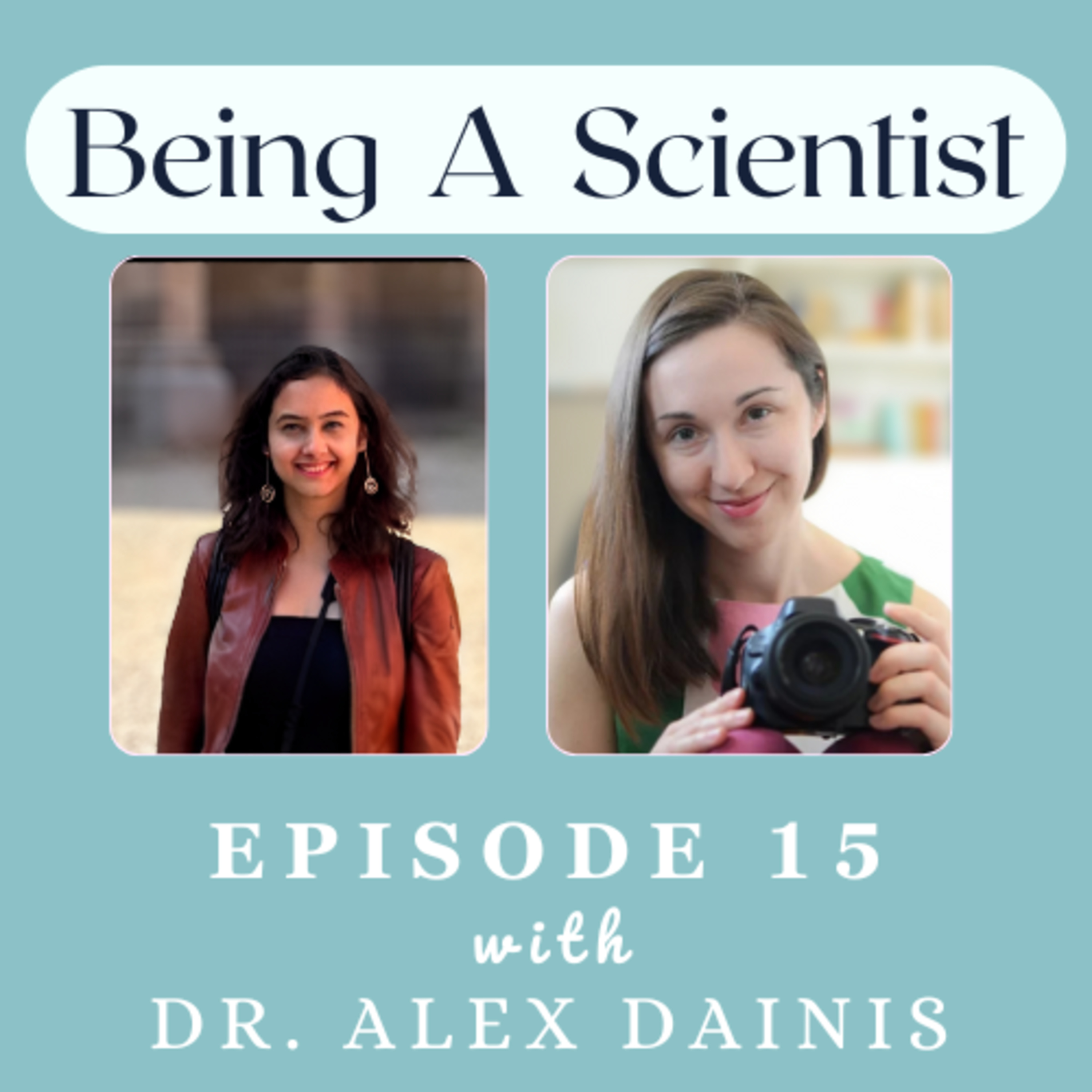
#15 Alex Dainis: Why the 5-Second Rule Doesn’t Work (and Other Science Surprises)
from Being a Scientist
53m 25s
In this podcast episode, host Rishri interviews Alex, a geneticist and science communicator who makes complex science accessible and fun through videos. Alex’s passion for science began with childhood curiosity and a love for learning across disciplines, leading to a double major in biology and film. He started making science videos on YouTube in 2012-2013 as a hobby, long before “science communication” was a recognized career. Alex emphasizes that social media now helps humanize scientists, showing their daily lives and building public trust. He discusses the challenges of communicating during COVID-19, where scientists’ cautious language of uncertainty clashed with the false certainty of misinformation. He argues that science communication must explain not only vocabulary but also the process of science itself. The pandemic, however, raised public awareness of terms like PCR and DNA, creating opportunities for better engagement. Alex’s approach to short-form storytelling—inspired by an early interest in music videos—has proven prescient in today’s content landscape. He advocates for better communication training for all scientists, noting that clear communication aids funding, collaboration, and career progress. Ultimately, Alex sees science communication as a vital bridge between researchers and the public, helping people make informed decisions in their lives.
[MUSIC] In the current world, captivated with AI, where answers are available just the click of a button. I invite you to go old school and learn about the lives and experiences of a person through the dance of curiosity and gratification. Hello and welcome to Being a Scientist. I'm your host, Rishri, bringing you in conversations with real scientists and giving a snapshot of their sugary salty journey, their passions with the subject and what drives them to keep going. It is time to become science aware. [MUSIC] Today I bring with me Alex, a geneticist and science communicator, who creates videos that make complex science accessible and very fun. In this conversation, we explore some fascinating ideas from testing the famous five-second food rule myth to understanding why his nation shows up when we try something new. And even by DNA might not be the real main character inside ourselves. This conversation is a mix of science, creativity and inspiration. And I cannot wait for you to hear it. I love for science speaks volumes, so hope you're ready to get food together. Hello Alex, thank you so much for being on the show. It's a good one. I'm happy. It's an honor to be here. Thank you so much for having me. Yes. Okay, so maybe without further ado, let's dive into how your journey into science began. Absolutely. So my journey with science began, I think just because I loved learning about the world. I was a kid who loved being outside in the garden with my mom, but also watching things about space with my dad. But I wasn't, when I was in school, I didn't necessarily know that I was going to be a scientist because I also loved writing. And I loved languages and I loved art. And I was captain of the math team. Like I, you know, I loved all these different subjects as well as science. And so it really wasn't until I got to college and I actually double majored in college in both film and biology. And really sort of thought like, okay, science is a way that I can learn more about the world and ask questions about the world and learn more about it. But I think my love of science just came from a curiosity about many things and for me biology and then later genetics when I went to grad school just became really exciting ways for me to ask questions about the world. Amazing. And I think scientists really have this, this in their genes, like even like to ask questions to be curious about everything. Yeah, I think, you know, I just never stopped being that little kid who asked why. I'm always just asking like, well, why? And what about that? And what about that? And I really appreciate that both my time as a scientist and my job now as a science communicator have both afforded me the ability and the freedom to just ask questions for a living. I can ask questions about how the world works. I can ask about how people view the world. You know, I really, really find that to be so fun is to ask questions and then get to answer them with other people. Yeah, I think isn't that the dream? Yes, it is. It is. I, you know, I tell people I really do have my dream job. You know, I get to talk with scientists all the time. I get to tell other people about the things that I think are cool. It absolutely is my dream and I am so grateful that I get to do it every single day. Wow. I really hope that one day I can also maybe, you know, step in the same shoes. But I think it's, it's a bit farther away still. But you're on the path. Thank you. Just get inspired by, you know, by, by you and by other science communicators in the field. I think it's so encouraging to see and I think especially in this time and age, right, we can have this as a career path, which is, I feel we are so fortunate to be alive in this era. Oh, absolutely. When I was in college and even, you know, I took a couple years off to work before I went to grad school, I had never heard the phrase science communication. I did not know that that was a possible job. I knew that I loved science and I knew that I loved film and making videos. And this was, you know, 2012, 2013. So it was a while ago and I started making YouTube videos just because it was a fun thing to do. People weren't really making a career out of it. Then I never thought it would be possible to make online videos as a career. I just knew that I liked these things and I was pursuing them and doing them. And truly it was not until I had already been doing science communication for a few years that I heard the phrase science communication and learned that it was an actual field that people study and work in and that potentially I could make a career out of. It really was just sort of me doing the things that I loved and telling everybody, hey, I don't really know what this job is, but I just want to talk about science all the time and maybe make videos and I, you know, when I was sort of starting grad school, I knew of course that places like National Geographic and the Discovery Channel existed. But I really thought that those were the only opportunity that people have to get to do this kind of job. And truly it wasn't until I had been doing it for years on my own and meeting other people in the space and then sort of realizing that actually there's a whole range of science communication jobs and this is something that I could do professionally. But it was, I think now we are in a time where there are science communication degrees or majors or certificates. I think it is much more known than it was when I was in certainly high school in college. And I'm excited about that because I think there are so many people now who get excited about these things and want to have this as a career from earlier on. So can sort of build those skills along the way, which I think is so beneficial. But yeah, I am so grateful that this is something that I get to do. But I did not know that it was a potential path before I started on this path. And that you just stumbled upon this word. Oh, I'm a science communicator. I can know what I'm. Yes, I was like, oh, I guess that does describe what I do. Yeah. Oh, it's great. And also I feel like now with social media, like one of the major benefits I have, like I feel are, you know, you can actually see and like really know about the lives and you know, what does a scientist do in everyday life? You can, you can see, you can interact with people who are scientists and, you know, who are communicating with you. Because I think I mean, I mean, even when I was in high school and I wanted to just know what, what is this field? You know, what do these people even do without committing to a career, right? To like just start learning and you know, like spend, I don't know, eight, 10 years, just learning that. And then there was no way actually there was just like Google to tell us, okay, somebody in the 1990s was a scientist and they discovered something. But I didn't know what they, like, you know, what were they like? What, what were the daily tasks and now social media has given us such power of, you know, of learning that I can see you. I can see you with the lab. You're doing the experiment and I can be fascinated and consciously choose. This is my field. I think that is absolutely true. And I 100% agree because it's, I think, important for all careers, but especially important for science because I think we have more daily interactions with something like a doctor or a lawyer or, you know, some of those more traditional careers, you know, someone who's working in business, like, we sort of see them and interact with them more and we can kind of understand what they do. But science for so long has just been locked away in the ivory tower and like, the scientists say the scientists found and it is so nice. Yeah, exactly. Who are they? Where are they? What are they doing? You know, I remember two thinking I was talking with someone at one point in time when I was in high school and I was like, oh, maybe I want to be a scientist and they were like, oh, you're going to be, you know, science labs don't have windows. Like you're going to be stuck in a basement somewhere and not be able to see. And I was like, well, that sounds awful. And that's, I can be true, but it is not 100% true. Like scientists do see the sun sometimes. We are full human beings with full lives. So I think it's very important for all careers, but I think especially important for science that exactly what you just said, we can pull back the curtain. We can show people what the day to day is like. And I think that helps, you know, people talk a lot about humanizing science. And I do think it's true that when you can see scientists as people, we can help build that trust, that understanding and that rapport, you know, that people can ask a question online of a scientist. How do you study this? How do you know this? What does it look like? And I think that is so important to building that trust, which we need in order to be able to keep making innovations and keep funding science and keep making sure that we use the findings of science well in our lives. Absolutely. I think we'll make this.
make this all the more necessary. I think there we like you know I could see like the media people actually going to scientists and like you know with a mic in their face and you know I mean yes they were they were explaining to the best of their knowledge but because of the technical gap that we have that you know the like the non-science people just don't know the terminology. It's another vocabulary and so I think this bridging the gap is what science communicators do. Right absolutely and I think there's an important point to that I think is that as scientists we have to be good communicators right we have to talk at conferences we have to be able to write papers we have to make posters but we get almost no training in that. We are asked as scientists to communicate our findings to different audiences all the time and a lot of times you know when I was in grad school I got a one-hour seminar on how to make a PowerPoint presentation and that was the only required training that I got and I went and sought out additional training because I wanted to be a better communicator but I really think that we need to be giving these skills of science communication to all scientists and not necessarily so that they can always go out and speak to the public but I think the better you can communicate your science the better you'll progress even in your scientific career because you can get more funding you can get better exposure for your work you can find new collaborators right you know it's very important to be able to do that but I think that as we're as we're in this time and also probably for the future you know we also can't ask scientists to communicate to the public every single day right like they have their own job and so it is helpful if they're able to communicate these things but that is where science communicators can step in and be like yeah keep doing the research like talk when you can but then we're going to fill in the rest and be like all right how do we take all the work you're doing and make it accessible and explain that vocabulary and explain that additional language to other audiences so I both think that we have important roles as science communicators but I also think that academia and science need to do better jobs of training scientists to be communicators in their own rights both for that outward communication and also just for communication within the sciences now I create I mean I think communication in general is such a skill right it's it's an art itself I mean how you articulate your sentences your thought processes people have like courses on this right so I think it's important in every aspect of life but I think here when when there's really there were like lives at risk and people were trying to understand what is this vaccine what is this virus and yeah there was just no you know midway where we could understand that unfortunately but I think that's given us like a very good retrospective no yeah it is it is unfortunate right because people wanted so so badly for information right people wanted to know what was going on they wanted to be up to date but it was hard I think for someone who wasn't in the sciences to be able to sort through what was good information what was bad information you know what was what was being told and how certain we were about those things you know I think a lot about the fact that in science we use a language of uncertainty in order to be accurate right like it is impossible for us to say anything with 100% accuracy you know I can say for example that it is highly unlikely given that it is a beautiful blue sky outside of me right now that I'm going to be struck by a lightning in the middle of this call right like I it was it's highly unlikely but I don't know right like I can't predict the future I can't say anything with 100% certainty so so we have to use those words of uncertainty in science to describe the fact that we are accounting for you know unknowns and that we're also open to updating our understanding if we get new data but in these kind of communication crises people who are spreading misinformation feel no qualms about saying things with 100% certainty right they can say with 100% certainty this supplement is going to cure you or this thing is going to harm you and they don't care about that in certain language so for an audience who's not used to parsing through this kind of language of uncertainty I don't blame them for wanting to go with the person who sounds more certain right that sounds more authoritative it sounds more confident and so I think that you know there's there are a lot of things that we can learn from communication during COVID but the thing that I have really thought a lot about having communicated during COVID and now having that little bit of sort of hindsight on it is that we need to do a better job of not just explaining the jargon of science and the vocabulary of you know what is a cell what is DNA and those kinds of things but also explaining to people much better the process of science and how we talk about science and why we talk about it the way that we talk about it and what that means because I think that we were we were trying to do the best job that we could but occasionally it was being misunderstood which was unfortunate that's true when you raise a very important point there yeah I think it's it's probably it goes both ways right yes we by our nature are just so cautious not to spread any misinformation that sometimes even the facts that we are relatively you know like it's like 90% probability we would insate with certainty and I think that's just some kind of balance that we need to maintain in order to communicate with non-science people but yeah I think that's yeah I mean everybody does it a bit differently but I think now we are much better off with also having these experiences and also with an educated audience now I think now people have become much more rich and much more curious and also they've they've taken in a lot of knowledge to now appreciate what what we're doing so yeah it's interesting so I work a lot one of my clients that I've been producing videos with for almost eight years now is a company called mini PCR and they make small lab equipment for classrooms or field biologists but pre-COVID you know I would go to conferences and talk with teachers and I would ask them do you know what PCR is right polymerase chain reaction fundamental you know core building block of how we do molecular biology research and pre-COVID I would say maybe 70% of the teachers who came up said no I've never heard of PCR before and now post-COVID I would say 70% of the teachers maybe 90% of the teachers who come up say oh yeah I have heard of PCR because we all took COVID tests and those were PCR tests and those kinds of things so I do think you know it it did demonstrate in the way that you're talking about that we can give this vocabulary to people we can present it in ways where they're like oh yeah I have heard of that and I do know about that and like tell me more and I I think that we fumbled that in a lot of ways during COVID but I do think that we have you know we've raised awareness of the fact that R&A is a thing right people are more interested in how DNA and RNA interact you know I wish that they had always been presented with the best possible information when they encountered those things but I do think you know it brought these things into conversation it got people who weren't talking about these kinds of things talking about it and I think we just have to make sure that if something like this happens again and as we continue through you know the things that we've learned from COVID I think making sure that there is good high quality accurate information out there for people who want it and people who are looking for the best resources for them and their families and the decisions they need to make in their lives that's all we can do is science communicators is try and provide that that best accessible information yeah and I think I mean everybody's doing their best and we have such good content now I mean I would encourage everybody to check out your Instagram page you know it's so amazing like you you tackle so many different aspects of science and I mean everyday use you know topics and like materials it's it's amazing highly recommend it and then we come into then this topic of you know you're producing these fantastic videos could you take us through what led you to you know integrate this like the scientific aspect with videos together yeah absolutely so as I mentioned when I was in undergrad I double majored in biology and film and you know I knew that I liked making videos but it was funny when I I got my undergraduate degree at Brandeis and they had had a film program back in like the 60s but they'd shut it down for a few decades so when I was I think my sophomore year they were reopening the film major but we had to sort of go and interview for it because they were just opening it up to a small cohort first and I remember interviewing to be a part of the film major and they asked me what kind of movies I wanted to make and I said oh I think what I actually want to make are music videos because I liked the idea of telling being able to tell a story in a short format and this was again 2009 YouTube like just barely existed.
short form content like it does now did not exist like certainly people were making short films, but that was kind of It's a thing so for me I was like oh, I want to be able to tell story in a few minutes the only way I see a model of that right now is music videos and I remember the person interviewing me was like that's kind of weird But now I want to look back and be like no, no, no look everything is short form content now like I didn't get it I didn't get where it was going, but my idea of telling stories in short format was not a terrible one So you know, I had these two degrees and I went after Undergraduate I took a couple years off to work at a small production company and they were lovely They did a lot of production for museums and interactive media programs and so they would put me on More scientific projects they had a couple of science projects at the time, but They weren't all science and I just missed talking about the topics I was interested in So that's when I started my YouTube channel and it was truly just an outlet for me to be able to talk about science to other people And again, this was at that point in time maybe 2012 2013 YouTube was not what it is today. It really was just people sitting in our bedrooms talking about things that were interesting Like there weren't the big produce sketches. We see today or these sort of big productions So that was just what I was doing and it was just a fun outlet for me and I was amazed that people watched it and the people were joining along and then when I went back to graduate school It became an outlet for me not so much in talking about science because then I got to do that every day But to be a little bit more creative in what I was doing and to just sort of have an outlet for that artistic side So I really again, it wasn't until midway through grad school that I Thought that this could even be a potential career It was really just something that I Enjoyed doing and something that fulfilled the scientific and artistic sides of me and then Most of the way through grad school was when I started to learn that science communication was a field I started to learn that they were best practices for how to do these things. I started to implement those best practices And I started to get my first freelance clients and actually that company that I mentioned before many PCR They were the first company that saw the videos I was making and they reached out and said hey Do you do this professionally? Would you make videos for us? And I hadn't before but I said yeah, I'd love to I'd love to try and they were really my first freelance client They took a big risk on me as sort of a new producer But they gave me that first stepping stone where then when I graduated from grad school I said okay, I'm gonna give myself a year and see if I can make freelance science communication Work see if I can pay my rent and you know pay my bills and all that kind of stuff and that was now almost eight years ago Maybe almost seven years ago almost seven years ago and so I've been Just incredibly grateful that I have continued to find people who See value in the work that I do and want to work with me and now I get to work with really fun Teams and organizations, you know, I work with the American Chemical Society I work with the Boston Museum of Science and so it's been so fun to be able now to work with these organizations who see value and science communication and Let me be a part of a team that's working on these things Yes, I mean, I think I see your videos like you know on this use of science and this ECS reaction as well I Stumbered upon the speech and I was very interested in knowing how you how you sort of also, you know, founded the space Go found this space. How does that that's going to be? Yes, so ACS reactions actually goes back long before me But this is I think for me it is a good Lesson in something that I talk about all the time which is I apply I've pulled back a little bit now because I'm a little busy But I apply for anything and everything that I think is interesting whether or not I'm a good fit for it and so Maybe seven or eight years ago. I saw a job listing from the American Chemical Society They were looking for someone to host a series of lab safety videos and they wanted that person to be local to Washington DC I was not local to Washington DC. I was based in Stanford, California at that point in time. I was all the way across the country But I thought this idea of hosting lab safety videos could be fun I thought I would be a good choice for it So I had to submit an application and also submit a video sample and I did that and I was very honest about the fact that I didn't live in DC But that like I thought I would be a good choice for this So I sent that in and they got back to me and they were like you are a good fit for this But you don't live in DC and we don't have the budget to like fly you out here kind of thing So like thanks, but no thanks essentially But then a few years later They were looking for someone to host Some videos on the American Chemical Society channel and they reached back out because they had seen that submission I'd sent in years before that hadn't gone anywhere and they were like hey We have another call would you want to apply for this one? And so I did you know submit a sample I submitted some stories a proposal for that and they hired me on To do 10 videos for a little short limited series and then when that was done They hired me on for another couple videos and then one of the hosts Steped back she decided to move from the video production to podcasting So they were like oh can you fill in for Sam while we find someone and I was like oh yeah Of course and then that was now three years ago I think and I think now I've had to be like wait I think that I don't think I'm filling in for Sam anymore. I think this is my job now So they've just been they've been really fun to work with because it's a team that I think really cares a lot about science Communication and cares a lot about accuracy. So we go through a fact check round and expert check round You know, there's like a lot of rounds of Making sure that what we're saying is as accurate and as scientifically up-to-date as possible But also they're dedicated to it being fun, right? Like I think this team also really cares about you know, we're talking to people who Often have an interest in science, but don't necessarily have a huge science background And so like how do we keep it fun? How do we make it relevant? How do we do something nobody else is doing? So ACS has been really fun and I've been working with them since 2020 now as I think when I started working with them on that first project But yeah, that channel goes back way beyond me, but I You know, I just I applied for something that I knew I wasn't a perfect fit for But I thought it could be cool anyways and that it paid off in the long run So I tell that to people all the time that like if you see something even if you don't hit all the qualifications Even if you don't hit every single thing that it's asking for if you think it's cool and you think it's a team You'd want to work with and you think it is Something that you would be good at I always encourage applying because even if it doesn't work out for that one thing You've put your face and your work in front of that team and maybe they'll think of you for something else Maybe they know someone who's looking for something else So that's one of my big pieces of advice to people is to just apply for everything And also to tell people what you want to do so much of the work that I have gotten has been Because I have just been loud about the things that I like and the things I want to do and when I was leaving grad school I just told everybody I was like I want to make science videos. I want to make science videos I want to make science videos and not everybody needed a science video made But then somebody would be like oh, you know my company does need that let's talk about it kind of thing and so I think being loud about the things you like and being loud about the things that you want to do Nobody's going to know if you don't tell them so that's my other that's my other piece of advice that sort of fits into that category of how I got working with ACS is because I just wanted to do it and I just told everyone I wanted to do it so I You are your own best marketer and your own best salesperson and Yeah, I think just genuinely telling people what you want can go a long way I think these are such good pieces of advice that you know, we also got and I think I mean You know and for me at least personally I think now that I'm reading a lot of you know Books on okay. How do you really take that step or like you know these five seconds of boredness or you know How do the how do you progress with like you know still being introverted and shy and things like that but I mean How did it go for you like were you you know did you have this as you were going growing up as well? Or was it more that you know this was something you built up upon over time as well? It was absolutely something I built up over time. I was a very shy kid I mean when I was little I was like painfully shy and I remember You know my parents put me into Taekwondo classes just to like help build up my confidence a little bit and that helped a little bit And then you know I I was in a couple of like speech competitions and that helped a little bit But I was it was a very introverted sort of shy awkward kid for a long time and really it took me until Truly until college to really sort of find my niche and find my confidence and sort of get better at that but It is also something that then when I realized that I wanted so much of my job to be communication I went and tried to get specific training in and so
One of I think the best things, one of the best decisions I made in graduate school was that I went to work with the oral communication department at Stanford. So they had a writing and speaking center where students could come in and get tutoring in both of those things. So you could come in with a paper and get tutoring on your sort of grammar and structure and writing on that paper, or you could come in with a presentation and get tutoring based on that on how you were presenting in those kinds of things. And so I became a tutor for the oral communication department, which for me meant that not only was I able to get a lot of training because I was able to go to a lot of workshops and oral communication and get a lot of practice in doing that myself, but also I was able to see how other people were presenting and give them feedback and really spend, you know, up to eight hours a week thinking about communication. And that to me has remained so valuable in my career. And I think that when people ask me, you know, how do I get more confident in speaking? How do I get more confident in camera? How do I do that? It is practice. You just have to do it and you have to take opportunities to put yourself into those situations. People would come into me a lot and be like, I'm so nervous to get up in public speak. And my number one thing would be like, you got to do it more, right? You know, you have to raise your hand in class, right? Like it doesn't have to be huge, right? But like you have to ask a question, you have to put yourself up for reading part of the work. You know, you have to volunteer for these things over and over to get that experience. You know, if you're in a group project, be the person who presents it. And I think I would set little goals for myself sometimes too. So at conferences, you go and you see a talk and the people ask questions after the talk. And for me, it is so nerve-wracking to get up and ask a question after a talk. It is because you're worried are people going to think I'm dumb because I asked that question. Does everybody else already know that maybe this question is boring to other people? You put all this stuff in yourself. So when I go to conferences and it depends on the conference, sometimes I have different goals. I will often set myself a goal that I have to ask three questions or I have to raise my hand at least once or I have to do this because that forces me to get practice doing it. And the more you do it, the easier it gets. So there's still things like that. I raised this to say there's still things like that that I still struggle with, right? I still get so nervous asking a question at a conference and I actually went to a conference recently where they were like, well, we know that's nerve-wracking so now you can just submit it online. And I was like, no, you're taking away my practice opportunity. I hate it, but I want to have to get up there and try and do this. So I think being able to be realistic about what it is that makes you nervous, why it makes you nervous, and then putting yourselves into situations, of course where you feel comfortable and safe doing so to try and get that practice, I think that's the only way to erode that anxiety and to get better at it is just to do it. And I say the same thing with people who want to get started in an online video too, you know, many of us are walking around with incredible 4K cameras on our phones now kind of thing. We have access to Instagram and TikTok where the barrier to entry is so low that the best way to get over that nervousness is just to start doing it and putting stuff out there. And for the most part, as you get started, your audience is going to be very kind because it's going to be small and it's just going to be your friends and family. Right, the first step you put out there, it's going to be seen by people who love you. Right, it's going to be seen by people who already know you who are already there to support you. And so you got to make a lot of stuff before you start making good stuff. I cringe sometimes to look back at my first videos on YouTube but they were so important to that growth and that learning. So that's the other thing I always tell people is like just do it. Just do it, try it. That's the only way that you can get over that. Now I think that's that's the really good points because I think when you don't really put yourself in the position, you're still stuck on the first step. And as well, you keep on trying, you get to know, okay, this is also a hotel. I never even thought about it. Exactly. So there are new scary parts. And I think it's also so interesting to I mean, I sometimes see it as a kind of a treasure hunt or you know, some kind of a thing where I would have never known what is behind this door. So it's interesting to at least you know, open the door to see what life inside. I love that. I love that way of looking at it. And I mean, when I go to networking events, yeah, it's so difficult because like I actually try not to take anybody with me. You know, because otherwise if I know even one person, I'll be glued to them with the entire time. Yeah, I've had that happen at networking events too where like a friend and I will be next to each other being like, we're just talking to each other and then had to consciously say like, we can talk to each other whenever we want. I can't see you for the next 40 minutes, right? Like we got to go meet new people. Exactly. I mean, sometimes I know my husband tells me, okay, you know, like there's an event so we should put together and like, nope, I am not going with you. You have to go alone and I have to go alone. Yes. Well, but I mean, it really is, you know, this, I don't know, these two, three seconds of when you are there and then you're in this decision phase of, oh, should I, should I, should I, should I not? And it's really this two, three seconds of courage that's needed. And once you're there, you have to talk and you cannot just be done. Yes. Yeah, absolutely. And yeah, I think that's another one where like networking events still can be totally nerve-wracking. I used to go to them and be just so worried about going up and saying hi to people. But then I realized that, you know, if I'm in conversation with someone at a networking event and someone comes up and joins us, I'm happy, right? Like I don't mind at all. And so I just remind myself of that. But like, yeah, it's totally, that's the whole point of being at this event is to go up and introduce yourself to people. So I think those are the good ways to be like this is why we're all here. No one's going to be confused as to why I'm introducing myself to them. But yes, still nerve-wracking, but the more I've done it, the easier it's gone. Yeah, yeah, absolutely. So maybe now we can go a bit more into the scientific aspects. And before we take a deep dive with you on the gene expression world, I wanted to first, you know, like say thank you for making this one real that you recently did on why we need to pick our food from the floor in five seconds and we won. Right, like microbes are not in between attacking those five seconds. I mean, how did you come up with this idea because I think this is so widespread. Like for whatever reason, this is this like, you know, surpasses countries, cultures, everything. People have this rule like set up in their minds. Yes, and it's been so funny because I've gotten I might do a follow-up because a lot of people have taken issue with the fact that I used a piece of apple, which is wet. And so they were like, well, that's why it didn't work. You got to try it with a dry food, which isn't going to pick up the bacteria. So I might do a follow-up, but it is funny how pervasive this has gotten. And I will say I cannot take credit for the idea of doing this as a video. This actually came and this is one of the reasons why I love being able to work on teams. This came from someone I work with at the Museum of Science, who's a parent and he was like, oh, I was at the playground and all the parents were talking about whether or not the five second rules real and he was like, so this is something. And this is important when you're thinking about topics to producing science communication. He identified a community and he said, this is something that is important to this community. Let's see if we can answer this question. And I just had this conversation with a client yesterday. People think a lot about, you know, oh, we're talking to the same people in science communication. How do we reach new audiences? And I think the way to do it is to go to those audiences and ask them what they're interested in. You know, it's very hard. If I walked into that group of parents at the playground and said, like, you know, do you know why leaves turn green? They'd all be like, okay, I don't know if I care, right? But if I walk in and I'm like, you want to know if the five second rules real, that's something they were already interested in and excited about. And that's a way to, that's an entry point. So I cannot take credit for thinking that that would be a good video that came from someone who's part of a community and was like, this is what this community wants to know. So I thought that was fun. But it was, it is interesting how passionate people are about that topic and people are, they're telling me to try, they're doing the scientific method, right? They're telling me to try different methods. They're telling me to try different times, try different foods, try and do this. And I actually did some other controls that I just didn't have time to show in that video. But people are asking for more controls. And I'm like, yes, this is, this is the scientific process in action is that I did an experiment. I showed my work and then the community was like, but we have that's like reviewers number one, two and 102 like all came back and had some thoughts. But I love that. And I think that's fun. And I think being able to find those topics that really get people engaged and get people thinking about that scientific process of what I could try next. Those are fun. So can't take credit for it. But I'm really excited that I got to work on it. But it was amazing how you also showed people how an experiment is done, right? In a way like you had your control, you had your different time points, your shoulders, your armpit, where you're like, you know, play.
writing the bacteria and it was so fun. Like just watch a science experiment in action and of course with your video skills, you make it captivating and you keep asking for more. Like, is that like an extended version? (laughing) - It's so funny, I appreciate all of that and I do feel like for some of these videos, like for that video, you know, the experiment took me a few days to do because I had to wait for the bacteria to grow. I think in the end, you know, 'cause I filmed it from different angles, I did other things. I had something like 40 minutes of footage that then was edited, not all of it was interesting, right? Some of it was just like drop apple, pick up apple. Like it wasn't 40 minutes of interesting footage, but there is so much more that I think goes into making a good science video, then goes into making, you know, a video if I just sat down and talked about bacteria, right? Like, certainly they both require a large amount of background research, absolutely. But I can't, you know, just sit down and be like, here's results of an experiment I didn't do. Like I have to do those experiments and they take so much time, but then they get compressed down to 45 seconds and I'm like, well, I'm glad it made something good, but it was very short in the end. - Yeah, but I think I mean, this is how you're also intriguing. So much of interest in people then that, you know, otherwise if you would have just, you know, read the results like, this is my experiment, these are my results, like people wouldn't really have cared. They are okay to do your experiments okay. (laughs) Well, I think this is so fun. Oh, I love it. Okay, but maybe could you give us a biology one on one on cheat expression, what is it? Why do we need it? Do we measure it somehow? Where does it come from? And you know, every aspect that you are an expert on. - Yes, so gene expression is one of, if not my very favorite topics in biology, and it is the idea that your genome is the same in almost every single cell in your body, with some very small exceptions. You have the same set of genes in almost every single cell, but your cells all look and do very different things. Right, your skin cells have different functions and properties than your hair cells, than your gut cells, than your tooth cells, you know, you have all these different cell types that all have to do different jobs, but they have the same instruction book of DNA. So different genes can be turned on or off in different cells. And they can not just be turned on or off, they can also be turned on at high levels, at medium levels, at low levels. So it's this idea that your genes are expressed or have their volume turned up or down at different levels in different cells at different times. And the way that this happens is through RNA. So your DNA is all the instructions for everything your cells could ever possibly want or need to do, but it is locked away in the nucleus. It's like a cookbook sitting on your shelf. The RNA is the molecule that makes a copy of those instructions and then actually goes out and does something in the cell. So let's say that you have just eaten a lot of sugar. You've had an ice cream cone after lunch, your body needs to process all that sugar, it needs a lot of insulin. There will be a series of pathways in your cell that turn up the expression of the insulin gene. So you will have these signals that go into your nucleus, they'll say make some more insulin RNA, it'll turn that up, it'll turn up that gene expression, those RNA transcripts will go out into the cell, they'll make a bunch of insulin, which can go out and do a job. So this idea of looking at how much each gene is turned on or off and at what level is gene expression. And I think this is so cool because it gives ourselves the abilities to be lots of things and to do lots of things, because your body is constantly making new proteins, responding to things, processing food, breathing air, right, like you need yourselves to be doing all this kind of work. And if they just had the same set of instructions all the time, just telling it do thing A, do thing A, do thing A, ourselves wouldn't be able to respond, they wouldn't be able to grow, they wouldn't be able to do all the things we need them to do. And we can measure gene expression in the lab. So we can look at the amount of RNA that is made from each gene. And there are a couple different ways to do this, but typically when we're doing this in a cell, we're looking at something called the transcriptome. So we're looking at all of these RNA transcripts in a cell. And so the transcriptome of a brain cell is going to look different than the transcriptome of a skin cell because they need different genes to be turned on and they needed them to be turned on in different levels. So I just think this idea that like we can monitor what is going on in cells by looking at what kind of RNA is being made is very, very cool. And it also gives us an opportunity to try and modulate that gene expression or control that gene expression ourselves for things like research. So if we want to know what a gene does, one way to do that is by turning off its expression and seeing what happens. It's like looking at the under the hood of a car and saying, I don't know what that piece does. So I'm going to turn it off or take it out and then see what happens to the car. So if you take that part out and the windshield wipers don't work anymore, you know they were part of that system. If you take it out and the car doesn't start anymore, you know it was part of the engine, right? So by changing gene expression in the lab, we can see what's happening in cells and we can look at what those different genes do. But it's also a potential therapeutic. There are some diseases that are caused by over or under expression of certain genes. And so we can make genetic therapeutics that can turn a gene up, that can turn a gene down to try and relieve some of those disease symptoms. So that's a lot of what I worked on in grad school. I was looking at a specific heart disease and trying to turn up or down different cardiovascular genes to try and relieve symptoms of that heart disease. So for me, gene expression is so just so cool because it's, you know DNA is great. DNA is fine. DNA is very cool. But DNA just sits there in the nucleus. What actually does the work is the RNA and the gene expression is like the beautiful painting that is created when those genes are turned on and off. So it's one of my favorite things in the lab. - Amazing. And thank you for explaining that so well. I think it's also, you know, sort of shedding light on all the light that always the DNA gets it, right? And then like it's more the, I don't know if we can think about it as an analogy to the B family, you know, where you have this queen B who's there and then there are the worker Bs that are there. So. - And the workers are the ones that we can work. - Like the worker Bs are responsible for. - Yes, exactly. And so, and otherwise, right? And I mean the queen B gets all the critters and like, you know, it's the queen. I work with these are working for her. But yeah. I really had a crisis of identity as a geneticist when I was honest with myself and realized that like, yes, I love DNA, DNA is so cool. But it's not my favorite molecule. My favorite molecule is RNA. I had to like admit that to myself to be like, I know I'm a biologist, I know I'm a geneticist, I know I'm a biologist, but like, actually I really love RNA more than DNA. - Yeah. - But maybe just completing the chain. So of course, you want on genes, but then genes give rise to proteins, right? Which are the major molecules that are then response to doing almost everything in our body, right? Like the insulin, the sugar example that you gave. So then in order to produce like the last product, the end product would be the insulin that then gets produced. So to sort of complete the chain. I think that's really amazing. I also love genes and proteins more, I would say than the star DNA that everybody saw that he knows about as well. - Exactly, I feel like DNA has just had like a great publicist in the past, like we gotta shed the same light, that same light you were talking about before on RNA and proteins, like DNA is great. We love DNA, but RNA and proteins are really out here doing all the work. - Mm-hmm, yeah. - I'm completely agree. Okay, then I mean, I'm having so much fun. Alex talking to you that I don't want this conversation to end, but of course, I do have a last question for you. And this is something where, I mean, I asked all my guests on what influence do you think science has in our everyday life? - Ooh, the first thing you can think of. - Yeah, that's an interesting question because I think science influences every single part of our daily lives. And I think that it is a lens that if you can see the world through it, makes the world so much more fascinating and beautiful that everything around us is made up of atoms and everything around us has been made out of matter that was made in the big bang kind of thing.
And I think sometimes I marvel at seeing a bee land on a flower. This is one of the things that really gets me about evolution and DNA is that both that bee and that flower, way back when, came from the same ancestral unicellular organism back in the primordial soup kind of thing. But they have evolved into such different structures, but also they have evolved together, such that that flower has evolved in a way that it is attracting that bee because it needs that bee to pollinate it and that bee needs that pollen and nectar to go back to the hive. You know, I think about the incredible chain of reactions and just moments of evolution and chemistry and biology that had to happen to get us to be here in this place right now and to get every single object around me to get to be in this place right now. And it is a little overwhelming. So that is the first thing that came to mind when you asked about what influence science has on my daily life is that when I stop and think about it too hard, it's like stopping and thinking about the fact that every cell in my body right now is making proteins and using RNA and doing things like it is an overwhelming amount of activity and creation. When I stop and think about it, I get a little nervous like am I doing all myself right by whatever I am doing today. So I think there is nothing in our lives that science does not touch. Yeah, and I love that answer. And I think more often than not, I have these realizations and I have to sort of bring myself to reality to say, okay, you know, that's like normal. You know, yes, it's. Yes. And really it's so fascinating, anything that you think about deep enough, it's so captivating how things just work in this perfect alignment, in this perfect association and nature just works like, you know, so effortlessly and yes, it's amazing. It's incredible. Oh, all right. Then thank you so much, Alex, for your time today. It was so amazing to have you to have such such wonderful conversation and learn so much from you. So thank you so much. And please keep creating these wonderful, wonderful videos so that we can learn every day and get like be a bit more time-dusty in our everyday life. Well, thank you so much. This was such a fun conversation. What a lovely way to spend some time today. And so absolutely keep creating these podcasts too. I love them and I'm so pleasantly surprised that I was able to be on one. So that was Alex for you. What an exciting conversation that was. She touched upon everything from everyday science myths to surprising teamwork happening inside ourselves. I hope you enjoyed the conversation as much as we did. If this episode sparked your curiosity, do not forget to follow the podcast for more conversations that bring science closer to everyday life. Bye.
Podcast Summary
Key Points:
Alex’s science journey began with childhood curiosity and a love for multiple subjects, leading to a double major in biology and film.
Science communication emerged organically from making YouTube videos as a hobby, long before it was recognized as a career field.
Social media now helps humanize scientists, build public trust, and demystify daily scientific work.
During COVID-19, the language of scientific uncertainty was often misunderstood, while misinformation spread with false certainty.
Science communicators bridge gaps by translating jargon and explaining the scientific process, not just facts.
The pandemic increased public awareness of terms like PCR and DNA, creating opportunities for better science education.
Alex’s short-form video style evolved from an early interest in telling stories concisely, prefiguring today’s content trends.
Summary:
In this podcast episode, host Rishri interviews Alex, a geneticist and science communicator who makes complex science accessible and fun through videos. Alex’s passion for science began with childhood curiosity and a love for learning across disciplines, leading to a double major in biology and film. He started making science videos on YouTube in 2012-2013 as a hobby, long before “science communication” was a recognized career.
Alex emphasizes that social media now helps humanize scientists, showing their daily lives and building public trust. He discusses the challenges of communicating during COVID-19, where scientists’ cautious language of uncertainty clashed with the false certainty of misinformation. He argues that science communication must explain not only vocabulary but also the process of science itself.
The pandemic, however, raised public awareness of terms like PCR and DNA, creating opportunities for better engagement. Alex’s approach to short-form storytelling—inspired by an early interest in music videos—has proven prescient in today’s content landscape. He advocates for better communication training for all scientists, noting that clear communication aids funding, collaboration, and career progress.
Ultimately, Alex sees science communication as a vital bridge between researchers and the public, helping people make informed decisions in their lives.
FAQs
Alex's journey began with a childhood curiosity about the world, loving both nature and space, and later double-majoring in film and biology in college before pursuing genetics in grad school.
Alex is a geneticist and science communicator who creates videos making complex science accessible. She considers it a dream because she gets to ask questions for a living and share cool science with others.
She started making YouTube videos for fun in 2012-2013, not knowing it could be a career. Only after doing it for years did she learn the term 'science communication' and realize it was a professional field.
Social media allows people to see scientists' daily lives and build trust by humanizing science, which helps the public understand and engage with scientific findings.
Science communicators translate technical jargon and complex vocabulary into accessible language, helping non-scientists understand research while scientists focus on their work.
COVID-19 raised awareness of terms like PCR, as many people learned about it through testing. Pre-COVID, most teachers hadn't heard of it; post-COVID, the majority had.
Chat with AI
Loading...
Pro features
Go deeper with this episode
Unlock creator-grade tools that turn any transcript into show notes and subtitle files.
 PodcastTranscript AI