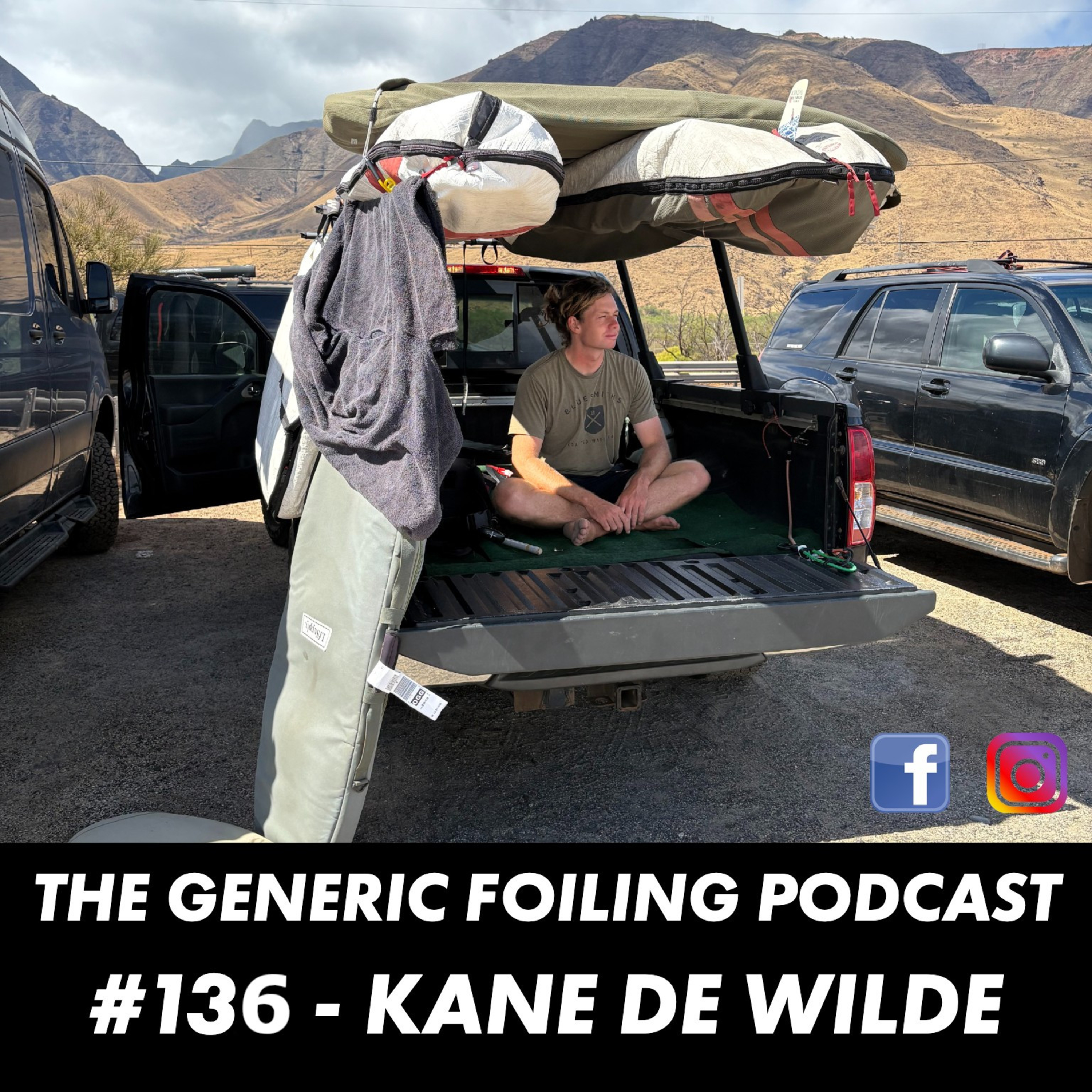
The discussion centers on a foiling athlete and designer's perspective on the sport's explosion in popularity and his evolving role from rider to designer. He finds deeper fulfillment in creating gear that improves others' foiling sessions rather than in his competitive successes. A core design principle is that beginner foils, engineered for stability and accessibility, are the crucial entry point to the sport and serve as the foundational "corner piece" for an entire product range. Interestingly, this focus on pitch stability directly inspired the development of his high-performance downwind racing foils. He details the unique pressure and advantage of competing on his own prototypes, offering complete control and eliminating guesswork about equipment. The conversation also delves into technical design nuances, comparing different foil types and aspect ratios, and how inherent pitch stability in a front wing can allow for a smaller, less draggy rear wing, contributing to overall speed and a forgiving ride.
(upbeat music) - So welcome back. - Yeah. - Great to find the meet you properly. - You've been catapulted into different level of start and I would imagine. Everyone said, "Look, we'd love to have a chat." You were like, "I think I might be ready to talk to somebody again, but you obviously had a bit of a hiatus because you can't even get in the water now. You can't walk from the beach to the sea without being ousted by some of my GoPro-like hosts." - Yeah, it's nice. When you're on Maui, it's nice to have your peace and quiet and get your session and zen out a little bit. And last winter, I think got a little crazy where I think the popularity of foiling has grown so much and the popularity of our spot in Maui has grown so much that last year was nuts. I went from a full parking lot or two rows of parking in the parking lot was really, really busy to like-- - You've put the parking lot on my-- - Any good days or trouble. - Yeah, any good day is the parking lots full. You've got to park outside if you come too late. - You've also then released a set of foils that have gone ballistic in the meanwhile. The boards are going bonkers and then you've just had a hell of a season with the racing as well. So it's all kind of happening. - That's crazy. - Wow. I want to start with how do you feel now? Is do you feel like your identity's changed and do you like it for better or worse that you are so much more than a rider now? You are fully came the rider and designer and tweaker, and you're so heavily involved with KT. - And you like pumpfoil champions? - Foil race leagues, a flea pumpfoil champion. Big ticket arms, those tickets. Yeah, how does that feel? And is it good or bad? Is that what you were always striving for? - Yeah, I think I've always been more into the design than the riding. I feel like I really like riding and I really like riding too. I like to do weird shit riding to test and learn about the foils. And you want to keep a high level of riding to do that, but it's nice being more recognized for the design as well. It's a better place as far as I guess recognition. - You take more pride in that. - I take more pride in the design for sure. - That's great to it. - I feel like it leaves more of an impact. And I feel like riding, like being good at riding is kind of, it's just being good at riding, but if I can create something that other people can use and have fun on, and it makes their session better, that it's a lot more rewarding and satisfying. - And how does it affect the experience of doing well competitively when you're on gear that you're fully responsible for? Does it affect that as well? - It's another level of pressure. If you make something and it sucks, you can't say, "Oh, well, they didn't give me a good enough foil this year." So it's a level of pressure, but at the same time, it's a level of control where mentally you know where you are. And say you have a brand where you don't know what they're gonna come out with, you've no idea what they're working on and then you get sent something and that's what you get. You met, and my mindset for racing and for performing to know exactly what I'm riding and know that ahead of time. And I don't know, I don't explain it, but. - Yeah, yeah, 'cause you can always plan for the season as well, can't you? 'Cause it's not like, okay, great. We know that, let's say you're riding four a brand and they're working on a new race foil. - Yeah, well, yeah, you will meet for it. - You've been timed for the event and you're in a, yeah, but what two months before, how long have I got to prepare? - Then what if it sucks? - Yeah, yeah, and what if I don't get used to it, yeah, yeah. Whereas you can be like, okay, I'm giving myself this time and that's my cutoff date for any big changes and then it's tweaking and I train with it. - There's probably less guesswork though. - There's less guesswork, yeah. - You've gone on this over it. - There's less uncertainty. Because you know, I mean, you commit to the mold, you commit to the parts and it's kind of it, you get it and you know about the design. So if it needs to get faster, you kind of have an idea of what changes you need to make and what you can do as an emergency fix as well. - So before we get on the race's foil launch, work with KT, happy without everything's gone. - Yeah, the guys are really, really great. That's why. - And the foils have gone well? - Yeah, the foils are going well. - They have, but have you been given a small share or you want a commission? Like what's your motive? Like, yeah, what's your tie to it? - I have some commission and I have, I, it's a bit of a split. - That's cool, mission is in salary. So there's stability to it. But it's really motivating for me that the foils do well, financially, but also just as far as personal satisfaction. - Yes. - Well, I was going to say about the gear. It's interesting, like I want to dive into the races because I think there's a lot of, like you said when you said pressure. I think that's a really interesting thing that I want to know your thoughts on. It is funny that the first foil and this should be for the listeners because we will get critiqued sometimes for, okay, it's great that, you know, Freddie and Liam, you started doing your power downwinding, but our listeners like us often because we're not too deep into, you know, downwinding and flouring and all this other stuff. - Yeah. - And it's like, oh, don't forget about still enjoying a wing session or the rest of it. And like those are sick, but what I want to bring out. The first foil that you went to show him was the beginner foil. - Yeah. - Because that was a priority for you because your whole point, which is what Freddie bangs on about, but we made a funny video about it, is this is going to get people into foiling. - Yeah. - Get them on your brand and all the rest of it. So that's clearly something you're proud of. Do you want to talk about that? - Figuring out, it's like a puzzle, right? - You have all these puzzle pieces you need to put together as far as building a range of foils in a line of gear that covers all the bases you want. I feel like the beginner foil is like the corner piece of the puzzle. It's the one you look for that first and you go, okay, here's my corner. Let's build from here. You need to get people into the sport and it needs to be accessible. - No one's gonna be able to ride back if you don't like that. - You're not gonna sell any of the high performing down in foils if no one's foiling. And you need some kind of path, I think, for people to get into the sport enjoyably. - So beginner foils is really interesting on sales wise, whether it's UK or world round. We've had this boom obviously since COVID and we're still dealing with stock issues because everybody, myself included, overstocked in certain areas. You've got bigger brands that, you know, when people are overstocking, they overstock to a level that they can comfortably afford to do. Now me and the UK with a smaller brand, I can afford to do X. Someone that's worldwide, huge brand, their problems are bigger problems. I haven't sold the beginner foils set up for an awfully long time because the industry is dominated by brands that are having to, you know, claw money back to get rid of these things that are perfectly good that sat there. And because I'm not selling it at a discount and they are, they sell more. You've made a good bit of kit by the sounds of things. But what ratio of sales would be any idea, beginner foils to intermediate foils? 'Cause even most people I chat to about KT and KT, beginner doesn't give a flying fuck who know. - I don't. - They're all, you know, they're completely-- - They just care what the price is. - Who does it use? - And someone else saying he's a good rider and he's a good designer and they kinda go, "Cool, okay, it's like me and Eric Guiselman today." - Yeah. - I'm not a surfer, I don't know who Eric Guiselman is and everyone's frothing over it and I'm like, "Hoss, I don't know." So do you know what ratio, roughly, you're doing a beginner stuff to-- - I mean, it's a new product. We don't currently have a super beginner stuff. We have kind of intermediate beginner stuff and it's actually been doing decently well in Europe. But it's more of like an intermediate foil for people who are learning, I want to learn like tax and jobs and like these earlier maneuvers. - Was there a conscious decision and to start and introduce the brand with more intermediate foils? - Yeah. - Then the beginner foils. - The beginner foil, I think, sales wise, is more aimed at centers who do lessons. I don't know how many people getting into foiling are going out and buying a set to run their first day on. They're more likely to go to a center that does lessons and take three lessons to learn how to get on foil. - And get side to newest slides. - And that's even though you're not selling a ton of beginner foils, but that foil that they learn on is gonna make an impression, right? And they're gonna go, "Hey, what was that foil? "What gear did I learn on?" "Oh, I'm gonna go get the next step of that." - I actually would like to have a go on that whilst we're here because I'm curious to see, I used to coach full time and I haven't done in a few years. So it was literally only the beginning of winging really and I'd like to see what four years of progression and actually how good a beginner foil is. And if you said to me-- - That's what you think. - Yeah, yeah, yeah. If you said to me, "Now, you have to only wing "on the stuff that you used to teach on, "podly give up the sport." Because it used to be,
The way I described it was when I get good, it feels like you're foiling through treacle, but that's because it's designed to go so slow so that a beginner can do five miles an hour and get on foil, which is what it's for. So I'd be really curious now if somebody like yourself designing it to see how good that is. And yes, it might not be what I'm used to, but would it be good enough that if that's all I had available to, I'd still be winging, you know? - So what's funny is what inspired the Downwind foil is the beginner foil, right? Which sounds absolutely crazy. - What part? - But if you look at the DNA or the designed theory behind the wing, it's almost exactly the same. The idea is that you want something extremely pitch stable, right? And not that breaches well and it isn't too slow. You need good low end, but you also need a bit of glide so people can once they're up can learn how to, you know, they can stay up and learn a little jibre or some kind of maneuvers. You don't, if you're building a beginner foil, you don't throw efficiency out the window. You still definitely a factor. - Which I think we used to do, didn't we? - Yeah, we used to. - Yeah. - Just get them out of the bloody water. Just get them out, get them gone. - Yeah, I mean, there's other bigger considerations, but it's definitely a big factor. And basically my path of design for the, for the down and foil, started with the beginner foil. Started with I need something pitch stable, I need something that gets a feasy. Oh, I can make it a little more efficient. Let's tweak on it and see what happens. Oh wait, it's so pitch stable, I can run a tiny little rear wing. Oh, what if that's fun in the gorge? I want to make a high aspect that can glide and I can run a tiny little, so you can turn a square centimeter surf tail that keeps it loose. So I made one of those, it was a 900. And we had to go on it in Maliko and it was the fastest race for, the fastest down and foil I had that I could, you know, pump, still pump for an extended period. I was like, fuck, that's crazy. The, the pitch stability and being able to back off the angle and the size, reduce the size of the rear wing, made up for the extra drag that came from this more pitch stable design. I feel like at the beginning it was all pitch stable. It went, all these brands were like, oh, we need to loosen up the holes that we've already got. The fuses weren't really short. And I remember when all the fuses weren't really short, I would bet money that if we went back over our episodes, I was going, no, I'm not using the one that was recommended. I remember having, wherever it was, a phantom or a skate at the time and I chose one fuse longer and I'm like, I'm sure a smaller tail slightly longer would be better. We've gone that way. But now they're still playful, even though the fuses aren't two millimeters long anymore. It feels like this year, there's a lot of people really pushing for really pitch stable foils. Are we going to lose some playful, what's the drive for that? What, because surely you will lose some playfulness. Do you need it for the pumping? Is that a downwind racing thing? Well, that also benefit people like the gym, you know what I mean? Is that a size of wave thing all of us? It's a few things. For me, the reason I want to go pitch tail is so I can reduce the stability of the tail. So when you talk about pitch day, will you mean the front one? The front one? Not the whole thing. You're right, okay. You can adjust the pitch stability with a rear wing and a fuselage. Yet I'm talking about the inherent pitch to billy design into the wing. To then get the tail doing less. Get the tail doing less. Because if you ever, if you play with different tail sizes, the size and the span of the tail, even on the same fuse and front wing, really affects the turning. The angle, it affects the turning a lot. We've been saying it. Yeah, it's good that you finally caught up. 'Cause about four months ago, we did realize that rear wing would make a difference. (laughing) Oh, so it's good to hear that you've established that as well. No, that makes, he said it in a way, by the way. Beep it, yeah. It's the same thing. (laughing) So, right, so you're trying to discover, you're talking about it inherently to the front wing. Yeah, yeah, a little bit. That makes more sense, okay. Anyways, you reduce the drag over the rear wing. The wings don't have to fight each other. But you're not adding more. We're not adding more drag because of the-- It just works out. So it's like this fine balance act of two-pitch stable and then the front wing becomes too draggy. And then whatever you're doing in the rear wing, doesn't make up for it. But if you go, if you get it just to right, it all works out and you end up with something really that is really fast in this certain range. It's like a, it's all balance act. You know that spreadsheet he was working on when we last talked to him, it's way bigger than I have way bigger. So it's way bigger now. If you make an inherently pitched stable front wing, will that make, let's call it a setup now? Will that make that setup more sensitive to changes that you make to the rear wing? Does that make sense? It makes it less sensitive somehow. (laughs) Right. How do I even explain it? 'Cause like, okay, so let's say that I'm, I'm riding a thousand squares underneath or similar designs, but I've got one that is inherently pitched stable. And I go from one extreme to the other on the back. So I put a bloody axis, 25 skinny, belly even there, tiny little thing on it. Or I go on some really powerful profile thing and it will make a difference. I'll let's say 10%. Yeah. If I then were to go to a front wing that was less inherently pitched stable and I put the same two rings on there, will I get a bigger or a less sensitive? If you do kind of, okay. You get a similar change of result, irrespective. Yeah, I think the more pitched table designs are a bit more tolerant of scurry things happening in the rear. If you mess up angle or run something too small or too large, they're a little bit more forgiving. Interesting. Of that. But yeah, you'll feel kind of the same difference. Interesting. What, which wings are we talking about here? Are we talking about the wings there under the banner of Kennedy now? Or are we talking about the ones that you were looking at for the races? About being pitched stable. Yeah. Is that, is that only-- The races and like the beginner foil and how they're kind of the same DNA. What were your racing on? Were you racing on a full prototype? Full prototype, but it's something we're bringing. Yeah, we're bringing to the market. And annoyingly, I can't remember why at the time, but we bloody missed watching the races, which is, I know, which pissed me off because of the live stream. I wanted to go, could you complain for the last two years that there was nothing you look at the dots doing circles and jumping around. But word on the street is that this year seemed to be quite mixed up, maybe. A lot of stuff changed. There was a lot more people from different brands that you weren't aware of. Everyone sort of shifted around quite a bit. And then there was also-- Except for the two at the top. Except for the two at the top, which is a dragon. Where are we with aspect ratio? I think is where I'm pushing towards here, because it sounded like you were on something-- Relative. --rather low respect. And edo's on something very high aspect. Yeah. But I mean, edo won. You can one of them, but he's very different riding styles. Yeah. Edo's a beast. Well, that's a sin-same. You know, what we got a message, frankly, in my eyes? Yeah, exactly. It sounded like you basically just pumped the entire bloody way and you surfed the way. On the first start with the wings. As we said, there's a lot of signs. I mean, you can have two wings that have the same speed range. Right? They take off roughly the same. And they'll cruise roughly the same and the same top end. You can have one that is what's called a lower aspect, like more cord, but thinner. Or you can have one that's thicker and shorter cord. And they'll do the same thing, but they'll be different aspect. They're different. They're different. They're different in an area. They feel a little different. They occupy the same space. Yeah. And so I think that kind of explains the difference between say what I was riding in the races near 800 versus like, what Edo is riding, which I think was the-- was it the 515? Yes, tiny, probably. But if you look at the designs, let's take the F1 momentum. They've got this real thick profile, a real fat leading edge. But they're insanely high aspect and short cord. But yeah, they ride like a bigger foil than they are. Or mine rides a bit like a smaller foil than it is. And so it's not as extreme of a difference as it would seem. But presumably, the benefit of yours would be inherent maneuverability. It's bigger, more area. So I think you might get a little bit more locked in. You have to push more through the water. On yours. On mine, because there's more surface area. But what's nice is on the pump, when you push on it, it gives less. And so it feels good for a body mechanic standpoint to have that stiff feeling under you versus something that washes out. I feel like I can generate more force. I guess is what the entire foil industry's being pushed towards with stiffer board construction. Yes, it's never mass-produced. That is interesting that you say it, though. Like you say, Edo appears to be an extremely physical rider. So you would think--
in a way that he might prefer that what you've just described. We have fascinating thing to-- - I would love swap your set up. - Yes. - Give three months of, well, you probably don't need three months of familiarization, but give whatever period of time you both want for familiarization. - And see what happens. That's my dream, right? - That would be so. - I wish we could all go on a downwinder and go for a day and all swap setups. We kind of did it here. - But you need, do you need familiarization time like we do? - I think so. I think, but it would take me a couple days at least of runs, like three, probably three runs, or a good amount of time on a wing. - Yeah, a good long session on a wing to kind of get an idea of what this foil likes. - That'd be fascinating, wouldn't it? - Yeah, to do a swap. - Yeah, we've done. - And there seems to be a very, I don't know what, you know, you all might hate each other in real life, but there does seem to be a bit of a group of, the guys at the top would just call it your kite there as well. - You all must talk quite a lot. I don't know what, you know. - Yeah. - You've obviously got this public tracing, design side of things. What's Edo like and what's Kylike with tech? - Edo's a bit more on his own from my experience, but it was really cool this summer. We had-- - It's too busy pumping iron, isn't it? I think that was that generally what it is. - That was a little like it, indeed, you spot. He's all in, it's sick. We had, but this summer on Maui, we had Kai Thompson kind of move here, he's American passport. And we had Gido and Pace and Gabby. And the group of us would do, we basically trained the whole summer together. So as we got our race gear sorted, as we got our technique sorted, and as the race season came closer, we all kind of grew faster and more capable as a group. - Together. - Together. - Lovely. - It's fun, like the first few races, the, what is Imuah and M2M, the podium was me, Kai Gido. It's sick, it's the best feeling ever to, you know, go with these guys you've trained with and come out on top. And there's a lot of sharing of information and knowledge between us. - That's good. - You and Gabby must have decision in terms of, are we training, are we setting on the downward run? 'Cause if you're in different moods, like you go to the ride together with time, you're in different moods and you're like, I need to train and she's like, I wanna surf, it could take you a very different amount. - Totally. - To the end. - Do you have conversations like that? - Oh yeah, fully. - Every year. - It's like, who wins? - Who wins the argument? - We'll do our own thing. You know, downwinding is a pretty solitary sport once you're in the water. So we got, you got your social time before and after. - The ones you got. - And you go. - If we're both surfing, yeah, we'll ride together, we'll surf together. For both racing, we'll ride together or sometimes we'll do a bit, we're like, I'll surf and she'll start a little later and catch me and we'll ride together, you know, get a little video and then she'll keep going or, you know, keep a variety. - As someone that used to be very involved in access and obviously you probably still have a touch and a feel of that stuff, what do you think of the new system? - 'Cause that was the brand new, you know. They've, the amount of top 20 people that line with you. - A lot of people on that stuff. - Pretty impressive. - Adrian's a madman. He is, I don't know. - He is a bit. - He was a bit-- - He riddened, he was really, yeah, I've riddened a bit. I haven't ridden the most recent ones in there here. They're a bit stiffer and the connections of it stiffer. But yeah, I hope Gabby and I was hanging out with Kai and I tried to help them as much as I could sort their gear. It's really cool stuff and I was joking yet yesterday that Adrian, during the races, decided the mass were too thick. They're, they're ultra-s. And so he sanded the entire layer, outside layer of carbon off of it. Like the wolf. - Right. - 19 masks, like a week days before the race. So him and Frank went crazy, like overnight, sanding all day. - Frank, how do you sign up for the 50-year-old? - Yeah, yeah, yeah, yeah. That's his no-one-I-till-of-french. - So they were the grinder overnight. Look, it's going crazy on the mask. But anyways, I was joking that all this fucking sanding sent him into a frenzy. He decided to go back and redesign all of their gear. Because the amount of new stuff, the amount of new stuff he's come up with since the races is ridiculous. I mean, all new pump, like I saw it say, or yesterday, like all new pump wheels, redesign the whole system. He came up with that foil drive thing, all the new box and that system where it drops and slides in. - Here's a new fan. - A whole new fan. - A new fan. - A new fan. A whole new, like the amount of new stuff he's come up with, I'm pretty sure since then, is not stopped. - Do you not think that's the value of events of all kinds? Because we've said this about AWS I like. You look at this event and you were to work it out and you tried to correlate what you might get out of it commercially versus how much it costs you to get here, pay to be here, get your riders here, get your gear here, lost time that you could have been spending either training or developing or whatever. If you took the direct returns from that, it might not make sense commercially. And then it could be the same with race entries and stuff. But on the flip side, if you remember-- - I mean, energy, well, while I was gonna say, like the AWS I was an example, the energy that the industry must walk away from this, having reconnected with everybody and had conversations with like-minded people and had conversations with you and gone, "Oh, that's maybe think about that, "if fairly I can go and do that." And the same with Adrian at the races, like these events must really reignite a fire as a designer. - Yeah. - So if you're like, "Oh, I bet you're most busy coming back from stuff, "but that executing the ideas you came up with." - It's super inspiring. And it's kind of like a kick in the butt. - Yeah. - Getting gear on some of those ideas that you've been like considering. That like Keith and Lalo and that like the older guys in the brand, like KT, are more familiar with this than like coming into this as someone newer to the industry. I'm like, holy shit, like gives us really worth it, you know, the amount of money that's being spent. - So so much so, pay the blue aside. - So do this and to do the races and it's crazy and doesn't really offset itself in gear sales. And it doesn't seem like it directly, but in the end, there's all of these like hidden, there's all this hidden value that isn't obvious from the start, where if you wouldn't show up at all, you would, I don't know, it would be. - Yeah, and it would be a negative. - Yeah, I agree. It was Conor from ozone said the same thing. You're damned if you do, because you spend a fortune. But you're also damned if you don't, 'cause if you just fade and no one knows, you don't have the motivation, you don't have that fire at Mubam, you don't have, you know, that competition. - I personally would've talked, I'm not a competitive person with regards to riding. But I understand and appreciate that competition needs to happen to drive stuff forwards. I think it's a very important. And even if it is just froth levels from the designers, go, yeah, I see what they've done there. I could do, and you and Adrian, and all the foil designers, you can see, sort of, conversation is going around. Yeah, you can see, - For Sinkier's to, - Halfway through some of the conversations, you can tell when a designer let yourself has had a thought, because you'd be talking with them about something. I have a saying, - The eyes or the eyes are, I even just walk off of it there, and you know, well, I'm hopefully at least contributed to a good idea, like, - Yeah, it's crazy. And it's so obvious when everyone's literally right next to each other versus, you know, this abstract thing of the industry and people competing like, when you're right next to each other and people are going, "Oh, I tried this, I tried that." What am I, it's, yeah, it's really motivating. There's, we chatted people last year, and I remember, I've no idea what it was, but someone said, "You know, it's much nicer coming to these events now than it used to be." And it sounds like previously, there was, this is me, this is my brand, we don't talk to these guys, we don't do this, we don't do that. And some guys last year, and I would argue that you're probably a catalyst for stuff like that. (laughing) - Cain riding every single piece of equipment on a very quick, including a bloody foil bite last year, but it's comical to watch. (laughing) And I think, you know, we're all friends, and all the riders are all mates, and everyone here is in a really good spirits, and it's really nice to see all those, designs talking to each other, and hopefully learning stuff from them. I think there is still, we personally know that there is still, Rick, within the mission, specific beef, you'll say, specific beef, so there are some. - Which is a shame, because it would be nice to quash those, and I think it'd be really cool for exactly that reason, for a discussion of, to not steal ideas, but to improve everybody, 'cause you could go away with ideas from some bums, but there is obviously a little bit of competition element. - Yeah, people are people, and you know, some people don't get along, but, and I think, things start to really hurt when the industry slows down, and I think that's when a lot of these riffs happen fast, because,
you know people are losing their jobs and losing their livelihood over it. But I really, I think it would be sad not for the designers and for especially the designers and the writers not to be friends because you have all these people that are still passionate about the same thing. Right? And they're all similar people and there's only there's not very many people that are the same. So I feel like the full designers like you have these people like why are such a tiny niche? It's such a tiny niche of people that you would be great friends with otherwise. But because you're part of this different tribe, you're not. And yeah, so I try and yeah, I try and talk to them, I try and talk to everyone and be friendly with everyone and get to know them just because yeah, it's enjoyable. You're also, I will do you? 24. 24. You've got a long time in this industry. I can't really see you dripping off into something else at the moment, but you've potentially got 40 years of working, save, save, save stick to this industry. Yeah. You've got 40 years of being around the same people. So you got miles I'll get on with them. Well, I was going to. Can you, and I don't know what the tips would be, but how do you pump better? As someone that you come to, and I would argue that you are possibly the best pumper in the world. This is the YouTube five. This is clip. Soreels from Kane. What things can we do to pump better? What's up guys? I've been to a five o'clock for five tips. We actually have changed how we introducing and now it's hello. Is it what, what can we do? What can we do to be better? It should feel kind of natural that you should go when you get it right when you get it right, it should kind of make sense. So, but you might only get that for one or two pumps. How do you, yeah, elongate that? I find video of yourself really helps. If you can get any video, if your friend can take a iPhone shot from the shore of you pumping, and you can go and look at that and look at what your arms are doing and, you know, how should your arms be doing? Go on stand up. Whatever it means. Everything should be aligned. Pretty aligned. You know, there's a straight path of force. It starts in your muscles and your muscles have to move your joints and your legs. And everything, all that force should go straight down into the board straight through the mast into the foil. And so, if you're the easiest, the easiest thing to look at is your feet. If your feet aren't on the center line, you're going to, you're wasting energy pushing to one side or the other. Both feet on the center line. Yeah. Because that's definitely something that I would have to adapt because I ride on the wave with a very set stance. And so you're saying immediately right, shift it more central when pumping. I would say so. Yeah. It's more efficient. And there's a big difference somehow between being like a slightly off center and like dead center in the amount of, you'll feel it when you're on and when everything's aligned. That the the main thing you'll feel is it's easier to stay high in the mast. How much should the front leg be driving? Because I feel like I do a lot with the front leg and other people have told me that the front leg shouldn't be doing a great deal. Should it feel like an Oli? Uh-huh. Or should it feel like a bounce with two feet? Because are you supposed to push down with the front and push down with the back? Yeah. Is it one then or another or like jumping up stairs two feet at a time? Two feet. Yeah. Okay. But in reality, you know, it happens a little bit offset. But the closest thing I've found to like emulating it is like going upstairs both legs at a time. Yeah. So is that if you were to say a percentage amount of force like it, it would appear when you watch a video and you try to tune your technique that the back leg is the powerhouse. Okay. Would you agree with that or would you say actually if you're doing it correctly, the percentage power difference. It'd be pretty even. It should be pretty even. But it should be pretty even over a long like average out over a long time, right? Like I'll say I'm I'm pumping for an extended period. Sometimes my front leg will be working a little harder. Sometimes my back leg will be working a little harder and I'll kind of scoot around the board, you know, slightly to try and adjust it. But yeah, where you are in the board is really important. And the speed you're going out is really important. If you're going too fast, let it slow down. It might not have the right. It might not come the foil might not come up under you. The way it should, I guess. So do you. So sometimes slowing down can help because that as you slow down that that angle angle of the foil increase in it, it might kind of push back up at you naturally. So is that going to be like a natural cadence to a foil? There's a yeah every foil can does kind of have a natural cadence. And it's not always better to just beginning for it's not always better to be going faster. You're riding a wave, your feet are wherever you feet are. My I would say mine are probably, you know, my back leg is going to be further towards the tail. Yeah, I'm going to be slated or shut out of this wave. And then you peel off. Yeah, what you do me a feat. Scooch might be a little closer together. Yeah, a little shuffled. And as I come into the wave, into the flats, I try and get my shoulders and my hips and my feet all in line on the center of the board. I think the hard thing for people to get is the shoulders and hips in line because it's so natural to want to face the direction you're going. That's the current argument I'm having in my head. So when we're saying in line, you mean if we were to do a center line on the board nose to tail, your shoulders should line up with that. So you should all be perpendicular to the direction you're going. Yeah, like if you look at how some of the like Kai and I are pumping or if you look at some of the pump spoilers, like I Nicolas Eton, who does like in our three hours pumping. Crazel crazy aligned. All of the only thing that isn't aligned is your head. Just because yeah, it's just balanced, weight wise. I don't I only do it when I'm putting power down though. You know, like, sorry, you want to be aligned when you're pumping, when you're putting power down, but then yeah, when I relax, I bring my shoulders forward to a more natural feeling stance. Consciously. Is it kind of just I'm not convinced that you realize it, it like becomes habit after doing it enough. So when that like switching your brain, it goes, oh, I'm going to pump. It turns into like moving your legs, but it also turns into like squaring everything up, getting centered. Okay. Back foot. Back foot when I'm riding the wave is generally memory a little bit further behind the mast. Okay. When you then peel off where is your back foot in regards to a mast? Yeah. Are you in front of it? Are you over the top of it? And then the foil, but generally over the top or a little, a little bit over the leaning edge. I feel like that's a, that I think you can see. I definitely do that. Yeah, I think that's an easy one for feeling. Yeah, I would, you know, definitely I always do do move the back foot. I don't tend to move the front foot, but I do move the back foot. And I think that exactly where that is an easy feeling thing. Just try a couple, move a bit, try a couple and eventually you'll get used to what that transition feels like to get into the right spot. I think a good way to find the natural cadence of the foil or the natural, like the pump, the correct pumping speed is just to feel the glot like try and stay high in the mast and glide and glide and glide until you're going to slow and stop and drop down and feel how that foil, when that foil starts to like want, no, when you slow down, sometimes the foil will like rise up under you and the nose will come up and then you'll crash down when you stall. You'll slow down and the foil will start to kind of rise under you and push you back up and then you'll pump a pump on it again. That's kind of the right pumping speed, I guess. It's going to be slow enough that it rises, it pushes back up under you, but not so slow that when you jam on it again, you go through it. I'm excited. No, no, no, no, yeah, maybe that will help. Do not have just realized. Go on. We didn't pay for parking on the truck to the well, no, I think it's I'm sorry, I was concentrating and then I suddenly thought, fucking Pedro Parkie. Hollow Boards. Okay, the 80, one of the first with the hollow board. Yeah. Having used one touched it finishes really cool. It's outrageously light. Did think the bun could be improved the bun. The bun. One and nicest spot of the bun. So for those that haven't seen a hollow board in real life, just on the off turns that anything does happen. They do actually include a bun to make it super easy to get working out and then have a repair, which I think is pretty cool. Yeah. How transformative has that been? What's the benefit? Is it worth the cash? I hate to sound like a salesman, fuck, but this is this is a pretty big thing. I find I found it to be competitive advantage. Not because of the weight though. So you pick it up and you go, oh, yeah, hollow, it's going to be light, but which it bloody is. It is light. It's the one I was writing is probably what 10 pounds or so. But you can build a
a custom, you know, custom one pound EPS board much like even build for sure later than that. Why I like it so much is this stiffness. Because you're saving the weight of the foam, you can put that all into structure between the deck and the box, the deck bottom and box. And so our boards have, in the standing area, have a ton of stringers and bulkheads and reinforcement in the deck and boxes that make the board insanely stiff. I wondered what the inside looks like. Way stiffer than a sandwich board. So it does have like a bulkhead sort of internal frame and everything. Yeah. It's just like a boat, you know. It's built like a boat. How much are the ways of retarities things? It must be outrageous expensive to go to all the effort, or three cents a glass, three thousand UF over and what's the normal carbon less than that. Spent the pencil of yes, 30% more, 2900 compared to 2200. But that's like 30% less than 30% more seems reasonable given that it's got a whole internal structure. Well, yeah, it's built it. It's all right. It's built in a mold. You save us. You don't need to blow an EPS blank using another mold. So it's all right. It's just a lot more labor, I think, to lay up the internal structure. So it's stiffness. Is that going to get better as you optimize the internal structure still? I think so. It's pretty good as it is. I would say like the internal structure errors on the side of like being overbuilt. But the way I worked with with Keith and with the factory a bunch to get the the stringers and bulkheads in the right position. And so the way like, you know, we took the early prototypes out and road them and we we rode them with a bunch with with feet of different foils and looked at the position of the box and where what range we're standing in and what part of the deck we're using. Is that okay? This is where we're standing. The bulkheads need to be here. The stringers need to be here. And the spacing needs to be this so that like wherever you are, it's going to be really stiff. Technology's been around for a long seven days anyway. Yeah, it's not going to be. It's hundreds of years, thousands of years old. I suppose downwind foiling is is only really a couple two couple of three years into where we are with the current. Yeah, flock of designs. But why is it taking this long? I think it's because the development has been so rapid and designs have become outdated so quickly that it's not worth investment in the mold because of the mold until the designs are a more stable point where you can say we kind of think now with the big part of the discussion, you know, when we're when we're testing these because we we really I mean you test one of your just. Well, you don't really notice it as much when you test it, but when you go back to a non hollow board, it feels like something's wrong. And so it's part of it. It was a lot of the discussion of like, you know, is it the right time to do this? Is it our is our board going to be outdated in a year? And I think it's at a point now where we can get away with it and we can. It's something that's cool that that gives the team an advantage and that gives people who want the best something to. I mean, I don't know. It was both the mid length and the and the is it called it is a dragonfly and yeah, both of those are kind of up there as more than the most desired anyway and happy for a long time. I don't know yet. So as far as I understand it, weight benefits as you scale down because the volume is less the weight benefit will reduce. But based on the stiffness improvements, will we see a roll out over time of it being used for the other disciplines of board? And does that come a point with for example, the prone discipline where it's like, well, I's not worth it. Um, I think it depends. Yeah, it depends a bit on the discipline like pump boiling and down and foiling are so heavy on pumping. They're so heavy on meeting to get energy from your body through to the board that stiffness is much more important there than say surf boiling where you're more interested in control. And it goes all the way down to the pad of use, right? You can see like on the down and boards, we're using half the thickness of pad as we are on the wingboards. And you present the energy transfer through to the deck. The most bit, I mean volume is the big one. You can use a piece of plywood to go pump for the long because you don't need. Yeah, pump for the ball and get up and going. You also don't add weight quickly because if you've got a tenly a plank, you could build the thing out of a heavy foam and whatever you want to see, but something bloody strong. But yeah, it's going to be light enough either way. Where you've got to be a volume at which point is gone into the wingboards too because we tried some hollowing boards. I was surprised to see the wingboards had a lot of time. And it has, I think, has one here, which is pretty sweet. And we, it was similar. Like you get on it and they're like, oh my god, it's so much more stable, it's so much more control. But this year we put that into the sandwich construction. And so we have regular more EPS construction. And we have a little core where they have, it's like a two different foam densities. Outside is a different, different density than the center. But then we have our like full sandwich, which is second regular like a Windsor board and PVC. And stiffness was a big priority based on the hollow boards. What about filling it with helium? I don't know. I mean, drop volumes. You would think of a border we talking about. On the downwind board, I wonder what the internal volume is. What that's right. You know what? Actually, you would save 100. You need a better. You need a better bung. I mean, if you were to balloon that big, that would be ripping out of your hand, wouldn't it? Yeah. Yeah. Like a small balloon must go over a, a downwind shaped balloon. You're going to say the bit away. Yeah, big spank. Helium's, helium's tricky though. It's such a small molecule that you can't actually keep it in the board. It's a joke, mate. It's a joke. You don't know. Hey, it's fun. No, no, no, no, no, no, no, no, stop. No, go to get a try. You gotta go to get all of it. You. Maybe if I held a balloon in the next bump, yeah, you could. About the environment like, oh, no, you have someone with a rifle being on it. Yeah, I'm going to get the rubbish away and. Edel's going to hire a guy with an air gun. Yeah. Yeah. Yeah. I think Ken's clear Kevin and the heating crew. That's surface finish. That will be fine. Dimensions with the racing, with this upfoil in, where are you with dimensions of board? Change. And does it mean that's all the conditions? Yeah. Pendant conditions. Or will you just battle it up? Like, I really like shortboards. Last year I wrote an eight. Oh, I think seven eight eight. Oh, sure. I just got a short eight short eight shortboard. We should get I guess you're on eight four. Okay. But that's it. So that is short to you. What's long nine and a half like more than eight six is pretty long. Right. We're in down board. Yeah. At least in Hawaii. Because I know because it's changed. It changes in location. That's changed. Oh, changed over the years. I was able to stabilize a bit because it went from like six being a long board to like eight foot so crazy long board. Oh, nine guys are making nine foot, 10 foot even. Dave West says he doesn't use less soon. And he likes a long board. And it's stabilized a bit. I think most people agree now that somewhere over eight six on a down board is getting on the longer end. I personally, if like my everyday board is seven seven to five, I had to choose one seven seven. But the production one is 19 I think right volumes one or five. And just to just stay that volume no matter what you're doing away. I find it on the narrow I find that on the narrow boards. It's nice to have a bit extra volume because it's on the narrow boards are easier to sink. Like if you pump on it, it's easier to put the thing under. And so I find the wider the board, the less volume I can get away with. And what do you work in? 88 kilos. It's nice to see that actually, you know, in that particular discipline, the pros are using what I would also consider to be the best. Well, that's not already intermediary. Yeah, yeah. That's stabilized quite a lot with the how that it's changed because with every other sport, you get a big one, you learn on a big one and then it's a race to the smaller stuff. Whereas if I downwind falling, it feels like everyone's kind of gone to the 105 110 probably it's going to say hundreds is probably not even that 105 110 seems to be a really good mix of your average size. 80 90 kilo blow is going to be on. Yeah, I think it'll change a little bit. But we have similar like we're still even at the top level. The idea is that you struggle to get up because if you're if you're getting up to easily you're adding to give a good foil. So you end up in a similar position where you're always struggling to get up. And so you end the board. You need to board the guitar. What do you think of the gate to with the reverse outline? I was like shocked the first time I saw it. I it's great. And you're aware of that way. Just like what what just what what the fuck? What is this thing? Pretty sure we'll fill that in. Yeah. And then I
I thought this is really ugly, and now my eye is adjusting to it, and now I'm saying, yeah, looks kind of good. - Kind of trying to keep it. - Did you use one? - I have used one. And I was at compare to you every day. What's good, what's better? - Well, my reference is like the board I raised, as I tried, I took one first spin, and I found there were a little, compared to what I'm used to, there are little, it's a little bit less glide on the paddle, but what they do really well is they, they release from the water really well. Like once you start skimming a little bit, once you're skipping, they are really, really good at getting off the water. And so it's a bit different style. Like the boards I ride are a bit more on the glider side, and so if say a frank board is even more on the glider side, the gator is insane at just letting go of the water. And they seem, it seems like from the feedback I've heard from people that they really enjoy the stability, that kind of big fin at the back creates. - The ability to stamp that tail down has taken over is very important. It seems to me because your board is hugely competitive. The Mako is hugely competitive. You see the dispenser brothers board. I've got that scoop at the back now, which used to be flat as a pancake, and the gator as much as it might sit in the middle of a best door shop, it's a stop. Constamp that thing down, I would imagine that that's just the way it is now. That's why we're at this point where you have established enough of a shape to be able to go now. We'll look at the hollow constructions. - Yeah, exactly. - Yeah. We're like, oh, we're happy with this. We're getting up on the stuff we want to get up on. Let's, that's where, when we're working, when I was working on these shapes with Keith, Keith is really good. He's really good at dialing the boards in, and then I'll hit him with some random idea I had. So we ended up going deep into aerodynamics. So once you're up, how does the board actually fly? What happens when a big gust comes and hits you as you're coming across the wind? And what does that do to your control and your speed? - That's what makes me curious about the hollow boards you get. The dispenser brothers say, and obviously, the swing weight is phenomenal, because it doesn't weigh anything, but is there a point where-- - Two, like, you get blown, yeah, bla-la-la. For sure. - Is this big and in the sub-race stuff? - Yeah. - The great big, the hollow boards and the great flat-war boards that've got huge sides. - You can't go across that. - You can't crosswind on that. Oh, you get blown off of them. So where were you at with? - Yeah, so that was part of the shape of the, both the mid-length and the end boards. It is, we want it to be light. - It was a real light. - But we don't want it to get blown in a gust, right? - I would just say, sorry, I just, I've had a conversation with Bubble, who's the rep in the UK, and he's saying that one of your little things with the board is that no shape is designed to deflect a little bit of air as it actually blows over. - For sure. But not just the tail shape as well, because there's more generally on a floorboard, there's gonna be more nose in front of you than tail behind you. And so there's an imbalance there as well, if you're crosswind. The nose will catch more leverage than the tail does, and so to balance that, the tail needs to create a bit more force. - Because you don't, it's better to be blown away from these sideways than to be forced a direction. - It's better to just do this. - Yes. - Not to be forced downwind. - Totally. - So are you looking for an equal? - I'm thinking about that session with Steph in Westerly, no bumps. We have a crazy winter storm session. Basically no bumps, but literally the wind was 50 knots. And you were being blown. - No wind, am I trying to turn? You couldn't turn. You moved the board across and you would just get pushed straight. - Some of those two, yeah. - But yeah, that last year on Narada Molakai, because a lot of the run, you're kind of cutting right, and you're going into the wind, and you can feel these gusts hit your board and slow you down, and turning my hat backwards and tucking in my shirt, trying to get a little extra speed, and ask the board, you need the board to help you as a-- - Have you worn a cyclist arrow helmet? - You know, I have not a helmet, but I have bought a cyclist shirt. - Really? - It looks really cookey. - I think you should design a narrow helmet. - Yeah, and see, see what. - I find, you know, there are little hats like this if I thought about getting one of those. - Oh, that's just for the sun though, isn't it? - Yeah, that's true. - But it's better than this big bucket hat. - That is true. - Right? - Yeah. - Depending on the direction you're going, you're going to have to show your head. - That's long. - Yeah, that's a draw ad. - I don't want to bother. - That's not helping arrow. - Wow. - That's what we're at now, dude. - As a back to the, I want to re-circle to the pressure thing. You know, as a rider for a brand, depending on how ruthless a brand is, maybe, I'm sure a rider's contract's probably changed over the years, but I'll be very surprised if you didn't have a set up where as a pro either at the top, you know, you get, that's your salary, but yeah, a bit of a bonus for that. Then when you get a bit of a bonus for that magazine feature or whatever, there's always incentives. - Yeah. - You're got a new brand, there's so many eyes on the races. Is there anyone else chatting to you about, like, you know, having a good performance to boost sales, boost explosion, all that sort of stuff? Do you even think about it? Or is it something you have to consciously block out your head? Because, you know, you're all of it. - Like, do you feel the pressure to come and talk to the likes of us? - You always say it's from the sales thing. - Yeah, I mean, it's part of the job, I think. You know, you come and you do well for your brand and you do well for the product you create. And you, you know, give a good word and show it off a little bit. As far as the race is, a lot of the pressure, I think, is self-generated because I have a lot of personal investment emotionally in what I'm creating and the training I'm doing. And so I want that to go somewhere. And it, it's good to kind of be going, it's kind of good to be on two fronts, the design and the riding front because, say, even if, I blow it on my training and riding. If I feel like I have a design that had that potential, there's some satisfaction. So it's a bit less pressure, I think, because, yeah, you have multiple fronts here. - And I guess maybe it forces that mindset of, oh, at least I've learned this out. - Yeah. - Yeah, I would have made like, if you could have done, but if you win, I'd be harder to just be a rider. Because there's so much pressure, you have one focus and there's so much pressure on a singular, singular focus that it's like all or nothing, right? - Are you at the point where you are doing dedicated physical training outside of Pum thing, are you thinking about Dyer, all of that sort of stuff? And will that ever suit you? - Gabby's the push for that. - Yeah, she's shooting. - Amazing. - She's in the way. She's super, super, super on her diet, her training, her technique, crazy, crazy amount of dedication. - Do either of you have like a trainer, an external coach? - She has, but you've done for each other. - She chats to a bit and I do it a little bit as well. Nothing super formal. We don't really have a coach that we go to, but she's done a lot, she did some competitive swimming and she did whatever some other competition sports in her life that she's learned a lot from, especially on the training front. - And as if she pushes me, she's like, you have to go to the gym, I went to the gym like three times in the race season. So I'm pretty bad at it. I have a hard time working and then doing downwinder and then getting after you're done and I need to go work out for it. - Well, she's not pushing limits on the bench. - I'm not pushing limits on the bench, but I probably should. - And the churro, can I one more on that? With the coach, is that the coaching that you have that are on the verse? - Is it physical focus, diet focus, that sort of quantitative thing? Or is there a bit of mental coaching with that as well? - Think of a bit of everything. I was talking to, down at the stinger booth, I've known Steve actually for quite a long time now, since early foiling, he came to Maui and I wrote some of his stuff. Anyways, some of the guys at the booth are, he taught ski racing for a long time and some of his friends at the booth are snowboard racing coaches. At a fairly high level, I one of them was, or a couple of them were. And it was one thing they said was really interesting where they're less experienced riders, they're more focused on their physical, their technique and their line, their technique, their setup and the more advanced the rider, the more mental it becomes. The more they're focused on this rider, like this rider in the practice day, two days before the event, can crush everybody. - Yeah, would've worn. - They're so fast, they're so confident. There's no way they can lose. And then another person on the team is blowing it,
in all the practices. The event comes and they completely switch where the guy who's blowing it in the practices is now faster than everyone and the guy who is faster than everyone is completely blowing it. - Which camp do you think you sit and you thrive under the pressure, or is it a real struggle? - I try to ignore it as much as I can, like what I was telling myself. This year is that we've done the training already. You know how to foil, you know how to race. You know? - You can trust, you can trust your mind and body to do the right thing in the moment. That's all you need to do. All you need to worry about is getting to the start line on time. The only thing you can fuck up is not getting there on time. - Yeah, you're not on the start line when it starts, your fucked. Which we've been told is a hitting drop off. (laughing) - Luke said, didn't he? Luke said, look at this. - It's a mission to get out there. - Yeah, and fed and watered and. - Yeah, yeah, so focus on that. There's nothing you're gonna do, even the week before the race. There's not much you could do that's gonna change the game. - Are you coming off foil? That's all on these races now. Can you afford to or not? - I had a bad stretch this summer. - I told you, I fell. - Voyager I fell as well. And I was a bit of a curse for a couple of races of like, I would've got a six start and I'd be way out ahead and then I fall and then I'd have to clot back again. - That's one thing that I would think gets talked about enough is 'cause we don't video, you don't video you fall, isn't it really? And if you do, you don't put it on the old socials because why would you? But I think there's a bit of a disconnect between people realizing that these big sins that you do, okay, take the races out of it. Quite often you might sit down and catch up with someone for a minute, take on some fluids or something, have a chat. I don't know how much of that there is. I go and do this stuff and I'm falling off every two seconds and how are these guys doing big runs? - The casual races we take a lot of these year and we don't fall very much. - But can you afford, say it's you and Edo. - Yeah. - Is Edo falling off and you're overtaken and then you fall off and you're doing it? - Most of the time you don't know one false. - Okay. - Yeah, if you fall something's like, you really fucked up. You're gonna be usually gonna be way back. So like, like even as a good example, lying down about saw a palm frond in front of me. - Oh wow. - As an elite, a palm leaf. - Oh, okay. - And full decision paralysis. I was looking at the thing and I could, I saw it way or something and I just got what target locked and ran straight out of it and felt. - Wow, okay. - So this shit happens and I fallen before a couple years ago, like I had some falls on the walk who races where I'd eat it and they would ruin my race because you're so frantic to get back up, you're already so gas, you're massing out your heart rate, you fall. So you're super gasped and then you feel the lactic acid build up in your legs and you're like shaky and wobbling in your hearts racing and now you're panicking to try and get back up because every second you're losing distance. And that really got to me previously in races where I wouldn't be able to get back up and then I'd get back up and I wouldn't be able to find my pace again. - That's a mental thing. - Yeah, that's a big mental thing. - That's a big one. - And I forget, I don't know what race it is or it kind of switched for me. I think it was one of the Alex race, the Alex Aguera practice races that we did. Maybe because the pressure was lower. Where I fell and I was like, you know what? It's not worth panicking and gasping yourself out. Take 10 seconds, sit there for 10 seconds and recover your breath and recover your legs and your mind. Then slowly get back up on your board and paddle up like you would on any other day. Like don't, it's hard, but you just cannot pressure yourself into getting on foil quickly. And so that's what I did this year in the two or three falls I had, it's like give yourself 10 seconds to breathe and recover and it ended up, I got back up and could find a flow again and ended up like, anyway, I got the distance, I went back to like 10th place and then got the distance back again. - That feels like a competitive maturity. - Oh yeah, I was literally like that's an athlete. Well, not only is that a maturity, but the fact that you said I hit a palm leaf and you blamed it on decision paralysis. I would have blamed the palm leaf. You know what I mean? I wouldn't be thinking, oh, I could have done something. I had been going the palm leaf ruin my race. - Yeah, I've had some. I mean, you can hit just randomly at a fish too. - Yeah, yeah, exactly. - I've had that before where you just are suddenly down and you're fucked. - How, what's your favorite feeling racing? - Like, you know, let's say you get locked in, you know you and Edo are somewhere, that's you too battling at the front. Do you prefer that? Do you prefer being in the lead, keeping it? Do you want to be just behind him or is there a satisfaction in you actually having a crash and now you can see that you're up to 10th and you're fucking, you know, one after another. I'm locking them down now, I'm pushing past, which is the preference out of those situations. - My favorite race memories are the ones where I'm not in the lead. My most fun memory was last year's Margomolka where it was Edo, Finn and I, literally like, we could have all been fit in this room, the whole way across the channel. That was sick. I mean, you can talk to each other and you're fighting for every bump. It's just really exciting. And the focus you get is really cool. - Do things that generate the fastest kilometers as well? - No. - No, really not. - Definitely not. - Really? - No, the fastest kilometers are like when you're completely alone, I think, because do you make more short-term decisions when they're right there or something? - Yeah. So the bumps are not even, right? If a guy 100 feet away from you gets a bump and gets a really good one and goes far ahead, you're not gonna get the same bump, right? So you see this, like, it happened here this race, a lot. Finn would get a good one and gain a bunch. And if you, in that moment, stress out and grind forward to go catch him, you're wearing yourself out too much. You just have to let him take it and wait. And then at some moment, it'll come back to you. The ocean will kind of give it back and he'll begin a slow section and you'll get a good one and get all the distance back. When you're by yourself, it's really easy because you don't have that pressure of someone gaining one bump on you. - Suddenly. So being in the lead is a lot less stressful and a lot faster, I think. - But we've done as fun. - We have to do one. - We've done as fun. - We have to end. - We've got it. - I can't even fucking do the right one. - At some point. - I can't, I need a little 5K. - You say that, but power-winging is gonna be because your thing is always being getting steady on fall and down-winding. And power-winging is gonna give you a shed load of time and into the rhythm and you will probably find if we keep power-winging, keep power-winging. Next time you paddle up onto foil, the transition into H. - My issue, I mean, we've kind of got the paddle up. I haven't got the read in the ocean element to it yet. So I keep coming off foil because I've done it where to go, whereas you're right, maybe. - I mean, the power-winging. - Power-winging is gonna help things. However, you're then going from a really fucking fast foil to quite a slow foil in comparison. I don't know. I'd love to, I'd love to be involved. You know, we've got the big races in Croson and Santa Pay popping up and there's obviously, there's probably more gonna be coming in future in Europe so they're easy to get to, but that the minute for me. By all means, you need to, so you can do the runs, but if I can't do it. - How do you transition from down-winding to racing in terms of, - Oh, yeah. - Because when you've got a good, when are you trying to accelerate past the bumps? You know, our local one, I think maybe is, a home is maybe more representative of what you're doing. From everyone, and we do get shallower, like less steep bumps, do move quickly. And then they'll roll on through, but then you'll get gaps in between where there aren't any of those and there's only the short period stuff and it's all a bit more varied. So I'm trying to get in my mind is, when are you in the grind mode to try and move forward? Is that just when you've not got those really good fast bumps and you just make it pretty much for another one? - Yeah, when do you do the grinding as you call it? - Kind of like, let's say in the channel, it's the easiest, you work the least, or you work less the faster you go, because these big bumps have so much energy, you get on them and that's your break. - Yeah, you don't pump, you're never gonna overtake it, so you don't even bother grinding. But you do grind to keep that speed and connect it into another of the same. - If you can see one. And so the whole game racing, well, there's a big physical aspect of it, but the whole game is that vision and reading it,
seeing the way to the next bump in the most efficient way. - In the next thing. - That's where, yeah, I mean, you ride with a lot of good riders and it's especially like Dave and the way, or even like I went canoeing with Jeremy and I'm really slow on the canoe, but it's crazy the way these guys are able to read the ocean. - You think that's more technical reading it when you're in the canoe than falling or just-- - It's just so different. - Just different. The reading really is where your speed comes from, I think. - So what are fast kilometers now, average to over the race? What are we down to? - 145. - 145. - I think that's what my channel average was from to, 145. - It's fast, isn't it? - Yeah. - Oh no, I do. Is that fast? - Well, just that's a thing about that in kilometers and hour. - 33, 33, 34 cases. - You're in excess of 20 mile an hour average. That feels fast. - Yeah. - But there are no defense on the bumps. - Yeah. - The whole speed thing, it made me realize how absorbing the discipline of downwinding is and how much focus it requires when I've done, we've done a local run and I had tracked out one on my watch and I can't remember what the max speed was. I think my max is I've only ever got up to 22 mile an hour or something is a maximum. But when you're doing it, it doesn't feel fast because you're going with the wind. So actually it's quieter when you're going, then I know I know the rest of it. And it like, it just, everything felt so slow. You're so engaged that you've kind of, it feels almost slow motion, everything happening. And then I remember going out for a cycle without the day after. Remember going out for one hour a cycle and I looked at my watch and I was like, I'm doing 34 kilometers an hour or whatever it was at this moment, this is what I was doing yesterday. And when you want a bicycle doing it, you're like, "Ah, this is fast." - Yeah. - Yeah, it's wild. - That's funny. - And then you come year in, we averaged miles an hour. Fuck. - Okay. - Our top speed was like 25k's. - Hmm. - Which is great. - The biggest you go here is to go sideways, isn't it? You don't go forward. - It's not. It was pretty funny seeing the average here. But anyways, yeah, I mean racing, yes, it's super focused and the bump reading is super critical. But I think the good, like how you get good at bump reading is not just to race, focusing on racing. - Pumping. - It's not a great way to get good at reading bumps. - I think I wasn't saying you need to spend more time trying to enjoy the bumps. - Yeah, if you're enjoying it, looking and you're surfing, I think you'll get better at reading faster than you do racing. - I think I got, I started to get way more efficient by just consciously being like, just stop pumping. - Yeah. - Because you explore more of the speed range of the foil as well. - Yeah. - You're not thinking I have to be going at this speed. You let it slow down and go, okay, I'm at this speed now. Where's the energy to give me a bit more of it? - Yeah. - Sick. - You're surfing. - Before our two, before our two roundup questions, just what are you saying in the future? What are you excited to design? You know. - Beginner foil. - More beginner. (laughing) I was joking yesterday. We have to make one like toys as big for next year. Just for fun, you know. - Yeah. - I was out of the hatch yesterday and I put the beginner foil on short fuse, tiny little surf rewink, and a 20 liter board with a four meter wing. And the foil's so big that if you get, you'll be suncuped to your neck. - Yeah. - A gust will come and the foil does all the work and it's just as easy as any other board to get off the water. And once you're on this tiny little thing, you can like do a little Ollie air, hit the water. - Catching the foil will catch you and you lose like six inches of mass eye. - Wow. - It's like totally different, super fun. I love to mix it up. But for-- - I love the way I've been trying to-- - You're a cherry watch him, sorry. But I love the way every time you see him on the foil. - Fuck is he riding now? - You know what makes me think. You live out because you can. Usose keen foilers will have a beer or whatever. And one of the ones that keeps recurring is, I'd love to see either a race or a surf or a competition or any falling discipline with pros actually using massive equipment. - Yeah. - Who could do the-- - We're talking to her. - See, there is, you live it out. You just go, yeah, let's try it and just go. - We were talking about this like next year, we should do a course race, winging down here if there's wind. Where the minimum foil size is 2000. - Yeah. - Everyone's got to be above 2000. - But that's whatever you want. - That might be hilarious. - If you hilarious. - 'Til 10 minutes in, you're like, okay now. - Make the course, you're like, upwind leg. - Yeah. - Be like watching, what was it, the CrossFit Games ages ago? They were doing marathon on rowers. And they set go. Three to one go and you're like, yeah. - 20 minutes later. - They're both mixing it up. I don't know. Try new stuff, put yourself in a position where you're, you know nothing and you're a beginner and you have to figure it all out. Because even if it's totally unrelated to foiling, there's something you'll take from that and learn from that that you'll, you can apply somewhere else. In foiling or in your life, I feel like. And so doing stupid stuff on the water around about way applies to whatever, either high performance side. So I'm excited to do more stupid things on the water. - Well, stupid stuff. - If kind of wild or and up to you, KC foiling was a car brand, what would it be or what would you aspire to be? - Ooh, I had a lot of options in mind. I just got to figure out what's the right way. - What would you wanna pick? - I really like, I would say my favorite high end car brand is probably Konnexegg. I love watching. - That's an interesting show, wouldn't I? - I love watching Christian on Konnexegg's talk videos. - Yeah, I love the passion he has. I love that he makes just the craziest out there stuff. - I'd love to know with a company like that, with the budget they've got. - Yeah. - Like let's say you defined the best. We'll talk about the hollow boards. I am really curious about this and I hope no one in a turp resist has taken away from our industry. If you gave them that shape and you went, we need to attach that thing to the bottom and it's as if it's as if it's possible. - Yeah, what would they call it? - That's it. That's the show. That's gotta go on the bottom. Those of you are only two parameters, build it. However you want. - Yeah. - Like how sick could a brand like Konnexegg make it? You've seen the carbon wheel mold. - I know. - Okay, cool. - That's the way. - That's a good thing. - Yeah, you guys have never seen a foil before. - Yeah. - Just go crazy. - You build this. We want it to do that. - Yeah. - And Monday. - Is there anything else you want to put in room 101? - Ooh. I don't know. - Second. - Second input. It could be that palm leaf. - The palm leaf? - Yeah, that in there. - I mean, someone needs to come in next year with a big net and just collect it all. - Clear the cool. - Get rid of all the sharks, get rid of all the turtles. - Kill them all. (laughing) - No. Yeah, and everyone wants to see a palm leaf again. - Fan. - Thank you. - Thank you very much. - Oh, and someone has to look into F1's financials on that Jetsky hire. - Which one? - Why, what, what, what? - You didn't see the video. - No? - No. - Oh, fuck. Everyone keeps telling me about it. The Jetsky cut me off at the end of the M2O. - Oh, I saw something like that. - I saw something like that. - It looked good back to me, but people just so pissed off about it. - Was it branded out? Was it? - No, it was. - No, but we were joking that like, Eddell hired this idea to come. - Raffleck off at the Raffle. - You're driving. - Yeah, yeah, yeah. - What, I'm trying to think what swearing in French is just in French. Anyways, can lean into it a bit. - Cool, how you been? - Be a time. - You got a wonder back. - We look forward to you getting into fishing. - Oh yeah, wait. That might take over though. Don't let it take too much time. - That would be surely you and Eddell out for a fish would be the number one. Number one video in foil, you know. - You know, it does not need a hard fishing. - Come on, let's make that happen. - Cool. - Thanks everyone. Hope you enjoyed it. - Thank you. - Thank you, Kate. - Oh, it's so nice having people in person, isn't it? (upbeat music) (upbeat music)
Podcast Summary
Key Points:
The interviewee, a professional foiling athlete and designer, discusses the rapid growth of foiling and crowding at popular spots like Maui.
He expresses greater personal pride and satisfaction in designing foils that enhance others' experiences over his competitive riding achievements.
A key design philosophy is prioritizing accessible, pitch-stable beginner foils as the foundation for the sport and product line, which also informed the development of high-performance downwind racing foils.
The designer explains the advantages and pressures of competing on his own gear, highlighting the control and reduced uncertainty compared to using externally developed equipment.
The conversation explores technical design trade-offs, such as balancing pitch stability, efficiency, and maneuverability across different foil types and aspect ratios.
Summary:
The discussion centers on a foiling athlete and designer's perspective on the sport's explosion in popularity and his evolving role from rider to designer. He finds deeper fulfillment in creating gear that improves others' foiling sessions rather than in his competitive successes. A core design principle is that beginner foils, engineered for stability and accessibility, are the crucial entry point to the sport and serve as the foundational "corner piece" for an entire product range.
Interestingly, this focus on pitch stability directly inspired the development of his high-performance downwind racing foils. He details the unique pressure and advantage of competing on his own prototypes, offering complete control and eliminating guesswork about equipment. The conversation also delves into technical design nuances, comparing different foil types and aspect ratios, and how inherent pitch stability in a front wing can allow for a smaller, less draggy rear wing, contributing to overall speed and a forgiving ride.
FAQs
The beginner foil was designed as the foundation of the product line, focusing on pitch stability and accessibility to help newcomers get into foiling and enjoy their sessions.
It adds pressure because you're responsible for the gear's performance, but it also provides control and certainty, allowing for better planning and preparation for races.
Beginner foils are often aimed at lesson centers, while intermediate foils sell more to individuals; exact ratios vary, but beginner foils help build brand recognition for future upgrades.
Pitch stability allows for a smaller rear wing, reducing drag and improving speed, especially in downwind racing, while maintaining forgiveness and ease of use for beginners.
Different aspect ratios can achieve similar speed ranges but offer varied feels; lower aspect provides more surface area and stiffness, while higher aspect can feel more efficient and responsive.
Designing gear that others can use and enjoy is more rewarding than just riding, as it creates a lasting impact and enhances personal satisfaction.
Chat with AI
Loading...
Pro features
Go deeper with this episode
Unlock creator-grade tools that turn any transcript into show notes and subtitle files.
 PodcastTranscript AI