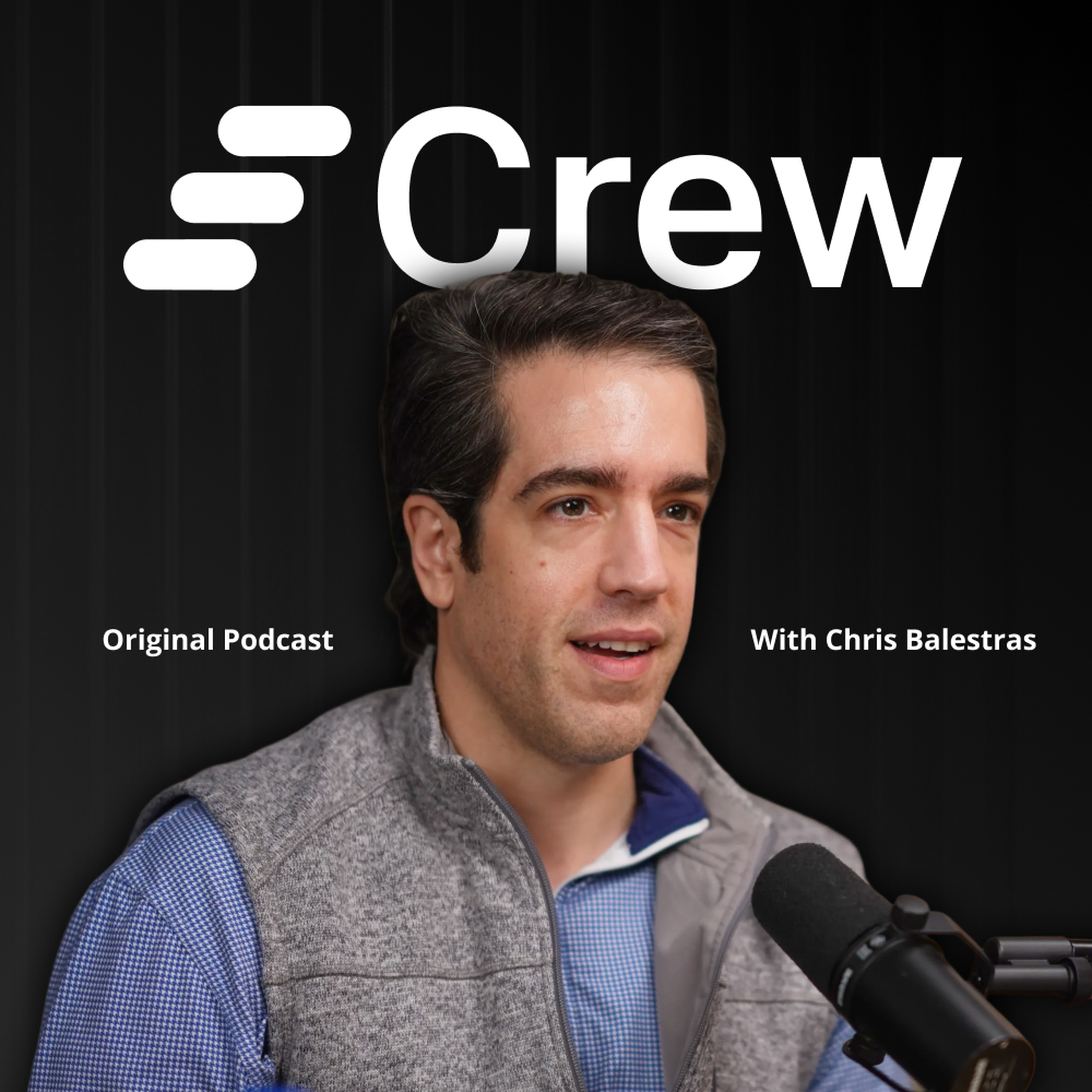
12 Things That Top Candidates Are Doing To Land Offers in 2026 w/ Chris Balestras, Co-founder @ Crew
54m 3s
The podcast episode, hosted by Chris Boleschteris, co-founder of Crew, with new hire Matt Roberts, outlines 12 behaviors top sales professionals use in interviews to secure offers in 2026. The discussion emphasizes that many candidates fail at basic practices, such as responding quickly to emails—a habit that signals interest and competence, akin to dating etiquette. Sending personalized thank-you notes the same day, referencing specific conversation points, is another underused tactic that sets candidates apart. Energy levels should be high but adapted to the interviewer; Chris shares a cautionary tale where following bad advice to lower his energy for developer-focused roles led to rejection, teaching that authenticity and matching energy are better than assumptions. The "tell me about yourself" pitch should be a tight, 90-second elevator speech that remains consistent across all interviews. Candidates are urged to openly communicate their enthusiasm, like naming the company as their top choice, rather than playing hard to get, which can result in lost offers. Negotiation is acceptable but should be moderate; over-negotiating can seem unrealistic and cost opportunities. Throughout, the hosts stress that being coachable and curious is essential in sales, where daily improvement is non-negotiable. The episode serves as a practical guide for interviewers, highlighting that strong communication and proactive behavior are foundational to landing roles in competitive sales environments.
You want people who are coachable, you want people who are curious. Because in the sales world, if you're not getting 1% better every day, like you're going to get fired in the quarter. And that's just the reality. I'm Chris Boleschteris, co-founder of Crew. In today's episode, we go through the 12 things we see top sales folks doing in interviews to land offers. And joining me is our new hire who heads up our business development practice, Matt Roberts. We're spawned back fast. This has blown my mind. Of course, the top 1% and top 5% of AES. Always do this. It's like, went on to a date with somebody and then I texted them after. And it was like, that was a great time. I would love to like see you again. And they just took like four or five days. I'm like, this person's not interested at all. I think that it's super important for candidates to eventually at some point say, "Listen, I am interviewing elsewhere, but you guys are my number one. And I'm really excited to work here. And this would be huge for my career." A lot of these might be people overthinking things. And they want a little bit of hard to get. They want to be able to negotiate and push for a higher raise. But it's like, nah, man, go for it. Let 'em know. Tell me about yourself. That needs to be 90 seconds or less, two minutes max. And that's it. I think a lot of people, they're not even aware of this. This should be like an elevator pitch that you have about yourself. It doesn't need to change. You can interview a hundred different companies. This should still be the exact same thing. Negotiate, but don't order a negotiate. We've seen this in real time with candidates losing offers because they think that they're in a movie. You need to negotiate to an extent because there's a lot of negotiation when it comes to sales in general and in life. [MUSIC] Welcome to the crew podcast where we have conversations with the top go-to-market leaders at AI Natives and SaaS startups. I'm Chris Boleschress, co-founder of Crew, a go-to-market recruiting media and investing firm helping seed through Series D AI Natives grow now on the episode. All right. What's up? What I'm trying to get at a little bit more is a weekly podcast. We have on the crew podcast, the VPS sales, CRO's of the AI Natives every week. And I did my go-to-state of go-to-market recruiting episode and people were like, hey, you should get on there more and kind of give, what are the things that you're seeing running or recruiting media and investing firm with a lot of these AI-native companies? So I wanted to bring in what is our new hire at Crew. And I'll kick it off with a quick intro to map. Today's episode is essentially just like 12 things that top interviewers are doing and avoiding in order to land offers in 2026. This is a mix of what we've seen in both the BDR, AE, sales leader. Really, this just goes for how do you become a better interviewer and making sure in some of this is going to be super common sense to those listening, but you'd be surprised at how many people are not doing some of this stuff or they are doing some of this stuff that we're telling them not to do. But before I even start jumping into these, Matt, thanks for joining me. I'm usually pretty lonely on these solo episodes and it's good to have a second man on the mic with me, so I appreciate it. Yeah, thanks for thinking of me. As I mentioned, I'm podcast-pilled now because this is going to be three in a week that are not mine. So, excited to be on here. Definitely, yeah, good to do it with friends, right? If you want to go fast, do it along if you want to go far, do it with friends. So here we are. Oh, yeah. And you mentioned, in sense, I don't think there's a lot of that these days. So, I think a lot of people will be surprised. Yeah. Well, Matt, I want to tell the audience who you are. You are our first hire, so Kaylyn and I as an employee of crew, but why don't you give a little bit of background on yourself? Why you would be somebody who would be good at this? Why we hired you? Why you joined crew? But give us a little bit of the rundown. Yeah, can I share the whole story? Dude, absolutely. Yeah, just, yeah, let it rip. So as maybe no one who's listening to this right now has heard because I might be a new face for some of you, I fell into tech sales. I went to school at UCSB. I went down to LA, worked in the film industry, music videos, reality TV, came back to Santa Barbara, was bartending and all my friends were SDRs at ProCore and at Appfolio, which were two big, I guess, B startups back in 2013, 2014. And I was serving them drinks on the weekend and they're like, dude, you got to come work with us. It's so fun. And then I got an interview and it was really like a workaholic situation. We all lived together. We all worked together, go out on the weekends. It was like Groundhogs Day, which was the best. But then I quit, ran away, traveled, lived my life a little bit and decided I needed to get paychecks again. So I ended up coming back to tech sales in 2019, was looking for a remote company, Pre-COVID, found Chili Piper, joined as, uh, employing 18, was the third SDR. I'd been in AE, but I was just like, I want to find the right company. We talk about that a lot. I wasn't hung up on the title. I wasn't looking for a large OT. I was just like, I want to find a good company and I wanted it to be remote because I was back up in my hometown. So that's really where my career kick started, again, I would say. But within six months, I was the SDR manager there. I started hiring people, um, kind of fell into the SDR leadership role, but it just felt very natural. And about a year and a half later, I was the director, I had team of 30, had some managers, and, uh, yeah, really blew my career up there. From, uh, Chili Piper, I went over to Mosaic, which was an FPNA platform. And I was actually head-handed there. Uh, first time I'd ever responded to a recruiter and, uh, really, again, not blossom micro, but took the next level, um, got to run it back, build zero to one again, uh, met some really incredible people along the way. One of them who's, uh, the person who connected us, loved that journey. That was about four years. Then we got acquired by high bob and I was a little over a year ago. And so I found myself in a spot where I wasn't doing what I love to do the most in the, uh, sales dev BDR leadership role, which was higher. I love building a team. I love recruiting. I loved getting people early on in their career and like watching them grow. And so as I was in this newer role with high bob, um, I started dabbing with the idea of maybe I want to go and find sales talent and place them at really cool companies. And so I was sharing that thought process with a few different people. One of them being George, uh, Fullerton over at Basis who I worked with for about four and a half years. I'm a Zick. And he said, Hey, you gotta go talk to vibe scaling at the time. Now crew, they're doing great stuff. Maybe you can pick Chris's brain and see if this is something that you're into. Um, and I had a few other people also in, in Trommie D'ether firms and, um, yeah, we hit it off. As you say, you normally don't take those types of calls because all I had was questions. I wanted to learn, uh, the mistakes, the, what to do, what not to do, any advice. And, uh, then, yeah, here we are. What two months later and couldn't be happier. Yeah, it's been awesome having you on. And yeah, I don't take those calls anymore, Matt, because people ask me, Hey, quick question. I'm thinking about starting a recruiting firm. Can you tell me how to do it? And I'm, that I'm gonna compete with you. And I'm like, no, what's in it for me, right? It goes, everything just goes back to sales 101. I mean, I took the call of which I typically wouldn't have because I knew George. Other George. Yeah. And then I said on the calls, like, if you wink a boss, my ass, I'm gonna be really pissed right now. You said it multiple times. Yeah, I did. I love dropping that line whenever I like, because then it's, you hopefully social pressure in the person to like, okay, well, you know, and then if, you know, yeah, normal, the rest of the call, they're like, all right, I can't just like start a competing firm to this guy. And then kind of a mild me, right, it would make me look bad if I actually did that when he, that was the one thing he told me not to do. It's a very intentional line then. I learned a lot from a mile, you know, growing up in the suburbs of Long Island. Like, there was a lot of lessons in that movie. One was sometimes you just call it out, right? And then it taught me a lot about sales. I did the same thing in my sales career. But dude, it's been great having you on the last few months. The BDR work stream or demand that we see from a lot of our companies is an important one. I'm still drowning right now trying to run the AE stuff and the media stuff. So it's been an awesome few months. I think culturally or exactly the vibe of what K-1 and I are trying to build here. And it's awesome having you on on board. And the two main questions is what separates crew from every other recruiting firm operator led. And then this media are like, we are a media led recruiting firm. And we want former operators to be recruiting in the functions that they're recruiting for. I just think it makes you a better recruiter. I can be a good engineer, product recruiter. I'll never be great at that. I've never had the role. How am I supposed to speak to the candidate? Well, how am I supposed to have a good filter or the best filter on the company side? And I think you have that better than anybody for like the BDR stream. So it's been awesome and I'm glad you're enjoying it so far. Yeah, thank you. Making me feel good on a Wednesday. Wednesday morning. We're here. Well, dude, let's just jump into it. Okay, I'm a big, mystical guy. It goes back to like, I was a big fan of Goldman Sachs elevator back in the day. You know, 36 ways of man should dress 42 things you should do before a first date. Last week was or two weeks ago was like 17 takeaways from the state of go to market recruiting. Today is going to be 12 things that top interviewers are doing and or avoiding to land offers in 2026. So let's just jump into these and like I said, some of these are going to be common sense, but I guess and maybe they shouldn't be because it's just we were seeing this enough that we had to do this episode and then we'll do it right up on this as well. So number one is respond back fast.
Of course, the top 1%, top 1%, top 5% of AES always do this. However, there's some really good AES that are out there. And I'm not sure if it's, they're not actually in the market, but dude, there's just some AES that are just not good with texting. They're not good with follow up in email. They'll get intro to a hiring manager. And then they'll get back like 36 hours later of their time availability. I'm like, dude, how you do anything is how you do everything is the way that you're going to be judged with these companies. And like, responding back fast is like the number one thing I've been shocked with this. How are you not doing it? Like, respond back in minutes. I know it's like weird. I'm a former strategy consultant. And I'm sure like people who are bankers do this well as well, but like this is a skill that you will always be positively referenced on if you were able to do this. But have you seen this at all and interviews with people not doing this? Absolutely. Yeah. And to your point, it blows my mind. I know you just said this yesterday where it's like if you're a bad communicator, which I assume, like I tie this into being sort of a bad communicator, like how are you good at sales? It's like kind of a mind-blowing concept. It shows that you're not interested. And like you use analogies a lot. I'll use them sometimes. If you like went on that date with somebody and then I texted them after and was like, that was a great time with love to like see you again. Because you want them to be like again excited. And when you're excited, you take action and you do these things. And so if I'm, yeah, sharing some companies that we're working with, or if this person is speaking with a hiring manager and like there's just not that quick response, it just feels like there's not interest on both parties on my end. So it is, it blows my mind that some people could be like, oh, yeah, great opportunity. Really excited. And then still like sit on it for like two or three days. First off, I love a good what did dating teach me about B2B sales. So I mean, it's the right book on like the parallels of that. And you know, it gets me going. Whenever people say, oh, this is what X taught me about B2B sales. I think it's one of the funniest things that is out there. It gets I laugh the same every single time. I think the, the thing I will say about dating and I think I have a leg to stand on. For, or at least I'm qualified to speak on this, because I tried launching a dating app in business school. There's almost a little bit more nuance in the dating thing. If you email somebody back within two minutes in a sales interview, that's really good. But if you do that in dating, in value, actually come off over a year. Yes, you don't want to wait five days. It's going to show that you're not interested. They don't have your shit together. So there is a little bit of a sweet spot in the dating world. In sales interviewing, do not worry about this. You will not be coming off over you. I used to think this. Now you don't want to over text or over email. That can come off. You can do that with us recruiters. But with the, like, the company that you're looking to work at fast, concise, these are the things that like 100% the best sellers do this. So it's interesting that you say that it doesn't matter at the time because I was going to ask that question. It was like a follow up here. I do have people who sometimes reach out and say like, do you think it's bad if I send an email right after or like respond right away or should I wait an hour or two or something to show that whatever it's more intentional. I put more thought into it. And I'm like, I don't think so. Like I think the speed, like, whatever's natural, not saying I'd do it immediately, just to do it immediately. But like, don't intentionally wait two or three hours to send something because you think that looks better. I mean, this is pretty easy. You schedule, you schedule a send right? You just schedule a send an hour after if you guys aren't using superhuman. But also, I think Gmail has these features like just schedule it for an hour right after a call. Even if you didn't schedule a send, you did a minute after. Better than sending it two days later. So like if you tell me which poison to pit, like, that still is okay. But yeah, do it like an hour after or you had to call it 3 p.m. Do it at 8 p.m. That night. Like do it within that same day. It's like the rule there. If you are actioned on an email that says, when are you free, get back to them as soon as possible. Let's actually go to this as a segue, right? Number two is sending thank yous and follow ups. Always make sure that you are doing this. And the best way to send the thank you note pointing out something that you specifically talked about. So like levels of this is like really bad to not send a thank you. Just okay to just send a thank you. You want to actually point out something. Keep this like three or four sentences max. Hey, really enjoy our conversation today. Sentence one. Sentence two. Really appreciate it that, you know, the sales culture that you're trying to build when you brought up X, Y and Z. This reminds me of the same culture I had a chili pepper. And when I was reflecting on like what it is I want next. Like that aligns with that. Like right. Something that like you're literally connecting something about what they said to your Y third is looking forward to the next steps and hope you have a good week. So you want to send this the same day. And it's like crazy. Like I asked, I asked this on the podcast all the time at and I'm like, how many people send these and they're like, it's like 10%. I'm like, how is that? How is this a lost art? It I don't know. It's insane. I don't know if it's a man or a thing. Because like to me sending like a thank you is like a man. I still right hand written thank you notes for like holidays and birthday gifts and stuff just because like my mom ingrained it into me and I feel like it's the similar thing. It's like, hey, I'm thanking you for your time to your point. Also sharing whatever context was in that conversation and like keeping it short and concise. I think you were talking with the party about this on the podcast. But like now you have granola too. It's so easy. So easy. Really quickly. Not to like just over plug granola. But yeah, it's wild to me though. Like there's tools out there that just make this even like a no-brainer and like automated and people still will figure a way to not do it. So it's like, yeah, if you're not, yet you're missing a huge opportunity. I think you said right, like I'm going to assume you don't send this to customers when you treat your interview process like that, which is a terrible. If you had asked about time, hey, when are you free? Send that off immediately as fast as you get that email. If it's a matter of a thank you that you're sending one, always send that and two send it the day up. You have an AAM interview, send it by the night. Don't let that go an extra day. Obviously, if you have like a 9 p.m. interview, you can send it within 24 hours is typically like a really good. Yeah. But the quicker, the better I would say with that. Number three, okay, bring high energy. So Matt, let me tell you a story. Yeah. You think about like, okay, you get bad advice in your life or your career and you like, you reflect on that and you go, there's just certain advice that you should just not take and I should have known better on this. So when I was an app seller, I was really a non-technical seller. I sold it sales force and then saloon as we sold it business users, as CFOs and chief revenue officers and I remember I really wanted to get into developer sales. I remember how easy mode, strike was and plaid and I was jealous of that, dude. I wanted to be like going to sales like, wait, they have a PLG motion. They're like, yeah, well, we have to have PLG because developers don't like sales people. So what we do is we offer free levels of our product. They start using it and you kind of come in as the guy who like, you know, says, hey, like I just thought you were using this. Like, do you want to like just buy more of it? I was like, shit, this is sales on easy mode. So my brain went to I need to sell to developers, right? I need to get to a PLG company and I was starting to get advice from people and they're like, dude, you you're a very energetic guy. I was like, yeah, I am an energetic guy. They're like, you got to take the tone down with developers. You were used to selling a marketing and sales people that want you to be theatrical and put on a show a little bit and stake dinner and want to end down my guy. I am used to that. And they said, I want you to lower your energy significantly. I started to interview with some of these developer tooling companies and some I just didn't get out fly right. And then I ended up not getting two roles and I asked for a feedback and they said, your your energy was too low. And I was like, you son of a I just got the feedback. I was told that I was supposed to sell to developers. So I say this because that was really bad advice that screwed me over and that do not listen to this. You just should match the energy of the person that is the piece of advice that I would say, if it's a low energy developer, you should have low energy. If the person you're speaking to just match it, don't go above and beyond. Don't go below it. Just match it. And that was a learning. So like bring the right energy to the call. This might be a good idea. Yeah. What's your thought, Matt? I have a lot of thoughts about this. And honestly, one of them I was just talking to a friend earlier today who's interviewing for an AE role and is not an is not going to do with crews is a different situation. He was saying, like, should I bring tons of alpha energy and like do all this stuff because he's never been a sales rep. He's been a product manager for a long time. And he and I told him I was like, if that's you, like, I also think you should be yourself, truthfully, because if you're not a high energy person and you're bringing this high energy, then you're wearing a mask for your whole career there. Like if that's what they're hiring. So like, that's kind of shitty. On the opposite side in your situation, that's crazy. You should have always been yourself that advice of being like, okay, now I'm not going to do it. Not one, it's shot you in the flip, but two, it's just like, you don't want to be in a role where you're selling in your low energy because that's not who you are. So I would say like, first and foremost, be yourself. But on top of that, yes, I would say energy matters. And again, it goes into everything we've talked about like charisma and just rapport building. It's like, if you not that every single A.E. needs to be this like energetic, outgoing person. But like most of them are. And it's, you know, the conversation should be natural and good. And like a lot of the times energy is just like, you say it a lot vibes. It's like, this is person have a good conversation.
and going, do they seem interested in like that's how I look at the high energy. But really short story that I do think is interesting and you actually know this person. I try to bring on a good friend who's like one of the best sellers I have ever known to Mosaic right after I got hired. He didn't pass with our co-founder who this co-founder is low energy. And this person that was interviewing is also pretty low energy. And the co-founder said no. He's like no, I don't think that's the right fit. And I was like why is guy is great. He's one of the best sellers still to this day that I've ever met. And he's like, he had really low energy and like we need somebody who has like high energy. And in my head I was like, pod call in the kettle black, right? It's like who are you to be saved? Like you're not the you can't hold a pot on this. Your energy levels like a two at a 10. So it was super confusing because like to your point, if he matched the energy which he probably was, then like that was a miss. But also like the dude is pretty low energy, but he's like fantastic. And I'm like, man, I feel like we just missed out on it. But like he was looking for a different person for his sales team, I guess. So stories like this just shows why so much of sales is f**king bives and subjectivity. And it's like dating, you know what I mean? Like it's just, yeah, TLDR just match it. You might lose some like in Matt's example there. But I would just say bottom line is just match it if whoever you're speaking to. Moving on to the fourth one, show that you want it. So the reason why I put this one is because I think that I've gotten this feedback before. I probably over corrected from me being over eager of wanting something too much. And I thought maybe by showing that I was interested but not overly interested and came back to bite me where I started to learn this was when I was recruiting at consulting firms. And consistently I got, hey, I really wanted to work at Bane. I didn't get to Bane. I went to the final final round. And I made one math error. And I didn't get the offer. This is how like the margin error is so slim for you to get in these top consulting firms. And I remember just being like, you know, getting advice going into that. And they're like, you have to leave the final interview with the top boss or whatever, knowing that it's your number one firm. And I was like, interesting. I always thought that you wanted to play a little bit more hard to get. And it's the same in startups too. I then I have gotten dinged at startups before because they said, hey, we weren't sure if you fully wanted this. Now, obviously you don't want to be overeager here. And there's a little bit of self awareness in this. But I think that not in the first call, but as you start to get to know some like the company, it's somewhat of dating in this regard. Like eventually you want somebody to be like, hey, listen, I'm into you, right? I'm interested in being exclusive here or being in a relationship. You got to put your cards in the table towards the additor and point points you've earned the right. And they've got to know you and you're getting a good sense of this. I think that it's super important for candidates to eventually at some point say, listen, I am interviewing elsewhere, but you guys are my number one. And I'm really excited to work here and this would be huge for my career. And I hope I demonstrated that I'm the right fit as well. And I'm really looking forward to hearing feedback. And there's other ways you can convey that. Like I'm passionate about X, Y and Z, whatever that is. But you want them to know that they are the prettiest girl at the dance at a certain point. Maybe I'm the first call, but towards the end in that final round. And I've seen Ken at the time again, not get roles because the company wasn't sure that they were their number one option. - I love the last sort of line that you'd said as far as telling them that they are their number one choice. I think that's something a lot of people don't do. And I think they do it, which we'll get to later from like a leverage standpoint. And like when it comes to negotiations, they want to have multiple offers, they want them. But like to your point, if I'm trying to get a job somewhere and I do legitimately like that company and I'm excited by it, like let them know. - Yeah. - You don't even want to like wait to get someone to flowers until it's too late. Like if it's too late in the interview process, you're not getting an offer or they're going to move forward with somebody who's super excited into your point, showed that they want it and said like this is my number one spot. And yeah, I think people, like again, a lot of these might be people overthinking things. That feels like something that people overthink because of like a leverage standpoint. They want it to be able to negotiate and push for a higher raise. But it's like, nah man, go for it. Let them know. - Totally. It's similar relationships with this way too. Sometimes you need to put yourself out there and you might get, you know, your heart broken or you might get not the offer, but at least you did what I still think that this is the best practice to tell a company like, hey, you guys are my number one excited to hear back sort of thing. Moving on to the next one, the tell me about yourself in the very beginning. We've gotten slackpings sometimes from companies and they'll be like, this guy talked for 27 of the 30 minutes. I'm like, how is that even possible with you guys still staying on this? I think where this gets off to a bad start, it doesn't even, they might say that. It might only be 20 minutes, 10 minutes, right split. But they'll say that as almost like hyperbole, it was on purpose because I think the about me, tell me about yourself. And that's it. And you let them talk from there. You will get judged on lack of executive presence, lack of reading a room. They think this person's talks too much. They're gonna think that when you go on a discovery, when you do a discovery call the prospect, you're just gonna talk the whole time. And that is what they're getting. That is the package of you that they're on be able to out coach that. And I've seen Ken, it's time and time again, and use cloud for this shit, right? Like, hey, like give me like a good punchy concise two minute about me. I am blown away of how many candidates still do this, but Matt, what's been your experience of this? - Yeah, I would say this is one that I love as in this list because I don't think it's common sense. And to your point, this should be like an elevator pitch that you have about yourself, right? This shit should still be the exact same thing. And it should be concise. And I think there's so many candidates, whether it was here or as previous that I've hired, where I really liked them, or they had a great resume, that a great story, whatever. But like, yeah, they've drawn on. And in your head, you're like, there's no way this person is cold calling people and getting meetings booked. And like, there's gonna talk everyone's ear off, and then they're gonna like hang up. And you could have a 45 minute conversation with them in the meeting didn't even get booked. So yeah, like, this one is as a no-brainer, people have to get their elevator pitched down and to your point, clawed, whatever it is, Chaggit-P-T, plug it in and like go. And now you just have something short and snappy. Then at the end of that, it's just like, you just tweak it and the reason why I want to join you guys, right, you just tweak it back into the company. And then like, you have a question ready to ask. But yeah, two minutes or less, you ideally 90 seconds. And you will get, there's these things and like, you always wanna think about leverage in the beginning of an interview. How do you like continue like having high and progressively trending upward leverage, answering back fast as high leverage. Sending a thank you as high leverage. Consize speaker, high leverage. So I'm gonna need it better, I can't believe. But I guess it's just, yeah, but it's, they're gonna be like this person is, it's the Mark Twain quote, like I would have wrote less, but I didn't have enough time. And actually it shows that you are like wise above your, or like past your years that you know that, or maybe you learned earlier. And but yeah, like super concise is gonna be important. I think you're a clear thinker. So two minutes or less, 90 seconds ideally. All right, y'all, quick break. If you're getting value from this, do me a favor and hit the follow button on YouTube, Spotify and Apple. It helps way more than you think. Now back to the episode. Number six, I learned in consulting, be structured in your responses. I also learned this feedback when I was interviewing it's right, I really wanted to join strike. And I just remember instant statement consulting that they were always like, hey, be structured in your responses. Give the answer, then give the three reasons or something like that, right? Like, so the question is, why do you want to join? Why do you want to join crew? There's a ton of answers that I would give, like let's say in somebody, but here are the three that came to mind. A, B and C. And I'll give it a quick, we can dive into all three of those. But like number A, you give a send or two. B, couple sentences, C, couple sentences. And then you tie it up. And what people will do is they will also goes back to this last one of like just being a very structured and clear thinker. They are gonna think that you're more intelligent or like overstate or overweight your intelligence 'cause they're gonna be like, this person is super sharp and clear in the way they think. But curious if this is something that you've come across, Matt. - I honestly haven't. I like this one because of what you just shared and I do believe to your point, it shows, yeah, higher like IQ. It's an easy way to separate yourself from other candidates, for sure. This is not something that I see a lot on the SDR and BDR side, which again, if like it pulled out in an interview process, probably subconsciously, I would be like, wow. This person's a little bit sharper. But if people are like practicing this at the SDR BDR level, like that's a great way to really separate yourself from a crowd. - Yep. You can hack this. Like you just say, like you always number it, right? Hey, there's two main things. I know everyone says like, oh, do it in threes. That's fine. But that is just what I've seen is like a way to hack that. How do you get the other person to do a check like a kid is.
this person's structured. And a lot of these AI natives, very cerebral sellers, they like care about their reps to be, you know, of high intelligence. And no one's gonna ever say, I want dumb sales people. But certainly there's a waiting, I mean, where we're in these GTM hats, right? Because of this whole thing that I'm, we're all trying to pioneer, it's just like, oh, this movement to GTM, a seller and builder. And they want those folks to be more structured in their communication. Number seven, stack the cards in your favor. Just make it easy on yourself. What do I mean by this? Whenever you get a prompt, a lot of times, or like, hey, the onsite, we have like a case. One, spin it in a way that makes you look good in the sales pitch. So let's say the prompt, this is very common for companies to give you like a three-settings prompt. One, 'cause they want you to ask questions and see is this person curious and will they get, well, they want feedback on like how they're thinking about things, which you should be doing. But second is they are just curious of how you do this, right? Based on a limited amount of information, where does your brain go? Where your brain should go is what's the easiest thing. So if you are selling to a software company that also sells the, their most common ICP as a software company, use that. Don't go off and try to use something obscure because they're gonna say, wow, that was a really unique insight. No one gives a shit about that. No one cares about that. No one, if it doesn't land, they're gonna think that you're bad at sales. They're just, they're not on me or they'll tell the difference. They're gonna think that you're done. If it does land and it like kind of land, it's like not a complete home run, they're not gonna be like, wow, this person came up with this really unique insight. Use their most common ICP, use an ROI, make it up that you're like, oh, remember when we talked about the first meeting, we went through X, Y and Z and you already have some ROI back to the napkin analysis that shows a $10 million revenue lifts and your product costs 100K or something like that. What I'm trying to say is like, make all of this easier on yourself so that when you go into it, they're not gonna be able to differentiate or at least it helps close the gap. It'll make you look better at sales and really what you did was you just came in prepared and stacked the deck in your favor. But curious Matt, if you have any additional takes on this. I don't have additional takes on it to be honest, but I think that's just like in life, right? We talk about easy mode, like getting a job that's like easy mode. It's like make things easy. Life's already tough enough, interviewing is already tough enough. Why do anything to throw sticks in front of your bike? Like just do it. I agree with that. - 100%. Number eight, do the job before you have the job. I have some thoughts here, but why don't you kick things off while you meet by this? - Yeah, and again, I know that this is probably a little more SRBDR specific, but to your point, like everyone is prospecting, right? Like that's unless you are easy mode and it's all in them. The coolest thing I think about applying for this role is that you can prove that you can do the role during the interview process. And what I mean by that is you're doing research on the company, you're doing research on the person interviewing you, you're sending cold emails, you're hitting them up on LinkedIn, you're giving them a cold call, you're texting them, people sometimes again gift, you know? Like, hey, guys, send you a coffee gift card and hop on and just chat before they even interview. So you can really do the SDR, BDR, building pipeline job before you even have it. And it's just like the easiest thing to show that you have that skill during the process. And a lot of people do not. You talked about the follow ups, right? The thank yous, that's another big one. Like just the same thing, if I get off a cold call and I don't follow up with the person, and like that's, I'm gonna assume that's what you do if we get off a call and you don't send me a quick thank you note. So there's just so many things that you can do to show your good prospect or your good copywriter, you're asking good questions. And like really strong candidates, they do that every single time. And ones that aren't, I'm like, okay, well you're basically showing me you're not gonna be super strong in the role. Yeah. I think those are great items. Two things I'll add to this. It's just like the whole concept of interview like you sell. So the two podcast episodes that come to mind of like VPs that we've interviewed that have said this, Jack Gashi saying, yeah at the end of the process, a bunch of the reps were coming up to Jack and saying like you need to hire, you know, Sally or whatever, whatever the name is Mike. And Dairy talked to like six or seven of the reps, right? They were already multi-threading like they would a deal. And then those people really liked those interactions and were going to Jack and saying, "Harrowly like this person." So that's one. And then two is like, it kind of goes back to our concept of eight mile, but like Liam, when I interviewed Liam's our second episode, Liam O'Kee, was that Kleiner? Now I parallel. He was saying like in the beginning of this, if you think that there's like, I did this a lot when I was trying to move from app later, a depth tool, I probably should have done a better job of this, is call out pauses in your background. And say does it still make sense for us to talk? So an example of that for me would be like, hey, listen, if I was in your shoes, you might be wanting to get the Snowflake rep for the last five years, who's only soda developers. I don't have any developer experience, but here's the thing of what I've done x, y, and z. Is that a complete deal breaker? I won't take any offensive it is. Here's how I'm going to close the gap, but I'm going to join in the developer company, or like an infer our depth tool company. I want it to be you guys, but I also want to make sure that you, like we're in alignment here of, or what is it that you guys are really like valuing? 'Cause why I had to start doing that, is because I would go through interview process, and they would go all the way to the end, they would ding me and they would say, I'm not taking one out. I don't want to have to waste my time and emotionally, go up the rollercoaster only to come down sort of thing. So I would say those are two really good examples of like this whole concept of like do the job before you have it qualify, like in that example, and then multi-thread, like in the first example, and I think yours or we're good ones as well. The multi-threading, I just want to jump back into that, 'cause that is, there's a few people that like stand out in my brain that I've interviewed in the past and they all did that really, really well. And they also, to your point, yeah, they build internal champions that will go vouch for them, which is huge, but the other thing they do is, in those calls, their questions are so much better, because they have contacts. And like I had people that would interview in the back, hey I spoke with Maro and Celine and Ashley and Mark, and they mentioned A, B, C, D, and you're like, holy shit, like this person really did talk to them, and now their questions are super relevant about the role, about what's going on, about the tech stack that we're using, about like all this stuff, and again, you're talking about the out of 100 people, how many do this? Two. Such a little percent, and they stand out so much that I can remember those conversations five, six, seven years later. - Totally. Do the job before you have the job, number eight. Number nine, optimize for curiosity, not proving your smart. - So this, this one, it's funny, because we were just talking about the intelligence aspect, and this is not proving your smart. But what I mean by that is, and again, maybe more specific to BDR, like coachability is number one. And so I think when people come in with a pretty big ego, and again, maybe you do really know the space well. Maybe you know something else that you wanna kind of flex it, but I would say flexing things sometimes hurts you more when you're looking for someone who's gonna get in, and wants to just learn and get better every single day. And sometimes over showing your domain expertise or sales skill set with hard numbers, and just the success you've had, is more off putting than someone who just comes in and is like, "Hey, I have all these really, again, thoughtful questions. I'm curious about how you're doing xyz, what you're thinking about this." And again, they're not just generic. They've done research. And they're like showing that they want to get better every single day. Like if you don't have the growth mindset and why people love like athletes so much, right? Like you're constantly getting feedback. You're constantly asking and trying to get better 'cause in the sales world, if you're not getting one percent better every day, like you're gonna get fired in a quarter. Like that's just the reality. There's not many roles where you just kind of show up and do what you need to do, like a lot of other, you know, functions in a business, but in the sales aspect, like I want someone who's curious, I want someone that's like looking for feedback, I want someone that's coachable. I don't need somebody to tell me like how great they are. - Mm-hmm. Yeah, that's interesting. I would say on your point of, like how do you show that you're curious? It's kind of like the technical thing. Nobody thinks that they're not that technical 'cause it kind of makes you sound dumb. Like, "Hey, I'm not that technical. I don't really know what's going on here with the software." It's just like nobody ever says that. So there's a degree of it. No one's gonna be like, "I'm not a curious person." So when you get feedback of, you didn't demonstrate the curiosity, that's kind of a cut, right? That's got a deep cut to like, emotionally. It's like, "Oh shit, like, imagine someone being like, he's just not a curious person." Like you're just going through life, like kind of, lean on, just. - Yeah. - I asked this in our first interview with Todd Bustler, who's now Enterprise Sales Leader at Clay. And I said, "What does it mean to be curious? 'Cause I got that feedback." I was like, "I want to (beep) business school and drop 200 K, 'cause I am that intellectually stimulated by business and also wanted a party for two years, but that's not part of it. But like, I was that curious about like, business topics. I was like, "I'm gonna go to business school for the second time 'cause I was a business vet." Great undergrad major. And he was like, "Hey, there's two things that you can do to hack this. All right, tell me more." So one is, deep questions about the business.
So what does that even mean? What it means is like he said, bring out questions about ad friction into the question. I'll say, all right, that's interesting. He's like about their competitive landscape, for example. So say, hey, with this new model release, I would worry that that's gonna cannibalize part of your business and be a massive headwind. But tell me about how you're getting ahead of this a little bit and tell me maybe areas where I'm a little bit wrong in that. Because obviously you know the space better than I do. You would think that that would actually cause like, oh shit, like do they not believe in the, no, people respect that. And that shows like, you've done your prep and you're actually asking a little bit of a provocative question. I think it's one that is really interesting. The second that he said was going multiple layers deep. So taking a question and not just asking you an ex question, this is like a good discovery 101 thing. But maybe it was like, you're just continuing this like to peel back this onion. So an example, this maybe comes into the call and says like, oh, we just closed a really big deal. Oh, tell me more about that big deal. Oh, how did you guys source that big deal? Like you're almost like asking question in the same like lane. And that is a way that that shows curiosity. Whether or not it does or not, cause I think all this is prese 12. There's a lot of people view that as somebody who is being curious. So these are just a couple of hacks that I would use. - You know what else? Like it also just like kind of a little piffy. When you're like creating friends, right? Or like you're in a group. People love the people who are asking questions of like listening. They don't love the person who just talks about themselves the whole time. And I think that also kind of just fits into the same category of like, if I'm interviewing somebody and they're asking me questions and they're actually genuinely listening and they're playing back and forth with it, that's powerful. And it makes you like that person because it shows that they're interested in you or the business or whatever. To your point like that really in depth question about headwinds like, dude, 90% of people are never gonna ask that question because they didn't do the research or it shows that this didn't care enough to do the research. - 100%. - Yeah, like I think asking questions being curious, not only is it showing that you're again, can we be a good seller, but like it makes you a more likable person. - Yeah. - Completely agree. This one actually, we should have probably put this first. But negotiate but don't order negotiate. I know we both have some points here, but we've seen this in real time with candidates losing offers because they think that they're in a movie. But how have you seen this on the front lines map? - Yes. So you need to negotiate to an extent because there's a lot of negotiation when it comes to sales in general and in life. But I think there's a higher percent of the hard line in the sand where you just don't cross it. And what I mean by that is do you want to ask for a little bit more on the base or a little bit more equity or assigning bonus if it makes sense? - Sure. - Do you wanna ask for a few of those maybe that first time and see kind of what needles can move? - Yeah, absolutely. Do you wanna like continue to like fight over and over and have like four back and forth? - No, absolutely not. Again, you're trying to land this role. Hopefully you like this role. That's why you got to the offer stage in the first place. You should be excited to accept something unless you're not gonna get something that's just like so disrespectful that you're like, okay, I'm out. And when it comes to like nickel and diming for something that again, and you know this too, how many times you get an offer you get in there? It's like your base or your OTE is not even relevant like six months later, 12 months later because of a promotion or because of how well you're doing and you're crushing past quotas. It's just like I think people get really fixated on it. And even if you did get a little bit more of whatever it was you're asking, sometimes you can come in with this like weird vibe that now like the hiring manager or the team is just like, man, like yeah, Chris is great. He crushes interview, I really like him but it was kind of weird at the end and he went back and forth like six times and I'm just not as excited now that he's here because I feel like, you know, I had to like bend over backwards to just get him here and it's just like not comfortable across the board. So I think negotiation absolutely is a part of getting an offer but like use common sense and don't push it too far or else an offer can get pulled or you're showing up with just really bad starting point. The vibes piece is so true. They're gonna have a bad reaction. They're like, this guy is gonna over negotiate. This gal is gonna over negotiate with our customers and it's gonna make us look bad. So they're gonna judge you on that. I think there's like a couple of like things that I would recommend. One anchor on one thing that you really, really want and that is your, I want the most amount of this. For a lot of candidates in a series A and series B, that's equity. Now the really smart candidates ask for equity, more equity and they purposely know that that's gonna come with a low ROT but they're like, I'm gonna blow out the comp plan faster. They do that on purpose in order to get an accelerator faster. So they're actually getting a win in that way. They're probably not giving anything up 'cause with higher ROT comes higher quote expectation. So yeah, it comes with higher base which is great but it comes with just like a higher number and out of clip before you go on accelerators. So anchor on one thing, maybe later stage that's OT, earlier stage that's equity. I think it's just like important just to know like, okay, like are you somebody that just wants to win every battle? And if you think that you're somebody who's gonna win every battle and that means winning the war, that's not how this works. You can easily win a negotiation and that person will always look at you negatively and not always talk about you positively in rooms that you're not in. You really feel good that you want that negotiation. The best executive I've ever worked with and I've reported to, they like, I remember coming out of that deal being like, how did they make me feel good? And I do feel good about this deal but they really got a good deal themselves. I was like, but they never made me feel like they were this sharp elbowed, you know, glaring, glen, gary, glen, Ross sort of, shake down seller. And I think that that's so important. And this is like, how do you make somebody feel? A lot of this is vibes, right? At the very end of it. Like I've seen candidates crush the interview process and negotiate poorly. And then they're just like, oh man, this is how this person acts when like, you know, this is a little bit of friction. And I've seen offers get pulled, right? 'Cause they're over negotiating. We have to talk to candidates and they'll pledge, like, hey, you're getting an over negotiating territory. And this is why I'll use this line and I'll say, hey, I'm incentivized for you to get a good offer here. You're getting a good offer. Like if that's what you're trying to do, you're doing a great job at this and you're getting to the line and we can't ask for another thing, sort of thing. And then a lot of people say, okay, cool, that's just what I want to know. I want to make sure I'm not getting screwed over. And so that would just be some of my other points on like this negotiation piece. But yet, don't over negotiate some of the tips we just give, I think are good best practices, but it's been crazy to see. And it sucks for us, right? Like we really want them to join it. It's like a good fit. And they'll like ruin it. You know, they like sabotage it at the finish line. Yeah, it can be frustrating. Yeah. So all right, two quick ones, don't bash companies. Just stop doing this. Look, it's actually crazy. You can actually do a toss, right? There's people who will tell us and say, hey, I'm going to tell you this, but I would never say this in an interview. And I actually like that. Like when we have a good relationship with a candidate, you can do that to us. The best recruit should be like somebody who's kind of in your corner of how to like, but don't ever do that publicly because in the interview, because they're going to then say, well, what if the go and gets tough here? Are they going to like start blasting us on, you know, social and stuff? Yeah, I think like it also shows again, right? Like sales are is tough in general. Resilience is a huge part of any sales role. And like if you're bashing something, sometimes it just looks like you're not resilient. Like you're just you're happy in the good times, but you're miserable in the tough times. And like no one wants that. I want someone who's going to be level headed the whole time. And I think again, like doesn't matter how bad the situation is, you shouldn't be sharing that in an interview process. Like to what you said, vent to me, all you want. Vent to your friends, do that. But like sharing with another hiring manager was always like, if I'm in the hiring managers shoes, I'm like, okay, this person has like a victim mentality and like I feel like they're now going to just be again, tough to work with. Like if something doesn't go their way, they're upset. And now everything's, you know, they can be, they can poison the well, the team, culture gets all screwed up. So yeah, you can bash them in behind closed doors with your friends and family and some other people, but don't do it to hiring managers. Totally, they're just never going to have the context in which you have. So there's people who I've met where they were putting a really bad situation. They were oversold an opportunity and they had no chance to succeed. Then there's people who were just were not good employees, both come out of that bashing the company. One is more right than the other. The company on the other side does not have the time to be able to unpack the context there and really understand who is right. Was it the company or the candidate? The burden of proof is on you, but you don't have that context. You're just better off not bashing them at all because you're never going to be able to give them the context because that'd be weird too. It's like, oh, hey, by the way, just before I bashed this company, it's important for you to know that like, there's just no, that wouldn't even work. Perfectly, but yeah. And I think number 12 is, this is something I learned earlier in my career. It's like, yeah, you do want to have multiple offers to leverage. You do want people to think that you're being pursued. It creates pressure, which gives you leverage. And so,
speed urgency, I guess is probably the best word. I used to think that, hey, I'm only going to tell my mirrorviewing on one company and this is the number one company. I was wrong about this. The way you should do it is you should be interviewing with multiple companies, but you should always let them know, especially as the process progresses and assuming that they are your number one, let that company know, like, hey, listen, like, you guys are my number one. So that's what I would say is number 12 is like, always make sure that you have multiple, multiple companies kind of pursuing you and make you be a little bit more desired. Yeah. I would agree with that. I think in theory, it totally makes sense. My question is, what do you think of the situation when people get an offer? They like the offer that company is maybe their number one, or maybe it's their number two, but it's like a top company that really interested in and they want to see through multiple other processes to then have the offers to leverage. Do you think that's totally fair game? Do you think, obviously, there's a lot of nuance in there. It's like, what's the time frame all this? But do you think it makes sense to get more offers to have that leverage versus just taking something that you're actually excited about and just stopping the other enemy processes? It's a good question because I ain't seen on both sides. Let's say you're candidate and you can genuinely say, this is a really big decision where I work. I want to be super thoughtful. I do want to see out some of these other processes. I have a former manager of mine that's there. Yes, that holds a lot of weight, but I'm really excited about you all because of X, Y and Z. I would be doing myself a disservice if I didn't just make sure I'm making a thoughtful decision here. I'm going to make that decision by five days for now. At the end of the week, you just talked on Monday. It was on a Friday. Then I can see the flip side of this. I'm saying, well, if you really want an opportunity, you would just take it down. Now, the argument against that is that you're actually not giving yourself the most amount of leverage. There's a sweet spot. There's a Goldilocks zone and all this that you want to make sure. This is where you can work with us to help see that. There's a self awareness factor of all this stuff to make sure you're not like, it goes back to our point of donor negotiate. Don't make it cringey. I read this in a, don't go read a grand card-done book and then be like, all right, I'm going to shake this guy down. Just because people are in sales and the negotiate a certain way, it doesn't mean it's going to land in every sales example. That's what I would say to your question. Yeah. I think it's just interesting because it is a total Goldilocks situation. There's a spot that you want to live in. Yeah. Matt, thanks for joining me. We'll see if we want to kick off more of these. I'm a big, list-sick little guy. I love 12 things that you should be doing. Hopefully, you guys listening learned something. We'll look to do this a little bit more on a weekly basis. I really love the tweet. This week in GTM, I would love to get that back. It's like a TVPN or the my first know you guys put up like five tweets a week. You just kind of riff on them a little bit. Hopefully, you guys enjoy this. We're going to try to put out some more content in between the episodes, which we will be shipping weekly of VPSSale Searos and always love intros there. Thank you all for being part of the crew community. Coming soon to SF in New York, you'll see us in our Padel series. I hit the back of that. Those that play Padel and want to be added to that, we're going to start throwing a bunch of those. I am very Padel-pilled and it's becoming a possession. I played this morning. We'll see you guys those for our next event series and we'll see you weekly. So, can't wait. Thanks for hanging with us. If you liked this one, follow the show on Spotify, Apple Podcasts, and YouTube. We'll see you next week. Cheers.
Podcast Summary
Key Points:
Responding quickly to emails and follow-ups is critical in interviews; top sales candidates always reply fast, showing interest and reliability.
Sending thank-you notes after interviews, ideally the same day, with specific references to the conversation, is a key differentiator but often overlooked.
Bringing high energy to interviews is essential, but it should be matched to the interviewer’s style; lowering energy based on assumptions (e.g., selling to developers) can backfire.
The "tell me about yourself" pitch should be concise (90 seconds to 2 minutes) and consistent across all interviews, serving as a reusable elevator pitch.
Candidates should clearly express interest, such as stating the company is their top choice, rather than playing hard to get, which can lead to lost offers.
Negotiation is expected, but over-negotiating or acting like "in a movie" can cost candidates job offers; balance is key.
Being coachable and curious is vital in sales, as continuous improvement (getting 1% better daily) is necessary to succeed and avoid being fired.
The podcast highlights common mistakes, like poor communication or delayed responses, which signal disinterest and are surprising given the sales role demands strong communication skills.
Summary:
The podcast episode, hosted by Chris Boleschteris, co-founder of Crew, with new hire Matt Roberts, outlines 12 behaviors top sales professionals use in interviews to secure offers in 2026. The discussion emphasizes that many candidates fail at basic practices, such as responding quickly to emails—a habit that signals interest and competence, akin to dating etiquette. Sending personalized thank-you notes the same day, referencing specific conversation points, is another underused tactic that sets candidates apart.
Energy levels should be high but adapted to the interviewer; Chris shares a cautionary tale where following bad advice to lower his energy for developer-focused roles led to rejection, teaching that authenticity and matching energy are better than assumptions. The "tell me about yourself" pitch should be a tight, 90-second elevator speech that remains consistent across all interviews. Candidates are urged to openly communicate their enthusiasm, like naming the company as their top choice, rather than playing hard to get, which can result in lost offers.
Negotiation is acceptable but should be moderate; over-negotiating can seem unrealistic and cost opportunities. Throughout, the hosts stress that being coachable and curious is essential in sales, where daily improvement is non-negotiable. The episode serves as a practical guide for interviewers, highlighting that strong communication and proactive behavior are foundational to landing roles in competitive sales environments.
FAQs
Respond back fast, ideally within minutes or the same day. Slow responses signal disinterest and poor communication skills, which are critical in sales.
Send a thank-you note the same day, keeping it to 3-4 sentences. Mention a specific topic from the conversation, connect it to your experience, and express enthusiasm for next steps.
Match the energy of the interviewer rather than artificially lowering or raising it. Avoid taking advice to tone down your natural energy, as it can backfire and appear disengaged.
Keep it to 90 seconds or less, with a maximum of two minutes. Use a consistent elevator pitch that doesn't change across different interviews.
Yes, eventually state that the company is your top choice and you're excited to work there. This shows genuine interest and can strengthen your candidacy.
Negotiate to a reasonable extent, but avoid over-negotiating. Pushing too hard can cause offers to be retracted, so balance assertiveness with practicality.
Chat with AI
Loading...
Pro features
Go deeper with this episode
Unlock creator-grade tools that turn any transcript into show notes and subtitle files.
 PodcastTranscript AI